
On April 5, 2025, the Marjorie Barrick Museum of Art at the University of Nevada, Las Vegas hosted their fifth Slow Art Day with a thoughtful and community-centered program grounded in the theme “Slow Looking as Community Third Place Making.”
Facilitated by Dr. Zida Wang, Manager of Community Engagement and Outreach, the day invited participants to consider how an art museum can function as a “third place” — a welcoming social environment beyond home and work where reflection and connection can unfold naturally. Throughout the day, participants including UNLV students, local artists, and families, moved through the galleries at their own pace.
The featured works for slow looking were paintings by Japanese-American artist Yoko Kondo Konopik:
- Play with Blue and Two Yellow (2004)
- Sunny Beach (2019)
- Las Vegas Lullaby (2021)
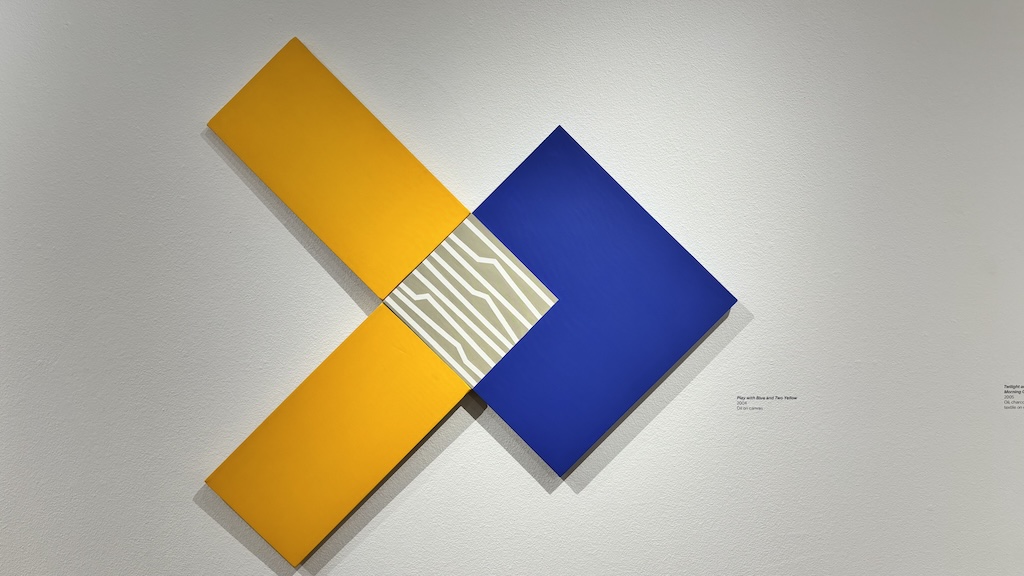
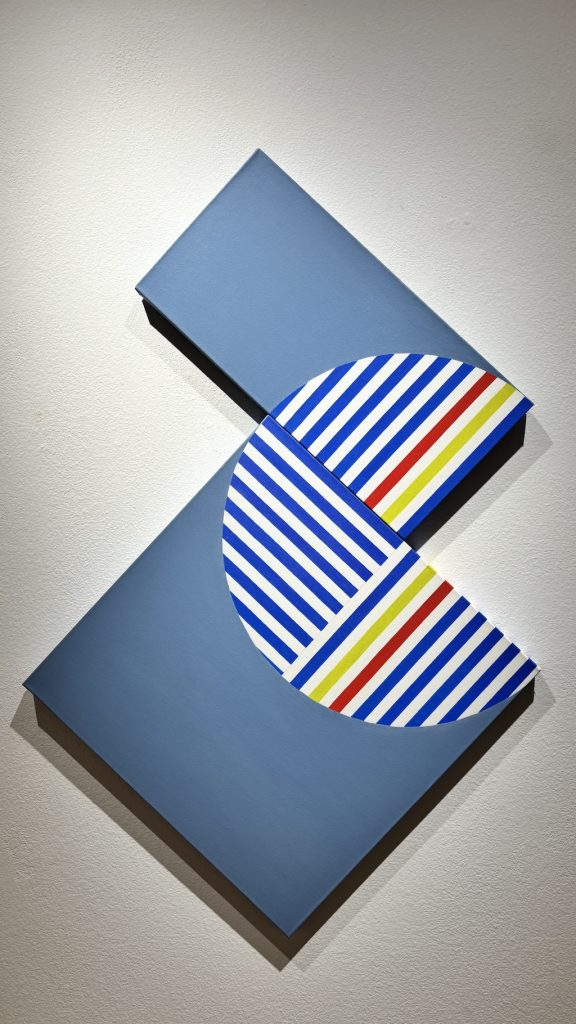
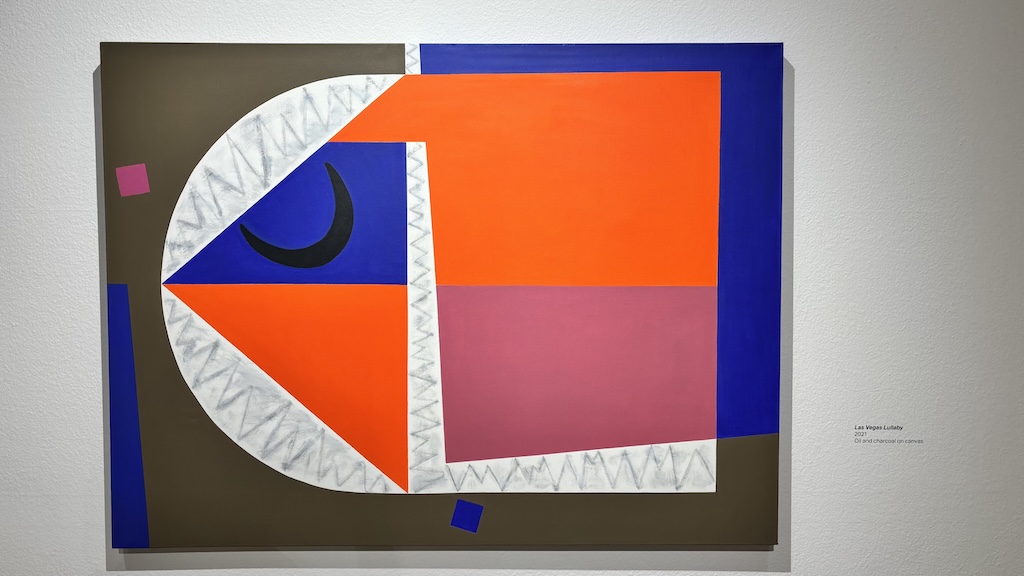
These bold, geometric compositions — with their intersecting planes of color, stripes, arcs, and spatial tension — offered rich opportunities for observation and interpretation.
After introducing the selected works, visitors were encouraged to engage in self-guided slow looking supported by printed prompts developed by the museum. These prompts invited participants to reflect not only on what they saw, but also on their own physical presence in the gallery.
They were asked to consider the size and dimensionality of the artwork, notice unexpected details, reflect on how their body was positioned in front of the work, and even become aware of sound and air temperature. Additional prompts invited visitors to find artworks connected to values such as compassion, courage, joy, or personal growth.
Influenced by Third Place Theory, constructivist museum approaches, and other approaches like visual thinking, the program blended independent reflection with facilitated dialogue. Participants journaled quietly, then gathered for informal conversations to share interpretations. The tone was open, exploratory, and welcoming. There was no pressure to “get it right.” Instead, the emphasis was on slowing down and discovering meaning collectively.
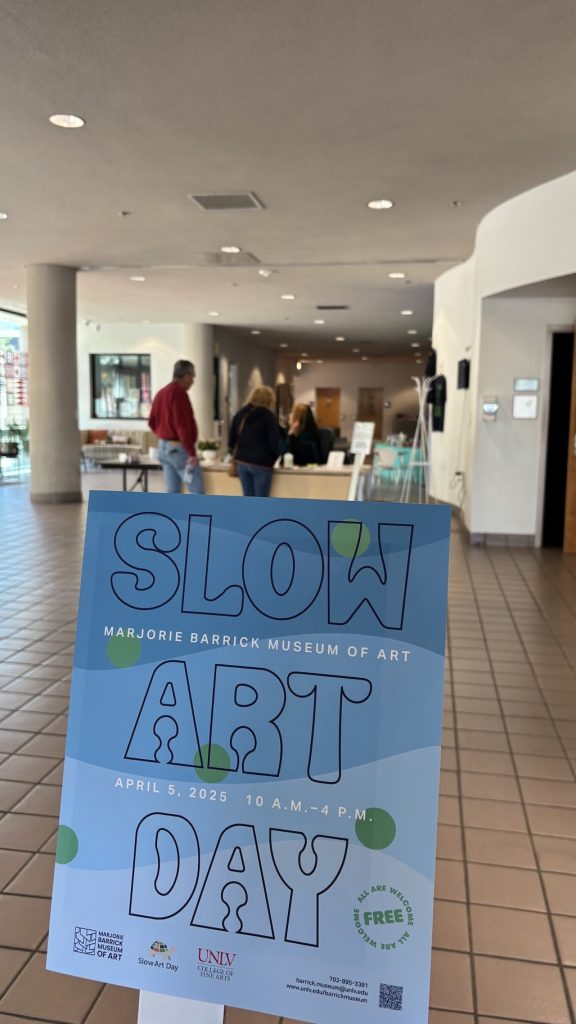
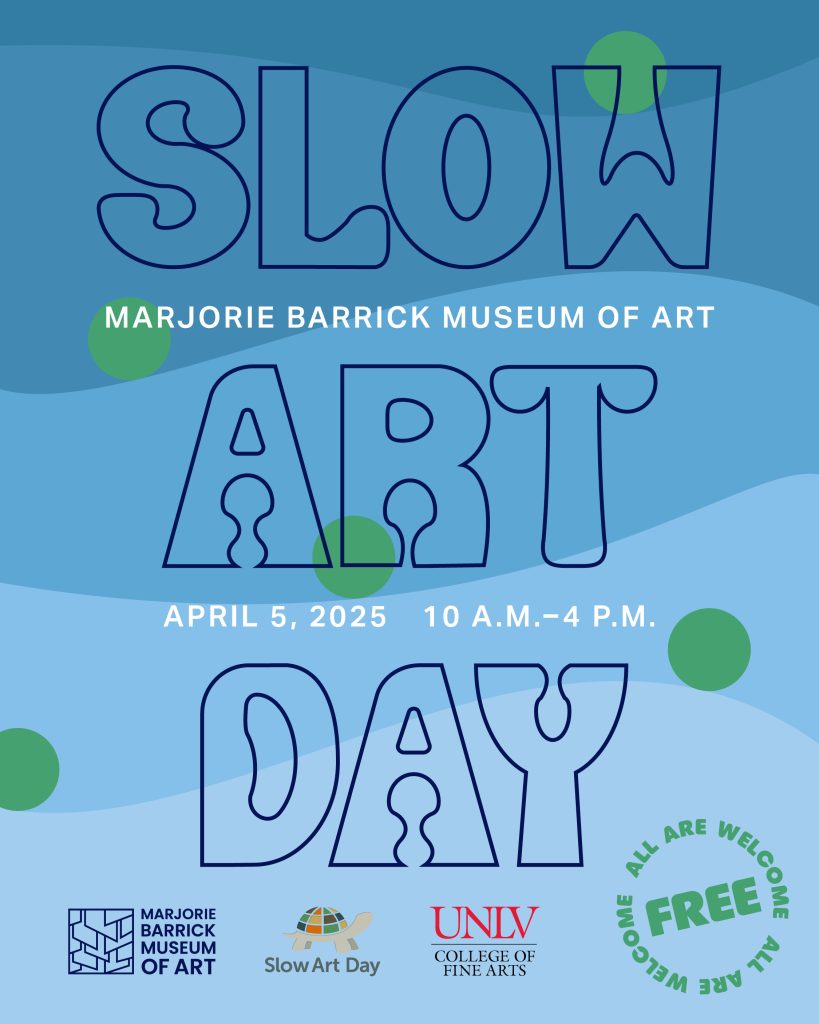
We love the flyer they created. As you can see below, it used oversized, rounded outline lettering with playful cutout details and a cool blue palette that gave it a distinctly 1960s modernist poster vibe. The bold typography, clean sans-serif subtext, and simple graphic shapes also created a retro feel that was both groovy *and* approachable.
According to visitors, the Slow Art Day experience made the galleries felt less like formal exhibition spaces and more like living rooms for communal viewing. Some returned to the same painting multiple times. Others compared how their perceptions shifted after hearing a peer’s insight.
By the end of the day, the event affirmed the Barrick Museum’s belief that art museums can serve as inclusive third space for reflection, empathy, and connection. In other words, Slow Art Day did not simply encourage looking; it encouraged belonging.
We are grateful to Dr. Zida Wang and the team at the Marjorie Barrick Museum of Art and look forward to what they come up with for 2026!
– Ashley, Johanna, Jessica Jane, and Phyl