
An Invitation to a Conversation

If two works of art could talk to each other, what would they say? The Fisher Landau Center for Arts in Long Island City explores this idea in their current show called “Visual Conversations.” In it, free-standing sculpture is placed next to works hung on walls to create conversations between each pair of artworks.

The show intentionally invites viewers to draw their own connections and to think about how the meaning of each piece is affected by the one next to it. Active and creative viewer participation seems to be key to the experience of this exhibition.

Joe Fusaro writes in Art:21 about how he’s using this exhibit with his art students.

He’s asking them to think about questions like “Can works of art ‘speak’ to the viewer or have ‘conversations’ with other works?” and then to create their own works of art that talk back to one of the paired pieces they saw in the show.

At Slow Art Day, we are all about encouraging museum goers to look slowly, experience and “talk back” to the art. If you get a chance, visit the Landau Center for this exhibit’s last week or check back online to see if Joe Fusaro shares what his students created in conversation with this show.

– Naomi Kuo, Slow Art Day Intern; edited by Phil Terry, Slow Art Day Founder
London, England- South London Gallery

Heerlen, Netherlands- Kuepers Art

Leeds, United Kingdom- Stanley and Audrey Burton Gallery

Whose eyes do you see with?

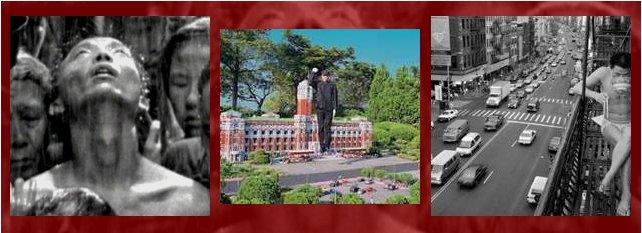
Big Red & Shiny’s Benjamin R. Sloat interviews three Taiwanese artists, Chen Chieh-Jen, Yao Jui-Chung, and Chien-Chi Chang, and discusses the challenges of cultural misinterpretation.

Marcel Duchamp said the viewer participates in the artistic process – “the artist sets in motion a creative process that the spectators must complete.” This philosophy of including the ‘consumer’ or viewer of art in the art-making is central to our philosophy here at Slow Art Day.

But, what if the art comes from a different culture? How then do we think about the role of the viewer? Are there some pitfalls that one should seek to avoid, especially in viewing art from another culture? Read here to see what these Taiwanese artists have to say about their own work and a foreign viewership.

– Naomi Kuo, Slow Art Day Intern; edited by Phil Terry, Slow Art Day Founder
Towards a Better Understanding of Art

Ever felt lost when looking at a work of contemporary art? Will Gompertz, BBC arts editor and former Tate gallery director, addresses this common phenomenon in his article in The Huffington Post.

He offers some solace and explanation for the confusion: “…I don’t think the real issue is about judging whether or not a brand-new piece of contemporary art is good or bad–time will undertake that job on our behalf. It is more a question of understanding where and why it fits into the modern art story.”

We agree with Gompertz that evaluating the quality of the art is not the issue and that learning about art history is important. However, we would offer a different approach. In Slow Art Day events around the world, art novices and experts alike seem to overcome confusion simply by looking for 10 minutes. Interestingly, no matter how provocative, unusual, minimalist, or indescribable the work is, Slow Art Day participants report having a good, not confusing, experience.

We hypothesize that 10 minutes of looking creates an experience where the viewer sees and feels things not immediately apparent. We believe these participants go through a process of personal discovery that, based on their feedback, seems to create a sense of joy and excitement.

We have more work to do to fully understand what works about Slow Art Day but it does seem to us that participants get excited  because they discover they actually have something to say about the art – and because they have created a connection that is emotional, intellectual, visual or spatial.

Yes, art history is important and many of the organizers of Slow Art Day are art historians or students pursuing that degree. But, the thousands of participants every year are not experts. Indeed, they are likely to be the kind of person that does not like contemporary art – unless and until they spend 10 minutes looking at a single piece.

– Naomi Kuo, Slow Art Day Intern; edited by Phil Terry

“Slow Looking” for all Media

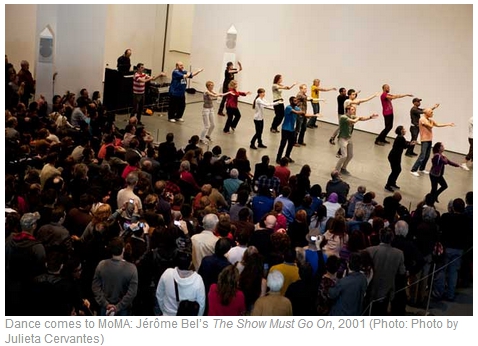
Helen Stoilas writes in The Art Newspaper how more and more museums are focusing on performance, particularly dance, in their programming to revitalize the experience of their visitors.

Stoilas quotes PS1 associate curator Jenny Schlenzka on the significance of this trend: “We’re living in times when the object is less important. The museum is a place where these changes are being negotiated. The ephemeral is becoming much more important.”

What do you think about this trend? How do the principles of slow looking relate to art that is time-based or performed live? We would love to hear your thoughts.

– Naomi Kuo, Slow Art Day Intern

Carpe Diem, Slow Art Day Style

October 20, 2017: UPDATE – we have heard from the Susan Inglett Gallery in New York that this report from Tyler Green back in 2012 was wrong. Robyn O’Neil’s large scale work, HELL, was NOT destroyed.

Happily, HELL is on display at the Susan Inglett Gallery and can be viewed online here: http://secca.org/calendar-detail.php?EventOccId=824398142.

Always like to hear some *good* art news.

Anyone in New York should go visit the Susan Inglett Gallery and view this and other work slowly. It’s well worth it.

Thanks –

Phil

—————————————————————————————————-ORIGINAL POST from 2012

My sympathies go out to the people affected by Hurricane Sandy who are still picking up the pieces of what’s left after the storm. Many things were lost, not the least of which include artists’ studios and archival material.

Tyler Green reflects in Modern Art Notes on the situation of artist Robyn O’Neil, whose latest large scale work, HELL, was destroyed by the hurricane. It survives only as a JPEG image now — lamentable, but better than nothing.

Green points out that lost art is common in art history for a number of reasons, be it war, weather or fire. The physical presence of a work of art is actually quite fleeting, giving us all the more reason to look at art slowly and really value our time with it.

Read Green’s article in Modern Art Notes for more on O’Neil’s work and digital preservation.

– Naomi Kuo, Slow Art Day Intern

Cambridge, Massachusetts- The Glass Flowers Collection

Omaha, Nebraska- Joslyn Art Museum