
For their fourth Slow Art Day, the Brigham Young University Museum of Art in Provo, Utah celebrated from Monday, March 31 through Saturday, April 5 and invited visitors to practice slow looking using four different strategies and a small group of works in the Crossing the Divide exhibition on display on the main level of the museum.
Featured works:
- “A Corner Window in a Pawn Shop” by Rose Hartwell (1893)
- “Trifloria” by Jeanne Leighton-Lundberg Clarke (c. 1981)
- “LOVE” by Robert Indiana (1973)
- “View of Monterey Bay” by Raymond Dabb Yelland (1879)
- “Great White Throne” by Phillip Henry Barkdull (1930)
Look Big

Visitors were encouraged to “cast a wide net” and examine every detail in Hartwell’s painting. The prompt challenged them to name ten different items for sale in the shop window — a structured way to slow down and notice complexity.
Narrow Your Focus
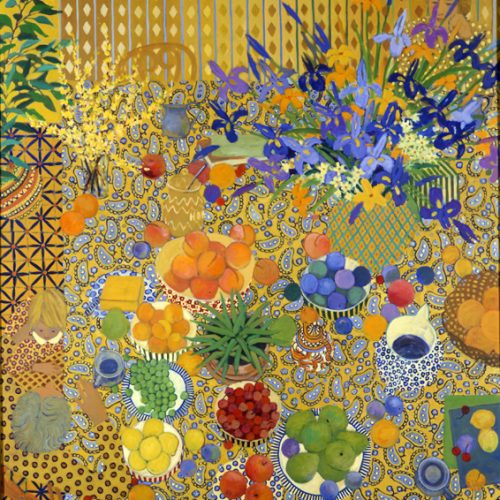

Jeanne Leighton-Lundberg Clarke, Trifloria (c. 1981), oil on canvas. Brigham Young University Museum of Art.
Here the instruction was the opposite: limit attention to colors, shapes, and patterns. By narrowing their focus, visitors discovered how repetition, contrast, and structure shape the viewing experience.
Change Your Perspective

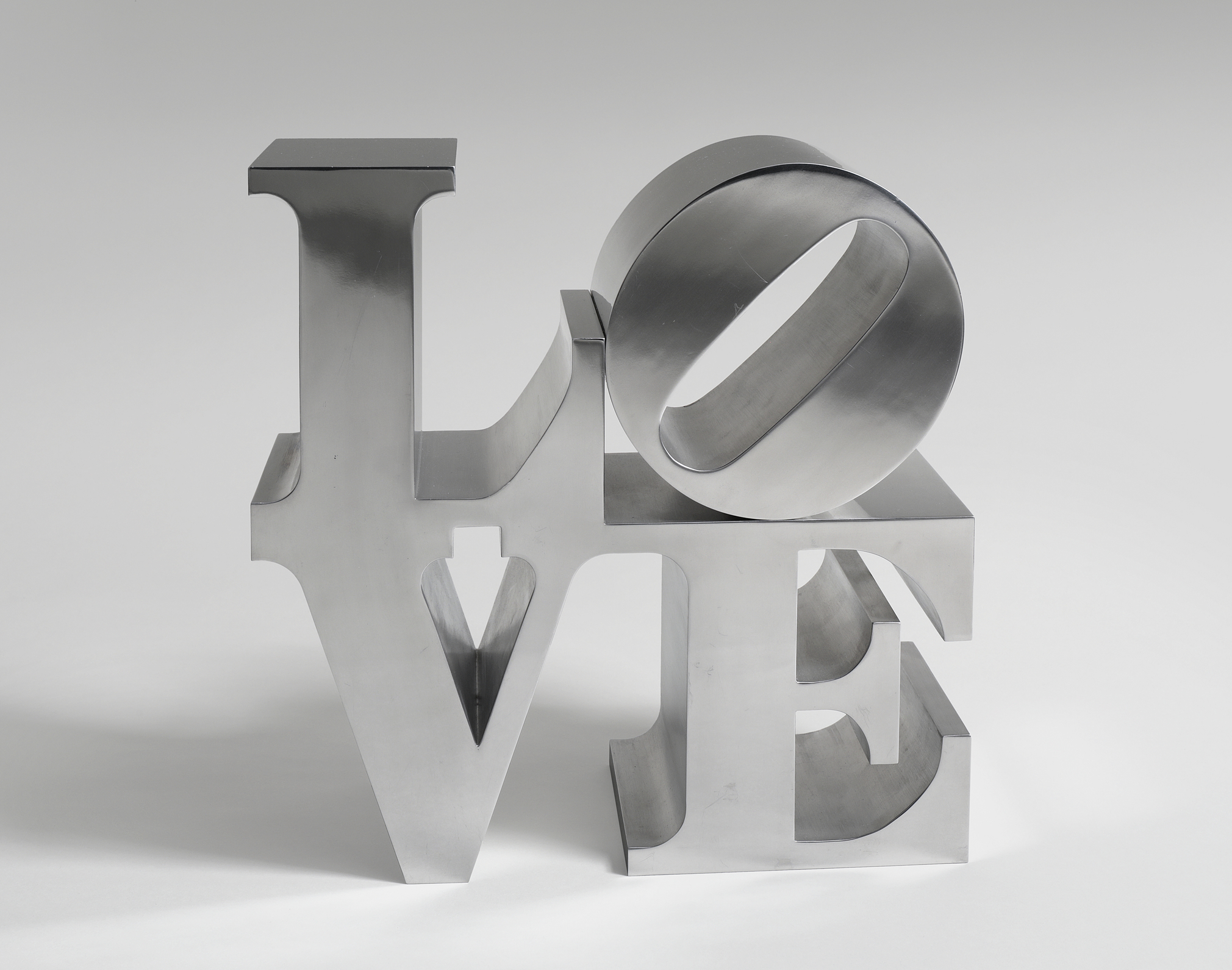
Robert Indiana, LOVE (1973), aluminum. Brigham Young University Museum of Art.
Participants were invited to view Indiana’s sculpture from multiple angles, either in person or through online images. Altering physical perspective revealed new alignments of form and shadow.
Compare and Contrast


Phillip Henry Barkdull, Great White Throne (1930), oil on canvas. Brigham Young University Museum of Art.

Visitors were prompted to compare subject, color, line, and composition between the two landscapes. This strategy encouraged noticing similarities and differences in mood, structure, and visual language.
After completing the activity, participants returned to the front desk to receive a small prize. All visitors selected a postcard or sticker featuring one of the works. Children also received a kaleidoscope, and adults chose between a museum pin or sticker.
At Slow Art Day HQ, we love that The BYU Museum of Art asked visitors to look with four different. That’s a great design for a thoughtful Slow Art Day.
We look forward to seeing what the BYU Museum of Art comes up with for Slow Art Day 2026.
– Ashley, Johanna, Jessica Jane, and Phyl