‘Face’ to Face with Dorian Gray

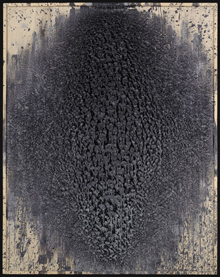
Martin Kline, Dorian Gray, 2011. Image Courtesy of the Harvard Art Museums.

Slow Art Day has asked its 2013 college interns to write short summaries of their own experiences looking slowly at artworks of their choosing.

Out of the corner of my eye, I can feel Dorian Gray digging into the back of my neck, his carbonized tendrils reaching outward with a foreboding aura.

Martin Kline’s Dorian Gray (2011) is currently situated on the fourth floor of the Sackler Museum (one of the Harvard Art Museums). The encaustic on panel work resides in a tucked-away enclave to the left, and I might have passed it by, if not for the incredible breathtaking presence of the piece quickly enveloping me. The odd fact that this very contemporary work is being displayed on a floor usually reserved for historical European works from Middle Ages to Modern Art is jarring. And yet, it seems completely appropriate.  Its uniqueness demands its own votive-like shrine. It shouts loudly for your attention in order to simmer to a boil before your stolen attention.

This ‘portrait’ does not portray the Oscar Wilde character in his eternal youth. Instead, the spellbinding work showcases the blistering and decaying remains of the bewitched painting. Miraculously the work still carries the same devilish, enigmatic force that you would expect from a depiction of Dorian’s debaucherous descent in his perpetual youth.

As I gaze at Kline’s work, however, I temporarily forget all literary references. Regardless of intent or allusion, this piece literally feels timeless. From all directions and perspectives it becomes reminiscent of so many worldly forms. I feel as if I need to mentally map the pulsating topography of the piece inch by inch. A gigantic festering blister at direct view morphs slowly into a singed old growth forest to bubbling, oozing lava, to a hearty crop of stalagmites as my gaze traverses the panel. I am able to visually trace the peaks and valleys, following them down into the crevasses created by the dripped wax terrain. The technique used by Kline, curiously one of addition and growth instead of the destruction that you would assume of the corrupted portrait, adds to the oddly lively artwork.
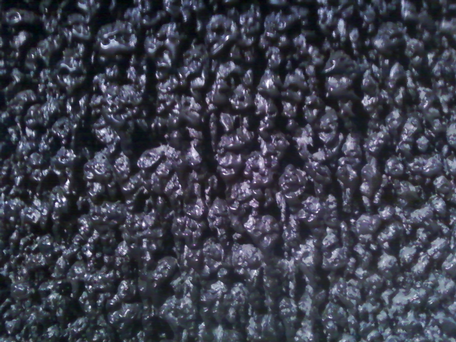
Martin Kline, Dorian Gray (detail), 2011.

Martin Kline, Dorian Gray (detail), 2011.

I realize something while looking horizontally from the right at the Martian landscape (after exhausting all of my other viewing options, museum etiquette-wise). Stepping back a few feet, I see that the wax used is a variety of colors, not the monotone mound it appears to be. Light gray, dark gray, even a sickly shade of green is intermixed to add depth and shading to the work. I was so close and drawn into the work that I didn’t realize this core component. What else did I miss?

I draw back, not in retreat, but in pursuit. The optical feat created both by the layers of wax and its pigmentation is still enchanting and intoxicating. As I’m across the gallery, however, I realize that I’ve made a crucial mistake in my original viewing of the work. This is not a remnant of past events, or a passively brewing force.

This work has a life of its own and it’s still spreading.

-Karen Trop, Bennington College.

Martin Kline’s Dorian Gray among other great works is available to view at the Arthur M. Sackler Museum in Cambridge, MA. The Harvard Art Museums are not currently hosting a Slow Art Day event. Inspired? Sign up as a host today!

Spooky Art Skulls for Halloween

Over on our tumblr page, we’ve been featuring spooky art to celebrate Halloween. Tumblr’s staff selected our post showcasing designer Magnus Gjoen’s skulls to feature on the tumblr radar – check out one of the skulls below, and head over to our tumblr page to see more!

Magnus Gjoen, Skull Victory Over Ignorance

Happy Halloween!

LACMA’s Laquered Boxes – Worth Some Time

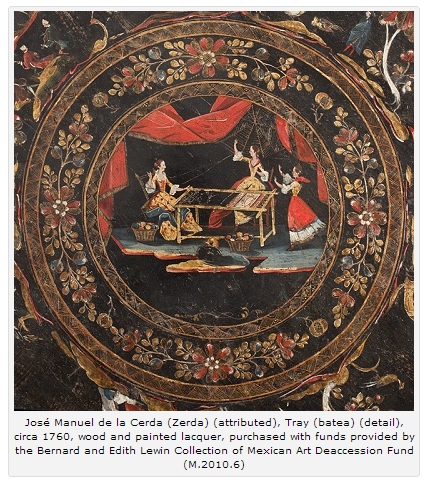
Kathryn Santner at LACMA posted an in-depth analysis of Mexican laquered sewing boxes, which are part of the museum’s growing collection of Latin American decorative arts. Her article is worth a slow read – and the objects are certainly worth a slow look the next time you visit LACMA.

Thanks to Tyler Green’s Wednesday Links for pointing us to this great post.

More Slow Art Day 2013 venues added

We’ve been busy adding more locations for Slow Art Day 2013 – thanks to everyone who has signed up to be a host! Here are the latest venues:

Welcome to these new venues, and be sure to check out the complete (and constantly updated!) list of 2013 venues. If you don’t see your local museum or gallery, sign up to be a host!

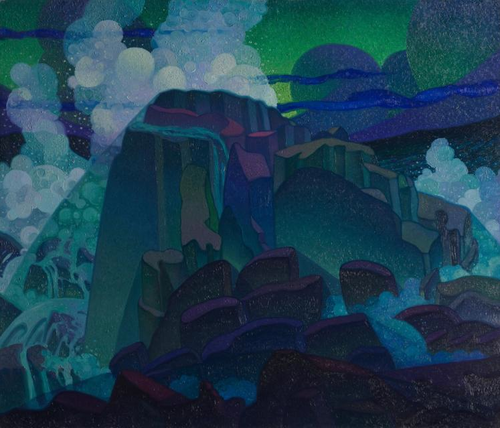
Raymond Jonson, Rock at Sea

Raymond Jonson, Rock at Sea, 1920-22. Image courtesy of the Cleveland Museum of Art.

The illustrative quality that Raymond Jonson gives this painting is fantastic; we love the stylized way he depicts the waves and the eerie moonlight seascape. This is a great piece to practice your Slow Art Day skills on. Take note of what you notice in the first minute of looking at this painting. Then continue to look at it for another two minutes – has your opinion of the work changed? What things did you notice that weren’t immediately apparent?

If you liked this practice piece, be sure to check out our Tumblr for other posts like this one!

Slow Art Day on Tumblr

Did you know that in addition to our main site, Slow Art Day also has a tumblr page? Started just five days ago, we have already reached over 750 followers. In addition, the tumblr staff selected one of our posts to feature on the Tumblr Radar, a high honor for a blog that is less than a week old.

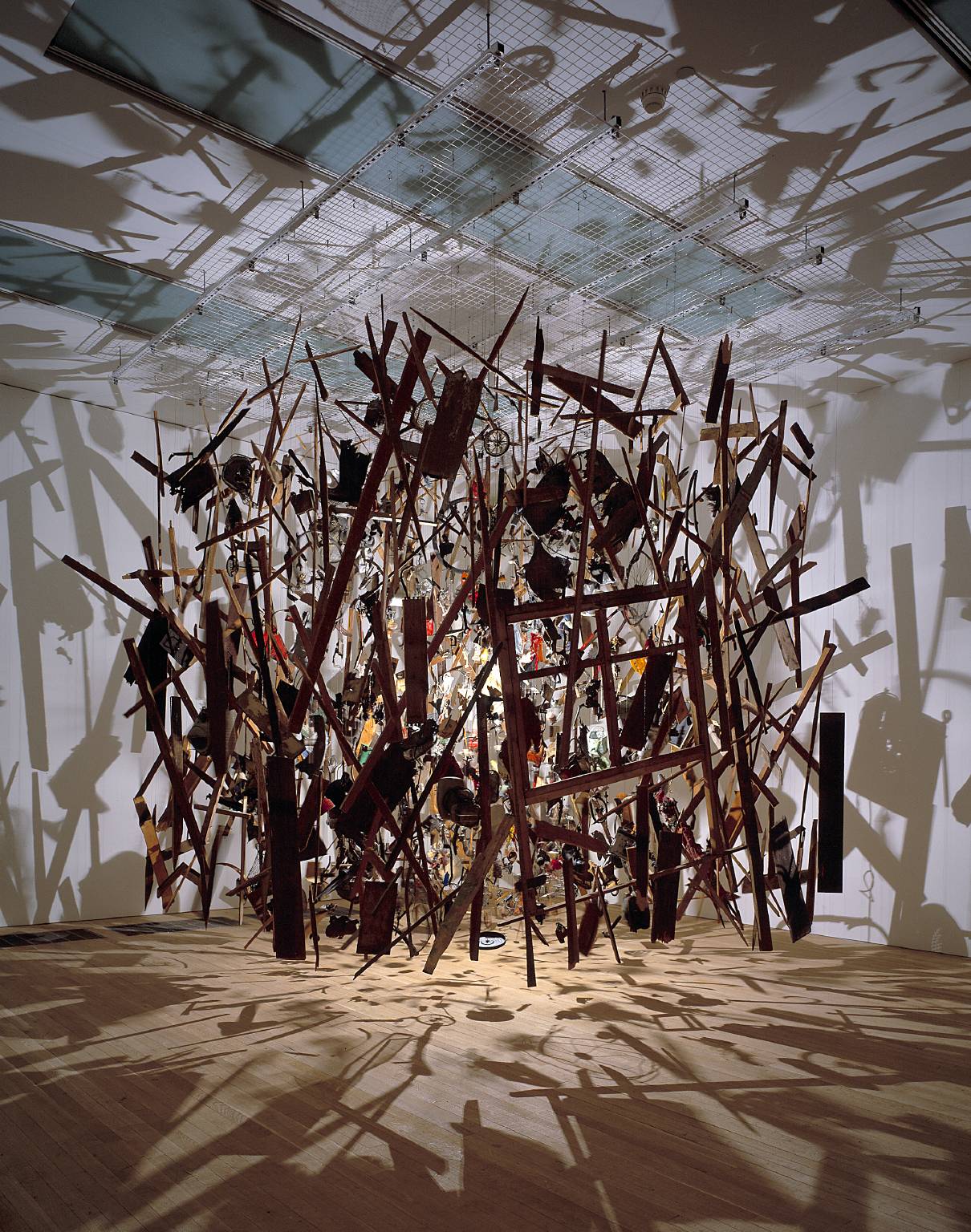
Cold Dark Matter: An Exploded View by Cornelia Parker (1991)

Take a look, and let us know what you think!

Slow Art Day 2012 Report: Colorado Springs Fine Arts Center

The Colorado Springs Fine Arts Center hosted its first Slow Art Day on April 28, 2012 – and based on the success, host Nicole Anthony says that the center plans to offer slow art viewing exercises, complete with a post-viewing wrap-up, more often.

Host Nicole Anthony of the Colorado Springs Fine Arts Center.

Like many Slow Art Day events it was small but significant.  The small group size allowed for lengthy discussion over each of the 5 different art pieces that Anthony chose—in fact, there was so much engagement that the group spent an average of 30 minutes slowly looking at and then discussing each piece.

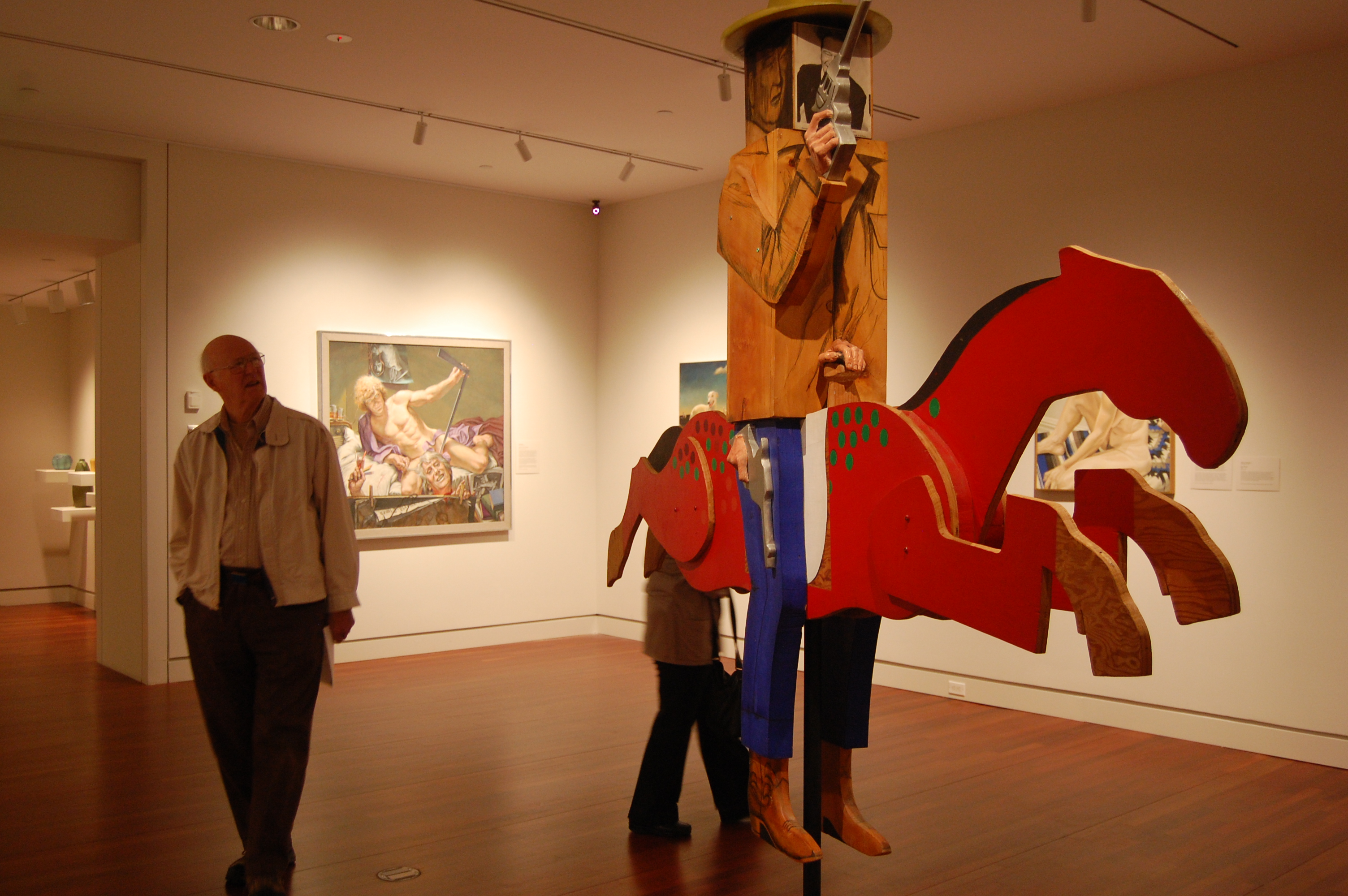
John Wayne, 1963 (mixed media) by Marisol (Escobar) was one of the five pieces Nicole Anthony chose for the Colorado Springs Fine Arts Center Slow Art Day 2012.

Afterwards, lunch in the center’s cafe continued the lively conversation. As with many Slow Art Day events, the experience not only increased participants’ love for art, but Anthony says it also created a surprisingly deep sense of community.

– Nicole Anthony’s host report edited by Slow Art Day editors Jennafer Martin and Phil Terry


Look for Longer on Slow Art Day

How long does it take to look at a piece of art? Studies have found that people devote as little as eight seconds to each work in a gallery. But on Saturday 28 April, gallery goers across the world will be invited to slow down.  A  lot.

Read the Full Article


Richmond Slow Art Day Takes a Long Look at Fine Art at VMFA

If it’s been a while since you last took a long look at a piece of art, the upcoming Richmond Slow Art Daywill give you a chance to ponder creative works. TheVirginia Museum of Fine Arts will host the happening aimed at art enthusiasts on Saturday, April 28.

Read the Full Article