Slow Walking Video at Gorgas House Museum

For Slow Art Day 2025, students at the University of Alabama participated in a project titled Walking In It, developed under the direction of Professor Sharony Green and presented in connection with the Gorgas House Museum in Tuscaloosa, Alabama. The project focused on an experimental video that encouraged people to notice walking and to think about it as something shaped by history and circumstance, not a simple experience that everyone can take for granted.

As part of the project, students enrolled in Professor Green’s Fall 2024 and Spring 2025 history courses contributed 30-second long videos of themselves walking through campus and around Tuscaloosa. These clips were combined into a single “digital quilt” bringing together repeated movement across shared spaces.

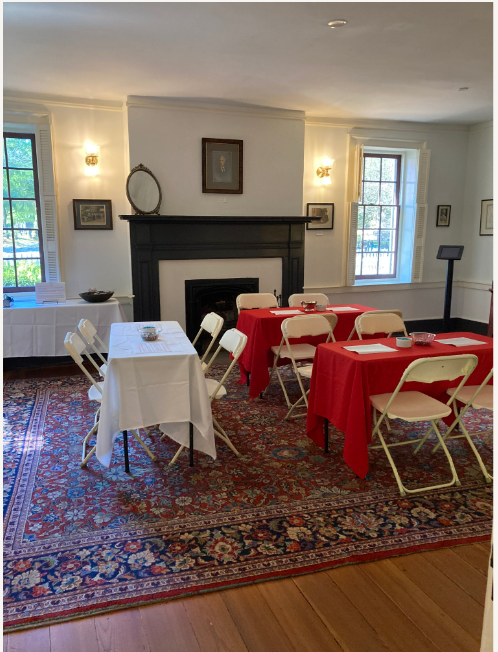
Gorgas House Museum on Slow Art Day.

The completed video was featured online and projected onto the exterior of the Gorgas House Museum on April 4, 2025, from 10:00 a.m. to 2:00 p.m. The projection was designed as a come-and-go experience, allowing Slow Art Day participants and passersby to encounter the work throughout the day. The setting of the projection on Gorgas House, the campus’s oldest dwelling constructed in 1829, provided historical context for the project’s focus on movement and access.

Watch the video projection:

Additional components were coordinated by Sonya Harwood-Johnson, Director of the Gorgas House Museum. These included interpretive displays featuring nineteenth-century shoes and an interactive station where members of the campus community could decorate miniature boots produced with a 3D printer, inspired by a Mexican artist’s project.

In addition to the video projection, the Slow Art Day project included a campus-wide scavenger hunt. Participants were invited to move through campus using the scavenger hunt prompts, with a prize offered to those who completed the activity.

Students also created a short video previewing the event, offering viewers a sense of the site and project setup:

The project received coverage in The Crimson WhiteGorgas House hosts The University of Alabama’s submission to global Slow Art Day – the University of Alabama’s student newspaper, which reported on the Gorgas House Museum’s participation in the global Slow Art Day initiative. Across digital platforms, the project reached a wide audience, with more than 1,100 views on Instagram and over 1,200 additional views and impressions across other social media channels.

Professory Sharony Green and students.

We thank Sharony Green, Sonya Harwood-Johnson, and the participating students for their innovative Slow Art Day events, and look forward to seeing what they come up with for Slow Art Day 2026.

– Ashley, Johanna, Jessica Jane, and Phyl

P.S. Read more about the project, Walking In It: An Experimental Video, on the Gorgas House Museum website. You can follow the Gorgas House Museum on Facebook and Instagram.
The Significant Blue Bead at Gorgas House Museum in Alabama

For their third Slow Art Day, the Gorgas House Museum, which is the oldest dwelling on the campus of the University of Alabama, hosted an event focused on a bohemian blue bead that was found behind the museum and is believed to have once belonged to an enslaved person.

Slow Art Day coordinator, Dr. Sharony Green, Associate Professor at the Department of History at the University of Alabama, asked her students to study the bead and slavery in advance of the event, then create art based on their study (some even created haikus). She then invited the campus and local community to slowly look at the bead and hear about the students’ work.

Visitors were also invited to use bead stations that were set up in the front parlor of Gorgas House to make a blue bead bracelet to commemorate the event.

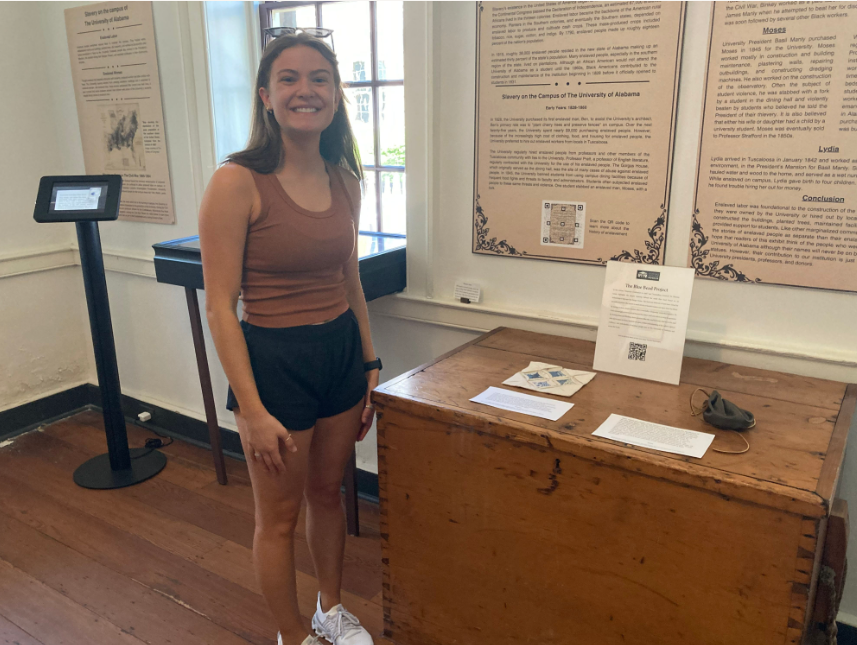
Photo of one of Dr Green’s Students. Photo by Sharony Green.
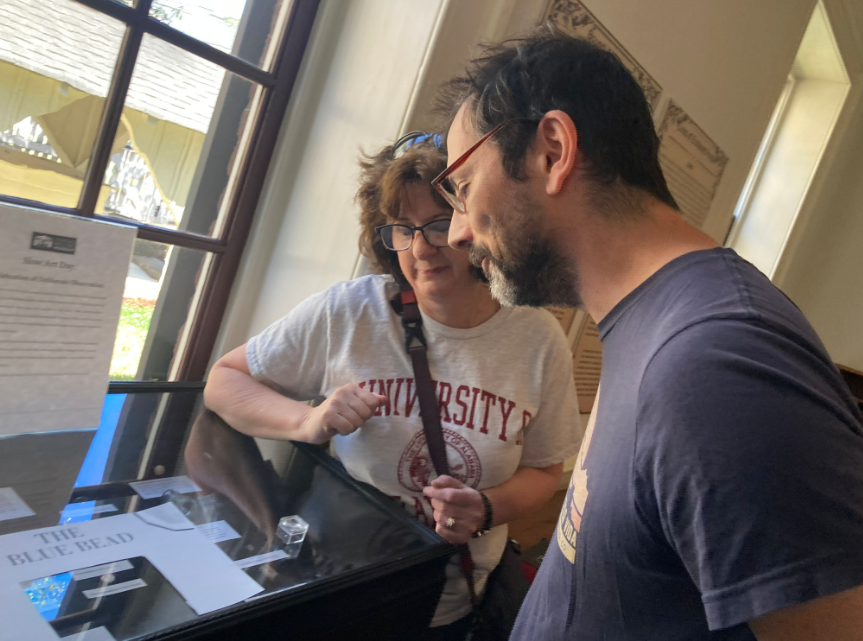
Photo of two UA anthropologists studying the blue bead. Photo by Sharony Green.
A Blue Bead (WordPress)

Above is a preview/link to the website they used to promote the project.

The bead station at Gorgas House before the event began. Photo by Sharony Green.

Dr. Green gave us some history about the bead:

The bead was found in an outdoor cooking area and was likely owned by an enslaved person. Some researchers believe it arrived via the Pacific Northwest and was brought to the Deep South via an indigenous trade network and that it was subsequently used as a protection amulet by an enslaved worker. While we speculate, we can also study the bead and sort through its significance during the antebellum period.

Dr. Sharony Green

Here’s a link to view some of the projects from Dr. Green’s students: Blue Bead Project Catalogue, and below you can scan a few of their photos and videos. All students took either an introductory level History class or an upper level History class taught by Dr. Green.

At Slow Art Day HQ we love how Dr. Green designed this whole Slow Art Day program – and that one small object, a bead, and its deep historical significance, became the point of inspiration for Slow Art Day. Thank you to Dr. Sharony Green, and her students, for such a unique event, and we look forward to whatever they come up with for Slow Art Day 2025.

-Johanna, Ashley, Jessica Jane, and Phyl

P.S. Stay up to date with future events at the Gorgas House via their social media @TheGorgasHouse

A friendship bracelet and student sewn piece. Photo by Rebecca Johnson.

Slow Art Week, Slavery, and the University of Alabama

For their first Slow Art Week, Sharony Green, Associate Professor of History at the University of Alabama, and Brandon Thompson, Director of the UA Gorgas House Museum worked with students and artists to create and display a public art installation that helped history students and the campus as a whole think slowly about slavery and Antebellum America.

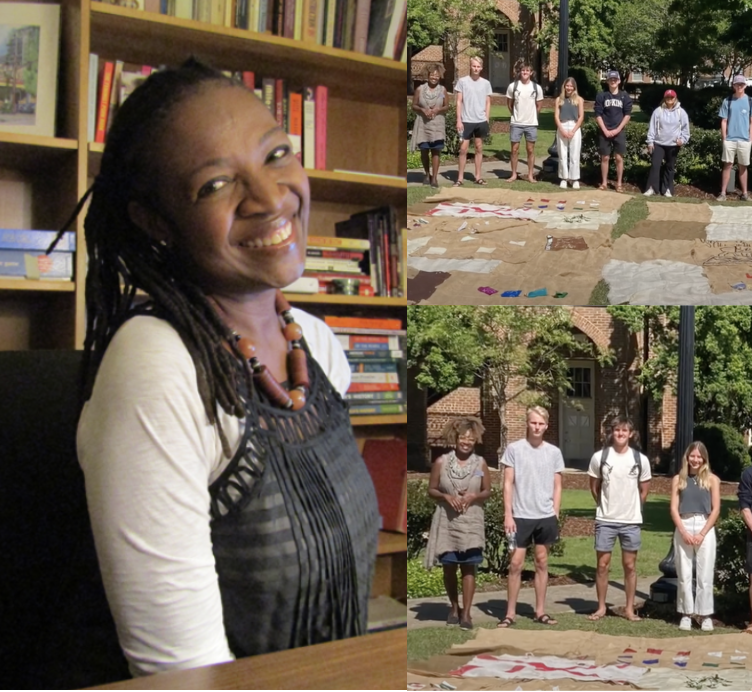
Dr. Green (pictured below) and her “Antebellum America” class created a 63-foot burlap with individual pieces that were displayed as a work-in-progress on April 1, eve of Slow Art Day, and then hung from Gorgas House later in the month once finished. Further, Dr. Green invited students from her “America since 1865” class to come and look slowly at the work of their Antebellum-focused student colleagues.

Dr. Sharony Green (left) and her students (right)

In her blog, Dr Green suggested to students, faculty, and staff that they slow down to think about the “enslaved artisans, including women, who… sewed out of necessity and maybe even survival.”

She further explained that tapestry also “offers a chance to ponder what textiles represent in a modernizing country in the years leading to the Civil War and what textiles mean today when we celebrate all things ‘handmade’ and what Koritha Mitchell labels as ‘homemade citizenship.'”

Gorgas House shared a digital interview about the students’ process and Dr. Green also talked about the process in the YouTube video below.

2 minute YouTube video by Dr. Sharony Green

The event was a real success on campus and across the online landscape including WordPress, Facebook, Twitter, Instagram, and Linkedin.

We encourage other professors to take inspiration from Dr. Green and think about how to weave Slow Art Day into their classes and campus museums – including, as Dr. Green has done, with classes outside of the studio art or art history departments.

At Slow Art Day HQ, we certainly look forward to what Dr. Green comes up with in 2023 to teach us how to look and think slowly about American history and its most challenging and troubling aspects.