
For their second Slow Art Day, the Musée de Reims organized a coordinated afternoon of slow looking activities across several museums. The events, held on Saturday, April 5, invited visitors to explore collections through quiet observation as well as practices that connected art with mindfulness and movement.
Across the participating museums, a total of 41 visitors took part in the Slow Art Day programs.
At the Museum of the Surrender, 25 participants gathered in the historic military operations room where General Eisenhower’s headquarters were located during the final days of World War II. Visitors were invited to slowly study the large strategic maps used during the war. Using binoculars, they examined details across the maps’ surfaces, discovering markings and geographic elements that would normally escape a quick glance.
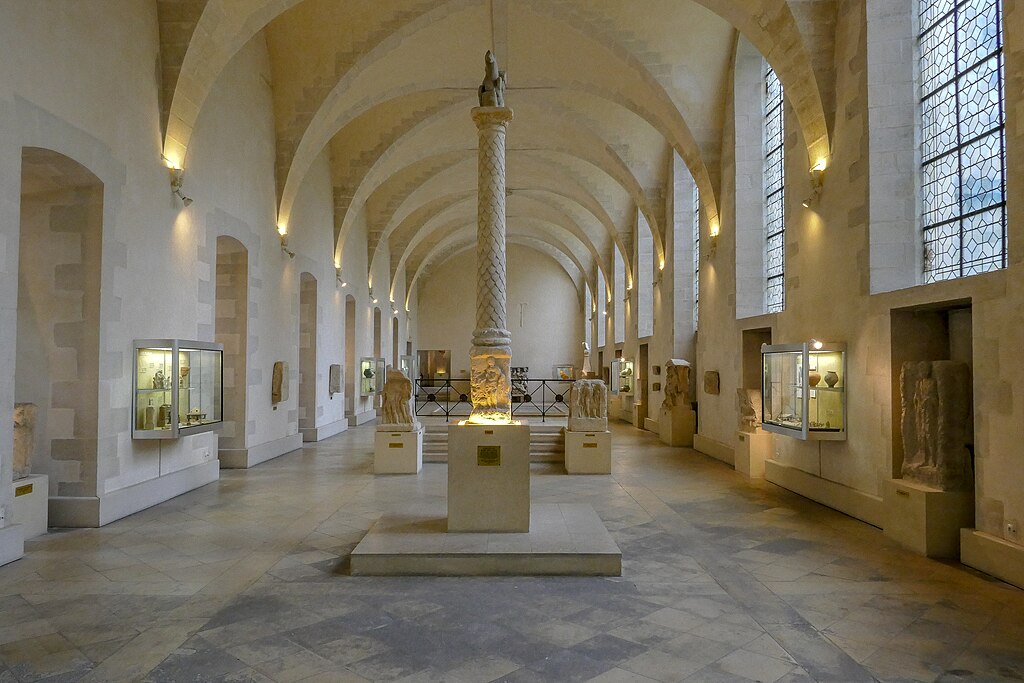
At the Saint-Remi Museum, five visitors participated in a small but deeply focused session. Participants first spent time slowly observing a display case dedicated to the museum’s Japanese collections. Following the slow viewing, the group practiced a Do-In session, a traditional Japanese self-massage and breathing practice that encourages calm awareness of the body.
Two participants took part in a quiet slow-looking visit paired with yoga at the Le Vergeur Museum-Hotel – Maison Hugues Krafft. The small scale of the session created an intimate environment where participants could move slowly between looking, breathing, and reflection.
Finally, nine visitors joined a yoga session followed by a slow visit to the Foujita Chapel, a unique chapel decorated by the Japanese-French artist Tsuguharu Foujita. The combination of yoga and slow viewing encouraged participants to approach the chapel’s artworks with heightened attention and presence.
While the numbers at each location were intentionally limited, organizers noted that the smaller groups contributed to the quality of the experiences. Each program offered participants the opportunity to spend time with art in a focused and thoughtful way.
Organizers also noted that Saturday can be a quieter day for museum attendance in Reims when admission fees apply, making the intimate scale of the programs well suited to the Slow Art Day format.
The Reims museums demonstrated how historical collections, museums, sacred spaces, and mindfulness techniques can come together to create meaningful experiences of art and place. With small groups, the day made it possible for people to really slow down.
We look forward to seeing what the museums of Reims come up with for Slow Art Day 2026.
– Ashley, Johanna, Jessica Jane, and Phyl