BYU Museum of Art: Four Ways to Slow Down in “Crossing the Divide”

For their fourth Slow Art Day, the Brigham Young University Museum of Art in Provo, Utah celebrated from Monday, March 31 through Saturday, April 5 and invited visitors to practice slow looking using four different strategies and a small group of works in the Crossing the Divide exhibition on display on the main level of the museum.

Featured works:

  • “A Corner Window in a Pawn Shop” by Rose Hartwell (1893)
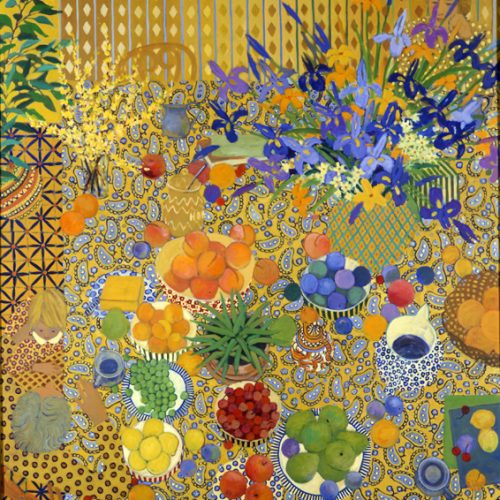
  • “Trifloria” by Jeanne Leighton-Lundberg Clarke (c. 1981)
  • “LOVE” by Robert Indiana (1973)
  • “View of Monterey Bay” by Raymond Dabb Yelland (1879)
  • “Great White Throne” by Phillip Henry Barkdull (1930)

Look Big

Image
Rose Hartwell, A Corner Window in a Pawn Shop (1893), oil on canvas. Brigham Young University Museum of Art.

Visitors were encouraged to “cast a wide net” and examine every detail in Hartwell’s painting. The prompt challenged them to name ten different items for sale in the shop window — a structured way to slow down and notice complexity.

Narrow Your Focus
Image
Image

Jeanne Leighton-Lundberg Clarke, Trifloria (c. 1981), oil on canvas. Brigham Young University Museum of Art.

Here the instruction was the opposite: limit attention to colors, shapes, and patterns. By narrowing their focus, visitors discovered how repetition, contrast, and structure shape the viewing experience.

Change Your Perspective

Image
Image

Robert Indiana, LOVE (1973), aluminum. Brigham Young University Museum of Art.

Participants were invited to view Indiana’s sculpture from multiple angles, either in person or through online images. Altering physical perspective revealed new alignments of form and shadow.

Compare and Contrast

Image
Raymond Dabb Yelland, View of Monterey Bay, 1879, oil on canvas.
Image

Phillip Henry Barkdull, Great White Throne (1930), oil on canvas. Brigham Young University Museum of Art.

Image
Visitors looking, comparing and contrasting Yelland and Barkdull.

Visitors were prompted to compare subject, color, line, and composition between the two landscapes. This strategy encouraged noticing similarities and differences in mood, structure, and visual language.

After completing the activity, participants returned to the front desk to receive a small prize. All visitors selected a postcard or sticker featuring one of the works. Children also received a kaleidoscope, and adults chose between a museum pin or sticker.

At Slow Art Day HQ, we love that The BYU Museum of Art asked visitors to look with four different. That’s a great design for a thoughtful Slow Art Day.

We look forward to seeing what the BYU Museum of Art comes up with for Slow Art Day 2026.

– Ashley, Johanna, Jessica Jane, and Phyl

Slow Walking Video at Gorgas House Museum

For Slow Art Day 2025, students at the University of Alabama participated in a project titled Walking In It, developed under the direction of Professor Sharony Green and presented in connection with the Gorgas House Museum in Tuscaloosa, Alabama. The project focused on an experimental video that encouraged people to notice walking and to think about it as something shaped by history and circumstance, not a simple experience that everyone can take for granted.

As part of the project, students enrolled in Professor Green’s Fall 2024 and Spring 2025 history courses contributed 30-second long videos of themselves walking through campus and around Tuscaloosa. These clips were combined into a single “digital quilt” bringing together repeated movement across shared spaces.

Gorgas House Museum on Slow Art Day.

The completed video was featured online and projected onto the exterior of the Gorgas House Museum on April 4, 2025, from 10:00 a.m. to 2:00 p.m. The projection was designed as a come-and-go experience, allowing Slow Art Day participants and passersby to encounter the work throughout the day. The setting of the projection on Gorgas House, the campus’s oldest dwelling constructed in 1829, provided historical context for the project’s focus on movement and access.

Watch the video projection:

Additional components were coordinated by Sonya Harwood-Johnson, Director of the Gorgas House Museum. These included interpretive displays featuring nineteenth-century shoes and an interactive station where members of the campus community could decorate miniature boots produced with a 3D printer, inspired by a Mexican artist’s project.

In addition to the video projection, the Slow Art Day project included a campus-wide scavenger hunt. Participants were invited to move through campus using the scavenger hunt prompts, with a prize offered to those who completed the activity.

Students also created a short video previewing the event, offering viewers a sense of the site and project setup:

The project received coverage in The Crimson WhiteGorgas House hosts The University of Alabama’s submission to global Slow Art Day – the University of Alabama’s student newspaper, which reported on the Gorgas House Museum’s participation in the global Slow Art Day initiative. Across digital platforms, the project reached a wide audience, with more than 1,100 views on Instagram and over 1,200 additional views and impressions across other social media channels.

Professory Sharony Green and students.

We thank Sharony Green, Sonya Harwood-Johnson, and the participating students for their innovative Slow Art Day events, and look forward to seeing what they come up with for Slow Art Day 2026.

– Ashley, Johanna, Jessica Jane, and Phyl

P.S. Read more about the project, Walking In It: An Experimental Video, on the Gorgas House Museum website. You can follow the Gorgas House Museum on Facebook and Instagram.

Shipping Brow Gallery in Cumbria, UK

For their second Slow Art Day, The Shipping Brow Gallery in Maryport, Cumbria, UK invited participants to explore artworks by renowned Cumbrian artist Percy Kelly. The gallery hosts the largest permanent collection of Kelly’s work in the United Kingdom.

Featured Works:
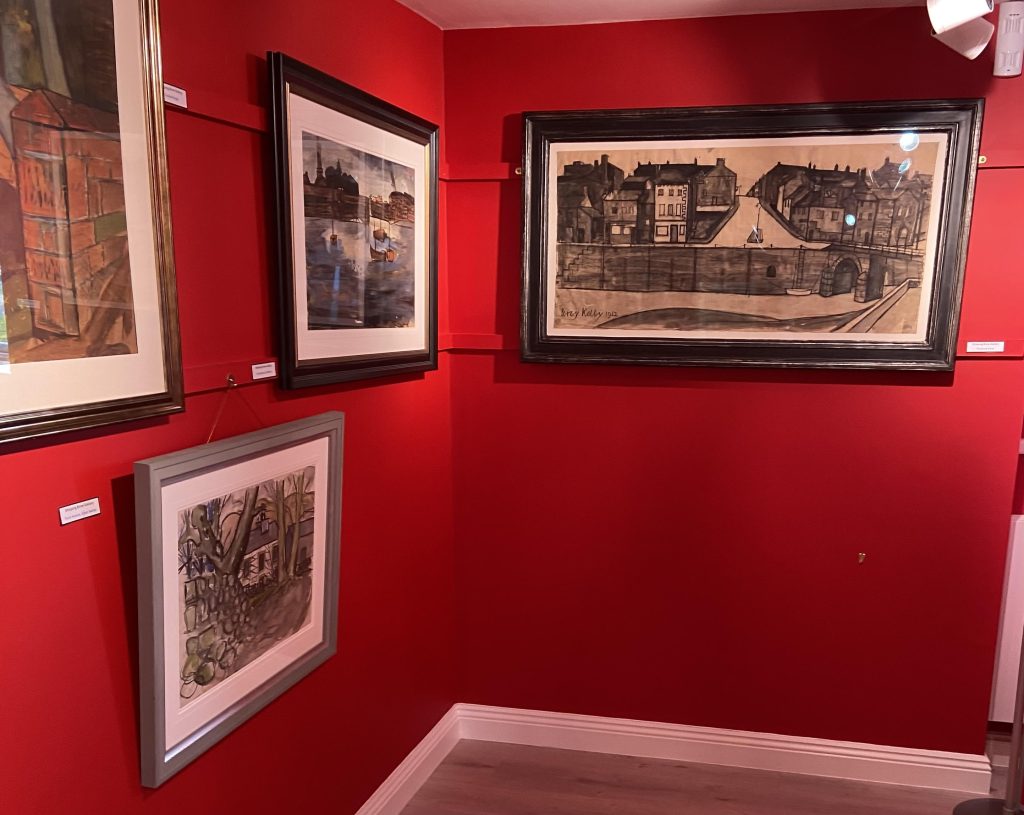
A selection of 35 paintings by Percy Kelly, prominently featuring local scenes, including the gallery itself.

A display of Percy Kelly’s works at the Shipping Brow Gallery. Photo courtesy of Shipping Brow Gallery.

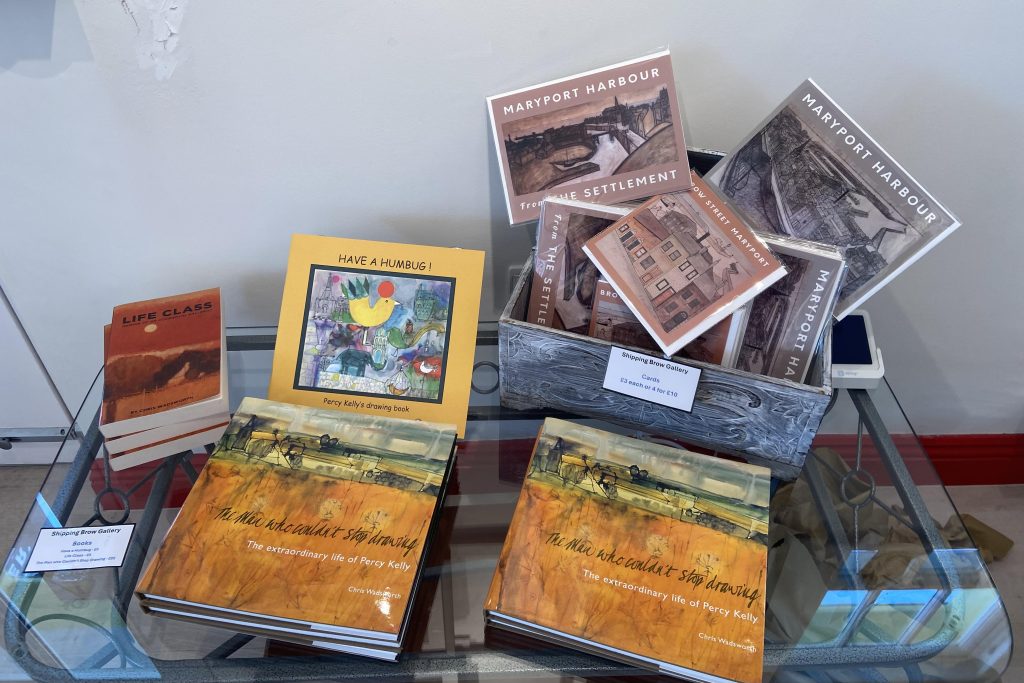
The museum also introduced a prize drawing. Attendees submitted guesses identifying how many paintings depicted the Shipping Brow Gallery building for a chance to win a copy of the art book, The Man Who Couldn’t Stop Drawing, by Chris Wadsworth.

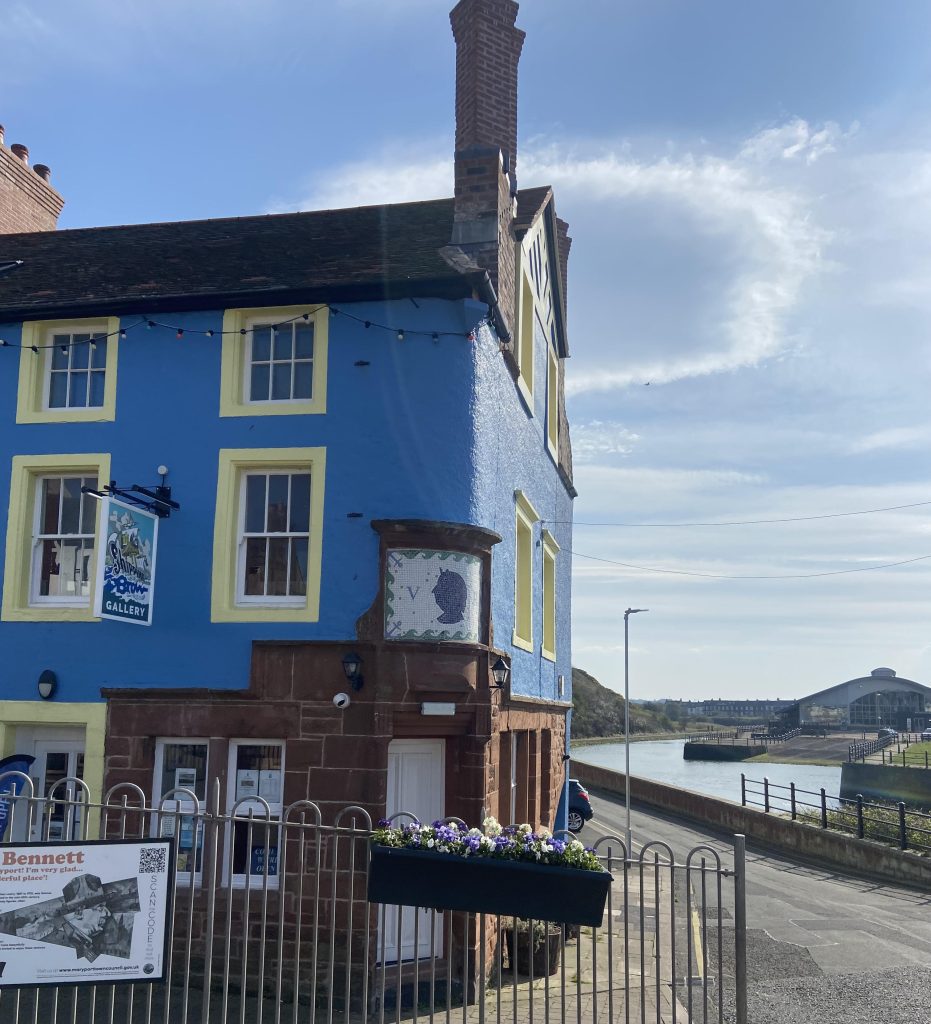
The Shipping Brow Gallery exterior. Photo courtesy of Shipping Brow Gallery.
Books on display, including the prize book The Man Who Couldn’t Stop Drawing, by Chris Wadsworth. Photo courtesy of Shipping Brow Gallery.

The event attracted a diverse group of attendees, ranging in age from 8 to 65 years, demonstrating broad community interest and engagement.

We thank Dolly Daniel and the entire Shipping Brow Gallery team for their organization and dedication to Slow Art Day 2025. We look forward to their participation in Slow Art Day 2026.

– Ashley, Johanna, Jessica Jane, and Phyl

P.S. Stay connected with Shipping Brow Gallery on Instagram.