
Slow Down with Women Artists

The National Museum of Women in the Arts is a longtime leader in the Slow Art Day movement, and they are hosting again this year. Based in Washington, DC, this wonderful institution takes seriously how to help its audience learn how to slow down and really see art by women.

On their Slow Art Day page, they begin by quoting the wonderful Georgia O’Keeffe:

“…to see takes time, like to have a friend takes time”
—Georgia O’Keeffe

We couldn’t agree more. Good friendships require time and so does the art of looking at art.

The museum also suggests several other reasons people should participate in Slow Art Day:

  • To break out of your typical “go, go, go” routine.
  • To learn about yourself, fellow participants, and the creative expressions of women artists.
  • To make discoveries about and forge connections with artwork.

For Slow Art Day, their staff will make artwork suggestions and provide questions to consider as you slow down and look.

So, if you are based in DC, or traveling there on Slow Art Day 2018, we hope you will consider going to the National Museum of Women in the Arts.

You can register here for their event, which is free with museum admission.
Rubin Museum’s Tips for Slow Looking

The Rubin Museum in New York has been a longtime leader in the Slow Art Day movement.

In 2016, they published a terrific article with tips on slow looking. You can read the article here:
SLOW ART DAY: MAKE YOUR NEXT MUSEUM VISIT MORE MINDFUL

The Rubin understands how hard it is for most people to slow down. “It’s not easy for most people to sit with one piece of art for more than a few moments.”

They emphasize that this activity, if practiced continuously, will bring great joy for decades. “…the deep looking encouraged during Slow Art Day is a lifelong skill that will continue to provide rewarding experiences in museums and galleries for years to come.”

We couldn’t agree more.

We think this simple concept is important – especially in this age of multi-tasking where the emphasis is placed on speed. We started Slow Art Day in 2009 to provoke a new way of seeing in the midst of the blindness that this screen-based world is creating.

The Rubin Museum is hosting Slow Art Day again this year – if you’re in the New York area, we hope you’ll join them!


New Zealand has joined Slow Art Day 2018!

We are happy to welcome the Waikato Museum in Hamilton, New Zealand to Slow Art Day 2018.

One of the things we love the most about Slow Art Day is that it brings together hundreds of museums and thousands of people from institutions like the Tate Modern (they are a longtime participant) in London to museums like the Waikato in New Zealand.

On the banks of the Waikato River in the heart of Hamilton’s south-end cultural precinct, the Waikato features 13 galleries and more than 25 new exhibitions and 100 public events annually.

On April 14, people all over the world – now including Hamilton, New Zealand – will be coming together to learn how to slow down and discover how to really see art.

We think this simple concept is important – especially in this age of multi-tasking where the emphasis is placed on speed.

We started Slow Art Day in 2009 to challenge the blindness that this screen-based world is creating.

We hope you’ll participate in Slow Art Day this year either as a visitor (see all Slow Art Day 2018 venues here), or, if you work for a museum or gallery, by signing up to host a Slow Art Day event.

Ready to Slow Art Day? Welcome Shanghai + more

Are you ready to Slow Art Day?

In the last 48 hours, museums and galleries from Shanghai to Finland to New Orleans, from Germany to Minneapolis, from Cornwall, Connecticut, Oakland, and Australia have all signed up to organize events.

We are very happy to welcome all of these to Slow Art Day 2018 (including this year’s first event in mainland China):

From Sao Paulo to Hong Kong – Slow Art Day 2018

Slow Art Day 2018 continues to grow around the world (see all 147 participating museums+ here).

In most cases, we have multiple museums, galleries, sculpture parks, libraries, or other cultural institutions in each country.

Current continents include Africa, Asia, Australia, Europe,  South and North America. Just missing Antarctica this year (have had events at McMurdo Station in the past).

Countries include:

Australia
Belgium
Brazil
Canada
Denmark
El Salvador
England
Finland
France
Georgia
Germany
Hong Kong
Ireland
Italy
Lithuania
Netherlands
Slovakia
South Africa
Spain
Sweden
Ukraine
United States
Zambia

Yorkshire Sculpture Park

According to a local UK newspaper, the Yorkshire Sculpture Park, which has participated in Slow Art Day now for several years, has begun a multi-year research project with the University of Huddersfield.

The focus of the research is to “explore the visitor experience at the park and what impact it could have on happiness and wellbeing.”

On Slow Art Day this year, the Sculpture Park will run two workshops – Mindful Moments for adults, and one for families, Move, Make and Meditate.

A growing number of museums are combining Slow Art Day with mindfulness and meditation. The Phoenix Art Museum, also a longtime participant in Slow Art Day, organized a summer mindfulness series in 2017 and we held a webinar with them to talk about the experience (watch the webinar here).

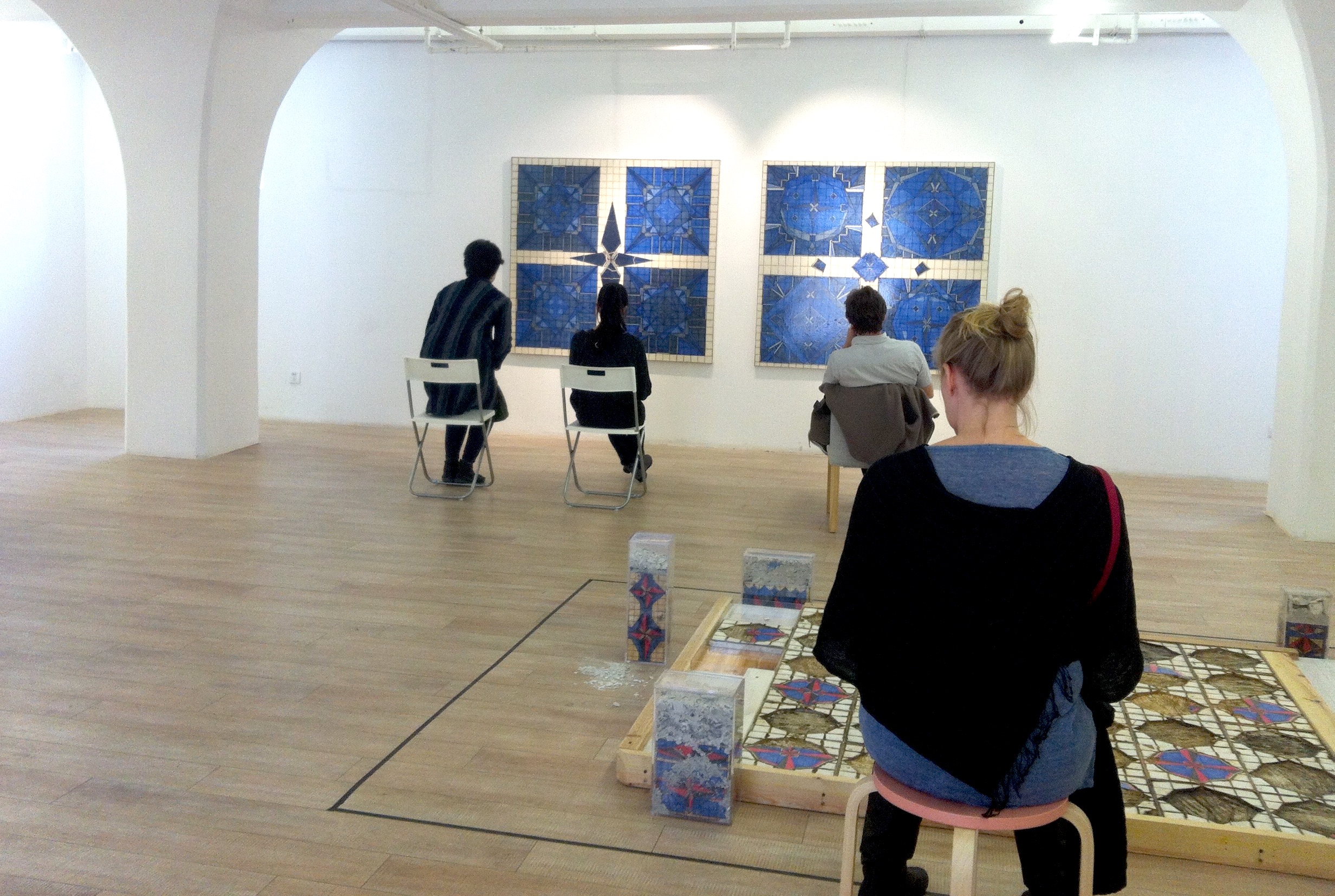
Slow Art Day Shanghai 2016 ‘Wonderful’

Check Instagram for all the amazing photos coming in from around the world for Slow Art Day 2016 – https://www.instagram.com/explore/tags/slowartday.

In the meantime, Slow Art Day Shanghai just reported via email (Instagram is not available in China):

We had a wonderful experience with Shanghai artist Li WenGuang in attendance. We asked the artist to speak to us AFTER we had an extended encounter with his artworks.

He was so interested in our unfiltered experience with this works.

The 1933 Contemporary Gallery features young, undiscovered talent like Li WenGuang.

It was a GREAT event in Shanghai once again – we were all entranced.

– Joan Lueth

slowartday in Shanghai 1

Slow Art Day 2015: The Eyes Have It in Napa, California

Three-time Slow Art Day host museum, the di Rosa in Napa, California, just sent this report on their event this year.

The most exciting part of this update is that they are considering adding a monthly Slow Art session to their museum programming. Our mission with Slow Art Day is not only to get great participation on the annual day each year, but also to encourage more museums and galleries to incorporate regular programming throughout the year.

– Phil

For the third year, the di Rosa (Napa, CA; www.dirosaart.org) participated in Slow Art Day. Again this year, the group of participants was intimate — quality trumps quantity! — giving everyone the opportunity to share observations afterward. As in previous years, we chose a mix of work — a large ceramic sculpture, two paintings, a three-dimensional work on canvas, and a kinetic sculpture. After viewing these works, we had a picnic lunch on property and a lively, energized discussion of what we had seen by looking slowly.

After last year, we thought about customizing our approach. Visitors had felt that the recommended 10 minutes of slow looking without discussing in front of the works made it difficult to recall precisely what they had observed.  As a result, we considered shortening the time spent to 7 minutes looking and then adding 3 minutes discussing in front of each work.

Ultimately, we went in yet a different direction. We adhered to the recommended 10-minute slow looking timeframe. And we added color photocopies of the five works to aid our lunchtime discussion. Those low-tech visual aids made all the difference. Participants could easily recall elements they had seen, talk about specific features of each work (color, texture, composition, etc), and share insights. And because the group included regular museum goers — even an art teacher — they had no difficulty verbalizing. At the end, participants and docents alike rated Slow Art Day 2015 a “10.” 

We’re now considering a monthly Slow Art Experience as a regular feature of our customized tours. And that would be in addition to participating in Slow Art Day 2016. In other words, di Rosa loves Slow Art Day! 

Michael McCauley
Dave Hight
co-docents for Slow Art Day 2015

Slow Art Day 2015 – in 200+ museums and galleries

Slow Art Day 2015 was a great success.

On Saturday, April 11, 2015, we had 200+ venues around the world – from Shanghai to Ghana, from Paris to Brooklyn, from a site in Russia to the Birmingham Museum of Art in Alabama.

View photos, write-ups, articles, and quotes from attendees here:

– Twitter – https://twitter.com/search?src=typd&q=slowartday2015
– Instagram – search for hashtag “slowartday”
– Facebook – https://www.facebook.com/SlowArtDay/posts_to_page
– Google News – https://www.google.com/webhp?sourceid=chrome-instant&ion=1&espv=2&ie=UTF-8#q=slow+art+day&tbm=nws

Slow Art Day 2016 is Saturday, April 9, 2016.

We have a number of efforts and initiatives that we work on year-round. If you are interested in volunteering – or interning – please get in touch with us right away. We’d love your help!

– Phil Terry and the Slow Art Day team

The Art of Observation – in Art & Medicine

Weatherspoon Art Museum, Greensboro, North Carolina. When Ann Grimaldi, curator of education at the Weatherspoon Art Museum and one of our 2015 global hosts, learned about Slow Art Day a few years ago, she liked its simplicity, its focus on just looking, and its connection to the “Art of Seeing” program that she runs.

“The Art of Seeing” brings together students from nursing, kinesiology, nutrition, and physical therapy to learn observation skills that can help them become better healers. Among the techniques Ann teaches: simple looking, breathing, taking it all in, not interpreting, and slowing down.

For Slow Art Day this year, Ann will borrow from her program to help participants experience a “contemplative looking practice” by pausing, observing, and reflecting. She has chosen a variety of artworks from the Weatherspoon’s contemporary collection. Often contemporary art can be challenging, Ann says, noting its “ambiguity.” She feels that learning to spend time with something that may make us uncomfortable is a skill that is important for everyone, not just her students. And we at Slow Art Day agree – in fact, we’ve found that contemporary art can be a terrific choice for slow looking.

Ann adds she’s also asked Weatherspoon docents to be involved with Slow Art Day. Interestingly, they will be acting both as timekeepers and as moderators for the discussions that follow the slow viewing.

Hoping that some of the 200 community members and students interested in Slow Food and sustainability who meet at the Weatherspoon monthly will join other participations for another “slow” experience, she’s looking forward to a good Slow Art Day in Greensboro at the Weatherspoon Art Museum.

Links & Info:
Weatherspoon Art Museum – http://weatherspoon.uncg.edu
Ann Grimaldi Curator of Education | Weatherspoon Art Museum The University of North Carolina at Greensboro

– written by Linda Wiggen Kraft, Veteran Slow Art Day Host