Turin Point: My Face-off with Franz Kline

Slow Art Day has asked its 2013 college interns to write short summaries of their own experiences looking slowly at artworks of their choosing.
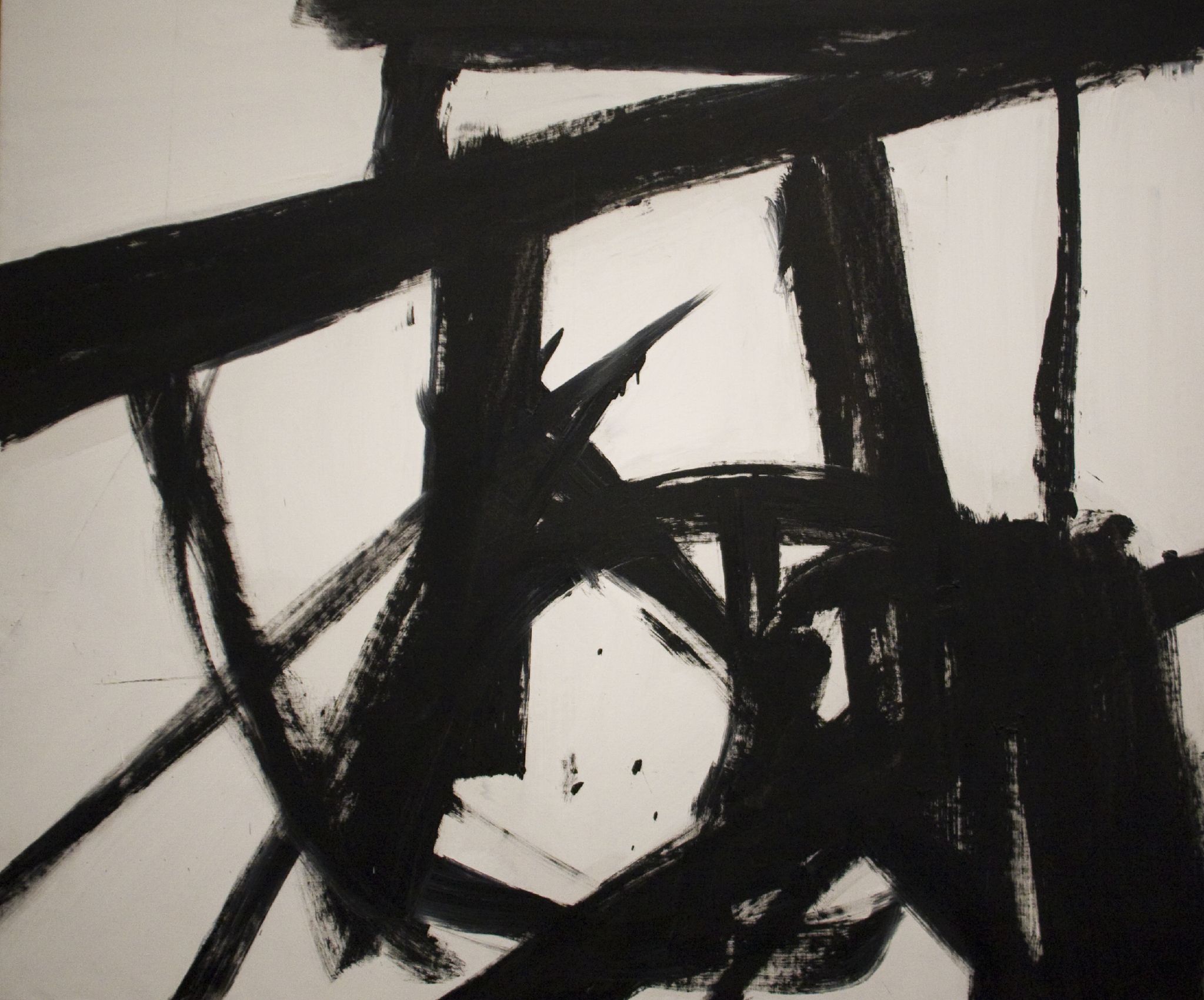
Meandering the sparsely populated gallery on a normal Tuesday afternoon, it is nearly impossible to not be transfixed towards Franz Kline’s Turin (1960). As I draw closer to the magnetic canvas, it’s massive presence causes Turin to loom over, dwarfing me with impressive size. My first instinct in the face of such a monolithic painting is to scatter to any corner of the exhibit. Instead, I decide to stand my ground in the front of the gallery. This bolstering of will initiated by the intimidating strokes anchors my legs directly in front of the canvas. Perhaps my initial reaction can be distilled with a measured and slow look.

Within the first minute I am already wavering.  The raw, impressive energy of Turin is overwhelming head on. I am used to standing off on the side, not facing a work so directly. I cannot afford to be passive, however, I have to engage with what I am staring down before me. Instead of an impartial sweeping glance across the room, I find myself fixated. Here, I am held captive.

I am drawn first towards the thick, heavy vortex of black paint. All I see is black, as my eyes are downcast towards the frenetic yet firm grip of the brushstrokes. The distracting murmurs of the gallery’s other inhabitants echoing in the spacious gallery begin to dissipate. As far as I am concerned, I am in solitude with Turin.

I become more preoccupied with trying to discern how brooding columns of pigment can pair so well with fibrous sweeping gestures. I follow the strong, deliberate beams outward until I must step back and shift my weight in order to follow their lead. As the concentrated black swirl leads out in angular, cantilevered bars, I exit the vortex that had first captured me, my eyes watching the articulate arching reaching outward. I soon realize that Turin, in fact, has an abundance of white space.

By standing my ground, I have the revelation that Turin exists in a state of contradictions. It appears both dark and light, crowded and sparse, belabored and spontaneous. I realize that there is a wealth of information behind it’s initial intimidating stature. With this reveal, it becomes obvious that Kline’s abstraction is a well-crafted process revealing a plethora of competing elements.

I step away with satisfaction, having spent a good deal of time exploring the varied and numbered passageways within Turin. Without stopping and looking unflinchingly at the canvas, I doubt I would have been able to fully appreciate Turin’s dynamism, or been able to see the fluidity in his taut lines.

-Karen Trop, Bennington College


[Franz Kline’s Turin (1960) was viewed at the Allentown Art Museum’s exhibition: Franz Kline: Coal and Steel. The Allentown Art Museum is a participating venue for Slow Art Day in 2013.]
Slow Me The Way – Manhattan Magazine Feature Article on Slow Art Day

by Tom Clavin
Published in Manhattan Magazine: December 2012

Don’t race through that museum tour: Take your time, take it easy, and take it all in. At least, that’s what the Slow Art movement would like you to do. Here, Tom Clavin explains the burgeoning campaign…

Read the full feature article on the Manhattan Magazine website 

Spooky Art Skulls for Halloween

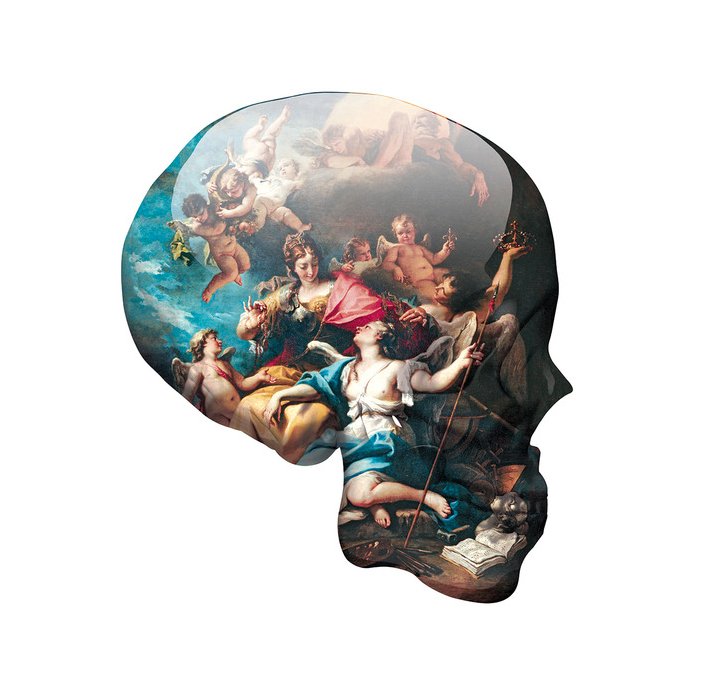
Over on our tumblr page, we’ve been featuring spooky art to celebrate Halloween. Tumblr’s staff selected our post showcasing designer Magnus Gjoen’s skulls to feature on the tumblr radar – check out one of the skulls below, and head over to our tumblr page to see more!

Magnus Gjoen, Skull Victory Over Ignorance

Happy Halloween!

The art of looking at art – Met Director Thomas Campbell

Metropolitan Museum of Art Director, Thomas P. Campbell, talks about the art of asking basic questions and of really looking at art.

Of interest, he refers to an Italian art professor, a passionate teacher, who reminded him that “all art was once contemporary” and implored him not to get caught up in art world jargon but rather to use his eyes, to really look, to ask basic questions and to try to *see* the art.

Fairly Slow Art on Governors Island, New York

It may be interesting enough that a former military barracks turns into a showcase for art each September on Governors Island in New York, but this year’s fair features a real first for the slow movement: the inaugural Slow Art Day art fair exhibit.

The idea to bring Slow Art Day to Governor’s Island began last spring, when one of the founders of the fair, Nix Laemmle, attended the 2012 Slow Art Day Chelsea gallery tour hosted by Alison Pierz. Excited by the concept of Slow Art, Nix told Alison that bringing it to the fair could add a new dimension. After brainstorming with Slow Art Day founder Phil Terry, Alison and Nix then decided to not only promote the concept of looking slowly but to create a Slow Art Day room at the fair that would feature artists focused on slow working.

As a result, Slow Art Day’s first-ever art fair exhibit features six artists who create slowly.

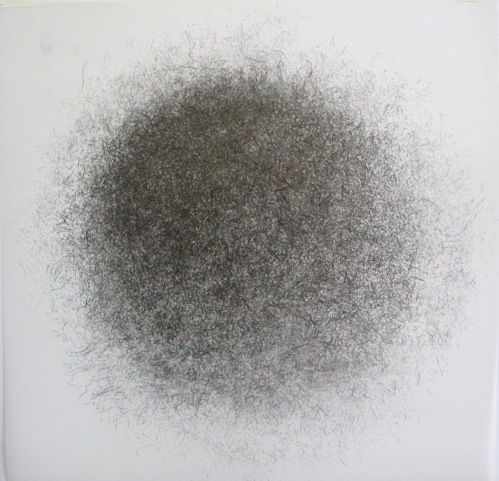
Estonian artist Jaanika Peerna is particularly invested in the slow movement, and her complex graphite drawings express that.

Graphite drawing by Jaanika Peerna

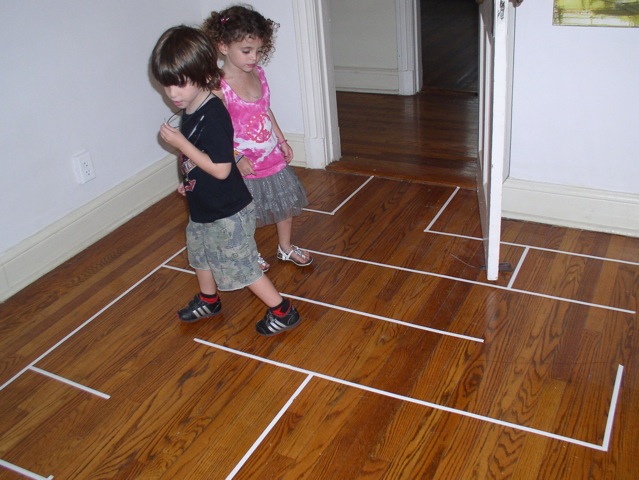
In addition to her slowly-made graphite drawings, Peerna created a maze on the floor of the Slow Art Day exhibit, which has succeeded in slowing visitors down as they enter the room.

A maze along the floor of the Slow Art Day room helps viewers literally slow down to view the art featured there.

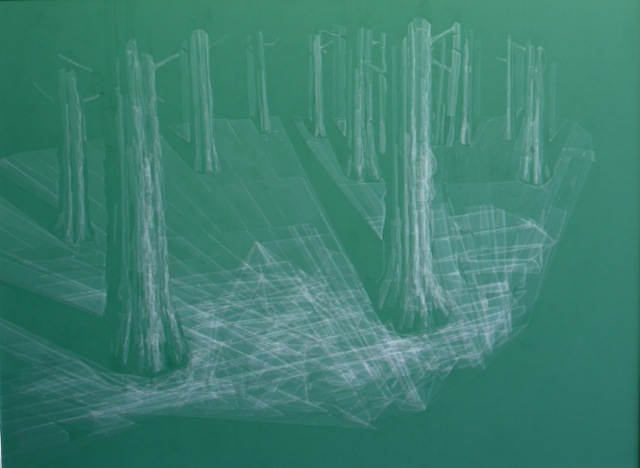
Hong Seon Jang, the second featured artist, works with Scotch tape. The overlapping tape creates opaque lines to form a wooded landscape. According to exhibit organizer Pierz, the Scotch tape art intrigues and engages visitors.

Scotch tape art piece by Hong Seon Jang

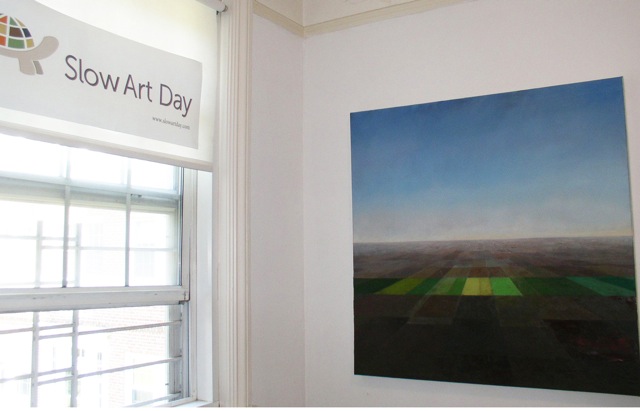
Other works in the Slow Art Day room include a more traditional landscape oil painting and two abstract works.

Oil painting by Emily Adams

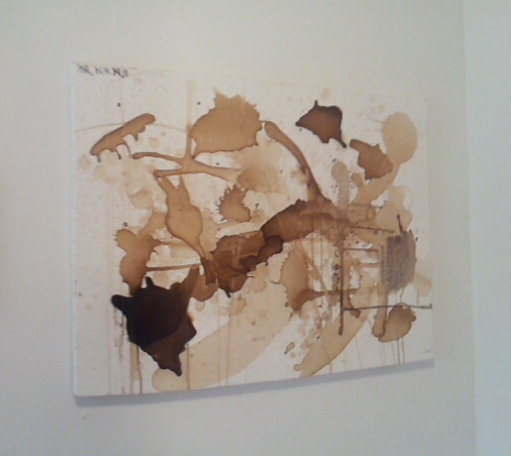
The two abstract works share an interesting connection. While one is a painting and the other is made up of coffee stains, each creator made their respective pieces via a slow process where they worked out personal issues while slowly creating their art over many days.

Abstract piece made from coffee stains by Maude Martins

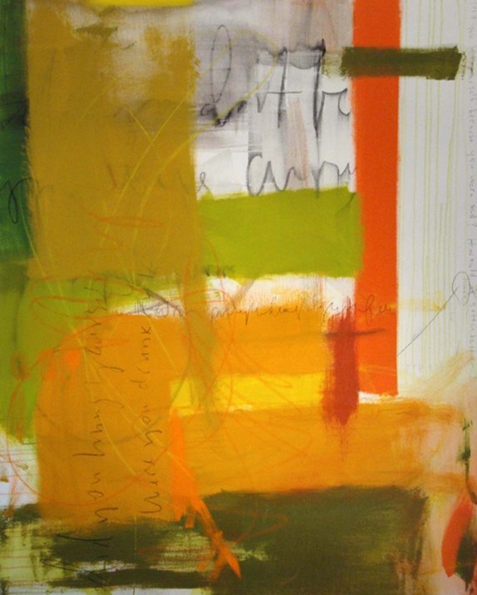
Abstract painting by Dana Crossan

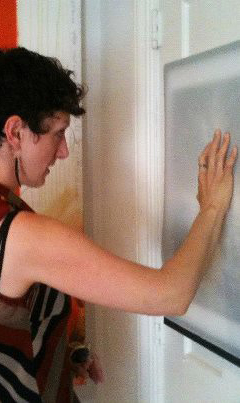
The final artwork featured is by newcomer Colleen Blackard, who creates densely rendered, representational works in ball point pen. The piece selected for the Slow Art Day room is from her newest body of work where she covers the drawing with vellum to abstract the image. The viewer is then invited to press the vellum down to reveal the image underneath. The interactivity of the piece is appealing to slow viewers, most of whom are surprised by the fact that they get to touch art.

Touchable vellum art piece by Colleen Blackard


This well-attended art fair runs on Governor’s Island in New York City throughout weekends in the month of September. If you’re in the area, stop by for a unique experience—and make sure you slowly visit the Slow Art Day exhibit.

-Report by Alison Pierz, Slow Art Day host; edited by Jennafer Martin and Phil Terry


More Slow Art Day 2013 venues added

We’ve been busy adding more locations for Slow Art Day 2013 – thanks to everyone who has signed up to be a host! Here are the latest venues:

Welcome to these new venues, and be sure to check out the complete (and constantly updated!) list of 2013 venues. If you don’t see your local museum or gallery, sign up to be a host!

Slow Art Day 2012 Report: Arizona State Museum

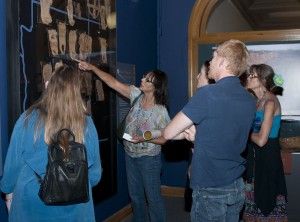
A combination of anthropology and poetry made for a unique experience for Slow Art Day 2012 at Arizona State Museum in the United States. Rather than displaying artifacts as stand-alone pieces, this anthropology-focused museum uses them in context to illustrate cultural and historical stories. So weaving storytelling into Slow Art Day made for a unique approach to this event.

Working with the docents from the University of Arizona Poetry Center, the museum invited visitors to read a haiku poem written by one of the docents and find the object that it described or to discover a piece on exhibit that interested them. They were asked to really look at the piece slowly and then write their own haiku poem about it.

Some suggestions to help visitors look at the exhibits deeper included:

  • Imagine using your five senses to get to know the piece—how would it feel, smell, sound, taste? What colors is it? What is it made of?
  • Imagine having a dialogue with the object—what action words would express its story?
  • Think about its history—how it might have been made, used or experienced and by who?
  • Look at the label and make connections.

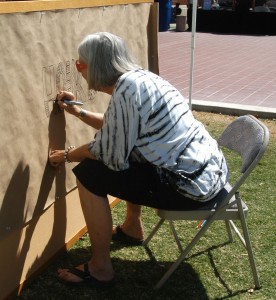
Over 100 poems were written and transcribed onto a large piece of butcher paper, which is now on display at the Poetry Center to encourage people who see it to visit the the museum and figure out which objects inspired them.

This interactive approach was a great success in helping visitors experience the exhibits in new ways. As one visitor reported: “Although I was reluctant to participate at the time (my wife cajoled me into it), in retrospect I can see that the methodology is a good one for getting people to begin to look a little deeper at a piece of art. As a retired scientist and military guy, I tend to focus more on what can be seen, measured, etc. and this exercise did, in fact, make me slow down for a second.”

For more on Arizona State Museum’s Slow Art Day experience, visit their blog.

–Report by Lisa Falk, Arizona State Museum’s Director of Education. Edited by Slow Art Day blog editor Jennafer Martin. Photographs courtesy Christine Baines and Arizona State Museum.


Slow Art Day 2012 report: Chinese Arts Centre in the United Kingdom

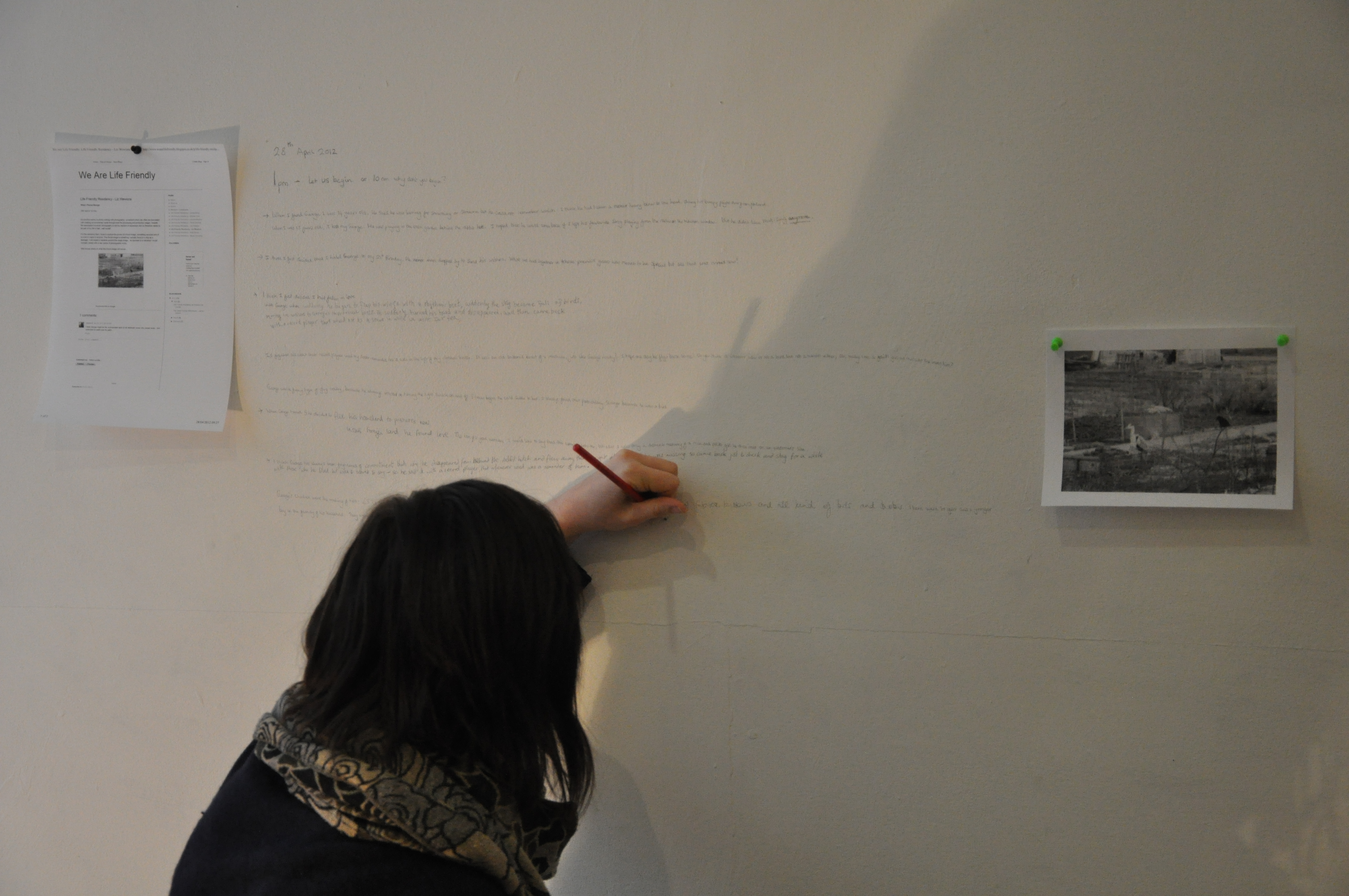
An open studios event, Slow Art Day 2012 at the Chinese Arts Center in Manchester, United Kingdom, saw a steady stream of 88 visitors slowly enjoying art while interacting with the artists and enjoying a snack of slowly made food (10-day sourdough, Amish Friendship Bread, tea eggs, cheese, radish seedleaves, and ginger beer).  Hosted by a collective of artists in residence, the pieces visitors viewed were all contemporary, nontraditional works-in-progress by members of the Life Friendly Collective, including many interactive elements, such as a collaborative story on the gallery wall initiated by Elizabeth Wewiora (pictured below).

Photo by Erinma Ochu

Visitors felt the context of Slow Art Day made them more likely to spend time thinking about as well as participating in the art pieces, and the overall response was very positive!

–Report by Jessica Mautner, on behalf of Life Friendly Collective. Edited by Slow Art Day blog editor Jennafer Martin

Slow Art Day Report 2012: Tate Britain

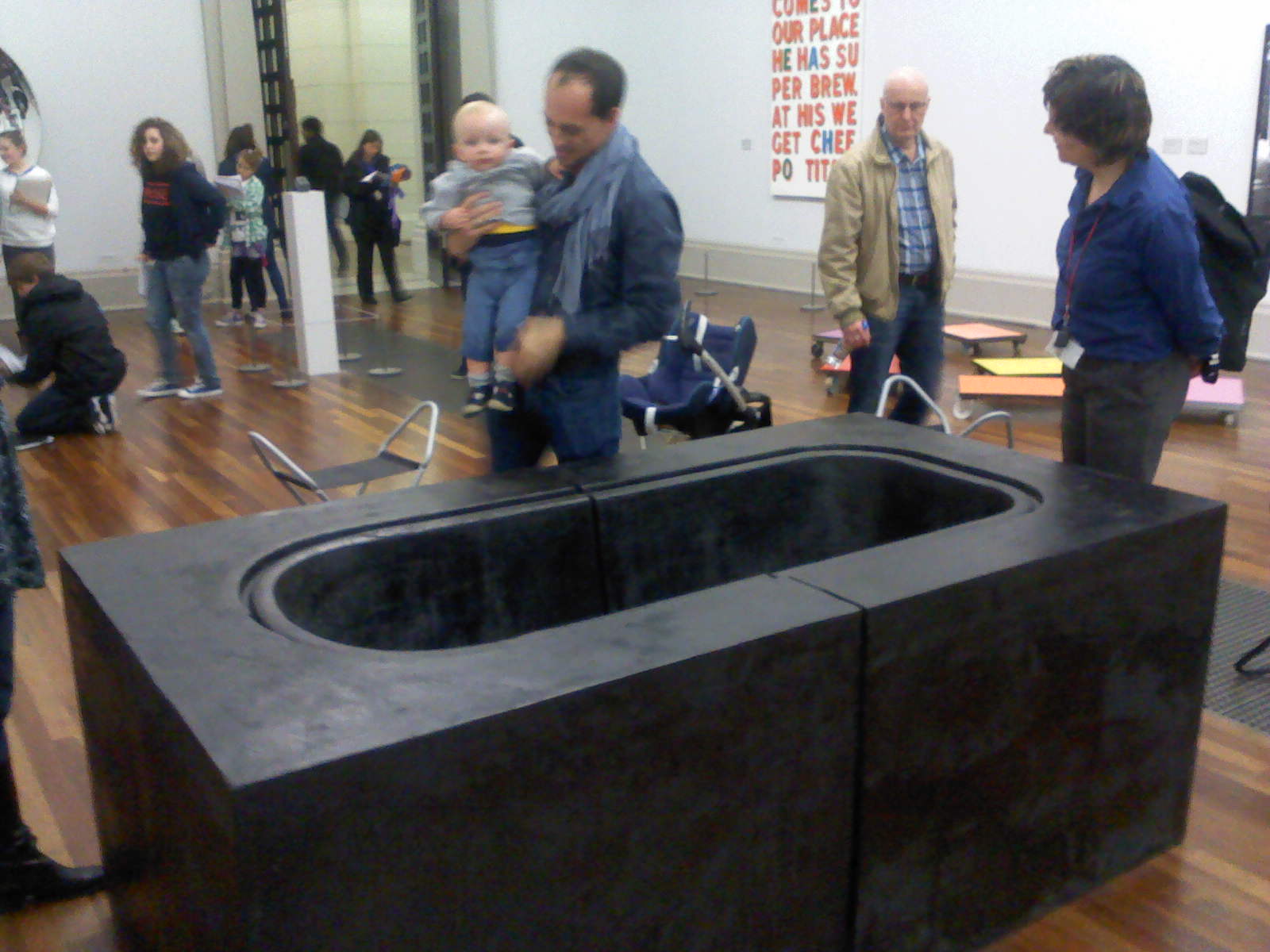
Although the weather outside was cold and rainy, the feeling inside the United Kingdom’s Tate Britain was sunny and inspired for attendees of Slow Art Day on Saturday, 28th April, 2012. A stimulating event that built a stronger interest in art among its attendees, this was the second Slow Art Day event that Paul Langton hosted. Paul collaborated with Tate’s Community Learning team on several promotions, including an informative post on Tate’s website, and this year’s event attracted a wider and varied audience than the previous year’s, including a one-year-old baby as well as Tate’s Curator of Community Learning, Liz Ellis.The attendees chose to stay together throughout the event rather than viewing the selected pieces individually, and together they thoughtfully viewed a variety of media, including video, oil, urethane, concrete, and more. (The baby was particularly interested in the concrete piece, a bust of Stalin by Peter Lazslo Peri!) Among these was Rachel Whiteread’s Untitled (Black Bath) below.
A lively discussion over lunch helped the group get to know one another better, and they discovered that one attendee’s relative was due to host Slow Art Day in London, Ontario, that day. That connection helped them feel like a part of Slow Art Day beyond their immediate circle, appreciating the event as part of a universal experience overall.
-Paul Langton’s host report edited by Slow Art Day editor Jennafer Martin

Slow Art Day 2012 Report: Colorado Springs Fine Arts Center

The Colorado Springs Fine Arts Center hosted its first Slow Art Day on April 28, 2012 – and based on the success, host Nicole Anthony says that the center plans to offer slow art viewing exercises, complete with a post-viewing wrap-up, more often.

Host Nicole Anthony of the Colorado Springs Fine Arts Center.

Like many Slow Art Day events it was small but significant.  The small group size allowed for lengthy discussion over each of the 5 different art pieces that Anthony chose—in fact, there was so much engagement that the group spent an average of 30 minutes slowly looking at and then discussing each piece.

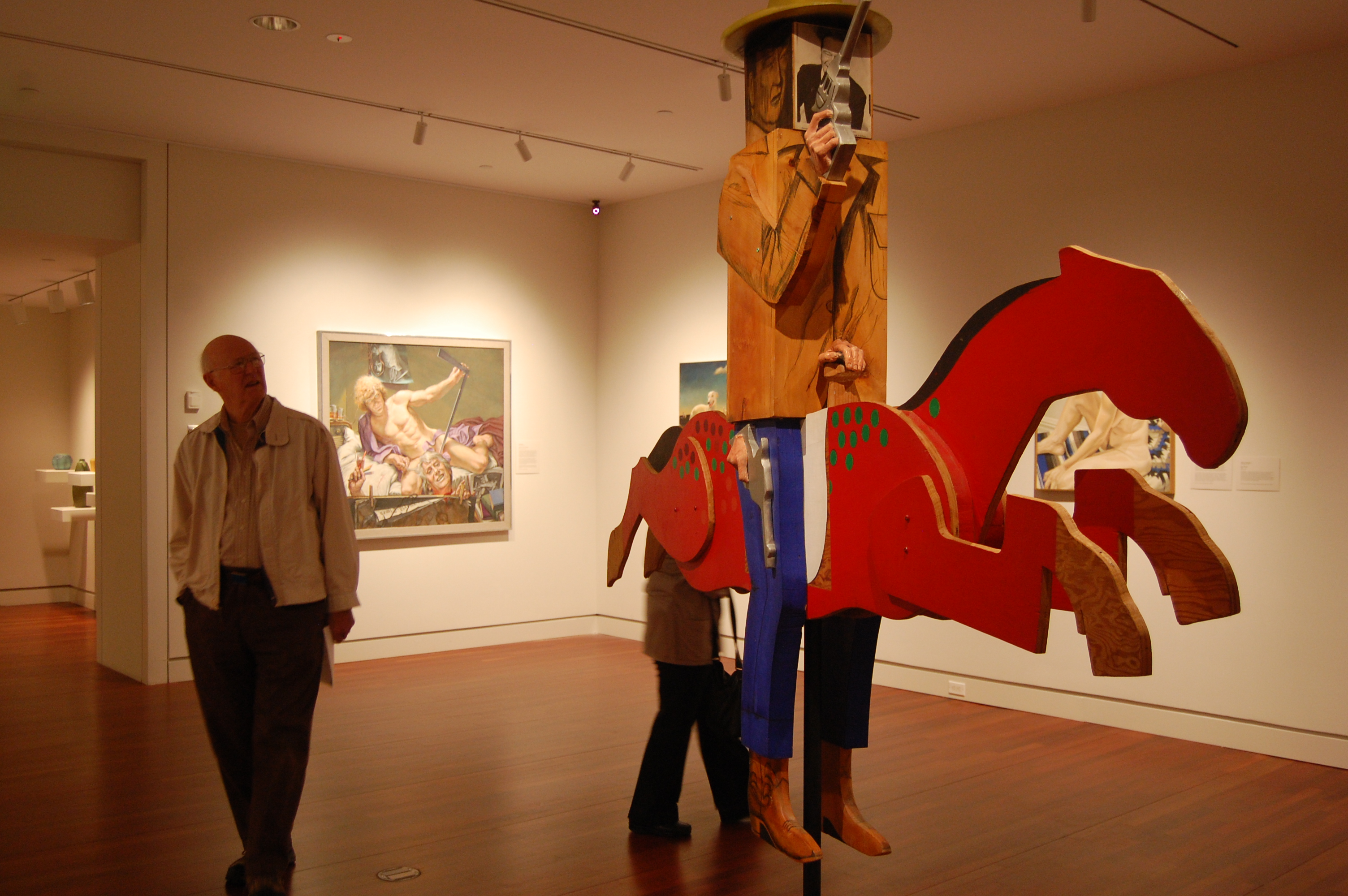
John Wayne, 1963 (mixed media) by Marisol (Escobar) was one of the five pieces Nicole Anthony chose for the Colorado Springs Fine Arts Center Slow Art Day 2012.

Afterwards, lunch in the center’s cafe continued the lively conversation. As with many Slow Art Day events, the experience not only increased participants’ love for art, but Anthony says it also created a surprisingly deep sense of community.

– Nicole Anthony’s host report edited by Slow Art Day editors Jennafer Martin and Phil Terry