
Flemish Masterpieces at Sint Pauluskerk in Antwerp

For their 7th Slow Art Day 2025, Sint Pauluskerk (St Paul’s Church) in Antwerp, Belgium offered a rare viewing experience as two masterpieces of the Flemish community were presented side by side for the first time in four hundred years. The Flagellation by Peter Paul Rubens and The Carrying of the Cross by Anthony van Dyck were temporarily displayed at eye level due to partial restoration work in the church.
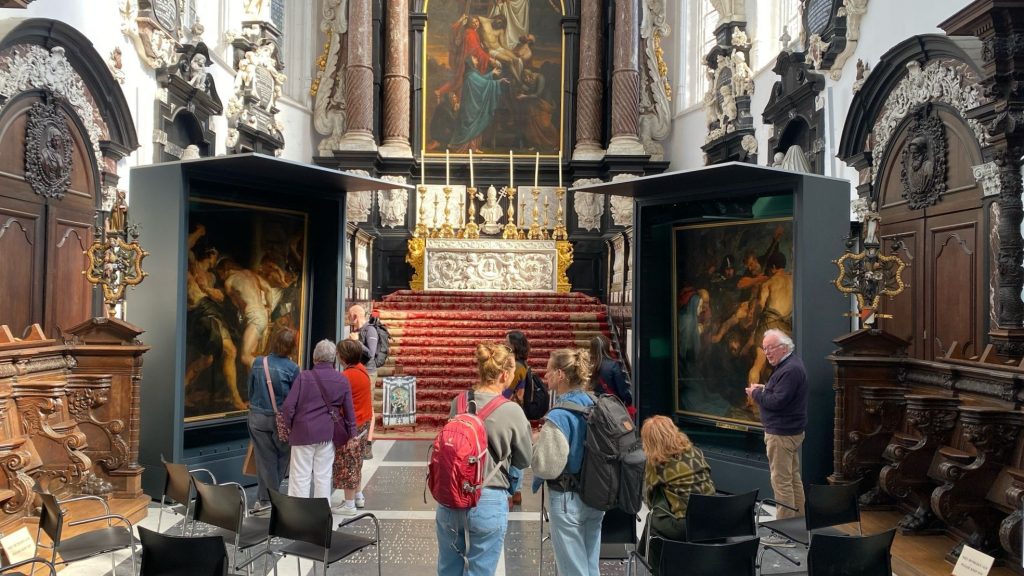
Slow looking participants viewing The Flagellation by Peter Paul Rubens and The Carrying of the Cross by Anthony van Dyck. © Lucid.

Normally installed approximately four meters high, the paintings’ lowered placement allowed Slow Art Day participants to examine details that are usually difficult to see. Visitors were invited to spend time closely observing both works and share their observations and questions during guided discussion with the three guides who were present, Regina, Stéphane, and Armand.
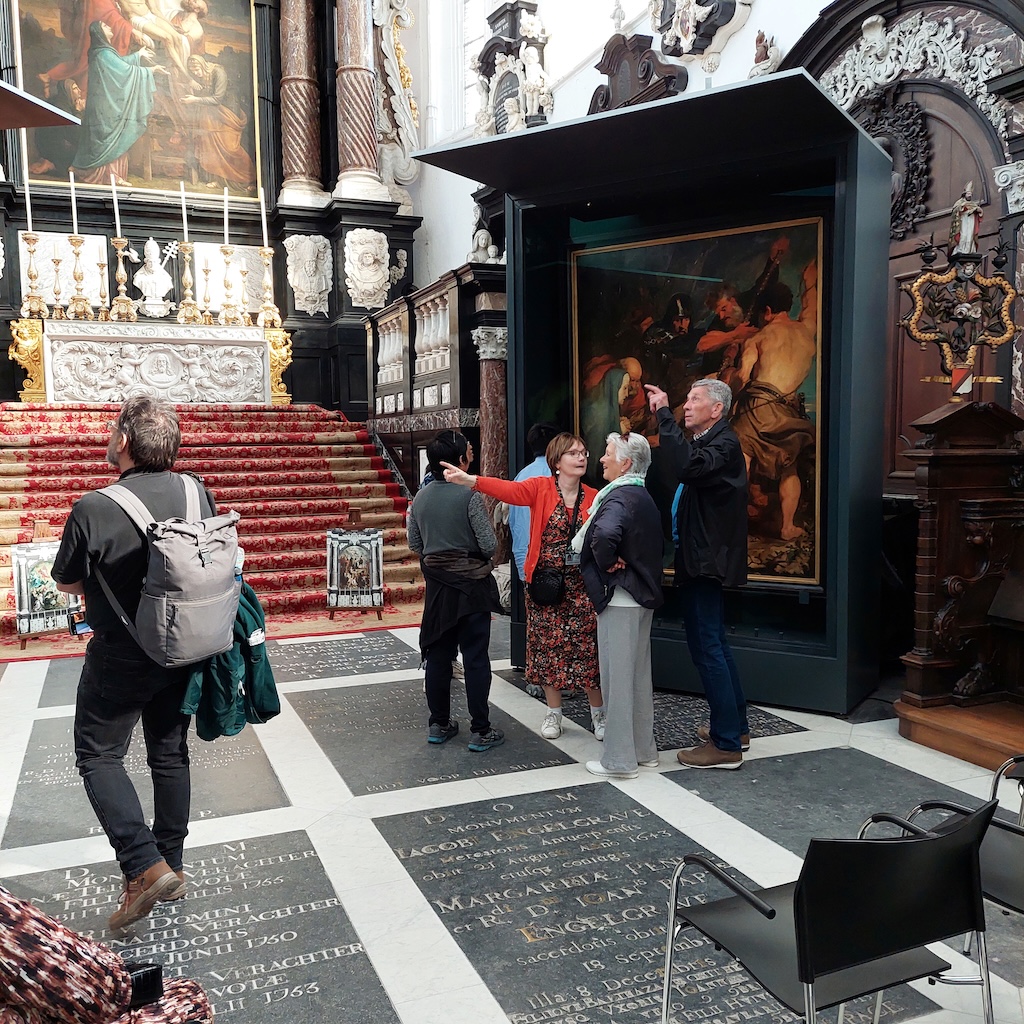
Slow looking participants viewing The Flagellation by Peter Paul Rubens and The Carrying of the Cross by Anthony van Dyck. © Lucid.

Sint Pauluskerk has been a pioneering leader in the church wing of the Slow Art Day movement, and their continued involvement has helped demonstrate how churches and other religious organizations can become powerful spaces for slow looking.

We thank the wonderful Armand Storck and the team at St Paul’s Church for making this exceptional viewing opportunity possible and for supporting Slow Art Day 2025. We look forward to seeing what they come up with for Slow Art Day 2026.

– Ashley, Johanna, Jessica Jane, and Phyl
P.S. – Follow them on Facebook and Instagram.

Latvia’s Riga Bourse Joins Slow Art Day

The Art Museum Riga Bourse in Riga, Latvia, hosted their first Slow Art Day this year as a virtual event, like many art institutions across the world, due to Covid19.

Participants were invited to slowly view five works for 5-10 minutes each from the museum’s permanent collection using their Google Arts & Culture platform:

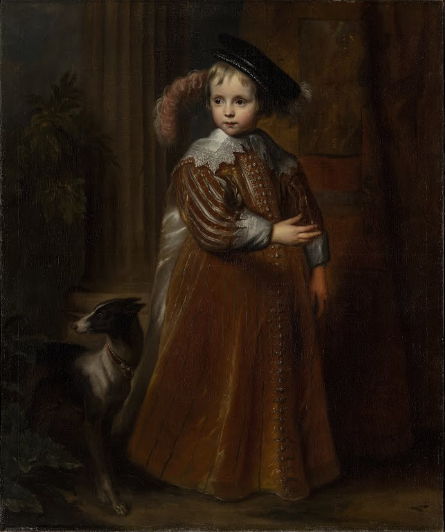
Portrait of William II, Prince of Orange-Nassau by the workshop of Anthony van Dyck, 1632 (the most viewed painting of the event, pictured below)
Musical Society by Niccolo Renieri, 17th century
Banks of the Tiber near Acqua Acetosa by Ludwig Richter, 1835
Christ on the Cross by Pieter Pietersz Aertsen, late 16th- early 17th century
Fisher Girl by Eugène Isabey, 1850

Workshop of Anthony van Dyck, Portrait of William II, Prince of Orange-Nassau, 1632, oil on canvas. Collection of the Latvian National Museum of Art. Used with permission.

The Google Arts platform allowed participants to zoom in on the 5 selected artworks to closely study brushstrokes and textures. Participants were then encouraged to consider the wider social context of each work and provide their commentary via the museum’s Facebook and Twitter accounts which reached more than 4000 people during the event. The museum produced a video (in Latvian) about Google Arts and slow looking that is still available to download.

Sandra Kempele, Curator of Education at Riga Bourse, reflected on how “encouraging [it is] to be part of this global community” of Slow Art Day especially now in the face of changing and trying circumstances.

At Slow Art Day HQ, we heartily echo this sentiment. Despite still advocating for the special experience of viewing art in museums, we are continually encouraged by the creativity and adaptability showcased by art institutions such as the Riga Bourse during this pandemic.

We look forward to the Riga Bourse’s continued participation in 2021 –hopefully in their actual museum.

– Johanna