African Art and Haiku in South Africa

For their eighth Slow Art Day, Artichoke Gallery at MelonRouge in Magaliesburg, South Africa invited visitors to slow down with art and poetry at an interactive morning titled “Afriku: Slow Visions & Whispered Words.” The event paired slow looking at a curated selection of African artworks with a hands-on Japanese haiku writing workshop led by gallery owner Hannelie Sanders.
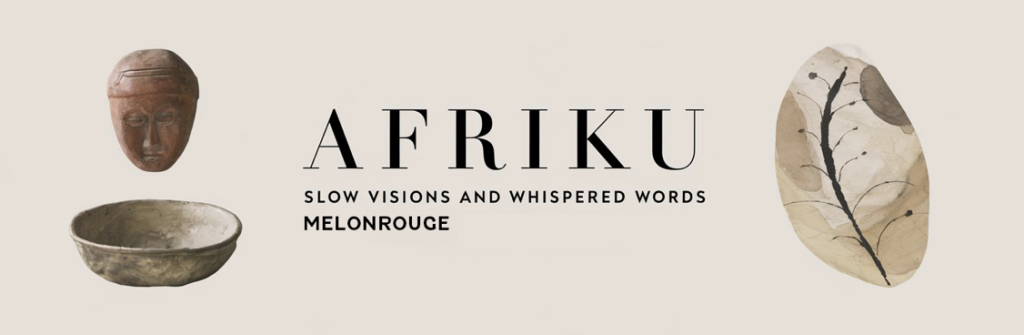
On Saturday, April 5, 2025, participants gathered in the gallery’s contemplative space to begin their slow looking experience. The exhibition offered a rich range of African art — from textured mixed-media works and figurative compositions to abstract pieces that emphasize line, pattern, and gesture. The diversity of the artworks created varied visual rhythms: some pieces invited attention to bold color and dynamic shapes; others unfolded quietly, revealing depth and nuance through closer observation.

As participants slowed down with individual works, they were encouraged to engage with formal elements such as surface texture, mark making, and spatial relationships, and with the emotional presence each piece carried. These visual qualities provided fertile ground for deep attention, allowing slow lookers to connect more intimately with what they saw.

After an initial period of quiet observation, Hannelie Sanders introduced the basics of Japanese haiku. Participants were then invited to translate what they noticed in the art into their own three-line poems, using mood, imagery, and sensory detail as inspiration. The morning’s workshop emphasized presence, patience, and creative response, encouraging people to let what they saw inform what they wrote.

Following the haiku writing, the group shared reflections over a light lunch. Many spoke of how slowing down shifted their perception, helping them notice details and relationships within the artworks that might otherwise go unseen. In a further celebration of creative engagement, the haiku poems crafted during the session were displayed alongside the exhibition for the remainder of its run through May 4, allowing poetry and visual art to exist side by side.

At Slow Art Day HQ, we appreciate how Afriku wove visual art with poetry (and lunch!) into the slow looking experience. We love that participants’ poems became part of the exhibition itself.

We look forward to seeing what Artichoke Gallery at MelonRouge comes up with for Slow Art Day 2026.

– Ashley, Johanna, Jessica Jane, and Phyl

P.S. Follow them on Facebook
MelonRouge and Artichoke Gallery in South Africa Hosts 7th Slow Art Day

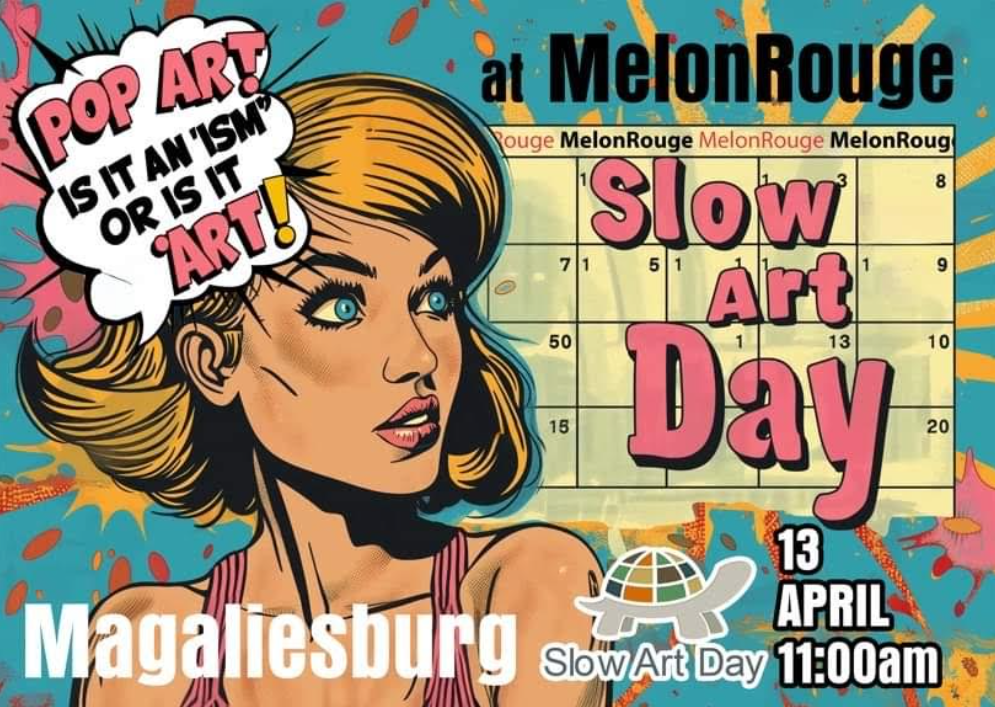
For their Slow Art Day 2024, the MelonRouge and Artichoke Gallery in Magaliesburg, South Africa, invited visitors to slowly experience the exhibition ‘POP Art – is it ISM or is it ART?’, listen to music, and eat food.

Slow Art Day poster for the event

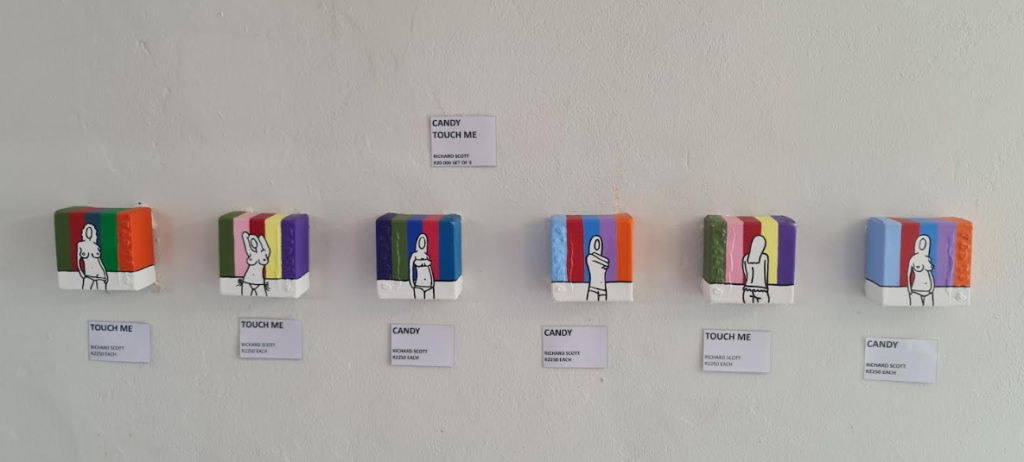
Richard Scott, ‘Candy. Touch Me.’ (unknown date). Photo by Hannelie Sanders

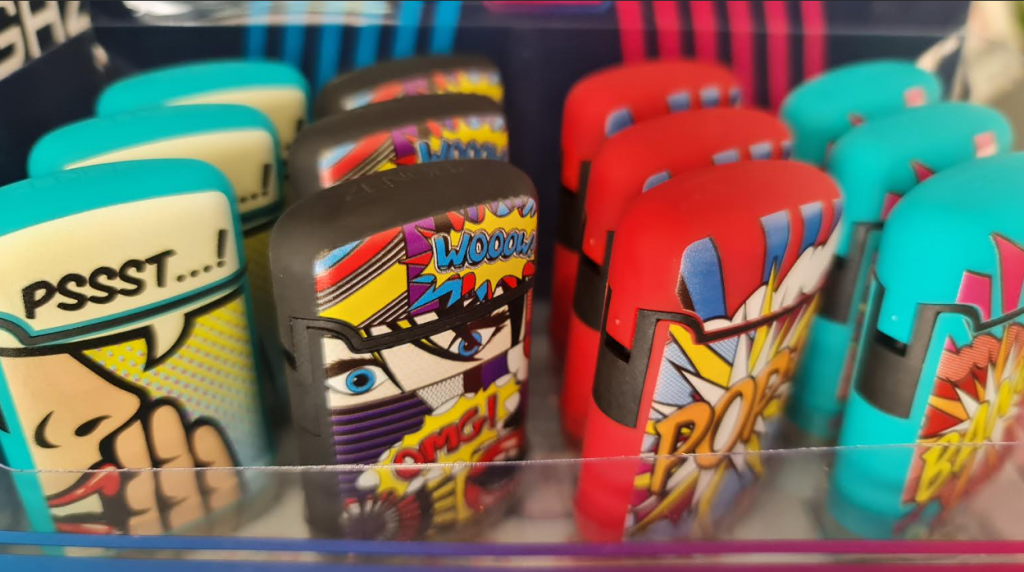
Lighters with pop-art prints on display for Slow Art Day

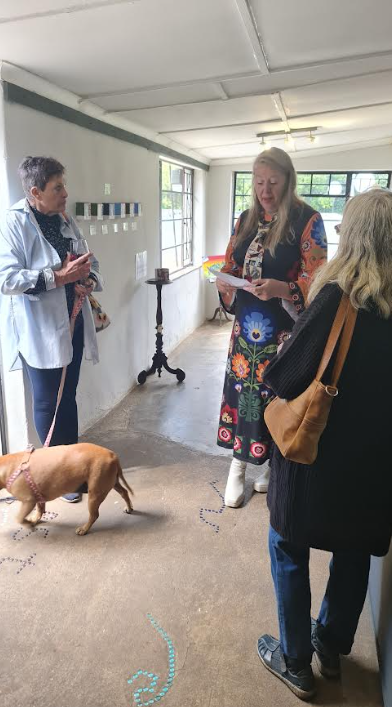
Slow Art Day participants (and a dog vistor!) and Hannelie Sanders. Photo by Hannelie Sanders

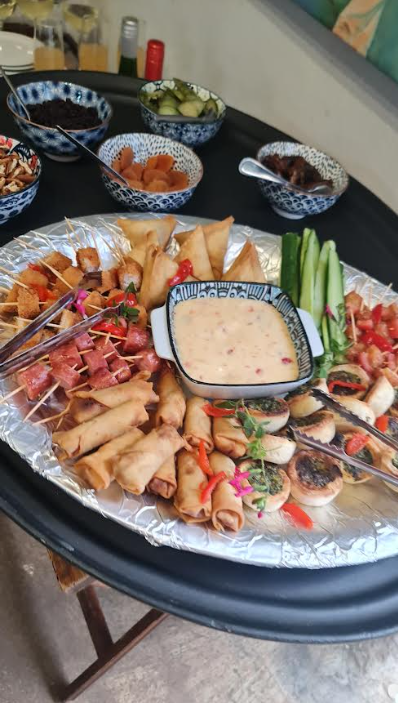
Food served as part of the event. Photo by Hannelie Sanders

On Slow Art Day, visitors gathered at the Gallery to explore the art of Richard Scott and listen to the
music of Niki Daly. The gallery also displayed various practical items adorned with Pop Art, such as lighters, vinyl covers, and magazines, integrating art into everyday life.

Hannelie Sanders, the event host, led a lively and informative discussion. The central question during the event was whether Pop Art qualifies as an art form or merely an “ism.” The conversation was inspired by Niki Daly’s song, whose lyrics playfully questioned the distinction between artistic movements and true art:

Lyrics Excerpt:
Maholy-Nagy, Maholy-Nagy
I love his ism, but is it art?
Tell me my Bauhaus baby
Is it art?
Is it an ism or is it an art?

The song set the tone for the day’s theme, blending humor with a critical examination of art
history and theory.

Richard Scott, a prominent British artist based in Cape Town, was a key feature of the event. Scott’s art often combines vivid Pop Art elements with everyday objects, making his work accessible and engaging. His art was displayed alongside practical items, emphasizing Pop Art’s integration into daily life.

As most readers know, Pop Art emerged in the mid-20th century, characterized by its use of popular culture imagery and mass media techniques. Artists like Andy Warhol and Roy Lichtenstein drew inspiration from advertising, comic books, and consumer products, challenging traditional notions of art. This movement blurred the lines between high art and mass culture, making art more accessible to the general public.

At Slow Art Day HQ we are looking forward to whatever MelonRouge Artichoke Gallery designs for Slow Art Day 2025.

-Johanna, Ashley, Jessica Jane, and Phyl

P.S. Stay up to date with events at the MelonRouge Artichoke Gallery via their Facebook

Here you can also see some videos produced in connection with the Slow Art Day event and shared to Facebook: