Multi-Sensory Experience at Maryhill Museum

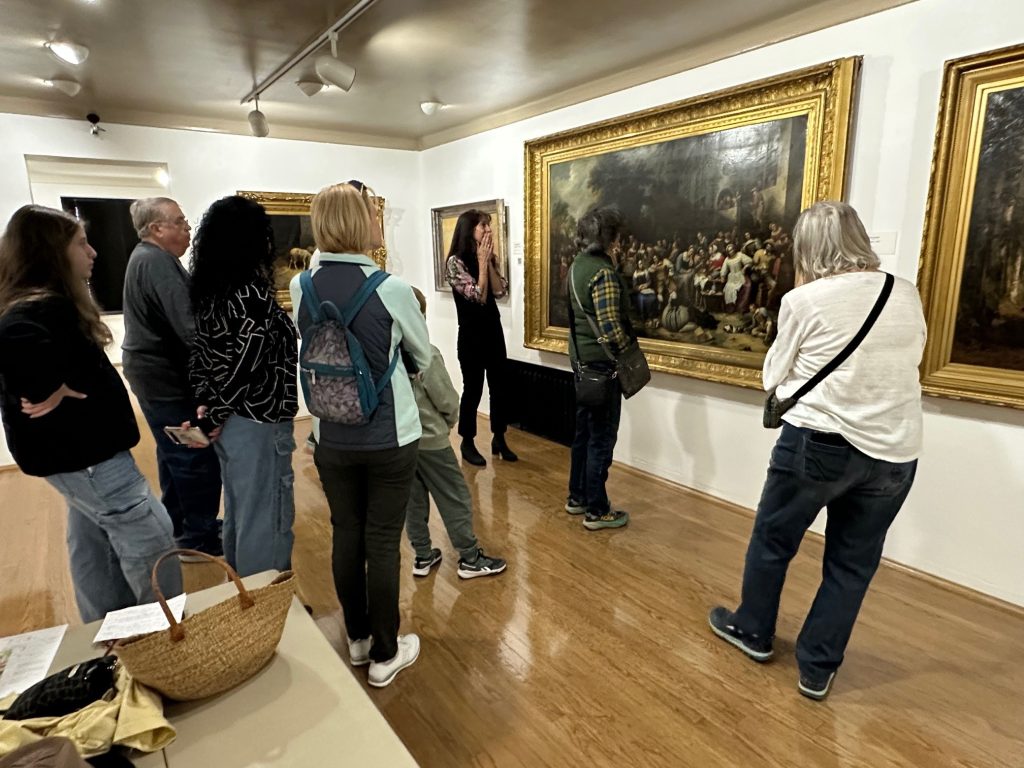
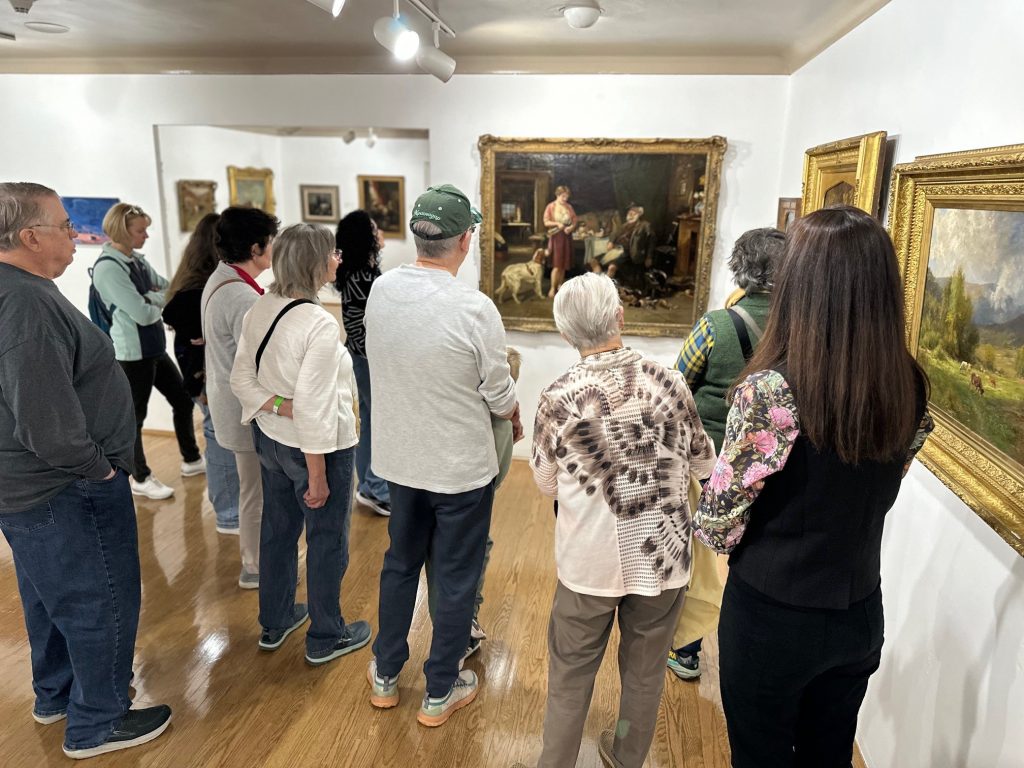
For their fifth Slow Art Day, the Maryhill Museum of Art in Goldendale, Washington hosted a lively and imaginative slow looking session led by Curator of Education Sorcha Meek Paul.

Participants gathered to spend time with two paintings from the museum’s permanent collection:

  1. The Wedding Feast c.1660 by Gillis van Tilborg the Younger. Oil on Canvas. Flemish, c. 1625-c.1678
  2. The Crofters’ Kitchen, 1884 by Rober Henry Roe. Oil on canvas. British, 1822-1905
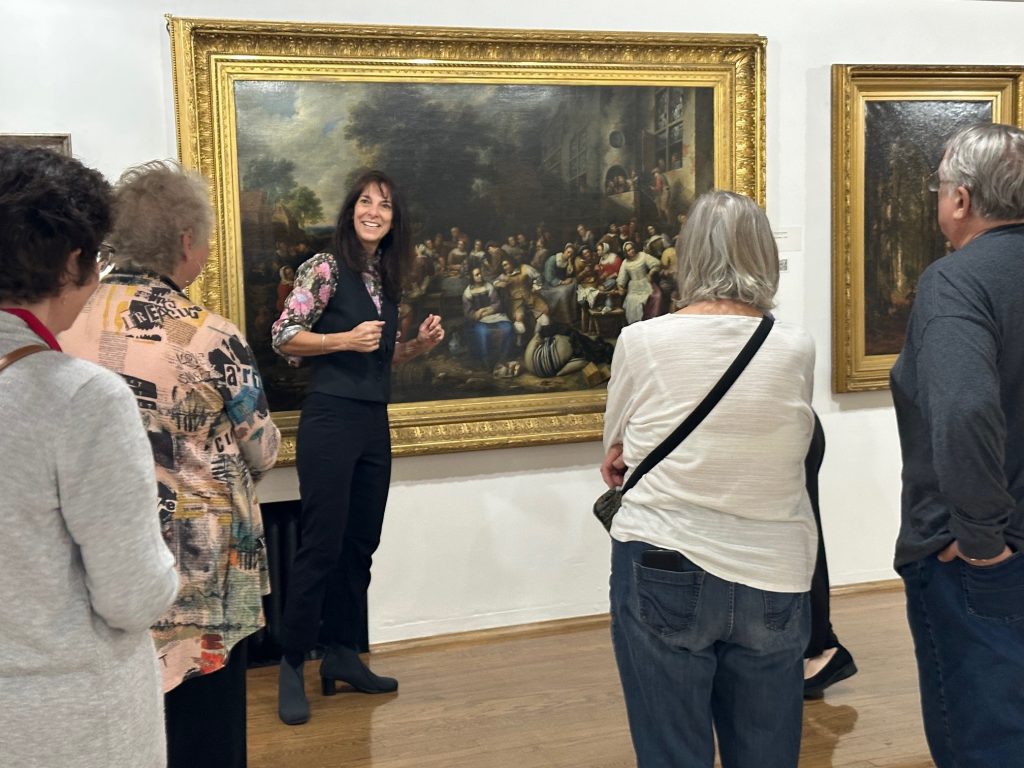
The session began with several minutes of quiet observation. Visitors were invited to share their initial impressions using the simple phrase “I see…”, taking turns describing what they noticed in the paintings. This approach helped participants to focus on careful observation as well as helped to create community by having the participants build on each other’s discoveries.

Next, Sorcha guided the group through a sensory exercise designed to deepen engagement with the artworks. Participants were asked to imagine stepping into the paintings and to consider what they might smell in the scene. When looking at The Wedding Feast, this question sparked laughter as visitors imagined the smells of food, drink, and a bustling celebration.

Visitors then imagined what they might hear, leading to the discovery of new details, including a man playing a lute in the background of the lively gathering. Participants also considered taste and touch.

Only after this extended slow looking and imaginative exploration did Sorcha introduce historical context. Participants learned that The Wedding Feast was painted around the same era as Johannes Vermeer created Girl with a Pearl Earring, prompting participants to notice similarities.

One of the highlights of the session was the participation of children. For the first time in their Slow Art Day design, they invited younger visitors to join the discussion. The young people brought fresh observations and enthusiasm. As Sorcha noted, it was especially rewarding to see a 10-year-old become excited about looking closely at art.
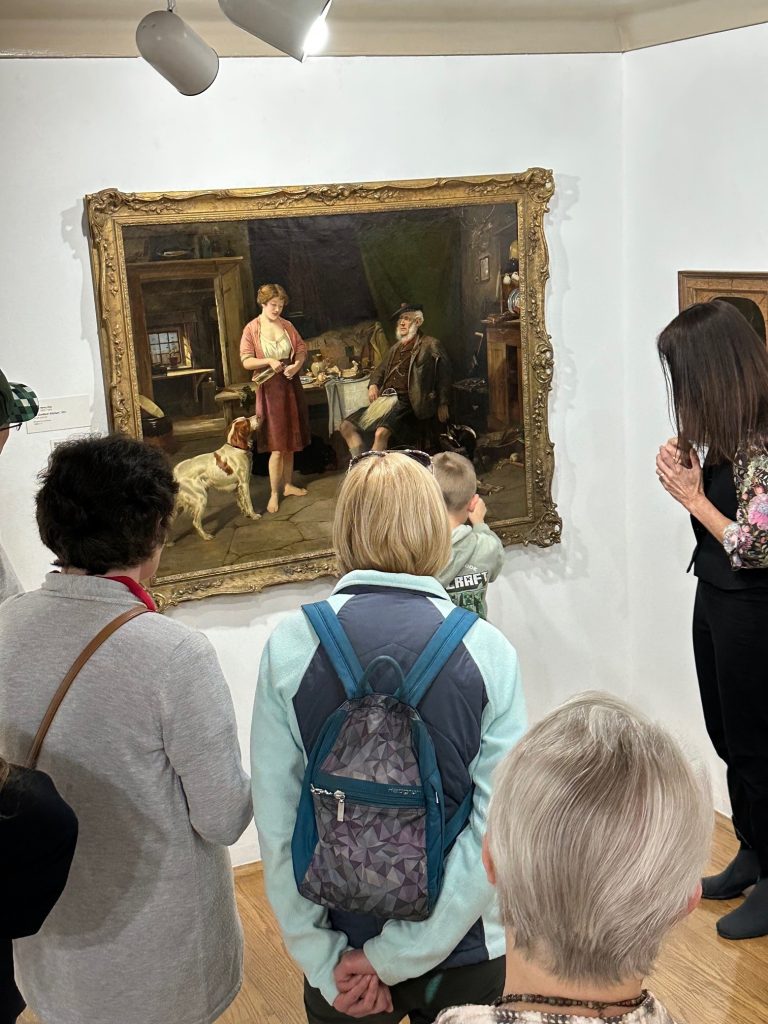
Through quiet observation, sensory imagination, and shared discovery, the Slow Art Day program at Maryhill Museum of Art created community and joy for visitors of all ages.

We at Slow Art Day HQ are grateful to Sorcha Meek Paul and the team at Maryhill Museum of Art for creating such an engaging and welcoming experience and look forward to what they come up with for Slow Art Day 2026, which is coming up April 11, 2026.

— Ashley, Johanna, Jessica Jane, and Phyl

P.S. If you have not yet registered your museum of gallery for Slow Art Day 2026, please do.
Multisensory Slow Art Day at the House of European History

For Slow Art Day 2025, the House of European History in Brussels, Belgium, launched a new program called “Slow Looking Saturday,” a guided series designed to accompany the museum’s temporary exhibition Presence of the Past: A European Album, which explores documentary photography and how Europeans engage with memory, history, and the legacy of the past.

The inaugural session, held on April 5 for Slow Art Day, focused on a single photographic project: “Our Family Garden” by Bosnian artist Smirna Kulenović. Participants gathered for a one-hour facilitated slow looking experience led by Pauline Gault, Informal Learning Project Manager at the museum. The session was designed to help visitors deeply explore one image and its many layers of meaning.

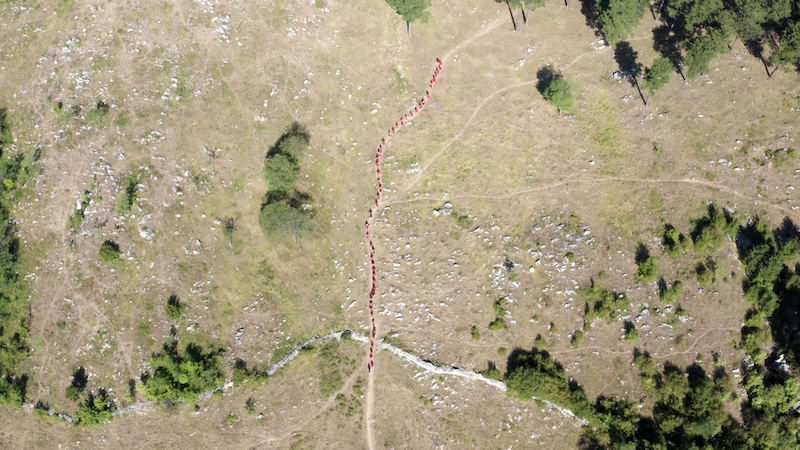
“Our Family Garden” documents a remarkable act of healing through nature. In the project, calendula flowers are planted in former trenches used during the Siege of Sarajevo, transforming spaces once associated with violence into places of growth and remembrance. The Slow Art Day session took place just one day before Sarajevo’s city day, when people now gather to care for these gardens.

Drone view of the calendula-planting performance ‘Our Family Garden’ organized by Smirna Kulenovic and filmed by Jasmina Omerika, Bosnia and Herzegovina, 2021.
Smirna Kulenović, A grandmother, mother and daughter prepare to plant flowers in the former trenches from which Sarajevo was besieged between 1992 and 1996, Bosnia and Herzegovina, 2023.

To guide the slow looking experience, Gault incorporated educational frameworks including Project Zero Visible Thinking routines from the Harvard Graduate School of Education and the Thinking Museum® Approach developed by museum educator Claire Bown, author of The Art Engager: Reimagining Guided Experiences in Museums. Participants engaged in several structured activities including Memory Draw, Engage & Imagine, and 3–2–1 Reflection, each designed to deepen observation, interpretation, and conversation.

The session also activated the sense of smell: dried calendula flowers were present in the room, allowing participants to connect physically with the plant at the center of the artwork. During the closing reflection exercise, visitors wrote their thoughts on the back of specially designed postcards featuring the artwork. These served both as reflection tools and souvenirs for participants to take home.

Feedback from participants was very positive. Many remarked that focusing on a single photograph allowed them to notice details and meanings they would have otherwise overlooked.

We at Slow Art Day HQ are delighted to see the House of European History launch an entire learning series from their Slow Art Day program. Special thanks to Pauline Gault and the Learning & Outreach team for developing this thoughtful approach, and we look forward to hearing about their event for Slow Art Day 2026.

— Ashley, Johanna, Jessica Jane, and Phyl