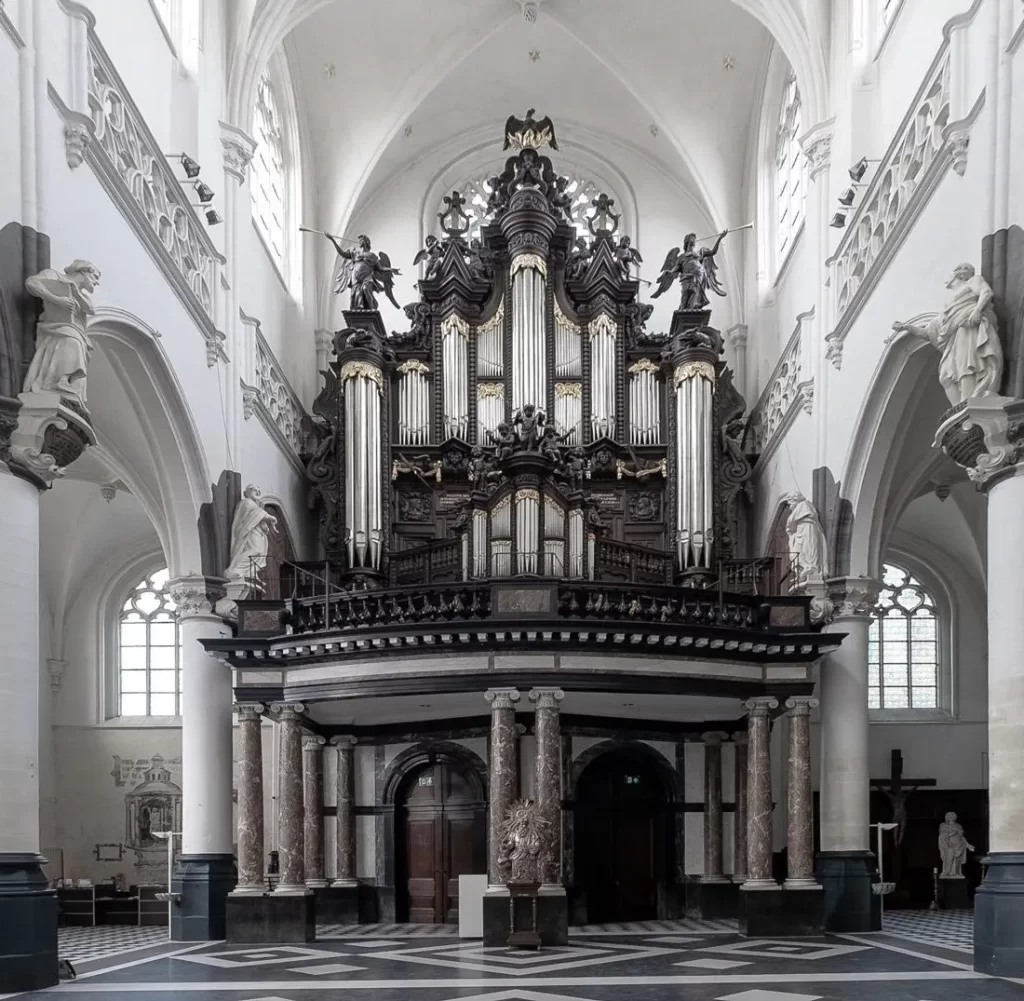
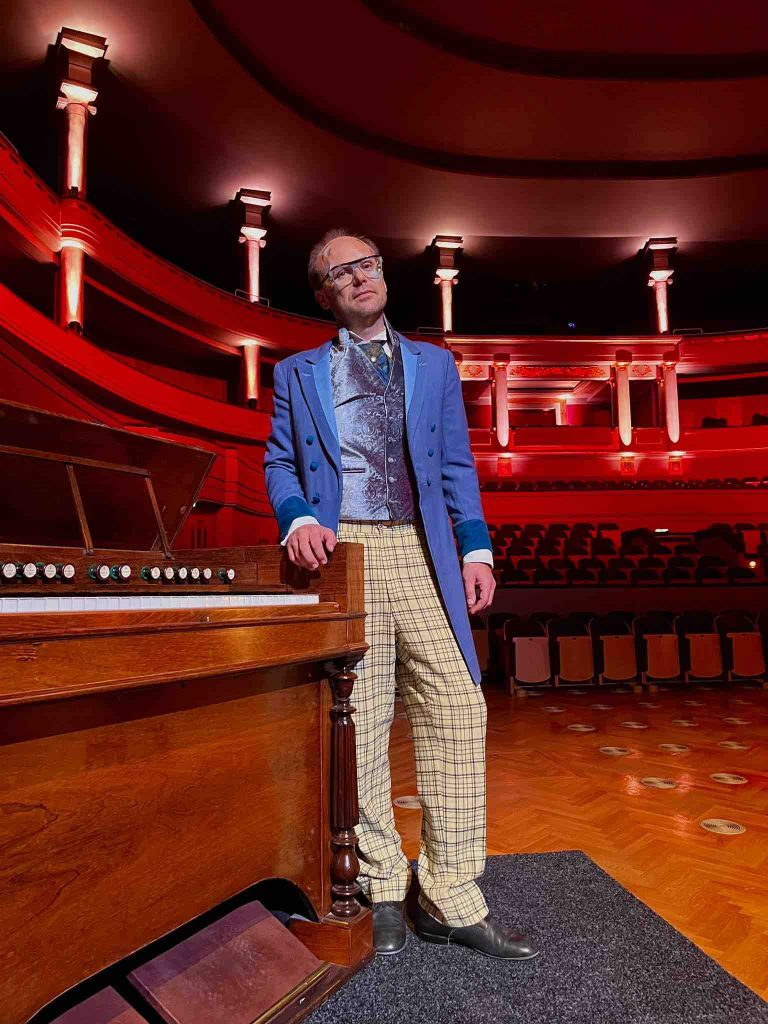
For Slow Art Day 2025, the Royal Museum of Fine Arts Antwerp (KMSKA) in Belgium invited visitors to slow down and engage deeply with art through a series of thoughtfully designed experiences across the museum’s exhibitions.
KMSKA has been an important participant in the Slow Art Day movement for nearly a decade and was notably the first museum in Belgium to organize a Slow Art Day event in 2016. For the 2025 edition, the museum expanded its program with several creative formats designed to help visitors observe more carefully and reflect more deeply.
One of the highlights was an experimental program called “Slow Looking with Music.” Visitors spent an hour focusing on a monumental triptych by the 15th-century Flemish painter Hans Memling, while a live soundtrack was performed by the Belgian experimental band Monnik. The musicians performed from behind the audience so that all attention remained directed toward the artwork (note: we at Slow Art Day HQ wish we could have been there).
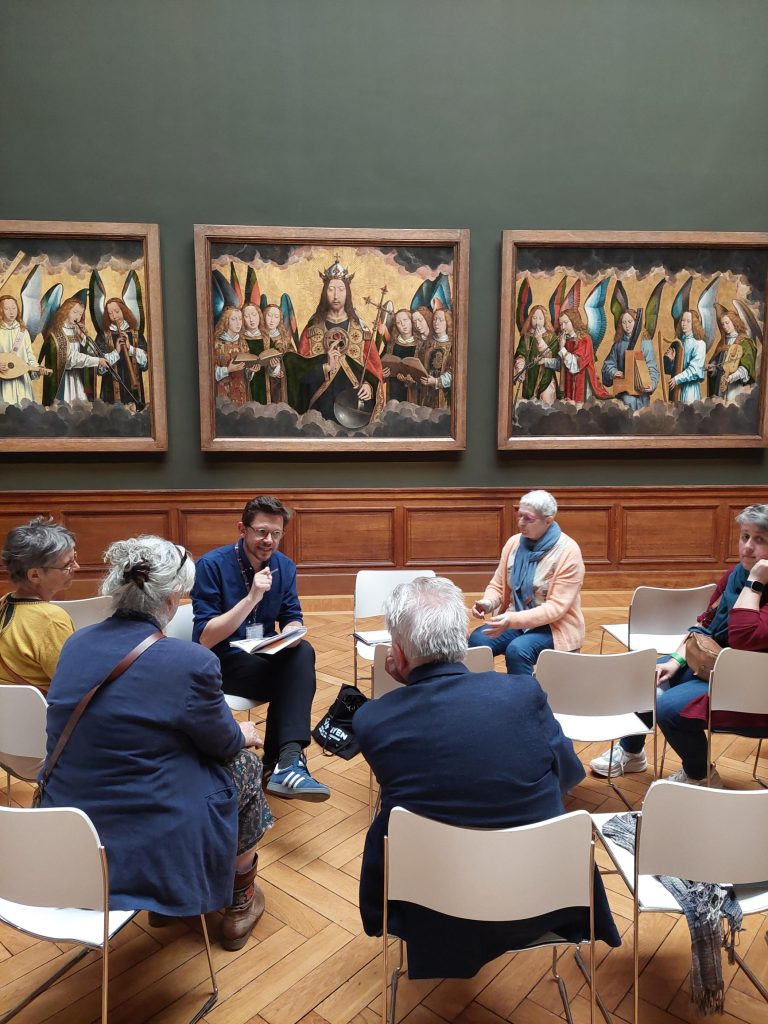
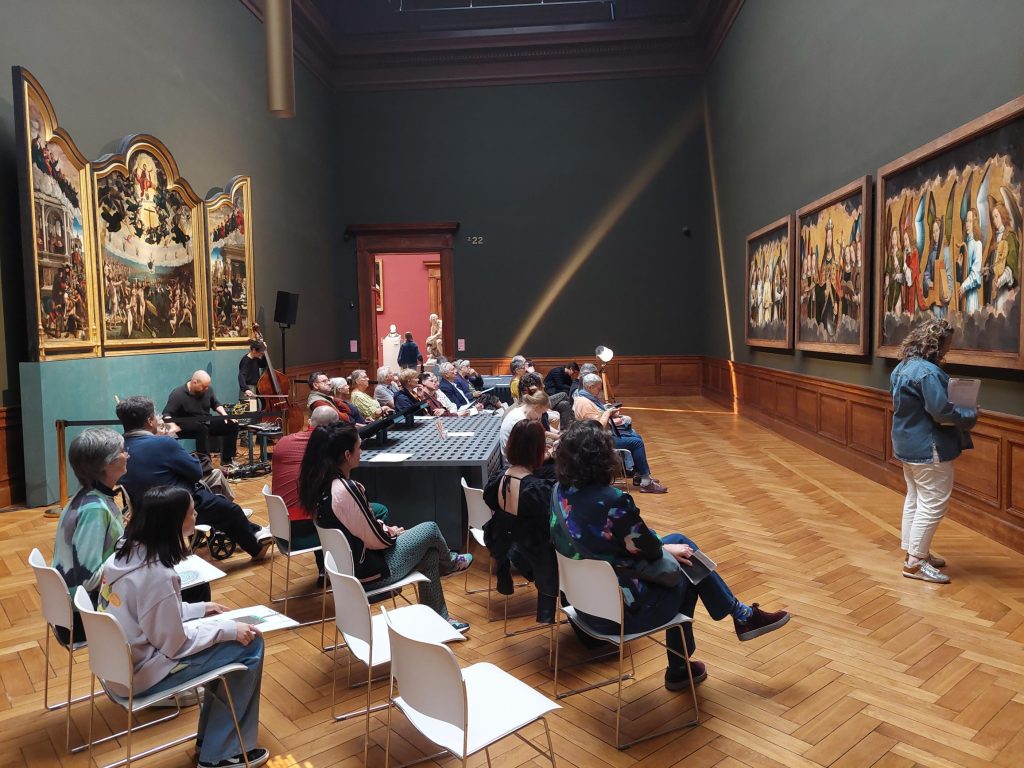
Electric guitars, analog synthesizers, effect pedals, and layered vocal sounds created an immersive soundscape that encouraged visitors to observe the painting slowly and thoughtfully. Participants were given printed prompts to guide their reflections, including questions such as: What do you see? What do you hear? What thoughts or feelings arise? slow_looking_prompts_music_KMSKA
After the musical performance, a museum guide facilitated a group discussion where visitors shared their interpretations and experiences.
In addition to this musical slow looking experiment, KMSKA organized several other Slow Art Day activities throughout the museum.
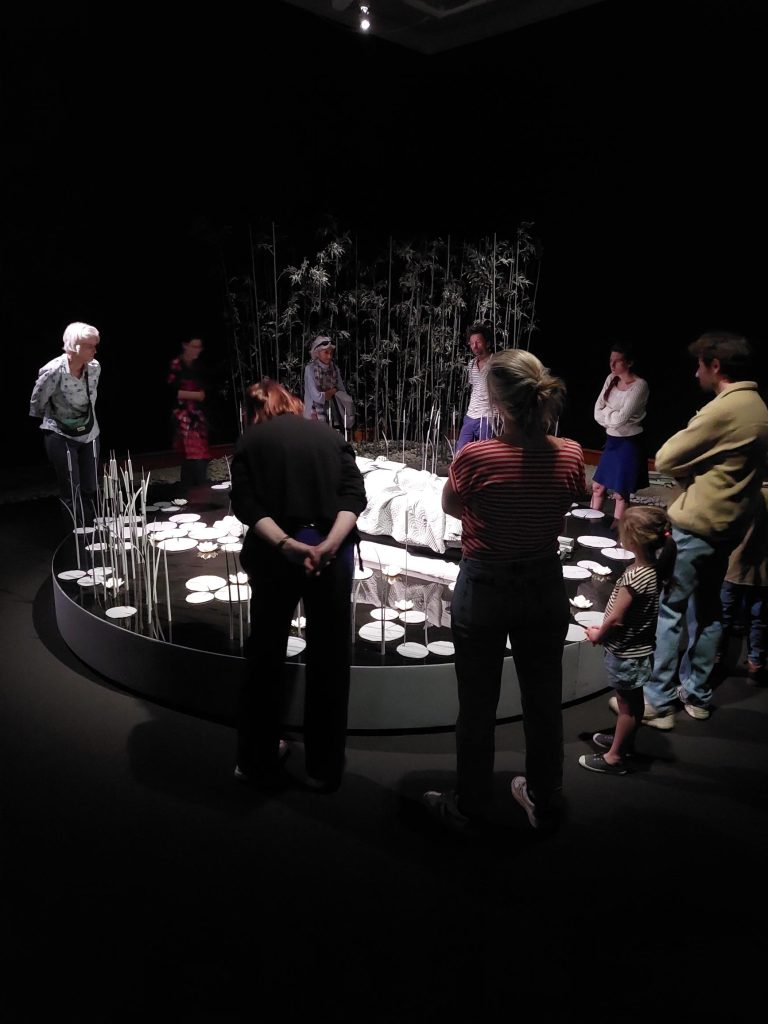
During “In Dialogue,” visitors sat together in front of a selected artwork by Belgian contemporary artist Hans Op de Beeck, guided by a museum educator who helped participants observe closely and discuss their impressions.
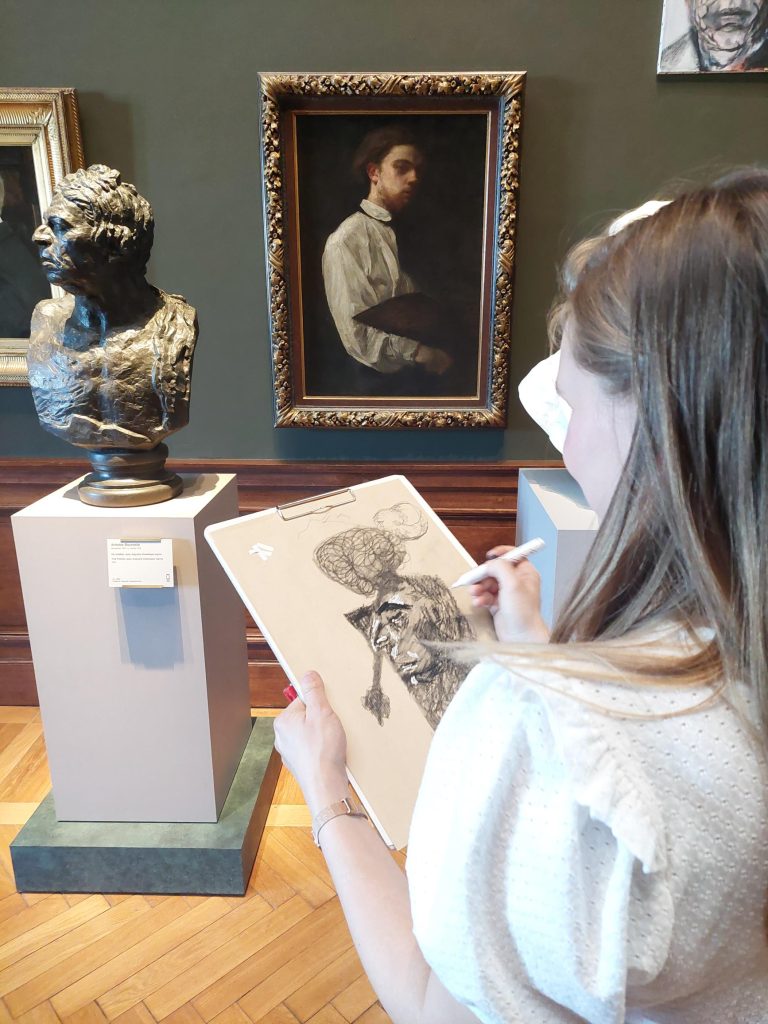
Another activity invited visitors to participate in a drawing tour through the exhibition spaces. With drawing prompts provided by a museum guide, participants of all skill levels used sketching as a way to slow down and connect with the artworks.
A literary component was also included. Museum staff member Sophie led a poetry session, reading selected poems alongside artworks and encouraging visitors to reflect on how language and visual art interact.
Finally, visitors could participate in Radio Bart, a special conversational format led by art lovers who are blind. Through discussion and thoughtful questioning, the Radio Bart hosts helped visitors experience artworks from new perspectives and notice details they might otherwise overlook.
Together, these varied programs demonstrated how many different paths can lead to slow looking. Whether through music, drawing, poetry, or spoken word and conversation (especially awesome for blind participants), visitors were encouraged to pause, reflect, and engage more deeply with the artworks around them.
We at Slow Art Day HQ are deeply grateful to the team at KMSKA for continuing to innovate around slow looking and for being such a long-standing leaders in our movement.
We look forward to what amazing design they come up with for Slow Art Day 2026.
— Ashley, Johanna, Jessica Jane, and Phyl