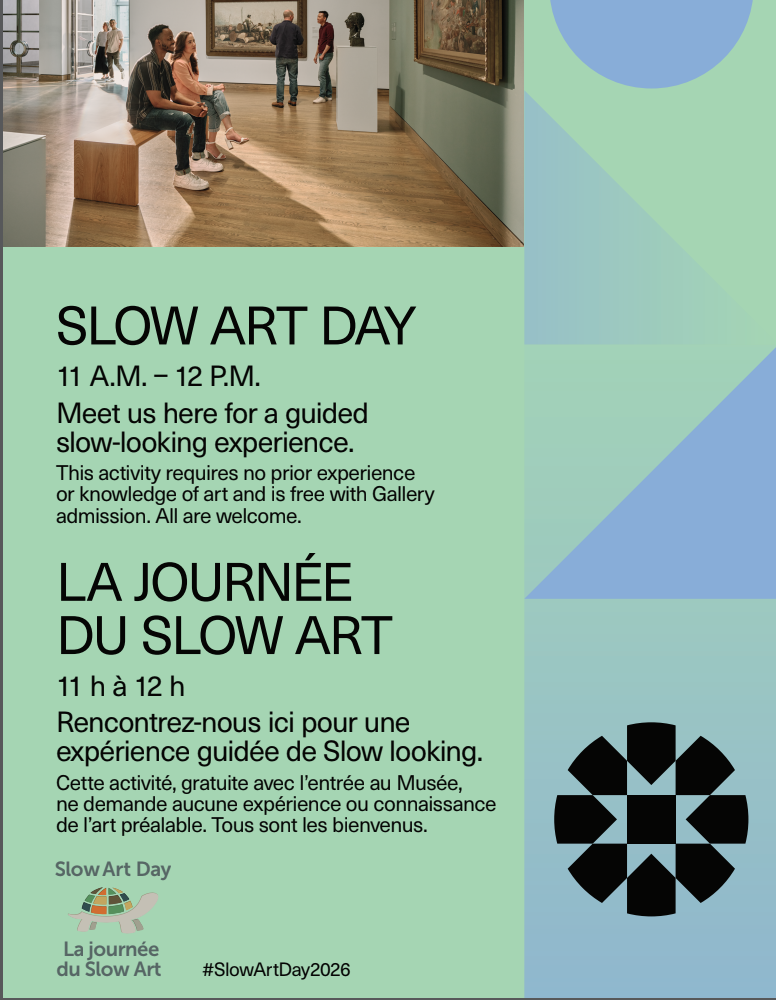
The National Gallery of Canada in Ottawa, Ontario, Canada, hosted its fourth annual Slow Art Day on April 11, 2026. Andrea Gumpert, Educator of Wellbeing Programs, led the efforts for this year’s event, which invited visitors to either participate in a guided onsite experience, watch a guided slow looking video from home, or engage independently with a bilingual handout that encouraged them to “Slow Down. Reflect. Discover. Engage.”
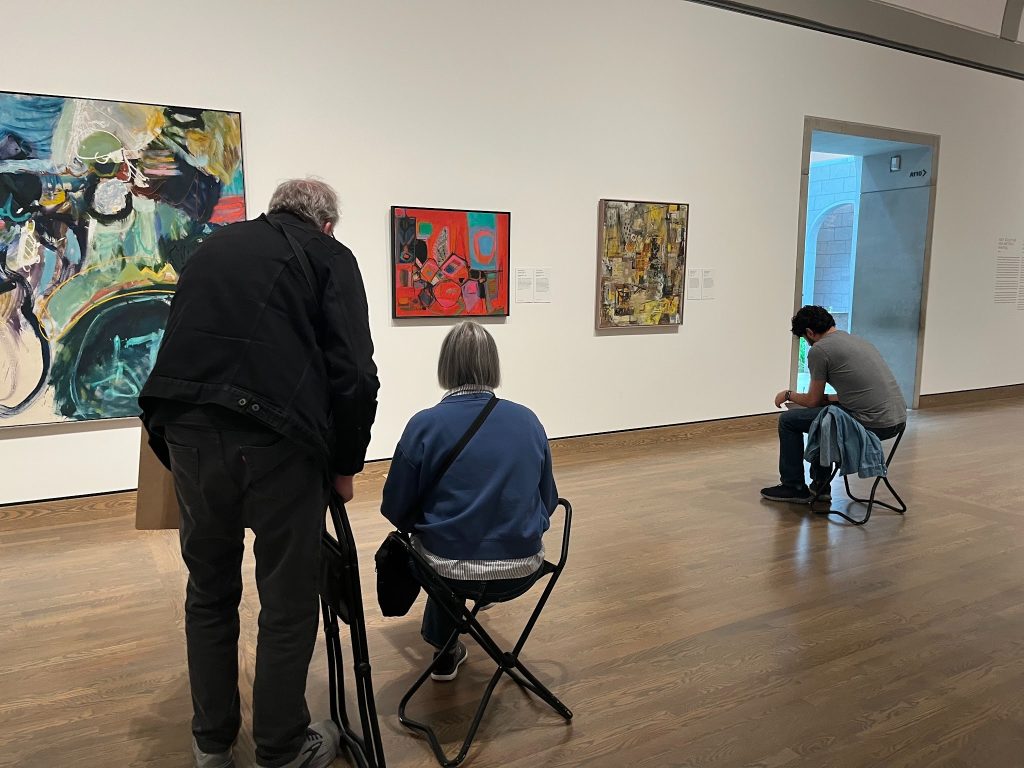
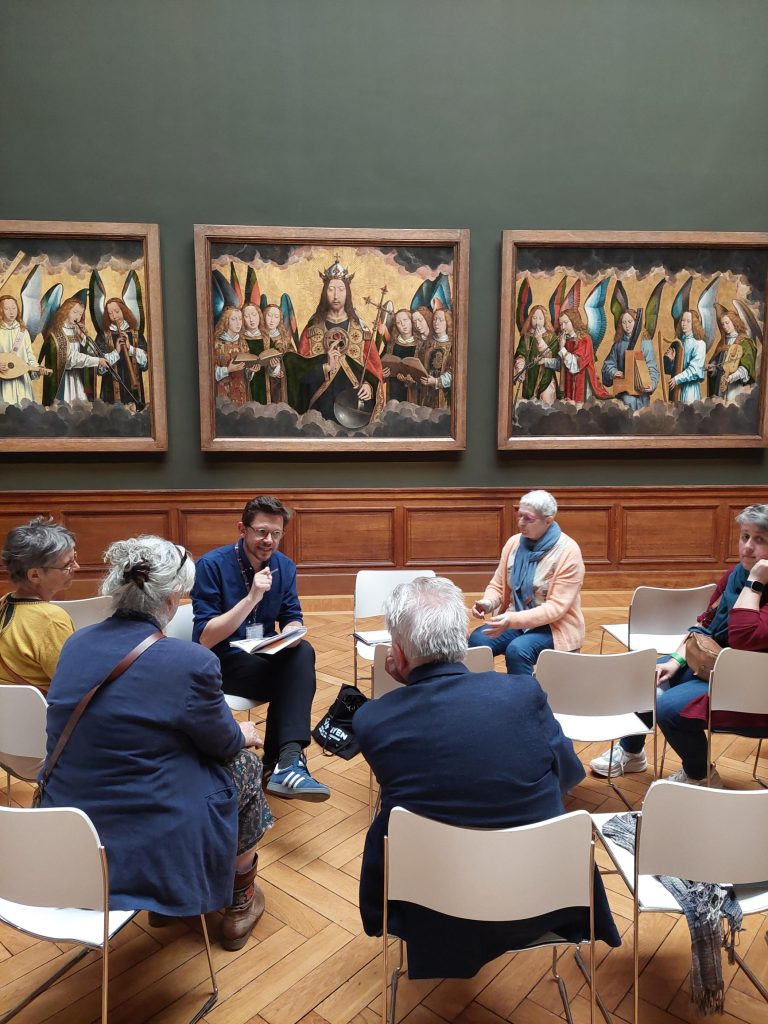
A mix of English- and French-speaking participants joined Interpreter-Guides Taylor Simard and Eddie Schmidt for an hour-long onsite guided slow looking session. The groups began with a warm-up and introductory conversation about the purpose of slowing down.
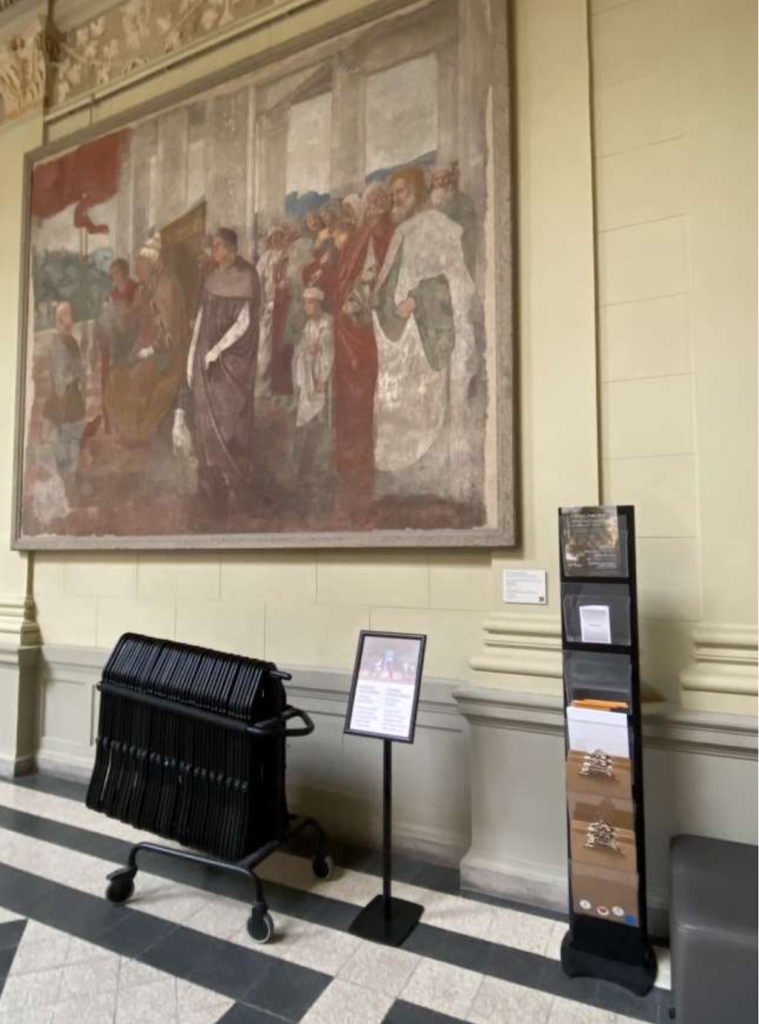
Participants then spent five minutes looking at a chosen artwork, followed by a group discussion. They then moved to a different gallery where they repeated the exercise. Following that, participants were invited to explore the museum and select additional artworks for further slow looking. Some explored Indigenous and Canadian galleries, while others gravitated to the European galleries. They were offered folding stools for comfort, and pencils, paper, and sketch boards, many of which were used for drawing.
Participants engaged in slow looking and drawing at the National Gallery of Canada. Photo credit: Taylor Simard.
During the facilitated sessions, the Interpreter-Guides used open-ended prompt questions to facilitate discussion, including: “What is your first impression? Why did you choose this work?” and “Can you associate a word or an emotion to this artwork?” They also encouraged participants to reflect on what the artwork told them about themselves and to jot down a memory or sketch something simple.
Guide Eddie Schmidt noted that participants were “chatty and had great observations, discussion,” while Taylor Simard observed that several participants were “locked in” for the full ten minutes of observation. Both said that participants truly enjoyed the experience, and would return for the Gallery’s monthly Guided Slow Looking Sunday program.
That’s wonderful. Back in 2010, we set a key goal of the Slow Art Day movement: use the annual day to encourage museums to adopt year-round programming and many have like the National Gallery of Canada.
We think this kind of device-off, intensive, real-space experience with other humans is just what our fractured world needs.
We at Slow Art Day HQ are grateful to Andrea Gumpert, Taylor Simard, Eddie Schmidt, and the entire team at the National Gallery of Canada for their continued dedication to our movement and we look forward to seeing what they design for Slow Art Day 2027.
The Wiregrass Museum of Art in Dothan, Alabama, celebrated its sixth Slow Art Day on April 11, 2026, though this doesn’t tell the whole story. Dana Marie Lemmer, the Executive Director of the museum, played a key role as (volunteer) Director of Global Operators in the Slow Art Day movement from 2012 to 2014.
This year, Dana’s colleague, Janin Wise, Art Educator and School Programs & Volunteer Coordinator, hosted the Slow Art Day event using both facilitated discussion and drawing exercises.
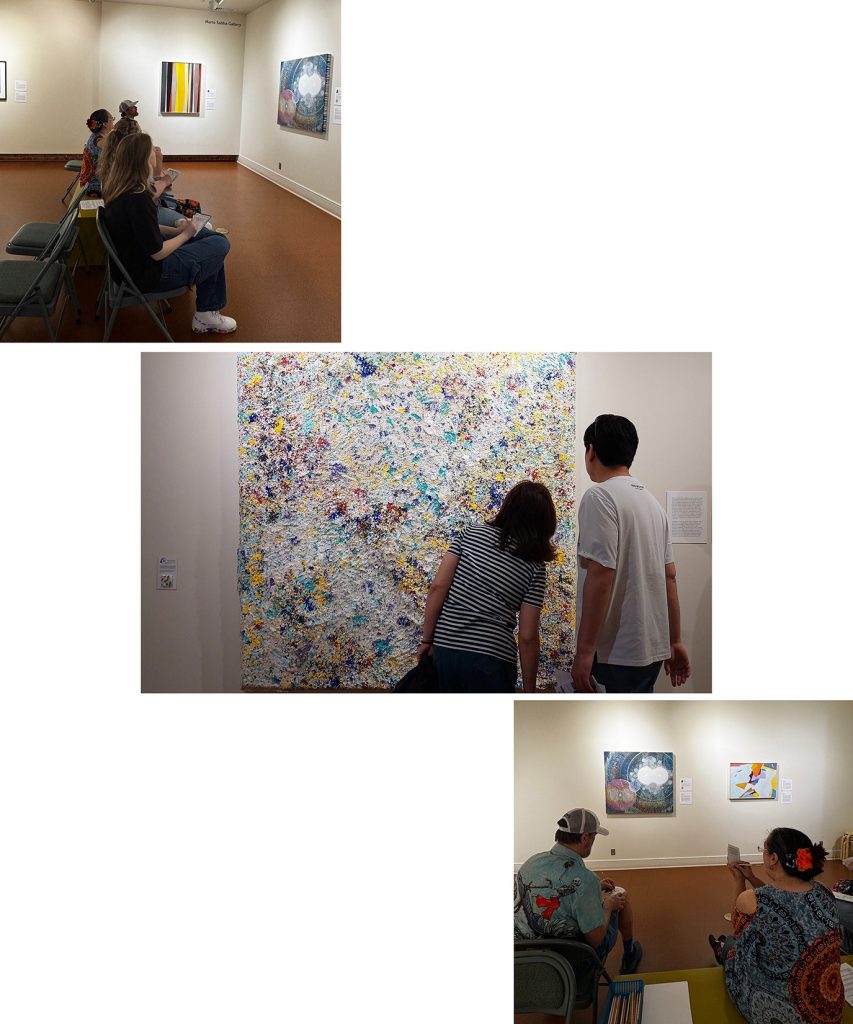
Wise invited guests to sit with her for guided slow looking in chairs around a bench in the Marie Saliba Gallery. She started the process by asking “What first caught your eye?”, then by scanning for color and composition, and discussing the artist’s hand.
The featured artworks included:
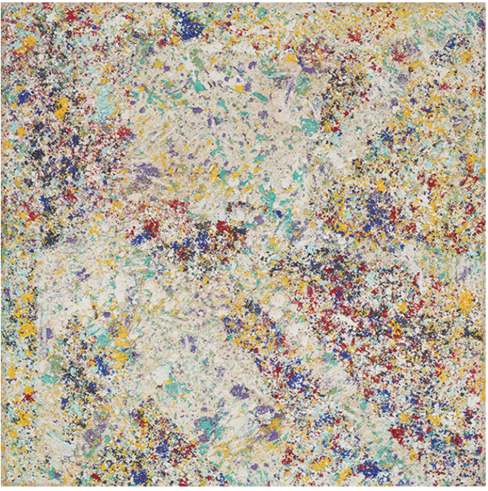
“Lilly, 2022” by Sam Gilliam, an acrylic with sawdust, encaustic, and polypropylene on canvas with beveled-edge stretcher
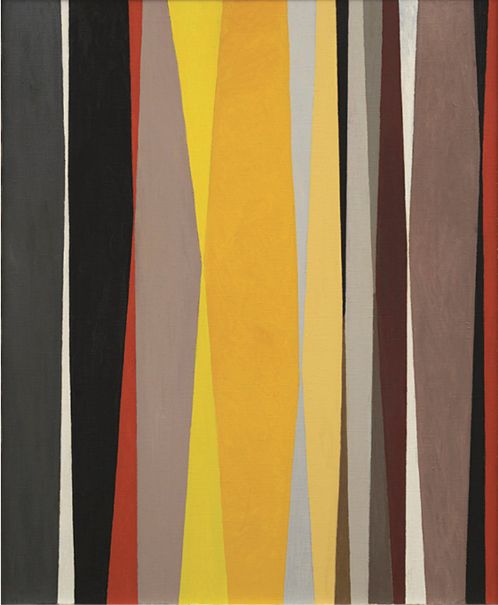
“Magnitude of Regions, 1962” by Alice Trumbull Mason, an oil on canvas
“Prelude on Gray, 1982” by Richard Crist, an acrylic on canvas
“Untitled, 1960” by Angelo Granata, an ink on paper
“High Beams, 2020” by Derek Cracco, an acrylic on panel
Sam Gilliam’s ‘Lilly, 2022’. Photo courtesy of Joan McDonald and Janin Wise.Alice Trumbull Mason’s ‘Magnitude of Regions, 1962’. Photo courtesy of Joan McDonald and Janin Wise.
One family with a 17-year-old daughter was drawn to the texture and color of Gilliam’s “Lilly.” When discussing Alice Trumbull Mason’s “Magnitude of Regions,” the mother expressed both empathy, seeing “sunlight through dark curtains”, and hope, after learning the artist made the work after her son’s death.
At the same time, a Korean American family, participated with an older brother translating for his mother and nonverbal younger brother. That family also appreciated the color and texture, and the geometry of Mason’s piece. Everyone who participated were astonished to learn they could literally see the artist’s hand in Gilliam’s work.
Participants engaged in slow looking and drawing exercises. Photo courtesy of Joan McDonald and Janin Wise.
For Derek Cracco’s “High Beams,” a drawing exercise was introduced that led to laughter and discussions about childhood art classes and local art opportunities. Participants folded paper into quarters and completed four different drawing tasks:
a 10-second quick sketch
drawing with their non-dominant hand
drawing without looking at the paper
a continuous line drawing where they imagined changes in time or space
Janin Wise noted that participants were surprised by how relaxing it was to spend so much time with a few pieces of art. Visitors were delighted by the calm, guided slow looking relaxing and by their newfound ability to notice new details and use their imaginations to step into the artwork.
Most did not typically consider themselves “abstract art kind of people” and yet, by slowing down, they thoroughly enjoyed the art.
Yes! That is exactly the kind of discovery Slow Art Day we hope people make.
It turns out that by simply slowing down, participants can find a new relationship to art, including art they may think they don’t like, or don’t understand.
We at Slow Art Day HQ are grateful to Janin Wise and the Wiregrass Museum of Art for their continued dedication to our slow looking movement. We look forward to seeing what they create for Slow Art Day 2027.
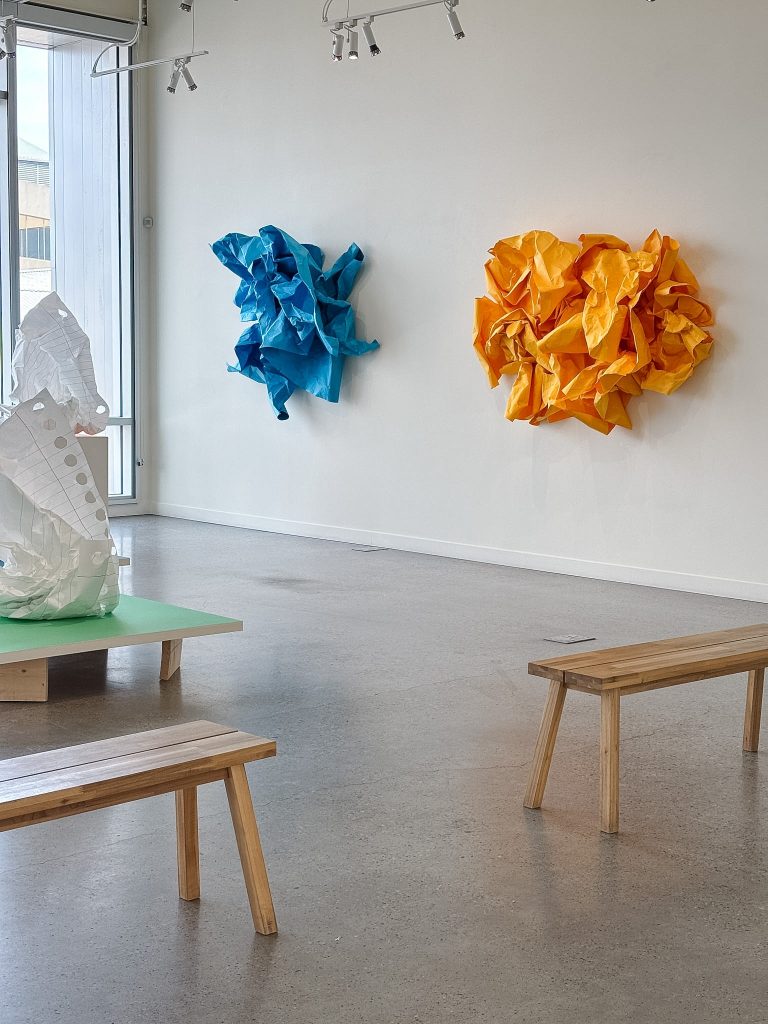
The Art Gallery of St. Albert in St. Albert, Alberta, Canada, hosted its seventh Slow Art Day on April 11, 2026. Director Leah Louden and her team encouraged visitors to engage deeply with art through a variety of self-guided activities. The event focused on the current main exhibition, “Ephemeral Language / Langue éphémère” by Sébastien Gaudette, and the staircase feature exhibition, “Knotty Enigmas” by Zana Wensel.
Upon arrival, visitors were invited to use a Slow Looking Guide drafted by the Curator to practice slow looking while exploring the current exhibitions. Staff were on hand to provide additional information.
Visitors of all ages were also invited to participate in several additional activities:
– An iSpy activity encouraged close observation to identify detail shots of 12 artworks throughout the building.
– For the “Ephemeral Language / Langue éphémère” exhibition, an activity booklet offered drawing and educational activities such as drawing a paper illusion, completing a word search, or crafting a paper balloon.
– A drop-in Art Nook activity, called “Creative Crumples,” invited participants to create imaginative drawings from crumpled paper.
Light refreshments were also available, encouraging guests to linger and slowly enjoy the artwork. The event was promoted through their website and social media, and a total of 37 people attended.
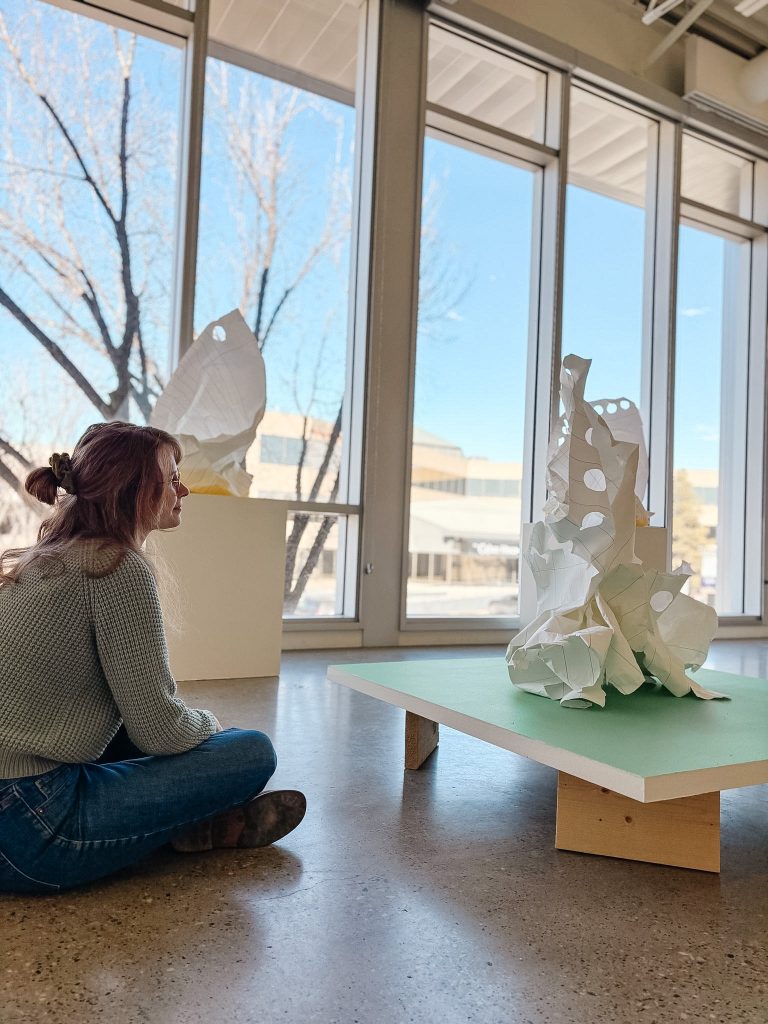
“Langage éphémère” by Sébastien Gaudette, 2026, Paper Installation. Photo courtesy of Art Gallery of St. Albert.
One of Sébastien Gaudette’s artworks, “Langage éphémère,” a 2026 paper installation from the “Ephemeral Language / Langue éphémère” exhibition, was featured in an Art Minute video prior to Slow Art Day. This piece was chosen to highlight how a seemingly simplistic artwork could reveal its complexity and beauty through close, slow looking. Guests were surprised by the material of many artworks in Gaudette’s exhibition.
We at Slow Art Day HQ are grateful to Leah Louden and the Art Gallery of St. Albert for their continued dedication to fostering deep engagement with art and were impressed by their innovative self-guided activities. We look forward to seeing what they create for Slow Art Day 2027.
For Slow Art Day 2025, the Museum of Fine Arts Budapest (MFAB) created a thoughtful set of tools and experiences designed to help visitors slow down and engage deeply with artworks throughout the museum’s galleries.
Rather than focusing on a single guided session, MFAB encouraged visitors to explore slow looking independently through several creative formats available throughout the museum. These tools were offered free of charge and invited guests to pause, observe carefully, and spend more time with selected artworks.
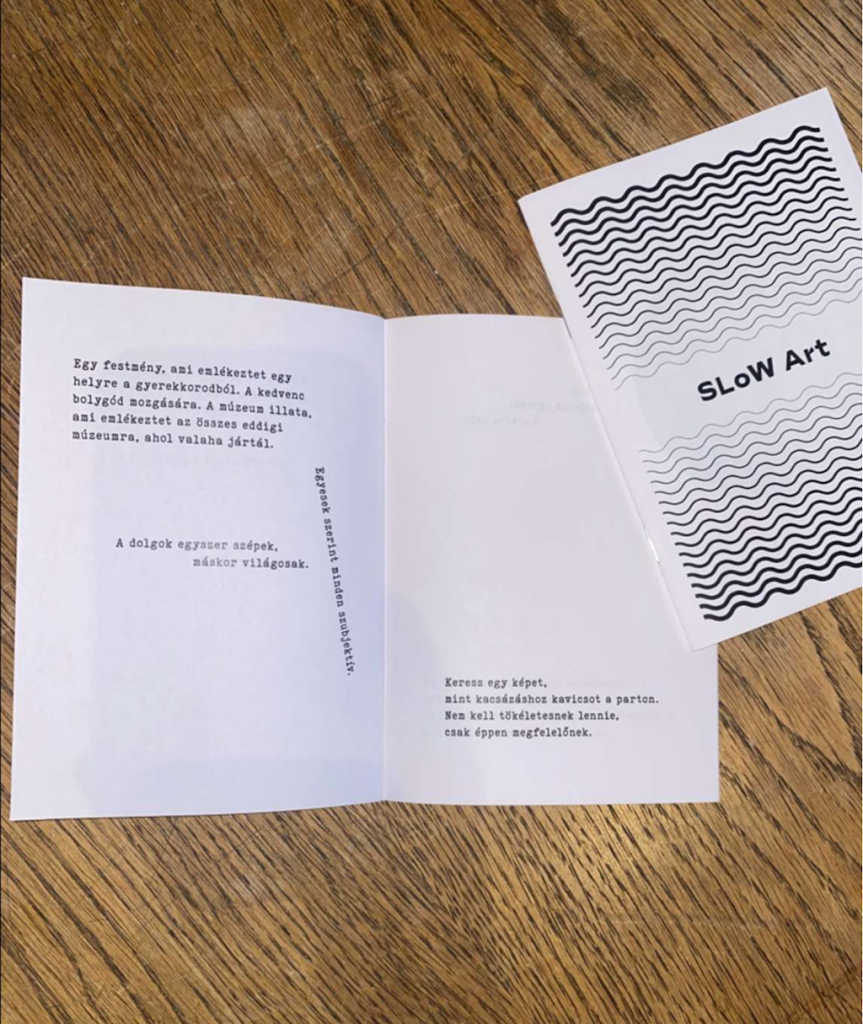
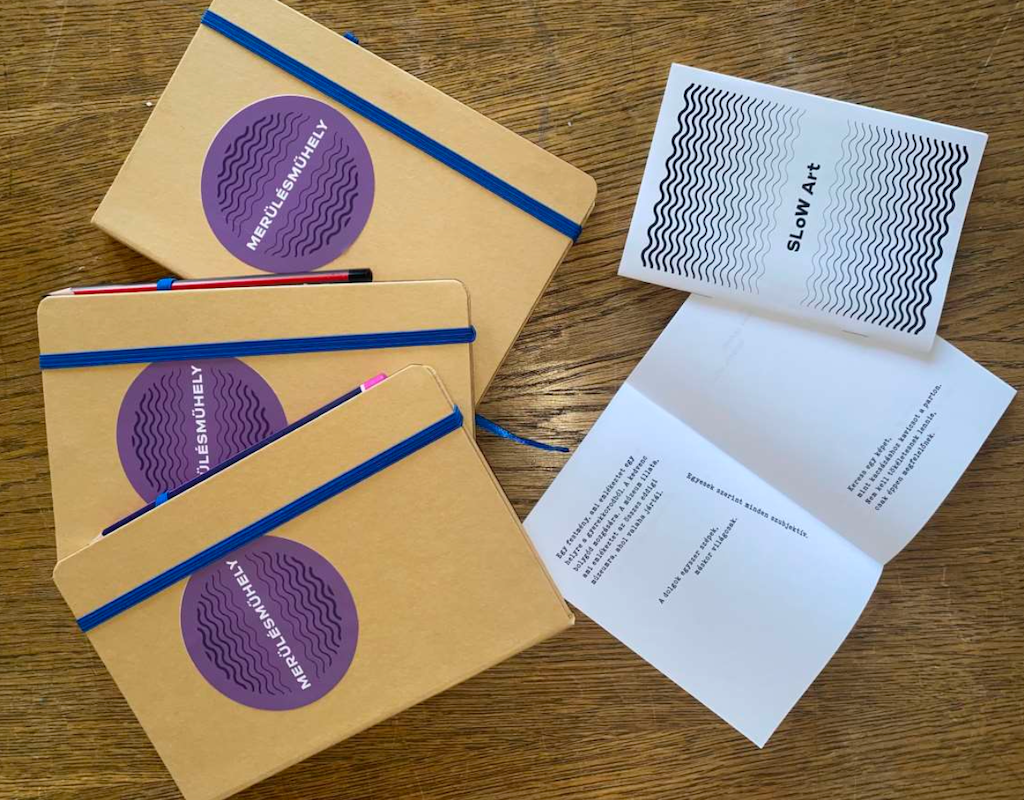
One of the most unique elements was a poetry booklet created by Hungarian poet Monika Ferencz, written specifically for the occasion. Visitors could take the booklet and move slowly through the museum while reflecting on short meditative poems and evocative text fragments. The idea was simple but powerful: choose a line, walk through the galleries, and allow the words to shape how you look at the art.
The museum also introduced a “Slow Guide – Step Inside the Painting” audio experience. By scanning QR codes placed next to eight selected artworks, visitors could listen to narrated audio reflections accompanied by music while looking closely at the paintings. This immersive format encouraged visitors to spend longer with individual works and experience them through both sound and sight.
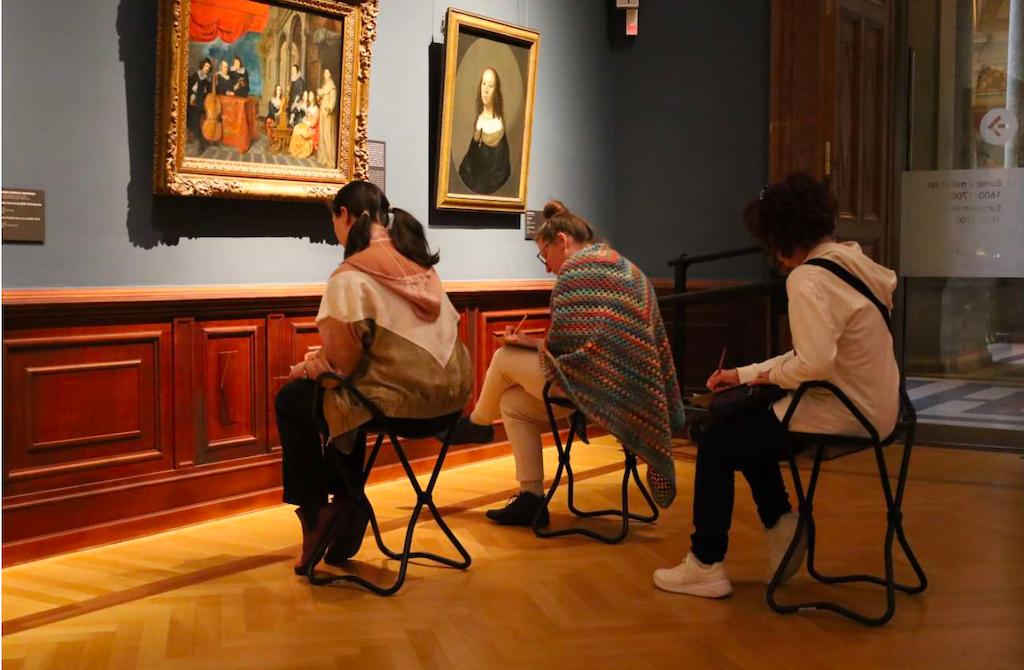
Another activity invited visitors to draw directly in the galleries. Guests could borrow a small folding chair, drawing board, paper, and pencil and spend time sketching details from artworks in the permanent collection. Focusing on small portions of the paintings helped participants notice subtle details they might have otherwise overlooked.
MFAB also extended its Slow Art Day programming into its regular Slow Museum evening series hosted on the 2nd Friday of each month (we love it when museums integrate slow looking into year-round programming!). One highlight was a Slow Writing Workshop led by Judit Cser, poet Monika Ferencz and museum educator Szilvia Záray, where participants used slow looking techniques as inspiration for creative writing. The three-session workshop took place in the Old Masters’ Gallery and invited a small group of participants to explore how close observation of artworks can spark new ideas and language.
Slow Writing Workshop. Photo courtesy of MFAB.Slow Writing Workshop. Photo courtesy of MFAB.
But that’s not all.
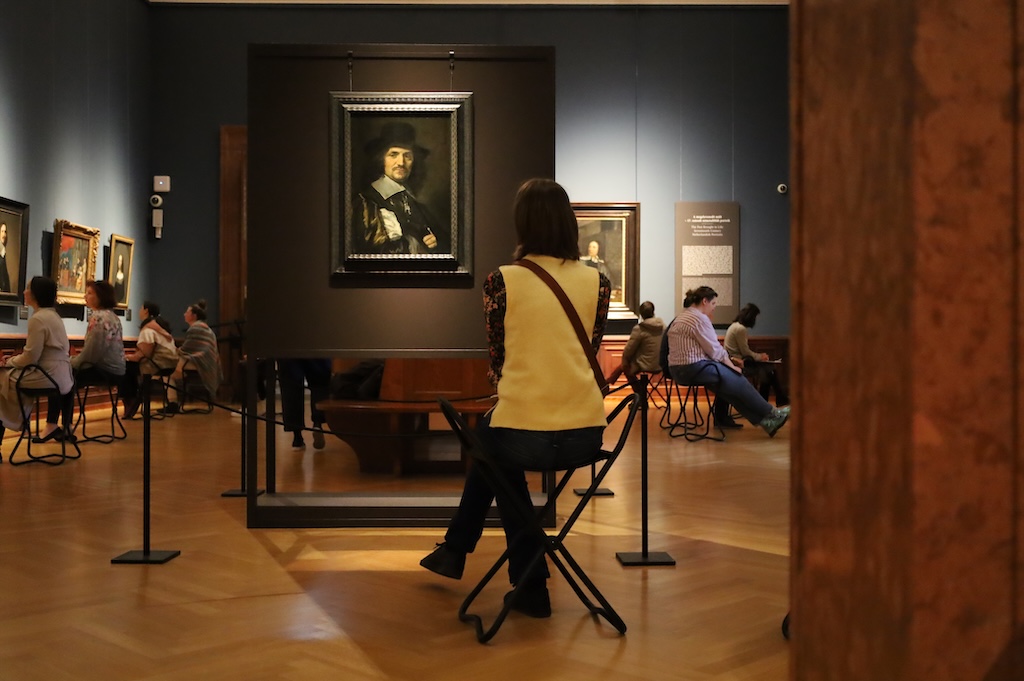
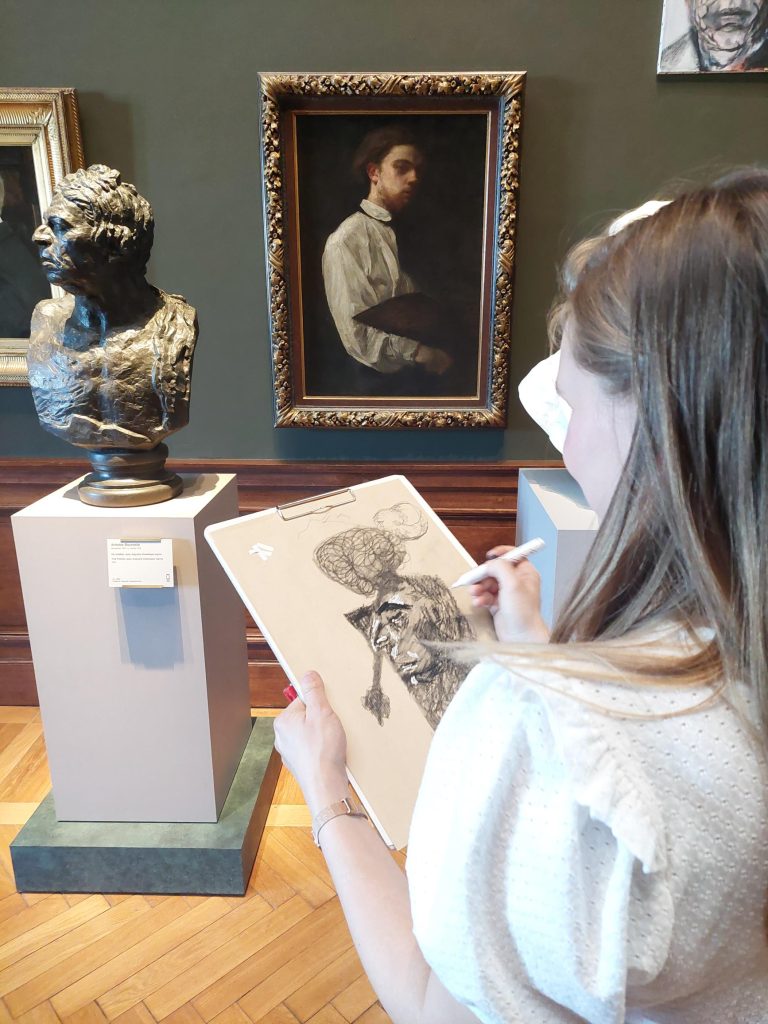
The MFAB provided yet one more guided experience, titled “The Gaze.” It brought visitors together for a one-hour slow looking session in the Dutch portrait gallery. Led by museum educator Szilvia Záray, the session encouraged participants to carefully study facial expressions, posture, and subtle details within the portraits while sharing their observations with the group. Amazing.
Participant during slow art session “The Gaze”. Photo courtesy of MFAB.
Together, these programs demonstrated how a museum can offer many different entry points into slow looking—from poetry and sound to drawing and writing—allowing visitors to discover the approach that resonates most with them, not only on Slow Art Day but throughout the year.
We at Slow Art Day HQ are grateful to the team at the Museum of Fine Arts Budapest for their thoughtful and creative approach. They are an inspiration for us all.
And we can’t wait to see what MFAB comes up with for Slow Art Day 2026.
— Ashley, Johanna, Jessica Jane, and Phyl
P.S. If you have not yet registered your museum of gallery for Slow Art Day 2026, please do.
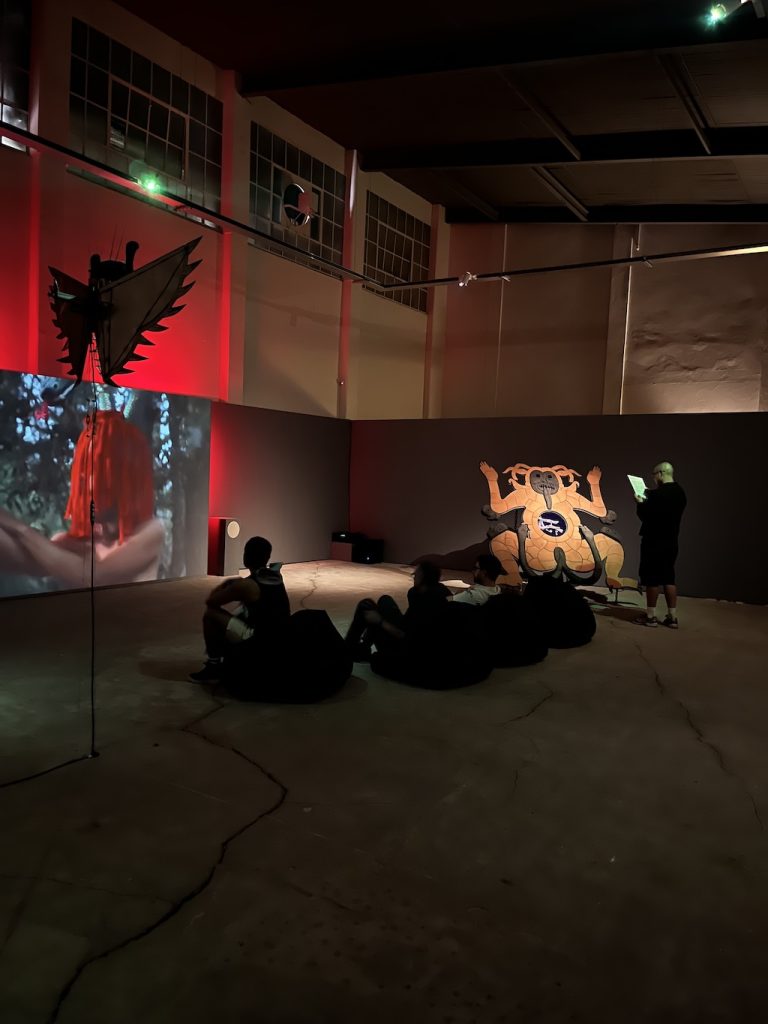
For their first Slow Art Day – as part of the large 2025 citywide event in Mexico City, the contemporary gallery PEANA in Mexico City, Mexico hosted an immersive slow looking experience centered on “Their Silhouettes Bristled With Razors,” the first solo exhibition at the gallery by Mexican artist Naomi Rincón Gallardo.
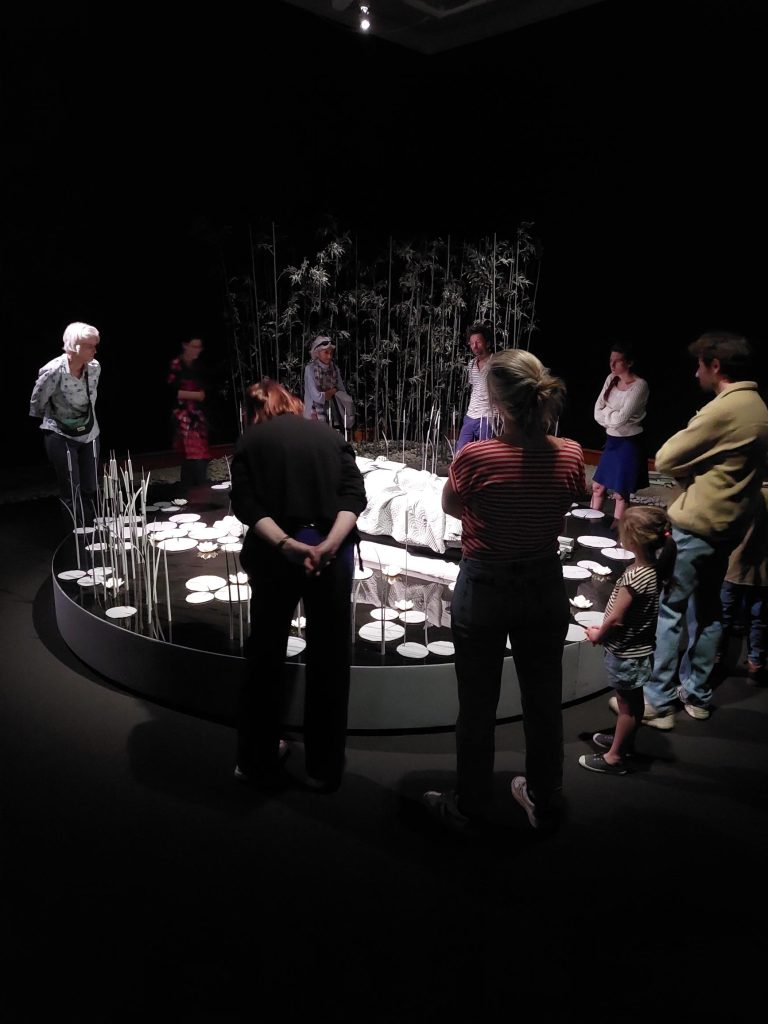
Rincón Gallardo’s work explores themes of contemporary violence, decolonial thought, and ancient Mesoamerican narratives. The exhibition was presented in a dim, atmospheric environment that invited visitors to slow down and spend time contemplating the symbolic imagery and layered storytelling within the works.
The PEANA team welcomed visitors with a brief introduction and encouraged participants to approach the experience with openness and curiosity. Printed reflection prompts were distributed to guide the slow looking process, asking visitors questions about the symbolism they noticed, their first impressions of the artworks, and how their perceptions evolved as they spent more time observing.
Participants during the Slow Art Day event. Photo courtesy of PEANA.
The prompts also invited creative responses, encouraging participants to draw, write a poem, or describe their reactions after spending time with the artworks. This simple but powerful structure helped visitors move beyond quick viewing and into deeper engagement with the themes and emotional resonance of the exhibition.
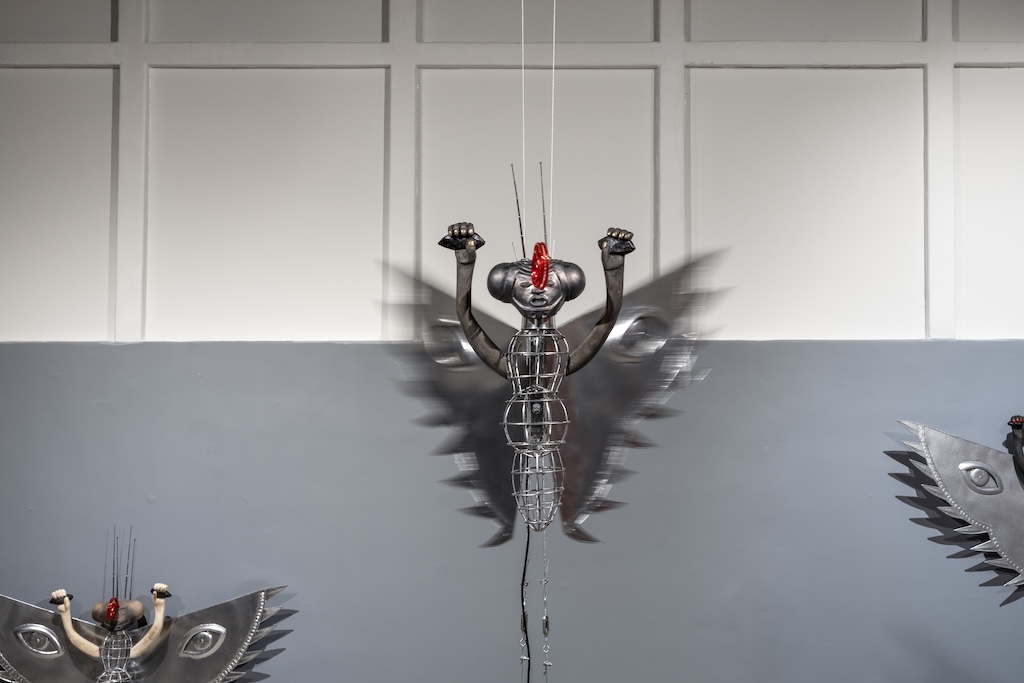
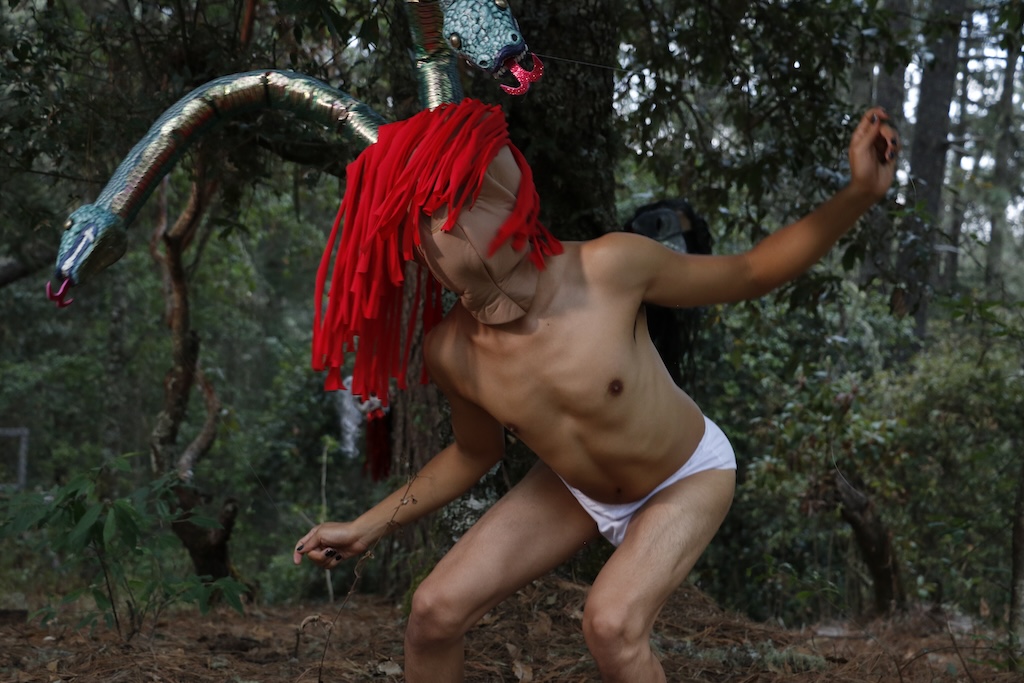
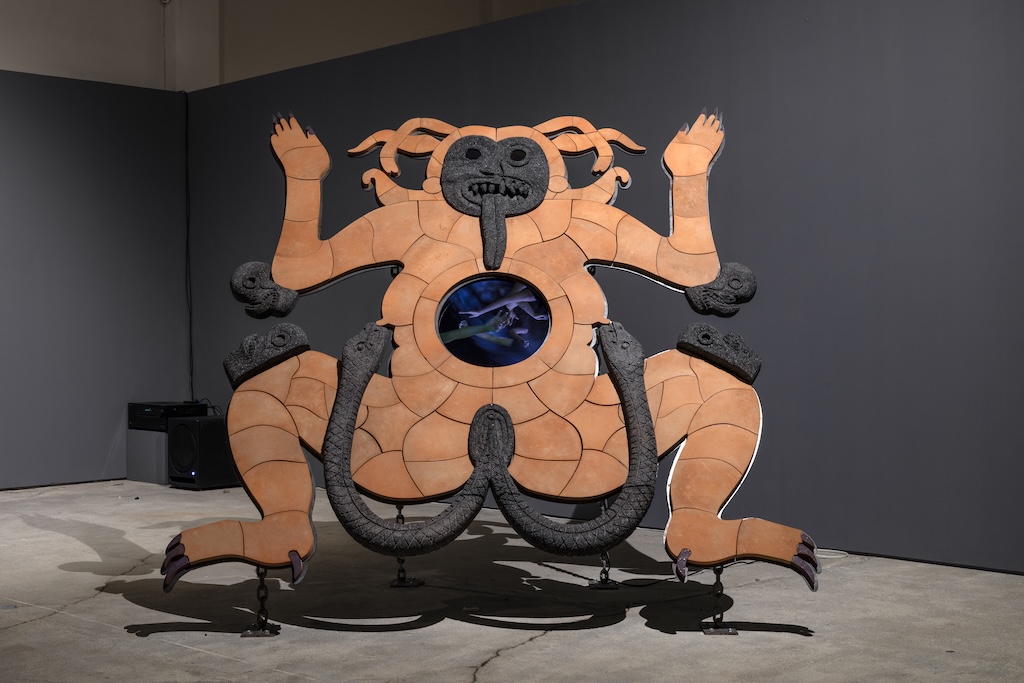
Several works from the exhibition served as focal points for slow looking, including Mechatronic Butterfly, Eclipse I, and Me enterraron boca arriba con la lengua fuera (Tlaltecuhtli). These works combine sculptural elements, video, and mythological imagery to create powerful visual narratives rooted in Indigenous cosmologies and contemporary cultural critique.
Mechatronic Butterfly. Photo courtesy of PEANA.Eclipse I. Photo courtesy of PEANA.Me enterraron boca arriba con la lengua fuera (Tlaltecuhtli). Photo courtesy of PEANA.
By pairing immersive artworks with guided reflection prompts, PEANA created an environment where visitors could slow down, contemplate difficult themes, and engage with the artworks in a personal and meaningful way.
Approximately 60 visitors participated in PEANA’s Slow Art Day experience, making a wonderful contribution to Mexico City’s citywide celebration.
We at Slow Art Day HQ are grateful to the team at PEANA and to Constanza Ontiveros Valdés, who organized the 2025 citywide event. And we are amazed that Ontiveros Valdés has already organized more than 35 galleries and museums for Slow Art Day 2026. We can’t wait!
— Ashley, Johanna, Jessica Jane, and Phyl
P.S. If you have not yet registered your museum of gallery for Slow Art Day 2026, please do.
For Slow Art Day 2025, the Royal Museum of Fine Arts Antwerp (KMSKA) in Belgium invited visitors to slow down and engage deeply with art through a series of thoughtfully designed experiences across the museum’s exhibitions.
KMSKA has been an important participant in the Slow Art Day movement for nearly a decade and was notably the first museum in Belgium to organize a Slow Art Day event in 2016. For the 2025 edition, the museum expanded its program with several creative formats designed to help visitors observe more carefully and reflect more deeply.
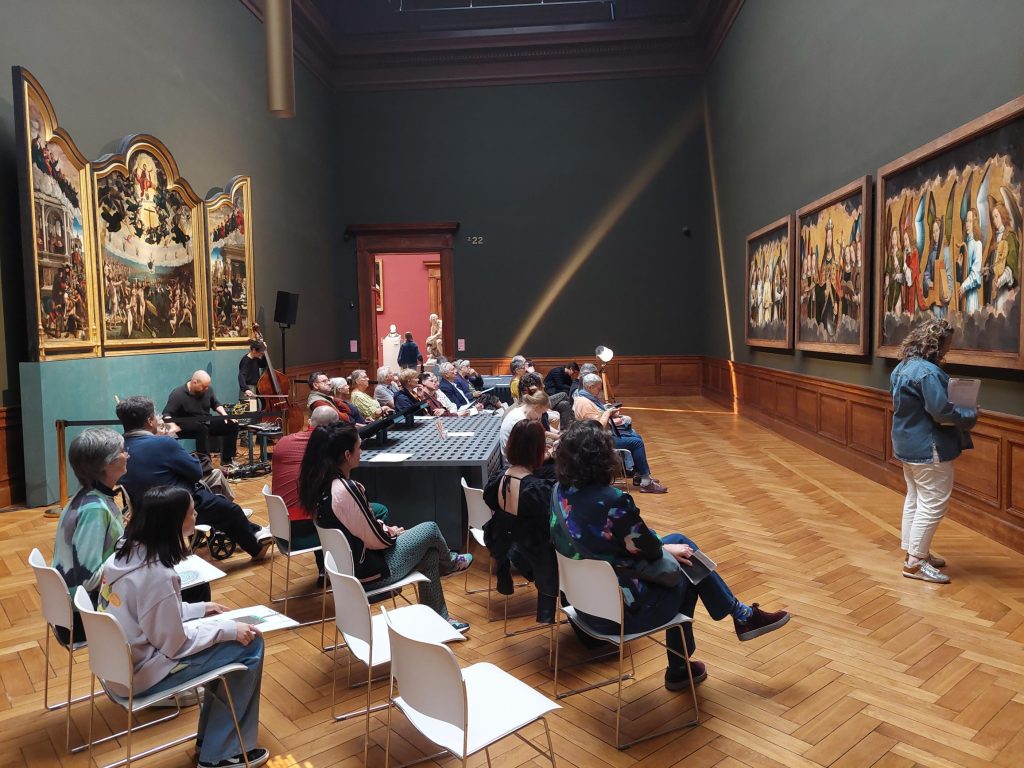
One of the highlights was an experimental program called “Slow Looking with Music.” Visitors spent an hour focusing on a monumental triptych by the 15th-century Flemish painter Hans Memling, while a live soundtrack was performed by the Belgian experimental band Monnik. The musicians performed from behind the audience so that all attention remained directed toward the artwork (note: we at Slow Art Day HQ wish we could have been there).
Electric guitars, analog synthesizers, effect pedals, and layered vocal sounds created an immersive soundscape that encouraged visitors to observe the painting slowly and thoughtfully. Participants were given printed prompts to guide their reflections, including questions such as: What do you see? What do you hear? What thoughts or feelings arise? slow_looking_prompts_music_KMSKA
After the musical performance, a museum guide facilitated a group discussion where visitors shared their interpretations and experiences.
In addition to this musical slow looking experiment, KMSKA organized several other Slow Art Day activities throughout the museum.
During “In Dialogue,” visitors sat together in front of a selected artwork by Belgian contemporary artist Hans Op de Beeck, guided by a museum educator who helped participants observe closely and discuss their impressions.
Another activity invited visitors to participate in a drawing tour through the exhibition spaces. With drawing prompts provided by a museum guide, participants of all skill levels used sketching as a way to slow down and connect with the artworks.
A literary component was also included. Museum staff member Sophie led a poetry session, reading selected poems alongside artworks and encouraging visitors to reflect on how language and visual art interact.
Finally, visitors could participate in Radio Bart, a special conversational format led by art lovers who are blind. Through discussion and thoughtful questioning, the Radio Bart hosts helped visitors experience artworks from new perspectives and notice details they might otherwise overlook.
Together, these varied programs demonstrated how many different paths can lead to slow looking. Whether through music, drawing, poetry, or spoken word and conversation (especially awesome for blind participants), visitors were encouraged to pause, reflect, and engage more deeply with the artworks around them.
We at Slow Art Day HQ are deeply grateful to the team at KMSKA for continuing to innovate around slow looking and for being such a long-standing leaders in our movement.
We look forward to what amazing design they come up with for Slow Art Day 2026.
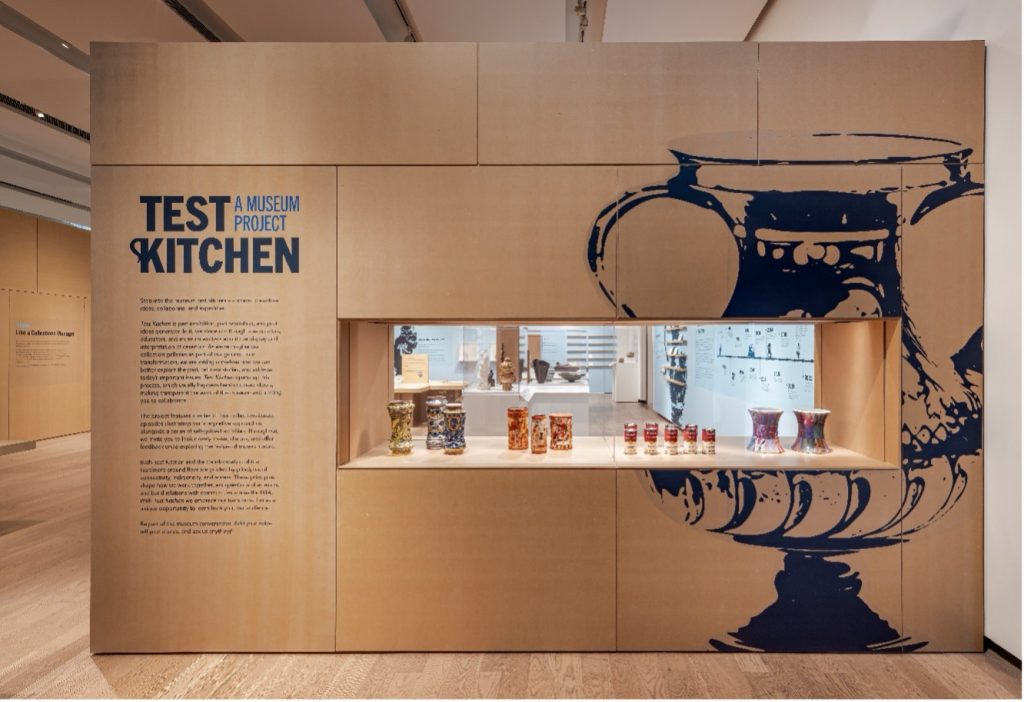
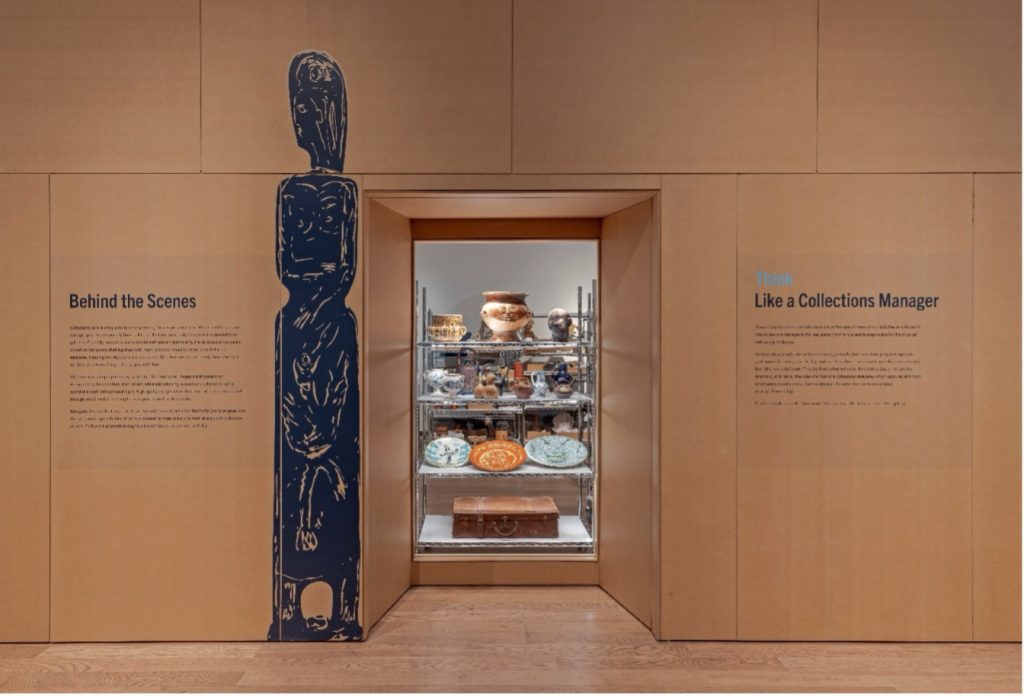
On April 5, 2025, the Gardiner Museum in Toronto, Ontario participated in Slow Art Day for the sixth time — this year embedding the experience within their major exhibition Test Kitchen: A Museum Project.
As the museum underwent a full-scale reimagining of its ground floor and reinstallation of significant parts of its collection, Test Kitchen created a space of experimentation, collaboration, and participation. The exhibition functioned as part exhibition, part workshop, and part ideas generator. Visitors were encouraged not just to observe, but to question, respond, and contribute.
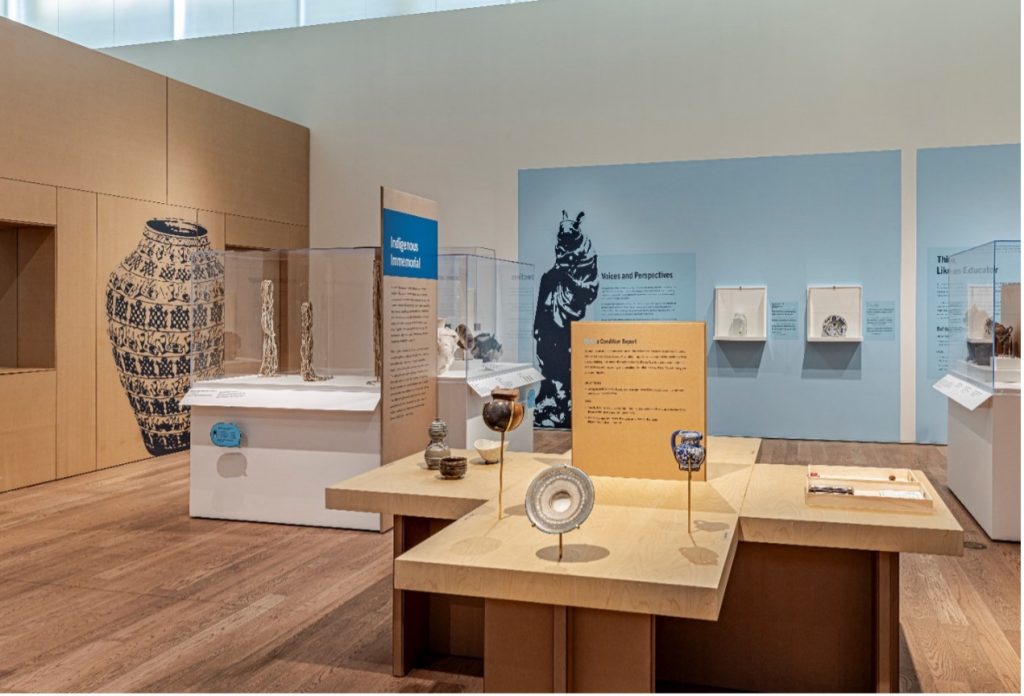
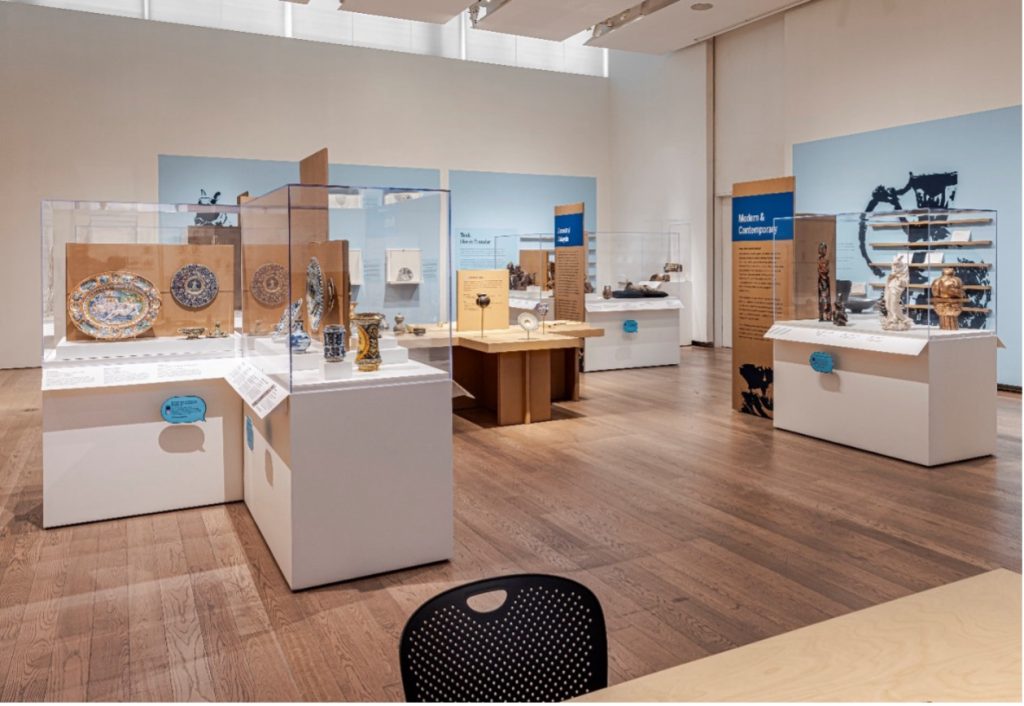
For Slow Art Day, participants were invited to closely engage with four collection-based “episodes” within the gallery:
Connected Worlds
Modern and Contemporary Ceramics
Ancestral Abiyalas
Indigenous Immemorial
Featured works included:
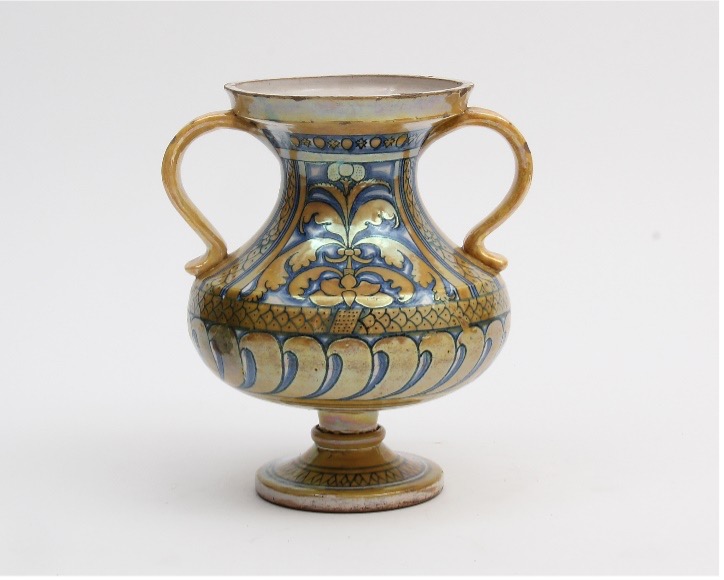
Two-handled vase with palmette motif, Deruta, Umbria, Italy, c.1500–1550
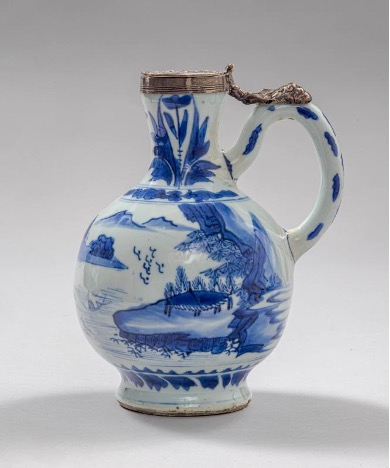
Ewer, silver mounts with German coin dated 1626, Jingdezhen, Jiangxi, China, 1635–1640
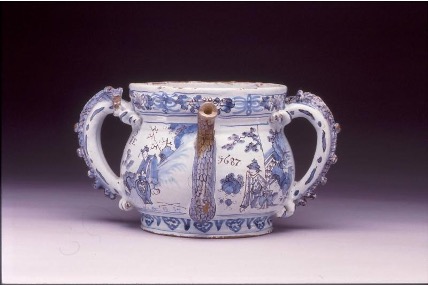
Posset pot with chinoiseries, possibly Brislington, Bristol, England, 1687
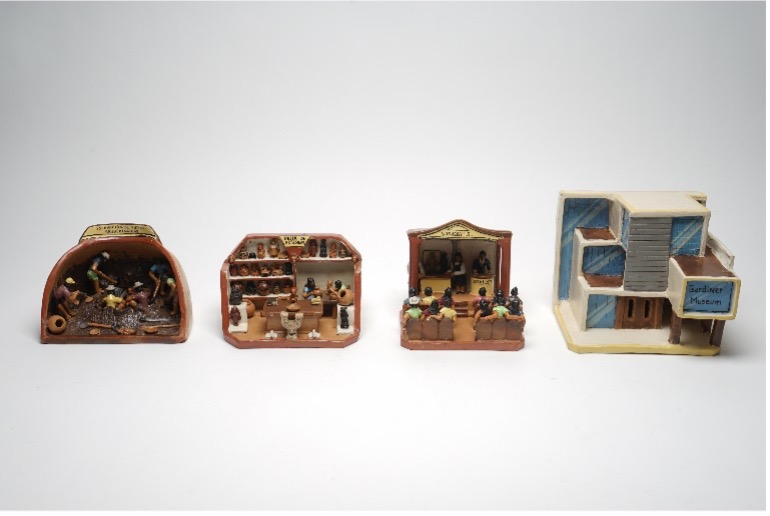
An Odyssey, Artist: Pamela Cevallos (Ecuadorian, born 1984), Collaborator: Guillermo Quijije, Quito, Ecuador, 2022
Two-handled vase with palmette motif, Deruta, Umbria, Italy, c.1500–1550Ewer, silver mounts with German coin dated 1626, Jingdezhen, Jiangxi, China, 1635–1640Posset pot with chinoiseries, possibly Brislington, Bristol, England, 1687An Odyssey, Artist: Pamela Cevallos (Ecuadorian, born 1984), Collaborator: Guillermo Quijije, Quito, Ecuador, 2022
Participants navigated the exhibition using a self-guided Slow Art Day activity sheet created specifically for the program (below). The prompts encouraged close looking, sketching, reflective writing, and imaginative engagement.
In Connected Worlds, visitors searched for ceramics that visually embodied global exchange: an English pot with Chinese dragons, a Chinese jug with Dutch designs and a German coin, and an Italian vase made using a technique from Iraq. In Indigenous Immemorial, participants compared two works by John Kurok, reflecting on form, design, colour, and emotional tone.
In Modern and Contemporary Ceramics, guests identified works connected to myth or magic, considering how contemporary artists draw from narrative and symbolism.
In Ancestral Abiyalas, participants looked closely at An Odyssey, imagining themselves within its scenes — listening for sounds, sensing scents, and noticing what surprised them.
Exhibition photo credit Toni Hafkenscheid.Exhibition photo credit Toni Hafkenscheid.Exhibition photo credit Toni Hafkenscheid.Exhibition photo credit Toni Hafkenscheid.
After completing their exploration, visitors were invited to participate in the exhibition’s interactive “Befriend an Object” activity, further reinforcing the exhibition’s collaborative spirit.
We are grateful to Sofia Flores-Ledesma and the team at the Gardiner Museum for continuing to champion Slow Art Day and for integrating it so thoughtfully into their institutional transformation, and look forward to seeing what they come up with for Slow Art Day 2026.
In 2025, Mexico City hosted its first city-wide Slow Art Day – and what may be the largest city-wide in the world – with 35 participating venues, coordinated by art writer and cultural organizer Constanza Ontiveros Valdés.
Ontiveros Valdés organized an unexpectedly wide range of participants, from established museums and galleries to alternative and emerging cultural spaces across the city.
The venues offered a rich mix of programming, including yoga, meditation, aromatherapy, workshops, panel discussions, and multidisciplinary artistic happenings. She noted that the accessibility and inclusiveness of Slow Art Day encouraged participation across diverse spaces, all eager to explore slow looking in ways that felt authentic to their communities.
We received reports from seven of the 35. Below are those highlights.
Galería Oscar Román featured an artist-led conversation titled “Sombras del Pintor” (Shadows of the Painter) with artist Saúl Kaminer, followed by a guided visit to his exhibition “La Tierra en el Cielo” (The Earth in the Sky). Kaminer shared insights into his creative process and the narratives behind his work, inviting participants to engage slowly through conversation and close observation. The session encouraged reflection on the relationship between art and nature, with visitors spending extended time discussing individual works.
Arte Abierto Reported by: Guadalupe Salcedo, Communications
Arte Abierto‘s Public Programs Team designed a Slow Art Day experience around the exhibition long last happy by Swiss artist Ugo Rondinone. Participants engaged in contemplative observation of the large format sculptures the sun and the moon (2022), followed by individual and group body activations inspired by dance and performance. The program invited participants to explore the idea of opposing forces through both stillness and body movement. Adults and children took part, and the event received significant public and media engagement.
Host: Constanza Ontiveros Valdés, Art Writer and Cultural Projects Coordinator Venue contact: Julia Villaseñor, Communications and Media Director
At kurimanzutto, participants were introduced to Slow Art Day through breathing and relaxation exercises before engaging in close looking with works by Haegue Yang from the exhibition Arcane Abstractions. The group explored intricate paper collages from the Mesmerizing Mesh series and interacted physically with the sculptural installation Mesmerizing Votive Pagoda Lantern. The session concluded with a hands-on activity in which participants created visual responses to their observations and shared reflections.
Natalia Martinez Aanaya, Communications Manager shared that Alejandra Topete Gallery participated with Between Threads and Stories, featuring works by Jason Kriegler and Claribel Calderius. The program included individual meditation sessions throughout the day and an empowering roundtable discussion led by Maria Ortiz, Cultural Mediator. Visitors were encouraged to form personal connections with the artworks through guided dialogue and slow observation.
Naranjo 141 gathered participants to look slowly at five selected works from their current exhibition. The session began with a brief introduction to Slow Art Day and the gallery’s residency program. Visitors then spent six to seven minutes in silent observation with each of five selected works:
Lily Alice Baker, Mothers’ Meeting (2024)
Colleen Herman, Blood Bloom in a Blue Field (2024)
Lee Maxey, Face the Front (2024)
Kataria Riesing, Holster (2024)
Pauline Shaw, Blackout (2025)
After slow looking, participants came together for a facilitated group discussion, sharing observations and personal responses over light refreshments. The session concluded with informal conversation and continued engagement with the exhibition.
Lee Maxey, Face the Front (2024)Lily Alice Baker, Mothers’ Meeting (2024)
Tinta Naranja focused on close observation of graphic design and visual culture. Participants explored original materials related to the Mexico 1968 Olympic design system, discussing the origins and historical context of the typography and imagery. The session concluded with a participatory activity in which attendees designed their own names using Olympic-inspired typographic forms.
Zona de Riesgo Art hosted a free evening program that combined slow looking, guided meditation, sound art, and collective reflection. The event opened with a brief introduction, then featured two guided meditative experiences led by artist Mónica Martz M.
The first, Realm of the Devas, combined guided meditation with sound art by Bruno Bresani and the projection of two visual works by Mónica Martz M.
After a short pause, Mónica Martz M. led a second meditation that explored The Human Realm, accompanied by sound art from Mercedes Balard and Montserrat Coltello, alongside projected works by Bruno Bresani.
Following the meditations, participants gathered for an open conversation, sharing sensations, images, and reflections that emerged during the experience. The evening concluded with expressions of gratitude among artists and attendees, highlighting the value of creating spaces for stillness, contemplation, and shared presence.
Together, these seven reports represent just a portion of the 35 venues that participated in Mexico City’s first citywide Slow Art Day. The range of formats—artist talks, guided observation, movement-based practices, meditation, and slow making—demonstrates how Slow Art Day can scale across a major global city while remaining grounded in local artistic practice. Check out a great article summarizing the day (in Spanish).
We thank Constanza Ontiveros Valdés for her leadership and all participating venues, artists, facilitators, and visitors for making this inaugural citywide Slow Art Day possible. We look forward to seeing what they come up with for Slow Art Day 2026.
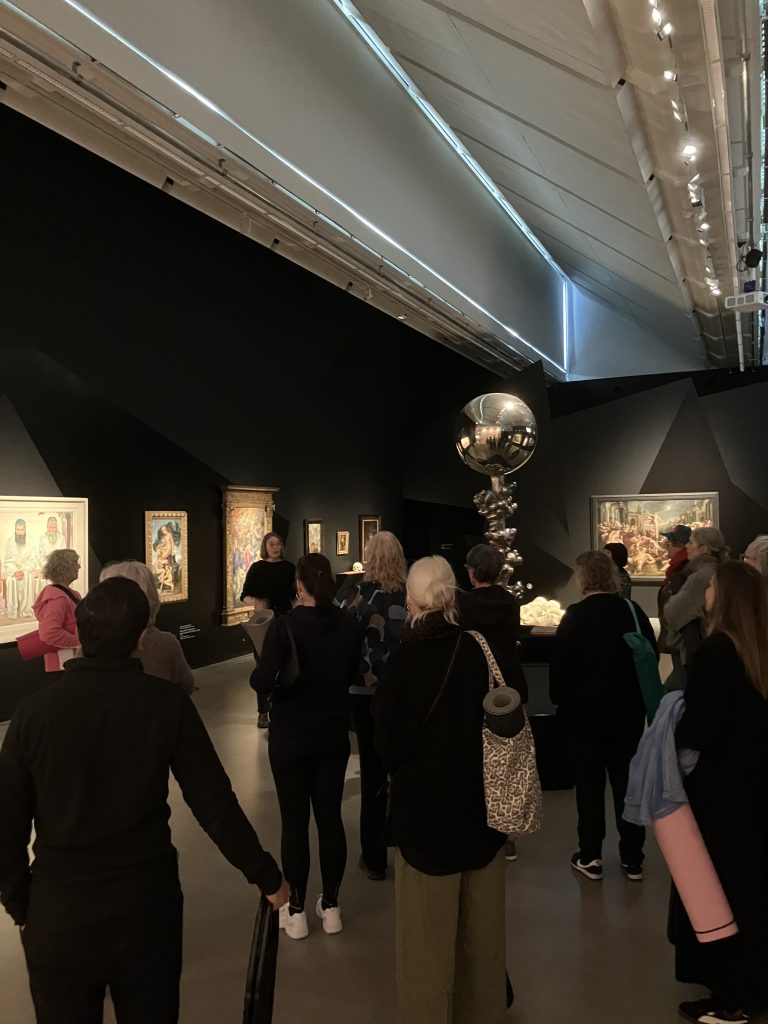
The Gothenburg Museum of Art in Gothenburg, Sweden, participated in Slow Art Day 2025 by offering two structured activities for adults and children. The program combined guided meditation, slow looking in the galleries, and hands-on making in the studio.
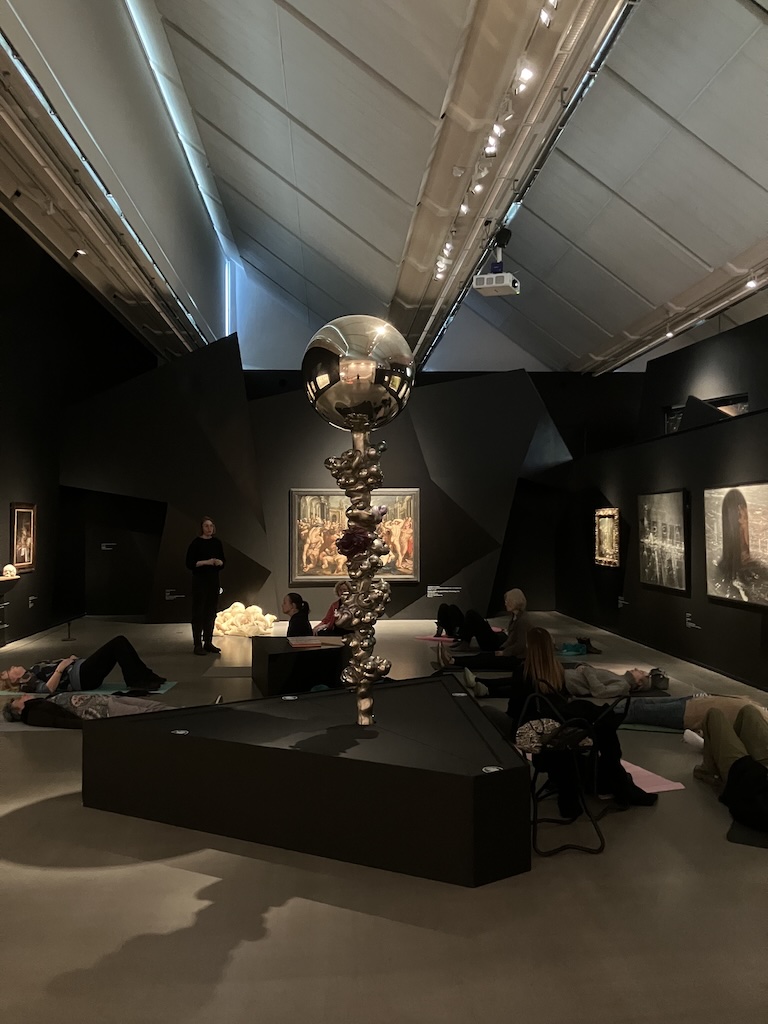
The group gathered in front of Oracle, a sculpture by Norwegian artist Jone Kvie, on view in the exhibition Apocalypse: From Last Judgement to Climate Threat.
Photo by Linda Noreen.
For adult participants, the museum hosted a guided meditation led by Pernilla Ljungkvist, artist and yoga teacher, around the sculpture. Through stillness and focused attention, participants were invited to engage with the sculpture more deliberately.
Participants practicing yoga. Photo by Linda Noreen.
For children ages 6–12, the museum offered a two-part workshop. The first part took place in the museum’s collection galleries, where participants practiced slow-looking exercises and completed a drawing activity based on careful observation.
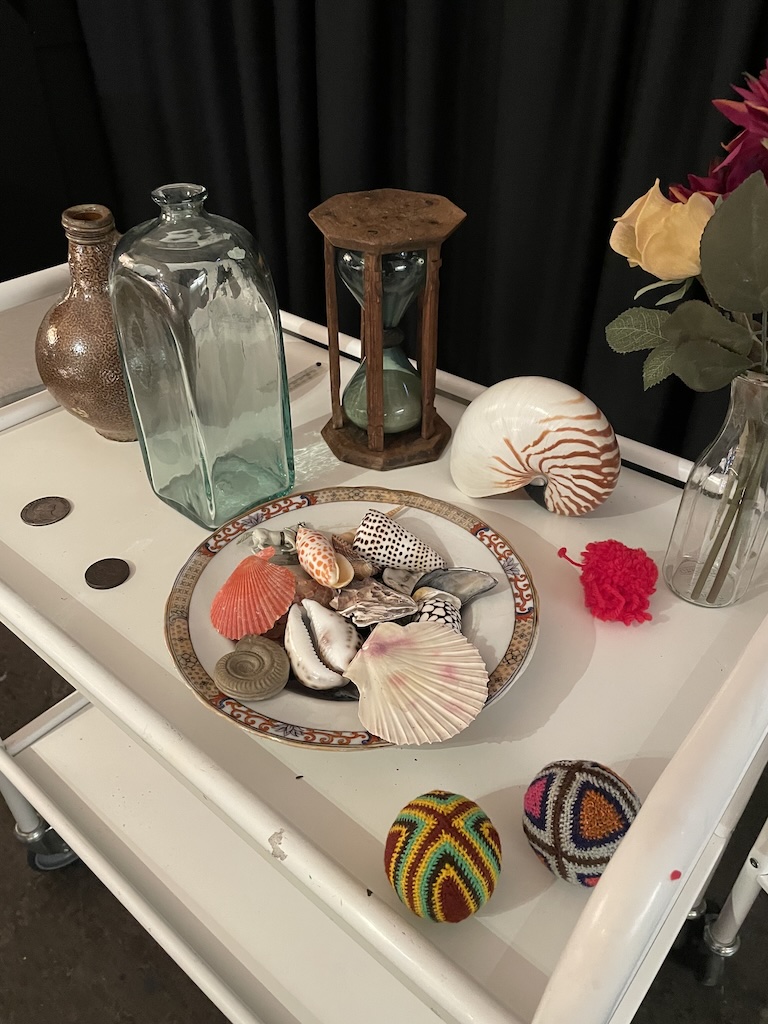
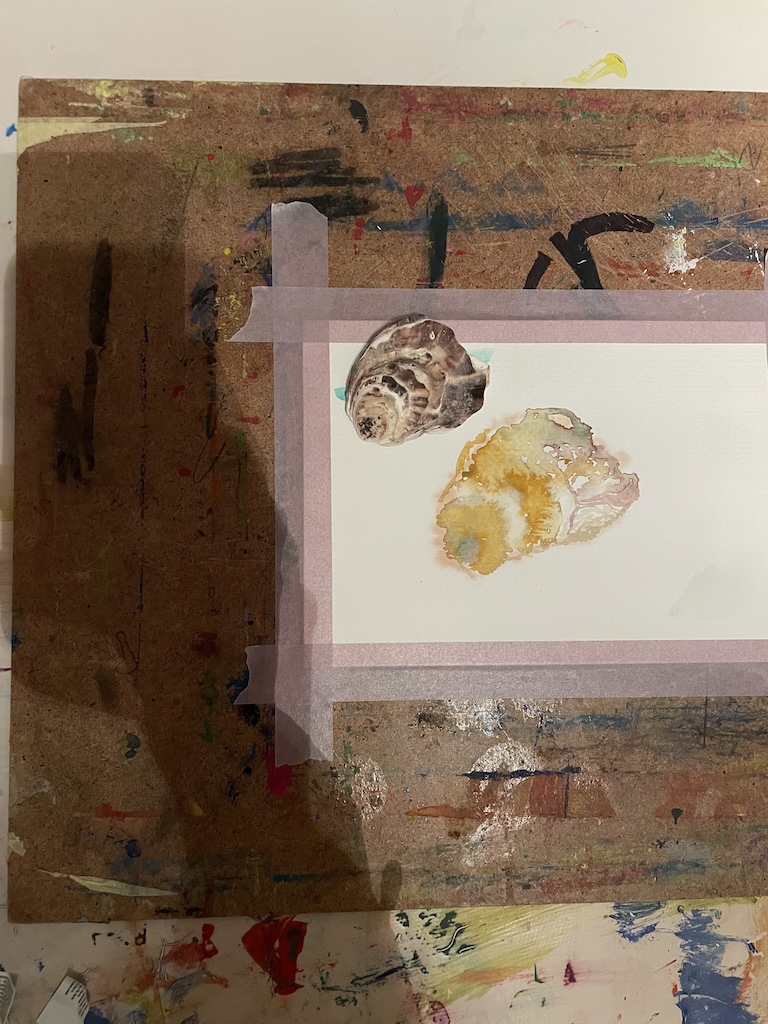
The group then moved to the Museum Studio, where a selection of objects was presented. Participants chose one or more objects to reinterpret by painting with watercolors, drawing with colored pens, or shaping forms in clay. The emphasis throughout was on slowing down, observing closely, and working deliberately. Across both activities, the shared goal was to encourage sustained attention and mindful engagement through observation, reflection, and making.
Photo by Jonna Kihlsten.Photo by Jonna Kihlsten.Photo by Jonna Kihlsten.
We thank Jonna Kihlsten, Art Educator, and the Gothenburg Museum of Art team for designing inclusive Slow Art Day experiences, as well as Pernilla Ljungkvist for leading the meditation session. We look forward to seeing what Gothenburg comes up with for Slow Art Day 2026.
For their first Slow Art Day, Kasteel van Gaasbeek (Gasbeek Castle) in Belgium held two activities that combined inclusive slow looking, touching and drawing.
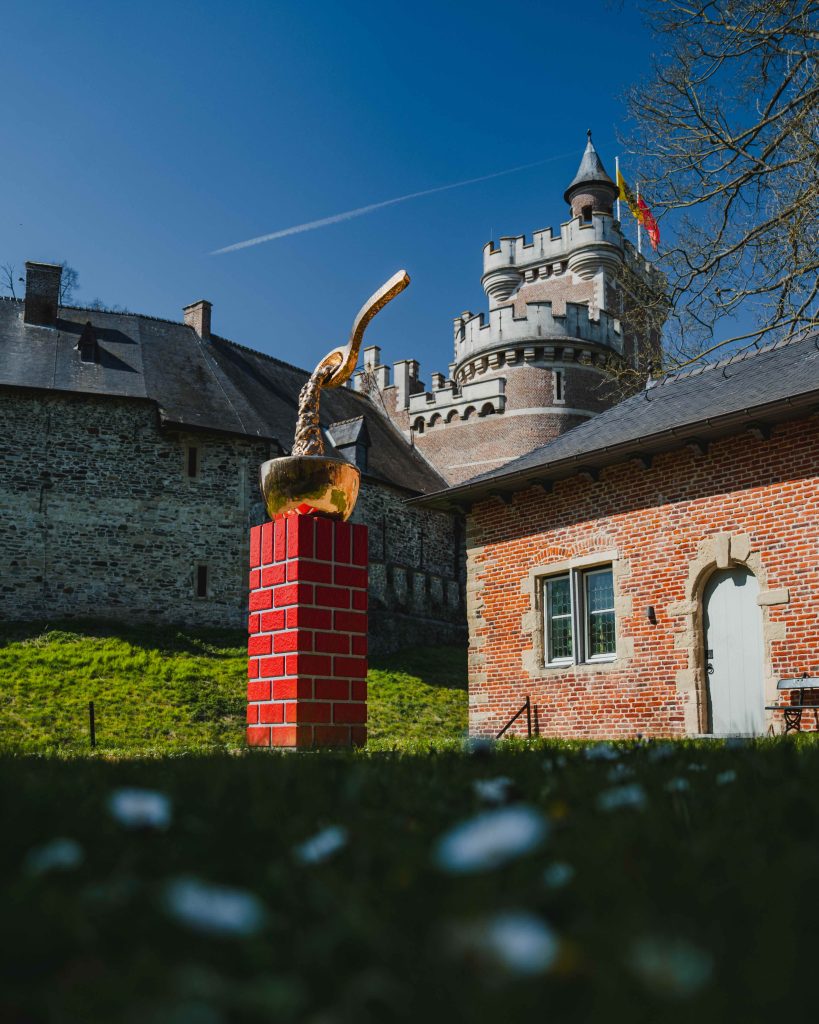
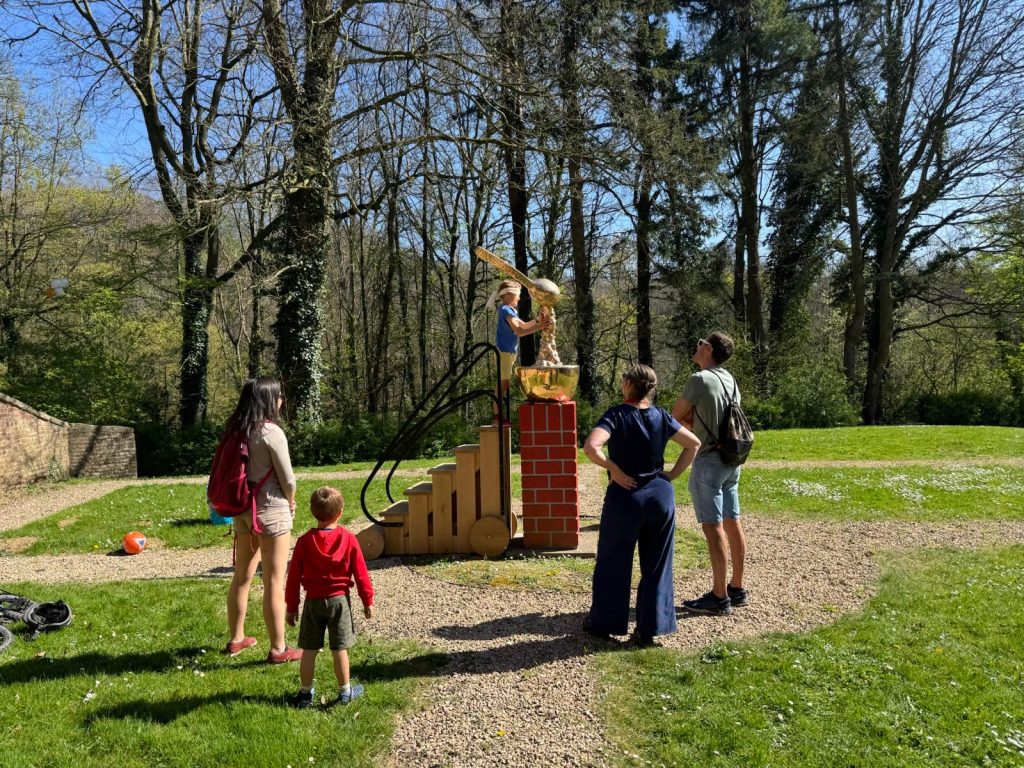
The first activity was a slow-looking and slow-touching session with the “The Peasant Wedding,” a gilded bronze sculpture referencing Bruegel’s paintings that is located in a quiet and intimate corner of the castle. Visitors were invited to slowly experience the sculpture on their own terms. And to make the experience more inclusive, they could choose to also experience it blindfolded or by touch, which also ensured accessibility for people with visual impairments. A guide was also there to ask questions and encourage dialogue about their impressions.
Visitors engage with The Peasant Wedding by Studio Job. Photo courtesy of Kasteel van Gaasbeek.
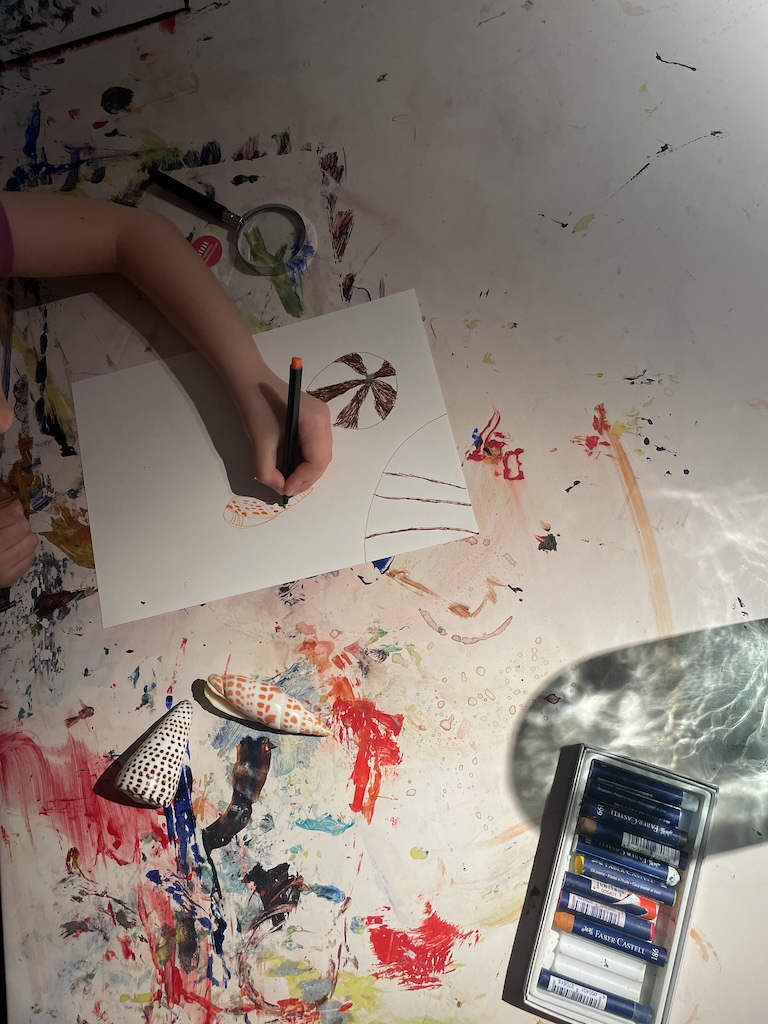
The second activity took place outside the castle, where a guide-lecturer hosted a small slow drawing workshop. Passers-by were invited to pause, sit, and sketch the castle, focusing on its details and slowing down to notice the intricacies of its architecture. This exercise provided participants with an opportunity to not only look carefully but also to translate their observations into creative expression.
We at Slow Art Day HQ love how Kasteel van Gaasbeek’s first Slow Art Day demonstrated how accessible, inclusive, and participatory approaches can enrich the slow looking experience. We look forward to seeing what they do for Slow Art Day 2026!
– Ashley, Johanna, Jessica Jane, and Phyl
P.S. Stay connected with Kasteel van Gaasbeek on Facebook and Instagram.