Carpe Diem, Slow Art Day Style

October 20, 2017: UPDATE – we have heard from the Susan Inglett Gallery in New York that this report from Tyler Green back in 2012 was wrong. Robyn O’Neil’s large scale work, HELL, was NOT destroyed.

Happily, HELL is on display at the Susan Inglett Gallery and can be viewed online here: http://secca.org/calendar-detail.php?EventOccId=824398142.

Always like to hear some *good* art news.

Anyone in New York should go visit the Susan Inglett Gallery and view this and other work slowly. It’s well worth it.

Thanks –

Phil

—————————————————————————————————-ORIGINAL POST from 2012

My sympathies go out to the people affected by Hurricane Sandy who are still picking up the pieces of what’s left after the storm. Many things were lost, not the least of which include artists’ studios and archival material.

Tyler Green reflects in Modern Art Notes on the situation of artist Robyn O’Neil, whose latest large scale work, HELL, was destroyed by the hurricane. It survives only as a JPEG image now — lamentable, but better than nothing.

Green points out that lost art is common in art history for a number of reasons, be it war, weather or fire. The physical presence of a work of art is actually quite fleeting, giving us all the more reason to look at art slowly and really value our time with it.

Read Green’s article in Modern Art Notes for more on O’Neil’s work and digital preservation.

– Naomi Kuo, Slow Art Day Intern
Taking a Slow Look at a Museum

When you are looking at art in a gallery or museum do you pay attention to the building or the installation set-up?

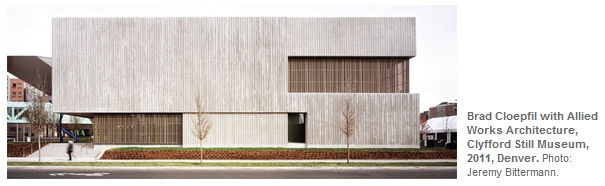
Harry Cooper, curator of modern and contemporary art at the National Gallery of Art in Washington DC, writes in ArtForum about his experience of the Clyfford Still Museum, a museum built specifically to house the artwork of Clyfford Still, a first generation Abstract Expressionist. Still’s will required that his works only be shown in such a museum and so most of his work had been sealed off from the public for over 30 years.

In the article, Cooper takes us on a slow tour of the museum space and considers how the exterior, the layout, and even the wall texture, compliment the paintings on display. He also makes observations about the relationships between pieces that the installation and separation of different rooms create for the viewer.

Read Cooper’s article and visit the Clyfford Still Museum in Denver to experience the amazing architecture and paintings in person.

– Naomi Kuo, Slow Art Day Intern
Slow Art Day Selected as tumblr Editor

Good news – yesterday, the tumblr staff named us to the editorship for the Art Tag.

What does this mean? It means we now have the ability to highlight and promote art from across the worldwide tumblr community.

We’re honored to join a great group of blogs that take part in this community sharing, and we look forward to growing our presence on tumblr through our editorship.

Thanks to the staff at tumblr for recognizing the Slow Art Day tumblr blog and providing us with this important opportunity.

Alie Cline
Slow Art Day Tumblr Manager

Painting v. Photography: A Fight for the Mind’s Eye

Do our brains naturally prefer literal photographs over abstract art? Does that set up a fight for our attention?

As we saw with the Munch blog post last week, painters have been in conversation with photography since the invention of the camera. Some have taken photography into their art practice, while others have worked to create new forms of art that transcend the literal and challenge how we see.

Gerhard Richter, one of the most influential artists in the last half of a century, has been a key contributor to this ongoing dialogue.

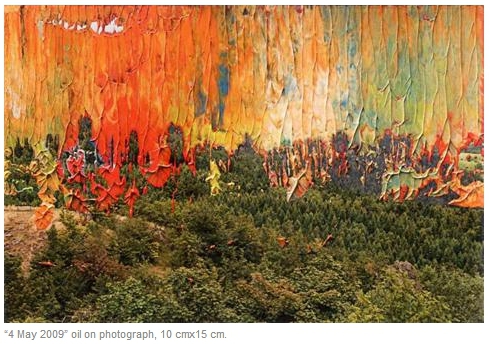
Since the 1980’s, Richter has made series of small scale works in which he smears paint over photographs. One of these paintings, Evening (14.9.98), was recently featured in our Slow Art Day Tumblr. The tactility of the paint and the collision of surface and representation make them perfect pieces to look at slowly.

Jim Quilty of The Daily Star wrote a review of Richter’s show earlier this year at the Beirut Art Center that displayed many of these so-called “overpainted photographs.” Quilty suggests that the contrast between the abstract paint and the literal photography set up a kind of fight for the mind’s eye – one that abstract elements can easily lose.  “…the works offer a master class in the eye’s prejudice toward figurative interpretation. The more photo there is, the greater the brain’s demand that the work be representational.”

Browse the Beirut show and read Quilty’s review to enter into this lively conversation between photography and painting. Best of all, visit Richter’s website to see for yourself his whole collection of overpainted photographs.

– Naomi Kuo, Slow Art Day Intern
 

The Unique Vision of Edvard Munch

Sue Prideaux, author of Edvard Munch: Behind the Scream, wrote a feature article on the artist for the summer edition of Tate Etc. magazine to accompany the Tate Modern’s exhibition,“Edvard Munch: The Modern Eye.”

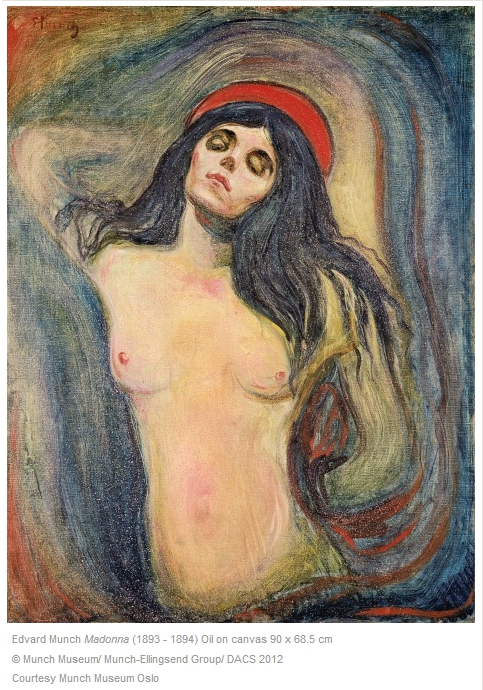
Prideaux writes about how Munch was affected by spiritualism and use of developing camera technology. In his photography, Munch experimented with the exposure and other processes to achieve supernatural effects that suggested “spirit images” and dopplegängers. Even paintings like “Madonna” (above) were influenced by photographs that claimed to capture the aura emitted by all living beings.

Read more to learn about Edvard Munch’s unique vision and how the arts of looking and painting in the Modernist period were changed by that period’s new technology.

– Naomi Kuo, Slow Art Day Intern
Time Traveling to Get a Different Perspective?

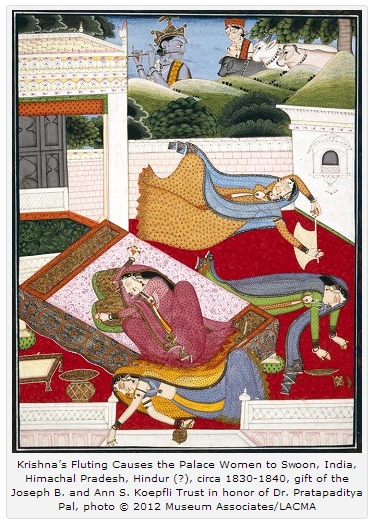
Not all experiences of looking are the same. LACMA gallery attendant (and artist/writer) Hylan Booker reminded me of this in his recent Unframed blog post about the museum’s Unveiling Femininity in Indian Painting and Photography exhibit.

Booker travels back in time to imagine what the experience of seeing the artwork would have been like for a Victorian British or Indian male. He considers the role that eroticism and myth might have played in how the art was both seen and made.

Read Hylan’s blog post to think more about the context of looking and visit this exhibit at LACMA to take your own slow look.

– Naomi Kuo, Slow Art Day Intern
Spooky Art Skulls for Halloween

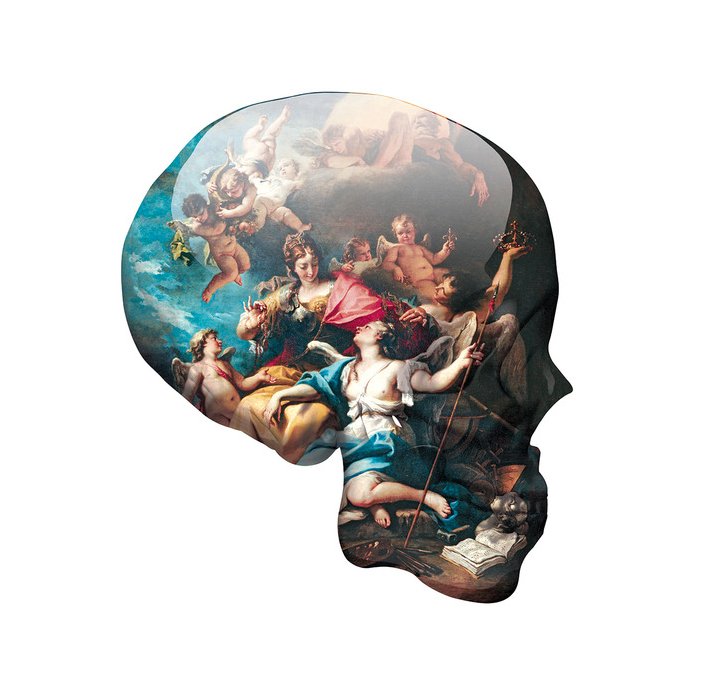
Over on our tumblr page, we’ve been featuring spooky art to celebrate Halloween. Tumblr’s staff selected our post showcasing designer Magnus Gjoen’s skulls to feature on the tumblr radar – check out one of the skulls below, and head over to our tumblr page to see more!

Magnus Gjoen, Skull Victory Over Ignorance

Happy Halloween!

Jeremy Deller: A Cross-Cultural Experience to be Taken in Slowly

Ben Meyer’s  review of British artist Jeremy Deller’s mid-carrer show at the University of Pennsylvania Institute of Contemporary Art emphasizes that the cross-cultural experience needs to be absorbed and enjoyed slowly. We agree. It takes time to step into other times and places.

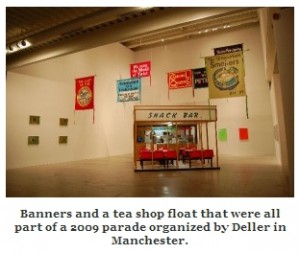
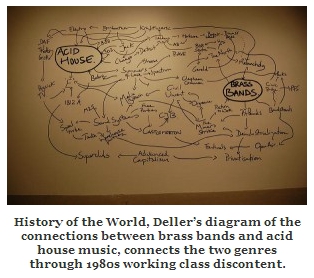
Many of Deller’s pieces are about his native Manchester and the 1984-5 miner’s strike that occurred there. No doubt he had to take multiple slow looks at his culture to engage with it in a unique way and make creative connections. For example, in one project he joins a brass band to acid house music, linking the two conceptually through the unrest of the 1980s.

Whether you are British, American, or of another nationality, taking time to really see and understand works like Deller’s can help you to make your own meaningful connections to other cultures.

Thanks to Ben Meyer and theartblog.org for pointing us to this show. Be sure to visit and take a nice slow look if you are in the Philadelphia area.

– Naomi Kuo, Slow Art Day Intern
 

Looking Slowly Means a Workout For Your Eyes

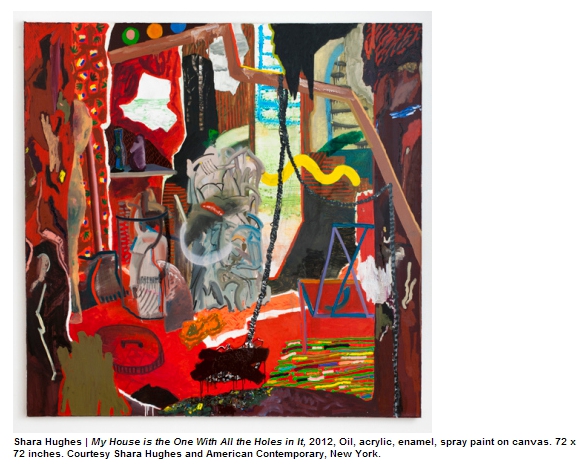
Some works of art seem to inherently invite a slower, more involved viewing experience. New American Painting contributor Brian Fee would agree in regards to Shara Hughes’ richly colored paintings currently exhibited at the American Contemporary in New York.

In his review of her work, Fee takes the idea of looking slowly to the next level. The word “slow” can make us think of being lethargic, but looking and engaging with a work of art, as Fee suggests, is a lot like physical exercise. He describes visually exploring Hughe’s paintings as “giving your oculars a calisthenic workout,” and warns against an un-energetic approach (“Go into this half-heartedly and you’ll leave with soft-scrambled brains”).

Hughes’ bold and adventurous paintings certainly do exude energy and invigorate the viewer. Take a slow (but intense) look at her paintings through Lee’s eyes in his review or through your own at the American Contemporary and get in a visual and imaginative workout.

– Naomi Kuo, Slow Art Day Intern
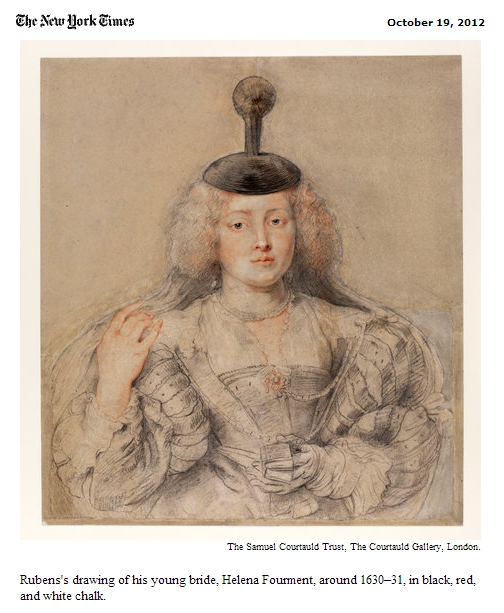
Drawing Some Slow Conclusions at the Frick

Reading Karen Rosenberg’s review of the Frick Collection’s show, “Mantegna to Mattise: Master Drawings From the Courtauld Gallery,” reminded me that large time-spanning exhibits need several slow looks.   

Rosenberg writes that “the installation… is roughly chronological. But it’s also dialogical, encouraging much back-and-forth between works of similar subject or virtuosity. At times the viewer may feel like a moderator, which in this case is a good thing.”

She herself makes several connections for us, playfully exploring the narrative possibilities and interesting quirks of several pairs of drawings. Her article speaks to how anyone can make his or her own unique connections and observations of art, especially if they take the time to look slowly.

Read on to catch onto her lighthearted approach to the art of looking, and if you are in New York, be sure to make one, two or three visits to the Frick Collection for a slow enjoyment of these drawings.

– Naomi Kuo, Slow Art Day Intern