Extremely Slow Art

As Slow Art Day participants, we know the sublime experience that we can have by slowing down to observe and truly take in a piece of art. We spend 10 minutes, 15 minutes—up to an hour­­—and encourage others to do the same. But we don’t think to suggest that people should spend all day everyday in front of the same artwork. It would never occur to us. Would anyone do that?

Art photographer Andy Freeberg found out when he noticed women sitting near certain art pieces in the State Hermitage museum in St. Petersburg, Russia.

These women­­ are retired professionals who serve as guards in art museums all over Russia. They sit on chairs near a particular piece of art in the gallery, their presence so constant that they become part of the viewing experience. Freeberg noticed visual connections between the women and the art they were sitting with, which prompted him to begin taking photos that turned into the Guardians project, a photographic exploration of this uniquely Russian phenomenon. 
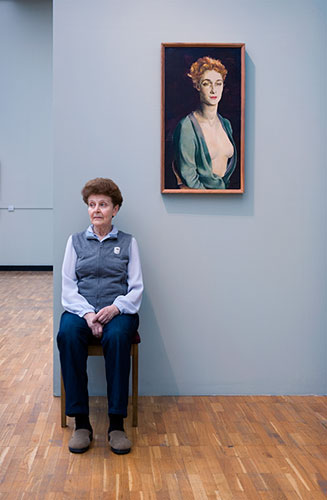
 

Altman’s Portrait of I.P. Degas, Tretyakov State Gallery. Photo by Andy Freeberg.
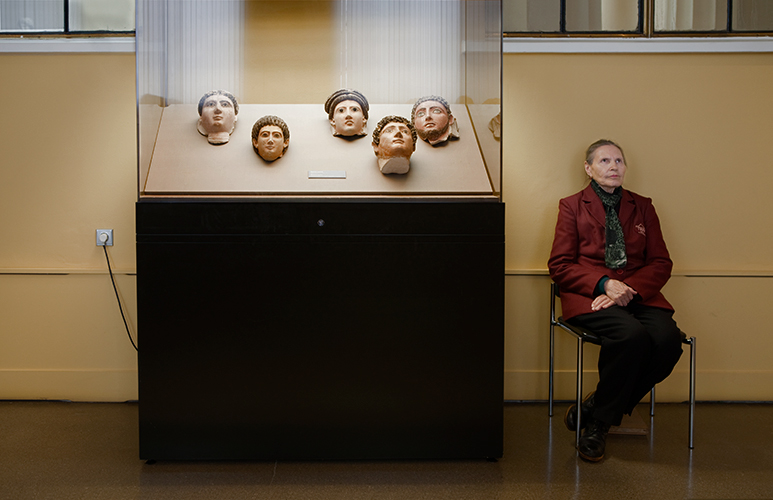
 

 2nd Century Mummy Masks, National Pushkin Museum. Photo by Andy Freeberg.

Why are these women guarding the art instead of uniformed, young guards? Evgeny Berezner of the Russian Ministry of Culture, told Freeberg, “It has to be these ‘not so young’ women because they know the history of our country. Russia has had a very difficult history with its government and rulers over the years, but the one thing all Russians are proud of is our art, our culture. These women are the guardians of our culture.”

These guardians of culture take their jobs seriously. One guardian said that this responsibility is worth the three-hour commute to and from the Tretyakov Galleries museum, where she’s worked for more than 10 years. She told Freeberg she’d rather be sitting among the history of her country than sitting on a bench by her house complaining about her illnesses like other old people do.

Patrons of the museums, however, are so used to the guardians’ presence that they often look past them or don’t notice them at all. What do you think? Are you ready for extremely slow art? If you had to pick one artwork to look at for day, weeks, months and years on end, which would it be?

You can start to have this experience by viewing some of the guardians on Andy Freeberg’s website or see all 37 images from the project in the Guardians book, on sale now.

-written by Jennafer Martin, Slow Art Day blog editor; edited by Phil Terry.
More Slow Art Day 2013 venues added

We’ve been busy adding more locations for Slow Art Day 2013 – thanks to everyone who has signed up to be a host! Here are the latest venues:

Welcome to these new venues, and be sure to check out the complete (and constantly updated!) list of 2013 venues. If you don’t see your local museum or gallery, sign up to be a host!

Slow Art Improves Skills of Doctors?

Slow Art Day participants around the world know that slow looking at art is a multi-dimensional experience that impacts our ability to look at and love art. But, many have also suspected that it has even wider applicability. It turns out that that a program called “Enhancing Observations Skills” at the Yale School of Medicine confirms our suspicions.

According to a June 2012 article in The Wall Street Journal, (“How to End the Age of Inattention” by Holly Finn), this Yale program began a decade ago when the curator of education at the Yale Center for British Art teamed up with a staff member at Yale’s medical school. Their goal: improve diagnostic skills of their medical students.

What did they do? They launched a slow art program that is cannily similar to what we do with thousands of participants around the world. Every year, they assign students paintings to observe for 15 minutes, asking students to note details and then discuss their experiences afterwards.

Improving the future doctors’ ability to see details helps them better pay attention when diagnosing illnesses. The program is now not only mandatory for first-year medical students at Yale, it’s expanded to more than 20 other medical schools, including Harvard, Columbia, and Cornell.

This slow art-centered approach, or “museum intervention”, is so effective that the article’s author suggests leaders in business, politics and even religion may benefit from adopting it as well.

What do you think? Does slow looking wide applicability? Would you like your doctor to visit the museum and look slowly? What about other professionals? How about politicians? Are you aware of other applications or of other pioneers? Leave a comment and let us know what you think. We’d love to hear from you.

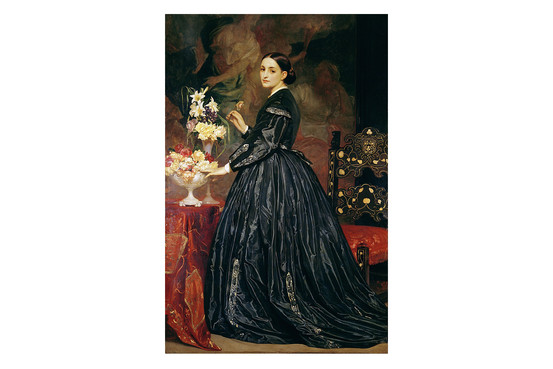
Mrs. James Guthrie by Lord Frederic Leighton is one of the pieces medical students view in their slow-art focused program to improve diagnostic skills

– report by Slow Art Day blog editor Jennafer Martin, Edited by Phil Terry.

Slow Art Day 2012 Report: Arizona State Museum

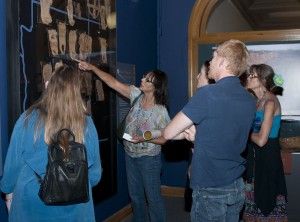
A combination of anthropology and poetry made for a unique experience for Slow Art Day 2012 at Arizona State Museum in the United States. Rather than displaying artifacts as stand-alone pieces, this anthropology-focused museum uses them in context to illustrate cultural and historical stories. So weaving storytelling into Slow Art Day made for a unique approach to this event.

Working with the docents from the University of Arizona Poetry Center, the museum invited visitors to read a haiku poem written by one of the docents and find the object that it described or to discover a piece on exhibit that interested them. They were asked to really look at the piece slowly and then write their own haiku poem about it.

Some suggestions to help visitors look at the exhibits deeper included:

  • Imagine using your five senses to get to know the piece—how would it feel, smell, sound, taste? What colors is it? What is it made of?
  • Imagine having a dialogue with the object—what action words would express its story?
  • Think about its history—how it might have been made, used or experienced and by who?
  • Look at the label and make connections.

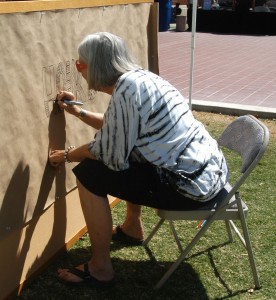
Over 100 poems were written and transcribed onto a large piece of butcher paper, which is now on display at the Poetry Center to encourage people who see it to visit the the museum and figure out which objects inspired them.

This interactive approach was a great success in helping visitors experience the exhibits in new ways. As one visitor reported: “Although I was reluctant to participate at the time (my wife cajoled me into it), in retrospect I can see that the methodology is a good one for getting people to begin to look a little deeper at a piece of art. As a retired scientist and military guy, I tend to focus more on what can be seen, measured, etc. and this exercise did, in fact, make me slow down for a second.”

For more on Arizona State Museum’s Slow Art Day experience, visit their blog.

–Report by Lisa Falk, Arizona State Museum’s Director of Education. Edited by Slow Art Day blog editor Jennafer Martin. Photographs courtesy Christine Baines and Arizona State Museum.


Slow Art Day 2012 report: Chinese Arts Centre in the United Kingdom

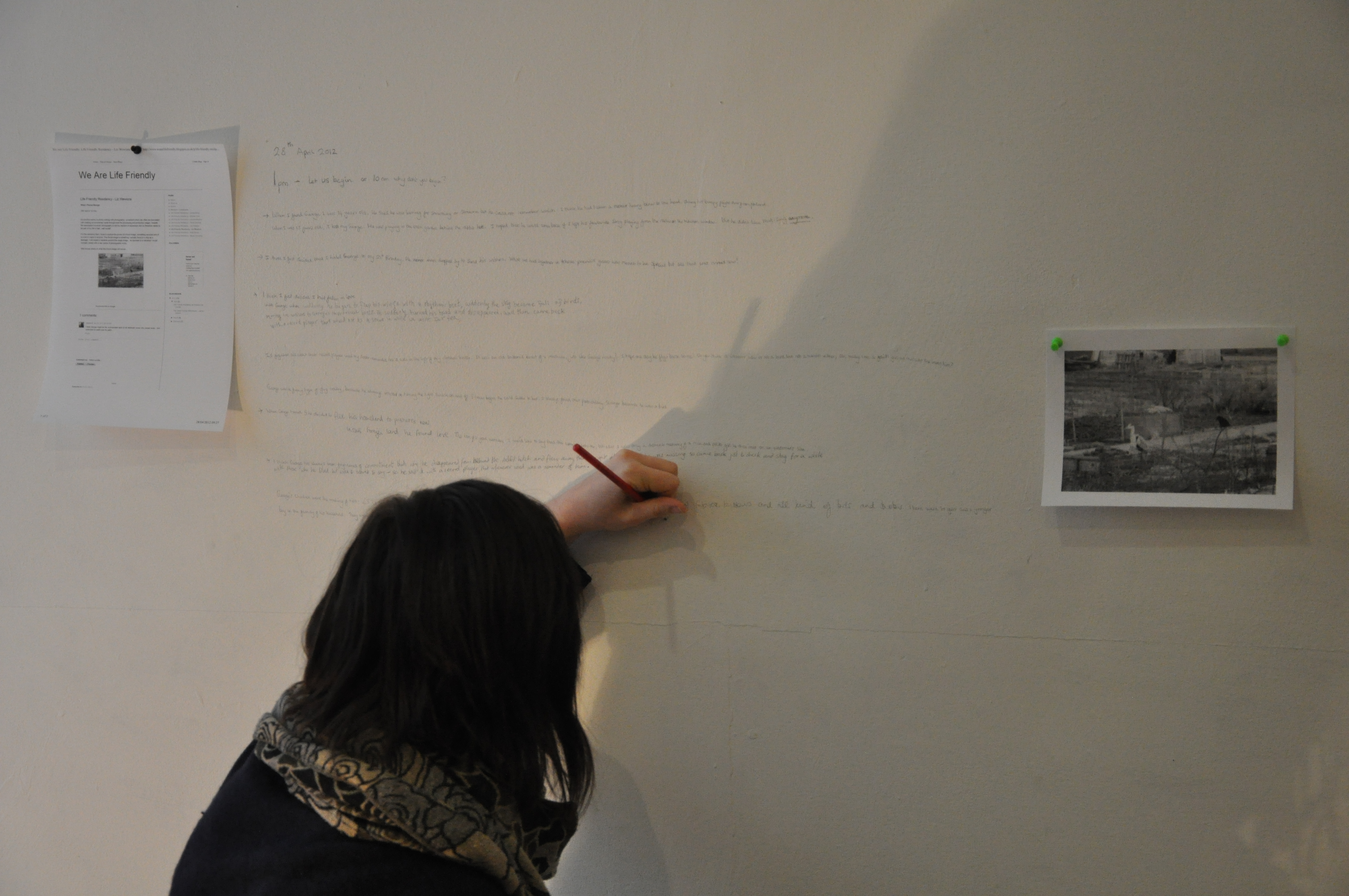
An open studios event, Slow Art Day 2012 at the Chinese Arts Center in Manchester, United Kingdom, saw a steady stream of 88 visitors slowly enjoying art while interacting with the artists and enjoying a snack of slowly made food (10-day sourdough, Amish Friendship Bread, tea eggs, cheese, radish seedleaves, and ginger beer).  Hosted by a collective of artists in residence, the pieces visitors viewed were all contemporary, nontraditional works-in-progress by members of the Life Friendly Collective, including many interactive elements, such as a collaborative story on the gallery wall initiated by Elizabeth Wewiora (pictured below).

Photo by Erinma Ochu

Visitors felt the context of Slow Art Day made them more likely to spend time thinking about as well as participating in the art pieces, and the overall response was very positive!

–Report by Jessica Mautner, on behalf of Life Friendly Collective. Edited by Slow Art Day blog editor Jennafer Martin

Slow Art Day Report 2012: Tate Britain

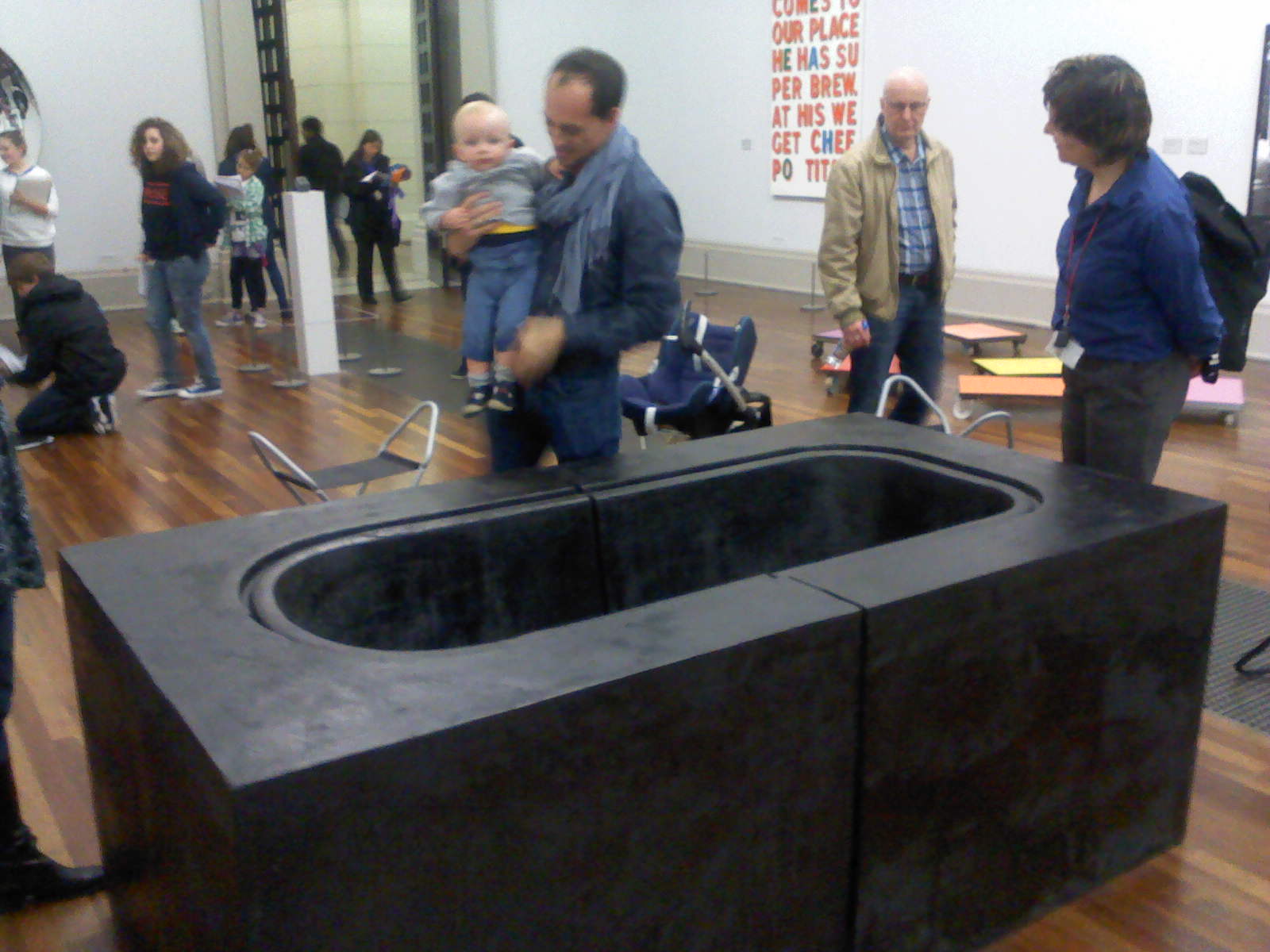
Although the weather outside was cold and rainy, the feeling inside the United Kingdom’s Tate Britain was sunny and inspired for attendees of Slow Art Day on Saturday, 28th April, 2012. A stimulating event that built a stronger interest in art among its attendees, this was the second Slow Art Day event that Paul Langton hosted. Paul collaborated with Tate’s Community Learning team on several promotions, including an informative post on Tate’s website, and this year’s event attracted a wider and varied audience than the previous year’s, including a one-year-old baby as well as Tate’s Curator of Community Learning, Liz Ellis.The attendees chose to stay together throughout the event rather than viewing the selected pieces individually, and together they thoughtfully viewed a variety of media, including video, oil, urethane, concrete, and more. (The baby was particularly interested in the concrete piece, a bust of Stalin by Peter Lazslo Peri!) Among these was Rachel Whiteread’s Untitled (Black Bath) below.
A lively discussion over lunch helped the group get to know one another better, and they discovered that one attendee’s relative was due to host Slow Art Day in London, Ontario, that day. That connection helped them feel like a part of Slow Art Day beyond their immediate circle, appreciating the event as part of a universal experience overall.
-Paul Langton’s host report edited by Slow Art Day editor Jennafer Martin

Introducing the ‘slow art’ movement; it’s like the ‘slow food’ movement, with art (and food)

For a few moments, the event acquired a six-men-of-Indostan quality.

The abstract painting by Reed Danziger, exploding with colors and shapes, brought to mind a collage, said a painter and teacher of Hebrew from Israel. An artist from Brooklyn demurred. There was so much going on—it gave her the sense of standing in front of a manifesto, she insisted. Surely it resembled a film strip, argued a painter from Long Island City.

The artists were gathered at McKenzie Fine Art gallery in Chelsea on Saturday for Slow Art Day, an annual event during which art lovers visit local museums and galleries to look—slowly, deliberately, and thoughtfully—at pre-selected works, and then repair to lunch to discuss the experience.


Read the Full Article

Slow Art Day 2012 Report: Colorado Springs Fine Arts Center

The Colorado Springs Fine Arts Center hosted its first Slow Art Day on April 28, 2012 – and based on the success, host Nicole Anthony says that the center plans to offer slow art viewing exercises, complete with a post-viewing wrap-up, more often.

Host Nicole Anthony of the Colorado Springs Fine Arts Center.

Like many Slow Art Day events it was small but significant.  The small group size allowed for lengthy discussion over each of the 5 different art pieces that Anthony chose—in fact, there was so much engagement that the group spent an average of 30 minutes slowly looking at and then discussing each piece.

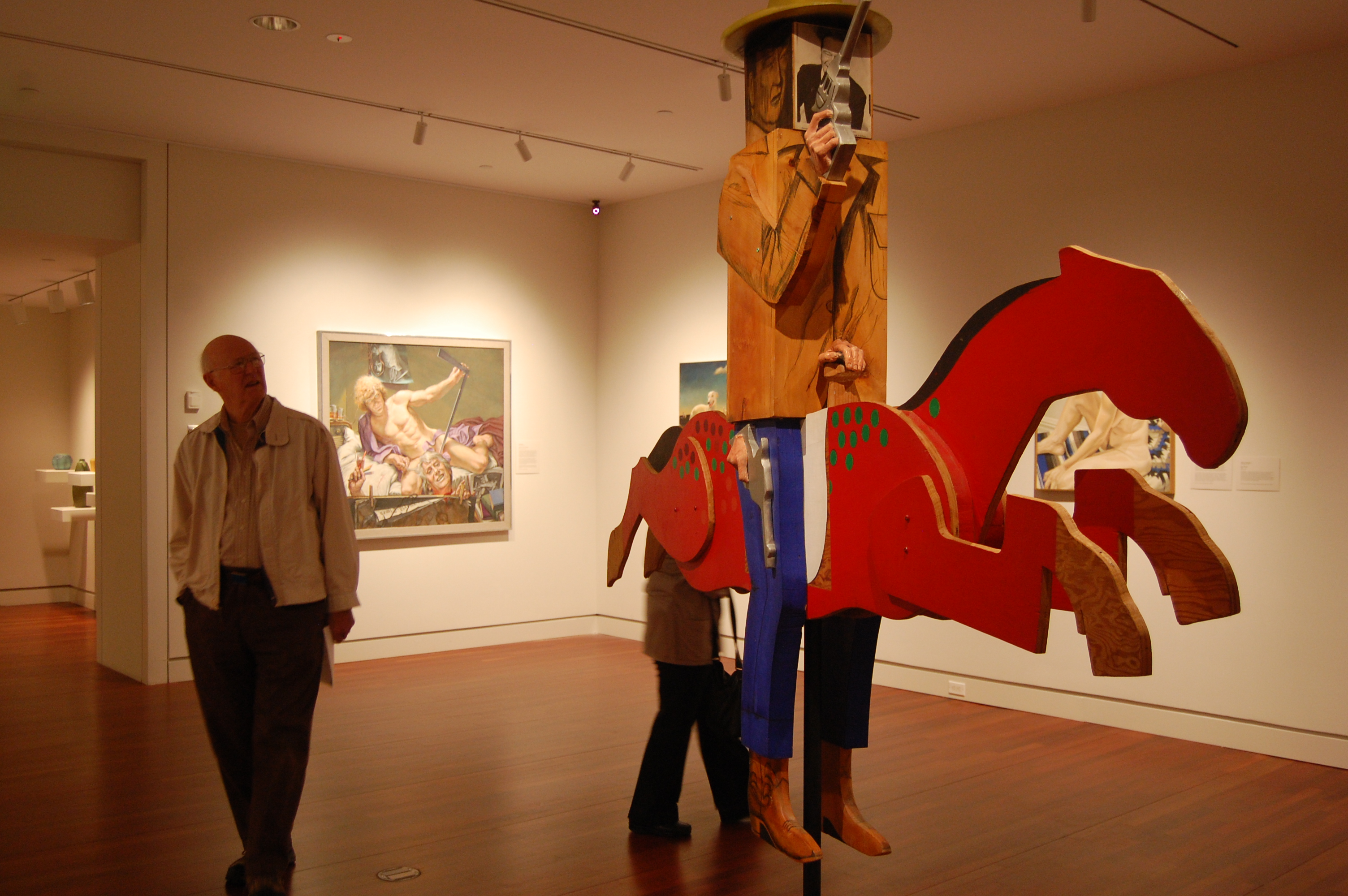
John Wayne, 1963 (mixed media) by Marisol (Escobar) was one of the five pieces Nicole Anthony chose for the Colorado Springs Fine Arts Center Slow Art Day 2012.

Afterwards, lunch in the center’s cafe continued the lively conversation. As with many Slow Art Day events, the experience not only increased participants’ love for art, but Anthony says it also created a surprisingly deep sense of community.

– Nicole Anthony’s host report edited by Slow Art Day editors Jennafer Martin and Phil Terry


Slow Art Day is today all over the world!

Slow Art Day 2012 is today, Saturday, April 28.

Events have already occurred in China, India, and all over Australia. As I write this, Slow Art Day events are happening in Rome, Paris, London, Copenhagen and all over Europe.

Slow Art Day events are about to start in North and South America.

Have a good and slow day of looking and loving art.

– Phil

Phil Terry
Founder, Slow Art Day

P.S. If you need anything or have any questions about today’s events, get in touch via e-mail here.

Slow Art Day Video

Watch

Created by Scribbler’s Club, hosts for Kitchener-Waterloo Art Gallery Slow Art Day.