Test Kitchen at the Gardiner Museum, Toronto

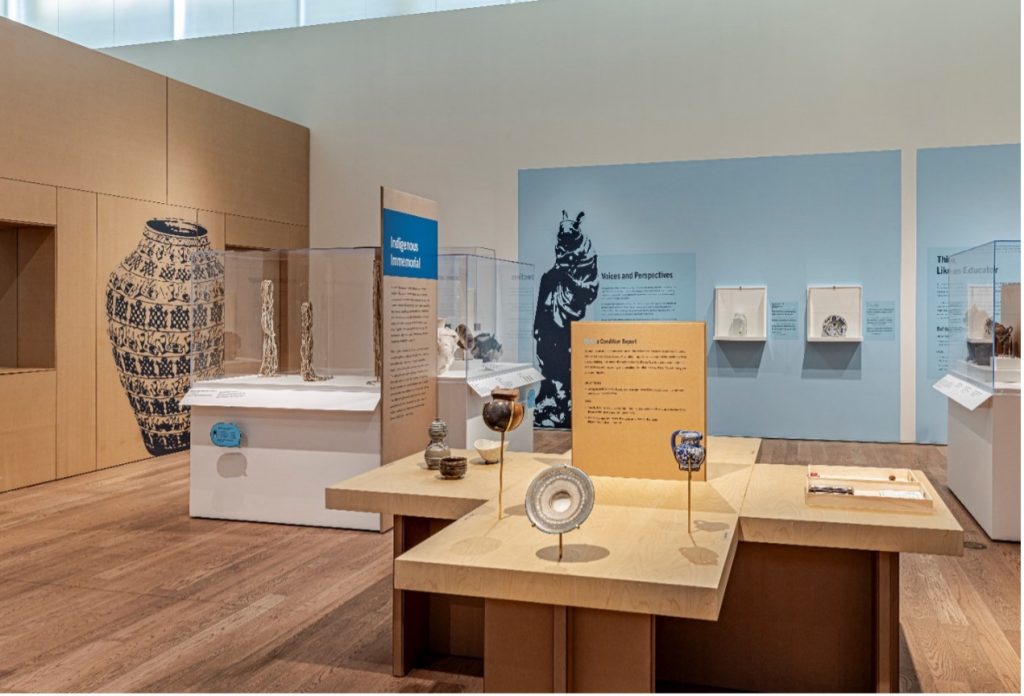
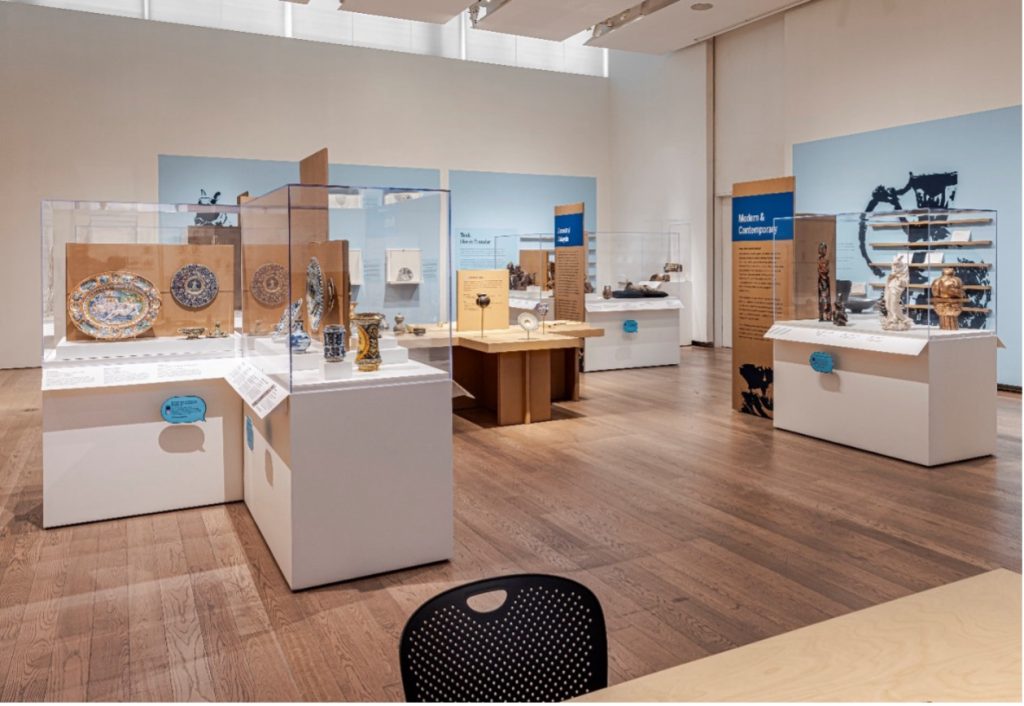
On April 5, 2025, the Gardiner Museum in Toronto, Ontario participated in Slow Art Day for the sixth time — this year embedding the experience within their major exhibition Test Kitchen: A Museum Project.

As the museum underwent a full-scale reimagining of its ground floor and reinstallation of significant parts of its collection, Test Kitchen created a space of experimentation, collaboration, and participation. The exhibition functioned as part exhibition, part workshop, and part ideas generator. Visitors were encouraged not just to observe, but to question, respond, and contribute.

For Slow Art Day, participants were invited to closely engage with four collection-based “episodes” within the gallery:

  • Connected Worlds
  • Modern and Contemporary Ceramics
  • Ancestral Abiyalas
  • Indigenous Immemorial

Featured works included:

  • Two-handled vase with palmette motif, Deruta, Umbria, Italy, c.1500–1550
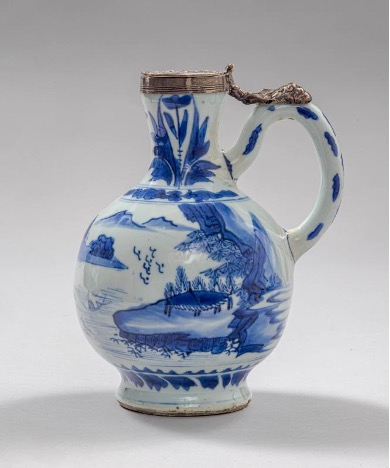
  • Ewer, silver mounts with German coin dated 1626, Jingdezhen, Jiangxi, China, 1635–1640
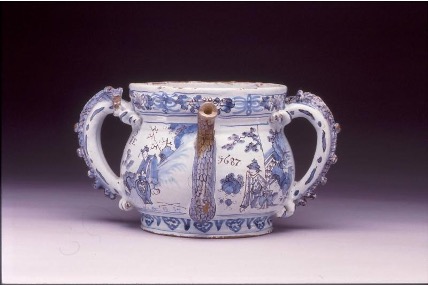
  • Posset pot with chinoiseries, possibly Brislington, Bristol, England, 1687
  • An Odyssey, Artist: Pamela Cevallos (Ecuadorian, born 1984), Collaborator: Guillermo Quijije, Quito, Ecuador, 2022
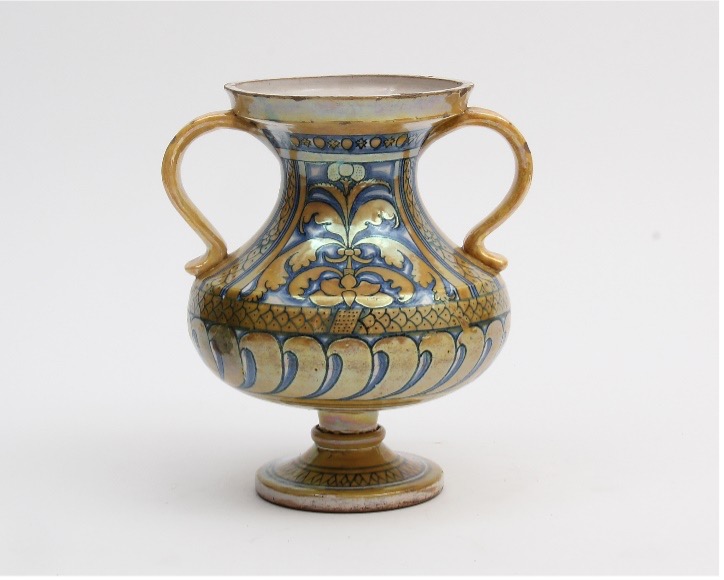
Two-handled vase with palmette motif, Deruta, Umbria, Italy, c.1500–1550
Ewer, silver mounts with German coin dated 1626, Jingdezhen, Jiangxi, China, 1635–1640
Posset pot with chinoiseries, possibly Brislington, Bristol, England, 1687
An Odyssey, Artist: Pamela Cevallos (Ecuadorian, born 1984), Collaborator: Guillermo Quijije, Quito, Ecuador, 2022

Participants navigated the exhibition using a self-guided Slow Art Day activity sheet created specifically for the program (below). The prompts encouraged close looking, sketching, reflective writing, and imaginative engagement.

In Connected Worlds, visitors searched for ceramics that visually embodied global exchange: an English pot with Chinese dragons, a Chinese jug with Dutch designs and a German coin, and an Italian vase made using a technique from Iraq. In Indigenous Immemorial, participants compared two works by John Kurok, reflecting on form, design, colour, and emotional tone.

In Modern and Contemporary Ceramics, guests identified works connected to myth or magic, considering how contemporary artists draw from narrative and symbolism.

In Ancestral Abiyalas, participants looked closely at An Odyssey, imagining themselves within its scenes — listening for sounds, sensing scents, and noticing what surprised them.
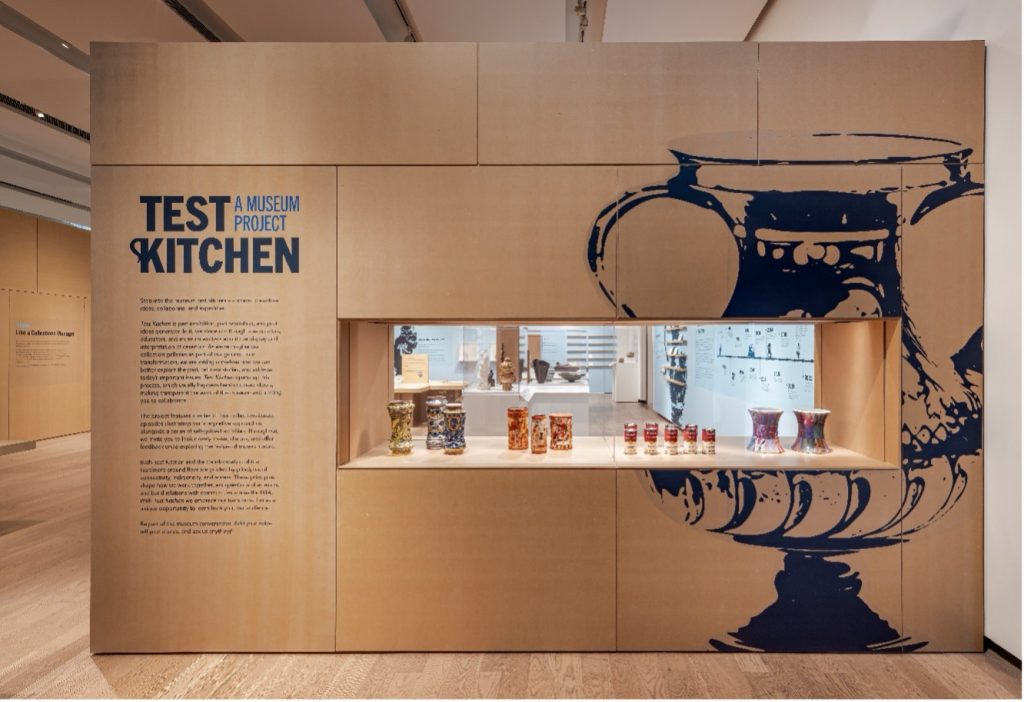
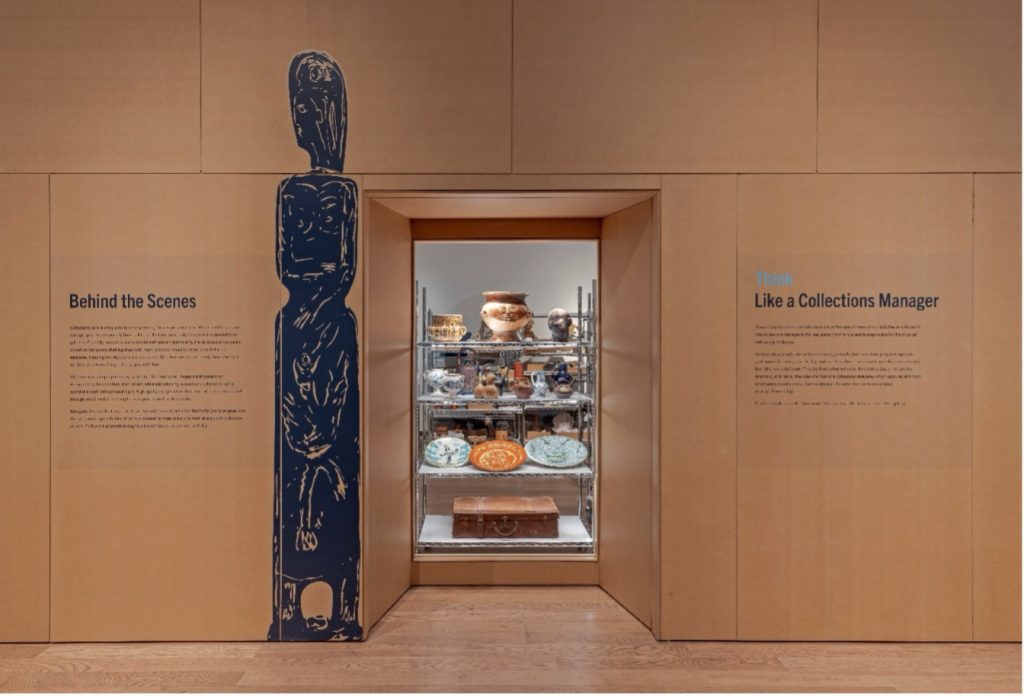
After completing their exploration, visitors were invited to participate in the exhibition’s interactive “Befriend an Object” activity, further reinforcing the exhibition’s collaborative spirit.

We are grateful to Sofia Flores-Ledesma and the team at the Gardiner Museum for continuing to champion Slow Art Day and for integrating it so thoughtfully into their institutional transformation, and look forward to seeing what they come up with for Slow Art Day 2026.

– Ashley, Johanna, Jessica Jane, and Phyl
P.S. View them on Instagram and Facebook

Miniature Art Captivates at the Gardiner Museum

People often ask us: what’s the best kind of art for people to look at slowly? And before we answer, they often offer what they think must be true – i.e., that only *large* scale art can maintain the attention of slow lookers. Our answer, however, (based on experience) has been that everything works *including* small-scale art.

We are glad to say that The Gardiner Museum in Toronto, Canada proved once again that tiny art captivates.

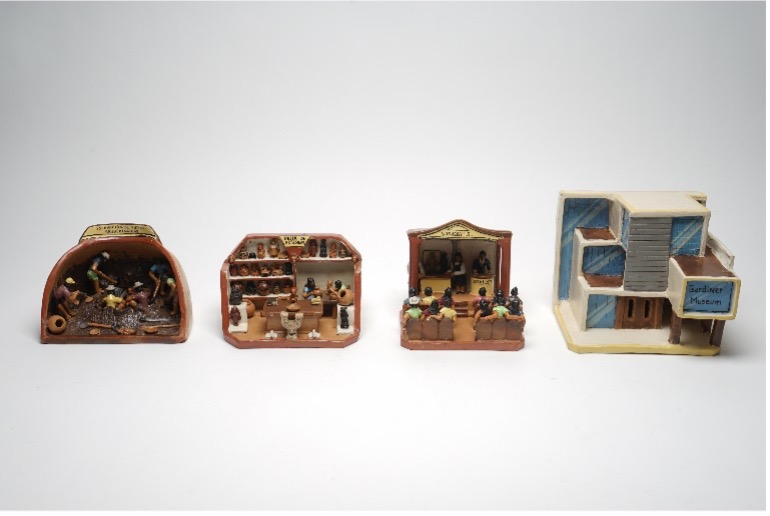
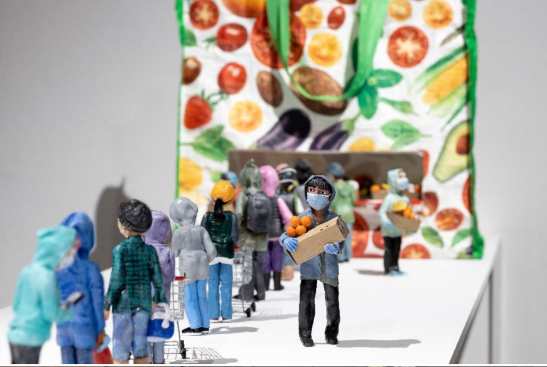
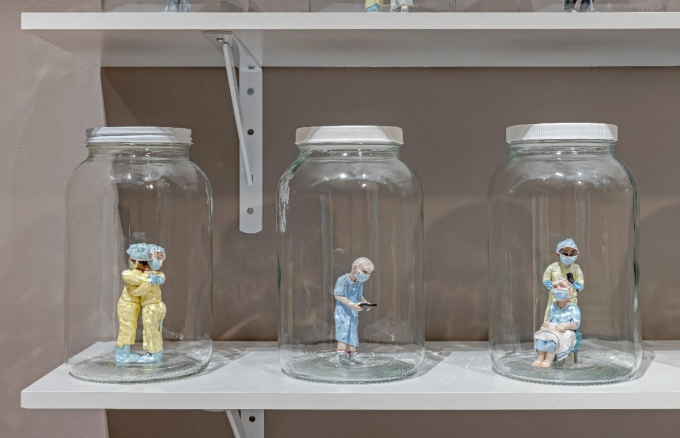
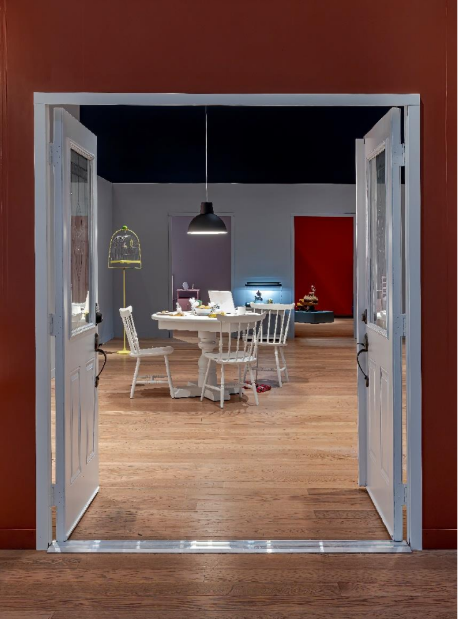
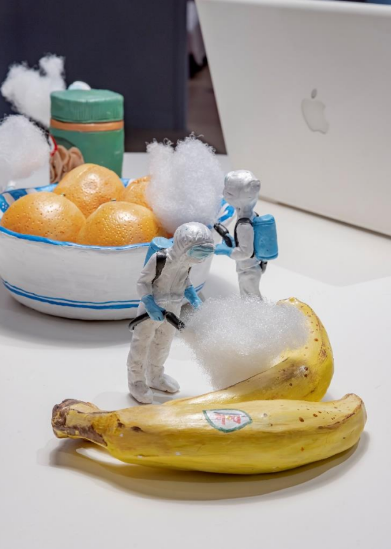
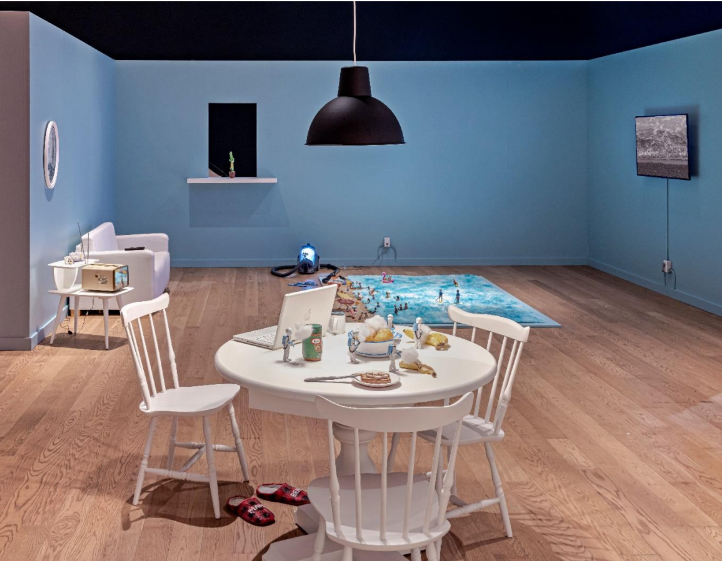
For their fourth Slow Art Day, The Gardiner featured Montreal-based self-taught artist Karine Giboulo’s “immersive reimagining” of her home, with over 500 *miniature* polymer clay figures arranged throughout the tiny rooms. The small figures are intended to invite viewers to reflect on societal challenges, such as connectedness and isolation during the recent pandemic, the impact of aging, the climate crisis, food insecurity, housing instability, and consumerism. And they are indeed captivating.

Karine Giboulo: Housewarming, Installation view, 2022, Gardiner Museum, Toronto.

On Slow Art Day itself, participants were given a worksheet with questions that lead them through the process of slow looking, and included a space to sketch. They were then encouraged to speak with two members of the Gardiner Museum team: Sofia Flores-Ledesma, Programs and Education Assistant, and Emma Wan, Victoria College, Material Culture Intern.

We invite you to discover the power of slow looking at miniature art by downloading their worksheet below, then lazily gazing at the images from their exhibition that follow (and maybe trying a few sketches).

Karine Giboulo: Housewarming, Installation view, 2022, Gardiner Museum, Toronto.

Sofia Flores-Ledesma wrote to us and said that not only did the miniatures dazzle, but that the conversations on the day of the event were so engaging that they did not take any photos as planned. They were just too busy listening to the captivated participants talk about their experience.

Every year, The Gardiner does something interesting for Slow Art Day, and we love what they did for 2023: i.e, featuring Giboulo’s miniature scenes of ordinary life, which offer hidden surprises (this is another pitch for you to download their worksheet and do some slow looking yourself).

We can’t wait to see what the Gardiner Museum comes up with for Slow Art Day 2024.

-Johanna, Ashley, Jessica Jane, and Phyl.

PS. Stay updated with events at the Gardiner Museum on Instagram, Twitter, or Facebook.