Host Reports: Chazen Museum of Art in Madison, Wisconsin

[In this series, we will be posting reports from Slow Art Day hosts around the world who held Slow Art Day events on April 27, 2013. This week, we are featuring the Slow Art Day event run by Karen Barrett-Wilt, held at the Chazen Museum of Art in Madison, Wisconsin]

Hello from Madison WI!

Highlights of our first Slow Art Day included eating lunch outside (Spring is here!), 15 participants, and a great conversation. The conversation required very little facilitating from me. A couple of people had never been to the Chazen Museum of Art, but all were still very willing to talk about their experiences. We had a spirited conversation with a lot of respectful disagreement, which is one thing that I love about art – no one is wrong! I’d like to add my thanks to the organizers – you were incredibly efficient and responsive, and made it all so easy. Thank you!

-Karen

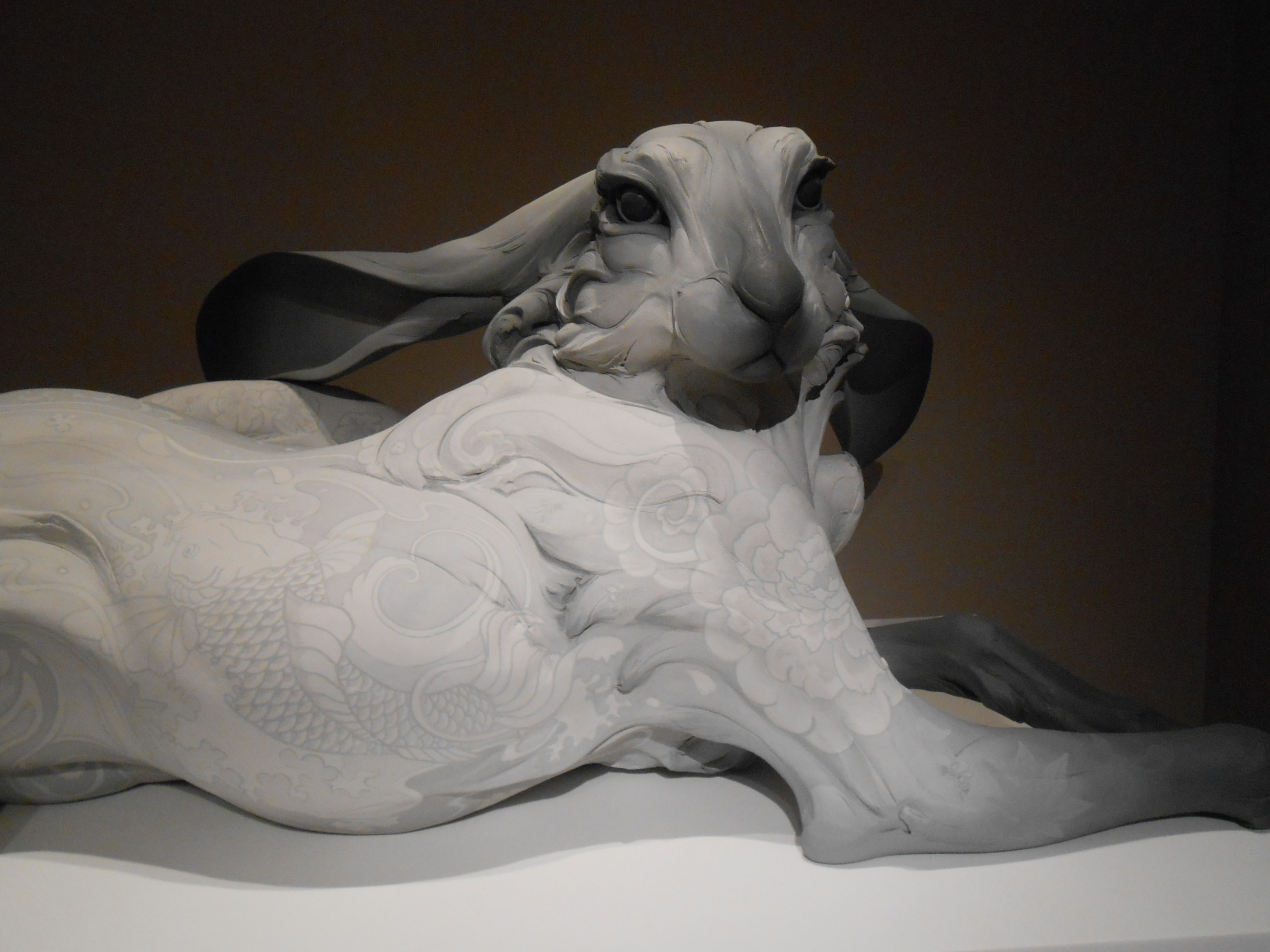
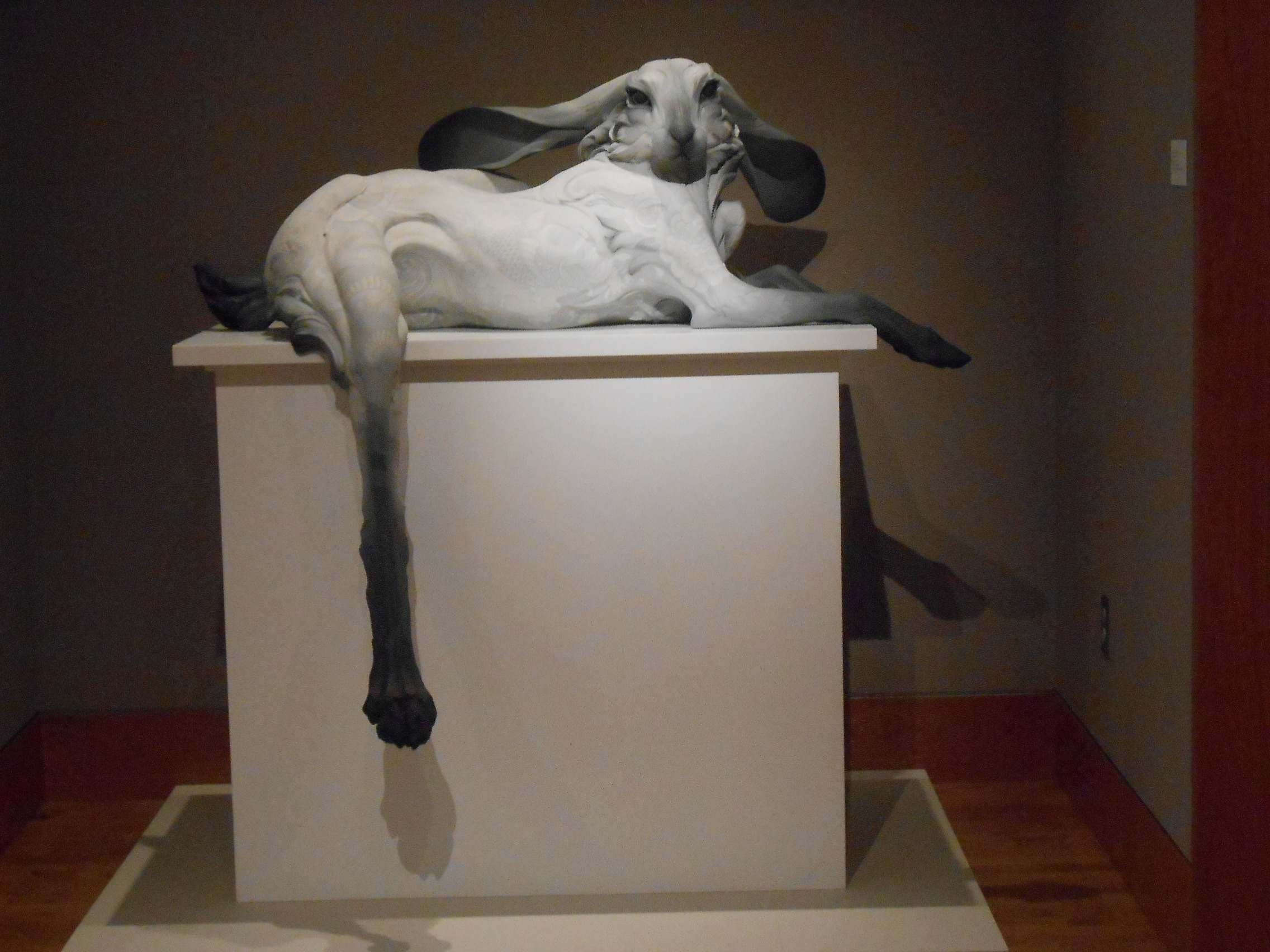
Karen also included a couple of photographs of one of the pieces they viewed at their Slow Art Day, Beth Cavener Stichter’s L’Amante, 2012.

Stichter L'Amante 2

Stichter L'Amante 3

Host Reports: SNAP Gallery in Edmonton, Alberta, Canada

[In this series, we will be posting reports from Slow Art Day hosts around the world who held Slow Art Day events on April 27, 2013. This week, we are featuring the Slow Art Day event run by blog manager Tori and her partner Chelsey from PrairieSeen, held at SNAP Gallery in Edmonton, Alberta, Canada]

Hello all!

Slow Art Day 2013 is sadly over, but we are looking forward to hosting again next year…

Our event (the first in Edmonton!) went very well. We had 12 participants signed up on Eventbrite (including the two hosts) and 18 people who joined the Facebook event. In total we ended up having 8 people altogether; a small group that worked well together in the small space that is SNAP Gallery.

group shot

In the nature of our blog/ website/ open platform whose mandate is to cultivate a discourse about local arts in Edmonton, we had a very informal Slow Art Day. Of course, we told the participants the premise of the event, but left them free to choose their own five works to look at (there are only two exhibition spaces at SNAP, with approximately 10 works in each). Participants thus looked at all of the works, but focused on their choices. We also had the chance to observe open studio at SNAP (which is a print-based gallery and studio), which was great; since printmaking is so technical it was interesting to see how the process works.

We had a really great discussion afterwards over lunch at a delicious local restaurant (of course!) where we talked about slow looking, the work in the exhibitions, arts education, art in Edmonton, working in galleries, going to galleries etc. We had great feedback, took a small album of photos, and hope to meet again in the future before the next Slow Art Day (hopefully with even more participants!)

Tori and Chelsey
PrairieSeen

Thank you

Two days ago on Saturday, April 27 we celebrated Slow Art Day 2013 in 272 museums in 207 cites across six continents.

We – the volunteer team who runs Slow Art Day – have much to be thankful for.

I started Slow Art Day with four participants at the Museum of Modern Art in 2009. Four years later – and without any money invested at all – we have built a global movement with thousands of participants and hundreds of hosts.

How did Slow Art Day grow like this?

For me answering that question means acknowledging that we have just barely begun.

Even in the United States, with the largest economy in the world by far, only 23% of adults visit art museums each year. That means 77% stay away.

Why do so many people stay away from these important cultural institutions?

There are many varied and complex reasons but at Slow Art Day we believe that at least one reason is that many people do not feel welcome. This is true despite the genuine hard work and creativity that most museums put into welcoming the public.

I started Slow Art Day because I myself finally discovered that if I stood in front of a piece of art for an extended time that I saw much more and felt included in the art experience. Most importantly, I felt that way not because someone told me what to see or feel but because I included myself. If thousands, indeed millions, of people took the time to look slowly, then they might discover for themselves that they have the capacity to look at and participate fully in art.

The art on the walls and galleries of public institutions around the world is owned by all of humanity. This is our art. It is for us and by us. And Slow Art Day creates the possibility for millions of people to realize that simple but profound truth.

So, yes, we give thanks to the:

– 272 volunteer hosts around the world who created and ran their own powerful and unique events for Slow Art Day;

– 20 members of the global coordinating team, many of them art history college students, who brought their passion, creativity and energy to building Slow Art Day 2013;

– thousands of museums and galleries around the world who work so hard to make art available and whose staffs inspire us everyday;

– many thousands of artists who give their gifts to all of humanity;

– many, many thousands of people who took two hours on Saturday to look slowly and discover for themselves the joy of including themselves in this thing called art.

Thank you!

Phil Terry
Founder, Slow Art Day

Slow Art Day at LACMA with Monika Del Bosque

[Slow Art Day Founder Phil Terry recently interviewed Monika De Bosque, three-time host of Slow Art Day at the Los Angeles County Museum of Art.]

ma-31371925-WEB

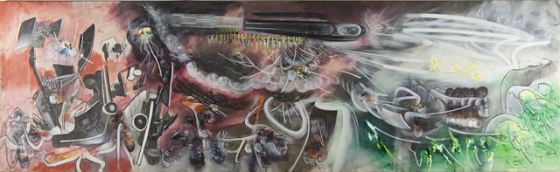
Robert Matta – Burn, Baby Burn

Slow Art Day: You’ve been a Slow Art Day host since the beginning. Why?

Monika:  Art has the power to move us, and there is a certain potency in knowing that we’re all participating at the same time (give or take).  There’s something special about that.

Slow Art Day: You have 100 people coming to LACMA on Saturday and 10 moderators. Tell us more about the design of your Slow Art Day.

Monika:  It started out that my co-host and I took students from our respective classes at Pierce College in Woodland Hills, CA.  Melanie McQuitty teaches Aesthetics and Philosophy of Art in the Sociology/Philosophy Department and I teach Studio Art courses and direct the college Art Gallery.

Slow Art Day: Do professors from different departments there typically team up like that?

Monika: It is actually rather unusual for faculty at our college to do interdisciplinary activities such as this, but we saw the correlation between our classes and really enjoy collaborating together.  Our first year co-hosting it was really a student event with about 60 students.

Slow Art Day: But, now you have an interesting mix of students and the public, right?

Monika: Yes. I really enjoy the fact that there is a mixture of both students and people from all over Los Angeles.

Slow Art Day: What art did you pick for Slow Art Day this year?

Monika:  We have some great art selected! We are looking at Gego’s Column, Squared Reticularia, 1972; Roberto Matta’s Burn, Baby, Burn, 1965-66; Charles Howard’s Double Circle, 1950; Edward Biberman’s The White Firescape, 1956; Marc Chagall’s Violinist on a Bench, 1920; and finally George Segal’s, Old Woman in a Window, 1965.

Slow Art Day: And what about your unique approach to moderators?

Monika: We recruit about eight other moderators besides ourselves because with such a huge turnout, we break into groups of ten or so for our discussion time.  Our moderators are students who have taken our courses and attended past Slow Art Day events, faculty members from other colleges, museum educators, and artists. It helps that we know people within the field of art and art education, but we are actually pretty selective about who we ask because we want the discussions to be engaging and interesting.

Slow Art Day: How do you determine the topics for the moderators?

Monika: Instead of choosing one piece or topic to discuss, we allow our moderators to pick a piece they want to lead a discussion on and then let our attendees to self select their discussion group based upon these discussion topics.  Within reason.  We will move people around if we see that a group has twenty people and another has only three.  Because we allow our moderators this level of autonomy, this is why we are very selective in who we ask to lead a discussion.

Slow Art Day: What do you do during the discussions?

Monika: I generally lead a group on the museum experience as this relates to a particular piece, or a group on the elements and principles of design in a particular work since I teach 2D Design.  In order to keep a sense of continuity with our large group, we stay at our venue for discussion, and we keep our small discussion groups within proximity to each other.  This does prove challenging at a large, busy museum like LACMA!  This year we have begun to work more closely with their staff, and have found a location for our discussion that we think will work really well for this (stay tuned).  It can be hotter than blazes by April in LA (two years ago it was a 100 degree day), so we’re always looking for shade.  Next year we hope to secure an indoor space by working with the museum staff.

Slow Art Day: You yourself are both an artist and a teacher. Tell us more.

Monika:  Well yes, I am one of those people fortunate enough to make a living doing what I love.  I have an MFA in Studio Art, and studied Museum Collections Management—both at John F. Kennedy University.  I actually first heard about Slow Art Day from a colleague at JFKU, Susan Spero, who posted the very first announcement back in 2010 on her Facebook page.  Seems I was destined to be an educator because I love teaching and I love art and I love museums.  So, I am very happy getting to teach art and run a gallery and teach exhibition design.  For me, it’s the perfect combination. When I’m not teaching, my art revolves around exploring identity. I’m a painter and in my paintings I like to push boundaries with my materials. I draw and mix media and incorporate collage and handwritten text into my work.  I have a deep love of color, line, design, and geometric forms and structures.  My students tell me I am a fun instructor and people often mistake me for my students.  When I’m not in my studio, I can often be found mucking about in my garden or kitchen getting inspiration for my art.

[Make sure to check out Slow Art Day at the LACMA in Los Angeles.]

Host to Host: Rachel Matthews

[Hosts around the world are introducing themselves to each other in advance of Slow Art Day. Today we’re featuring some words from Rachel Matthews, the volunteer host at the Getty Center in West Los Angeles]

Hello fellow Slow Art hosts,

My name is Rachel Mathews and I will be hosting this year’s Slow Art Day at the Getty Center in West Los Angeles. This is my first year as a host, 4th year as a participant; I’m looking forward to being a part of Slow Art Day once again! While I’m not an art scholar, I do love viewing art and Slow Art Day is a great way to expand my art horizons. The Getty Center is a wonderful museum that has a wide variety of art, which makes it difficult to pick just 5 pieces; fortunately, I was able to get a friend to make the choices (we were originally supposed to co-host, but sadly, she’ll be out of town on Saturday).

I had an incredible experience the first year I attended Slow Art Day, at the Norton Simon Museum in Pasadena, that’s kept me coming back. A friend/co-worker was hosting and, in the viewing guide, there was a piece that I felt I was not going to enjoy. After I paid for my museum admission, I decided to head to the end of the furthest gallery and work my way back. As I walked, I spotted some of the other pieces in the viewing guide and made note where they were; suddenly, I saw a piece in the distance and was drawn to it – it was the piece I thought I wouldn’t like. But it was much larger than it looked in the guide (it ended up having an entire room to itself; I could see it about a gallery and a half away due to its size), which changed the experience completely. As I spent more and more time with this huge painting, I kept noticing more and more details about it and in it, which was intriguing. After spending 15 minutes with the piece, I absolutely loved it! After seeing all of the other pieces in the viewing guide, I decided that the first piece was my favorite. The following year, I went back to the same museum and made sure to spend time with it again.

One of my other friends wasn’t able to make the first 3 Slow Art Days, so I organized an interim Slow Art experience at the Getty last Fall for that friend and the friend who has hosted the previous Slow Art Days I attended. Since I don’t live near the Getty, I chose all of the artwork off of their website and wasn’t sure what my own reactions to the pieces I had selected would be, much less the impressions my 2 companions that day would have. I made sure to choose a couple of pieces that I wouldn’t normally be attracted to, hoping to re-enact that first year Slow Art attitude shift. Although we had to spend some time searching for the various pieces (which was part of the adventure), we all had a great time and, afterwards, had a very robust discussion about how the pieces impacted us.

I’m really looking forward to next Saturday. I wish everyone great success with their Slow Art Day events around the world!

Sincerely,
Rachel Mathews

[Make sure to check out (and register for!) Rachel’s Slow Art Day event at the Getty Centre in West Los Angeles]

Slow Art Day with Robert Fahey and the Oakland Museum of California

[In this series, we interview hosts for Slow Art Day and get their thoughts on hosting, the art of looking, and the slow art community. Today we interview Robert Fahey, who is hosting a Slow Art Day event at the Oakland Museum of California in Oakland, CA.]

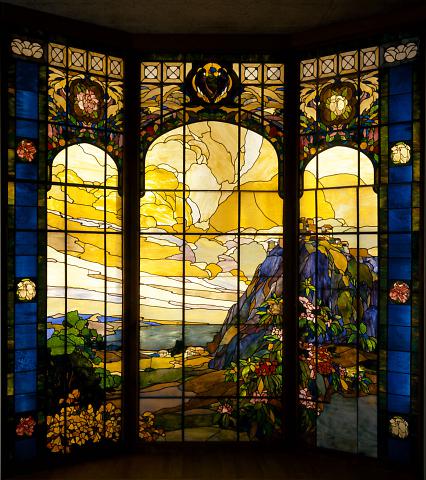
Mathews Furniture Shop (1860-1945), Franc Pierce Hammon Memorial Windows, 1925, glass. One of the works that will be featured in the Oakland Museum of California's Slow Art Day event.

Mathews Furniture Shop (1860-1945), Franc Pierce Hammon Memorial Windows, 1925, glass.
One of the works that will be featured in the Oakland Museum of California’s Slow Art Day event.

Slow Art Day: First, introduce yourself to us – what do you do at the Oakland Museum of California?

Robert: I’m Robert Fahey, OMCA’s Social Media Coordinator! I live in the Marketing Department in our Audience and Civic Engagement Center but you’ll rarely find me at my desk since I am always collaborating with staffers all over the Museum to make sure the OMCA experience is fully represented in the social sphere.

Slow Art Day: Tell us a little bit about the OMCA and its collection.

Robert: The Oakland Museum of California is in the heart of Oakland, next to the beautiful Lake Merritt. We are a multidisciplinary museum that exhibits the art, history, and natural sciences of California. Our collections – comprising more than 1.8 million objects including seminal art works, historical artifacts, ethnographic objects, natural specimens, and photographs – and our programs explore and reveal the factors that shape California character and identity, from its extraordinary natural landscapes, to successive waves of migration, to its unique culture of creativity and innovation.

Slow Art Day: How did you initially hear about Slow Art Day? What made you interested in getting the Oakland Museum involved with the movement?

Robert: I heard about Slow Art Day from the Bay Area Museum SuperFriends! It’s all the folks that are involved with some aspect of social media in and around the San Francisco Bay Area. What made me want to have OMCA get in on the action was the thought that I could take this event and make sure everyone knew about it and talked about it over social media, but also that the event itself would still let people engage and connect on a deeper level with art within our museum walls.

Slow Art Day: Tell us about the works you’ve chosen for your Slow Art Day event. What made you choose those specific works?

Robert: We chose works from our Gallery of California that would allow the viewer to find a narrative of California character that they could all relate to. All of the works give the viewer the chance to experience something unique and fun!

Slow Art Day: And lastly, feel free to add any other information about your event that you think is important.

Robert: Please come with California on the mind! And afterwards, feel free to take the conversation of slow art to the online social world and talk to OMCA on Facebook and Twitter!

Slow Art Day: Thank you so much Robert! Best of luck in your Slow Art Day event.

[If you’re in the area, make sure to check out the Oakland Museum of California’s Slow Art Day event. You can sign up to attend here, and get a sneak peek of the works that will be featured in the event both on our Tumblr and on OMCA’s website.]

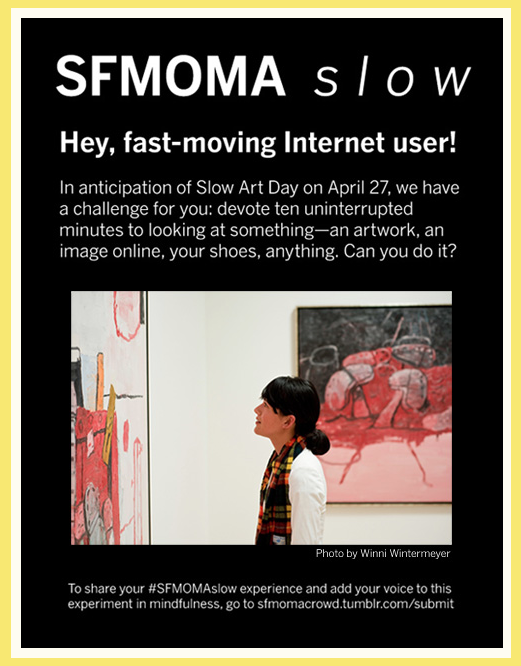
Slow Art with Willa Koerner and SFMOMAslow

[Slow Art Day Social Media Manager Alie Cline recently interviewed Willa Koerner from the San Francisco Museum of Modern Art to chat about the museum’s new Slow Art Day inspired project, SFMOMAslow.]

Screen Shot 2013-04-23 at 11.40.56 PM

Slow Art Day: First, introduce yourself for us – what do you do at SFMOMA?

Willa: I’m Willa Koerner, SFMOMA’s Digital Engagement Associate. I manage SFMOMA’s social media accounts, from planning, writing, and editing posts, to documenting the goings-on of the museum, to collaborating with co-workers on digital projects and online engagement initiatives.

Slow Art Day: How did you initially hear of Slow Art Day? What sparked your interest in the project?

Willa: I heard about Slow Art Day through the social media grapevine. My interest was sparked right from the get-go, as the idea of looking/thinking slowly is fascinating when contextualized within the incredibly manic pace of the Internet.

Slow Art Day: How did the idea for SFMOMAslow initially develop, and how have you expanded on “Slow Art Day” and turned it into a larger project?

Willa: In collaboration with Suzanne Stein, SFMOMA’s Head of Community Engagement (and manager of SFMOMA’s blog, Open Space), I’ve been working on ways to get people talking with the museum in exciting, interesting ways through crowd-sourced projects hosted on a special Tumblr (SFMOMAcrowd). Hosting successful user-generated projects can be a bit difficult, and we’ve seen firsthand how challenging it can be to generate interest/response to a project prompt, no matter how interesting that prompt may seem to us within the museum. In my opinion, this is due to a simple truth: people don’t want to spend their valuable time creating something unless there is an explicit reason to participate, or a reward. Knowing this, we wanted to pursue a prompt that would ultimately lead to a rewarding and satisfying experience for all types of participants. The Slow Art Day concept fit this desire perfectly, so we decided to create a whole slew of programming, tweaking the idea so that it would be interesting to those who can visit the gallery in person as well as those who may prefer to participate remotely.

Slow Art Day: What has the response been like?

Willa: People have seemed genuinely excited about (and possibly thankful for) the idea of #SFMOMAslow/Slow Art Day. It is an invitation to relax and appreciate life, isn’t it? In terms of participation with the crowd-sourced project more people prefer to watch than to join in, I think, but those folks who have taken the leap and participated seem to have truly valued the experience. One person ended her post with, “ I feel as if [looking slowly] sharpens perception because there is a very deep meditative quality to it! Thank you!” That made me smile.

Slow Art Day: How do you think “slow” art fits into our fast-paced, modern world?

Willa: I see Slow Art Day and the challenge to truly look slowly as a bit of an intervention. People move so quickly and rush through experiences that would be much more magical when taken in at a slower, more contemplative pace. I wish I didn’t, but I too am guilty of senselessly rushing through all sorts of experiences — it’s the curse of having endless access to information and ideas, and seemingly thing after thing to rush off to. We joke about “FOMO” [Editor’s note: “fear of missing out”] but it’s a real and problematic plague for our generation! We want to see it all, do it all, and share it all. Slow looking is a way that we can re-learn how to think critically and be patient with ourselves and our minds.

Slow Art Day: We couldn’t agree more! Finally, what are you most looking forward to on Slow Art Day itself?

Willa: I’m closing my eyes and imagining Slow Art Day at SFMOMA… in my mind, I see myself smiling a lot and enjoying a rewarding day filled with compelling art, perceptive people, and intriguing conversation. Stay tuned for my tweets on that Saturday — I’ll be using the #SFMOMAslow hash tag!

And, before I sign off, I want to extend huge thanks to Alie, my interviewer, and everyone who volunteers to help spread the ideas of Slow Art Day to people around the world! You guys are doing a terrific job.

Slow Art Day: Thanks, Willa! We very much appreciate all the hard work you are putting in to spreading the idea of slow art as well.

[If you’re in the San Francisco area, make sure to check out SFMOMA’s Slow Art Day event and learn more about SFMOMAslow through their tumblr, SFMOMAcrowd]

Slow Art Day with David Faux at the University Museums at Iowa State University

[In this series, we interview hosts for Slow Art Day and get their thoughts on hosting, the art of looking, and the slow art community. Today we interview David Faux, who is hosting a Slow Art Day event at the University Museums at Iowa State University.]

Slow Art Day: Tell us a little about yourself.

David: I am a recent graduate of Iowa State University with a B.S. in history and a minor in Native American studies. I’m a new interpretation specialist here and I am responsible for working with my colleagues to develop programing that will interest the fickle and ever-changing pool of 18-24 year old students that we have on campus.

Slow Art Day: And tell us about the distinctive history and collection of the University Museums at Iowa State University.

David: Iowa State University was the very first land grant college in the nation and today Iowa State has the largest collection of public works of art on any campus in the nation. This unparalleled collection of over 2,000 works includes two grand scaled murals by Grant Wood, 12 major sculpture installations by Christian Petersen during his 21 year residency, and nearly 600 other major works of art by nationally and internationally known artists.

Slow Art Day: Why did you choose to host Slow Art Day there?

David: Far too many students  walk to and from class with their heads down oblivious to their surroundings. Programs like Slow Art Day fit right in with our other programming efforts to get people to stop, look around, and engage with all of the wonderful objects that inhabit their learning environment.

Slow Art Day: What works are you going to be viewing?

David: We are going to be looking at some of our N.C. Wyeth painting from the artist’s America in the Making series. We are fortunate to have the complete set and we are going to be loaning the works out soon, so I am giving as many ‘last chance’ exposures to the work as possible. The works are are part of the New Deal era regional works, one of our most extensive collections.

Slow Art Day: Tell us about a work of art you like.

David: The other day I represented the University Museums in rededicating The History of Dairying mural located in the courtyard of our Food Sciences department. That mural was the very first that Christian Petersen painted/sculpted for the college (as part of the PWPA) and the fountain attached to the mural has been out of service for over 20 years.  That fountain plays a crucial role in the history of our art on campus legacy, but more importantly was an important part of a lot of past Iowa Staters’ lives and memories. To share in those memories and be a part of a new and exciting chapter of that sculpture’s role on campus was an extremely humbling moment for me.

Slow Art Day: Thank you, David. Good luck with Slow Art Day!

[Make sure to check out David’s Slow Art Day event at the University Museums at Iowa State University.]

Twitter, tumblr, and Slow Art: oh my!

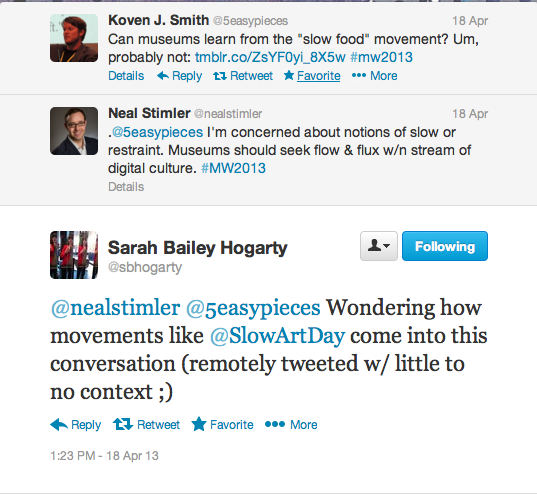
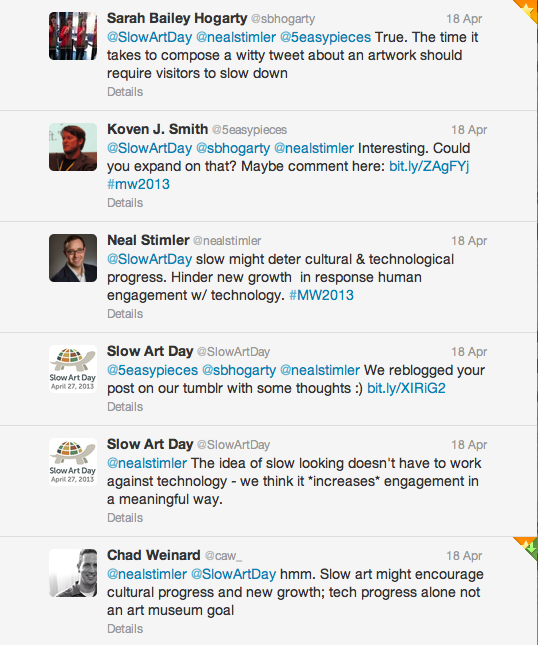
If you follow Slow Art Day on our various social media channels, you might have noticed an interesting conversation unfolding this week over whether programming like Slow Art Day can succeed in today’s fast-paced, digital environment. It all started when Sarah Bailey Hogarty from the de Young & Legion of Honor Museums looped us into a conversation happening at the 2013 Museums and the Web Conference:

Screen Shot 2013-04-23 at 9.04.33 AM

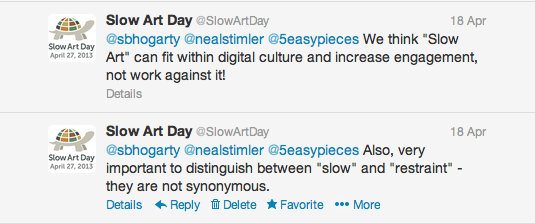
Of course, we had to respond!

Screen Shot 2013-04-23 at 9.05.22 AM

Which opened the floodgates for more dialogue and opinions from both sides:

Screen Shot 2013-04-23 at 9.07.43 AM

While twitter is fantastic for short, 140 character thoughts, we wanted to address our thoughts on the power of slow looking in a longer format, so our Social Media Manager Alie Cline took to the Slow Art Day tumblr to respond to Koven Smith’s initial concerns about Slow Art. Focusing on the ideas of slow looking and engagement, the post details how Slow Art Day can work within digital culture, “…so people can share their insights, observations, and engage with the artwork in a way that reaches beyond just the initial reaction of “I like this” or “I don’t like this.” Make sure to check out the entire post on our tumblr!

We love the thoughtful and respectful dialogue that took place on our social media channels – make sure to follow Slow Art Day on Twitter, Facebook, and Tumblr for more conversations like this one!

Slow Art Day with Elizabeth Markevitch at ikonoTV, Berlin

[In this series, we interview hosts for Slow Art Day and get their thoughts on hosting, the art of looking, and the slow art community. Today we interview Elizabeth Markevitch, who is a global sponsor of Slow Art Day through her interesting company, ikonoTV, Berlin.]

Slow Art Day: Let’s start with a bit of background about yourself and ikonoTV. You are the founder, right?

Elizabeth: Yes, I founded ikono in 2006.

Slow Art Day: What was your founding vision?

ElizabethDuring my long-time experience in the art world, I became more and more aware of the necessity for exploring new ways of displaying art and opening it up to a broader audience. Art needs to be seen, and the joy of seeing and experiencing art should not be restricted to a small group of art professionals or collectors.

Slow Art Day: As you know, of course, we share that vision with you. How did you get from that vision to starting ikono?

ElizabethI explored different paths.  I cofounded www.eyestorm.com in 1998 as the first online gallery at that time selling international contemporary art on a global scale. Then, some years later, the fundamental idea of making art internationally accessible found its final and strongest realization through ikono.

Slow Art Day: So why bring art to TV in this new way?

Elizabeth: I thought why not achieve for the arts with TV as radio has been achieving for music? Why not use this mass medium for bringing the entire world of arts into the homes of an international public? Over the past few years, we have established a wonderful collaboration between art historians, curators, and cameramen in working with artists and international art institutions. We are producing video clips about artworks from all time periods, movements and disciplines, highlighting single exhibitions as well as the most stunning collections and treasures of our cultural heritage.

Slow Art Day: Tell us more about how you ‘see’ art.

Elizabeth: The first encounter with art is a visual one – you just need your eyes for discovering and experiencing its richness and plurality. A certain knowledge or expertise is what comes in a second or even third step. ikono offers this very first meeting: we are building a visual bridge to the arts, encouraging you to trust your eyes, and to rely on what you see and feel.

Slow Art Day: How does this connect with your notion of time?

Elizabeth: We take the notion of time seriously by inviting you to dive into the artwork contemplatively and to become fascinated by its details. You will always discover things you have never seen or noticed before! We allow art to speak for itself, which is why we never add any sounds or narrative elements and why we avoid any interruptions from commentary or advertisement. However, in case you would like to know more, you can of course find all additional information and further links on our homepage.

Slow Art Day: You guys are planning something special for Slow Art Day – five video clips, each dedicated to a single artwork. Say more.

Elizabeth: We decided to dedicate the entire program for April 27th, 2013 to Slow Art Day. Our curators have selected some of our most beautiful video clips to be presented throughout the day: we will showcase Hans Holbein the Younger’s double portrait of The Ambassadors and the unexcelled depiction of The Tower of Babel, painted by Pieter Brueghel the Elder. We will present artworks of Caspar David Friedrich, the wonderful Eugene Delacroix, Vincent van Gogh, and the universal genius Karl Friedrich Schinkel. Viewers will also find contemporary examples, including the fascinating light installation of Kite & Laslett, our current Artists of the Month, and the Spatial Reflections series, a selection of artistic positions from Lebanon, Syria and Palestine, curated by Charlotte Bank. I do not want to reveal too much before its presentation, so please feel cordially invited to tune in for discovering more!

Slow Art Day: Can people watch ikonoTV if they are not currently in your cable footprint?

Elizabeth: At the moment you must meet certain technical requirements to watch our HDTV program. While ikonoMENASA is broadcasted in the countries of the Middle East, Northern Africa, and Southern Asia via satellite (ArabSat) or IPTV (du, Etisalat or Solidere IPTV Broadband Network), ikonoTV is on view in Germany and Italy via Telekom Entertain and Cubovision.

But we have very good news: In 2013 we will increase our international presence by also being on view in new countries throughout Europe. Furthermore, we have already started preparing our live web stream, which is to be launched within the upcoming months. From that very moment on, everyone around the world will be able to enjoy art and to contemplate it wherever they are-an amazing perspective! In June we will announce further details, so stop by our website or join our newsletter to stay posted. Also begin checking our blog right away, where you will find all further information about ikono’s support of Slow Art Day 2013!

Slow Art Day: Great – thanks for sponsoring Slow Art Day again this year.

[Make sure to tune into ikonoTV, Berlin, if you can!]