Forest Bathing, Folding Screens, and Mindful Movement at Smithsonian’s National Museum of Asian Art

For their second Slow Art Day (and their first time hosting the program on-site) the Smithsonian’s National Museum of Asian Art in Washington, DC offered four hours of immersive programming, inviting visitors to slow down through guided looking, mindfulness practices, gallery conversations, and movement.

The day unfolded through a thoughtfully structured sequence of offerings designed to meet visitors wherever they were.

Throughout the four hours, hundreds of Slow Looking Guides were distributed from the information desk, inviting visitors to deepen their connection with the art through sketching prompts, poetic reflection, comparisons, and written responses.
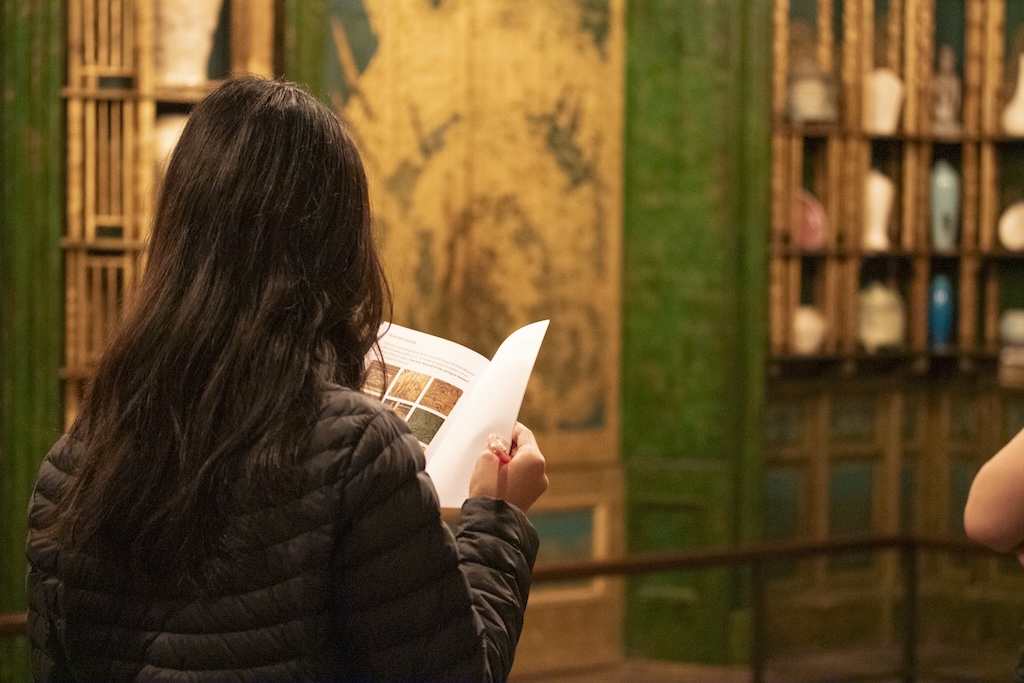
Participant viewing the Slow Looking Guide designed by the museum.

Four docents roamed the galleries, engaging visitors in informal conversations about the museum’s world-renowned collections. These roaming discussions allowed participants to linger, ask questions, and explore artworks through sustained dialogue rather than quick viewing.
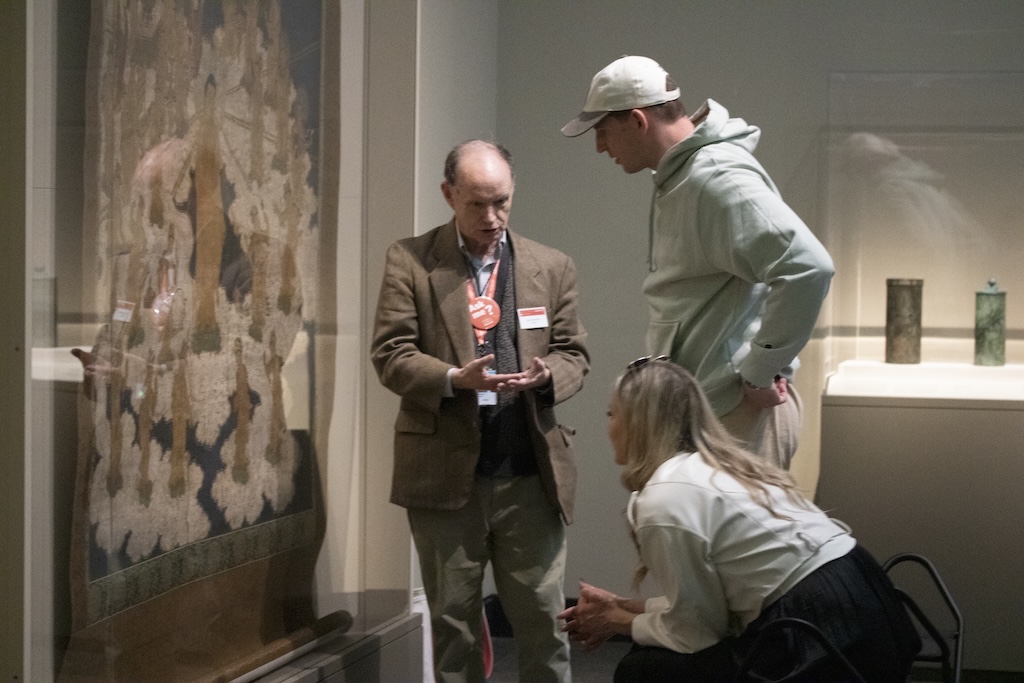
Gallery docent in discussion with Slow Art Day participants.

Two guided Slow Looking sessions were scheduled in the Japanese screen gallery, one for families and one for adults. Due to a large gathering on the National Mall that day, the family session did not run. However, 15 visitors participated in the adult session focused on the early 17th-century folding screen “Trees.”

Participants spent extended time observing the green malachite pigments layered over gold foil. As they looked more closely, subtle botanical details emerged — magnolia veins, pine and cedar needles, tiny acorn buds, delicate blossoms. The facilitator described the work as “a gardener’s dream brought indoors,” noting how the composition moves viewers from luminous gold panels into dense greenery, like stepping gradually into a forest.
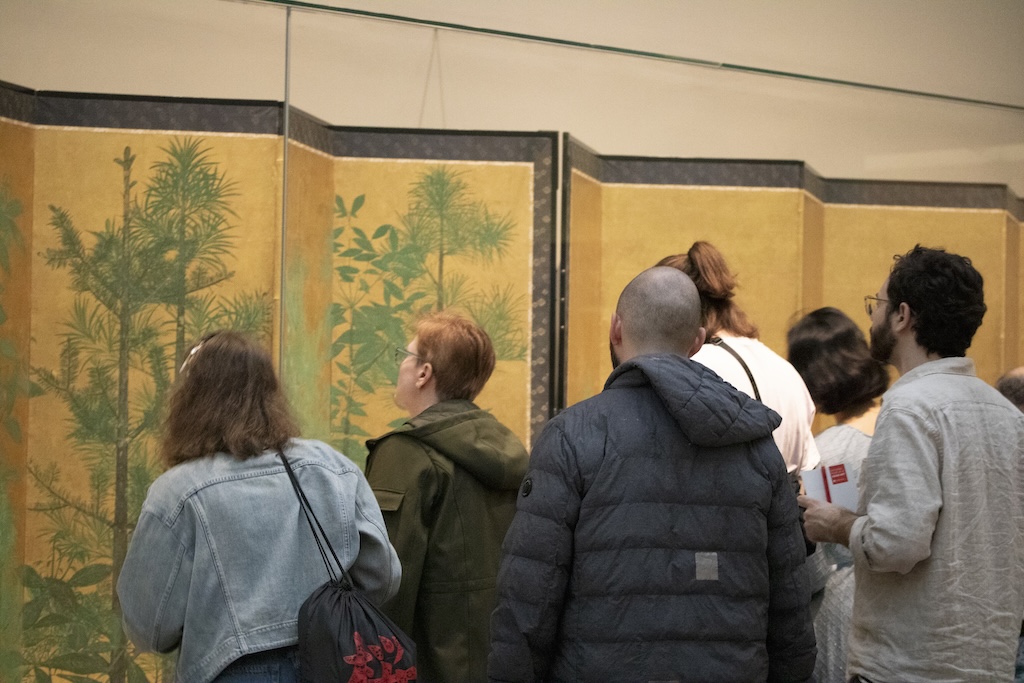
Visitors looking at “Trees” (雑木林図屏風), Japanese folding screen (1600–1630).

In the museum’s outdoor courtyard, 24 visitors joined Forest Bathing sessions led by a certified forest therapy guide. Though not a traditional forest setting, the courtyard’s Japanese maples, ferns, holly, pine, peonies, birds, bees, and even beetles became focal points for sensory awareness. Participants were invited to gently touch plants — an uncommon freedom in a museum environment — and to slow down through guided sensory exercises.
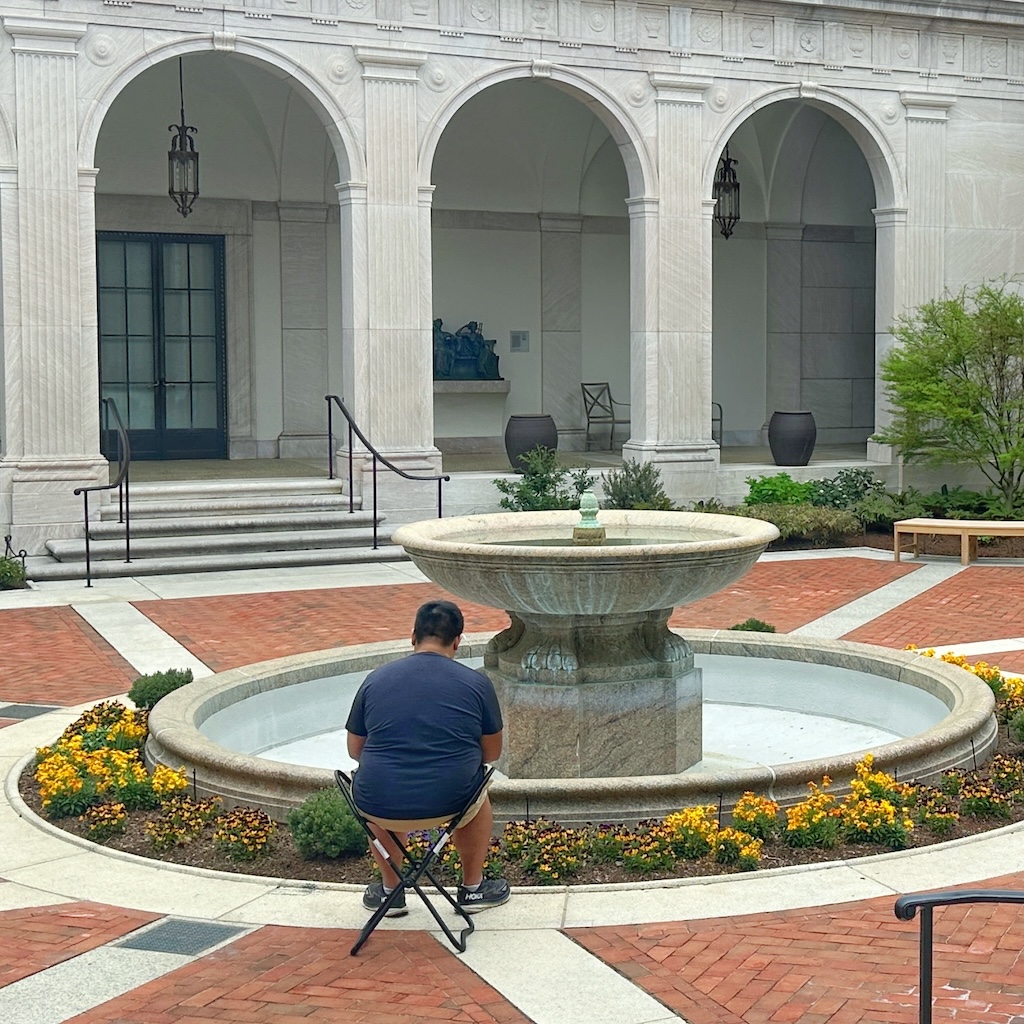
Participant in the Forest Bathing session in the courtyard.

Visitors also participated in a Qigong session, a standing mindful movement practice rooted in Chinese tradition. Through slow, nature-inspired movements and breath awareness, participants were encouraged to notice the flow of energy in their bodies and mirror the rhythms of the natural world.
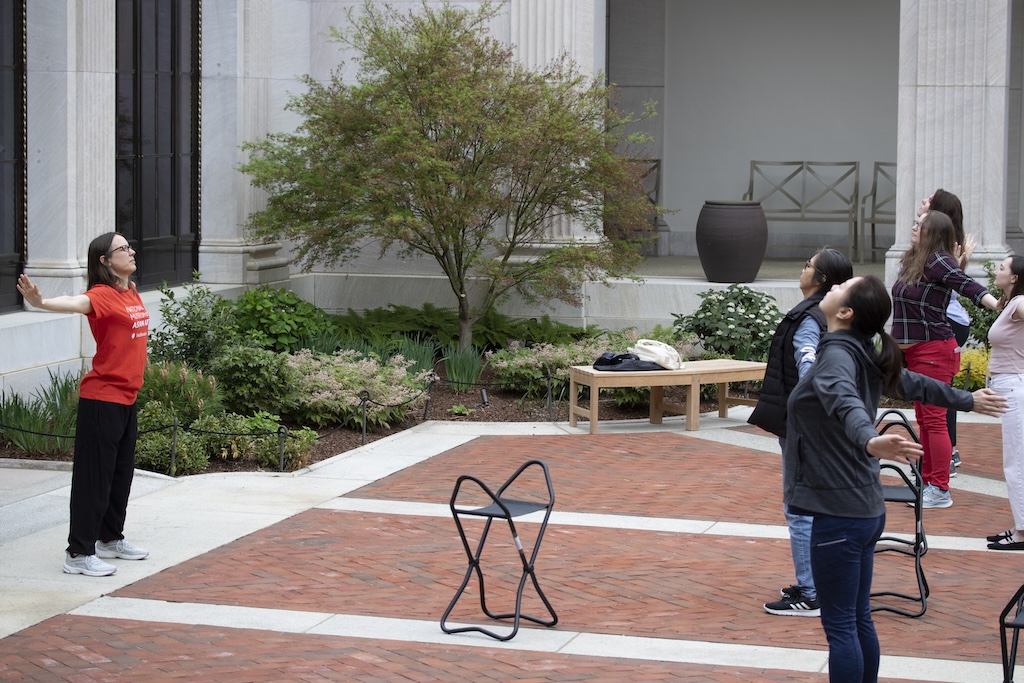
Participants during the Qigong session.

With their 2025 Slow Art Day, The National Museum of Asian Art demonstrated how structured programming, roaming conversation, embodied practice, and simple prompts can invite visitors into meaningful slowness.

At Slow Art Day HQ, we are especially inspired by how the National Museum of Asian Art expanded slow looking beyond the gallery walls, integrating folding screens, forest bathing, mindful movement, and docent engagement into a cohesive experience.

We are grateful to Jennifer Reifsteck and the entire team at the National Museum of Asian Art for their thoughtful leadership. We look forward to seeing what they design for Slow Art Day 2026.

– Ashley, Johanna, Jessica Jane, and Phyl
P.S. View them on Instagram and Facebook

Freer Gallery of Art at the Smithsonian Hosts First Slow Art Day with Forest Bathing and Qigong

For their first Slow Art Day, the Freer Gallery of Art, part of the Smithsonian Asian Art Museum in Washington, D.C., hosted a day-long celebration focused on slowing the mind, body, and spirit.

Visitors were invited to participate in a series of immersive activities held in the Freer’s galleries and courtyard, designed to deepen observation and foster mindfulness through art and nature. The day offered both guided and self-guided experiences, welcoming adults and families alike.

Featured activities included:

  • Guided Slow Looking sessions in Gallery 5, focusing on Japanese screens (11:30 a.m. family session; 1:30 p.m. adults-only session)
  • Forest Bathing mindfulness walks in the courtyard led by naturalist and certified forest therapy guide Ana Ka’ahanui from Capital Nature (1 p.m. family session; 2 p.m. adults-only session)
  • Qigong practice in the courtyard, or Gallery 17 in case of rain (12–1 p.m.)
  • Self-Guided Slow Looking with sketching, writing, and conversational prompts available to encourage personal exploration at one’s own pace
A group of people doing yoga in an art gallery.
Image courtesy of Create Calm

Each session offered participants an opportunity to slow down, open their senses, and form a deeper, more personal connection with the art and environment around them.

Throughout the day, participants could be seen sketching quietly before the intricate screens, breathing mindfully in the courtyard, and moving gracefully through Qigong sequences that mirrored the flow of nature. The museum’s thoughtful integration of art, nature, and mindfulness—including the leadership of Ana Ka’ahanui in the forest bathing sessions—beautifully embodied the spirit of Slow Art Day.

We at Slow Art Day HQ love how the Freer Gallery of Art created such a great mix of events and wish we had been there to participate. We can’t wait to see what they come up with for Slow Art Day 2026.

– Ashley, Johanna, Jessica Jane, and Phyl

P.S. You can learn more about the Freer Gallery’s events and exhibits by visiting their website. You can also follow them on:

Forest Bathing + Mindfulness at MASS MoCA

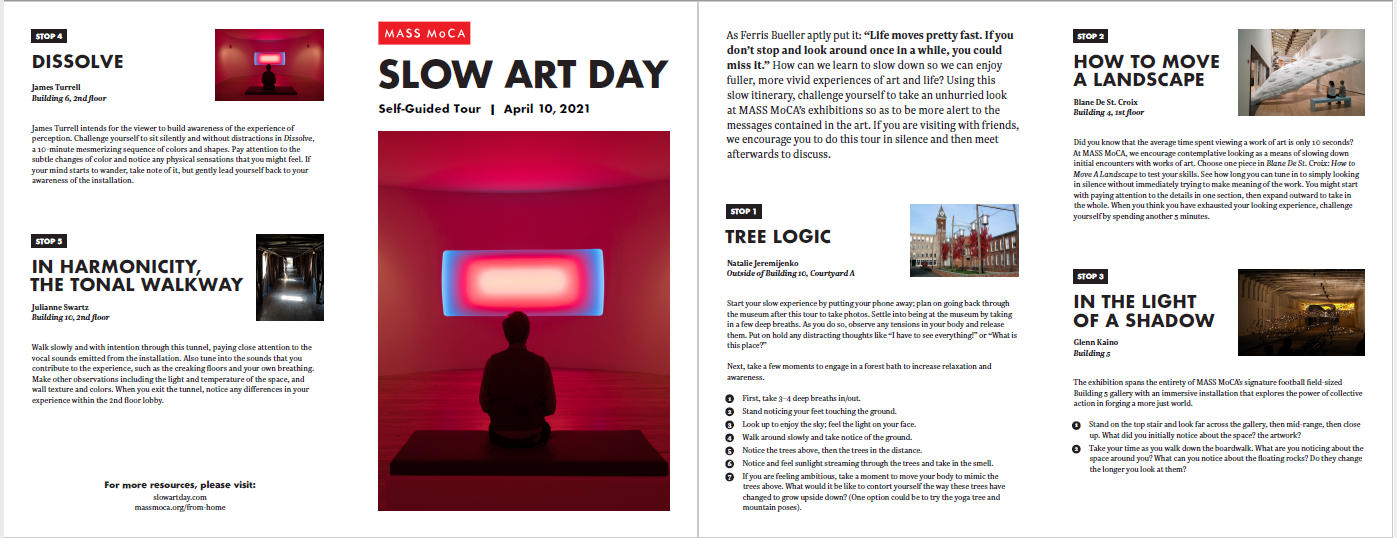
For their fourth Slow Art Day, the MASS MoCA (Museum of Contemporary Art), in North Adams, Massachusetts, produced a self-guide leaflet for in-person visitors and organized a virtual event for participants at home.

For visitors to MASS MoCA on April 10th, the museum offered a Slow Art Day Self-Guided Itinerary that challenged visitors to take an unhurried look at MASS MoCA’s exhibitions.

Slow Art Day Self-Guided Itinerary

Before starting their tour, visitors were invited to try a “forest bath” outside the museum. Below are the guidelines from the leaflet:

“Start your slow experience by putting your phone away; plan on going back through the museum after this tour to take photos. Settle into being at the museum by taking in a few deep breaths. As you do so, observe any tensions in your body and release them. Put on hold any distracting thoughts like ‘I have to see everything!’ or ‘What is this place?’ Next, take a few moments to engage in a forest bath to increase relaxation and awareness.

First, take 3–4 deep breaths in/out.

Stand noticing your feet touching the ground.

Look up to enjoy the sky; feel the light on your face.

Walk around slowly and take notice of the ground.

Notice the trees above, then the trees in the distance.

Notice and feel sunlight streaming through the trees and take in the smell.

If you are feeling ambitious, take a moment to move your body to mimic the
trees above. What would it be like to contort yourself the way these trees have changed to grow upside down? (One option could be to try the yoga tree and mountain poses).”

The leaflet featured five artworks from the museum, each accompanied by slow looking prompts:

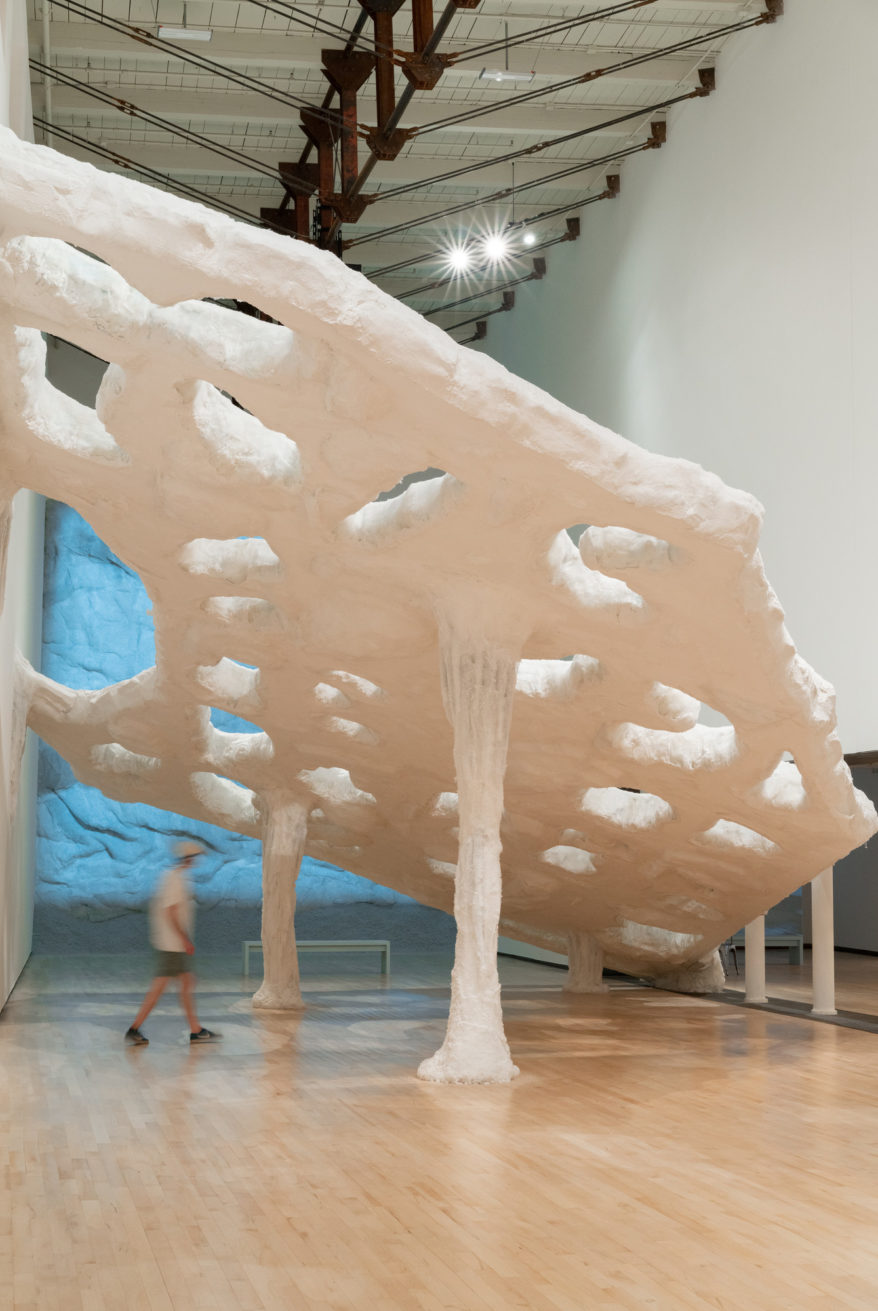
1. TREE LOGIC. Natalie Jeremijenko.

2. HOW TO MOVE A LANDSCAPE. Blane De St. Croix.

3. IN THE LIGHT OF A SHADOW. Glenn Kaino.

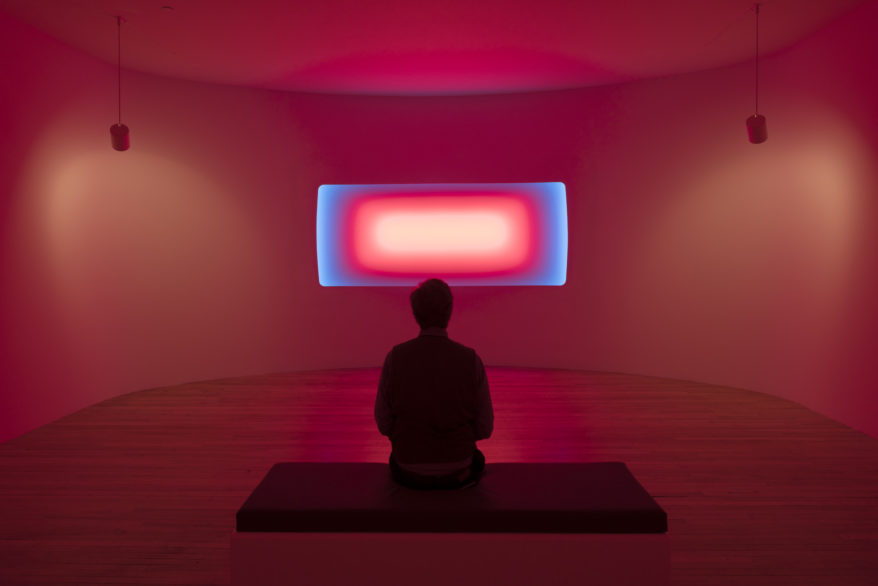
4. DISSOLVE James Turrell.

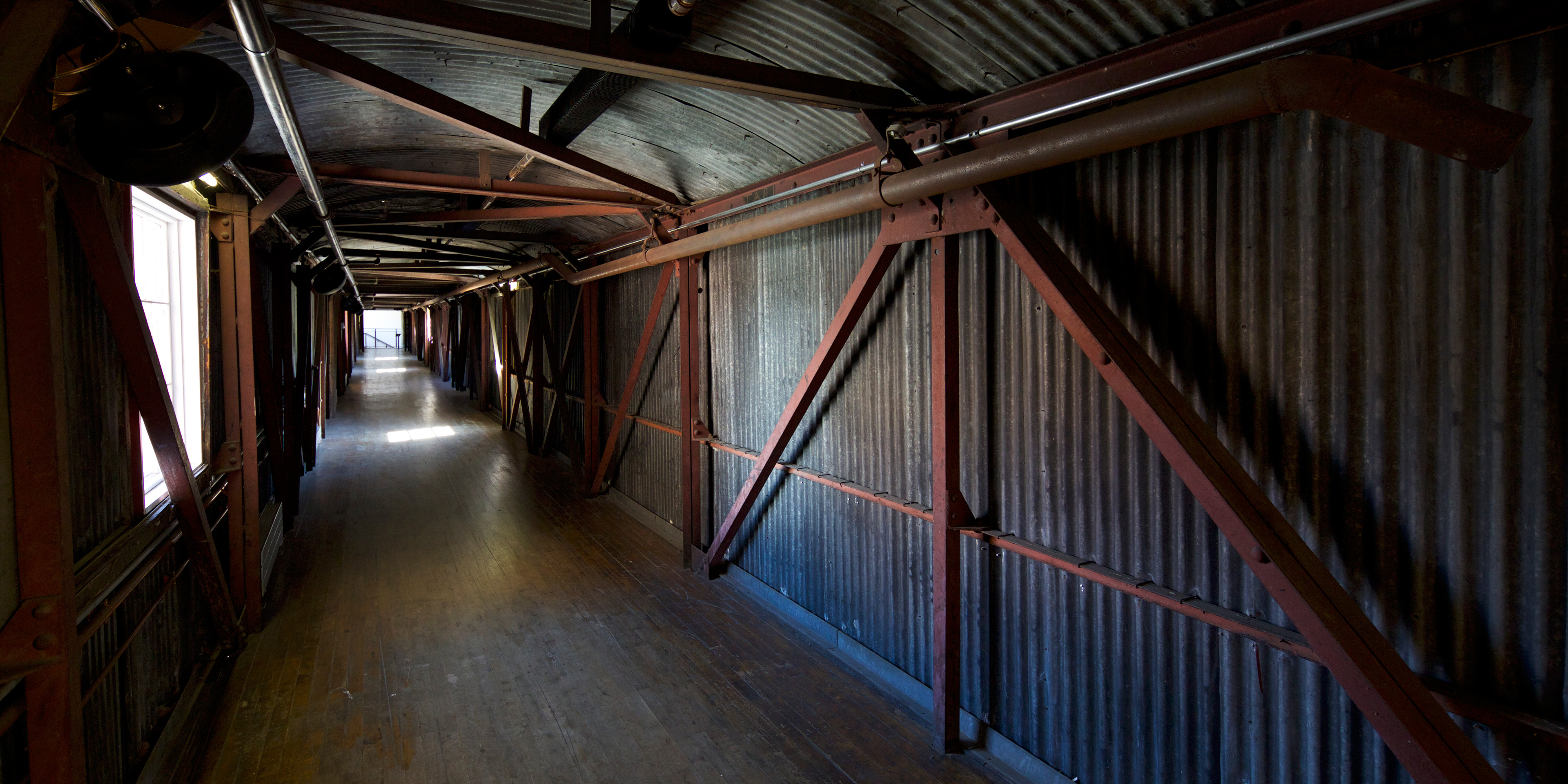
5. IN HARMONICITY, THE TONAL WALKWAY. Julianne Swartz.

After completing the tour, participants were encouraged to discuss their observations with friends and family, especially if visiting in a group.

RS28530_PH6A2242-lpr
Natalie Jeremijenko, Tree Logic, 1999. 6 flame maple trees, 8 35 feet telephone poles, stainless steel planters and armature, aircraft table and drip irrigation system, photo: Zoran Orlic. Courtesy of MASS MoCA
Blane De St. Croix. HOW TO MOVE A LANDSCAPE. Building 4, 1st floor. Courtesy of MASS MoCA.
Glenn Kaino. IN THE LIGHT OF A SHADOW. Building 5.
Courtesy of MASS MoCA.
James Turrell. DISSOLVE. Building 6, 2nd floor. Courtesy of MASS MoCA.
Julianne Swartz. IN HARMONICITY, THE TONAL WALKWAY. Building 10, 2nd floor.

For the online event, the museum launched virtual material as part of “MASS MoCA From Home.” Resources included two art “how-to” videos, featuring projects that focused on being present with the art-making process. Watch the videos below and try the projects for yourself.

Slow virtual Art-making video: Paper Pulp Clay. This project is inspired by Louise Bourgeois’ Untitled.
Slow virtual Art-making video: Frozen Watercolors. This project is inspired by James Turrell’s Dissolve.

As the final part of the program, MASS MoCA also produced a guided meditation that focused on the painting ‘Indian Summer – Four Seasons‘ by Wendy Red Star. Watch it below.

SLOW LOOKING MEDITATION video with Wendy Red Star’s Indian Summer – Four Seasons

At Slow Art Day HQ, we love the way MASS MoCA incorporated nature and mindfulness in their event for both onsite and offsite participants – giving everyone an opportunity to slow down in different ways.

We are excited for their 5th Slow Art Day in 2022!

Johanna, Jessica, Ashley, and Phyl