For their second Slow Art Day, the B&E Goulandris Foundation in Athens, Greece, invited all visitors to explore selected works from its permanent Collection and to take part in one or more of their three specially designed mindfulness activities.
On April 5th, 2025 all visitors were welcomed with a special printed slow looking guide (available in both English and Greek) at the Museum’s Reception Desk. This included information and instructions on how to practice slow looking, allowing them to fully engage with four carefully selected works from the permanent Collection:
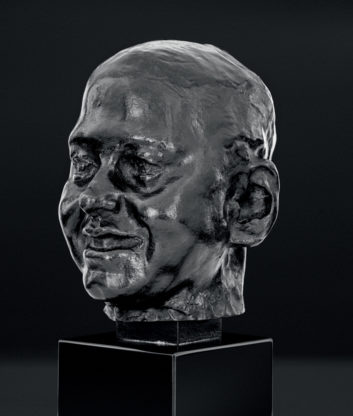
“Laughing Man” by Camille Claudel [on the first floor]
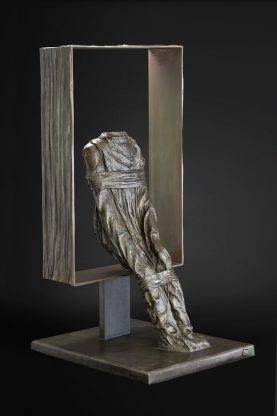
“The Traveller” by Igor Mitoraj [on the second floor]
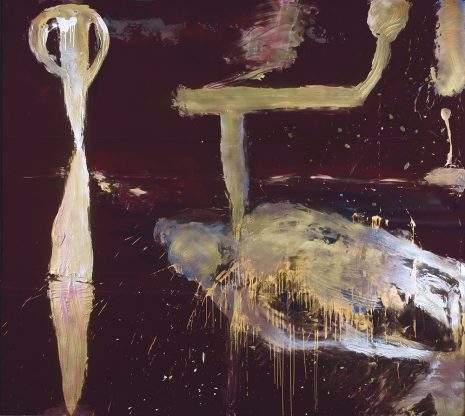
“Maria Callas no. 4” by Julian Schnabel [on the third floor]
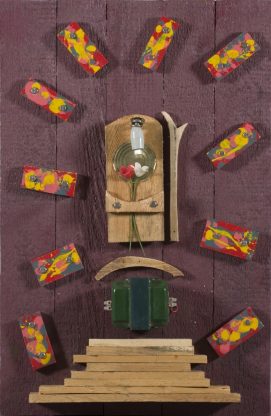
“Untitled” by Alexis Akrithakis [on the fourth floor]
Visitors were encouraged to keep and reuse this guide during future museum visits to explore even more works from the Collection in a similar immersive way.
“Laughing Man” by Camille Claudel
“The Traveller” by Igor Mitoraj
“Maria Callas no. 4” by Julian Schnabel
“Untitled” by Alexis Akrithakis
On the same day, art historian, art educator and mindfulness instructor Lydia Petropoulou led three mindfulness activities. The morning mindfulness workshop “I See, I Hear, I Feel, I Paint“ was designed for parents and children aged 6-12. Two mindfulness sessions designed exclusively for adults were then held in the afternoon. Titled “Mindfulness at the Museum“, they took place in the temporary exhibitions gallery where the exhibition “Catch Me” by Nicholas Kontaxis was on display.
What a great design for the day. More museums might decide to imitate what the B&E Goulandris Foundation did here.
At Slow Art Day HQ, we certainly appreciate integrating mindfulness as well as offering activities for both children and adults – and we are excited to see what the B&E Goulandris Foundation come up with for Slow Art Day 2026.
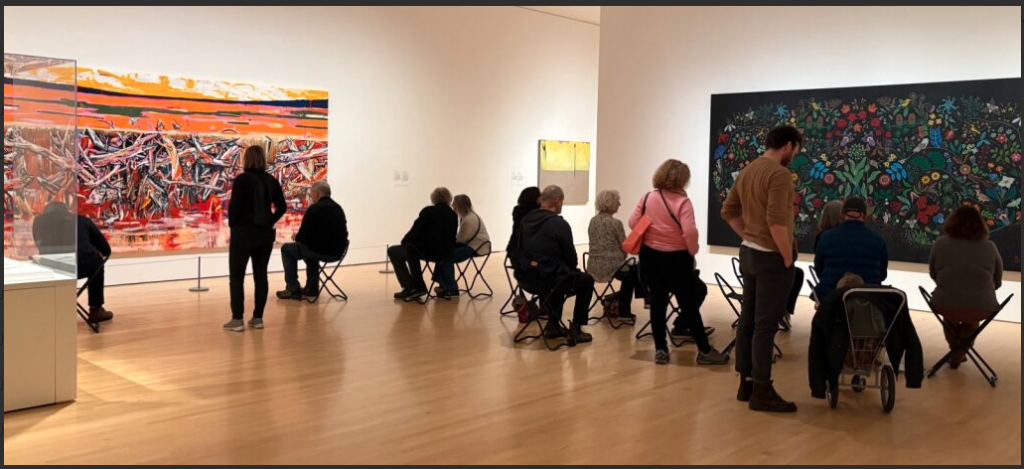
Participants during guided slow looking at the National Gallery of Canada. Photo courtesy of the National Gallery of Canada.
Educator Andrea Gumpert reported that in-person participants were led in both English and French through 2 hour-long sessions by Interpreter-Guides Morel McMaster and Juliana Abramo. Each session began with a brief warm-up and an introduction to the purpose of slowing down with art. Participants then spent five minutes seated with an artwork of their choosing, followed by a group discussion. They repeated the exercise with a different artwork in another gallery, this time extending the observation period.
One of the core philosophies of Slow Art Day is that if you spend a few minutes with a piece of art, then even if you “don’t like it”, you still build a relationship with it and that often means you go deeper than “like or don’t like.”
This experience is repeated thousands of times around the world and was certainly present in Ottawa for Slow Art Day.
In fact, during the first exercise, one participant shared with Juliana that they “didn’t like the painting they chose at first but ended up really appreciating it towards the end,” highlighting how slow looking can shift perception.
Practically speaking, all visitors received a bilingual handout encouraging them to “Slow Down. Reflect. Discover. Engage.”
Based on positive visitor feedback from last year’s Slow Art Day, the Gallery has also introduced monthly Guided Slow Looking Sundays, held on the last Sunday of each month. This warms out heart given that one of our core objectives is to inspire year-round programming.
We extend our appreciation to Andrea Gumpert, Morel McMaster, Juliana Abramo, and the entire National Gallery team for their ongoing commitment to slow-looking experiences. We look forward to their continued participation next year.
– Ashley, Johanna, Jessica Jane, and Phyl
P.S. Explore the National Gallery of Canada’s programs on Facebook and Instagram.
On April 13th, Andrea Gumpert, Gallery Educator, and Marie-Pierre Adam, Interpreter-Guide, hosted the National Gallery of Canada’s second Slow Art Day, and reported that it was a resounding success.
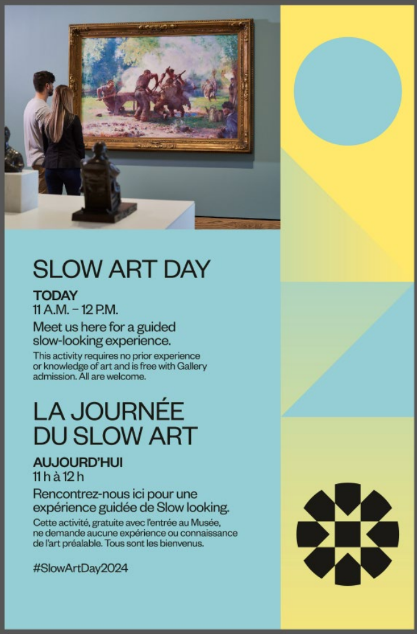
The Gallery provided three options for participation this year: – an in-person guided group experience – slow-looking “on your own” with provided handout (shown below) – slow-looking from home using a guided video
And participants were given the option to participate in either French-language or English-language sessions.
For the in-person guided event, hosts Andrea Gumpert and Marie-Pierre Adam greeted participants next to the below Slow Art Day signage in their Great Hall.
The in-person event was divided in two parts (that each of the French and English speaking groups followed).
For Part 1, Andrea led the 13 participants in the English-speaking group to the Indigenous and Canadian later galleries, and Marie-Pierre led the 11 French-speaking participants to the European baroque galleries. They each then invited their participants to select one artwork and spend 10 minutes looking slowly at it. After the 10 minutes, they regrouped and discussed the experience.
Across the two groups, participants commented on how much more they noticed about the art when they gave themselves permission to really spend time with it – a seemingly obvious but nonetheless revelatory experience. Participants also said the group setting was helpful, particularly for the younger attendees (11 and 14 years old.) People also told stories about the works, and contemplated the technical skills behind the art.
For Part II, the English-speaking group moved to the Contemporary galleries while the French-speaking group moved to the later modern galleries. This time Andrea and Marie-Pierre suggested three optional challenges: 1. Spend 15 minutes with one artwork 2. Select a work that you didn’t have an immediate affinity for 3. Draw or write while spending time with the work
They then had a second discussion with each group.
The French-speaking group in the modern gallery appreciated the chance to express themselves on paper; either by drawing or writing their ideas. Some participants expressed that the second round of slow looking was easier – that slow looking felt like a muscle that needs to be warmed up first. One participant who chose a work they would not have normally looked at shared that their slow looking revealed parts of the painting they thought were wonderful after all – and raised many questions around the choices made by the artist at that time in their career.
At the end of the day, participants provided feedback.
Here are two quotes, one from the English-speaking group and one from the French-speaking group (i.e., these are not translations from one to the other – but separate quotes):
The slow art English session was a welcome new approach for me to viewing art. Our guide was informed and fun, and she explained the process well. I am sure I will use this approach on my own sometimes at art galleries, and elsewhere. Thank you for offering it — it is a good middle place between a tour with a guide and a hands-on activity.
Bonjour à toute l’équipe, je profite de ce courriel pour vous remercier pour l’organisation de l’activité Slow Art de samedi dernier. J’ai une la chance de participer à cet événement en présence de Marie-Pierre et du groupe pour les personnes francophones. J’ai fait plusieurs apprentissages dans un environnement paisible et vraiment intéressant ! Merci pour votre dévouement à rendre l’art accessible et respectueux ! Je vous en suis très reconnaissante ! Je souhaite une longue vie au Musée des Beaux-Arts du Canada !
We are glad to say that The Gallery is now planning regular slow looking sessions throughout the year (we love that!) as well as participating in Slow Art Day 2025.