Multiple Paths To Slow Looking at Wellcome Collection

For their fourth year participating in Slow Art Day, Wellcome Collection in London hosted a full day of guided and self-guided slow-looking experiences across the museum. Wellcome Collection is a free museum that explores human health through the intersections of art, medicine, and science. Building on the range of facilitated sessions introduced in previous years, the 2025 program offered visitors multiple ways to engage slowly with artworks, objects, and ideas.

The Wellcome Collection team led five guided slow-looking sessions, each facilitated by a different staff member and focused on a distinct body of work.

Isabelle Gapomo guided participants in close observation of a photograph by Marc Ferrez from the Hard Graft exhibition, titled ‘Escravos em terreiro de uma fazenda de café na região do Vale do Paraíba’ (c.1882), examining how plantation labor was depicted by early photographers and how those images are experienced today.
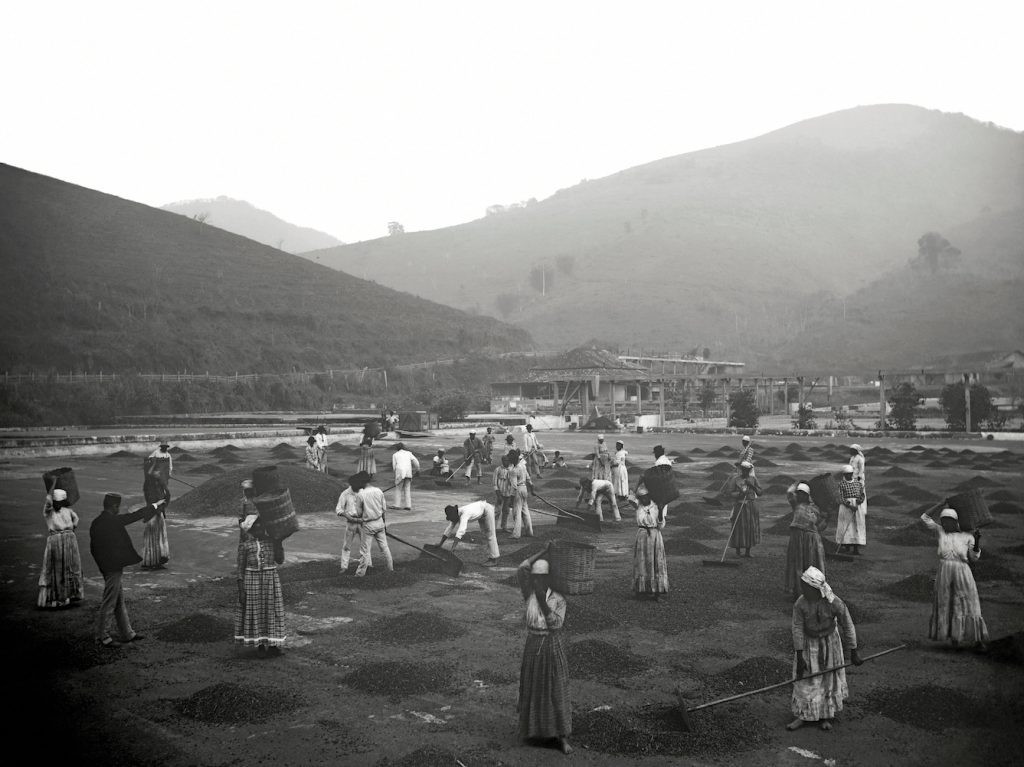
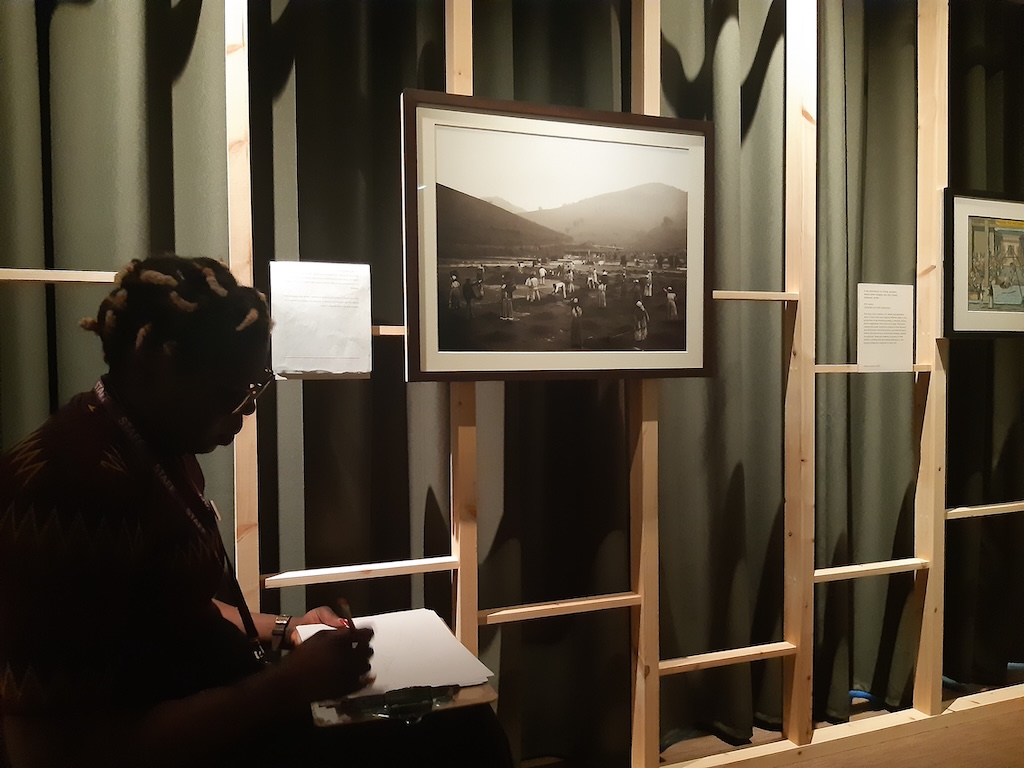
‘Escravos em terreiro de uma fazenda de café na região do Vale do Paraíba’ (c.1882). Marc Ferrez.

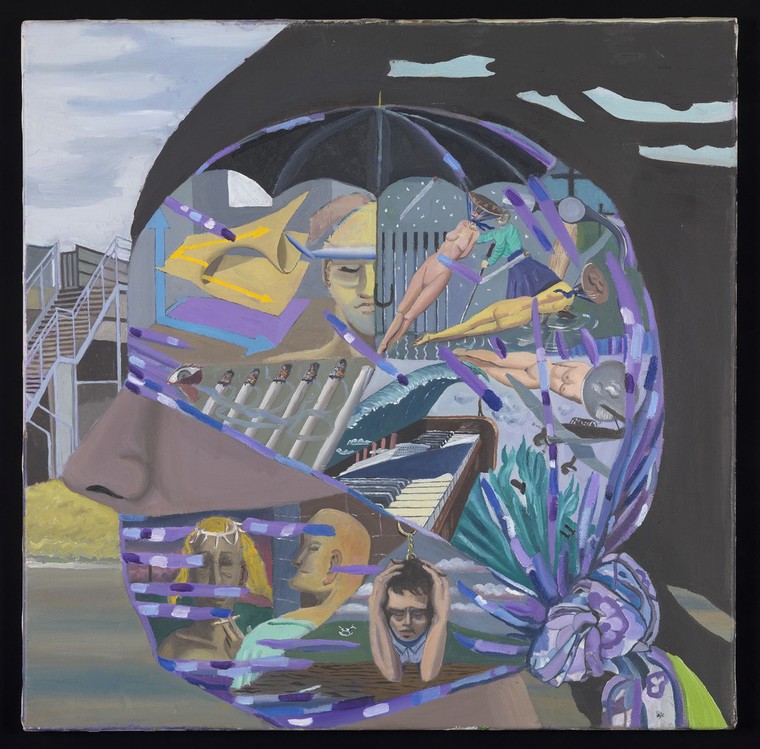
Griff Davies led a session centered on the dream-inspired paintings of Bryan Charnley, using the imagery to prompt discussion around mental health.
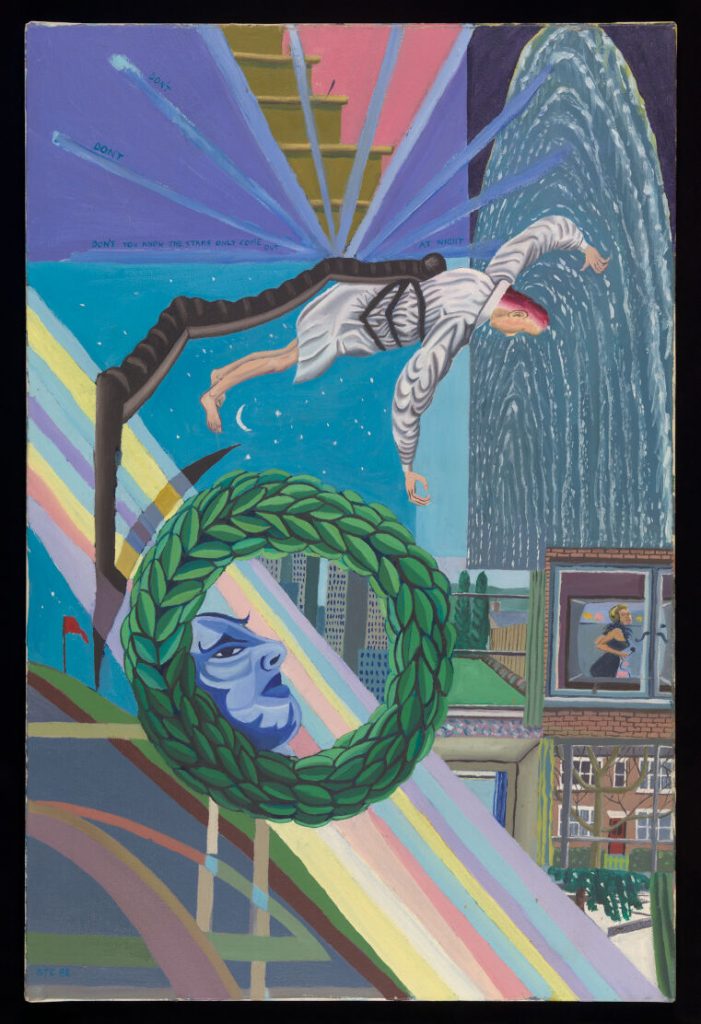
“The Stars Only Come Out at Night” by Bryan Charnley.
“Nail Schizophrene” by Bryan Charnley.

Sana Siddiqui reprised her popular session last year and used vintage food advertisements to evoke memory and sensory response.

In the Reading Room, Isabel Greenslade gathered participants around “Closing Neural Tube Dress,” a sculptural garment that encouraged reflection on abstraction.
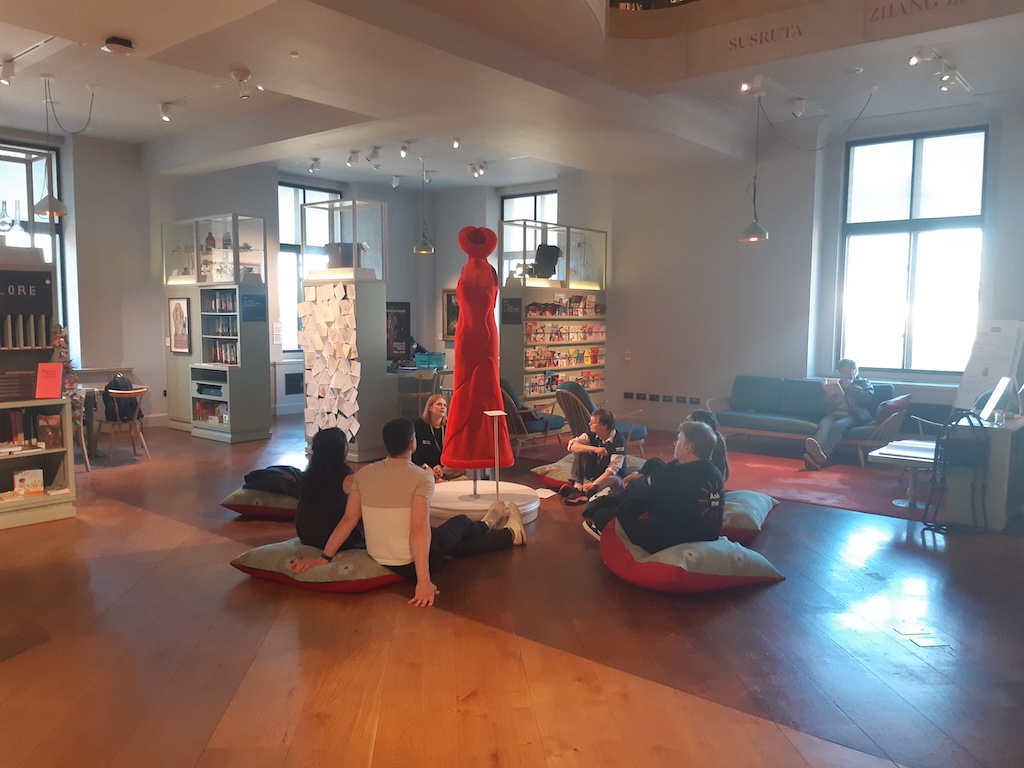
Participants slow looking at the “Closing Neural Tube Dress“.

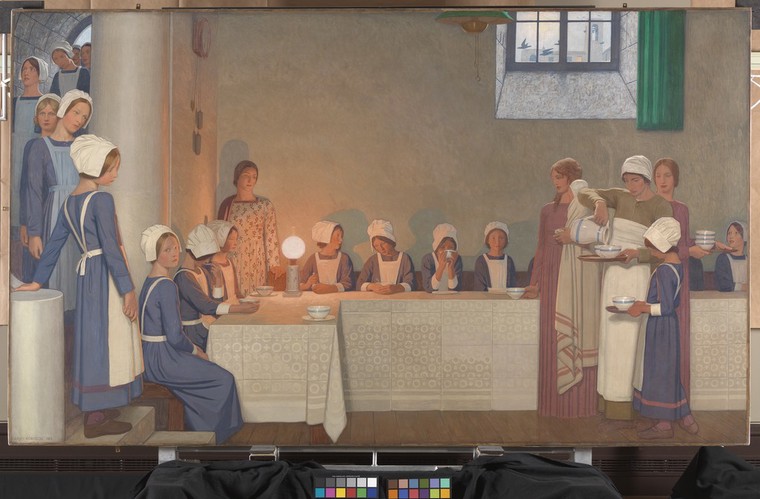
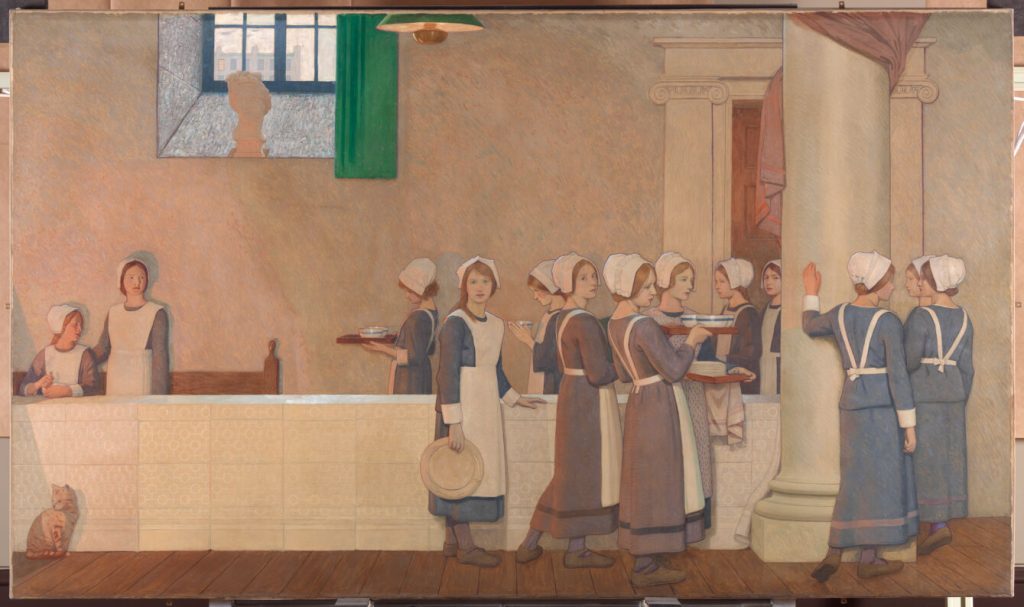
Jake Blackavar led a session that moved through multiple floors of the museum, selecting a sculpture, a video work, and a pair of paintings to explore how different media and gallery contexts shape the slow-looking experience.
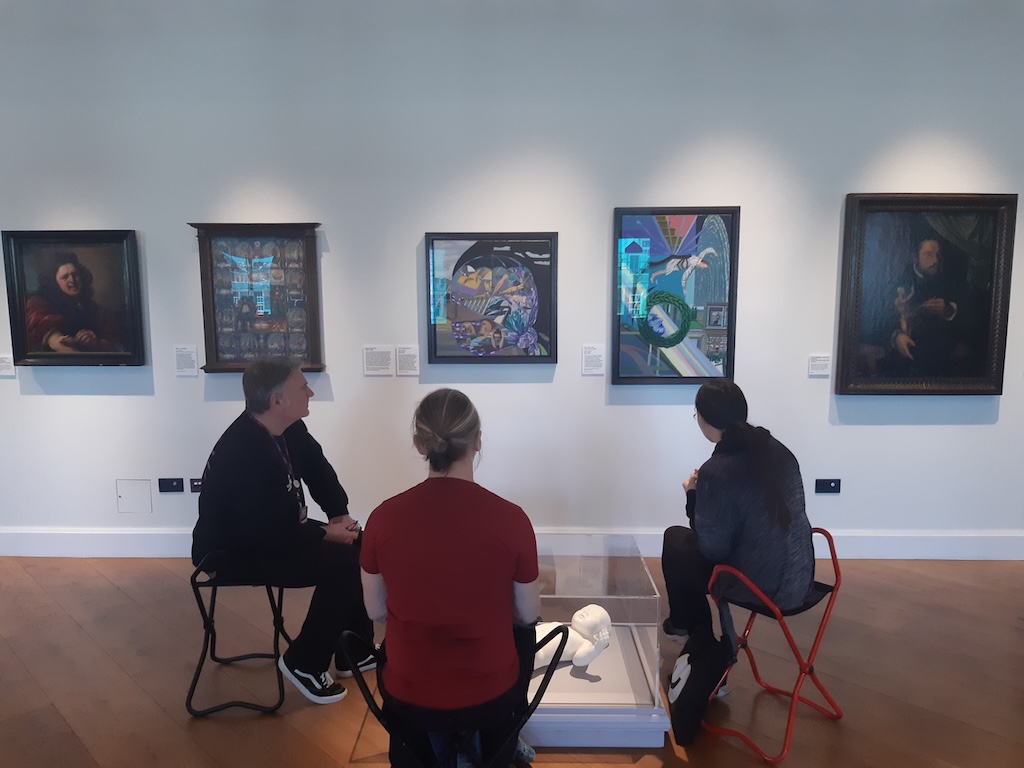
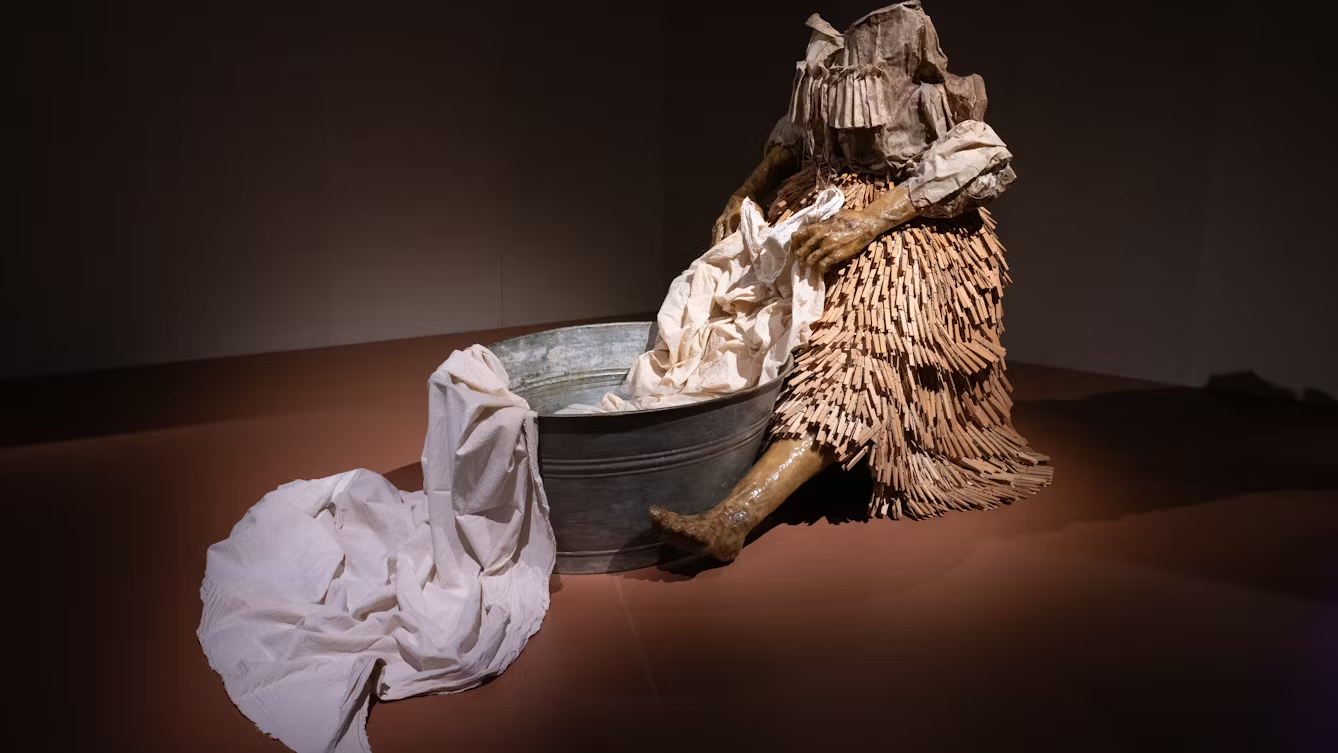
“Washerwoman” by Shannon Alonzo.
“Orphans” (left) by Frederic Cayley Robinson.
“Orphans” (right) by Frederic Cayley Robinson.

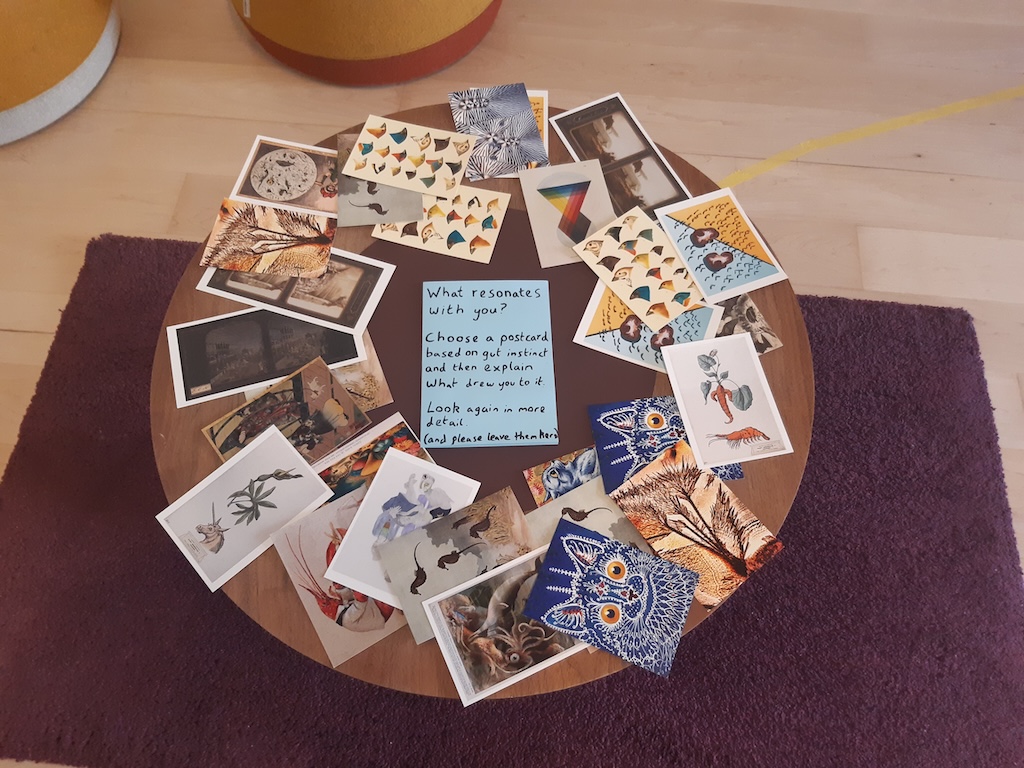
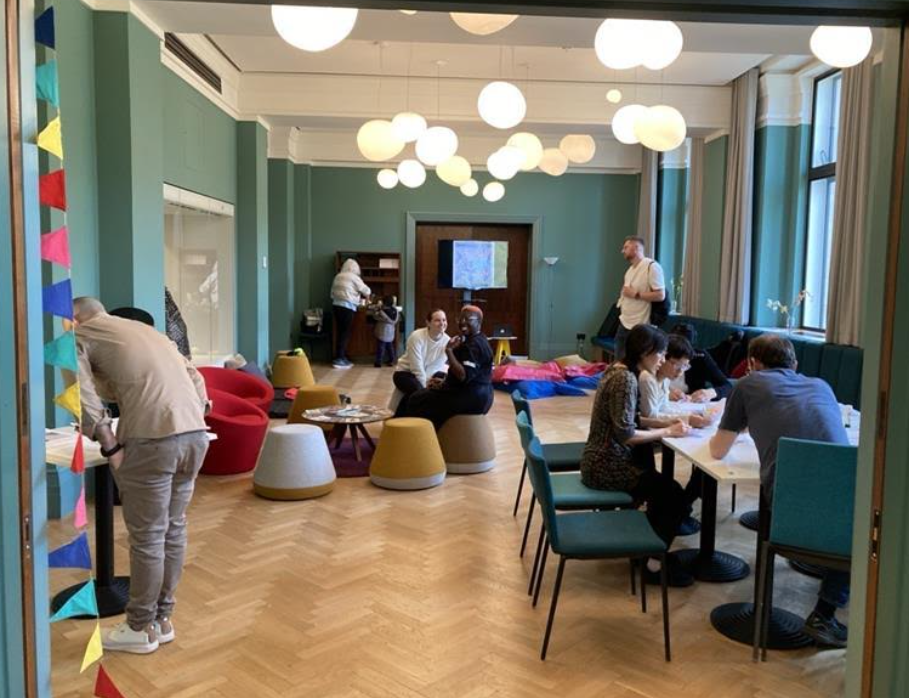
In addition to the guided sessions, the museum designated a room as a Slow Art Day hub where tours began and visitors could drop in to learn more about the event. In this space, visitors were invited to practice slow looking independently using a rotating screen of images from Wellcome Collection’s holdings, which changed every ten minutes.
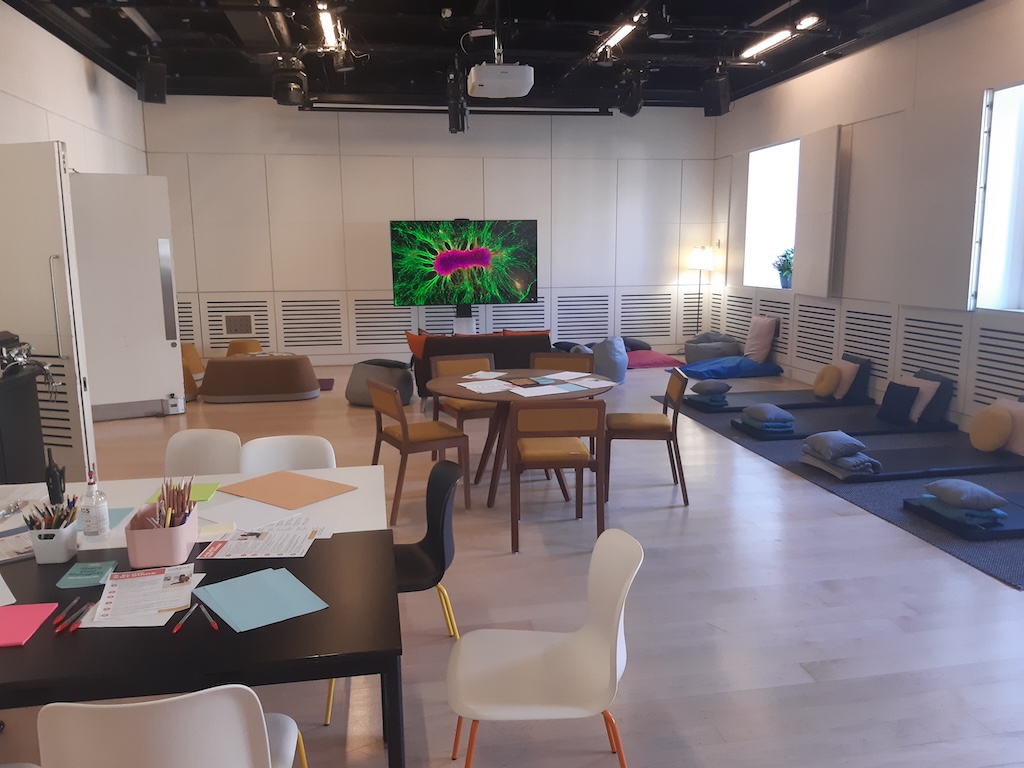
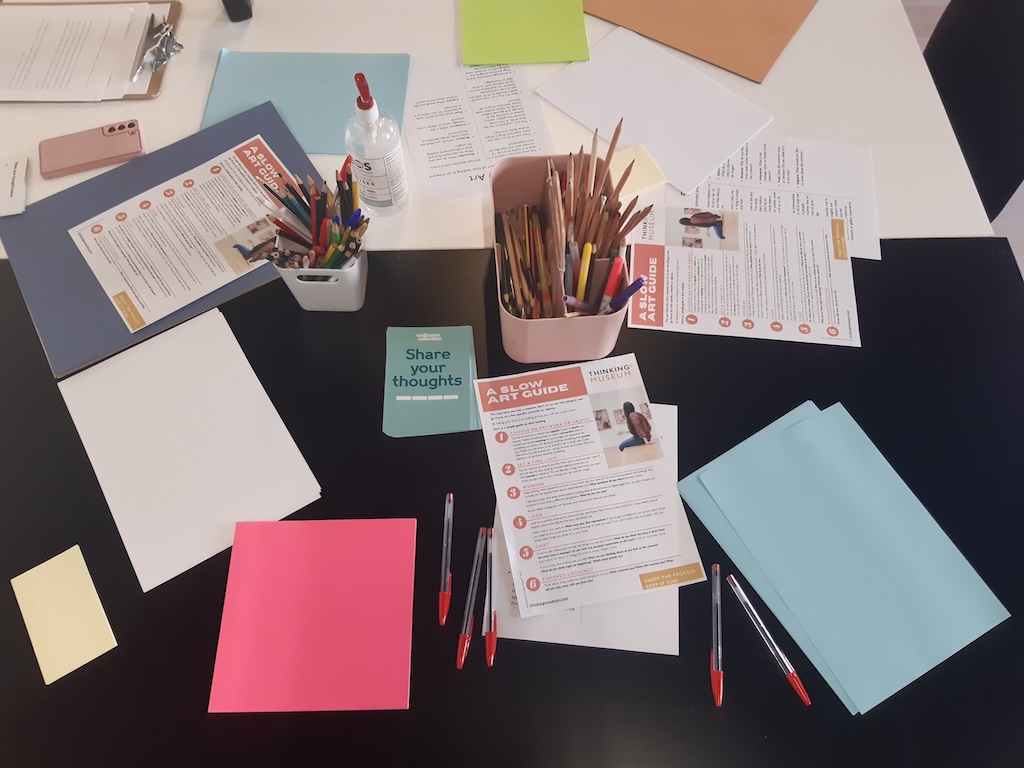
What a thoughtful and well-designed program. Wow.

We at Slow Art Day HQ thank Jake Blackavar and the entire Wellcome Collection team for continuing to lead the way in producing meaningful and multi-dimensional experiences.

We eagerly look forward to what they come up with for Slow Art Day 2026.

– Ashley, Johanna, Jessica Jane, and Phyl

P.S. Follow Wellcome Collection on their Instagram and Facebook
Slow Art Day at Wellcome Collection in London

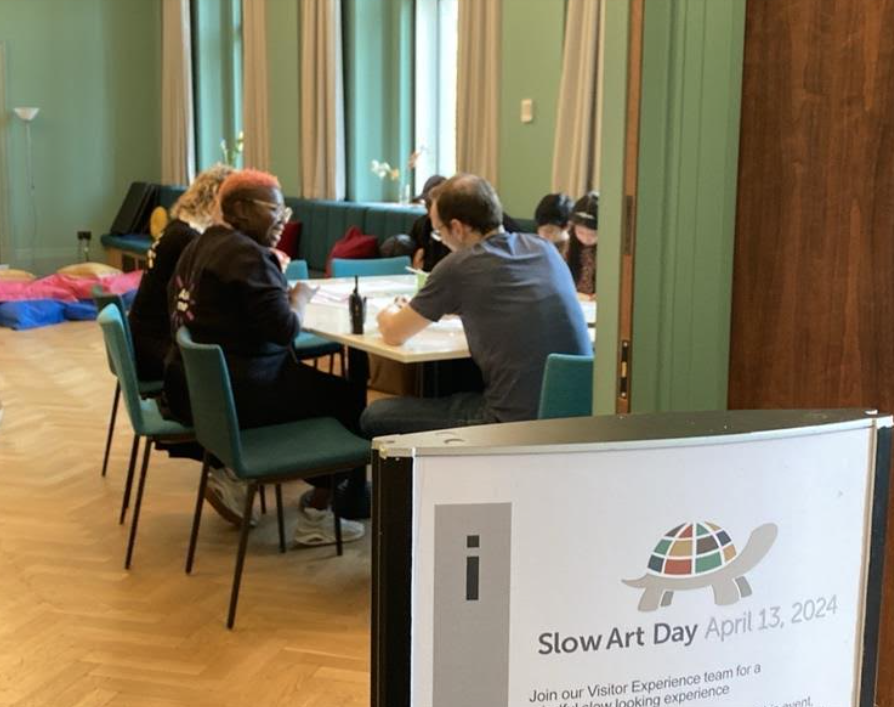
For their second Slow Art Day, Wellcome Collection in London, England, hosted four different slow looking sessions which included unlocking food memories, writing object labels, and slow looking at works in the Reading Room. Wellcome Collection is a free museum that explores human health through the lens of art, medicine, and science.

Signs inviting to the Wellcome Room.

Slow looking participants in the Wellcome Room.

The first session focused on two photographs of women amidst global crises, which illustrated how pandemics and infectious diseases affect the human experience. The exchange that followed with the participants was filled with deep, personal, and emotional testimonies.

The second session, led by Rosie Wassi, one of the Wellcome Collection team, explored the effects of environmental breakdown.

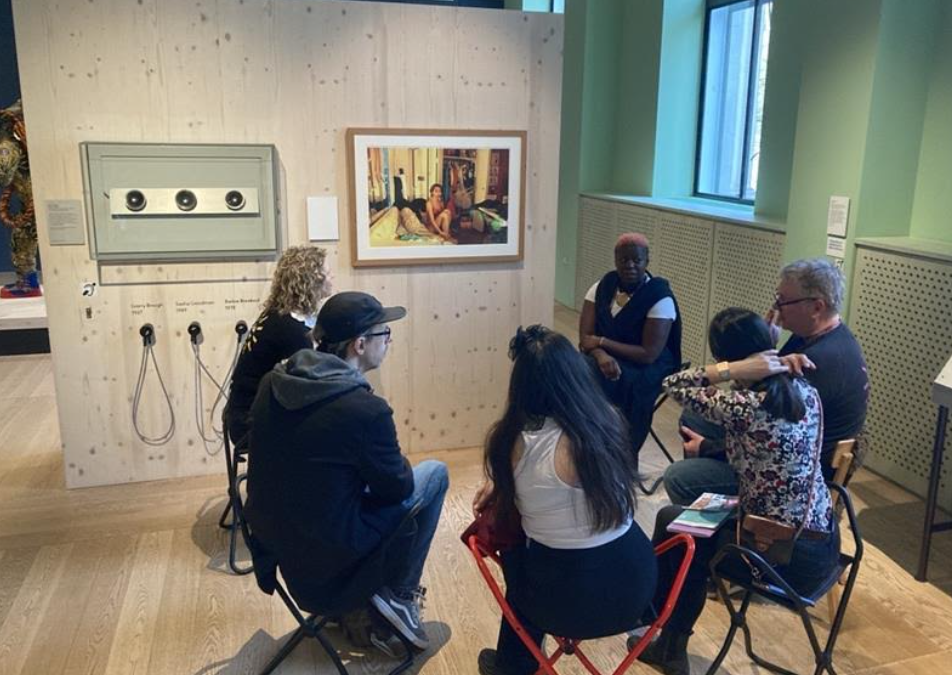
Discussion in front of Kia LaBeija’s self-portrait in the Infection (in this case HIV) Section of the Being Human gallery at the Wellcome Collection.

On a lighter note, the third session invited attendees to label objects from the Handling Collection, which helped to bring gallery employees and visitors closer together. Sana Siddiqui, one of the Wellcome Collection team, also reignited memories and senses through a selection of old food advertisements.

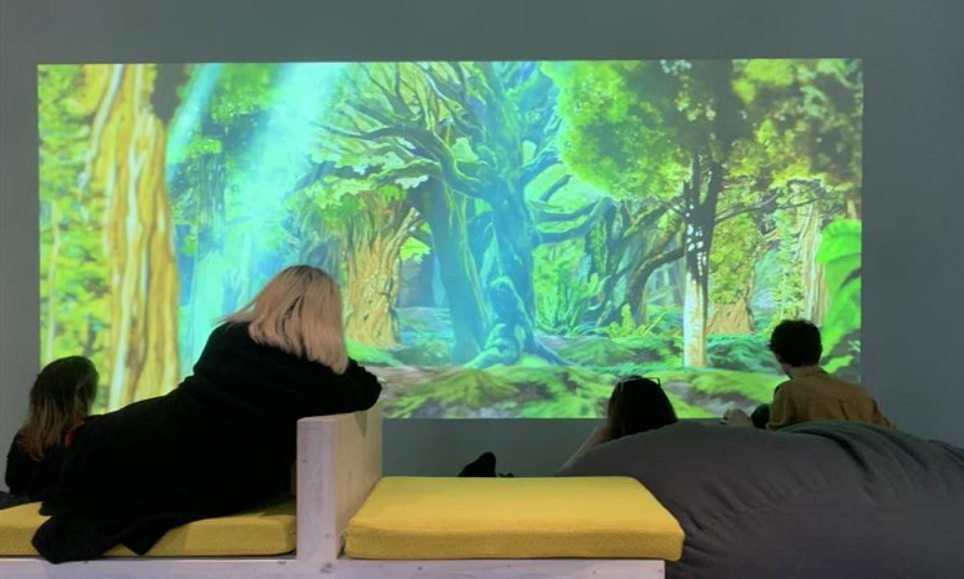
The day concluded with Wellcome Collection’s Slow Art enthusiast, Dickon Moore, leading a slow looking session of the eight-minute film “White” by Daniella Dean, which explored the impact of colonization on New Zealand’s fauna and flora.

A series of prompts were used for the slow looking sessions:

  • What do you see? Colors? Textures? Patterns? Shapes?
  • What do they symbolize? Why were these particular choices made?
  • What do you think the artist wanted to convey through their choices?
  • How does this resonate with you and your experiences? Does it trigger any emotions?
  • Can you tell a story about this object?
  • Based on all that has been discussed, what would you name or title this work?

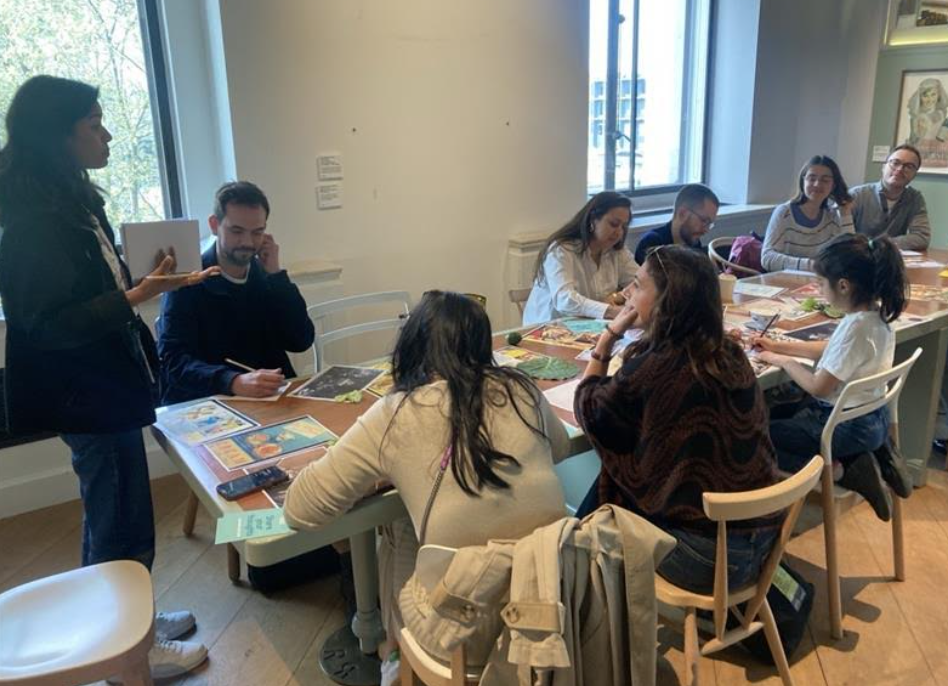
Throughout the day a Slow Art slideshow, art materials, and books were also available to all visitors in the Wellcome Kitchen.

Dickon Moore leading slow looking at the film “White” from Danielle Dean.

Slow drawing.

All sessions were facilitated individually or in pairs by the following Wellcome Collection team members: Jake Blackavar, Sana Siddiqui, Rosie Wassi, Isabel Greenslade, Isabelle Gapomo, Griff Davies, and Dickon Moore.

The event was well received, and Wellcome Collection provided several participants’ feedback in the file below:

At Slow Art Day HQ, we love the variety of sessions at Wellcome Collection, and are excited for whatever they come up with for Slow Art Day 2025.

-Johanna, Ashley, Jessica Jane, and Phyl

P.S. Slow Art Day 2025 is coming up on April 5. If you have not done so, please register your museum, gallery, church, sculpture park here: https://www.slowartday.com/be-a-host/