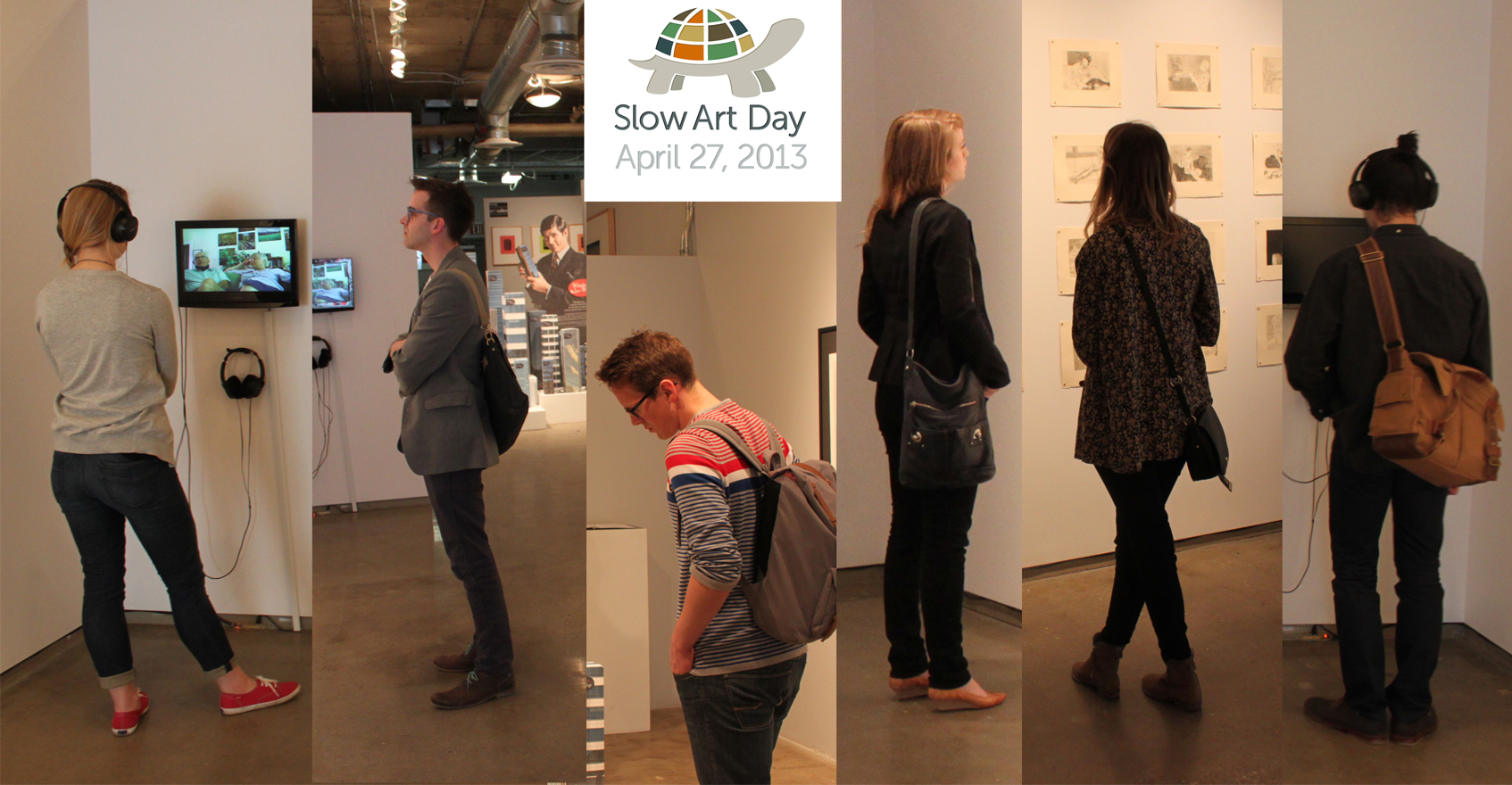
Slow Art Day launches “Tumblr Thursdays”

Slow Art Day may still be months away, but that doesn’t stop our tumblr from continuing to share engaging and provoking art to a growing community of followers!

The dedicated Social Media team for our tumblr have unveiled a new institution to help foster Slow Art Day’s involvement in the tumblr Art community by supporting budding artists.

“Tumblr Thursdays,” replacing “Themed Thursdays,” which similarly encouraged follower participation in submitting relevant art for each theme, continues this outreach to the community. Artists can now submit their original work to be shown to a wide and diverse audience through our movement’s efforts.

The above gallery showcases the inaugural crop of many talented artist submissions that will be published. For further information on the artist click on each image for relevant links.

You can see the work selected for each Tumblr Thursday here.

Slow Art, Fast City

Slow Art Fast City from Raw Footage Films on Vimeo.

Beyond slow looking we had no rules. We weren’t looking for anything, we didn’t have to like what we saw, there would be no wrong way to look or right way either.

See video coverage of founder Phil Terry’s 2013 Slow Art Day event embedded above from Raw Footage Films. Phil’s event took place at the Brooklyn Museum with each participant viewing five works. Each viewer was eager to view these hand-selected works and discuss the experience afterwards.

The group felt gratified knowing that “while our conversation was specific and personal,” 270+ venues across the world were having their own “attentive and unmediated” conversations about art. As the fast-paced antics of New York City beckoned at the close of the event, the participants left gratified with a new awakening to the benefits of slow looking.

Feeling inspired?
Don’t forget it’s never too early to sign up as a host or to participate in a 2014 venue near you.

Was your Slow Art Day event similarly invigorating? Share your experiences below in the comments!

Host Reports: Art Gallery of Western Australia in Perth, Australia

[In this series, we will be posting reports from Slow Art Day hosts around the world who held Slow Art Day events on April 27, 2013. This week, we are featuring the Slow Art Day event run by Susan Way, held at the Art Gallery of Western Australia in Perth, Australia]

Hi Everyone,

Slow Art Day was celebrated at the Art Gallery of Western Australia by featuring four photographs from the Picturing New York: Photographs from the Museum of Modern Art exhibition. The day was a great success and started with 15 participants. As our Voluntary Gallery Guide, Alan Ruda, ushered visitors slowly around the exhibition more and more people gathered. By the second set of photographs there were easily 40 people participating. By the end of the tour there were between 60 and 70 people crowded around Michael Wesely’s 7 August 2001-7 June 2004 The Museum of Modern Art, New York and Henri Cartier-Bresson’s An Eye at The Museum of Modern Art, New York. The group had high energy and were very interested. In the end, Alan suggested the group break into smaller groups and go back to the photos that really interested them. Everyone was very happy with this and Alan spent another hour answering specific questions and listening to the keen observations visitors made about the artwork.

We had organised to take photographs as a small group retired to coffee and conversation in our Manhattan Lounge. However the sheer number of participants prevented this from happening – which is a positive in our eyes. Our day may not have gone exactly as we imagined it, nevertheless to quote Alan, “It was a heck of a lot of fun!”

Regards,

Sue

“Curating in an attention deficit”

Todd Smith, Executive Director at the Tampa Museum of Art, recently filmed a video for the Tampa Bay Business Journal on what he’s observed as the change in how people view art. He compares the anachronistic way of focusing intently on one subject that is characteristic of his generation (“vertical” thinking) with the new wave of technologically-centred “horizontal” thinking. This brings to the fore a new challenge for art museums, like the Tampa Museum of Art, in how they educate visitors who are not accustomed to “vertical” or deep thinking. Smith poses the question “what does a museum experience look like, now and going forward for both my generation and older… and the younger generation?”

Smith sees this new way of thinking revolutionizing how museums curate their exhibitions, based on their observations of whether visitors take their time and look at works slowly or if they jump around and “make their own stories”. Smith foresees this adding another dimension to curating, in that “we’ll put the work up and tell our story, but we are interested in what the visitor is making of their own stories about the work,” essentially thinking of the visitor as the curator.

At Slow Art Day we, of course, advocate for a slow looking that fosters the “vertical” or deep thinking cited by Smith. Postulating the visitor as curator has the potential to foster a freer way of thinking that might lead to this kind of deeper, or “vertical”, way, vs. the merely “horizontal”. What do you think?

Host Reports: Chazen Museum of Art in Madison, Wisconsin

[In this series, we will be posting reports from Slow Art Day hosts around the world who held Slow Art Day events on April 27, 2013. This week, we are featuring the Slow Art Day event run by Karen Barrett-Wilt, held at the Chazen Museum of Art in Madison, Wisconsin]

Hello from Madison WI!

Highlights of our first Slow Art Day included eating lunch outside (Spring is here!), 15 participants, and a great conversation. The conversation required very little facilitating from me. A couple of people had never been to the Chazen Museum of Art, but all were still very willing to talk about their experiences. We had a spirited conversation with a lot of respectful disagreement, which is one thing that I love about art – no one is wrong! I’d like to add my thanks to the organizers – you were incredibly efficient and responsive, and made it all so easy. Thank you!

-Karen

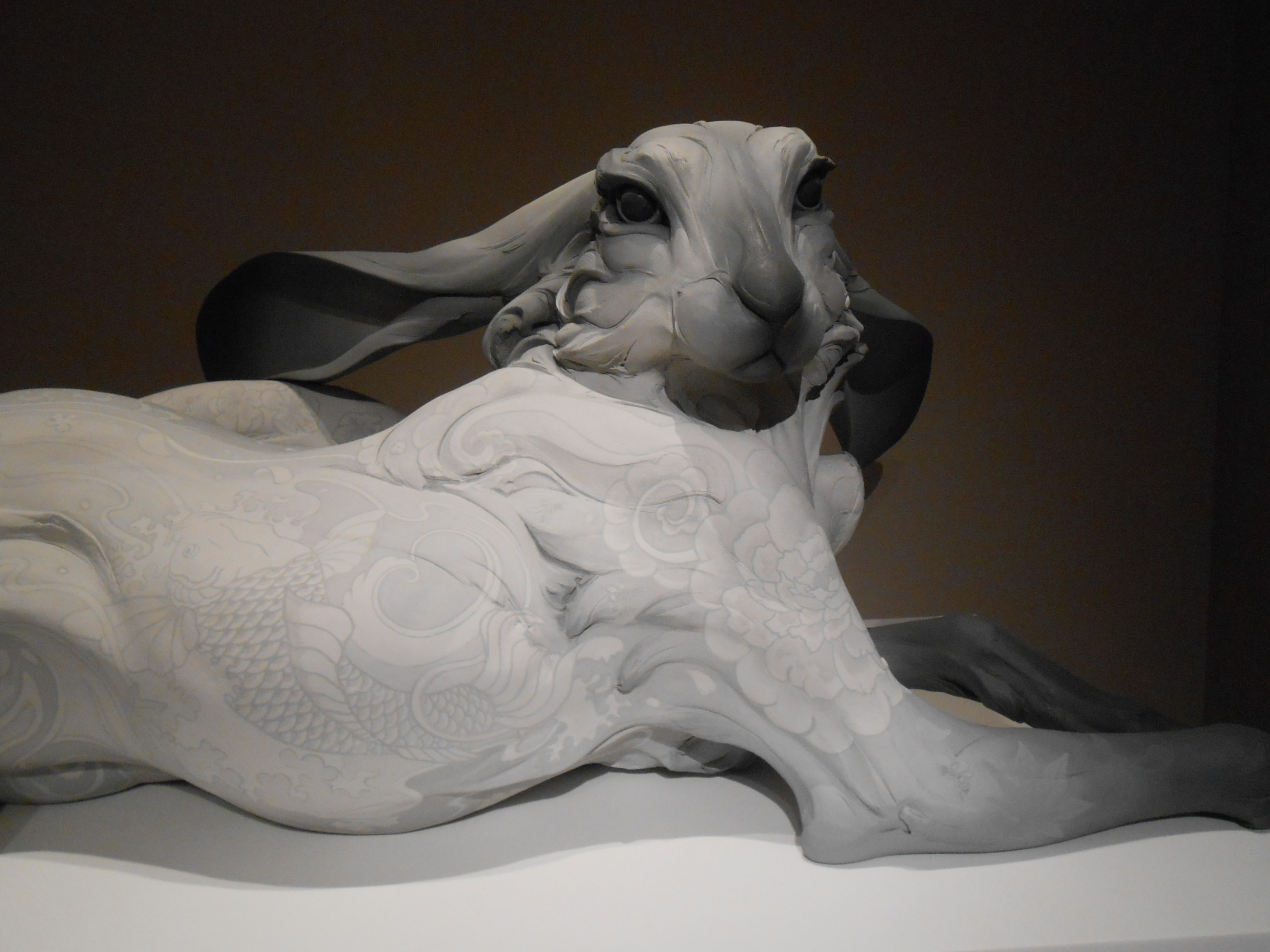
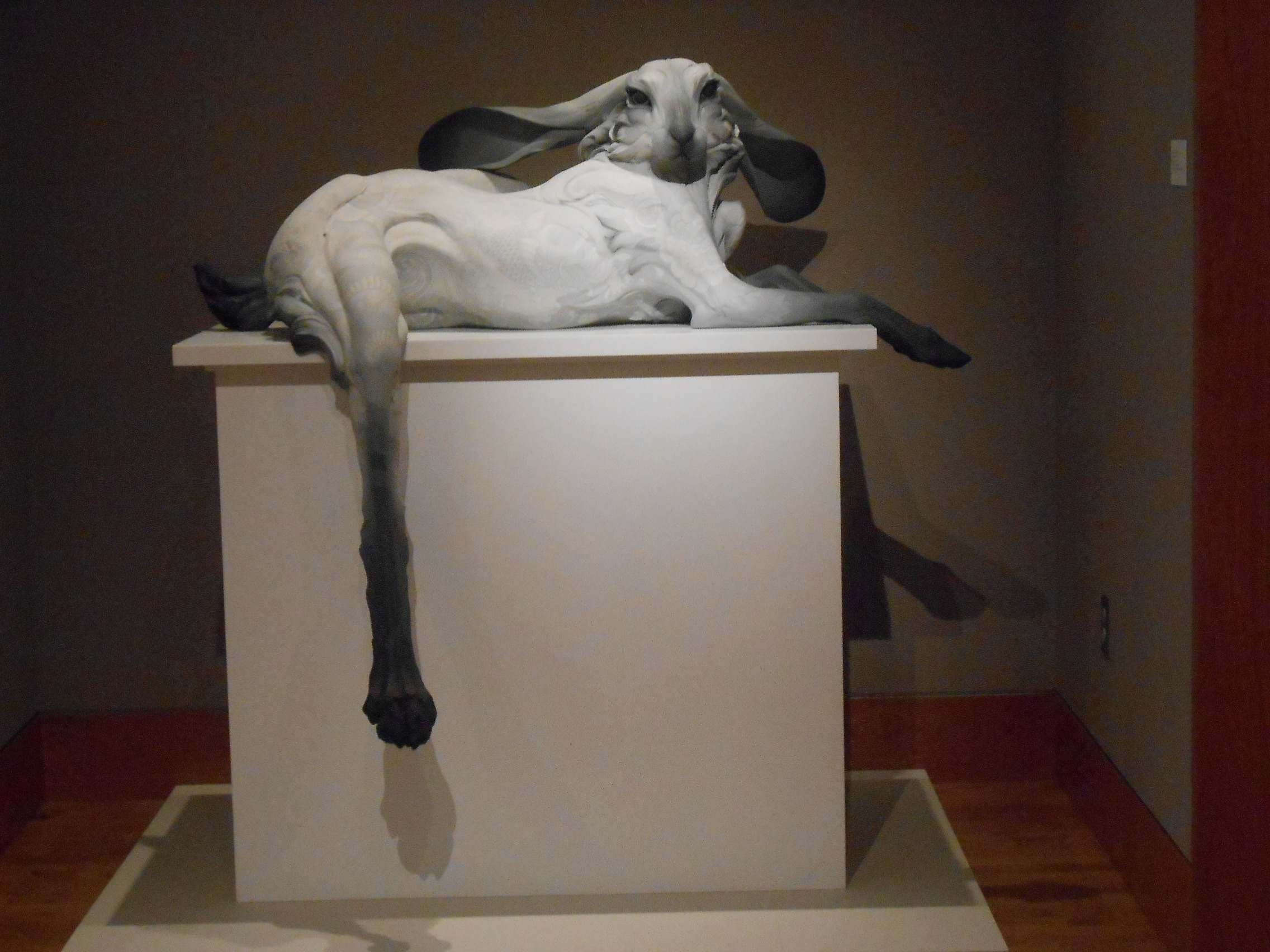
Karen also included a couple of photographs of one of the pieces they viewed at their Slow Art Day, Beth Cavener Stichter’s L’Amante, 2012.

Stichter L'Amante 2

Stichter L'Amante 3

Host Reports: SNAP Gallery in Edmonton, Alberta, Canada

[In this series, we will be posting reports from Slow Art Day hosts around the world who held Slow Art Day events on April 27, 2013. This week, we are featuring the Slow Art Day event run by blog manager Tori and her partner Chelsey from PrairieSeen, held at SNAP Gallery in Edmonton, Alberta, Canada]

Hello all!

Slow Art Day 2013 is sadly over, but we are looking forward to hosting again next year…

Our event (the first in Edmonton!) went very well. We had 12 participants signed up on Eventbrite (including the two hosts) and 18 people who joined the Facebook event. In total we ended up having 8 people altogether; a small group that worked well together in the small space that is SNAP Gallery.

group shot

In the nature of our blog/ website/ open platform whose mandate is to cultivate a discourse about local arts in Edmonton, we had a very informal Slow Art Day. Of course, we told the participants the premise of the event, but left them free to choose their own five works to look at (there are only two exhibition spaces at SNAP, with approximately 10 works in each). Participants thus looked at all of the works, but focused on their choices. We also had the chance to observe open studio at SNAP (which is a print-based gallery and studio), which was great; since printmaking is so technical it was interesting to see how the process works.

We had a really great discussion afterwards over lunch at a delicious local restaurant (of course!) where we talked about slow looking, the work in the exhibitions, arts education, art in Edmonton, working in galleries, going to galleries etc. We had great feedback, took a small album of photos, and hope to meet again in the future before the next Slow Art Day (hopefully with even more participants!)

Tori and Chelsey
PrairieSeen

Who Will be the First?

Who will be the first city to sign up for Slow Art Day 2014?

Host to Host: Rachel Matthews

[Hosts around the world are introducing themselves to each other in advance of Slow Art Day. Today we’re featuring some words from Rachel Matthews, the volunteer host at the Getty Center in West Los Angeles]

Hello fellow Slow Art hosts,

My name is Rachel Mathews and I will be hosting this year’s Slow Art Day at the Getty Center in West Los Angeles. This is my first year as a host, 4th year as a participant; I’m looking forward to being a part of Slow Art Day once again! While I’m not an art scholar, I do love viewing art and Slow Art Day is a great way to expand my art horizons. The Getty Center is a wonderful museum that has a wide variety of art, which makes it difficult to pick just 5 pieces; fortunately, I was able to get a friend to make the choices (we were originally supposed to co-host, but sadly, she’ll be out of town on Saturday).

I had an incredible experience the first year I attended Slow Art Day, at the Norton Simon Museum in Pasadena, that’s kept me coming back. A friend/co-worker was hosting and, in the viewing guide, there was a piece that I felt I was not going to enjoy. After I paid for my museum admission, I decided to head to the end of the furthest gallery and work my way back. As I walked, I spotted some of the other pieces in the viewing guide and made note where they were; suddenly, I saw a piece in the distance and was drawn to it – it was the piece I thought I wouldn’t like. But it was much larger than it looked in the guide (it ended up having an entire room to itself; I could see it about a gallery and a half away due to its size), which changed the experience completely. As I spent more and more time with this huge painting, I kept noticing more and more details about it and in it, which was intriguing. After spending 15 minutes with the piece, I absolutely loved it! After seeing all of the other pieces in the viewing guide, I decided that the first piece was my favorite. The following year, I went back to the same museum and made sure to spend time with it again.

One of my other friends wasn’t able to make the first 3 Slow Art Days, so I organized an interim Slow Art experience at the Getty last Fall for that friend and the friend who has hosted the previous Slow Art Days I attended. Since I don’t live near the Getty, I chose all of the artwork off of their website and wasn’t sure what my own reactions to the pieces I had selected would be, much less the impressions my 2 companions that day would have. I made sure to choose a couple of pieces that I wouldn’t normally be attracted to, hoping to re-enact that first year Slow Art attitude shift. Although we had to spend some time searching for the various pieces (which was part of the adventure), we all had a great time and, afterwards, had a very robust discussion about how the pieces impacted us.

I’m really looking forward to next Saturday. I wish everyone great success with their Slow Art Day events around the world!

Sincerely,
Rachel Mathews

[Make sure to check out (and register for!) Rachel’s Slow Art Day event at the Getty Centre in West Los Angeles]


Twitter, tumblr, and Slow Art: oh my!

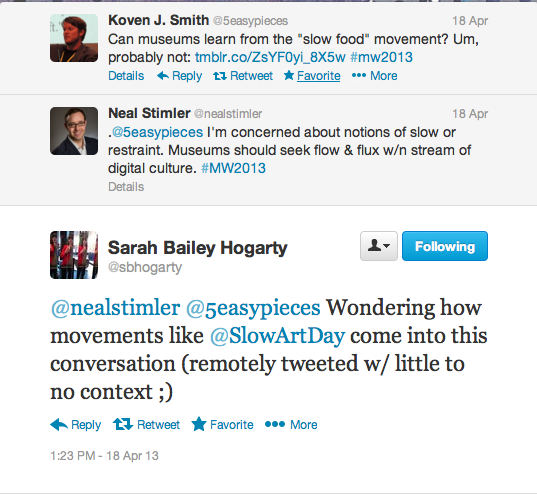
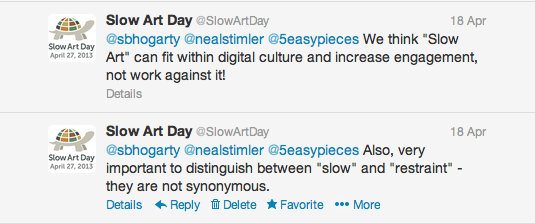
If you follow Slow Art Day on our various social media channels, you might have noticed an interesting conversation unfolding this week over whether programming like Slow Art Day can succeed in today’s fast-paced, digital environment. It all started when Sarah Bailey Hogarty from the de Young & Legion of Honor Museums looped us into a conversation happening at the 2013 Museums and the Web Conference:

Screen Shot 2013-04-23 at 9.04.33 AM

Of course, we had to respond!

Screen Shot 2013-04-23 at 9.05.22 AM

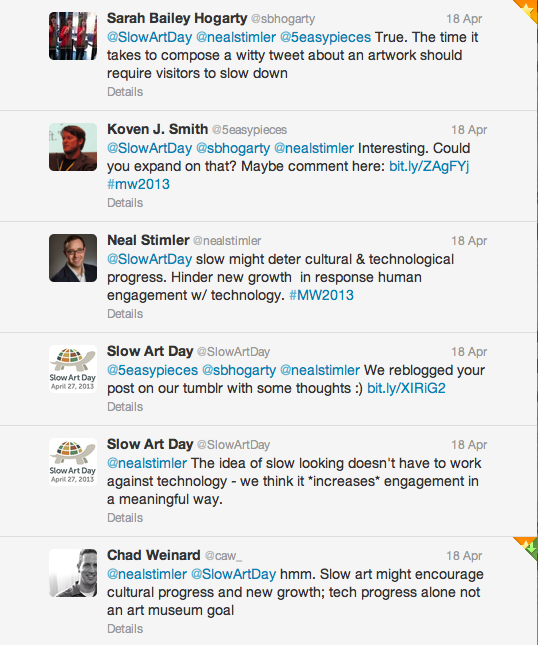
Which opened the floodgates for more dialogue and opinions from both sides:

Screen Shot 2013-04-23 at 9.07.43 AM

While twitter is fantastic for short, 140 character thoughts, we wanted to address our thoughts on the power of slow looking in a longer format, so our Social Media Manager Alie Cline took to the Slow Art Day tumblr to respond to Koven Smith’s initial concerns about Slow Art. Focusing on the ideas of slow looking and engagement, the post details how Slow Art Day can work within digital culture, “…so people can share their insights, observations, and engage with the artwork in a way that reaches beyond just the initial reaction of “I like this” or “I don’t like this.” Make sure to check out the entire post on our tumblr!

We love the thoughtful and respectful dialogue that took place on our social media channels – make sure to follow Slow Art Day on Twitter, Facebook, and Tumblr for more conversations like this one!

Slowing Down at Museo MARCO

[Slow Art Day has asked its 2013 hosts and volunteers to write short summaries of their own experiences looking slowly at artworks of their choosing.]

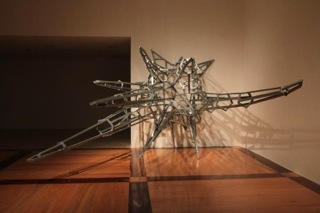
After looking around the Museo Marco, I chose the artwork The Fuck Off Project by Daniel Ruanova to examine patiently as part of the initiative of Slow Art Day. There were, no doubt, other pieces that called my attention, but the idea of examining this particular piece interested me the most. This artwork consists of a series of metallic rods that are assembled into a set of pointy extrusions. It almost looks like a “wire frame” (like those seen in animation programs) of the back of a porcupine.


Daniel Ruanova. The Fuck Off Project. 1976

At first glance the work certainly seemed aggressive. Although not insulting (at least until you read the title), I initially did not want to get near it. Each of the protrusions appear to be directed toward the viewer, independent of the viewing angle. Judging by the name, I thought that this was precisely the motive of the artist – i.e. to portray aggression.  That made me think of similar shaped things in nature that convey the exact same defensive idea, like pufferfish or the porcupine, and I concluded that the artist may have been inspired by such animals.

Despite my apprehension, I decided to slowly approach the piece. As I got nearer, I noticed that the feeling of aggression became stronger.  I decided to actually walk into it and that changed my experience of the piece completely. There, inside it, I felt protected. The metallic arms were no longer pointed towards me but towards everyone else. It’s as if now their sole purpose was my defense. I sat down to be able to immerse myself deeper, and, as expected, the sense of security was intensified. There, in the midst of all those metal rods, I felt comfortable.

The next thing I noticed was the facial expressions of the people in the museum when they noticed me there. Assuming they shared the feeling I had felt while looking at the sculpture from the outside, I could understand why. I sat there for awhile, watching people pass looking bewildered.

I now understand the Slow Art Day initiative in a better way and can see how slow looking can really transform the experience.  Looking slowly and taking the time to move in and around this artwork completely changed my perception – and – this insightful episode reaffirmed my decision to be a host during the Slow Art Day for Museo Marco in Monterrey on April 27.

– David Zambrano Reyes, Volunteer at MARCO

[Make sure to check out Museo MARCO’s Slow Art Day event in Monterrey, Mexico.]