Host Report from Margaret McCue, Zürich, Switzerland

[In this series, we will be posting reports from Slow Art Day hosts around the world who held Slow Art Day events on April 27, 2013. This week, we are featuring the Slow Art Day event run by Margaret McCue, held at the Rietberg Museum in Zürich, Switzerland]

Dear fellow hosts,

I hosted an event at the Rietberg Museum in Zürich, Switzerland. The Rietberg is a “world art” museum, meaning non-European. Many participants said they especially appreciated the cross-cultural aspect.

Nearly everyone said they wished there would be more frequent Slow Art
events.

The most difficult part was the discussion: I chose the museum’s cafe, which has only small tables that can’t be easily rearranged so we were divided into small groups of four. I had hoped we could eat and converse on the museum’s terrace, at tables that we could have moved around to accommodate whatever size turnout. However, this is Zürich, and it poured rain. So, I would do this part differently in the future.

I chose the five pieces for variety: big, small, simple, complex, colorful, monochromatic, painting, sculpture, ceramic, in different locations throughout the museum (which is in several small buildings) and no repeat of a culture. A few asked me whether there was a theme, and most did not realize or understand that I had chosen the art: they thought that (somehow!) the Slow Art Day organization itself chose the art at all locations. Several noted that they especially liked the variety, the moving around, and the freedom to just look at those pieces without feeling compelled to look at anything else.

I totally enjoyed hosting this event, and appreciate the Slow Art Day organization for making it possible for anyone to host. The participants were, for me, a fun combination of people I know personally and complete strangers who discovered it through Eventbrite. Most of all, I appreciate the concept: slow down and absorb what you see.

Thanks again to all who made this a world-wide event,
Margaret

Slow Art Day launches “Tumblr Thursdays”

Slow Art Day may still be months away, but that doesn’t stop our tumblr from continuing to share engaging and provoking art to a growing community of followers!

The dedicated Social Media team for our tumblr have unveiled a new institution to help foster Slow Art Day’s involvement in the tumblr Art community by supporting budding artists.

“Tumblr Thursdays,” replacing “Themed Thursdays,” which similarly encouraged follower participation in submitting relevant art for each theme, continues this outreach to the community. Artists can now submit their original work to be shown to a wide and diverse audience through our movement’s efforts.

The above gallery showcases the inaugural crop of many talented artist submissions that will be published. For further information on the artist click on each image for relevant links.

You can see the work selected for each Tumblr Thursday here.

Slow Art, Fast City

Slow Art Fast City from Raw Footage Films on Vimeo.

Beyond slow looking we had no rules. We weren’t looking for anything, we didn’t have to like what we saw, there would be no wrong way to look or right way either.

See video coverage of founder Phil Terry’s 2013 Slow Art Day event embedded above from Raw Footage Films. Phil’s event took place at the Brooklyn Museum with each participant viewing five works. Each viewer was eager to view these hand-selected works and discuss the experience afterwards.

The group felt gratified knowing that “while our conversation was specific and personal,” 270+ venues across the world were having their own “attentive and unmediated” conversations about art. As the fast-paced antics of New York City beckoned at the close of the event, the participants left gratified with a new awakening to the benefits of slow looking.

Feeling inspired?
Don’t forget it’s never too early to sign up as a host or to participate in a 2014 venue near you.

Was your Slow Art Day event similarly invigorating? Share your experiences below in the comments!

Host Reports: Art Gallery of Western Australia in Perth, Australia

[In this series, we will be posting reports from Slow Art Day hosts around the world who held Slow Art Day events on April 27, 2013. This week, we are featuring the Slow Art Day event run by Susan Way, held at the Art Gallery of Western Australia in Perth, Australia]

Hi Everyone,

Slow Art Day was celebrated at the Art Gallery of Western Australia by featuring four photographs from the Picturing New York: Photographs from the Museum of Modern Art exhibition. The day was a great success and started with 15 participants. As our Voluntary Gallery Guide, Alan Ruda, ushered visitors slowly around the exhibition more and more people gathered. By the second set of photographs there were easily 40 people participating. By the end of the tour there were between 60 and 70 people crowded around Michael Wesely’s 7 August 2001-7 June 2004 The Museum of Modern Art, New York and Henri Cartier-Bresson’s An Eye at The Museum of Modern Art, New York. The group had high energy and were very interested. In the end, Alan suggested the group break into smaller groups and go back to the photos that really interested them. Everyone was very happy with this and Alan spent another hour answering specific questions and listening to the keen observations visitors made about the artwork.

We had organised to take photographs as a small group retired to coffee and conversation in our Manhattan Lounge. However the sheer number of participants prevented this from happening – which is a positive in our eyes. Our day may not have gone exactly as we imagined it, nevertheless to quote Alan, “It was a heck of a lot of fun!”

Regards,

Sue

“Curating in an attention deficit”

Todd Smith, Executive Director at the Tampa Museum of Art, recently filmed a video for the Tampa Bay Business Journal on what he’s observed as the change in how people view art. He compares the anachronistic way of focusing intently on one subject that is characteristic of his generation (“vertical” thinking) with the new wave of technologically-centred “horizontal” thinking. This brings to the fore a new challenge for art museums, like the Tampa Museum of Art, in how they educate visitors who are not accustomed to “vertical” or deep thinking. Smith poses the question “what does a museum experience look like, now and going forward for both my generation and older… and the younger generation?”

Smith sees this new way of thinking revolutionizing how museums curate their exhibitions, based on their observations of whether visitors take their time and look at works slowly or if they jump around and “make their own stories”. Smith foresees this adding another dimension to curating, in that “we’ll put the work up and tell our story, but we are interested in what the visitor is making of their own stories about the work,” essentially thinking of the visitor as the curator.

At Slow Art Day we, of course, advocate for a slow looking that fosters the “vertical” or deep thinking cited by Smith. Postulating the visitor as curator has the potential to foster a freer way of thinking that might lead to this kind of deeper, or “vertical”, way, vs. the merely “horizontal”. What do you think?

Host Reports: Chazen Museum of Art in Madison, Wisconsin

[In this series, we will be posting reports from Slow Art Day hosts around the world who held Slow Art Day events on April 27, 2013. This week, we are featuring the Slow Art Day event run by Karen Barrett-Wilt, held at the Chazen Museum of Art in Madison, Wisconsin]

Hello from Madison WI!

Highlights of our first Slow Art Day included eating lunch outside (Spring is here!), 15 participants, and a great conversation. The conversation required very little facilitating from me. A couple of people had never been to the Chazen Museum of Art, but all were still very willing to talk about their experiences. We had a spirited conversation with a lot of respectful disagreement, which is one thing that I love about art – no one is wrong! I’d like to add my thanks to the organizers – you were incredibly efficient and responsive, and made it all so easy. Thank you!

-Karen

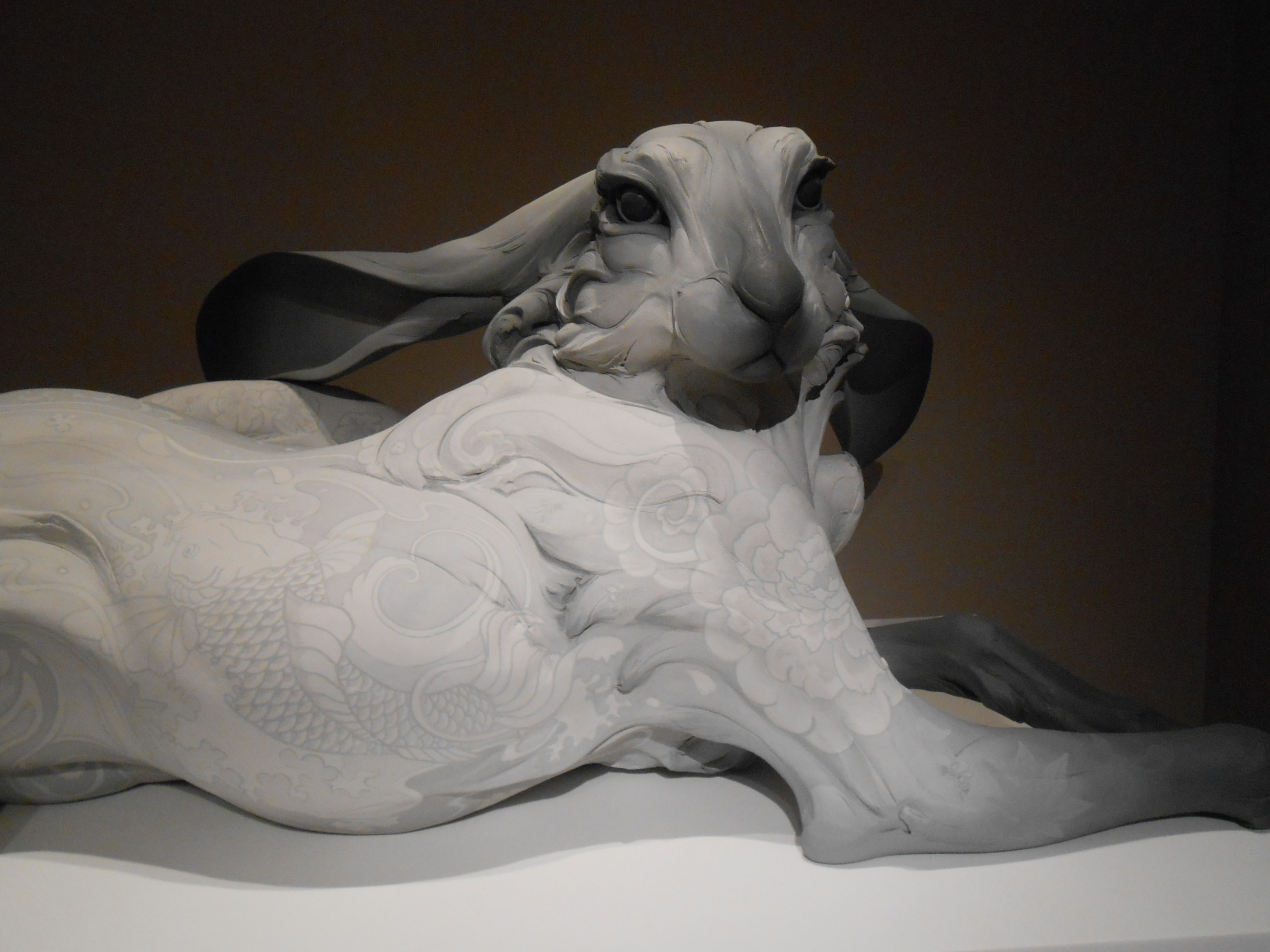
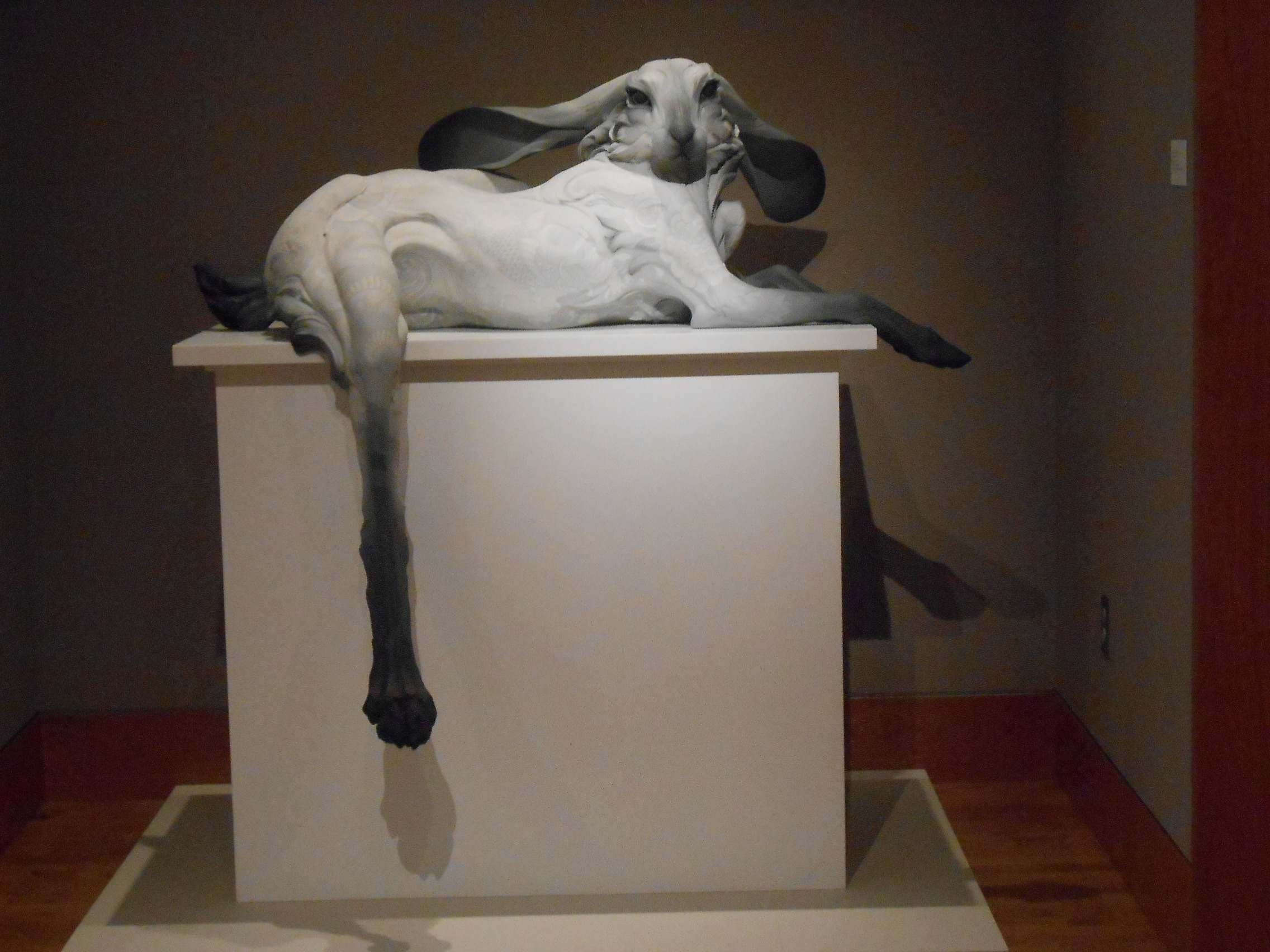
Karen also included a couple of photographs of one of the pieces they viewed at their Slow Art Day, Beth Cavener Stichter’s L’Amante, 2012.

Stichter L'Amante 2

Stichter L'Amante 3

Host Reports: SNAP Gallery in Edmonton, Alberta, Canada

[In this series, we will be posting reports from Slow Art Day hosts around the world who held Slow Art Day events on April 27, 2013. This week, we are featuring the Slow Art Day event run by blog manager Tori and her partner Chelsey from PrairieSeen, held at SNAP Gallery in Edmonton, Alberta, Canada]

Hello all!

Slow Art Day 2013 is sadly over, but we are looking forward to hosting again next year…

Our event (the first in Edmonton!) went very well. We had 12 participants signed up on Eventbrite (including the two hosts) and 18 people who joined the Facebook event. In total we ended up having 8 people altogether; a small group that worked well together in the small space that is SNAP Gallery.

group shot

In the nature of our blog/ website/ open platform whose mandate is to cultivate a discourse about local arts in Edmonton, we had a very informal Slow Art Day. Of course, we told the participants the premise of the event, but left them free to choose their own five works to look at (there are only two exhibition spaces at SNAP, with approximately 10 works in each). Participants thus looked at all of the works, but focused on their choices. We also had the chance to observe open studio at SNAP (which is a print-based gallery and studio), which was great; since printmaking is so technical it was interesting to see how the process works.

We had a really great discussion afterwards over lunch at a delicious local restaurant (of course!) where we talked about slow looking, the work in the exhibitions, arts education, art in Edmonton, working in galleries, going to galleries etc. We had great feedback, took a small album of photos, and hope to meet again in the future before the next Slow Art Day (hopefully with even more participants!)

Tori and Chelsey
PrairieSeen

Thank you

Two days ago on Saturday, April 27 we celebrated Slow Art Day 2013 in 272 museums in 207 cites across six continents.

We – the volunteer team who runs Slow Art Day – have much to be thankful for.

I started Slow Art Day with four participants at the Museum of Modern Art in 2009. Four years later – and without any money invested at all – we have built a global movement with thousands of participants and hundreds of hosts.

How did Slow Art Day grow like this?

For me answering that question means acknowledging that we have just barely begun.

Even in the United States, with the largest economy in the world by far, only 23% of adults visit art museums each year. That means 77% stay away.

Why do so many people stay away from these important cultural institutions?

There are many varied and complex reasons but at Slow Art Day we believe that at least one reason is that many people do not feel welcome. This is true despite the genuine hard work and creativity that most museums put into welcoming the public.

I started Slow Art Day because I myself finally discovered that if I stood in front of a piece of art for an extended time that I saw much more and felt included in the art experience. Most importantly, I felt that way not because someone told me what to see or feel but because I included myself. If thousands, indeed millions, of people took the time to look slowly, then they might discover for themselves that they have the capacity to look at and participate fully in art.

The art on the walls and galleries of public institutions around the world is owned by all of humanity. This is our art. It is for us and by us. And Slow Art Day creates the possibility for millions of people to realize that simple but profound truth.

So, yes, we give thanks to the:

– 272 volunteer hosts around the world who created and ran their own powerful and unique events for Slow Art Day;

– 20 members of the global coordinating team, many of them art history college students, who brought their passion, creativity and energy to building Slow Art Day 2013;

– thousands of museums and galleries around the world who work so hard to make art available and whose staffs inspire us everyday;

– many thousands of artists who give their gifts to all of humanity;

– many, many thousands of people who took two hours on Saturday to look slowly and discover for themselves the joy of including themselves in this thing called art.

Thank you!

Phil Terry
Founder, Slow Art Day

Slow Art Day at LACMA with Monika Del Bosque

[Slow Art Day Founder Phil Terry recently interviewed Monika De Bosque, three-time host of Slow Art Day at the Los Angeles County Museum of Art.]
ma-31371925-WEB

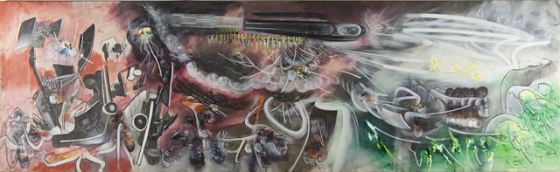
Robert Matta – Burn, Baby Burn

Slow Art Day: You’ve been a Slow Art Day host since the beginning. Why?

Monika:  Art has the power to move us, and there is a certain potency in knowing that we’re all participating at the same time (give or take).  There’s something special about that.

Slow Art Day: You have 100 people coming to LACMA on Saturday and 10 moderators. Tell us more about the design of your Slow Art Day.

Monika:  It started out that my co-host and I took students from our respective classes at Pierce College in Woodland Hills, CA.  Melanie McQuitty teaches Aesthetics and Philosophy of Art in the Sociology/Philosophy Department and I teach Studio Art courses and direct the college Art Gallery.

Slow Art Day: Do professors from different departments there typically team up like that?

Monika: It is actually rather unusual for faculty at our college to do interdisciplinary activities such as this, but we saw the correlation between our classes and really enjoy collaborating together.  Our first year co-hosting it was really a student event with about 60 students.

Slow Art Day: But, now you have an interesting mix of students and the public, right?

Monika: Yes. I really enjoy the fact that there is a mixture of both students and people from all over Los Angeles.

Slow Art Day: What art did you pick for Slow Art Day this year?

Monika:  We have some great art selected! We are looking at Gego’s Column, Squared Reticularia, 1972; Roberto Matta’s Burn, Baby, Burn, 1965-66; Charles Howard’s Double Circle, 1950; Edward Biberman’s The White Firescape, 1956; Marc Chagall’s Violinist on a Bench, 1920; and finally George Segal’s, Old Woman in a Window, 1965.

Slow Art Day: And what about your unique approach to moderators?

Monika: We recruit about eight other moderators besides ourselves because with such a huge turnout, we break into groups of ten or so for our discussion time.  Our moderators are students who have taken our courses and attended past Slow Art Day events, faculty members from other colleges, museum educators, and artists. It helps that we know people within the field of art and art education, but we are actually pretty selective about who we ask because we want the discussions to be engaging and interesting.

Slow Art Day: How do you determine the topics for the moderators?

Monika: Instead of choosing one piece or topic to discuss, we allow our moderators to pick a piece they want to lead a discussion on and then let our attendees to self select their discussion group based upon these discussion topics.  Within reason.  We will move people around if we see that a group has twenty people and another has only three.  Because we allow our moderators this level of autonomy, this is why we are very selective in who we ask to lead a discussion.

Slow Art Day: What do you do during the discussions?

Monika: I generally lead a group on the museum experience as this relates to a particular piece, or a group on the elements and principles of design in a particular work since I teach 2D Design.  In order to keep a sense of continuity with our large group, we stay at our venue for discussion, and we keep our small discussion groups within proximity to each other.  This does prove challenging at a large, busy museum like LACMA!  This year we have begun to work more closely with their staff, and have found a location for our discussion that we think will work really well for this (stay tuned).  It can be hotter than blazes by April in LA (two years ago it was a 100 degree day), so we’re always looking for shade.  Next year we hope to secure an indoor space by working with the museum staff.

Slow Art Day: You yourself are both an artist and a teacher. Tell us more.

Monika:  Well yes, I am one of those people fortunate enough to make a living doing what I love.  I have an MFA in Studio Art, and studied Museum Collections Management—both at John F. Kennedy University.  I actually first heard about Slow Art Day from a colleague at JFKU, Susan Spero, who posted the very first announcement back in 2010 on her Facebook page.  Seems I was destined to be an educator because I love teaching and I love art and I love museums.  So, I am very happy getting to teach art and run a gallery and teach exhibition design.  For me, it’s the perfect combination. When I’m not teaching, my art revolves around exploring identity. I’m a painter and in my paintings I like to push boundaries with my materials. I draw and mix media and incorporate collage and handwritten text into my work.  I have a deep love of color, line, design, and geometric forms and structures.  My students tell me I am a fun instructor and people often mistake me for my students.  When I’m not in my studio, I can often be found mucking about in my garden or kitchen getting inspiration for my art.

[Make sure to check out Slow Art Day at the LACMA in Los Angeles.]

Host to Host: Rachel Matthews

[Hosts around the world are introducing themselves to each other in advance of Slow Art Day. Today we’re featuring some words from Rachel Matthews, the volunteer host at the Getty Center in West Los Angeles]

Hello fellow Slow Art hosts,

My name is Rachel Mathews and I will be hosting this year’s Slow Art Day at the Getty Center in West Los Angeles. This is my first year as a host, 4th year as a participant; I’m looking forward to being a part of Slow Art Day once again! While I’m not an art scholar, I do love viewing art and Slow Art Day is a great way to expand my art horizons. The Getty Center is a wonderful museum that has a wide variety of art, which makes it difficult to pick just 5 pieces; fortunately, I was able to get a friend to make the choices (we were originally supposed to co-host, but sadly, she’ll be out of town on Saturday).

I had an incredible experience the first year I attended Slow Art Day, at the Norton Simon Museum in Pasadena, that’s kept me coming back. A friend/co-worker was hosting and, in the viewing guide, there was a piece that I felt I was not going to enjoy. After I paid for my museum admission, I decided to head to the end of the furthest gallery and work my way back. As I walked, I spotted some of the other pieces in the viewing guide and made note where they were; suddenly, I saw a piece in the distance and was drawn to it – it was the piece I thought I wouldn’t like. But it was much larger than it looked in the guide (it ended up having an entire room to itself; I could see it about a gallery and a half away due to its size), which changed the experience completely. As I spent more and more time with this huge painting, I kept noticing more and more details about it and in it, which was intriguing. After spending 15 minutes with the piece, I absolutely loved it! After seeing all of the other pieces in the viewing guide, I decided that the first piece was my favorite. The following year, I went back to the same museum and made sure to spend time with it again.

One of my other friends wasn’t able to make the first 3 Slow Art Days, so I organized an interim Slow Art experience at the Getty last Fall for that friend and the friend who has hosted the previous Slow Art Days I attended. Since I don’t live near the Getty, I chose all of the artwork off of their website and wasn’t sure what my own reactions to the pieces I had selected would be, much less the impressions my 2 companions that day would have. I made sure to choose a couple of pieces that I wouldn’t normally be attracted to, hoping to re-enact that first year Slow Art attitude shift. Although we had to spend some time searching for the various pieces (which was part of the adventure), we all had a great time and, afterwards, had a very robust discussion about how the pieces impacted us.

I’m really looking forward to next Saturday. I wish everyone great success with their Slow Art Day events around the world!

Sincerely,
Rachel Mathews

[Make sure to check out (and register for!) Rachel’s Slow Art Day event at the Getty Centre in West Los Angeles]