Karditsa, Greece – Municipal Art Gallery of Karditsa
Reply

For their fifth Slow Art Day, the Maryhill Museum of Art in Goldendale, Washington hosted a lively and imaginative slow looking session led by Curator of Education Sorcha Meek Paul.
Participants gathered to spend time with two paintings from the museum’s permanent collection:
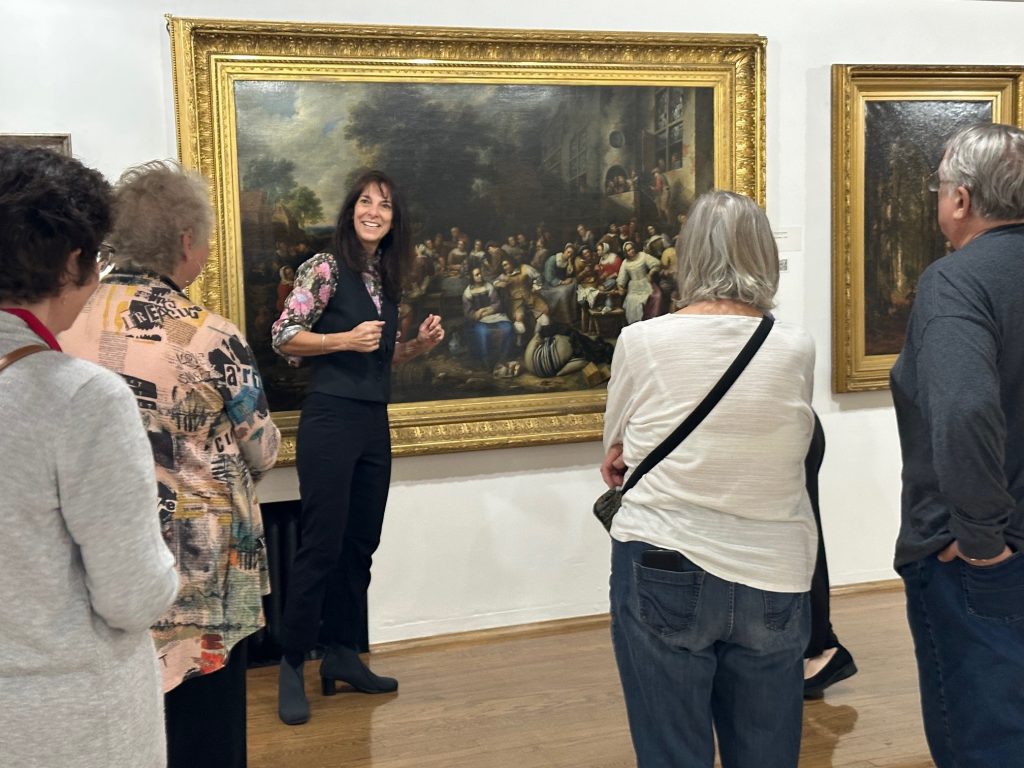
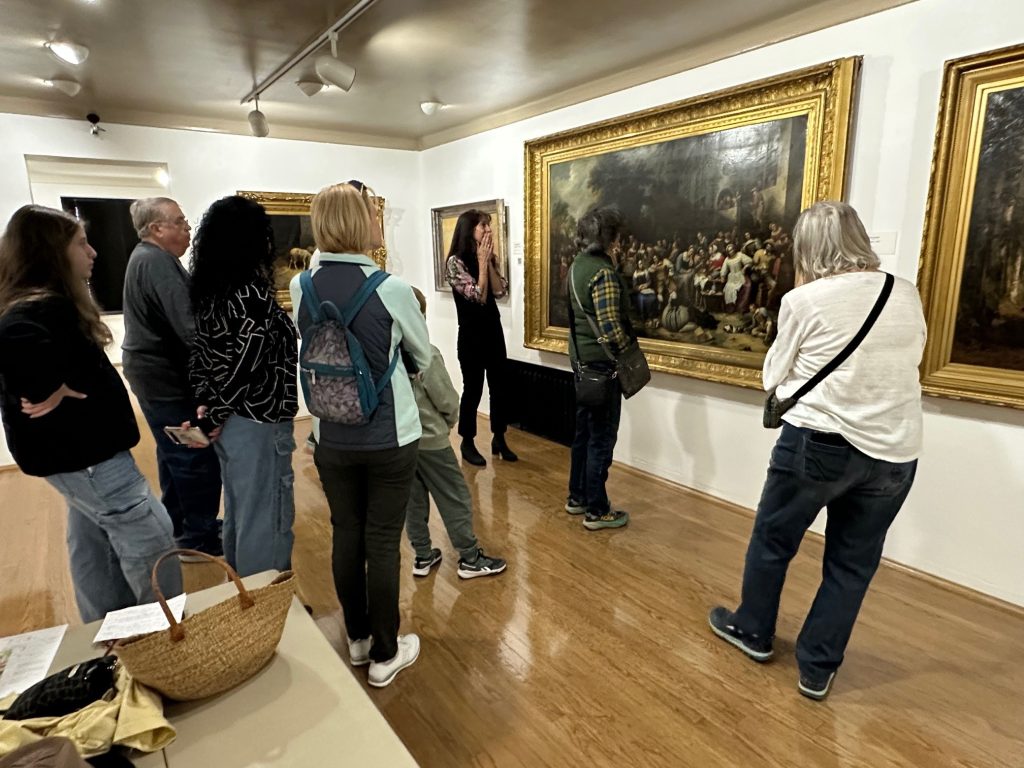
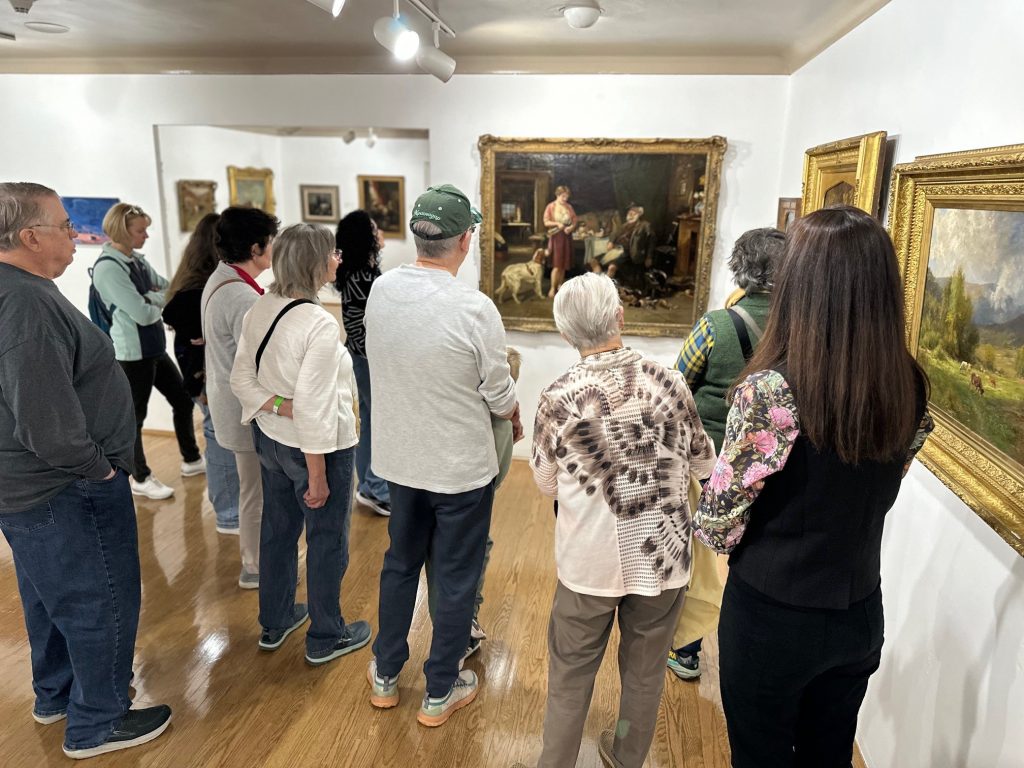
The session began with several minutes of quiet observation. Visitors were invited to share their initial impressions using the simple phrase “I see…”, taking turns describing what they noticed in the paintings. This approach helped participants to focus on careful observation as well as helped to create community by having the participants build on each other’s discoveries.
Next, Sorcha guided the group through a sensory exercise designed to deepen engagement with the artworks. Participants were asked to imagine stepping into the paintings and to consider what they might smell in the scene. When looking at The Wedding Feast, this question sparked laughter as visitors imagined the smells of food, drink, and a bustling celebration.
Visitors then imagined what they might hear, leading to the discovery of new details, including a man playing a lute in the background of the lively gathering. Participants also considered taste and touch.
Only after this extended slow looking and imaginative exploration did Sorcha introduce historical context. Participants learned that The Wedding Feast was painted around the same era as Johannes Vermeer created Girl with a Pearl Earring, prompting participants to notice similarities.
One of the highlights of the session was the participation of children. For the first time in their Slow Art Day design, they invited younger visitors to join the discussion. The young people brought fresh observations and enthusiasm. As Sorcha noted, it was especially rewarding to see a 10-year-old become excited about looking closely at art.
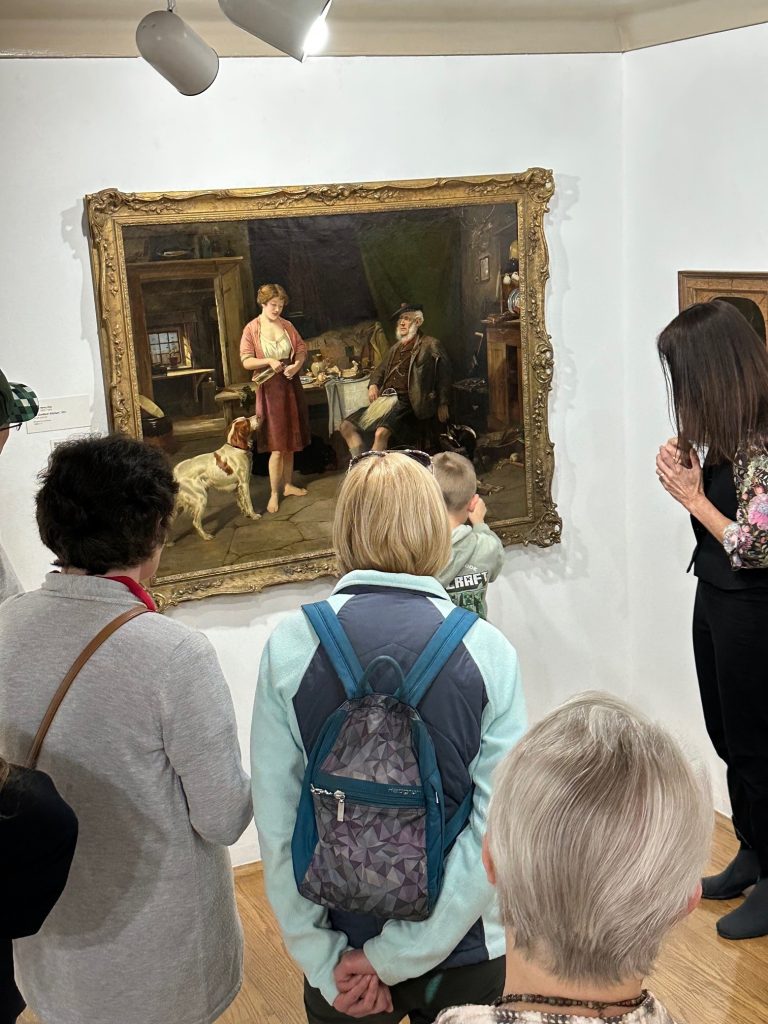
Through quiet observation, sensory imagination, and shared discovery, the Slow Art Day program at Maryhill Museum of Art created community and joy for visitors of all ages.
We at Slow Art Day HQ are grateful to Sorcha Meek Paul and the team at Maryhill Museum of Art for creating such an engaging and welcoming experience and look forward to what they come up with for Slow Art Day 2026, which is coming up April 11, 2026.
— Ashley, Johanna, Jessica Jane, and Phyl
P.S. If you have not yet registered your museum of gallery for Slow Art Day 2026, please do.
For their first Slow Art Day, the Nordiska Akvarellmuseet in Sweden hosted a reflective slow looking session featuring works by Swedish artist Claes Hake in the exhibition “HAKE / Retrospective 1962–2024.”
The session was led by museum art educator Renée Tan, who designed the experience to emphasize quiet observation and personal reflection before introducing interpretation or historical context.
Participants began by sitting together in silence for 15 minutes in front of three paintings: My First Gold Painting, The Woods 2, and The Woods 1. Visitors were asked to turn off their mobile phones and simply observe the works without any prior explanation about the artist or the artworks.
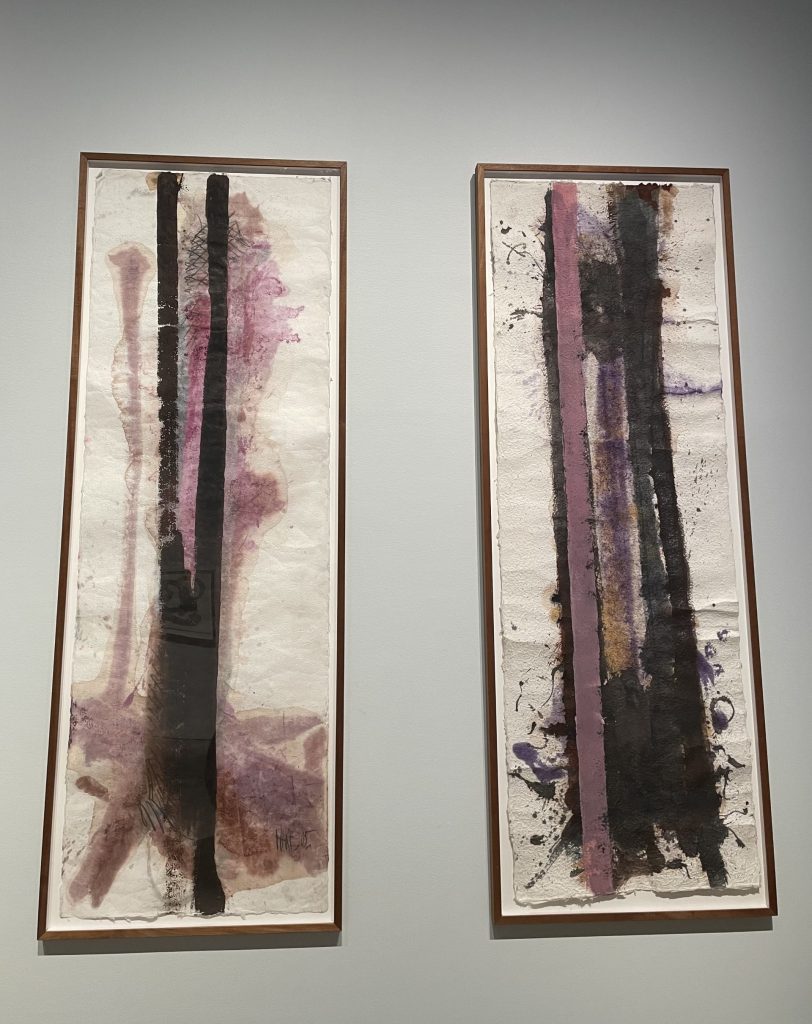
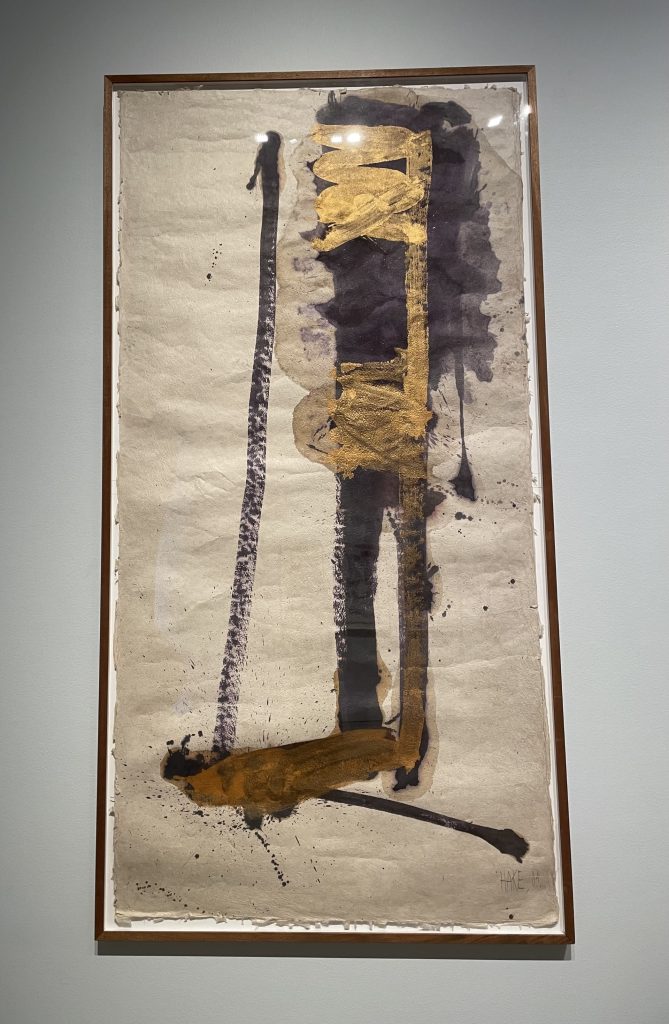
After the silent viewing period, Renée Tan invited participants to share their impressions through guided questions. The conversation focused on participants’ sensory and emotional responses to the paintings, including the atmosphere of the space, the shapes and colors in the compositions, the materials and techniques used, and possible metaphorical interpretations that emerged during the slow looking process.
Following the discussion, the group continued with a guided walk through the rest of the exhibition. The tour concluded in front of the oldest artwork in the exhibition, created by Claes Hake when he was just 17 years old.
At this final stop, participants were invited to reflect on their own past. Renée asked them to think about a place connected to their youth and imagine themselves there again. Each participant then chose a feeling, object, or activity associated with that memory and wrote it down on small pieces of paper.
The papers were placed on the floor alongside slips containing the words “I remember.” As the participants’ reflections accumulated, the fragments formed a collective memory poem, connecting personal histories with the experience of looking at art.
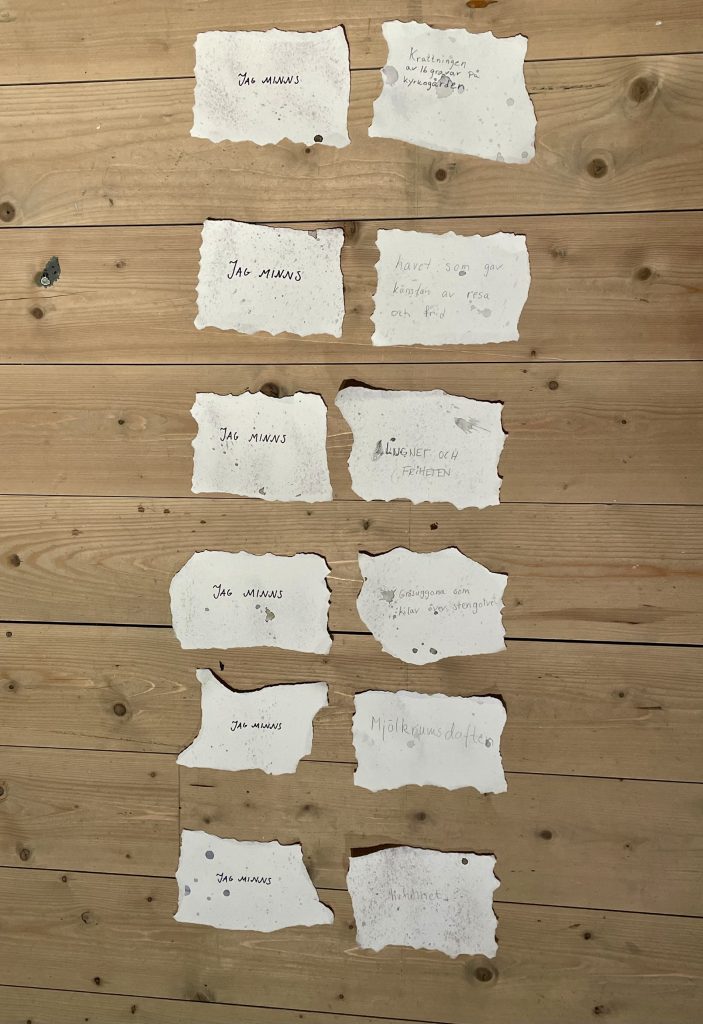
Through silence, conversation, shared reflection, and poetry, the Slow Art Day session at Nordiska Akvarellmuseet demonstrated how slow looking can go beyond observation to open up space for memory, storytelling, and collective creativity.
We at Slow Art Day HQ are grateful to Renée Tan and the team at Nordiska Akvarellmuseet for creating such a thoughtful and participatory experience. We look forward to what they come up with for Slow Art Day 2026, which is coming up April 11, 2026.
— Ashley, Johanna, Jessica Jane, and Phyl
P.S. If you have not yet registered your museum of gallery for Slow Art Day 2026, please do.
For Slow Art Day 2025, the Museum of Fine Arts Budapest (MFAB) created a thoughtful set of tools and experiences designed to help visitors slow down and engage deeply with artworks throughout the museum’s galleries.
Rather than focusing on a single guided session, MFAB encouraged visitors to explore slow looking independently through several creative formats available throughout the museum. These tools were offered free of charge and invited guests to pause, observe carefully, and spend more time with selected artworks.
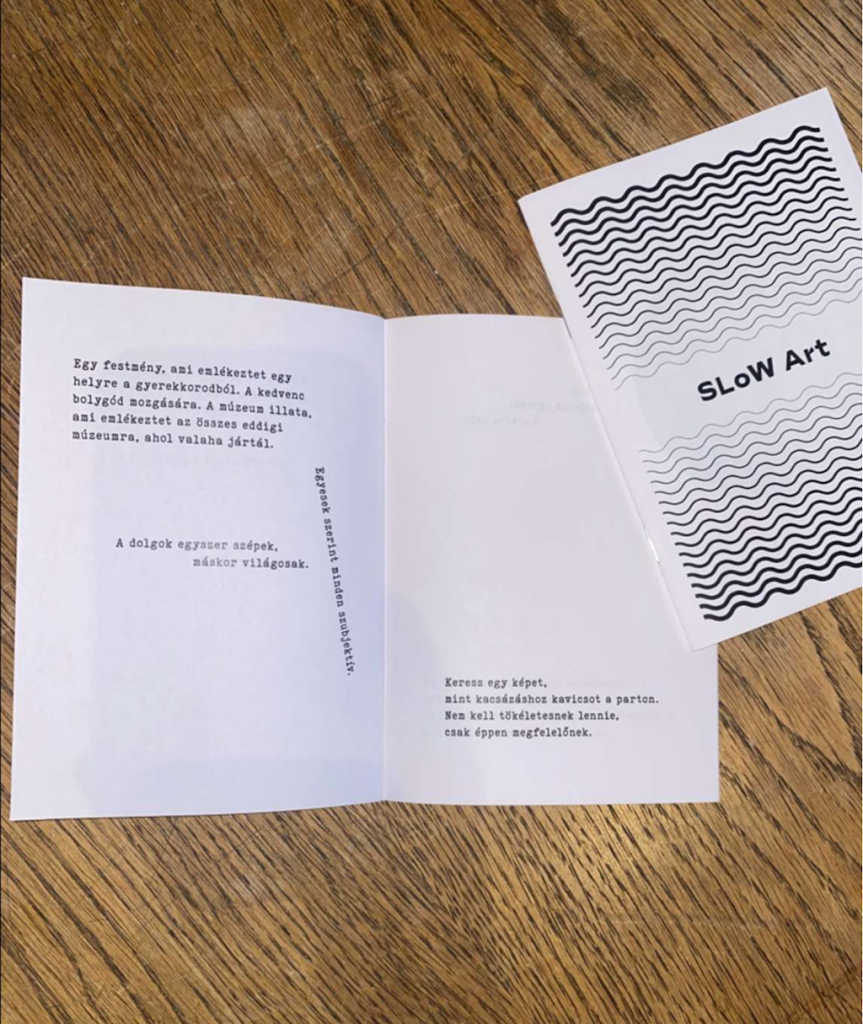
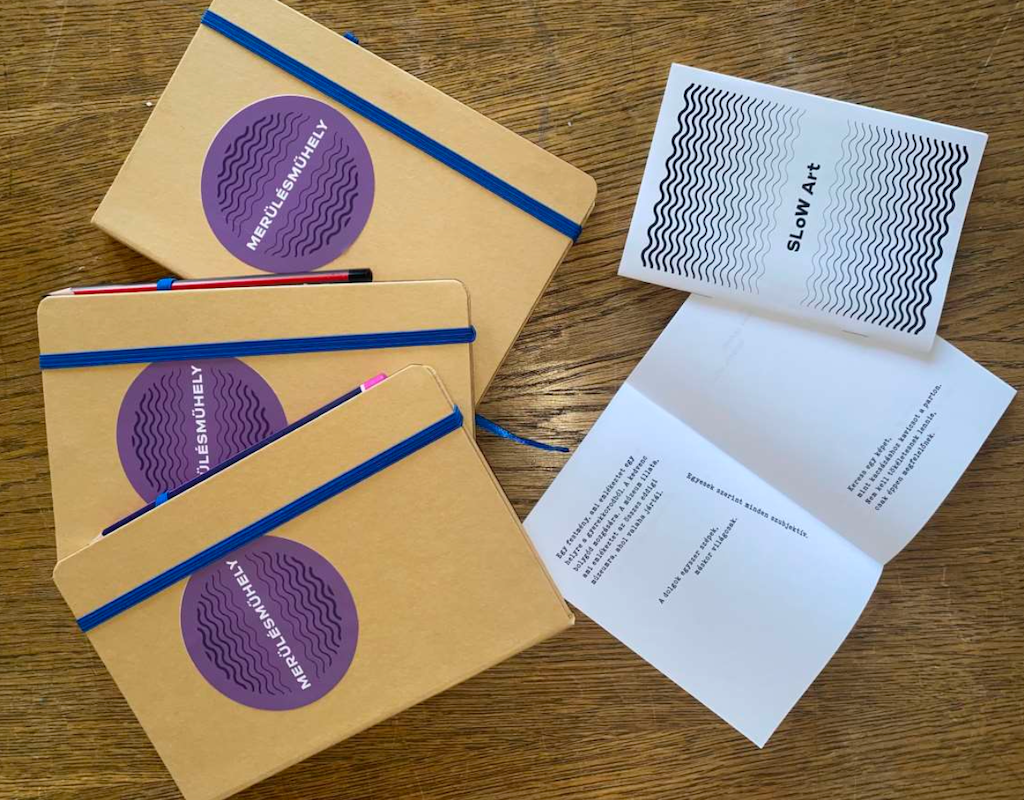
One of the most unique elements was a poetry booklet created by Hungarian poet Monika Ferencz, written specifically for the occasion. Visitors could take the booklet and move slowly through the museum while reflecting on short meditative poems and evocative text fragments. The idea was simple but powerful: choose a line, walk through the galleries, and allow the words to shape how you look at the art.
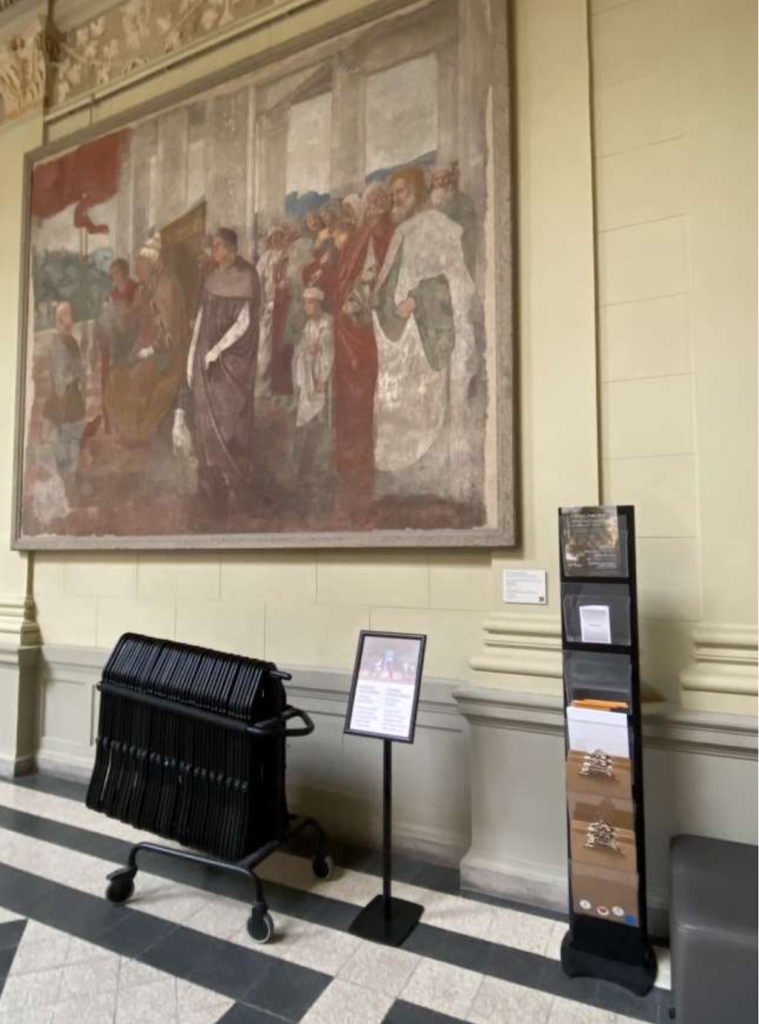
The museum also introduced a “Slow Guide – Step Inside the Painting” audio experience. By scanning QR codes placed next to eight selected artworks, visitors could listen to narrated audio reflections accompanied by music while looking closely at the paintings. This immersive format encouraged visitors to spend longer with individual works and experience them through both sound and sight.
Another activity invited visitors to draw directly in the galleries. Guests could borrow a small folding chair, drawing board, paper, and pencil and spend time sketching details from artworks in the permanent collection. Focusing on small portions of the paintings helped participants notice subtle details they might have otherwise overlooked.
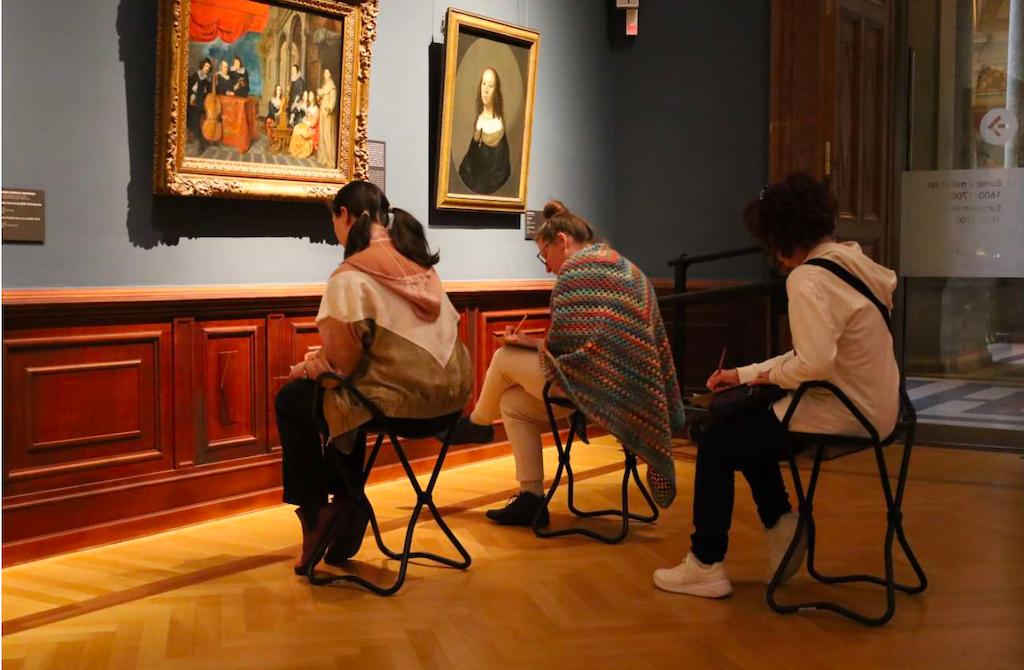
MFAB also extended its Slow Art Day programming into its regular Slow Museum evening series hosted on the 2nd Friday of each month (we love it when museums integrate slow looking into year-round programming!). One highlight was a Slow Writing Workshop led by poet Monika Ferencz and museum educator Szilvia Záray, where participants used slow looking techniques as inspiration for creative writing. The three-session workshop took place in the Old Masters’ Gallery and invited a small group of participants to explore how close observation of artworks can spark new ideas and language.
But that’s not all.
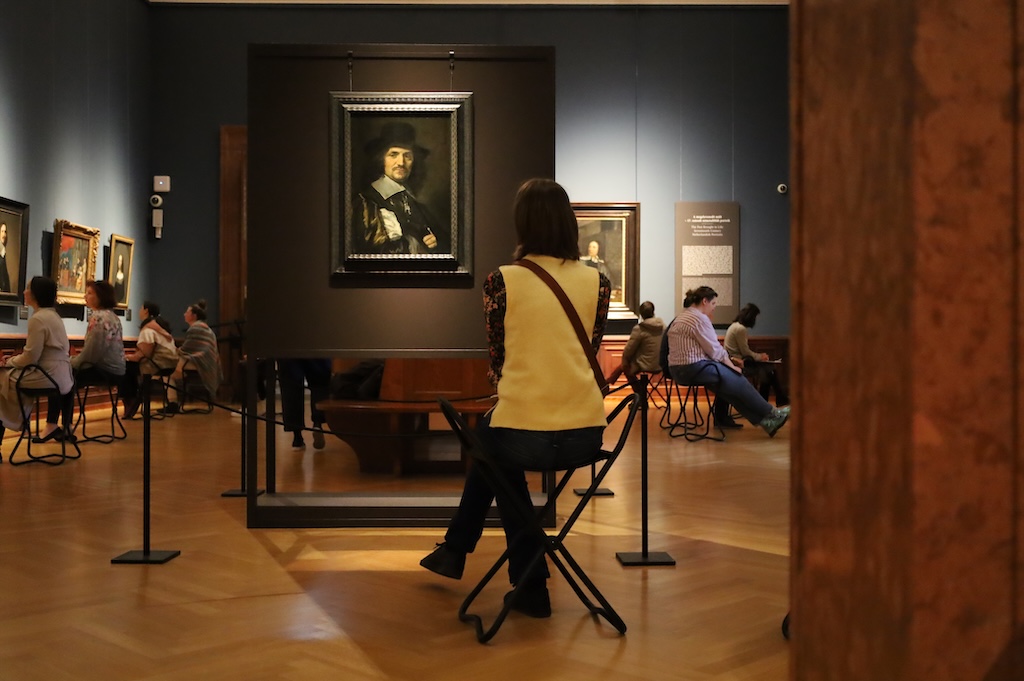
The MFAB provided yet one more guided experience, titled “The Gaze.” It brought visitors together for a one-hour slow looking session in the Dutch portrait gallery. Led by museum educator Szilvia Záray, the session encouraged participants to carefully study facial expressions, posture, and subtle details within the portraits while sharing their observations with the group. Amazing.
Together, these programs demonstrated how a museum can offer many different entry points into slow looking—from poetry and sound to drawing and writing—allowing visitors to discover the approach that resonates most with them, not only on Slow Art Day but throughout the year.
We at Slow Art Day HQ are grateful to the team at the Museum of Fine Arts Budapest for their thoughtful and creative approach. They are an inspiration for us all.
And we can’t wait to see what MFAB comes up with for Slow Art Day 2026.
— Ashley, Johanna, Jessica Jane, and Phyl
— Ashley, Johanna, Jessica Jane, and Phyl
P.S. If you have not yet registered your museum of gallery for Slow Art Day 2026, please do.
For their first Slow Art Day – as part of the large 2025 citywide event in Mexico City, the contemporary gallery PEANA in Mexico City, Mexico hosted an immersive slow looking experience centered on “Their Silhouettes Bristled With Razors,” the first solo exhibition at the gallery by Mexican artist Naomi Rincón Gallardo.
Rincón Gallardo’s work explores themes of contemporary violence, decolonial thought, and ancient Mesoamerican narratives. The exhibition was presented in a dim, atmospheric environment that invited visitors to slow down and spend time contemplating the symbolic imagery and layered storytelling within the works.
The PEANA team welcomed visitors with a brief introduction and encouraged participants to approach the experience with openness and curiosity. Printed reflection prompts were distributed to guide the slow looking process, asking visitors questions about the symbolism they noticed, their first impressions of the artworks, and how their perceptions evolved as they spent more time observing.
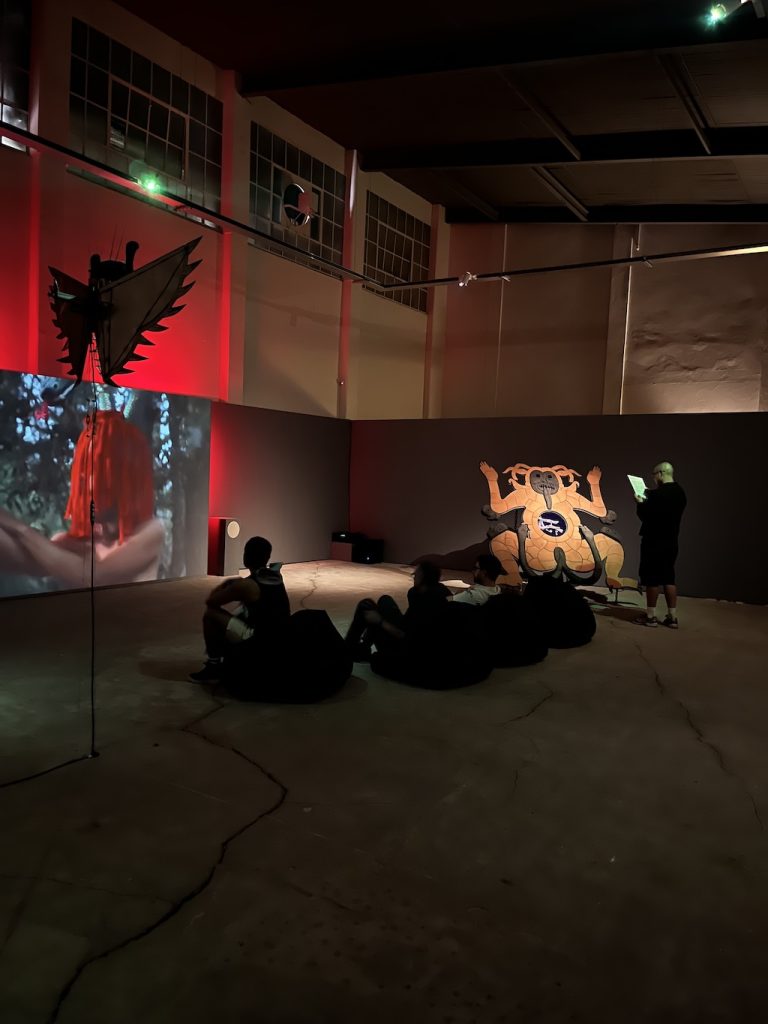
The prompts also invited creative responses, encouraging participants to draw, write a poem, or describe their reactions after spending time with the artworks. This simple but powerful structure helped visitors move beyond quick viewing and into deeper engagement with the themes and emotional resonance of the exhibition.
Several works from the exhibition served as focal points for slow looking, including Mechatronic Butterfly, Eclipse I, and Me enterraron boca arriba con la lengua fuera (Tlaltecuhtli). These works combine sculptural elements, video, and mythological imagery to create powerful visual narratives rooted in Indigenous cosmologies and contemporary cultural critique.
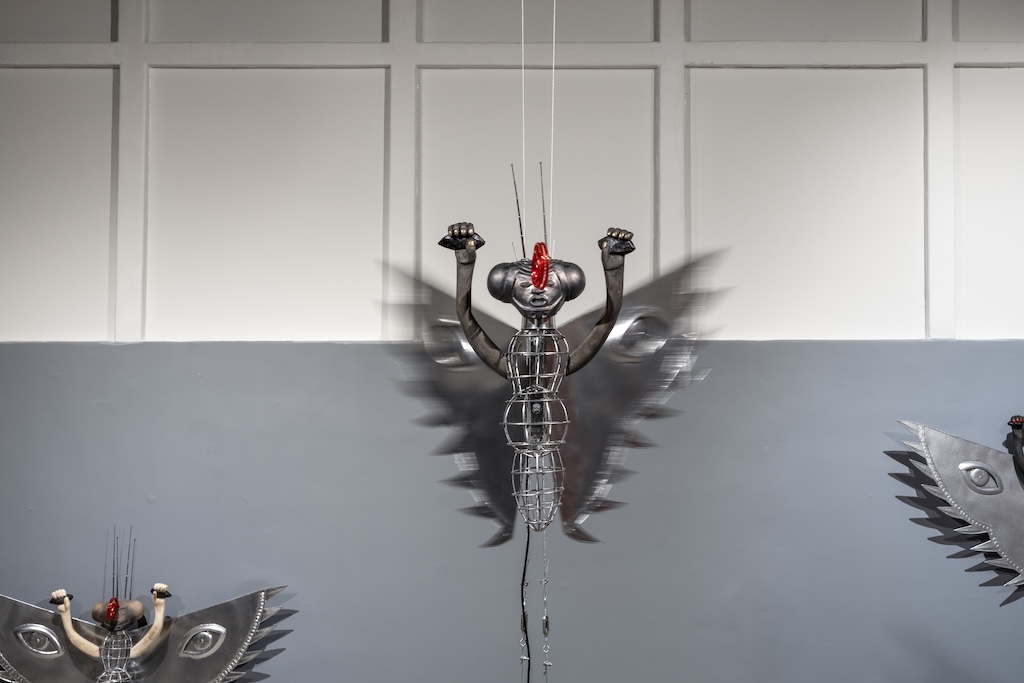
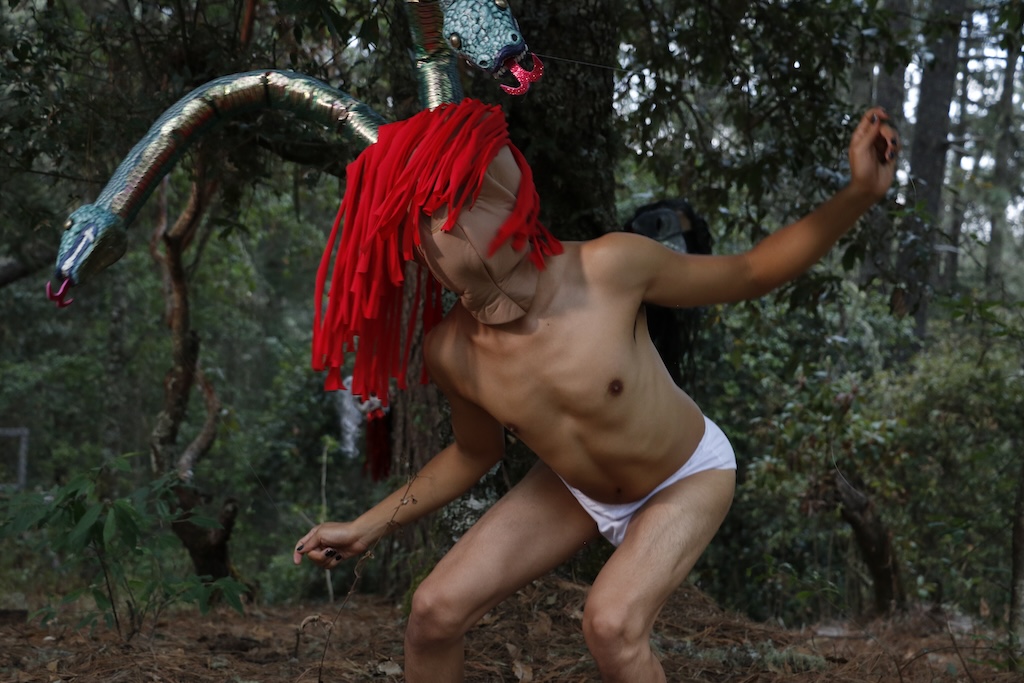
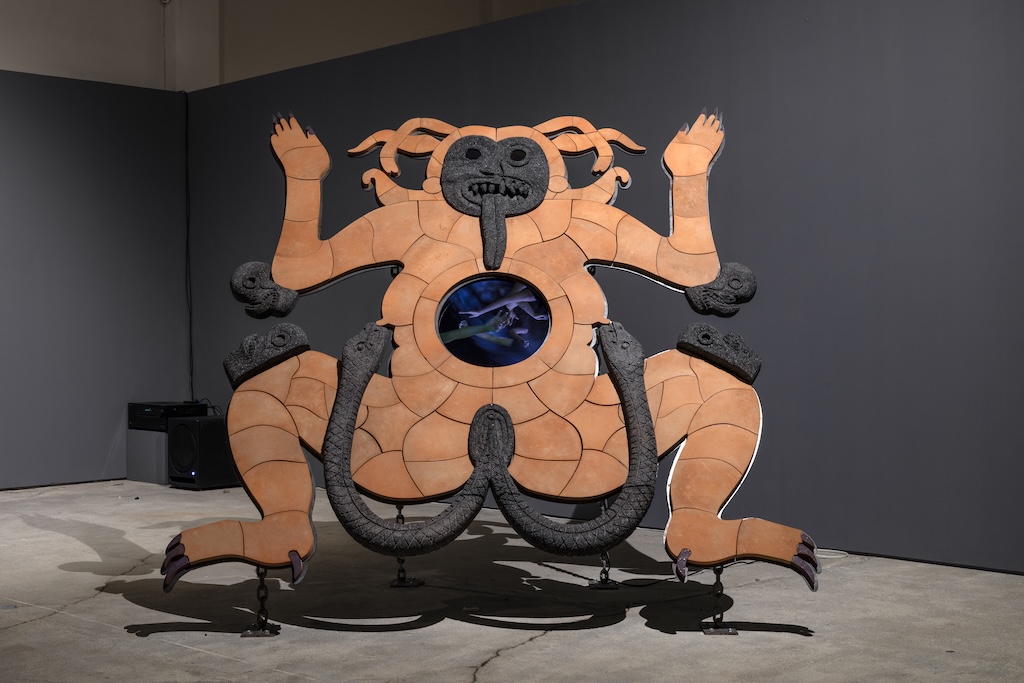
By pairing immersive artworks with guided reflection prompts, PEANA created an environment where visitors could slow down, contemplate difficult themes, and engage with the artworks in a personal and meaningful way.
Approximately 60 visitors participated in PEANA’s Slow Art Day experience, making a wonderful contribution to Mexico City’s citywide celebration.
We at Slow Art Day HQ are grateful to the team at PEANA and to Constanza Ontiveros Valdés, who organized the 2025 citywide event. And we are amazed that Ontiveros Valdés has already organized more than 35 galleries and museums for Slow Art Day 2026. We can’t wait!
— Ashley, Johanna, Jessica Jane, and Phyl
P.S. If you have not yet registered your museum of gallery for Slow Art Day 2026, please do.
Wow. Constanza Ontiveros Valdés — an art writer and cultural project leader – has done it again, but bigger and better.
For the second citywide Slow Art Day in Mexico City on April 11, 2026, Ontiveros Valdés has organized more than 50 museums, galleries, artist studios, and independent cultural spaces. She and her volunteer team have also created a website just for their citywide. Photos below are part of their impressive site.
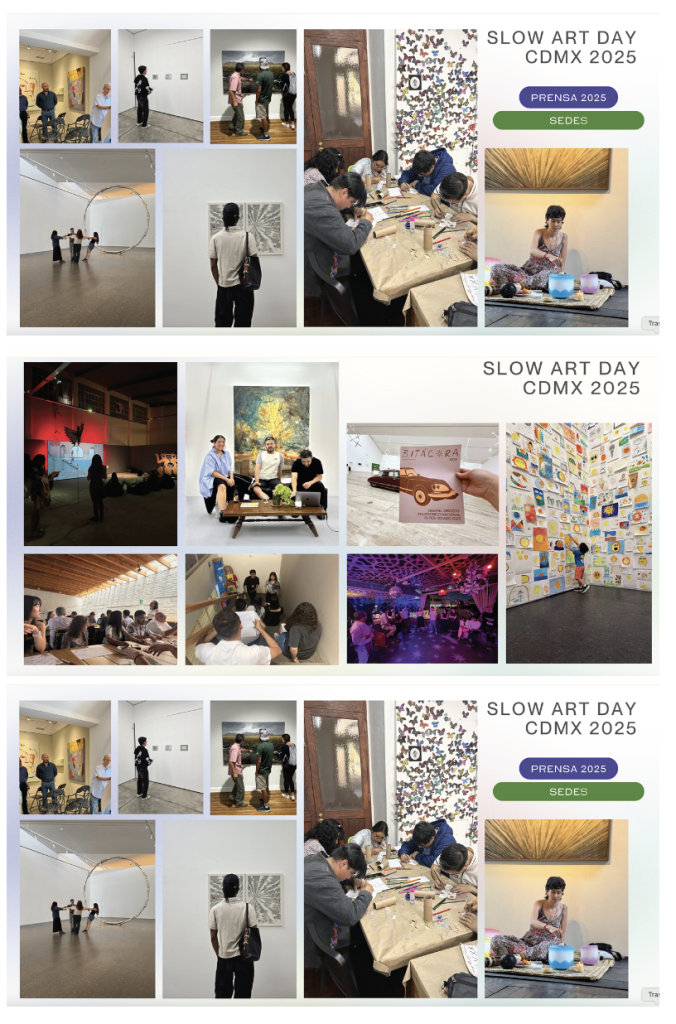
Participating institutions include museums such as Museo del Palacio de Bellas Artes, Museo Vivo del Muralismo and Museo Archivo de la Fotografía, as well as galleries, artist studios, and cultural spaces across the city. Each venue will organize its own program — ranging from guided slow-looking sessions and conversations to workshops and informal gatherings.
As noted, the Mexico City initiative continues to be led by Ontiveros Valdés. This year, she is supported by three enthusiastic and talented volunteers: Alejandra Sánchez Catalán, Shalom Hernández Espinosa, and Rebeca Rosales Reyes, whose collaboration has been key to the project’s expansion.
The initiative is further strengthened by the support of GAMA (Galerías de Arte Mexicanas Asociadas), a network of leading contemporary art galleries in Mexico, and by the cultural platform Artists’ Container, founded by curator and producer Gabriela Andrade Gorab, which fosters collaboration and visibility across artistic communities.
This is a remarkable initiative and is definitely one path for the future of Slow Art Day. We now have two committed citywide organizers – one in Illinois and now one in Mexico City. We hope that more emerge inspired by the success of the efforts of Ontiveros Valdés and her team.
With love and sequins,
Phyl, Ashley, Jessica Jane, Johanna, and Maggie (the Slow Art Day core volunteer team)
P.S. Below are the participating venues:
· ALDO ISLAS ESTUDIO
· ALEJANDRA TOPETE GALLERY
· ALMANAQUE
· AMPLIA GALERIA
· ARRÓNIZ ARTE CONTEMPORÁNEO
· ARTE ABIERTO
· CAM GALERÍA
· CASA ENNEA
· ENCARTE
· ETHRA GALERÍA
· ESTUDIO LA DALIA
· ESTUDIO MARTE
· FIERA ARTE NO DOMESTICADO
· FUNDACION TTAMAYO
· GALERÍA ANDREA POZZO, IBERO
· GALERÍA CAMPECHE
· GALERIA CLAROSCURO
· GALERÍA HILARIO GALGUERA
· GALERIA KAREN HUBER
· GALERIA RGR
· KÖNIG GALERIE
· KURIMANZUTTO
· LAGO ALGO
· LE LABORATOIRE
· LUAN MUSEO EMOCIONAL
· LS GALERÍA
· MARIANE IBRAHIM GALLERY
· MISFIT ART ALLIANCE
· MUSEO ARCHIVO DE LA FOTOGRAFÍA
· MUSEO CASA DE CARRANZA
· MUSEO DEL PALACIO DE BELLAS ARTES
· MUSEO SOUMAYA
· MUSEO TAMAYO ARTE CONTEMPORÁNEO
· MUSEO VIVO DEL MURALISMO
· OMR
· PATRICIA CONDE GALERÍA
· PEANA
· PLAYA ESCANDÓN
· PROYECTO PARALELO
· PROYECTO N.A.S.A.L
· SAENGER GALERÍA
· STUDIO MITOTE
· TALLER CRISTINA TORRES
· TERRENO BALDÍO
· THIRD BORN
· ART TRIGGERIA (HAAB PROJECT CONDESA)
· TINTA NARANJA GALERÍA
· YUNQUE FÁBRICA DE ARTE
· ZONA DE RIESGO
For their first Slow Art Day, the National Museum of Decorative Arts of Ukraine hosted a deeply reflective session centered on memory, community and war via the series “Meals” by Ukrainian artist Olena Pryduvalova.
The featured works, “Beginning of the Buffet” and “Festive Dinner” (2019, acrylic on canvas), explore the emotional significance of gathering around food and shared meals. Pryduvalova originally created the Meals series while reading the book “Yes, but…” by Ukrainian writer Taras Prokhasko. Rather than illustrating the text directly, the artist used the reading experience as a catalyst for reflection, allowing the works to emerge from months of personal memories and contemplation.
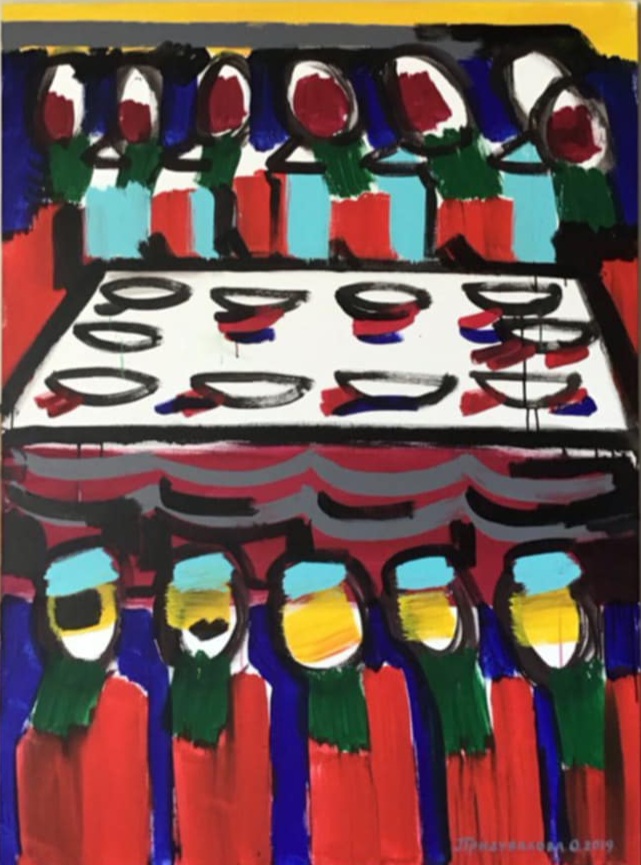
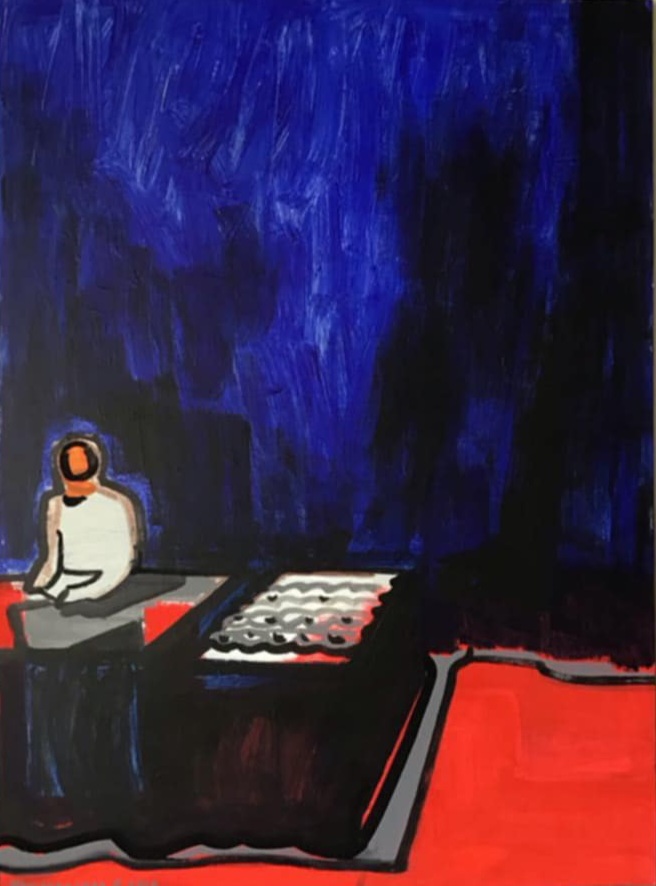
According to Pryduvalova, the series explores what unites people and what remains in memory over time: moments of gathering, conversation, and shared meals that mark both joyful and difficult experiences. The ten paintings in the series depict a range of occasions, including weddings, buffets, festive dinners, memorial meals, and quiet conversations between two people.
The diptych shown for Slow Art Day captures two distinct moments within this theme. “Beginning of the Buffet” depicts a quiet scene before guests arrive, when the table is prepared and anticipation fills the air. In contrast, “Festive Dinner” celebrates the joy of coming together.
During the Slow Art Day session on April 5, museum visitors were invited to spend time carefully observing the works and then share their reflections. The discussion soon moved beyond the paintings themselves and into the personal experiences of participants.
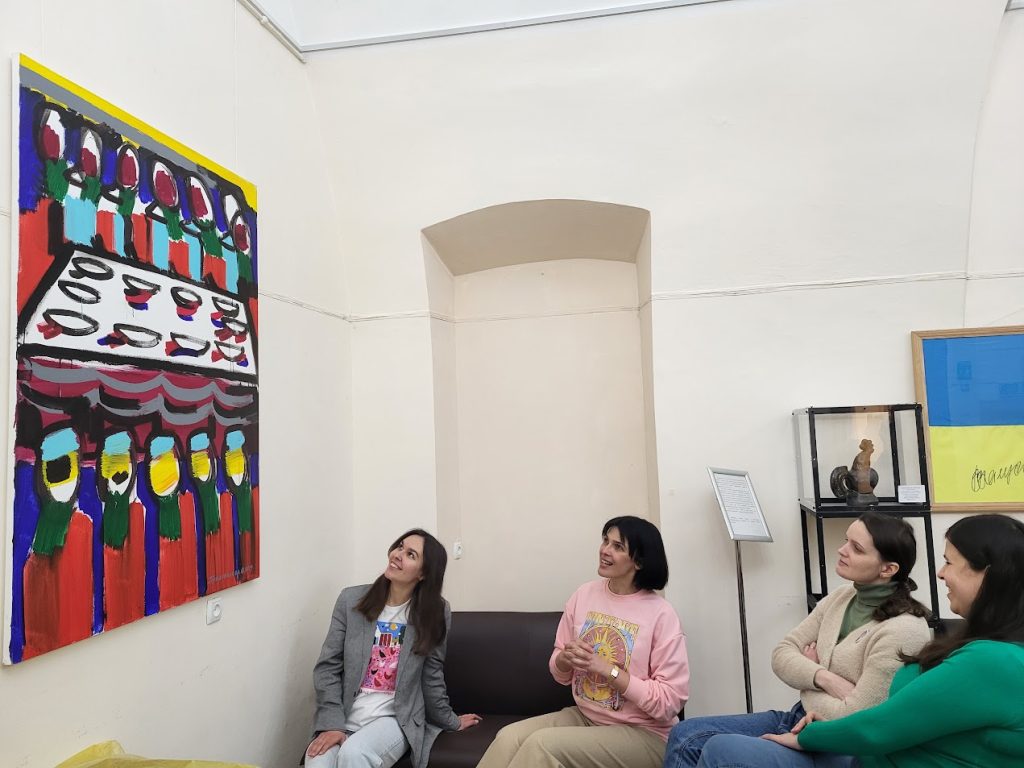
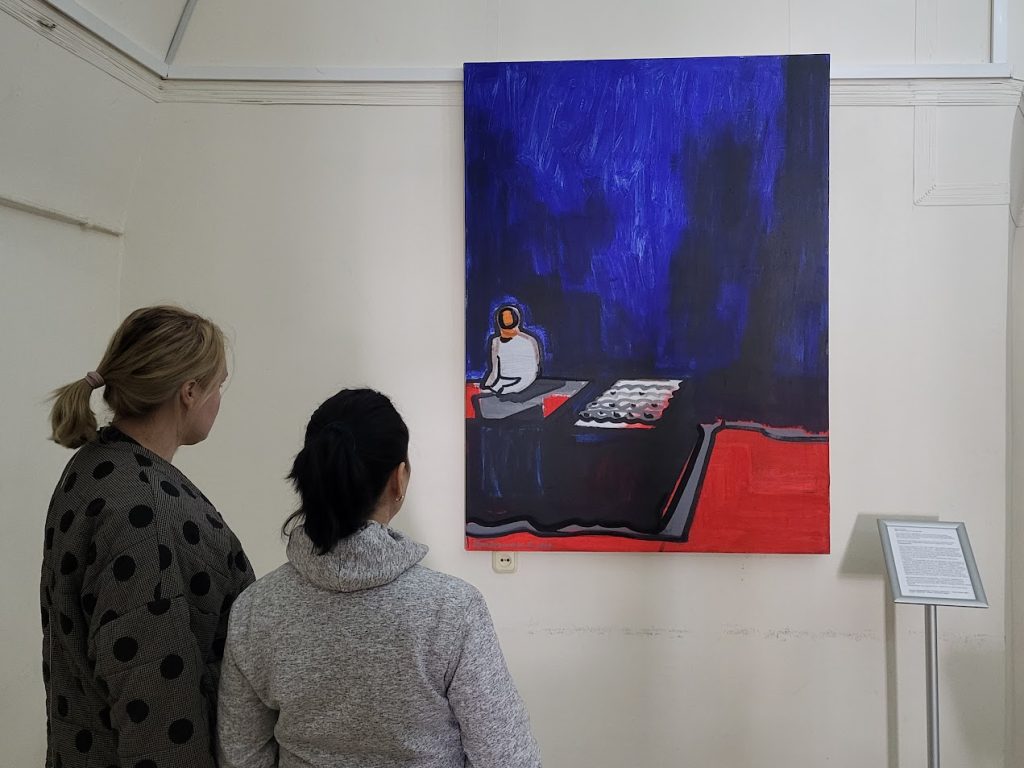
Visitors spoke openly about how life in Ukraine has changed in recent years following the Russian invasion. The conversation turned to the meaning of family gatherings and how precious shared meals have become during the war. Participants reflected on how moments around a table—sometimes joyful, sometimes sorrowful—continue to bring people together and strengthen community.
Through these conversations, the artworks became a catalyst for dialogue about memory, resilience, and human connection.
We at Slow Art Day HQ are deeply grateful to the team at the National Museum of Decorative Arts of Ukraine for sharing this moving program and for demonstrating the power of art and slow looking even — and especially — during wartime.
We look forward to what they come up with for this year’s Slow Art Day, which is coming up on Saturday, April 11, 2026.
— Ashley, Johanna, Jessica Jane, and Phyl
P.S. – Follow them on Facebook and Instagram
P.P.S. If you have not yet registered your museum of gallery for Slow Art Day 2026, please do.
For their first Slow Art Day, the Museum of Chelmsford in Essex, United Kingdom invited visitors to slow down with art using a simple framework: See – Think – Wonder. The activity took place within the exhibition Shifting Perspectives: Exploring Art Together, which ran in the museum’s temporary gallery space through November 2, 2025.
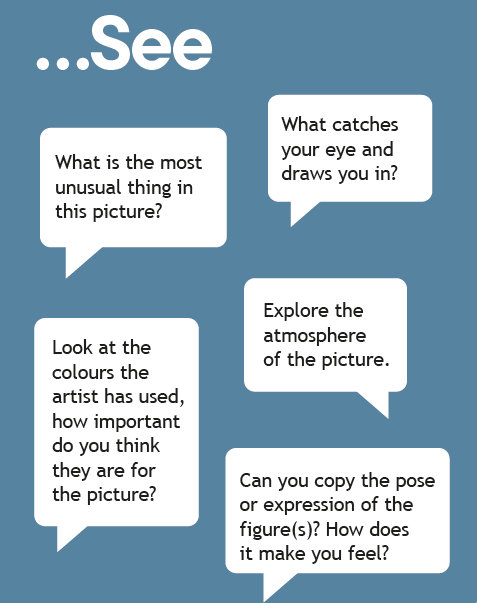
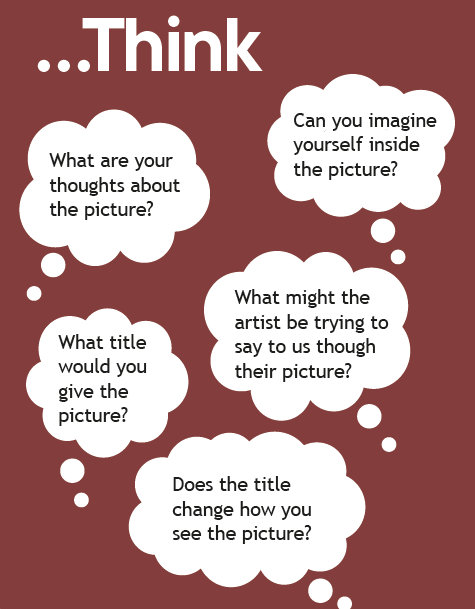
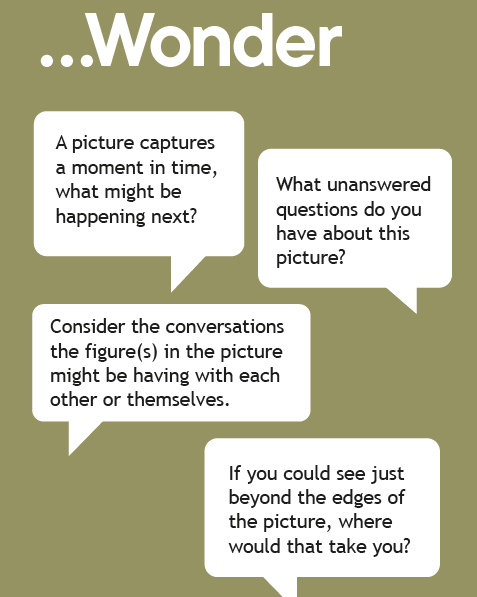
To guide visitors, the museum created a set of “See Think Wonder” cards that guests could pick up in the gallery. The cards encouraged people to slow down and consider different ways of engaging with artworks — an approach that works not only in museums but whenever people encounter art in daily life.
Visitors were invited to explore artworks through three stages of looking.
See — what catches your eye? Look at the colors the artist used. Explore the atmosphere of the picture. Can you copy the pose or expression of any figures you see?
Think — can you imagine yourself inside the picture? What might the artist be trying to say to us? Does the title change how you see the picture?
Wonder — what might happen next in the picture? What conversations might be taking shape? What unanswered questions do you have about the picture?
This simple structure gave visitors permission to take their time and engage with artworks through curiosity rather than expertise.
Featured works included:
• “Cecil Collins at the CSA” by Rosalind Cuthbert
• “Point of View” by Doris Boulton-Maude (1892–1976)
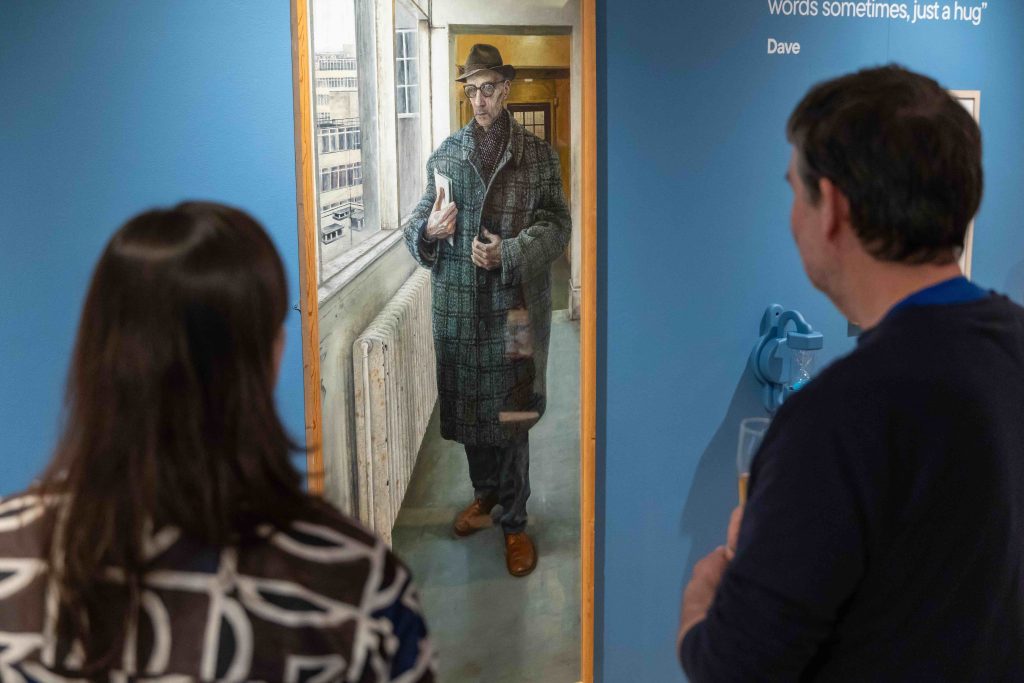
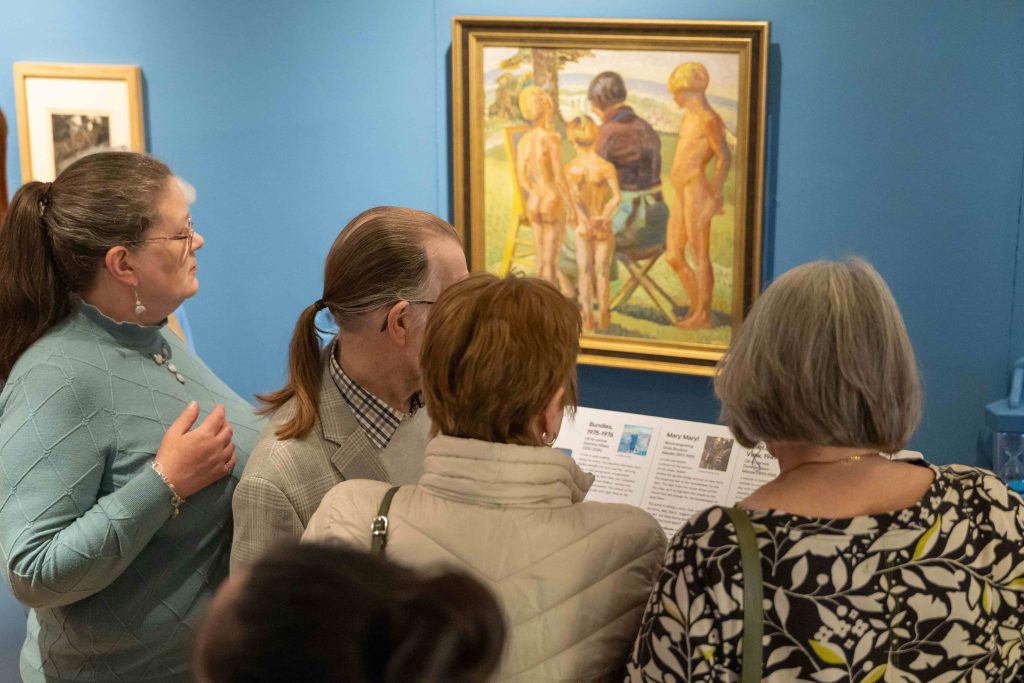
The museum’s See–Think–Wonder cards were inspired by the I Picture This toolkit developed by the The Wallace Collection, a past Slow Art Day participant.
At Slow Art Day HQ we love the simple See–Think–Wonder cards – they are easy to use with any artwork, and help shift the experience from passive viewing to active discovery. We encourage other museums and galleries to copy these.
Since this was the Museum of Chelmsford’s first Slow Art Day, we’re especially happy to welcome them to the global Slow Art Day movement and look forward to seeing what the Museum of Chelmsford comes up with for Slow Art Day 2026.
– Ashley, Johanna, Jessica Jane, and Phyl
For their third Slow Art Day in 2025, the Museo Universidad de Navarra in Pamplona, Spain organized two free events — one for adults and another for children — both exploring different ways of slowing down with art.
Featured works included:
• “Incendi” by Antoni Tàpies
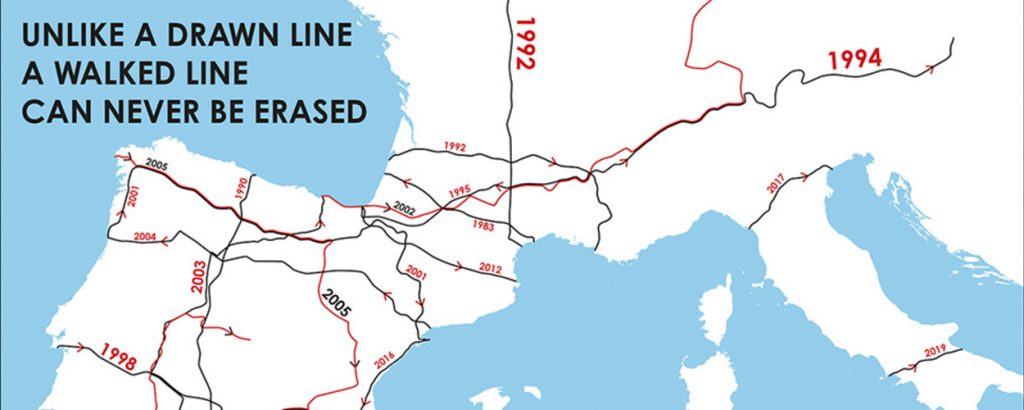
• Walking route map artwork by Hamish Fulton
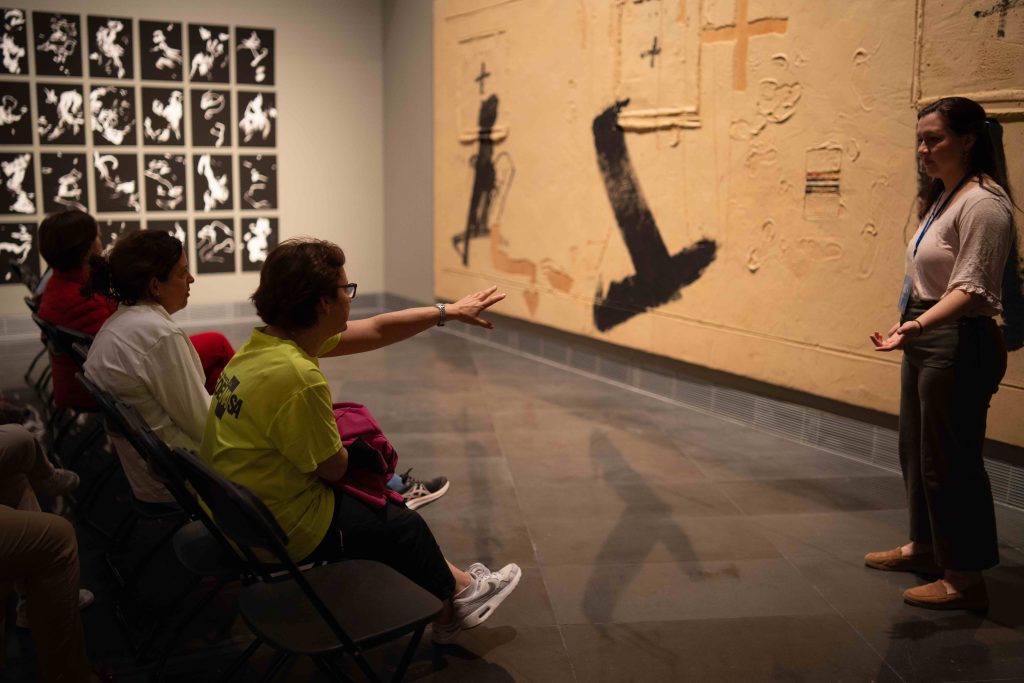
First, nine adults gathered in front of the abstract painting “Incendi” (1991) by Antoni Tàpies for a slow looking session guided by a museum educator. Participants spent extended time contemplating the work before sharing their observations and reflections together in discussion.
The museum also hosted a Slow Art Day workshop for nine children aged 8-12, inspired by the work of the “walking artist” Hamish Fulton, who has walked the Camino de Santiago several times.
The workshop had two parts. First, participants carried out a “slow walk” exercise inside the museum inspired by Fulton’s artistic practice. Then the group went outside and walked a small section of the Camino de Santiago, which passes through the University of Navarra campus near the museum.
Through this combination of walking, observation, and conversation, the children explored how movement and place can become part of artistic experience.
At Slow Art Day HQ, we love seeing hosts expand the idea of slow looking in creative ways. By combining careful observation with walking and place-based exploration, the Museo Universidad de Navarra created two thoughtful experiences that helped adults and children connect with art in different ways.
We look forward to seeing what Museo Universidad de Navarra comes up with for Slow Art Day 2026.
– Ashley, Johanna, Jessica Jane, and Phyl