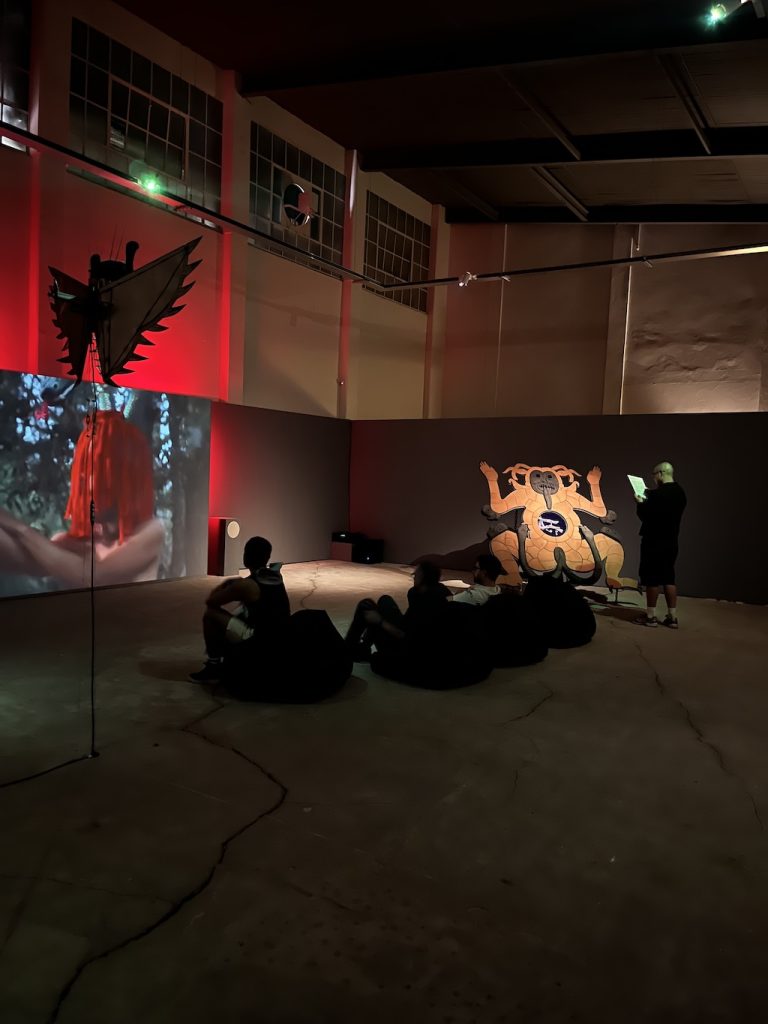
For their first Slow Art Day – as part of the large 2025 citywide event in Mexico City, the contemporary gallery PEANA in Mexico City, Mexico hosted an immersive slow looking experience centered on “Their Silhouettes Bristled With Razors,” the first solo exhibition at the gallery by Mexican artist Naomi Rincón Gallardo.
Rincón Gallardo’s work explores themes of contemporary violence, decolonial thought, and ancient Mesoamerican narratives. The exhibition was presented in a dim, atmospheric environment that invited visitors to slow down and spend time contemplating the symbolic imagery and layered storytelling within the works.
The PEANA team welcomed visitors with a brief introduction and encouraged participants to approach the experience with openness and curiosity. Printed reflection prompts were distributed to guide the slow looking process, asking visitors questions about the symbolism they noticed, their first impressions of the artworks, and how their perceptions evolved as they spent more time observing.
Participants during the Slow Art Day event. Photo courtesy of PEANA.
The prompts also invited creative responses, encouraging participants to draw, write a poem, or describe their reactions after spending time with the artworks. This simple but powerful structure helped visitors move beyond quick viewing and into deeper engagement with the themes and emotional resonance of the exhibition.
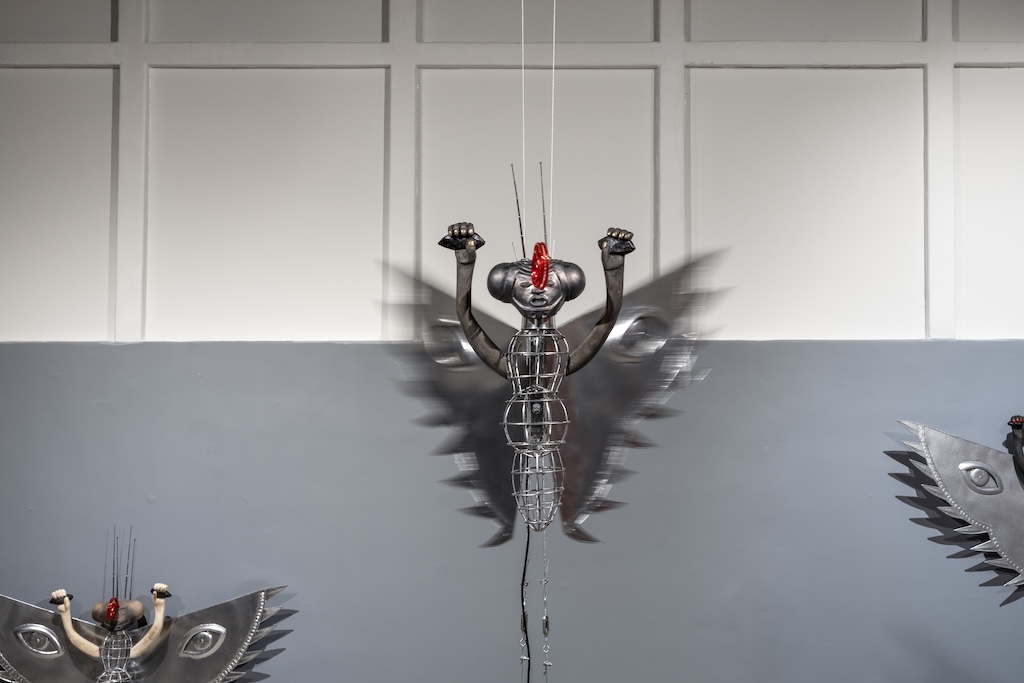
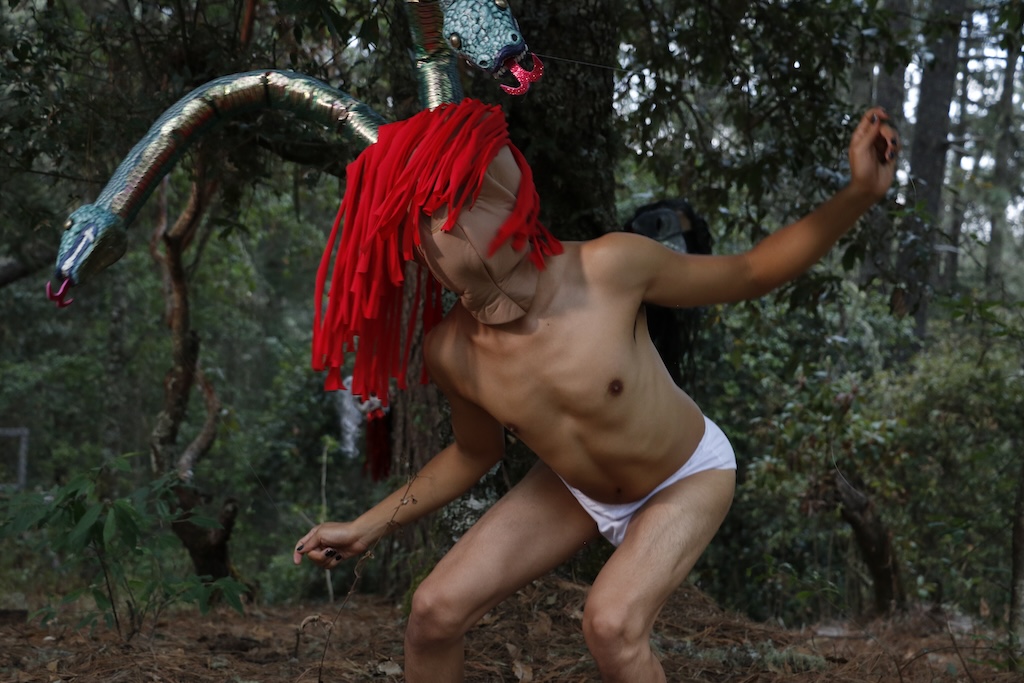
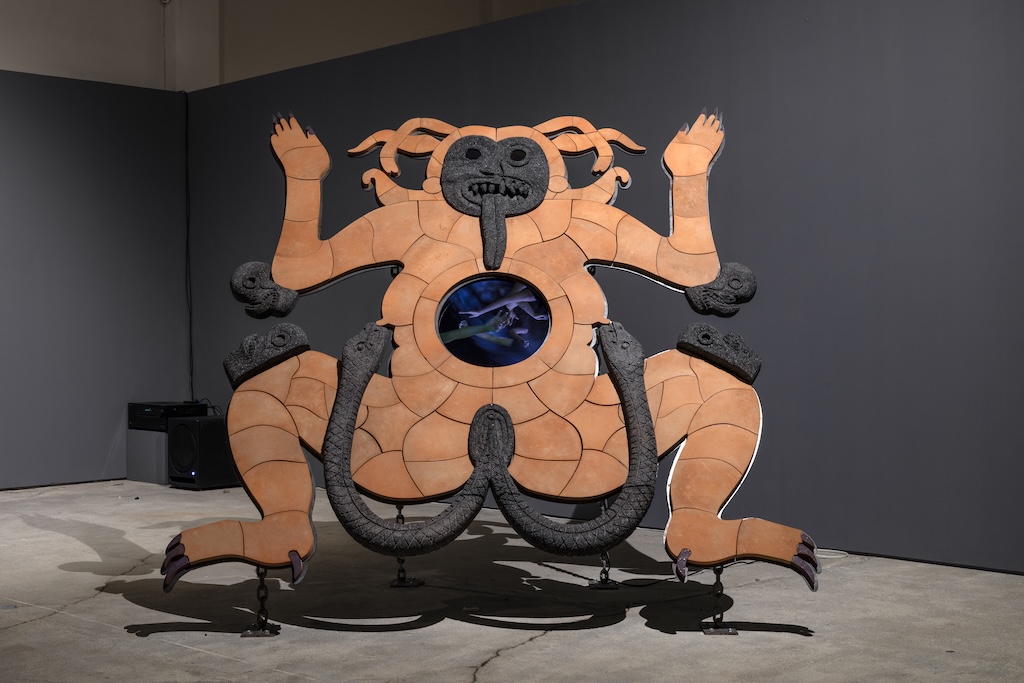
Several works from the exhibition served as focal points for slow looking, including Mechatronic Butterfly, Eclipse I, and Me enterraron boca arriba con la lengua fuera (Tlaltecuhtli). These works combine sculptural elements, video, and mythological imagery to create powerful visual narratives rooted in Indigenous cosmologies and contemporary cultural critique.
Mechatronic Butterfly. Photo courtesy of PEANA.Eclipse I. Photo courtesy of PEANA.Me enterraron boca arriba con la lengua fuera (Tlaltecuhtli). Photo courtesy of PEANA.
By pairing immersive artworks with guided reflection prompts, PEANA created an environment where visitors could slow down, contemplate difficult themes, and engage with the artworks in a personal and meaningful way.
Approximately 60 visitors participated in PEANA’s Slow Art Day experience, making a wonderful contribution to Mexico City’s citywide celebration.
We at Slow Art Day HQ are grateful to the team at PEANA and to Constanza Ontiveros Valdés, who organized the 2025 citywide event. And we are amazed that Ontiveros Valdés has already organized more than 35 galleries and museums for Slow Art Day 2026. We can’t wait!
— Ashley, Johanna, Jessica Jane, and Phyl
P.S. If you have not yet registered your museum of gallery for Slow Art Day 2026, please do.
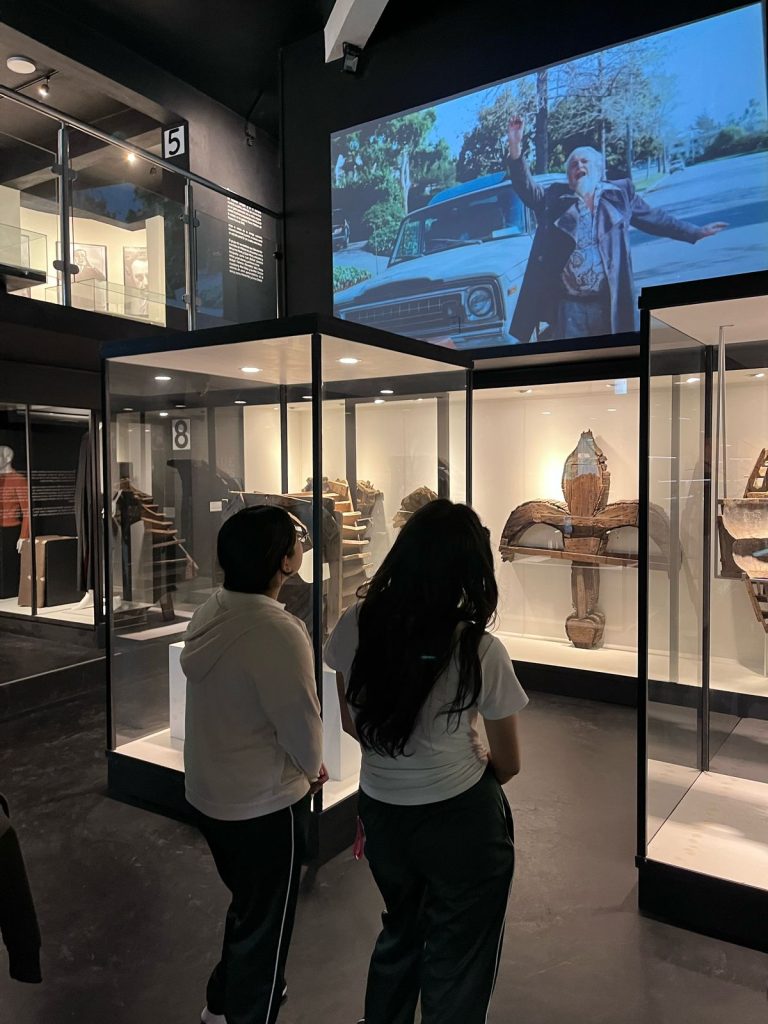
For their first Slow Art Day, the Museo Edward James, also known as Las Pozas, in Xilitla, Mexico hosted a contemplative experience titled “Finding Seclusia,” led by Beatriz Acosta.
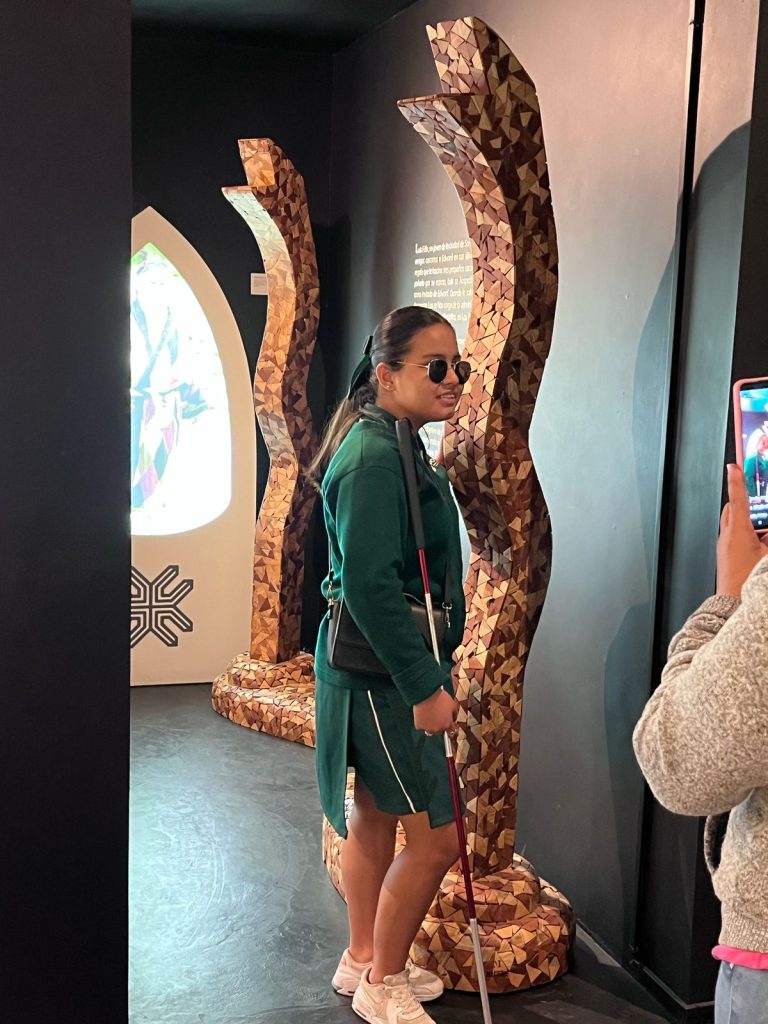
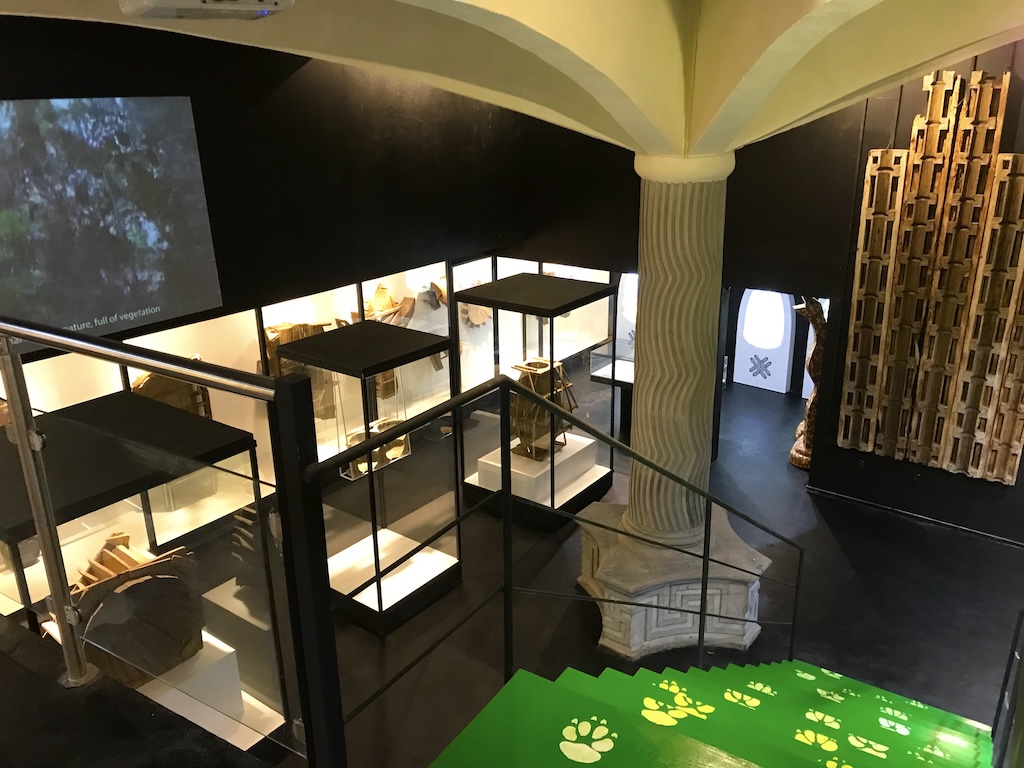
The museum, which is dedicated to the legacy of Edward Frank Willis James, is set in a rainforest, and features towering surrealist sculptures amid pools and waterfalls.
That’s all we at Slow Art Day HQ need to know to jump on the plane to Xilitla (pronounced: hee-LEET-lah).
James, an eccentric British poet, artist, and patron of the Surrealist movement created the Edward James Sculpture Garden, Las Pozas, as a fusion of the organic and the artificial, merging jungle and concrete into a single, dreamlike environment where imagination and inner worlds could take physical form.
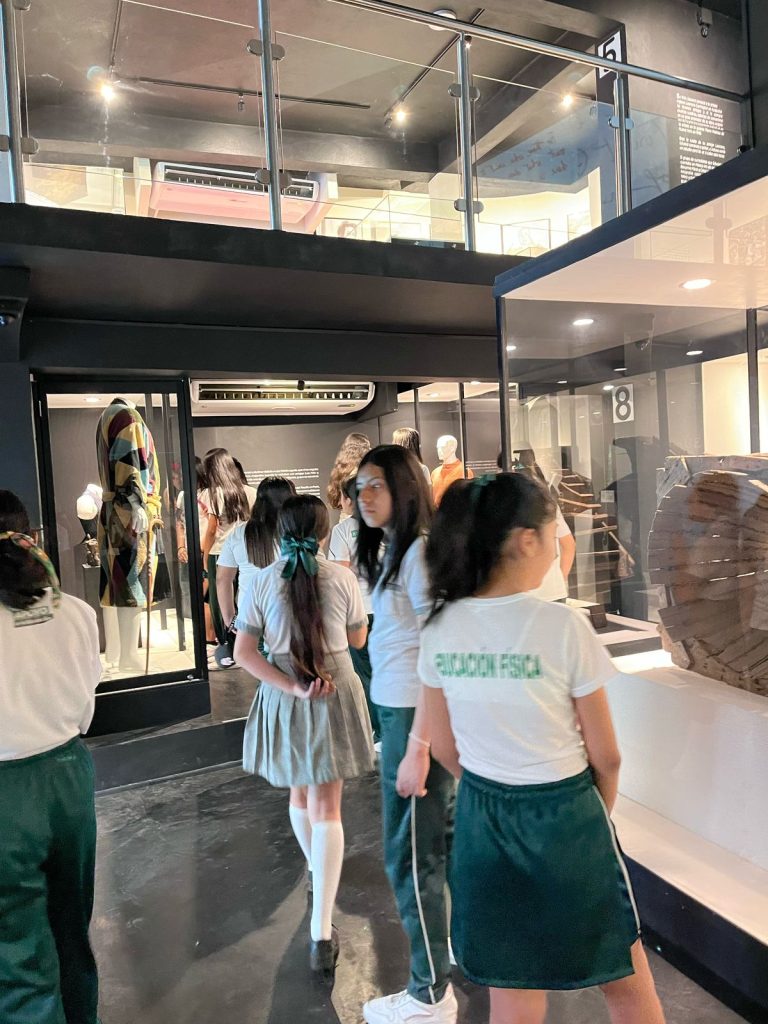
For their Slow Art Day, the museo welcomed a group of high school students through five carefully designed stations with unique slow-looking experiences. The session began in the Seclusia room with an introduction to the Slow Art Day movement and the power and purpose of slow looking. Participants also received a handout with prompts and spaces to write their notes throughout the experience.
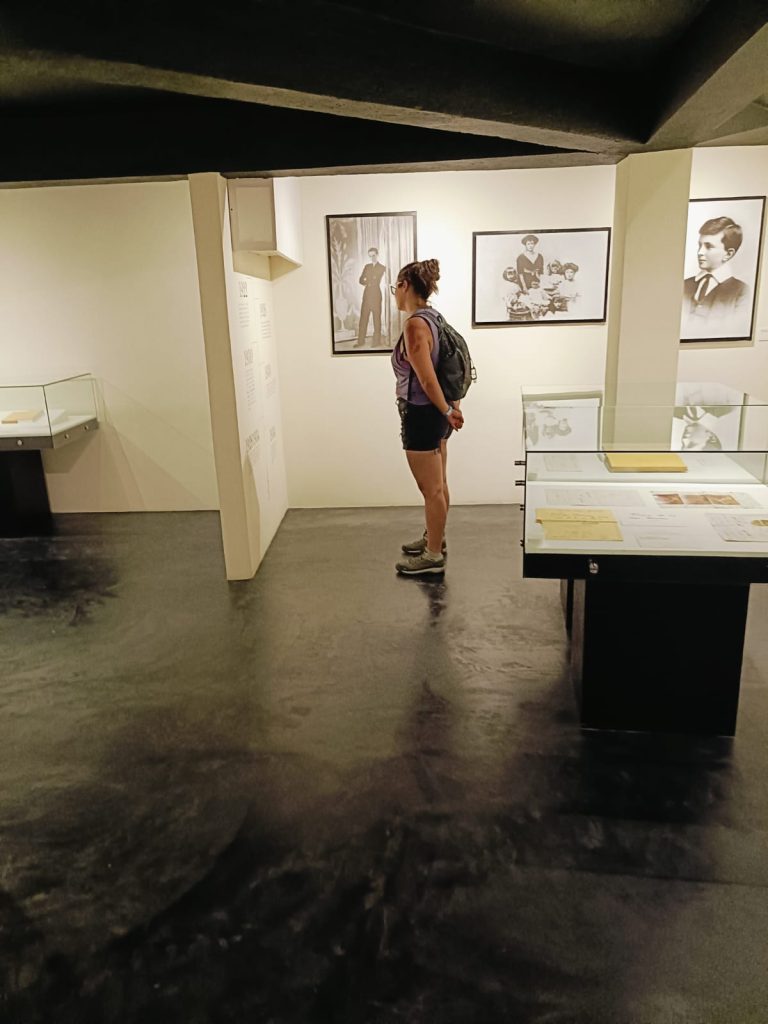
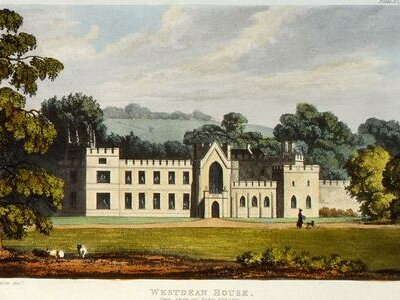
The first of the five stations focused on photographs of West Dean, Edward James’s childhood home. Participants explored James’s early life and family context, reflecting on how expansive spaces and environments can shape imagination and inner worlds.
Visitor Looking at James’ life in West Dean Timeline.West Dean House (Cortesy of West Dean College)
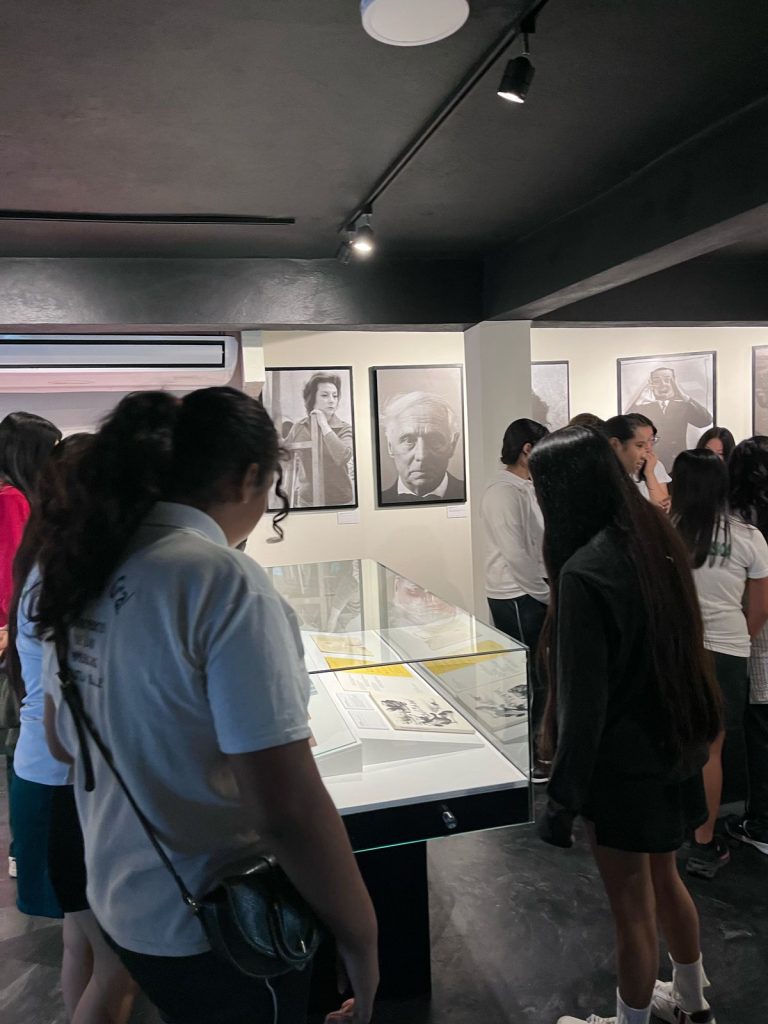
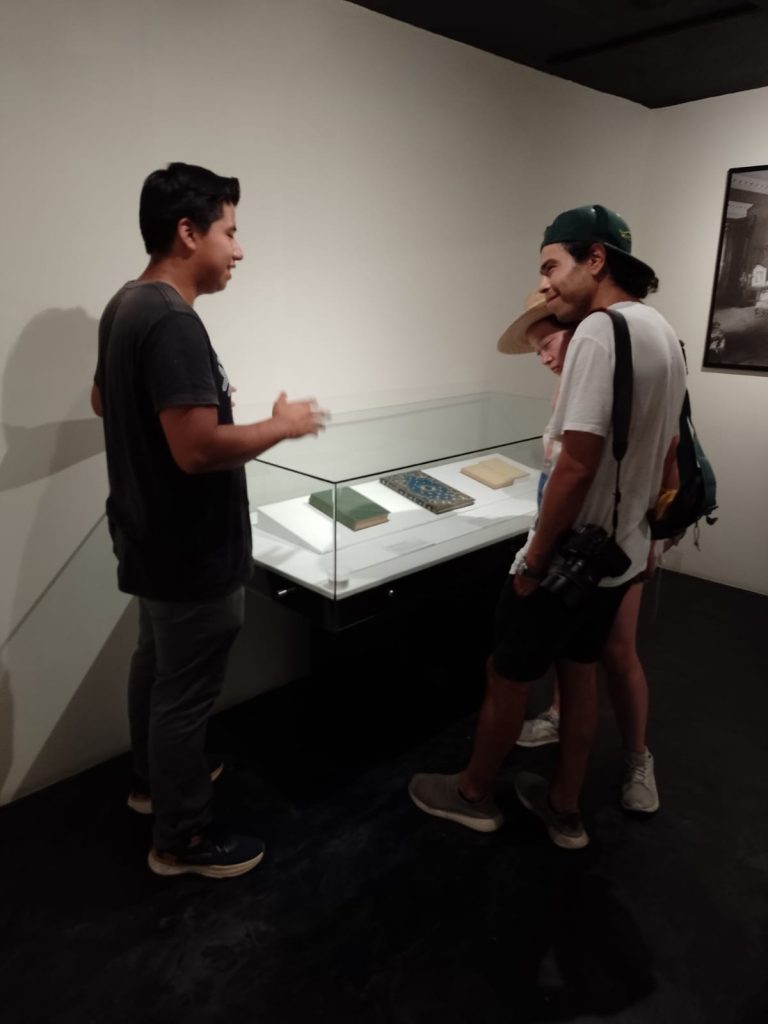
At the second station, participants spent quiet, individual time reading selections from the digital archive of James’s poetry book, The Bones of My Hands. This station emphasized attentive reading and personal interpretation, allowing each participant to engage with James’s words at their own pace.
Bones of my Hand – Edward JamesHighschoolers looking at James’ printed poems.Museum guide explaining James’ books.
The third station centered on 14 original molds used in the creation of the sculpture garden. Participants closely observed the forms, textures, and details of the molds, considering how abstract ideas are translated into physical structures.
Visitor touching one of the sculptures.Molds – Edward James Museum Collection.
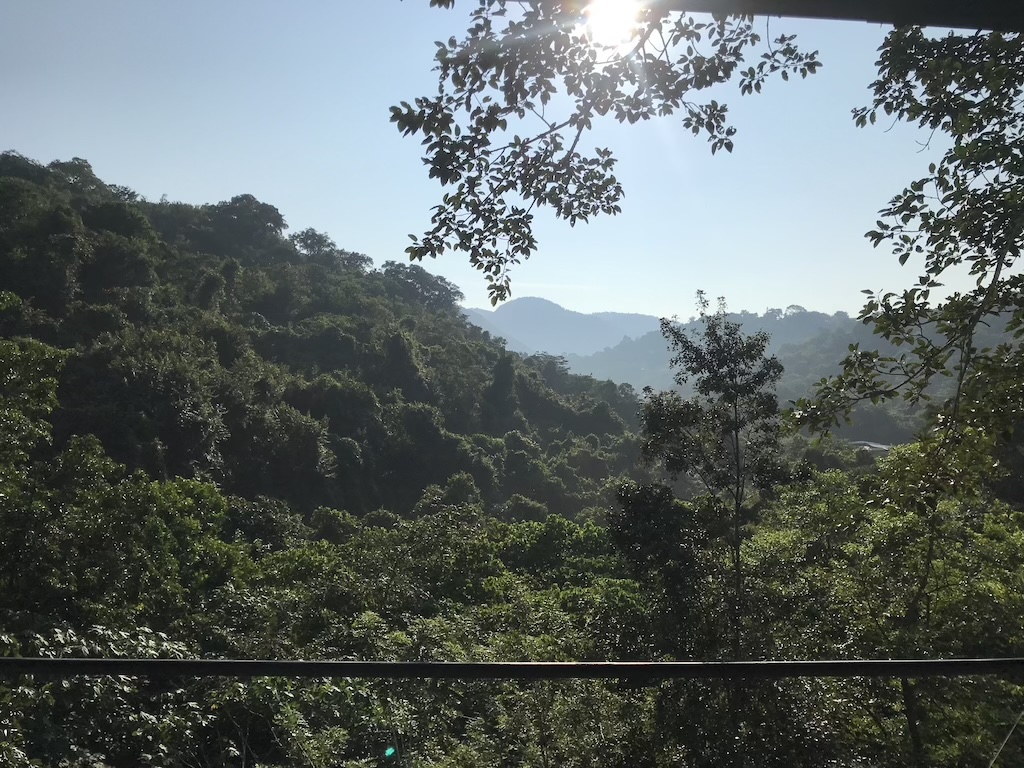
The fourth station took place on the museum balcony, where participants engaged in silent observation of the surrounding landscape. They were invited to notice sounds, colors, movement, and physical sensations, recognizing nature as an essential component of James’s creative universe.
View from the Museum.
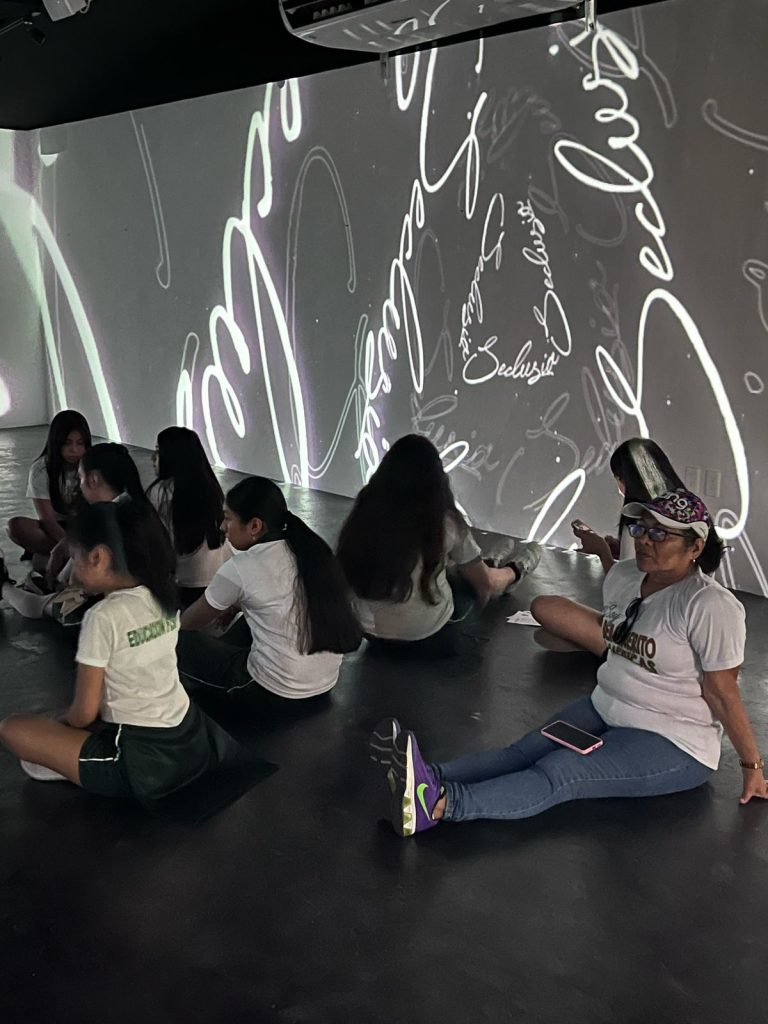
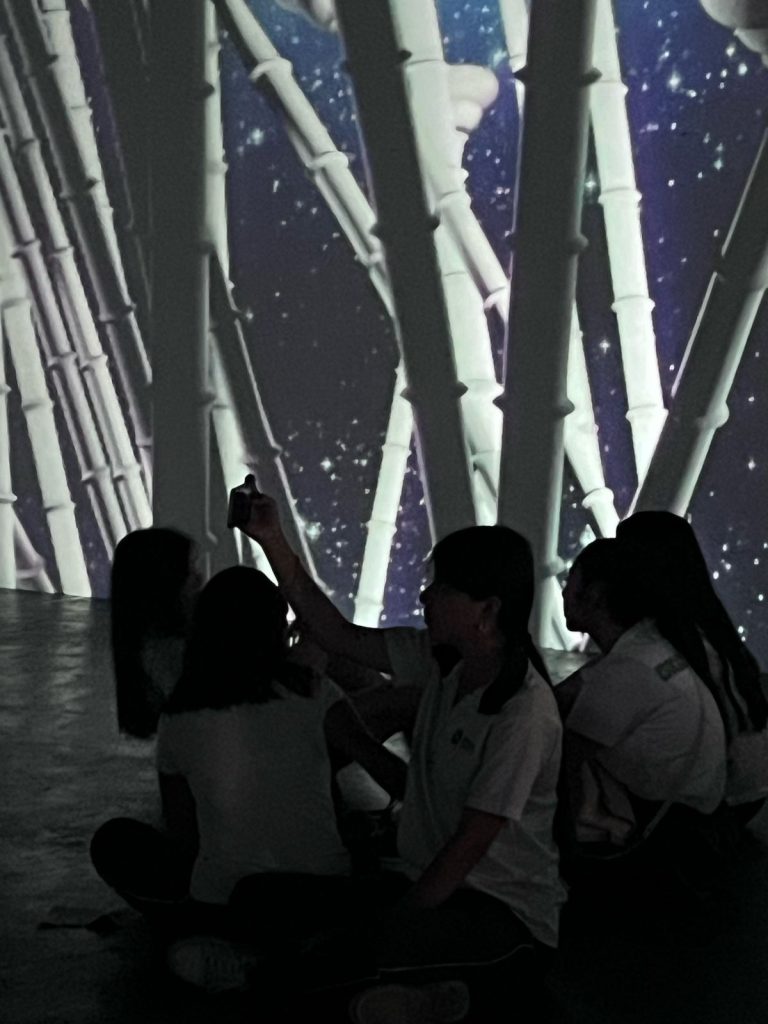
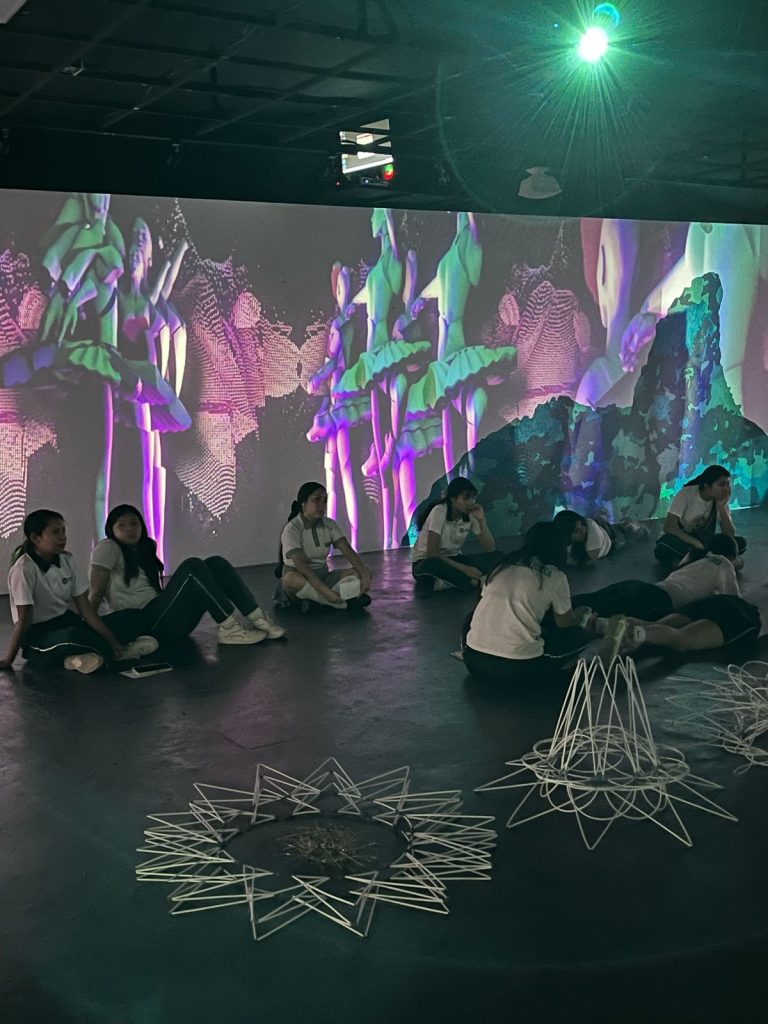
The final station consisted of a 15-minute immersive video, Seclusia, which explored themes of imagination, interior worlds, and the human desire to create a personal refuge. This concluding experience allowed participants to synthesize what they had encountered throughout the session.
Seclusia Immersive Experience – Edward James Msseum Collection
We at Slow Art Day HQ love everything about this and look forward to seeing what creative design the Museo Edward James comes up with for Slow Art Day 2026.
In 2025, Mexico City hosted its first city-wide Slow Art Day – and what may be the largest city-wide in the world – with 35 participating venues, coordinated by art writer and cultural organizer Constanza Ontiveros Valdés.
Ontiveros Valdés organized an unexpectedly wide range of participants, from established museums and galleries to alternative and emerging cultural spaces across the city.
The venues offered a rich mix of programming, including yoga, meditation, aromatherapy, workshops, panel discussions, and multidisciplinary artistic happenings. She noted that the accessibility and inclusiveness of Slow Art Day encouraged participation across diverse spaces, all eager to explore slow looking in ways that felt authentic to their communities.
We received reports from seven of the 35. Below are those highlights.
Galería Oscar Román featured an artist-led conversation titled “Sombras del Pintor” (Shadows of the Painter) with artist Saúl Kaminer, followed by a guided visit to his exhibition “La Tierra en el Cielo” (The Earth in the Sky). Kaminer shared insights into his creative process and the narratives behind his work, inviting participants to engage slowly through conversation and close observation. The session encouraged reflection on the relationship between art and nature, with visitors spending extended time discussing individual works.
Arte Abierto Reported by: Guadalupe Salcedo, Communications
Arte Abierto‘s Public Programs Team designed a Slow Art Day experience around the exhibition long last happy by Swiss artist Ugo Rondinone. Participants engaged in contemplative observation of the large format sculptures the sun and the moon (2022), followed by individual and group body activations inspired by dance and performance. The program invited participants to explore the idea of opposing forces through both stillness and body movement. Adults and children took part, and the event received significant public and media engagement.
Host: Constanza Ontiveros Valdés, Art Writer and Cultural Projects Coordinator Venue contact: Julia Villaseñor, Communications and Media Director
At kurimanzutto, participants were introduced to Slow Art Day through breathing and relaxation exercises before engaging in close looking with works by Haegue Yang from the exhibition Arcane Abstractions. The group explored intricate paper collages from the Mesmerizing Mesh series and interacted physically with the sculptural installation Mesmerizing Votive Pagoda Lantern. The session concluded with a hands-on activity in which participants created visual responses to their observations and shared reflections.
Natalia Martinez Aanaya, Communications Manager shared that Alejandra Topete Gallery participated with Between Threads and Stories, featuring works by Jason Kriegler and Claribel Calderius. The program included individual meditation sessions throughout the day and an empowering roundtable discussion led by Maria Ortiz, Cultural Mediator. Visitors were encouraged to form personal connections with the artworks through guided dialogue and slow observation.
Naranjo 141 gathered participants to look slowly at five selected works from their current exhibition. The session began with a brief introduction to Slow Art Day and the gallery’s residency program. Visitors then spent six to seven minutes in silent observation with each of five selected works:
Lily Alice Baker, Mothers’ Meeting (2024)
Colleen Herman, Blood Bloom in a Blue Field (2024)
Lee Maxey, Face the Front (2024)
Kataria Riesing, Holster (2024)
Pauline Shaw, Blackout (2025)
After slow looking, participants came together for a facilitated group discussion, sharing observations and personal responses over light refreshments. The session concluded with informal conversation and continued engagement with the exhibition.
Lee Maxey, Face the Front (2024)Lily Alice Baker, Mothers’ Meeting (2024)
Tinta Naranja focused on close observation of graphic design and visual culture. Participants explored original materials related to the Mexico 1968 Olympic design system, discussing the origins and historical context of the typography and imagery. The session concluded with a participatory activity in which attendees designed their own names using Olympic-inspired typographic forms.
Zona de Riesgo Art hosted a free evening program that combined slow looking, guided meditation, sound art, and collective reflection. The event opened with a brief introduction, then featured two guided meditative experiences led by artist Mónica Martz M.
The first, Realm of the Devas, combined guided meditation with sound art by Bruno Bresani and the projection of two visual works by Mónica Martz M.
After a short pause, Mónica Martz M. led a second meditation that explored The Human Realm, accompanied by sound art from Mercedes Balard and Montserrat Coltello, alongside projected works by Bruno Bresani.
Following the meditations, participants gathered for an open conversation, sharing sensations, images, and reflections that emerged during the experience. The evening concluded with expressions of gratitude among artists and attendees, highlighting the value of creating spaces for stillness, contemplation, and shared presence.
Together, these seven reports represent just a portion of the 35 venues that participated in Mexico City’s first citywide Slow Art Day. The range of formats—artist talks, guided observation, movement-based practices, meditation, and slow making—demonstrates how Slow Art Day can scale across a major global city while remaining grounded in local artistic practice. Check out a great article summarizing the day (in Spanish).
We thank Constanza Ontiveros Valdés for her leadership and all participating venues, artists, facilitators, and visitors for making this inaugural citywide Slow Art Day possible. We look forward to seeing what they come up with for Slow Art Day 2026.
The Universidad Panamericana, Guadalajara campus, located in Zapopan, Mexico, held their first Slow Art Week as a part of their Lead Creative Festival. Lead Creative is a festival that invites young people to seek change through art, and was hosted by Andrea Guadalupe Covarrubias. For the festival, art is broadly defined to include the visual arts, along with instrumental and vocal music, dance, and theater.
With over 1800 participants, this hybrid event had both in-person engagement and social media posts on Facebook and Instagram with an average reach of 700 people per post.
Based on the success of their first Slow Art Day, they plan to hold slow looking sessions throughout the year and not just with visual art, but also with the choir, theater group, and dance artists.
The event was advertised as a part of the Lead Creative festival with the below flyer.
More information can be found on their website, along with videos from past events on their YouTube channel.
We can’t wait to see how Slow Art and Slow Looking are featured in next year’s Lead Creative festival!
[Slow Art Day has asked its 2013 hosts and volunteers to write short summaries of their own experiences looking slowly at artworks of their choosing.]
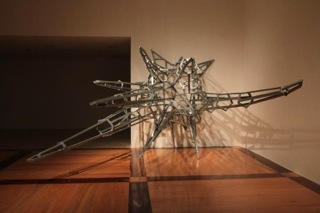
After looking around the Museo Marco, I chose the artwork The Fuck Off Project by Daniel Ruanova to examine patiently as part of the initiative of Slow Art Day. There were, no doubt, other pieces that called my attention, but the idea of examining this particular piece interested me the most. This artwork consists of a series of metallic rods that are assembled into a set of pointy extrusions. It almost looks like a “wire frame” (like those seen in animation programs) of the back of a porcupine.
Daniel Ruanova. The Fuck Off Project. 1976
At first glance the work certainly seemed aggressive. Although not insulting (at least until you read the title), I initially did not want to get near it. Each of the protrusions appear to be directed toward the viewer, independent of the viewing angle. Judging by the name, I thought that this was precisely the motive of the artist – i.e. to portray aggression. That made me think of similar shaped things in nature that convey the exact same defensive idea, like pufferfish or the porcupine, and I concluded that the artist may have been inspired by such animals.
Despite my apprehension, I decided to slowly approach the piece. As I got nearer, I noticed that the feeling of aggression became stronger. I decided to actually walk into it and that changed my experience of the piece completely. There, inside it, I felt protected. The metallic arms were no longer pointed towards me but towards everyone else. It’s as if now their sole purpose was my defense. I sat down to be able to immerse myself deeper, and, as expected, the sense of security was intensified. There, in the midst of all those metal rods, I felt comfortable.
The next thing I noticed was the facial expressions of the people in the museum when they noticed me there. Assuming they shared the feeling I had felt while looking at the sculpture from the outside, I could understand why. I sat there for awhile, watching people pass looking bewildered.
I now understand the Slow Art Day initiative in a better way and can see how slow looking can really transform the experience. Looking slowly and taking the time to move in and around this artwork completely changed my perception – and – this insightful episode reaffirmed my decision to be a host during the Slow Art Day for Museo Marco in Monterrey on April 27.
– David Zambrano Reyes, Volunteer at MARCO
[Make sure to check out Museo MARCO’s Slow Art Day event in Monterrey, Mexico.]