The Art Institute of Chicago had a stellar third Slow Art Day, with 377 visitors of all ages participating in a three hour event designed and led by *13* teenagers.
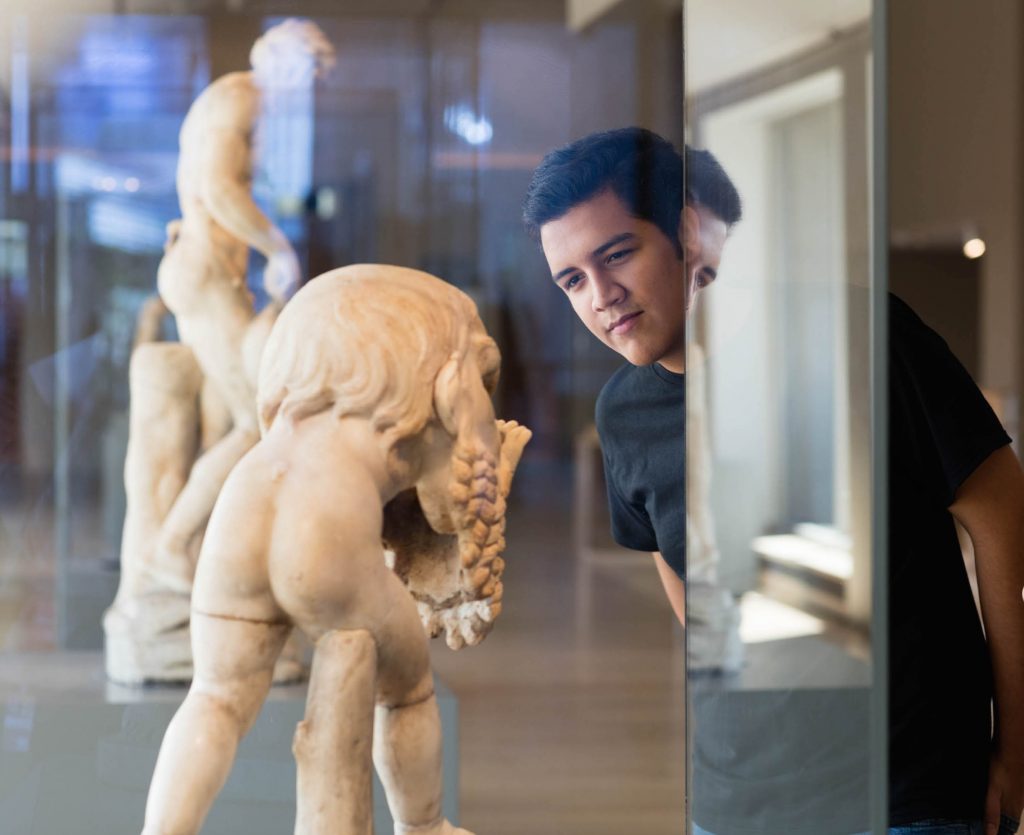
Statue of a Young Satyr Wearing a Theater Mask of Silenos, ca. 1st century CE. Anonymous sculptor, with 1628 restorations by Alessandro Algardi
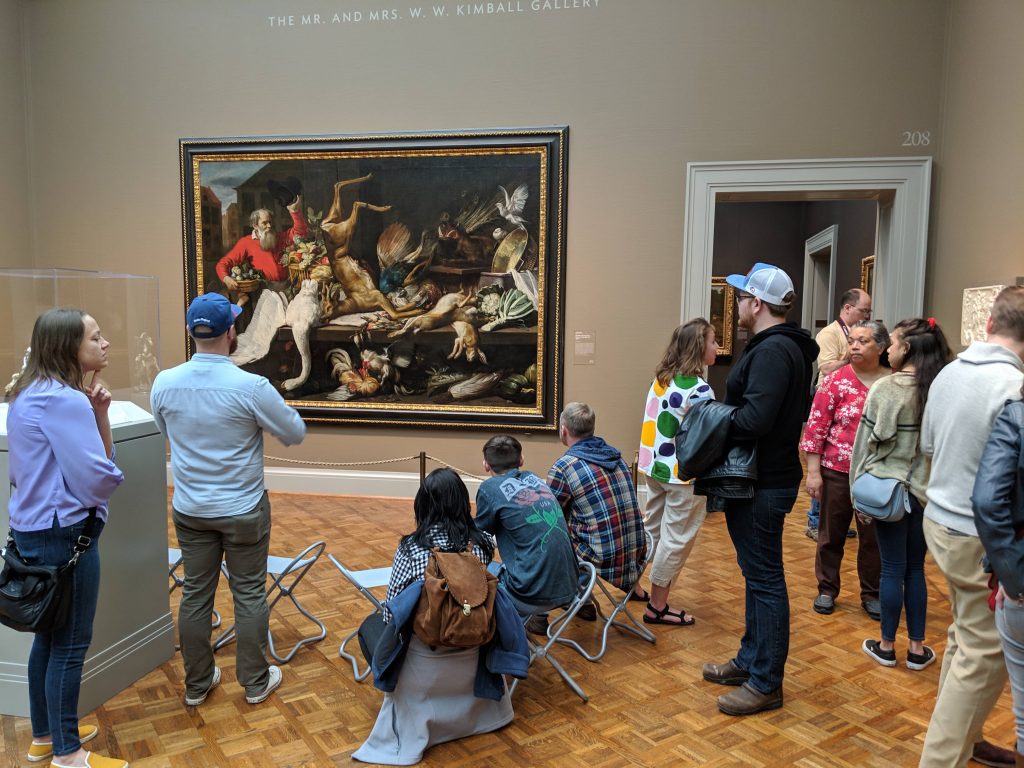
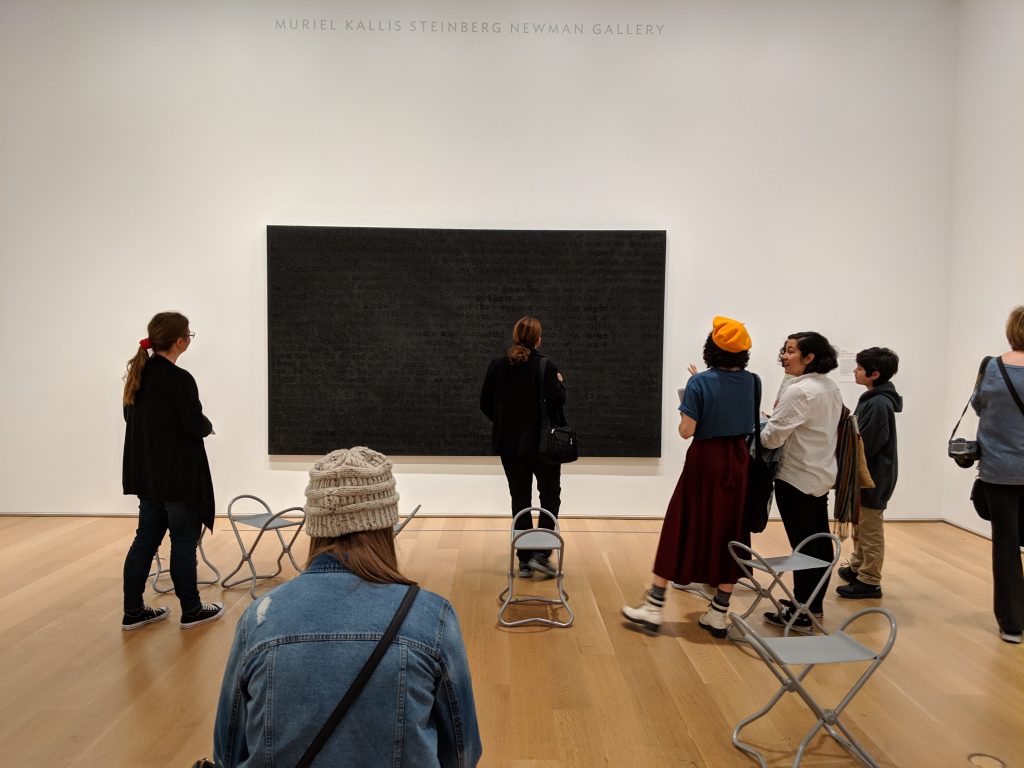
The teen guides selected 6 artworks to feature from across the museum’s broad collection. With support from the museum’s staff, they generated conversation starters with participants, posed open-ended questions, and employed strategies to keep visitors engaged throughout the experience.
Frans Snyder, Still Life with Dead Game, Fruits, and Vegetables in a Market 1614Glenn Ligon, Stranger in the Village #13
We often hear that slow looking is not for young people – they don’t have the time or attention. They are digital natives and not interested in real space. But many Slow Art Day museums have successfully run programs with teenagers and kids as young as four or five years old, and with this event, the Art Institute of Chicago proves yet again that art is – and must be – for everyone.
We look forward to seeing what the Art Institute comes up with for Slow Art Day 2020.
Gallery owner Hannelie Hartman welcomed participants of all ages to the third Slow Art Day at MelonRouge in Magaliesburg, South Africa.
The event was facilitated by Dr. Sonja Brink, a Learning through Play Ambassador for the Lego Foundation, who, when not involved in Slow Art Day, teaches the Setswana language to South African children and adults through song and movement.
Working with MelonRouge, she came up with a creative multi-sensory design that started with a brief talk on the link between art and information through the ages. She discussed ways to use art to cultivate focus and presence when feeling overwhelmed by technology overload (Ed: this is one of the key reasons Slow Art Day was started a decade ago – to create an antidote to technology’s growing dominance).
After Dr. Brink’s talk, participants were then blindfolded and given a fragrant piece of clay to smell and touch in order to kickstart their senses for the multi-sensory slow looking program they were about to experience.
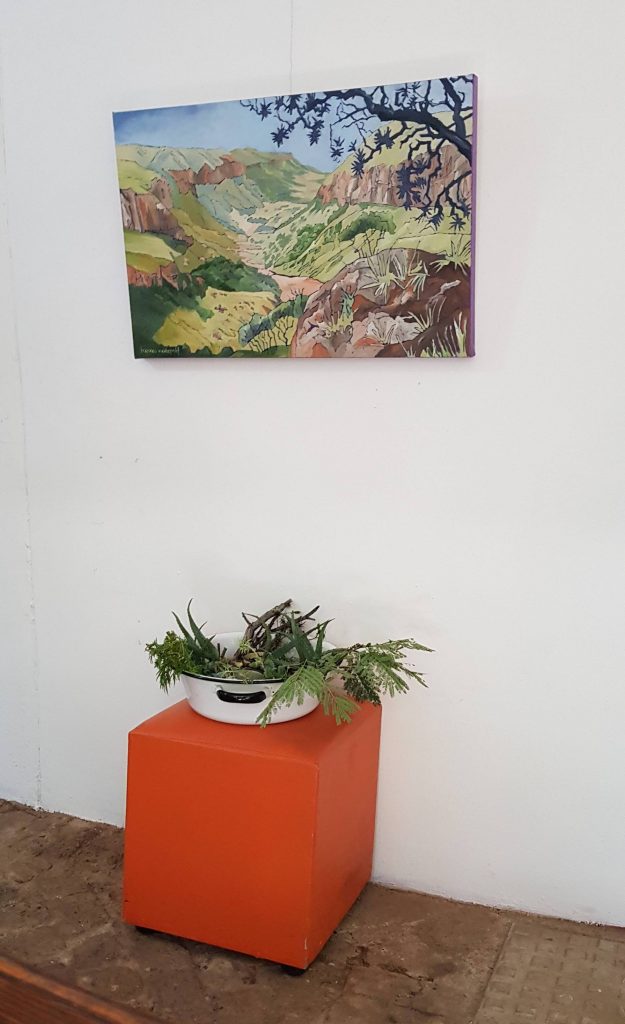
Blindfolds were then removed and participants starting looking at a painting titled “Injasuthi Valley,” by artist Frances Wedepohl (below). As they slowly gazed, viewers were encouraged to touch and smell a variety of natural materials, including grasses and branches.
“Injasuthi Valley,” by artist Frances Wedepohl
Next, Dr. Brink brought the participants to slowly experience artwork by artist trio Louisa Staude, Louel Staude, and Heinz Schnölzer, titled “An Ode to Fynbos” (below). Visitors were invited to immerse themselves in the essence of this art through exploring the textures, smells and music composed specifically for the installation.
“An Ode to Fynbos” by artist trio Louisa and Louel Staude, and Heinz Schnölzer
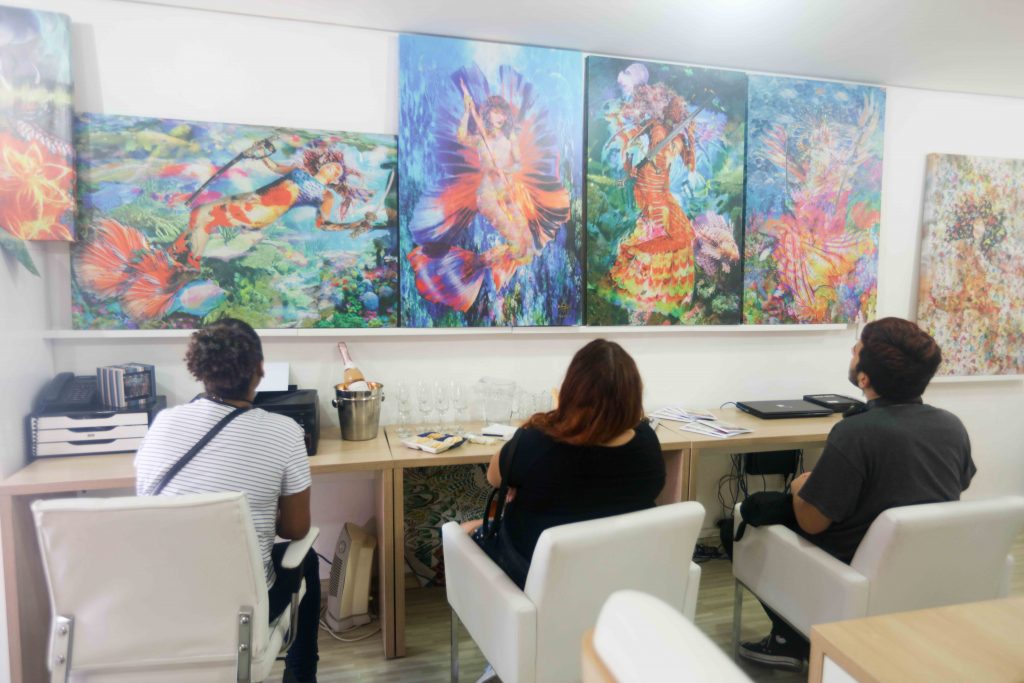
Then, during the third viewing, participants were encouraged to taste a range of sweet, sour, and salty candies while slowly savoring artist Trevor Rose’s tryptic titled, “Life’s Journey” (below).
“Life’s Journey” by artist Trevor Rose
With the level of detail, playfulness, and creative multi-sensory focus, this Slow Art Day 2019 was a “resounding success”, with Dr. Brink noting that for both her and the participants “it was amazing!”
We look forward to whatever creative designs MelonRouge and Dr. Brink come up with for Slow Art Day 2020.
Slow Art Day 2019 at the Columbia Museum of Art attracted a small but very invested group of participants. At each stop along the way they experienced the art from a different perspective, whether a deep visual dive, a multi-sensory experience, or a complex conversation about the details within a piece.
The participant conversations were fruitful, and resulted in insights that the docents used in later tours.
We look forward to Columbia Museum of Art’s participation in 2020!
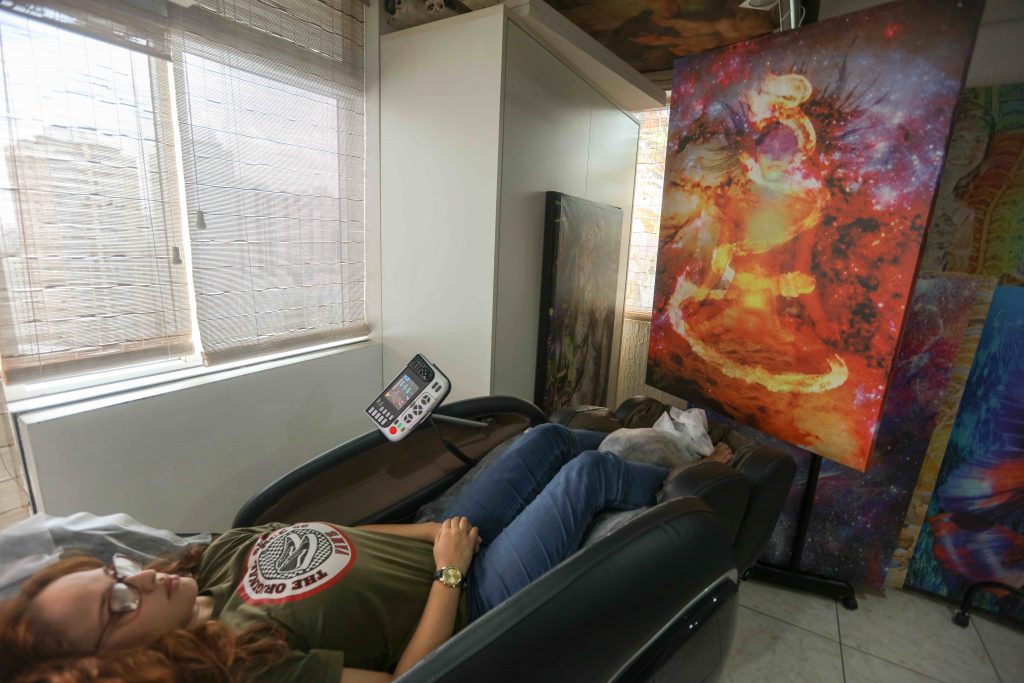
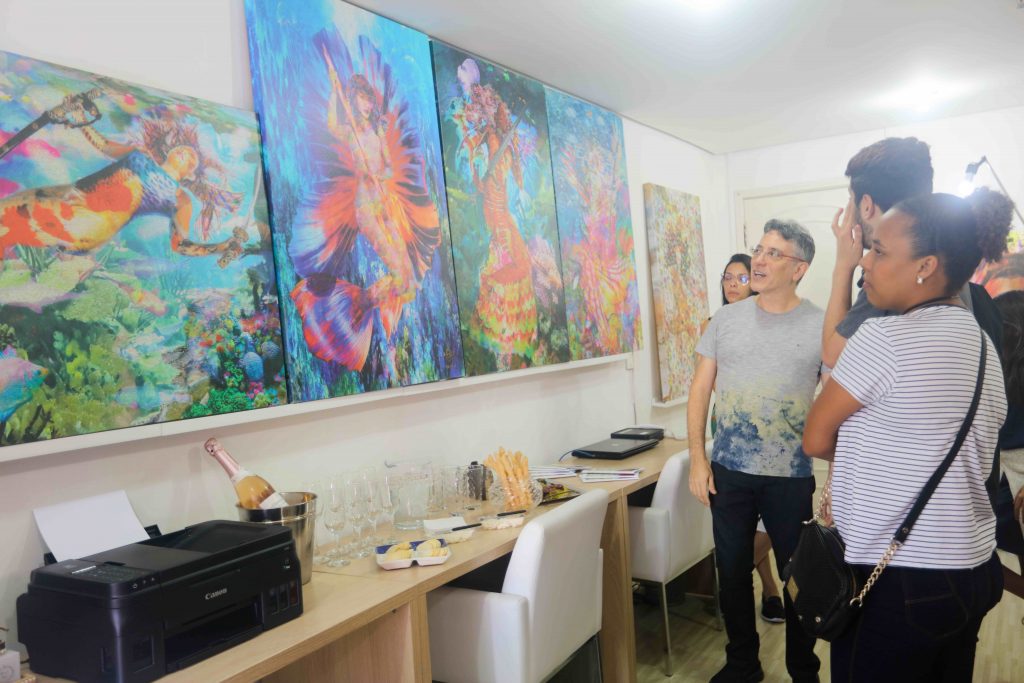
For Slow Art Day 2019, artist and holistic pyschotherapist Henrique Vieira Filho invited groups of up to six participants at a time into the intimacy of his studio, HVF Artes, located in São Paulo, Brazil.
He chose what he thought were the most impactful works and guided participants to slowly observe each piece.
Some participants also chose a quiet session of art therapy.
After slow observation, refreshments were served and guests were invited to talk about the experience of slow looking with the artist.
This was a very interesting design and we look forward to more Brazilian gallery and museum participation in 2020.
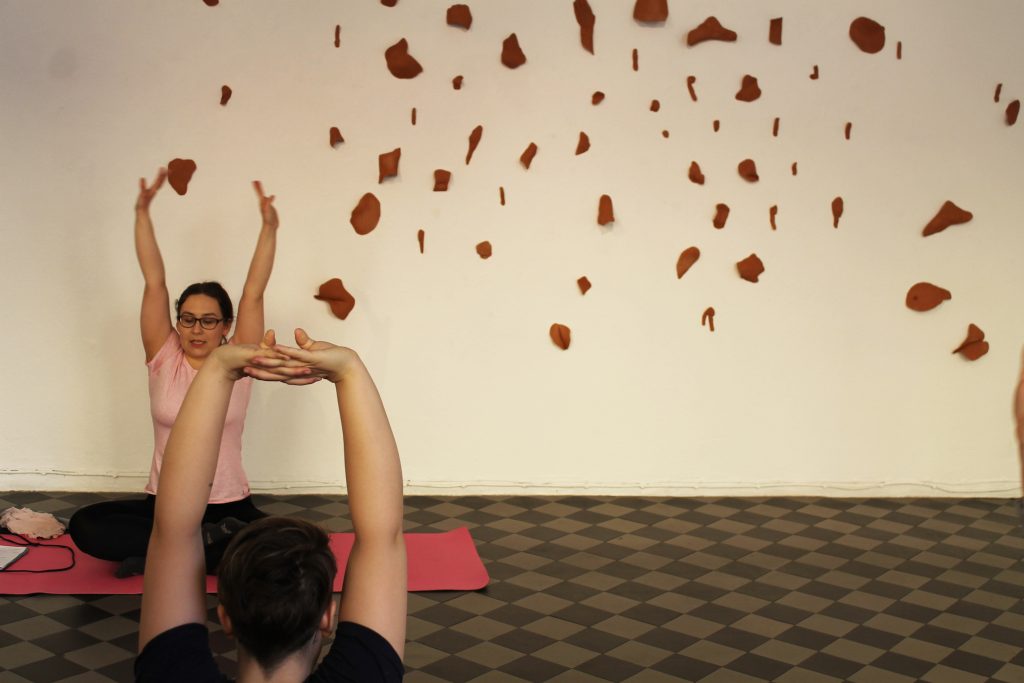
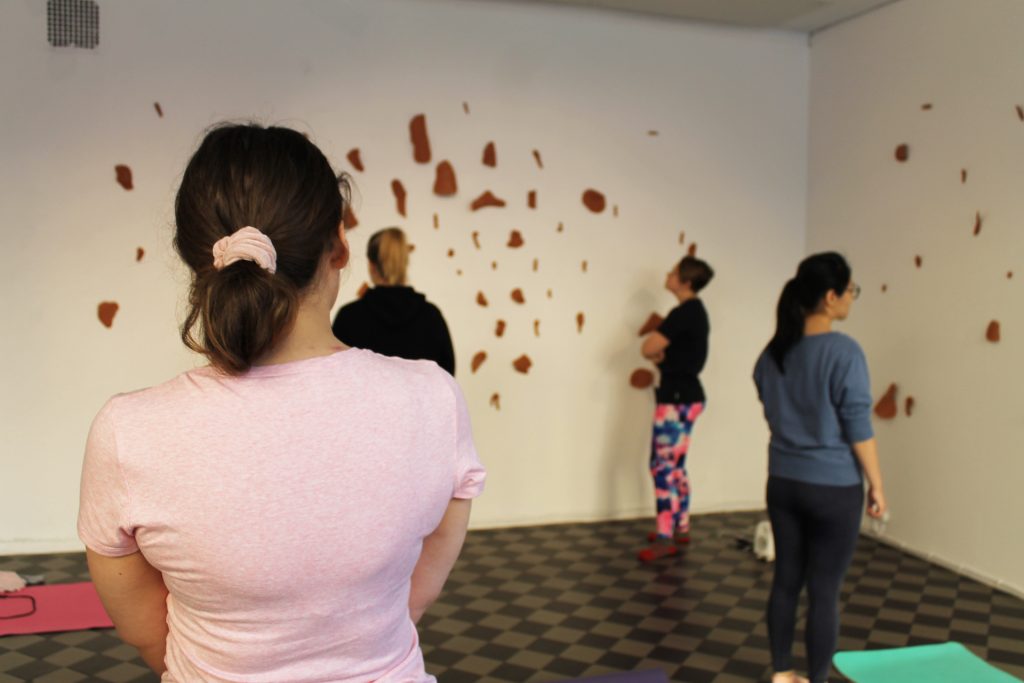
For their third Slow Art Day, B-galleria in Turku, the former capital city of Finland, held a yoga workshop where participants could take a deep breath, stretch their bodies, and look slowly at surrounding works of art.
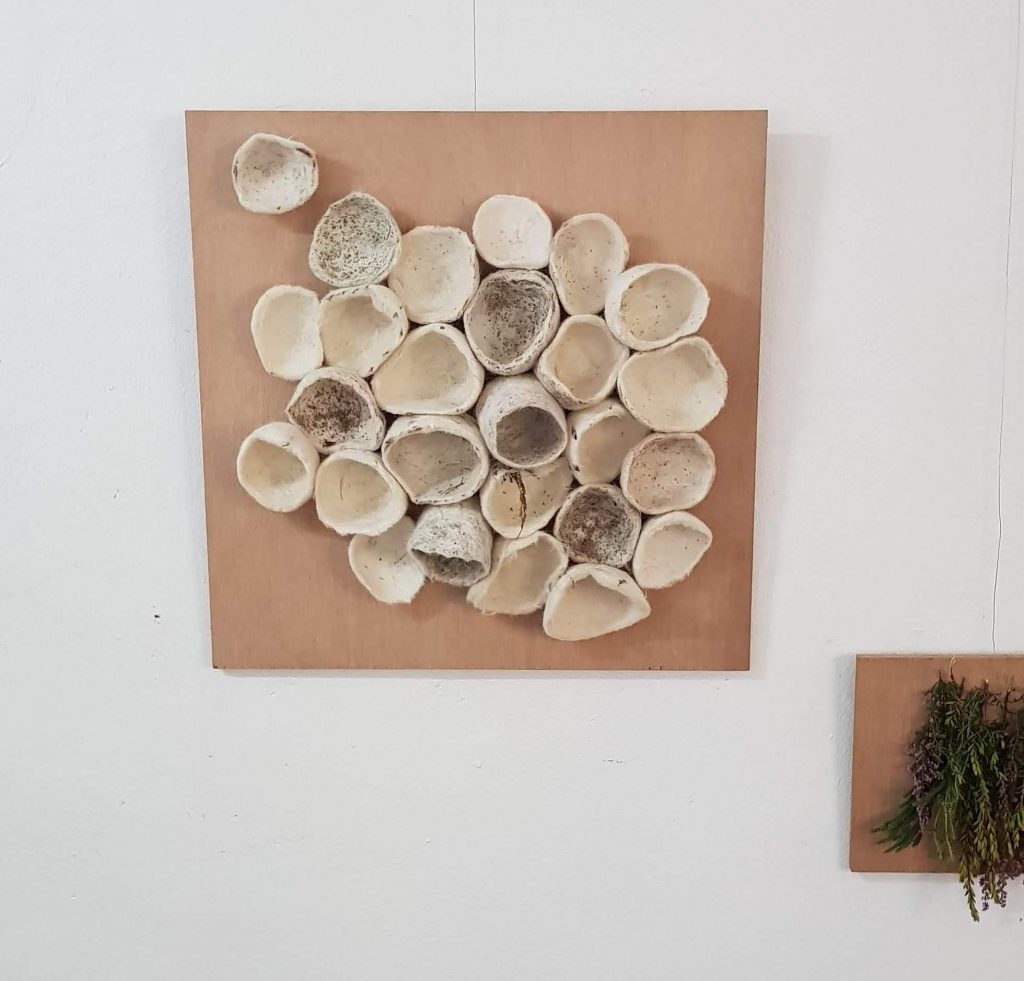
After the yoga workshop, participants slowly observed B-galleria’s scholarship holder Aino Ojala’s exhibition Seassa / Among, which consisted of ceramic replicas of parts of the skin of the artist and her friends. Studying this work closely obviously made for a unique slow viewing experience.
We look forward to what B-galleria chooses for its art and slow looking design for 2020.
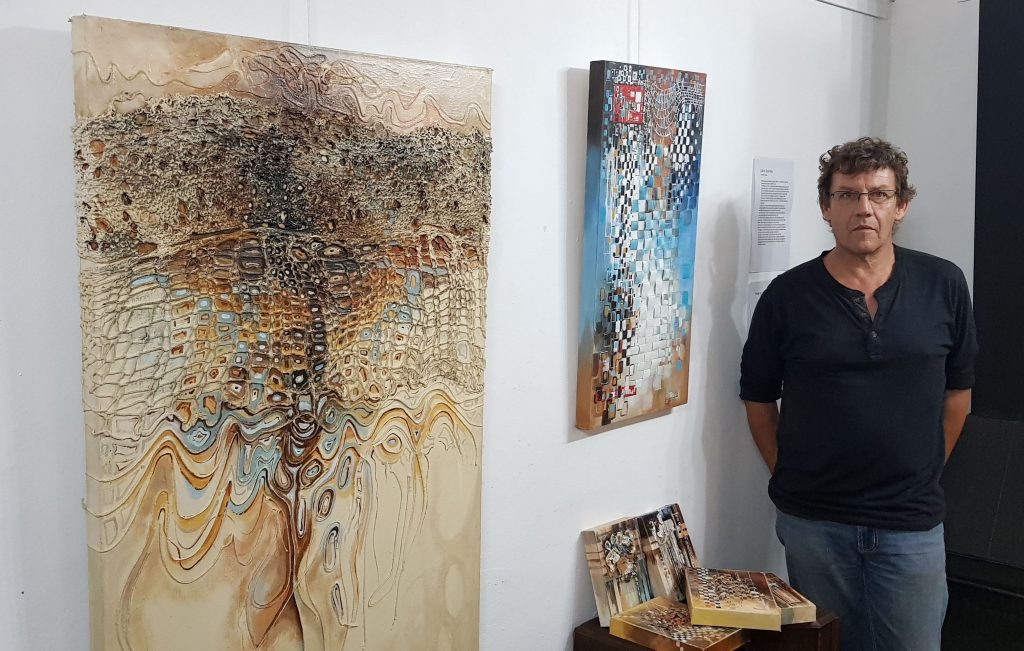
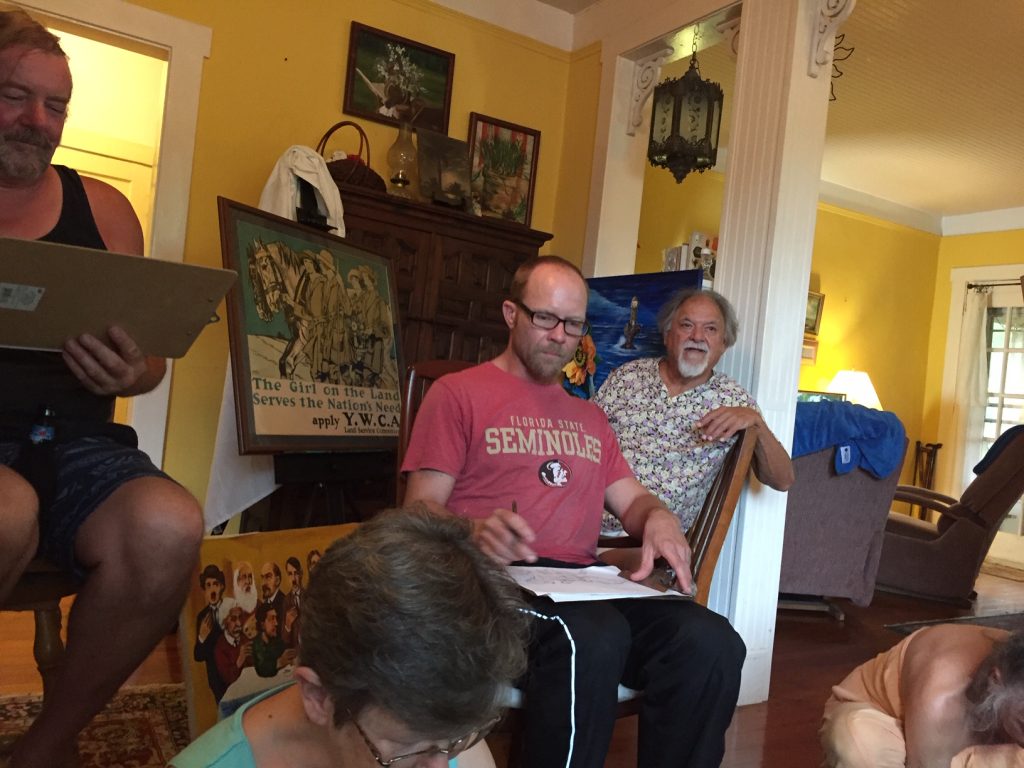
The Treasure Coast Art Association in Fort Pierce, FL hosted their first Slow Art Day this year for the Fort Pierce Art Club members in the home of member Jeanne Johansen.
The morning started with the participants sketching an internationally trained nude model, and was followed by an afternoon exploring art club members’ paintings through various interactive techniques.
Jeanne reported that one of the most fun techniques was to have everyone sit with their backs to the paintings and attempt to draw them as participant Barry Levine described them out loud.
New member, Carol Merrett, engaged the group by asking them to guess what her paintings were before she unveiled her acrylic textured paintings.
Scott Serafica, an art teacher from Texas, brought a beautiful oil still life to be observed. The group paired the artwork with a cup of fragrant tea to complement the teapot in the painting, which engaged the groups sense of smell as they slowly observed it.
The Treasure Coast Art Association is planning their next Slow Art Day event with the Backus Museum in April 2020, and we look forward to hearing what they have in store for their second event.
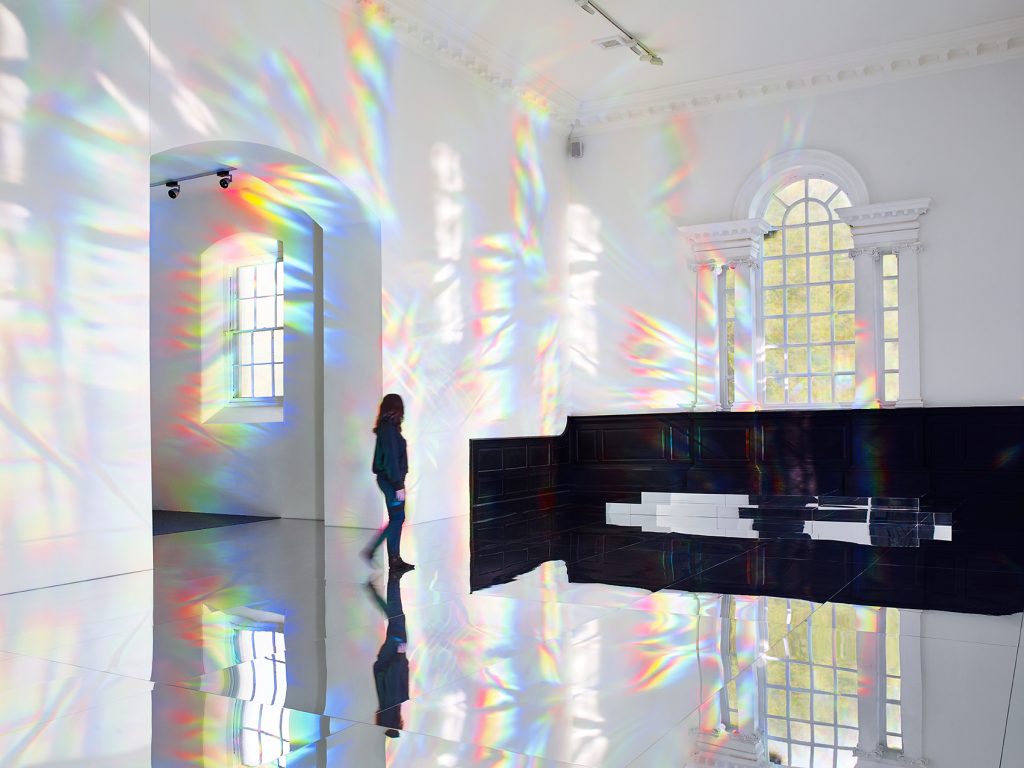
Yorkshire Sculpture Park (YSP) in West Bretton, UK hosted their third Slow Art Day, “Mindful Moments on Slow Art Day: To Breathe” by Kimsooja, a multi-disciplinary conceptual artist based in New York, Paris, and Seoul.
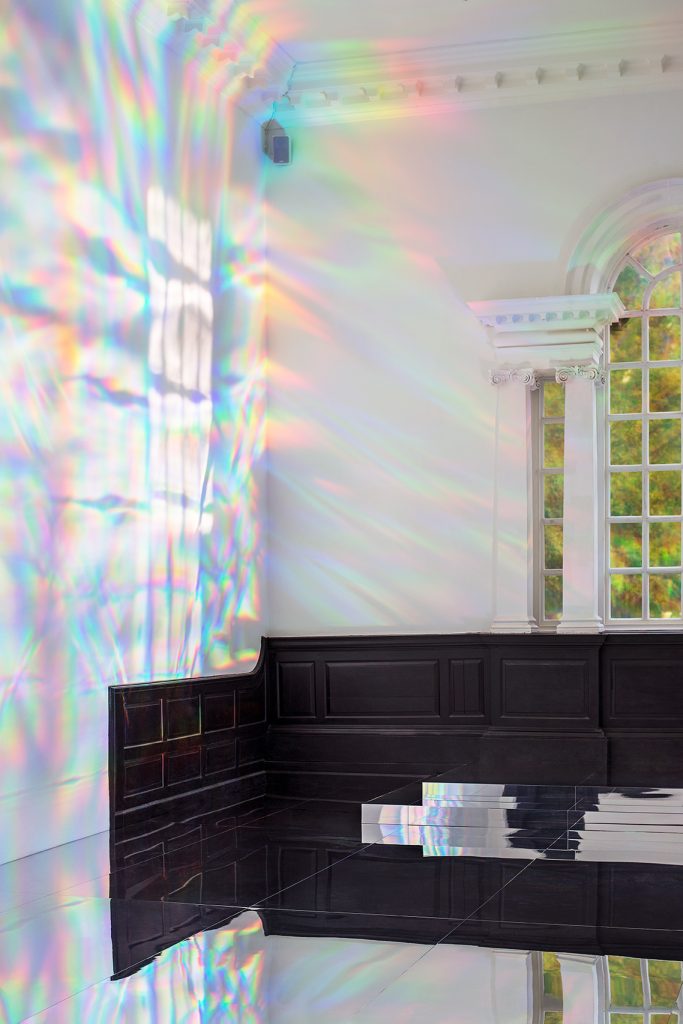
Participants were invited for a private viewing of Kimsooja’s immersive installation in the historic chapel at YSP, which used light and mirrors to explore the meditative qualities of space. The mirrored floor and diffraction film in the windows responded to changes in natural light, generating a kaleidoscope of changing colors and reflections.
Photo by Mark Reeves
This year’s event was part of a program of mindfulness and art events developed by Art and Wellbeing Practitioner Rachel Howfield Massey and Mindfulness Instructor Sally Edward of Kindmind. Together they invited the group to take off their shoes and stand, sit, and lie on the mirrored floor for forty minutes and notice the changes around them and within their own bodies.
The group silently experienced moments of awe and joy when light flooded the space, and periods of quiet contemplation as the intensity of light changed from moment to moment.
Photo by Mark Reeves
After the event, participants enjoyed hot drinks and pastries in the YSP Restaurant and took part in a gently facilitated discussion. They reported feeling a sense of heightened emotions and expansiveness. Here’s what one participant said:
“I feel like we have been on a journey and travelled far and back safely. How lovely the simplicity of this – simple yet so powerful. I feel very relaxed and empowered with a new tool – how to ‘to be’ with art.”
We look forward to seeing what mindful and immersive experiences the Yorkshire Sculpture Park programs for Slow Art Day in 2020.
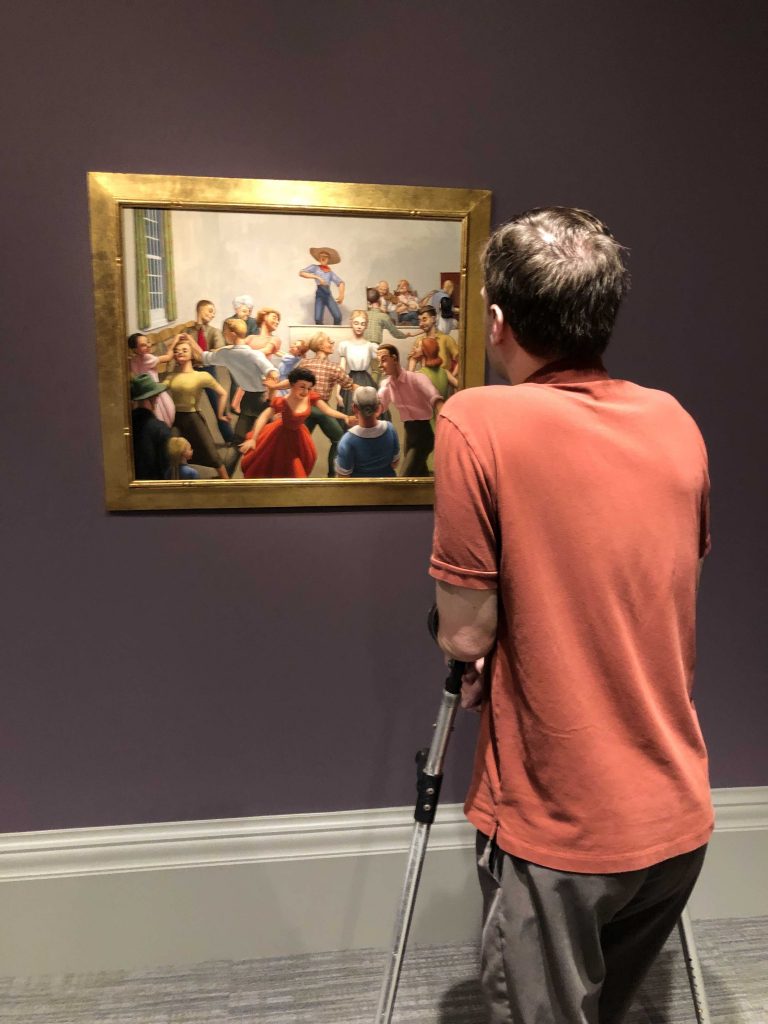
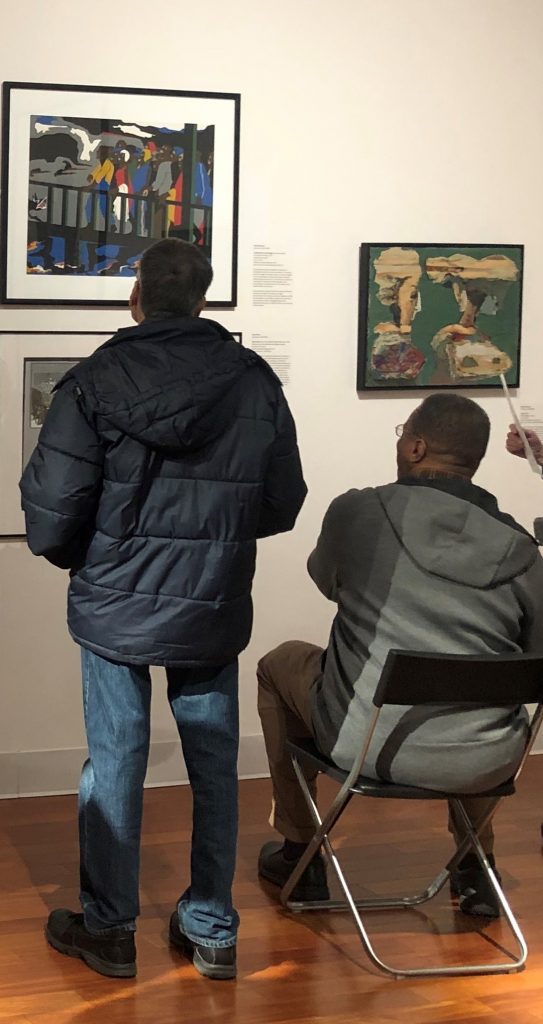
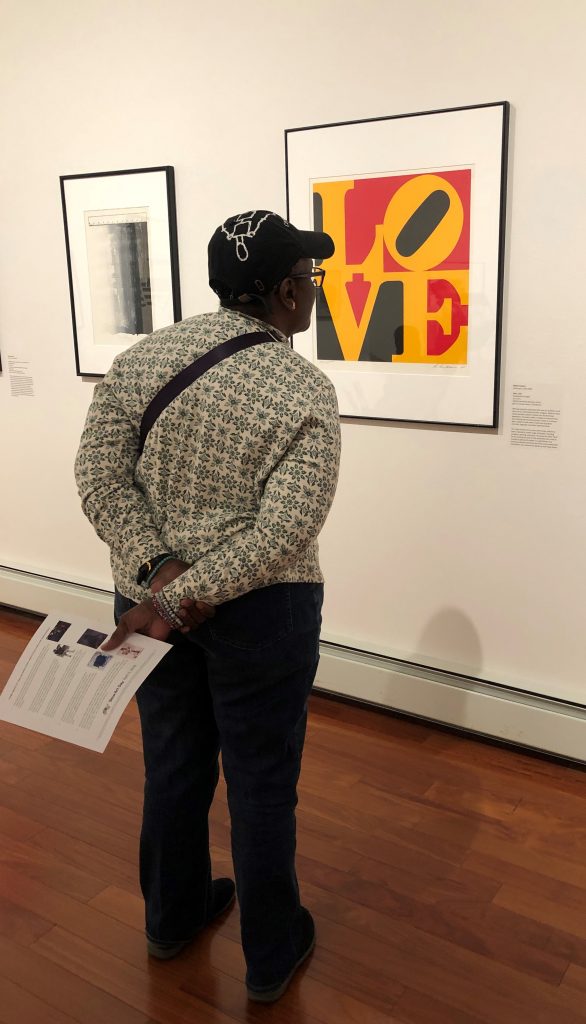
For Slow Art Day 2019, Hofstra University Museum of Art invited visitors from the surrounding Long Island, NY communities to look slowly at their exhibition, “Pushing Boundaries: American Art After World War II.”
The museum started their event by providing written prompts instructing participants how to slowly observe selected works. Nancy Richner, Museum Director, then facilitated a group conversation about each individual piece, which was followed by a light lunch.
Nancy reported that it was delightful to see the participants, without prompting, naturally engage in their own discussions about the selected works. They were so enthusiastic about the discussions that they also ventured to look at other works in the exhibition together.
“It was reaffirming to watch the visitors, who were initially strangers to each other, discuss insights and make new friends through their shared experience of slow looking,” she said.
We love to hear how Slow Art Day can facilitate new insights and friendships, and look forward to Hofstra University Museum of Art’s 7th Slow Art Day in 2020.
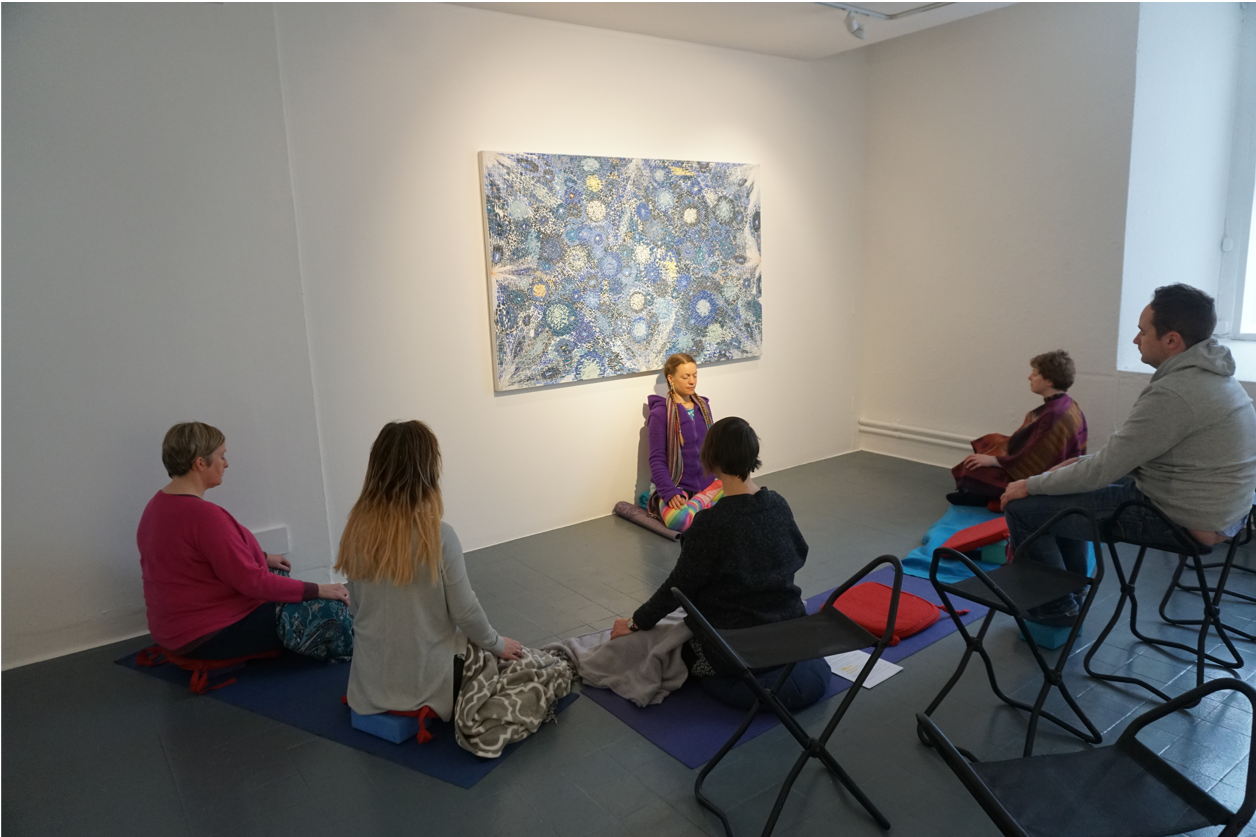
For Slow Art Day 2019, Butler Gallery in Kilkenny, Ireland invited visitors to slow down, focus, and connect with artworks in the exhibition: Poulaphouca: New Paintings & Works on Paperby Wicklow-based, Texas born artist Sam Reveles.
The event began with a guided meditation facilitated by Suzanne Martius, Hatha Yoga practitioner.
Guided meditation facilitated by Suzanne Martius.
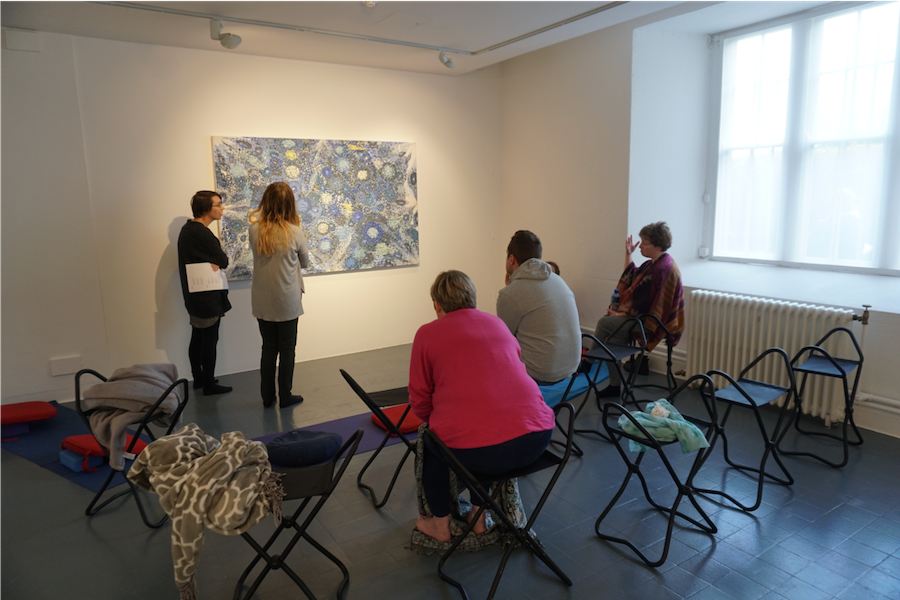
This was followed with a Slow Art looking session and guided discussion facilitated by Jean Mann, Interim Learning and Public Engagement Curator at Butler Gallery.
Jean Mann, Interim Learning and Public Engagement Curator at Butler Gallery, facilitating slow observation of artwork “Elemental Span, 2018” by artist Sam Reveles.
We look forward to what Butler Gallery comes up with for Slow Art Day 2020.
For Slow Art Day 2019, Wanås Konst – Center for Art and Learning based in southern Sweden organized a full day focused on three main activities: yoga, slow art exploration, and meditative action painting.
The day started with the yoga session led by yoga instructor Risa Larsen, who focused on gaining new energy and a relaxed body and mind.
Then throughout the day, visitors were encouraged to choose five artworks in the sculpture park, taking the time to observe each slowly.
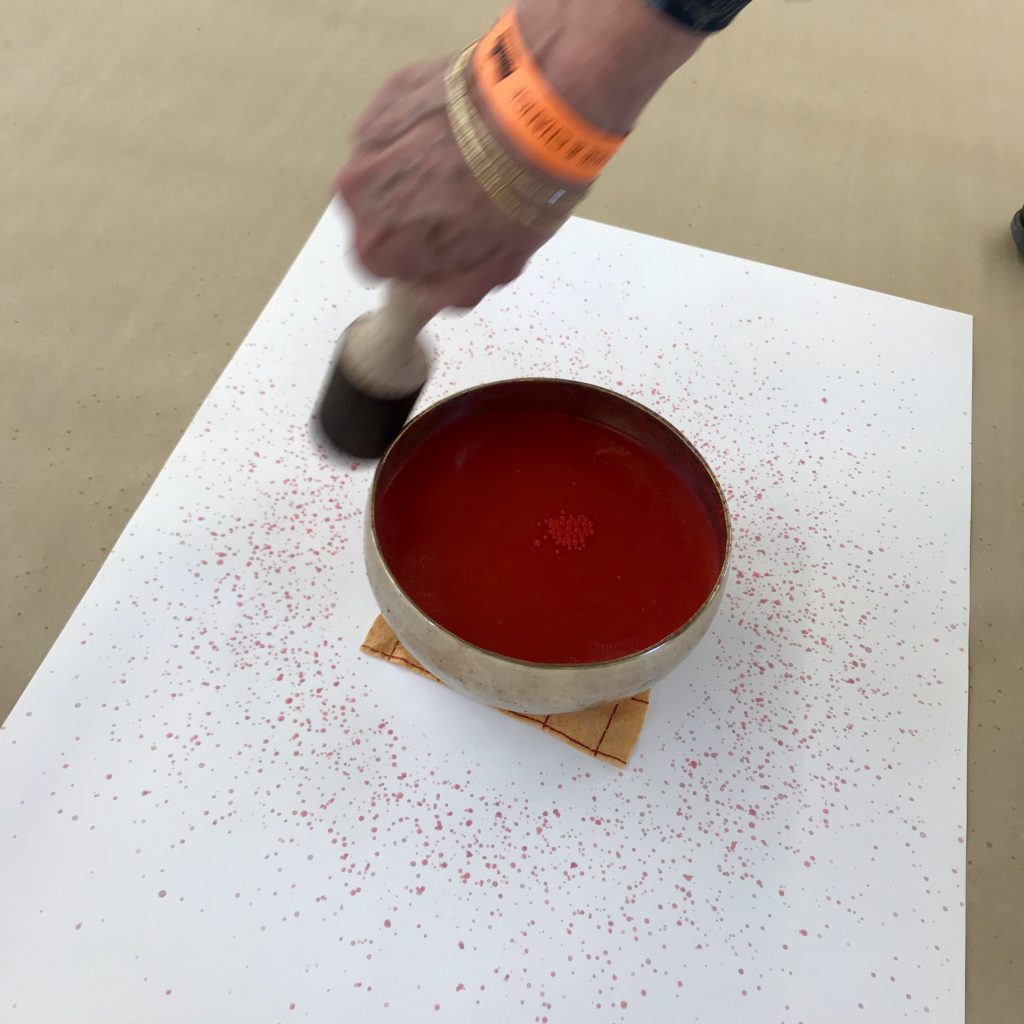
Finally, in the afternoon, visitors were invited to the “Meditative Action Painting” workshop inspired by the Danish artist Jeppe Hein. Participants filled Tibetan singing bowls with colored water and used a ringer to slowly move around the edge of the bowl to create vibrations. These vibrations then created a work of art by sprinkling colored droplets onto a canvas underneath the bowl.