Forest Bathing, Folding Screens, and Mindful Movement at Smithsonian’s National Museum of Asian Art

For their second Slow Art Day (and their first time hosting the program on-site) the Smithsonian’s National Museum of Asian Art in Washington, DC offered four hours of immersive programming, inviting visitors to slow down through guided looking, mindfulness practices, gallery conversations, and movement.

The day unfolded through a thoughtfully structured sequence of offerings designed to meet visitors wherever they were.

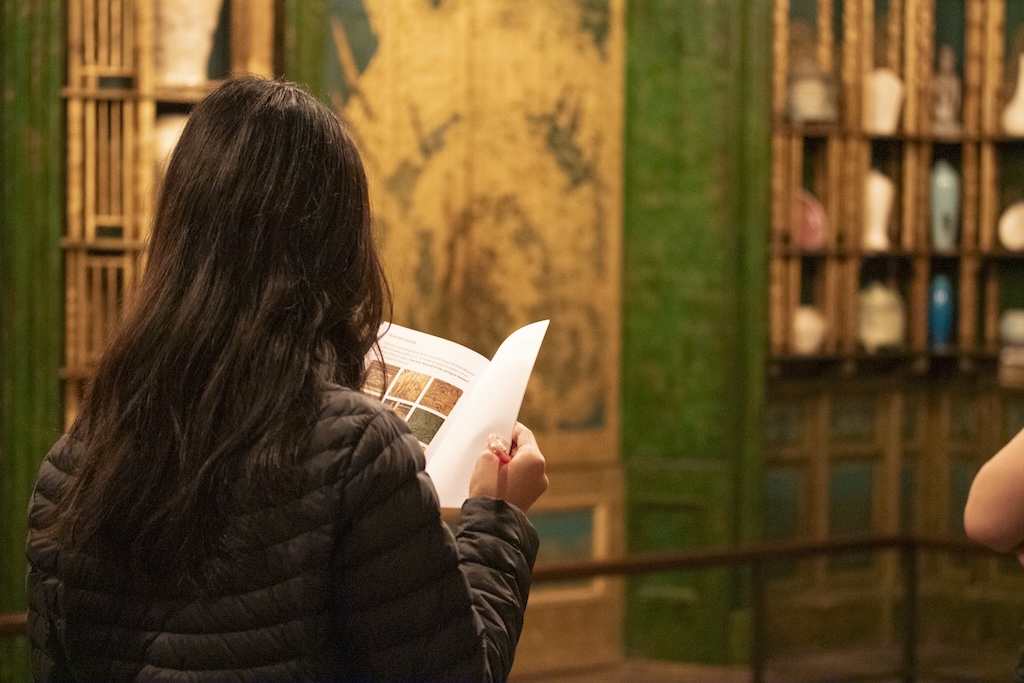
Throughout the four hours, hundreds of Slow Looking Guides were distributed from the information desk, inviting visitors to deepen their connection with the art through sketching prompts, poetic reflection, comparisons, and written responses.

Participant viewing the Slow Looking Guide designed by the museum.

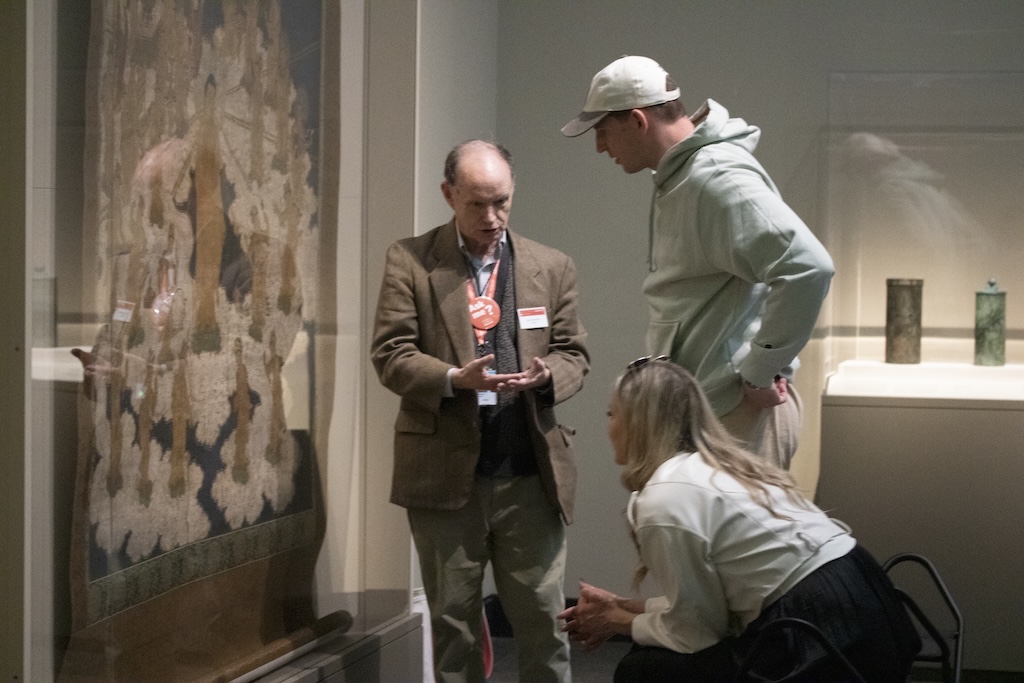
Four docents roamed the galleries, engaging visitors in informal conversations about the museum’s world-renowned collections. These roaming discussions allowed participants to linger, ask questions, and explore artworks through sustained dialogue rather than quick viewing.

Gallery docent in discussion with Slow Art Day participants.

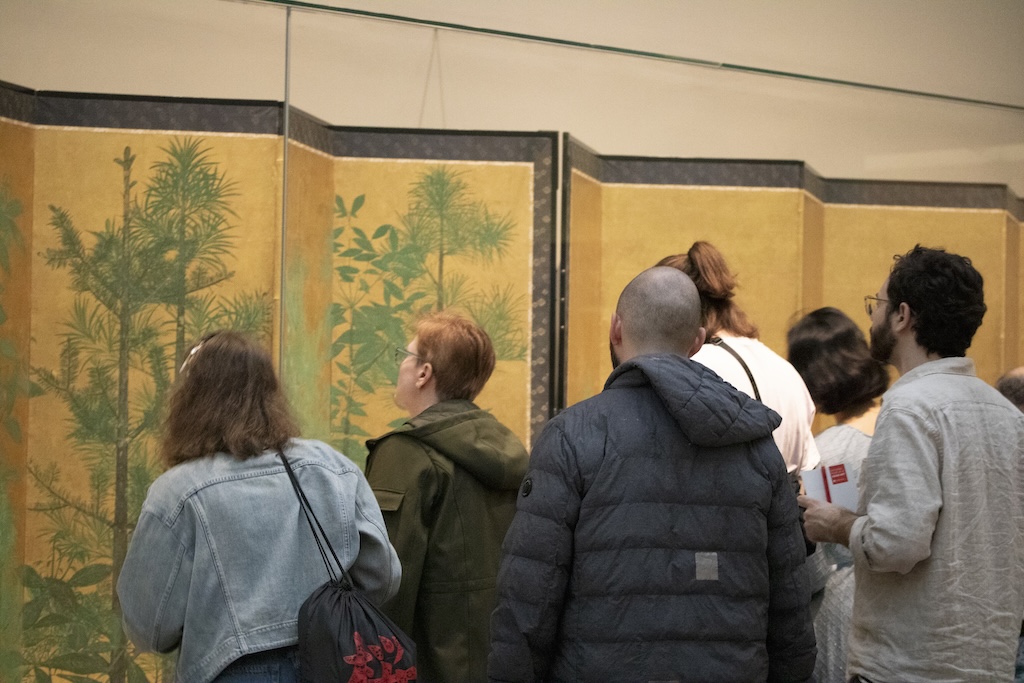
Two guided Slow Looking sessions were scheduled in the Japanese screen gallery, one for families and one for adults. Due to a large gathering on the National Mall that day, the family session did not run. However, 15 visitors participated in the adult session focused on the early 17th-century folding screen “Trees.”

Participants spent extended time observing the green malachite pigments layered over gold foil. As they looked more closely, subtle botanical details emerged — magnolia veins, pine and cedar needles, tiny acorn buds, delicate blossoms. The facilitator described the work as “a gardener’s dream brought indoors,” noting how the composition moves viewers from luminous gold panels into dense greenery, like stepping gradually into a forest.

Visitors looking at “Trees” (雑木林図屏風), Japanese folding screen (1600–1630).

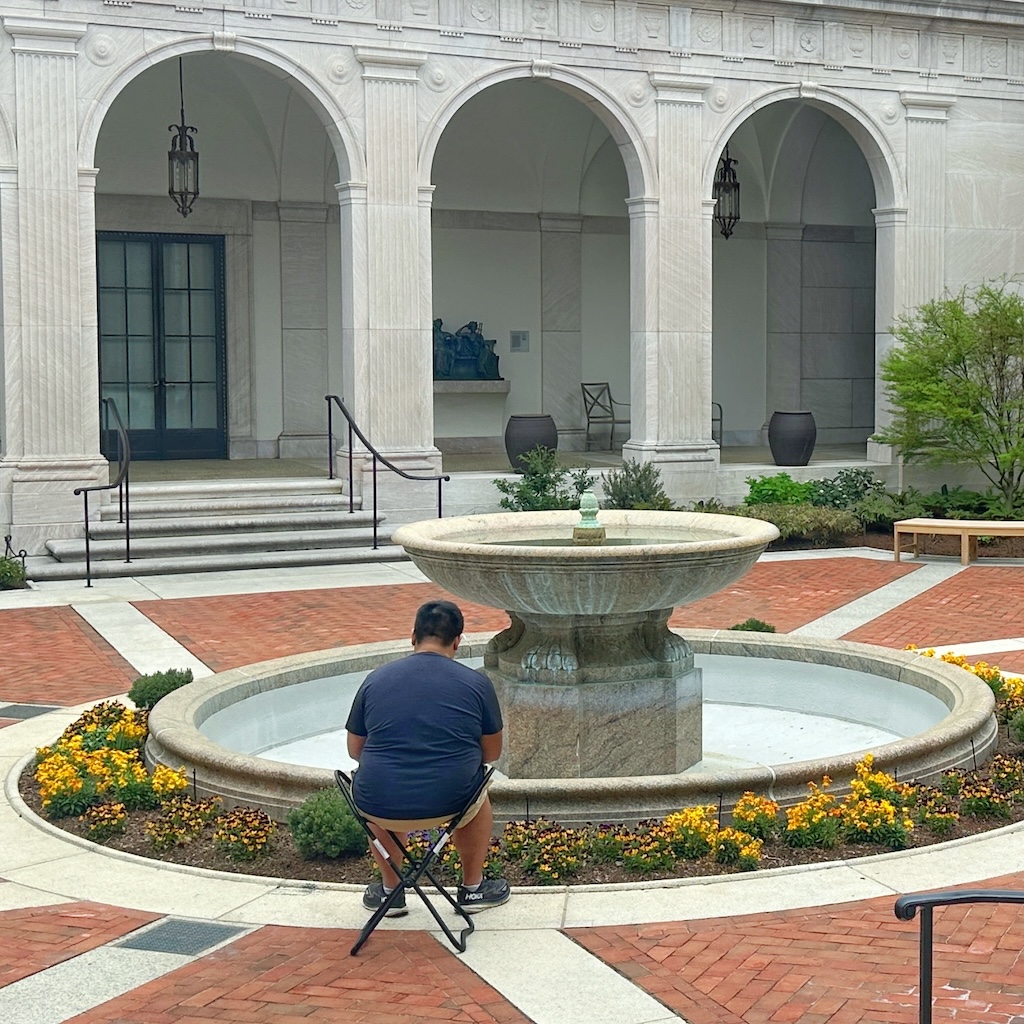
In the museum’s outdoor courtyard, 24 visitors joined Forest Bathing sessions led by a certified forest therapy guide. Though not a traditional forest setting, the courtyard’s Japanese maples, ferns, holly, pine, peonies, birds, bees, and even beetles became focal points for sensory awareness. Participants were invited to gently touch plants — an uncommon freedom in a museum environment — and to slow down through guided sensory exercises.

Participant in the Forest Bathing session in the courtyard.

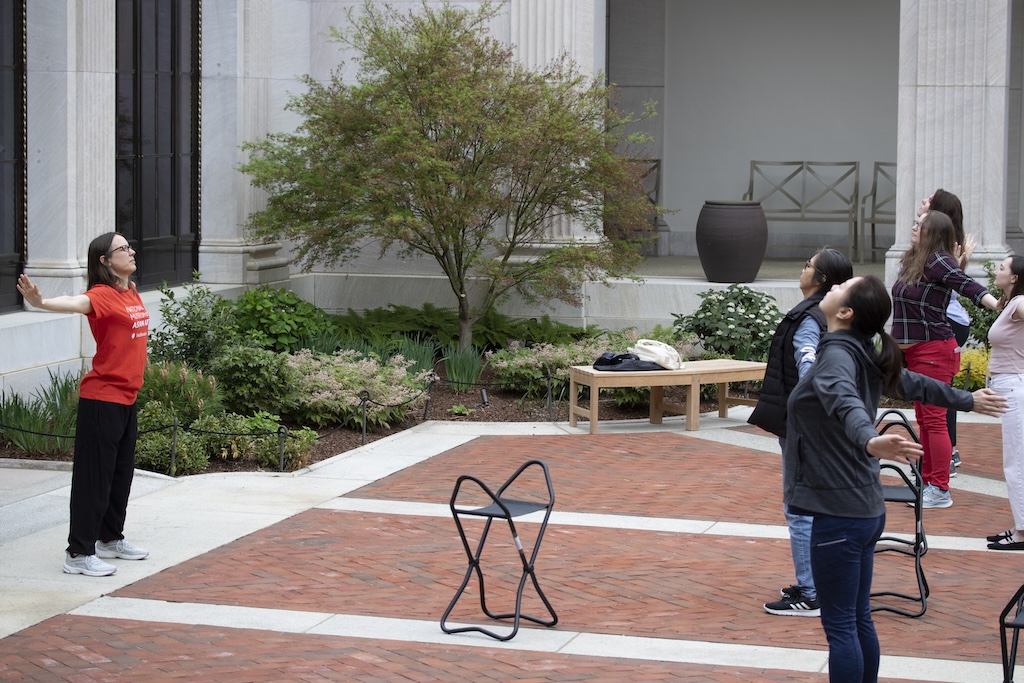
Visitors also participated in a Qigong session, a standing mindful movement practice rooted in Chinese tradition. Through slow, nature-inspired movements and breath awareness, participants were encouraged to notice the flow of energy in their bodies and mirror the rhythms of the natural world.

Participants during the Qigong session.

With their 2025 Slow Art Day, The National Museum of Asian Art demonstrated how structured programming, roaming conversation, embodied practice, and simple prompts can invite visitors into meaningful slowness.

At Slow Art Day HQ, we are especially inspired by how the National Museum of Asian Art expanded slow looking beyond the gallery walls, integrating folding screens, forest bathing, mindful movement, and docent engagement into a cohesive experience.

We are grateful to Jennifer Reifsteck and the entire team at the National Museum of Asian Art for their thoughtful leadership. We look forward to seeing what they design for Slow Art Day 2026.

– Ashley, Johanna, Jessica Jane, and Phyl

P.S. View them on Instagram and Facebook

Mindfulness, Music, and Morning Stillness at Caloundra Regional Gallery in Australia

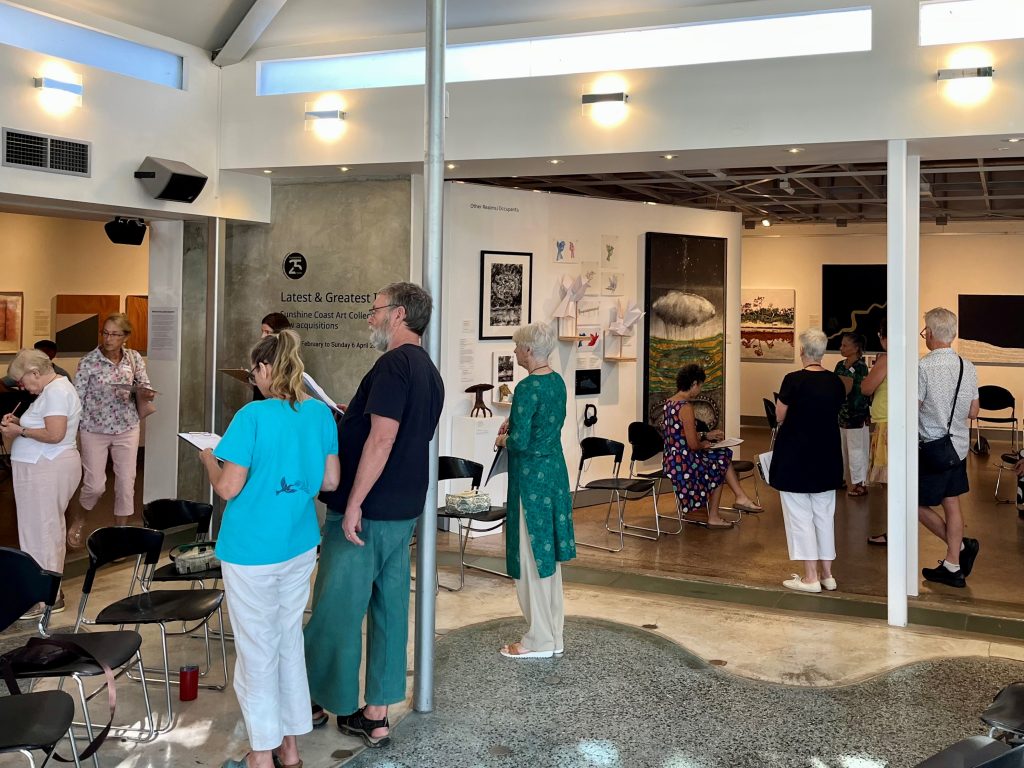
For their fourth Slow Art Day, Caloundra Regional Gallery in Australia thoughtfully expanded their event format by introducing guided mindfulness activities to help participants truly slow down before engaging with the art.

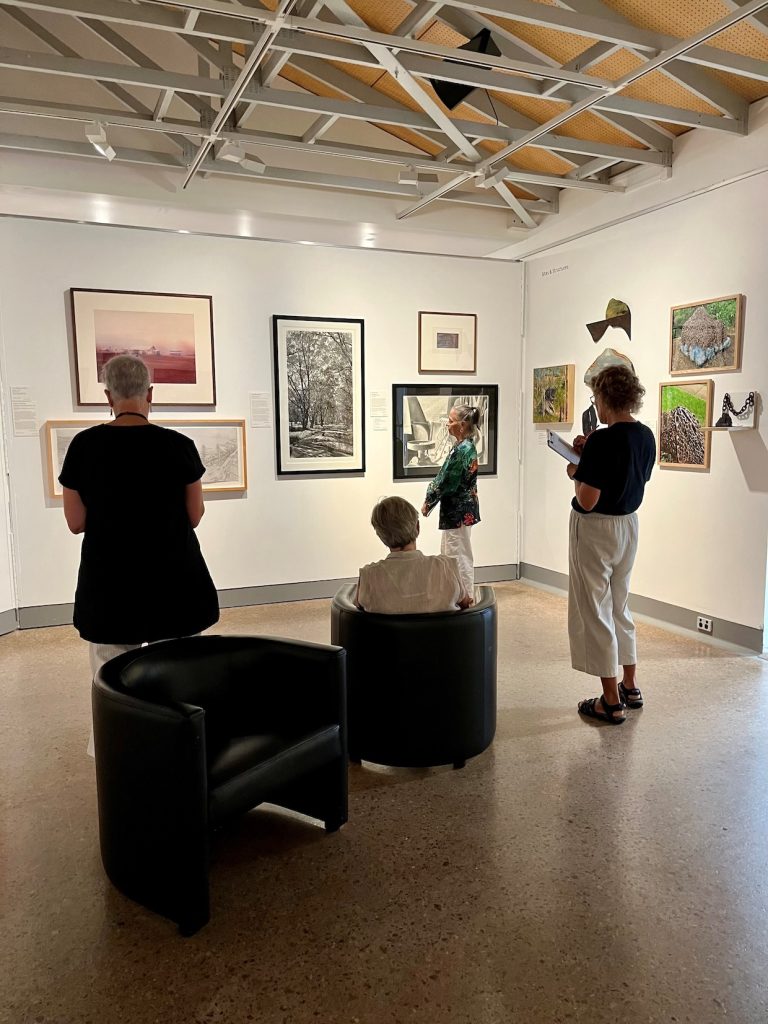
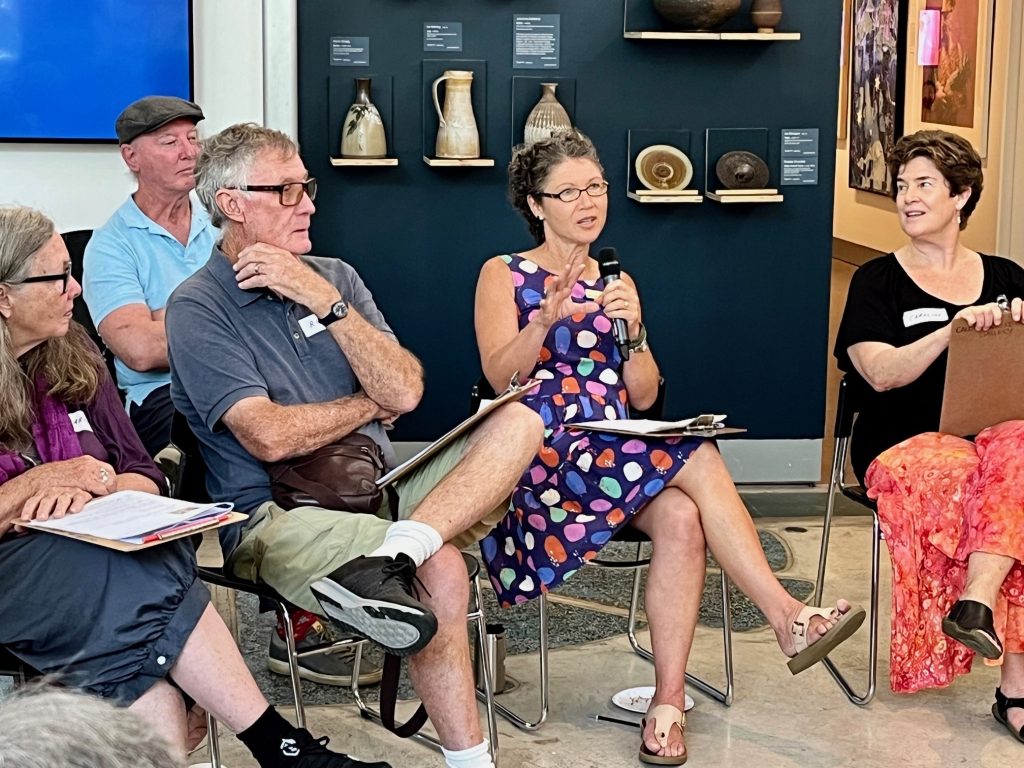
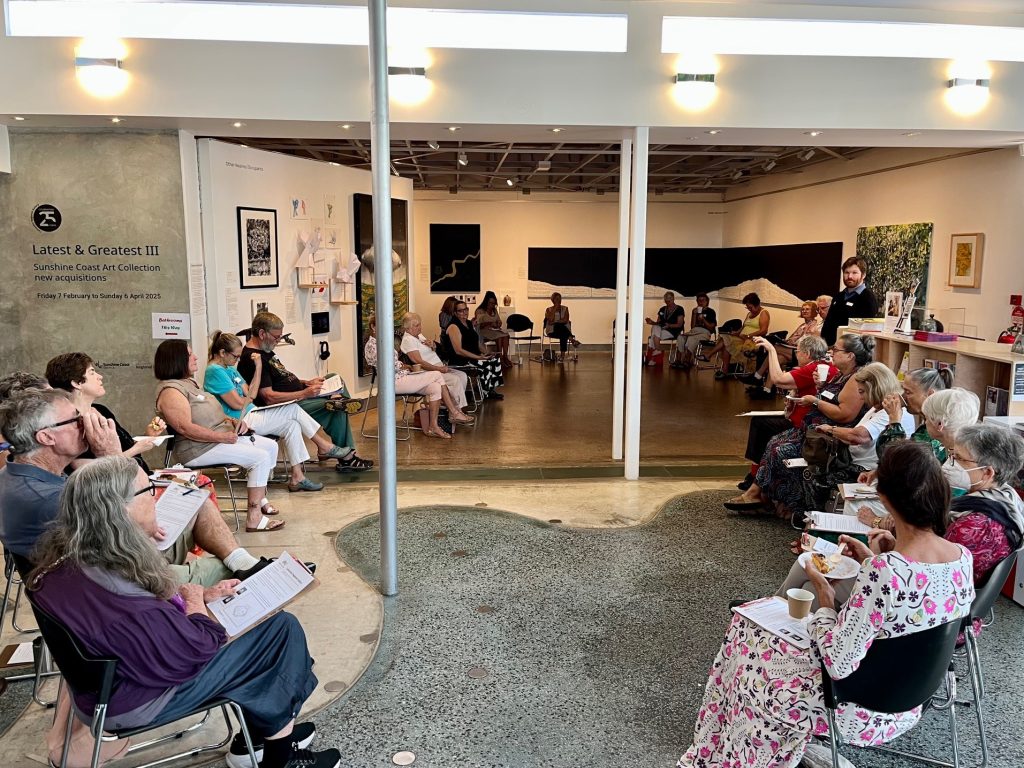
Held from 8 – 10am (before regular gallery opening hours), 34 attendees gathered for a guided breathing exercise to help get settled into the experience, soften their gaze, and prepare to look deeply and intentionally.

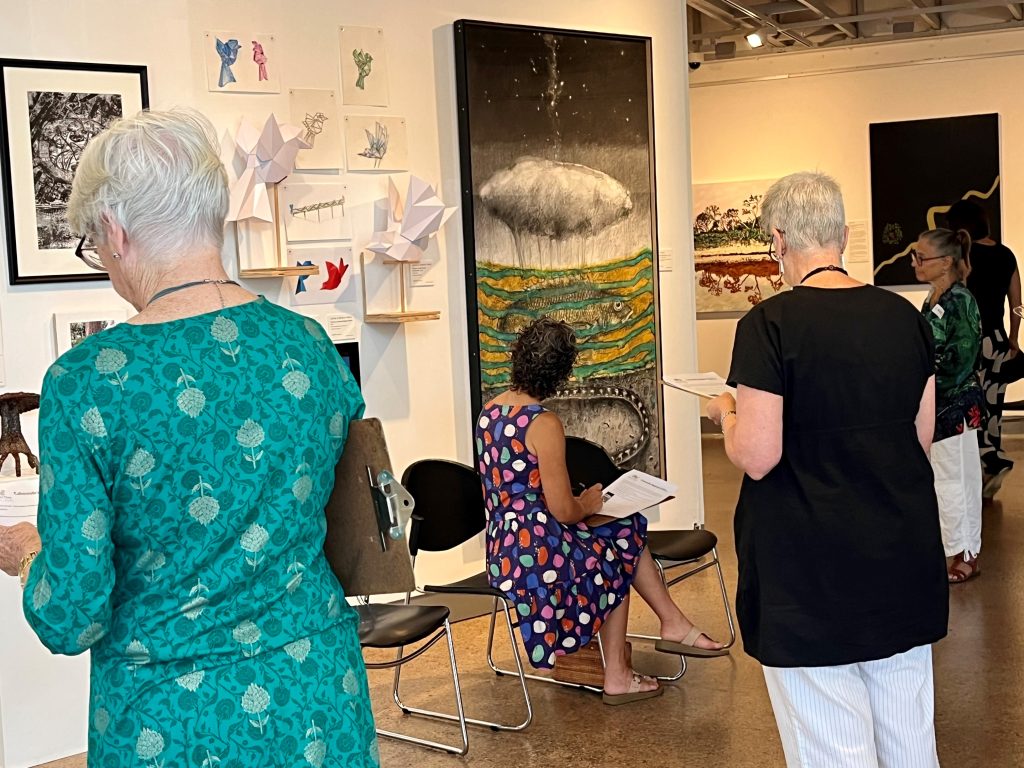
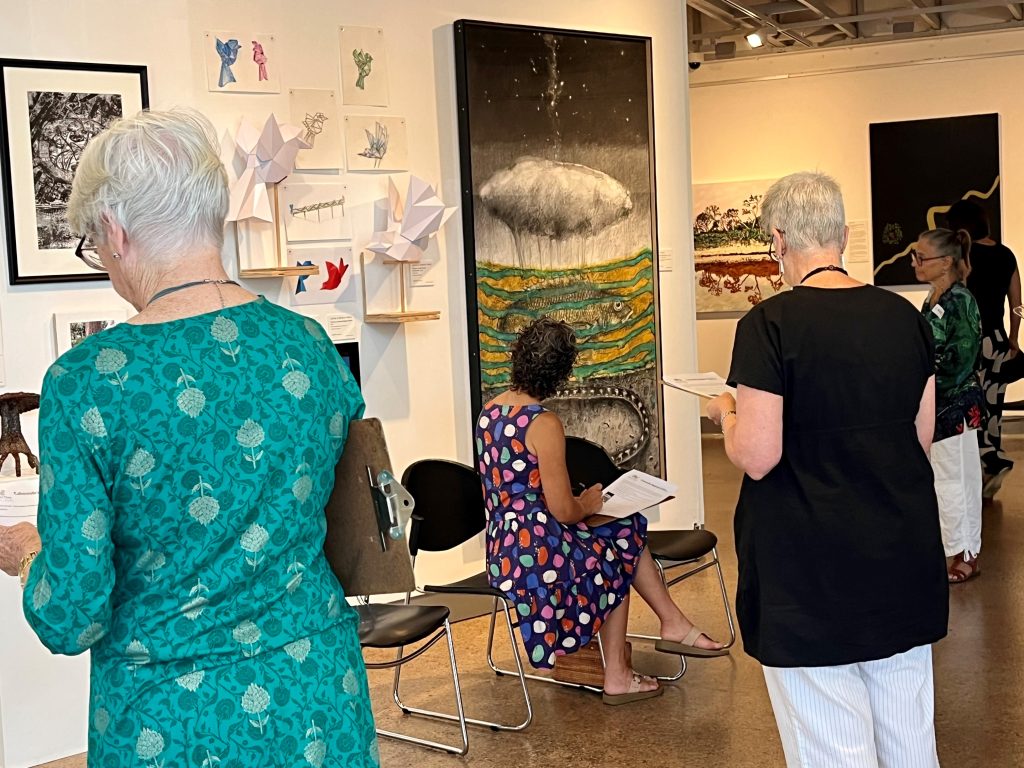
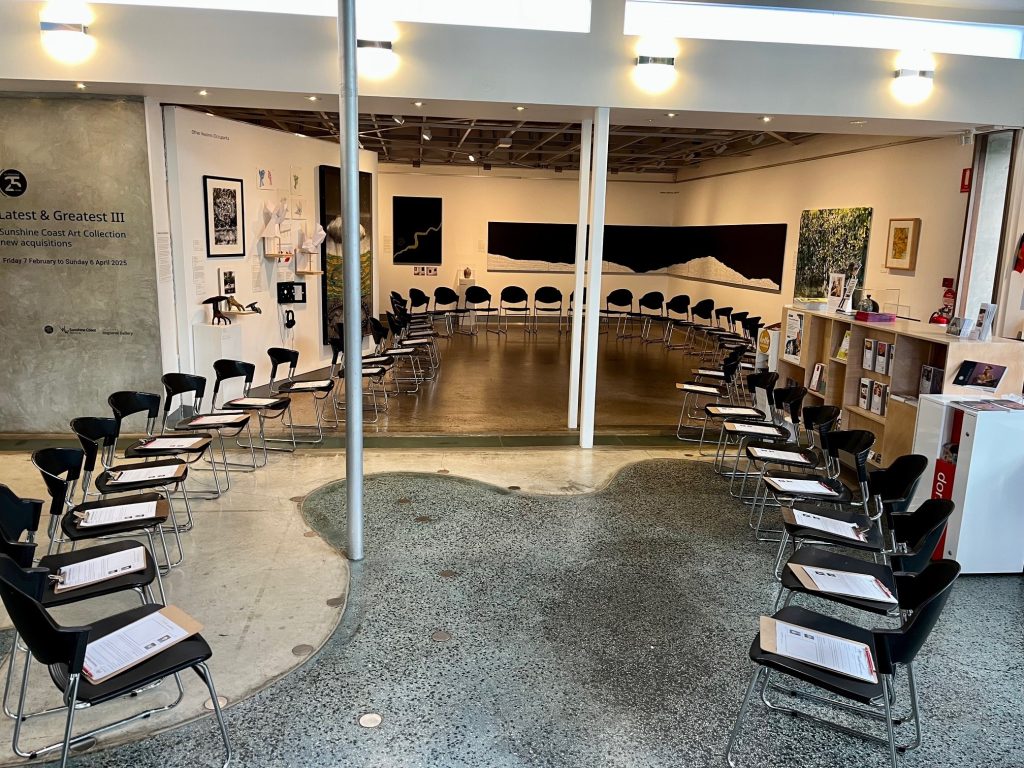
Using a specially designed worksheet (you can find it below), attendees then spent 8–10 minutes with four selected artworks, plus one artwork of their own choosing.

Featured works included:

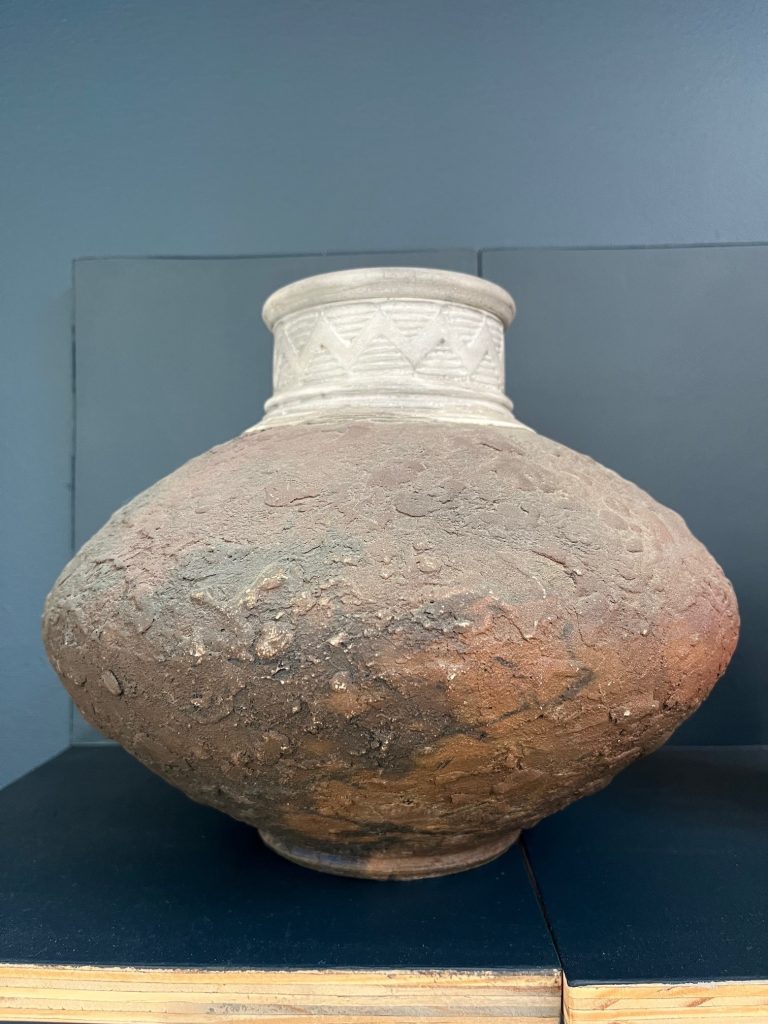
  • Peter Harris | Jar | c.1992–3
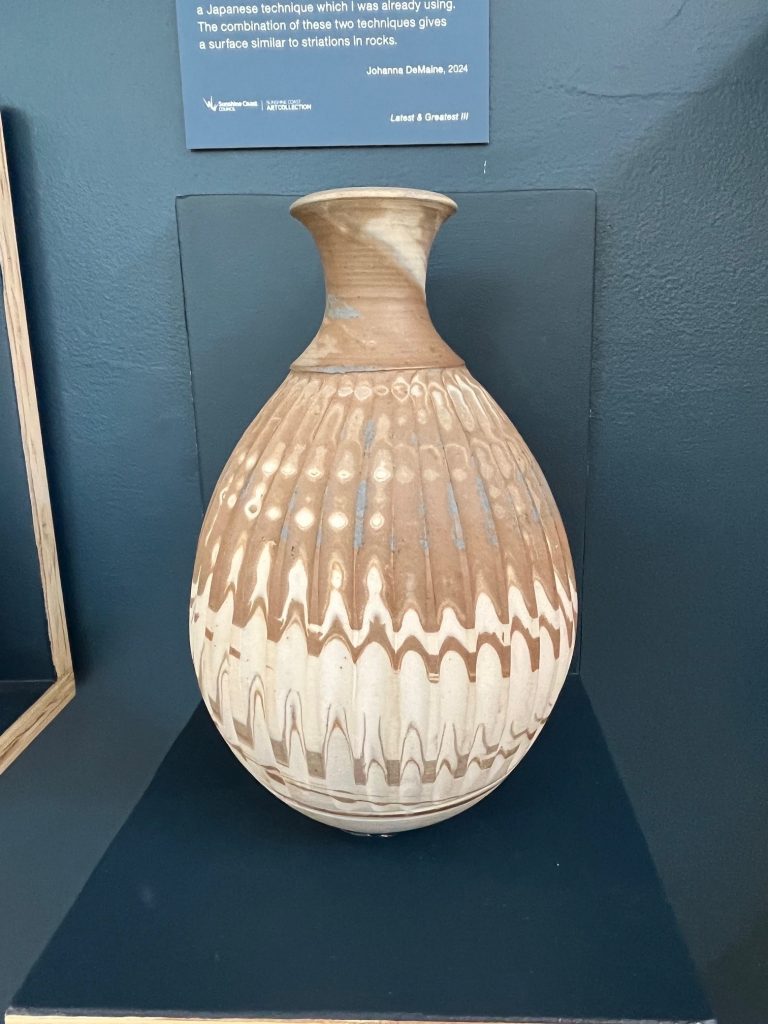
  • Johanna DeMaine | Bottle | c.1980s
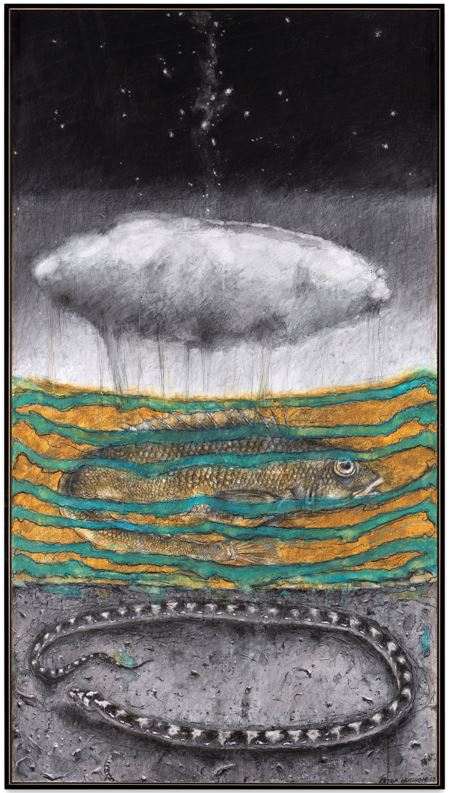
  • Peter Hudson | Girraween After Dark | 2022–23
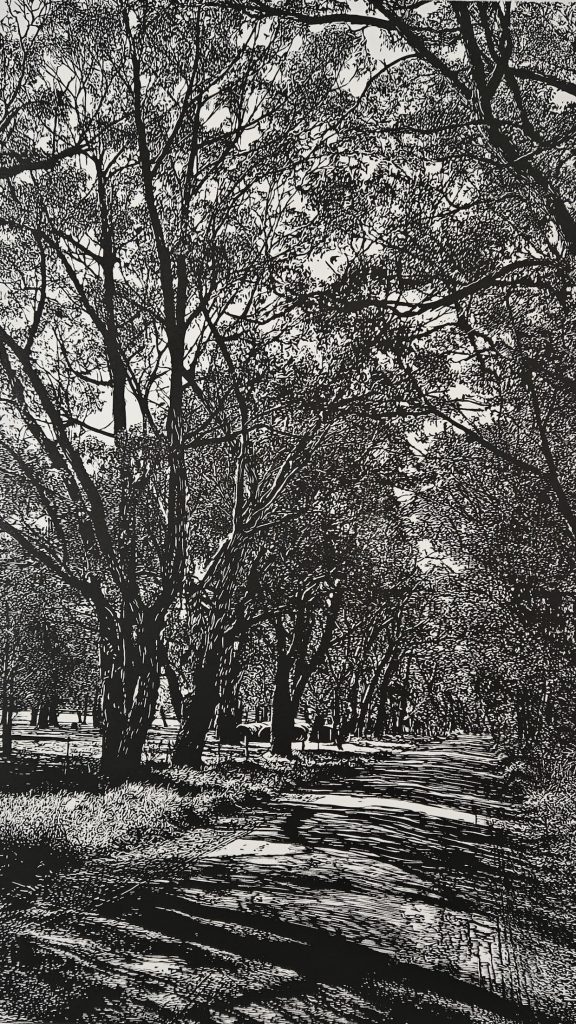
  • Amanda Western | Country Lane | 2023
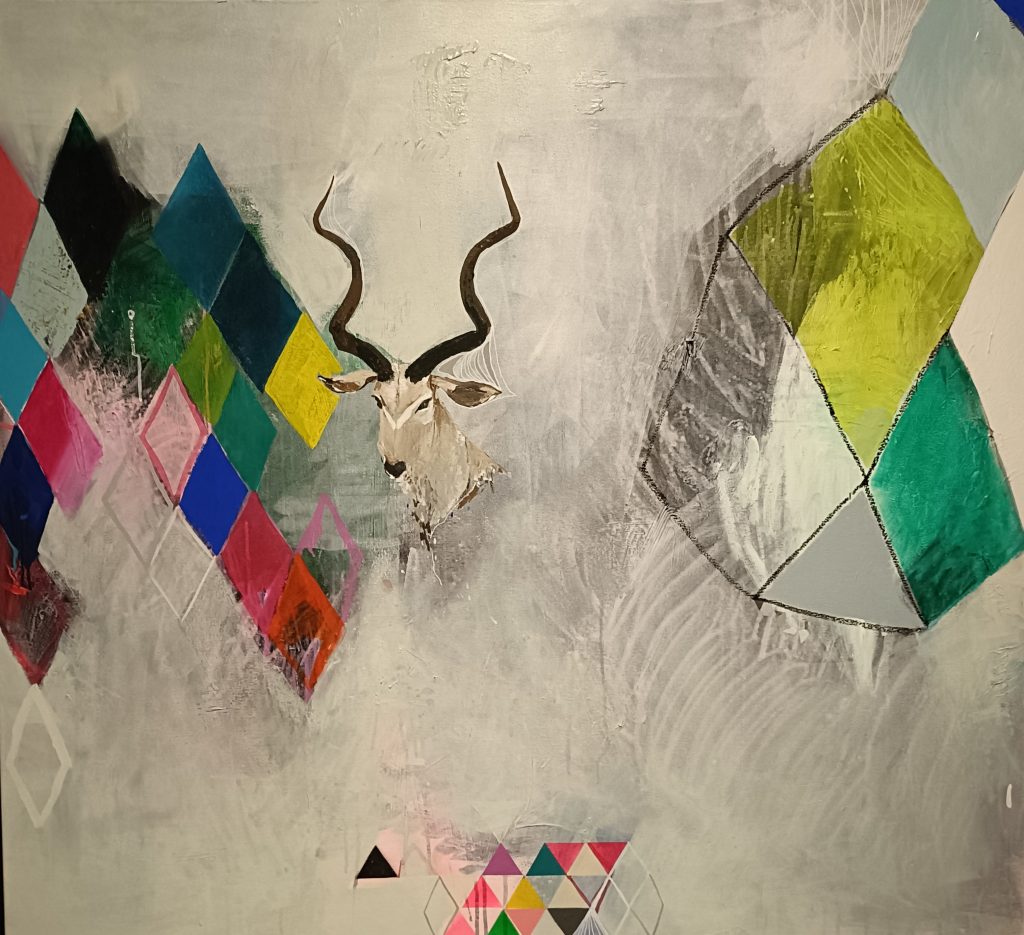
  • Miranda Skoczek | Untitled (impala) | 2012
Peter Hudson | Girraween After Dark | 2022-23.
Amanda Western | Country Lane | 2023.
Miranda Skoczek | Untitled (impala) | 2012

The worksheet prompted participants to observe carefully, reflect on emotions, imagine stepping into the scenes, and even sketch details they noticed. As outlined in the worksheet, there was “no right or wrong way to look at art”, just an invitation to notice, feel, and reflect.

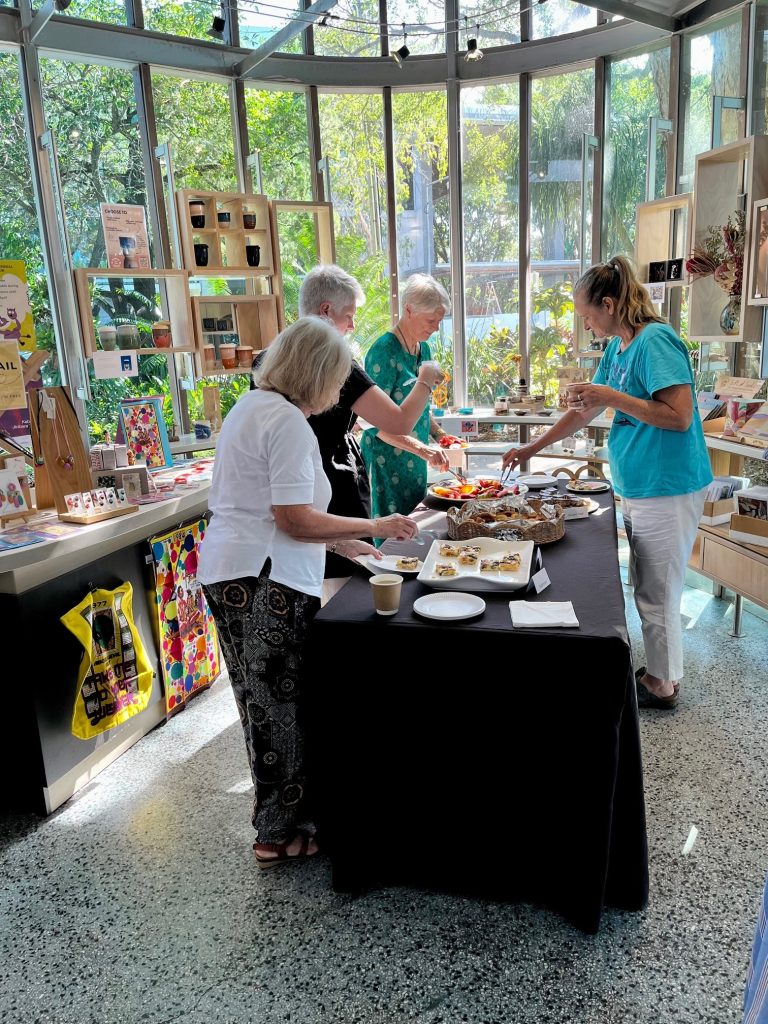
After the viewing sessions, guests enjoyed home-baked refreshments and fresh fruit platters generously provided by the Friends of the Gallery. A mindful tea-drinking exercise encouraged participants to extend the slow experience beyond the artwork and into everyday sensory awareness.

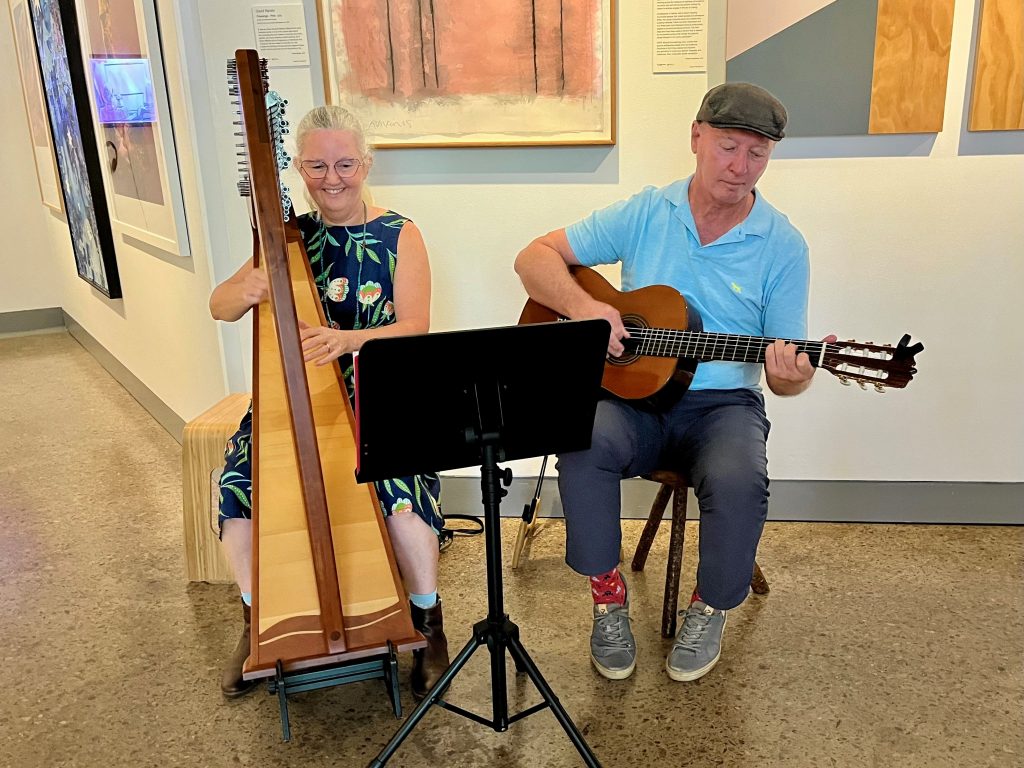
Adding to the atmosphere, local musicians Graham and Rowena provided harp and guitar music throughout the morning.

Musicians Graham and Rowena.

Feedback from participants was overwhelmingly positive, with many expressing appreciation for the quiet early-morning setting and the structured yet personal format of the experience.

A heartfelt thank you to Senior Learning and Engagement Officer Jenny Jones, the Caloundra Regional Gallery team, the Friends of the Gallery, and the talented musicians for creating such a thoughtful Slow Art Day.

We look forward to what they come up with for Slow Art Day 2026.

— Ashley, Johanna, Jessica Jane, and Phyl

P.S. View them on Instagram and Facebook.

Meditation and Slow Making at Gothenburg Museum of Art

The Gothenburg Museum of Art in Gothenburg, Sweden, participated in Slow Art Day 2025 by offering two structured activities for adults and children. The program combined guided meditation, slow looking in the galleries, and hands-on making in the studio.
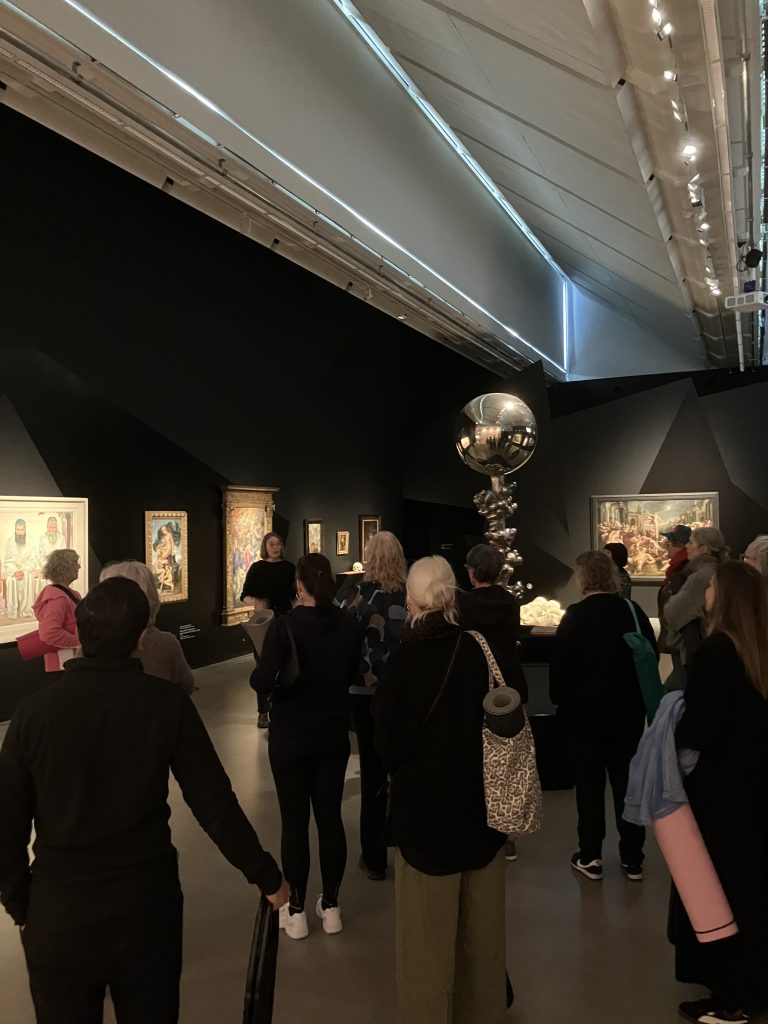
The group gathered in front of Oracle, a sculpture by Norwegian artist Jone Kvie, on view in the exhibition Apocalypse: From Last Judgement to Climate Threat.
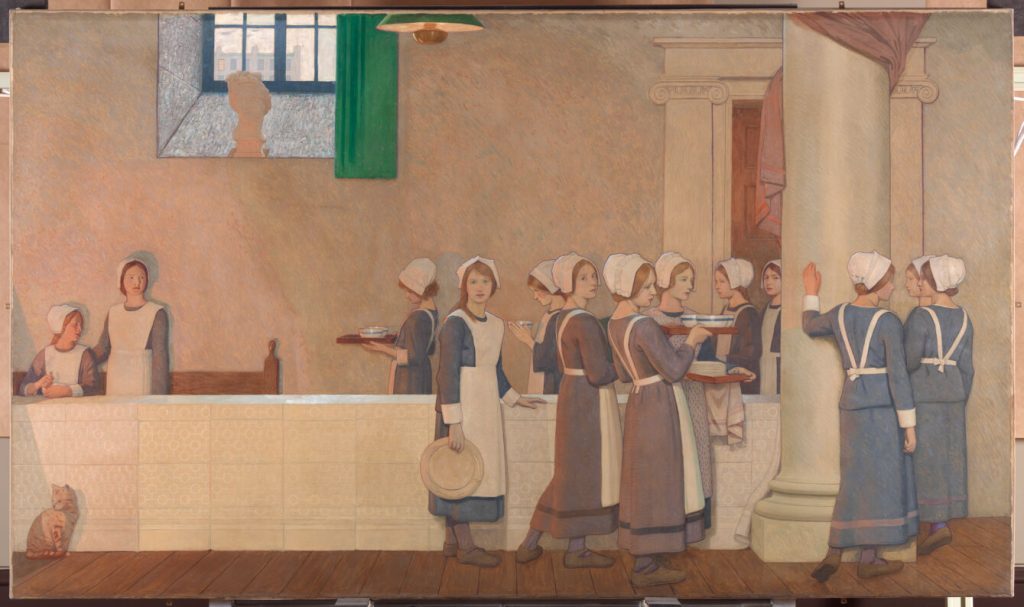
Photo by Linda Noreen.

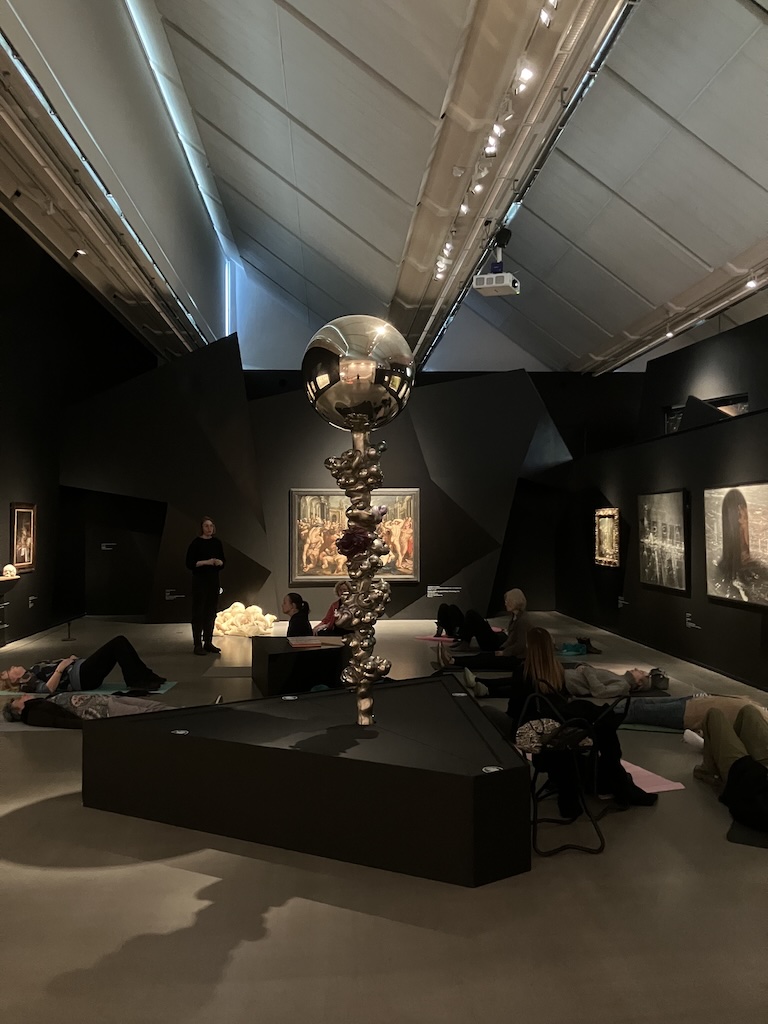
For adult participants, the museum hosted a guided meditation led by Pernilla Ljungkvist, artist and yoga teacher, around the sculpture. Through stillness and focused attention, participants were invited to engage with the sculpture more deliberately.

Participants practicing yoga. Photo by Linda Noreen.

For children ages 6–12, the museum offered a two-part workshop. The first part took place in the museum’s collection galleries, where participants practiced slow-looking exercises and completed a drawing activity based on careful observation.

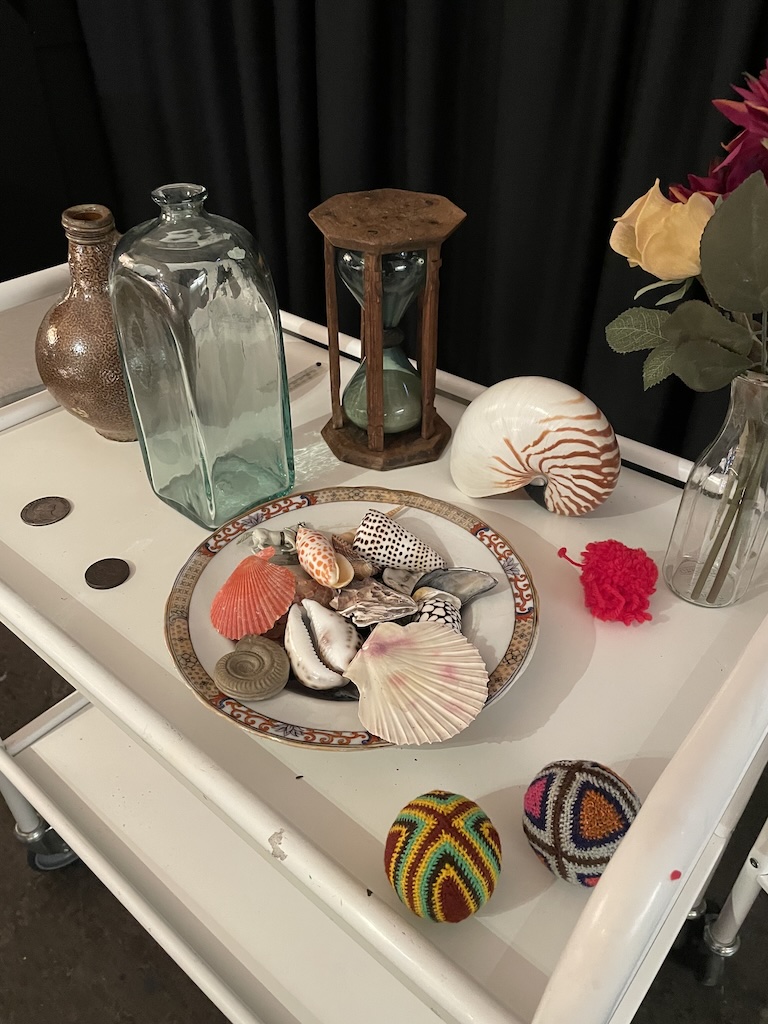
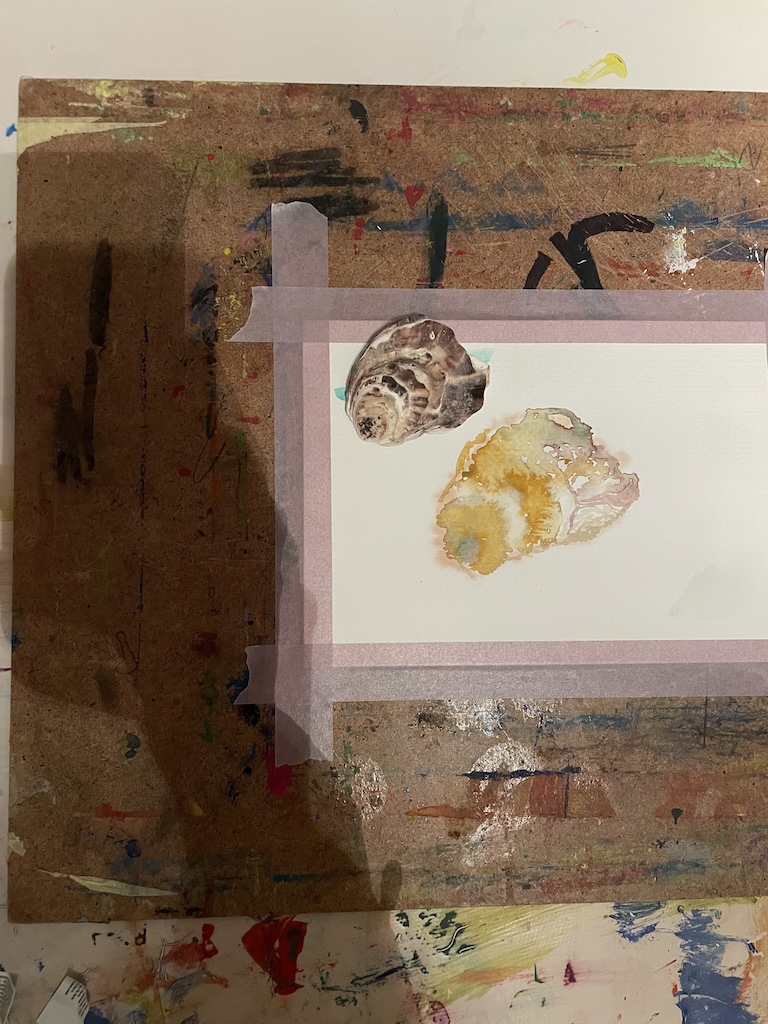
The group then moved to the Museum Studio, where a selection of objects was presented. Participants chose one or more objects to reinterpret by painting with watercolors, drawing with colored pens, or shaping forms in clay. The emphasis throughout was on slowing down, observing closely, and working deliberately. Across both activities, the shared goal was to encourage sustained attention and mindful engagement through observation, reflection, and making.

Photo by Jonna Kihlsten.

We thank Jonna Kihlsten, Art Educator, and the Gothenburg Museum of Art team for designing inclusive Slow Art Day experiences, as well as Pernilla Ljungkvist for leading the meditation session. We look forward to seeing what Gothenburg comes up with for Slow Art Day 2026.

– Ashley, Johanna, Jessica Jane, and Phyl

P.S. Follow Gothenburg Museum of Art on Facebook and Instagram

Multiple Paths To Slow Looking at Wellcome Collection

For their fourth year participating in Slow Art Day, Wellcome Collection in London hosted a full day of guided and self-guided slow-looking experiences across the museum. Wellcome Collection is a free museum that explores human health through the intersections of art, medicine, and science. Building on the range of facilitated sessions introduced in previous years, the 2025 program offered visitors multiple ways to engage slowly with artworks, objects, and ideas.

The Wellcome Collection team led five guided slow-looking sessions, each facilitated by a different staff member and focused on a distinct body of work.

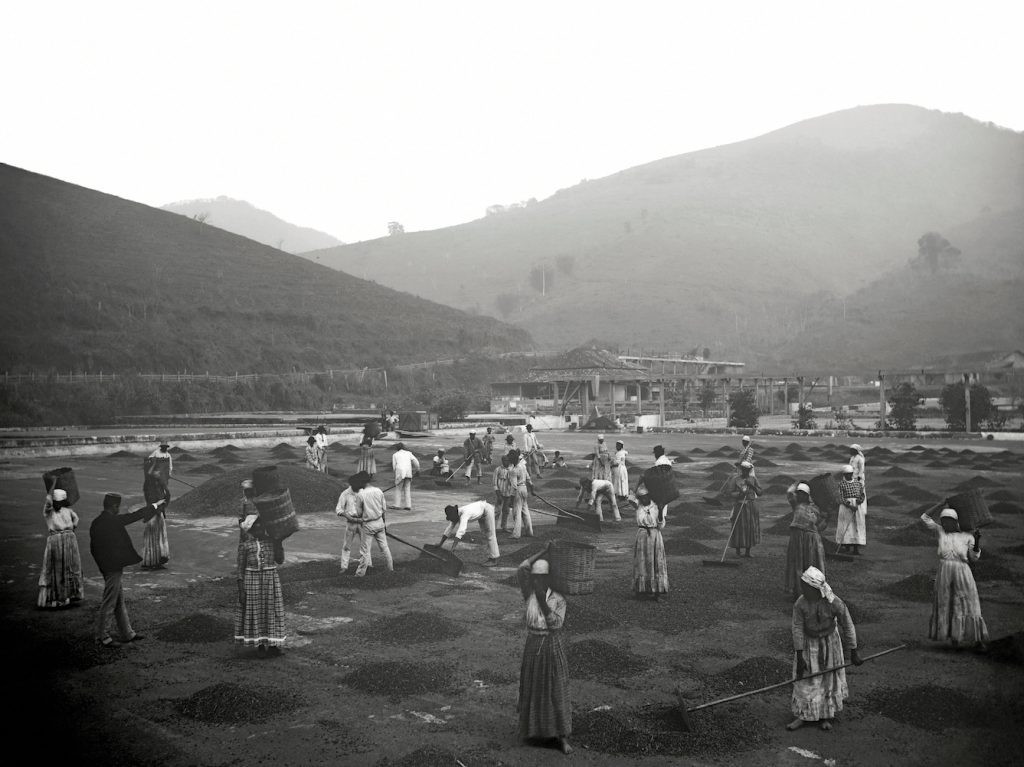
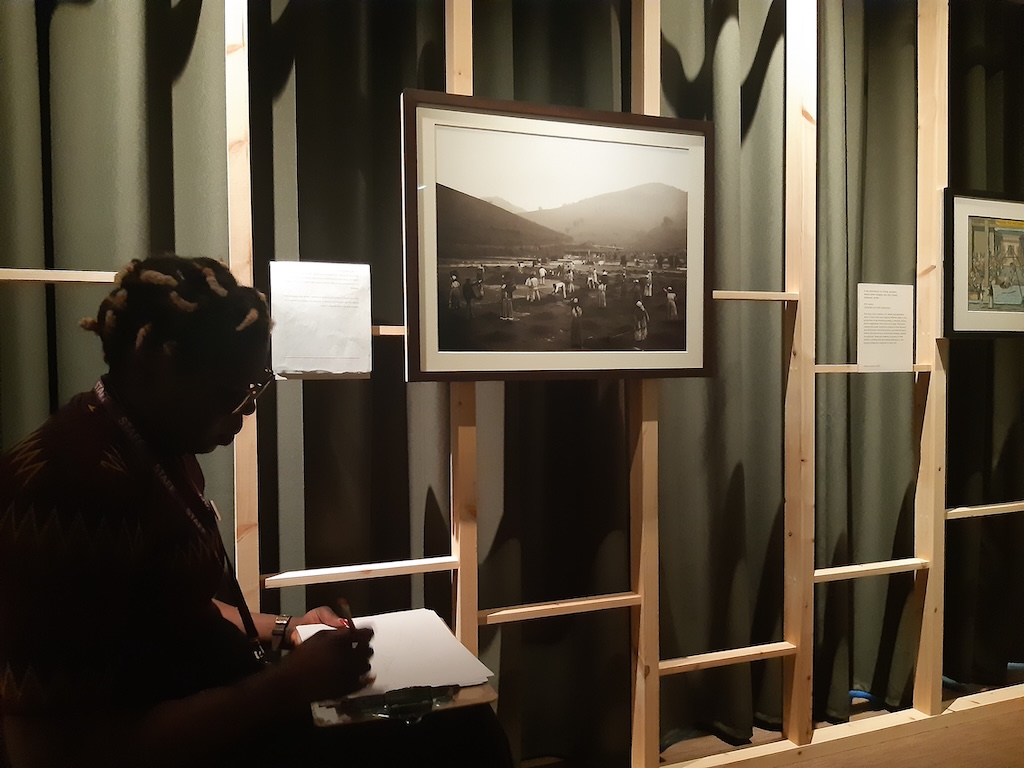
Isabelle Gapomo guided participants in close observation of a photograph by Marc Ferrez from the Hard Graft exhibition, titled ‘Escravos em terreiro de uma fazenda de café na região do Vale do Paraíba’ (c.1882), examining how plantation labor was depicted by early photographers and how those images are experienced today.

‘Escravos em terreiro de uma fazenda de café na região do Vale do Paraíba’ (c.1882). Marc Ferrez.

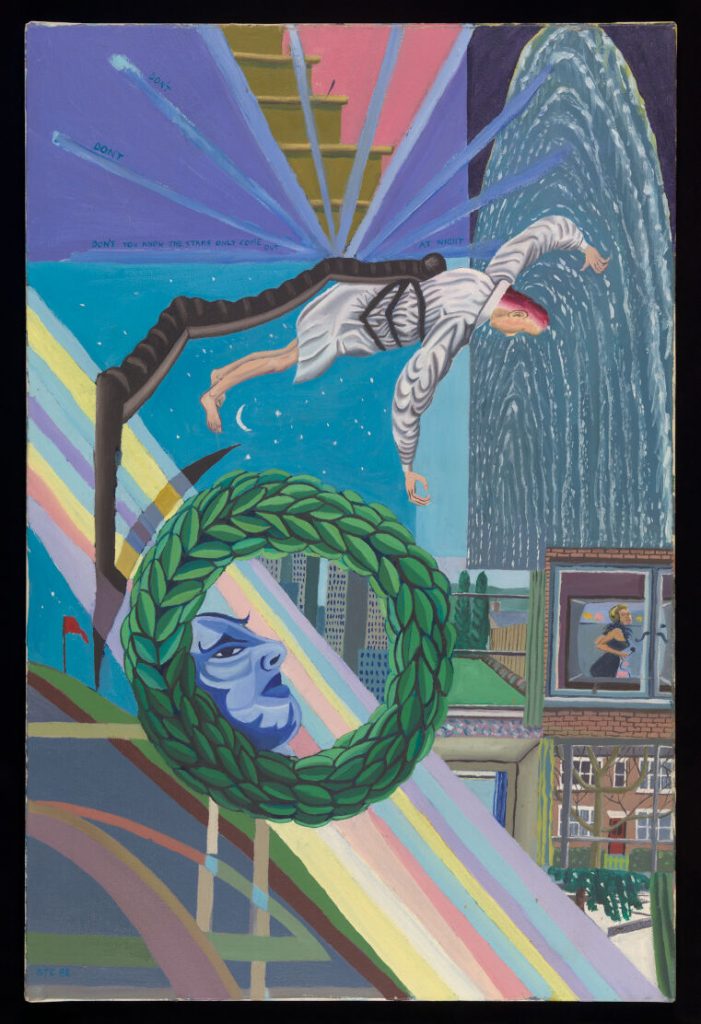
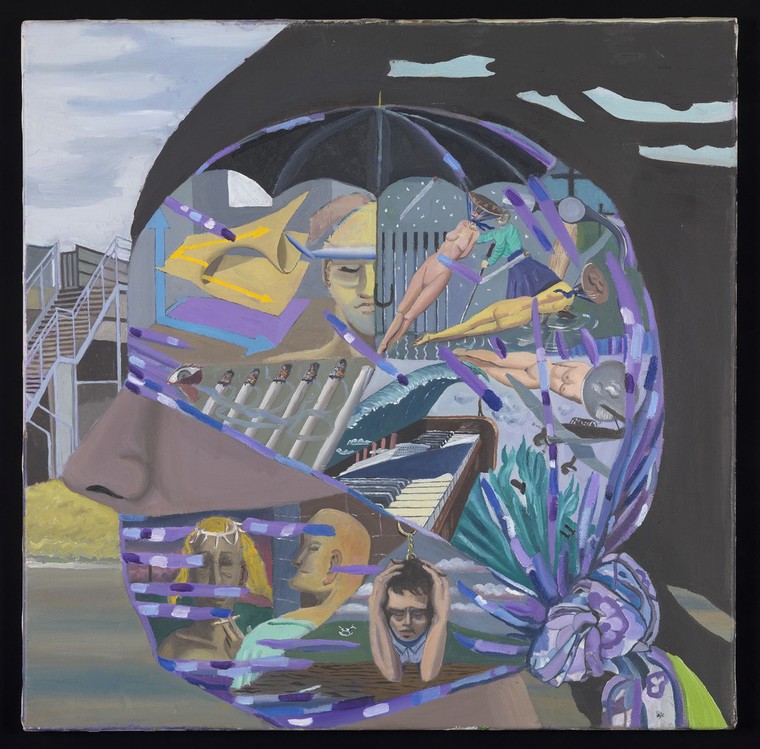
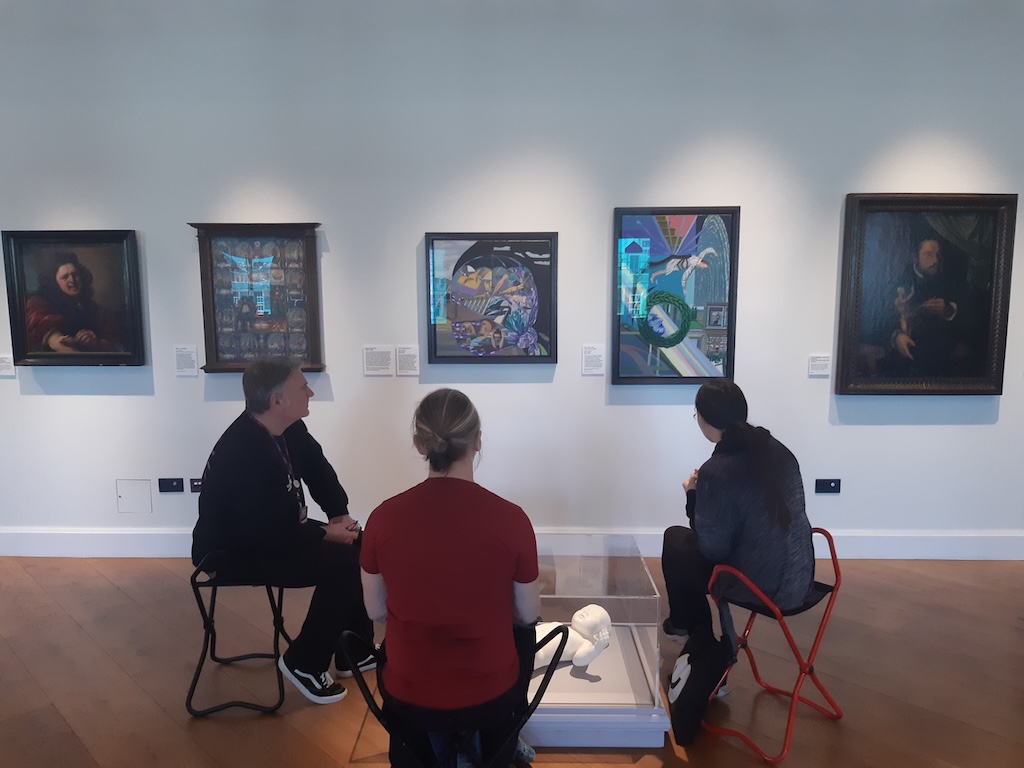
Griff Davies led a session centered on the dream-inspired paintings of Bryan Charnley, using the imagery to prompt discussion around mental health.

“The Stars Only Come Out at Night” by Bryan Charnley.
“Nail Schizophrene” by Bryan Charnley.

Sana Siddiqui reprised her popular session last year and used vintage food advertisements to evoke memory and sensory response.

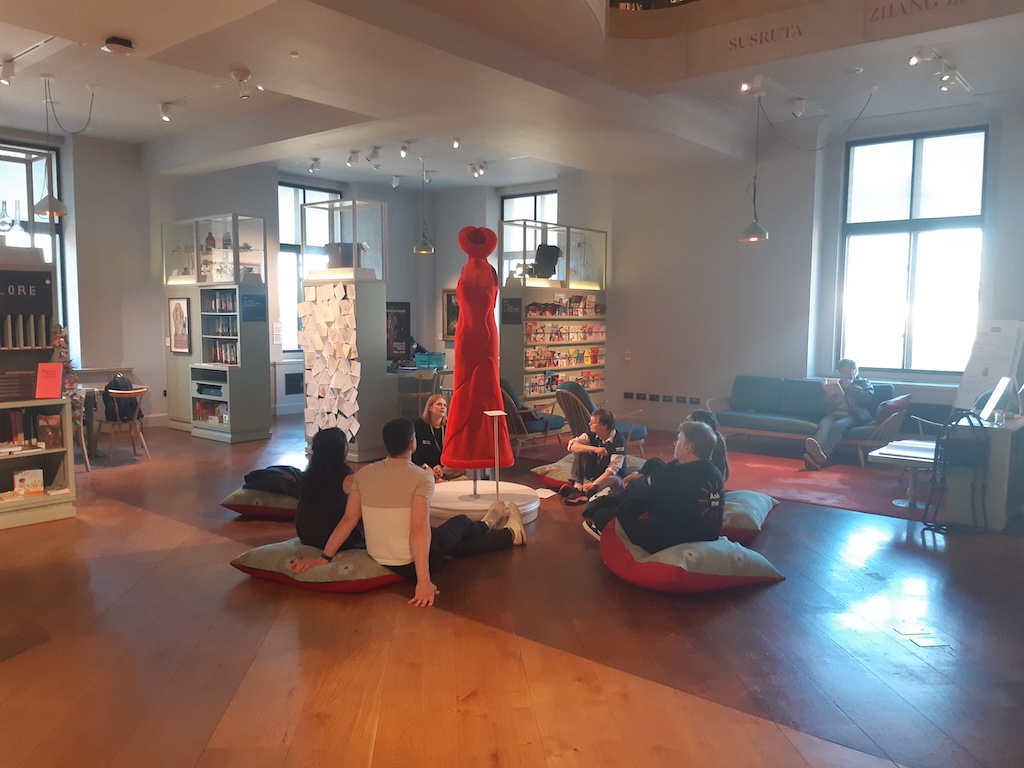
In the Reading Room, Isabel Greenslade gathered participants around “Closing Neural Tube Dress,” a sculptural garment that encouraged reflection on abstraction.

Participants slow looking at the “Closing Neural Tube Dress“.

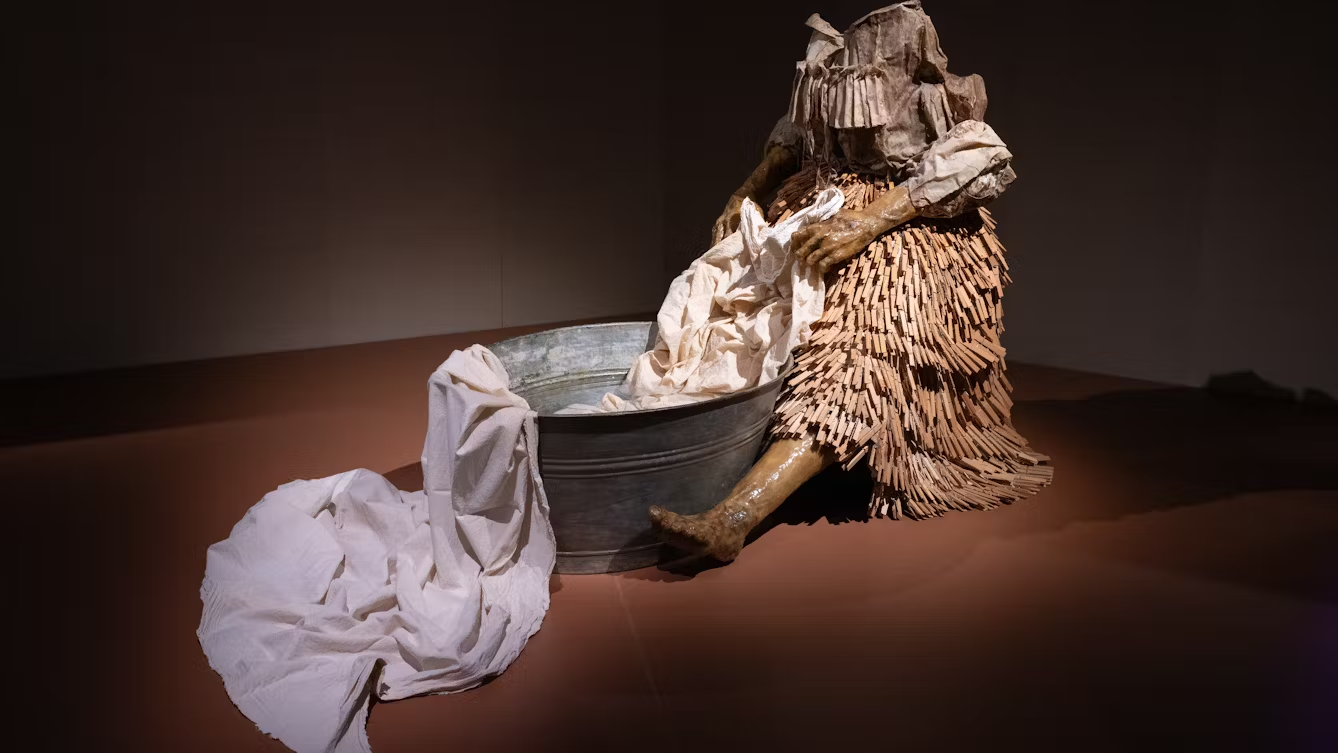
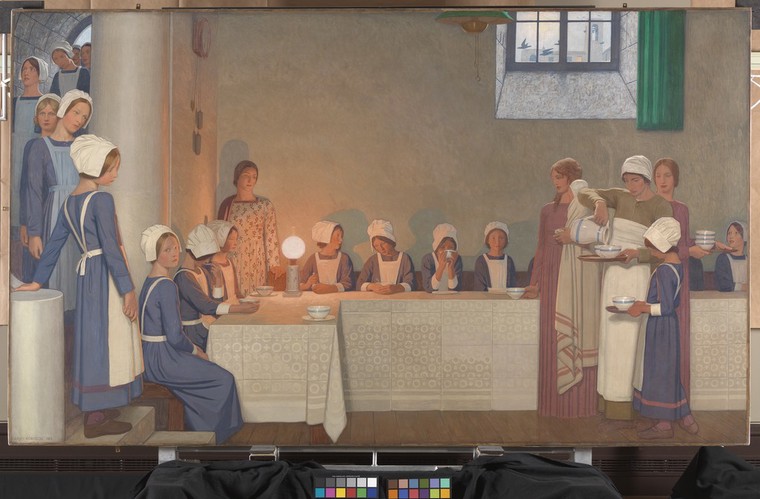
Jake Blackavar led a session that moved through multiple floors of the museum, selecting a sculpture, a video work, and a pair of paintings to explore how different media and gallery contexts shape the slow-looking experience.

“Washerwoman” by Shannon Alonzo.
“Orphans” (left) by Frederic Cayley Robinson.
“Orphans” (right) by Frederic Cayley Robinson.

In addition to the guided sessions, the museum designated a room as a Slow Art Day hub where tours began and visitors could drop in to learn more about the event. In this space, visitors were invited to practice slow looking independently using a rotating screen of images from Wellcome Collection’s holdings, which changed every ten minutes.

What a thoughtful and well-designed program. Wow.

We at Slow Art Day HQ thank Jake Blackavar and the entire Wellcome Collection team for continuing to lead the way in producing meaningful and multi-dimensional experiences.

We eagerly look forward to what they come up with for Slow Art Day 2026.

– Ashley, Johanna, Jessica Jane, and Phyl

P.S. Follow Wellcome Collection on their Instagram and Facebook

From Canvas to Table: Slow Art and Slow Food at The Mart

For their 5th Slow Art Day, the Museum of Modern and Contemporary Art of Trento and Rovereto (The Mart), Italy, organized an event in collaboration with a local Slow Food collective, an association committed to restoring value to food – respecting those who produce it in harmony with the environment and ecosystems – while enhancing the knowledge preserved by local territories and traditions.

This is the second collaboration between The Mart and Slow Food, with the first occurring during their 2023 Slow Art Day. For this event, five local producers focused on cheese, chili, preserves, wine and baked goods.

For the 2025 event planning, the Slow Food producers were invited a week earlier to look slowly at the two works of art selected for Slow Art Day. Afterwards, they were asked to associate one of their food products with each work they had just observed – so cool.

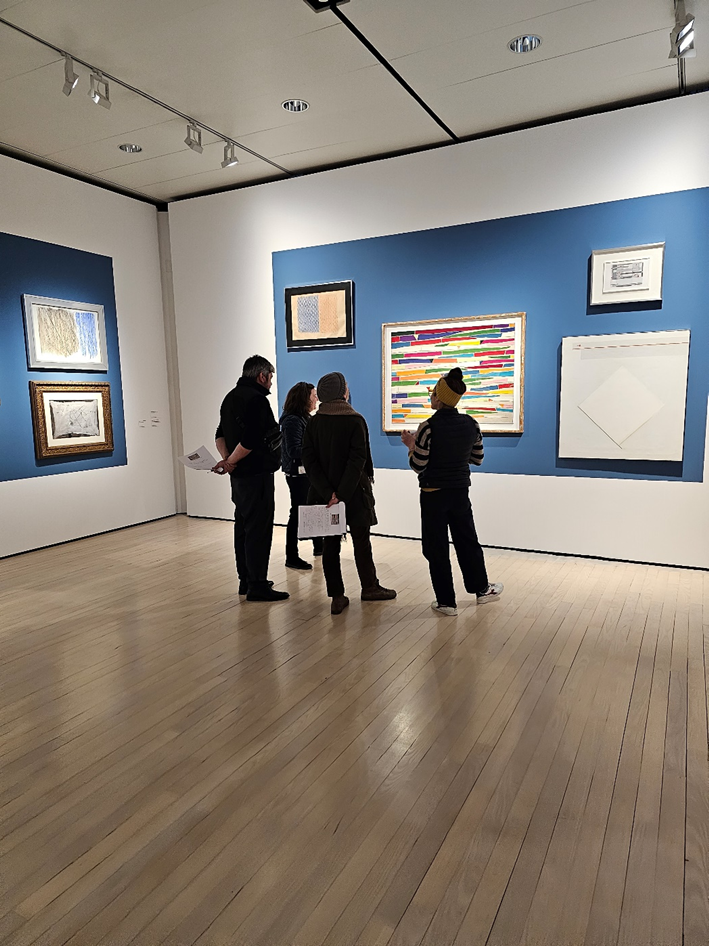
Two of the local producers observing and discussing “Gianfilippo Usellini, Il Carnevale dei poveri, 1941”

On the day of the event, twenty “Amici del Mart” (Friends of The Mart who are enrolled in The Mart’s Membership program) repeated the slow looking experience with the same art works, taking time to observe them on their own before group discussions.

They were then divided into five groups, each with some “veteran slow lookers” as well as first-time participants. The groups discussed the works and assigned scores from 0 to 5 against emotions and aesthetics connected to the pieces (prompted by the question “Would you put this work in your home?”).

Friends of The Mart (Amici del Mart) sharing their opinions on “Piero Dorazio, Senza titolo, 1974”

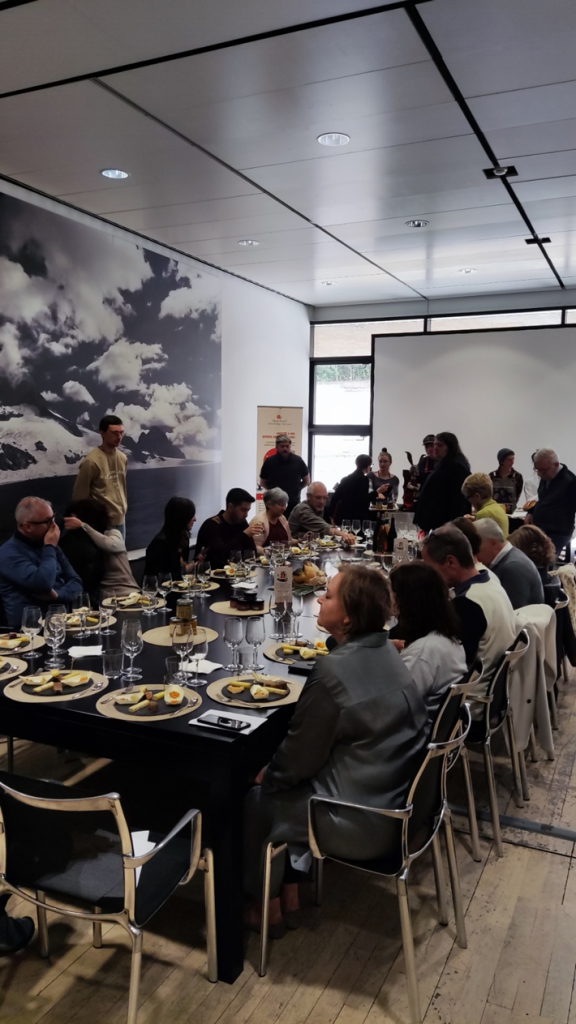
Afterwards, participants enjoyed a tasting with the five local producers, who paired food with the artworks based on color, atmosphere and emotions evoked. During that tasting, the producers shared the story behind their pairing choices, offering a personal and creative look at the link between the artworks and food. What a great design.

All the Amici and the producers (almost) ready to start the tasting experience

The event proved to be a wonderful way to bring food and art together, while giving visibility to local food producers.

We at Slow Art Day HQ have always believed that Slow Food and Slow Art belong together and love what The Mart is doing to lead the way. We look forward to seeing what they come up with for Slow Art Day 2026.

– Jessica Jane, Ashley, Johanna, and Phyl

P.S. Explore The Mart on their Facebook and Instagram.

Inclusive Slow Sculpture and Drawing Experience at Kasteel van Gaasbeek in Belgium

For their first Slow Art Day, Kasteel van Gaasbeek (Gasbeek Castle) in Belgium held two activities that combined inclusive slow looking, touching and drawing.

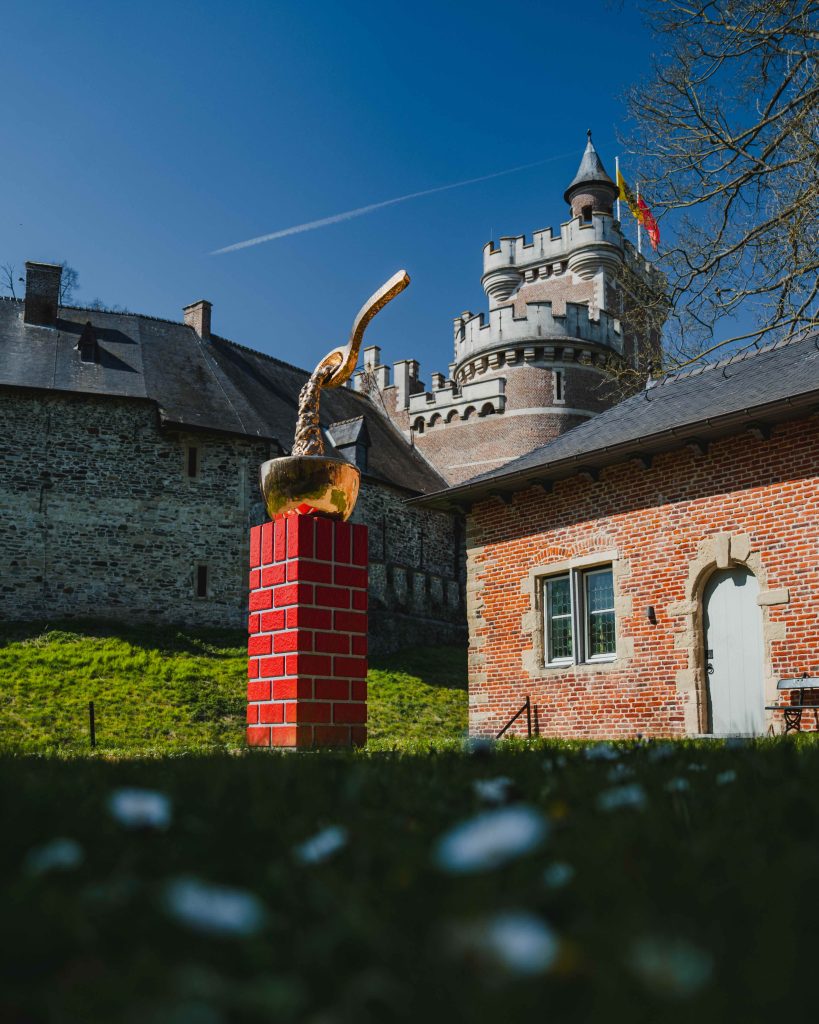
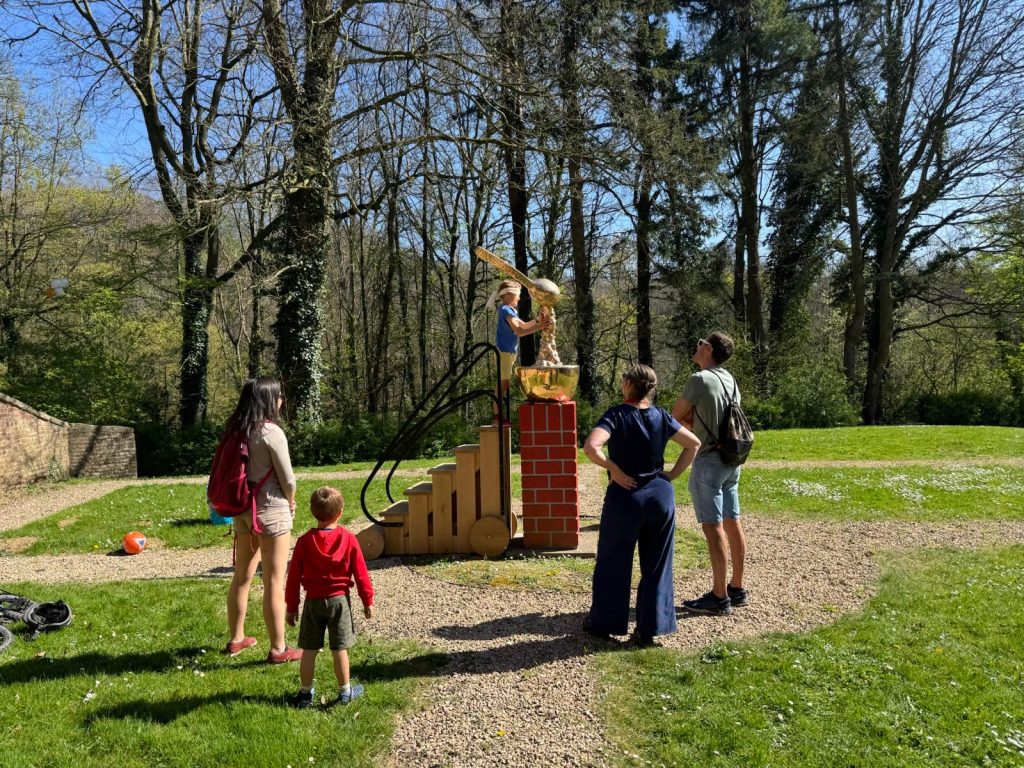
The first activity was a slow-looking and slow-touching session with the “The Peasant Wedding,” a gilded bronze sculpture referencing Bruegel’s paintings that is located in a quiet and intimate corner of the castle. Visitors were invited to slowly experience the sculpture on their own terms. And to make the experience more inclusive, they could choose to also experience it blindfolded or by touch, which also ensured accessibility for people with visual impairments. A guide was also there to ask questions and encourage dialogue about their impressions. 

Visitors engage with The Peasant Wedding by Studio Job. Photo courtesy of Kasteel van Gaasbeek.

The second activity took place outside the castle, where a guide-lecturer hosted a small slow drawing workshop. Passers-by were invited to pause, sit, and sketch the castle, focusing on its details and slowing down to notice the intricacies of its architecture. This exercise provided participants with an opportunity to not only look carefully but also to translate their observations into creative expression.

We at Slow Art Day HQ love how Kasteel van Gaasbeek’s first Slow Art Day demonstrated how accessible, inclusive, and participatory approaches can enrich the slow looking experience. We look forward to seeing what they do for Slow Art Day 2026!

– Ashley, Johanna, Jessica Jane, and Phyl

P.S. Stay connected with Kasteel van Gaasbeek on Facebook and Instagram.

Meditation and Slow Art at Moderna Museet Malmö

For their second year participating in Slow Art Day, Moderna Museet Malmö once again hosted a deeply reflective and engaging event that beautifully combined meditation with slow looking.

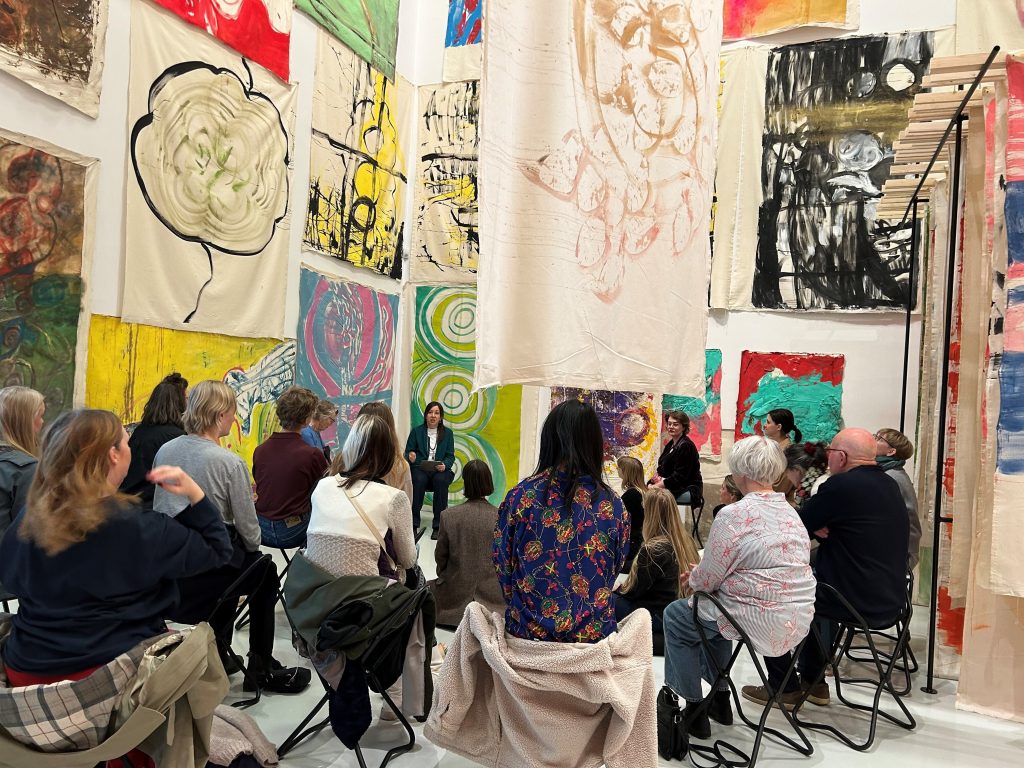
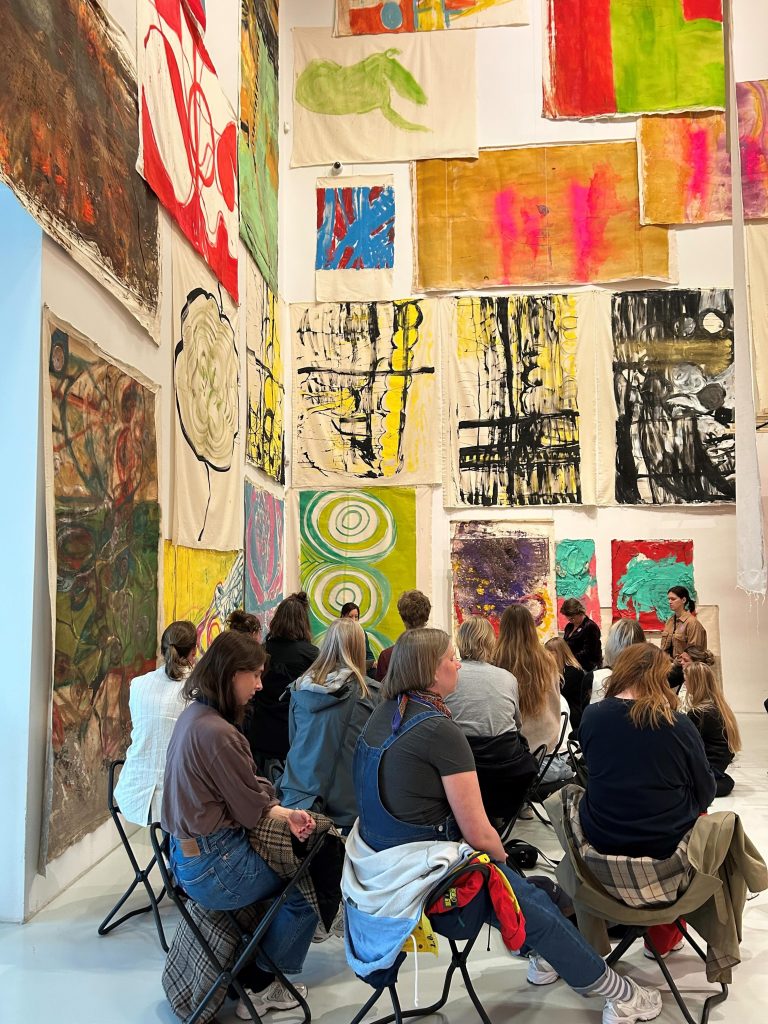
In the vibrant exhibition Vivian Suter – I Am Godzilla, participants gathered for a guided meditation session led by Ana María Bermeo, an artist, museologist, and certified meditation teacher. Through simple breathing and mindfulness exercises, Bermeo encouraged participants to slow their pace, immerse themselves in Suter’s rich visual world, and reconnect with their own inner experiences.

Slow looking and meditation surrounded by expressive, immersive works in the Vivian Suter exhibition.
(Photo: Susanne Lindblad/Moderna Museet Malmö)

No prior experience with meditation was required — only a willingness to pause, breathe, and look slowly.

Attendees reported embracing the moment of silence and reflection, letting go of performance and expectation, and allowing themselves to experience both the art and their sensory impressions in a deeper, more contemplative way.

Participants meditating amidst the colorful canvases of the Vivian Suter exhibition at Moderna Museet Malmö. (Photo: Susanne Lindblad/Moderna Museet Malmö)

The bold, colorful canvases of Vivian Suter’s exhibition created a powerful backdrop for the session. For us at Slow Art Day HQ, it is particularly striking to witness participants seated quietly in a circle around these vibrant works, each deeply absorbed in silent meditation and reflection.

We are so grateful to Moderna Museet Malmö and to host Susanne Lindblad for continuing to be a valued part of the Slow Art Day movement. We can’t wait to see what they create for Slow Art Day 2026!

– Ashley, Johanna, Jessica Jane, and Phyl

P.S. You can follow Moderna Museet Malmö on:

Meditation and Frozen Paint in Gothenburg

For their 5th Slow Art Day, the Gothenburg Museum of Art in Gothenburg, Sweden, hosted two events:

  • A guided meditation with artist and yoga instructor Pernilla Ljungqvist in front of the artwork “Höstafton, Nordingrå” by Helmer Osslund (1866 – 1938) – adults and teens were invited to join this one.
  • Slow looking and drawing workshop consisting of two parts: one in the Museum collection where they practiced slow looking exercises, and another in the Museum studio where they created their own artwork – this was a children’s workshop.
Slow Art Day participants in front of “Höstafton, Nordingrå” by Helmer Osslund (1866 – 1938). Photographer: Linda Noreen. Photo courtsey of Gothenburg Museum of Art.
“Höstafton, Nordingrå” by Helmer Osslund (1866 – 1938). Photographer: Hossein Sehat Lou. Photo courtsey of Gothenburg Museum of Art.

For the first activity, Pernilla, the meditation instructor, invited participants to look slowly at the artwork “Höstafton, Nordingrå.” Next, they relaxed into a comfortable position on a mat in front of the work as Pernilla guided them through simple motions and exercises while looking slowly at the painting.

Slow Art Day participants meditating in front of “Höstafton, Nordingrå” by Helmer Osslund (1866 – 1938). Photographer: Linda Noreen. Photo courtsey of Gothenburg Museum of Art.

During the children’s workshop, the kids looked at three artworks using different slow looking techniques focused on noticing new details in each. During the second half of the session, they were invited to paint with frozen colors on watercolor paper (again, this was done in the museum studio). The goal was to use a tactile material, which could activate several senses and emotions *and* in which the concept of time was present in the material itself. Frozen paint to illustrate time and slowness – how cool!

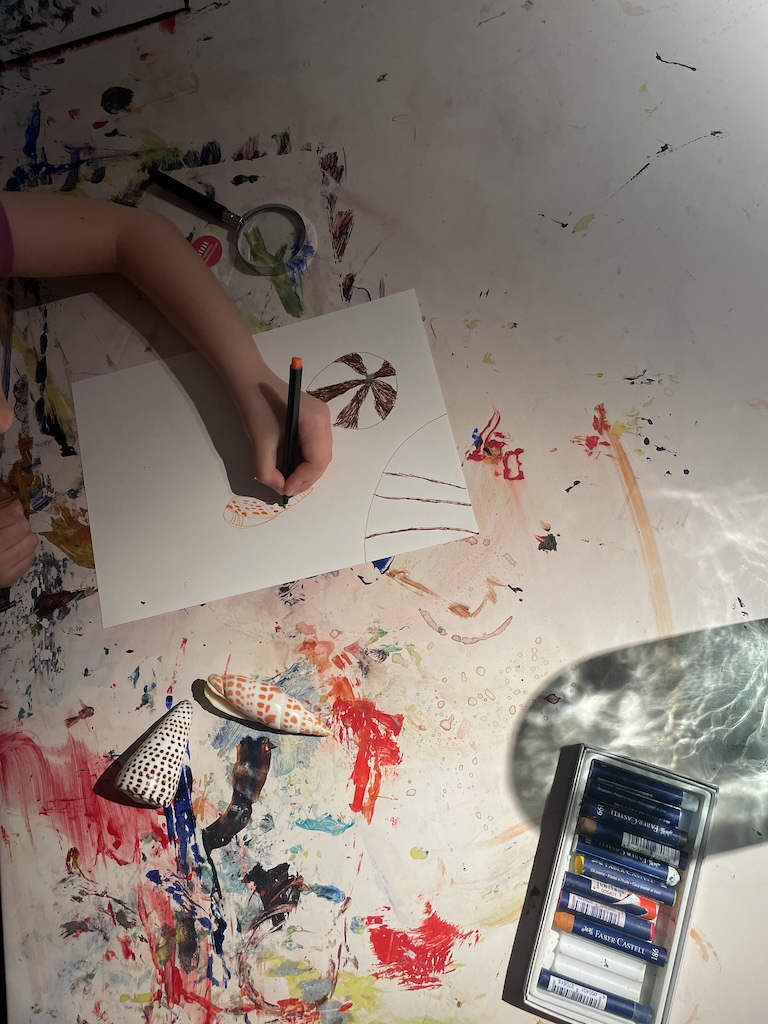
Slow Art Day workshop participant in the act of painting. Photographer: Jonna Kihlsten.
Slow Art Day workshop supplies: frozen paint. Photographer: Jonna Kihlsten.
Slow Art Day workshop participant in front of their artwork. Photographer: Jonna Kihlsten.

At Slow Art Day HQ we love the idea of using frozen paint in a workshop studio for kids (and hey – us adults would enjoy that too) while running a guided meditation for adults.

For readers not familiar with Gothenburg, it is the second largest city in Sweden situated on the west coast near the Kattegat. The city was built on marshy land and the layout of the city was inspired by Dutch cities like Amsterdam.

The Gothenburg Museum itself is the third largest in Sweden and hosts a collection of 19th century Nordic art as well as a range of modern, contemporary, and older works.

We appreciate the museum’s decision both to offer different events for kids and adults and the way they designed each of those sessions. We eagerly look forward to whatever they come up with for Slow Art Day 2025.

-Johanna, Ashley, Jessica Jane, and Phyl

P.S. Stay up to date with events at Gothenburg Museum of Art via their Facebook or Instagram.


Mindfulness and Music in Copenhagen

For their third Slow Art Day, the Frederiksbergmuseerne in Frederiksberg – a neighborhood of Copenhagen, hosted a slow looking event at Bakkehuset (The Hill House). The Bakkehuset was a gathering place for prominent figures in the Danish Golden Age of art, literature, and philosophy including writers like Hans Christian Andersen. Today, it is one of the four Frederiksbergmuseerne and open to the public.

Bakkehuset interior. Photo: Stuart McIntyre.

For Slow Art Day, Bakkehuset aimed to use the calming atmosphere of the historical interior of the house as a starting point for slow looking. They began their event by taking visitors on a tour and inviting them to immerse themselves in the atmosphere, and imagine what it might have been like to live, talk, and hang out in the house 200 years ago.

During the tour, they also introduced mindfulness techniques to help participants slow down and sharpen their attention.

Consistent with their theme of immersion, the tour ended with asking participants to listen to Chopin’s raindrop prelude in the garden room of the house. Amazing. We love the idea of weaving music, mindfulness, and slow looking. And, as we write this, we imagine ourselves sitting in Bakkehuset, listening to Chopin and looking slowly at art.

We are already excited for whatever the Frederiksbergsmuseerne come up with for Slow Art Day in 2025.

– Johanna, Ashley, Jessica Jane, and Phyl

P.S. To find out more about Frederiksbergsmuseerne you can visit their Facebook or Instagram.

Accessible Slow Art Day Hosted by the Art Gallery at Evergreen

For their third Slow Art Day, the Art Gallery at Evergreen in Coquitlam, Canada, invited visitors to look slowly at two artworks from their touring exhibition “Paths” for 5-10 minutes each:

Both artworks were part of the 2024 Capture Photography Festival Selected Exhibition Program.

Silas Ng, “Music in My Eyes,” 2020, site-specific installation at the Art Gallery at Evergreen, Evergreen Cultural Centre, 2024. Photo: Rachel Topham Photography. @racheltophamphotography
Still from a video featuring an interior pan of Sarah Anne Johnson’s “Woodland” across several window panels at the Lafarge Lake-Douglas SkyTrain Station. Woodland was presented at Evergreen in partnership with TransLink.

On the day, all visitors were invited to look slowly at one or both artworks using the below provided prompts. We encourage museum educators to take a look.

The activity was self-directed, but after doing individual slow looking, participants could discuss their experience with gallery assistant Kim Grewal, or were encouraged to share their reflections on Instagram. Before leaving, they were also invited to continue the slow looking experience by spending time with some of Evergreen’s public artworks, located only steps away from the gallery.

The exhibition “Paths” featured artwork by twenty-two Canadian artists, two of which were placed in focus for the Slow Art Day event. We’ll note that one of the featured artists, Silas Ng, is deaf, and explores this in his work. In fact, his featured work “Music in My Eyes,” 2020, encourages slow lookers to think creatively as they spend time with the art.

We look forward to seeing what Art Gallery Evergreen comes up with for Slow Art Day 2025.

– Johanna, Ashley, Jessica Jane, and Phyl

P.S. Stay up to date with events at Art Gallery Evergreen through their Instagram or Facebook.