Poetry, Audio Narration, and Slow Drawing at the Museum of Fine Arts Budapest

For Slow Art Day 2025, the Museum of Fine Arts Budapest (MFAB) created a thoughtful set of tools and experiences designed to help visitors slow down and engage deeply with artworks throughout the museum’s galleries.

Rather than focusing on a single guided session, MFAB encouraged visitors to explore slow looking independently through several creative formats available throughout the museum. These tools were offered free of charge and invited guests to pause, observe carefully, and spend more time with selected artworks.

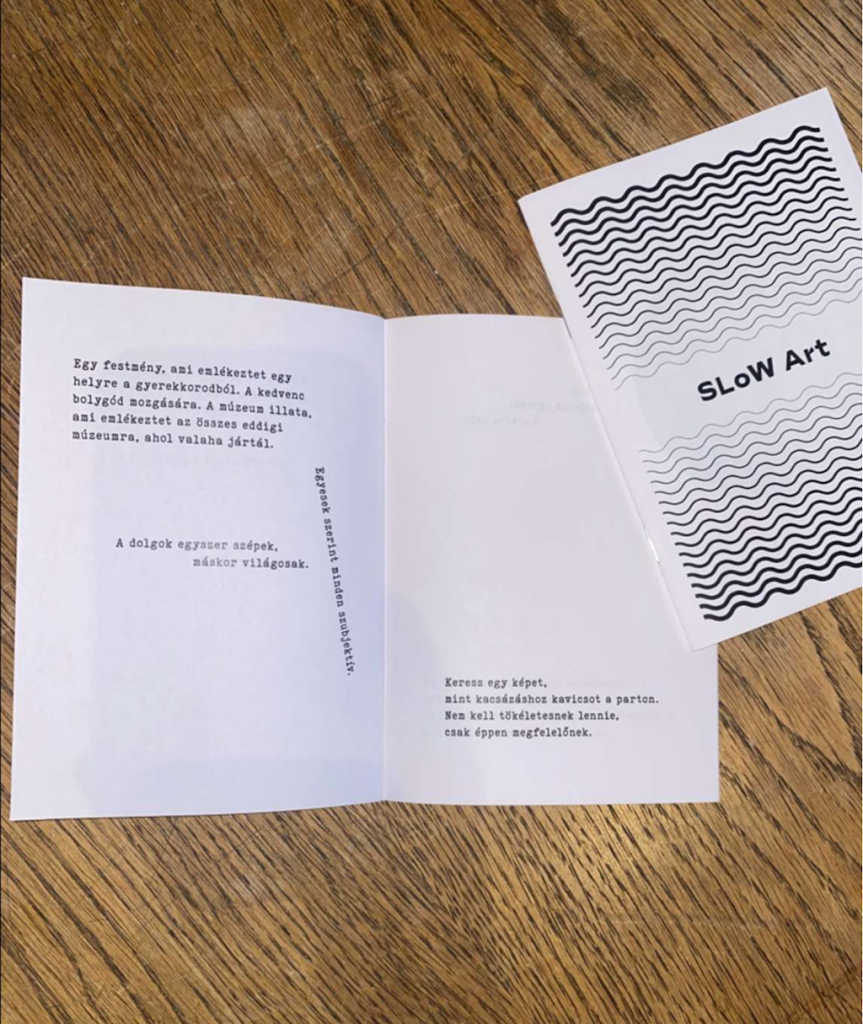
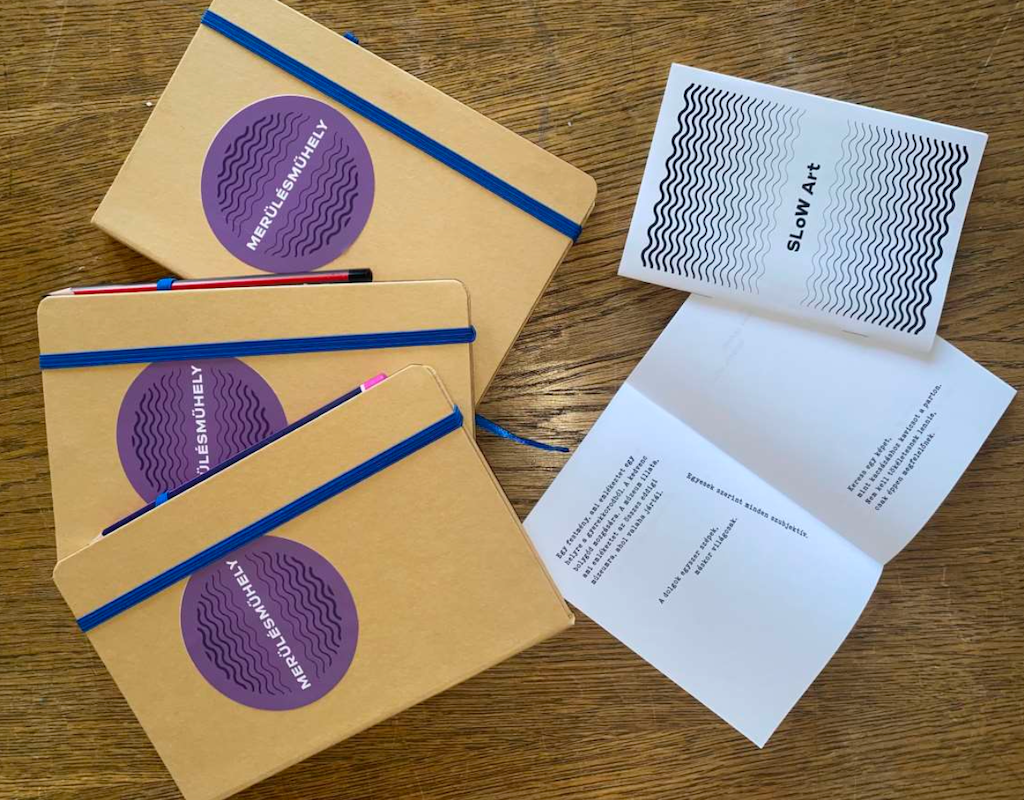
One of the most unique elements was a poetry booklet created by Hungarian poet Monika Ferencz, written specifically for the occasion. Visitors could take the booklet and move slowly through the museum while reflecting on short meditative poems and evocative text fragments. The idea was simple but powerful: choose a line, walk through the galleries, and allow the words to shape how you look at the art.
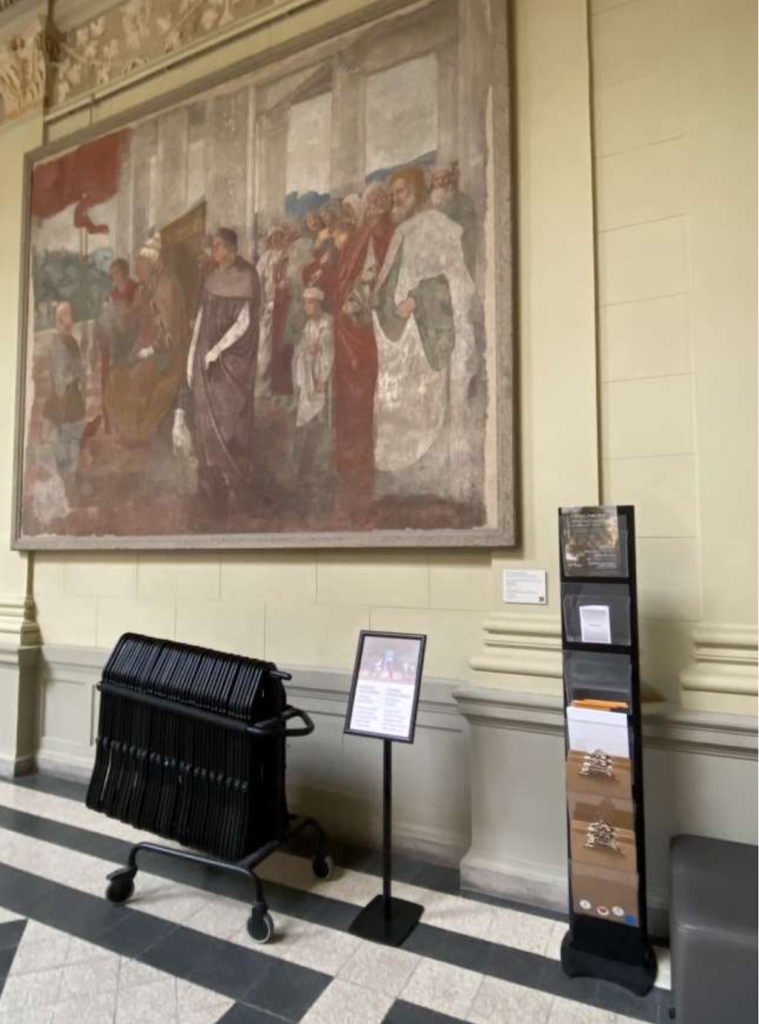
The museum also introduced a “Slow Guide – Step Inside the Painting” audio experience. By scanning QR codes placed next to eight selected artworks, visitors could listen to narrated audio reflections accompanied by music while looking closely at the paintings. This immersive format encouraged visitors to spend longer with individual works and experience them through both sound and sight.

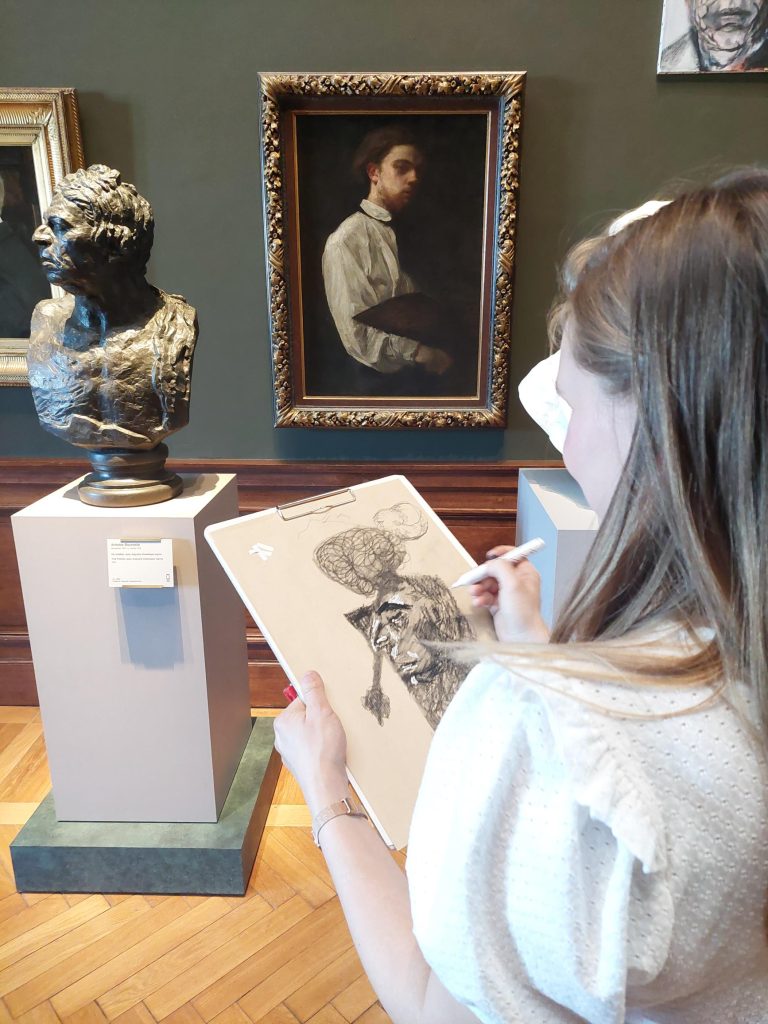
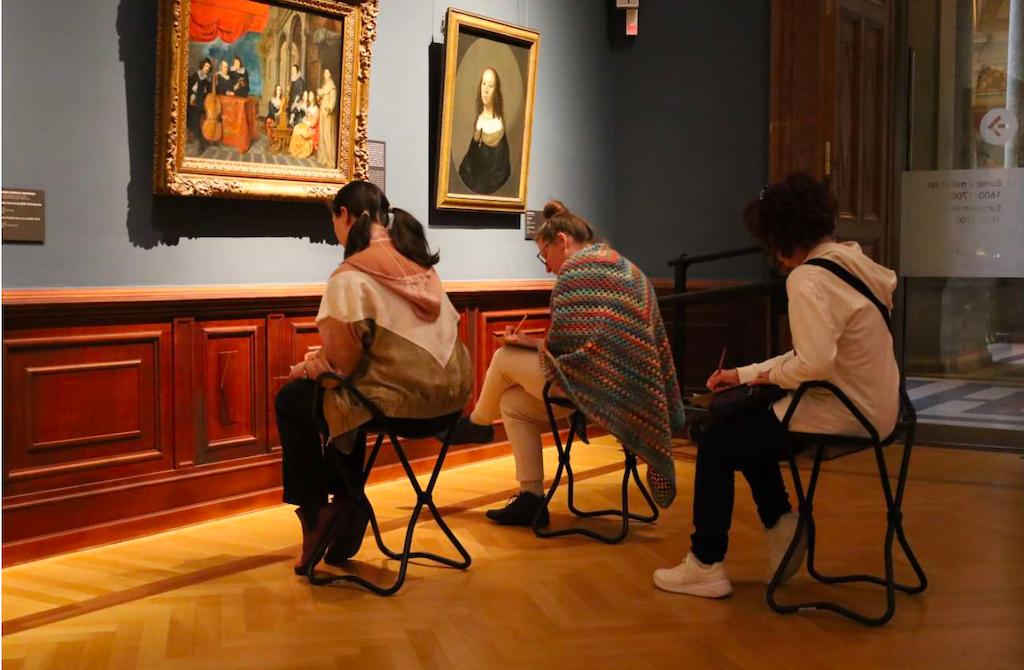
Another activity invited visitors to draw directly in the galleries. Guests could borrow a small folding chair, drawing board, paper, and pencil and spend time sketching details from artworks in the permanent collection. Focusing on small portions of the paintings helped participants notice subtle details they might have otherwise overlooked.
MFAB also extended its Slow Art Day programming into its regular Slow Museum evening series hosted on the 2nd Friday of each month (we love it when museums integrate slow looking into year-round programming!). One highlight was a Slow Writing Workshop led by Judit Cser, poet Monika Ferencz and museum educator Szilvia Záray, where participants used slow looking techniques as inspiration for creative writing. The three-session workshop took place in the Old Masters’ Gallery and invited a small group of participants to explore how close observation of artworks can spark new ideas and language.
But that’s not all.

The MFAB provided yet one more guided experience, titled “The Gaze.” It brought visitors together for a one-hour slow looking session in the Dutch portrait gallery. Led by museum educator Szilvia Záray, the session encouraged participants to carefully study facial expressions, posture, and subtle details within the portraits while sharing their observations with the group. Amazing.
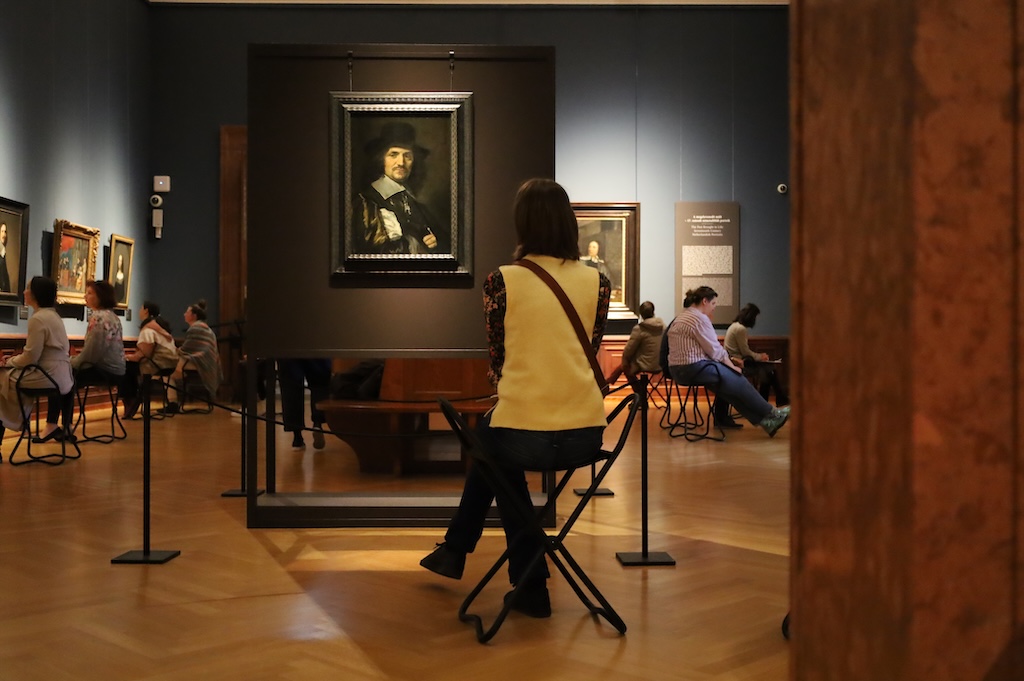
Participant during slow art session “The Gaze”. Photo courtesy of MFAB.

Together, these programs demonstrated how a museum can offer many different entry points into slow looking—from poetry and sound to drawing and writing—allowing visitors to discover the approach that resonates most with them, not only on Slow Art Day but throughout the year.

We at Slow Art Day HQ are grateful to the team at the Museum of Fine Arts Budapest for their thoughtful and creative approach. They are an inspiration for us all.

And we can’t wait to see what MFAB comes up with for Slow Art Day 2026.

— Ashley, Johanna, Jessica Jane, and Phyl

P.S. If you have not yet registered your museum of gallery for Slow Art Day 2026, please do.
Music, Poetry, Drawing and Discussion at the Royal Museum of Fine Arts in Antwerp

For Slow Art Day 2025, the Royal Museum of Fine Arts Antwerp (KMSKA) in Belgium invited visitors to slow down and engage deeply with art through a series of thoughtfully designed experiences across the museum’s exhibitions.

KMSKA has been an important participant in the Slow Art Day movement for nearly a decade and was notably the first museum in Belgium to organize a Slow Art Day event in 2016. For the 2025 edition, the museum expanded its program with several creative formats designed to help visitors observe more carefully and reflect more deeply.

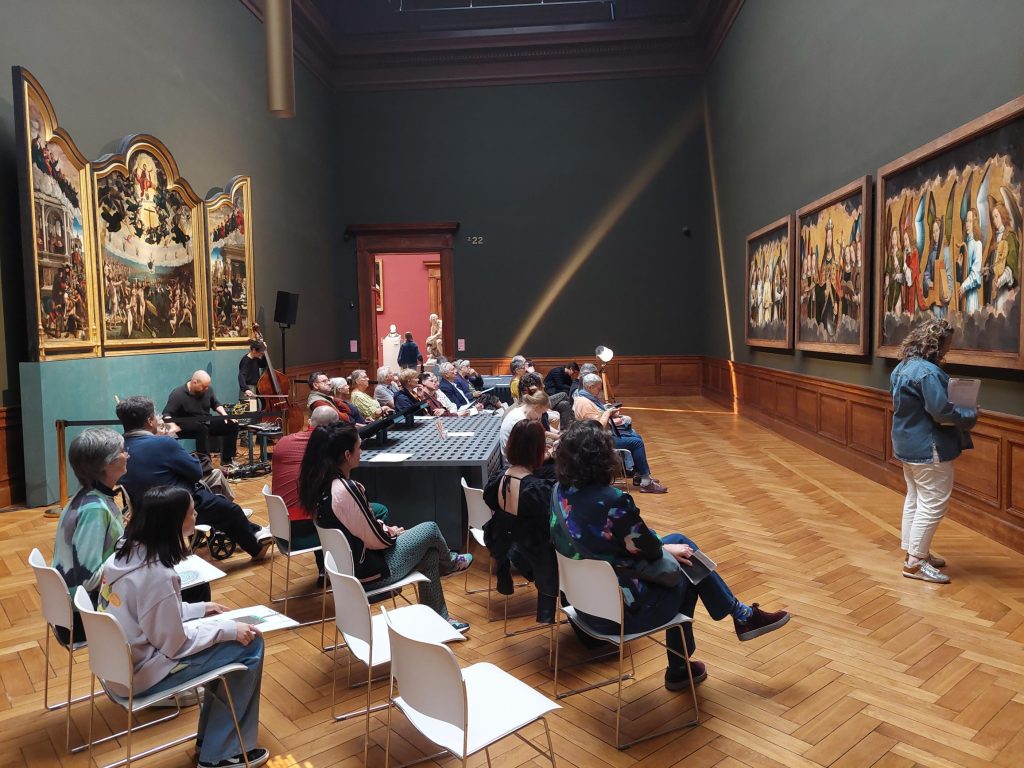
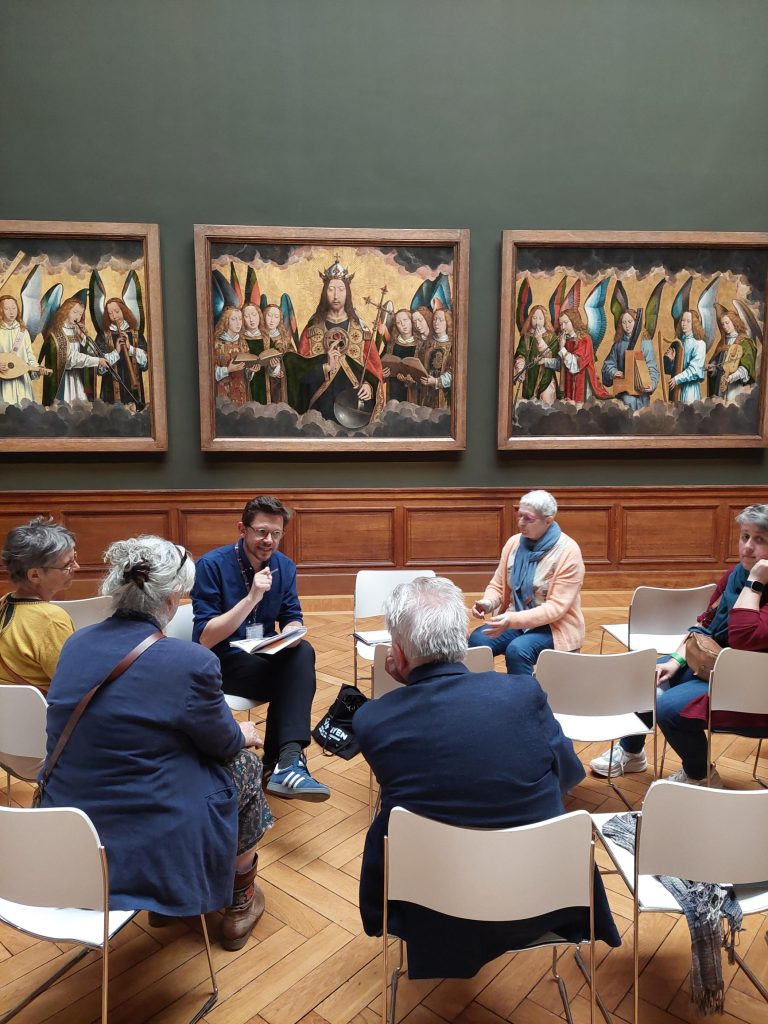
One of the highlights was an experimental program called “Slow Looking with Music.” Visitors spent an hour focusing on a monumental triptych by the 15th-century Flemish painter Hans Memling, while a live soundtrack was performed by the Belgian experimental band Monnik. The musicians performed from behind the audience so that all attention remained directed toward the artwork (note: we at Slow Art Day HQ wish we could have been there).

Electric guitars, analog synthesizers, effect pedals, and layered vocal sounds created an immersive soundscape that encouraged visitors to observe the painting slowly and thoughtfully. Participants were given printed prompts to guide their reflections, including questions such as: What do you see? What do you hear? What thoughts or feelings arise? slow_looking_prompts_music_KMSKA

After the musical performance, a museum guide facilitated a group discussion where visitors shared their interpretations and experiences.

In addition to this musical slow looking experiment, KMSKA organized several other Slow Art Day activities throughout the museum.

During “In Dialogue,” visitors sat together in front of a selected artwork by Belgian contemporary artist Hans Op de Beeck, guided by a museum educator who helped participants observe closely and discuss their impressions.

Another activity invited visitors to participate in a drawing tour through the exhibition spaces. With drawing prompts provided by a museum guide, participants of all skill levels used sketching as a way to slow down and connect with the artworks.

A literary component was also included. Museum staff member Sophie led a poetry session, reading selected poems alongside artworks and encouraging visitors to reflect on how language and visual art interact.

Finally, visitors could participate in Radio Bart, a special conversational format led by art lovers who are blind. Through discussion and thoughtful questioning, the Radio Bart hosts helped visitors experience artworks from new perspectives and notice details they might otherwise overlook.

Together, these varied programs demonstrated how many different paths can lead to slow looking. Whether through music, drawing, poetry, or spoken word and conversation (especially awesome for blind participants), visitors were encouraged to pause, reflect, and engage more deeply with the artworks around them.

We at Slow Art Day HQ are deeply grateful to the team at KMSKA for continuing to innovate around slow looking and for being such a long-standing leaders in our movement.

We look forward to what amazing design they come up with for Slow Art Day 2026.

— Ashley, Johanna, Jessica Jane, and Phyl

Mindfulness, Music, and Morning Stillness at Caloundra Regional Gallery in Australia

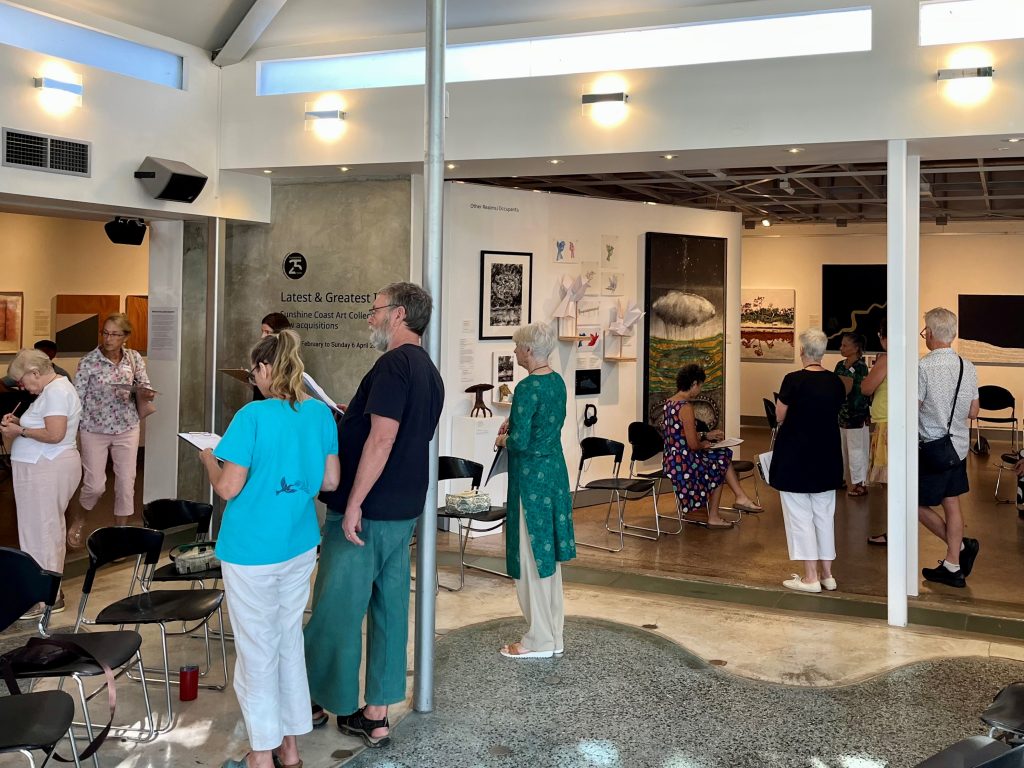
For their fourth Slow Art Day, Caloundra Regional Gallery in Australia thoughtfully expanded their event format by introducing guided mindfulness activities to help participants truly slow down before engaging with the art.

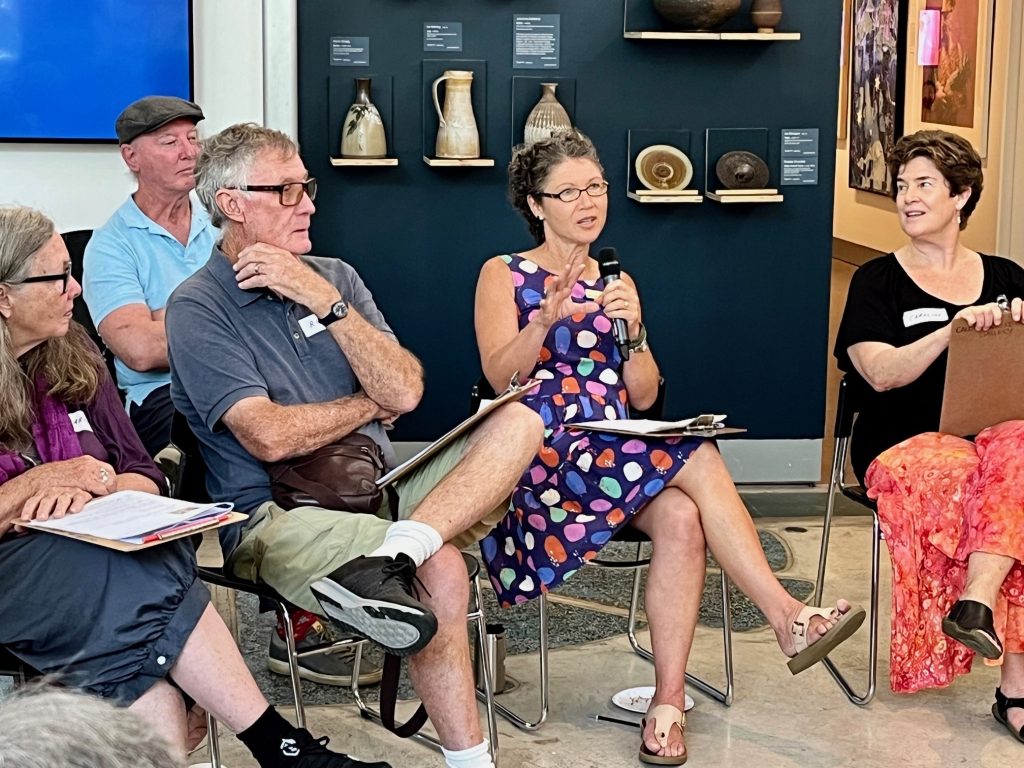
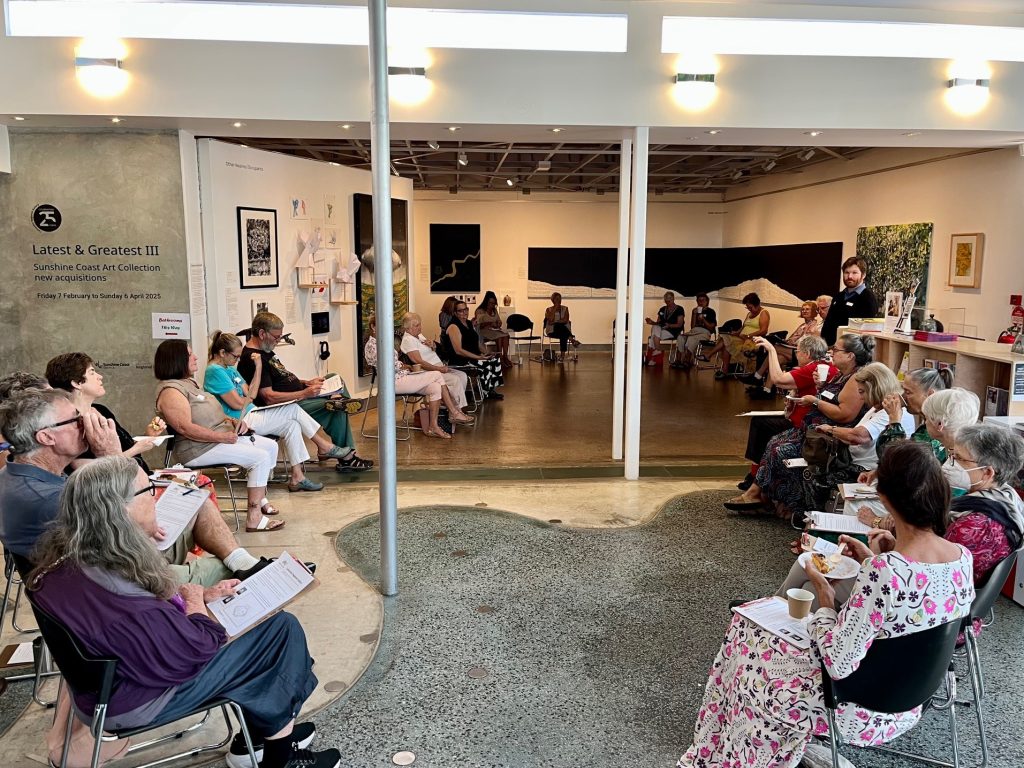
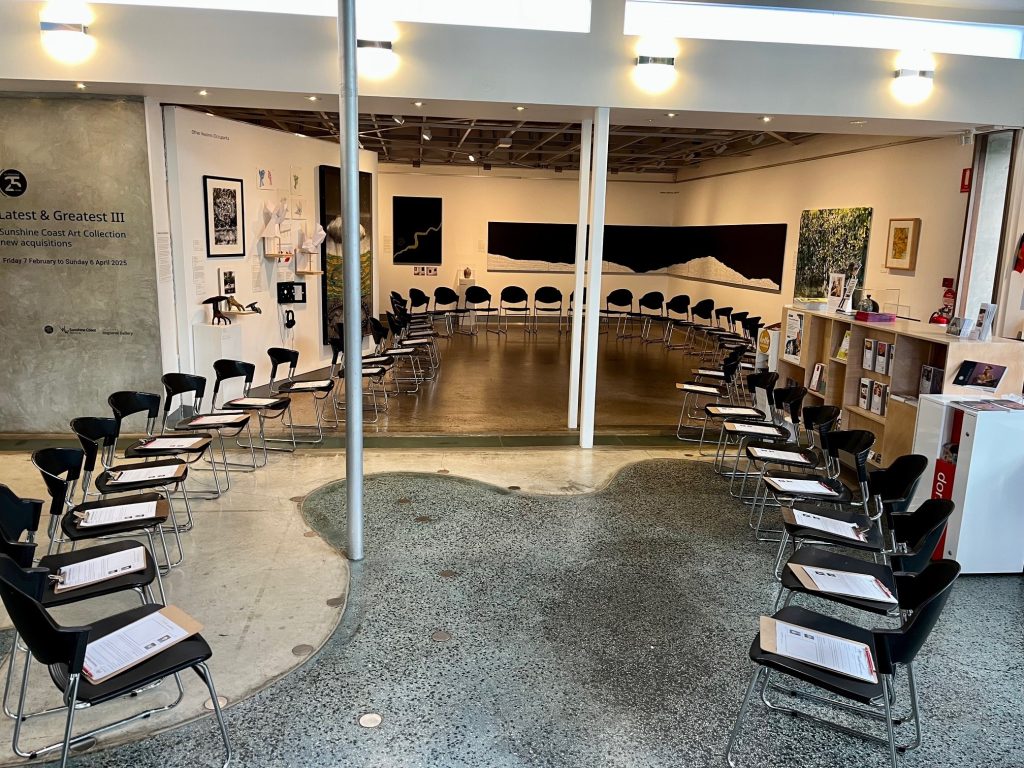
Held from 8 – 10am (before regular gallery opening hours), 34 attendees gathered for a guided breathing exercise to help get settled into the experience, soften their gaze, and prepare to look deeply and intentionally.

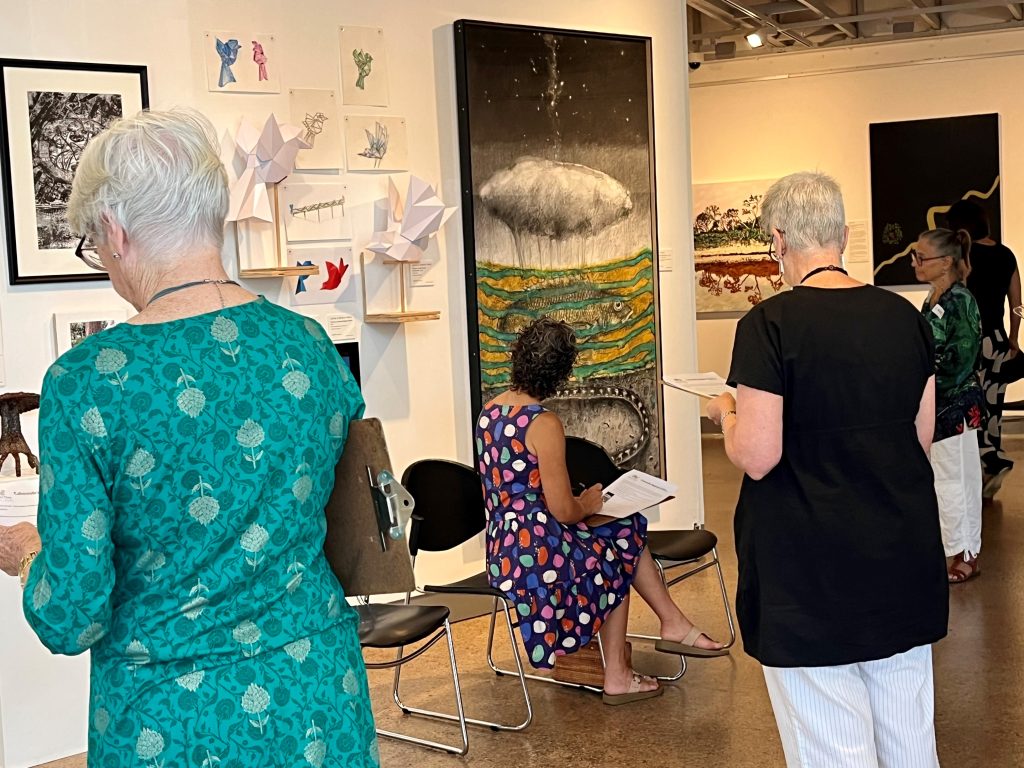
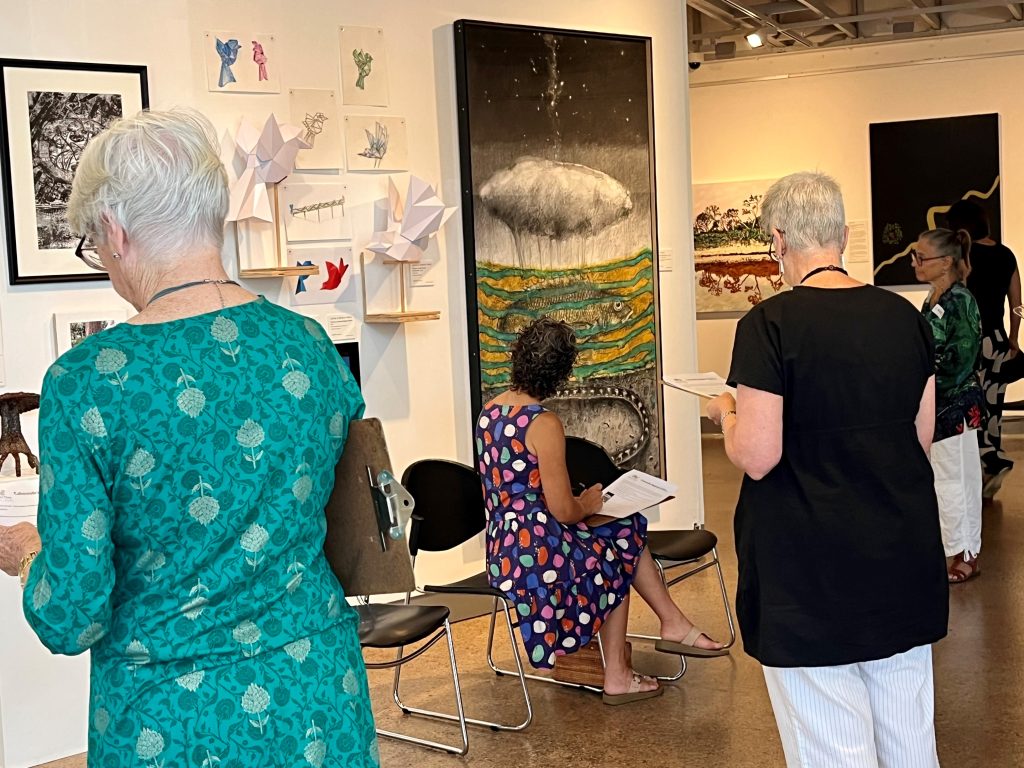
Using a specially designed worksheet (you can find it below), attendees then spent 8–10 minutes with four selected artworks, plus one artwork of their own choosing.

Featured works included:

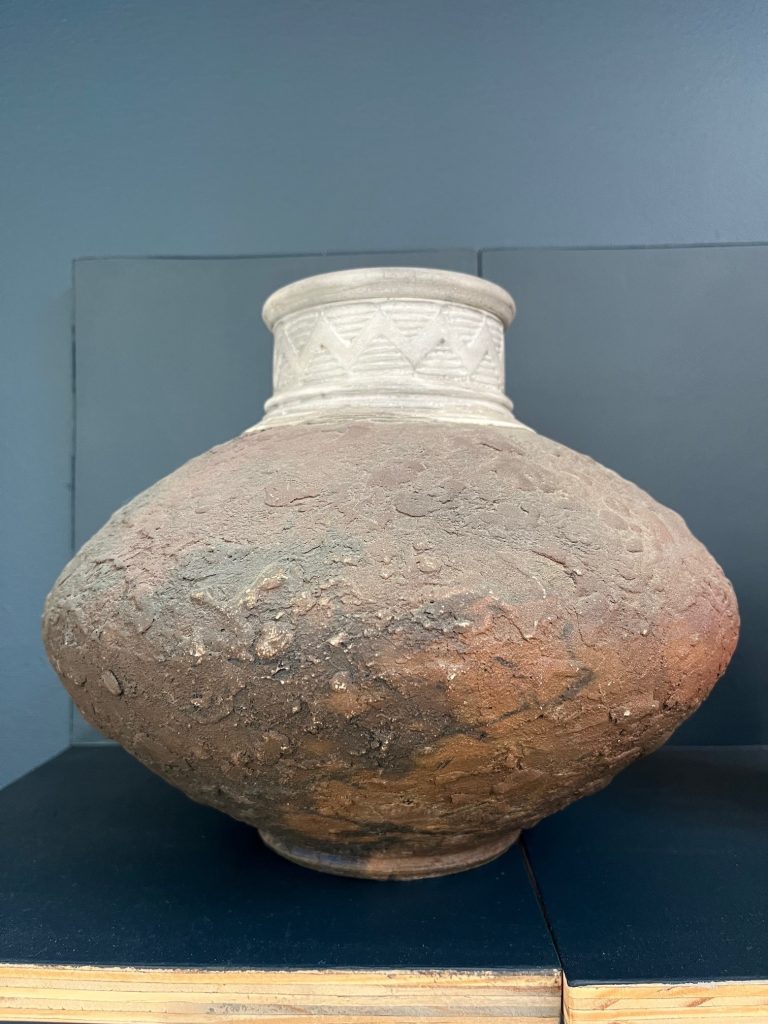
  • Peter Harris | Jar | c.1992–3
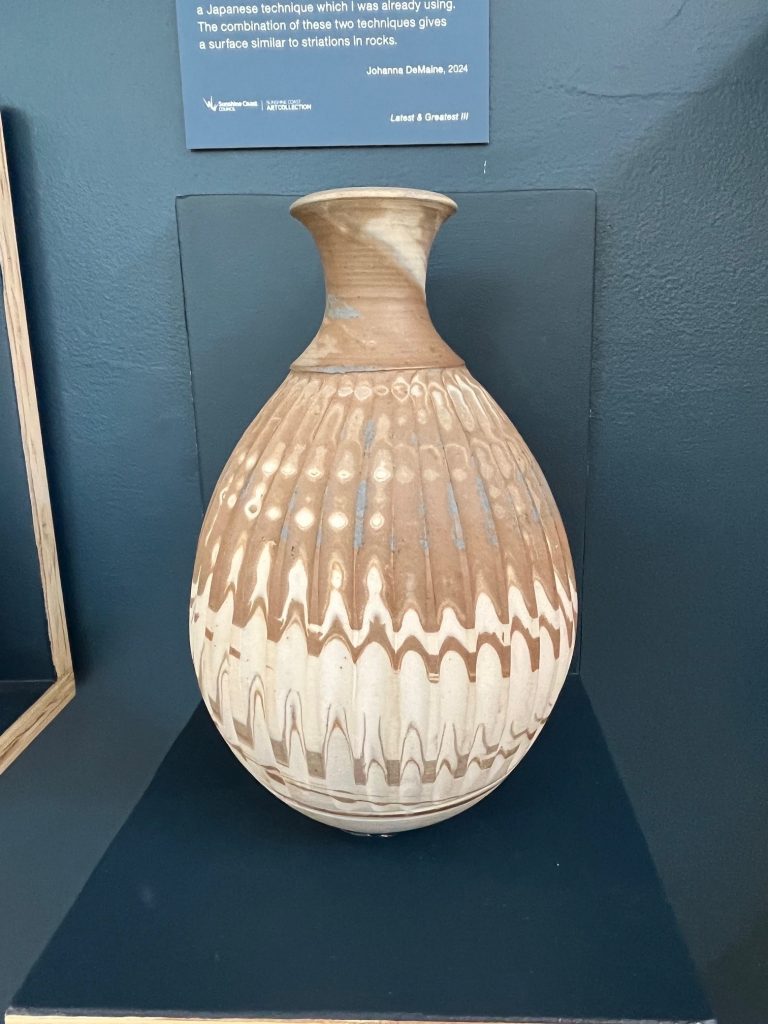
  • Johanna DeMaine | Bottle | c.1980s
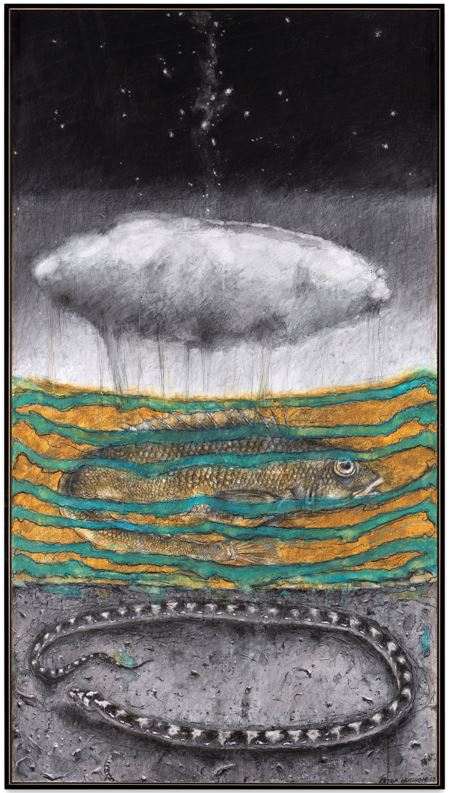
  • Peter Hudson | Girraween After Dark | 2022–23
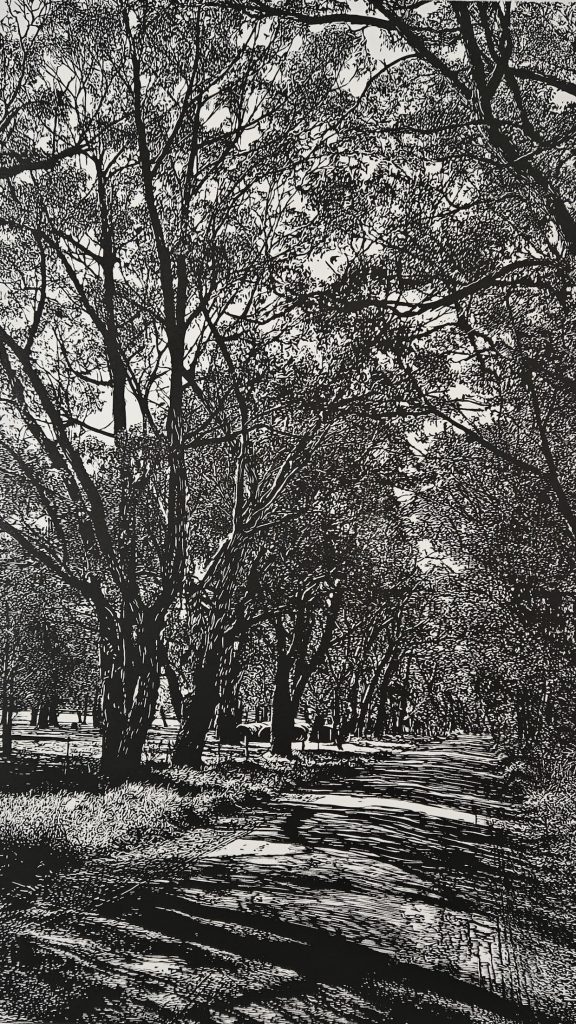
  • Amanda Western | Country Lane | 2023
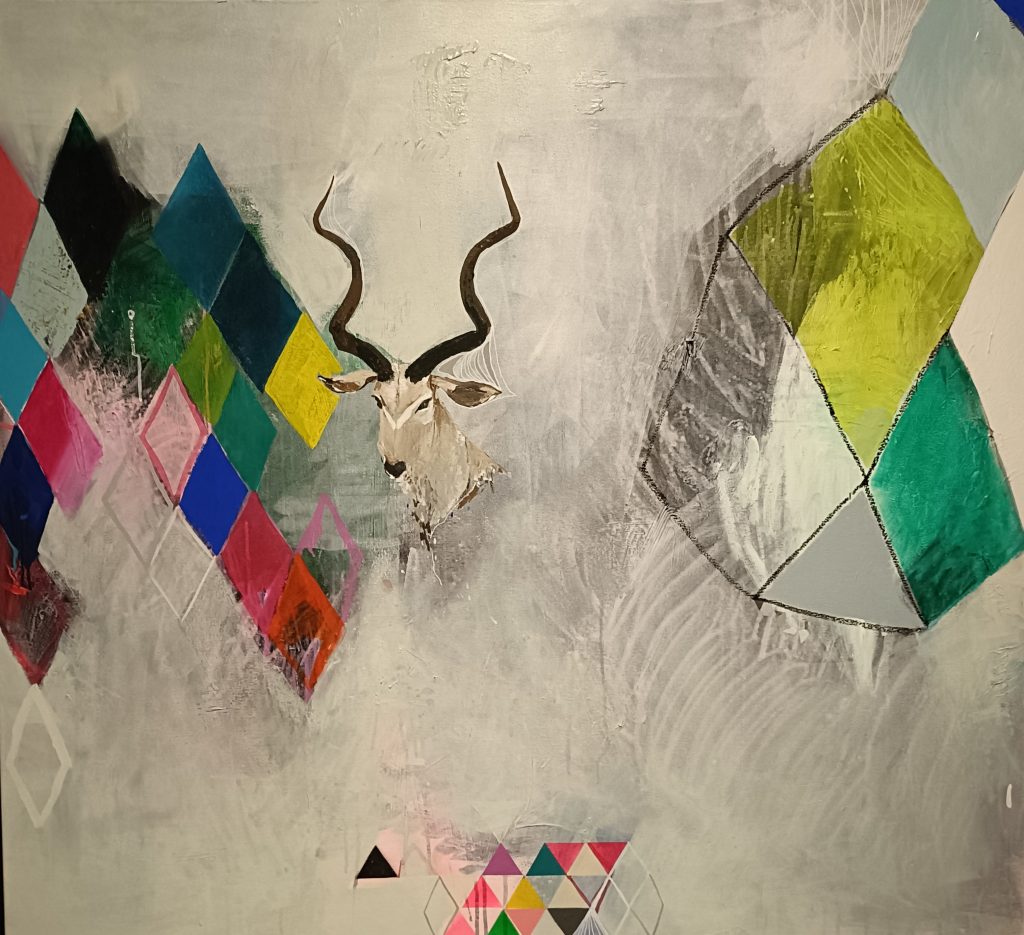
  • Miranda Skoczek | Untitled (impala) | 2012
Peter Hudson | Girraween After Dark | 2022-23.
Amanda Western | Country Lane | 2023.
Miranda Skoczek | Untitled (impala) | 2012

The worksheet prompted participants to observe carefully, reflect on emotions, imagine stepping into the scenes, and even sketch details they noticed. As outlined in the worksheet, there was “no right or wrong way to look at art”, just an invitation to notice, feel, and reflect.

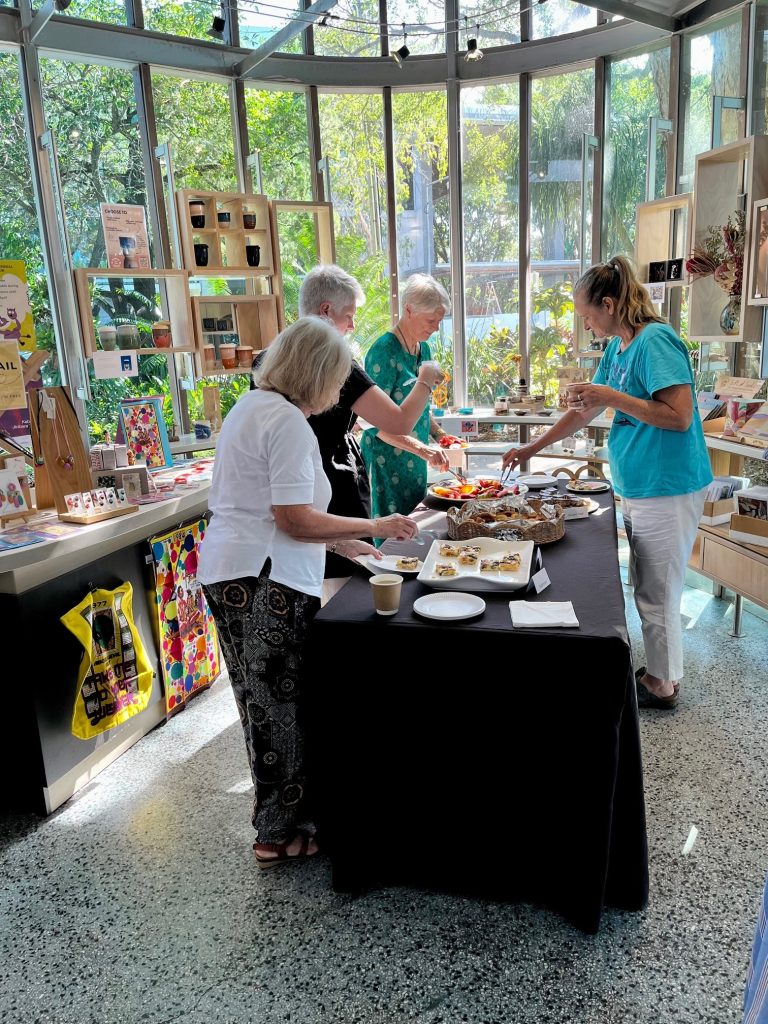
After the viewing sessions, guests enjoyed home-baked refreshments and fresh fruit platters generously provided by the Friends of the Gallery. A mindful tea-drinking exercise encouraged participants to extend the slow experience beyond the artwork and into everyday sensory awareness.

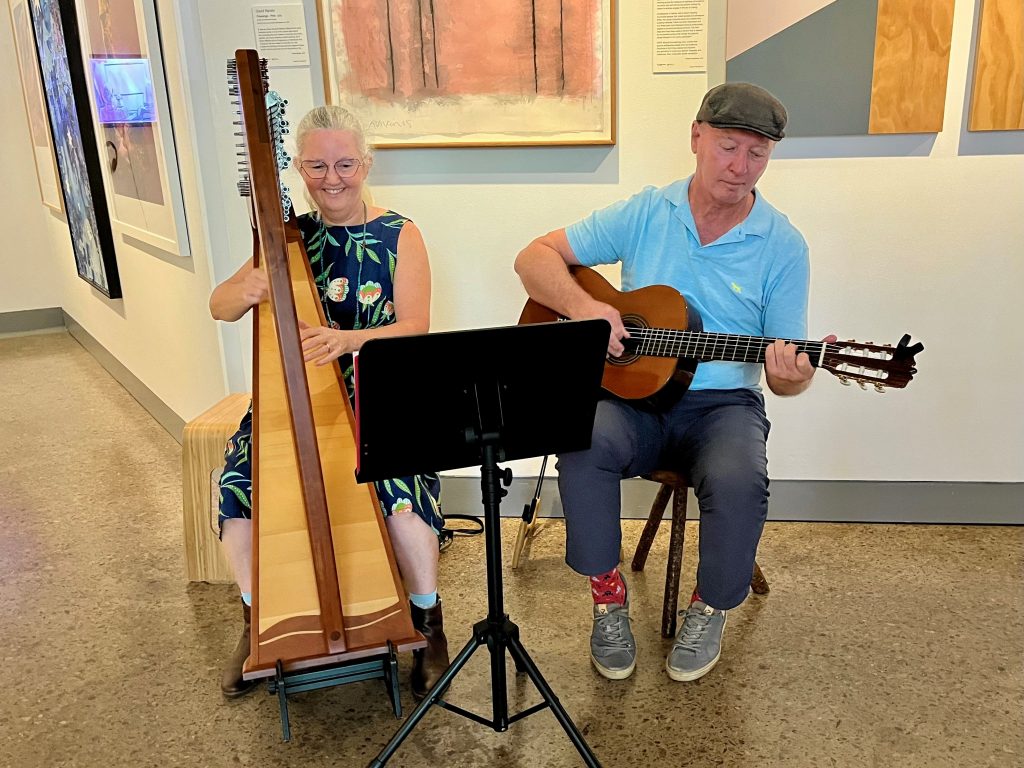
Adding to the atmosphere, local musicians Graham and Rowena provided harp and guitar music throughout the morning.

Musicians Graham and Rowena.

Feedback from participants was overwhelmingly positive, with many expressing appreciation for the quiet early-morning setting and the structured yet personal format of the experience.

A heartfelt thank you to Senior Learning and Engagement Officer Jenny Jones, the Caloundra Regional Gallery team, the Friends of the Gallery, and the talented musicians for creating such a thoughtful Slow Art Day.

We look forward to what they come up with for Slow Art Day 2026.

— Ashley, Johanna, Jessica Jane, and Phyl

P.S. View them on Instagram and Facebook.

Art, Performance, and Community in Alkiza, Spain

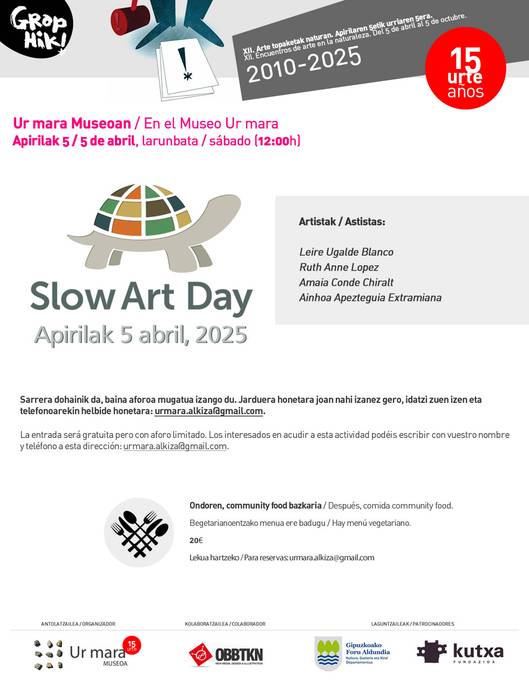
For their 10th Slow Art Day, Ur mara Museoa in Alkiza, Spain, hosted a gathering that combined exhibition, performance, and a shared meal in a single, community-centered experience.

The event featured an exhibition by artists Ruth Anne Lopez, Amaia Conde, and Ainhoa Apezteguia, alongside a live performance by Leire Ugalde.

They put together a terrific video summary of the full day, which you can watch below.

Highlights included:

– A poetic reflection on touch and memory (0:59-2:08), using the metaphor of raindrops to explore how we interact with and preserve moments.

– An artistic piece focusing on skies and images (2:18-2:38), highlighting how images can capture what life cannot.

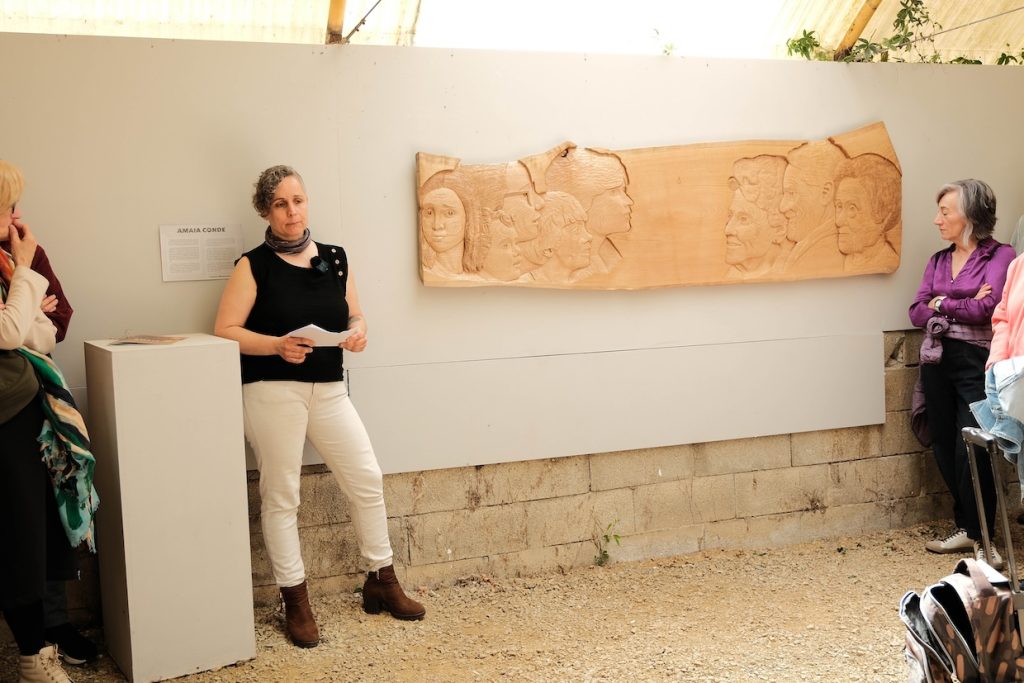
– An interview with artist Amaya Condechirt (2:51-3:36), who discusses her passion for wood carving and how her sculptures (3:03-3:18) explore the human form and complex life themes to bridge communication gaps in society.

– A sculptural work featuring older individuals and children (3:37-3:47), with one child breaking the fourth wall to question what they are being told, adding a touch of adolescent humor (3:48-3:56).

– A brief moment of reflection on new ideas and connections (4:41-4:50).

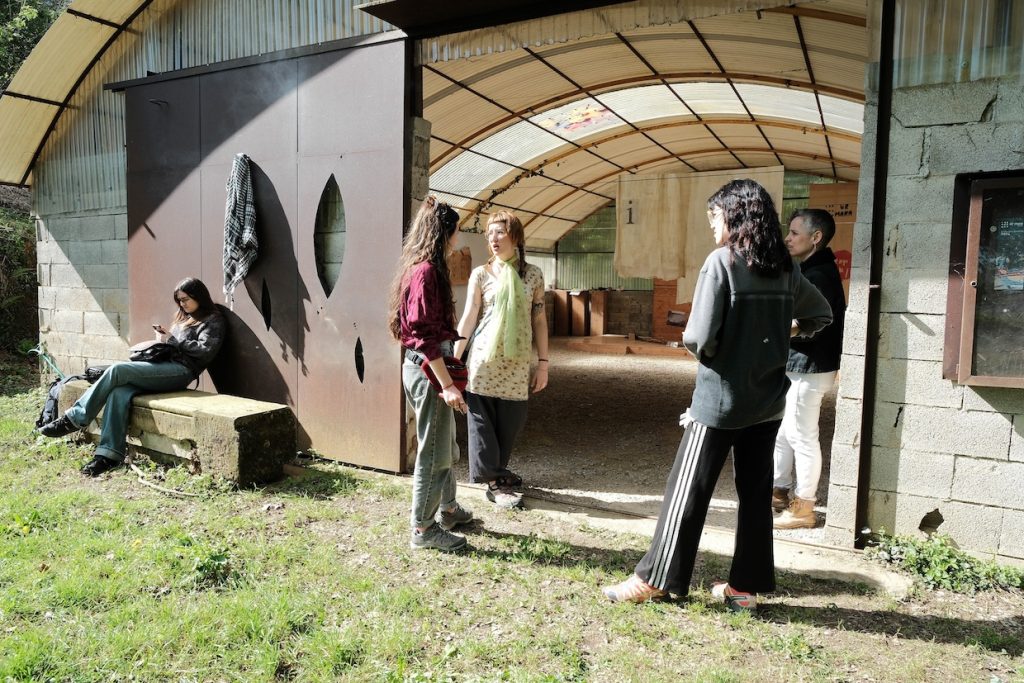
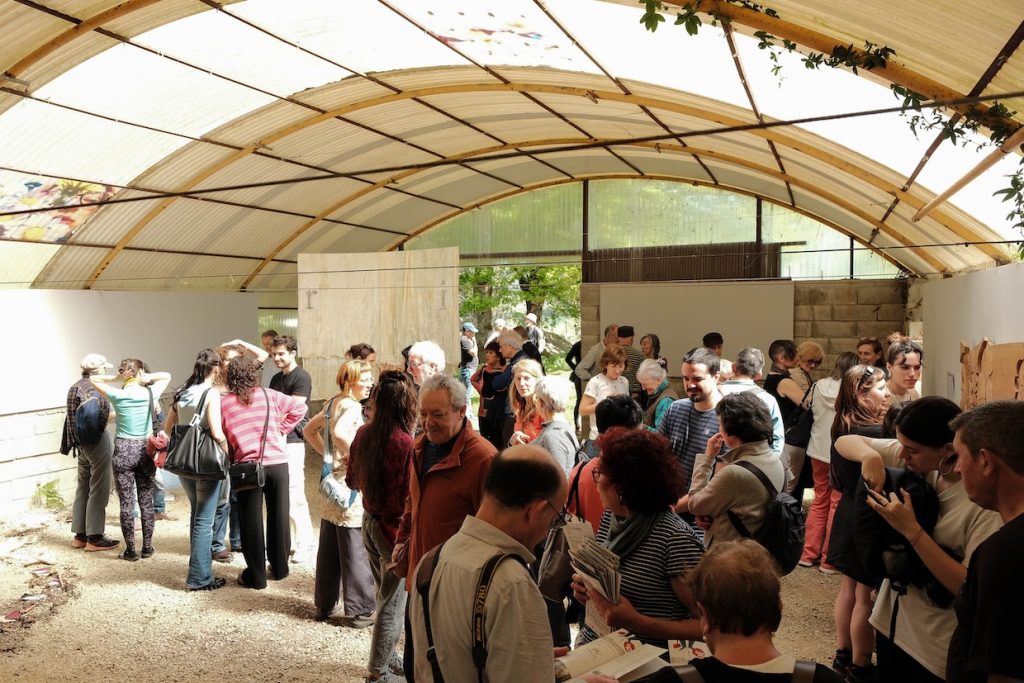
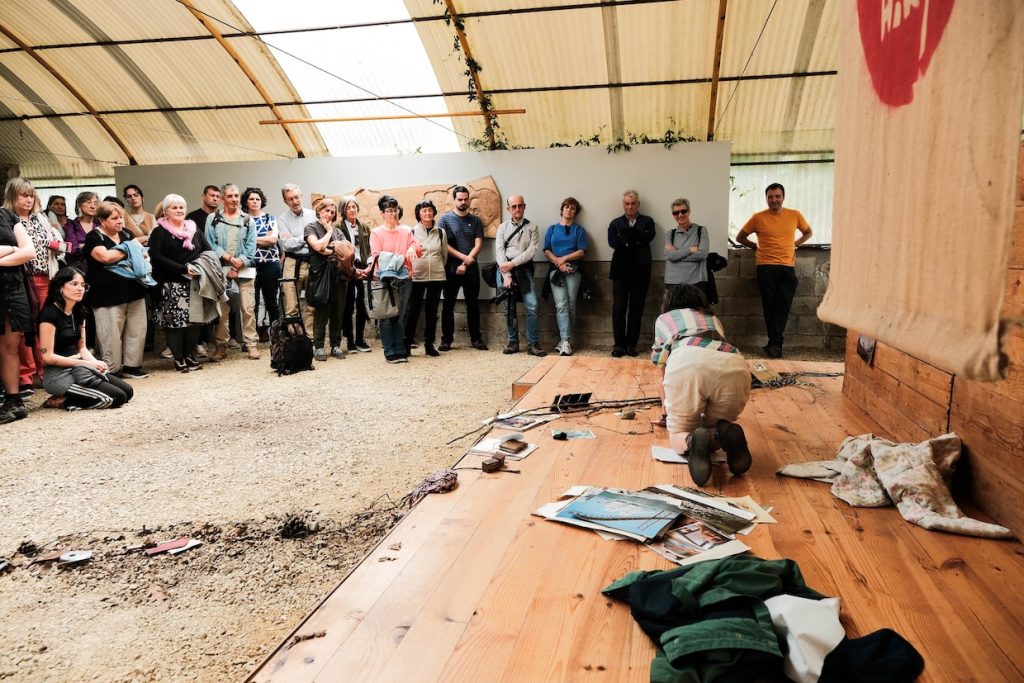
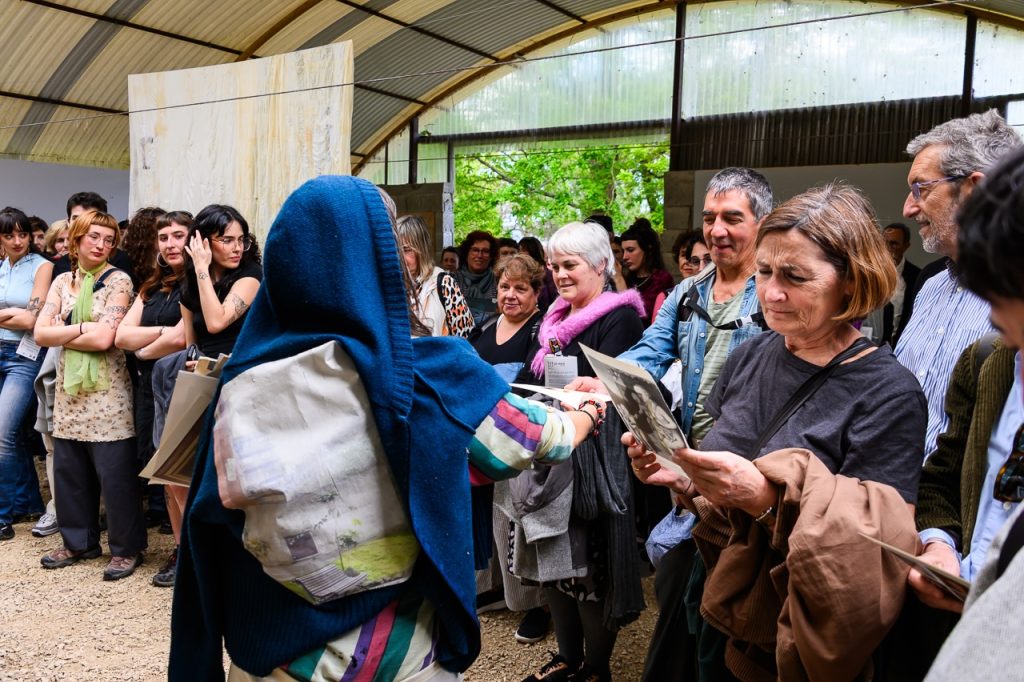
In addition, here are some still photos of the event.

As always with Ur Mara Museo, slow food was a part of the full day experience.

Thus, following the exhibition opening and performance, the museum organized a community lunch that brought together artists and visitors. The day as a whole reflected Ur mara Museoa’s mission, which we love, to connect contemporary artistic practice with local community life.

Below is their flyer for the event.

https://28kanala.tok-md.com/argazkiak/Gwx/cache/urmara_aprilak_5_tokikom_700x700.jpg

The museum shared documentation of the day through its social media channels, capturing both the exhibition and the collective atmosphere of the event.

We thank the team at Ur mara Museoa for their dedicated 10 years of leadership in the Slow Art Day movement. We look forward to seeing what they come up with for Slow Art Day 2026.

– Ashley, Johanna, Jessica Jane, and Phyl

P.S. Follow Ur mara Museoa on Instagram

MelonRouge and Artichoke Gallery in South Africa Hosts 7th Slow Art Day

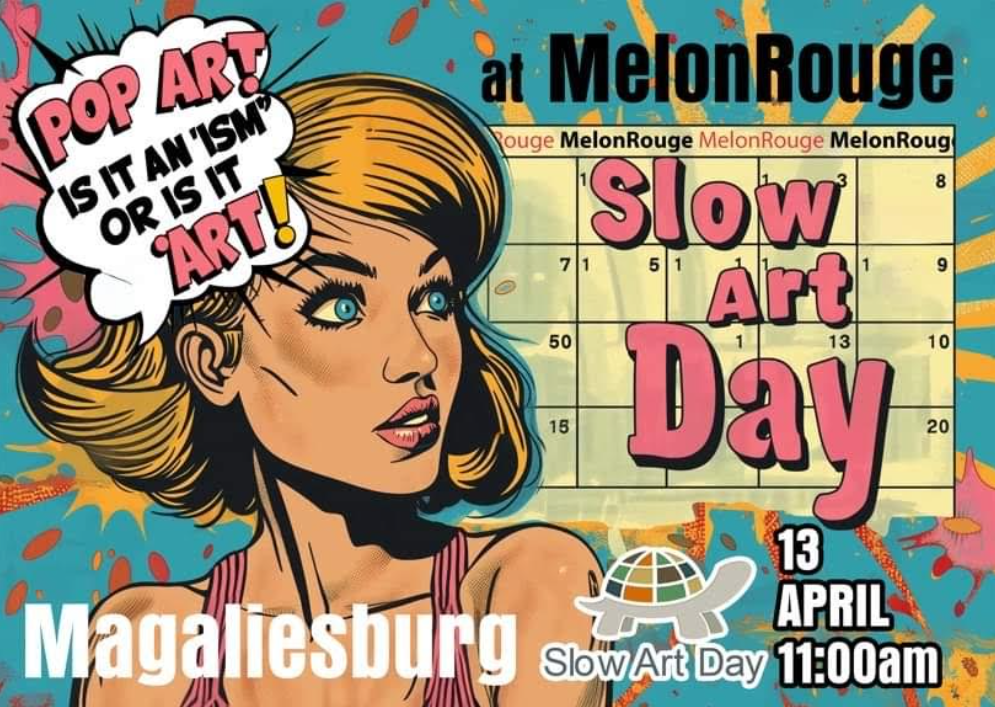
For their Slow Art Day 2024, the MelonRouge and Artichoke Gallery in Magaliesburg, South Africa, invited visitors to slowly experience the exhibition ‘POP Art – is it ISM or is it ART?’, listen to music, and eat food.

Slow Art Day poster for the event

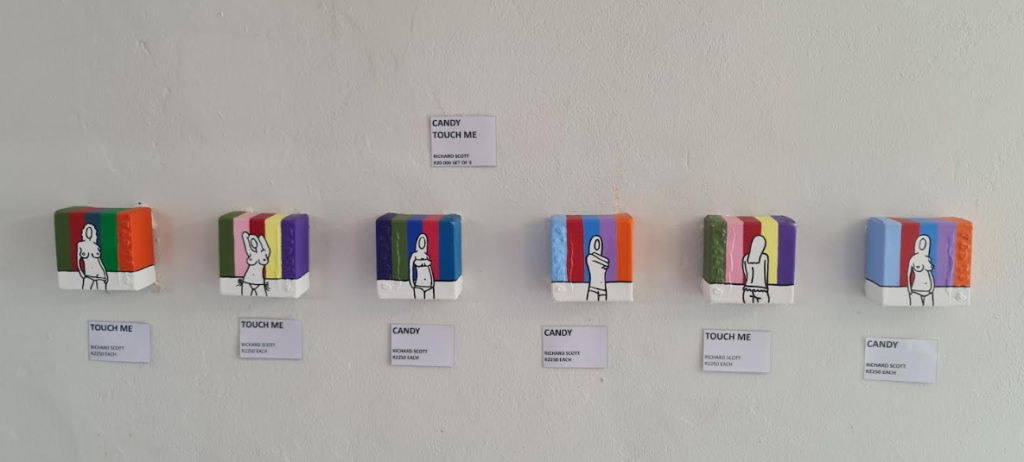
Richard Scott, ‘Candy. Touch Me.’ (unknown date). Photo by Hannelie Sanders

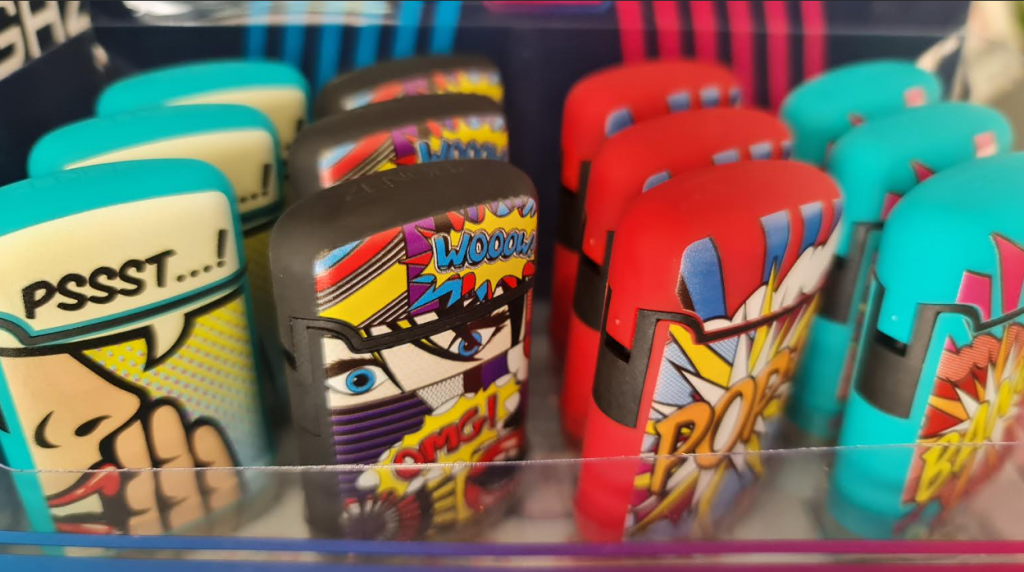
Lighters with pop-art prints on display for Slow Art Day

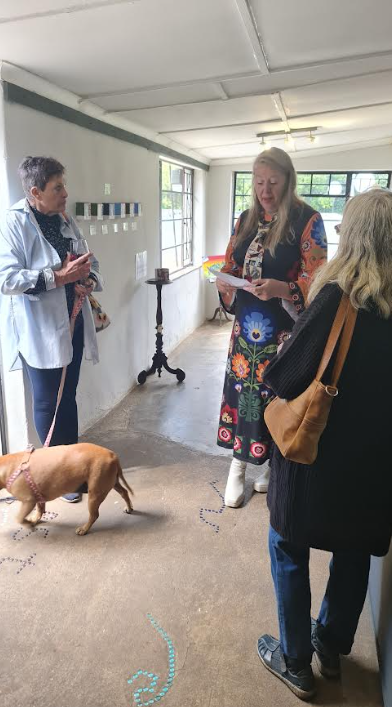
Slow Art Day participants (and a dog vistor!) and Hannelie Sanders. Photo by Hannelie Sanders

Food served as part of the event. Photo by Hannelie Sanders

On Slow Art Day, visitors gathered at the Gallery to explore the art of Richard Scott and listen to the
music of Niki Daly. The gallery also displayed various practical items adorned with Pop Art, such as lighters, vinyl covers, and magazines, integrating art into everyday life.

Hannelie Sanders, the event host, led a lively and informative discussion. The central question during the event was whether Pop Art qualifies as an art form or merely an “ism.” The conversation was inspired by Niki Daly’s song, whose lyrics playfully questioned the distinction between artistic movements and true art:

Lyrics Excerpt:
Maholy-Nagy, Maholy-Nagy
I love his ism, but is it art?
Tell me my Bauhaus baby
Is it art?
Is it an ism or is it an art?

The song set the tone for the day’s theme, blending humor with a critical examination of art
history and theory.

Richard Scott, a prominent British artist based in Cape Town, was a key feature of the event. Scott’s art often combines vivid Pop Art elements with everyday objects, making his work accessible and engaging. His art was displayed alongside practical items, emphasizing Pop Art’s integration into daily life.

As most readers know, Pop Art emerged in the mid-20th century, characterized by its use of popular culture imagery and mass media techniques. Artists like Andy Warhol and Roy Lichtenstein drew inspiration from advertising, comic books, and consumer products, challenging traditional notions of art. This movement blurred the lines between high art and mass culture, making art more accessible to the general public.

At Slow Art Day HQ we are looking forward to whatever MelonRouge Artichoke Gallery designs for Slow Art Day 2025.

-Johanna, Ashley, Jessica Jane, and Phyl

P.S. Stay up to date with events at the MelonRouge Artichoke Gallery via their Facebook

Here you can also see some videos produced in connection with the Slow Art Day event and shared to Facebook:

Mindfulness and Music in Copenhagen

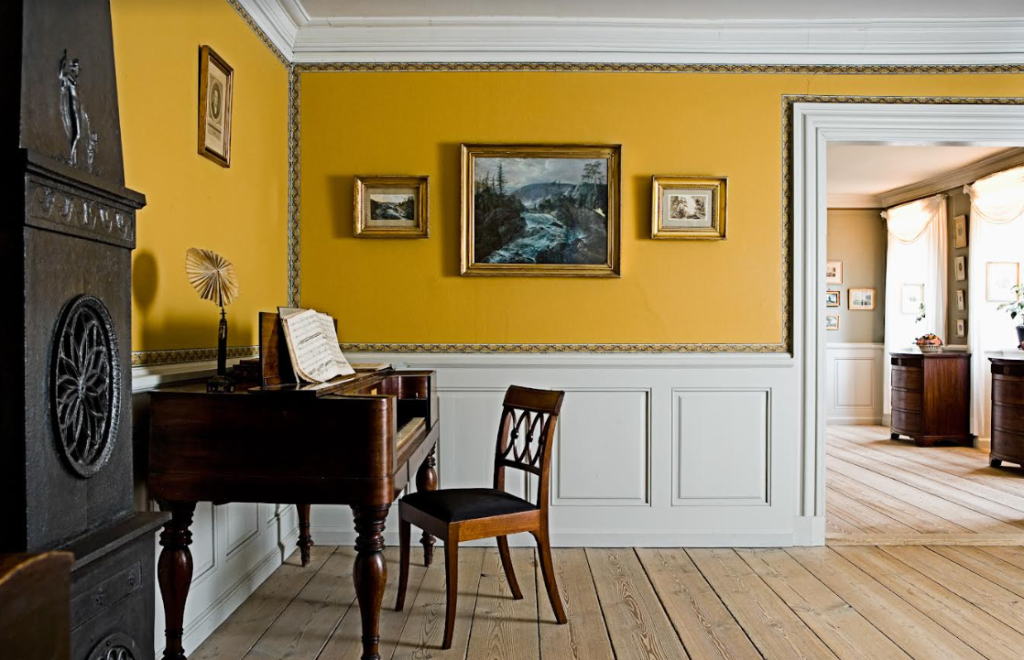
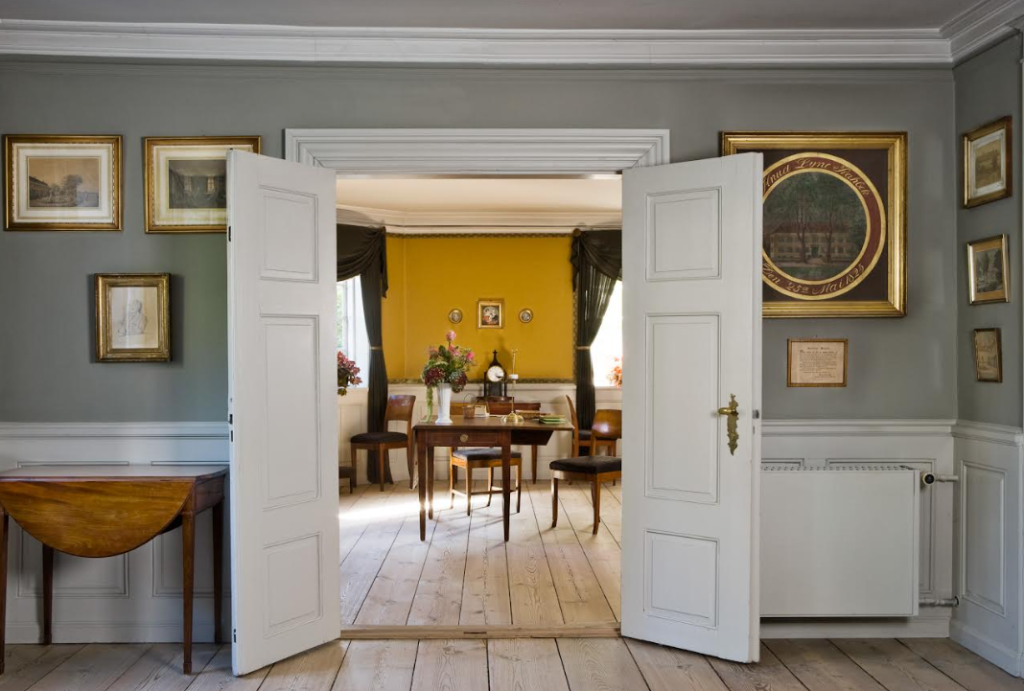
For their third Slow Art Day, the Frederiksbergmuseerne in Frederiksberg – a neighborhood of Copenhagen, hosted a slow looking event at Bakkehuset (The Hill House). The Bakkehuset was a gathering place for prominent figures in the Danish Golden Age of art, literature, and philosophy including writers like Hans Christian Andersen. Today, it is one of the four Frederiksbergmuseerne and open to the public.

Bakkehuset interior. Photo: Stuart McIntyre.

For Slow Art Day, Bakkehuset aimed to use the calming atmosphere of the historical interior of the house as a starting point for slow looking. They began their event by taking visitors on a tour and inviting them to immerse themselves in the atmosphere, and imagine what it might have been like to live, talk, and hang out in the house 200 years ago.
During the tour, they also introduced mindfulness techniques to help participants slow down and sharpen their attention.
Consistent with their theme of immersion, the tour ended with asking participants to listen to Chopin’s raindrop prelude in the garden room of the house. Amazing. We love the idea of weaving music, mindfulness, and slow looking. And, as we write this, we imagine ourselves sitting in Bakkehuset, listening to Chopin and looking slowly at art.

We are already excited for whatever the Frederiksbergsmuseerne come up with for Slow Art Day in 2025.

– Johanna, Ashley, Jessica Jane, and Phyl

P.S. To find out more about Frederiksbergsmuseerne you can visit their Facebook or Instagram.

Slow Music Comes to Antwerp

Armond Storck, the Scriptor at Sint-Pauluskerk (St. Paul’s Church) in Antwerp, who has spearheaded the Slow Art Day movement in churches, is now planning, with his colleagues, a 12 hour slow music concert on July 27, 2024.

First, more about Storck’s support for Slow Art Day.

Storck and his colleagues have hosted seven previous Slow Art Day events and they passionately believe that churches are a natural home for Slow Art Day. “Not only are many churches brimming with works of art, but the locations themselves naturally invite reflection. The slow, sensory perception is a way to arrive at the (religious) meaning of a work of art. Time runs almost noticeably slower in our churches than in the world outside,” said Storck.

As a result of Storck’s efforts to evangelize Slow Art Day to other churches, this year there were four churches in Antwerp participating, each of which had gone through preparation and training coordinated by an organization called the Tourism Pastoral and Monumental Churches Antwerp.

Now back to his plans for slow music.

On July 27, titular-organist Bart Rodyns will play Erik Satie’s Vexations for 12 hours (6 a.m.-6 p.m.) at five different locations throughout St. Paul’s Church in Antwerp.

Interestingly, this piece of music from 1893 has only 18 notes, divided into 3 lines, which are repeated 840 times according to an arithmetic scheme. Spending the day listening to this should be meditative and hypnotic, perhaps revelatory.

Here’s how it will work:
– 6 a.m. to 8 p.m. Bart will play the harmonium in the high choir
– 8 a.m. to 11 a.m. Bart will play the piano in ‘t Schooltje during breakfast
– 11 a.m. to 2 p.m. Participants will hear Bart on the electric piano in the Calvary
– 2 p.m. to 5 p.m. Bart will play the historic organ in the church
– 5 p.m. to 6 p.m. Finally, Bart will finish his marathon in the crypt on a chest organ

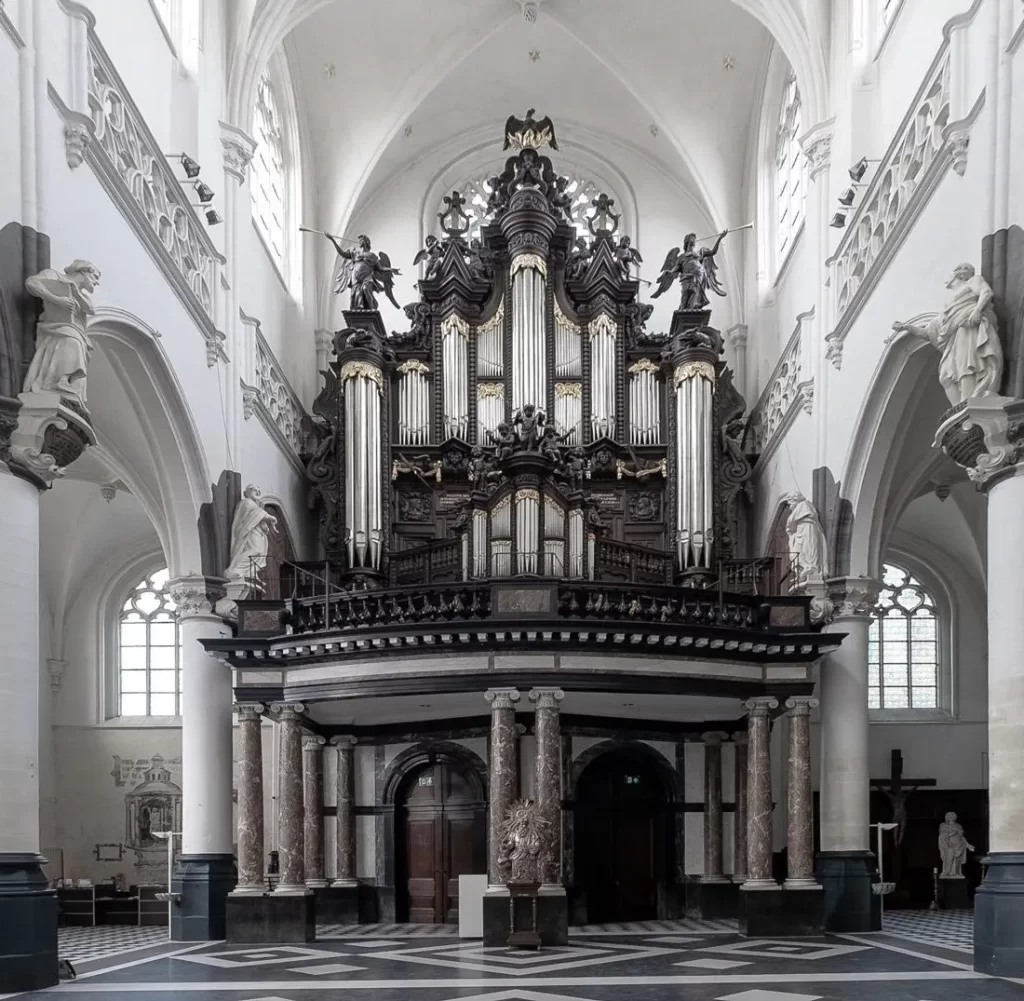
The amazing historic organ, pictured below, features three manuals, a pedal board, seventy-four registers, and 3,303 pipes. Oh my.

Sint-Pauluskerk historic organ – photo copyright Reinhard

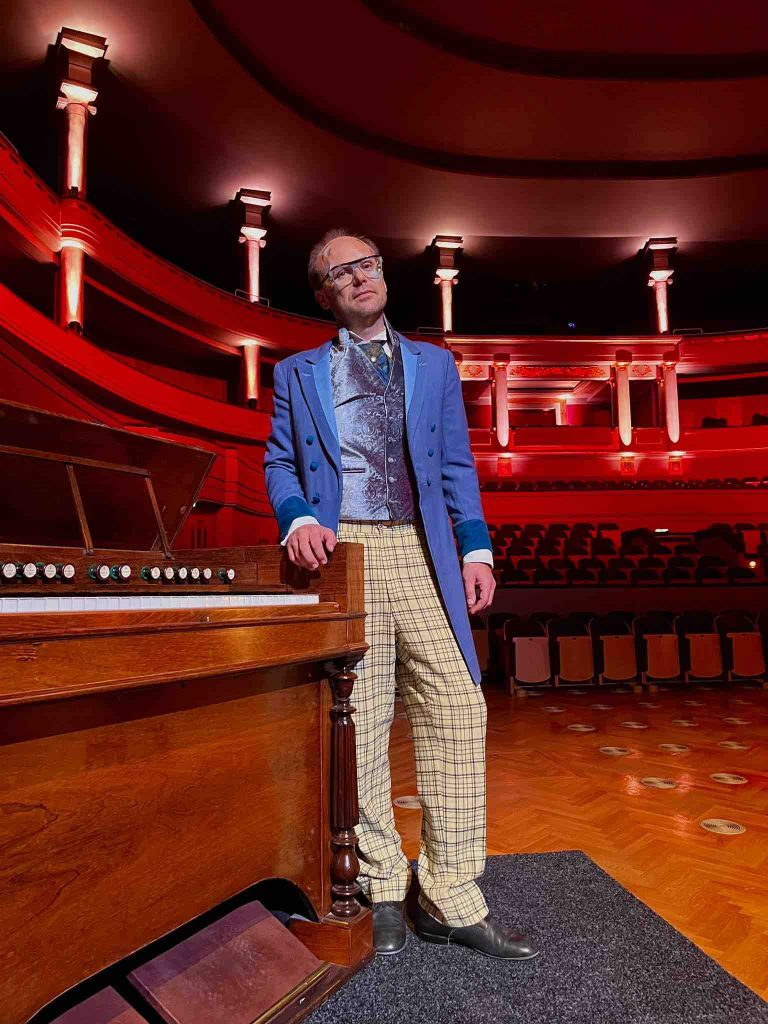
And here is a photo of Bart Rodyns in his “Satie” outfit (i.e., dressed like the composer). Love that Victorian-era purple/blue long-tailed double-breasted coat and floral (or paisley?) waistcoat. And the yellow trousers? Fantastic. The glasses add a modern touch.

Food will be available: Breakfast in the morning, then starting in the afternoon snacks, beer and wine at “democratic prices.”

If you are in Antwerp, go.

If you are not, then consider traveling for this extraordinary slow musical experience.

– Phyl

P.S. For more information, consult this article (it’s in Dutch so use Google to translate if you need it in English or another language).

Going with the Flow at Artspace in Virginia

For their second Slow Art Day, the member-run non-profit gallery Artspace, in Richmond, Virginia, planned a simple approach for their event: start with a 5-minute meditation, followed by 5-minute slow looking at four chosen works currently hanging in the gallery, and a group discussion afterwards.

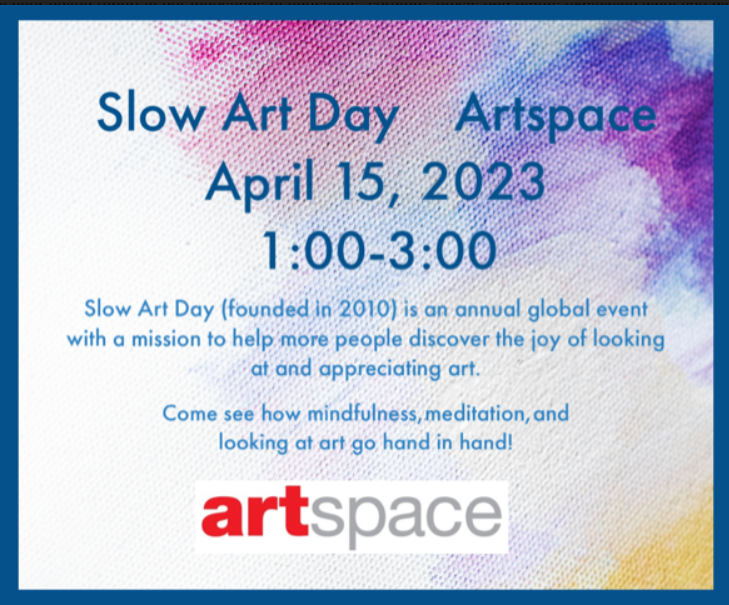
Slow Art Day at Artspace social media graphic.

The gallery opened at noon, and the hosts provided healthy nibbles, mimosas, and water with cucumber, mint and lemon as they welcomed visitors and explained the history and mission of Slow Art Day. At 2pm, they started to play meditative flute music.

While the organizers had a clear plan for meditation, slow viewing and discussion, the participants decided to make some changes on the fly. For example, the first group of visitors skipped the meditation and jumped right in to looking at a large painting. Next, the participants decided to split up and slow look at one art work that they each chose. This did not quite follow the event plan, the organizers went with the flow of the group, and said it worked out even better than planned. Many Slow Art Day educators and hosts know that sometimes visitors take ideas into their own hands, which after all is the central mission of Slow Art Day.

Slow looking at Artspace

At the end of the session, participants held a long discussion about their experience: why did they choose the art they chose, what did they see, and thoughts on the design of the exhibit.

At Slow Art Day HQ we are pleased to know that the event worked out well and we look forward to seeing what this Richmond gallery comes up with for Slow Art Day 2024.

– Johanna, Ashley, Jessica Jane, and Phyl

P.S. Check out Artspace on their social media pages Facebook and Instagram.

P.P.S. Note to Slow Art Day museums: please provide water with cucumber, mint and lemon to all your guests 😉

100th Anniversary Celebration: Slow Art Day at El Nido Art Space (VC Projects)

For their second Slow Art Day, El Nido Art Space, presented by VC Projects, in Los Angeles celebrated the 100th birthday anniversary of artist and poet Sam Francis.

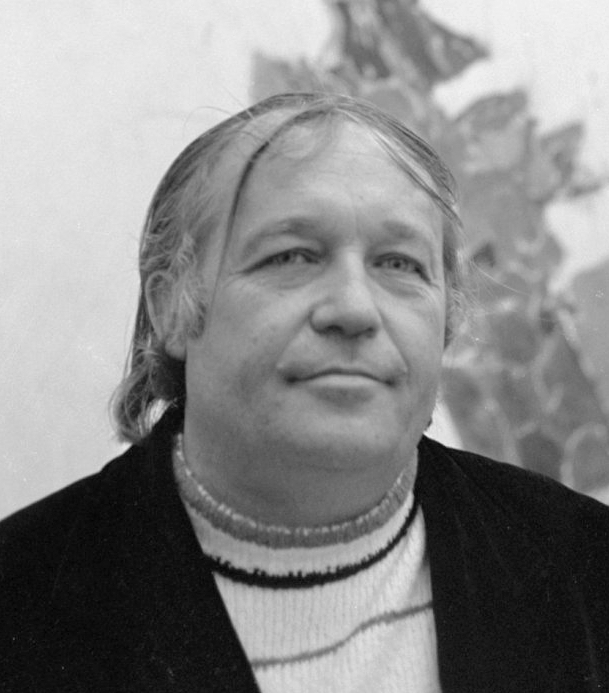
Sam Francis (1923 – 1994) — American painter and printmaker. Photographed in 1968. Photo: Eric Koch. CC BY-SA 3.0 nl

Ahead of Slow Art Day, one of Francis’ poems was sent to participating artists. They were invited to create a new artwork, dance, or song in a medium of their choice, inspired by the poem. The artists included:

Shane Guffogg – California
AKAT – Japan
Bjarni Sigurbjörnsson – Iceland
Mark van Drunick – Netherlands
Victoria Chapman – California

Here is the file containing the instructions and poem. Take a look for yourself, and read through it slowly (or listen to the poem through one of the artists’ interpretations, such as one of A.K.A.T’s recordings on SoundCloud).

The artists were given the following guidelines, also included in the document above:

1. Read the text slowly out loud

2. After reading, go outside or look through a window to see the sky (either day or night.)

3. Contemplate in silence

4. Create a work in any medium in reflection of this text

The responses included dance, song, and new paintings. VC Projects wrote a report following the event, which includes these responses. We also include a selection of them below.

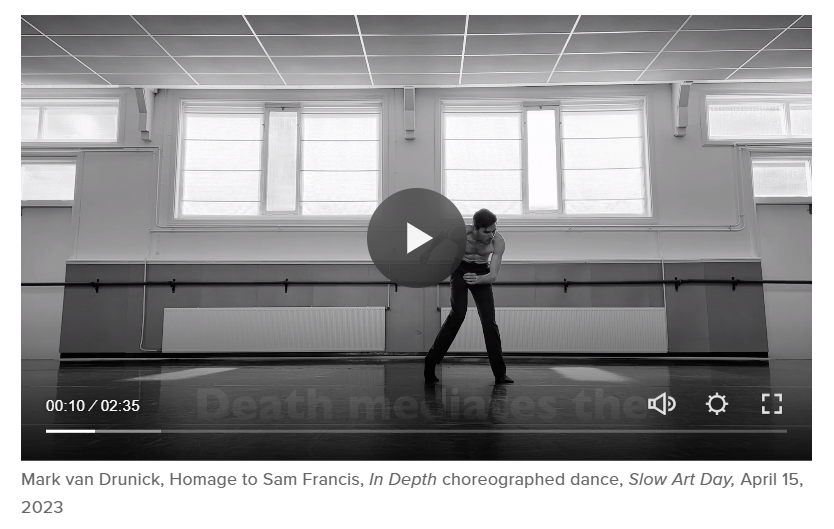
Mark van Drunick, a dancer from the Netherlands, interpreted a poem through dance. If you click directly on the still image below, you will be taken to the page where the video is viewable. Mark also included some of the text from the poem directly in the video, so that the viewer could follow it slowly as part of the experience.

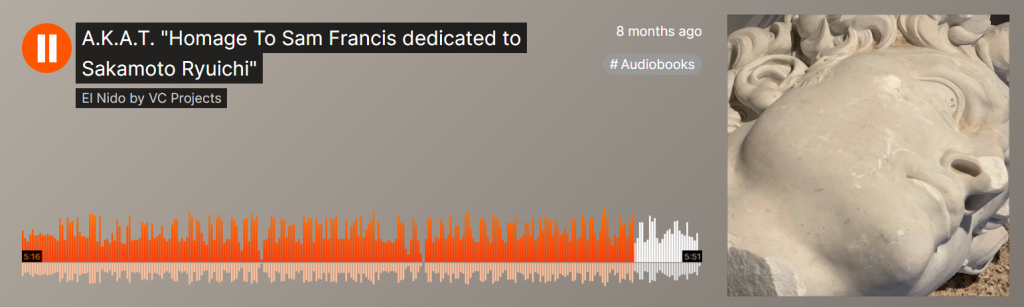
A.K.A.T., a Japan-born artist who today resides in both L.A. and Tokyo, recorded two different versions of the poem being read out loud, with music and sound effects included. The first version is a recitation of the poem by A.K.A.T. (note: the recitation is whispered). In the second version, we hear the sound of A.K.A.T’s mother’s voice reciting the text (done in one take! This one is spoken at normal volume and has a calm and relaxing mood).

We highly recommend that you view the other contributions in the excellent report written by VC projects.

At Slow Art Day HQ, we love that artists were invited into a celebration of another artist as part of this Slow Art Day event. Why not try it yourself: How would you interpret Sam Francis’ poem?

We can’t wait to see what El Nido and VC Projects come up with for 2024 Slow Art Day.

-Johanna, Ashley, Jessica Jane, and Phyl

Lead Creative Festival & First Slow Art Week at Universidad Panamericana

The Universidad Panamericana, Guadalajara campus, located in Zapopan, Mexico, held their first Slow Art Week as a part of their Lead Creative Festival. Lead Creative is a festival that invites young people to seek change through art, and was hosted by Andrea Guadalupe Covarrubias. For the festival, art is broadly defined to include the visual arts, along with instrumental and vocal music, dance, and theater.

With over 1800 participants, this hybrid event had both in-person engagement and social media posts on Facebook and Instagram with an average reach of 700 people per post.

Based on the success of their first Slow Art Day, they plan to hold slow looking sessions throughout the year and not just with visual art, but also with the choir, theater group, and dance artists.

The event was advertised as a part of the Lead Creative festival with the below flyer.

More information can be found on their website, along with videos from past events on their YouTube channel.

We can’t wait to see how Slow Art and Slow Looking are featured in next year’s Lead Creative festival!

– Robin, Ashley, Johanna, Jessica Jane, and Phyl