Second Slow Art Day at Sint-Andrieskerk in Antwerp, Belgium

For Slow Art Day 2025, Sint-Andrieskerk (Saint Andrew’s Church) in Antwerp, Belgium hosted a small and intimate gathering centered on slow looking, reflection, and shared meaning. The event was coordinated by Viviane Vandenbroucke and thoughtfully led by members of the church community.

The experience embodied the core spirit of Slow Art Day: slowing down, looking closely, and engaging in meaningful dialogue.

For adult visitors, the session was led by Father Rudi Mannaerts, priest of Sint-Andrieskerk. Participants were guided in slow looking at the modello of the Crucifixion of Saint Andrew.
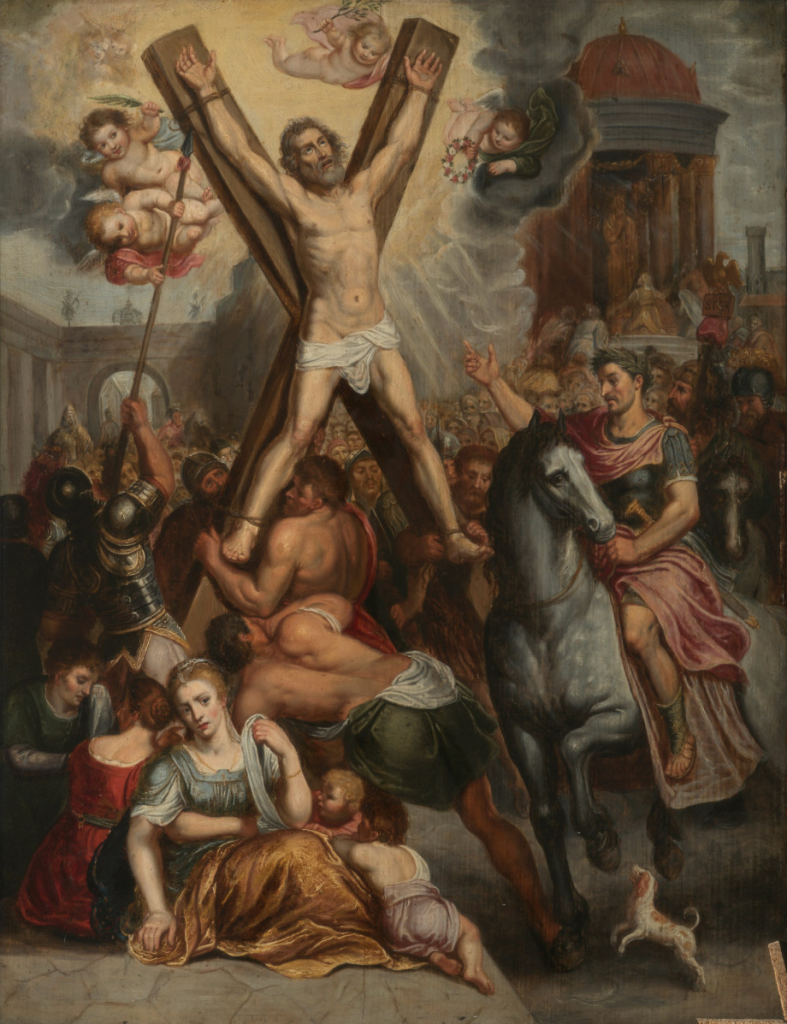
Under Father Mannaerts’ leadership, visitors were encouraged to take time with the work, observing details, reflecting on its symbolism, and discussing how the artwork connects visual form and spiritual meaning.

Interestingly, the painter of this modello – Otto van Veen – was not only the most celebrated painter in Antwerp in the late 16th century, he was also Peter Paul Rubens’ *teacher*. So when the Slow Art Day participants looked slowly at this painting, they were also seeing some of what Rubens’ himself saw centuries ago.

For children, guide Wiske Claus led a parallel experience in the Sacristy. Young participants were introduced to the garments worn by priests and learned about their meanings and uses within the church year.

By engaging directly with these objects, children were invited to look carefully, ask questions, and connect visual elements with deeper significance — a hands-on approach aligned with Slow Art Day’s emphasis on attentive observation.

Sint-Andrieskerk demonstrated how Slow Art Day can thrive in intimate, religious settings as well museums and galleries. The church is already planning its 2026 event, where visitors will gather to slowly contemplate What is the truth? (2012), a contemporary painting by French artist Alain Senez. Inspired by Pontius Pilate’s famous question before the death sentence of Jesus, the work reflects on how media and perception shape what we believe to be true. Led once again by Father Rudi Mannaerts, the church will host multiple sessions throughout the afternoon, continuing its thoughtful approach of connecting historical faith spaces with modern artistic questions.

We are especially grateful to Viviane Vandenbroucke, Father Rudi Mannaerts, and Wiske Claus for continuing to support Slow Art Day within the church community. Sint-Andrieskerk has been an important participant in bringing Slow Art Day into sacred spaces, helping inspire the growing church movement within our global network.

We hope that more churches and sacred spaces join our movement in 2026, and we certainly look forward to hearing about Sint-Andrieskerk’s event on April 11th.

— Ashley, Johanna, Jessica Jane, and Phyl
Eighth Slow Art Day at Habitat for the Arts, Jasper, Alberta, Canada

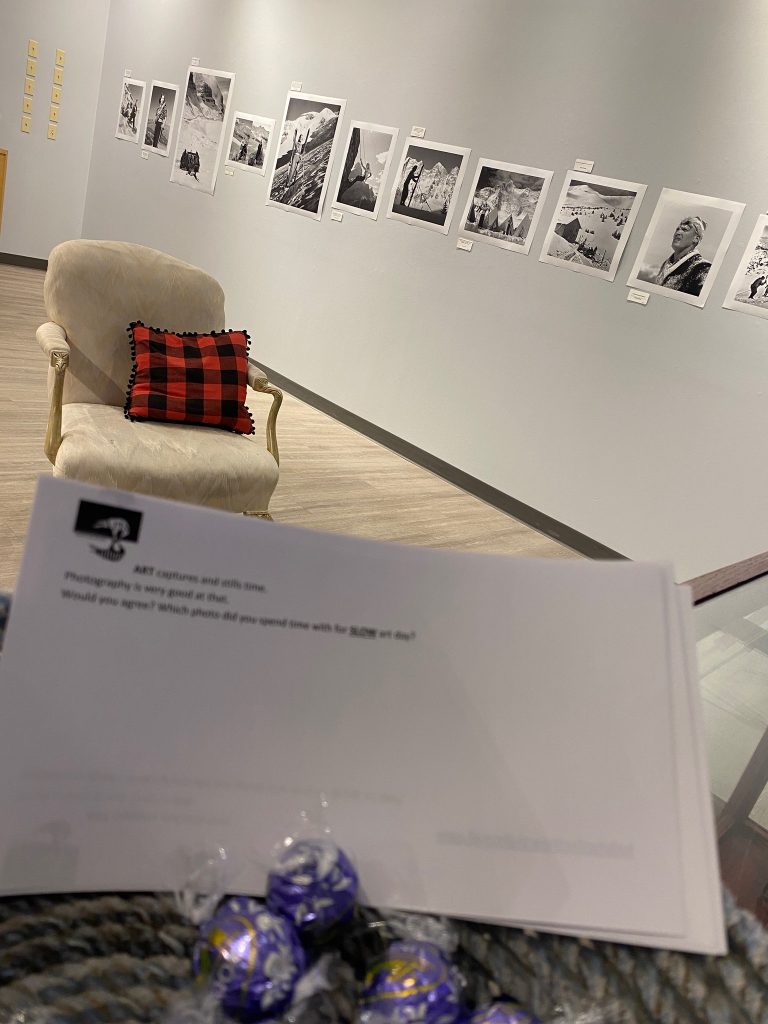
On April 5, 2025, Habitat for the Arts in Jasper, Alberta, Canada hosted another meaningful Slow Art Day at the Jasper Museum, continuing a tradition they have explored over eight years. Each year is different, and this year’s gathering centered on heritage photography and the way art captures and stills time.

The focus of the day was a photography exhibition featuring the work of Harry Rowed — images of people and places in Jasper National Park from the 1940s through the 1960s. The black-and-white still images offered participants a window into earlier generations, inviting them to consider memory, place, and continuity.

The morning program began with a dedicated half hour of slow viewing inside the exhibition. Participants were given a small piece of paper to carry with them as they moved through the gallery. They were invited to reflect on a simple but powerful question: Which image captured you? Which image made you stop and truly spend time with it?

After the quiet viewing period, guests gathered for tea and cookies — and even chocolate — creating a relaxed and welcoming atmosphere for conversation. The structure of the hour allowed for both solitude and shared reflection. The museum space, with comfortable seating placed among the historic images, encouraged visitors to linger.

Photography proved to be an especially fitting medium for Slow Art Day. As Habitat for the Arts shared, still images are perfect for capturing a piece of time. The photographs of Harry Rowed moved beyond documentation into storytelling. They carried gestures, landscapes, family groupings, and expressions that bridged generations.

Two reflections stood out from the discussion.

One participant shared, “It struck me witnessing the ties of family and how the love of nature and exploration crossed generations.”

Another reflected, “There is something so exact and familiar in spending time with the person in the photo. You feel almost as if you might know them, or have met them somewhere before despite the division of time.”

According to the Habitat for the Arts team, these responses captured the essence of the day.

We are grateful to Habitat for the Arts for continuing to celebrate Slow Art Day in Jasper and look forward to what they come up with for 2026.

– Ashley, Johanna, Jessica Jane, and Phyl
Test Kitchen at the Gardiner Museum, Toronto

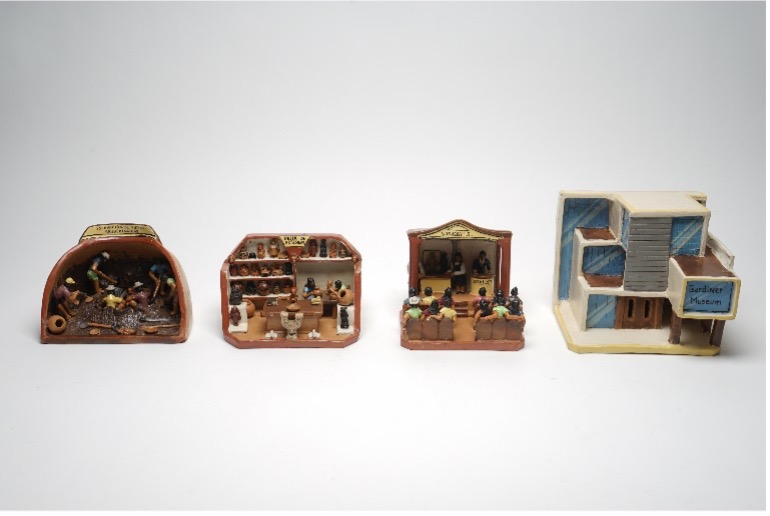
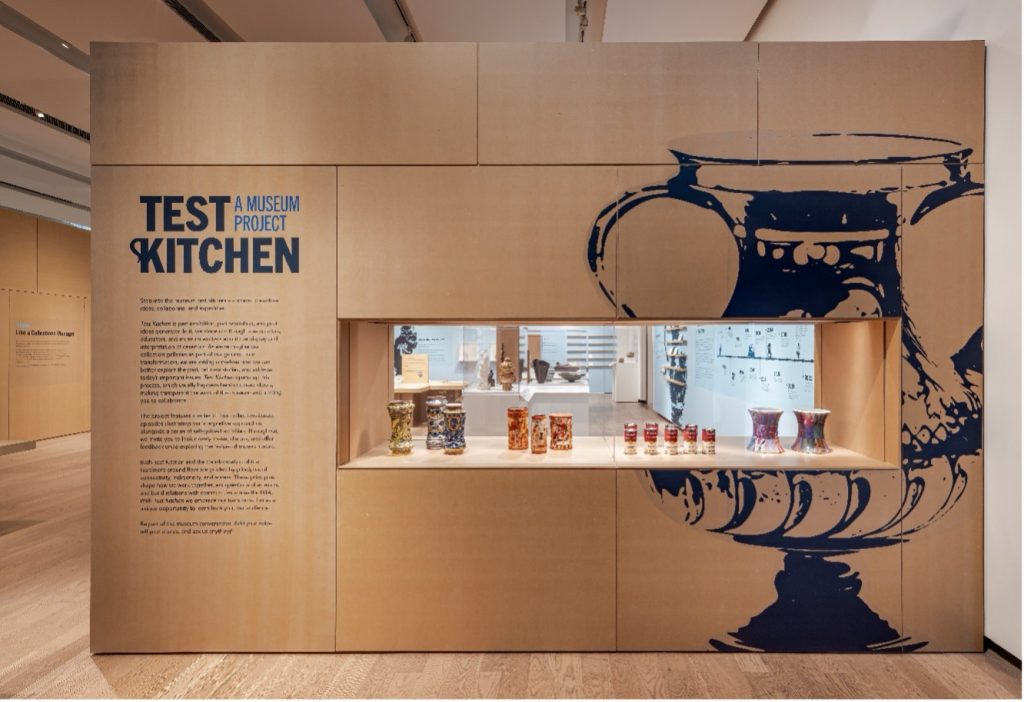
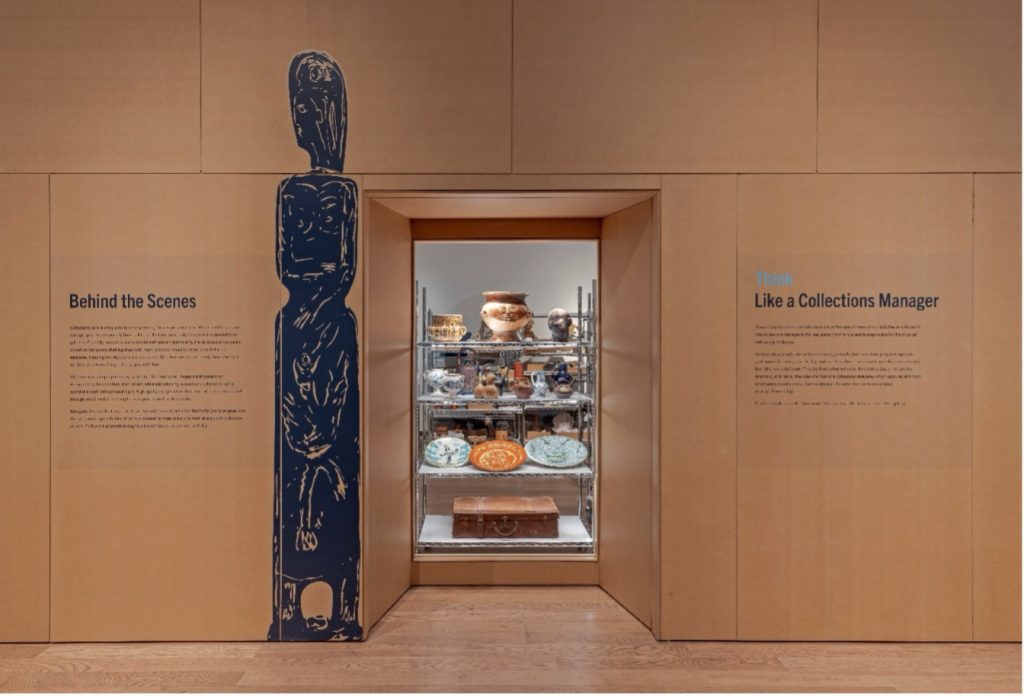
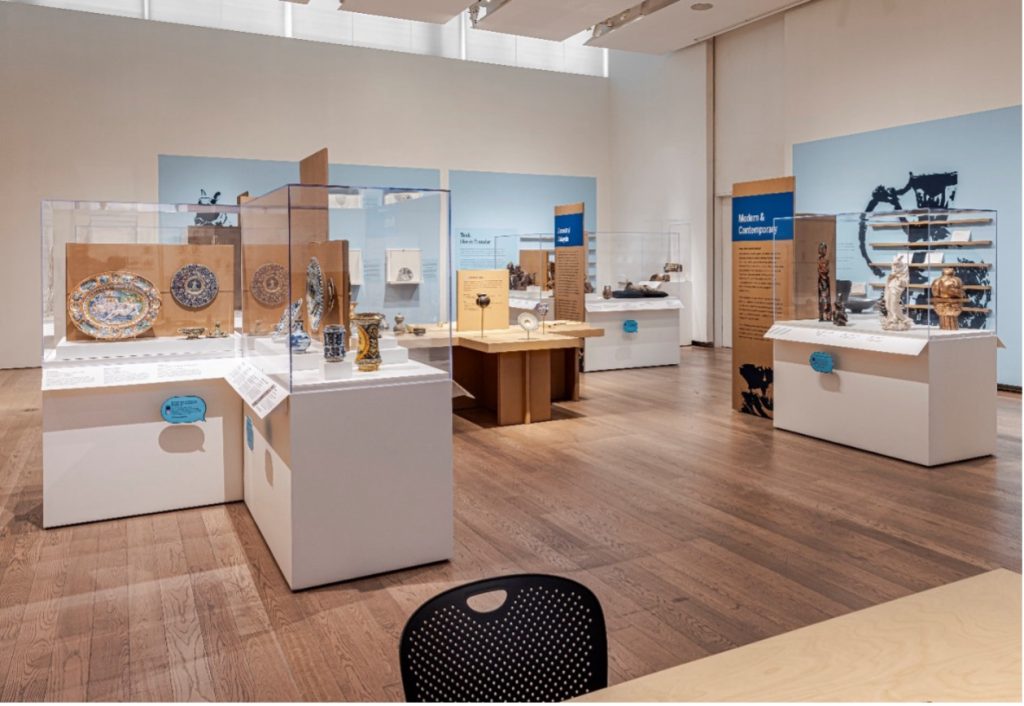
On April 5, 2025, the Gardiner Museum in Toronto, Ontario participated in Slow Art Day for the sixth time — this year embedding the experience within their major exhibition Test Kitchen: A Museum Project.

As the museum underwent a full-scale reimagining of its ground floor and reinstallation of significant parts of its collection, Test Kitchen created a space of experimentation, collaboration, and participation. The exhibition functioned as part exhibition, part workshop, and part ideas generator. Visitors were encouraged not just to observe, but to question, respond, and contribute.

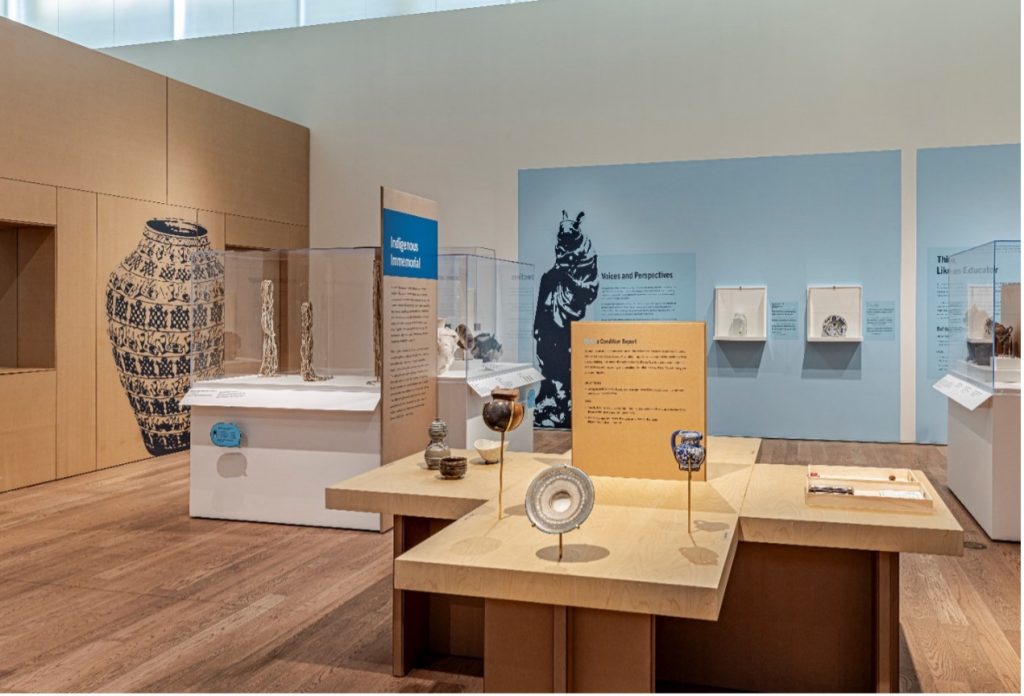
For Slow Art Day, participants were invited to closely engage with four collection-based “episodes” within the gallery:

  • Connected Worlds
  • Modern and Contemporary Ceramics
  • Ancestral Abiyalas
  • Indigenous Immemorial

Featured works included:

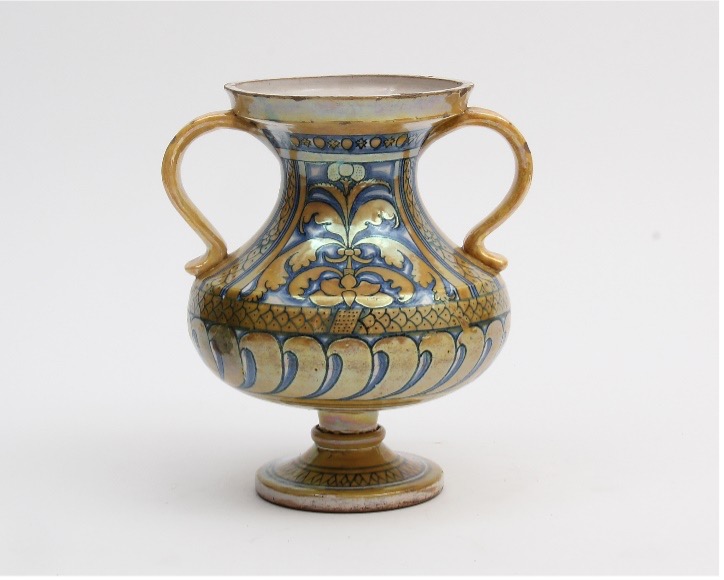
  • Two-handled vase with palmette motif, Deruta, Umbria, Italy, c.1500–1550
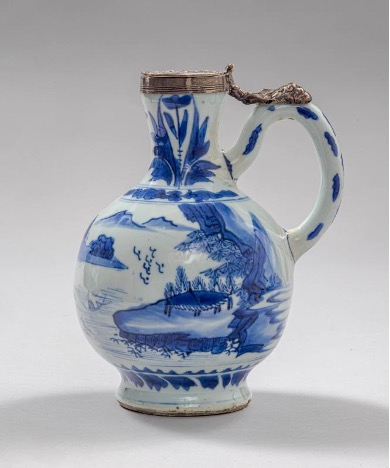
  • Ewer, silver mounts with German coin dated 1626, Jingdezhen, Jiangxi, China, 1635–1640
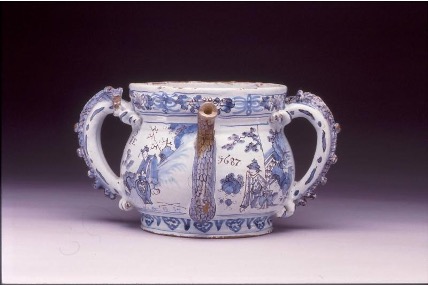
  • Posset pot with chinoiseries, possibly Brislington, Bristol, England, 1687
  • An Odyssey, Artist: Pamela Cevallos (Ecuadorian, born 1984), Collaborator: Guillermo Quijije, Quito, Ecuador, 2022
Two-handled vase with palmette motif, Deruta, Umbria, Italy, c.1500–1550
Ewer, silver mounts with German coin dated 1626, Jingdezhen, Jiangxi, China, 1635–1640
Posset pot with chinoiseries, possibly Brislington, Bristol, England, 1687
An Odyssey, Artist: Pamela Cevallos (Ecuadorian, born 1984), Collaborator: Guillermo Quijije, Quito, Ecuador, 2022

Participants navigated the exhibition using a self-guided Slow Art Day activity sheet created specifically for the program (below). The prompts encouraged close looking, sketching, reflective writing, and imaginative engagement.

In Connected Worlds, visitors searched for ceramics that visually embodied global exchange: an English pot with Chinese dragons, a Chinese jug with Dutch designs and a German coin, and an Italian vase made using a technique from Iraq. In Indigenous Immemorial, participants compared two works by John Kurok, reflecting on form, design, colour, and emotional tone.

In Modern and Contemporary Ceramics, guests identified works connected to myth or magic, considering how contemporary artists draw from narrative and symbolism.

In Ancestral Abiyalas, participants looked closely at An Odyssey, imagining themselves within its scenes — listening for sounds, sensing scents, and noticing what surprised them.

After completing their exploration, visitors were invited to participate in the exhibition’s interactive “Befriend an Object” activity, further reinforcing the exhibition’s collaborative spirit.

We are grateful to Sofia Flores-Ledesma and the team at the Gardiner Museum for continuing to champion Slow Art Day and for integrating it so thoughtfully into their institutional transformation, and look forward to seeing what they come up with for Slow Art Day 2026.

– Ashley, Johanna, Jessica Jane, and Phyl
P.S. View them on Instagram and Facebook

Klimt, Turtles, AI & Art at Deutsches Museum Bonn

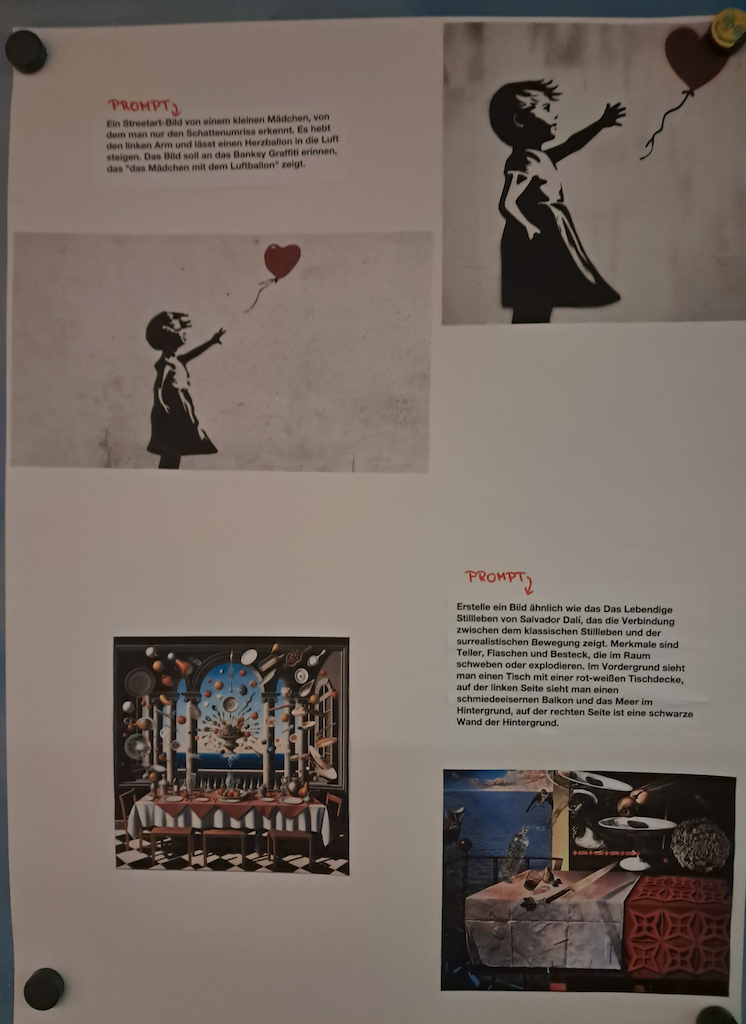
On April 5, 2025, the Deutsches Museum Bonn in Bonn, Germany participated in Slow Art Day and focused on the exhibition KI-Update: Deep Dive – Ist das Kunst? (“AI Update: Deep Dive – Is It Art?”).

The exhibition explored artificial intelligence and its growing role in creativity, authorship, and perception.

For Slow Art Day, the museum centered the experience around a set of connected questions: “Can we recognize AI-generated art? And when we look closely at AI-generated content, do we discover the same feelings, surprises, and emotions as we do when we spend a long time looking at human-made art?”

Displayed throughout the gallery were pairs of artworks inviting comparison and contemplation — classical works alongside AI-generated interpretations, including images inspired by Gustav Klimt’s Der Kuss and other well-known masterpieces. Through activating and participatory stations, visitors were encouraged to look carefully, question assumptions, and examine their own emotional responses.

The format followed a simple but powerful structure:

  • First, slow down upon entering.
  • Second, engage deeply with the works and prompts.
  • Finally, reflect on whether the experience of looking at AI-generated imagery felt different from looking at traditionally created art.

One unexpected outcome of the day was the shared feeling of becoming “turtles.” As visitors slowed their pace and extended their viewing time, the metaphor stuck. To celebrate the theme, a volunteer led a hands-on crafting station where participants created multicolored turtles using potato starch material. The playful activity reinforced the central message of the day: slow down, take your time, and carry curiosity with you.

By blending philosophical inquiry, technology, and participatory creativity, Deutsches Museum Bonn created a Slow Art Day that felt both timely and joyful.

Warm thanks to Tanja Löschner and the entire education and engagement team for bringing Slow Art Day into the evolving conversation around AI and art. We look forward to seeing what they come up with for Slow Art Day 2026.

– Ashley, Johanna, Jessica Jane, and Phyl
P.S. View them on Instagram and Facebook

Contemporary Art at Wardong Gallery

On April 5, 2025, Walyalup Fremantle Arts Centre (WFAC) in Western Australia held their first Slow Art Day during the Perth Festival exhibition season and focused on four contemporary works presented in the Wardong Gallery.

Kate Mitchell, Prompts for Idea Induction 2024, HD video, 16:9, silent. 38 minutes, 58 seconds.
Photographer: Shannon Lyons


Before the slow looking began, Shannon Lyons, Engagement and Public Programs Coordinator, welcomed participants and acknowledged the Whadjuk people as the traditional custodians of the land.

Shannon outlined a self-directed structure for the morning and invited participants to spend approximately 15 minutes with each of the four mapped artworks, choosing their own order. They were encouraged to unplug, remain quiet, and refrain from reading the gallery texts, focusing instead on what they could see and experience directly. Notepaper, pencils, and clipboards were offered for those who wished to write or draw, and stools were available for seated viewing.

After an hour of slow looking, the group reconvened in the center of the gallery for a relaxed discussion. Conversation prompts invited participants to share one word to describe an artwork, reflect on details noticed, and consider what it felt like to look slowly.

For many attendees, this was a new experience. Most had never spent sustained time with an artwork before. The extended encounter with Mitchell’s video work encouraged careful observation and personal interpretation.

We look forward to seeing what the WFAC comes up with for Slow Art Day 2026.

– Ashley, Johanna, Jessica Jane, and Phyl
Third Place Making at the Marjorie Barrick Museum of Art

On April 5, 2025, the Marjorie Barrick Museum of Art at the University of Nevada, Las Vegas hosted their fifth Slow Art Day with a thoughtful and community-centered program grounded in the theme “Slow Looking as Community Third Place Making.”

Facilitated by Dr. Zida Wang, Manager of Community Engagement and Outreach, the day invited participants to consider how an art museum can function as a “third place” — a welcoming social environment beyond home and work where reflection and connection can unfold naturally. Throughout the day, participants including UNLV students, local artists, and families, moved through the galleries at their own pace.

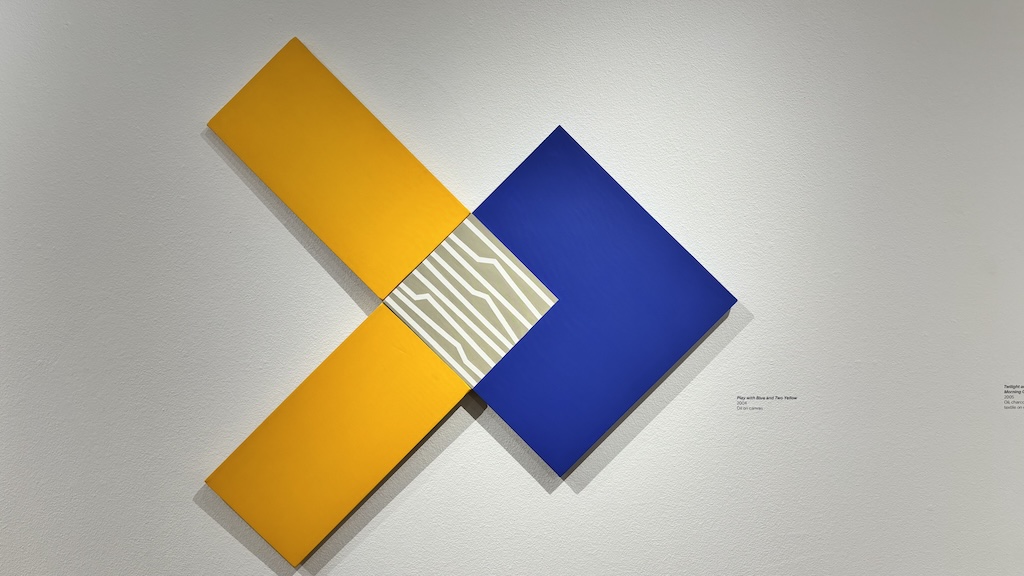
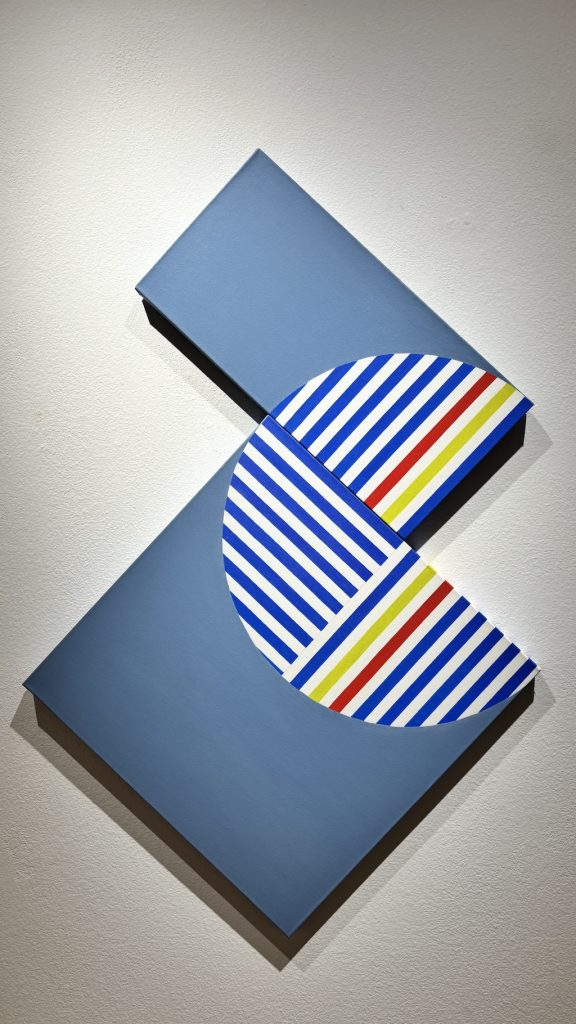
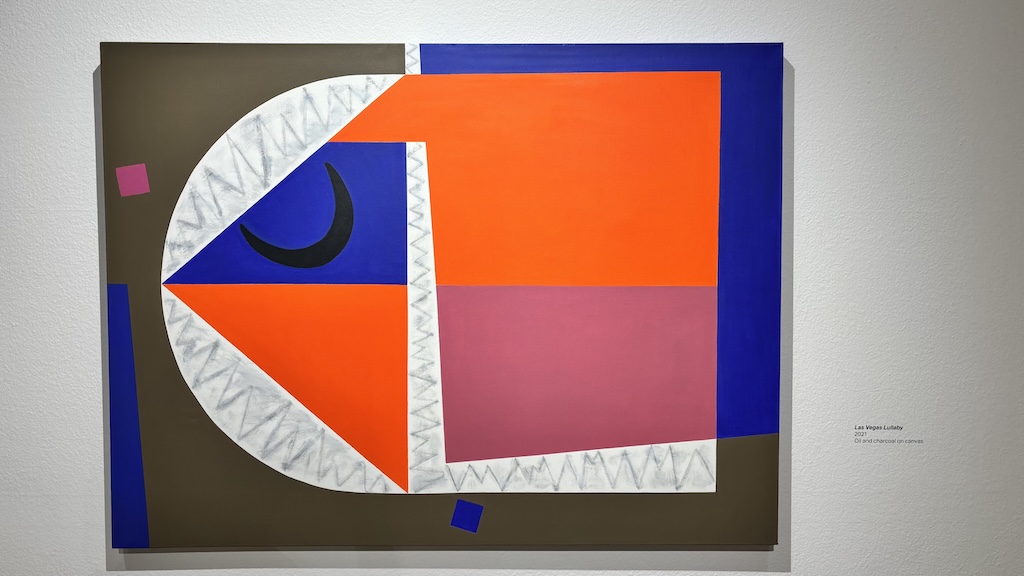
The featured works for slow looking were paintings by Japanese-American artist Yoko Kondo Konopik:

  • Play with Blue and Two Yellow (2004)
  • Sunny Beach (2019)
  • Las Vegas Lullaby (2021)
Yoko Kondo Konopik: Play with blue and Two Yellow (2004)
Yoko Kondo Konopik: Sunny Beach (2019)
Yoko Kondo Konopik: Las Vegas Lullaby (2021

These bold, geometric compositions — with their intersecting planes of color, stripes, arcs, and spatial tension — offered rich opportunities for observation and interpretation.

After introducing the selected works, visitors were encouraged to engage in self-guided slow looking supported by printed prompts developed by the museum. These prompts invited participants to reflect not only on what they saw, but also on their own physical presence in the gallery.

They were asked to consider the size and dimensionality of the artwork, notice unexpected details, reflect on how their body was positioned in front of the work, and even become aware of sound and air temperature. Additional prompts invited visitors to find artworks connected to values such as compassion, courage, joy, or personal growth.

Influenced by Third Place Theory, constructivist museum approaches, and other approaches like visual thinking, the program blended independent reflection with facilitated dialogue. Participants journaled quietly, then gathered for informal conversations to share interpretations. The tone was open, exploratory, and welcoming. There was no pressure to “get it right.” Instead, the emphasis was on slowing down and discovering meaning collectively.

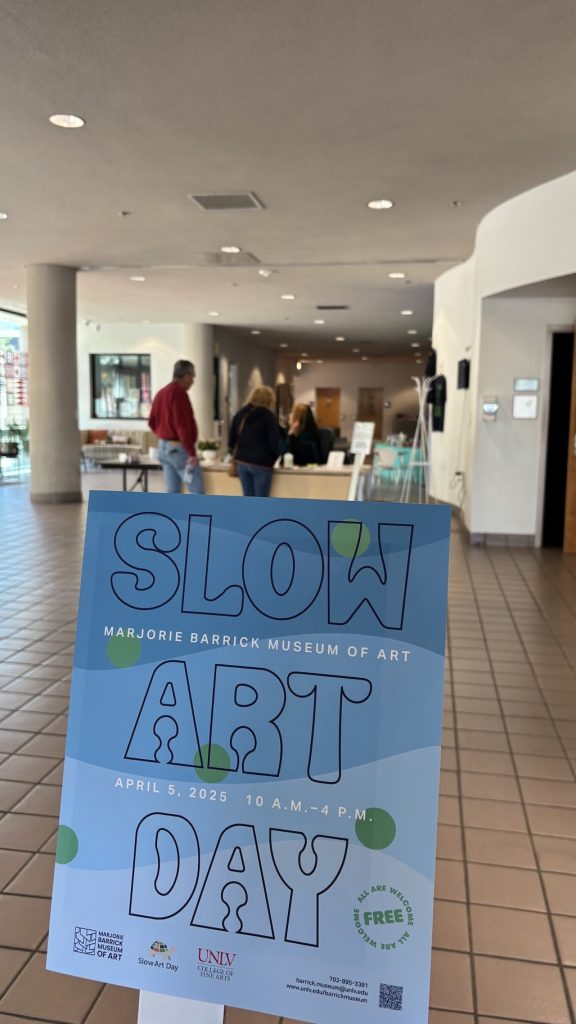
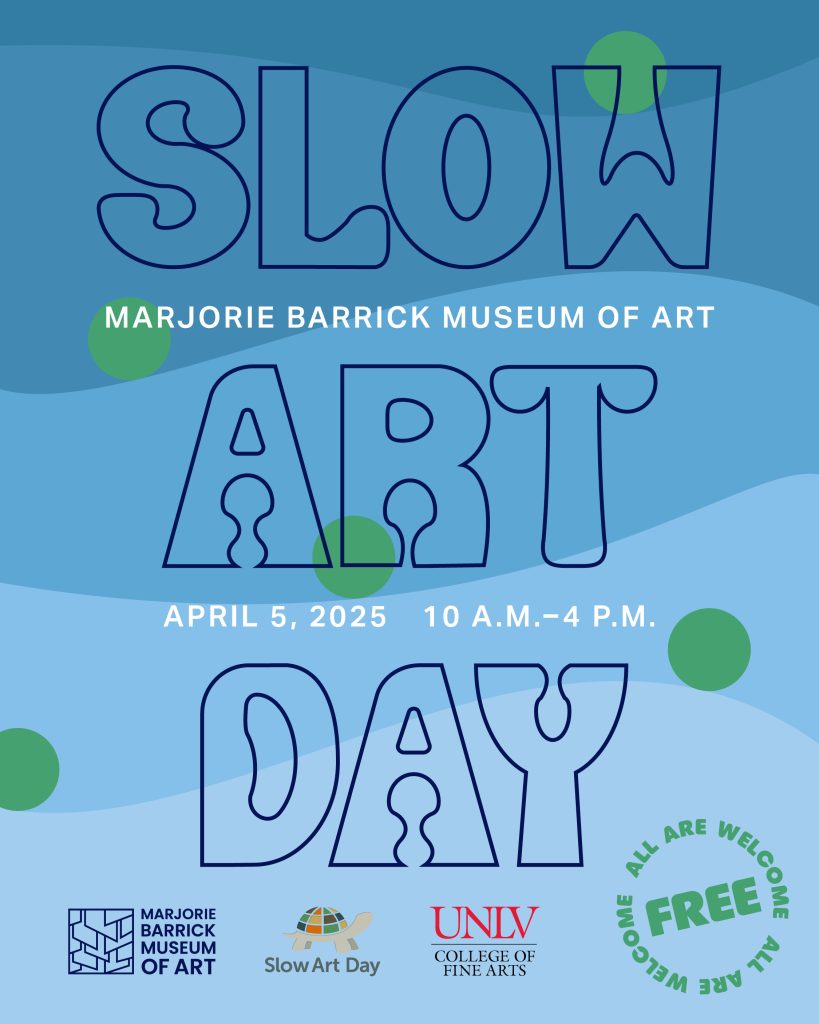
We love the flyer they created. As you can see below, it used oversized, rounded outline lettering with playful cutout details and a cool blue palette that gave it a distinctly 1960s modernist poster vibe. The bold typography, clean sans-serif subtext, and simple graphic shapes also created a retro feel that was both groovy *and* approachable.

According to visitors, the Slow Art Day experience made the galleries felt less like formal exhibition spaces and more like living rooms for communal viewing. Some returned to the same painting multiple times. Others compared how their perceptions shifted after hearing a peer’s insight.

By the end of the day, the event affirmed the Barrick Museum’s belief that art museums can serve as inclusive third space for reflection, empathy, and connection. In other words, Slow Art Day did not simply encourage looking; it encouraged belonging.

We are grateful to Dr. Zida Wang and the team at the Marjorie Barrick Museum of Art and look forward to what they come up with for 2026!

– Ashley, Johanna, Jessica Jane, and Phyl
BYU Museum of Art: Four Ways to Slow Down in “Crossing the Divide”

For their fourth Slow Art Day, the Brigham Young University Museum of Art in Provo, Utah celebrated from Monday, March 31 through Saturday, April 5 and invited visitors to practice slow looking using four different strategies and a small group of works in the Crossing the Divide exhibition on display on the main level of the museum.

Featured works:

  • “A Corner Window in a Pawn Shop” by Rose Hartwell (1893)
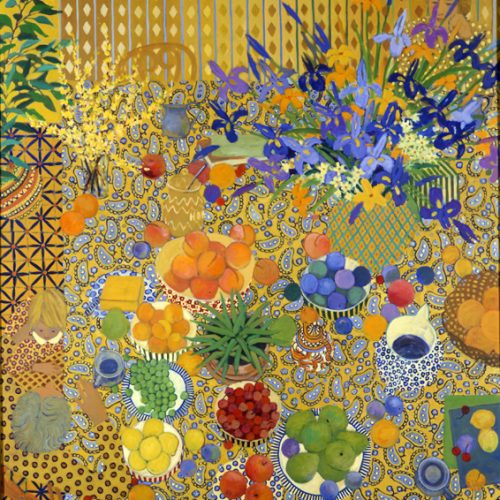
  • “Trifloria” by Jeanne Leighton-Lundberg Clarke (c. 1981)
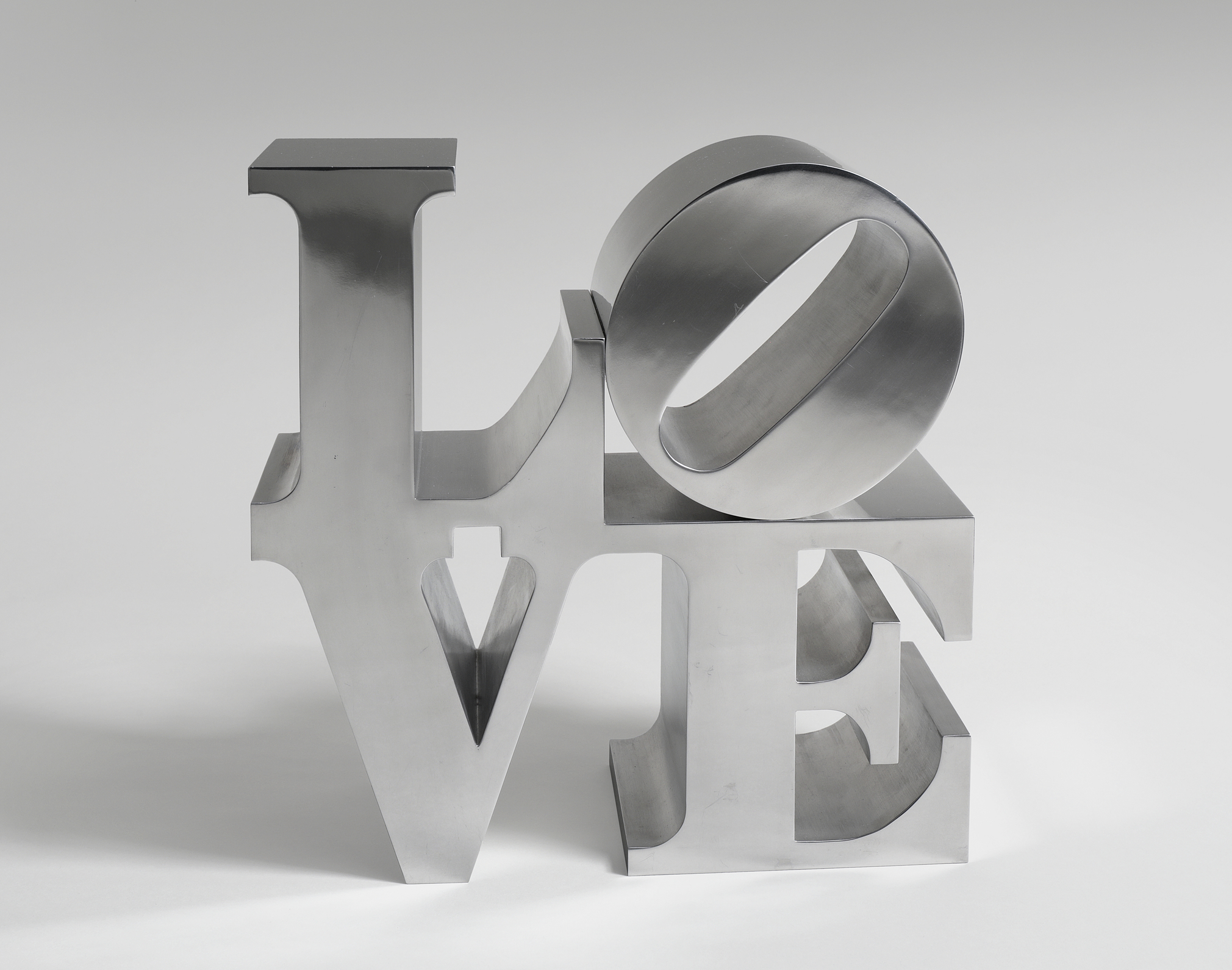
  • “LOVE” by Robert Indiana (1973)
  • “View of Monterey Bay” by Raymond Dabb Yelland (1879)
  • “Great White Throne” by Phillip Henry Barkdull (1930)

Look Big

Image
Rose Hartwell, A Corner Window in a Pawn Shop (1893), oil on canvas. Brigham Young University Museum of Art.

Visitors were encouraged to “cast a wide net” and examine every detail in Hartwell’s painting. The prompt challenged them to name ten different items for sale in the shop window — a structured way to slow down and notice complexity.

Narrow Your Focus

Image
Image

Jeanne Leighton-Lundberg Clarke, Trifloria (c. 1981), oil on canvas. Brigham Young University Museum of Art.

Here the instruction was the opposite: limit attention to colors, shapes, and patterns. By narrowing their focus, visitors discovered how repetition, contrast, and structure shape the viewing experience.

Change Your Perspective

Image
Image

Robert Indiana, LOVE (1973), aluminum. Brigham Young University Museum of Art.

Participants were invited to view Indiana’s sculpture from multiple angles, either in person or through online images. Altering physical perspective revealed new alignments of form and shadow.

Compare and Contrast

Image
Raymond Dabb Yelland, View of Monterey Bay, 1879, oil on canvas.
Image

Phillip Henry Barkdull, Great White Throne (1930), oil on canvas. Brigham Young University Museum of Art.

Image
Visitors looking, comparing and contrasting Yelland and Barkdull.

Visitors were prompted to compare subject, color, line, and composition between the two landscapes. This strategy encouraged noticing similarities and differences in mood, structure, and visual language.

After completing the activity, participants returned to the front desk to receive a small prize. All visitors selected a postcard or sticker featuring one of the works. Children also received a kaleidoscope, and adults chose between a museum pin or sticker.

At Slow Art Day HQ, we love that The BYU Museum of Art asked visitors to look with four different. That’s a great design for a thoughtful Slow Art Day.

We look forward to seeing what the BYU Museum of Art comes up with for Slow Art Day 2026.

– Ashley, Johanna, Jessica Jane, and Phyl
Choi Sunu House: The Beauty and Heart of Korea

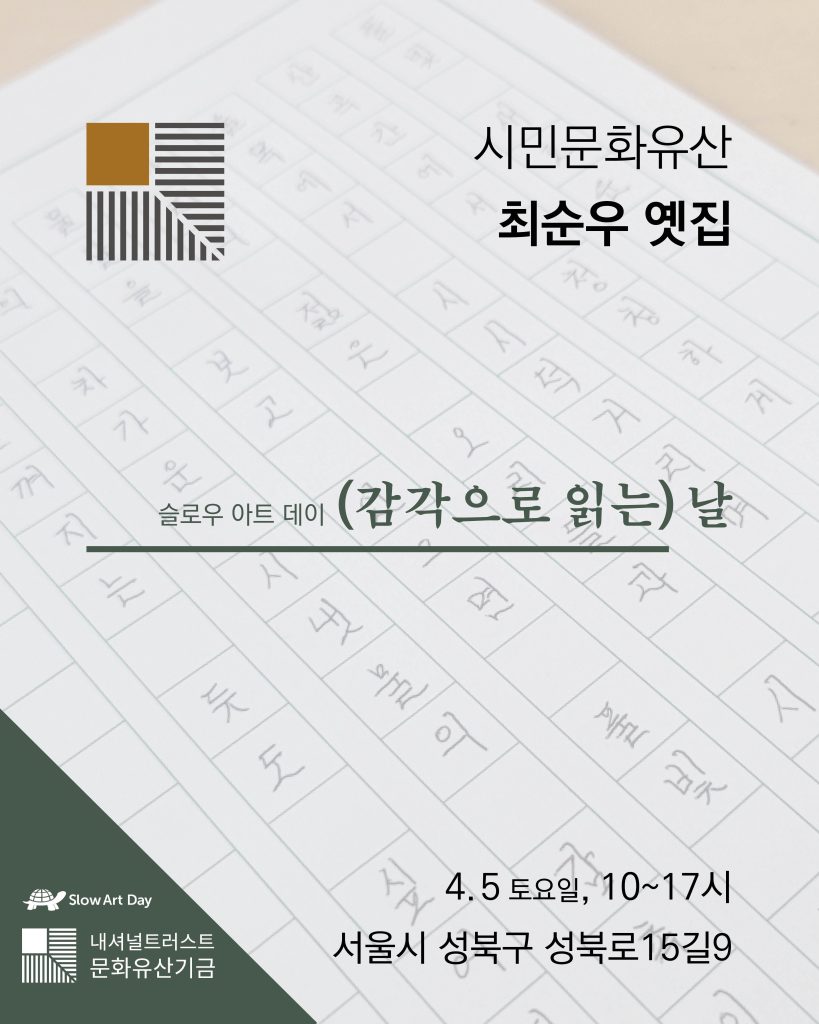
On April 5, 2025, Choi Sunu House in Seoul, South Korea participated in their third Slow Art Day with a reflective program titled “Discovering the Beauty and Heart of Korea” (“한국미 한국의 마음을 찾는 시간”).

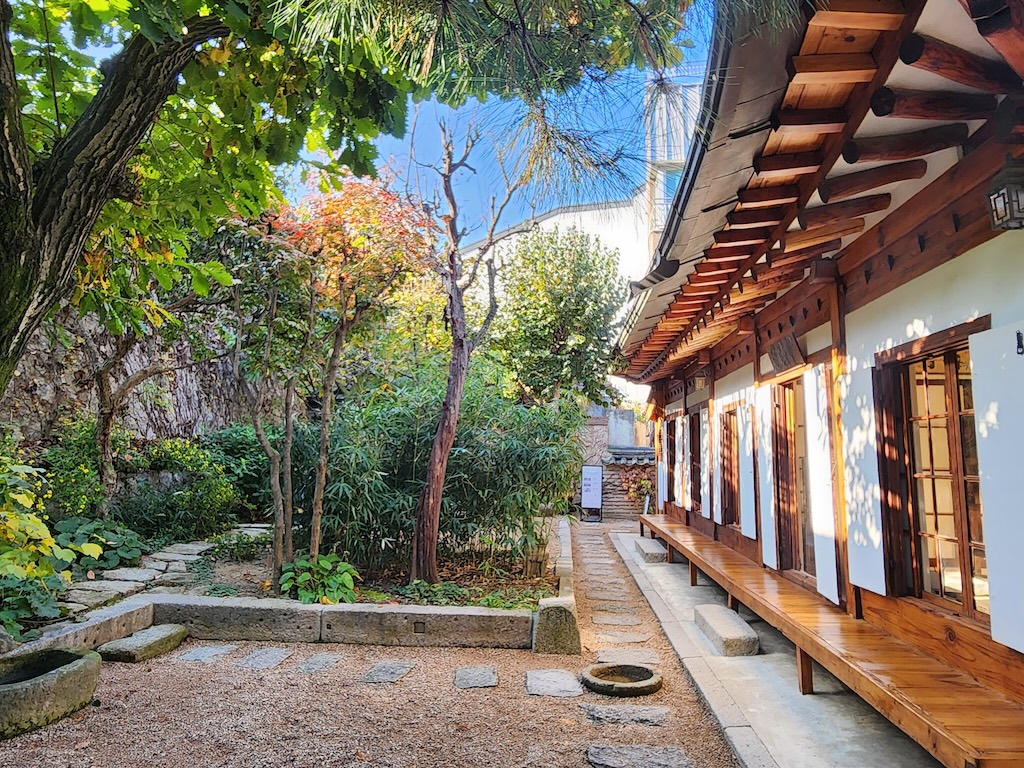
Although rain fell steadily across Seoul that day, creating challenges for attendance, the quiet weather deepened the contemplative atmosphere of this historic hanok home nestled in Seongbuk-dong.

Choi Sunu House preserves the legacy of art historian and cultural scholar Choi Sunu (1916–1984), whose writing celebrated Korean aesthetics, craftsmanship, and spirit. Rather than centering a single artwork, the entire house and garden became the focus of slow looking — and slow reading.

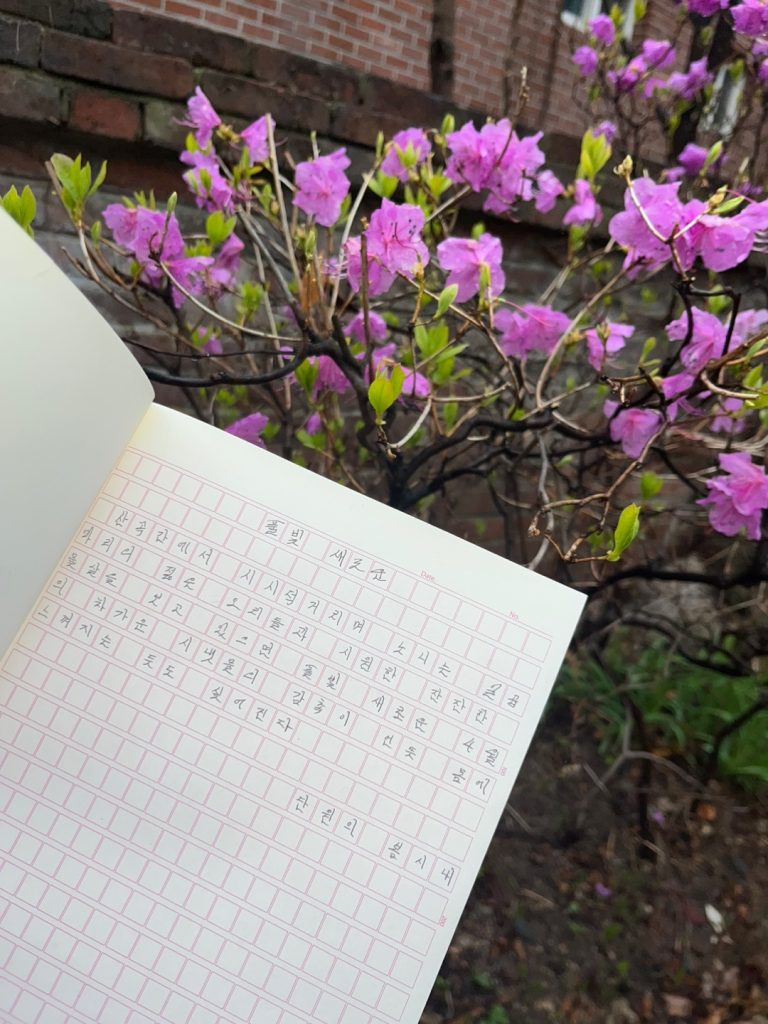
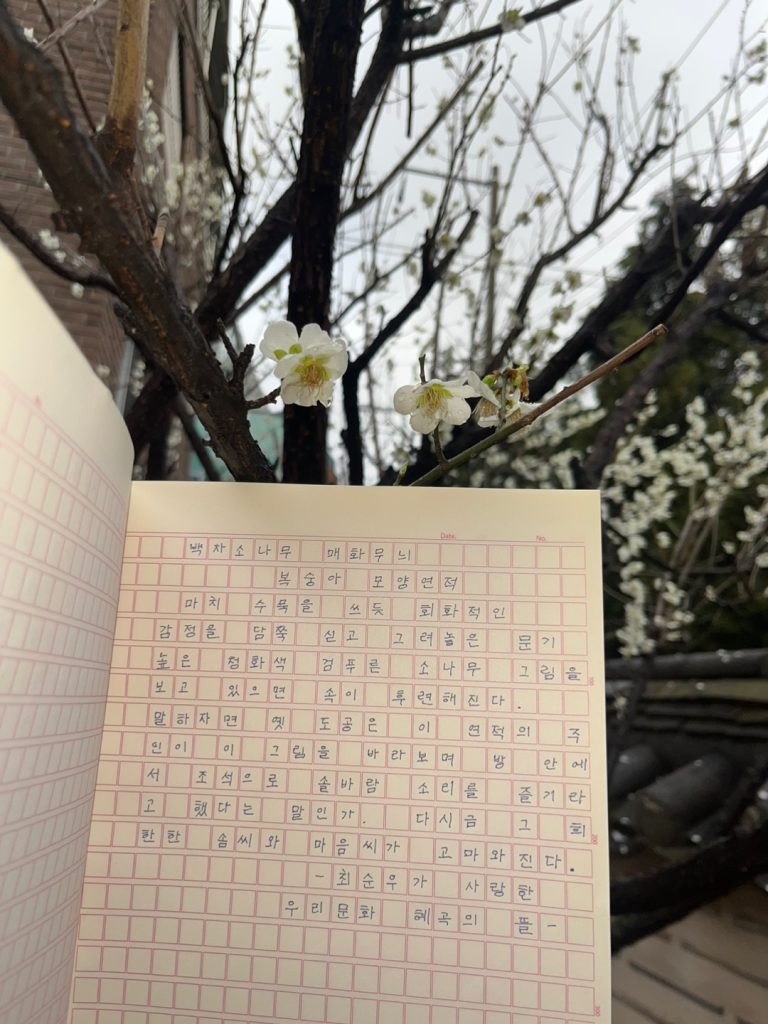
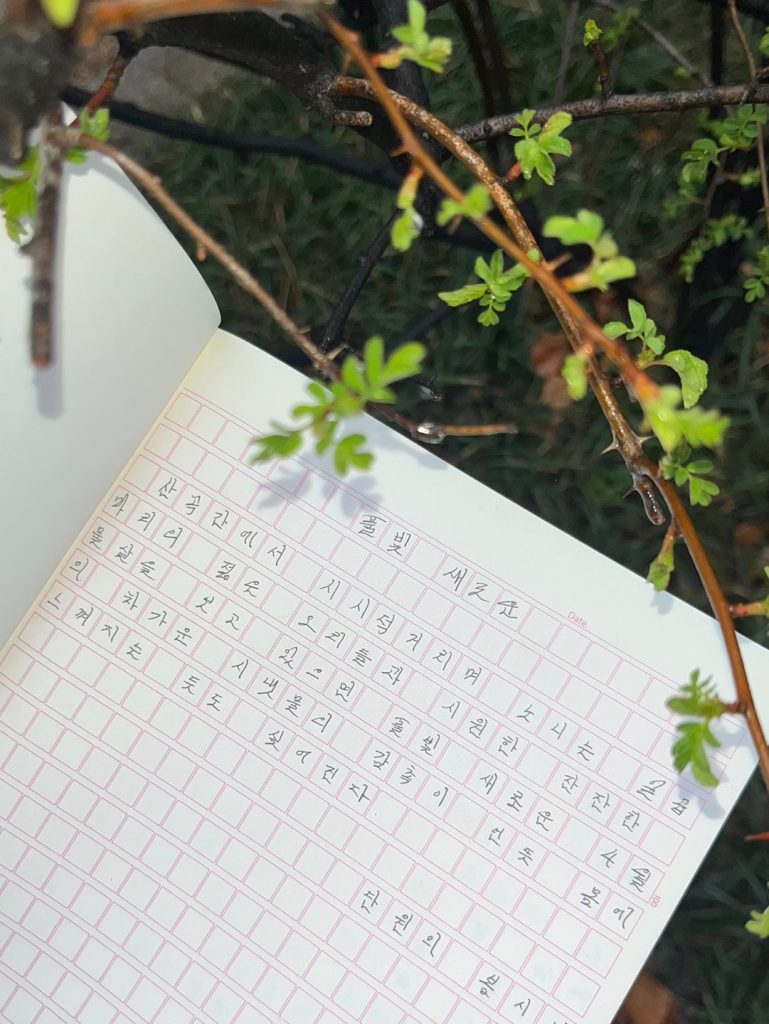
Participants were invited to walk slowly through the traditional courtyard and wooden halls, surrounded by early spring blossoms. Plum flowers and azaleas were just beginning to bloom against tiled roofs and stone walls. The soft sound of rain added to the sensory experience.

The core activity of the day was transcription.

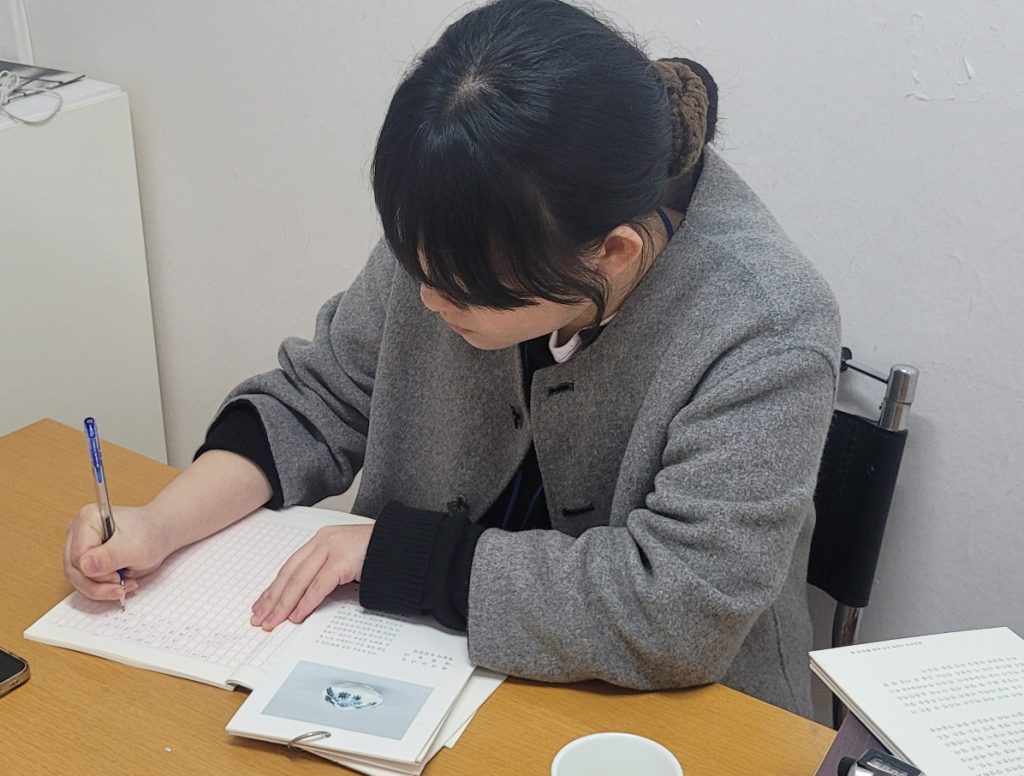
Visitors selected passages from Choi Sunu’s writings and carefully copied them by hand into squared manuscript notebooks. This act of deliberate writing encouraged participants to move at the pace of each word, absorbing not just meaning but rhythm and feeling. The practice echoed traditional Korean calligraphic discipline while remaining accessible to all.

Some guests chose to sit in the courtyard near flowering trees. Others settled indoors beside books and archival materials. A small round table was set outdoors with a publication featuring cultural artifacts and a blank page for reflection. The setting itself — stone statues, gravel paths, wooden floors warmed by filtered spring light — became part of the meditation.

The program encouraged participants to:

  • Take a slow walk through Choi Sunu House
  • Read selected passages from his essays
  • Transcribe a sentence or paragraph that resonated
  • Spend quiet time in the garden surrounded by spring blossoms

By combining slow walking, slow reading, and slow writing, Choi Sunu House beautifully expanded the meaning of Slow Art Day beyond visual observation alone. The event demonstrated how cultural heritage sites can invite visitors into embodied connection with language, architecture, landscape, and memory.

We are grateful to the team at Choi Sunu House and the National Trust Cultural Heritage Fund for carrying Slow Art Day forward in Korea, even under gray skies.

– Ashley, Johanna, Jessica Jane, and Phyl
Salem’s Public Art Commission Hosts Its First Slow Art Day

For their first Slow Art Day, the Salem Public Art Commission in Oregon partnered with the Salem Public Library to invite the community to slow down with three abstract paintings from the City of Salem’s Public Art Collection. The event took place on Saturday, April 5, 2025, from 11:00 AM to 12:00 PM and followed the classic Slow Art Day format: quiet viewing followed by discussion.

Featured works:

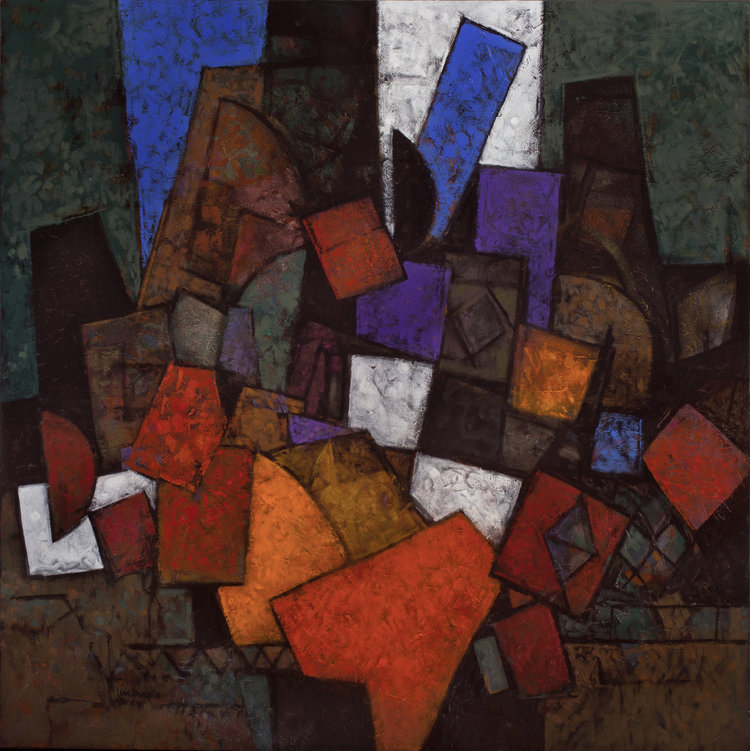
  • Still Life in Flux (2014) by Nancy Lindburg
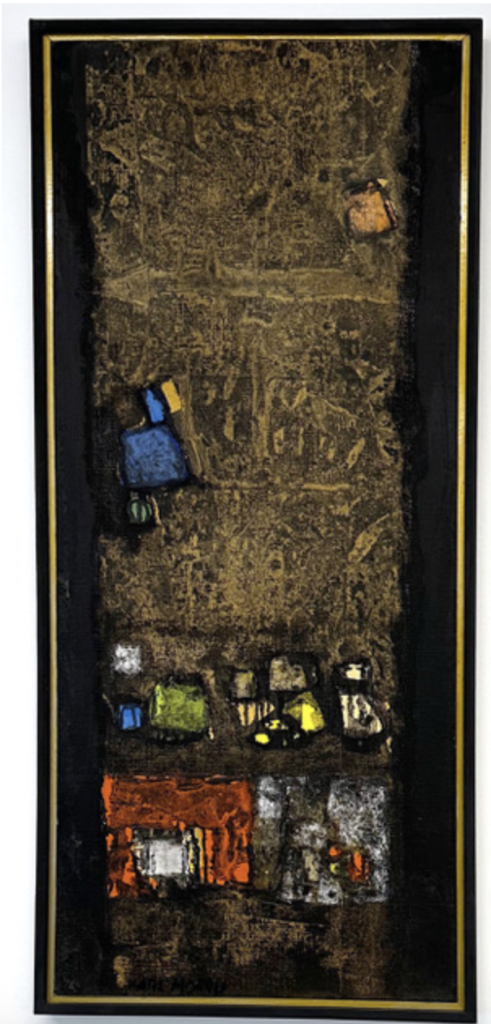
  • Dwelling (1965) by Carl Morris
  • View (1973) by Louis Bunce
Image
Still Life in Flux by Nancy Lindburg, 2014.
Carl Morris Dwelling, 1965
Image
Louis Bunce View, 1973

The Commission selected these three abstract paintings because they are thoughtfully installed within the Salem Public Library and represent artists with strong ties to the Pacific Northwest.

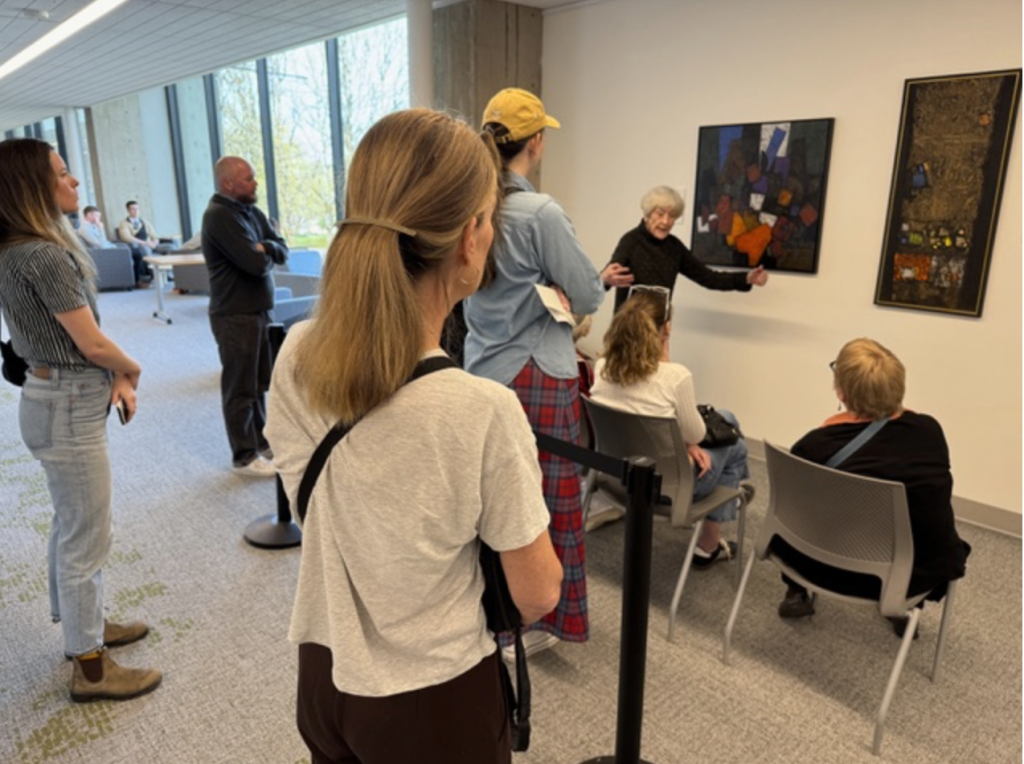
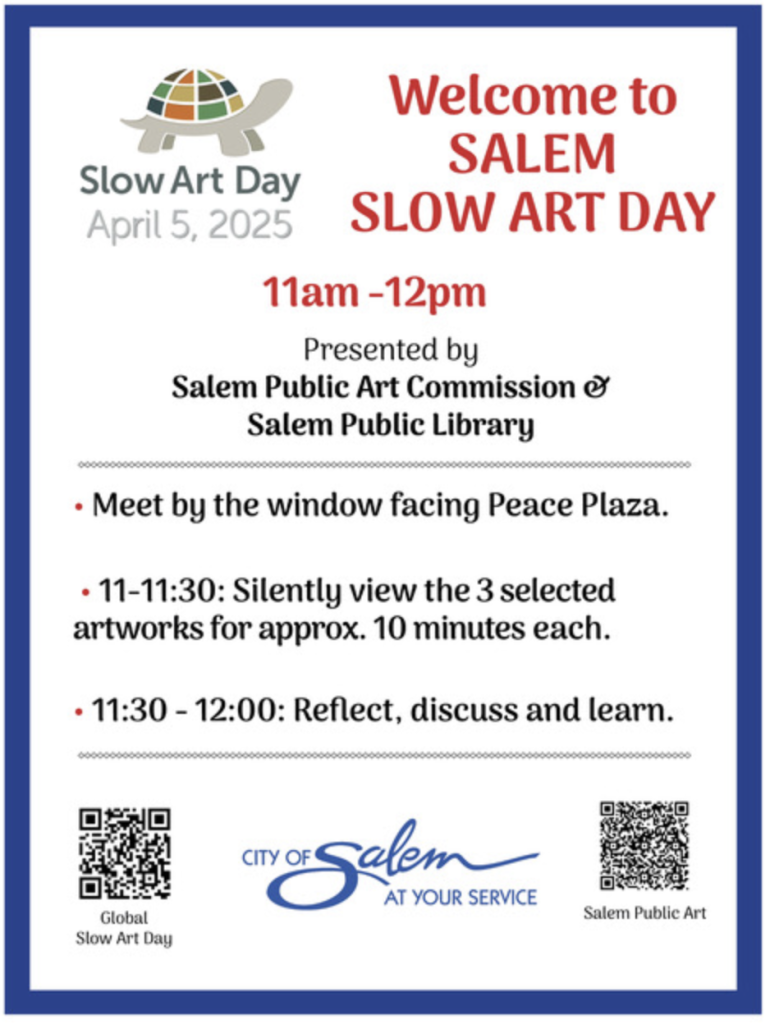
Participants gathered by the window facing Peace Plaza and began with approximately ten minutes of silent viewing per artwork. The group was encouraged simply to look — noticing color relationships, compositional structure, surface texture, and emotional tone before moving into conversation.

Nancy Lindburg’s Still Life in Flux (2014) presents layered geometric forms in vibrant oranges, blues, and deep neutrals, creating a sense of movement within abstraction. Carl Morris’s Dwelling (1965) offers a vertical composition grounded in earthy browns and textured surfaces, punctuated by small bursts of color. Louis Bunce’s View (1973) introduces architectural structure and rhythmic pattern, balancing a vivid green plane with repeated arch-like motifs and a distant horizon.

The experience was made especially meaningful by the presence of Nancy Lindburg herself — a Salem resident and long-time local arts advocate — who joined the group. After the quiet viewing period, Lindburg shared insights into her artistic process and engaged directly with participants during what coordinators described as a lively post-viewing discussion.

The conversation that followed the silent viewing allowed participants to compare perceptions and discoveries. As often happens on Slow Art Day, viewers noted details they might otherwise have missed — subtle shifts in color, interplay between positive and negative space, and how each painting’s scale influenced their physical experience in the room.

The event was organized by Susan Napack, coordinator for the Salem Public Art Commission, in collaboration with Kathleen Swarm and the library team. The Commission also created a clear and inviting flyer (below) outlining the structure: silent viewing from 11:00–11:30, followed by reflection and discussion from 11:30–12:00 and providing QR codes to the global website and to their event site.

Also, they did a good job of marketing including getting The Statesman Journal, the local newspaper, to cover the event.

At Slow Art Day HQ, we are especially glad to welcome Salem’s Public Art Commission to the global movement. We love when city collections — especially those installed in civic spaces like libraries — become the focus of slow looking. Public art belongs to everyone, and this event demonstrated how simply creating space and time can transform everyday encounters into meaningful experiences. We also appreciate the generosity of artist Nancy Lindburg in participating directly in the conversation.

We look forward to seeing what the Salem Public Art Commission comes up with for Slow Art Day 2026.

– Ashley, Johanna, Jessica Jane, and Phyl
Forest Bathing, Folding Screens, and Mindful Movement at Smithsonian’s National Museum of Asian Art

For their second Slow Art Day (and their first time hosting the program on-site) the Smithsonian’s National Museum of Asian Art in Washington, DC offered four hours of immersive programming, inviting visitors to slow down through guided looking, mindfulness practices, gallery conversations, and movement.

The day unfolded through a thoughtfully structured sequence of offerings designed to meet visitors wherever they were.

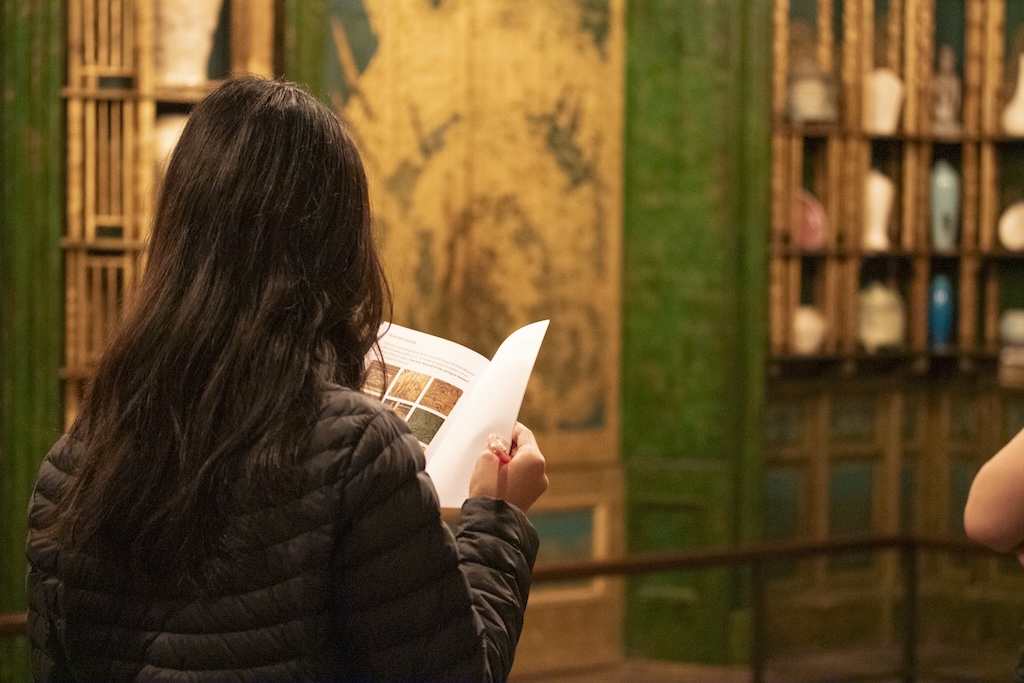
Throughout the four hours, hundreds of Slow Looking Guides were distributed from the information desk, inviting visitors to deepen their connection with the art through sketching prompts, poetic reflection, comparisons, and written responses.

Participant viewing the Slow Looking Guide designed by the museum.

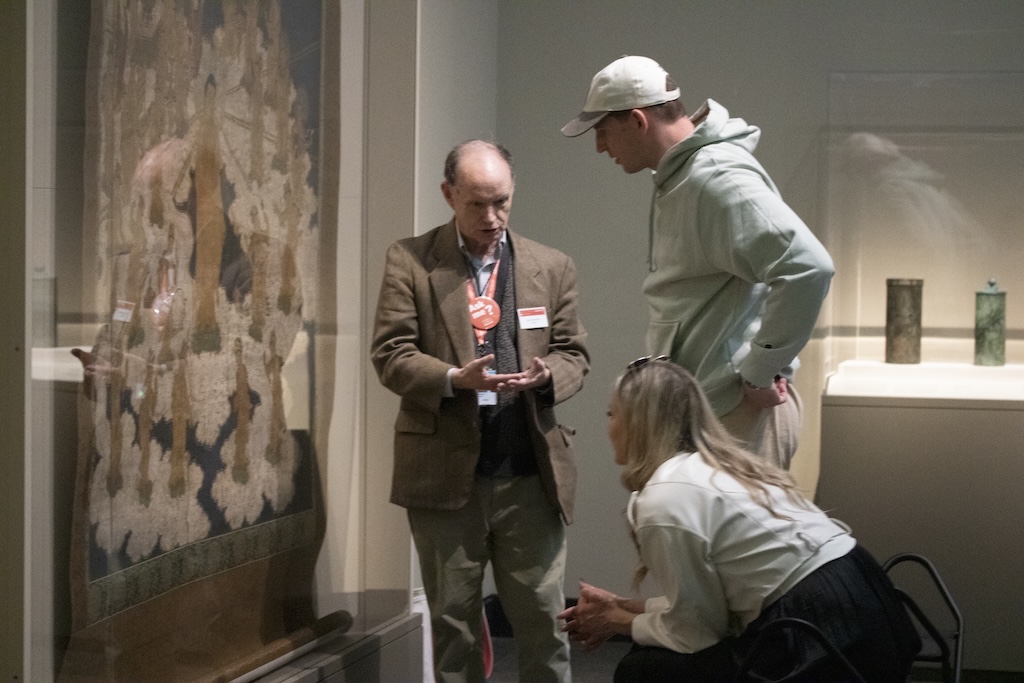
Four docents roamed the galleries, engaging visitors in informal conversations about the museum’s world-renowned collections. These roaming discussions allowed participants to linger, ask questions, and explore artworks through sustained dialogue rather than quick viewing.

Gallery docent in discussion with Slow Art Day participants.

Two guided Slow Looking sessions were scheduled in the Japanese screen gallery, one for families and one for adults. Due to a large gathering on the National Mall that day, the family session did not run. However, 15 visitors participated in the adult session focused on the early 17th-century folding screen “Trees.”

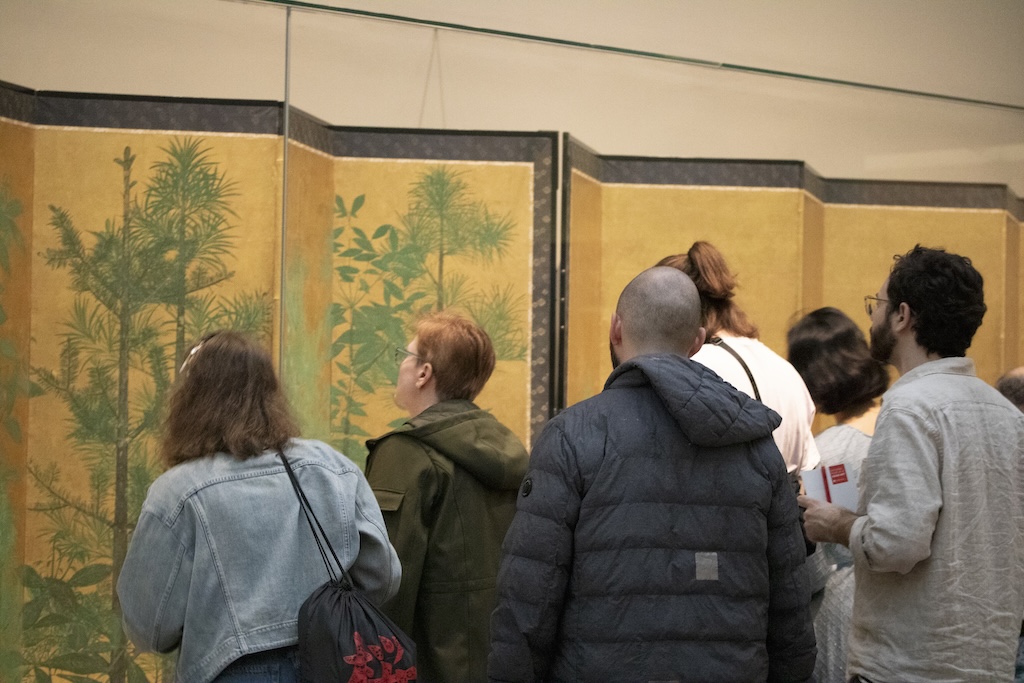
Participants spent extended time observing the green malachite pigments layered over gold foil. As they looked more closely, subtle botanical details emerged — magnolia veins, pine and cedar needles, tiny acorn buds, delicate blossoms. The facilitator described the work as “a gardener’s dream brought indoors,” noting how the composition moves viewers from luminous gold panels into dense greenery, like stepping gradually into a forest.

Visitors looking at “Trees” (雑木林図屏風), Japanese folding screen (1600–1630).

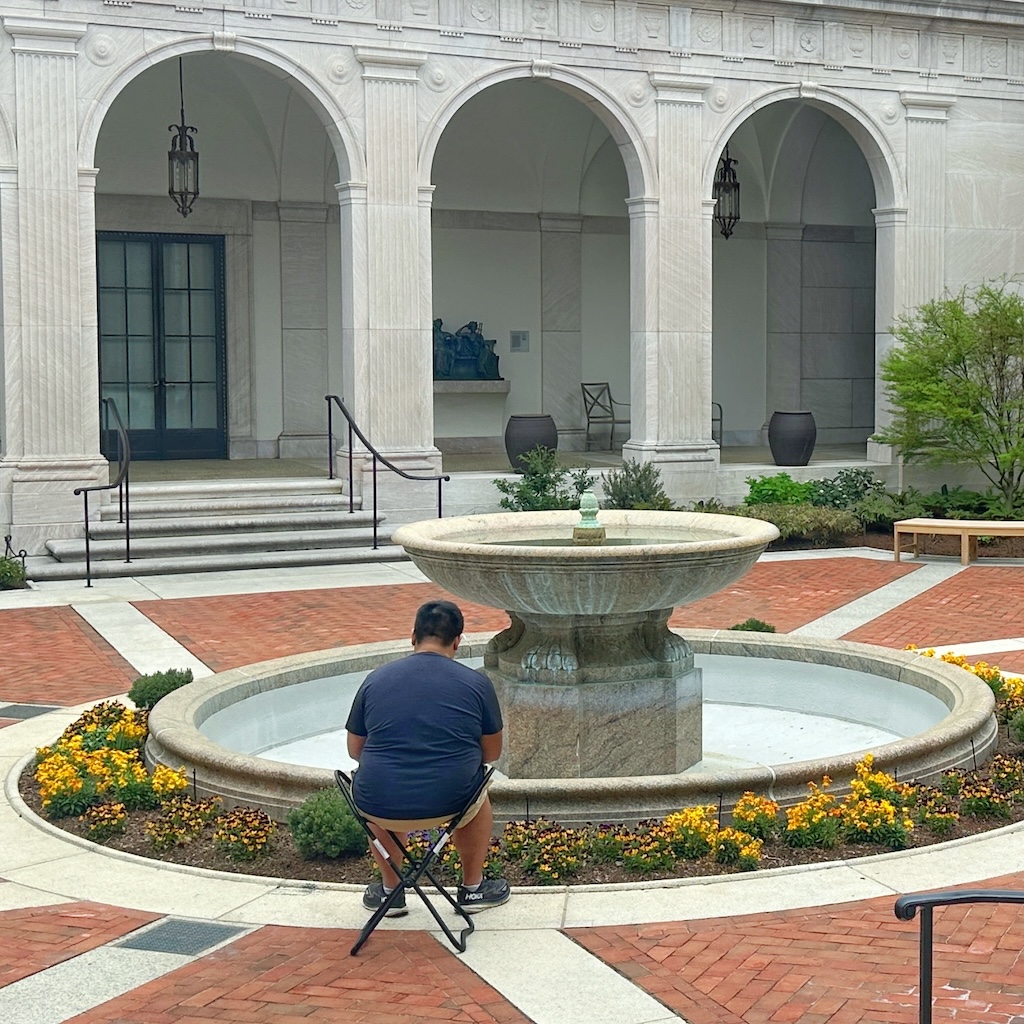
In the museum’s outdoor courtyard, 24 visitors joined Forest Bathing sessions led by a certified forest therapy guide. Though not a traditional forest setting, the courtyard’s Japanese maples, ferns, holly, pine, peonies, birds, bees, and even beetles became focal points for sensory awareness. Participants were invited to gently touch plants — an uncommon freedom in a museum environment — and to slow down through guided sensory exercises.

Participant in the Forest Bathing session in the courtyard.

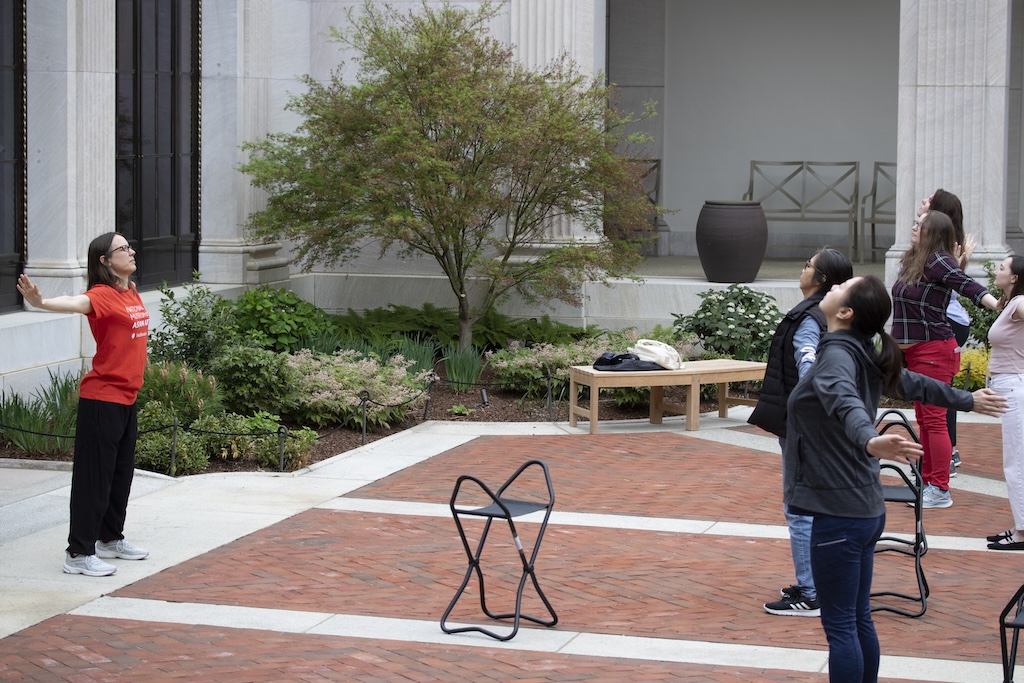
Visitors also participated in a Qigong session, a standing mindful movement practice rooted in Chinese tradition. Through slow, nature-inspired movements and breath awareness, participants were encouraged to notice the flow of energy in their bodies and mirror the rhythms of the natural world.

Participants during the Qigong session.

With their 2025 Slow Art Day, The National Museum of Asian Art demonstrated how structured programming, roaming conversation, embodied practice, and simple prompts can invite visitors into meaningful slowness.

At Slow Art Day HQ, we are especially inspired by how the National Museum of Asian Art expanded slow looking beyond the gallery walls, integrating folding screens, forest bathing, mindful movement, and docent engagement into a cohesive experience.

We are grateful to Jennifer Reifsteck and the entire team at the National Museum of Asian Art for their thoughtful leadership. We look forward to seeing what they design for Slow Art Day 2026.

– Ashley, Johanna, Jessica Jane, and Phyl

P.S. View them on Instagram and Facebook