Music, Poetry, Drawing and Discussion at the Royal Museum of Fine Arts in Antwerp

For Slow Art Day 2025, the Royal Museum of Fine Arts Antwerp (KMSKA) in Belgium invited visitors to slow down and engage deeply with art through a series of thoughtfully designed experiences across the museum’s exhibitions.

KMSKA has been an important participant in the Slow Art Day movement for nearly a decade and was notably the first museum in Belgium to organize a Slow Art Day event in 2016. For the 2025 edition, the museum expanded its program with several creative formats designed to help visitors observe more carefully and reflect more deeply.

One of the highlights was an experimental program called “Slow Looking with Music.” Visitors spent an hour focusing on a monumental triptych by the 15th-century Flemish painter Hans Memling, while a live soundtrack was performed by the Belgian experimental band Monnik. The musicians performed from behind the audience so that all attention remained directed toward the artwork (note: we at Slow Art Day HQ wish we could have been there).
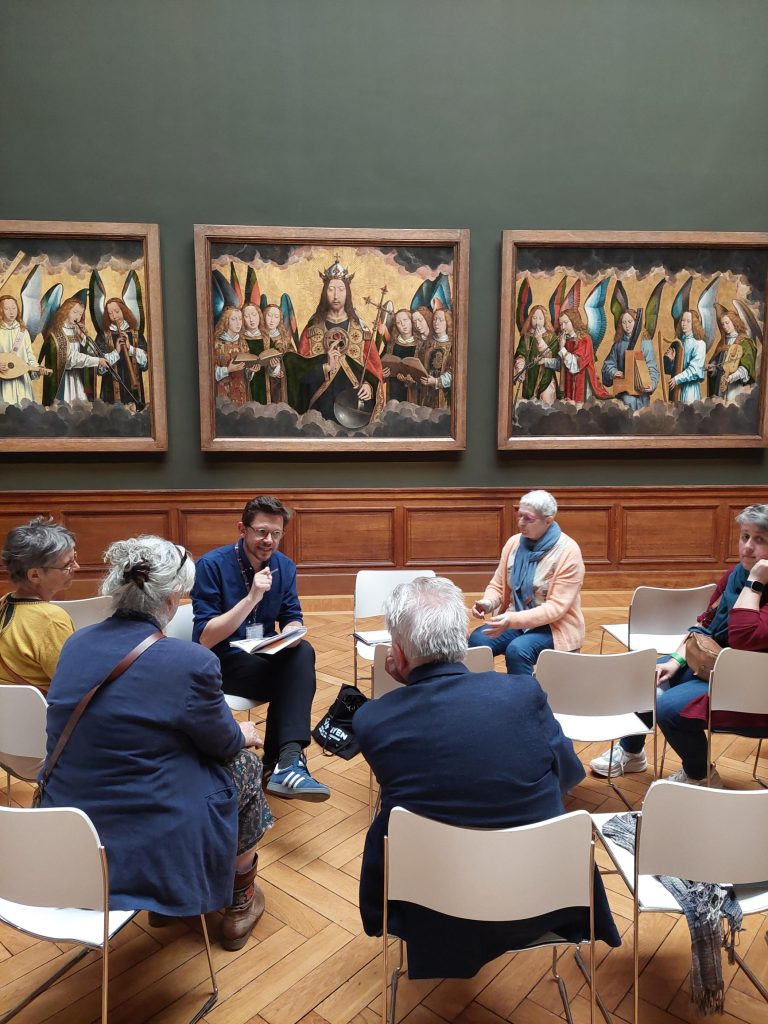
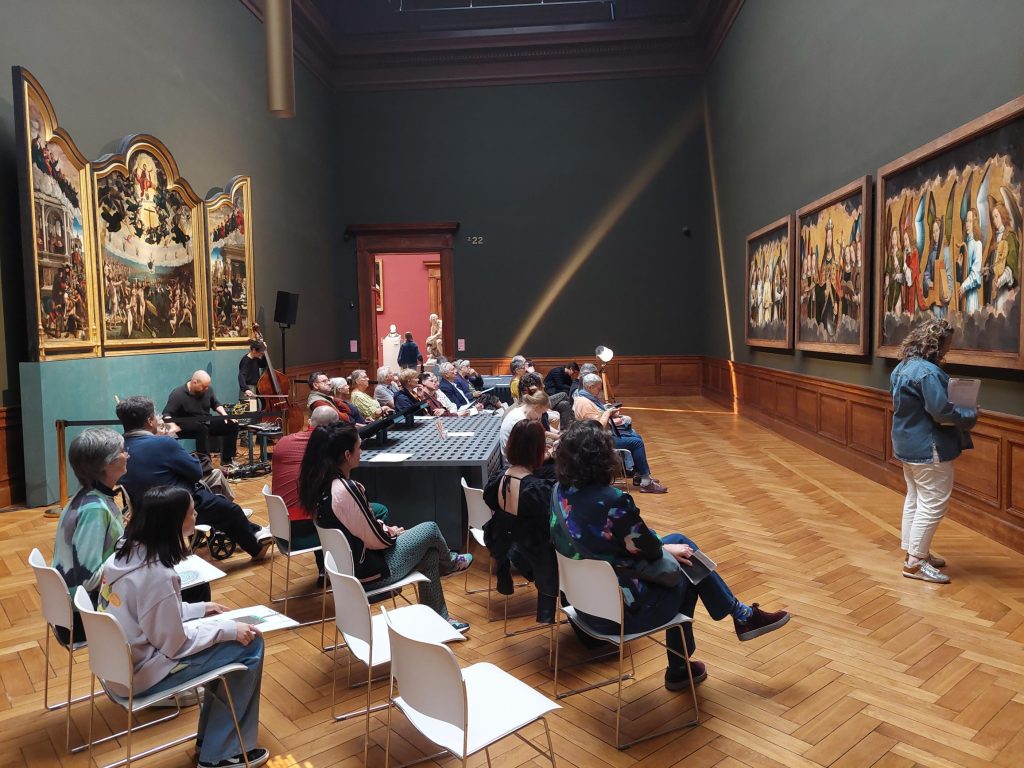
Electric guitars, analog synthesizers, effect pedals, and layered vocal sounds created an immersive soundscape that encouraged visitors to observe the painting slowly and thoughtfully. Participants were given printed prompts to guide their reflections, including questions such as: What do you see? What do you hear? What thoughts or feelings arise? slow_looking_prompts_music_KMSKA

After the musical performance, a museum guide facilitated a group discussion where visitors shared their interpretations and experiences.

In addition to this musical slow looking experiment, KMSKA organized several other Slow Art Day activities throughout the museum.

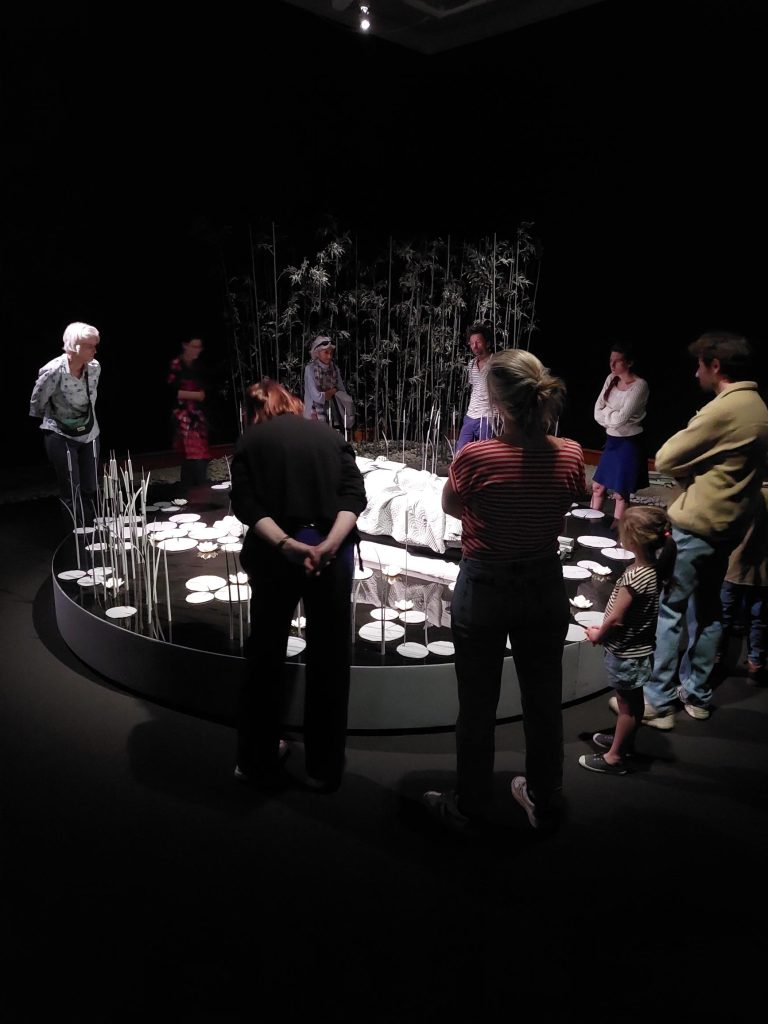
During “In Dialogue,” visitors sat together in front of a selected artwork by Belgian contemporary artist Hans Op de Beeck, guided by a museum educator who helped participants observe closely and discuss their impressions.
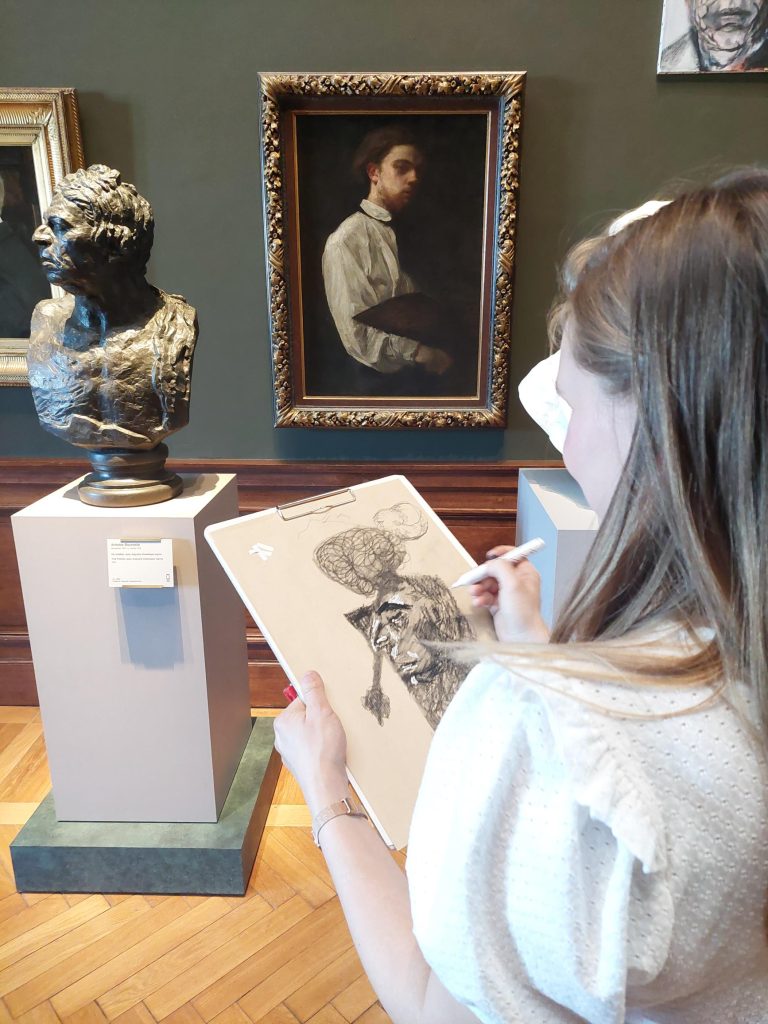
Another activity invited visitors to participate in a drawing tour through the exhibition spaces. With drawing prompts provided by a museum guide, participants of all skill levels used sketching as a way to slow down and connect with the artworks.
A literary component was also included. Museum staff member Sophie led a poetry session, reading selected poems alongside artworks and encouraging visitors to reflect on how language and visual art interact.

Finally, visitors could participate in Radio Bart, a special conversational format led by art lovers who are blind. Through discussion and thoughtful questioning, the Radio Bart hosts helped visitors experience artworks from new perspectives and notice details they might otherwise overlook.

Together, these varied programs demonstrated how many different paths can lead to slow looking. Whether through music, drawing, poetry, or spoken word and conversation (especially awesome for blind participants), visitors were encouraged to pause, reflect, and engage more deeply with the artworks around them.

We at Slow Art Day HQ are deeply grateful to the team at KMSKA for continuing to innovate around slow looking and for being such a long-standing leaders in our movement.

We look forward to what amazing design they come up with for Slow Art Day 2026.

— Ashley, Johanna, Jessica Jane, and Phyl
Multisensory Slow Art Day at the House of European History

For Slow Art Day 2025, the House of European History in Brussels, Belgium, launched a new program called “Slow Looking Saturday,” a guided series designed to accompany the museum’s temporary exhibition Presence of the Past: A European Album, which explores documentary photography and how Europeans engage with memory, history, and the legacy of the past.

The inaugural session, held on April 5 for Slow Art Day, focused on a single photographic project: “Our Family Garden” by Bosnian artist Smirna Kulenović. Participants gathered for a one-hour facilitated slow looking experience led by Pauline Gault, Informal Learning Project Manager at the museum. The session was designed to help visitors deeply explore one image and its many layers of meaning.

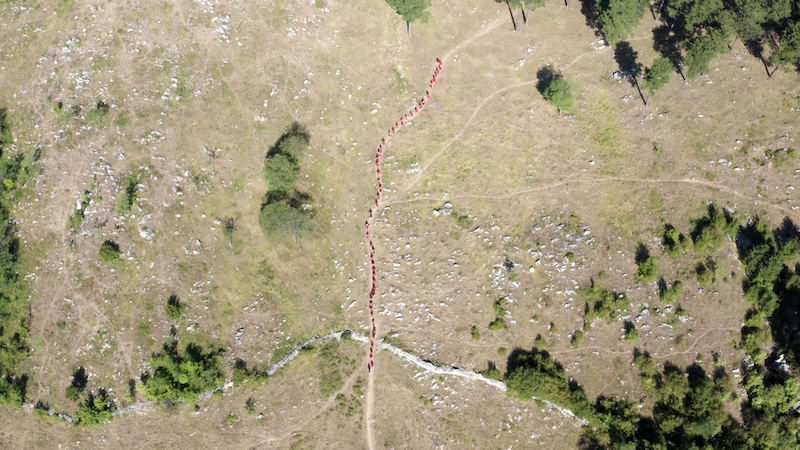
“Our Family Garden” documents a remarkable act of healing through nature. In the project, calendula flowers are planted in former trenches used during the Siege of Sarajevo, transforming spaces once associated with violence into places of growth and remembrance. The Slow Art Day session took place just one day before Sarajevo’s city day, when people now gather to care for these gardens.

Drone view of the calendula-planting performance ‘Our Family Garden’ organized by Smirna Kulenovic and filmed by Jasmina Omerika, Bosnia and Herzegovina, 2021.
Smirna Kulenović, A grandmother, mother and daughter prepare to plant flowers in the former trenches from which Sarajevo was besieged between 1992 and 1996, Bosnia and Herzegovina, 2023.

To guide the slow looking experience, Gault incorporated educational frameworks including Project Zero Visible Thinking routines from the Harvard Graduate School of Education and the Thinking Museum® Approach developed by museum educator Claire Bown, author of The Art Engager: Reimagining Guided Experiences in Museums. Participants engaged in several structured activities including Memory Draw, Engage & Imagine, and 3–2–1 Reflection, each designed to deepen observation, interpretation, and conversation.

The session also activated the sense of smell: dried calendula flowers were present in the room, allowing participants to connect physically with the plant at the center of the artwork. During the closing reflection exercise, visitors wrote their thoughts on the back of specially designed postcards featuring the artwork. These served both as reflection tools and souvenirs for participants to take home.

Feedback from participants was very positive. Many remarked that focusing on a single photograph allowed them to notice details and meanings they would have otherwise overlooked.

We at Slow Art Day HQ are delighted to see the House of European History launch an entire learning series from their Slow Art Day program. Special thanks to Pauline Gault and the Learning & Outreach team for developing this thoughtful approach, and we look forward to hearing about their event for Slow Art Day 2026.

— Ashley, Johanna, Jessica Jane, and Phyl

Second Slow Art Day at Sint-Andrieskerk in Antwerp, Belgium

For Slow Art Day 2025, Sint-Andrieskerk (Saint Andrew’s Church) in Antwerp, Belgium hosted a small and intimate gathering centered on slow looking, reflection, and shared meaning. The event was coordinated by Viviane Vandenbroucke and thoughtfully led by members of the church community.

The experience embodied the core spirit of Slow Art Day: slowing down, looking closely, and engaging in meaningful dialogue.

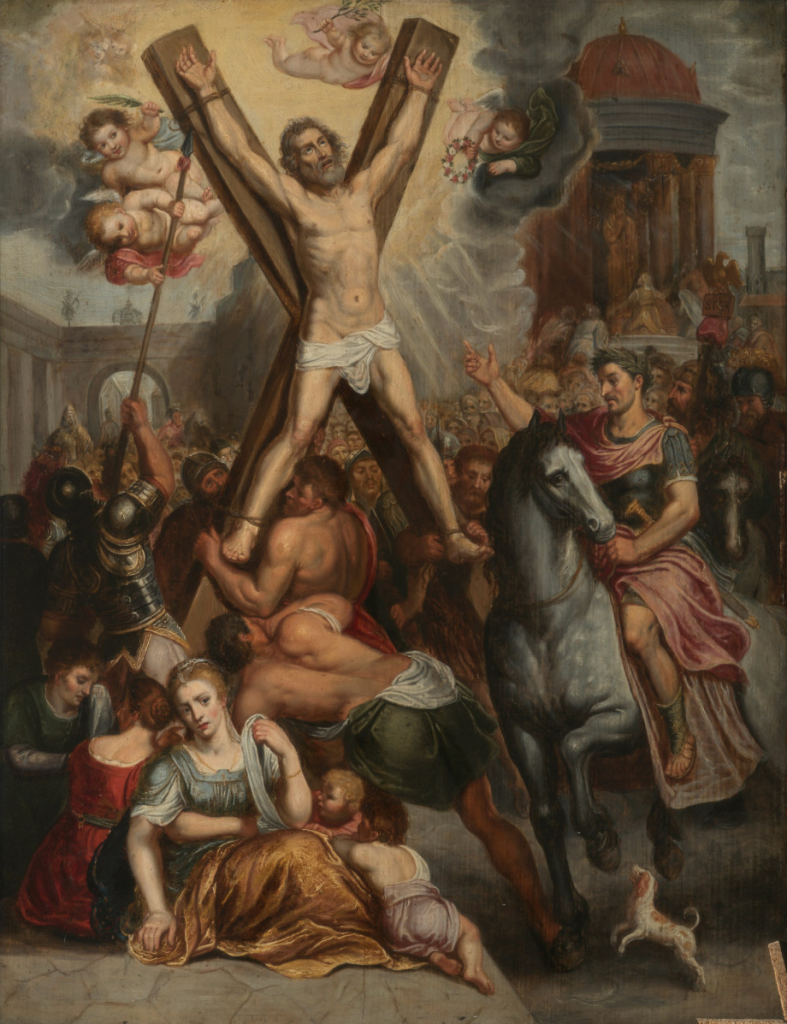
For adult visitors, the session was led by Father Rudi Mannaerts, priest of Sint-Andrieskerk. Participants were guided in slow looking at the modello of the Crucifixion of Saint Andrew.

Under Father Mannaerts’ leadership, visitors were encouraged to take time with the work, observing details, reflecting on its symbolism, and discussing how the artwork connects visual form and spiritual meaning.

Interestingly, the painter of this modello – Otto van Veen – was not only the most celebrated painter in Antwerp in the late 16th century, he was also Peter Paul Rubens’ *teacher*. So when the Slow Art Day participants looked slowly at this painting, they were also seeing some of what Rubens’ himself saw centuries ago.

For children, guide Wiske Claus led a parallel experience in the Sacristy. Young participants were introduced to the garments worn by priests and learned about their meanings and uses within the church year.

By engaging directly with these objects, children were invited to look carefully, ask questions, and connect visual elements with deeper significance — a hands-on approach aligned with Slow Art Day’s emphasis on attentive observation.

Sint-Andrieskerk demonstrated how Slow Art Day can thrive in intimate, religious settings as well museums and galleries. The church is already planning its 2026 event, where visitors will gather to slowly contemplate What is the truth? (2012), a contemporary painting by French artist Alain Senez. Inspired by Pontius Pilate’s famous question before the death sentence of Jesus, the work reflects on how media and perception shape what we believe to be true. Led once again by Father Rudi Mannaerts, the church will host multiple sessions throughout the afternoon, continuing its thoughtful approach of connecting historical faith spaces with modern artistic questions.

We are especially grateful to Viviane Vandenbroucke, Father Rudi Mannaerts, and Wiske Claus for continuing to support Slow Art Day within the church community. Sint-Andrieskerk has been an important participant in bringing Slow Art Day into sacred spaces, helping inspire the growing church movement within our global network.

We hope that more churches and sacred spaces join our movement in 2026, and we certainly look forward to hearing about Sint-Andrieskerk’s event on April 11th.

— Ashley, Johanna, Jessica Jane, and Phyl
Flemish Masterpieces at Sint Pauluskerk in Antwerp

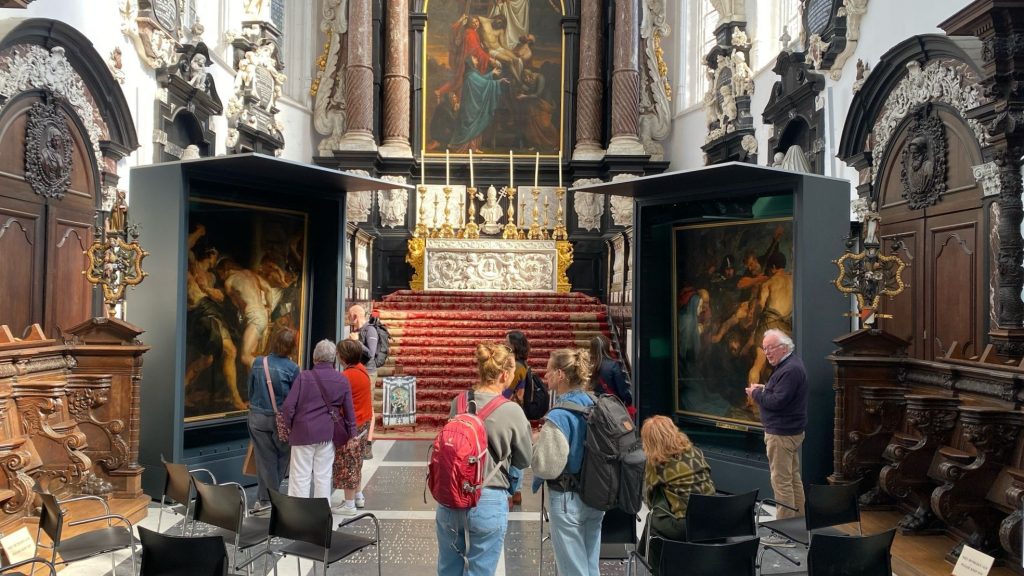
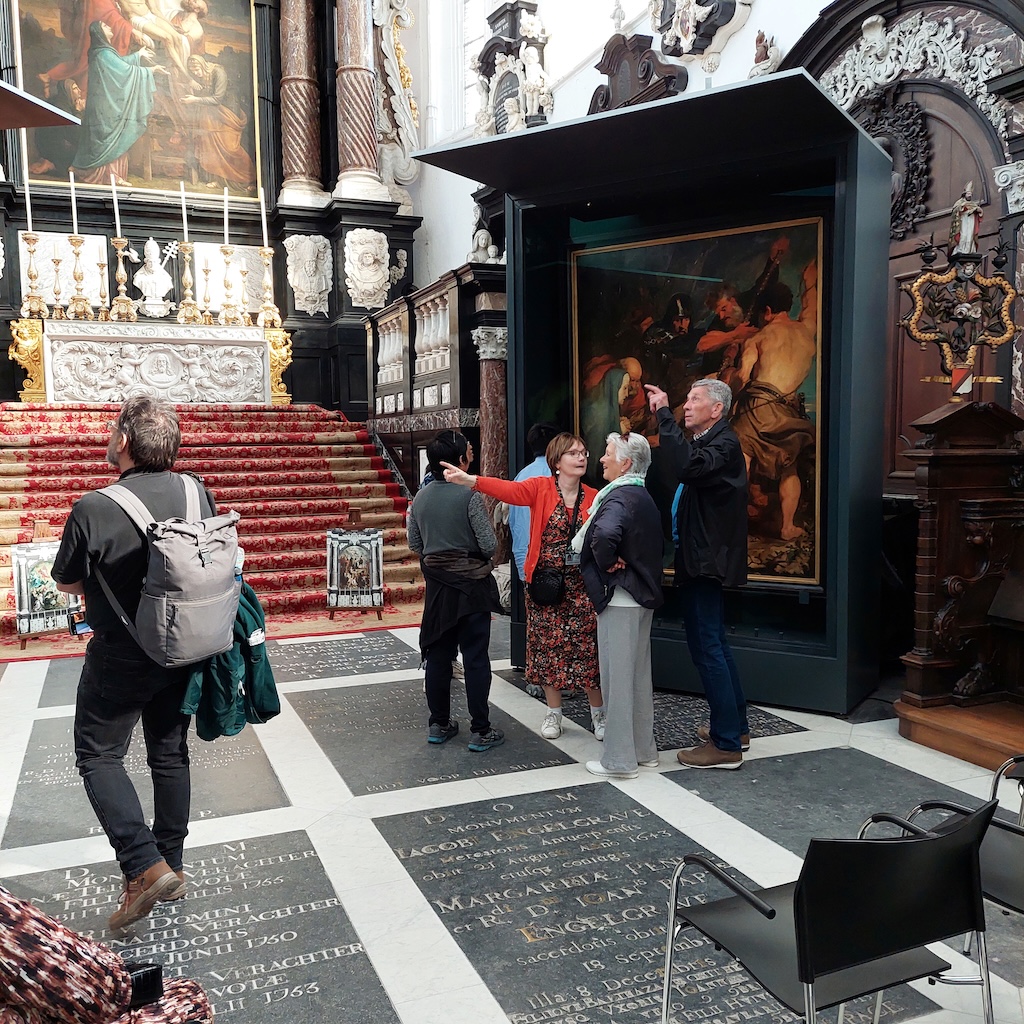
For their 7th Slow Art Day 2025, Sint Pauluskerk (St Paul’s Church) in Antwerp, Belgium offered a rare viewing experience as two masterpieces of the Flemish community were presented side by side for the first time in four hundred years. The Flagellation by Peter Paul Rubens and The Carrying of the Cross by Anthony van Dyck were temporarily displayed at eye level due to partial restoration work in the church.

Slow looking participants viewing The Flagellation by Peter Paul Rubens and The Carrying of the Cross by Anthony van Dyck. © Lucid.

Normally installed approximately four meters high, the paintings’ lowered placement allowed Slow Art Day participants to examine details that are usually difficult to see. Visitors were invited to spend time closely observing both works and share their observations and questions during guided discussion with the three guides who were present, Regina, Stéphane, and Armand.

Slow looking participants viewing The Flagellation by Peter Paul Rubens and The Carrying of the Cross by Anthony van Dyck. © Lucid.

Sint Pauluskerk has been a pioneering leader in the church wing of the Slow Art Day movement, and their continued involvement has helped demonstrate how churches and other religious organizations can become powerful spaces for slow looking.

We thank the wonderful Armand Storck and the team at St Paul’s Church for making this exceptional viewing opportunity possible and for supporting Slow Art Day 2025. We look forward to seeing what they come up with for Slow Art Day 2026.

– Ashley, Johanna, Jessica Jane, and Phyl
P.S. – Follow them on Facebook and Instagram.

Inclusive Slow Sculpture and Drawing Experience at Kasteel van Gaasbeek in Belgium

For their first Slow Art Day, Kasteel van Gaasbeek (Gasbeek Castle) in Belgium held two activities that combined inclusive slow looking, touching and drawing.

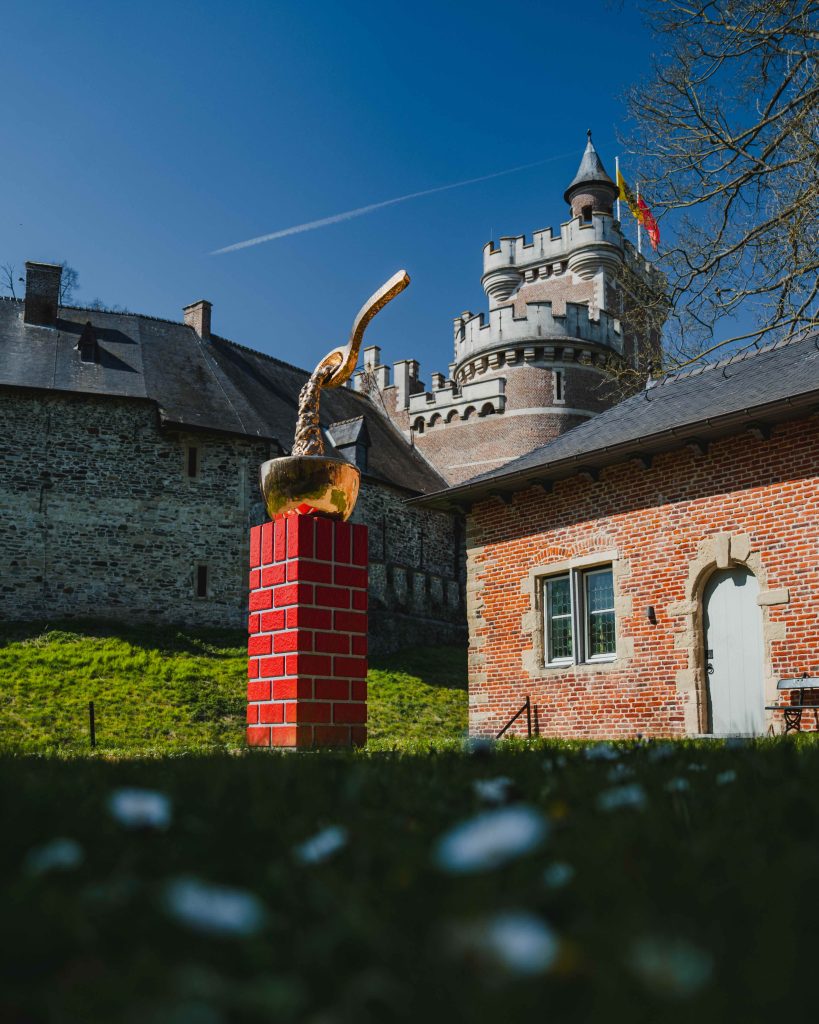
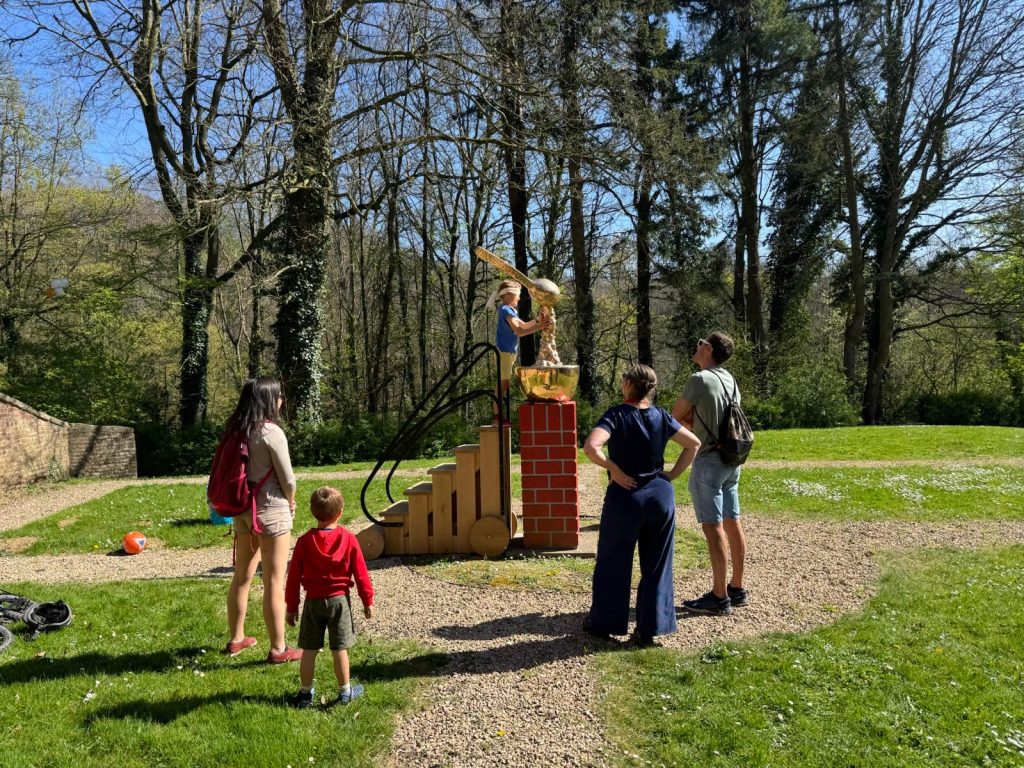
The first activity was a slow-looking and slow-touching session with the “The Peasant Wedding,” a gilded bronze sculpture referencing Bruegel’s paintings that is located in a quiet and intimate corner of the castle. Visitors were invited to slowly experience the sculpture on their own terms. And to make the experience more inclusive, they could choose to also experience it blindfolded or by touch, which also ensured accessibility for people with visual impairments. A guide was also there to ask questions and encourage dialogue about their impressions. 

Visitors engage with The Peasant Wedding by Studio Job. Photo courtesy of Kasteel van Gaasbeek.

The second activity took place outside the castle, where a guide-lecturer hosted a small slow drawing workshop. Passers-by were invited to pause, sit, and sketch the castle, focusing on its details and slowing down to notice the intricacies of its architecture. This exercise provided participants with an opportunity to not only look carefully but also to translate their observations into creative expression.

We at Slow Art Day HQ love how Kasteel van Gaasbeek’s first Slow Art Day demonstrated how accessible, inclusive, and participatory approaches can enrich the slow looking experience. We look forward to seeing what they do for Slow Art Day 2026!

– Ashley, Johanna, Jessica Jane, and Phyl
P.S. Stay connected with Kasteel van Gaasbeek on Facebook and Instagram.

Slow Music Comes to Antwerp

Armond Storck, the Scriptor at Sint-Pauluskerk (St. Paul’s Church) in Antwerp, who has spearheaded the Slow Art Day movement in churches, is now planning, with his colleagues, a 12 hour slow music concert on July 27, 2024.

First, more about Storck’s support for Slow Art Day.

Storck and his colleagues have hosted seven previous Slow Art Day events and they passionately believe that churches are a natural home for Slow Art Day. “Not only are many churches brimming with works of art, but the locations themselves naturally invite reflection. The slow, sensory perception is a way to arrive at the (religious) meaning of a work of art. Time runs almost noticeably slower in our churches than in the world outside,” said Storck.

As a result of Storck’s efforts to evangelize Slow Art Day to other churches, this year there were four churches in Antwerp participating, each of which had gone through preparation and training coordinated by an organization called the Tourism Pastoral and Monumental Churches Antwerp.

Now back to his plans for slow music.

On July 27, titular-organist Bart Rodyns will play Erik Satie’s Vexations for 12 hours (6 a.m.-6 p.m.) at five different locations throughout St. Paul’s Church in Antwerp.

Interestingly, this piece of music from 1893 has only 18 notes, divided into 3 lines, which are repeated 840 times according to an arithmetic scheme. Spending the day listening to this should be meditative and hypnotic, perhaps revelatory.

Here’s how it will work:
– 6 a.m. to 8 p.m. Bart will play the harmonium in the high choir
– 8 a.m. to 11 a.m. Bart will play the piano in ‘t Schooltje during breakfast
– 11 a.m. to 2 p.m. Participants will hear Bart on the electric piano in the Calvary
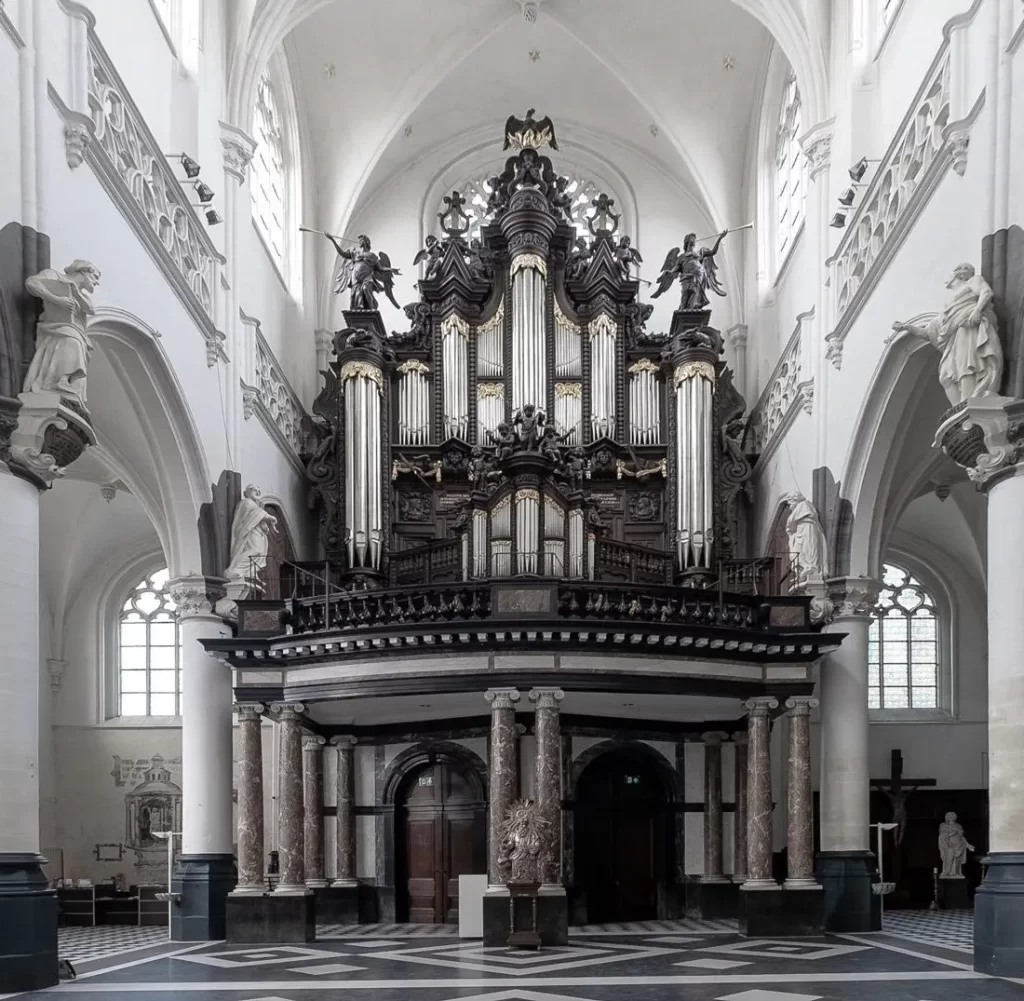
– 2 p.m. to 5 p.m. Bart will play the historic organ in the church
– 5 p.m. to 6 p.m. Finally, Bart will finish his marathon in the crypt on a chest organ

The amazing historic organ, pictured below, features three manuals, a pedal board, seventy-four registers, and 3,303 pipes. Oh my.

Sint-Pauluskerk historic organ – photo copyright Reinhard

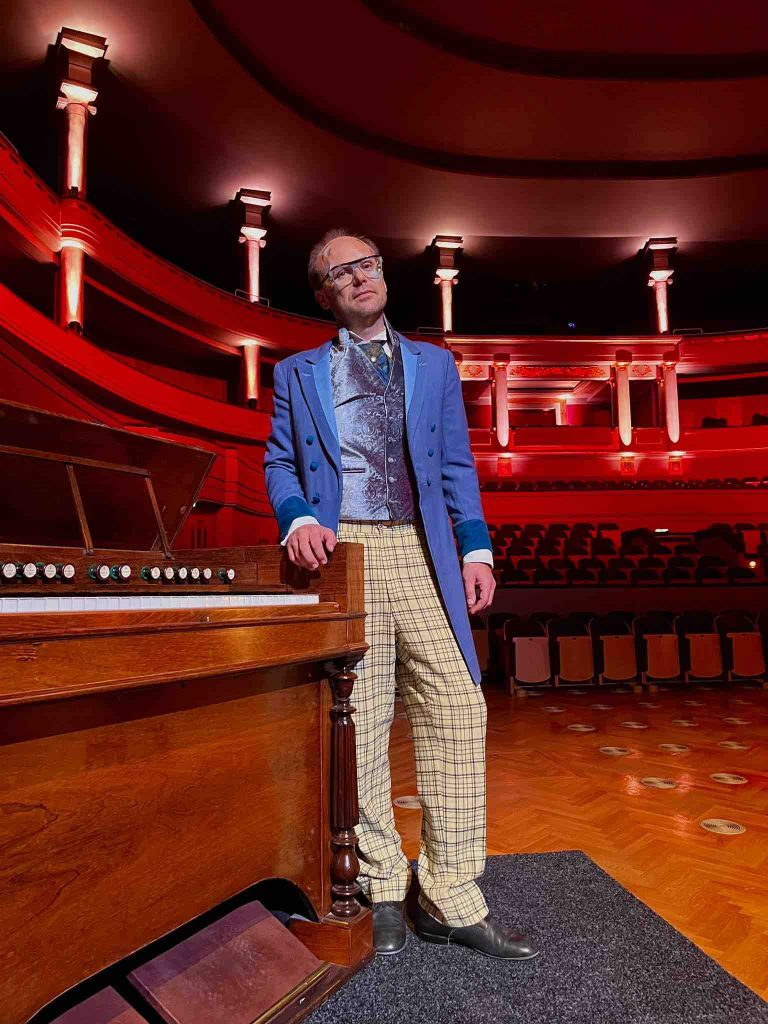
And here is a photo of Bart Rodyns in his “Satie” outfit (i.e., dressed like the composer). Love that Victorian-era purple/blue long-tailed double-breasted coat and floral (or paisley?) waistcoat. And the yellow trousers? Fantastic. The glasses add a modern touch.

Food will be available: Breakfast in the morning, then starting in the afternoon snacks, beer and wine at “democratic prices.”

If you are in Antwerp, go.

If you are not, then consider traveling for this extraordinary slow musical experience.

– Phyl

P.S. For more information, consult this article (it’s in Dutch so use Google to translate if you need it in English or another language).

Sint-Pauluskerk Calls For More Churches to Join Slow Art Day

Sint-Pauluskerk in Antwerp, Belgium, called on more churches to join the slow looking movement (more about that in a moment), while, at the same time, hosting its sixth Slow Art Day this year.

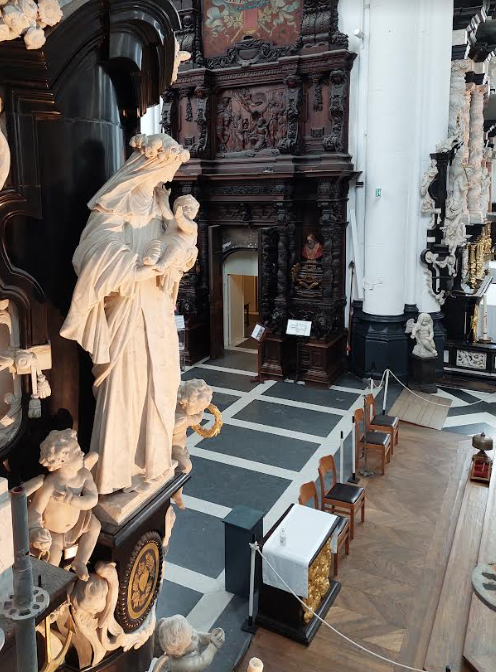
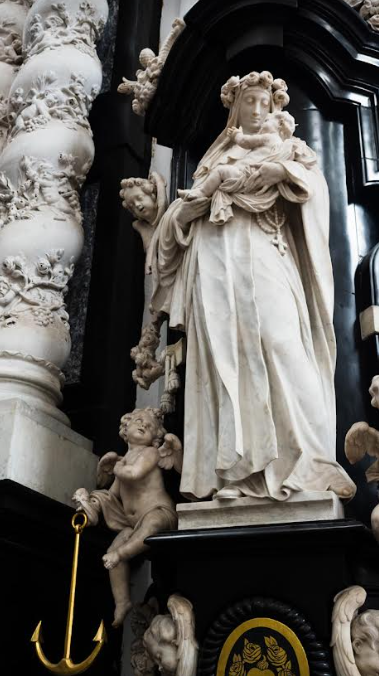
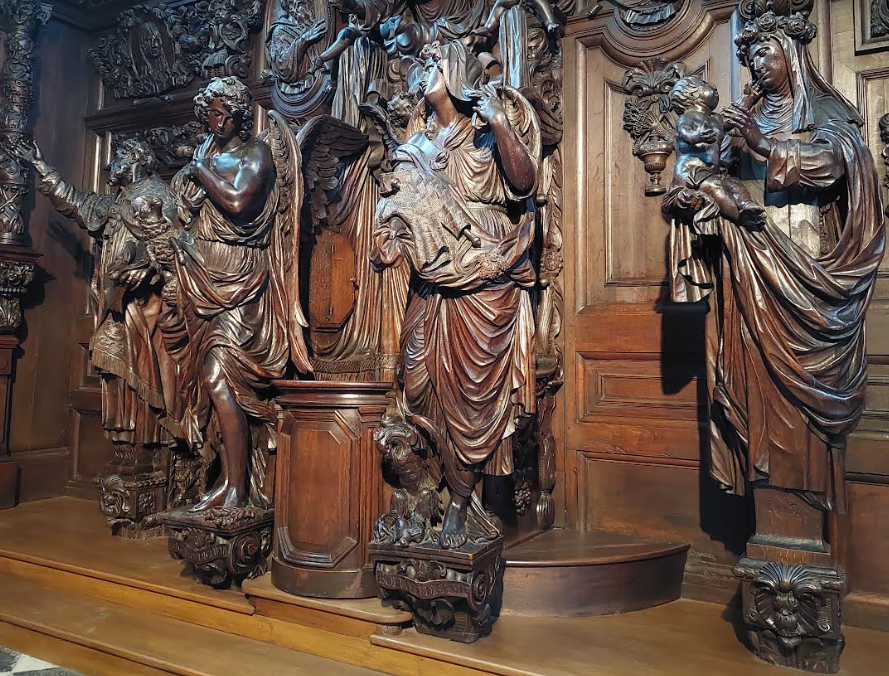
For their 2023 Slow Art Day, they invited visitors to take a closer look at two statues, one in marble and one in oak, of Rosa van Lima (the first Latin American canonized saint).

Side view of Rosa of Lima in marble (Artus Quellinus, the younger, ca. 1670). Sint-Pauluskerk. Used with permission.
Front view of Rosa of Lima in marble (Artus Quellinus, the younger, ca. 1670). Sint-Pauluskerk. Used with permission.
View of Rosa of Lima in oak. (Willem Kerricx I, ca. 1680). Sint-Pauluskerk. Used with permission.

The slow looking sessions started with the marble statue, which depicts Rosa Lima holding Jesus as a child. Participants were encouraged to sit in chairs in front of the statue and look slowly for 10 minutes. They were provided the following optional, thought-provoking prompts to aid in the slow-looking, and were then encouraged to ask the guides about the person Rosa van Lima:

– What do you think the subject is?

– Why is the statue in this place?

– What did the artist want to say?

Next, the session moved to the statue in oak on the other side of the church, where visitors were invited to look slowly and discuss their impressions. The oak statue is part of a monumental depiction of the “Last Judgment: the ultimate baroque exhortation not to forget any sin during confession,” in the words of Armand Storck, scriptor for the church.

At Slow Art Day HQ, we love the team at Sint-Pauluskerk. Not only do they often send us the details in advance of their event, but, more importantly, they design events that take full advantage of the church environment to encourage contemplation and reflection.

To that point, we are also excited because, as mentioned, Storck and his team are taking a lead role in challenging more churches to join the Slow Art Day movement. In fact, Storck points out that while hundreds of museums participate in Slow Art Day, only three churches registered this year yet “what environment lends itself better to contemplative art experience than a church? “

We agree, and hope that more churches answer Storck’s question by joining our movement.

And we certainly look forward to what storck and team design for Sint-Pauluskerk’s seventh Slow Art Day in 2024.

-Johanna, Ashley, Jessica Jane, and Phyl
Slow Art Day at Sint Pauluskerk in Antwerp

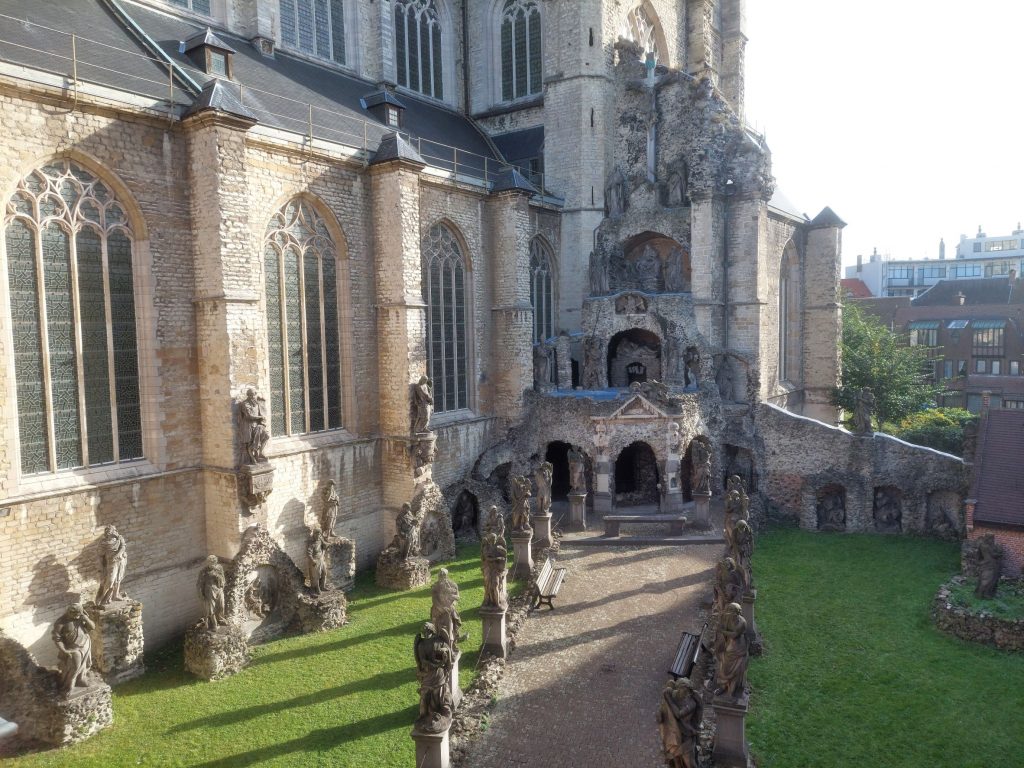
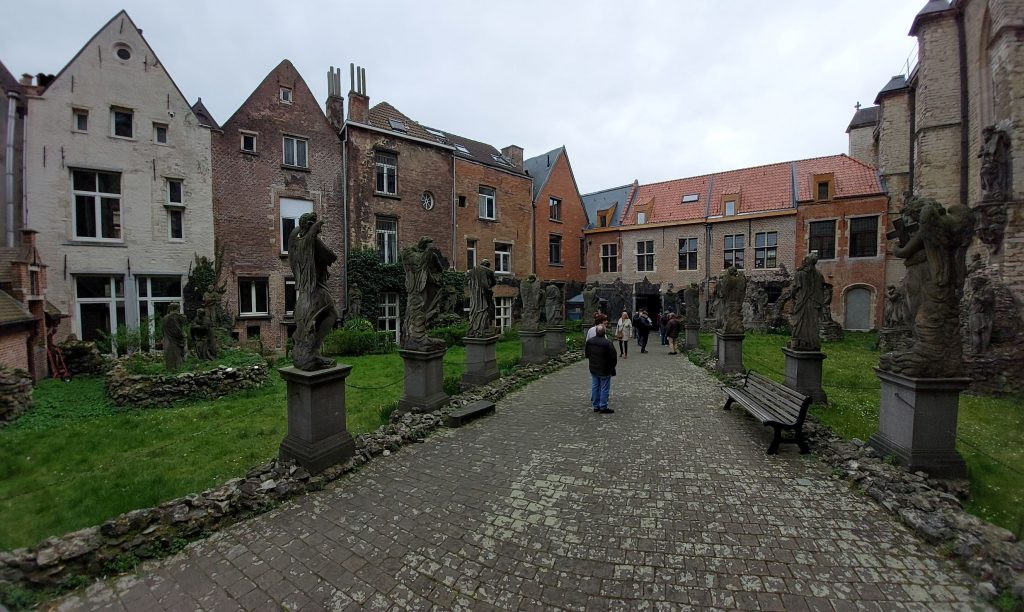
On April 2, 2022, Sint Pauluskerk in Antwerp, Belgium held their fifth Slow Art Day – bringing together about 500 people for an in-person event in their Calvary Garden.

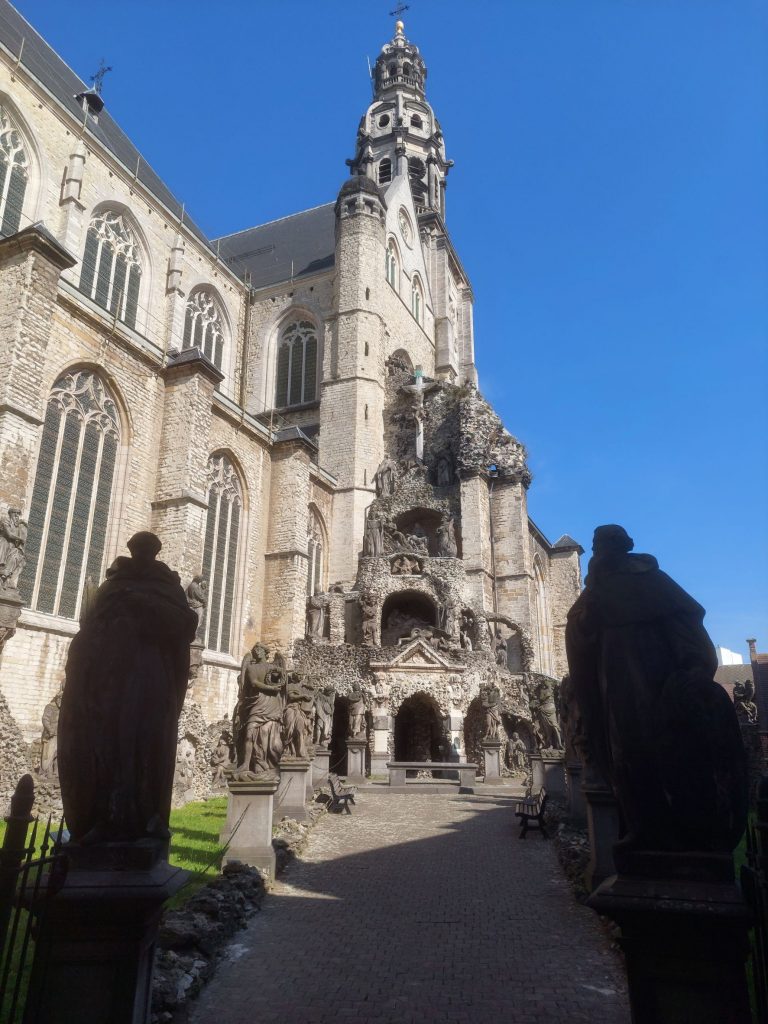
Calvary Garden, Saint Paul’s Antwerp, Belgium – credit Sint-Pauluskerk Antwerpen

The garden, populated by prophets and saints and sheltered by the church wall and private home, contains 64 statues and architecture that dates from the 1700s.

It is a place of reflection, an oasis of peace in the center of the busy port city, and as such a perfect spot for a Slow Art Day.

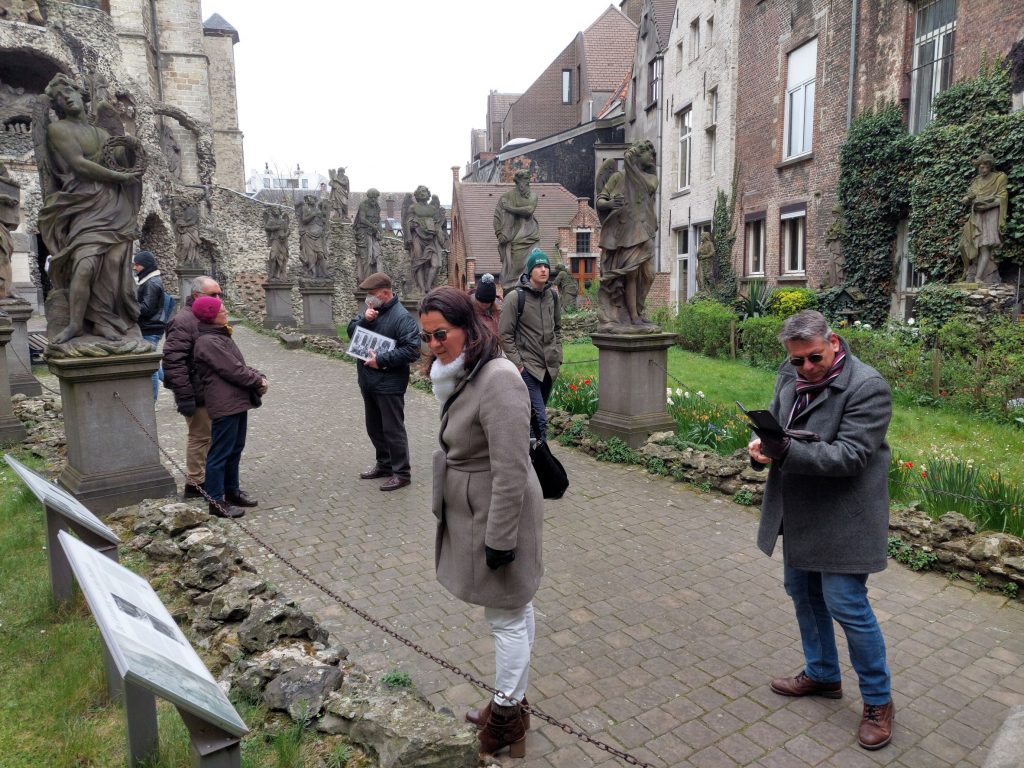
For this fifth Slow Art Day, they had volunteers (“St. Paul’s friends”) in the Garden to help answer questions and guide participants. Importantly, they also made the Garden free of charge from 2pm to 5pm on Slow Art Day, helping to welcome hundreds of people into this outdoor art-filled sanctuary.

As noted, their in-person afternoon was very well attended.

Additionally, they generated great online engagement including hundreds of Facebook and Instagram likes.

Saint Paul’s Antwerp, Belgium, guide Leo Vereecken during Slow Art Day 2022, credit Sint-Pauluskerk Antwerpen

We must admit that we are big fans of the team at Sint Pauluskerk. They are an inspiration to all of us around the world who care about building this movement based on slow looking, reflection, and love.

– Robin, Ashley, Phyl, Johanna, and Jessica Jane

P.S. Please help us welcome a new Slow Art Day volunteer, Robin Cerio. Robin has a Master’s in art history, has worked in museums, and is going to help us with our big backlog of 2022 reports. In fact, she drafted this report. Welcome, Robin!

Rubens for Lent at Sint-Pauluskerk

For their third Slow Art Day, the Sint-Pauluskerk in Antwerp, Belgium, produced a slow-panning video of Peter Paul Rubens’ painting ‘The Flagellation of Christ’.

Narrated by Wilfried Van den Brande, with text by Rudi Mannaerts, the video features the stunning inside of the church and a commentary on Rubens’ artwork (click on the photo below to watch).

The nave, or central part, of Sint-Pauluskerk

Previously on loan to the Doge’s palace in Venice, the painting returned to Antwerp in time for the Slow Art Day event. Since Easter fell on the week following Slow Art Day this year, the painting’s theme of Christ’s suffering fit in well with the pre-Easter church calendar.

Peter Paul Rubens, The Flagellation of Christ, 17th century. Sint-Pauluskerk, Antwerp.

Many thanked the church for sharing the video, and several explicitly talked about how much they missed visiting the actual church. The Facebook video was viewed 2,535 times.

At Slow Art Day HQ, we are delighted that the thoughtful connection between the event hosted by Sint-Pauluskerk and the Easter holiday was so well received.

We hope that Sint-Pauluskerk will be able to open its doors for Slow Art Day 2021.

– Johanna and Ashley

Mindful Slow-Looking with The Fotomuseum

For their 5th Slow Art Day, The Fotomuseum in Antwerp, Belgium, provided a virtual slow-looking mindfulness exercise (in Dutch) for people at home during the Covid19 pandemic.

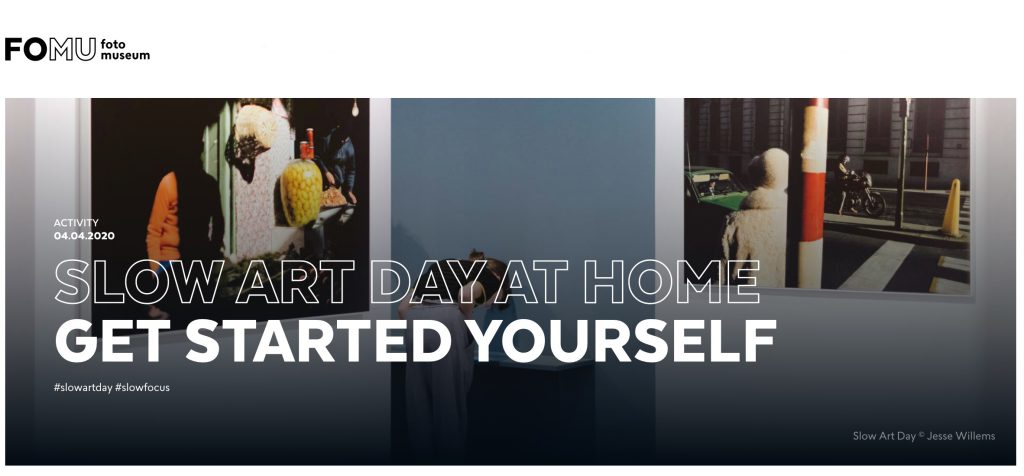
Title picture of the instructions for the event Slow Art Day at Home organised by the Fotomuseum, Antwerp.

Participants were encouraged to choose an image, drawing or photo to look at for 5-10 minutes and find a comfortable seated position. The Fotomuseum outlined 5 stages for its meditative slow-looking activity:

1) Relax

“Close your eyes. Pay attention to your breath, and put one hand on your stomach to feel it. If your mind wanders, return to your breath. Breathe in for 4 seconds and out for 6. Repeat this 5 times.”

2) Look at your artwork

“Open your eyes and look at the artwork with the same alertness you had for your breath. Ask yourself the following questions:

  • What do you notice?
  • What colors, composition, shapes and materials do you see?
  • Does the artwork remind you of events from your own life?
  • Would anyone else notice the same things as you?

If your mind wanders, try to return to the image.”

3) Breathe

“Close your eyes a second time, and return focus to your breathing. Take a few deep breaths so you feel the air flow deeply into your lungs, and then breathe as normal again. Pay attention to any thoughts about the artwork, but try to not lose yourself in them. Return to your breathing again.”

4) Look a second time

“Open your eyes and look at the artwork for the second time.

  • What stands out to you now?
  • Do you notice anything new?
  • Does the artwork take on a new meaning for you?”

5) Reflect

“Take a moment to reflect on the exercise.

  • Did you notice yourself thinking or looking in a different way?
  • Do you have a new or different connection with the artwork?”

The original in-person event planned by the museum attracted interest from over 150 prospective attendees, and the online instructions were shared to Facebook with 50+ interactions.

At Slow Art Day HQ we have loved using these thoughtful instructions for our own slow-looking. Try them out at home for yourself!

We look forward to The Fotomuseum’s 6th Slow Art Day in 2021 ― hopefully in their actual museum.

– Johanna

Note: The above instructions were translated from the original Dutch.

PS – You may want to take a look at the webinar they did for Slow Art Day last year.