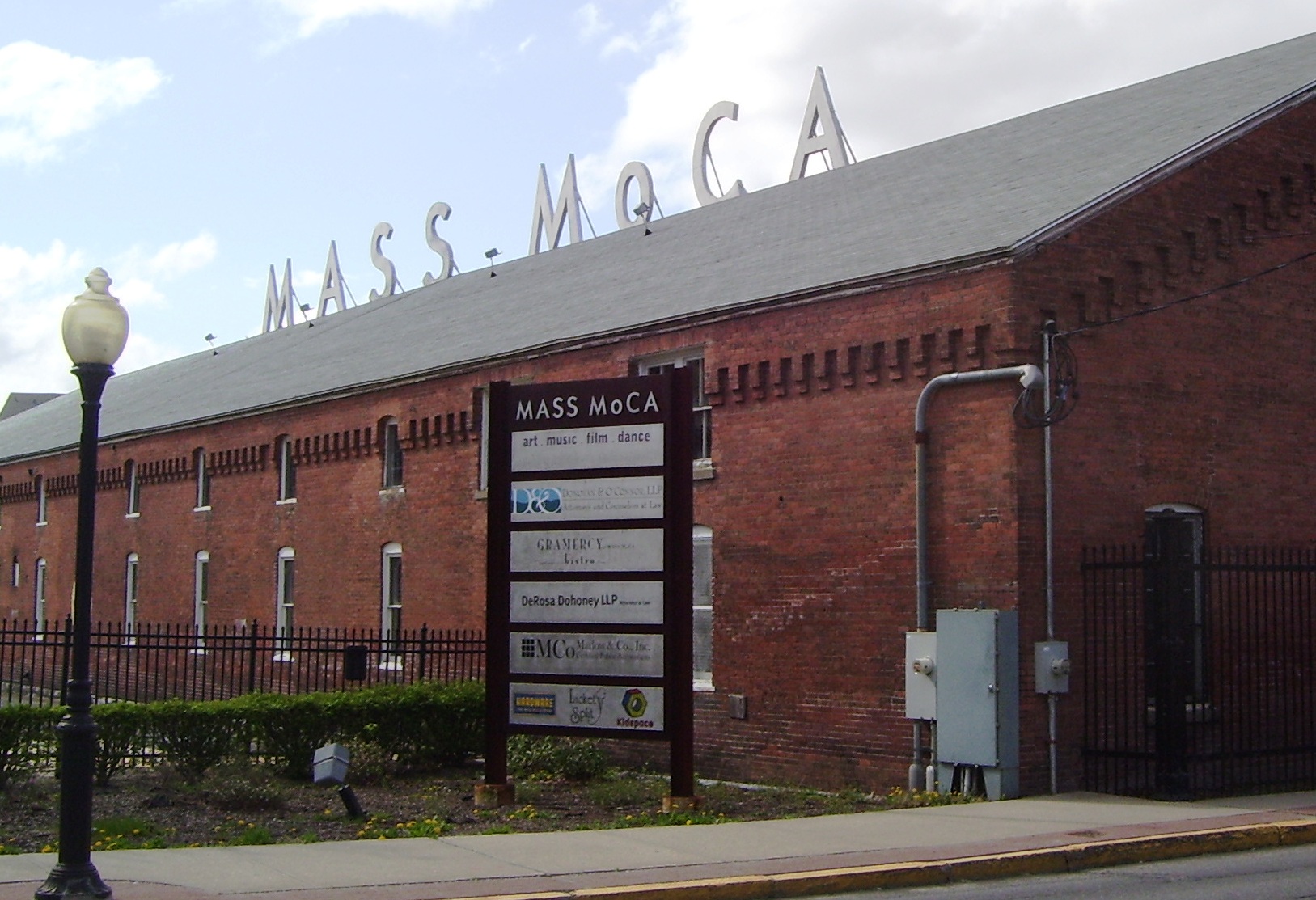
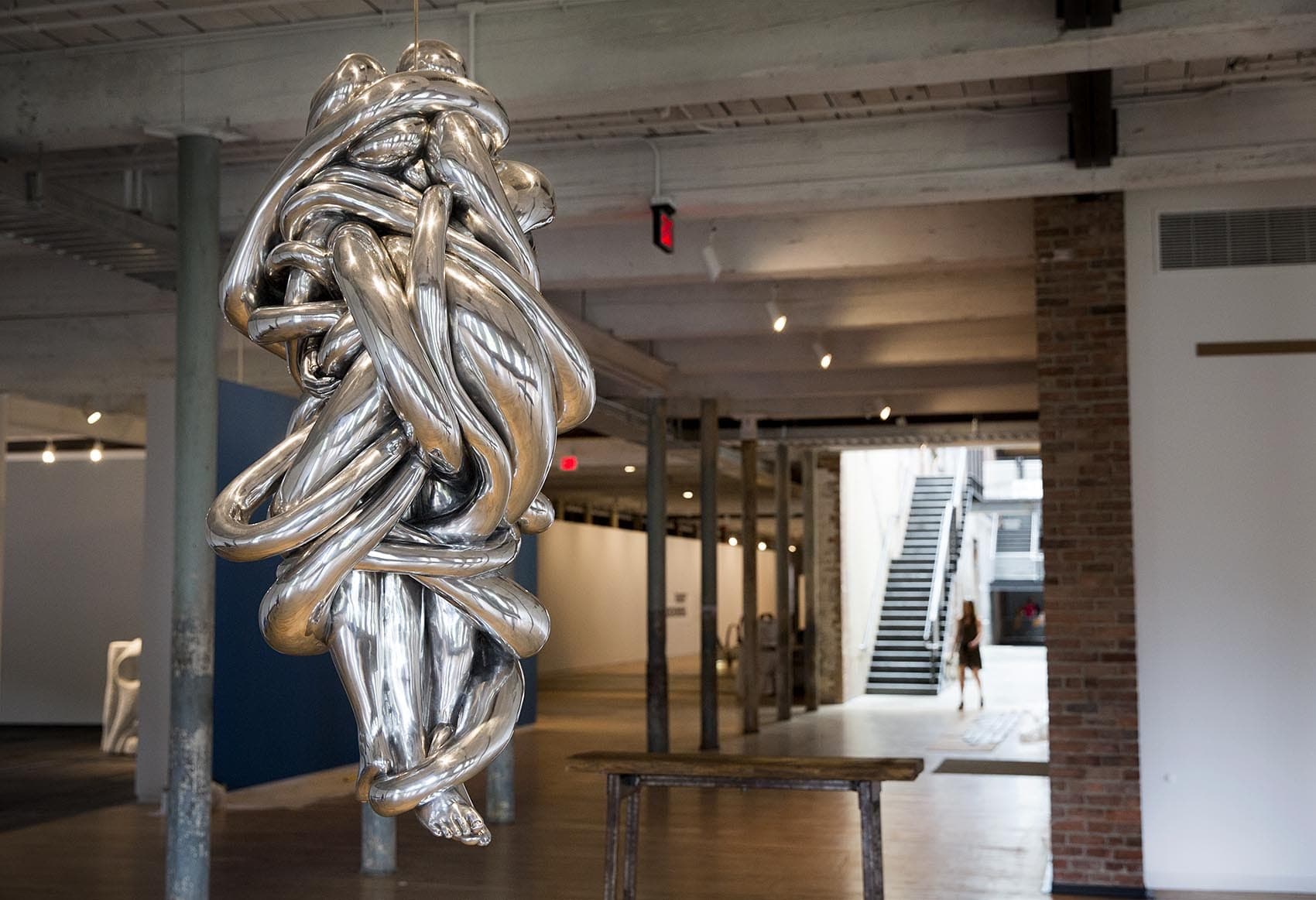
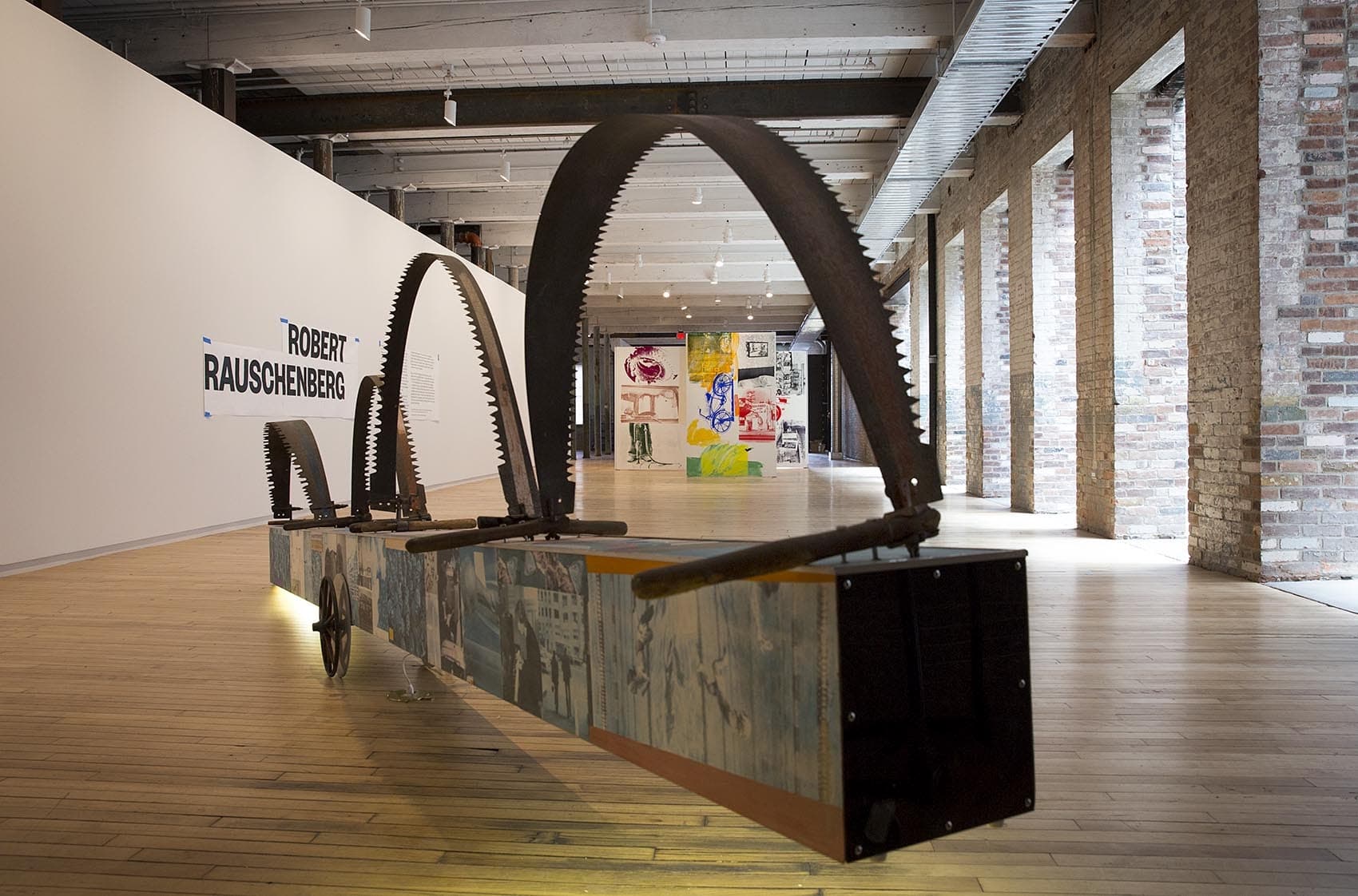
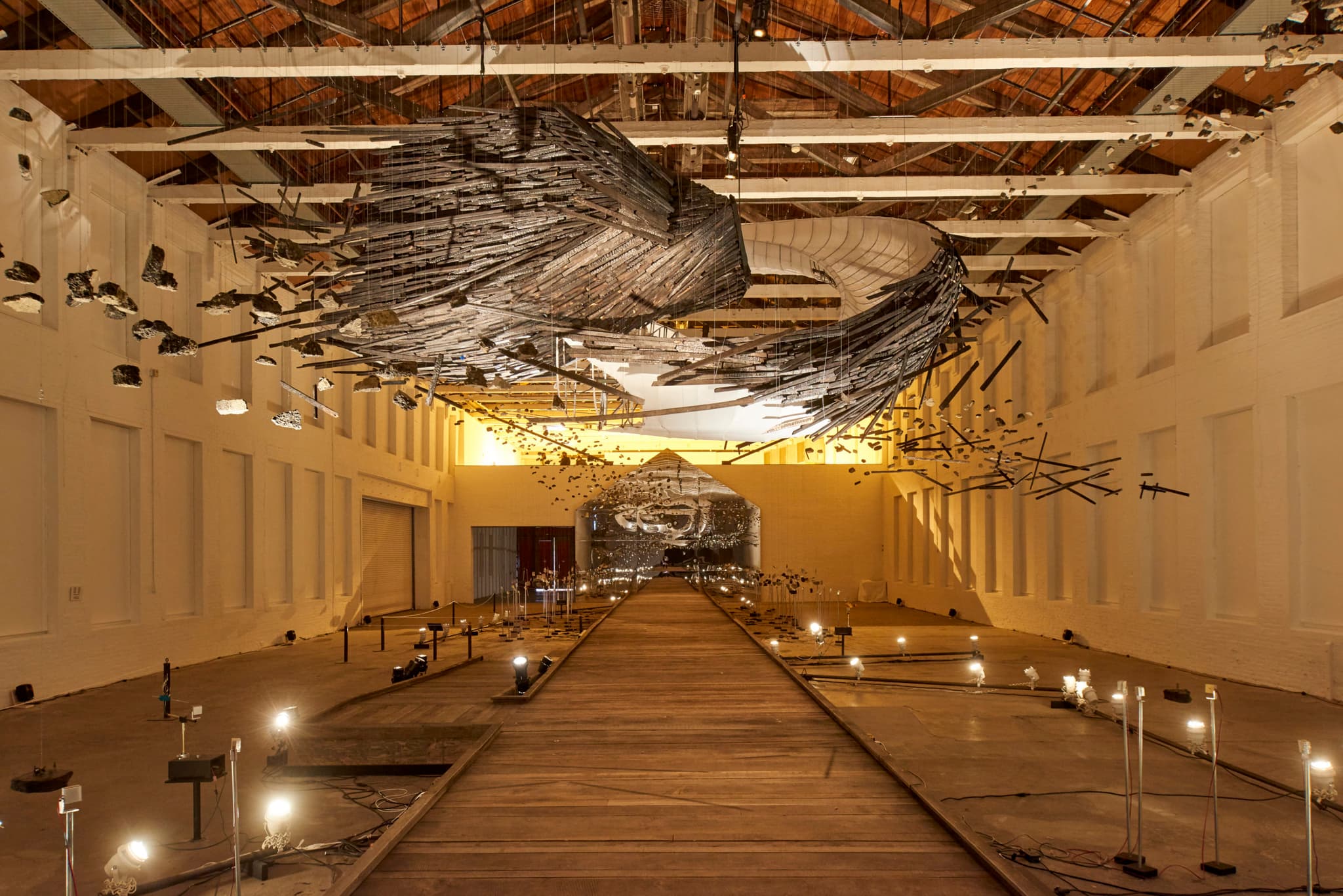
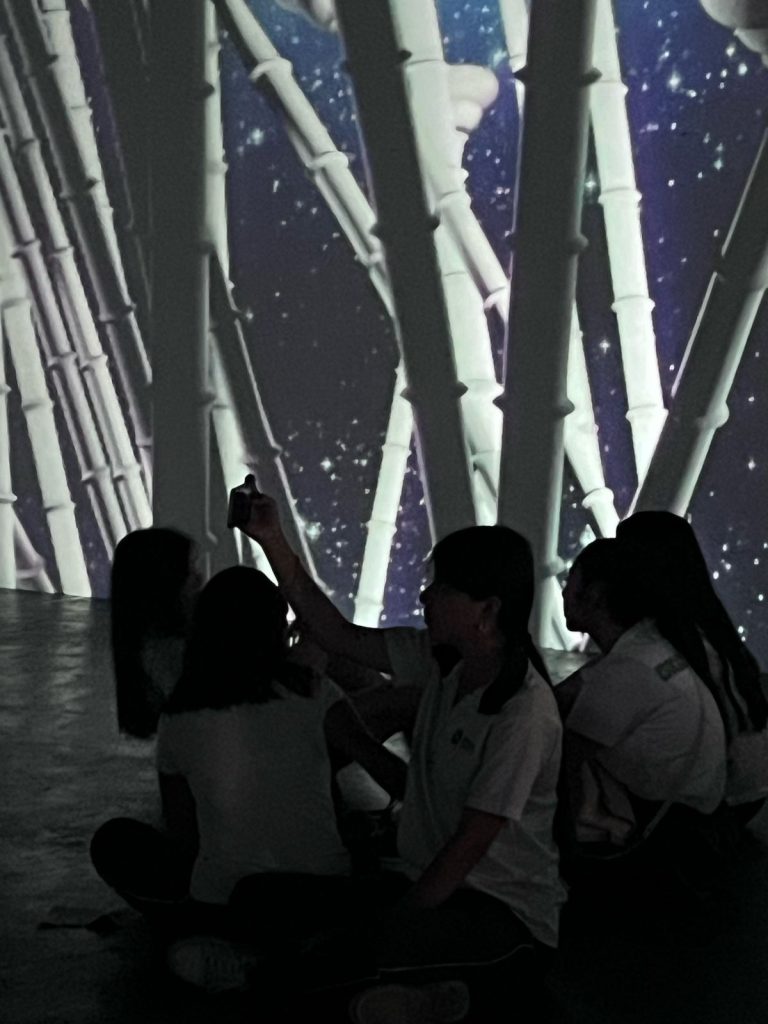
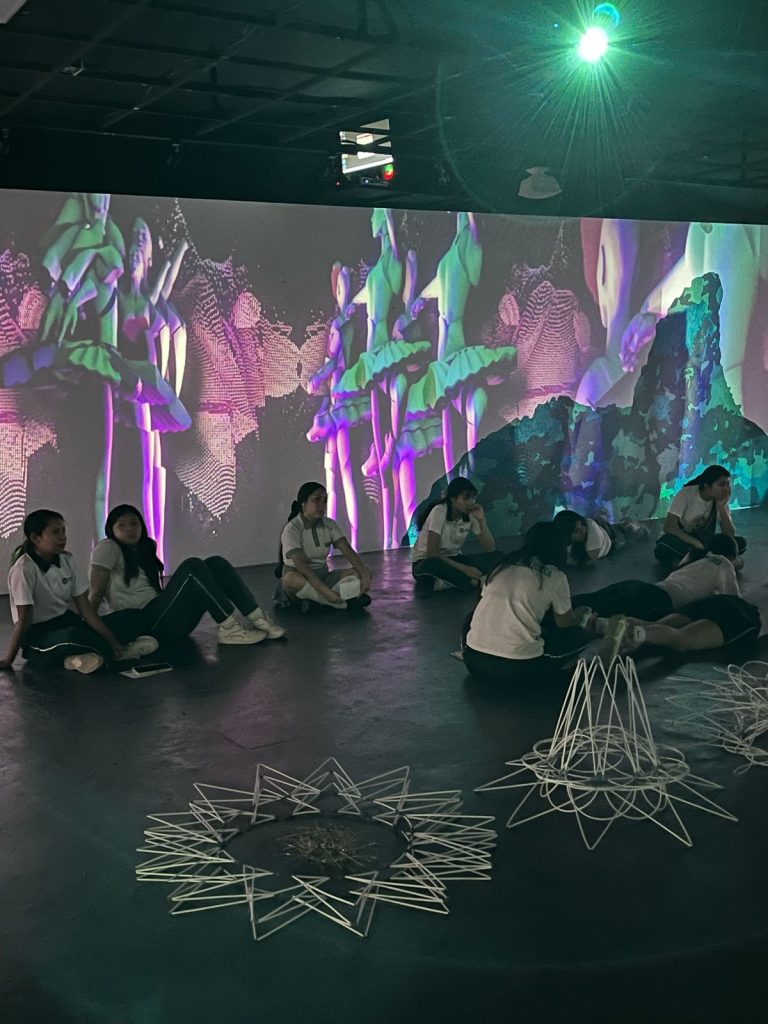
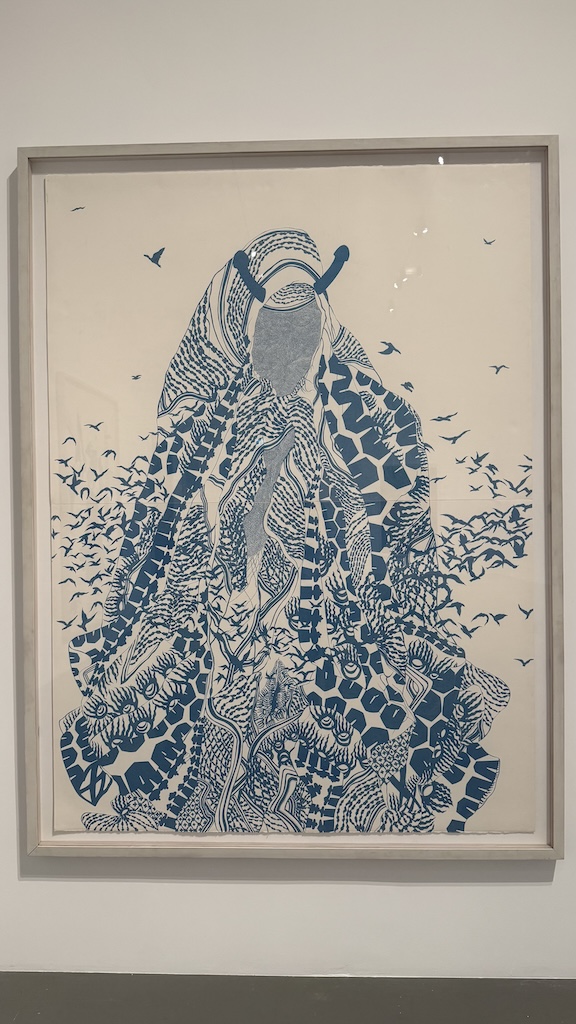
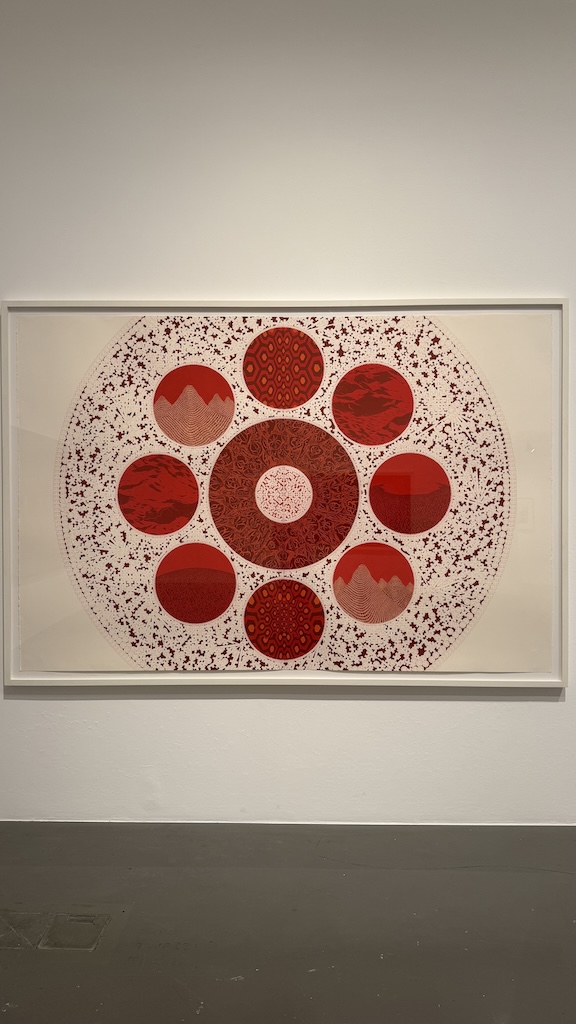
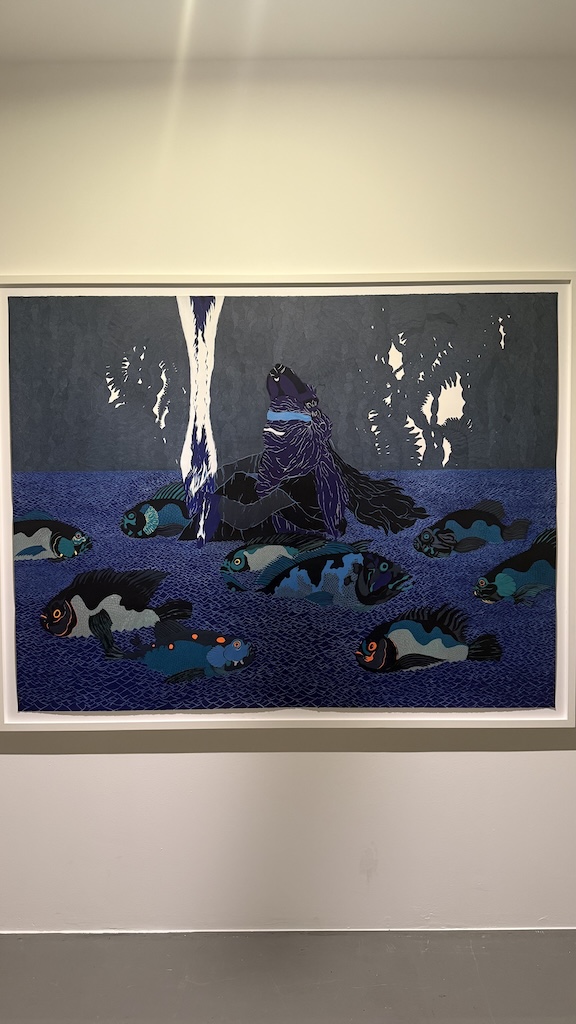
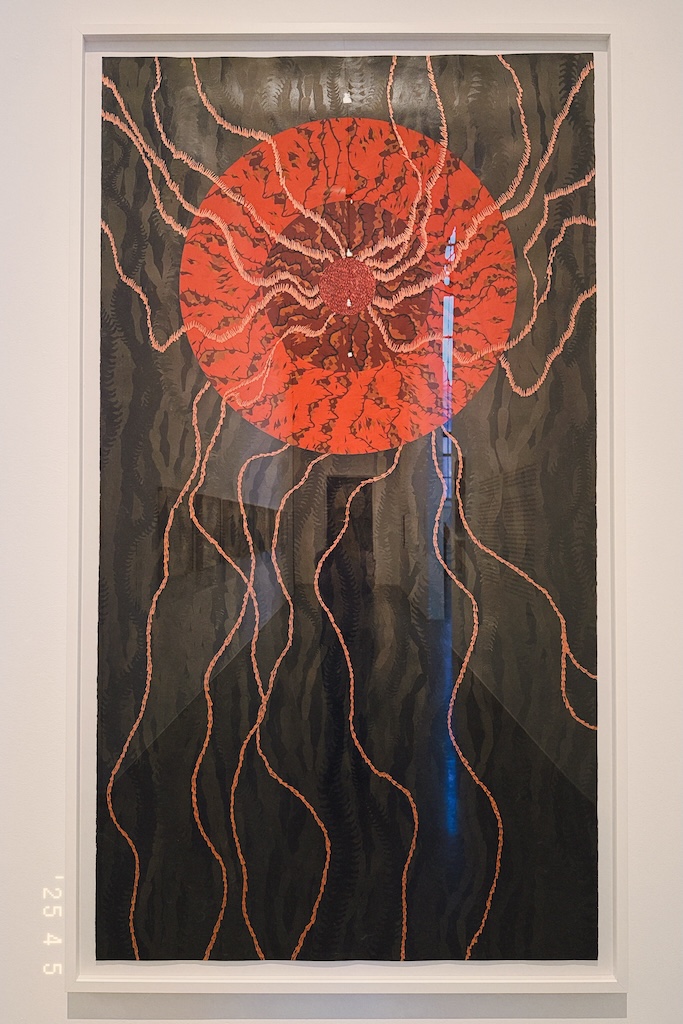
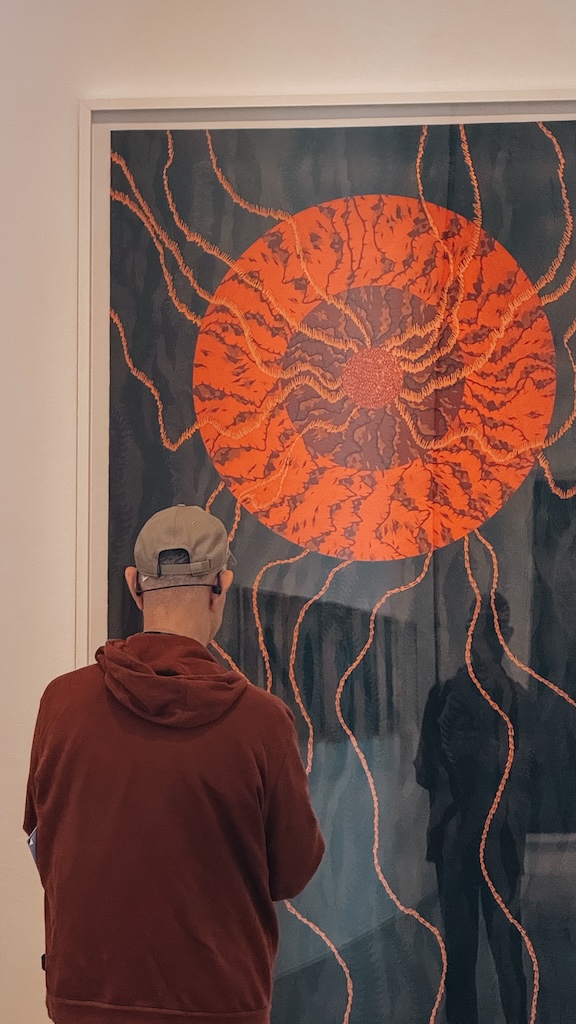
For their seventh Slow Art Day, Massachusetts Museum of Contemporary Art (MASS MoCA) in North Adams, Massachusetts invited visitors to focus on large-scale contemporary installations throughout the museum’s campus, with attention to:
Immersive, room-sized installations
Light-based and spatial works
Sound-producing pieces integrated into gallery environments
Throughout the day, guided slow-looking tours were offered and visitors could also explore independently using prompts provided by museum staff.
MASS MoCA’s programming leaned into the strengths of its unique setting — a converted 19th-century factory campus now housing some of the world’s largest contemporary installations. Rather than focusing on a single object, participants were encouraged to slow down within immersive spaces.
Prompts invited visitors to consider:
What exactly are you seeing?
How does light shape your perception of depth and space?
What happens if you close your eyes and listen to the sounds produced by the installation?
How does your body feel in relation to the work — your feet on the ground, your breathing, your position in space?
In some installations, guests were encouraged to observe subtle blinking sequences of light or shifts in projected imagery. In others, the focus turned toward sound — noticing how ambient or intentional audio elements changed the experience of the visual field.
The museum also incorporated simple mindfulness techniques before viewing: deep breathing, grounding awareness, and a moment of stillness. These small pauses helped participants transition from walking through galleries to inhabiting them more fully.
The event was designed for all ages, and Spanish-language itineraries were typically available, reinforcing MASS MoCA’s commitment to accessibility.
At Slow Art Day HQ, we love MASS MoCA and have spent time there and appreciate what they did this year to help visitors learn to slow down in immersive spaces and how that can present a different kind of challenge than focusing on a single painting .
We look forward to seeing what MASS MoCA comes up with for Slow Art Day 2026.
– Ashley, Johanna, Jessica Jane, and Phyl
P.S. You can learn more about MASS MoCA’s exhibitions and programming at https://massmoca.org.
For Slow Art Day 2025, Sint-Andrieskerk (Saint Andrew’s Church) in Antwerp, Belgium hosted a small and intimate gathering centered on slow looking, reflection, and shared meaning. The event was coordinated by Viviane Vandenbroucke and thoughtfully led by members of the church community.
The experience embodied the core spirit of Slow Art Day: slowing down, looking closely, and engaging in meaningful dialogue.
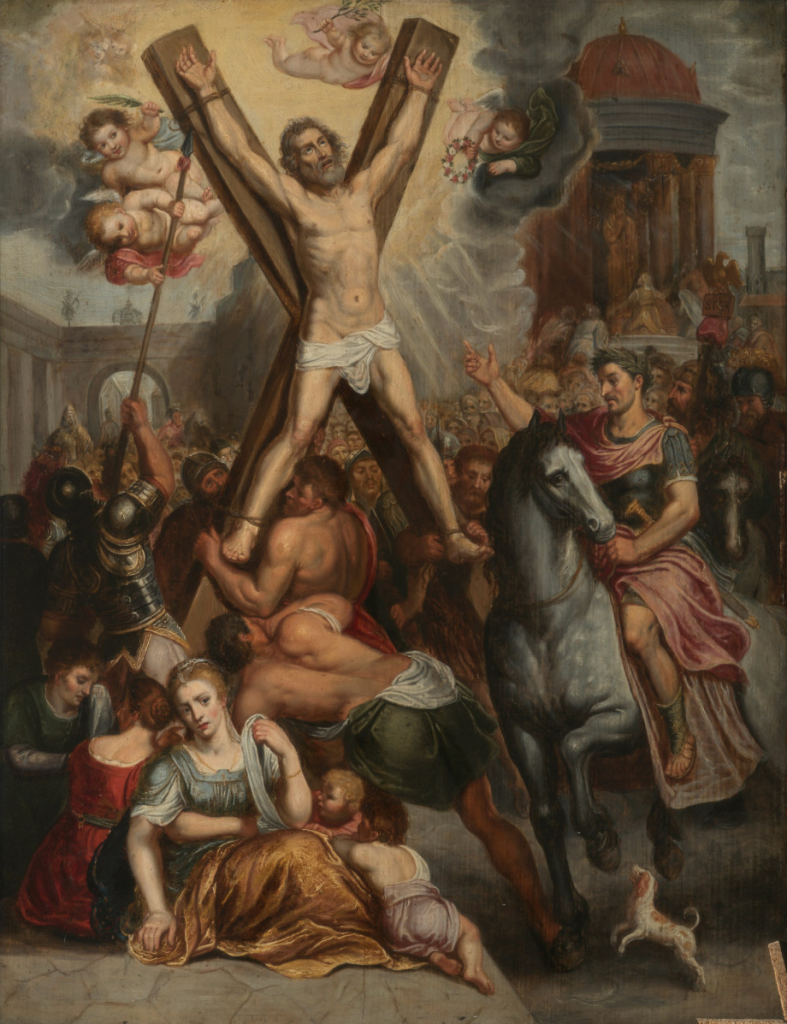
For adult visitors, the session was led by Father Rudi Mannaerts, priest of Sint-Andrieskerk. Participants were guided in slow looking at the modello of the Crucifixion of Saint Andrew.
Under Father Mannaerts’ leadership, visitors were encouraged to take time with the work, observing details, reflecting on its symbolism, and discussing how the artwork connects visual form and spiritual meaning.
Interestingly, the painter of this modello – Otto van Veen – was not only the most celebrated painter in Antwerp in the late 16th century, he was also Peter Paul Rubens’ *teacher*. So when the Slow Art Day participants looked slowly at this painting, they were also seeing some of what Rubens’ himself saw centuries ago.
For children, guide Wiske Claus led a parallel experience in the Sacristy. Young participants were introduced to the garments worn by priests and learned about their meanings and uses within the church year.
By engaging directly with these objects, children were invited to look carefully, ask questions, and connect visual elements with deeper significance — a hands-on approach aligned with Slow Art Day’s emphasis on attentive observation.
Sint-Andrieskerk demonstrated how Slow Art Day can thrive in intimate, religious settings as well museums and galleries. The church is already planning its 2026 event, where visitors will gather to slowly contemplate What is the truth? (2012), a contemporary painting by French artist Alain Senez. Inspired by Pontius Pilate’s famous question before the death sentence of Jesus, the work reflects on how media and perception shape what we believe to be true. Led once again by Father Rudi Mannaerts, the church will host multiple sessions throughout the afternoon, continuing its thoughtful approach of connecting historical faith spaces with modern artistic questions.
We are especially grateful to Viviane Vandenbroucke, Father Rudi Mannaerts, and Wiske Claus for continuing to support Slow Art Day within the church community. Sint-Andrieskerk has been an important participant in bringing Slow Art Day into sacred spaces, helping inspire the growing church movement within our global network.
We hope that more churches and sacred spaces join our movement in 2026, and we certainly look forward to hearing about Sint-Andrieskerk’s event on April 11th.
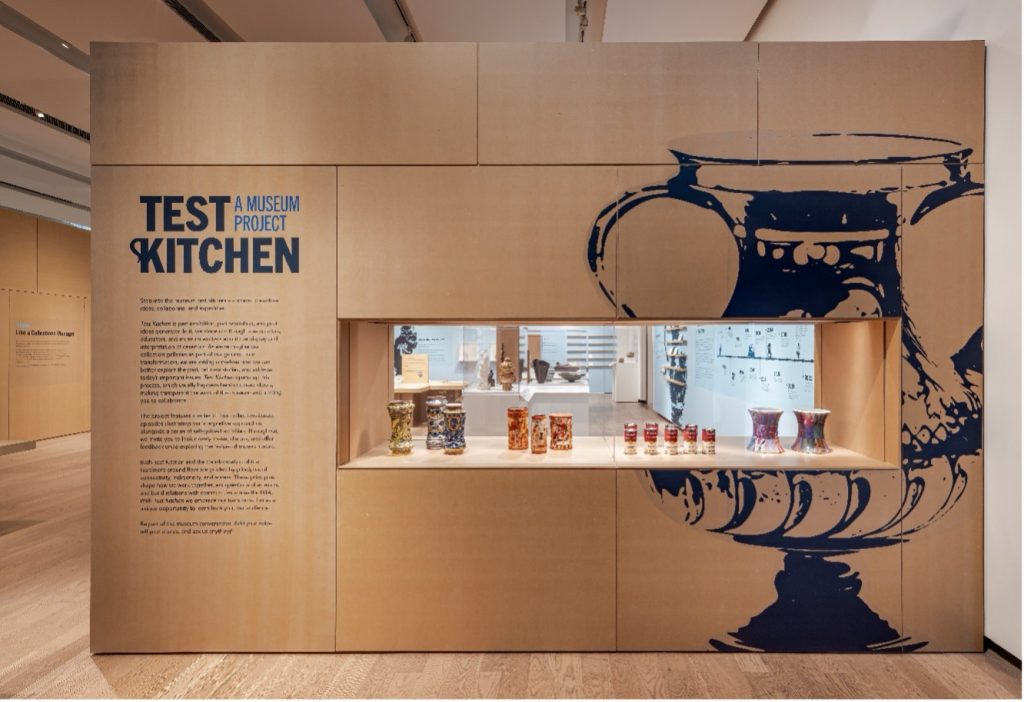
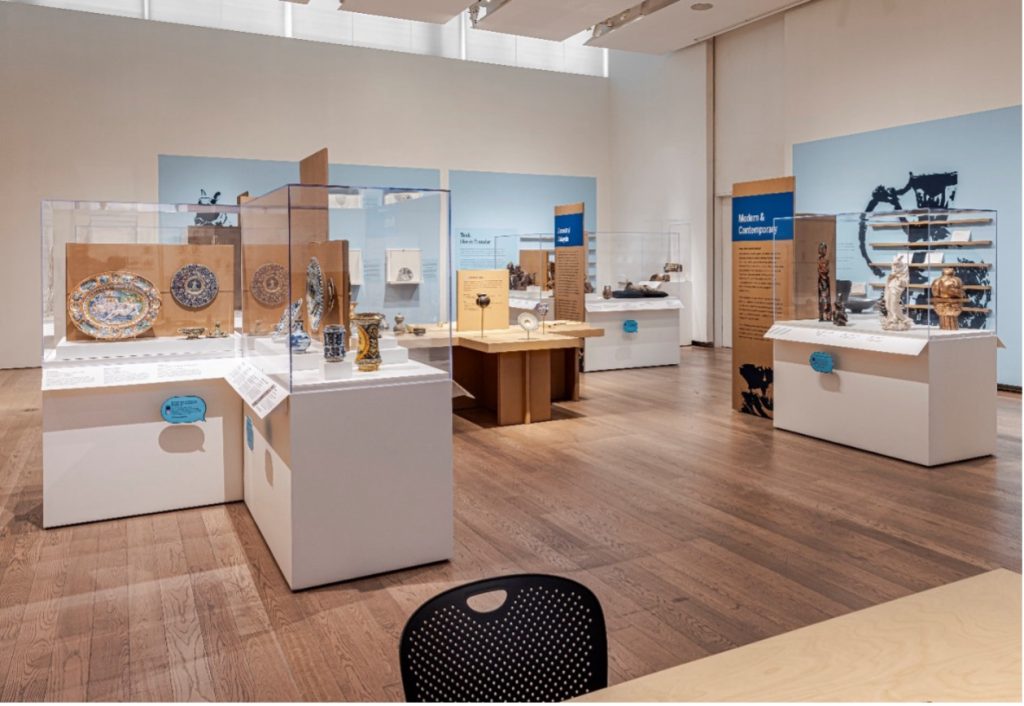
On April 5, 2025, the Gardiner Museum in Toronto, Ontario participated in Slow Art Day for the sixth time — this year embedding the experience within their major exhibition Test Kitchen: A Museum Project.
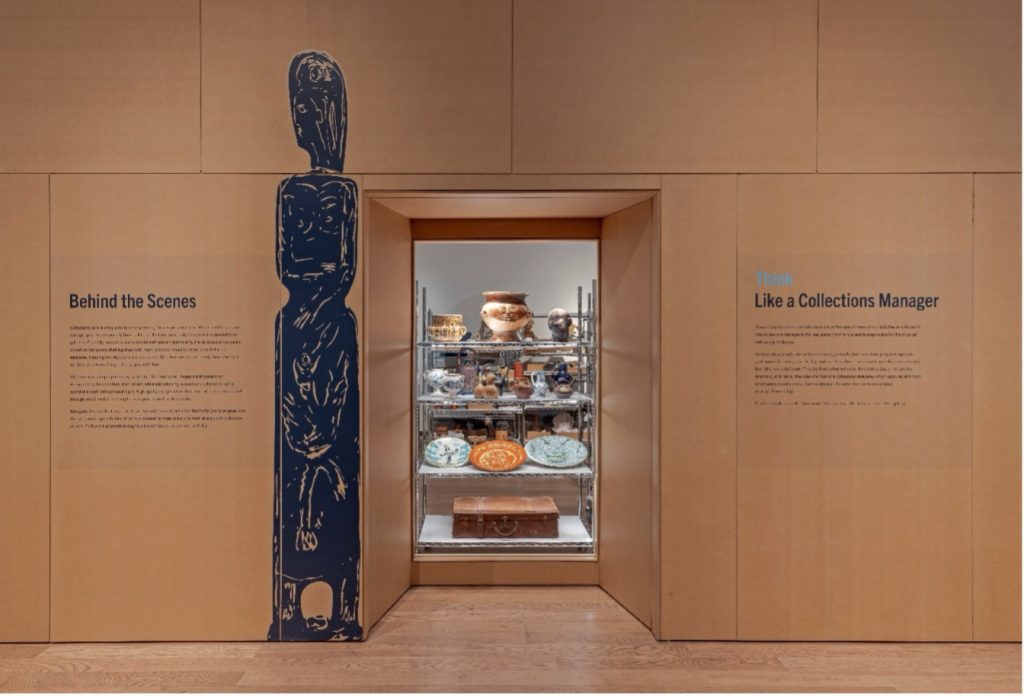
As the museum underwent a full-scale reimagining of its ground floor and reinstallation of significant parts of its collection, Test Kitchen created a space of experimentation, collaboration, and participation. The exhibition functioned as part exhibition, part workshop, and part ideas generator. Visitors were encouraged not just to observe, but to question, respond, and contribute.
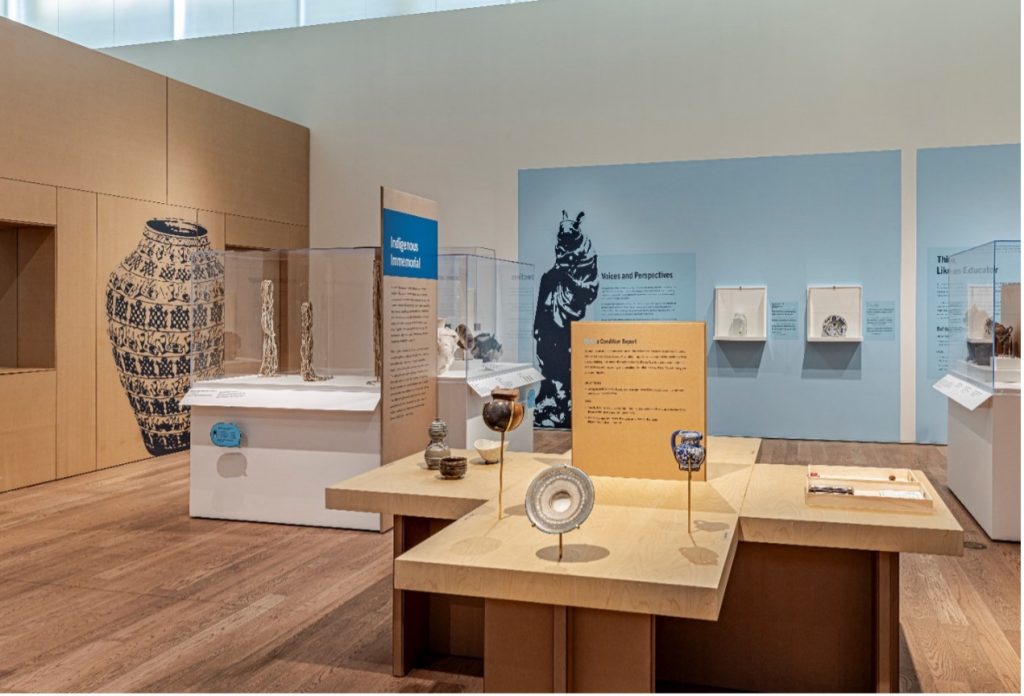
For Slow Art Day, participants were invited to closely engage with four collection-based “episodes” within the gallery:
Connected Worlds
Modern and Contemporary Ceramics
Ancestral Abiyalas
Indigenous Immemorial
Featured works included:
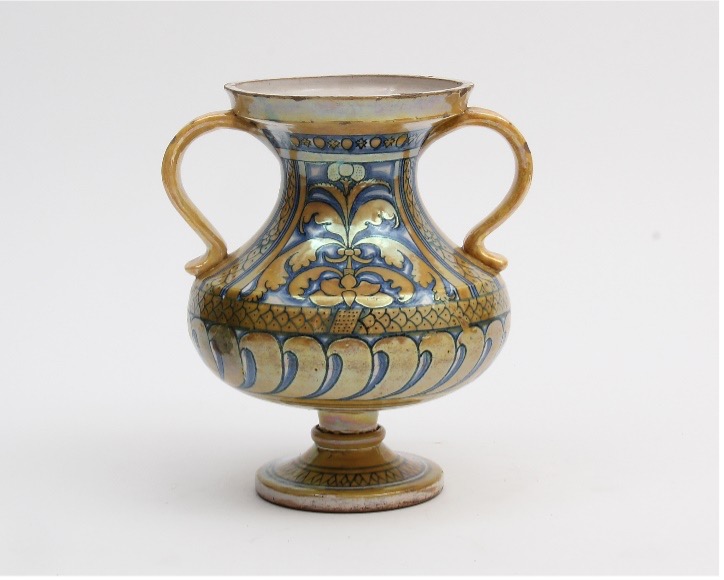
Two-handled vase with palmette motif, Deruta, Umbria, Italy, c.1500–1550
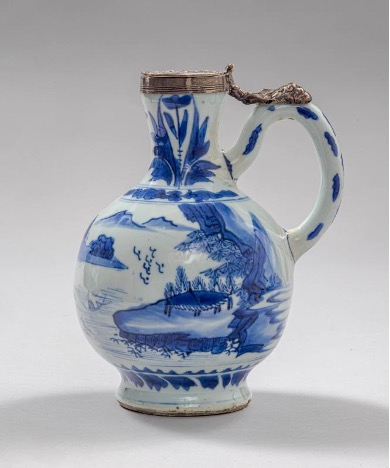
Ewer, silver mounts with German coin dated 1626, Jingdezhen, Jiangxi, China, 1635–1640
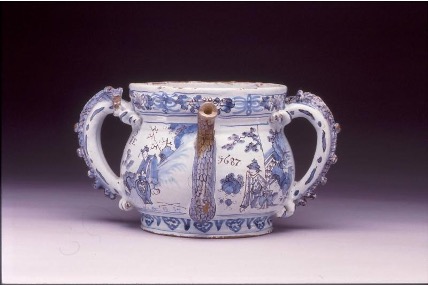
Posset pot with chinoiseries, possibly Brislington, Bristol, England, 1687
An Odyssey, Artist: Pamela Cevallos (Ecuadorian, born 1984), Collaborator: Guillermo Quijije, Quito, Ecuador, 2022
Two-handled vase with palmette motif, Deruta, Umbria, Italy, c.1500–1550Ewer, silver mounts with German coin dated 1626, Jingdezhen, Jiangxi, China, 1635–1640Posset pot with chinoiseries, possibly Brislington, Bristol, England, 1687An Odyssey, Artist: Pamela Cevallos (Ecuadorian, born 1984), Collaborator: Guillermo Quijije, Quito, Ecuador, 2022
Participants navigated the exhibition using a self-guided Slow Art Day activity sheet created specifically for the program (below). The prompts encouraged close looking, sketching, reflective writing, and imaginative engagement.
In Connected Worlds, visitors searched for ceramics that visually embodied global exchange: an English pot with Chinese dragons, a Chinese jug with Dutch designs and a German coin, and an Italian vase made using a technique from Iraq. In Indigenous Immemorial, participants compared two works by John Kurok, reflecting on form, design, colour, and emotional tone.
In Modern and Contemporary Ceramics, guests identified works connected to myth or magic, considering how contemporary artists draw from narrative and symbolism.
In Ancestral Abiyalas, participants looked closely at An Odyssey, imagining themselves within its scenes — listening for sounds, sensing scents, and noticing what surprised them.
Exhibition photo credit Toni Hafkenscheid.Exhibition photo credit Toni Hafkenscheid.Exhibition photo credit Toni Hafkenscheid.Exhibition photo credit Toni Hafkenscheid.
After completing their exploration, visitors were invited to participate in the exhibition’s interactive “Befriend an Object” activity, further reinforcing the exhibition’s collaborative spirit.
We are grateful to Sofia Flores-Ledesma and the team at the Gardiner Museum for continuing to champion Slow Art Day and for integrating it so thoughtfully into their institutional transformation, and look forward to seeing what they come up with for Slow Art Day 2026.
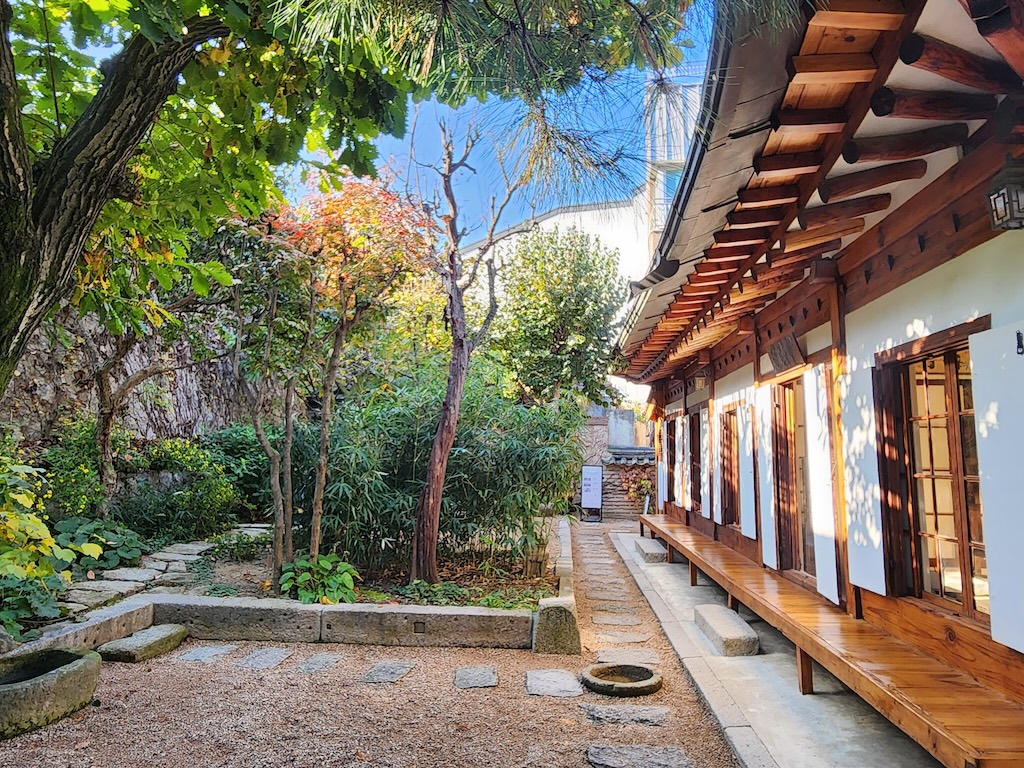
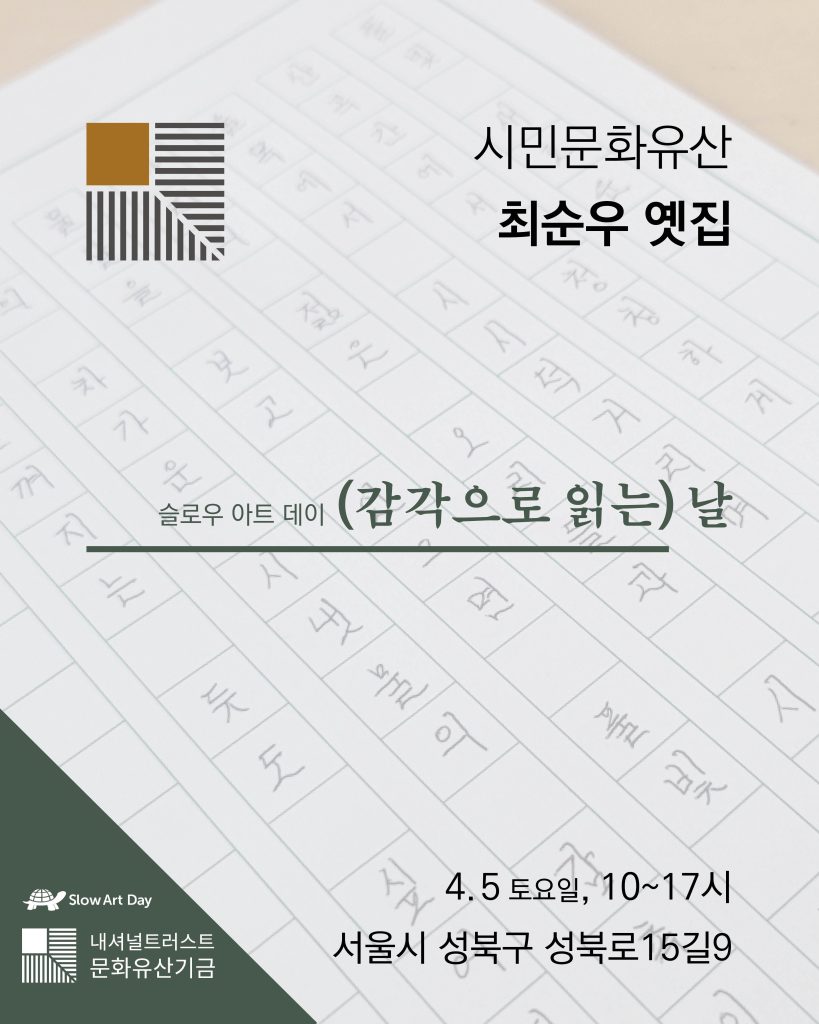
On April 5, 2025, Choi Sunu House in Seoul, South Korea participated in their third Slow Art Day with a reflective program titled “Discovering the Beauty and Heart of Korea” (“한국미 한국의 마음을 찾는 시간”).
Although rain fell steadily across Seoul that day, creating challenges for attendance, the quiet weather deepened the contemplative atmosphere of this historic hanok home nestled in Seongbuk-dong.
Choi Sunu House preserves the legacy of art historian and cultural scholar Choi Sunu (1916–1984), whose writing celebrated Korean aesthetics, craftsmanship, and spirit. Rather than centering a single artwork, the entire house and garden became the focus of slow looking — and slow reading.
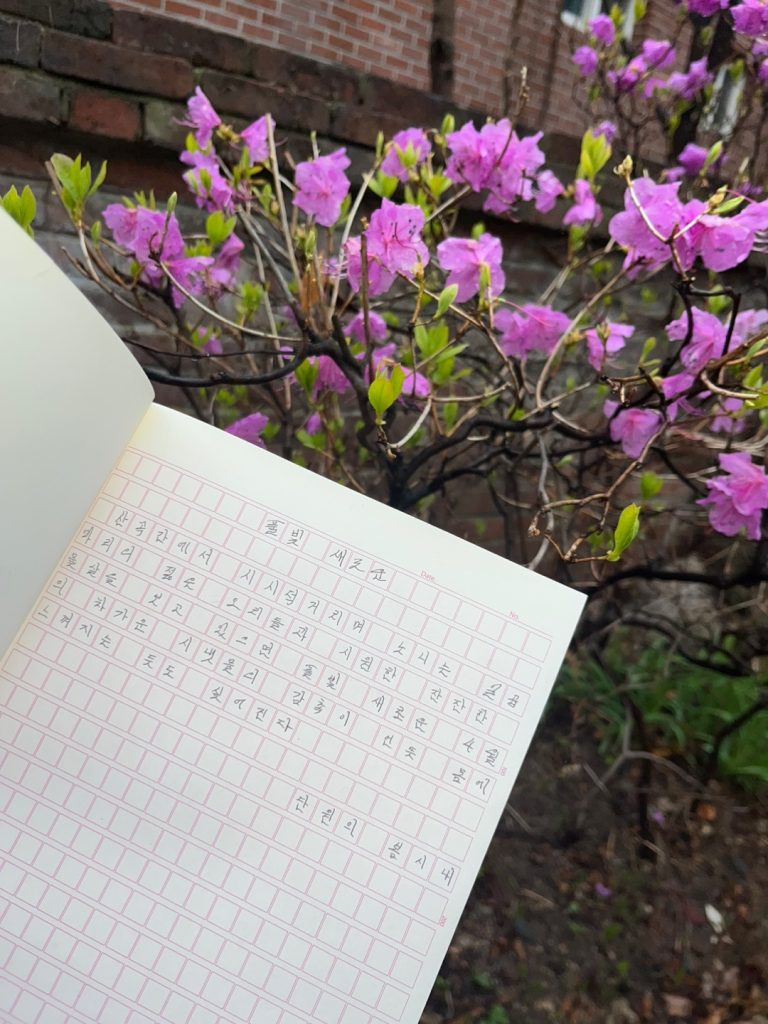
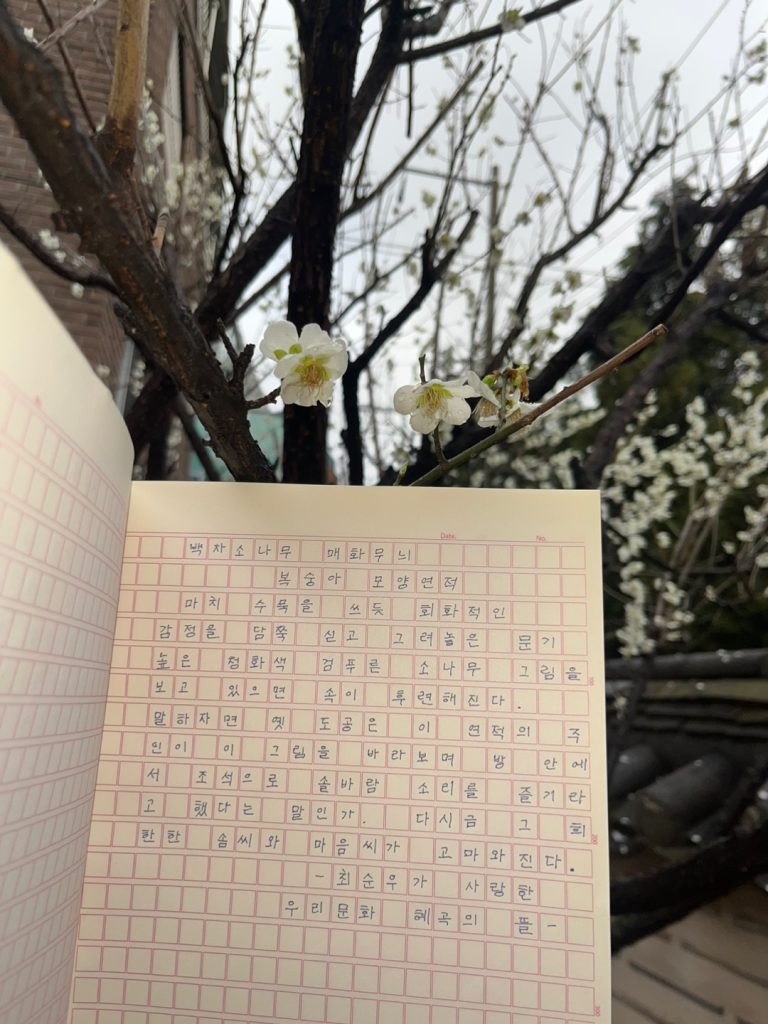
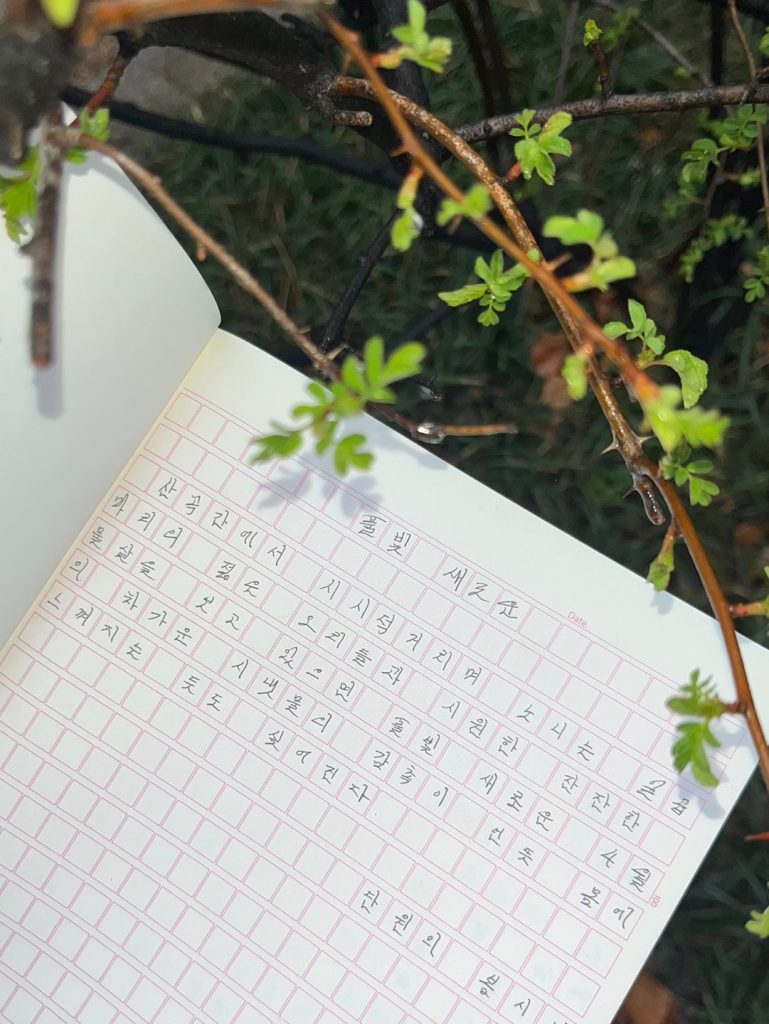
Participants were invited to walk slowly through the traditional courtyard and wooden halls, surrounded by early spring blossoms. Plum flowers and azaleas were just beginning to bloom against tiled roofs and stone walls. The soft sound of rain added to the sensory experience.
The core activity of the day was transcription.
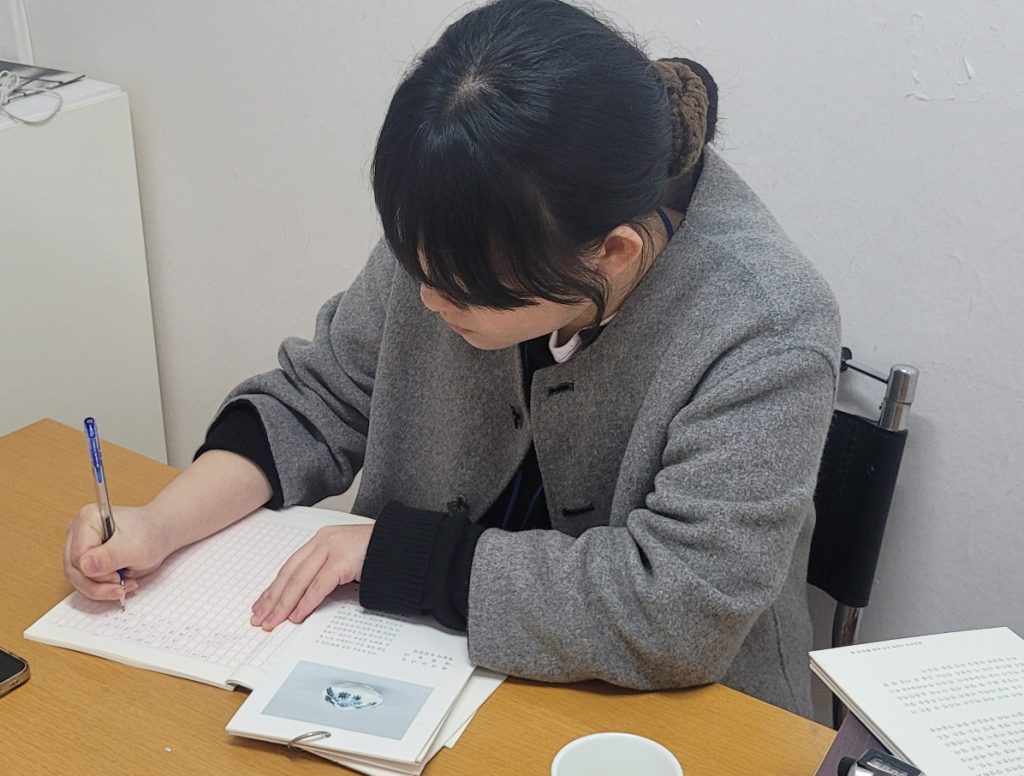
Visitors selected passages from Choi Sunu’s writings and carefully copied them by hand into squared manuscript notebooks. This act of deliberate writing encouraged participants to move at the pace of each word, absorbing not just meaning but rhythm and feeling. The practice echoed traditional Korean calligraphic discipline while remaining accessible to all.
Some guests chose to sit in the courtyard near flowering trees. Others settled indoors beside books and archival materials. A small round table was set outdoors with a publication featuring cultural artifacts and a blank page for reflection. The setting itself — stone statues, gravel paths, wooden floors warmed by filtered spring light — became part of the meditation.
The program encouraged participants to:
Take a slow walk through Choi Sunu House
Read selected passages from his essays
Transcribe a sentence or paragraph that resonated
Spend quiet time in the garden surrounded by spring blossoms
By combining slow walking, slow reading, and slow writing, Choi Sunu House beautifully expanded the meaning of Slow Art Day beyond visual observation alone. The event demonstrated how cultural heritage sites can invite visitors into embodied connection with language, architecture, landscape, and memory.
We are grateful to the team at Choi Sunu House and the National Trust Cultural Heritage Fund for carrying Slow Art Day forward in Korea, even under gray skies.
For their second Slow Art Day (and their first time hosting the program on-site) the Smithsonian’s National Museum of Asian Art in Washington, DC offered four hours of immersive programming, inviting visitors to slow down through guided looking, mindfulness practices, gallery conversations, and movement.
The day unfolded through a thoughtfully structured sequence of offerings designed to meet visitors wherever they were.
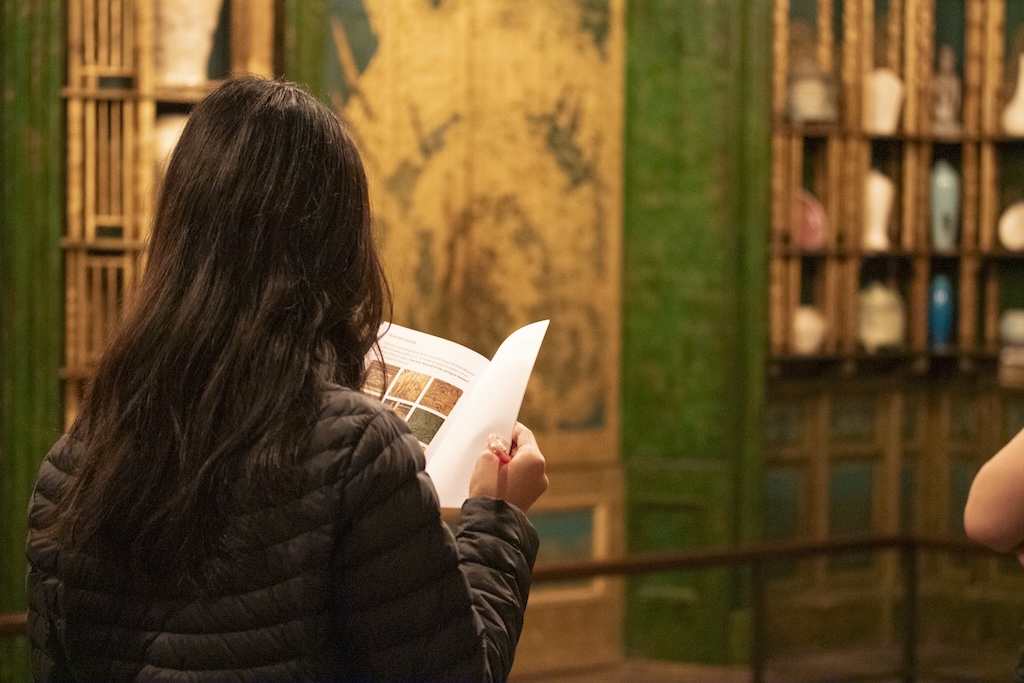
Throughout the four hours, hundreds of Slow Looking Guides were distributed from the information desk, inviting visitors to deepen their connection with the art through sketching prompts, poetic reflection, comparisons, and written responses.
Participant viewing the Slow Looking Guide designed by the museum.
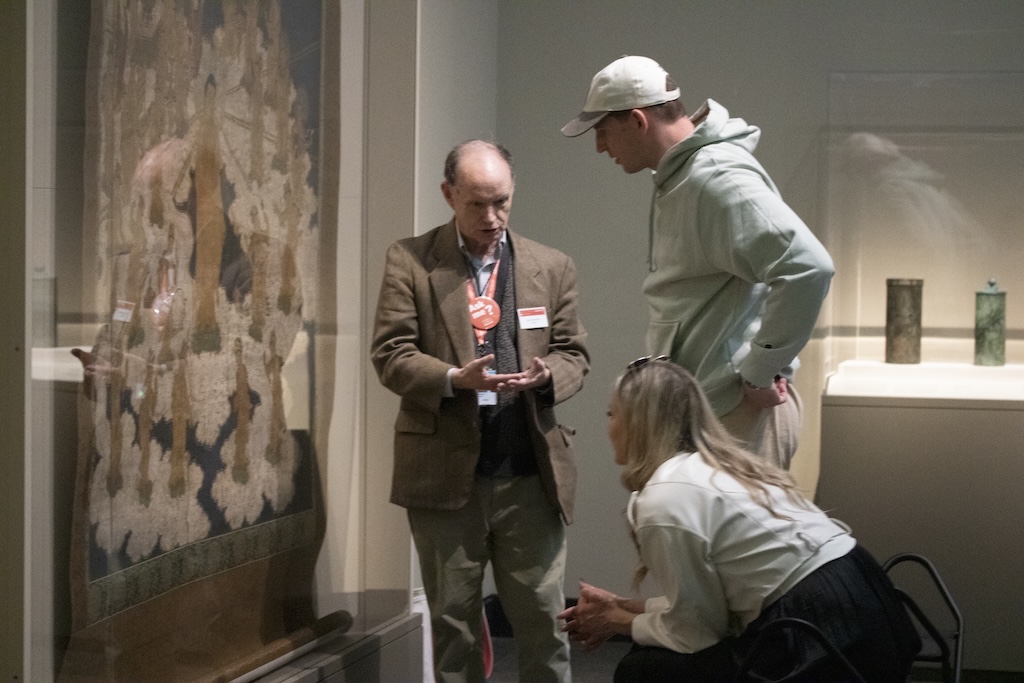
Four docents roamed the galleries, engaging visitors in informal conversations about the museum’s world-renowned collections. These roaming discussions allowed participants to linger, ask questions, and explore artworks through sustained dialogue rather than quick viewing.
Gallery docent in discussion with Slow Art Day participants.
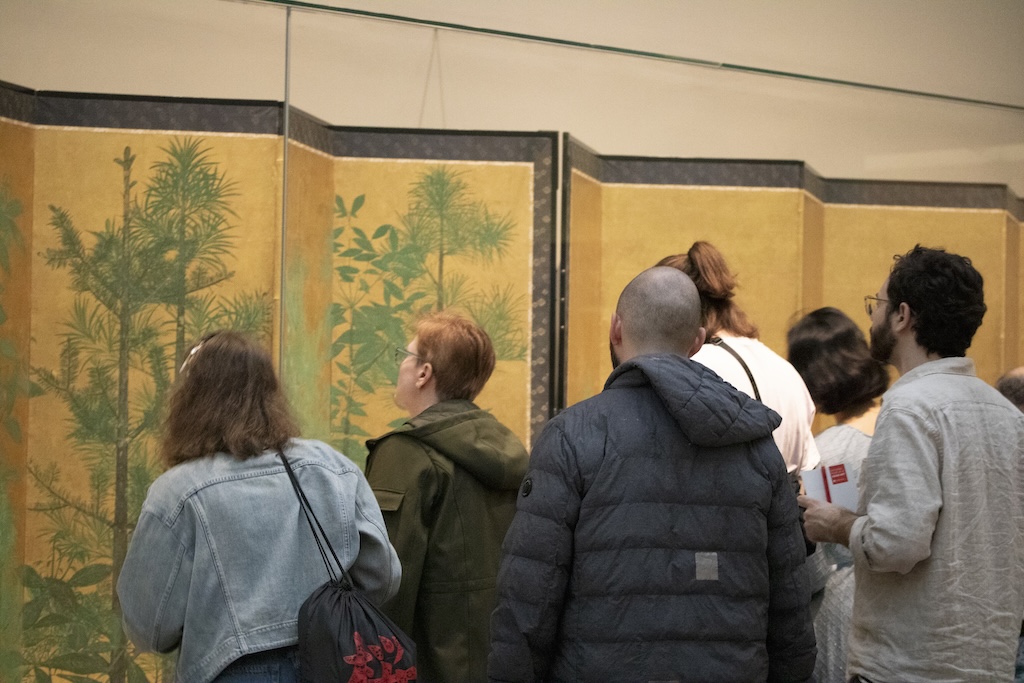
Two guided Slow Looking sessions were scheduled in the Japanese screen gallery, one for families and one for adults. Due to a large gathering on the National Mall that day, the family session did not run. However, 15 visitors participated in the adult session focused on the early 17th-century folding screen “Trees.”
Participants spent extended time observing the green malachite pigments layered over gold foil. As they looked more closely, subtle botanical details emerged — magnolia veins, pine and cedar needles, tiny acorn buds, delicate blossoms. The facilitator described the work as “a gardener’s dream brought indoors,” noting how the composition moves viewers from luminous gold panels into dense greenery, like stepping gradually into a forest.
Visitors looking at “Trees” (雑木林図屏風), Japanese folding screen (1600–1630).
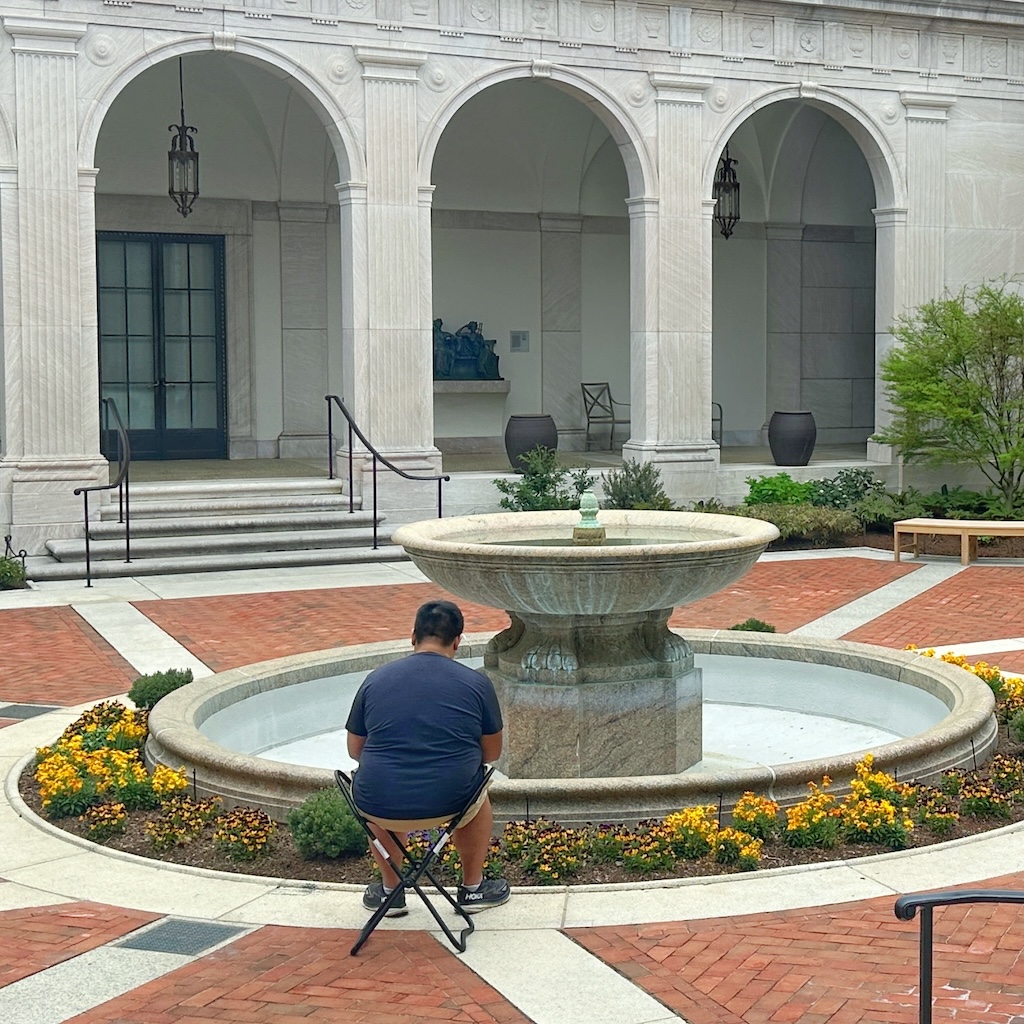
In the museum’s outdoor courtyard, 24 visitors joined Forest Bathing sessions led by a certified forest therapy guide. Though not a traditional forest setting, the courtyard’s Japanese maples, ferns, holly, pine, peonies, birds, bees, and even beetles became focal points for sensory awareness. Participants were invited to gently touch plants — an uncommon freedom in a museum environment — and to slow down through guided sensory exercises.
Participant in the Forest Bathing session in the courtyard.
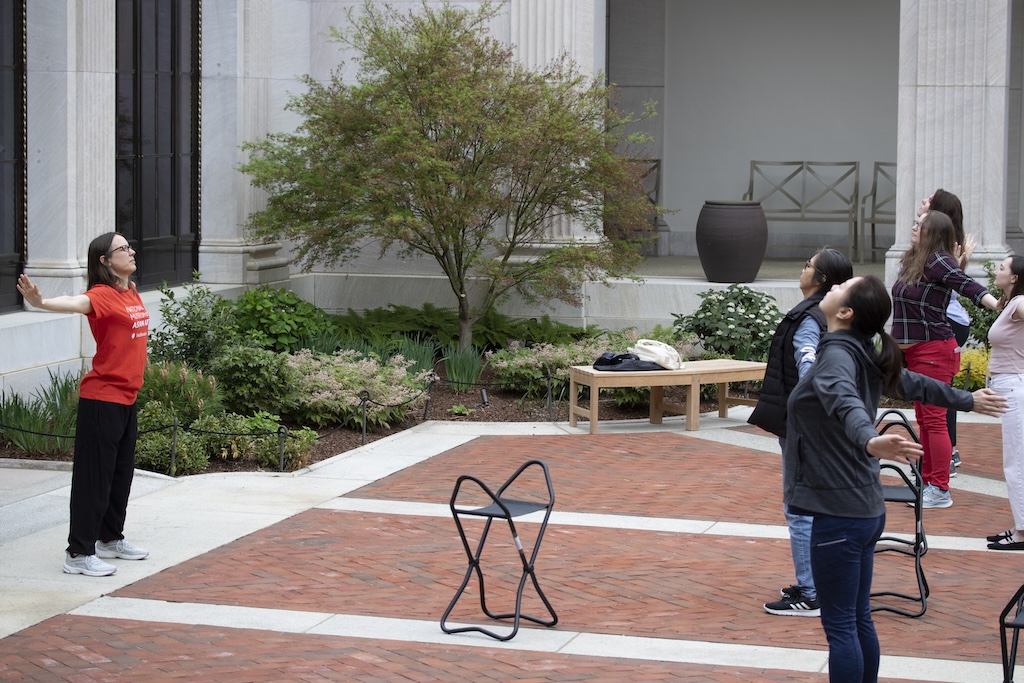
Visitors also participated in a Qigong session, a standing mindful movement practice rooted in Chinese tradition. Through slow, nature-inspired movements and breath awareness, participants were encouraged to notice the flow of energy in their bodies and mirror the rhythms of the natural world.
Participants during the Qigong session.
With their 2025 Slow Art Day, The National Museum of Asian Art demonstrated how structured programming, roaming conversation, embodied practice, and simple prompts can invite visitors into meaningful slowness.
At Slow Art Day HQ, we are especially inspired by how the National Museum of Asian Art expanded slow looking beyond the gallery walls, integrating folding screens, forest bathing, mindful movement, and docent engagement into a cohesive experience.
We are grateful to Jennifer Reifsteck and the entire team at the National Museum of Asian Art for their thoughtful leadership. We look forward to seeing what they design for Slow Art Day 2026.
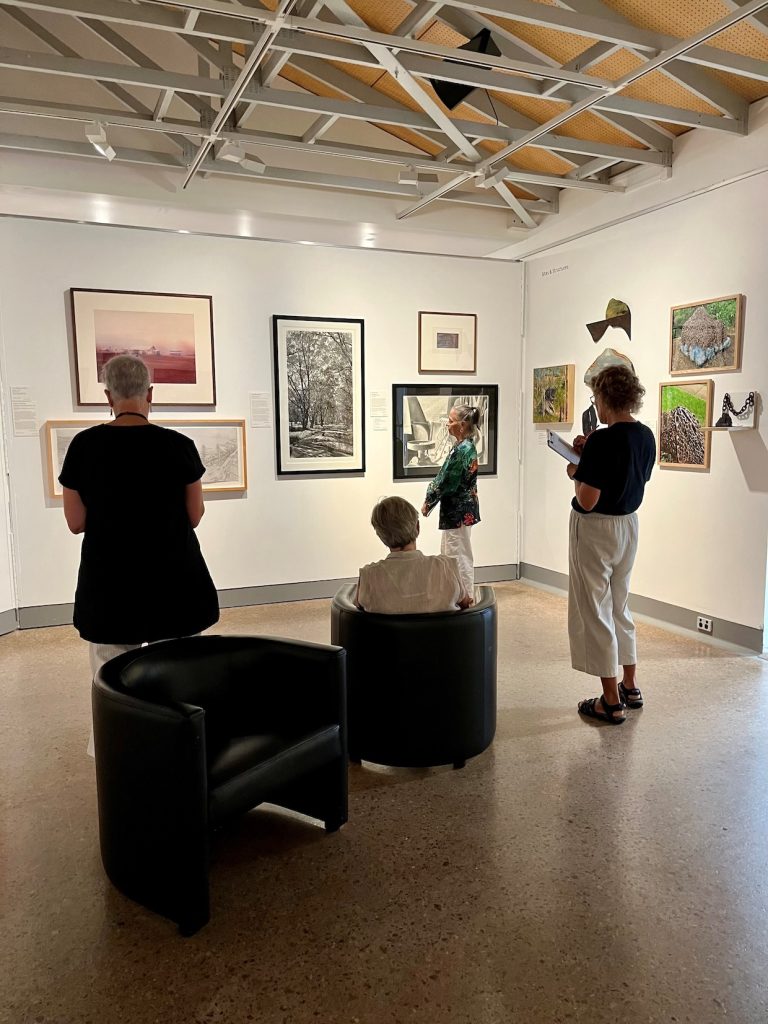
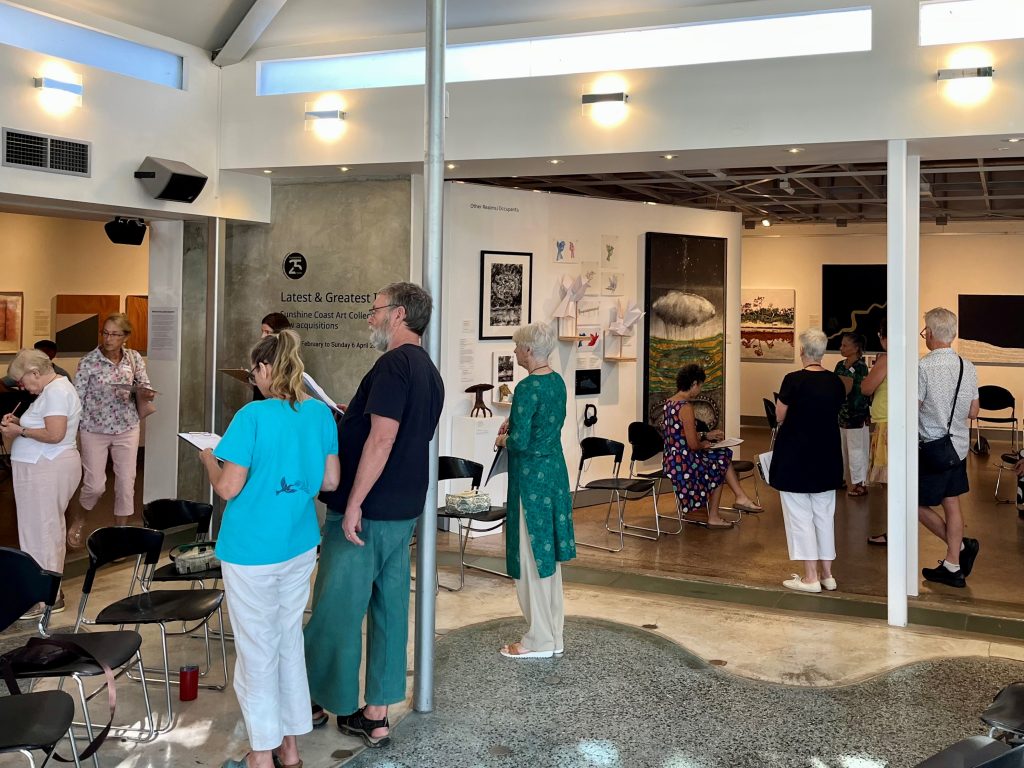
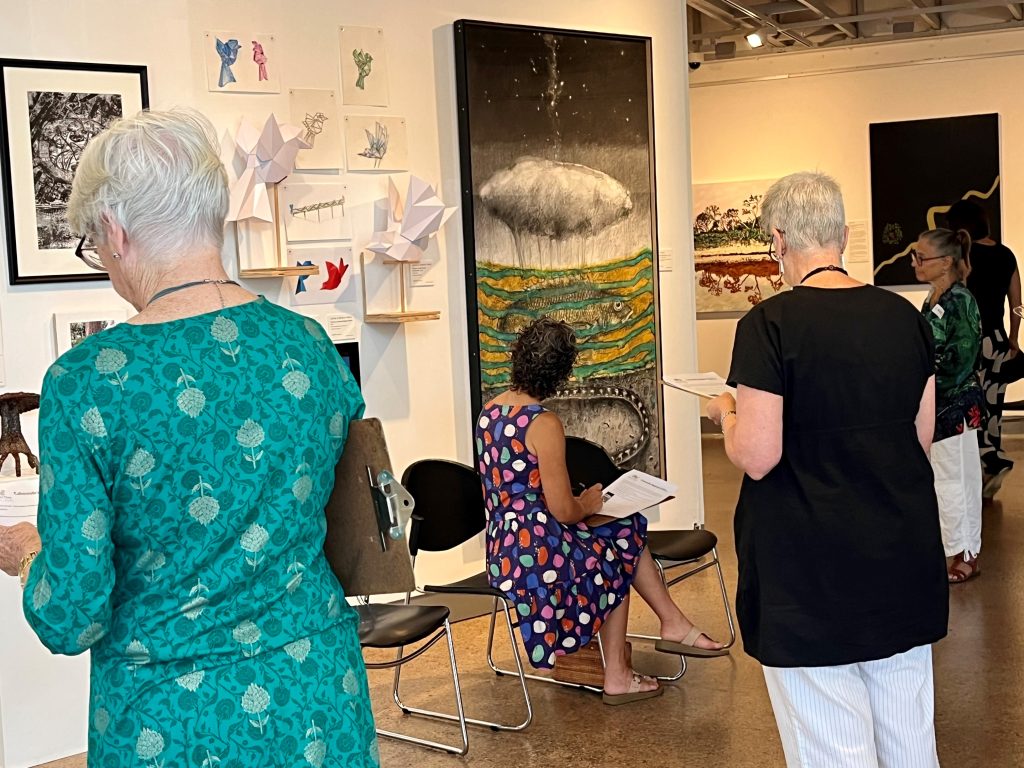
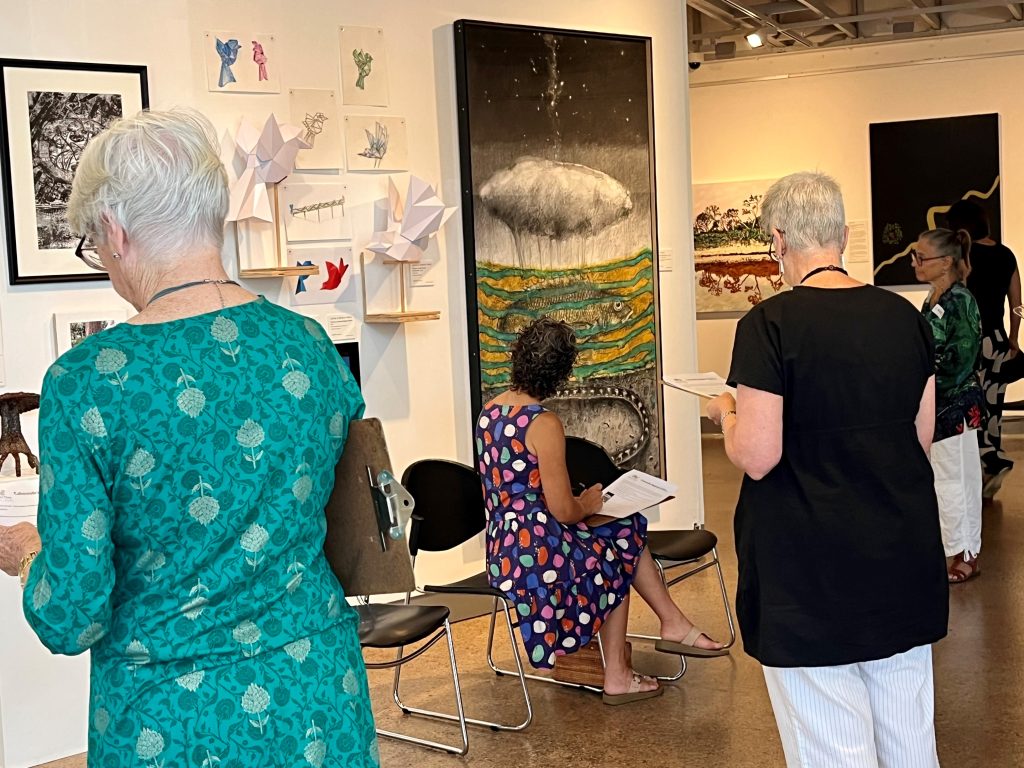
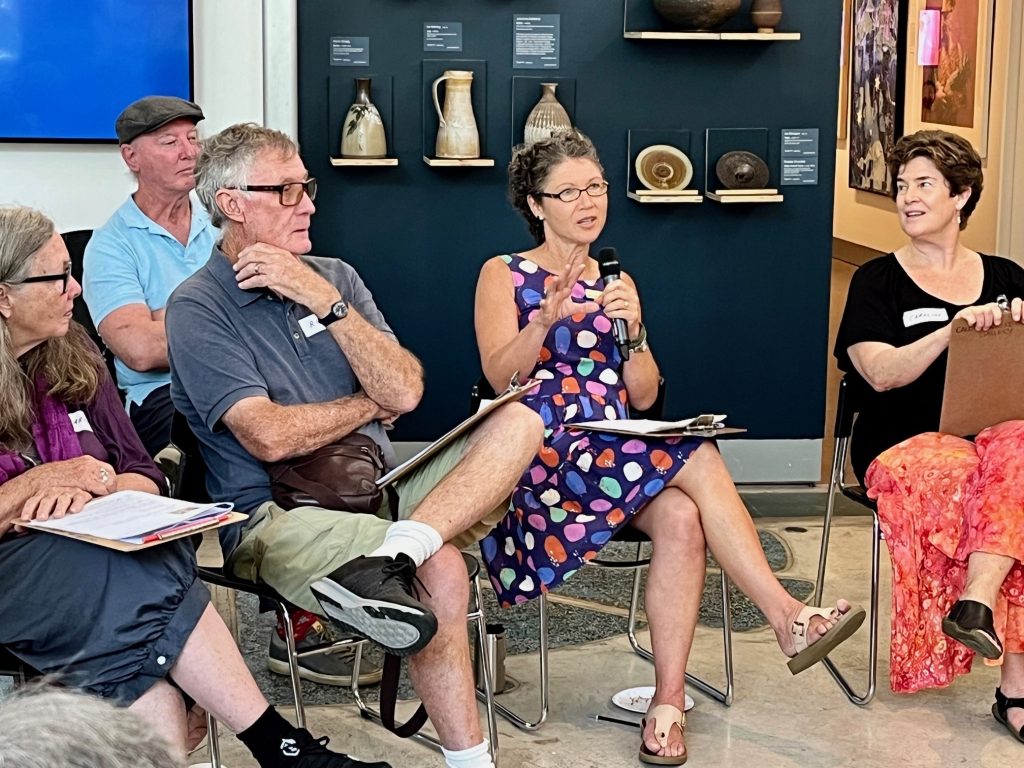
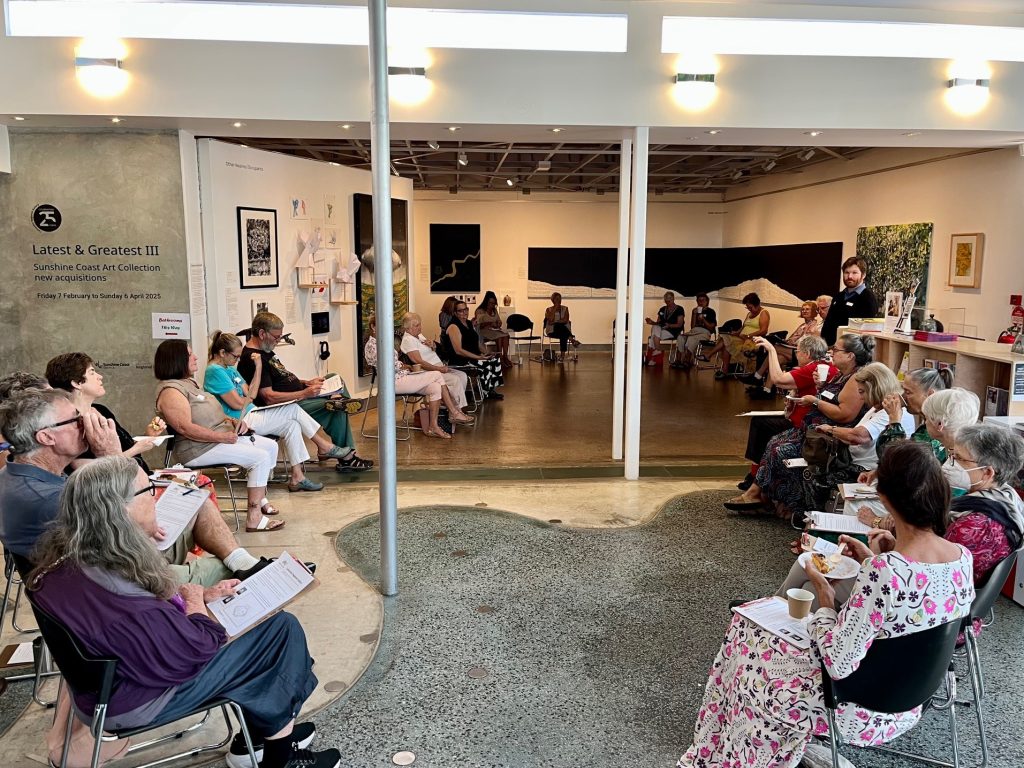
For their fourth Slow Art Day, Caloundra Regional Gallery in Australia thoughtfully expanded their event format by introducing guided mindfulness activities to help participants truly slow down before engaging with the art.
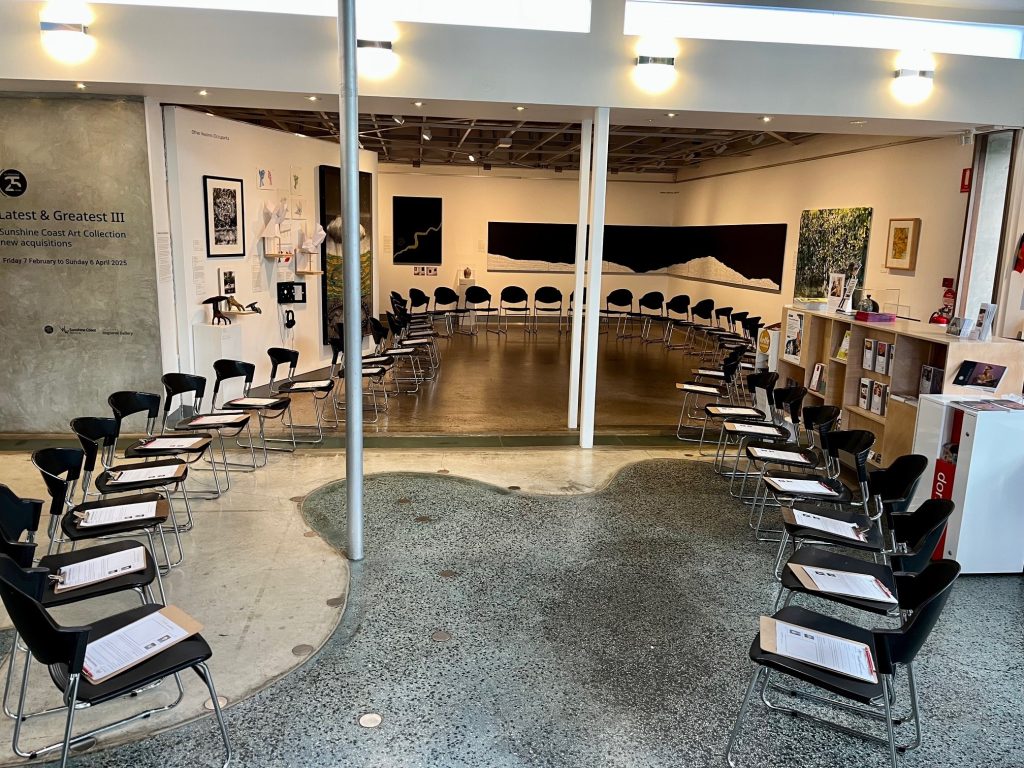
Held from 8 – 10am (before regular gallery opening hours), 34 attendees gathered for a guided breathing exercise to help get settled into the experience, soften their gaze, and prepare to look deeply and intentionally.
Using a specially designed worksheet (you can find it below), attendees then spent 8–10 minutes with four selected artworks, plus one artwork of their own choosing.
Featured works included:
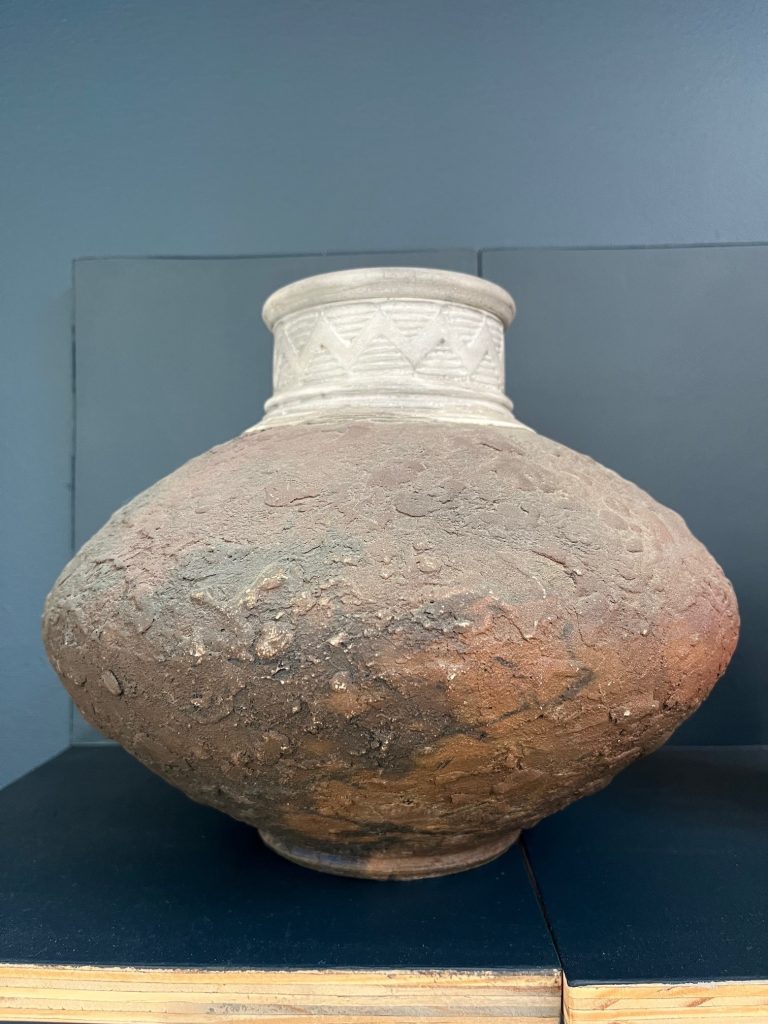
Peter Harris | Jar | c.1992–3
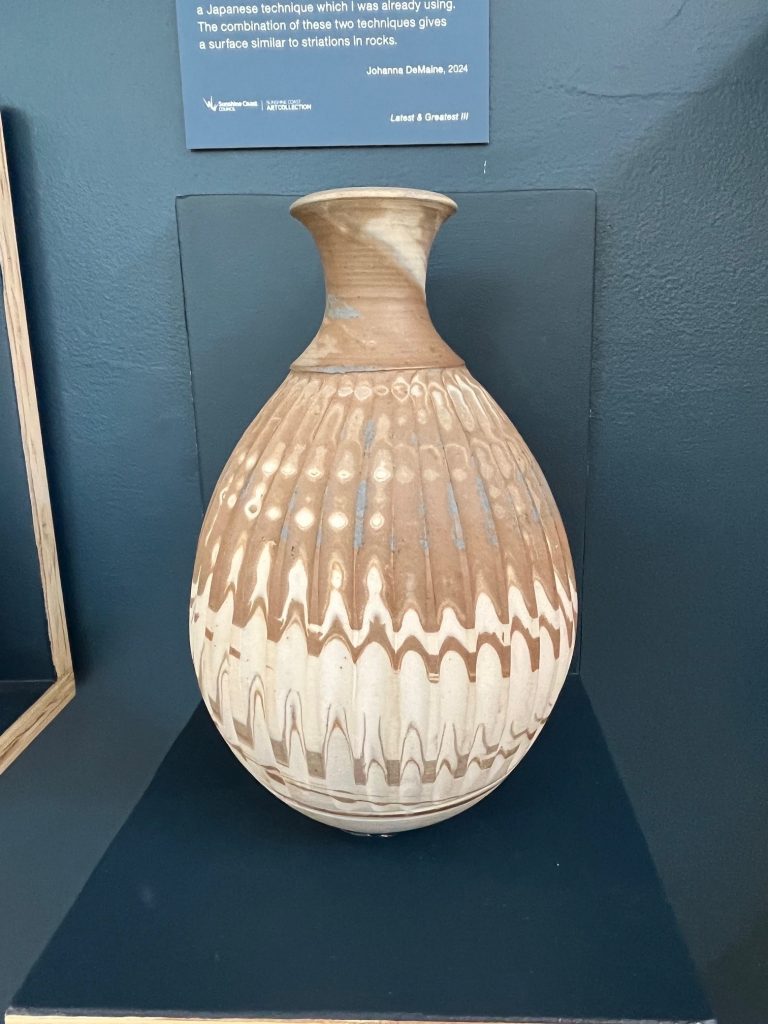
Johanna DeMaine | Bottle | c.1980s
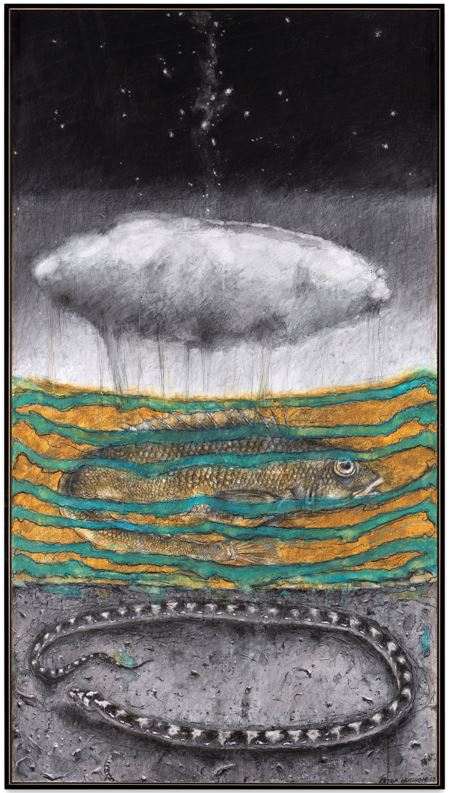
Peter Hudson | Girraween After Dark | 2022–23
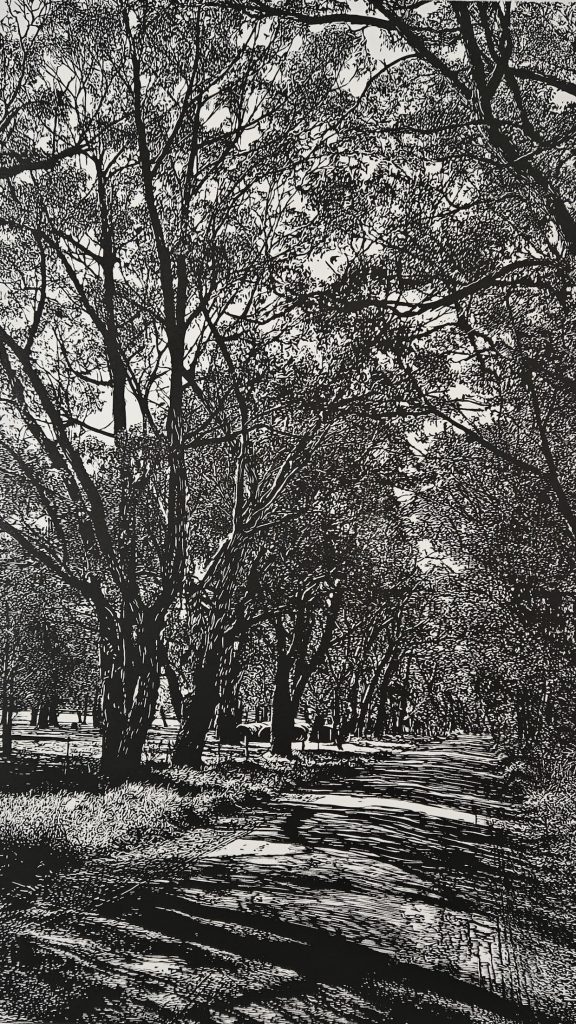
Amanda Western | Country Lane | 2023
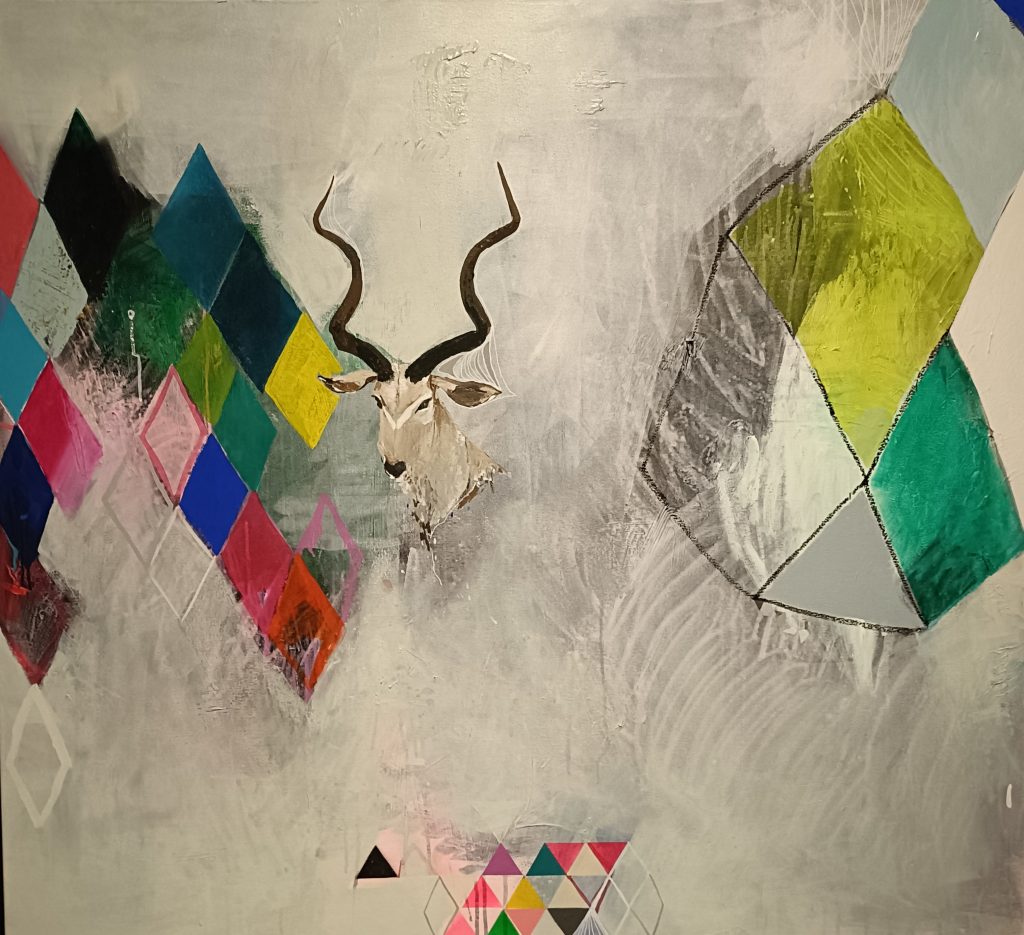
Miranda Skoczek | Untitled (impala) | 2012
Peter Harris Jar c.1992-3.Johanna de Maine Bottle c.1980s.Peter Hudson | Girraween After Dark | 2022-23.Amanda Western | Country Lane | 2023.Miranda Skoczek | Untitled (impala) | 2012
The worksheet prompted participants to observe carefully, reflect on emotions, imagine stepping into the scenes, and even sketch details they noticed. As outlined in the worksheet, there was “no right or wrong way to look at art”, just an invitation to notice, feel, and reflect.
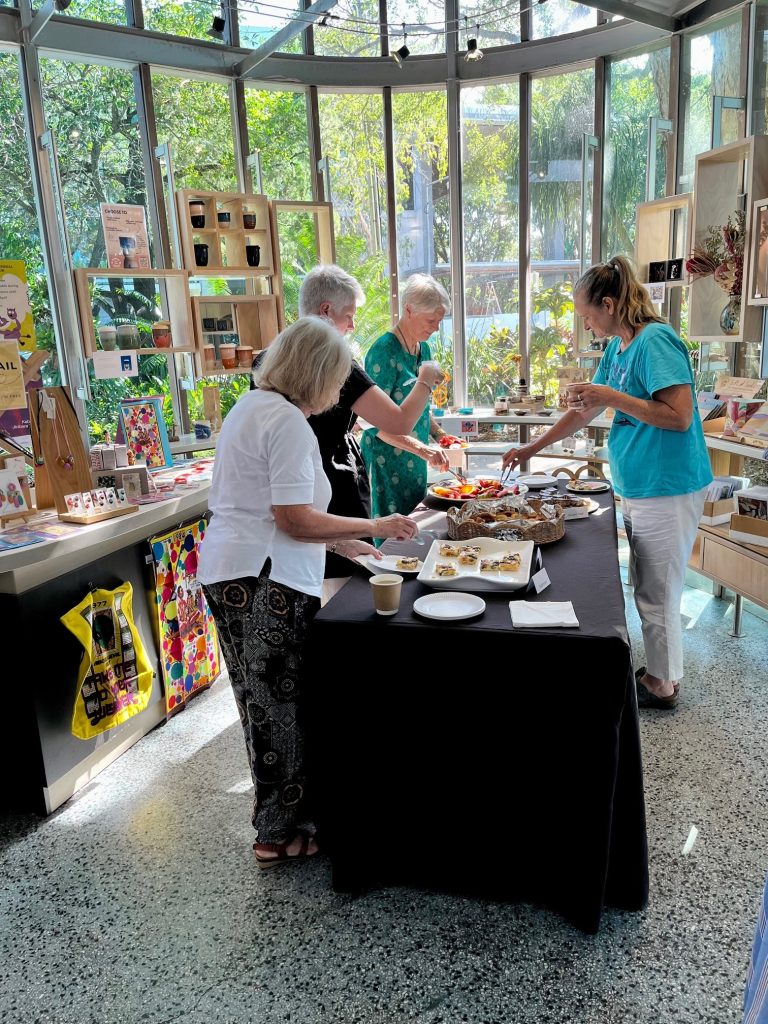
After the viewing sessions, guests enjoyed home-baked refreshments and fresh fruit platters generously provided by the Friends of the Gallery. A mindful tea-drinking exercise encouraged participants to extend the slow experience beyond the artwork and into everyday sensory awareness.
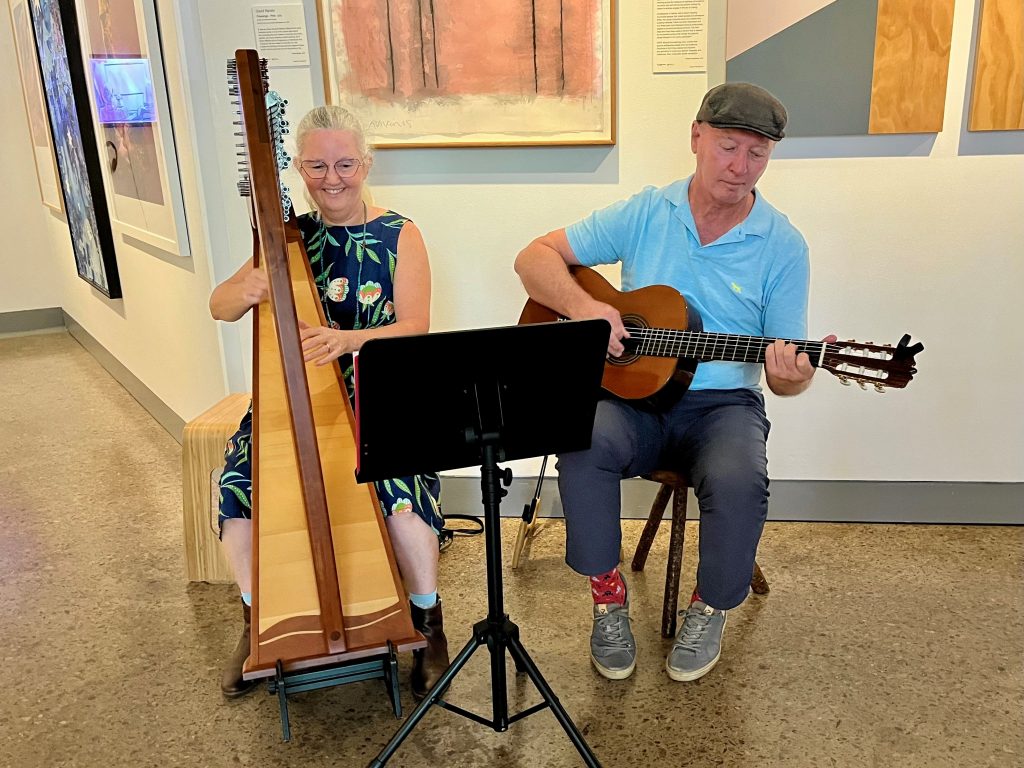
Adding to the atmosphere, local musicians Graham and Rowena provided harp and guitar music throughout the morning.
Musicians Graham and Rowena.
Feedback from participants was overwhelmingly positive, with many expressing appreciation for the quiet early-morning setting and the structured yet personal format of the experience.
A heartfelt thank you to Senior Learning and Engagement Officer Jenny Jones, the Caloundra Regional Gallery team, the Friends of the Gallery, and the talented musicians for creating such a thoughtful Slow Art Day.
We look forward to what they come up with for Slow Art Day 2026.
For their first Slow Art Day, the Museo Edward James, also known as Las Pozas, in Xilitla, Mexico hosted a contemplative experience titled “Finding Seclusia,” led by Beatriz Acosta.
The museum, which is dedicated to the legacy of Edward Frank Willis James, is set in a rainforest, and features towering surrealist sculptures amid pools and waterfalls.
That’s all we at Slow Art Day HQ need to know to jump on the plane to Xilitla (pronounced: hee-LEET-lah).
James, an eccentric British poet, artist, and patron of the Surrealist movement created the Edward James Sculpture Garden, Las Pozas, as a fusion of the organic and the artificial, merging jungle and concrete into a single, dreamlike environment where imagination and inner worlds could take physical form.
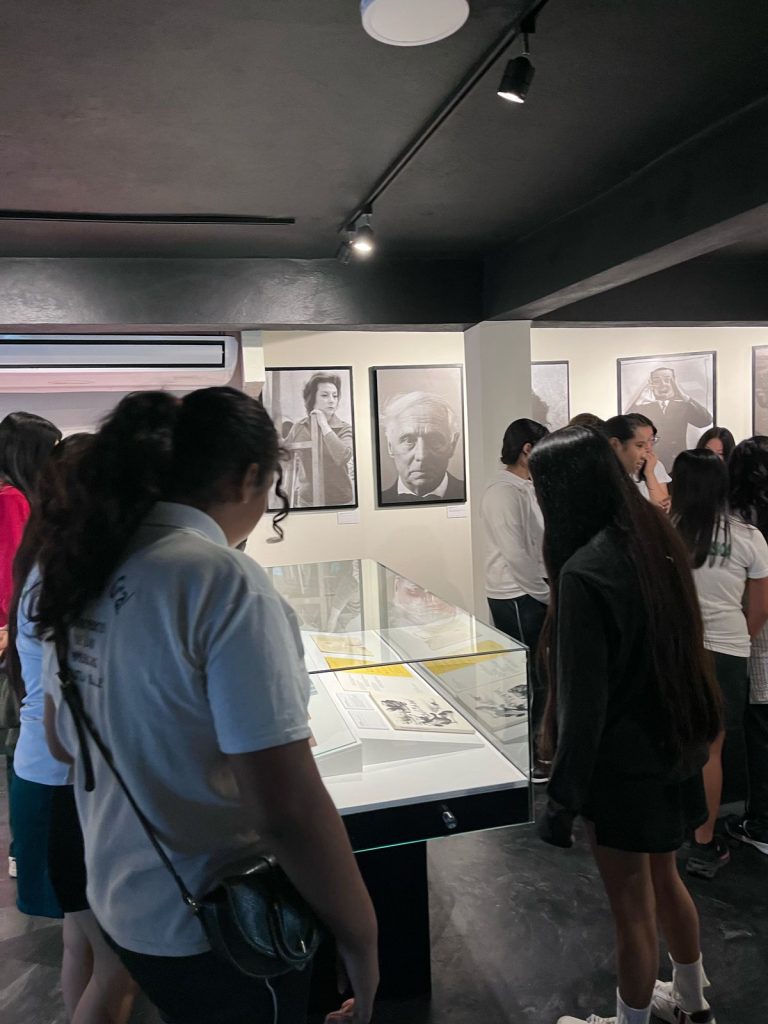
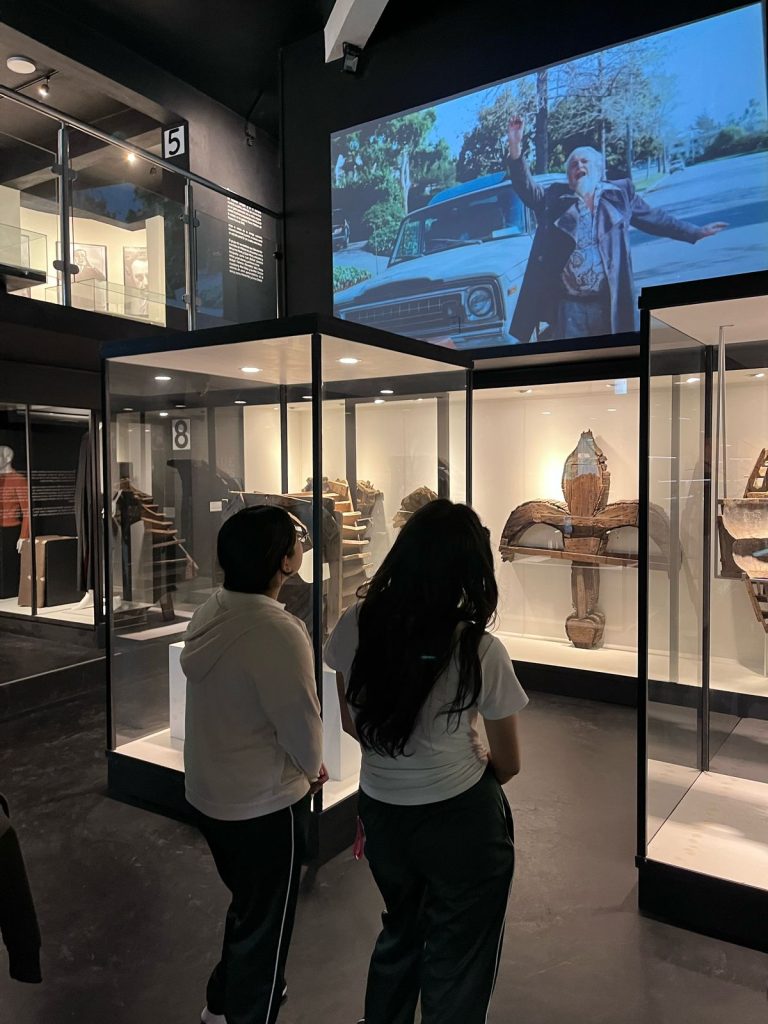
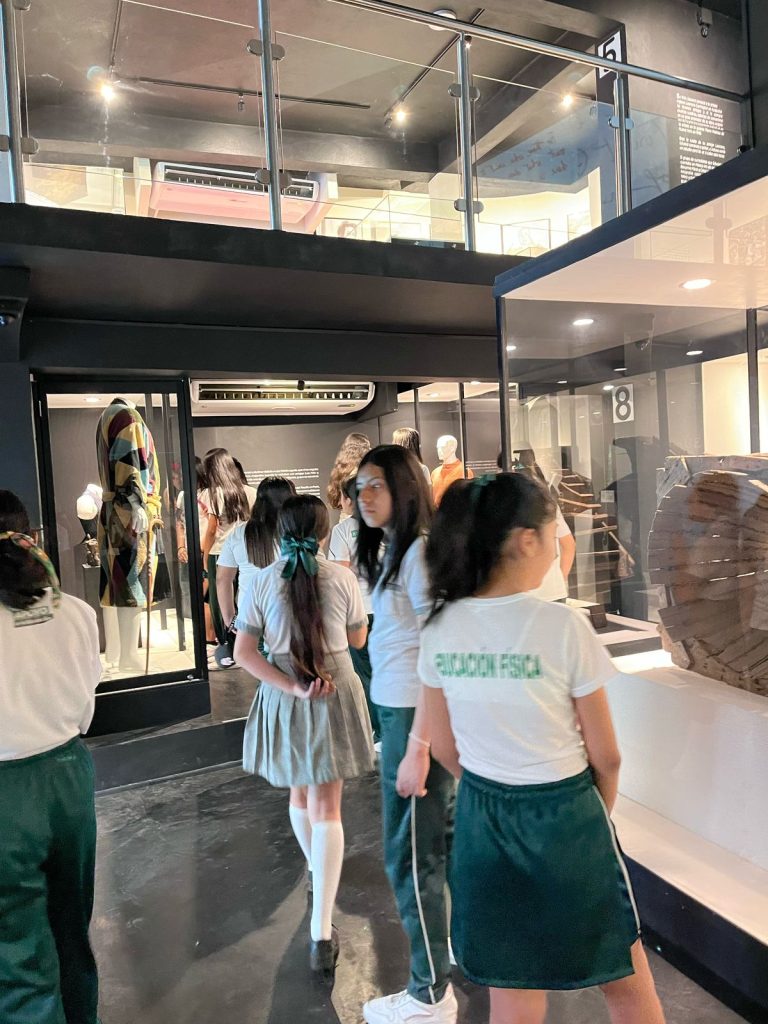
For their Slow Art Day, the museo welcomed a group of high school students through five carefully designed stations with unique slow-looking experiences. The session began in the Seclusia room with an introduction to the Slow Art Day movement and the power and purpose of slow looking. Participants also received a handout with prompts and spaces to write their notes throughout the experience.
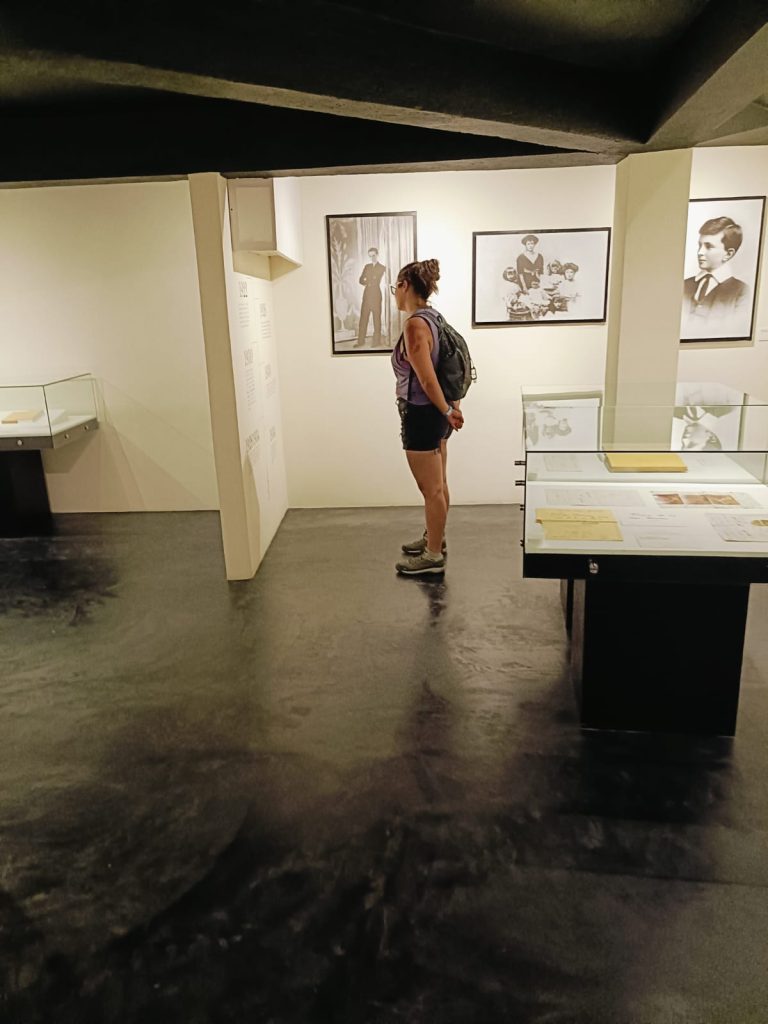
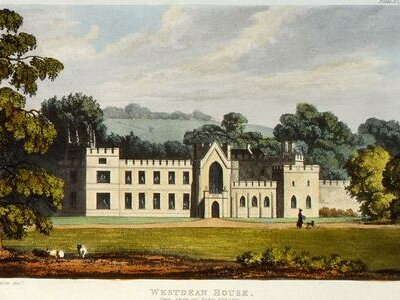
The first of the five stations focused on photographs of West Dean, Edward James’s childhood home. Participants explored James’s early life and family context, reflecting on how expansive spaces and environments can shape imagination and inner worlds.
Visitor Looking at James’ life in West Dean Timeline.West Dean House (Cortesy of West Dean College)
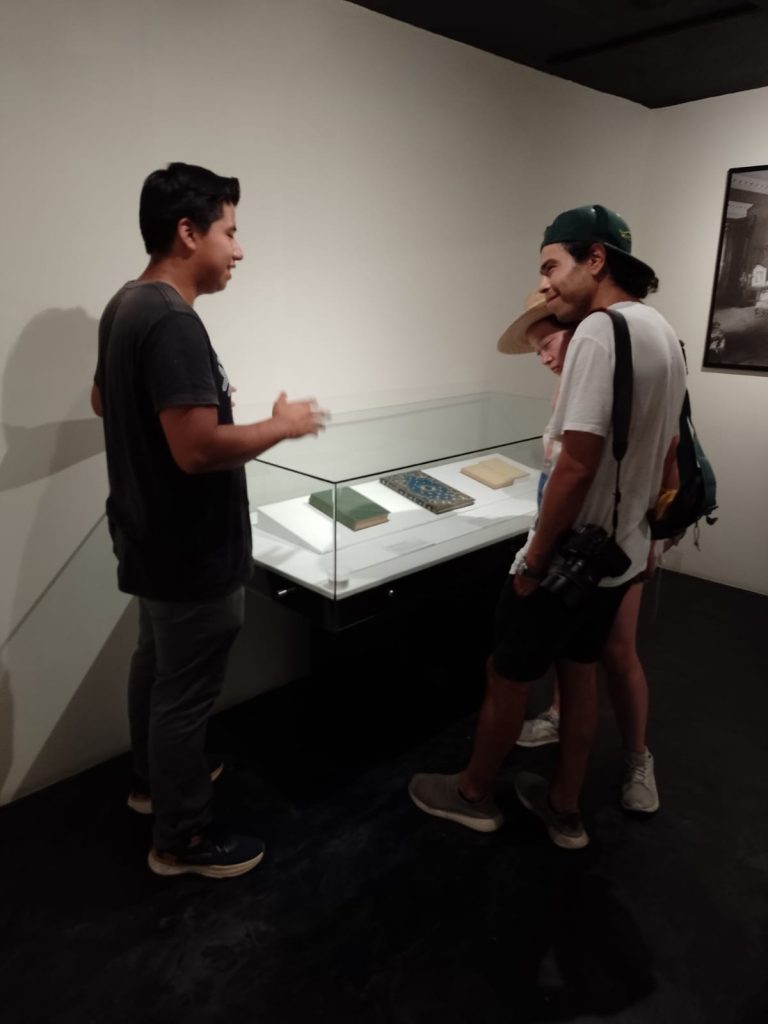
At the second station, participants spent quiet, individual time reading selections from the digital archive of James’s poetry book, The Bones of My Hands. This station emphasized attentive reading and personal interpretation, allowing each participant to engage with James’s words at their own pace.
Bones of my Hand – Edward JamesHighschoolers looking at James’ printed poems.Museum guide explaining James’ books.
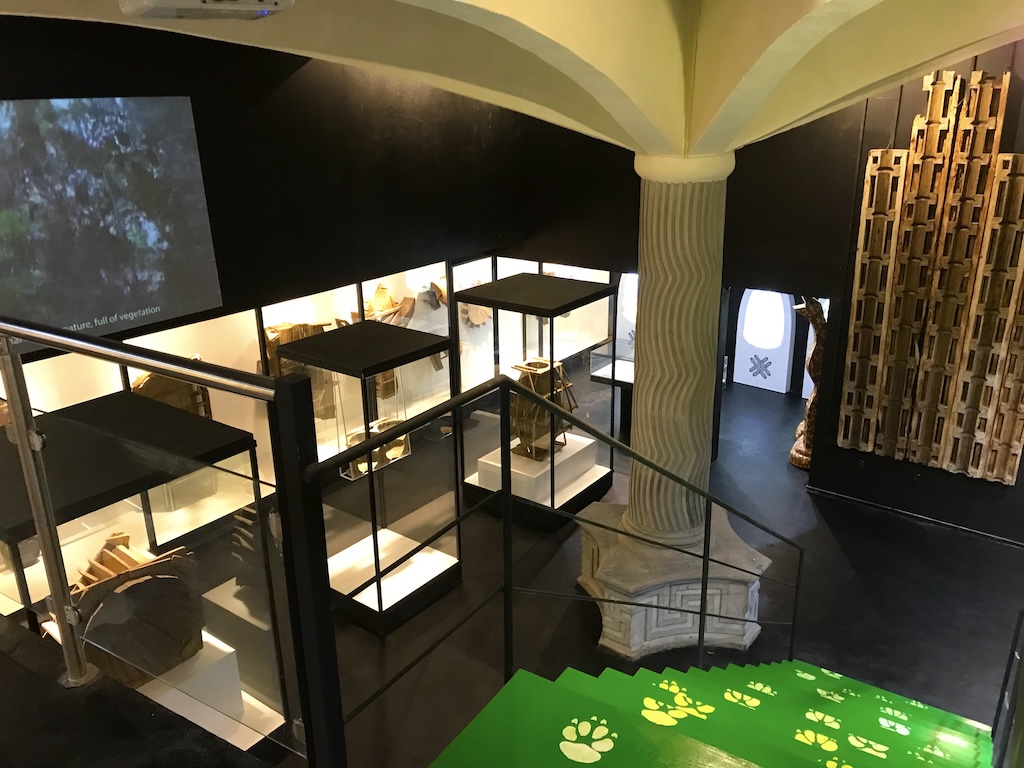
The third station centered on 14 original molds used in the creation of the sculpture garden. Participants closely observed the forms, textures, and details of the molds, considering how abstract ideas are translated into physical structures.
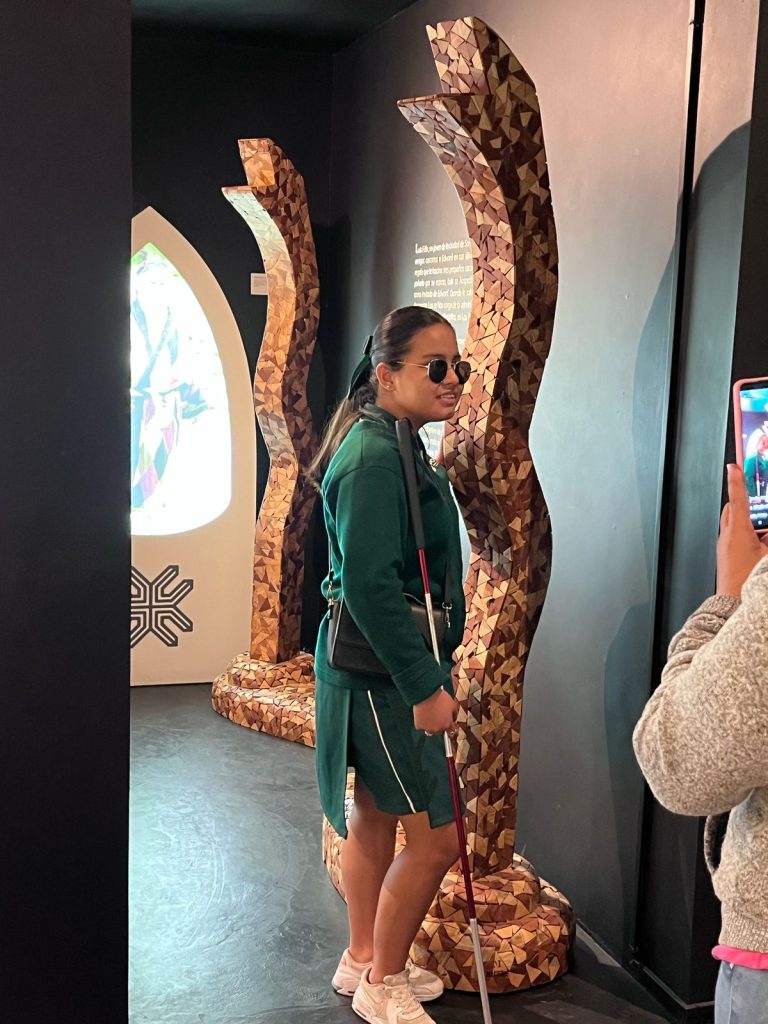
Visitor touching one of the sculptures.Molds – Edward James Museum Collection.
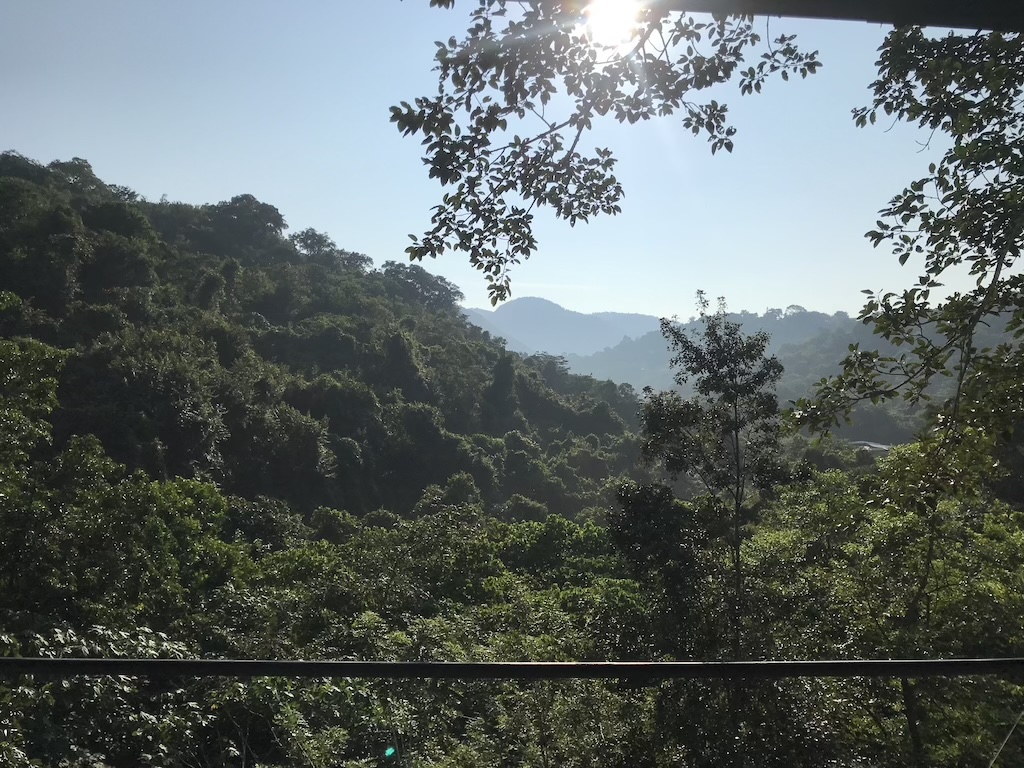
The fourth station took place on the museum balcony, where participants engaged in silent observation of the surrounding landscape. They were invited to notice sounds, colors, movement, and physical sensations, recognizing nature as an essential component of James’s creative universe.
View from the Museum.
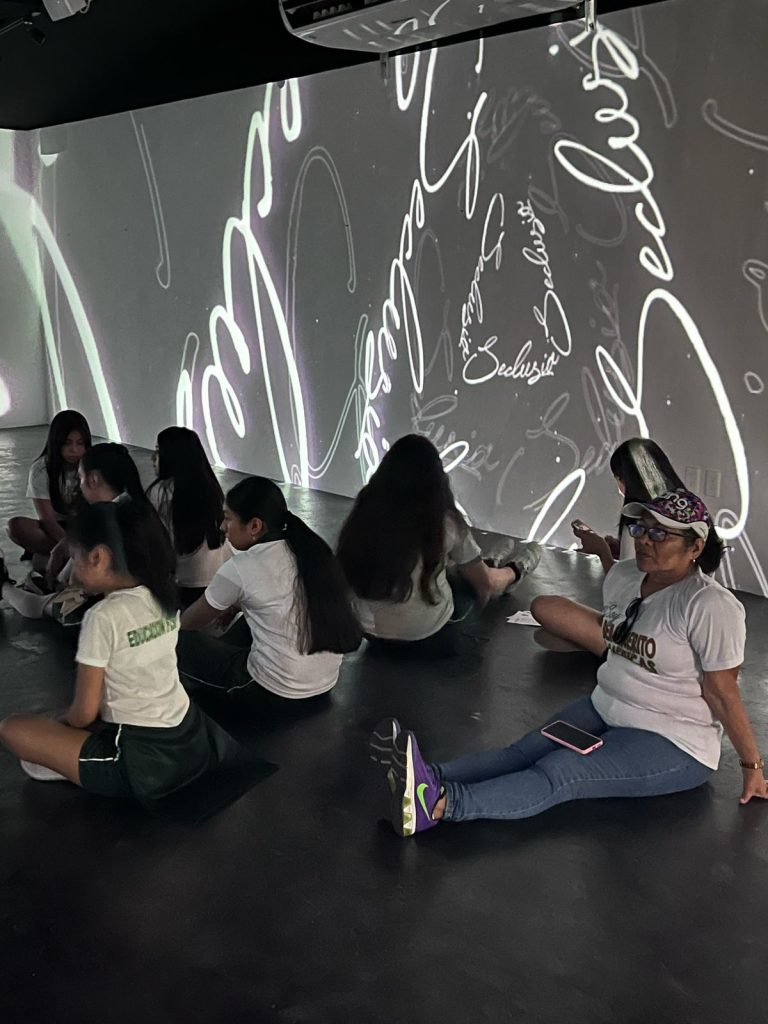
The final station consisted of a 15-minute immersive video, Seclusia, which explored themes of imagination, interior worlds, and the human desire to create a personal refuge. This concluding experience allowed participants to synthesize what they had encountered throughout the session.
Seclusia Immersive Experience – Edward James Msseum Collection
We at Slow Art Day HQ love everything about this and look forward to seeing what creative design the Museo Edward James comes up with for Slow Art Day 2026.
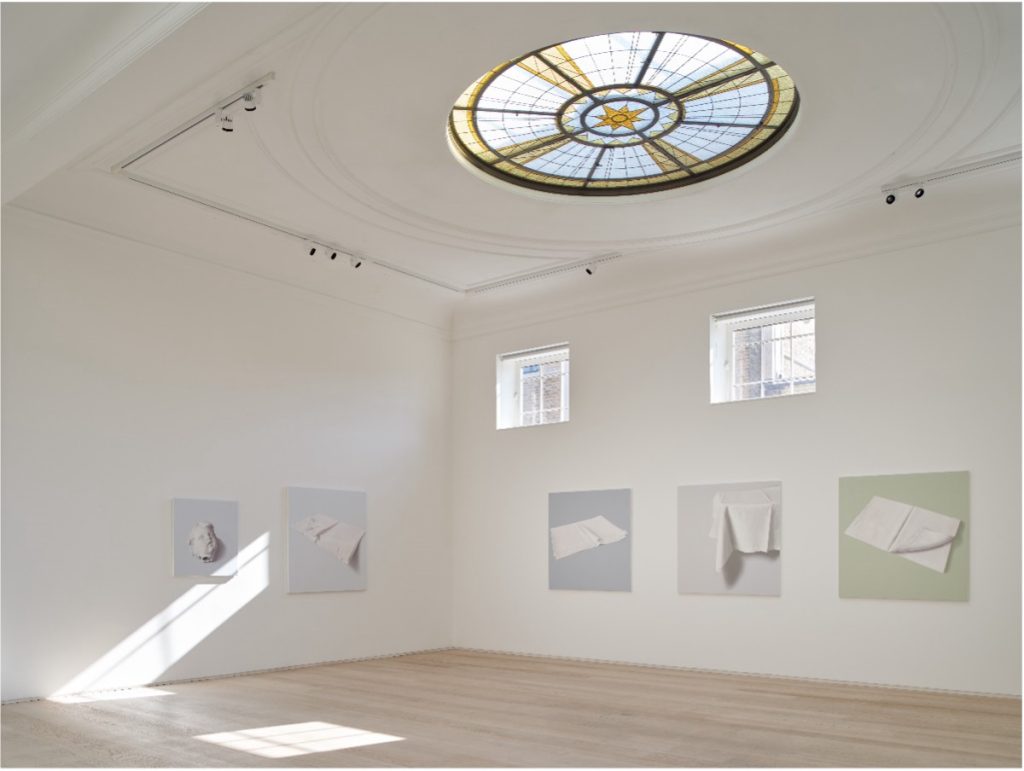
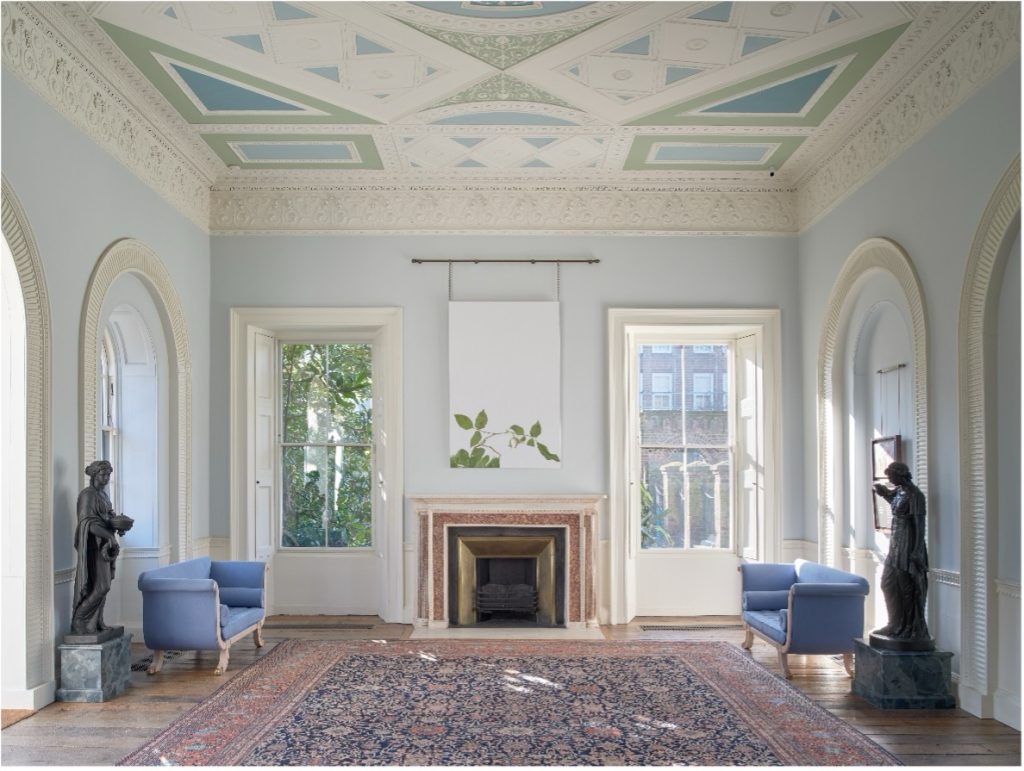
For Slow Art Day 2025, Pitzhanger Manor & Gallery in London, England collaborated with Dr. Aleksandra (Sasha) Igdalova, an expert in the psychology of art perception, to host both a self-guided and facilitated slow looking experience centered on the exhibition Alison Watt: From Light.
This marked Pitzhanger’s second slow looking session with Dr. Igdalova, following an earlier event in March. The afternoon workshop brought together attendees of varied ages, many of whom were new to slow looking. Dr. Igdalova opened the session by introducing the research behind slow observation and outlining how careful, sustained attention can transform understanding and support mindfulness. She then guided participants through a 15-minute group slow look at a selected painting, using structured prompts to direct attention and encourage reflection. Between artworks, the group engaged in discussion, with participants increasingly opening up as the session progressed.
The featured exhibition, Alison Watt: From Light, provided a powerful context for the practice. Participants also spent extended time with other works including Peale and The Day After, discovering nuances that many said they would have otherwise overlooked.
Alison Watt: From Light, exhibition at Pitzhanger Manor & Gallery. Photo credit: Andy Stagg, 2025.Alison Watt: From Light, exhibition at Pitzhanger Manor & Gallery. Photo credit: Andy Stagg, 2025.Alison Watt, Peale.Alison Watt, The Day After
According to post-session surveys, 96.67% of participants said they were extremely or very likely to try slow looking again.
Comments from the survey include:
“I experienced a deeper admiration and emotional connection with work I would have otherwise overlooked.” “No one usually asks me what I think. I liked that.” “I felt serene and calm. I felt unified with strangers and that was rewarding.” “The calm and patience to look more deeply at each painting. This transformed the whole experience for me.”
These reflections capture why Slow Art Day matters — our favorite is the one about how no one usually asks them what they think. Yes! In this world of extreme inequality, creating a space where every voice is invited and valued matters.
Slow Art Day at Pitzhanger 2025. Photo credit: Jamila Robson.Slow Art Day at Pitzhanger 2025. Photo credit: Jamila Robson.
In parallel with the workshop, Dr. Igdalova developed a Self-Guided Slow Looking Guide (below) in collaboration with Pitzhanger Report for Slow Art Day. The guide is now permanently available in the gallery, inviting visitors to pause and reconsider their viewing habits. Staff observed that many visitors who initially spent only seconds per artwork stopped when encountering the guide, reflected on their pace, and chose to engage more deliberately. Some photographed the guide; others took copies home.
To promote the event, Pitzhanger’s communications team produced an Instagram reel featuring Dr. Igdalova’s recorded slow looking prompt layered over exhibition imagery, extending the practice beyond the gallery walls.
We thank Dr. Aleksandra Igdalova and the team at Pitzhanger Manor & Gallery for integrating research, facilitation, and accessible tools into a thoughtful Slow Art Day experience. We look forward to seeing what they come up with for Slow Art Day 2026.
– Ashley, Johanna, Jessica Jane, and Phyl
P.S. You can follow Pitzhanger Manor & Gallery on Instagram and LinkedIn.
In 2025, Mexico City hosted its first city-wide Slow Art Day – and what may be the largest city-wide in the world – with 35 participating venues, coordinated by art writer and cultural organizer Constanza Ontiveros Valdés.
Ontiveros Valdés organized an unexpectedly wide range of participants, from established museums and galleries to alternative and emerging cultural spaces across the city.
The venues offered a rich mix of programming, including yoga, meditation, aromatherapy, workshops, panel discussions, and multidisciplinary artistic happenings. She noted that the accessibility and inclusiveness of Slow Art Day encouraged participation across diverse spaces, all eager to explore slow looking in ways that felt authentic to their communities.
We received reports from seven of the 35. Below are those highlights.
Galería Oscar Román featured an artist-led conversation titled “Sombras del Pintor” (Shadows of the Painter) with artist Saúl Kaminer, followed by a guided visit to his exhibition “La Tierra en el Cielo” (The Earth in the Sky). Kaminer shared insights into his creative process and the narratives behind his work, inviting participants to engage slowly through conversation and close observation. The session encouraged reflection on the relationship between art and nature, with visitors spending extended time discussing individual works.
Arte Abierto Reported by: Guadalupe Salcedo, Communications
Arte Abierto‘s Public Programs Team designed a Slow Art Day experience around the exhibition long last happy by Swiss artist Ugo Rondinone. Participants engaged in contemplative observation of the large format sculptures the sun and the moon (2022), followed by individual and group body activations inspired by dance and performance. The program invited participants to explore the idea of opposing forces through both stillness and body movement. Adults and children took part, and the event received significant public and media engagement.
Host: Constanza Ontiveros Valdés, Art Writer and Cultural Projects Coordinator Venue contact: Julia Villaseñor, Communications and Media Director
At kurimanzutto, participants were introduced to Slow Art Day through breathing and relaxation exercises before engaging in close looking with works by Haegue Yang from the exhibition Arcane Abstractions. The group explored intricate paper collages from the Mesmerizing Mesh series and interacted physically with the sculptural installation Mesmerizing Votive Pagoda Lantern. The session concluded with a hands-on activity in which participants created visual responses to their observations and shared reflections.
Natalia Martinez Aanaya, Communications Manager shared that Alejandra Topete Gallery participated with Between Threads and Stories, featuring works by Jason Kriegler and Claribel Calderius. The program included individual meditation sessions throughout the day and an empowering roundtable discussion led by Maria Ortiz, Cultural Mediator. Visitors were encouraged to form personal connections with the artworks through guided dialogue and slow observation.
Naranjo 141 gathered participants to look slowly at five selected works from their current exhibition. The session began with a brief introduction to Slow Art Day and the gallery’s residency program. Visitors then spent six to seven minutes in silent observation with each of five selected works:
Lily Alice Baker, Mothers’ Meeting (2024)
Colleen Herman, Blood Bloom in a Blue Field (2024)
Lee Maxey, Face the Front (2024)
Kataria Riesing, Holster (2024)
Pauline Shaw, Blackout (2025)
After slow looking, participants came together for a facilitated group discussion, sharing observations and personal responses over light refreshments. The session concluded with informal conversation and continued engagement with the exhibition.
Lee Maxey, Face the Front (2024)Lily Alice Baker, Mothers’ Meeting (2024)
Tinta Naranja focused on close observation of graphic design and visual culture. Participants explored original materials related to the Mexico 1968 Olympic design system, discussing the origins and historical context of the typography and imagery. The session concluded with a participatory activity in which attendees designed their own names using Olympic-inspired typographic forms.
Zona de Riesgo Art hosted a free evening program that combined slow looking, guided meditation, sound art, and collective reflection. The event opened with a brief introduction, then featured two guided meditative experiences led by artist Mónica Martz M.
The first, Realm of the Devas, combined guided meditation with sound art by Bruno Bresani and the projection of two visual works by Mónica Martz M.
After a short pause, Mónica Martz M. led a second meditation that explored The Human Realm, accompanied by sound art from Mercedes Balard and Montserrat Coltello, alongside projected works by Bruno Bresani.
Following the meditations, participants gathered for an open conversation, sharing sensations, images, and reflections that emerged during the experience. The evening concluded with expressions of gratitude among artists and attendees, highlighting the value of creating spaces for stillness, contemplation, and shared presence.
Together, these seven reports represent just a portion of the 35 venues that participated in Mexico City’s first citywide Slow Art Day. The range of formats—artist talks, guided observation, movement-based practices, meditation, and slow making—demonstrates how Slow Art Day can scale across a major global city while remaining grounded in local artistic practice. Check out a great article summarizing the day (in Spanish).
We thank Constanza Ontiveros Valdés for her leadership and all participating venues, artists, facilitators, and visitors for making this inaugural citywide Slow Art Day possible. We look forward to seeing what they come up with for Slow Art Day 2026.
For their first Slow Art Day 2025, the Museum of Art, Architecture and Technology (MAAT) in Lisbon, Portugal participated with a guided slow-looking session held within the exhibition Transe by Rui Moreira, whose work is known for its meditative atmosphere. The event featured these 6 works:
Mindfulness – “I’m a giant lost in the woods”
A Noite (O Telepata)
A máquina de emaranhar paisagens VII
Nossa Senhora do Aborto I
Telepata I
Eclipse I
Capturado com OldRoll Classic M.
The session was led by Mário J. Rodrigues, a psychologist and certified mindfulness teacher, who opened with a brief mindfulness exercise. Participants then looked slowly at each work for ten minutes. The session concluded with a group conversation, allowing participants to share observations and reflect on their emotional and sensory responses.
MAAT also holds monthly art and meditation sessions, and you can check out their programming on their website.
We thank Joana Simões Henriques, Head of Public Programmes at MAAT, for organizing this Slow Art Day experience, and look forward to seeing what they come up with for Slow Art Day 2026.