Meditations on A.I. in Vänersborg, Sweden

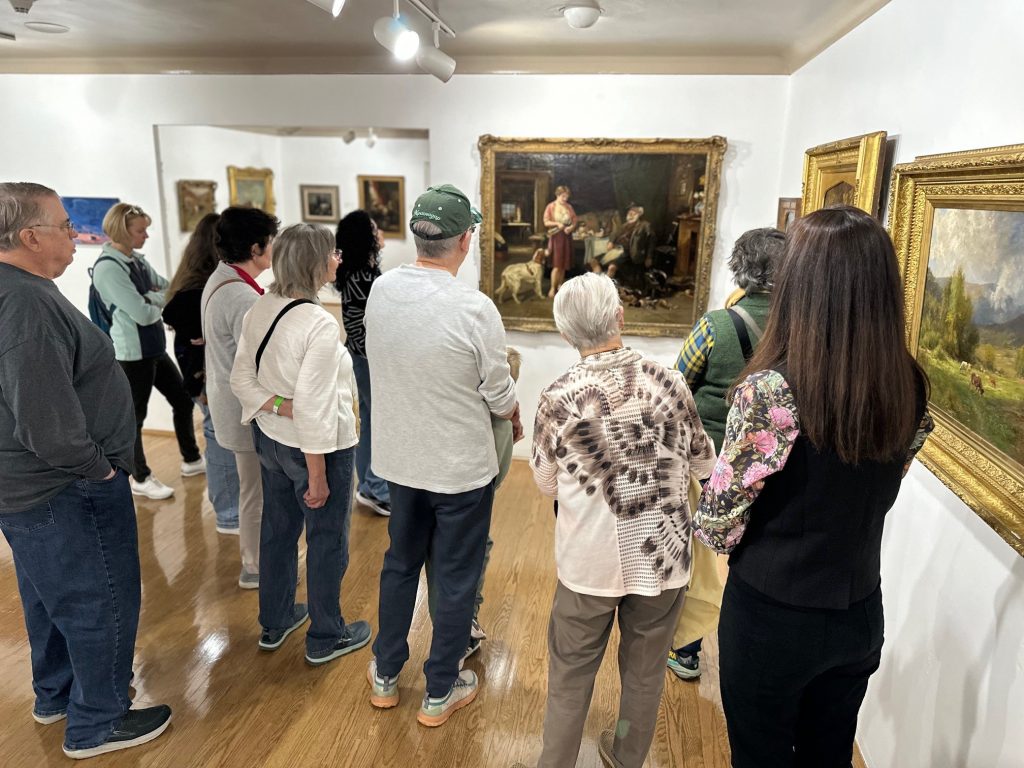
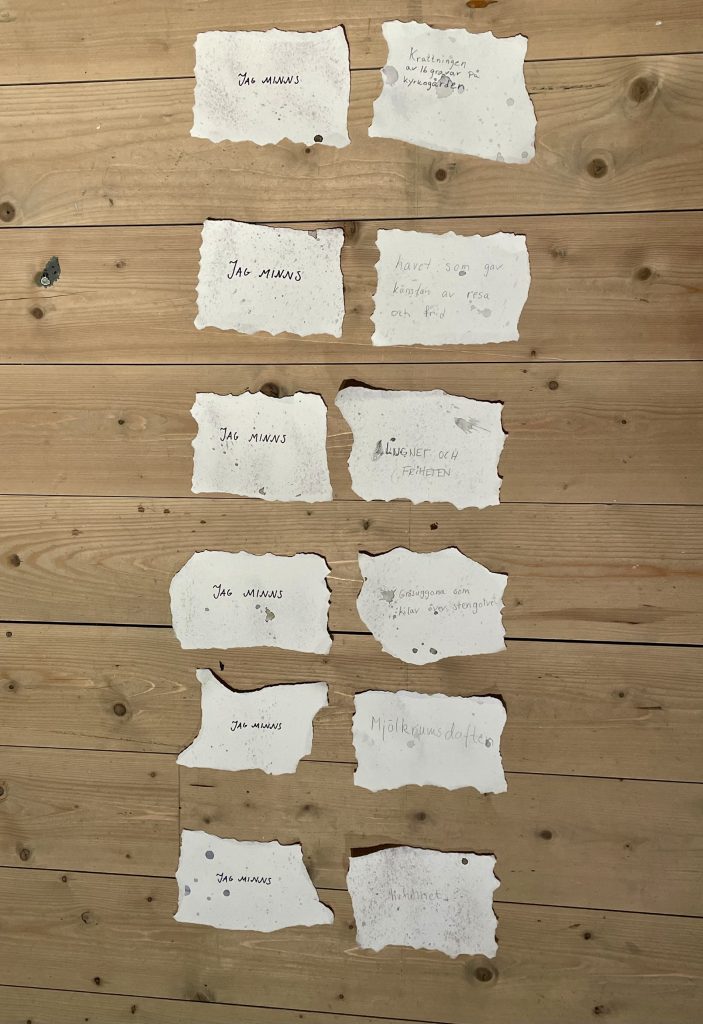
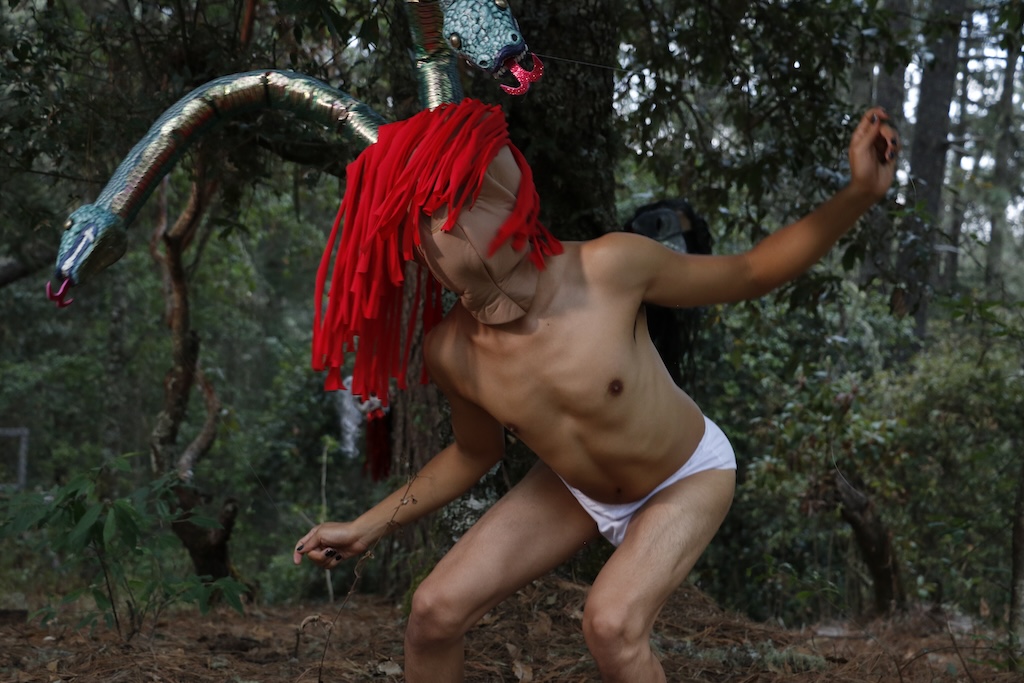
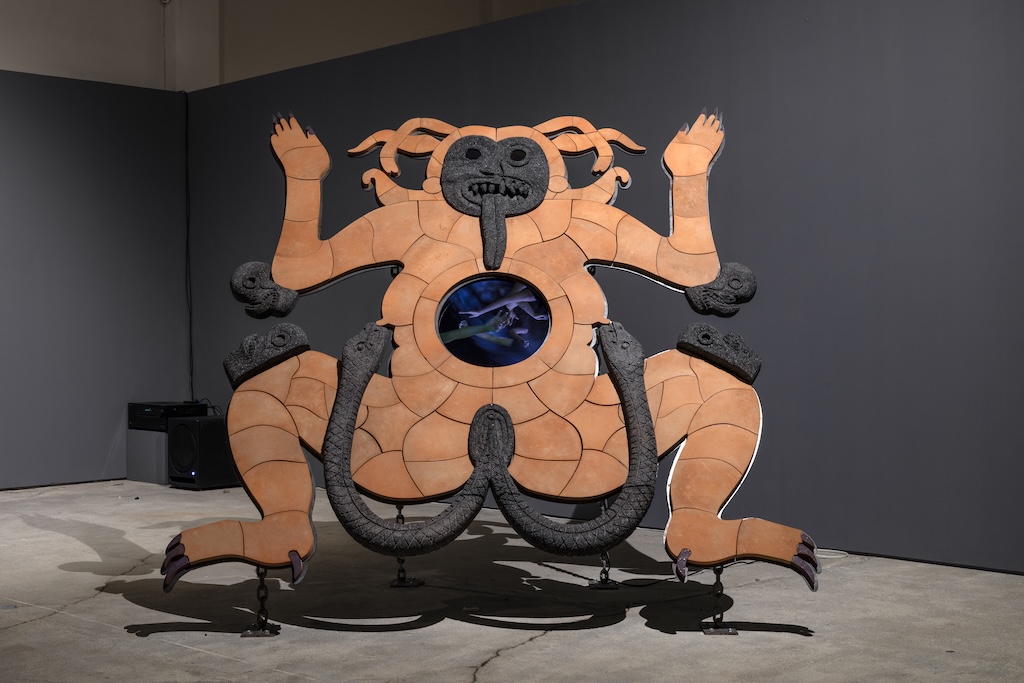
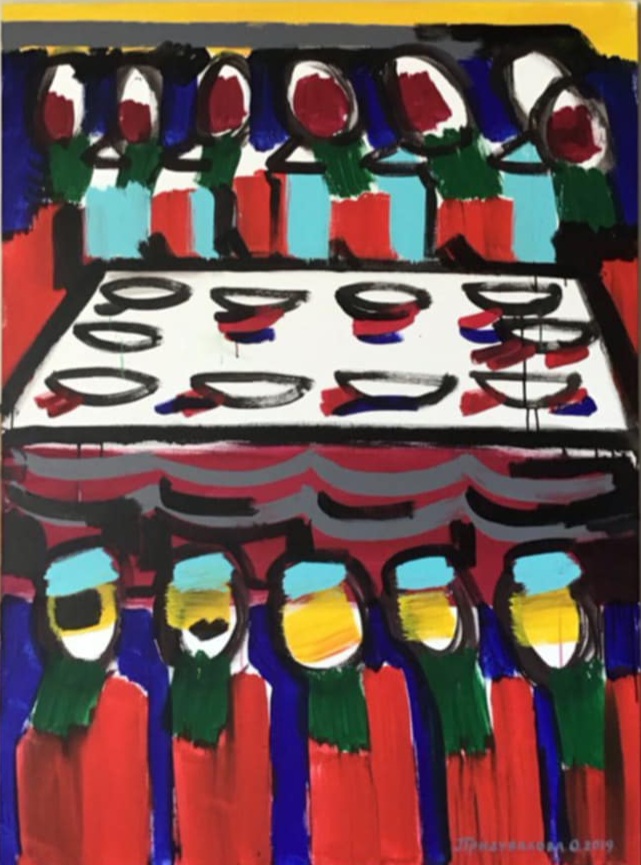
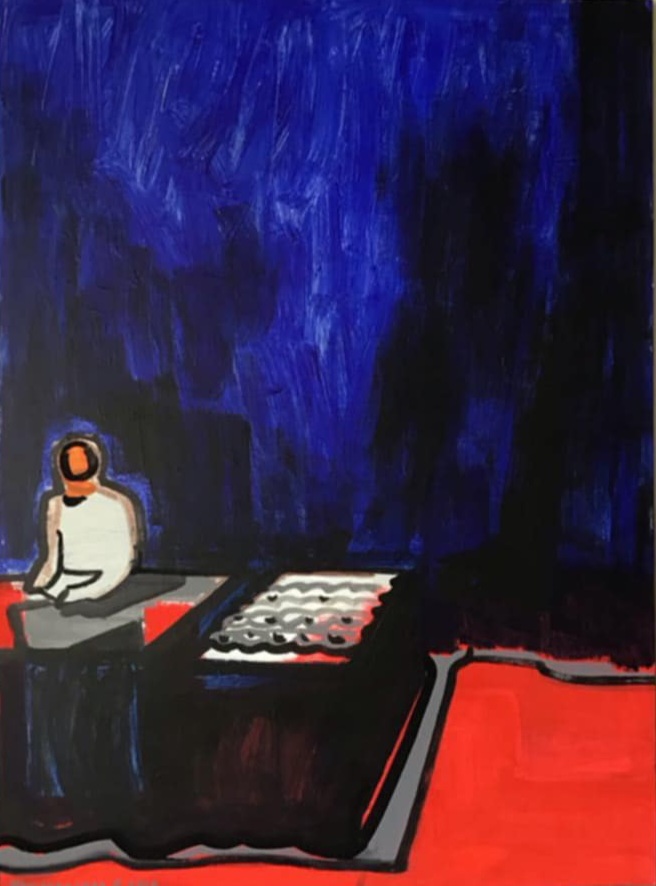
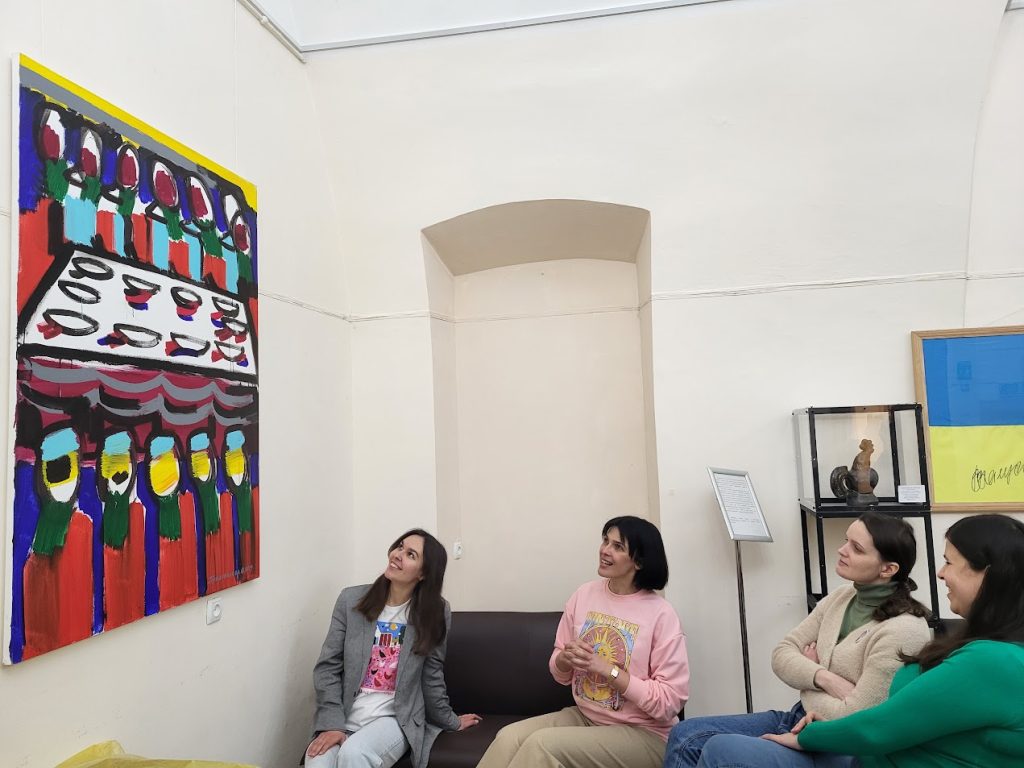
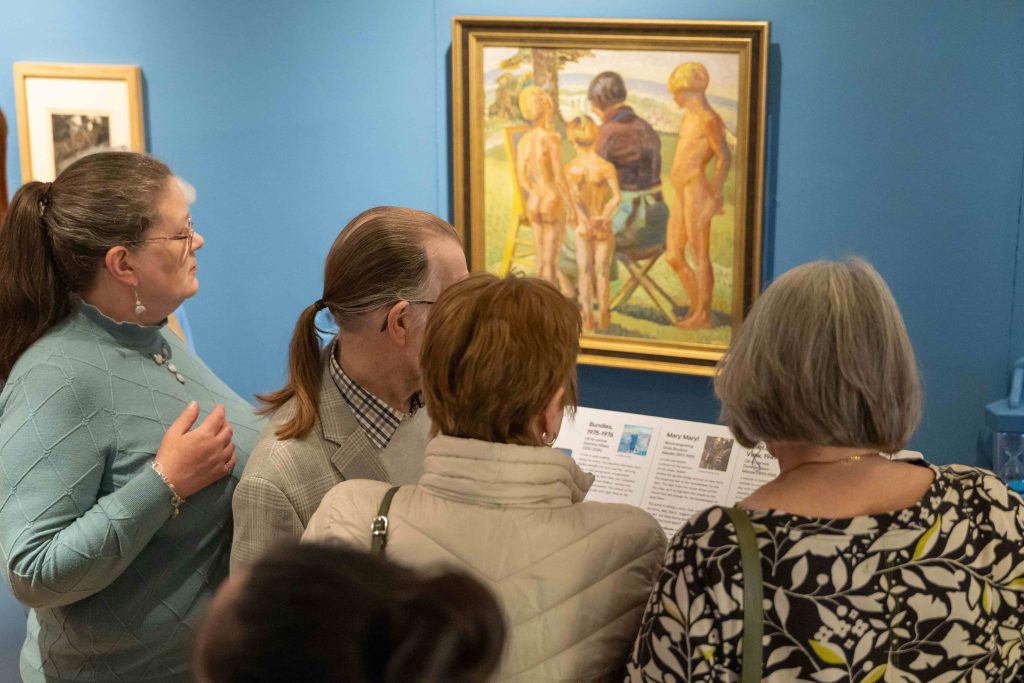
For Slow Art Day 2025, Vänersborgs konsthall in Vänersborg, Sweden, hosted a guided slow-looking event centered on the exhibition A.I. vs Själen (A.I. vs the Soul). The program combined meditation, independent observation, and group dialogue in a focused gallery setting.

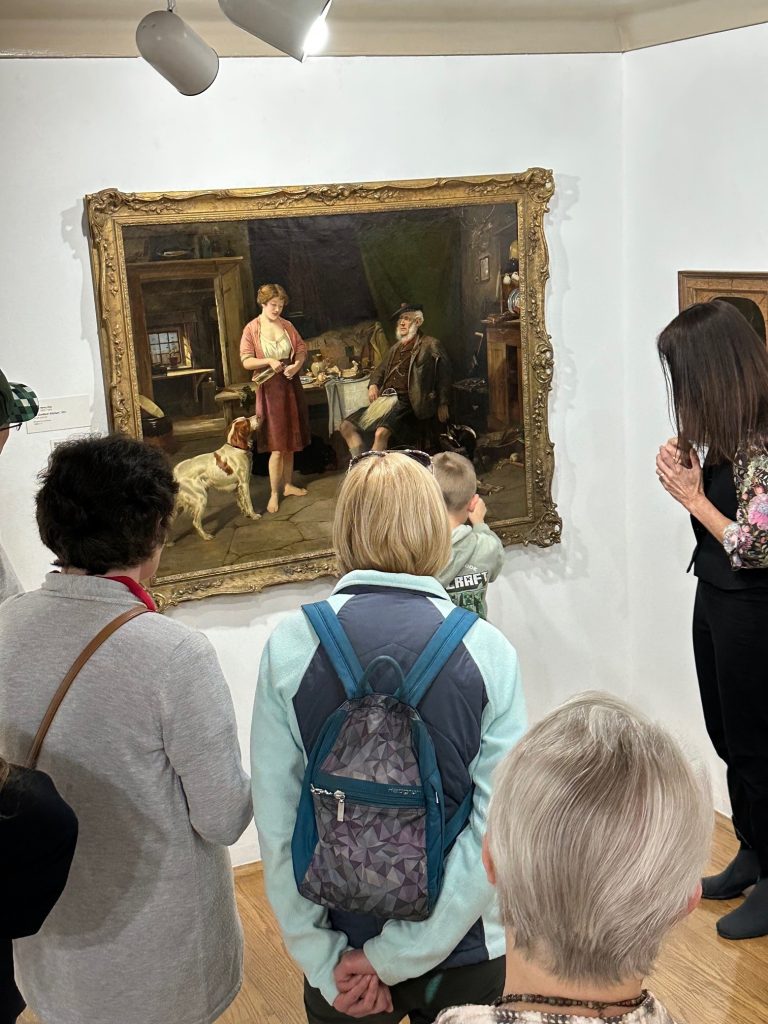
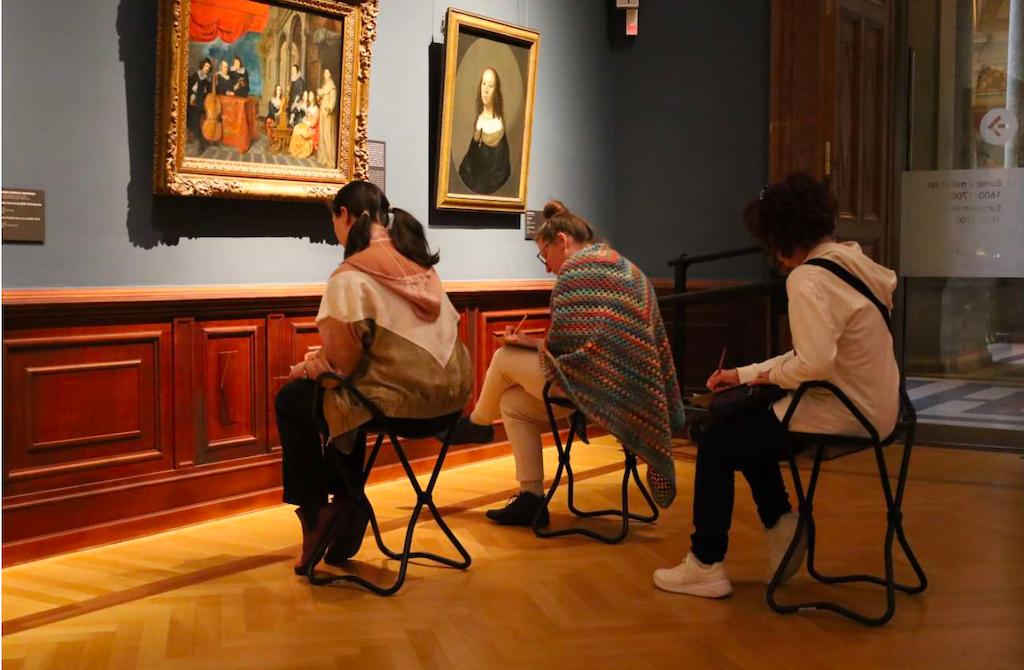
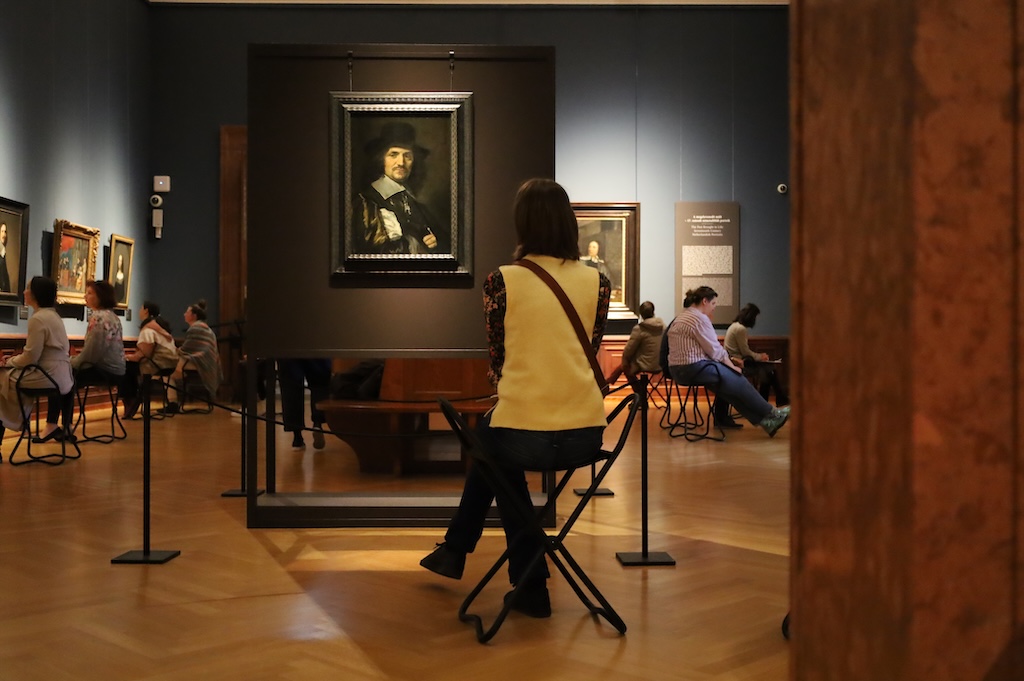
Participants engaging in slow looking and discussion during Slow Art Day at Vänersborgs konsthall. Photo courtesy of Vänersborgs konsthall.

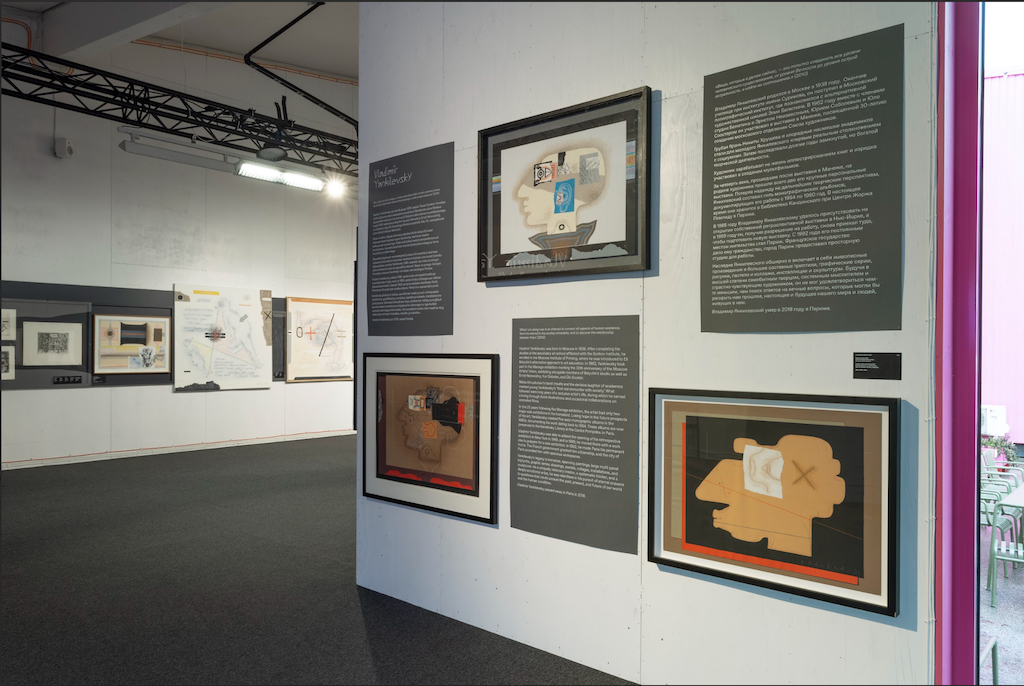
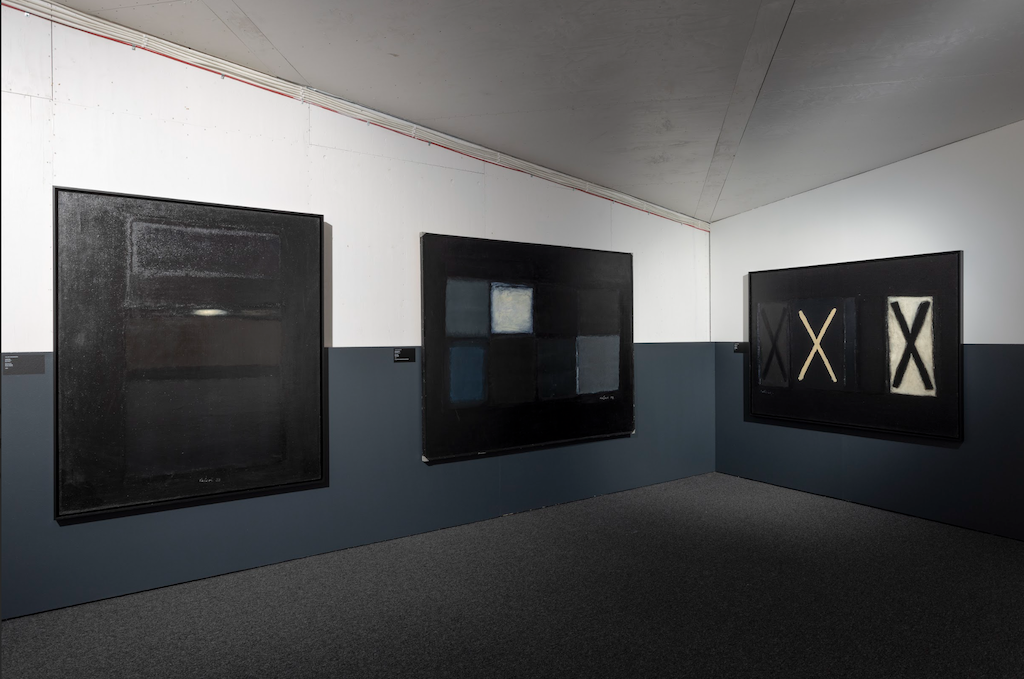
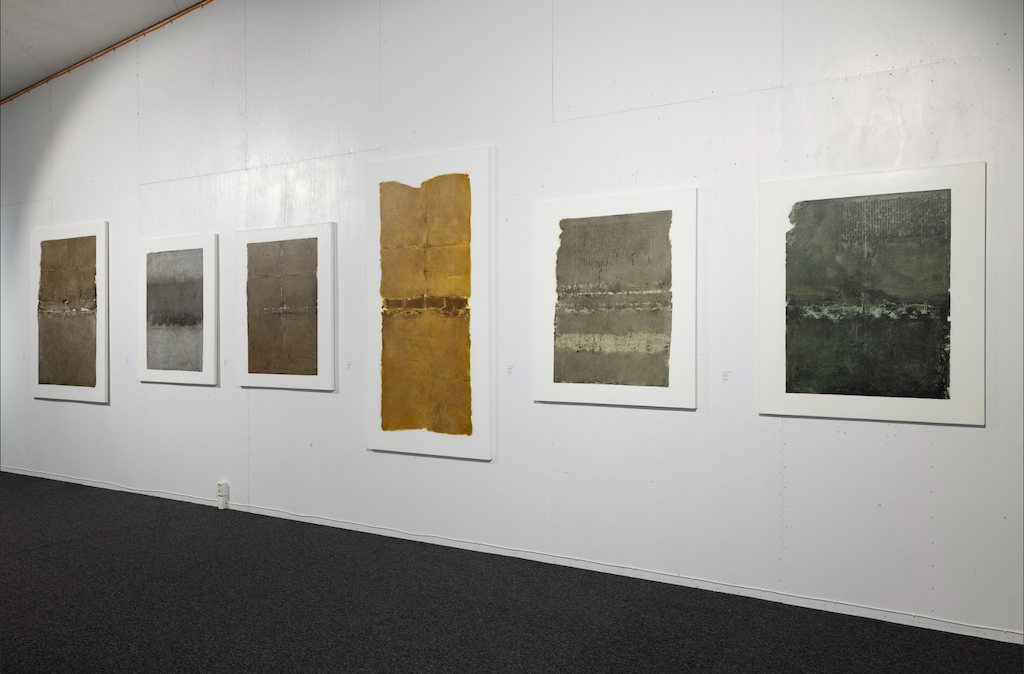
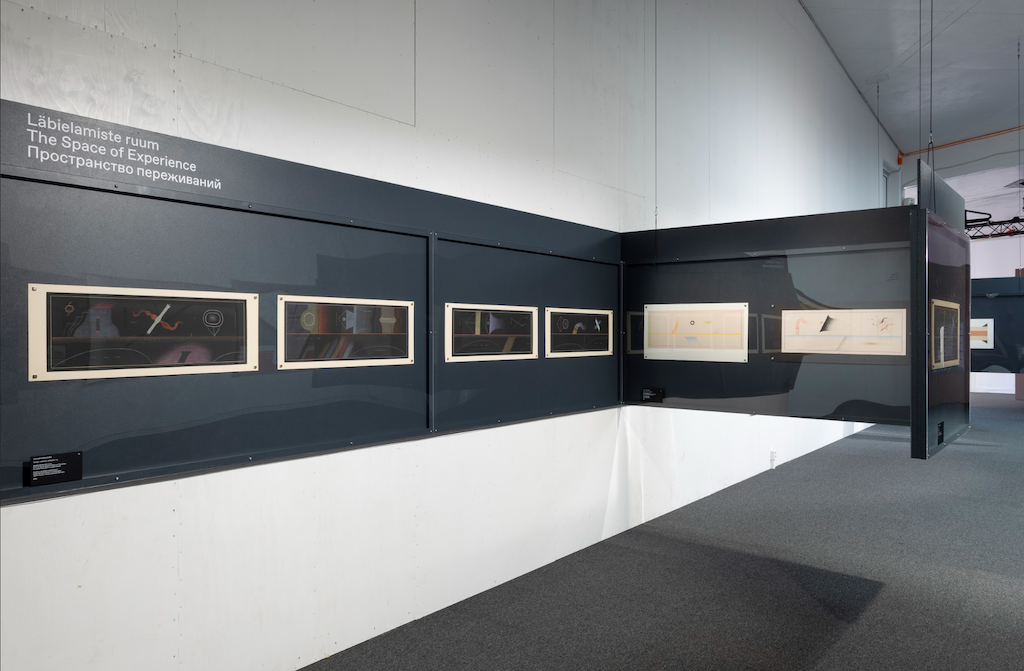
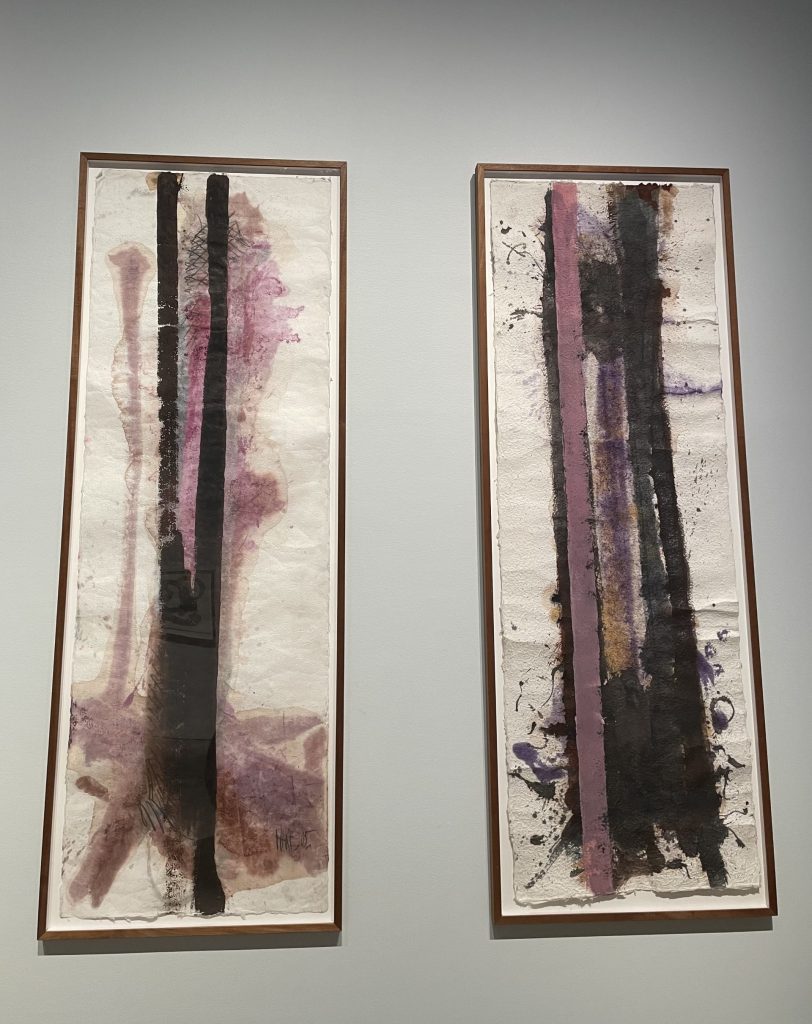
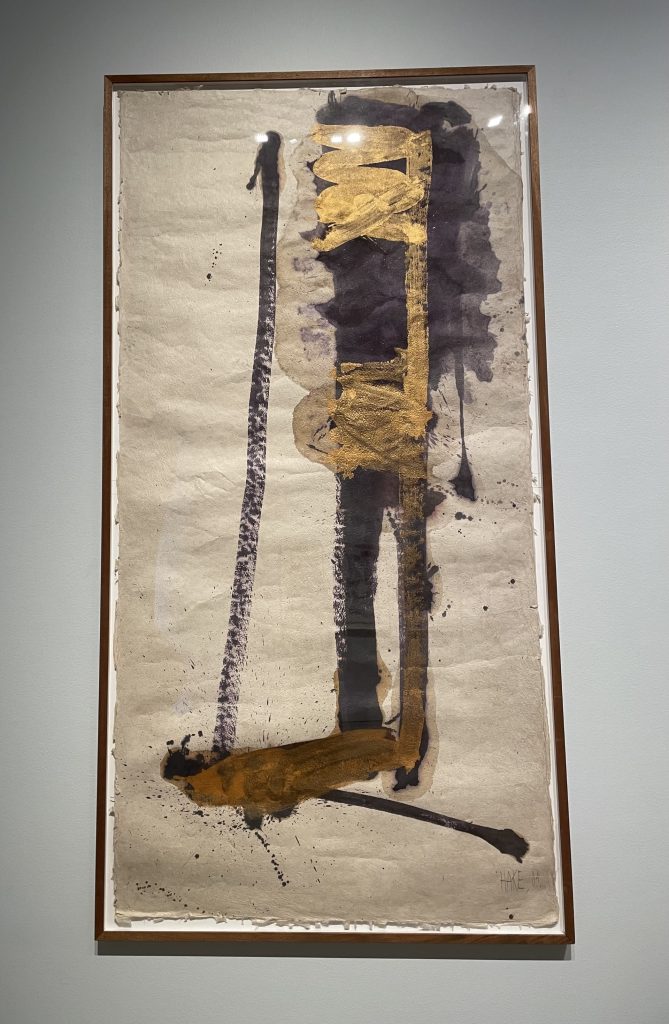
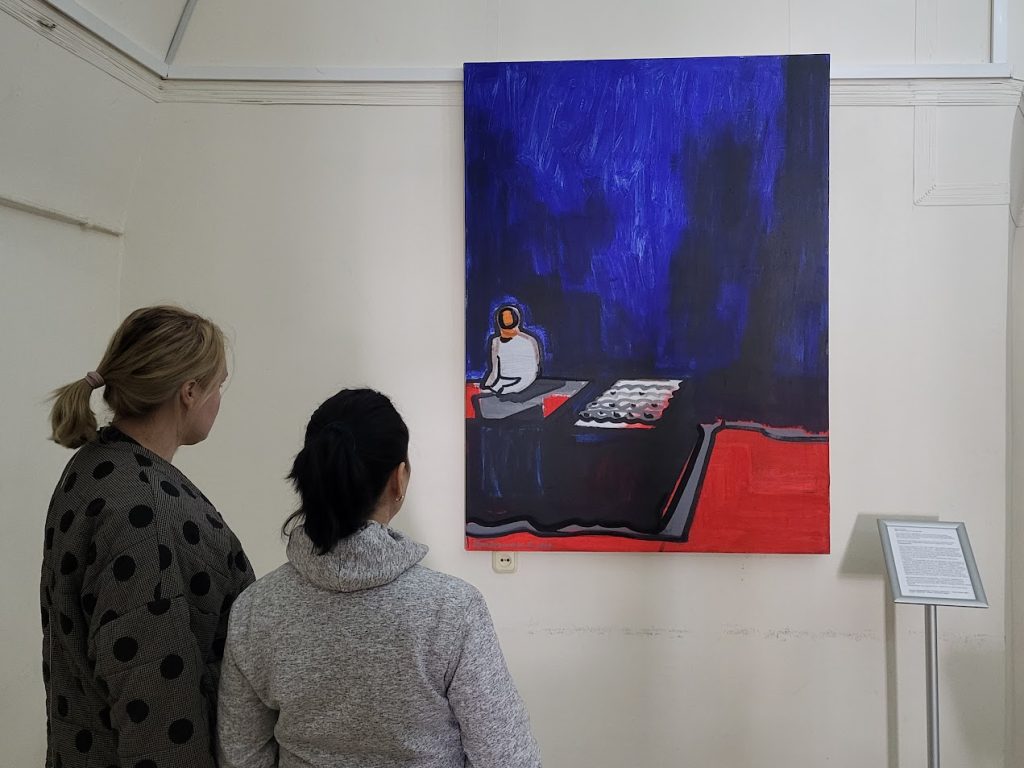
Selected artworks were chosen by participants from two designated walls within the exhibition A.I. vs Själen (A.I vs the Soul)

Eleven participants took part in the free event. The session began with a short introduction to slow looking as a practice, followed by a guided meditation designed to help participants settle into the experience. From there, facilitators offered simple, structured prompts to support a 10-minute slow looking exercise. Participants then gathered to share reflections and discuss their thoughts. Conversations focused on perception, attention, and how the themes of technology, AI, and the human soul emerged through extended looking.

Following the discussion, the gallery invited participants to continue the conversation over a traditional Swedish fika, offering coffee and biscuits in a relaxed social setting.

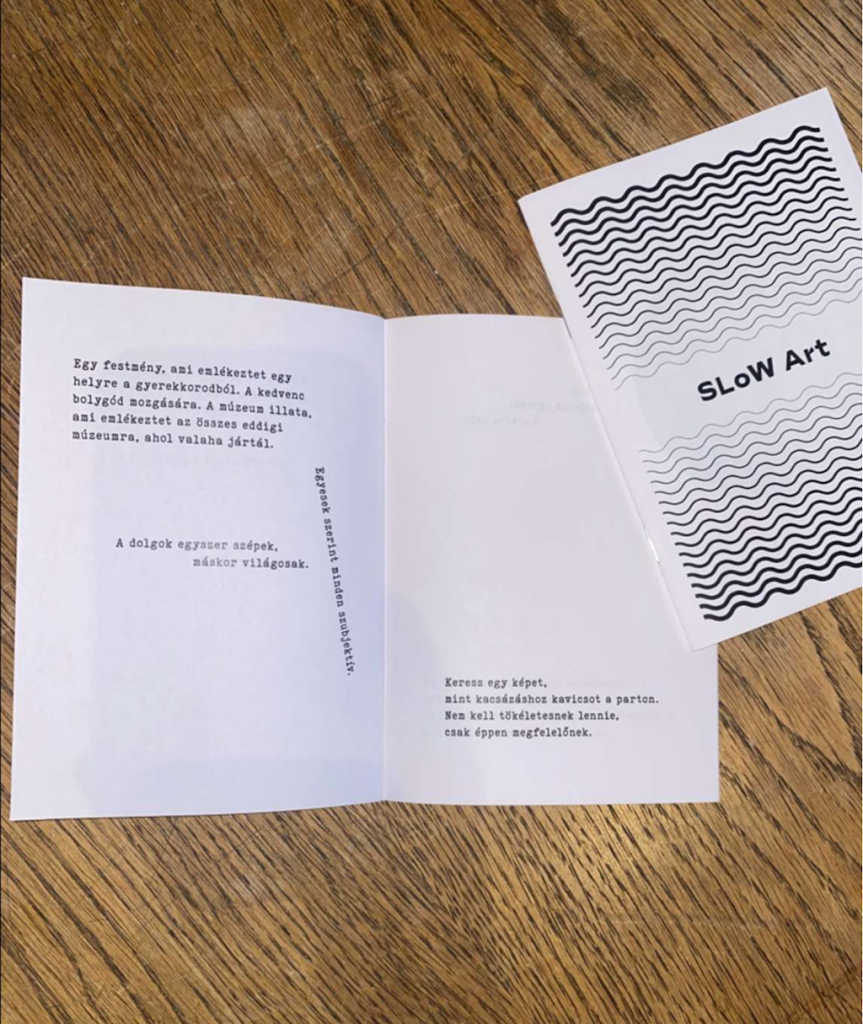
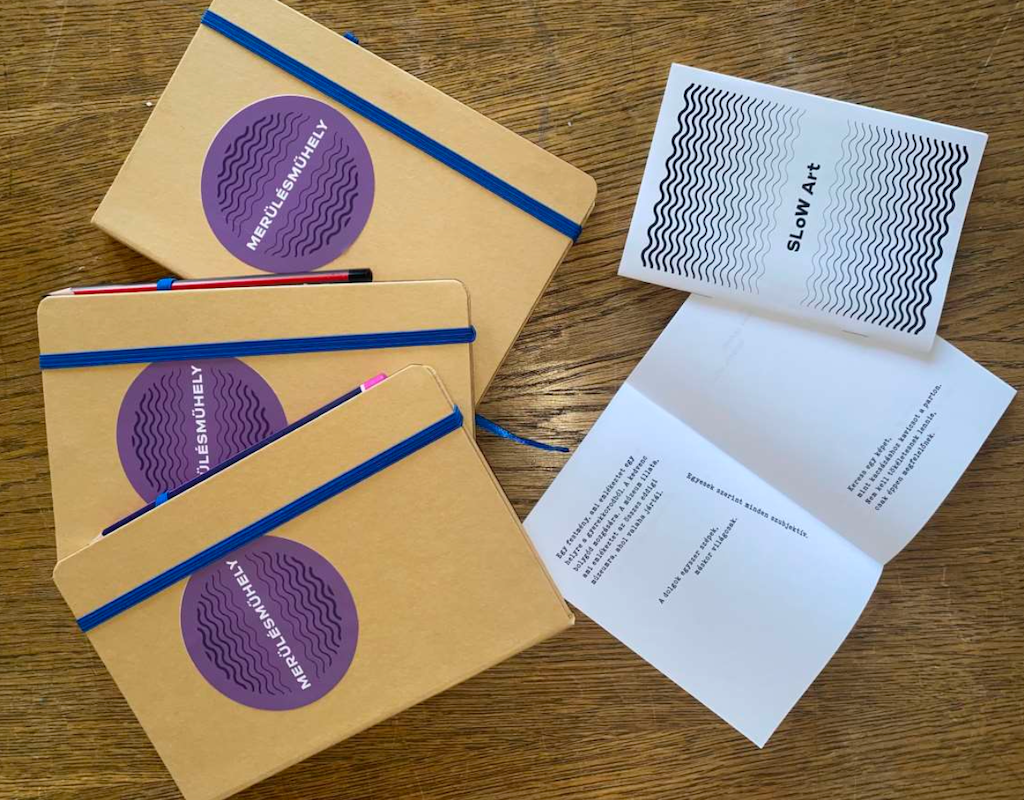
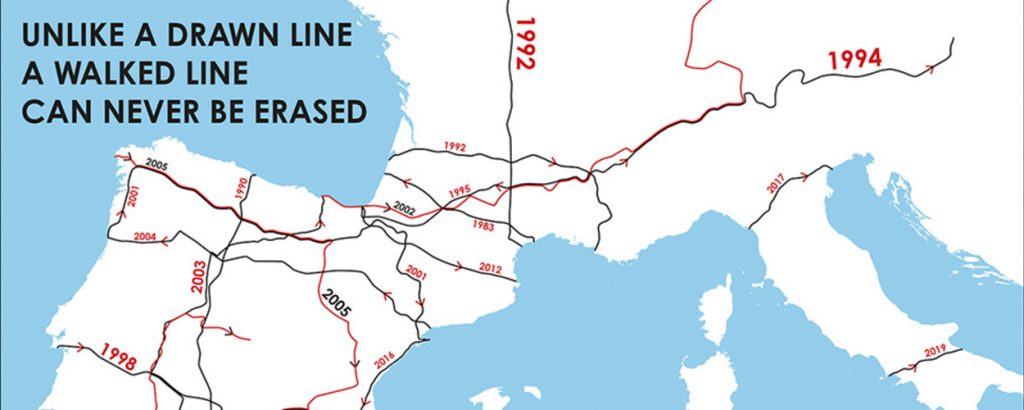
Poster for the event.

We thank Hanna Tobiasson, Cultural Coordinator at Vänersborgs konsthall, for creating a Slow Art Day experience that thoughtfully engaged questions around technology and its growing influence on how art is created, perceived, and discussed today. We look forward to seeing what the team at Vänersborgs konsthall comes up with for Slow Art Day 2026.

– Ashley, Johanna, Jessica Jane, and Phyl

P.S. Follow Vänersborgs konsthall on Facebook.

Carol Rossi Hosts Community Slow Looking Experience at the de Young Museum in San Francisco

For Slow Art Day 2025, yoga-based movement instructor Carol Rossi of Lobey Movement returned to Slow Art Day – she was a pioneer who helped launch the movement back in 2010 – and hosted her own slow-looking session at the de Young Museum in San Francisco, California. Drawing from her background in yoga and mindfulness, Rossi designed a self-guided Slow Art Day experience.

In preparation for the day, Rossi created and shared a dedicated Slow Art Day webpage that outlined simple viewing tips and a short guide to the artworks she selected. Her materials encouraged participants to spend extended time with each work, notice physical details and emotional responses, and resist the urge to move quickly. Rather than formal facilitation, the structure supported personal pacing and reflection, allowing participants to engage with the museum in a focused yet flexible way.

Rossi documented and reflected on the experience through LinkedIn and Instagram, sharing photographs, excerpts from her viewing guide, and personal observations about hosting Slow Art Day. These posts are great practical examples for others interested in creating their own Slow Art Day experiences to follow. Her approach shows how hosting can begin with clear intentions, simple prompts, and a willingness to invite others to slow down together.

At Slow Art Day HQ, we actively encourage this kind of individual-led design. Slow Art Day is not limited to institutions; anyone can host a slow-looking experience, whether as a yoga instructor, educator, designer, or community member. Resources like Carol Rossi’s website and posts offer concrete inspiration for those considering hosting their own event, much like other community-driven Slow Art Day efforts we have seen in recent years.

We thank Carol Rossi for her pioneering support of Slow Art Day, and for returning to work with us again. We look forward to seeing what she comes up with for Slow Art Day 2026.

– Ashley, Johanna, Jessica Jane, and Phyl

Slow Walking Video at Gorgas House Museum

For Slow Art Day 2025, students at the University of Alabama participated in a project titled Walking In It, developed under the direction of Professor Sharony Green and presented in connection with the Gorgas House Museum in Tuscaloosa, Alabama. The project focused on an experimental video that encouraged people to notice walking and to think about it as something shaped by history and circumstance, not a simple experience that everyone can take for granted.

As part of the project, students enrolled in Professor Green’s Fall 2024 and Spring 2025 history courses contributed 30-second long videos of themselves walking through campus and around Tuscaloosa. These clips were combined into a single “digital quilt” bringing together repeated movement across shared spaces.

Gorgas House Museum on Slow Art Day.

The completed video was featured online and projected onto the exterior of the Gorgas House Museum on April 4, 2025, from 10:00 a.m. to 2:00 p.m. The projection was designed as a come-and-go experience, allowing Slow Art Day participants and passersby to encounter the work throughout the day. The setting of the projection on Gorgas House, the campus’s oldest dwelling constructed in 1829, provided historical context for the project’s focus on movement and access.

Watch the video projection:

Additional components were coordinated by Sonya Harwood-Johnson, Director of the Gorgas House Museum. These included interpretive displays featuring nineteenth-century shoes and an interactive station where members of the campus community could decorate miniature boots produced with a 3D printer, inspired by a Mexican artist’s project.

In addition to the video projection, the Slow Art Day project included a campus-wide scavenger hunt. Participants were invited to move through campus using the scavenger hunt prompts, with a prize offered to those who completed the activity.

Students also created a short video previewing the event, offering viewers a sense of the site and project setup:

The project received coverage in The Crimson WhiteGorgas House hosts The University of Alabama’s submission to global Slow Art Day – the University of Alabama’s student newspaper, which reported on the Gorgas House Museum’s participation in the global Slow Art Day initiative. Across digital platforms, the project reached a wide audience, with more than 1,100 views on Instagram and over 1,200 additional views and impressions across other social media channels.

Professory Sharony Green and students.

We thank Sharony Green, Sonya Harwood-Johnson, and the participating students for their innovative Slow Art Day events, and look forward to seeing what they come up with for Slow Art Day 2026.

– Ashley, Johanna, Jessica Jane, and Phyl

P.S. Read more about the project, Walking In It: An Experimental Video, on the Gorgas House Museum website. You can follow the Gorgas House Museum on Facebook and Instagram.

Meditation and Slow Making at Gothenburg Museum of Art

The Gothenburg Museum of Art in Gothenburg, Sweden, participated in Slow Art Day 2025 by offering two structured activities for adults and children. The program combined guided meditation, slow looking in the galleries, and hands-on making in the studio.

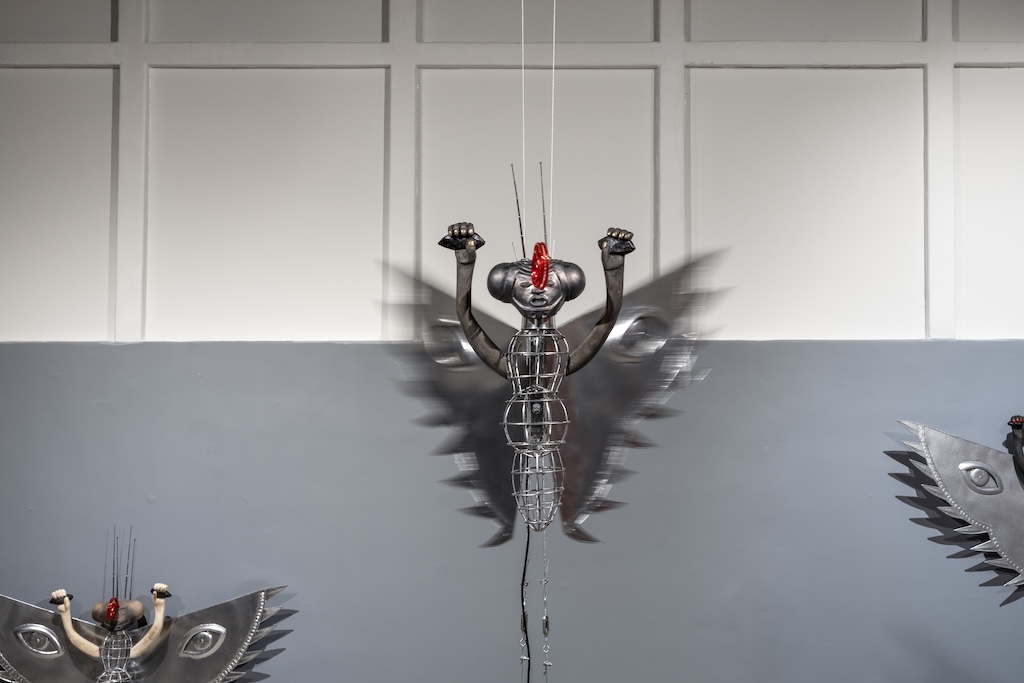
The group gathered in front of Oracle, a sculpture by Norwegian artist Jone Kvie, on view in the exhibition Apocalypse: From Last Judgement to Climate Threat.

Photo by Linda Noreen.

For adult participants, the museum hosted a guided meditation led by Pernilla Ljungkvist, artist and yoga teacher, around the sculpture. Through stillness and focused attention, participants were invited to engage with the sculpture more deliberately.

Participants practicing yoga. Photo by Linda Noreen.

For children ages 6–12, the museum offered a two-part workshop. The first part took place in the museum’s collection galleries, where participants practiced slow-looking exercises and completed a drawing activity based on careful observation.

The group then moved to the Museum Studio, where a selection of objects was presented. Participants chose one or more objects to reinterpret by painting with watercolors, drawing with colored pens, or shaping forms in clay. The emphasis throughout was on slowing down, observing closely, and working deliberately. Across both activities, the shared goal was to encourage sustained attention and mindful engagement through observation, reflection, and making.

Photo by Jonna Kihlsten.

We thank Jonna Kihlsten, Art Educator, and the Gothenburg Museum of Art team for designing inclusive Slow Art Day experiences, as well as Pernilla Ljungkvist for leading the meditation session. We look forward to seeing what Gothenburg comes up with for Slow Art Day 2026.

– Ashley, Johanna, Jessica Jane, and Phyl

P.S. Follow Gothenburg Museum of Art on Facebook and Instagram

Six Weeks of Slow Looking in Arizona Border Town

For their third Slow Art Day, Studio 917 Gallery in Douglas, Arizona, extended their event beyond a single day, transforming it into a six-week slow-looking experience. Located in the small town bordering Sonora where visitors often come to shop before discovering local art, the gallery intentionally selected a range of diverse works designed to appeal to audiences of different ages and backgrounds.


The exhibition opened with a busy first day, welcoming a steady flow of visitors from 11 a.m. to 9 p.m. As the weeks progressed, word of mouth expanded the gallery’s reach. Visitors traveled from nearby communities including Tucson, Agua Prieta, Bisbee, and Willcox, while tourists from farther afield stopped in while visiting the U.S.–Mexico border, including guests from Kansas, Minnesota, Texas, and California.

Visitors engaging with artworks during the extended Slow Art Day exhibition. Photos by Allyson Armstrong.

Featured Works:

  • Untitled by Gabino Rivera (c. 1930)
  • Social by Conrado Massaguer (Havana, 1930)
  • Parenthesis by Peter Konsterlie (2017)
  • Untitled by Chloe Foster (wood-fired, salt-fired ceramic, 2025)

The selected artworks encouraged visitors to linger and look closely. Gabino Rivera’s early 20th-century work reflects the experience of immigration and labor in Douglas, where Rivera arrived as a young man to work in the local smelter. Conrado Massaguer’s Social, originally a magazine cover from Havana in 1930, offered a contrasting cultural perspective. Contemporary works by Peter Konsterlie and Chloe Foster added further range, from conceptual painting to ceramic practice, reinforcing the gallery’s goal of presenting varied entry points for slow looking.

Untitled. Gabino Rivera @1930. Sr. Rivera immigrated to Douglas, AZ as a young man to work in the smelter.
“Social” a magazine cover by Conrado Massager, Havana, 1930.
“Parenthesis”, Peter Konsterlie 2017.
Untitled,  Chloe Foster, Wood, Salt Fire, 2025.
Visitors engaging with artworks during the extended Slow Art Day exhibition. Photos by Allyson Armstrong.

By extending Slow Art Day across six weeks, Studio 917 Gallery created repeated opportunities for intentional looking and conversation, allowing both local residents and traveling visitors to encounter the artworks at their own pace. The approach reflected the rhythms of a small-town gallery while remaining connected to the global Slow Art Day movement.

We thank the team at Studio 917 Gallery for their continued commitment to slow looking and for sustaining this expanded Slow Art Day format year after year. We look forward to their next Slow Art Day.

– Ashley, Johanna, Jessica Jane, and Phyl

P.S. Follow Studio 917 Gallery on Instagram and visit their website at https://www.studio917.art.

Multiple Paths To Slow Looking at Wellcome Collection

For their fourth year participating in Slow Art Day, Wellcome Collection in London hosted a full day of guided and self-guided slow-looking experiences across the museum. Wellcome Collection is a free museum that explores human health through the intersections of art, medicine, and science. Building on the range of facilitated sessions introduced in previous years, the 2025 program offered visitors multiple ways to engage slowly with artworks, objects, and ideas.

The Wellcome Collection team led five guided slow-looking sessions, each facilitated by a different staff member and focused on a distinct body of work.

Isabelle Gapomo guided participants in close observation of a photograph by Marc Ferrez from the Hard Graft exhibition, titled ‘Escravos em terreiro de uma fazenda de café na região do Vale do Paraíba’ (c.1882), examining how plantation labor was depicted by early photographers and how those images are experienced today.

‘Escravos em terreiro de uma fazenda de café na região do Vale do Paraíba’ (c.1882). Marc Ferrez.

Griff Davies led a session centered on the dream-inspired paintings of Bryan Charnley, using the imagery to prompt discussion around mental health.

“The Stars Only Come Out at Night” by Bryan Charnley.
“Nail Schizophrene” by Bryan Charnley.

Sana Siddiqui reprised her popular session last year and used vintage food advertisements to evoke memory and sensory response.

In the Reading Room, Isabel Greenslade gathered participants around “Closing Neural Tube Dress,” a sculptural garment that encouraged reflection on abstraction.

Participants slow looking at the “Closing Neural Tube Dress“.

Jake Blackavar led a session that moved through multiple floors of the museum, selecting a sculpture, a video work, and a pair of paintings to explore how different media and gallery contexts shape the slow-looking experience.

“Washerwoman” by Shannon Alonzo.
“Orphans” (left) by Frederic Cayley Robinson.
“Orphans” (right) by Frederic Cayley Robinson.

In addition to the guided sessions, the museum designated a room as a Slow Art Day hub where tours began and visitors could drop in to learn more about the event. In this space, visitors were invited to practice slow looking independently using a rotating screen of images from Wellcome Collection’s holdings, which changed every ten minutes.

What a thoughtful and well-designed program. Wow.

We at Slow Art Day HQ thank Jake Blackavar and the entire Wellcome Collection team for continuing to lead the way in producing meaningful and multi-dimensional experiences.

We eagerly look forward to what they come up with for Slow Art Day 2026.

– Ashley, Johanna, Jessica Jane, and Phyl

P.S. Follow Wellcome Collection on their Instagram and Facebook

Photography in Thessaloniki, Greece

For Slow Art Day 2025, Pinakotheke Gallery in Thessaloniki, Greece hosted a slow looking event focused on the photographic exhibition “ABSORBED (Damn, I miss snowboarding)” by Theodoros Vranas.

The exhibition presented a series of photographic works in which the artist explores questions of self and psychology, placing moments of human deadlock within landscapes of overwhelming beauty. Visitors were invited to observe a limited number of works closely and reflect on their experience.

Pinakotheke is a creative project by photographer Stefanos Tsakiris, based in the center of Thessaloniki, and dedicated to promoting photographic work through exhibitions, printing techniques, workshops, and events.

We thank Stefanos and the team at Pinakotheke for participating in Slow Art Day 2025, and look forward to seeing what they come up with for Slow Art Day 2026.

– Ashley, Johanna, Jessica Jane, and Phyl

P.S. – Check out Pinakotheke on Instagram.

Mindfulness and Slow Looking at the Basil & Elise Goulandris Foundation

For their second Slow Art Day, the B&E Goulandris Foundation in Athens, Greece, invited all visitors to explore selected works from its permanent Collection and to take part in one or more of their three specially designed mindfulness activities.

On April 5th, 2025 all visitors were welcomed with a special printed slow looking guide (available in both English and Greek) at the Museum’s Reception Desk. This included information and instructions on how to practice slow looking, allowing them to fully engage with four carefully selected works from the permanent Collection:

  • Laughing Man” by Camille Claudel [on the first floor]
  • The Traveller” by Igor Mitoraj [on the second floor]
  • Maria Callas no. 4” by Julian Schnabel [on the third floor]
  • Untitled” by Alexis Akrithakis [on the fourth floor]

Visitors were encouraged to keep and reuse this guide during future museum visits to explore even more works from the Collection in a similar immersive way. 

Laughing Man” by Camille Claudel
The Traveller” by Igor Mitoraj
Maria Callas no. 4” by Julian Schnabel
Untitled” by Alexis Akrithakis

On the same day, art historian, art educator and mindfulness instructor Lydia Petropoulou led three mindfulness activities. The morning mindfulness workshop I See, I Hear, I Feel, I Paint was designed for parents and children aged 6-12. Two mindfulness sessions designed exclusively for adults were then held in the afternoon. Titled Mindfulness at the Museum, they took place in the temporary exhibitions gallery where the exhibition “Catch Me” by Nicholas Kontaxis was on display.

What a great design for the day. More museums might decide to imitate what the B&E Goulandris Foundation did here.

At Slow Art Day HQ, we certainly appreciate integrating mindfulness as well as offering activities for both children and adults – and we are excited to see what the B&E Goulandris Foundation come up with for Slow Art Day 2026.

– Jessica Jane, Phyl, Ashley, and Johanna

P.S. Check out B&E Goulandris Foundation on their Facebook and Instagram.

From Canvas to Table: Slow Art and Slow Food at The Mart

For their 5th Slow Art Day, the Museum of Modern and Contemporary Art of Trento and Rovereto (The Mart), Italy, organized an event in collaboration with a local Slow Food collective, an association committed to restoring value to food – respecting those who produce it in harmony with the environment and ecosystems – while enhancing the knowledge preserved by local territories and traditions.

This is the second collaboration between The Mart and Slow Food, with the first occurring during their 2023 Slow Art Day. For this event, five local producers focused on cheese, chili, preserves, wine and baked goods.

For the 2025 event planning, the Slow Food producers were invited a week earlier to look slowly at the two works of art selected for Slow Art Day. Afterwards, they were asked to associate one of their food products with each work they had just observed – so cool.

Two of the local producers observing and discussing “Gianfilippo Usellini, Il Carnevale dei poveri, 1941”

On the day of the event, twenty “Amici del Mart” (Friends of The Mart who are enrolled in The Mart’s Membership program) repeated the slow looking experience with the same art works, taking time to observe them on their own before group discussions.

They were then divided into five groups, each with some “veteran slow lookers” as well as first-time participants. The groups discussed the works and assigned scores from 0 to 5 against emotions and aesthetics connected to the pieces (prompted by the question “Would you put this work in your home?”).

Friends of The Mart (Amici del Mart) sharing their opinions on “Piero Dorazio, Senza titolo, 1974”

Afterwards, participants enjoyed a tasting with the five local producers, who paired food with the artworks based on color, atmosphere and emotions evoked. During that tasting, the producers shared the story behind their pairing choices, offering a personal and creative look at the link between the artworks and food. What a great design.

All the Amici and the producers (almost) ready to start the tasting experience

The event proved to be a wonderful way to bring food and art together, while giving visibility to local food producers.

We at Slow Art Day HQ have always believed that Slow Food and Slow Art belong together and love what The Mart is doing to lead the way. We look forward to seeing what they come up with for Slow Art Day 2026.

– Jessica Jane, Ashley, Johanna, and Phyl

P.S. Explore The Mart on their Facebook and Instagram.

National Gallery of Canada: Deepening Reflection Through Guided Looking

For their third Slow Art Day, the National Gallery of Canada in Ottawa invited participants to join their event onsite or from home through a guided slow-looking video.

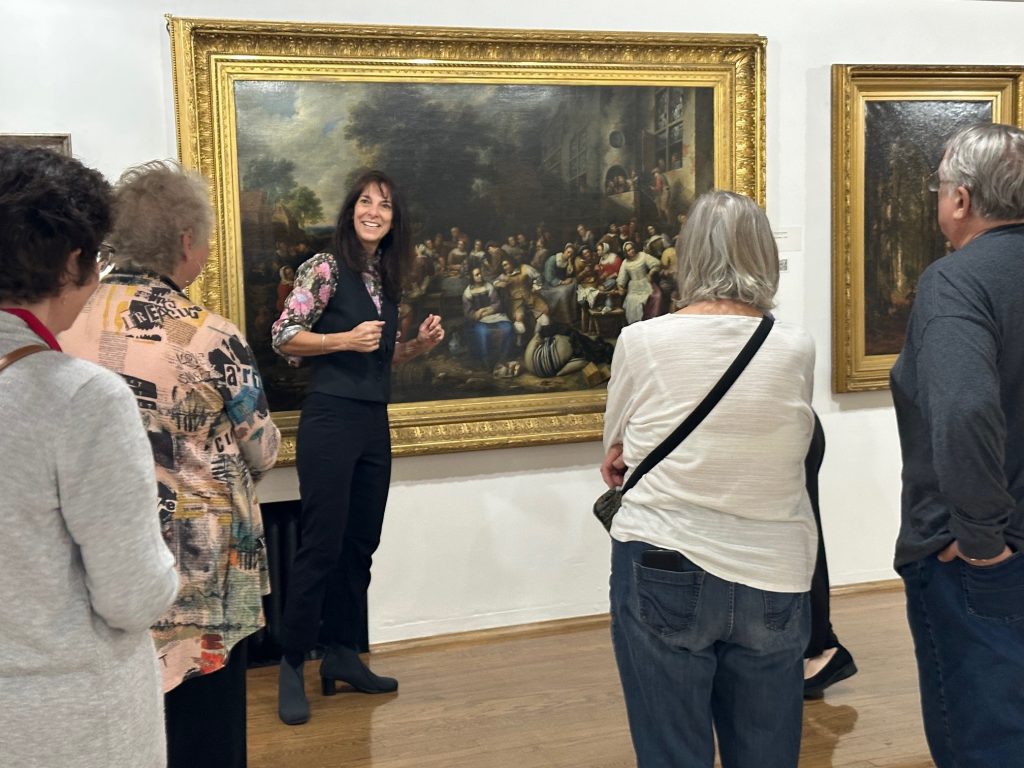
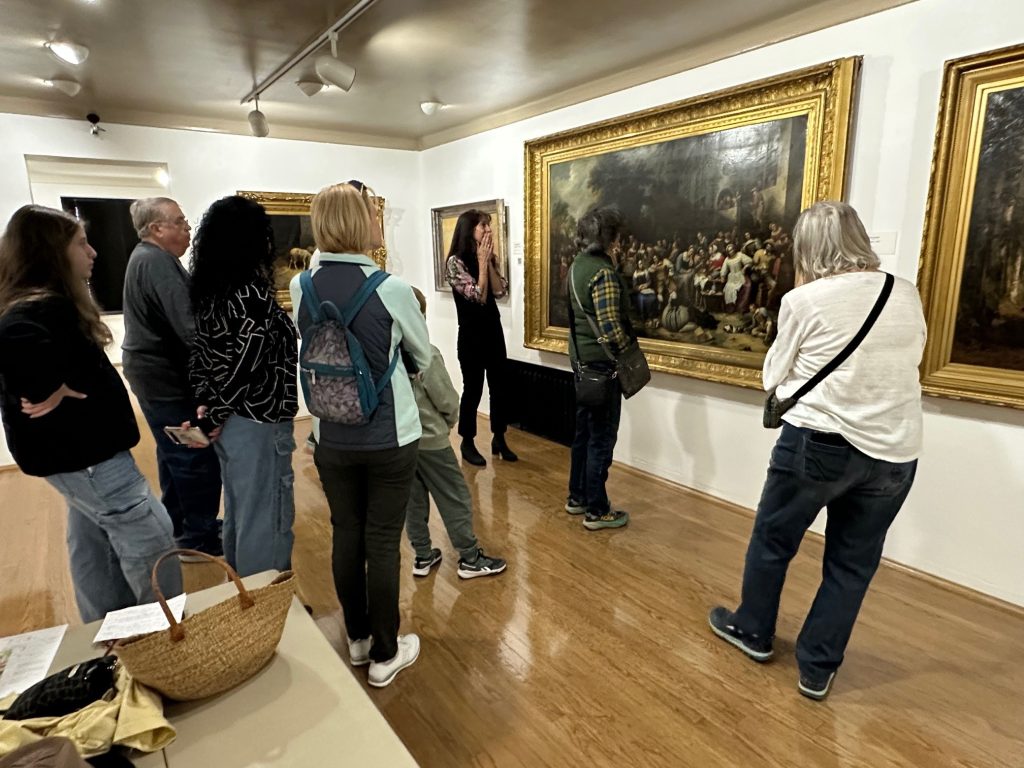
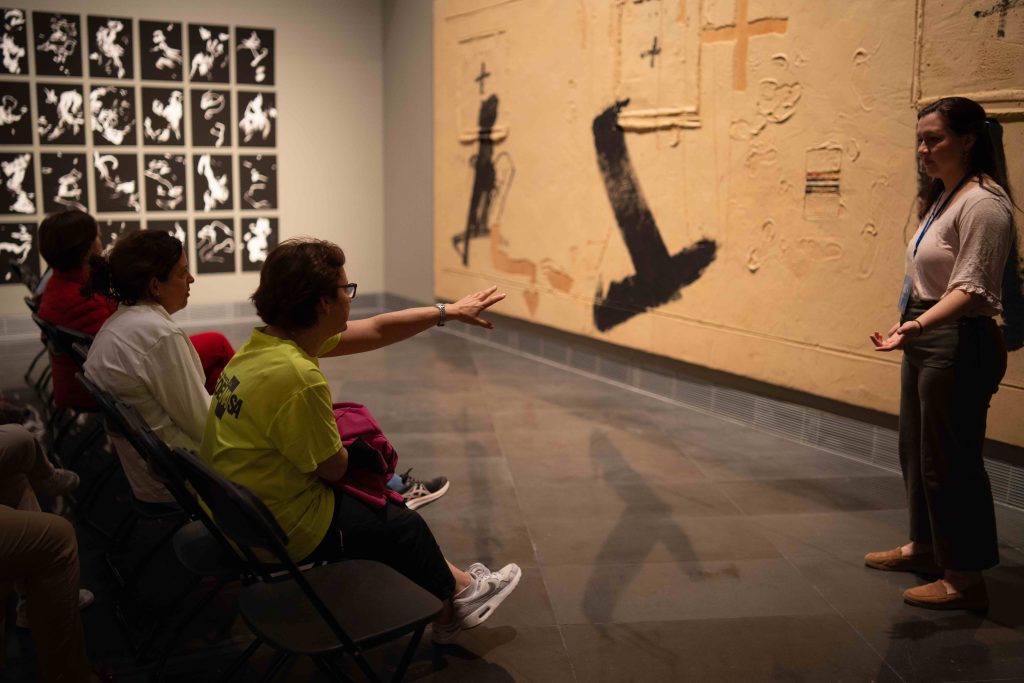
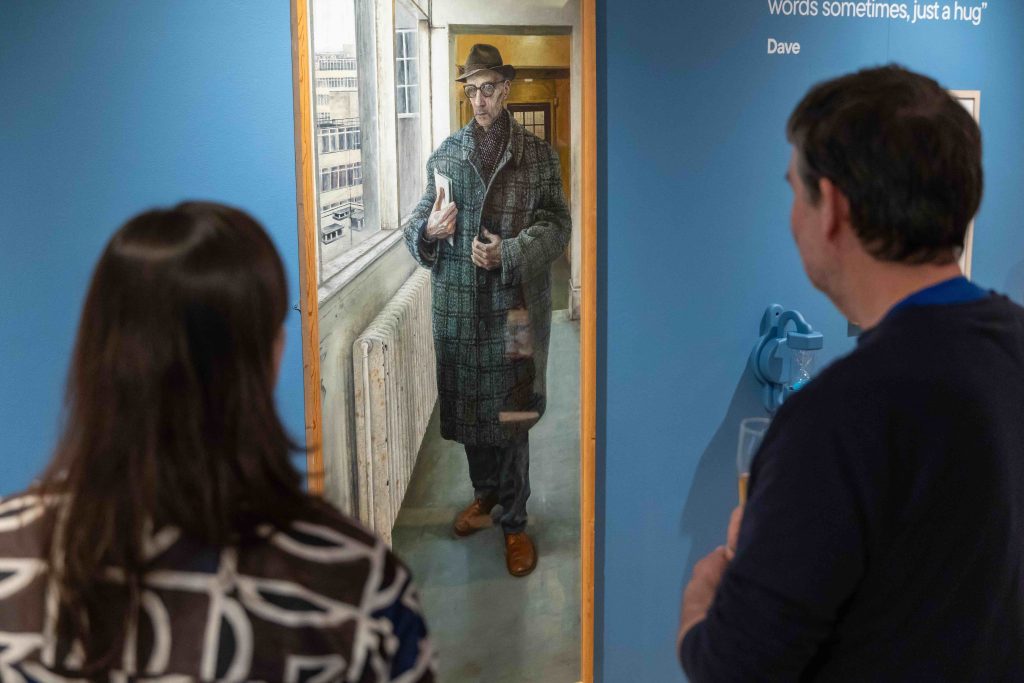
Participants during guided slow looking at the National Gallery of Canada. Photo courtesy of the National Gallery of Canada.

Educator Andrea Gumpert reported that in-person participants were led in both English and French through 2 hour-long sessions by Interpreter-Guides Morel McMaster and Juliana Abramo. Each session began with a brief warm-up and an introduction to the purpose of slowing down with art. Participants then spent five minutes seated with an artwork of their choosing, followed by a group discussion. They repeated the exercise with a different artwork in another gallery, this time extending the observation period.

One of the core philosophies of Slow Art Day is that if you spend a few minutes with a piece of art, then even if you “don’t like it”, you still build a relationship with it and that often means you go deeper than “like or don’t like.”

This experience is repeated thousands of times around the world and was certainly present in Ottawa for Slow Art Day.

In fact, during the first exercise, one participant shared with Juliana that they “didn’t like the painting they chose at first but ended up really appreciating it towards the end,” highlighting how slow looking can shift perception.

Practically speaking, all visitors received a bilingual handout encouraging them to “Slow Down. Reflect. Discover. Engage.”

Below is the video that viewers participating at home could experience:

The National Gallery also did a good job attracting media attention for their Slow Art Day.

CBC Radio’s All in a Day with Alan Neal aired a segment “Take your time with the slooooooow art tour”. CBC Television likewise featured the event in a piece titled The National Gallery wants you to slow down and appreciate art, in which reporter Sandra Abma experienced a slow art tour with educator Andrea Gumpert.

Based on positive visitor feedback from last year’s Slow Art Day, the Gallery has also introduced monthly Guided Slow Looking Sundays, held on the last Sunday of each month. This warms out heart given that one of our core objectives is to inspire year-round programming.

We extend our appreciation to Andrea Gumpert, Morel McMaster, Juliana Abramo, and the entire National Gallery team for their ongoing commitment to slow-looking experiences. We look forward to their continued participation next year.

– Ashley, Johanna, Jessica Jane, and Phyl

P.S. Explore the National Gallery of Canada’s programs on Facebook and Instagram.