Salem’s Public Art Commission Hosts Its First Slow Art Day

For their first Slow Art Day, the Salem Public Art Commission partnered with the Salem Public Library to invite the community to slow down with three abstract paintings from the City of Salem’s Public Art Collection. The event took place on Saturday, April 5, 2025, from 11:00 AM to 12:00 PM and followed the classic Slow Art Day format: quiet viewing followed by discussion.

Featured works:

  • Still Life in Flux (2014) by Nancy Lindburg
  • Dwelling (1965) by Carl Morris
  • View (1973) by Louis Bunce
Image
Still Life in Flux by Nancy Lindburg, 2014.
Carl Morris Dwelling, 1965
Image
Louis Bunce View, 1973

The Commission selected these three abstract paintings because they are thoughtfully installed within the Salem Public Library and represent artists with strong ties to the Pacific Northwest.

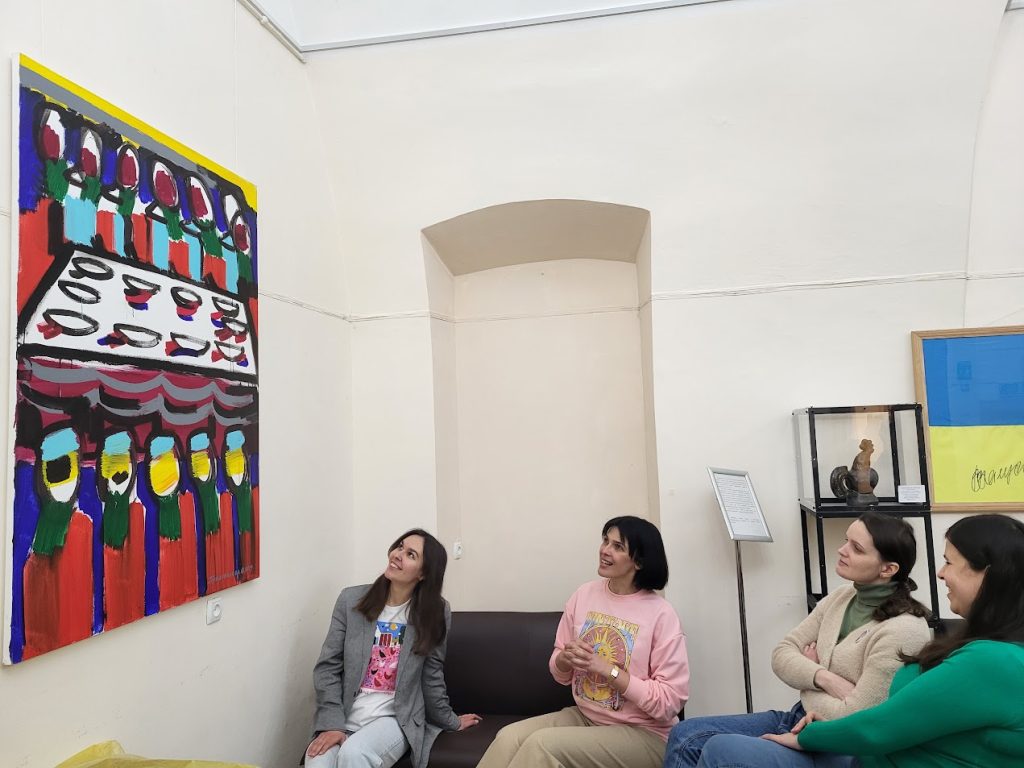
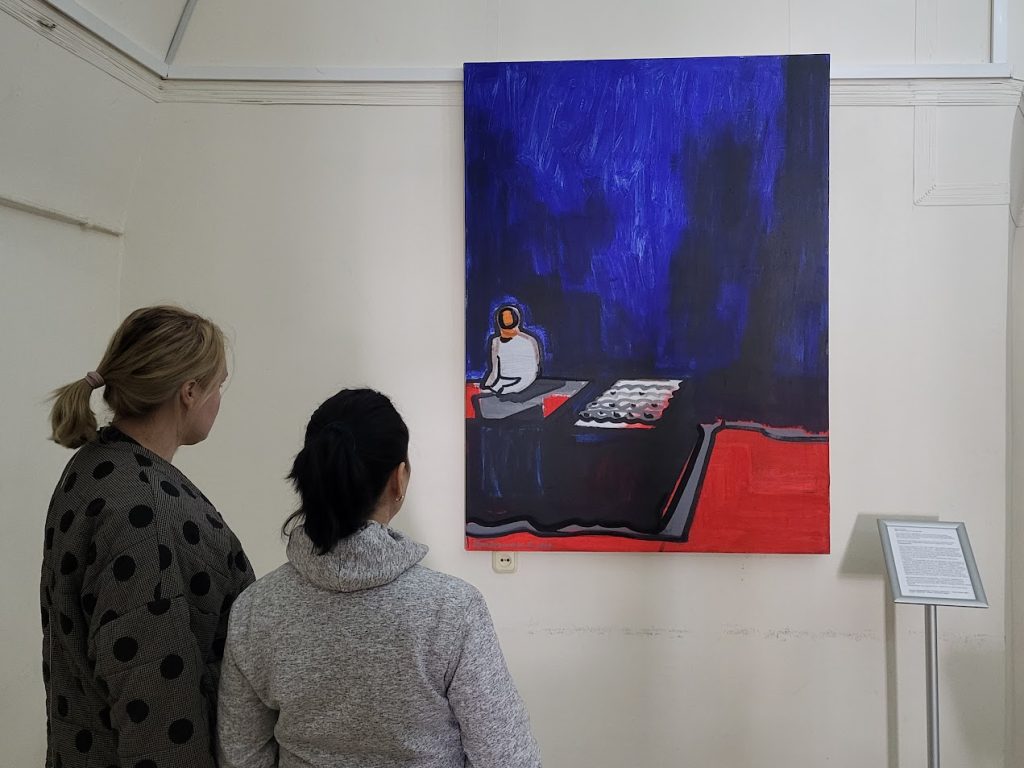
Participants gathered by the window facing Peace Plaza and began with approximately ten minutes of silent viewing per artwork. The group was encouraged simply to look — noticing color relationships, compositional structure, surface texture, and emotional tone before moving into conversation.

Nancy Lindburg’s Still Life in Flux (2014) presents layered geometric forms in vibrant oranges, blues, and deep neutrals, creating a sense of movement within abstraction. Carl Morris’s Dwelling (1965) offers a vertical composition grounded in earthy browns and textured surfaces, punctuated by small bursts of color. Louis Bunce’s View (1973) introduces architectural structure and rhythmic pattern, balancing a vivid green plane with repeated arch-like motifs and a distant horizon.

The experience was made especially meaningful by the presence of Nancy Lindburg herself — a Salem resident and long-time local arts advocate — who joined the group. After the quiet viewing period, Lindburg shared insights into her artistic process and engaged directly with participants during what coordinators described as a lively post-viewing discussion.

The conversation that followed the silent viewing allowed participants to compare perceptions and discoveries. As often happens on Slow Art Day, viewers noted details they might otherwise have missed — subtle shifts in color, interplay between positive and negative space, and how each painting’s scale influenced their physical experience in the room.

The event was organized by Susan Napack, coordinator for the Salem Public Art Commission, in collaboration with Kathleen Swarm and the library team. The Commission also created a clear and inviting flyer (below) outlining the structure: silent viewing from 11:00–11:30, followed by reflection and discussion from 11:30–12:00 and providing QR codes to the global website and to their event site.

Also, they did a good job of marketing including getting The Statesman Journal, the local newspaper, to cover the event.

At Slow Art Day HQ, we are especially glad to welcome Salem’s Public Art Commission to the global movement. We love when city collections — especially those installed in civic spaces like libraries — become the focus of slow looking. Public art belongs to everyone, and this event demonstrated how simply creating space and time can transform everyday encounters into meaningful experiences. We also appreciate the generosity of artist Nancy Lindburg in participating directly in the conversation.

We look forward to seeing what the Salem Public Art Commission comes up with for Slow Art Day 2026.

– Ashley, Johanna, Jessica Jane, and Phyl

Forest Bathing, Folding Screens, and Mindful Movement at Smithsonian’s National Museum of Asian Art

For their second Slow Art Day (and their first time hosting the program on-site) the Smithsonian’s National Museum of Asian Art in Washington, DC offered four hours of immersive programming, inviting visitors to slow down through guided looking, mindfulness practices, gallery conversations, and movement.

The day unfolded through a thoughtfully structured sequence of offerings designed to meet visitors wherever they were.

Throughout the four hours, hundreds of Slow Looking Guides were distributed from the information desk, inviting visitors to deepen their connection with the art through sketching prompts, poetic reflection, comparisons, and written responses.

Participant viewing the Slow Looking Guide designed by the museum.

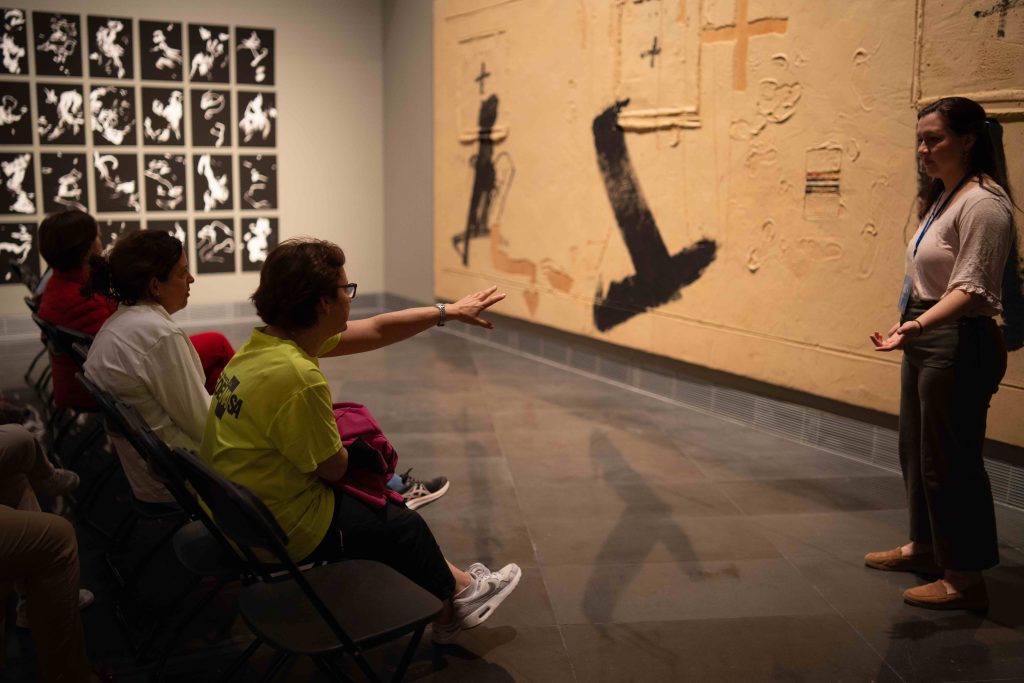
Four docents roamed the galleries, engaging visitors in informal conversations about the museum’s world-renowned collections. These roaming discussions allowed participants to linger, ask questions, and explore artworks through sustained dialogue rather than quick viewing.

Gallery docent in discussion with Slow Art Day participants.

Two guided Slow Looking sessions were scheduled in the Japanese screen gallery, one for families and one for adults. Due to a large gathering on the National Mall that day, the family session did not run. However, 15 visitors participated in the adult session focused on the early 17th-century folding screen “Trees.”

Participants spent extended time observing the green malachite pigments layered over gold foil. As they looked more closely, subtle botanical details emerged — magnolia veins, pine and cedar needles, tiny acorn buds, delicate blossoms. The facilitator described the work as “a gardener’s dream brought indoors,” noting how the composition moves viewers from luminous gold panels into dense greenery, like stepping gradually into a forest.

Visitors looking at “Trees” (雑木林図屏風), Japanese folding screen (1600–1630).

In the museum’s outdoor courtyard, 24 visitors joined Forest Bathing sessions led by a certified forest therapy guide. Though not a traditional forest setting, the courtyard’s Japanese maples, ferns, holly, pine, peonies, birds, bees, and even beetles became focal points for sensory awareness. Participants were invited to gently touch plants — an uncommon freedom in a museum environment — and to slow down through guided sensory exercises.

Participant in the Forest Bathing session in the courtyard.

Visitors also participated in a Qigong session, a standing mindful movement practice rooted in Chinese tradition. Through slow, nature-inspired movements and breath awareness, participants were encouraged to notice the flow of energy in their bodies and mirror the rhythms of the natural world.

Participants during the Qigong session.

With their 2025 Slow Art Day, The National Museum of Asian Art demonstrated how structured programming, roaming conversation, embodied practice, and simple prompts can invite visitors into meaningful slowness.

At Slow Art Day HQ, we are especially inspired by how the National Museum of Asian Art expanded slow looking beyond the gallery walls, integrating folding screens, forest bathing, mindful movement, and docent engagement into a cohesive experience.

We are grateful to Jennifer Reifsteck and the entire team at the National Museum of Asian Art for their thoughtful leadership. We look forward to seeing what they design for Slow Art Day 2026.

– Ashley, Johanna, Jessica Jane, and Phyl

P.S. View them on Instagram and Facebook

African Art and Haiku in South Africa

For their eighth Slow Art Day, Artichoke Gallery at MelonRouge in Magaliesburg, South Africa invited visitors to slow down with art and poetry at an interactive morning titled “Afriku: Slow Visions & Whispered Words.” The event paired slow looking at a curated selection of African artworks with a hands-on Japanese haiku writing workshop led by gallery owner Hannelie Sanders.

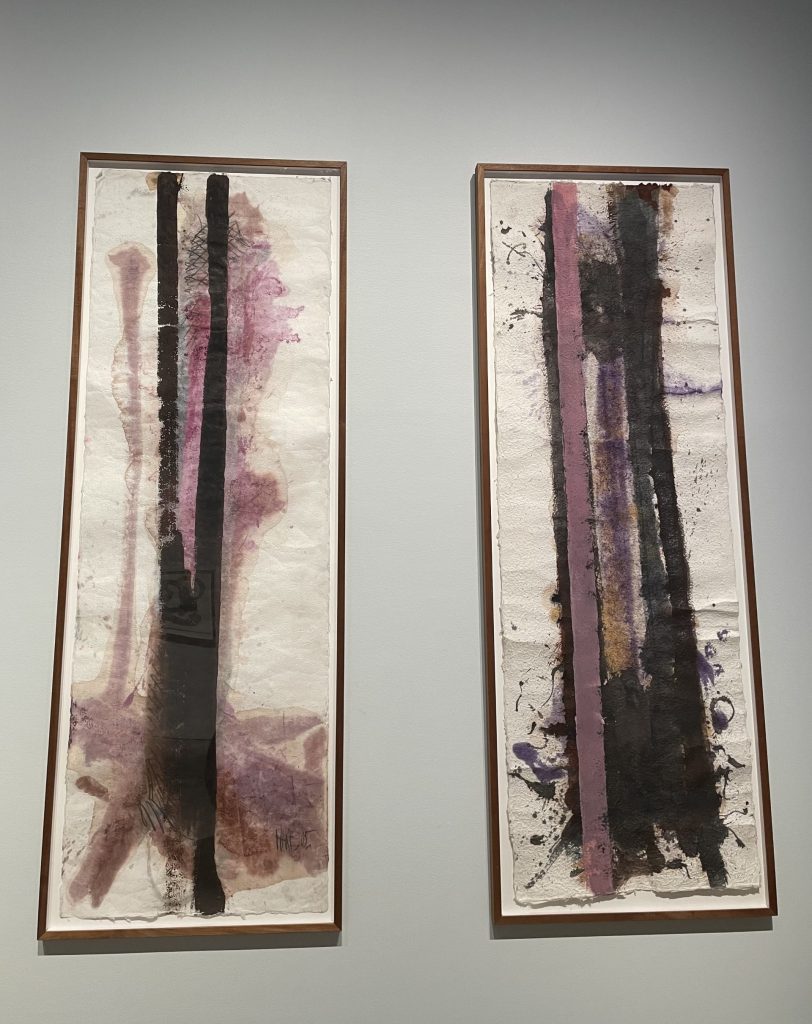
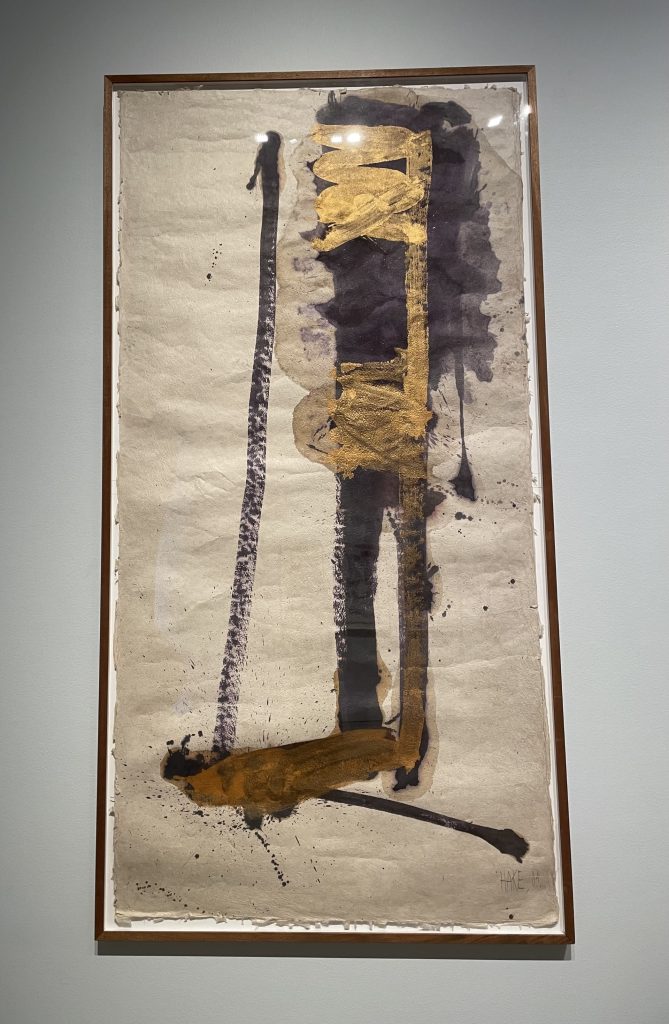
On Saturday, April 5, 2025, participants gathered in the gallery’s contemplative space to begin their slow looking experience. The exhibition offered a rich range of African art — from textured mixed-media works and figurative compositions to abstract pieces that emphasize line, pattern, and gesture. The diversity of the artworks created varied visual rhythms: some pieces invited attention to bold color and dynamic shapes; others unfolded quietly, revealing depth and nuance through closer observation.

As participants slowed down with individual works, they were encouraged to engage with formal elements such as surface texture, mark making, and spatial relationships, and with the emotional presence each piece carried. These visual qualities provided fertile ground for deep attention, allowing slow lookers to connect more intimately with what they saw.

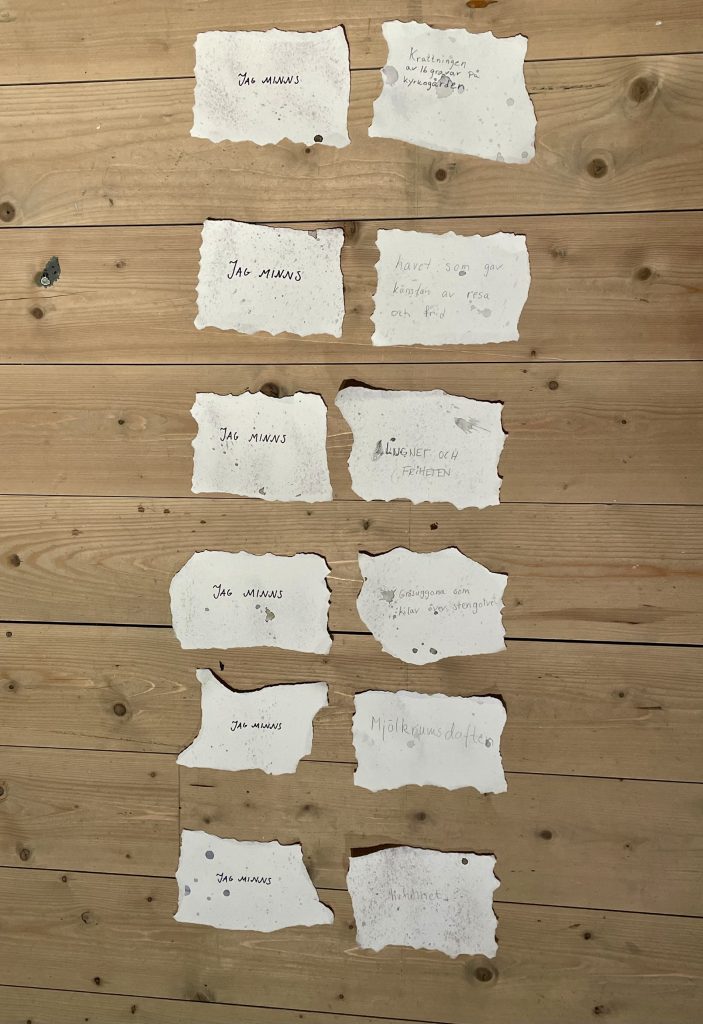
After an initial period of quiet observation, Hannelie Sanders introduced the basics of Japanese haiku. Participants were then invited to translate what they noticed in the art into their own three-line poems, using mood, imagery, and sensory detail as inspiration. The morning’s workshop emphasized presence, patience, and creative response, encouraging people to let what they saw inform what they wrote.

Following the haiku writing, the group shared reflections over a light lunch. Many spoke of how slowing down shifted their perception, helping them notice details and relationships within the artworks that might otherwise go unseen. In a further celebration of creative engagement, the haiku poems crafted during the session were displayed alongside the exhibition for the remainder of its run through May 4, allowing poetry and visual art to exist side by side.

At Slow Art Day HQ, we appreciate how Afriku wove visual art with poetry (and lunch!) into the slow looking experience. We love that participants’ poems became part of the exhibition itself.

We look forward to seeing what Artichoke Gallery at MelonRouge comes up with for Slow Art Day 2026.

– Ashley, Johanna, Jessica Jane, and Phyl

P.S. Follow them on Facebook

First Slow Art Day at Wichita Falls Museum of Art

For their first Slow Art Day, the Wichita Falls Museum of Art at MSU Texas in Wichita Falls hosted a focused workshop within the exhibition Follow the Waters by Delita Martin, led by Dr. Zora Carrier, Executive Director of the Museum.

Participants were invited to slow down with five selected works from Martin’s exhibition, spending 10–15 minutes in silent observation with each piece. The workshop centered on Martin’s layered mixed-media portraits of Black women, exploring themes of cultural storytelling, symbolism, and spiritual legacy.

Following the slow-looking sessions, the group gathered for a facilitated discussion that encouraged participants to share personal interpretations, reflect on emotional responses, and consider how extended time and dialogue can transform the viewing experience.

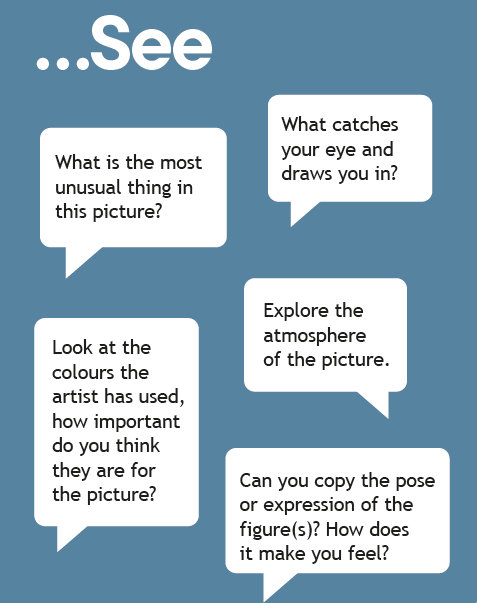
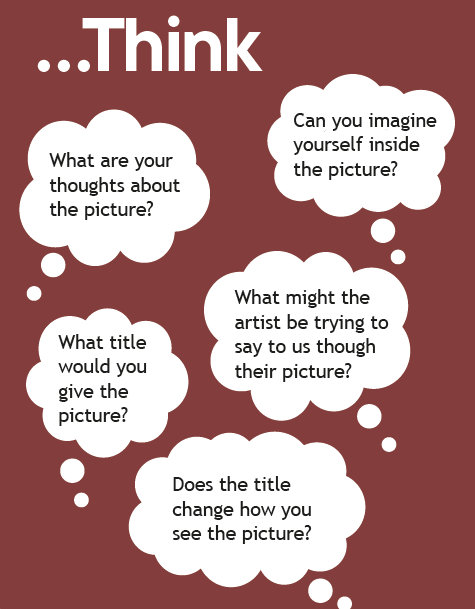
To support the process, the Museum provided a structured worksheet titled The Art of Seeing (attached below) that guided participants through observation, implication, analysis, and reflection, prompting them to consider elements of art such as line, color, texture, rhythm, and unity, while also imagining the moments before and after the scene depicted. This layered approach reinforced visual literacy and encouraged deeper engagement beyond first impressions.

(By the way, museums and galleries should feel free to steal some of their lovely worksheet design.)

Feedback from participants was what we have heard from many thousands around the world: One participant discovered layers they might otherwise have missed while another shared that hearing others’ interpretations shifted their own perspective about the art.

We welcome the Wichita Falls Museum of Art to the Slow Art Day community, and look forward to seeing how they build on this strong beginning for Slow Art Day 2026.

— Ashley, Johanna, Jessica Jane, and Phyl

P.S. View them on Instagram and Facebook.

Mindfulness, Music, and Morning Stillness at Caloundra Regional Gallery in Australia

For their fourth Slow Art Day, Caloundra Regional Gallery in Australia thoughtfully expanded their event format by introducing guided mindfulness activities to help participants truly slow down before engaging with the art.

Held from 8 – 10am (before regular gallery opening hours), 34 attendees gathered for a guided breathing exercise to help get settled into the experience, soften their gaze, and prepare to look deeply and intentionally.

Using a specially designed worksheet (you can find it below), attendees then spent 8–10 minutes with four selected artworks, plus one artwork of their own choosing.

Featured works included:

  • Peter Harris | Jar | c.1992–3
  • Johanna DeMaine | Bottle | c.1980s
  • Peter Hudson | Girraween After Dark | 2022–23
  • Amanda Western | Country Lane | 2023
  • Miranda Skoczek | Untitled (impala) | 2012
Peter Hudson | Girraween After Dark | 2022-23.
Amanda Western | Country Lane | 2023.
Miranda Skoczek | Untitled (impala) | 2012

The worksheet prompted participants to observe carefully, reflect on emotions, imagine stepping into the scenes, and even sketch details they noticed. As outlined in the worksheet, there was “no right or wrong way to look at art”, just an invitation to notice, feel, and reflect.

After the viewing sessions, guests enjoyed home-baked refreshments and fresh fruit platters generously provided by the Friends of the Gallery. A mindful tea-drinking exercise encouraged participants to extend the slow experience beyond the artwork and into everyday sensory awareness.

Adding to the atmosphere, local musicians Graham and Rowena provided harp and guitar music throughout the morning.

Musicians Graham and Rowena.

Feedback from participants was overwhelmingly positive, with many expressing appreciation for the quiet early-morning setting and the structured yet personal format of the experience.

A heartfelt thank you to Senior Learning and Engagement Officer Jenny Jones, the Caloundra Regional Gallery team, the Friends of the Gallery, and the talented musicians for creating such a thoughtful Slow Art Day.

We look forward to what they come up with for Slow Art Day 2026.

— Ashley, Johanna, Jessica Jane, and Phyl

P.S. View them on Instagram and Facebook.

Rainforest, Sculpture and Surrealism in Xilitla, Mexico

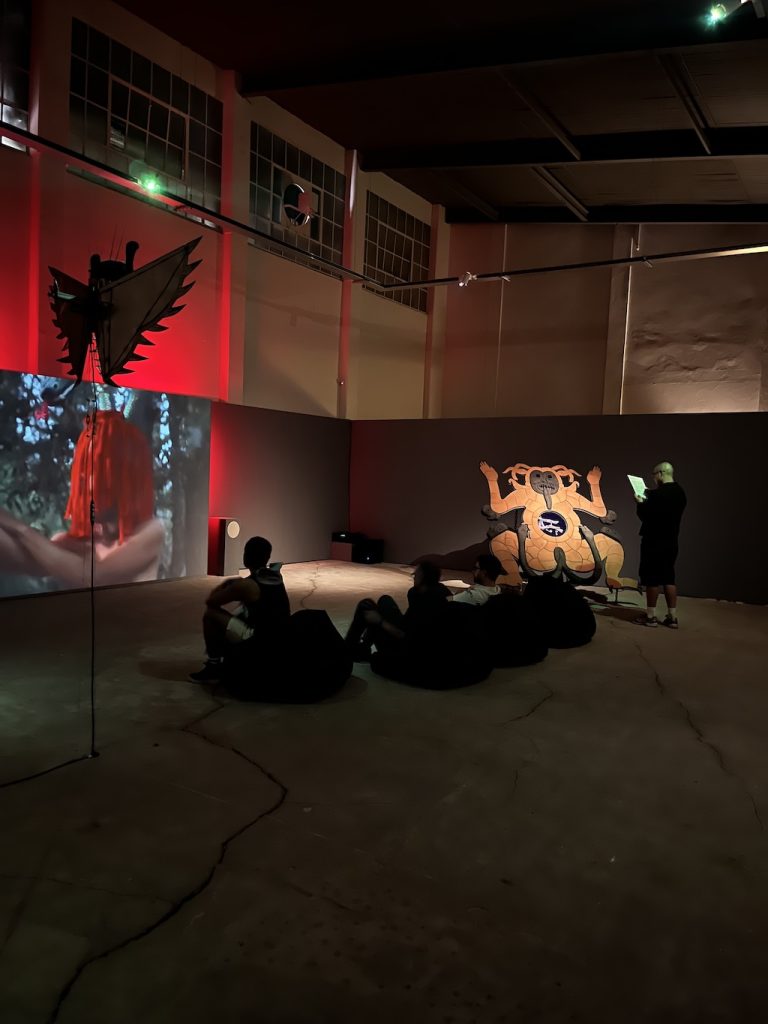
For their first Slow Art Day, the Museo Edward James, also known as Las Pozas, in Xilitla, Mexico hosted a contemplative experience titled “Finding Seclusia,” led by Beatriz Acosta.

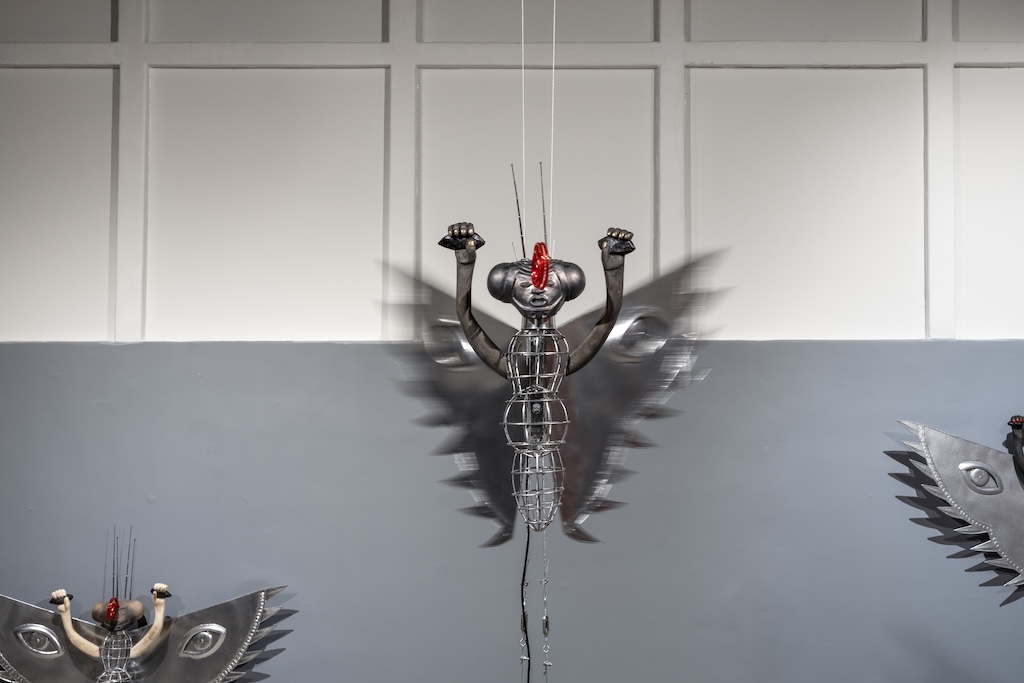
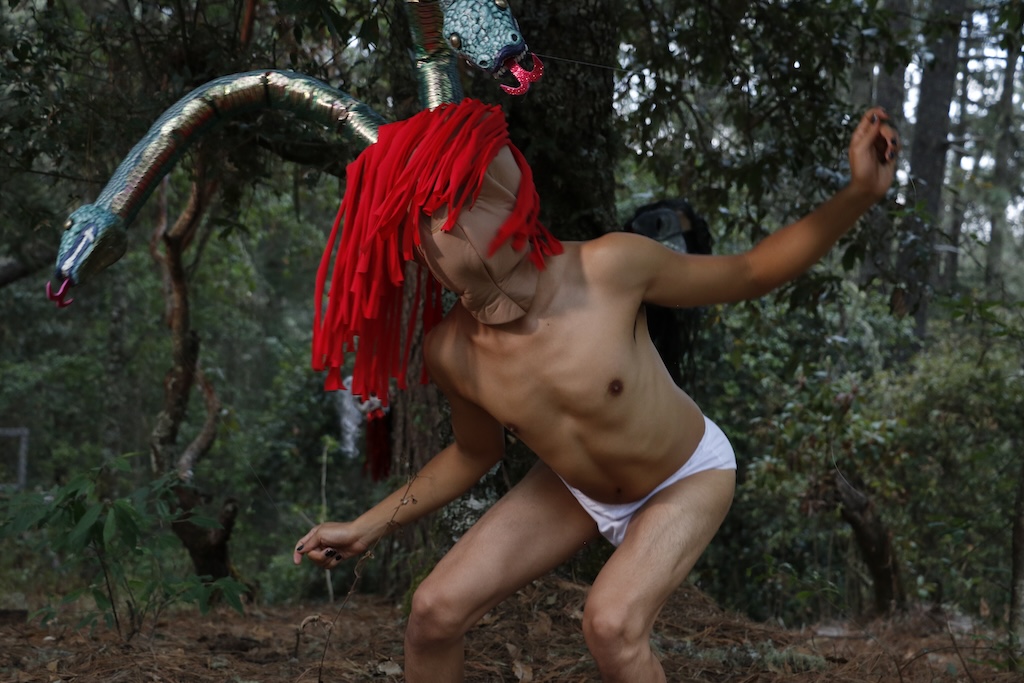
The museum, which is dedicated to the legacy of Edward Frank Willis James, is set in a rainforest, and features towering surrealist sculptures amid pools and waterfalls.

That’s all we at Slow Art Day HQ need to know to jump on the plane to Xilitla (pronounced: hee-LEET-lah).

James, an eccentric British poet, artist, and patron of the Surrealist movement created the Edward James Sculpture Garden, Las Pozas, as a fusion of the organic and the artificial, merging jungle and concrete into a single, dreamlike environment where imagination and inner worlds could take physical form.

For their Slow Art Day, the museo welcomed a group of high school students through five carefully designed stations with unique slow-looking experiences. The session began in the Seclusia room with an introduction to the Slow Art Day movement and the power and purpose of slow looking. Participants also received a handout with prompts and spaces to write their notes throughout the experience.

The first of the five stations focused on photographs of West Dean, Edward James’s childhood home. Participants explored James’s early life and family context, reflecting on how expansive spaces and environments can shape imagination and inner worlds.

At the second station, participants spent quiet, individual time reading selections from the digital archive of James’s poetry book, The Bones of My Hands. This station emphasized attentive reading and personal interpretation, allowing each participant to engage with James’s words at their own pace.

The third station centered on 14 original molds used in the creation of the sculpture garden. Participants closely observed the forms, textures, and details of the molds, considering how abstract ideas are translated into physical structures.

The fourth station took place on the museum balcony, where participants engaged in silent observation of the surrounding landscape. They were invited to notice sounds, colors, movement, and physical sensations, recognizing nature as an essential component of James’s creative universe.

View from the Museum.

The final station consisted of a 15-minute immersive video, Seclusia, which explored themes of imagination, interior worlds, and the human desire to create a personal refuge. This concluding experience allowed participants to synthesize what they had encountered throughout the session.

We at Slow Art Day HQ love everything about this and look forward to seeing what creative design the Museo Edward James comes up with for Slow Art Day 2026.

– Ashley, Phyl, Jessica Jane, and Johanna

P.S. Follow them on their Instagram.

Slow Art and Perception at Pitzhanger in London

For Slow Art Day 2025, Pitzhanger Manor & Gallery in London, England collaborated with Dr. Aleksandra (Sasha) Igdalova, an expert in the psychology of art perception, to host both a self-guided and facilitated slow looking experience centered on the exhibition Alison Watt: From Light.

This marked Pitzhanger’s second slow looking session with Dr. Igdalova, following an earlier event in March. The afternoon workshop brought together attendees of varied ages, many of whom were new to slow looking. Dr. Igdalova opened the session by introducing the research behind slow observation and outlining how careful, sustained attention can transform understanding and support mindfulness. She then guided participants through a 15-minute group slow look at a selected painting, using structured prompts to direct attention and encourage reflection. Between artworks, the group engaged in discussion, with participants increasingly opening up as the session progressed.

The featured exhibition, Alison Watt: From Light, provided a powerful context for the practice. Participants also spent extended time with other works including Peale and The Day After, discovering nuances that many said they would have otherwise overlooked.

According to post-session surveys, 96.67% of participants said they were extremely or very likely to try slow looking again.

Comments from the survey include:

“I experienced a deeper admiration and emotional connection with work I would have otherwise overlooked.”
“No one usually asks me what I think. I liked that.”
“I felt serene and calm. I felt unified with strangers and that was rewarding.”
“The calm and patience to look more deeply at each painting. This transformed the whole experience for me.”

These reflections capture why Slow Art Day matters — our favorite is the one about how no one usually asks them what they think. Yes! In this world of extreme inequality, creating a space where every voice is invited and valued matters.

Slow Art Day at Pitzhanger 2025. Photo credit: Jamila Robson.

In parallel with the workshop, Dr. Igdalova developed a Self-Guided Slow Looking Guide (below) in collaboration with Pitzhanger Report for Slow Art Day. The guide is now permanently available in the gallery, inviting visitors to pause and reconsider their viewing habits. Staff observed that many visitors who initially spent only seconds per artwork stopped when encountering the guide, reflected on their pace, and chose to engage more deliberately. Some photographed the guide; others took copies home.

To promote the event, Pitzhanger’s communications team produced an Instagram reel featuring Dr. Igdalova’s recorded slow looking prompt layered over exhibition imagery, extending the practice beyond the gallery walls.

We thank Dr. Aleksandra Igdalova and the team at Pitzhanger Manor & Gallery for integrating research, facilitation, and accessible tools into a thoughtful Slow Art Day experience. We look forward to seeing what they come up with for Slow Art Day 2026.

– Ashley, Johanna, Jessica Jane, and Phyl

P.S. You can follow Pitzhanger Manor & Gallery on Instagram and LinkedIn.

Slow Art Club Visits De Iorio Collection in Verona

To celebrate Slow Art Day 2025, the Slow Art Club in Italy organized a special visit to the De Iorio Collection in Verona — one of the largest private contemporary art collections in Italy, with more than 700 works by artists from around the world.

The collection is displayed across several exhibition venues, including a striking former sawmill in Verona that has been thoughtfully renovated by the collector, Mauro De Iorio. The visit was reserved exclusively for the Slow Art Club.

The event began with a presentation by De Iorio, who spoke passionately about his motivations for collecting. He shared that his primary criterion when selecting artworks is their emotional impact, along with a shared interest with artists in social and psychological themes — an approach that closely aligns with the ethos of Slow Art Day, which centers on deep, intentional engagement with art.

Mauro De Iorio talks with Slow Art Day participants

Following the introduction, the experience unfolded in two parts: first, individual slow observation of selected artworks; then small-group discussions where attendees shared reflections and insights. The works chosen for the Slow Art experience were all created by female artists and reflected the collector’s personal interests.

Here are some of the artworks they slowly viewed:

Celeste Dupuy-Spencer, Full Fathom Thy Father Lies nothing of him that doth fade, but doth suffer
a seachange, into something rich and strange, 2023, oil on linen and mixed media.
Miriam Cahn, o.t. 17.8.13, 2013, oil on canvas
Danica Lundy, I like the boys and the boys like me, 2023, oil on canvas
Xinyi Cheng, Incroyable (Monroe), 2019, oil on canvas

As is tradition, the group concluded the Slow Art event with a lovely lunch shared by all.

The Slow Art Club in Rovereto, Italy, founded by Piero Consolati, promotes slow-looking with events at different museums and collections across Italy.

Piero tells us that news about the Slow Art Club continues to spread far and wide across Italy and that, for example, one new member traveled 500 kilometers to participate in the 2025 event.

At Slow Art Day HQ, we celebrate the Slow Art Club of Italy, hope more Slow Art Clubs spring up around the world, and look forward to seeing what Piero Consolati and the club comes up with for Slow Art Day 2026.

— Jessica Jane, Ashley and Phyl

Where Art Meets Care: St. Vincent’s Hospital in Melbourne

For Slow Art Day 2025, St Vincent’s Hospital in Melbourne, Australia hosted its fourth Slow Art Day, continuing its thoughtful integration of art into healthcare settings. Led by Art Curator, Monique Silk, this year’s event was titled The Slow Art of Landscape: Observing and Transforming the Art of Nina Ryan.

The program centered on the current exhibition of landscape paintings by Melbourne artist Nina Ryan, including:

Nina Ryan, Paddocks (2017), oil on canvas, 62 x 87 cm
Nina Ryan, The Road Less Travelled (2024), oil on board, 50 x 49 cm
Nina Ryan, Southern Aspect (2020), oil on linen, 78 x 89 cm

Participants, including staff, patients, and members of the wider community, were invited to select a painting, spend time observing it slowly, and then create their own image by transforming cut-out photocopied squares of the original artwork into new compositions. The resulting collages reflected personal interpretation, creative play, and deep engagement with Ryan’s landscapes.

Beyond the gallery, the Slow Art Day spirit extended across other campuses. A flyer invited patients to engage in slow looking wherever art was present, in foyers, corridors, courtyards, and even views from hospital windows. The gentle prompts encouraged participants to look, observe, feel, and share. As described in the hospital’s materials, Slow Art requires nothing more than one’s presence and attention — there is no right or wrong way to respond Flyer Slow Art 2025 St Vincents….

At Caritas Christi Palliative Care Hospice, a Slow Art Station was set up in the creative arts room, offering Slow Art card resources and a quiet space for reflection. We at Slow Art Day HQ are deeply touched by this extension into palliative care settings. Wow. We hope that more hospitals and hospices follow St. Vincent’s lead.

We are inspired by how St Vincent’s Hospital Melbourne adapts Slow Art Day to the rhythms of hospital, and hospice, life — offering patients, staff, and visitors an opportunity to pause, reflect, and transform experience through art. We look forward to seeing how they continue to grow this program in 2026.

— Ashley, Johanna, Jessica Jane, and Phyl

P.S. Follow them on Instagram and Facebook

Slow Looking at The Getty Center with Maria Gontea

For Slow Art Day 2025, Maria Gontea, a Slow Art Day volunteer, led an independent slow looking session at The Getty Center in Los Angeles, California. A small group of art lovers, including children as young as seven, gathered to pause and engage deeply with four selected works from the collection, set against the museum’s striking hilltop architecture and sweeping views of the city.

  • Cabinet on Stand by André-Charles Boulle
  • Irises by Vincent van Gogh
  • Femme Debout I by Alberto Giacometti
  • Boating Party by Gustave Caillebotte

Participants spent ten minutes with each work before gathering to share observations and reflections. From the luminous color and movement of Van Gogh’s Irises to the quiet presence of Giacometti’s standing figure, the session emphasized attentive looking and open conversation rather than expertise.

Maria promoted the event through LinkedIn, inviting her professional community to “rediscover the art of seeing.” In her post, she described Slow Art Day as simple by design: look at four works for ten minutes each, then talk about the experience. No rush, no prior knowledge required. While the group was smaller than anticipated, those who attended found the experience meaningful and energizing.

The Getty Center’s setting amplified the spirit of the day. Its gardens, architecture, and panoramic views created a natural transition from the intensity of Los Angeles life into a more reflective mode of engagement. The event demonstrated how anyone can lead a slow looking session simply by showing up and inviting others to do the same.

We thank Maria Gontea for organizing and hosting this Slow Art Day gathering at The Getty Center. We look forward to seeing what she comes up with for Slow Art Day 2026.

— Ashley, Johanna, Jessica Jane, and Phyl