According to the visitor experience team at Tate Modern, Slow Art Day 2019 was “fantastic.”
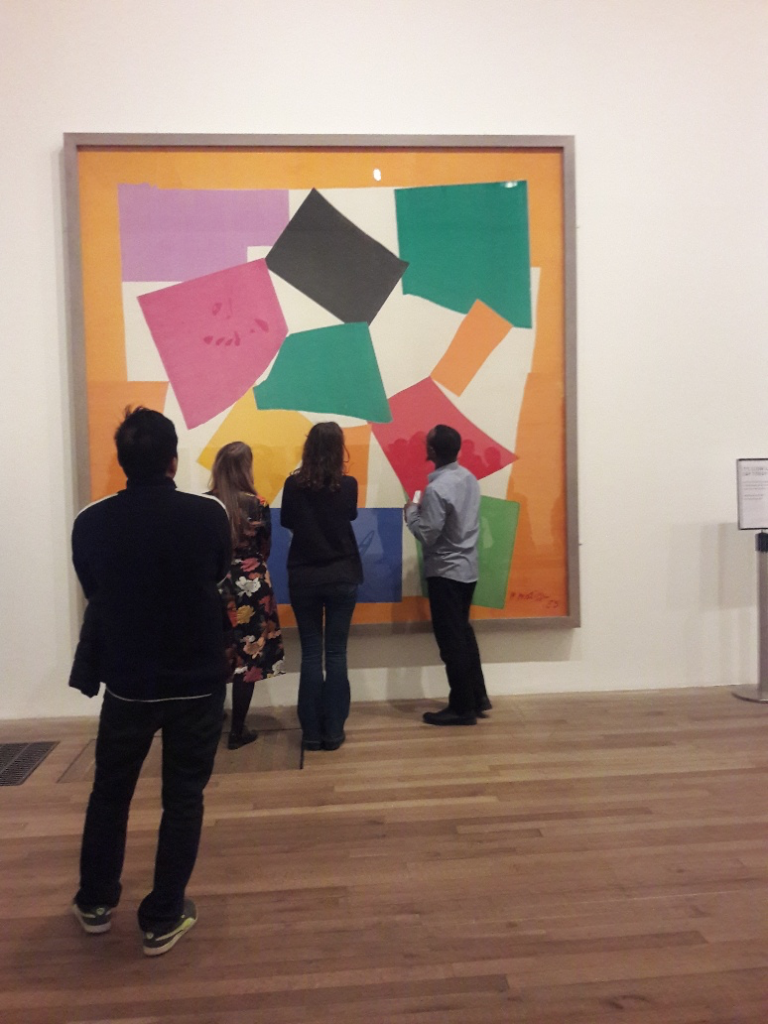
Participants slowly looking at The Snail by Henri Matisse
They organized two one-hour slow looking sessions split between two artworks and, then, after the sessions, the team invited the visitors to come together for tea, coffee, biscuits, and a discussion about the whole experience.
Here’s what some of the participants said:
“A really interesting session. I’m more mindful of how to observe art in the future.”
“What a wonderful idea!
“I understand now how you can spend so much time in a gallery looking at art!”
“The combination of looking at art slowly and with other people is a real eye opener.”
“Really like the concept. As someone who can feel a bit intimidated by the art world this felt like a really nice way in and gives me more confidence to engage with art in the future.”
“A brilliant concept, lovely to think that this is going on all around the world.”
“I will definitely bring friends next time. Do it again!”
“I felt like a part of a group/community and was an hour well spent.”
“We can’t wait for next year to do it again,” said Adriana Oliveira, Visitor Experience Manager there at Tate Modern.
Happy to report that Slow Art Day 2026 is coming up in 1 week – Sat, Apr 11, 2026 – around the world.
And I’m delighted to welcome another new host to our movement: Nathalie Krall and her organization ArtVenture Club e.V. from Düsseldorf, Germany.
ArtVenture Club e.V. is a global, digitally native nonprofit network that connects freelance and self-employed art professionals, scholars, and creatives. Their mission is to foster a more fair, diverse, and sustainable art world by bringing together practitioners and the public in thoughtful dialogue and shared experiences. Their work has been recognized in Germany’s UNESCO State Report on cultural diversity.
On April 11, 2026, they will host their first Slow Art Day event — a fully online session via Zoom, open to participants around the world. They are calling the event “Die Kunst des langsamen Sehens” (The Art of slow Seeing).
It’s free to attend with registration via Eventbrite (note: this session will be in German).
During the pandemic, many museums, galleries, and community groups experimented with virtual formats, expanding access during a time of global isolation. What makes this event notable is not simply that it is digital — but that it comes from an organization built natively for digital cultural engagement, with a clear and thoughtful philosophy behind it.
Krall explained to me that she sees online slow looking as a meaningful expansion of access and engagement, as it will:
– increase accessibility for people who cannot attend in person – create inclusive spaces across geographic and social boundaries – function as an independent mode of engagement with art.
I’ll add that Krall has designed it so that participants will chose three artworks for everyone to look at via a live poll at the beginning of the session. The selected works — high-resolution digital images drawn from among ArtVenture Club’s past 50 programs — will then be shared on screen and via links for deeper individual exploration.
As noted, this first Slow Art Day will be conducted in German, though they have plans to add English-language sessions in the future.
Please help us welcome Nathalie Krall and ArtVenture Club e.V. to the global Slow Art Day community.
Happy almost Slow Art Day!
– Phyl
P.S. As you know, Slow Art Day 2026 is coming up April 11 — register your museum, gallery, church, sculpture park or movie theater for 2026, if you have not yet done so.
P.P.S. Get inspired by reading our comprehensive 2025 Annual Report providing details and descriptions (as well as artifacts) of more than 76 events from around the world last year.
Slow Art Day 2026 is just over a week away – and more big news: Bogotá, Colombia joins the growing global movement toward citywide Slow Art Day celebrations.
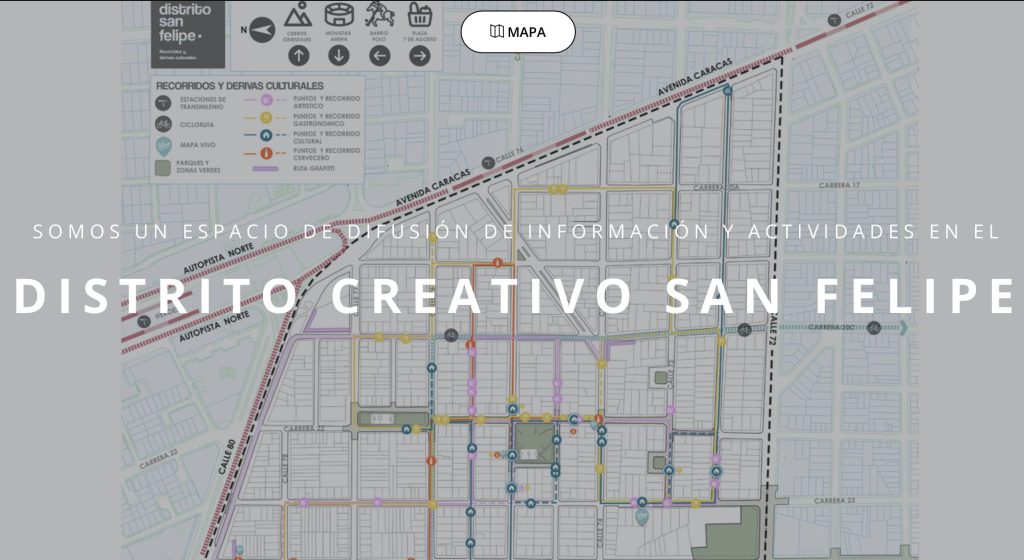
This inaugural citywide in Bogotá is led by Mauricio Ávila, Consejero Distrital de Infraestructura Cultural (District Advisor for Cultural Infrastructure), and centered in San Felipe Distrito Creativo (SF), which is Bogotá’s leading arts district. Often referred to simply as “SF,” the district brings together a dense network of contemporary galleries, artist studios, and creative venues, making it a natural anchor for Bogotá’s citywide Slow Art Day (see map image below).
As part of his role as District Advisor, Ávila decided to launch this first citywide in Bogotá. He was initially inspired by Constanza Ontiveros Valdés — an art writer and cultural project leader – who launched the first citywide Slow Art Day in Mexico City in 2025 and has expanded it in 2026 (more below). As you’ll see below, Ontiveros Valdés was in turn inspired by Pamala Eaton, Janean Baird and the whole team in Bloomington, Illinois who launched the first citywide anywhere.
Building on those examples, Ávila has organized five galleries and art spaces to pilot the Bogotá edition:
CURCUMA ART CENTER A contemporary art space focused on experimentation, emerging artists, and interdisciplinary practices.
ESTUDIO 74 A working studio and exhibition space supporting local artists and creative collaboration.
ESPACIO PERMANENTE An independent gallery dedicated to contemporary practices and ongoing artistic dialogue.
EL AZULEJO SAN FELIPE A cultural venue in Bogotá’s San Felipe arts district, known for its vibrant, community-driven programming.
VII A contemporary gallery presenting emerging and experimental artists, with a focus on bold, concept-driven exhibitions and new voices in the Bogotá art scene.
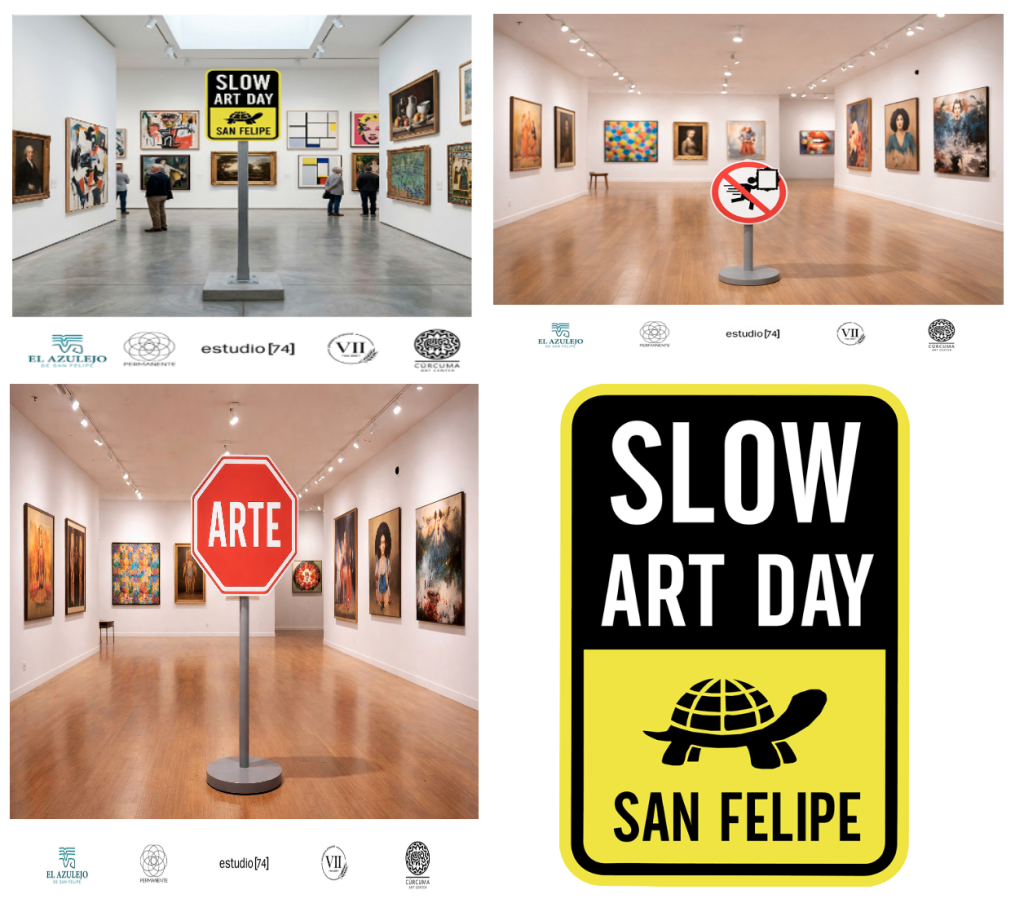
Together, these venues represent a cross-section of the contemporary art scene in SF — from independent galleries to artist-run spaces (see photos below).
We at Slow Art Day HQ are excited to watch the citywide movement spread organically around the world. As noted above, Constanza Ontiveros Valdés in Mexico City was inspired by Pamala Eaton and the BN Artists in Illinois who were the first anywhere to launch a citywide Slow Art Day. Their momentum continues to build. Their original citywide has now expanded into a celebration across Central Illinois — making that the first region-wide Slow Art Day in the world. Meanwhile, the 2025 Mexico City effort proved so successful that Ontiveros Valdés has since built a volunteer team, launched a dedicated website, and organized a coalition of more than 55 museums, galleries, and cultural venues for 2026.
Wow. Wow. Wow.
This deepening of our Slow Art Day movement could not come at a more important time in our divisive, topsy-turvy world. We need more art, we more global cooperation, and we need more community – and thanks to many of you we will have all that again with this year’s Slow Art Day.
Best,
Phyl
P.S. As you know, Slow Art Day 2026 is coming up April 11 — register your museum, gallery, church, sculpture park or movie theater for 2026, if you have not yet done so. And maybe start thinking about a citywide celebration next year.
Slow Art Day 2026 is just over a week away – and big news – BN Artists, a team of artists in Bloomington-Normal, Illinois, have now expanded their pioneering citywide event to become the first region-wide celebration anywhere in the world. Wow.
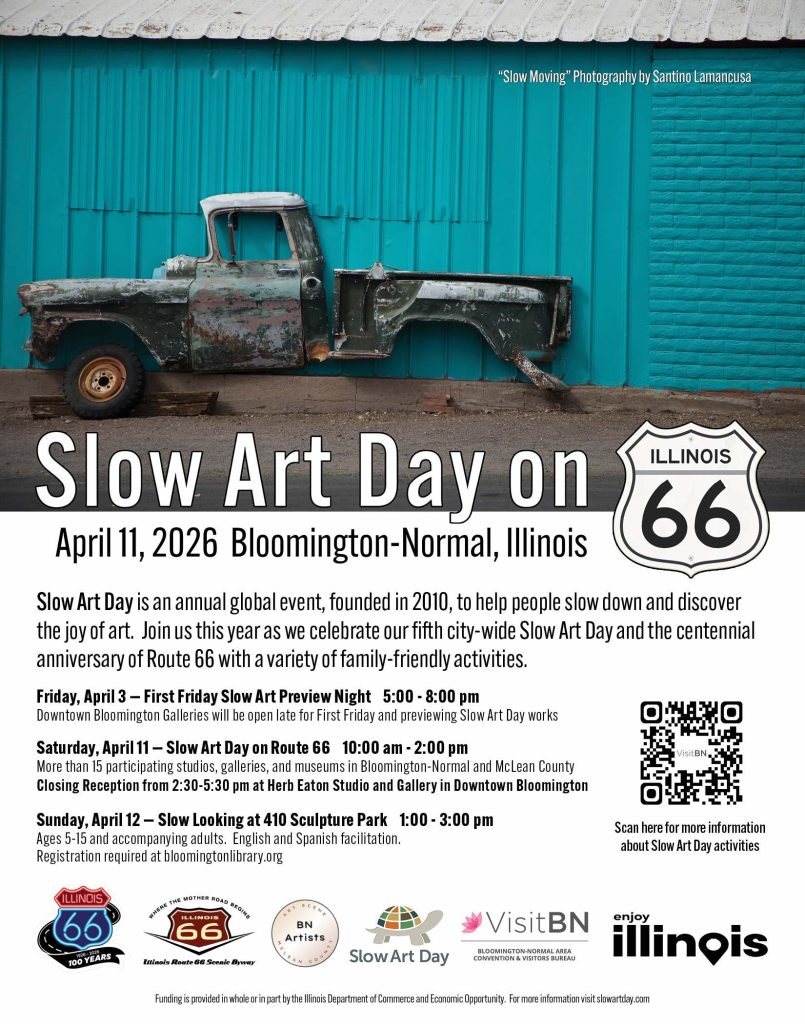
Aligned with the 100th anniversary of Route 66, Slow Art Day on Route 66 will be a Central Illinois region-wide series of events created by BN Artists along with a grassroots coalition of museums, libraries, small business owners, and cultural leaders, and with marketing support from Visit Bloomington-Normal and the Illinois Route 66 Scenic Byway. Together, they have set up a distributed, community-driven arts experience spanning more than 20 locations across several cities in Central Illinois (see below my signature for links to galleries, museums, libraries and other locations).
Pamala Eaton, who started the Slow Art Day movement in Bloomington when she launched the first citywide event in 2022, says this initiative has helped grow not just the arts community, but the region as a whole. “Collaborating with artists, galleries, and businesses across our community for Slow Art Day has increased visibility for the local art scene and is now attracting more local and out-of-town visitors to our art locations and everything else our towns offer.” Eaton is a gallerist and owner of Herb Eaton Studio & Gallery.
Here is the wonderful Slow Art Day on Route 66 poster –
The event will begin with a Preview Night on Friday, April 3 (First Friday), where visitors can explore downtown Bloomington galleries and meet local artists. The main Slow Art Day will then take place on Saturday, April 11 from 10 a.m. to 2 p.m., followed by a closing reception from 2:30 to 5 p.m. at Herb Eaton Studio & Gallery. Additional programming will continue throughout the weekend and beyond, including a special slow looking and art making experience on Sunday, April 12 at 410 Sculpture Park in partnership with the Bloomington Public Library.
The connection to Route 66 adds a wonderful dimension. Long celebrated as part of the American experience, Route 66 represents movement, exploration, and the stories we carry across distance. Slow Art Day gently inverts that idea — inviting people not to pass through, but to pause, to look closely, and to build connection where they are.
As local arts educator Hannah Johnson noted, slow looking and slow making are “transformative acts in our exceedingly expeditious world.” That spirit is evident throughout the region — from galleries and museums to libraries, sculpture parks, and public spaces.
Participants will be encouraged to explore multiple locations, collect stamps in the Art Scene in McLean County Passport, and experience the diversity of artistic expression across Central Illinois. The result will be not just a series of events, but a shared regional experience built on attention, curiosity, and community.
We at Slow Art Day HQ are blown away by how Janean Baird, Pamala Eaton, BN Artists, and their many partners continue to lead the way in growing the Slow Art Day movement. Among other things, they have inspired others around the world to launch citywide events. In 2025, Constanza Ontiveros Valdés — an art writer and cultural project leader in Mexico City – was inspired by BN Artisits to start the first Mexico City citywide. That was so successful that this year, Ontiveros Valdés has built a volunteer team, a website and organized a coalition of 55+ museums, galleries and other venues. Wow! And not to be outdone by his northern neighbor, Mauricio Avila Morales is now organizing the first citywide in Bogotá, Colombia (more on that soon).
Happy Slow Art Day (almost) to everyone around the world. We need more art and community in this divisive, topsy-turvy world – and thanks to many of you we will have that.
Best,
Phyl
P.S. Slow Art Day 2026 is coming up April 11 – register your museum, gallery, church, sculpture park or movie theater for 2026, if you have not yet done so.
The Central Illinois Participating Galleries, Museums, Libraries, Public Art spaces, and Sculpture Parks
410 Sculpture Park — 410 S. Madison St., Bloomington, IL Large-scale works created from discarded industrial materials. Open daily. Special slow looking + artmaking program on Sunday, April 12 (registration required).
Art Vortex Studio — 101 W. Monroe St., Suite 210, Bloomington, IL Photography, sculpture, and collage. Open April 3 and April 11.
Beluga Press Art Gallery — 313 N. Main St., Bloomington, IL Photographic techniques. Open April 3 and April 11.
Bloomington Public Library — 205 E. Olive St., Bloomington, IL Featured local artists on display. Co-host of April 12 sculpture park program.
City of Lexington — 329 W. Main St., Lexington, IL Public art installations and Bloom on Main community event.
Herb Eaton Studio & Gallery — 411 N. Center St., Bloomington, IL Historic Route 66 gallery and closing reception site.
Illinois Art Station — 101 East Vernon Ave., Normal, IL Free Fourth Saturday artmaking event on April 25.
Inside Out: Accessible Art — 200 W. Monroe St., Bloomington, IL Artists available to discuss their work.
Jan Brandt Gallery — 418 N. Main St., Bloomington, IL Circus-themed paintings inspired by local history.
Slow Art Day 2026 is coming up Saturday, April 11, and I’m happy to announce today the publication of our 2025 Annual Report, which details many of the events held last year.
Read it and get inspired to plan your 2026 events (register your museum, gallery, church, sculpture park or movie theater for 2026, if you have not yet done so).
Over 15 years, educators and curators at museums and galleries around the world have built something extraordinary:
– More than 1,500 events across every continent — including Antarctica – Endless creativity in how people experience art slowly – The rise of citywide events — Mexico City had 37 venues in 2025 and is growing to 55+ in 2026 – to Central Illinois, which helped pioneer the citywide model and this year is producing a region-wide Slow Art Day/weekend of events up and down Route 66 – Expansion into churches, hospitals, and community spaces – New collaborations, including with Never Search Alone, bringing job seekers together through art and community
At its core, the idea remains simple: help people slow down and really see.
But there is a second idea — to open up the art world.
No expertise required. No background assumed. Just people, looking at art, together.
This movement is built locally, event by event, by people like you.
And in a time of growing division and isolation, that matters more than ever.
When people gather to look slowly at art — and then talk about what they see — they connect. They build trust. They remember their shared humanity.
That is what thousands have helped to create.
We look forward to our next 15 years when we believe art will be ever more important.
Thank you.
Phyl Terry
P.S. I want to give special thanks to the Slow Art Day Annual Report team led by Ashley Moran, Editor, and writers Johanna Bokedal, and Jessica Jane Nocella. They work tirelessly to produce this Annual Report and volunteer weekends, mornings, evenings throughout the year.
They fit this in between their full-time job (Ashley Moran at Comcast in the United States), full-time job/PhD student (Johanna Bokedal in Norway), and full-time post-doc work (Jessica Jane in Italy).
And while we are at it, let’s celebrate volunteer Maggie Freeman who is the global director and registrar for Slow Art Day. Maggie started volunteering 10 years ago when she was a sophomore at Mills College. Today, she is finishing her PhD in Islamic Art and Architecture at MIT and somehow, like the others, still finds time to volunteer.
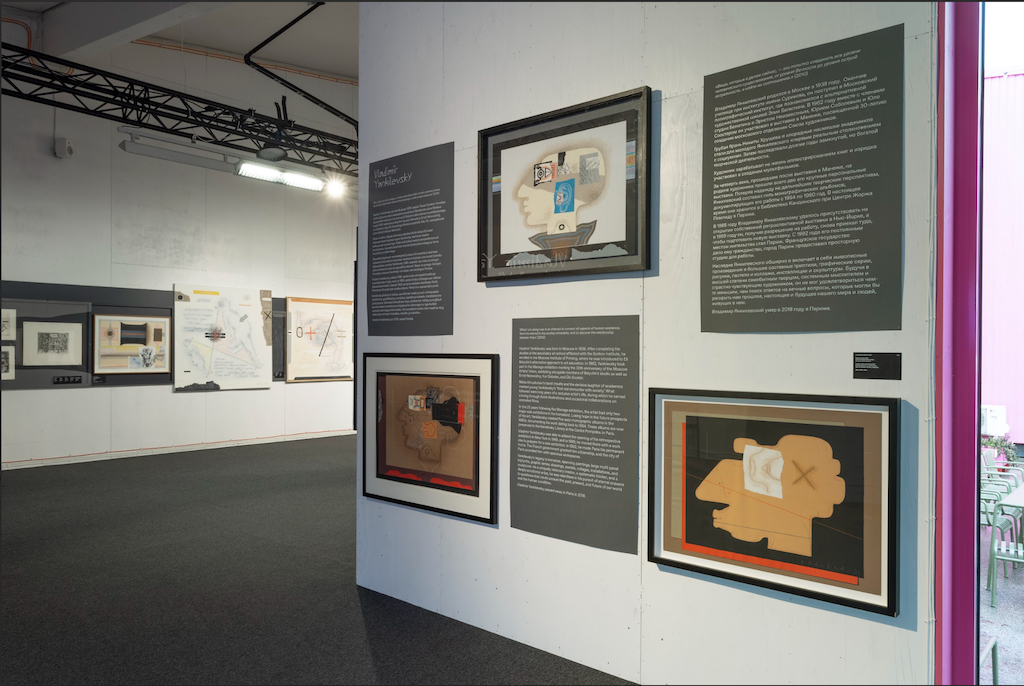
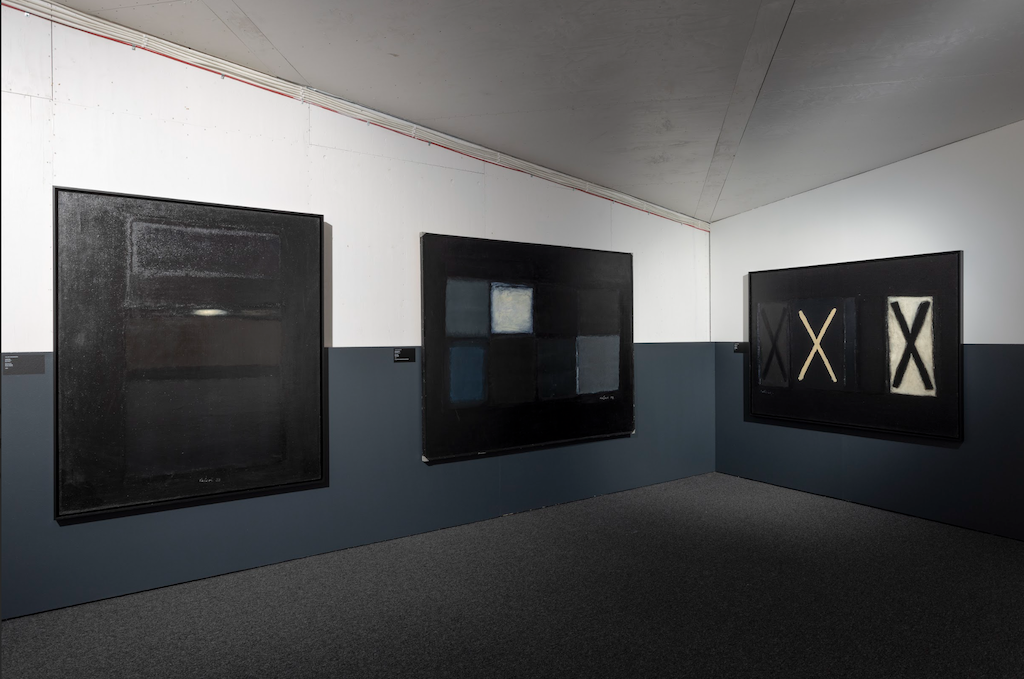
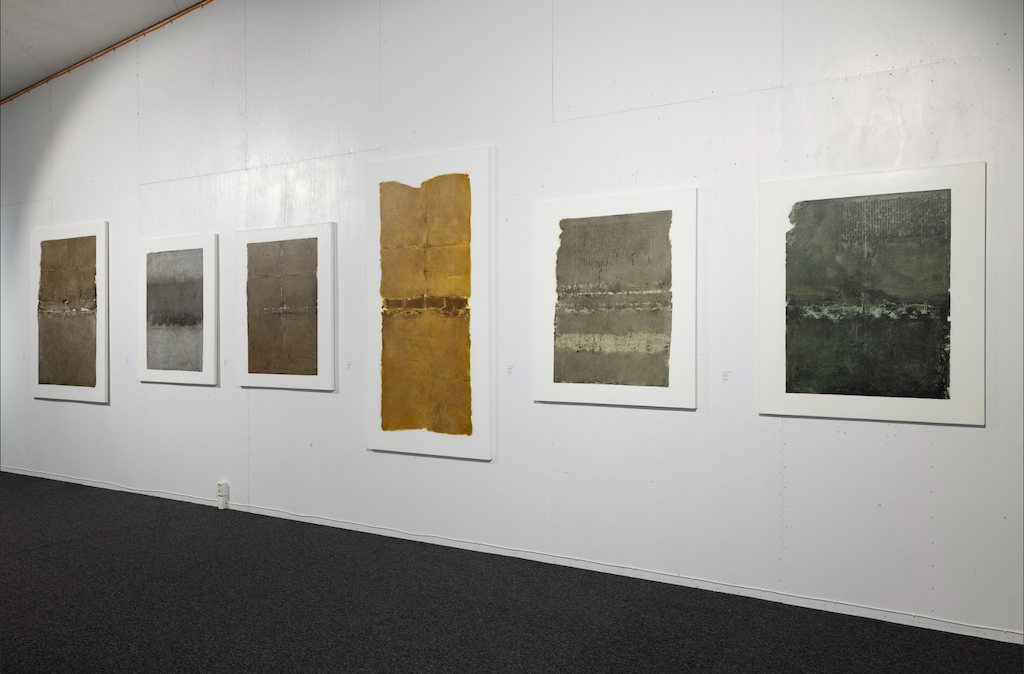
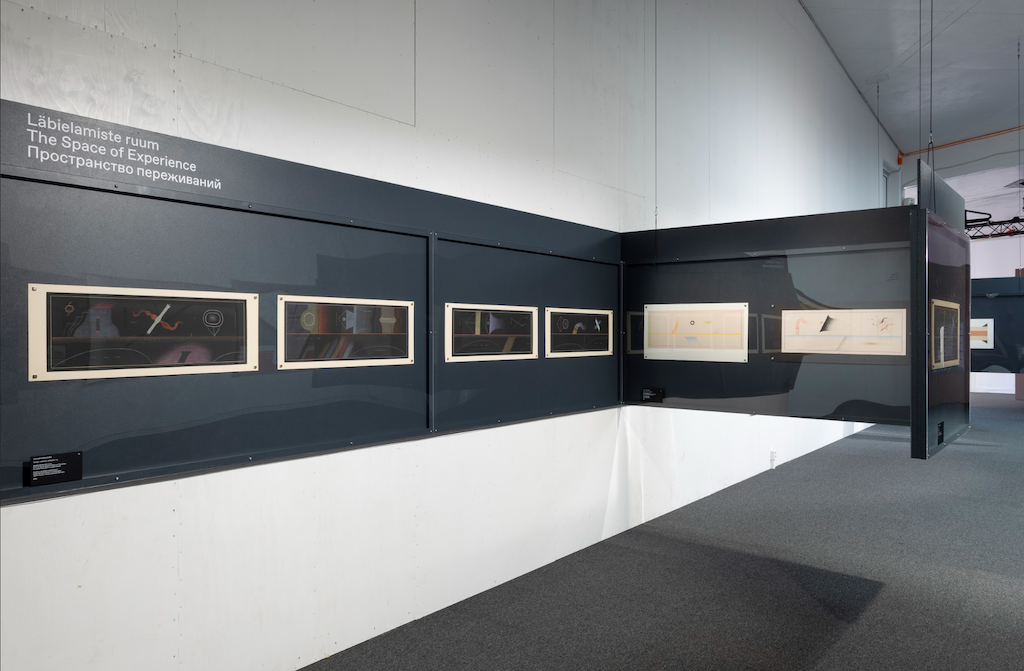
For their first Slow Art Day, Tallinn Art Hall Lasnamäe Pavilion in Estonia hosted a contemplative “very slow viewing tour” within the exhibition featuring works by artists Vladimir Yankilevsky and Valeri Vinogradov.
Led by curator and guide Aljona Tubaleva, the session invited visitors to enter the exhibition space as a spiritual and emotional landscape—a place where human feelings, perceptions, and ideas unfold beyond what is immediately visible.
Vladimir Yankilevsky and Valeri Vinogradov.Photo credit: Tallinn Art Hall, Paul Kuimet.Vladimir Yankilevsky and Valeri Vinogradov.Photo credit: Tallinn Art Hall, Paul Kuimet.
The tour began with a grounding exercise that helped participants slow down and focus inward before turning their attention to the artworks around them. In this calm atmosphere, visitors explored the relationships between colors, shapes, and emotional undertones within the works.
Participants were encouraged to notice how their interpretations evolved as they learned more about the exhibition’s curatorial concept and the artists’ intentions. By consciously shifting their focus—sometimes inward toward their own emotional responses and sometimes outward toward the artwork—visitors discovered how meaning can change through attentive observation.
Vladimir Yankilevsky and Valeri Vinogradov.Photo credit: Tallinn Art Hall, Paul Kuimet.Vladimir Yankilevsky and Valeri Vinogradov.Photo credit: Tallinn Art Hall, Paul Kuimet.
The slow tour emphasized curiosity and personal reflection. Rather than rushing through the exhibition, participants were invited to think about how their feelings might take shape within the “artistic landscape” created by the works on view.
We at Slow Art Day HQ are grateful to Aljona Tubaleva and the team at Tallinn Art Hall for creating such a thoughtful and meditative slow looking experience at the Lasnamäe Pavilion.
We look forward to what they come up with for Slow Art Day 2026, which is coming up April 11, 2026.
— Ashley, Johanna, Jessica Jane, and Phyl
P.S. If you have not yet registered your museum of gallery for Slow Art Day 2026, please do.
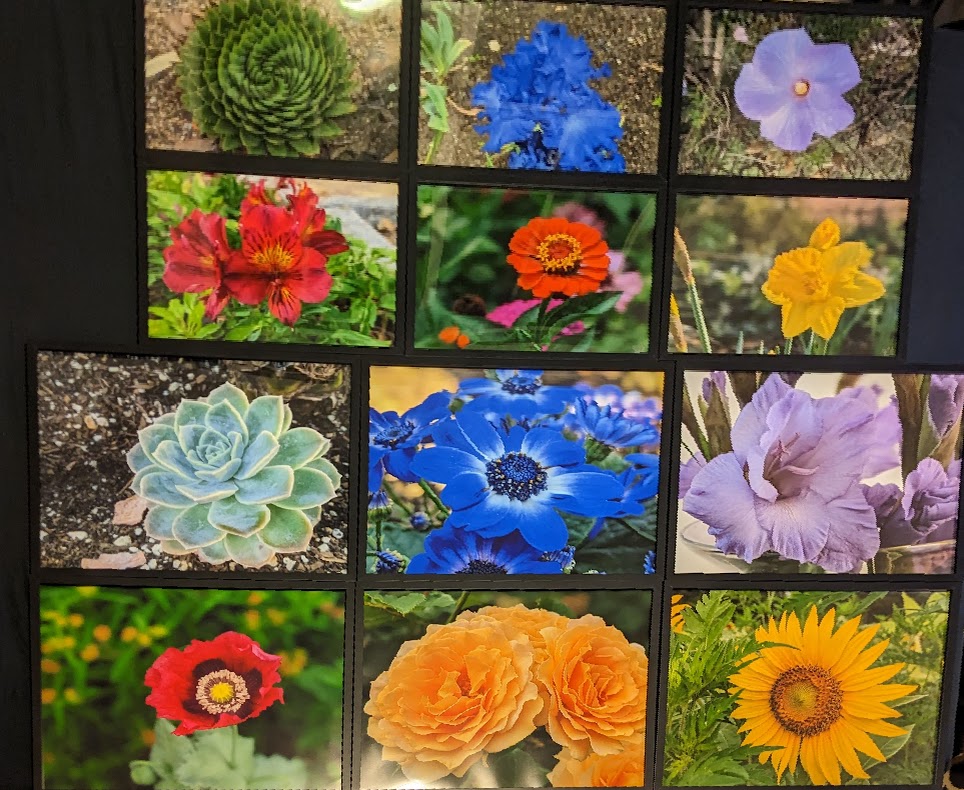
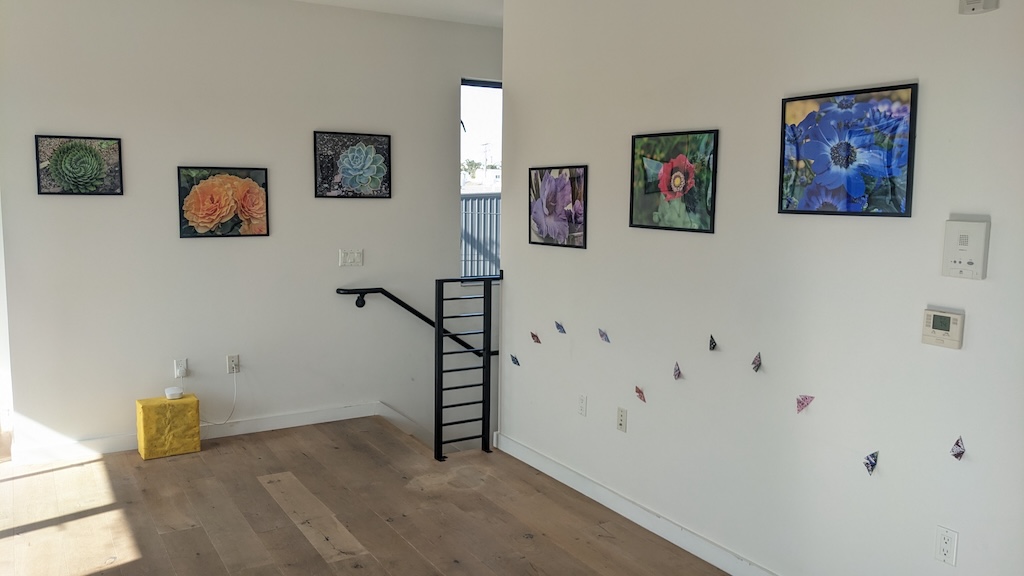
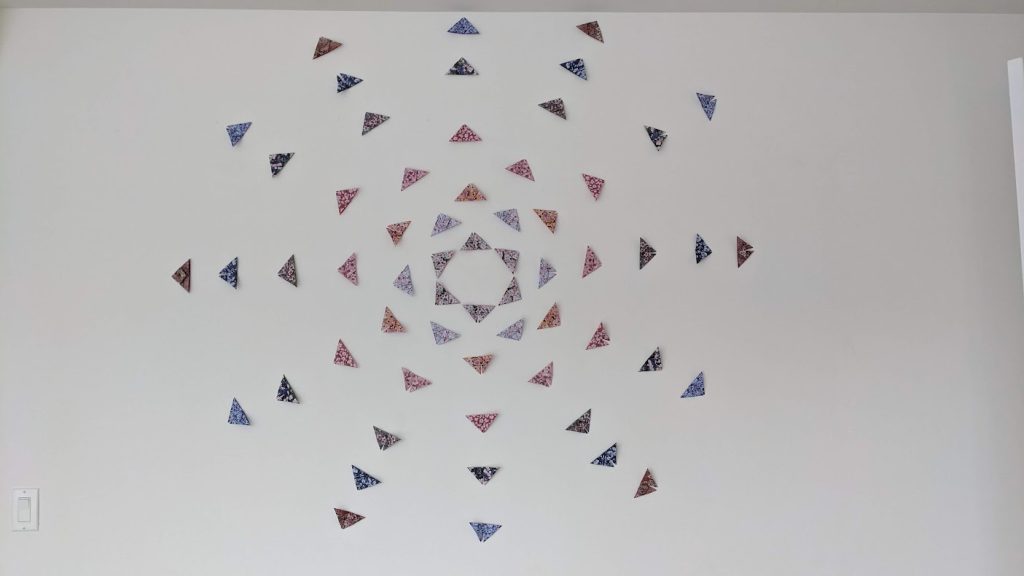
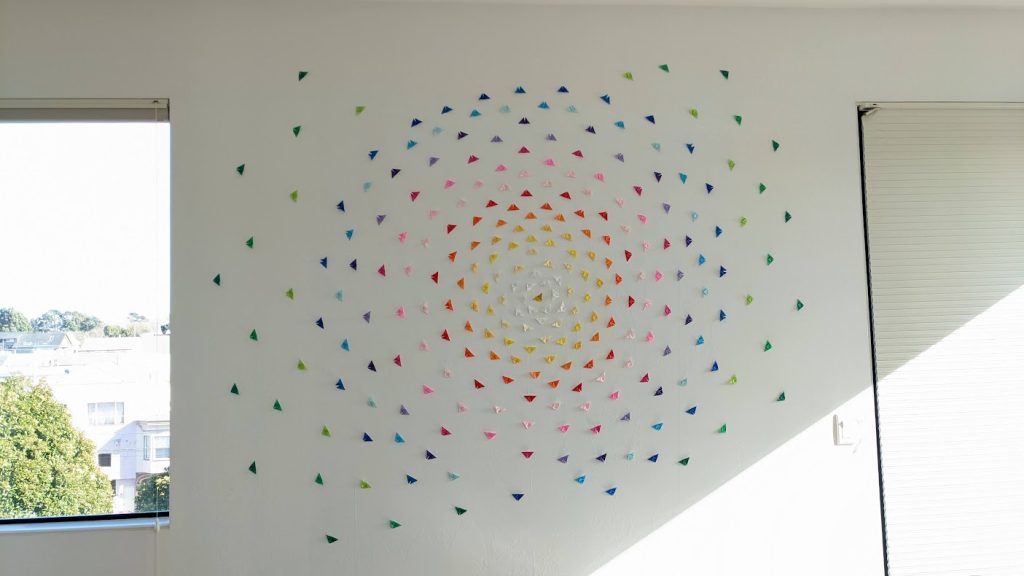
For Slow Art Day 2025, Bay Area participant Div hosted a unique, two-day experience that blended group slow looking at museums with individual ature observation, photography, and handmade art. The gathering, titled “Nowhere Div – Slow Art Day – San Francisco,” invited participants to slow down and reconnect with art through both creative practice and mindful observation.
Div’s personal experience unfolded over two days and across several locations in San Francisco, beginning with a slow walk through parks and gardens near Golden Gate Park and a reflective visit to the de Young Museum.
Div documented a series of seven “slow moments” during the journey, each centered on noticing beauty and emotional resonance in everyday surroundings. These moments included quiet reflection among the tulips at the Queen Wilhelmina Garden, a feeling of awe along Ocean Beach, and time spent with artworks at the de Young Museum. The walk continued through several locations in and around Golden Gate Park, including the Rose Garden, the Japanese Tea Garden, the Conservatory of Flowers, and the San Francisco Botanical Garden. You can read more about Div’s personal journey on their blog post.
Each stop became an opportunity to pause and look carefully. Flowers, trees, and landscapes were photographed and paired with short reflections. Together, these observations formed a contemplative visual journal inspired by the spirit of Slow Art Day.
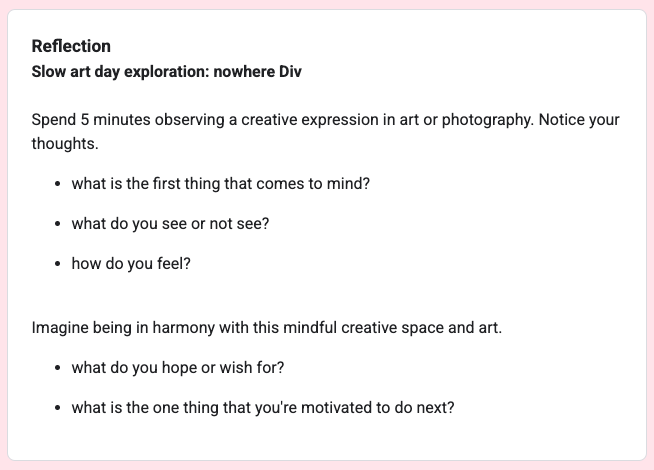
The following day, Div hosted a small community gathering in the Bayview neighborhood of San Francisco. Participants were invited to spend time with handmade butterfly origami mandala wall art and floral photography created by the host. The session included prompts encouraging visitors to reflect on the experience of slow looking and to consider how spending more time with an artwork changes perception and emotional connection.
By combining museum visits, nature photography, and handmade artwork within a personal gathering, Div created a thoughtful example of how Slow Art Day can extend beyond formal institutions into everyday life. The experience demonstrated that slow looking can happen anywhere—from galleries and gardens to community spaces and personal creative practice.
We at Slow Art Day HQ are grateful to Div for sharing this reflective and deeply personal approach to Slow Art Day and look forward to what they come up with for Slow Art Day 2026, which is coming up April 11, 2026!
— Ashley, Johanna, Jessica Jane, and Phyl
P.S. If you have not yet registered your museum of gallery for Slow Art Day 2026, please do.
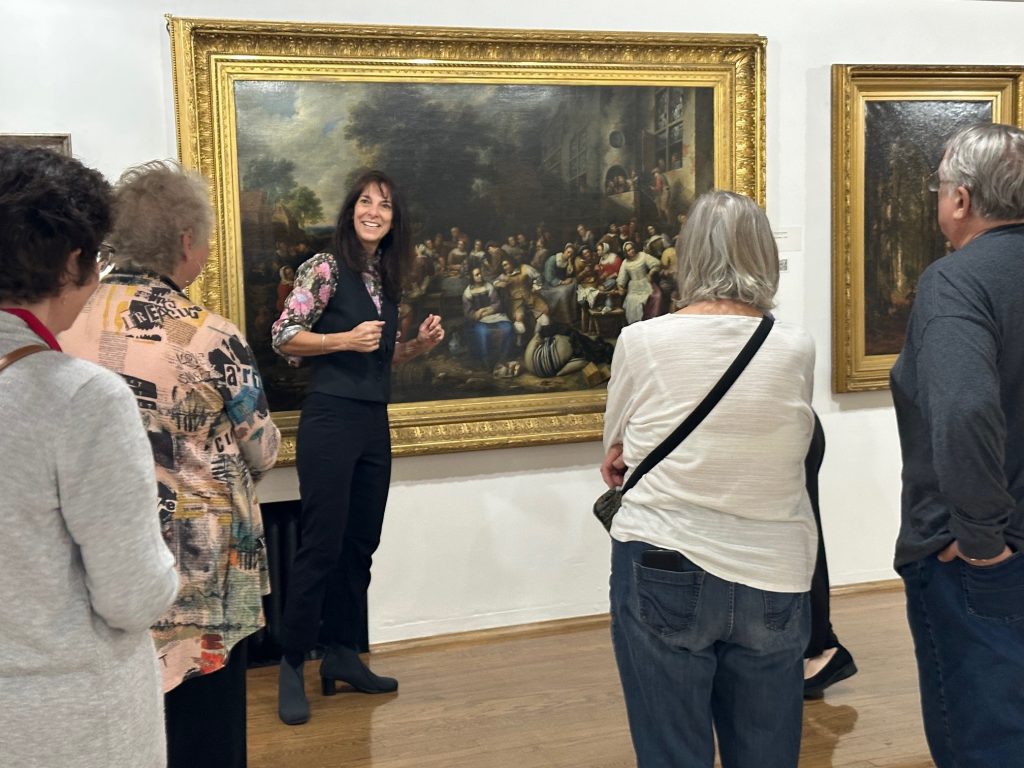
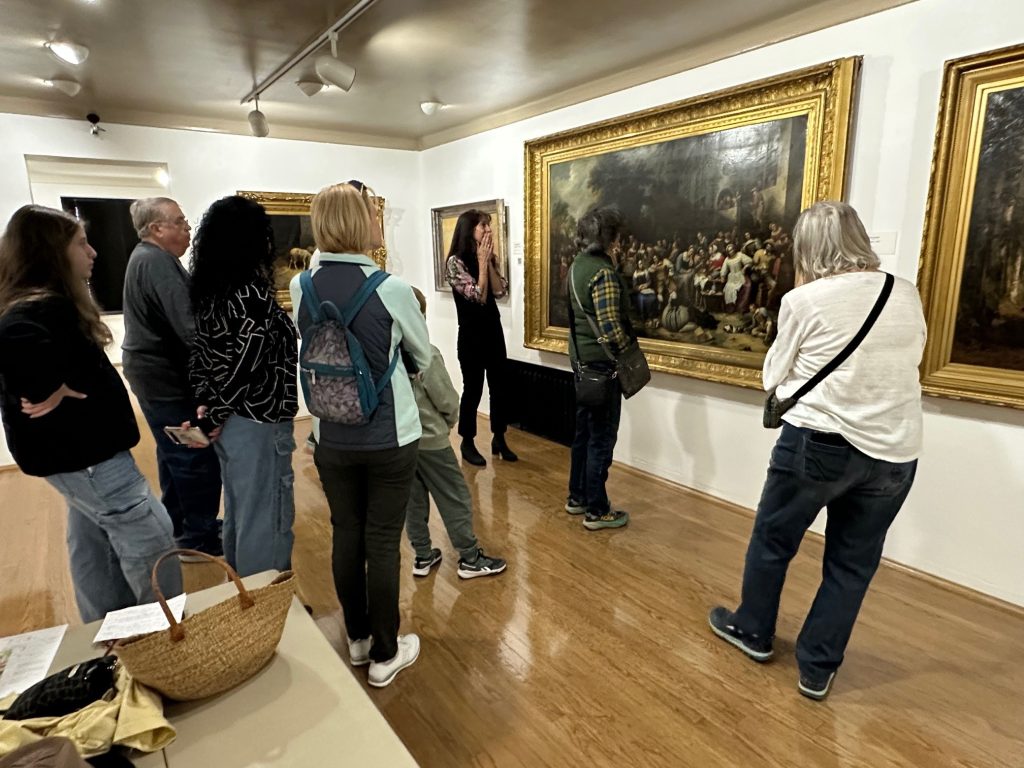
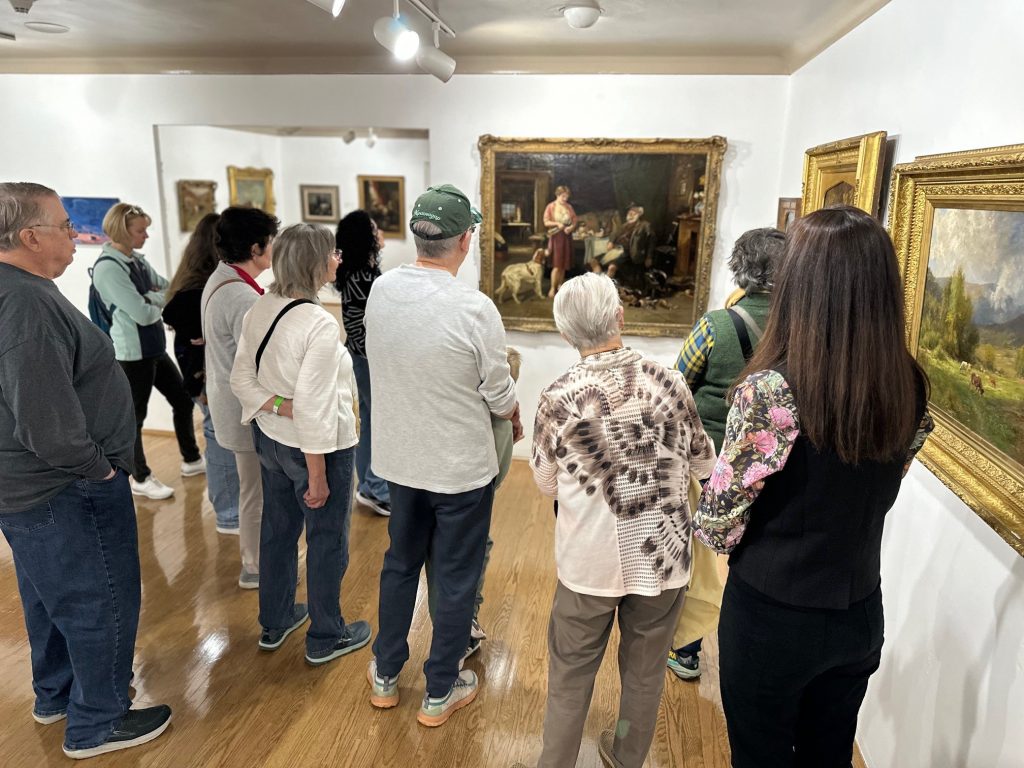
For their fifth Slow Art Day, the Maryhill Museum of Art in Goldendale, Washington hosted a lively and imaginative slow looking session led by Curator of Education Sorcha Meek Paul.
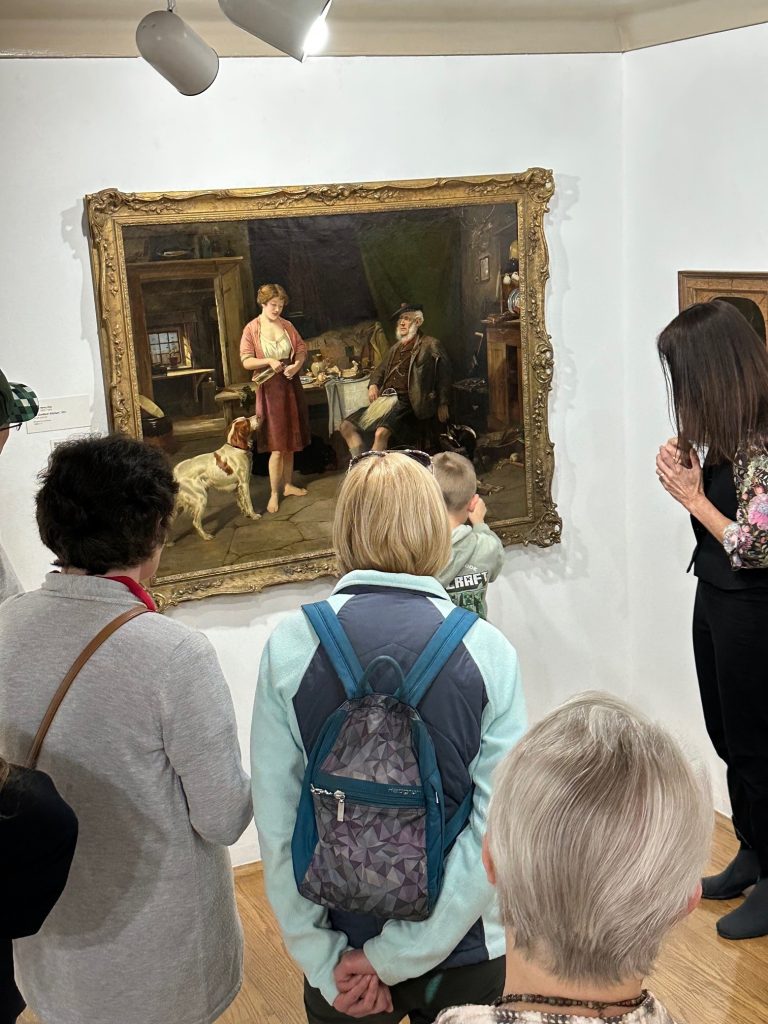
Participants gathered to spend time with two paintings from the museum’s permanent collection:
The Wedding Feast c.1660 by Gillis van Tilborg the Younger. Oil on Canvas. Flemish, c. 1625-c.1678
The Crofters’ Kitchen, 1884 by Rober Henry Roe. Oil on canvas. British, 1822-1905
The session began with several minutes of quiet observation. Visitors were invited to share their initial impressions using the simple phrase “I see…”, taking turns describing what they noticed in the paintings. This approach helped participants to focus on careful observation as well as helped to create community by having the participants build on each other’s discoveries.
Next, Sorcha guided the group through a sensory exercise designed to deepen engagement with the artworks. Participants were asked to imagine stepping into the paintings and to consider what they might smell in the scene. When looking at The Wedding Feast, this question sparked laughter as visitors imagined the smells of food, drink, and a bustling celebration.
Visitors then imagined what they might hear, leading to the discovery of new details, including a man playing a lute in the background of the lively gathering. Participants also considered taste and touch.
Only after this extended slow looking and imaginative exploration did Sorcha introduce historical context. Participants learned that The Wedding Feast was painted around the same era as Johannes Vermeer created Girl with a Pearl Earring, prompting participants to notice similarities.
One of the highlights of the session was the participation of children. For the first time in their Slow Art Day design, they invited younger visitors to join the discussion. The young people brought fresh observations and enthusiasm. As Sorcha noted, it was especially rewarding to see a 10-year-old become excited about looking closely at art.
Through quiet observation, sensory imagination, and shared discovery, the Slow Art Day program at Maryhill Museum of Art created community and joy for visitors of all ages.
We at Slow Art Day HQ are grateful to Sorcha Meek Paul and the team at Maryhill Museum of Art for creating such an engaging and welcoming experience and look forward to what they come up with for Slow Art Day 2026, which is coming up April 11, 2026.
— Ashley, Johanna, Jessica Jane, and Phyl
P.S. If you have not yet registered your museum of gallery for Slow Art Day 2026, please do.
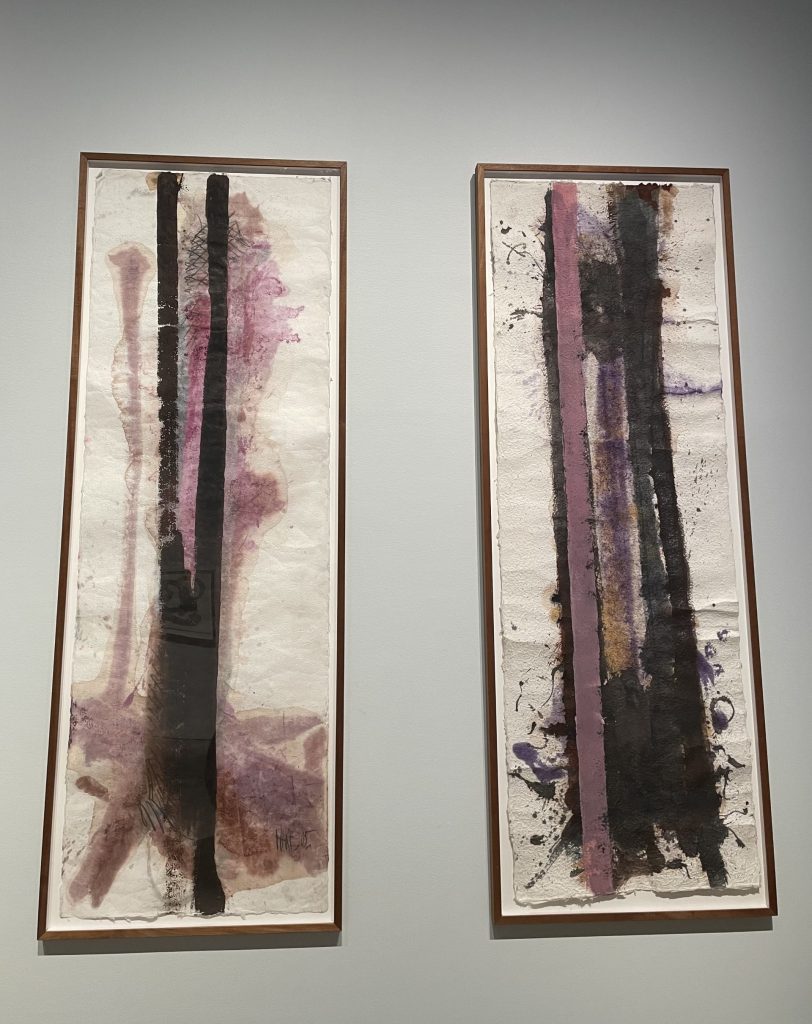
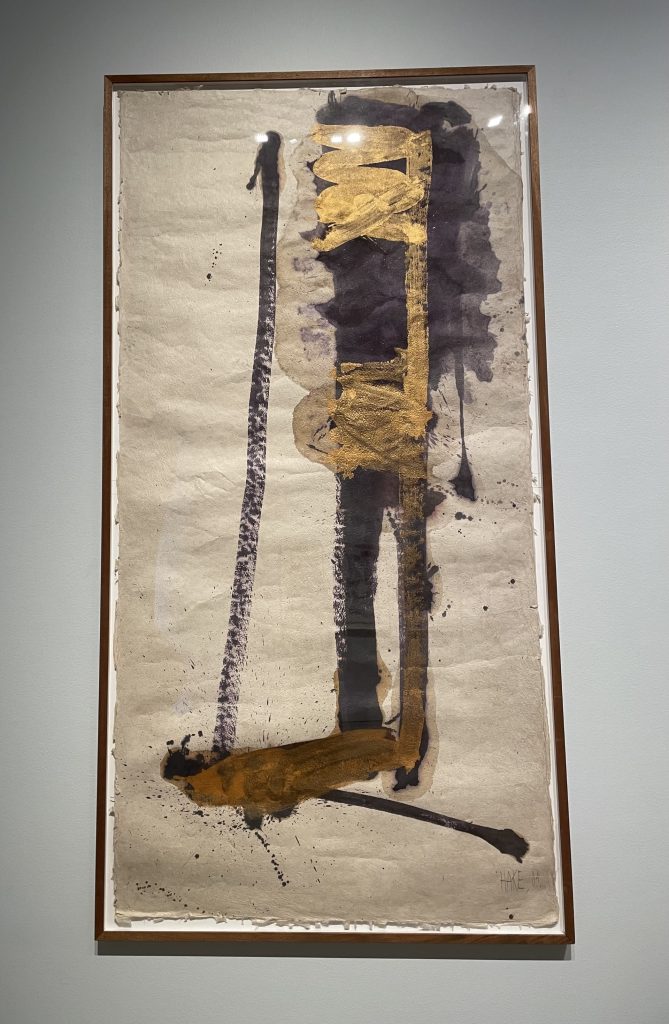
For their first Slow Art Day, the Nordiska Akvarellmuseet in Sweden hosted a reflective slow looking session featuring works by Swedish artist Claes Hake in the exhibition “HAKE / Retrospective 1962–2024.”
The session was led by museum art educator Renée Tan, who designed the experience to emphasize quiet observation and personal reflection before introducing interpretation or historical context.
Participants began by sitting together in silence for 15 minutes in front of three paintings: My First Gold Painting, The Woods 2, and The Woods 1. Visitors were asked to turn off their mobile phones and simply observe the works without any prior explanation about the artist or the artworks.
The Woods 2 and The Woods 1. Photo courtesy of Nordiska Akvarellmuseet.My First Gold Painting. Photo courtesy of Nordiska Akvarellmuseet.
After the silent viewing period, Renée Tan invited participants to share their impressions through guided questions. The conversation focused on participants’ sensory and emotional responses to the paintings, including the atmosphere of the space, the shapes and colors in the compositions, the materials and techniques used, and possible metaphorical interpretations that emerged during the slow looking process.
Following the discussion, the group continued with a guided walk through the rest of the exhibition. The tour concluded in front of the oldest artwork in the exhibition, created by Claes Hake when he was just 17 years old.
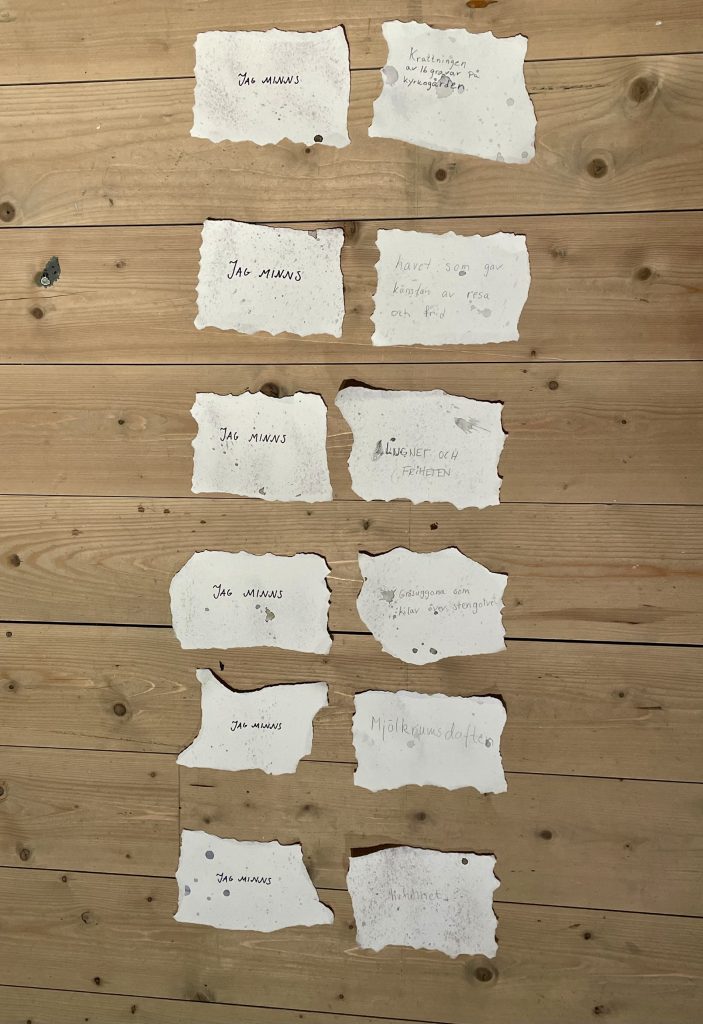
At this final stop, participants were invited to reflect on their own past. Renée asked them to think about a place connected to their youth and imagine themselves there again. Each participant then chose a feeling, object, or activity associated with that memory and wrote it down on small pieces of paper.
The papers were placed on the floor alongside slips containing the words “I remember.” As the participants’ reflections accumulated, the fragments formed a collective memory poem, connecting personal histories with the experience of looking at art.
Through silence, conversation, shared reflection, and poetry, the Slow Art Day session at Nordiska Akvarellmuseet demonstrated how slow looking can go beyond observation to open up space for memory, storytelling, and collective creativity.
We at Slow Art Day HQ are grateful to Renée Tan and the team at Nordiska Akvarellmuseet for creating such a thoughtful and participatory experience. We look forward to what they come up with for Slow Art Day 2026, which is coming up April 11, 2026.
— Ashley, Johanna, Jessica Jane, and Phyl
P.S. If you have not yet registered your museum of gallery for Slow Art Day 2026, please do.
For Slow Art Day 2025, the Museum of Fine Arts Budapest (MFAB) created a thoughtful set of tools and experiences designed to help visitors slow down and engage deeply with artworks throughout the museum’s galleries.
Rather than focusing on a single guided session, MFAB encouraged visitors to explore slow looking independently through several creative formats available throughout the museum. These tools were offered free of charge and invited guests to pause, observe carefully, and spend more time with selected artworks.
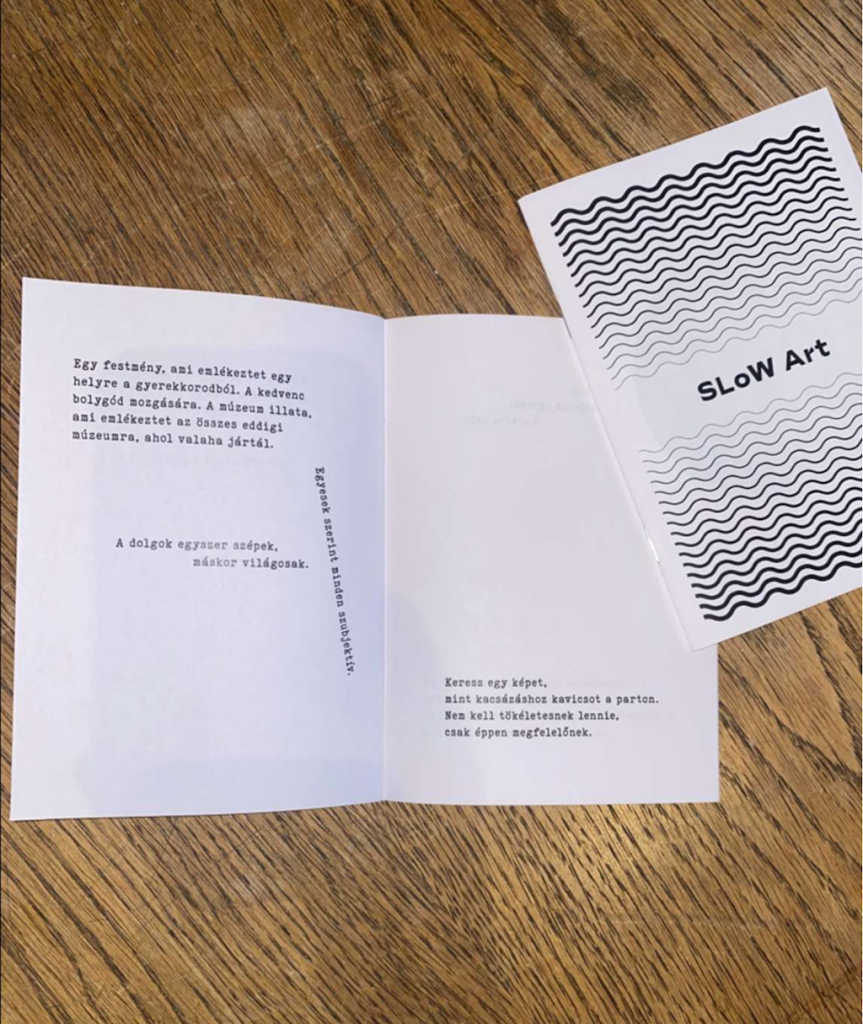
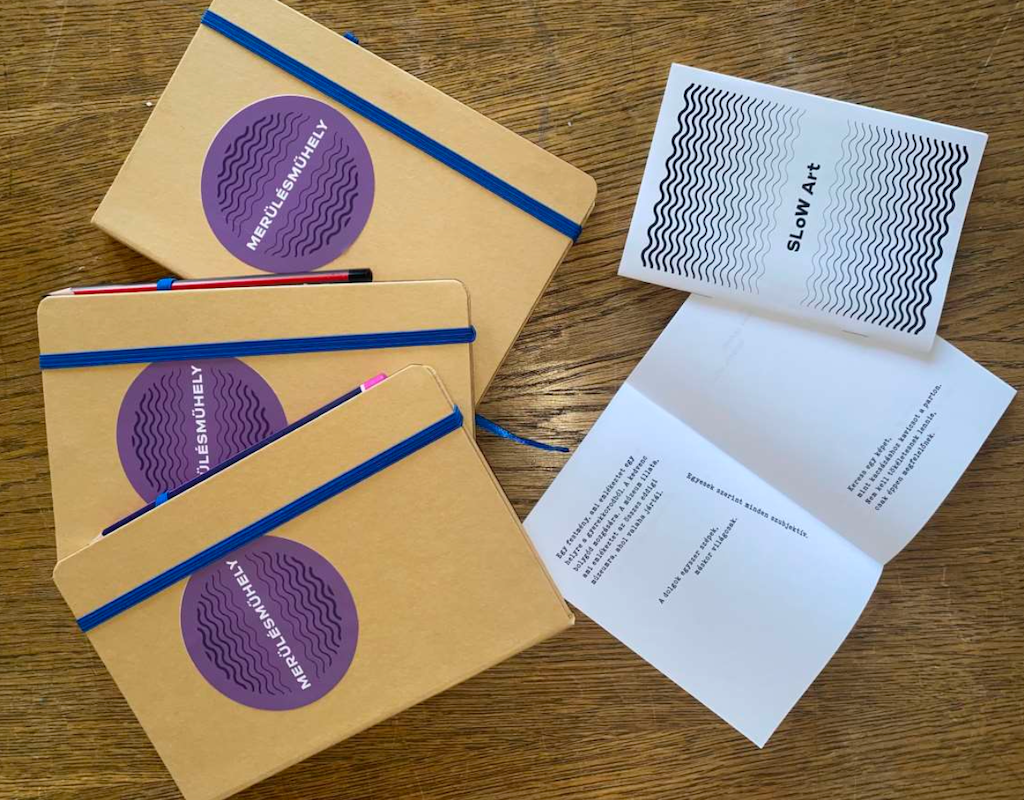
One of the most unique elements was a poetry booklet created by Hungarian poet Monika Ferencz, written specifically for the occasion. Visitors could take the booklet and move slowly through the museum while reflecting on short meditative poems and evocative text fragments. The idea was simple but powerful: choose a line, walk through the galleries, and allow the words to shape how you look at the art.
The museum also introduced a “Slow Guide – Step Inside the Painting” audio experience. By scanning QR codes placed next to eight selected artworks, visitors could listen to narrated audio reflections accompanied by music while looking closely at the paintings. This immersive format encouraged visitors to spend longer with individual works and experience them through both sound and sight.
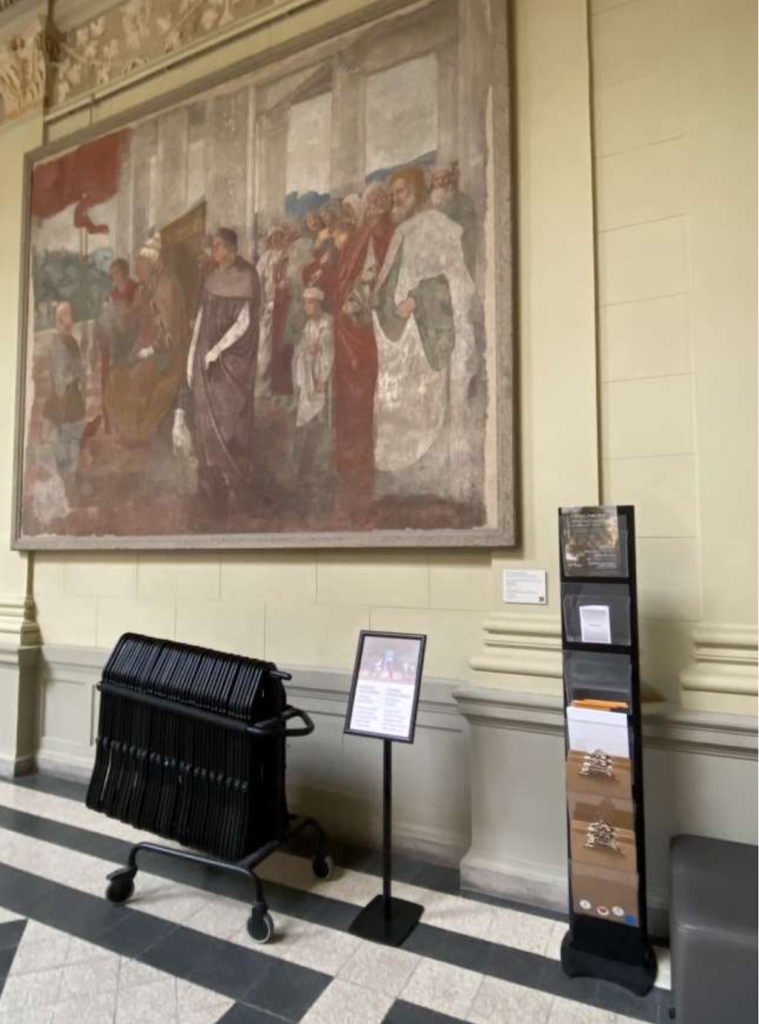
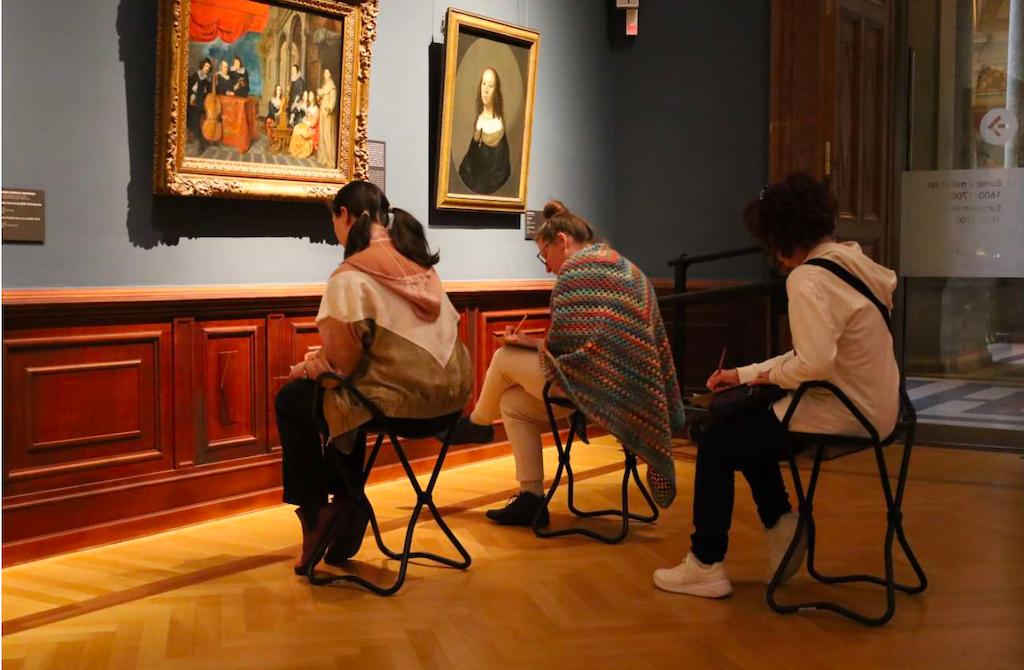
Another activity invited visitors to draw directly in the galleries. Guests could borrow a small folding chair, drawing board, paper, and pencil and spend time sketching details from artworks in the permanent collection. Focusing on small portions of the paintings helped participants notice subtle details they might have otherwise overlooked.
MFAB also extended its Slow Art Day programming into its regular Slow Museum evening series hosted on the 2nd Friday of each month (we love it when museums integrate slow looking into year-round programming!). One highlight was a Slow Writing Workshop led by Judit Cser, poet Monika Ferencz and museum educator Szilvia Záray, where participants used slow looking techniques as inspiration for creative writing. The three-session workshop took place in the Old Masters’ Gallery and invited a small group of participants to explore how close observation of artworks can spark new ideas and language.
Slow Writing Workshop. Photo courtesy of MFAB.Slow Writing Workshop. Photo courtesy of MFAB.
But that’s not all.
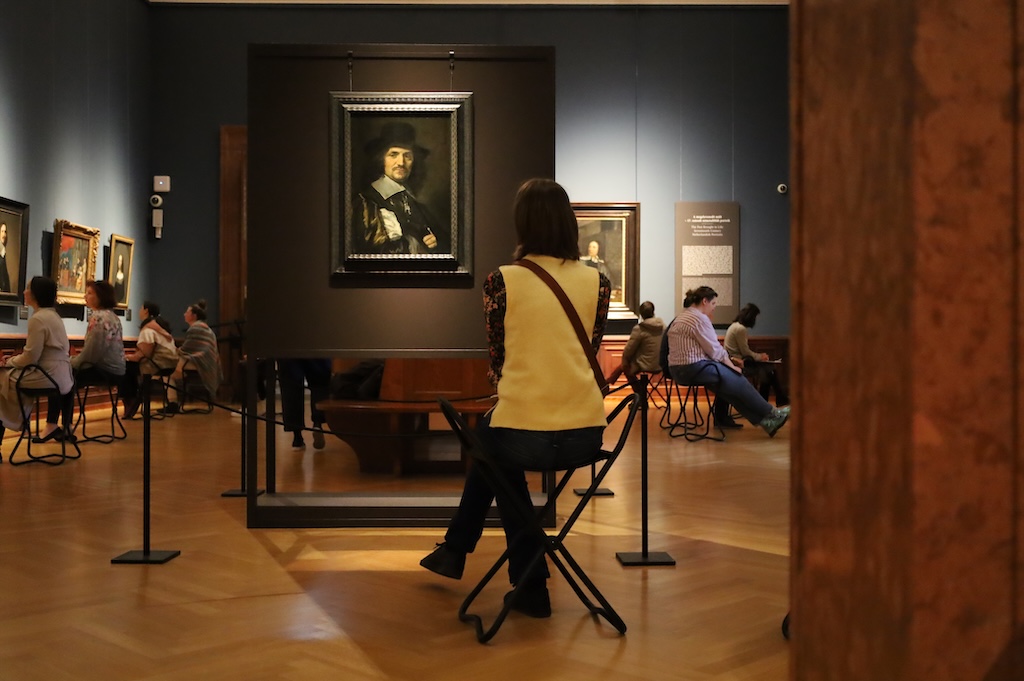
The MFAB provided yet one more guided experience, titled “The Gaze.” It brought visitors together for a one-hour slow looking session in the Dutch portrait gallery. Led by museum educator Szilvia Záray, the session encouraged participants to carefully study facial expressions, posture, and subtle details within the portraits while sharing their observations with the group. Amazing.
Participant during slow art session “The Gaze”. Photo courtesy of MFAB.
Together, these programs demonstrated how a museum can offer many different entry points into slow looking—from poetry and sound to drawing and writing—allowing visitors to discover the approach that resonates most with them, not only on Slow Art Day but throughout the year.
We at Slow Art Day HQ are grateful to the team at the Museum of Fine Arts Budapest for their thoughtful and creative approach. They are an inspiration for us all.
And we can’t wait to see what MFAB comes up with for Slow Art Day 2026.
— Ashley, Johanna, Jessica Jane, and Phyl
P.S. If you have not yet registered your museum of gallery for Slow Art Day 2026, please do.
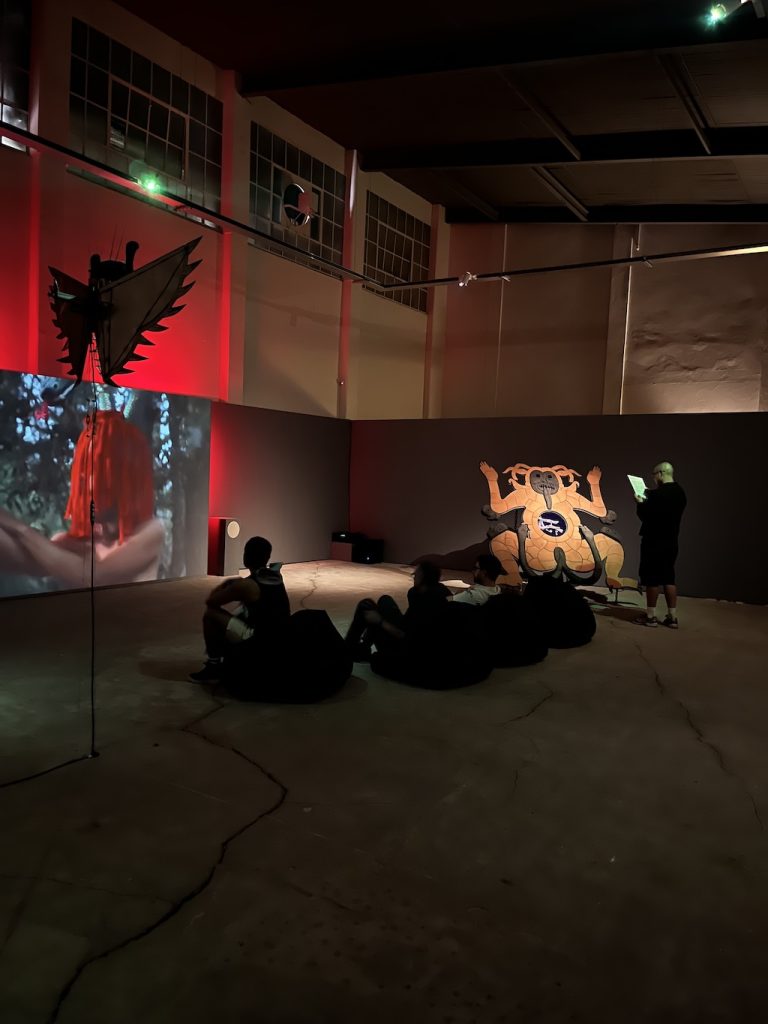
For their first Slow Art Day – as part of the large 2025 citywide event in Mexico City, the contemporary gallery PEANA in Mexico City, Mexico hosted an immersive slow looking experience centered on “Their Silhouettes Bristled With Razors,” the first solo exhibition at the gallery by Mexican artist Naomi Rincón Gallardo.
Rincón Gallardo’s work explores themes of contemporary violence, decolonial thought, and ancient Mesoamerican narratives. The exhibition was presented in a dim, atmospheric environment that invited visitors to slow down and spend time contemplating the symbolic imagery and layered storytelling within the works.
The PEANA team welcomed visitors with a brief introduction and encouraged participants to approach the experience with openness and curiosity. Printed reflection prompts were distributed to guide the slow looking process, asking visitors questions about the symbolism they noticed, their first impressions of the artworks, and how their perceptions evolved as they spent more time observing.
Participants during the Slow Art Day event. Photo courtesy of PEANA.
The prompts also invited creative responses, encouraging participants to draw, write a poem, or describe their reactions after spending time with the artworks. This simple but powerful structure helped visitors move beyond quick viewing and into deeper engagement with the themes and emotional resonance of the exhibition.
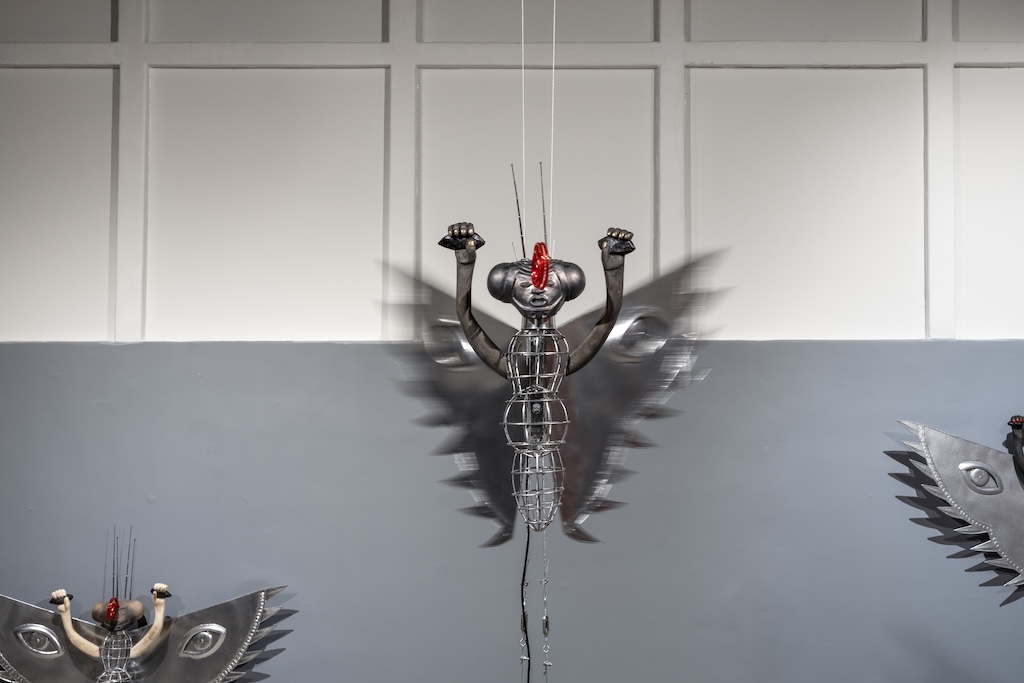
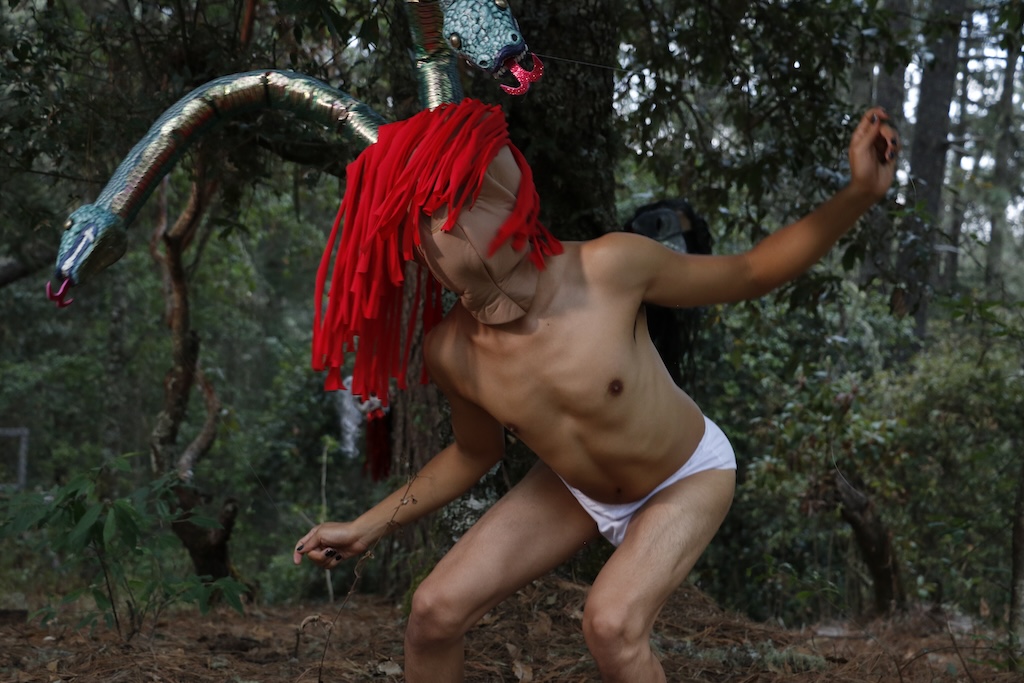
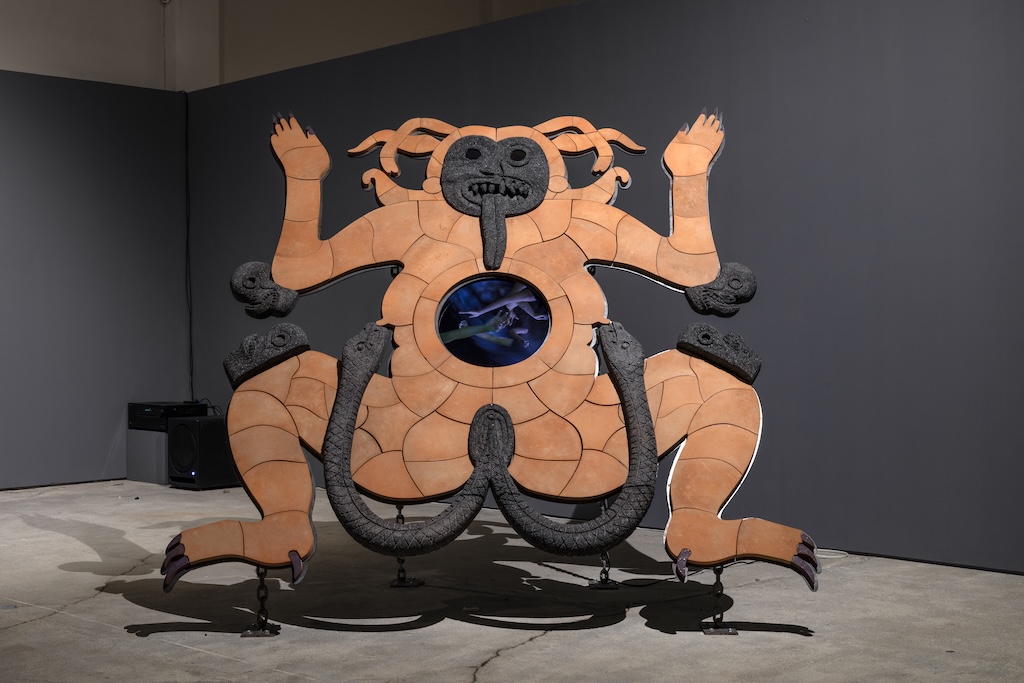
Several works from the exhibition served as focal points for slow looking, including Mechatronic Butterfly, Eclipse I, and Me enterraron boca arriba con la lengua fuera (Tlaltecuhtli). These works combine sculptural elements, video, and mythological imagery to create powerful visual narratives rooted in Indigenous cosmologies and contemporary cultural critique.
Mechatronic Butterfly. Photo courtesy of PEANA.Eclipse I. Photo courtesy of PEANA.Me enterraron boca arriba con la lengua fuera (Tlaltecuhtli). Photo courtesy of PEANA.
By pairing immersive artworks with guided reflection prompts, PEANA created an environment where visitors could slow down, contemplate difficult themes, and engage with the artworks in a personal and meaningful way.
Approximately 60 visitors participated in PEANA’s Slow Art Day experience, making a wonderful contribution to Mexico City’s citywide celebration.
We at Slow Art Day HQ are grateful to the team at PEANA and to Constanza Ontiveros Valdés, who organized the 2025 citywide event. And we are amazed that Ontiveros Valdés has already organized more than 35 galleries and museums for Slow Art Day 2026. We can’t wait!
— Ashley, Johanna, Jessica Jane, and Phyl
P.S. If you have not yet registered your museum of gallery for Slow Art Day 2026, please do.