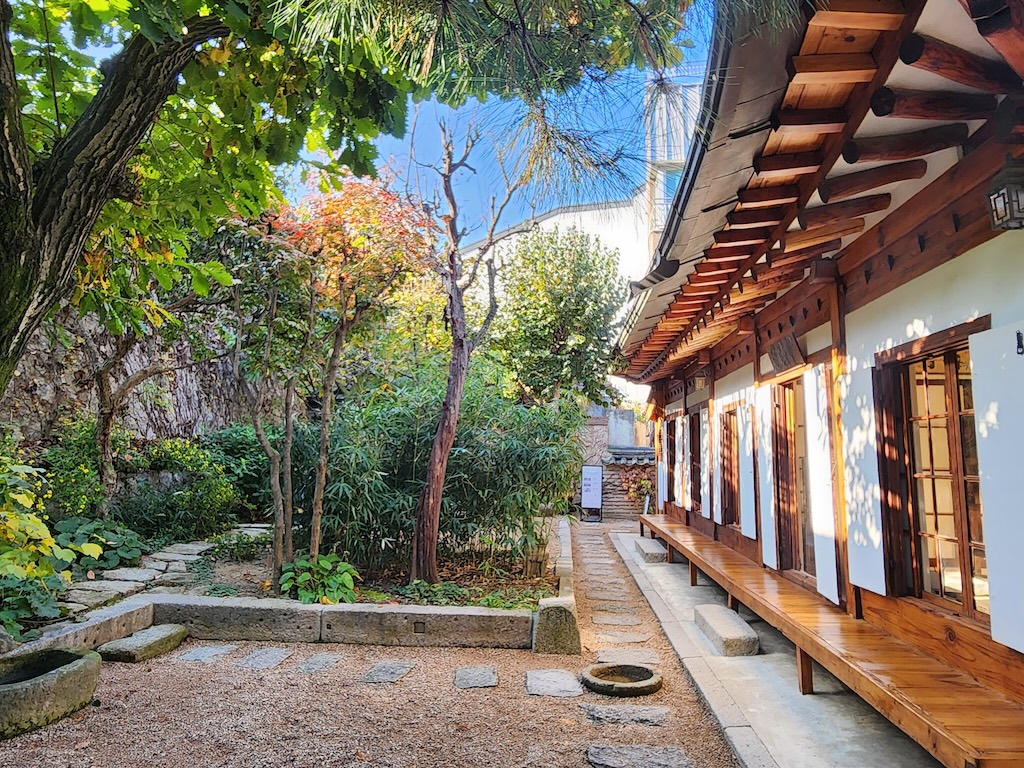
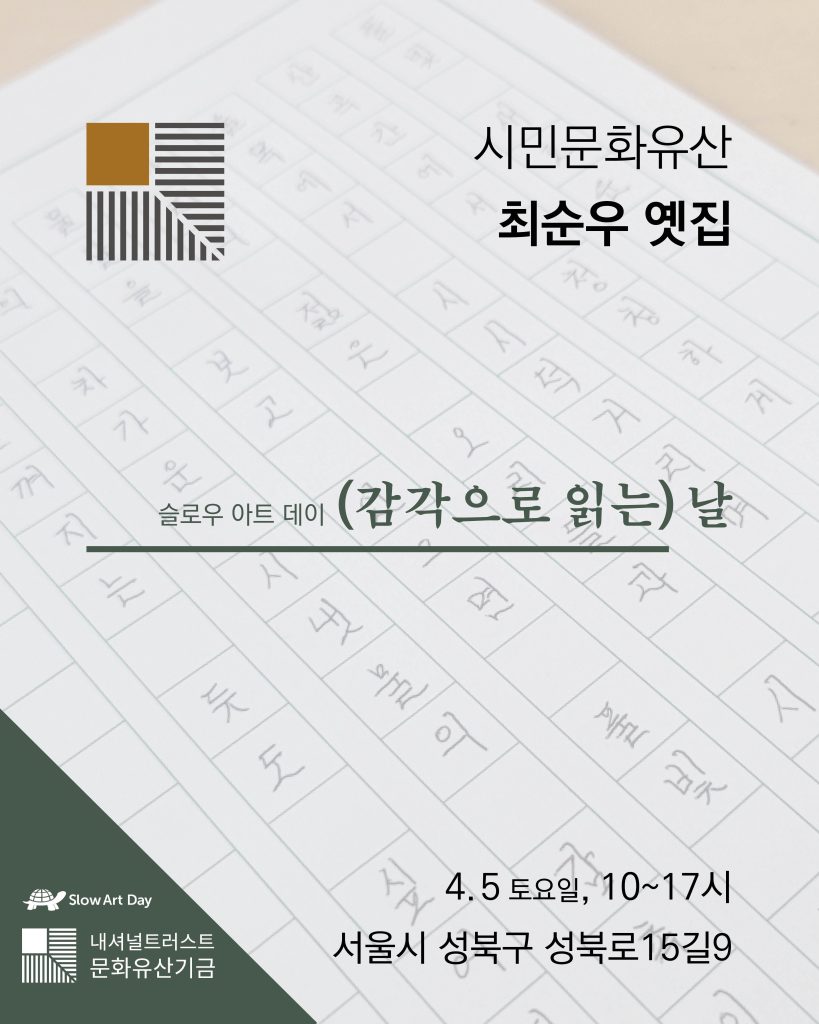
On April 5, 2025, Choi Sunu House in Seoul, South Korea participated in their third Slow Art Day with a reflective program titled “Discovering the Beauty and Heart of Korea” (“한국미 한국의 마음을 찾는 시간”).
Although rain fell steadily across Seoul that day, creating challenges for attendance, the quiet weather deepened the contemplative atmosphere of this historic hanok home nestled in Seongbuk-dong.
Choi Sunu House preserves the legacy of art historian and cultural scholar Choi Sunu (1916–1984), whose writing celebrated Korean aesthetics, craftsmanship, and spirit. Rather than centering a single artwork, the entire house and garden became the focus of slow looking — and slow reading.
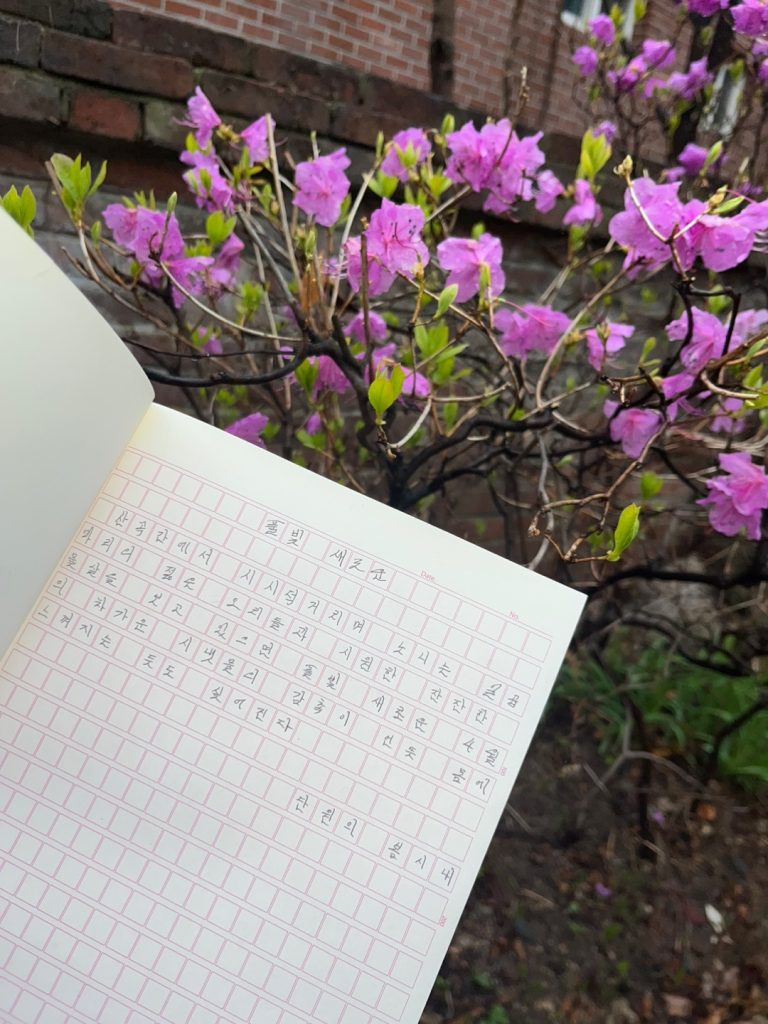
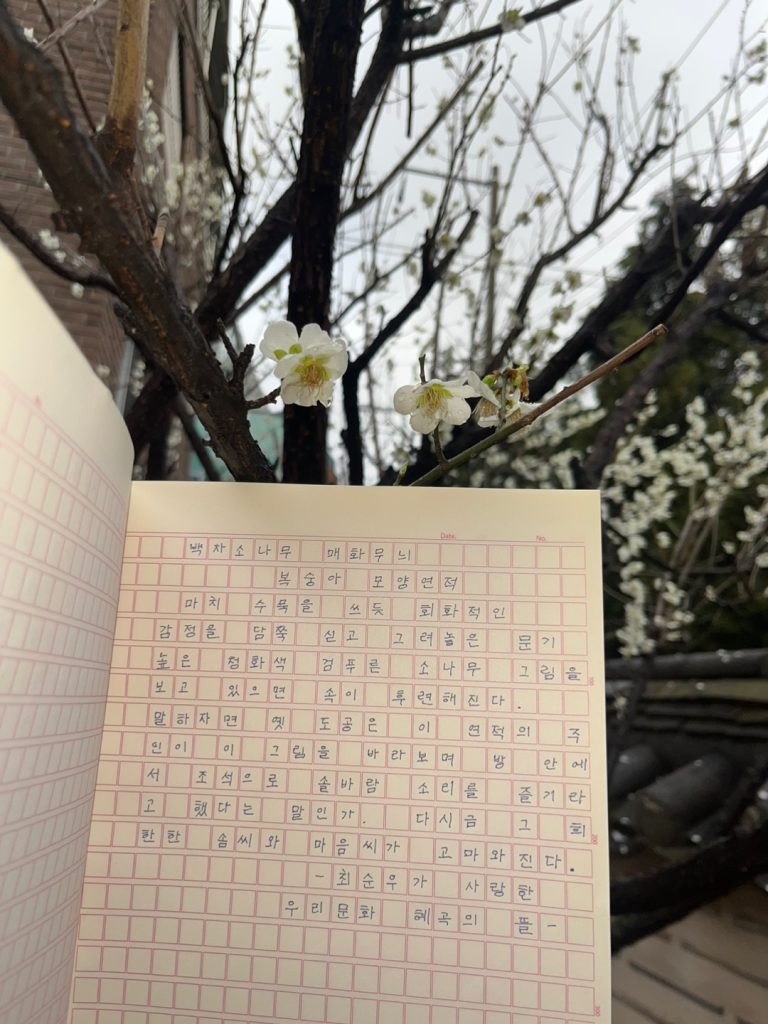
Participants were invited to walk slowly through the traditional courtyard and wooden halls, surrounded by early spring blossoms. Plum flowers and azaleas were just beginning to bloom against tiled roofs and stone walls. The soft sound of rain added to the sensory experience.
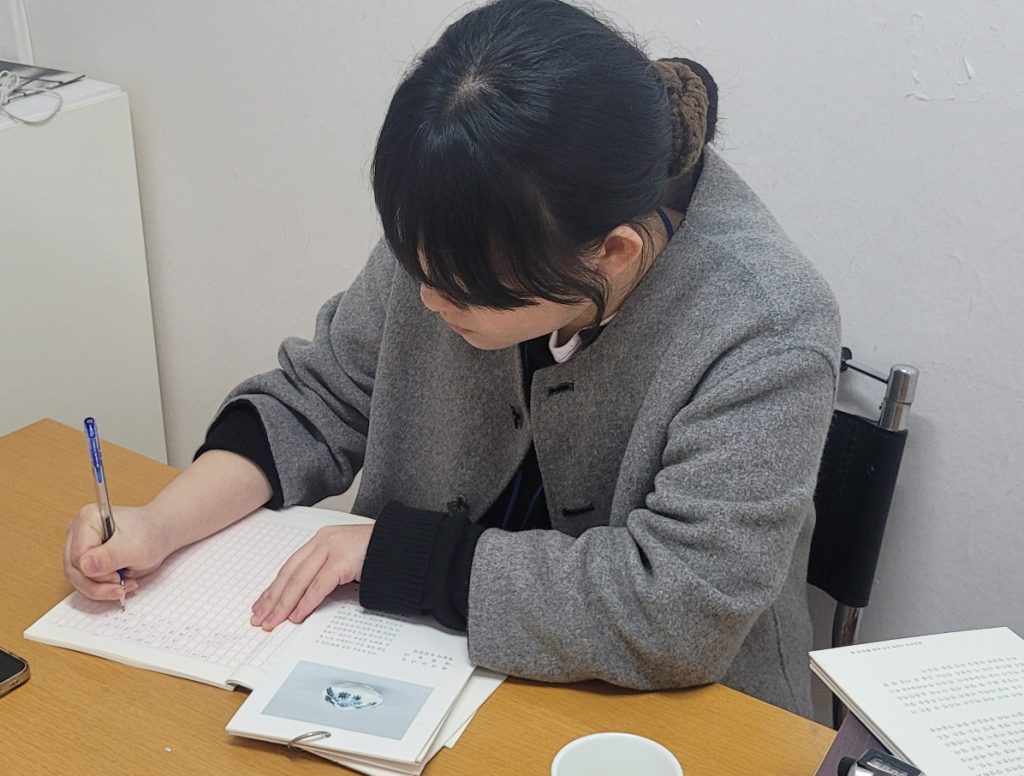
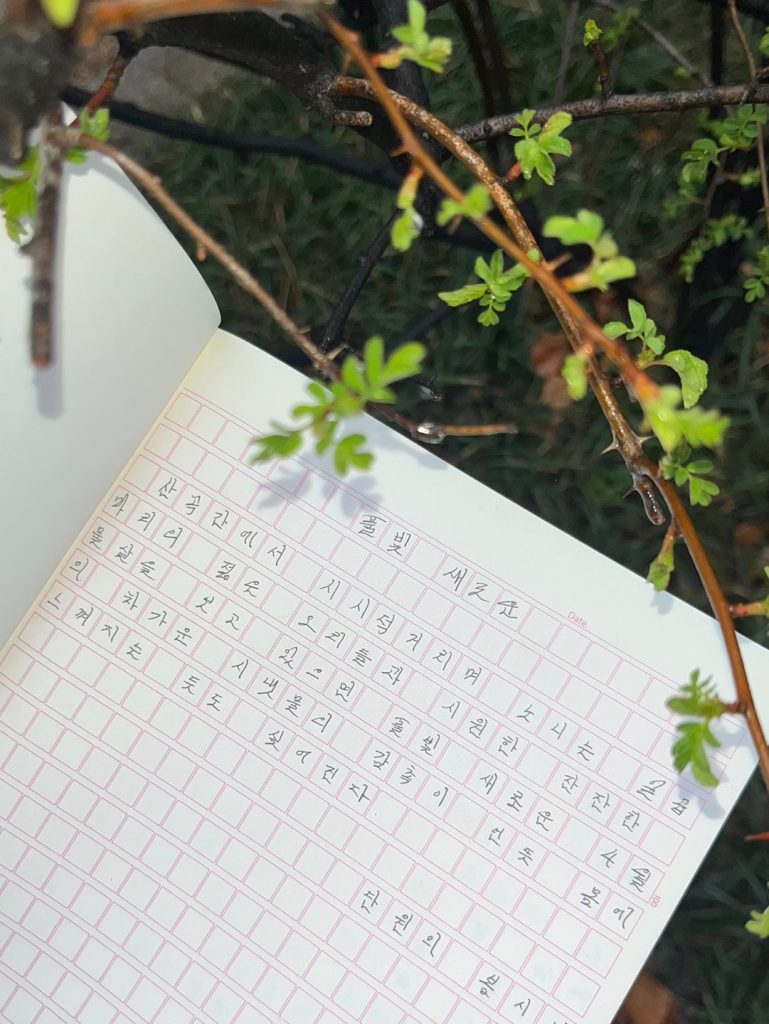
The core activity of the day was transcription.
Visitors selected passages from Choi Sunu’s writings and carefully copied them by hand into squared manuscript notebooks. This act of deliberate writing encouraged participants to move at the pace of each word, absorbing not just meaning but rhythm and feeling. The practice echoed traditional Korean calligraphic discipline while remaining accessible to all.
Some guests chose to sit in the courtyard near flowering trees. Others settled indoors beside books and archival materials. A small round table was set outdoors with a publication featuring cultural artifacts and a blank page for reflection. The setting itself — stone statues, gravel paths, wooden floors warmed by filtered spring light — became part of the meditation.
The program encouraged participants to:
Take a slow walk through Choi Sunu House
Read selected passages from his essays
Transcribe a sentence or paragraph that resonated
Spend quiet time in the garden surrounded by spring blossoms
By combining slow walking, slow reading, and slow writing, Choi Sunu House beautifully expanded the meaning of Slow Art Day beyond visual observation alone. The event demonstrated how cultural heritage sites can invite visitors into embodied connection with language, architecture, landscape, and memory.
We are grateful to the team at Choi Sunu House and the National Trust Cultural Heritage Fund for carrying Slow Art Day forward in Korea, even under gray skies.
For their second Slow Art Day (and their first time hosting the program on-site) the Smithsonian’s National Museum of Asian Art in Washington, DC offered four hours of immersive programming, inviting visitors to slow down through guided looking, mindfulness practices, gallery conversations, and movement.
The day unfolded through a thoughtfully structured sequence of offerings designed to meet visitors wherever they were.
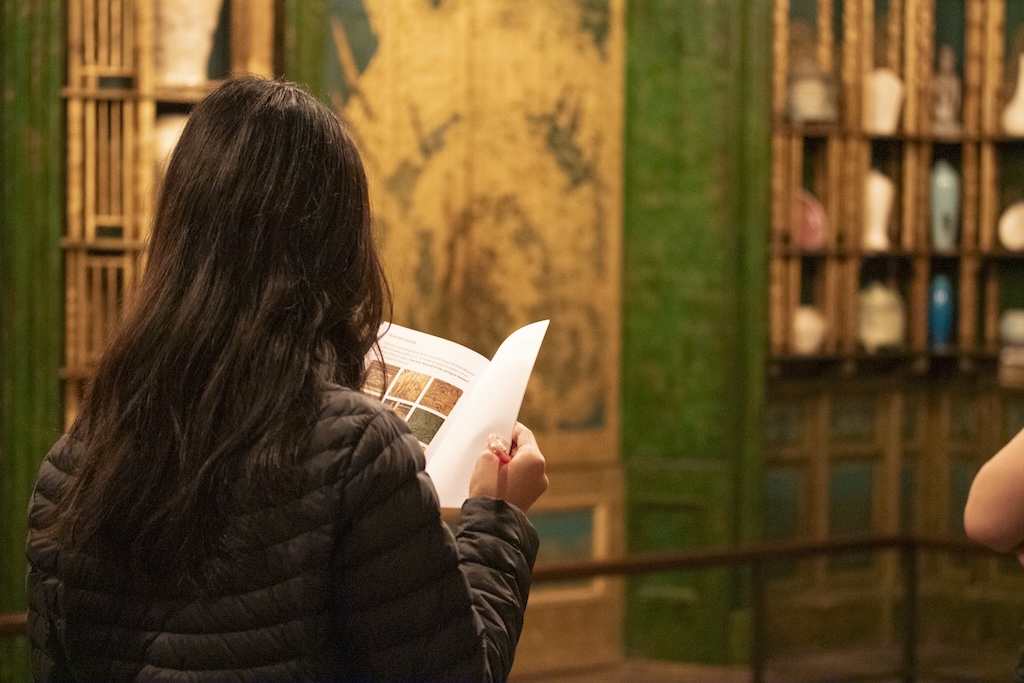
Throughout the four hours, hundreds of Slow Looking Guides were distributed from the information desk, inviting visitors to deepen their connection with the art through sketching prompts, poetic reflection, comparisons, and written responses.
Participant viewing the Slow Looking Guide designed by the museum.
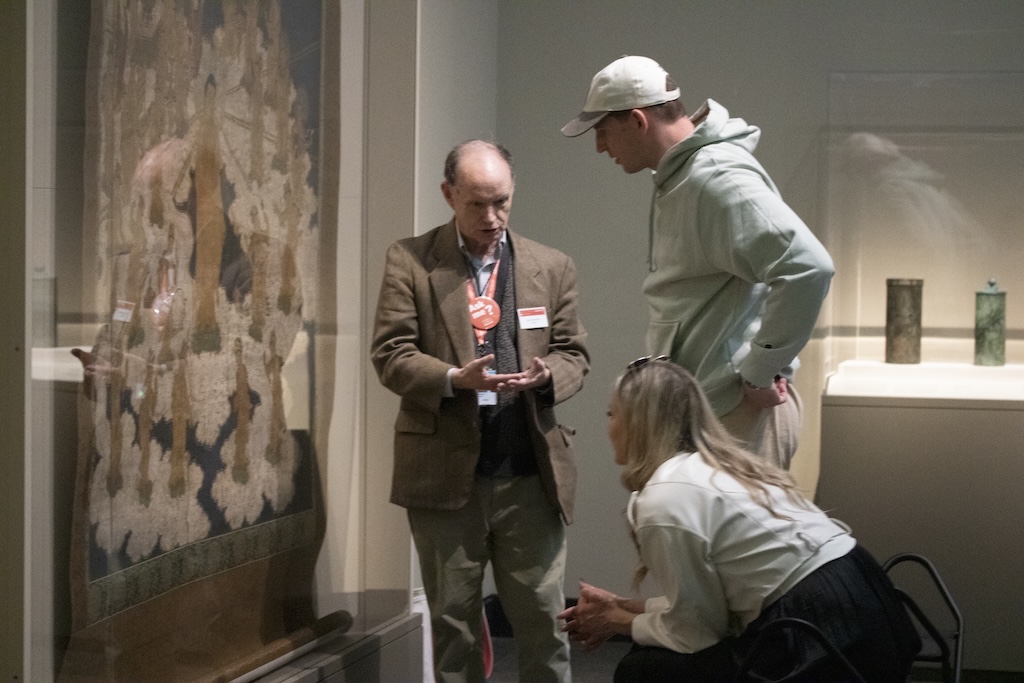
Four docents roamed the galleries, engaging visitors in informal conversations about the museum’s world-renowned collections. These roaming discussions allowed participants to linger, ask questions, and explore artworks through sustained dialogue rather than quick viewing.
Gallery docent in discussion with Slow Art Day participants.
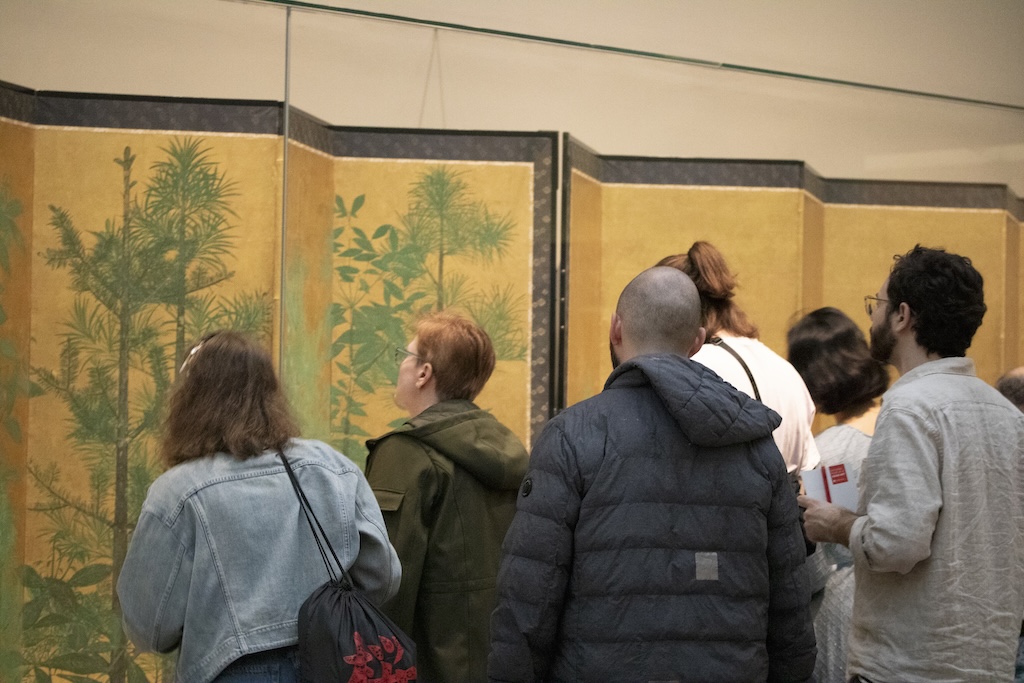
Two guided Slow Looking sessions were scheduled in the Japanese screen gallery, one for families and one for adults. Due to a large gathering on the National Mall that day, the family session did not run. However, 15 visitors participated in the adult session focused on the early 17th-century folding screen “Trees.”
Participants spent extended time observing the green malachite pigments layered over gold foil. As they looked more closely, subtle botanical details emerged — magnolia veins, pine and cedar needles, tiny acorn buds, delicate blossoms. The facilitator described the work as “a gardener’s dream brought indoors,” noting how the composition moves viewers from luminous gold panels into dense greenery, like stepping gradually into a forest.
Visitors looking at “Trees” (雑木林図屏風), Japanese folding screen (1600–1630).
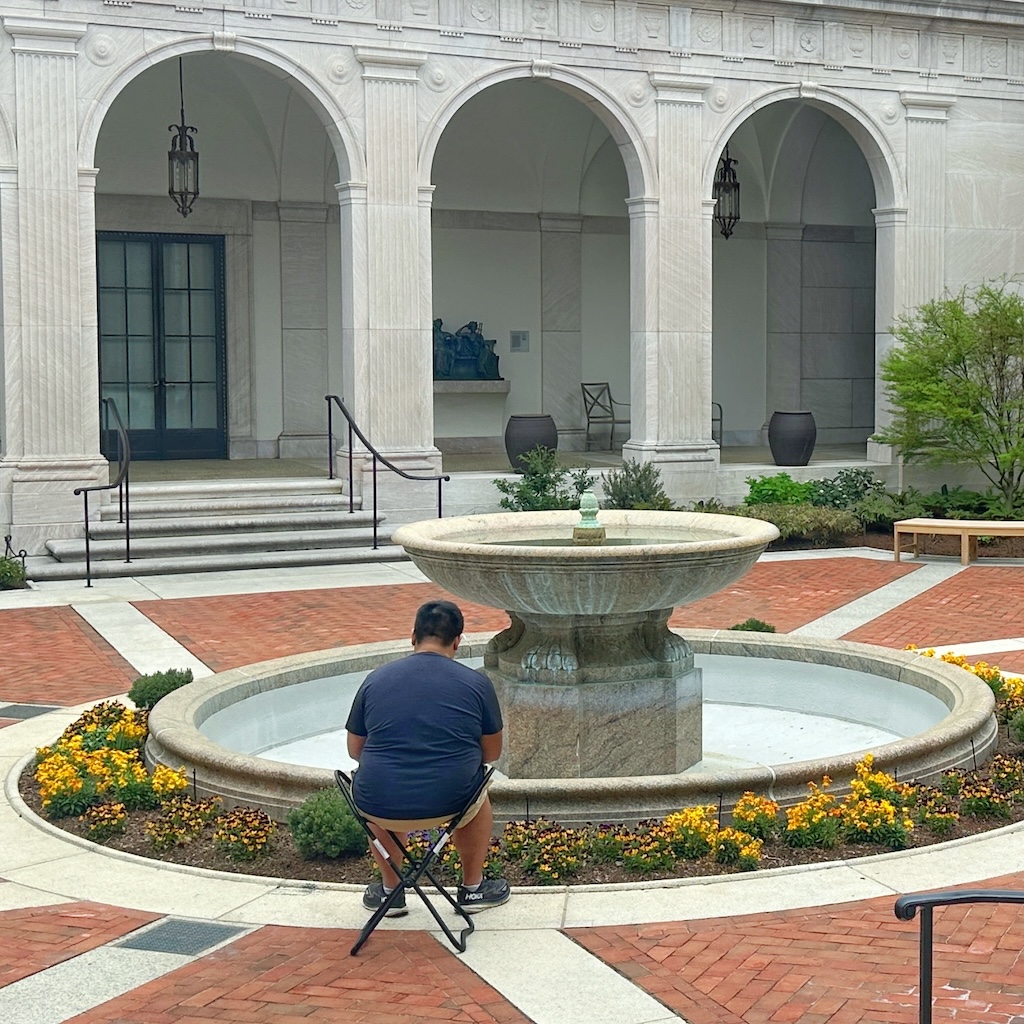
In the museum’s outdoor courtyard, 24 visitors joined Forest Bathing sessions led by a certified forest therapy guide. Though not a traditional forest setting, the courtyard’s Japanese maples, ferns, holly, pine, peonies, birds, bees, and even beetles became focal points for sensory awareness. Participants were invited to gently touch plants — an uncommon freedom in a museum environment — and to slow down through guided sensory exercises.
Participant in the Forest Bathing session in the courtyard.
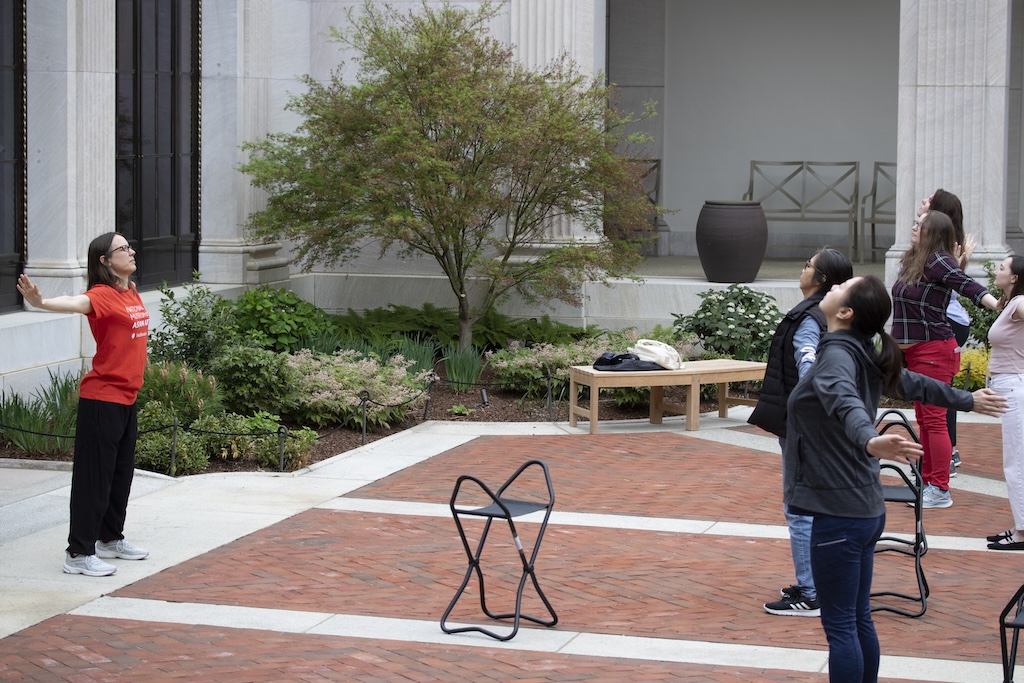
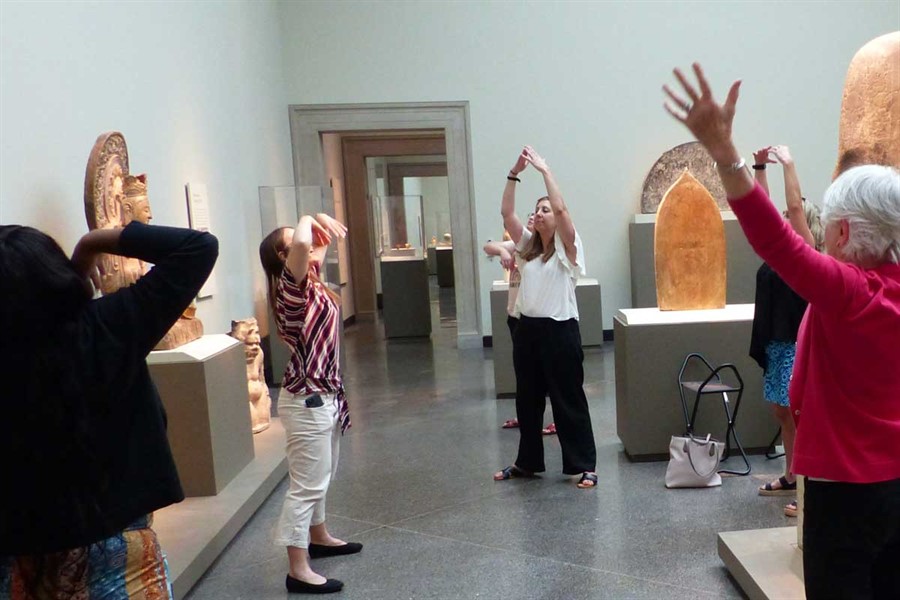
Visitors also participated in a Qigong session, a standing mindful movement practice rooted in Chinese tradition. Through slow, nature-inspired movements and breath awareness, participants were encouraged to notice the flow of energy in their bodies and mirror the rhythms of the natural world.
Participants during the Qigong session.
With their 2025 Slow Art Day, The National Museum of Asian Art demonstrated how structured programming, roaming conversation, embodied practice, and simple prompts can invite visitors into meaningful slowness.
At Slow Art Day HQ, we are especially inspired by how the National Museum of Asian Art expanded slow looking beyond the gallery walls, integrating folding screens, forest bathing, mindful movement, and docent engagement into a cohesive experience.
We are grateful to Jennifer Reifsteck and the entire team at the National Museum of Asian Art for their thoughtful leadership. We look forward to seeing what they design for Slow Art Day 2026.
In 2025, Mexico City hosted its first city-wide Slow Art Day – and what may be the largest city-wide in the world – with 35 participating venues, coordinated by art writer and cultural organizer Constanza Ontiveros Valdés.
Ontiveros Valdés organized an unexpectedly wide range of participants, from established museums and galleries to alternative and emerging cultural spaces across the city.
The venues offered a rich mix of programming, including yoga, meditation, aromatherapy, workshops, panel discussions, and multidisciplinary artistic happenings. She noted that the accessibility and inclusiveness of Slow Art Day encouraged participation across diverse spaces, all eager to explore slow looking in ways that felt authentic to their communities.
We received reports from seven of the 35. Below are those highlights.
Galería Oscar Román featured an artist-led conversation titled “Sombras del Pintor” (Shadows of the Painter) with artist Saúl Kaminer, followed by a guided visit to his exhibition “La Tierra en el Cielo” (The Earth in the Sky). Kaminer shared insights into his creative process and the narratives behind his work, inviting participants to engage slowly through conversation and close observation. The session encouraged reflection on the relationship between art and nature, with visitors spending extended time discussing individual works.
Arte Abierto Reported by: Guadalupe Salcedo, Communications
Arte Abierto‘s Public Programs Team designed a Slow Art Day experience around the exhibition long last happy by Swiss artist Ugo Rondinone. Participants engaged in contemplative observation of the large format sculptures the sun and the moon (2022), followed by individual and group body activations inspired by dance and performance. The program invited participants to explore the idea of opposing forces through both stillness and body movement. Adults and children took part, and the event received significant public and media engagement.
Host: Constanza Ontiveros Valdés, Art Writer and Cultural Projects Coordinator Venue contact: Julia Villaseñor, Communications and Media Director
At kurimanzutto, participants were introduced to Slow Art Day through breathing and relaxation exercises before engaging in close looking with works by Haegue Yang from the exhibition Arcane Abstractions. The group explored intricate paper collages from the Mesmerizing Mesh series and interacted physically with the sculptural installation Mesmerizing Votive Pagoda Lantern. The session concluded with a hands-on activity in which participants created visual responses to their observations and shared reflections.
Natalia Martinez Aanaya, Communications Manager shared that Alejandra Topete Gallery participated with Between Threads and Stories, featuring works by Jason Kriegler and Claribel Calderius. The program included individual meditation sessions throughout the day and an empowering roundtable discussion led by Maria Ortiz, Cultural Mediator. Visitors were encouraged to form personal connections with the artworks through guided dialogue and slow observation.
Naranjo 141 gathered participants to look slowly at five selected works from their current exhibition. The session began with a brief introduction to Slow Art Day and the gallery’s residency program. Visitors then spent six to seven minutes in silent observation with each of five selected works:
Lily Alice Baker, Mothers’ Meeting (2024)
Colleen Herman, Blood Bloom in a Blue Field (2024)
Lee Maxey, Face the Front (2024)
Kataria Riesing, Holster (2024)
Pauline Shaw, Blackout (2025)
After slow looking, participants came together for a facilitated group discussion, sharing observations and personal responses over light refreshments. The session concluded with informal conversation and continued engagement with the exhibition.
Lee Maxey, Face the Front (2024)Lily Alice Baker, Mothers’ Meeting (2024)
Tinta Naranja focused on close observation of graphic design and visual culture. Participants explored original materials related to the Mexico 1968 Olympic design system, discussing the origins and historical context of the typography and imagery. The session concluded with a participatory activity in which attendees designed their own names using Olympic-inspired typographic forms.
Zona de Riesgo Art hosted a free evening program that combined slow looking, guided meditation, sound art, and collective reflection. The event opened with a brief introduction, then featured two guided meditative experiences led by artist Mónica Martz M.
The first, Realm of the Devas, combined guided meditation with sound art by Bruno Bresani and the projection of two visual works by Mónica Martz M.
After a short pause, Mónica Martz M. led a second meditation that explored The Human Realm, accompanied by sound art from Mercedes Balard and Montserrat Coltello, alongside projected works by Bruno Bresani.
Following the meditations, participants gathered for an open conversation, sharing sensations, images, and reflections that emerged during the experience. The evening concluded with expressions of gratitude among artists and attendees, highlighting the value of creating spaces for stillness, contemplation, and shared presence.
Together, these seven reports represent just a portion of the 35 venues that participated in Mexico City’s first citywide Slow Art Day. The range of formats—artist talks, guided observation, movement-based practices, meditation, and slow making—demonstrates how Slow Art Day can scale across a major global city while remaining grounded in local artistic practice. Check out a great article summarizing the day (in Spanish).
We thank Constanza Ontiveros Valdés for her leadership and all participating venues, artists, facilitators, and visitors for making this inaugural citywide Slow Art Day possible. We look forward to seeing what they come up with for Slow Art Day 2026.
For their first Slow Art Day 2025, the Museum of Art, Architecture and Technology (MAAT) in Lisbon, Portugal participated with a guided slow-looking session held within the exhibition Transe by Rui Moreira, whose work is known for its meditative atmosphere. The event featured these 6 works:
Mindfulness – “I’m a giant lost in the woods”
A Noite (O Telepata)
A máquina de emaranhar paisagens VII
Nossa Senhora do Aborto I
Telepata I
Eclipse I
Capturado com OldRoll Classic M.
The session was led by Mário J. Rodrigues, a psychologist and certified mindfulness teacher, who opened with a brief mindfulness exercise. Participants then looked slowly at each work for ten minutes. The session concluded with a group conversation, allowing participants to share observations and reflect on their emotional and sensory responses.
MAAT also holds monthly art and meditation sessions, and you can check out their programming on their website.
We thank Joana Simões Henriques, Head of Public Programmes at MAAT, for organizing this Slow Art Day experience, and look forward to seeing what they come up with for Slow Art Day 2026.
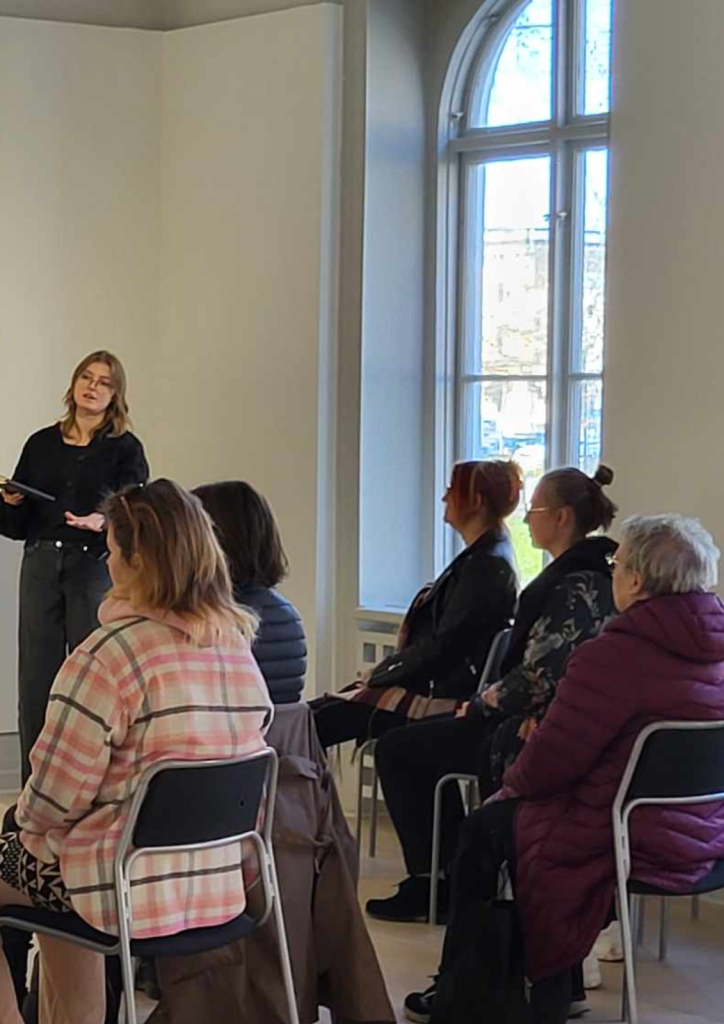
For Slow Art Day 2025, Vänersborgs konsthall in Vänersborg, Sweden, hosted a guided slow-looking event centered on the exhibition A.I. vs Själen (A.I. vs the Soul). The program combined meditation, independent observation, and group dialogue in a focused gallery setting.
Participants engaging in slow looking and discussion during Slow Art Day at Vänersborgs konsthall. Photo courtesy of Vänersborgs konsthall.
Selected artworks were chosen by participants from two designated walls within the exhibition A.I. vs Själen (A.I vs the Soul)
Eleven participants took part in the free event. The session began with a short introduction to slow looking as a practice, followed by a guided meditation designed to help participants settle into the experience. From there, facilitators offered simple, structured prompts to support a 10-minute slow looking exercise. Participants then gathered to share reflections and discuss their thoughts. Conversations focused on perception, attention, and how the themes of technology, AI, and the human soul emerged through extended looking.
Following the discussion, the gallery invited participants to continue the conversation over a traditional Swedish fika, offering coffee and biscuits in a relaxed social setting.
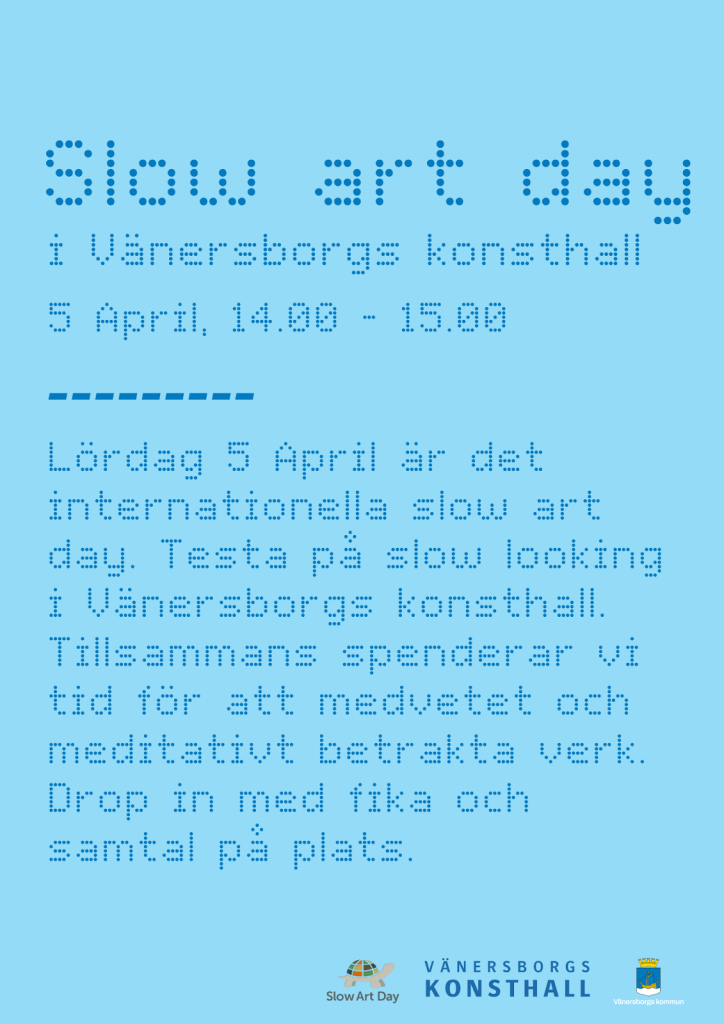
Poster for the event.
We thank Hanna Tobiasson, Cultural Coordinator at Vänersborgs konsthall, for creating a Slow Art Day experience that thoughtfully engaged questions around technology and its growing influence on how art is created, perceived, and discussed today. We look forward to seeing what the team at Vänersborgs konsthall comes up with for Slow Art Day 2026.
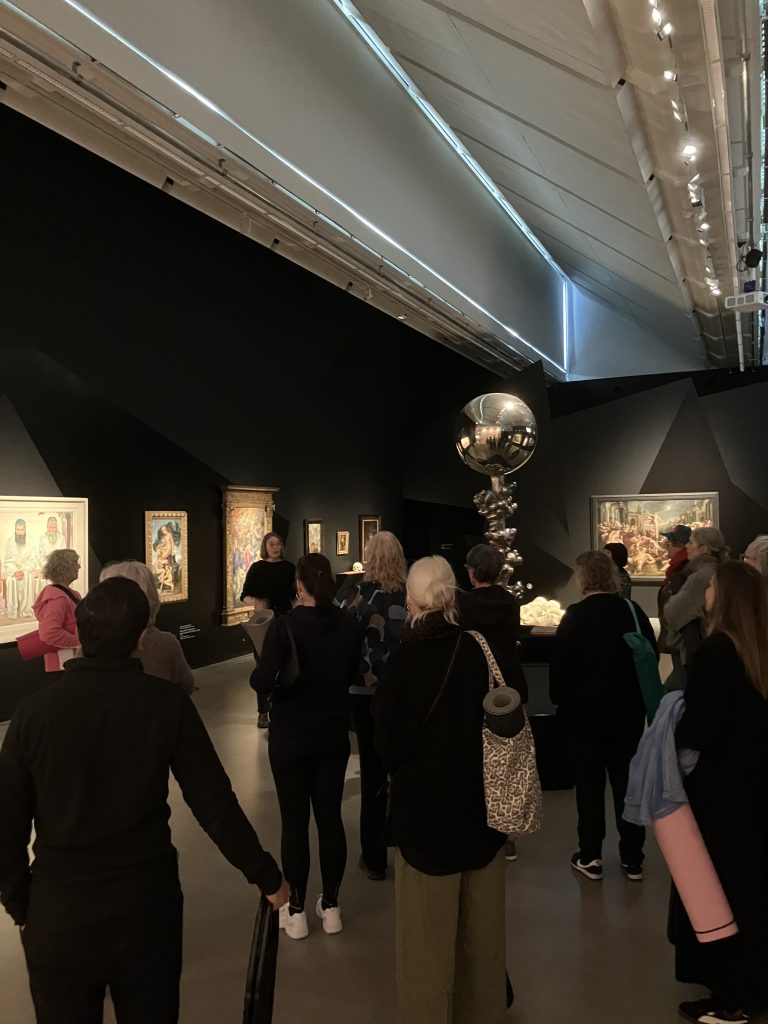
The Gothenburg Museum of Art in Gothenburg, Sweden, participated in Slow Art Day 2025 by offering two structured activities for adults and children. The program combined guided meditation, slow looking in the galleries, and hands-on making in the studio.
The group gathered in front of Oracle, a sculpture by Norwegian artist Jone Kvie, on view in the exhibition Apocalypse: From Last Judgement to Climate Threat.
Photo by Linda Noreen.
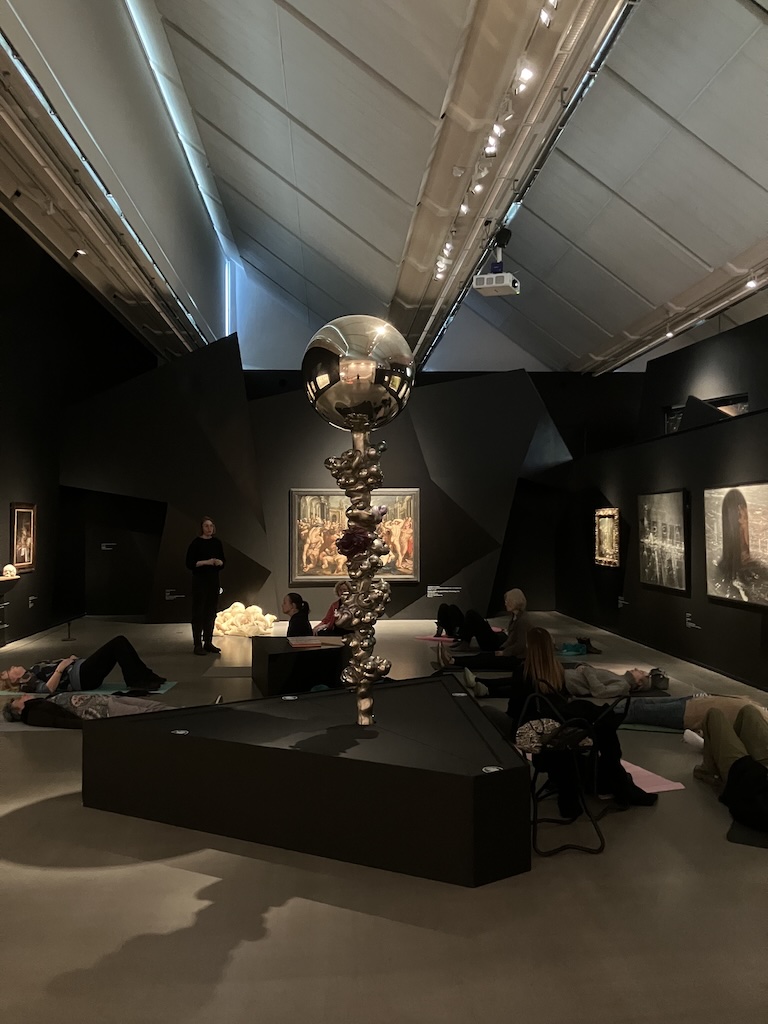
For adult participants, the museum hosted a guided meditation led by Pernilla Ljungkvist, artist and yoga teacher, around the sculpture. Through stillness and focused attention, participants were invited to engage with the sculpture more deliberately.
Participants practicing yoga. Photo by Linda Noreen.
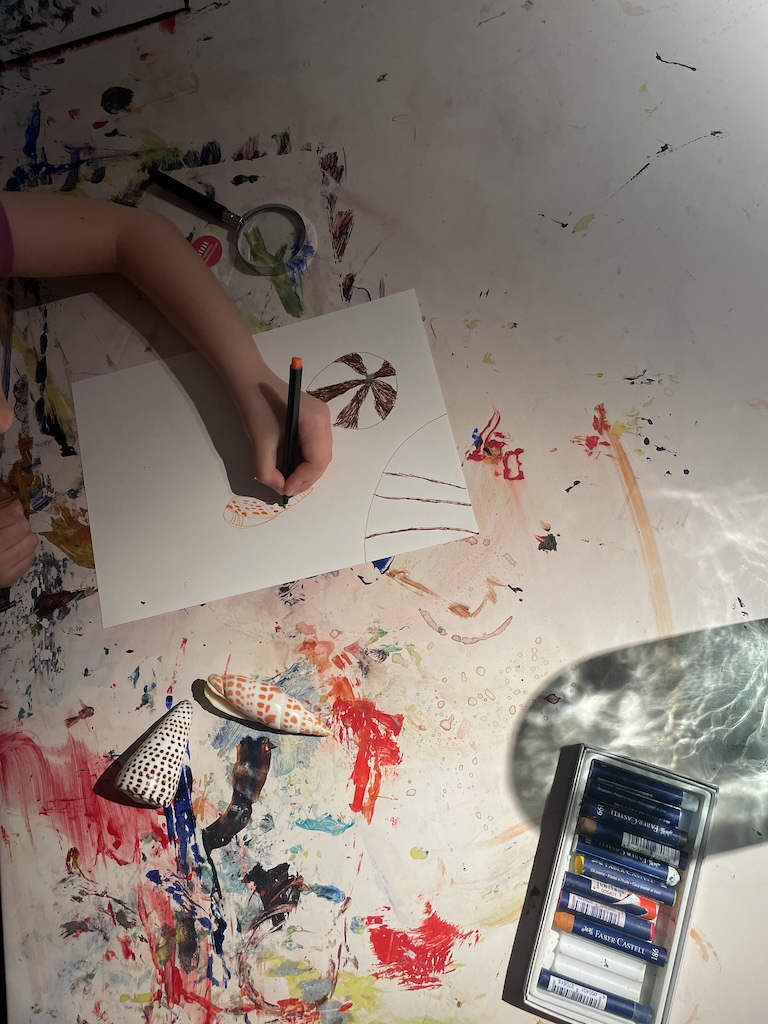
For children ages 6–12, the museum offered a two-part workshop. The first part took place in the museum’s collection galleries, where participants practiced slow-looking exercises and completed a drawing activity based on careful observation.
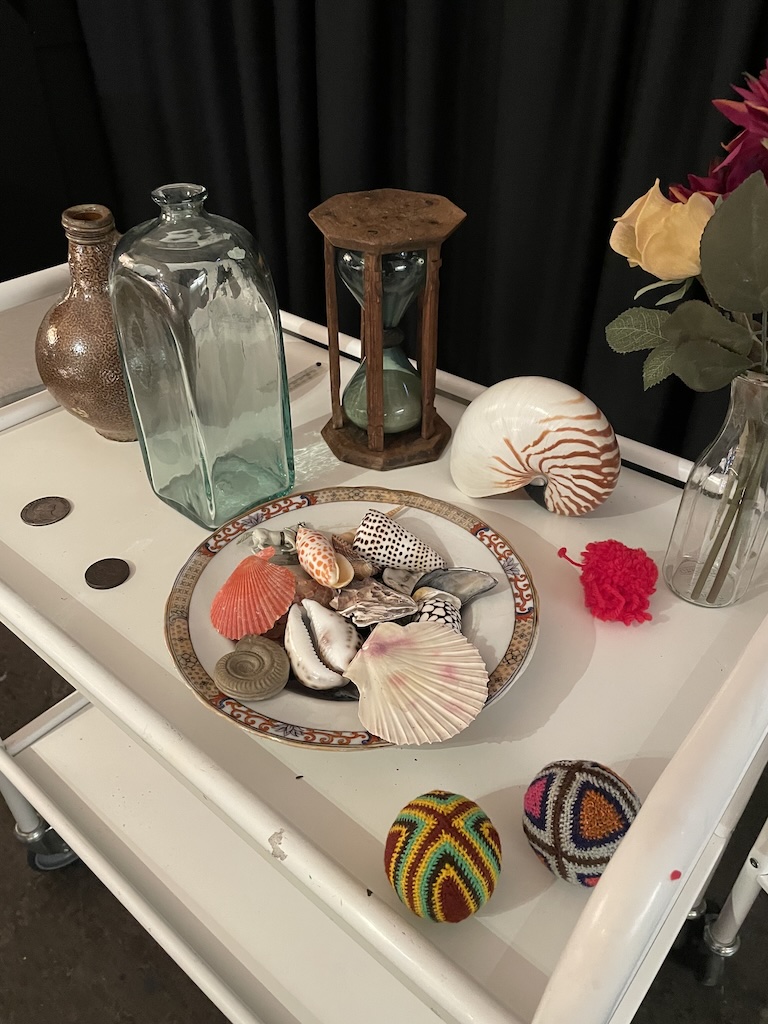
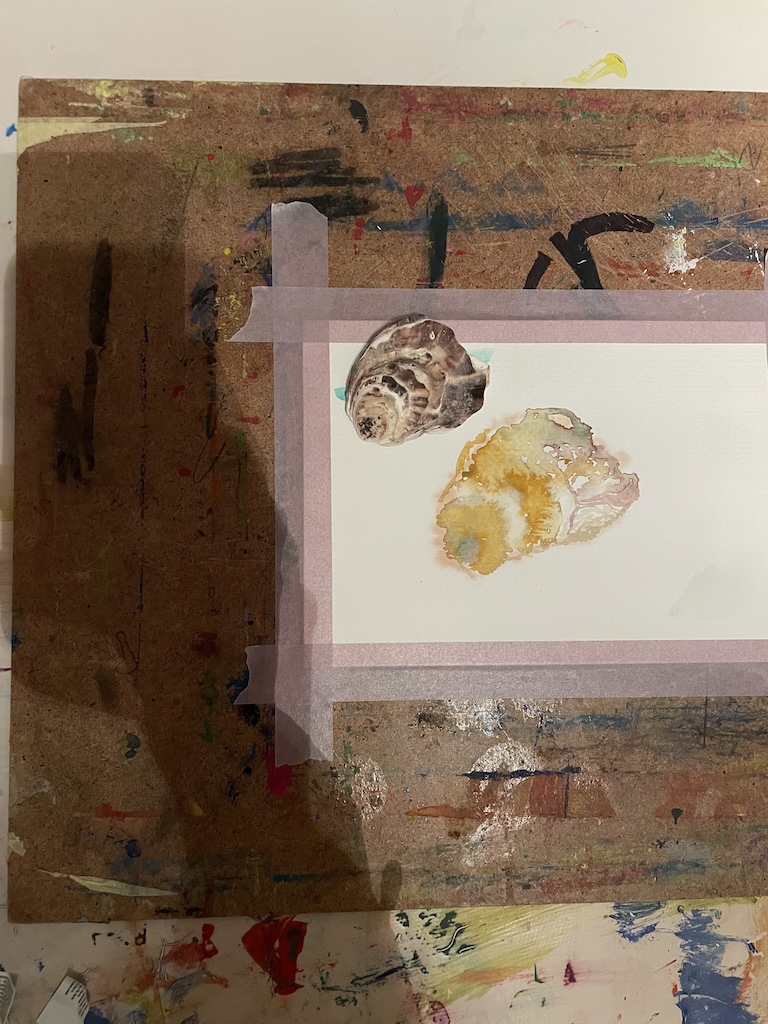
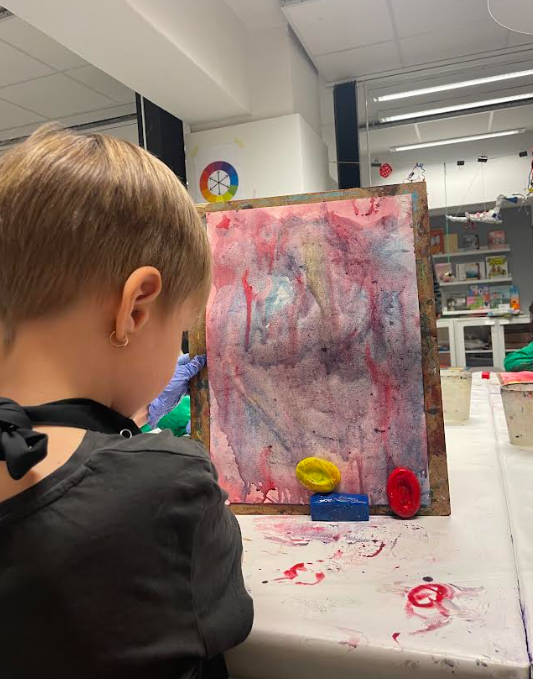
The group then moved to the Museum Studio, where a selection of objects was presented. Participants chose one or more objects to reinterpret by painting with watercolors, drawing with colored pens, or shaping forms in clay. The emphasis throughout was on slowing down, observing closely, and working deliberately. Across both activities, the shared goal was to encourage sustained attention and mindful engagement through observation, reflection, and making.
Photo by Jonna Kihlsten.Photo by Jonna Kihlsten.Photo by Jonna Kihlsten.
We thank Jonna Kihlsten, Art Educator, and the Gothenburg Museum of Art team for designing inclusive Slow Art Day experiences, as well as Pernilla Ljungkvist for leading the meditation session. We look forward to seeing what Gothenburg comes up with for Slow Art Day 2026.
For their first Slow Art Day, the Freer Gallery of Art, part of the Smithsonian Asian Art Museum in Washington, D.C., hosted a day-long celebration focused on slowing the mind, body, and spirit.
Visitors were invited to participate in a series of immersive activities held in the Freer’s galleries and courtyard, designed to deepen observation and foster mindfulness through art and nature. The day offered both guided and self-guided experiences, welcoming adults and families alike.
Featured activities included:
Guided Slow Looking sessions in Gallery 5, focusing on Japanese screens (11:30 a.m. family session; 1:30 p.m. adults-only session)
Forest Bathing mindfulness walks in the courtyard led by naturalist and certified forest therapy guide Ana Ka’ahanui from Capital Nature (1 p.m. family session; 2 p.m. adults-only session)
Qigong practice in the courtyard, or Gallery 17 in case of rain (12–1 p.m.)
Self-Guided Slow Looking with sketching, writing, and conversational prompts available to encourage personal exploration at one’s own pace
Image courtesy of Create Calm
Each session offered participants an opportunity to slow down, open their senses, and form a deeper, more personal connection with the art and environment around them.
Throughout the day, participants could be seen sketching quietly before the intricate screens, breathing mindfully in the courtyard, and moving gracefully through Qigong sequences that mirrored the flow of nature. The museum’s thoughtful integration of art, nature, and mindfulness—including the leadership of Ana Ka’ahanui in the forest bathing sessions—beautifully embodied the spirit of Slow Art Day.
We at Slow Art Day HQ love how the Freer Gallery of Art created such a great mix of events and wish we had been there to participate. We can’t wait to see what they come up with for Slow Art Day 2026.
– Ashley, Johanna, Jessica Jane, and Phyl
P.S. You can learn more about the Freer Gallery’s events and exhibits by visiting their website. You can also follow them on:
For their second year participating in Slow Art Day, Moderna Museet Malmö once again hosted a deeply reflective and engaging event that beautifully combined meditation with slow looking.
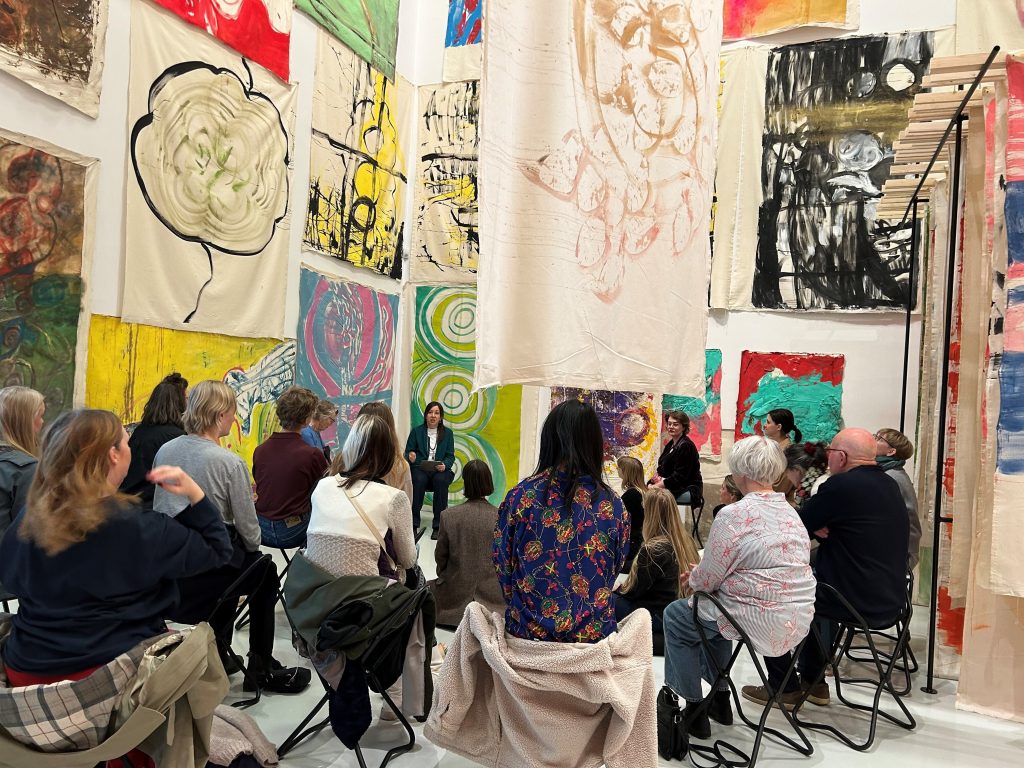
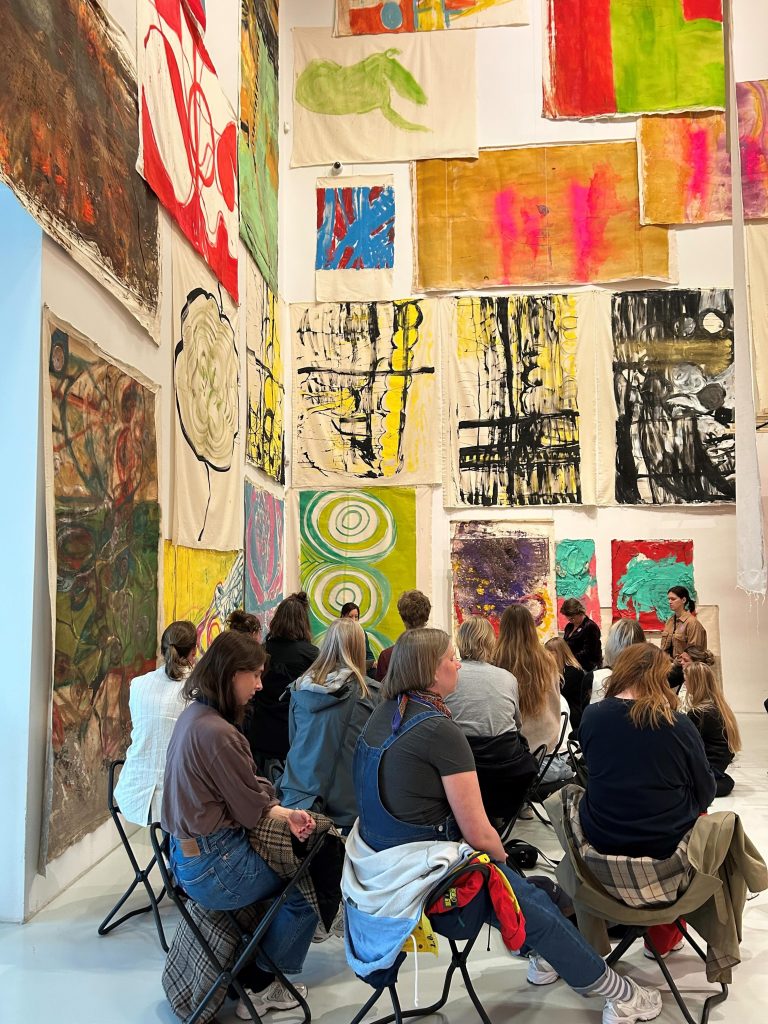
In the vibrant exhibition Vivian Suter – I Am Godzilla, participants gathered for a guided meditation session led by Ana María Bermeo, an artist, museologist, and certified meditation teacher. Through simple breathing and mindfulness exercises, Bermeo encouraged participants to slow their pace, immerse themselves in Suter’s rich visual world, and reconnect with their own inner experiences.
Slow looking and meditation surrounded by expressive, immersive works in the Vivian Suter exhibition. (Photo: Susanne Lindblad/Moderna Museet Malmö)
No prior experience with meditation was required — only a willingness to pause, breathe, and look slowly.
Attendees reported embracing the moment of silence and reflection, letting go of performance and expectation, and allowing themselves to experience both the art and their sensory impressions in a deeper, more contemplative way.
Participants meditating amidst the colorful canvases of the Vivian Suter exhibition at Moderna Museet Malmö.(Photo: Susanne Lindblad/Moderna Museet Malmö)
The bold, colorful canvases of Vivian Suter’s exhibition created a powerful backdrop for the session. For us at Slow Art Day HQ, it is particularly striking to witness participants seated quietly in a circle around these vibrant works, each deeply absorbed in silent meditation and reflection.
We are so grateful to Moderna Museet Malmö and to host Susanne Lindblad for continuing to be a valued part of the Slow Art Day movement. We can’t wait to see what they create for Slow Art Day 2026!
For the 15th anniversary year of Slow Art Day, the Yellowstone Art Museum (YAM), Montana’s largest contemporary art museum, will host its first event this Saturday, April 5, 2025 at the same time as hundreds of museums and galleries around the world.
And they are going all out with a full day of activities designed to encourage visitors to experience art slowly and mindfully.
The festivities begin with yoga at the YAM from 9:30 to 11:30 a.m., featuring a unique session that integrates slow observation of art in the museum’s Murdock Gallery.
At 11:30 a.m., Krista Leigh Pasini, owner of Rain Soul Studio and former YAM Artist-in-Residence, will lead a guided meditation in the museum’s newest exhibition, “Tyler Joseph Krasowski: Everything Becomes Something.” Krista will conduct another meditation session later in the afternoon from 2 to 3 p.m.
Throughout the day, local artists known as the Copyists will paint selected works by Gennie DeWeese from 9 a.m. to 12 p.m. and again from 1 to 4 p.m. Additionally, the Billings Urban Sketchers will be actively sketching around the museum campus.
Museum admission and all Slow Art Day activities are free and open to the public. No registration is required.
We are happy to welcome the Yellowstone Art Museum to Slow Art Day and look forward to hearing to getting a report on their first event.
Best,
– Phyl
P.S. The 15th anniversary Slow Art Day is coming up this Saturday, April 5, 2025 – with hundreds of museums, galleries, churches, sculpture parks and other venues – be sure to register your event if you have not yet done so.
For their 5th Slow Art Day, the Gothenburg Museum of Art in Gothenburg, Sweden, hosted two events:
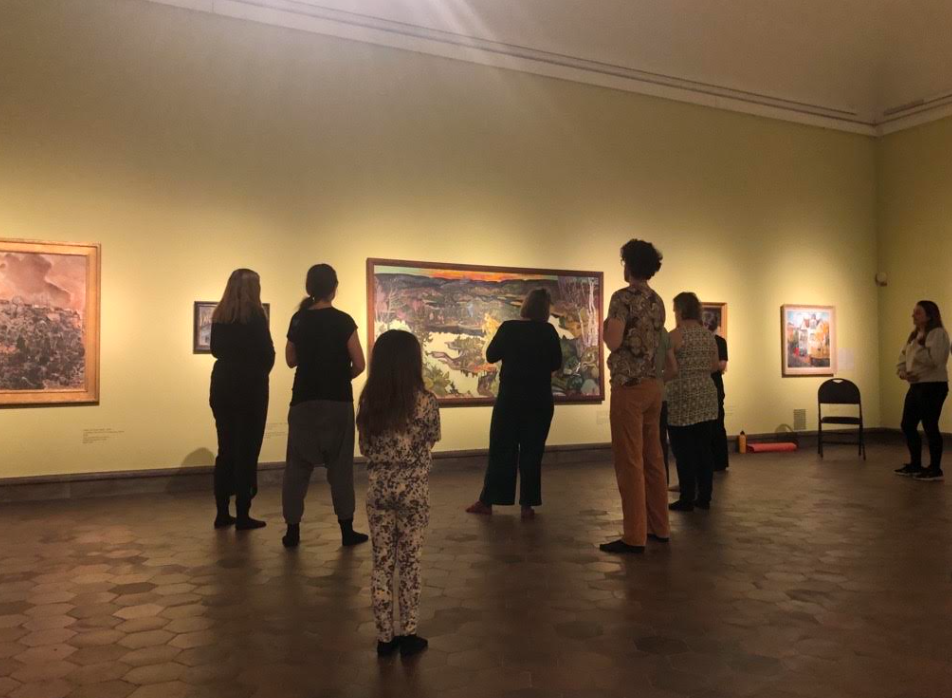
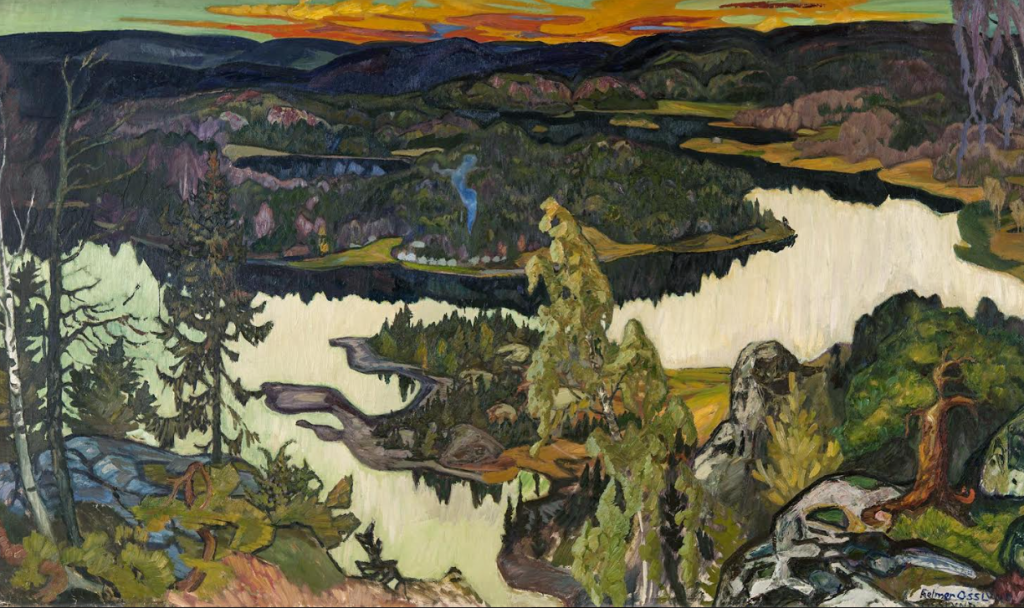
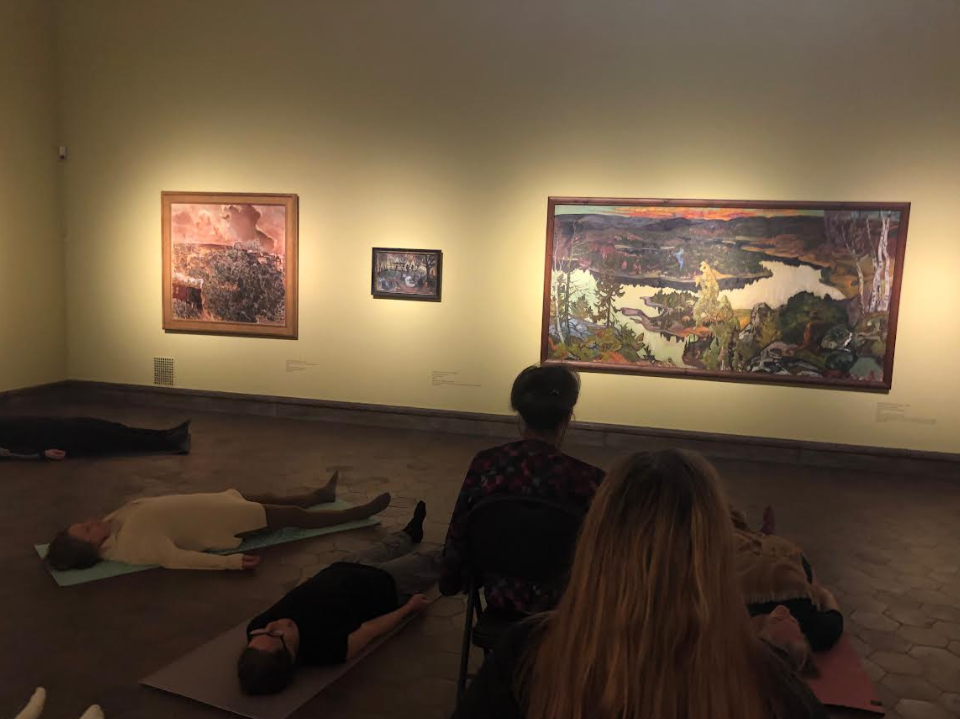
A guided meditation with artist and yoga instructor Pernilla Ljungqvist in front of the artwork “Höstafton, Nordingrå” by Helmer Osslund (1866 – 1938) – adults and teens were invited to join this one.
Slow looking and drawing workshop consisting of two parts: one in the Museum collection where they practiced slow looking exercises, and another in the Museum studio where they created their own artwork – this was a children’s workshop.
Slow Art Day participants in front of “Höstafton, Nordingrå” by Helmer Osslund (1866 – 1938). Photographer: Linda Noreen. Photo courtsey of Gothenburg Museum of Art.“Höstafton, Nordingrå” by Helmer Osslund (1866 – 1938). Photographer: Hossein Sehat Lou. Photo courtsey of Gothenburg Museum of Art.
For the first activity, Pernilla, the meditation instructor, invited participants to look slowly at the artwork “Höstafton, Nordingrå.” Next, they relaxed into a comfortable position on a mat in front of the work as Pernilla guided them through simple motions and exercises while looking slowly at the painting.
Slow Art Day participants meditating in front of “Höstafton, Nordingrå” by Helmer Osslund (1866 – 1938). Photographer: Linda Noreen. Photo courtsey of Gothenburg Museum of Art.
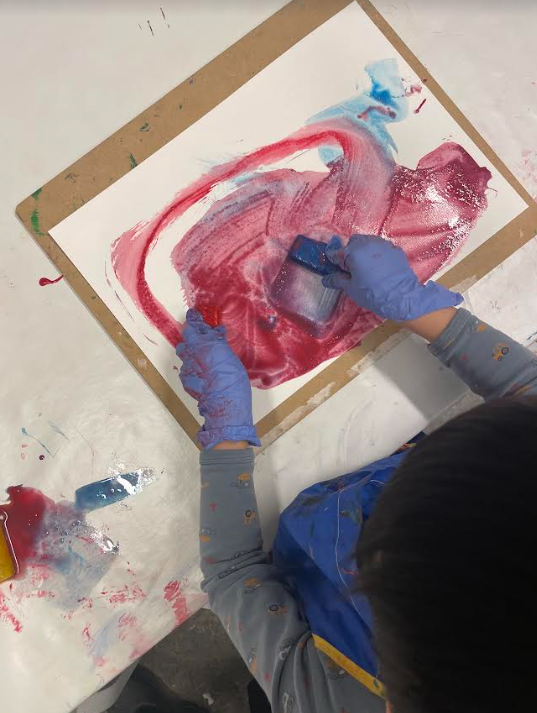
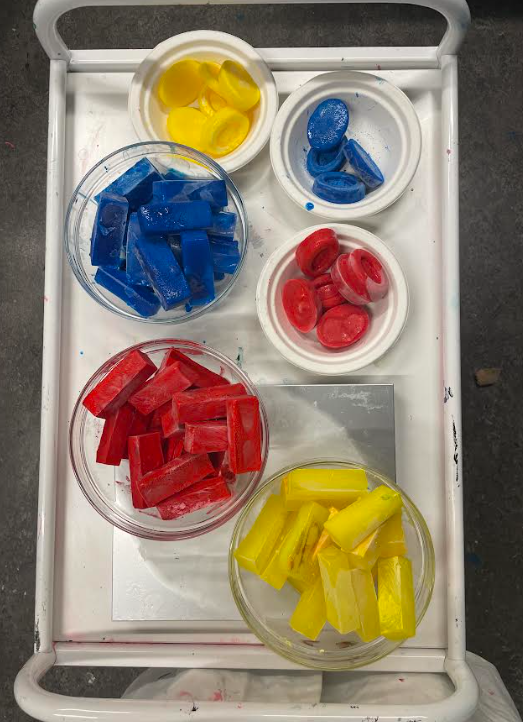
During the children’s workshop, the kids looked at three artworks using different slow looking techniques focused on noticing new details in each. During the second half of the session, they were invited to paint with frozen colors on watercolor paper (again, this was done in the museum studio). The goal was to use a tactile material, which could activate several senses and emotions *and* in which the concept of time was present in the material itself. Frozen paint to illustrate time and slowness – how cool!
Slow Art Day workshop participant in the act of painting. Photographer: Jonna Kihlsten.Slow Art Day workshop supplies: frozen paint. Photographer: Jonna Kihlsten.Slow Art Day workshop participant in front of their artwork. Photographer: Jonna Kihlsten.
At Slow Art Day HQ we love the idea of using frozen paint in a workshop studio for kids (and hey – us adults would enjoy that too) while running a guided meditation for adults.
For readers not familiar with Gothenburg, it is the second largest city in Sweden situated on the west coast near the Kattegat. The city was built on marshy land and the layout of the city was inspired by Dutch cities like Amsterdam.
The Gothenburg Museum itself is the third largest in Sweden and hosts a collection of 19th century Nordic art as well as a range of modern, contemporary, and older works.
We appreciate the museum’s decision both to offer different events for kids and adults and the way they designed each of those sessions. We eagerly look forward to whatever they come up with for Slow Art Day 2025.
-Johanna, Ashley, Jessica Jane, and Phyl
P.S. Stay up to date with events at Gothenburg Museum of Art via their Facebook or Instagram.