Meditation and Frozen Paint in Gothenburg

For their 5th Slow Art Day, the Gothenburg Museum of Art in Gothenburg, Sweden, hosted two events:

  • A guided meditation with artist and yoga instructor Pernilla Ljungqvist in front of the artwork “Höstafton, Nordingrå” by Helmer Osslund (1866 – 1938) – adults and teens were invited to join this one.
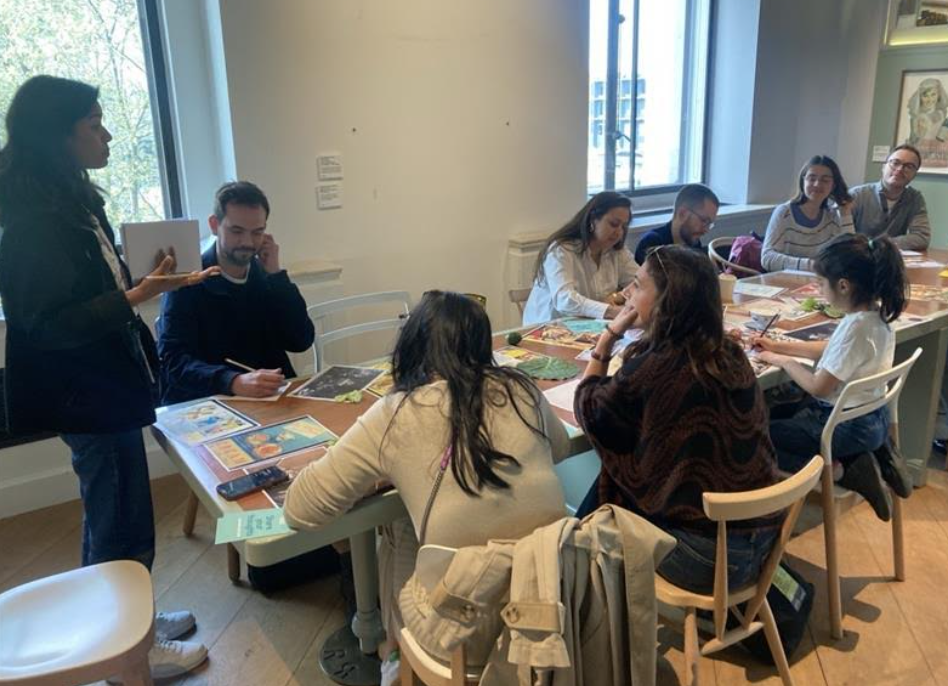
  • Slow looking and drawing workshop consisting of two parts: one in the Museum collection where they practiced slow looking exercises, and another in the Museum studio where they created their own artwork – this was a children’s workshop.
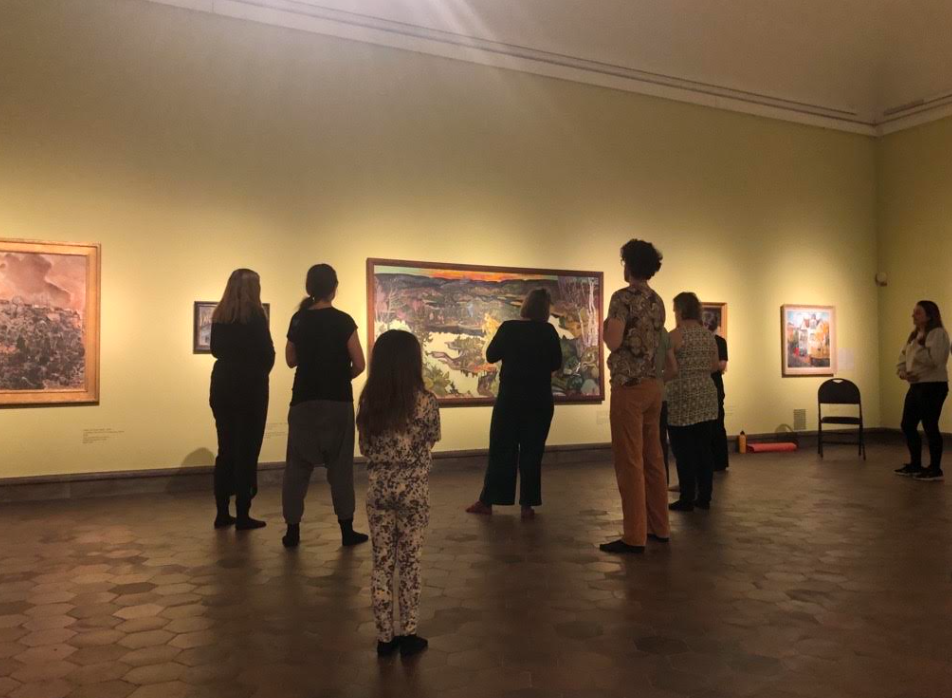
Slow Art Day participants in front of “Höstafton, Nordingrå” by Helmer Osslund (1866 – 1938). Photographer: Linda Noreen. Photo courtsey of Gothenburg Museum of Art.
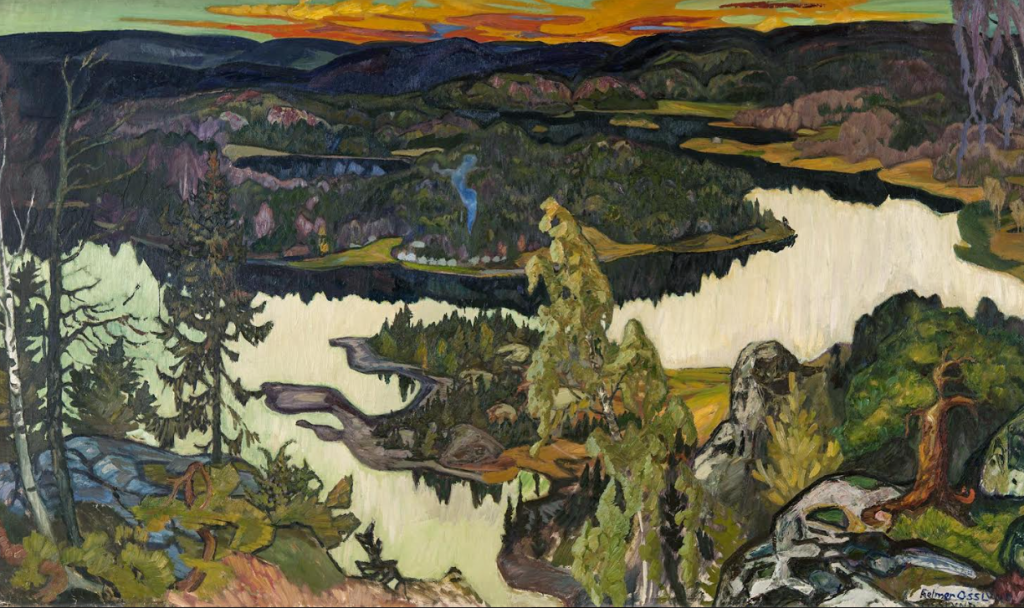
“Höstafton, Nordingrå” by Helmer Osslund (1866 – 1938). Photographer: Hossein Sehat Lou. Photo courtsey of Gothenburg Museum of Art.

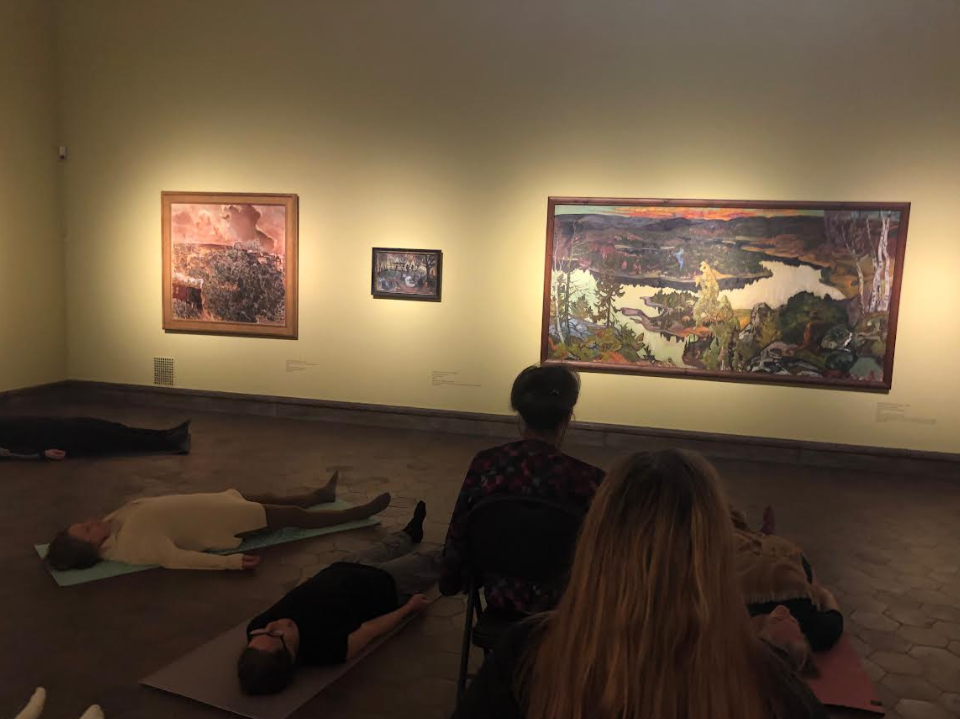
For the first activity, Pernilla, the meditation instructor, invited participants to look slowly at the artwork “Höstafton, Nordingrå.” Next, they relaxed into a comfortable position on a mat in front of the work as Pernilla guided them through simple motions and exercises while looking slowly at the painting.

Slow Art Day participants meditating in front of “Höstafton, Nordingrå” by Helmer Osslund (1866 – 1938). Photographer: Linda Noreen. Photo courtsey of Gothenburg Museum of Art.

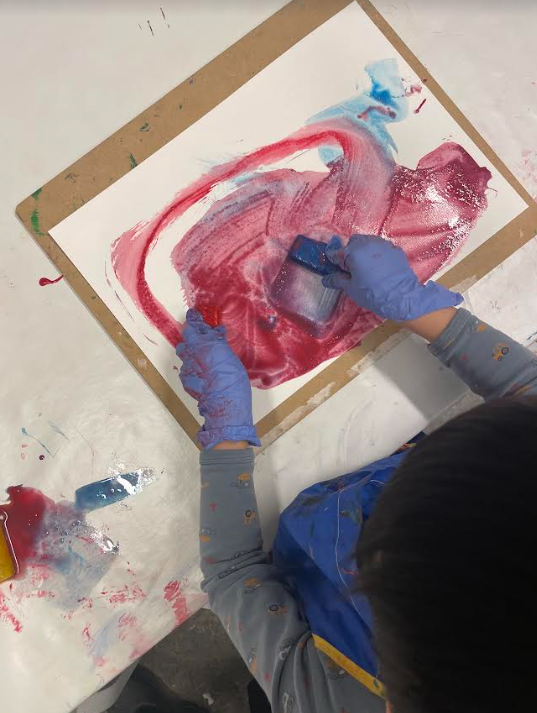
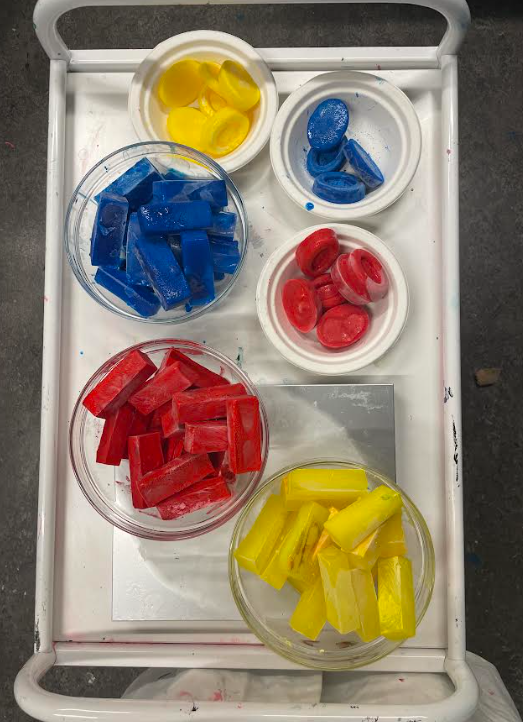
During the children’s workshop, the kids looked at three artworks using different slow looking techniques focused on noticing new details in each. During the second half of the session, they were invited to paint with frozen colors on watercolor paper (again, this was done in the museum studio). The goal was to use a tactile material, which could activate several senses and emotions *and* in which the concept of time was present in the material itself. Frozen paint to illustrate time and slowness – how cool!

Slow Art Day workshop participant in the act of painting. Photographer: Jonna Kihlsten.
Slow Art Day workshop supplies: frozen paint. Photographer: Jonna Kihlsten.
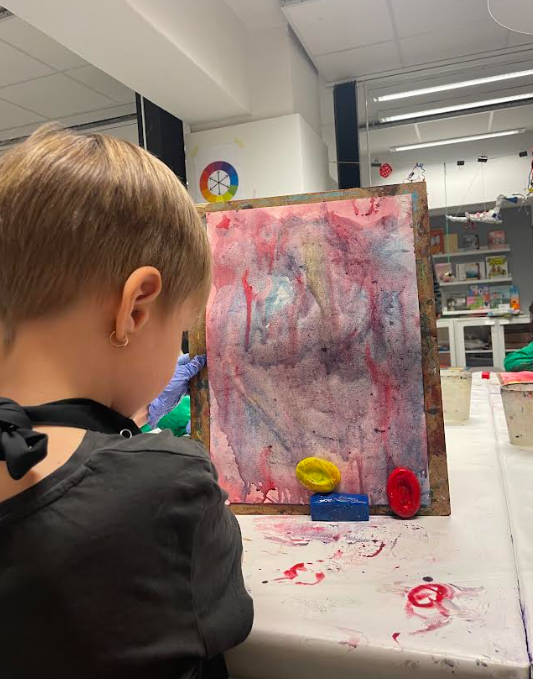
Slow Art Day workshop participant in front of their artwork. Photographer: Jonna Kihlsten.

At Slow Art Day HQ we love the idea of using frozen paint in a workshop studio for kids (and hey – us adults would enjoy that too) while running a guided meditation for adults.

For readers not familiar with Gothenburg, it is the second largest city in Sweden situated on the west coast near the Kattegat. The city was built on marshy land and the layout of the city was inspired by Dutch cities like Amsterdam.

The Gothenburg Museum itself is the third largest in Sweden and hosts a collection of 19th century Nordic art as well as a range of modern, contemporary, and older works.

We appreciate the museum’s decision both to offer different events for kids and adults and the way they designed each of those sessions. We eagerly look forward to whatever they come up with for Slow Art Day 2025.

-Johanna, Ashley, Jessica Jane, and Phyl

P.S. Stay up to date with events at Gothenburg Museum of Art via their Facebook or Instagram.


The National Gallery of Canada Hosts Second Slow Art Day

On April 13th, Andrea Gumpert, Gallery Educator, and Marie-Pierre Adam, Interpreter-Guide, hosted the National Gallery of Canada’s second Slow Art Day, and reported that it was a resounding success.

The Gallery provided three options for participation this year:
– an in-person guided group experience
– slow-looking “on your own” with provided handout (shown below)
– slow-looking from home using a guided video

And participants were given the option to participate in either French-language or English-language sessions.

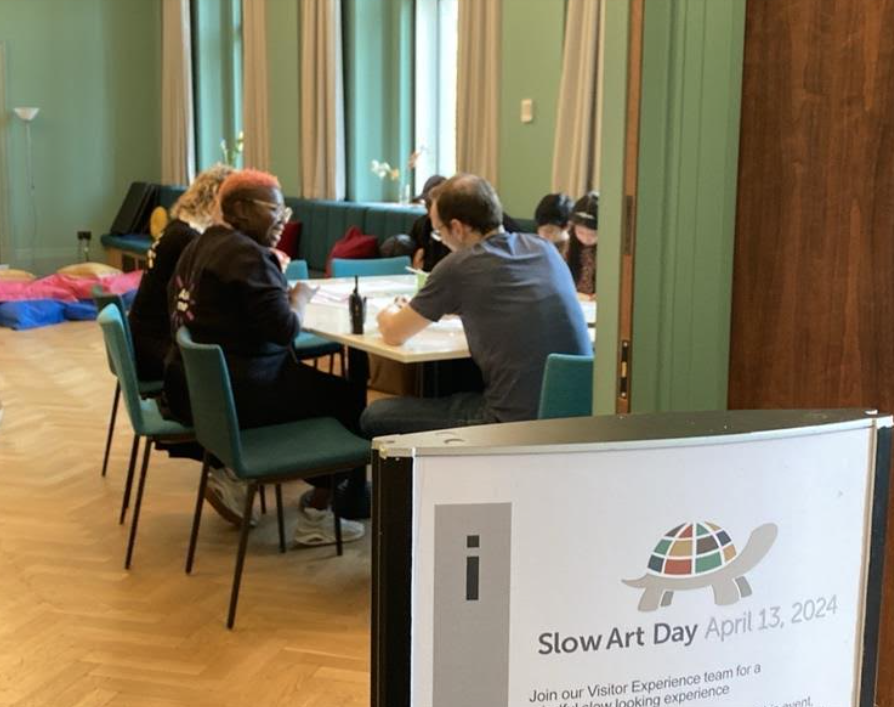
For the in-person guided event, hosts Andrea Gumpert and Marie-Pierre Adam greeted participants next to the below Slow Art Day signage in their Great Hall.

The in-person event was divided in two parts (that each of the French and English speaking groups followed).

For Part 1, Andrea led the 13 participants in the English-speaking group to the Indigenous and Canadian later galleries, and Marie-Pierre led the 11 French-speaking participants to the European baroque galleries. They each then invited their participants to select one artwork and spend 10 minutes looking slowly at it. After the 10 minutes, they regrouped and discussed the experience.

Across the two groups, participants commented on how much more they noticed about the art when they gave themselves permission to really spend time with it – a seemingly obvious but nonetheless revelatory experience. Participants also said the group setting was helpful, particularly for the younger attendees (11 and 14 years old.) People also told stories about the works, and contemplated the technical skills behind the art.

For Part II, the English-speaking group moved to the Contemporary galleries while the French-speaking group moved to the later modern galleries. This time Andrea and Marie-Pierre suggested three optional challenges:
1. Spend 15 minutes with one artwork
2. Select a work that you didn’t have an immediate affinity for
3. Draw or write while spending time with the work

They then had a second discussion with each group.

The French-speaking group in the modern gallery appreciated the chance to express themselves on paper; either by drawing or writing their ideas. Some participants expressed that the second round of slow looking was easier – that slow looking felt like a muscle that needs to be warmed up first. One participant who chose a work they would not have normally looked at shared that their slow looking revealed parts of the painting they thought were wonderful after all – and raised many questions around the choices made by the artist at that time in their career.

At the end of the day, participants provided feedback.

Here are two quotes, one from the English-speaking group and one from the French-speaking group (i.e., these are not translations from one to the other – but separate quotes):

The slow art English session was a welcome new approach for me to viewing art. Our guide was
informed and fun, and she explained the process well. I am sure I will use this approach on my own
sometimes at art galleries, and elsewhere. Thank you for offering it — it is a good middle place
between a tour with a guide and a hands-on activity.

Bonjour à toute l’équipe, je profite de ce courriel pour vous remercier pour l’organisation de
l’activité Slow Art de samedi dernier. J’ai une la chance de participer à cet événement en présence
de Marie-Pierre et du groupe pour les personnes francophones. J’ai fait plusieurs apprentissages
dans un environnement paisible et vraiment intéressant ! Merci pour votre dévouement à rendre
l’art accessible et respectueux ! Je vous en suis très reconnaissante ! Je souhaite une longue vie
au Musée des Beaux-Arts du Canada !

We are glad to say that The Gallery is now planning regular slow looking sessions throughout the year (we love that!) as well as participating in Slow Art Day 2025.

– Johanna, Ashley, Jessica Jane, and Phyl

Objects Talk Back at The Gardiner Museum

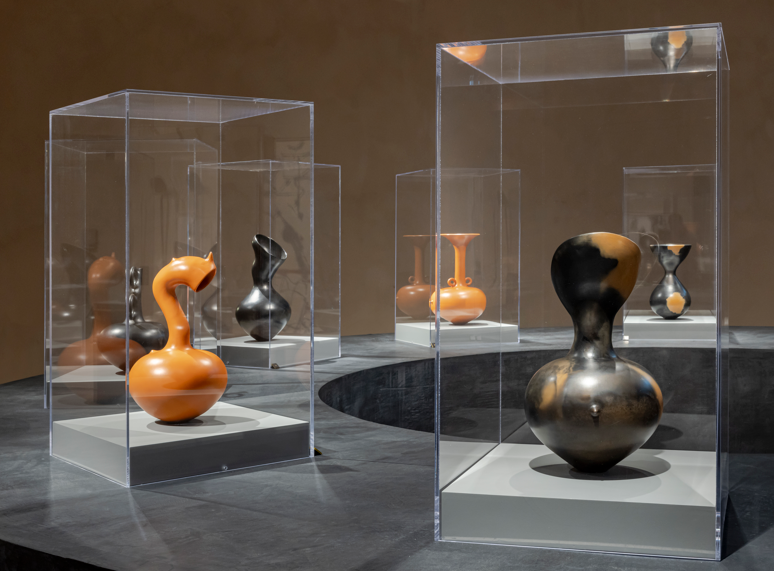
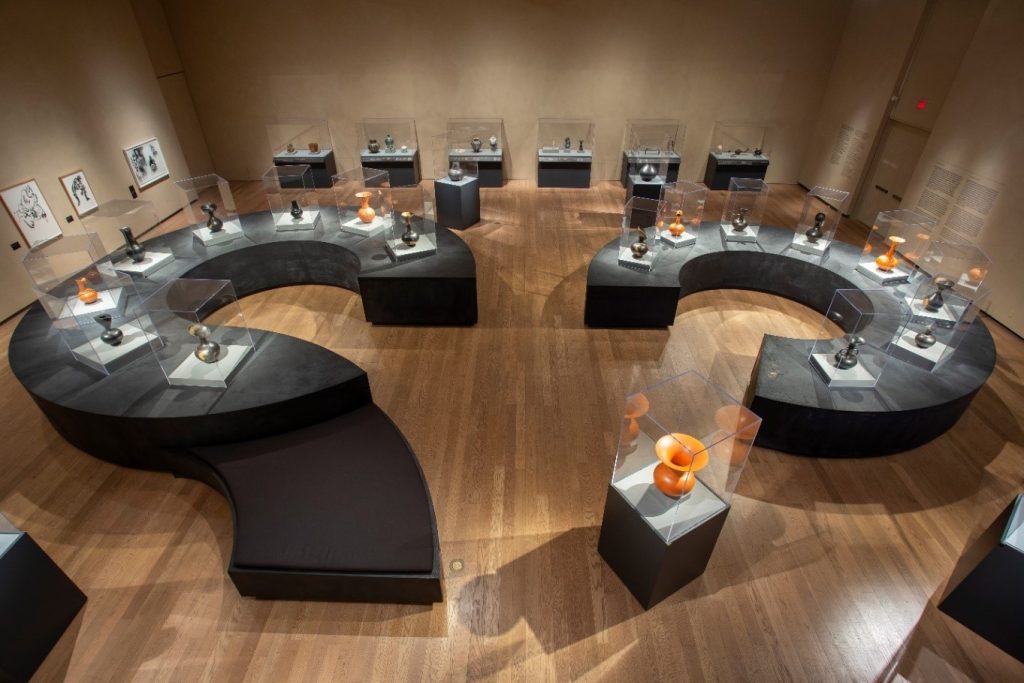
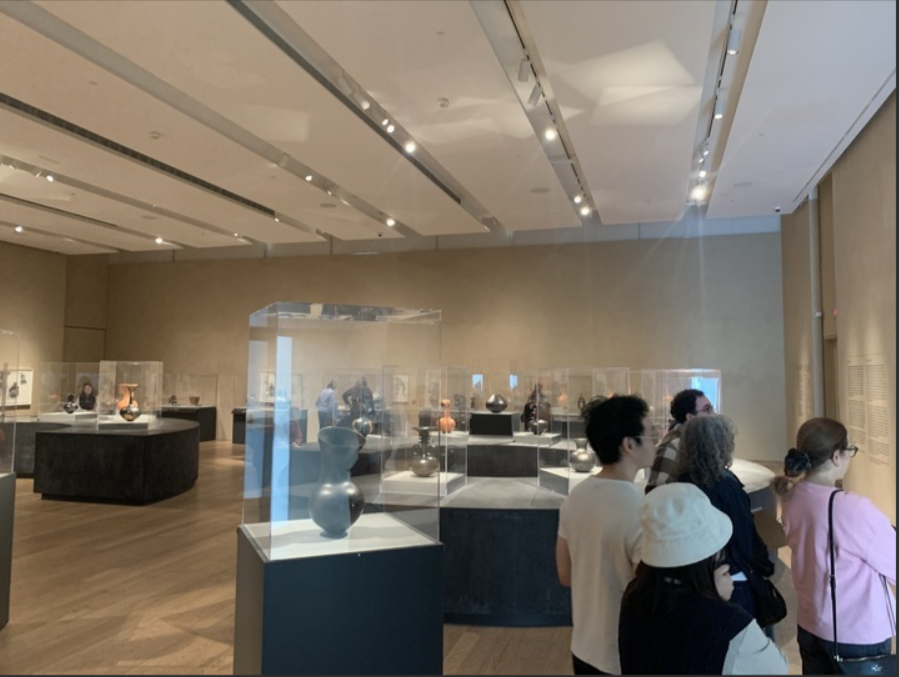
For their fifth Slow Art Day, The Gardiner Museum in Toronto, Canada, invited the public to a mindful exploration of the exhibition Magdalene Odundo: A Dialogue with Objects between 11am – 1pm.

Magdalene Odundo: A Dialogue with Objects. Photo: Toni Hafkenscheid
Magdalene Odundo: A Dialogue with Objects. Photo: Jack McCombe

On Slow Art Day, participants were provided with guided activity sheets (see below) designed to facilitate slow looking. The handout prompted participants to think of how the objects were “talking” to them.

Participants were also encouraged to discuss their experiences either with each other, or with Sofia Flores-Ledesma, Education and Program Coordinator, who was available throughout the event.

Participants looking slowly at the exhibition for Slow Art Day 2024. Photo: Sofia Flores-Ledesma.

Below you can see the activity sheet (and feel free to copy any of what they have done there). The downloadable file also includes a few examples of how participants used the sheet to draw and comment.

The exhibition was the first and largest collection of Dame Magdalene Odundo’s works presented in North America, showcasing decades of her art. Magdalene Odundo (born 1950) first trained as a graphic artist in her home country of Kenya before moving to the United Kingdom to take a foundation course at the Cambridge School of Art. In 1976, Odundo graduated in Ceramics, Photography and Printmaking from the University for the Creative Arts, Farnham, UK. For more information about Odundo’s work and life, we invite you to look at The Gardiner Museum’s exhibition page.

The Gardiner Museum always hosts beautiful Slow Art Day events, and we look forward to whatever they come up with for Slow Art Day 2025.

– Johanna, Ashley, Jessica Jane, and Phyl

P.S. Stay up to date with events at The Gardiner Museum through their Instagram, X (Twitter), or Facebook.

Locals Sketch for Slow Art Day at the Art Gallery of St. Albert

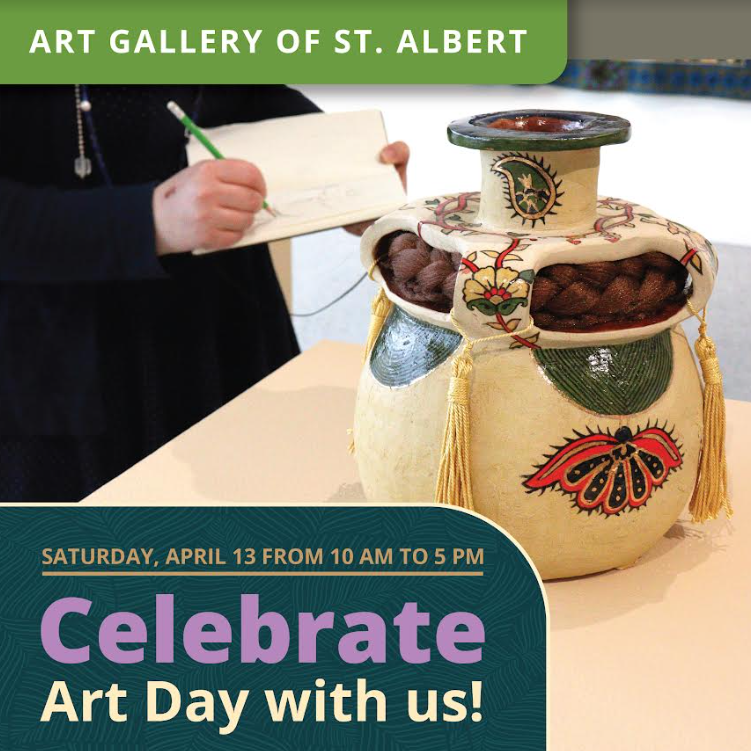
For their 2024 Slow Art Day (their fifth!), the Art Gallery of St. Albert in Canada invited local sketch groups to visit the exhibition Threading Through Time by Jamaican visual artist Raneece Buddan. Director Leah Louden told us they chose to focus on Raneece’s exhibition, in part because her work “rewards the viewer with lots of fine details you only discover through careful observation.”

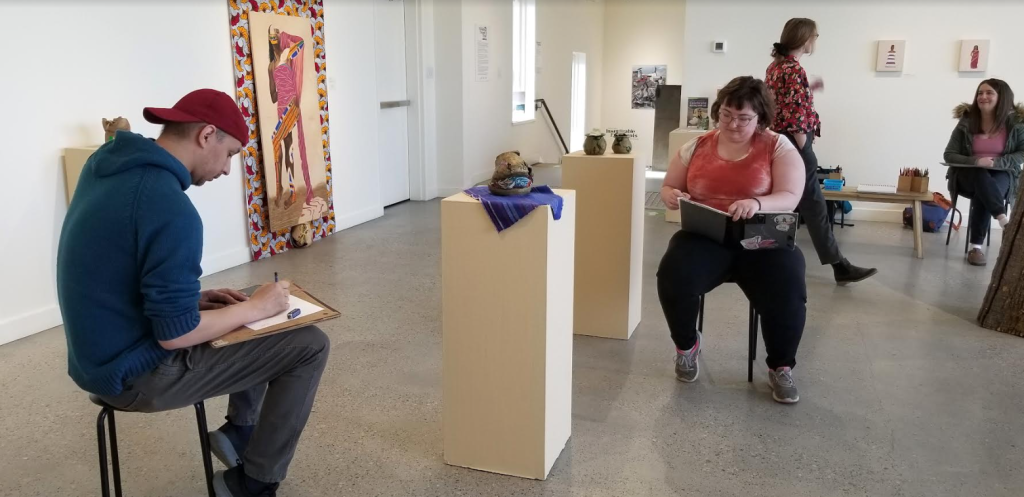
Slow Art Day participants sketching works by Raneece Buddan, Threading Through Time (exhibition view), 2024. Photo by Brenda Lakeman.

This year, the museum decided to partner with a series of local organizations who could bring in “sketch groups” including the Edmonton Art Club, The Federation of Canadian Artists Edmonton Chapter, Sketch Around YEG Club, and the St. Albert Visual Arts Council Guilds.

Upon arrival, the groups were offered both free refreshments and free drawing materials. In total, over 30 visitors joined. Some participants stayed for an extended period of time, spending 2 hours drawing and slowly appreciating the artwork.

All visitors were encouraged to choose a single artwork in the show, and then look and sketch slowly. The museum also provided prompts (see below – and feel free to copy!).

Staff were on hand to answer questions and more in-depth information about the art and about the process of slow looking/sketching.

We can’t wait to see what the Art Gallery of St. Albert comes up with for their next Slow Art Day event in 2025.

-Johanna, Ashley, Jessica Jane, and Phyl

P.S. Stay up to date with events at the Art Gallery of St. Albert via their social media: @ArtGalleryofStAlbert on Facebook and Instagram

Slow Puzzles at the Eskenazi Museum of Art 

For their second Slow Art Day, the Eskenazi Museum of Art in Bloomington, Indiana, offered visitors a wide range of activities, including in-gallery sketching, snacks, self guided tours, discussion, and an art-based puzzle contest. Note that the museum is part of the growing Bloomington city-wide Slow Art Day event – which this year included more than 20 museums and galleries across the city (remarkable!).

For the slow looking activity, three artworks were highlighted by Eskenazi, though guests were encouraged to pick any piece in the collection:

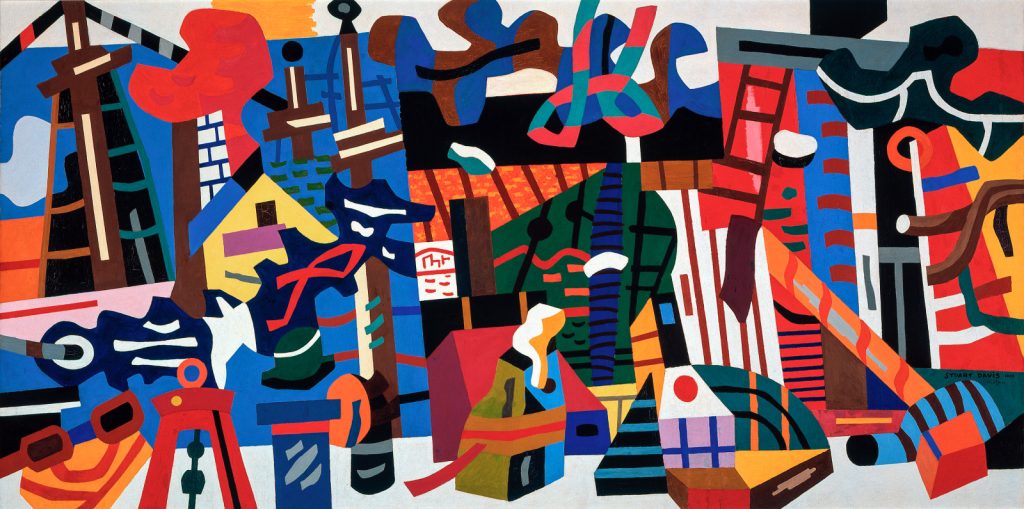
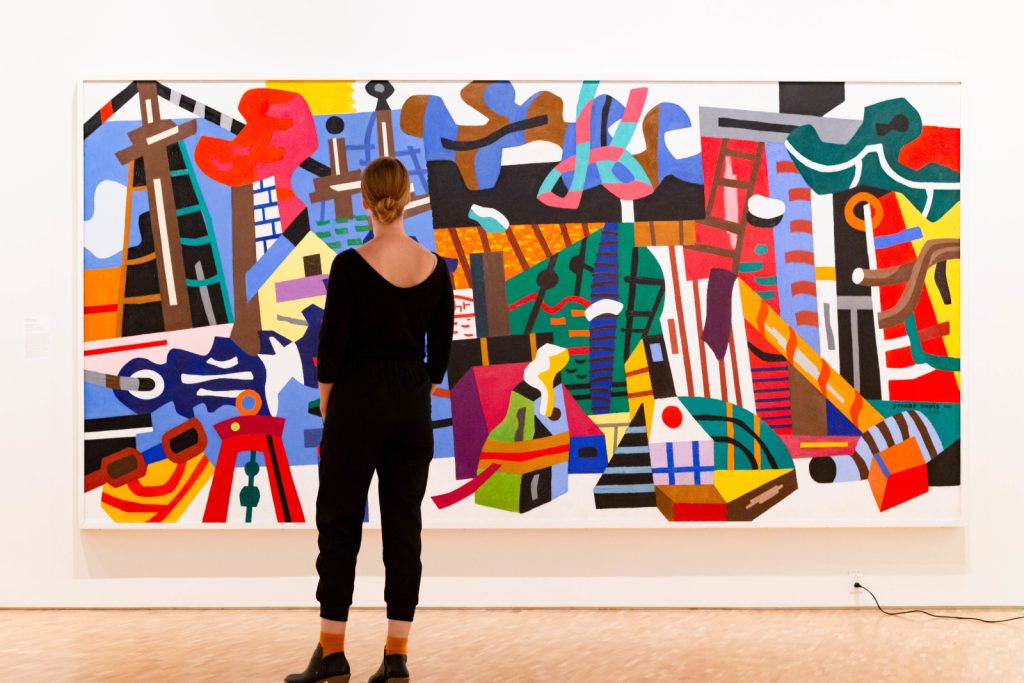
Swing Landscape” by Stuart Davis

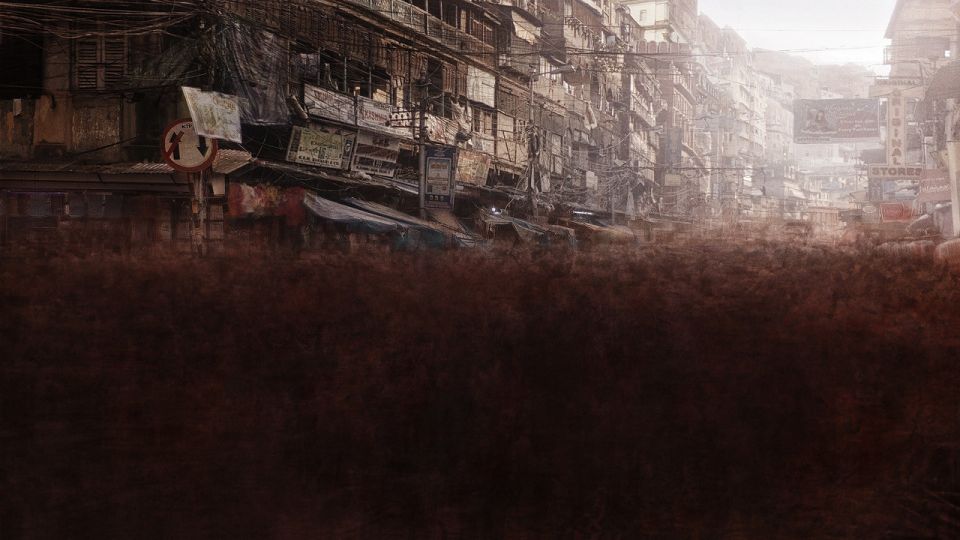
“Matter” video by Adam Magyar
Below is a still image from the video.

“Flight of a Thousand Birds” by Anila Agha

To facilitate individual slow looking and discussions, the museum re-used their slow looking hand-out from last year (with a few tweaks). We invite all museum curators and Slow Art Day hosts to view the particularly well-designed hand-out below.

Keaton Clulow, Public Experiences Manager, shared that the puzzle contest was particularly popular. For that, guests were asked to spend at least ten minutes with “Swing Landscape” by Stuart Davis before attempting to put together a giant 3D puzzle of the piece from memory. 

Visitor viewing “Swing Landscape” by Stuart Davis.

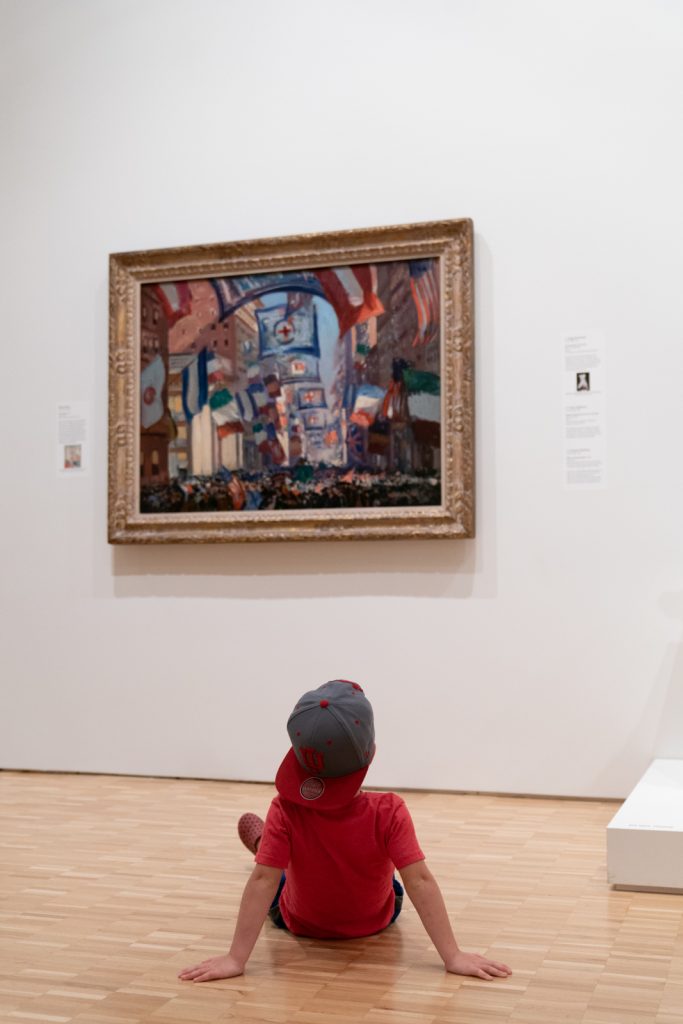
The museum was also successful at involving all generations, including young people (see below).

Slow looking participant viewing an artwork in the museum. Photo by Shanti Knight.

At Slow Art Day HQ we love the creativity the Eskenazi brings to designing its Slow Art Day activities. We know we would enjoy working on the “slow-puzzle.”

We can’t wait to see what the Eskenazi Museum of Art comes up with for next year’s Blooming citywide event (which may turn into a statewide event – stay tuned).

-Johanna, Ashley, Jessica Jane, and Phyl

P.S. You can follow @eskenazimuseum on Facebook and Instagram.

P.P.S. The museum asked us to include this statement: The museum wishes to acknowledge and honor the myaamiaki, Lënape, Bodwéwadmik, and saawanwa people, whose ancestral homelands and resources Indiana University Bloomington occupies.

Tea, Biscuits, and Year-Round Slow Looking

This year Galleri Pictor and Munka folkhogskola (a Swedish folk high school and adult education center) hosted Slow Art events several times during the year: once in April for Slow Art Day, and three times during the summer for art students taking summer courses at the center. The slow looking sessions all took place at Galleri Pictor and each session focused on a single artwork – Clara Lundgren’s “Det var här” (“It was here”).

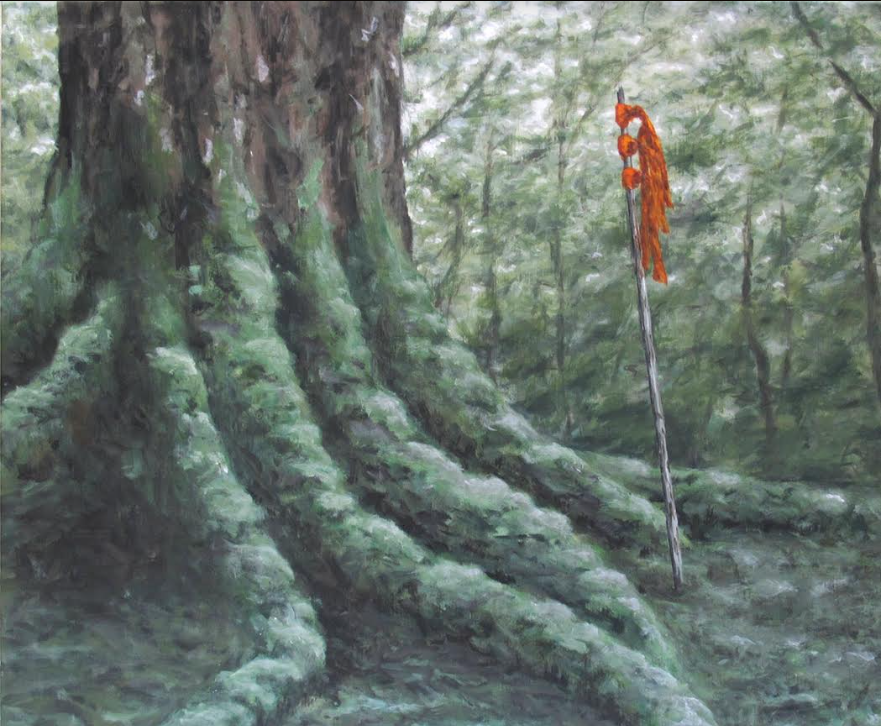
Clara Lundgren (undated). “Det var här” (It was here). Acrylic on canvas. 69×82 cm. This artwork was used for the slow looking sessions at Galleri Pictor.

Arriving participants were welcomed and given a worksheet (in Swedish) containing instructions for eye palming along with slow looking prompts.

These instructions have been translated into English below:

Materials: Artwork, Worksheets and Timer

1) Eye Palming is a technique to relax the muscles around the eyes. Warm your hands by rubbing them together for a few seconds. Close your eyes and press your palms lightly against your cheeks, then cup your fingers over your eyes and eyebrows. Breathe slowly and deeply for three minutes.

2) Open your eyes slowly and look at the artwork with the same focus you had on your breathing.
– What do you notice?
– What colors, compositions, shapes and materials do you see?
– Does the artwork remind you of an event in your life?
– Do you think others notice the same thing as you?

If your mind wanders, try to focus again on the image. Look at the artwork for 10 minutes.

3) Relax again. Take a few deep breaths and notice any further thoughts you have about the artwork.

4) Write down reflections on the worksheet. Do this for 10 minutes.

5) Finally, we reflect together on our experiences of the image and how it felt to do the activity.


During the slow looking session Charlotte Fällman Gleissner, art expert and teacher at Munka Folkhögskola, kept track of the time transitions using a timer.

For the closing group reflection, Galleri Pictor repeated their successful concept from last year of sharing tea and biscuits together while participants discussed their slow looking session. Some of the reflections from this section of the event are included on the Pictor Gallery blog (in Swedish).

We love the focus on a single art work (the original idea for Slow Art Day was to spend one hour with a single artwork).

We can’t wait to see what Galleri Pictor and Munka folkhögskola come up with for Slow Art Day 2024 – and throughout the year. We also hope that future events include tea and biscuits, especially if they save some for us!

– Johanna, Ashley, Phyl and Jessica Jane

100th Anniversary Celebration: Slow Art Day at El Nido Art Space (VC Projects)

For their second Slow Art Day, El Nido Art Space, presented by VC Projects, in Los Angeles celebrated the 100th birthday anniversary of artist and poet Sam Francis.

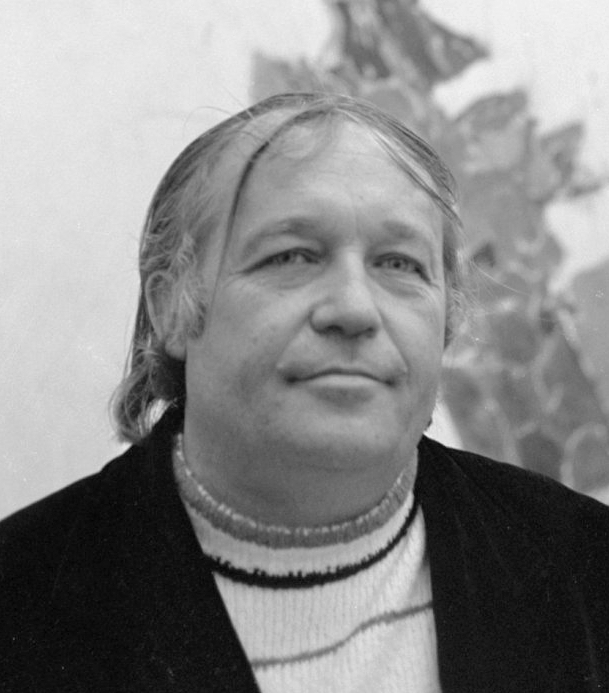
Sam Francis (1923 – 1994) — American painter and printmaker. Photographed in 1968. Photo: Eric Koch. CC BY-SA 3.0 nl

Ahead of Slow Art Day, one of Francis’ poems was sent to participating artists. They were invited to create a new artwork, dance, or song in a medium of their choice, inspired by the poem. The artists included:

Shane Guffogg – California
AKAT – Japan
Bjarni Sigurbjörnsson – Iceland
Mark van Drunick – Netherlands
Victoria Chapman – California

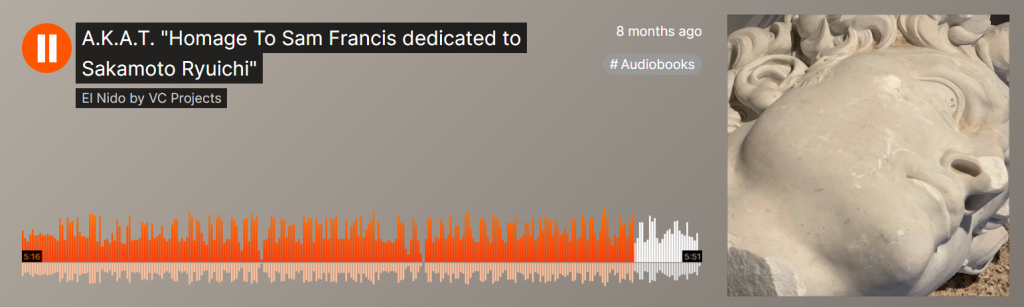
Here is the file containing the instructions and poem. Take a look for yourself, and read through it slowly (or listen to the poem through one of the artists’ interpretations, such as one of A.K.A.T’s recordings on SoundCloud).

The artists were given the following guidelines, also included in the document above:

1. Read the text slowly out loud

2. After reading, go outside or look through a window to see the sky (either day or night.)

3. Contemplate in silence

4. Create a work in any medium in reflection of this text

The responses included dance, song, and new paintings. VC Projects wrote a report following the event, which includes these responses. We also include a selection of them below.

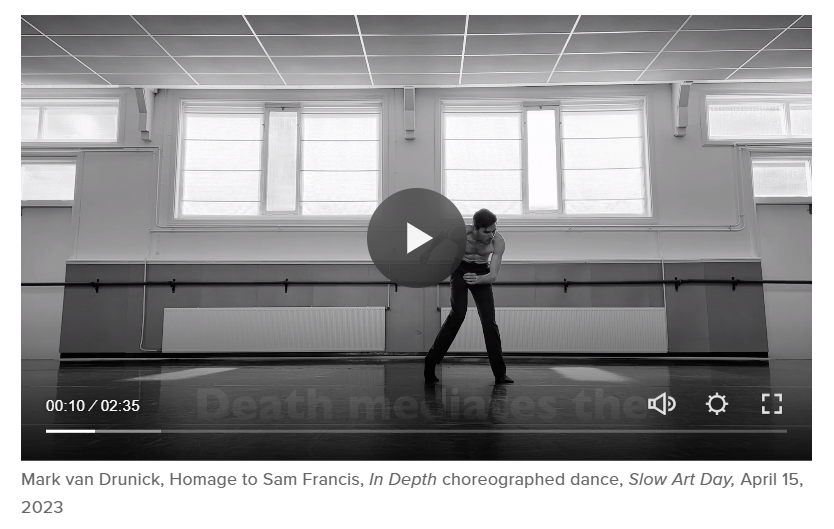
Mark van Drunick, a dancer from the Netherlands, interpreted a poem through dance. If you click directly on the still image below, you will be taken to the page where the video is viewable. Mark also included some of the text from the poem directly in the video, so that the viewer could follow it slowly as part of the experience.

A.K.A.T., a Japan-born artist who today resides in both L.A. and Tokyo, recorded two different versions of the poem being read out loud, with music and sound effects included. The first version is a recitation of the poem by A.K.A.T. (note: the recitation is whispered). In the second version, we hear the sound of A.K.A.T’s mother’s voice reciting the text (done in one take! This one is spoken at normal volume and has a calm and relaxing mood).

We highly recommend that you view the other contributions in the excellent report written by VC projects.

At Slow Art Day HQ, we love that artists were invited into a celebration of another artist as part of this Slow Art Day event. Why not try it yourself: How would you interpret Sam Francis’ poem?

We can’t wait to see what El Nido and VC Projects come up with for 2024 Slow Art Day.

-Johanna, Ashley, Jessica Jane, and Phyl

Europe’s Largest Museum Complex Welcomes Slow Art Day

For their first Slow Art Day, Sigmund Freud University and the Staatliche Museen zu Berlin in Berlin, which comprises seventeen museums in five clusters, jointly sponsored a Slow Art event hosted by Master’s students in Art Therapy Naira Bloss and Ulla Utasch.

The museum complex invited visitors to pre-register for one of two 150-minute long workshops held on April 15th:

WORKSHOP 1: The New Museum / Neues Museum. 9.30 a.m. -12.00 p.m.

WORKSHOP 2: The Old Museum / Altes Museum. 2:30 p.m. – 5:00 p.m.

Each session opened with a guided relaxation exercise, followed by slow looking at the busts of Queen Nefertiti (workshop 1) and Queen Cleopatra (workshop 2). Afterwards, the hosts facilitated in-depth discussions.

Bust of Queen Nefertiti c. 1353 and 1336 BC. | National Museums in Berlin | Egyptian Museum with Papyrus Collection | Sandra Steiß
Portrait of Cleopatra around 50-38 B.C. | National Museums in Berlin | Collection of Classical Antiquities | Johannes Laurentius


The sessions concluded with a slow drawing exercise, where the hosts asked each participant to create a design inspired by their experience in the museum, and reflecting on the impact of Slow Looking at art on their mental health.

Workshop at the New Museum.

At Slow Art Day HQ, we are so happy to welcome the Staatliche Museen zu Berlin, and its seventeen museums, to the slow looking movement. We also want to thank Prof. Dr. Georg Franzen, Professorship for Psychotherapy Science and Applied Art Psychology at the Sigmund Freud University for supervising his students Naira and Ulla.

We look forward to what the Staatliche Museen zu Berlin comes up with for Slow Art Day 2024.

-Johanna, Ashley, Jessica Jane, and Phyl

Miniature Art Captivates at the Gardiner Museum

People often ask us: what’s the best kind of art for people to look at slowly? And before we answer, they often offer what they think must be true – i.e., that only *large* scale art can maintain the attention of slow lookers. Our answer, however, (based on experience) has been that everything works *including* small-scale art.

We are glad to say that The Gardiner Museum in Toronto, Canada proved once again that tiny art captivates.

For their fourth Slow Art Day, The Gardiner featured Montreal-based self-taught artist Karine Giboulo’s “immersive reimagining” of her home, with over 500 *miniature* polymer clay figures arranged throughout the tiny rooms. The small figures are intended to invite viewers to reflect on societal challenges, such as connectedness and isolation during the recent pandemic, the impact of aging, the climate crisis, food insecurity, housing instability, and consumerism. And they are indeed captivating.

Karine Giboulo: Housewarming, Installation view, 2022, Gardiner Museum, Toronto.

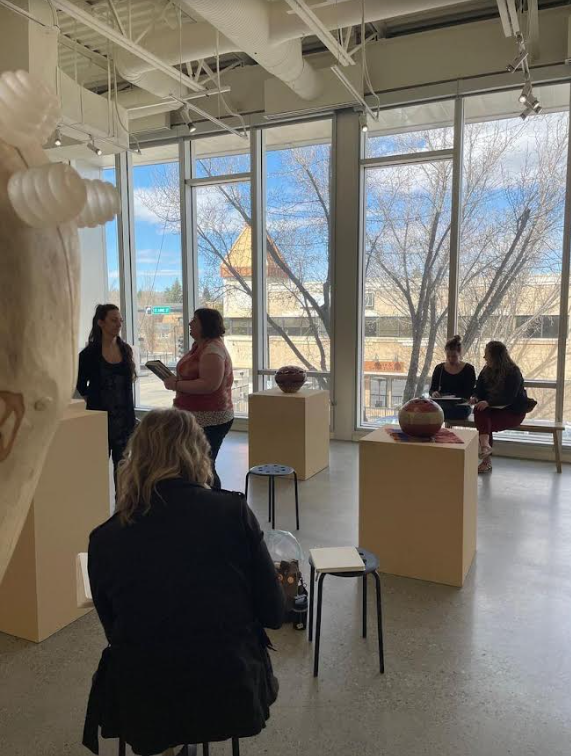
On Slow Art Day itself, participants were given a worksheet with questions that lead them through the process of slow looking, and included a space to sketch. They were then encouraged to speak with two members of the Gardiner Museum team: Sofia Flores-Ledesma, Programs and Education Assistant, and Emma Wan, Victoria College, Material Culture Intern.

We invite you to discover the power of slow looking at miniature art by downloading their worksheet below, then lazily gazing at the images from their exhibition that follow (and maybe trying a few sketches).

Karine Giboulo: Housewarming, Installation view, 2022, Gardiner Museum, Toronto.

Sofia Flores-Ledesma wrote to us and said that not only did the miniatures dazzle, but that the conversations on the day of the event were so engaging that they did not take any photos as planned. They were just too busy listening to the captivated participants talk about their experience.

Every year, The Gardiner does something interesting for Slow Art Day, and we love what they did for 2023: i.e, featuring Giboulo’s miniature scenes of ordinary life, which offer hidden surprises (this is another pitch for you to download their worksheet and do some slow looking yourself).

We can’t wait to see what the Gardiner Museum comes up with for Slow Art Day 2024.

-Johanna, Ashley, Jessica Jane, and Phyl.

PS. Stay updated with events at the Gardiner Museum on Instagram, Twitter, or Facebook.

7th Slow Art Day at Hofstra University Museum of Art

For their 7th Slow Art Day held April of 2022, Hofstra University Museum of Art in Hempstead, New York held an in-person event focused on works of art in their “Drawing Matters” exhibition, which included works from the museum’s collection of botanical and scientific illustrations, as well as engineering and architectural drawings.

Museum Director Karen Albert led slow looking and drawing exercises throughout the 2-hour event, which was limited to 15 attendees.

Slow Art Day Participants

Below is the flyer used to promote the event:

Hofstra, which uses slow-looking techniques throughout the year during their classes, brought a light touch to the program (i.e., less lecture and more looking), which is what we love to see.

You can visit them on Facebook, Twitter, Instagram, and Linkedin, and learn more about their classes, which are provided to elementary, secondary, and university students, as well as teachers and others.

We look forward to what the Hofstra Museum of Art comes up with for their 8th Slow Art Day in 2023.

– Ashley, Johanna, Jessica Jane, Robin, and Phyl