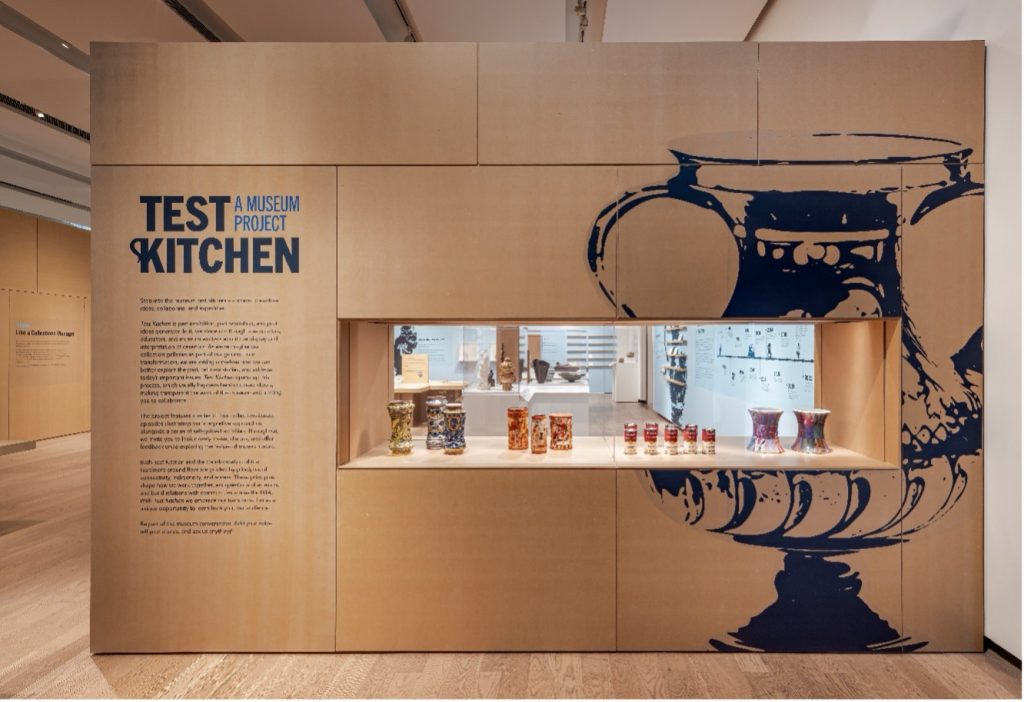
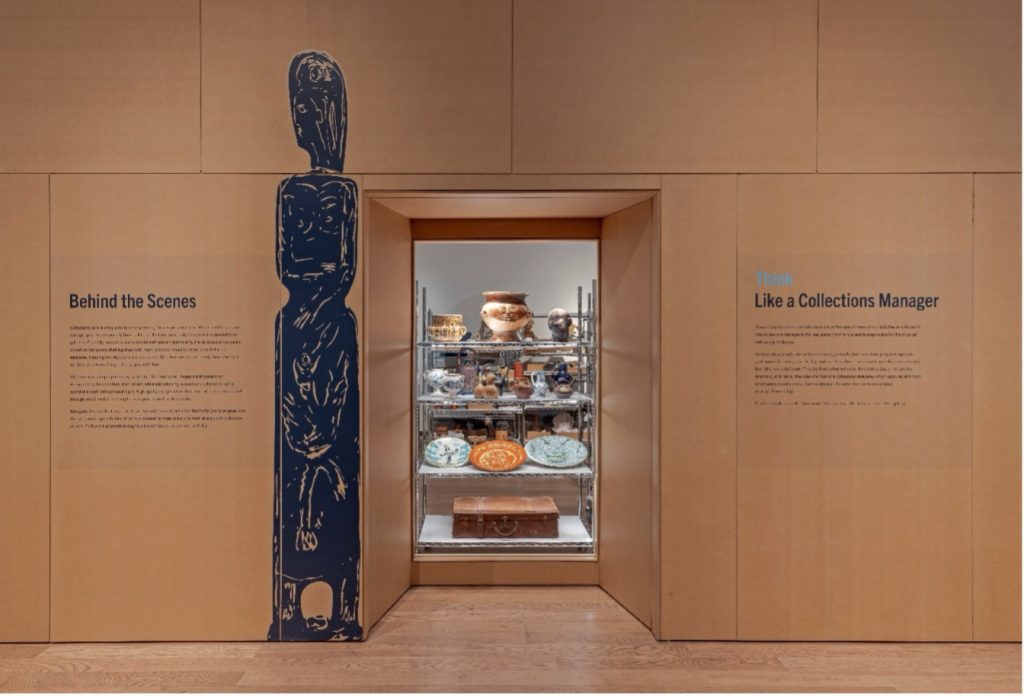
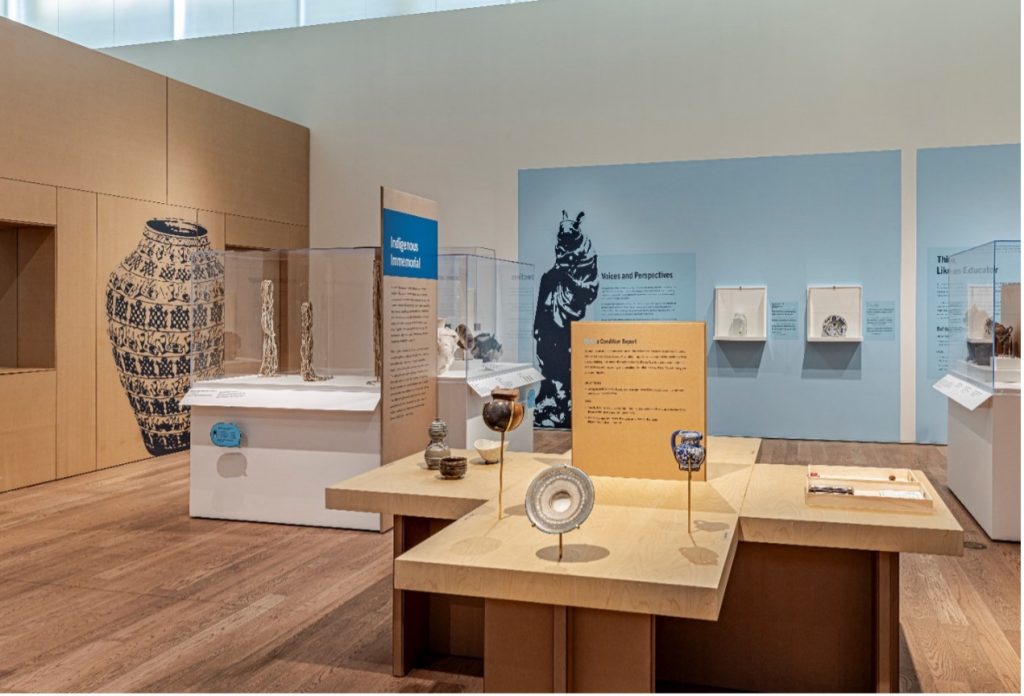
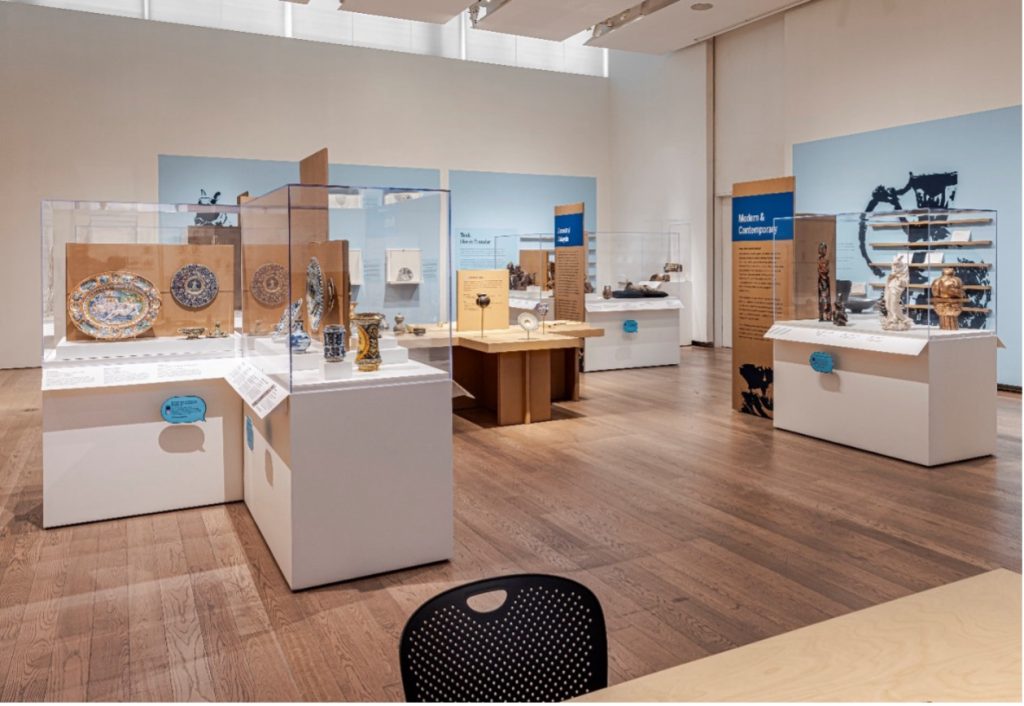
Test Kitchen at the Gardiner Museum, Toronto

On April 5, 2025, the Gardiner Museum in Toronto, Ontario participated in Slow Art Day for the sixth time — this year embedding the experience within their major exhibition Test Kitchen: A Museum Project.

As the museum underwent a full-scale reimagining of its ground floor and reinstallation of significant parts of its collection, Test Kitchen created a space of experimentation, collaboration, and participation. The exhibition functioned as part exhibition, part workshop, and part ideas generator. Visitors were encouraged not just to observe, but to question, respond, and contribute.

For Slow Art Day, participants were invited to closely engage with four collection-based “episodes” within the gallery:

  • Connected Worlds
  • Modern and Contemporary Ceramics
  • Ancestral Abiyalas
  • Indigenous Immemorial

Featured works included:

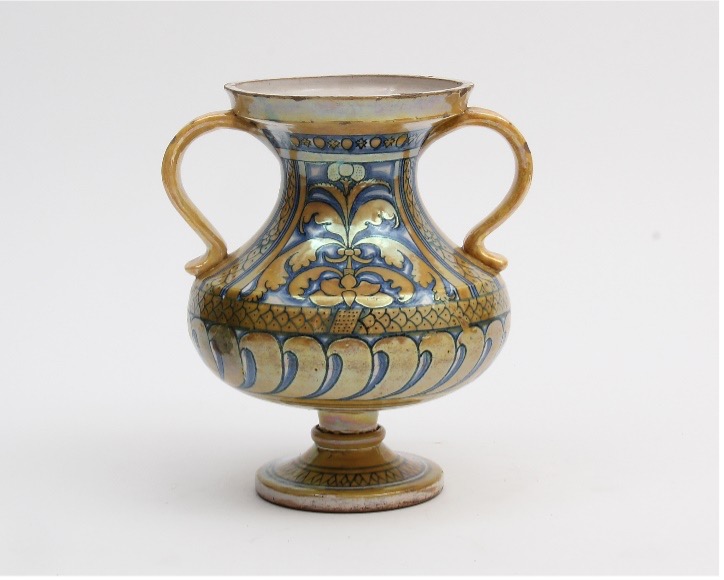
  • Two-handled vase with palmette motif, Deruta, Umbria, Italy, c.1500–1550
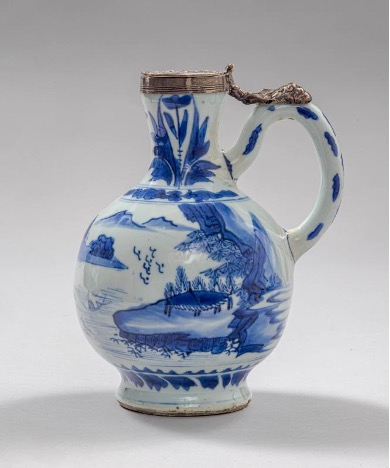
  • Ewer, silver mounts with German coin dated 1626, Jingdezhen, Jiangxi, China, 1635–1640
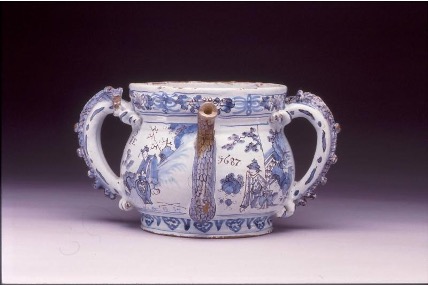
  • Posset pot with chinoiseries, possibly Brislington, Bristol, England, 1687
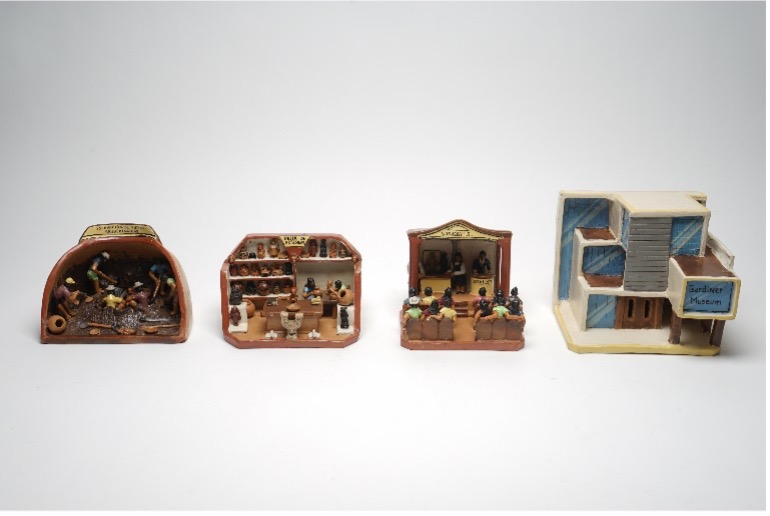
  • An Odyssey, Artist: Pamela Cevallos (Ecuadorian, born 1984), Collaborator: Guillermo Quijije, Quito, Ecuador, 2022
Two-handled vase with palmette motif, Deruta, Umbria, Italy, c.1500–1550
Ewer, silver mounts with German coin dated 1626, Jingdezhen, Jiangxi, China, 1635–1640
Posset pot with chinoiseries, possibly Brislington, Bristol, England, 1687
An Odyssey, Artist: Pamela Cevallos (Ecuadorian, born 1984), Collaborator: Guillermo Quijije, Quito, Ecuador, 2022

Participants navigated the exhibition using a self-guided Slow Art Day activity sheet created specifically for the program (below). The prompts encouraged close looking, sketching, reflective writing, and imaginative engagement.

In Connected Worlds, visitors searched for ceramics that visually embodied global exchange: an English pot with Chinese dragons, a Chinese jug with Dutch designs and a German coin, and an Italian vase made using a technique from Iraq. In Indigenous Immemorial, participants compared two works by John Kurok, reflecting on form, design, colour, and emotional tone.

In Modern and Contemporary Ceramics, guests identified works connected to myth or magic, considering how contemporary artists draw from narrative and symbolism.

In Ancestral Abiyalas, participants looked closely at An Odyssey, imagining themselves within its scenes — listening for sounds, sensing scents, and noticing what surprised them.

After completing their exploration, visitors were invited to participate in the exhibition’s interactive “Befriend an Object” activity, further reinforcing the exhibition’s collaborative spirit.

We are grateful to Sofia Flores-Ledesma and the team at the Gardiner Museum for continuing to champion Slow Art Day and for integrating it so thoughtfully into their institutional transformation, and look forward to seeing what they come up with for Slow Art Day 2026.

– Ashley, Johanna, Jessica Jane, and Phyl

P.S. View them on Instagram and Facebook

Choi Sunu House: The Beauty and Heart of Korea

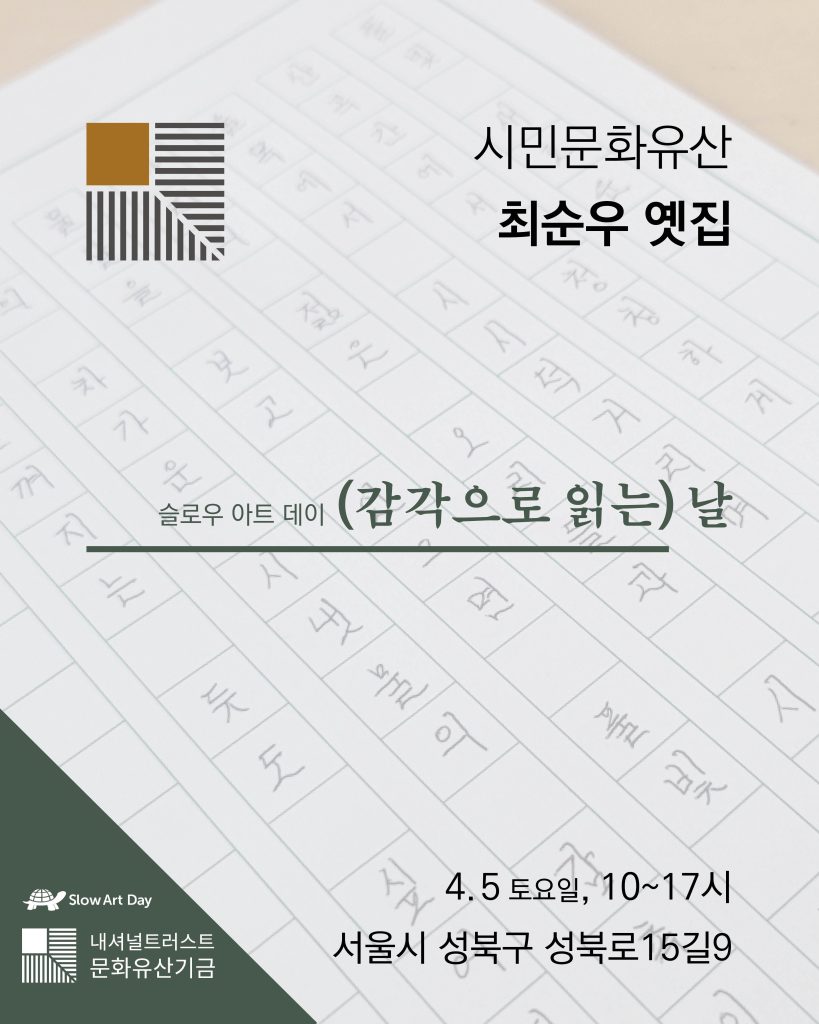
On April 5, 2025, Choi Sunu House in Seoul, South Korea participated in their third Slow Art Day with a reflective program titled “Discovering the Beauty and Heart of Korea” (“한국미 한국의 마음을 찾는 시간”).

Although rain fell steadily across Seoul that day, creating challenges for attendance, the quiet weather deepened the contemplative atmosphere of this historic hanok home nestled in Seongbuk-dong.

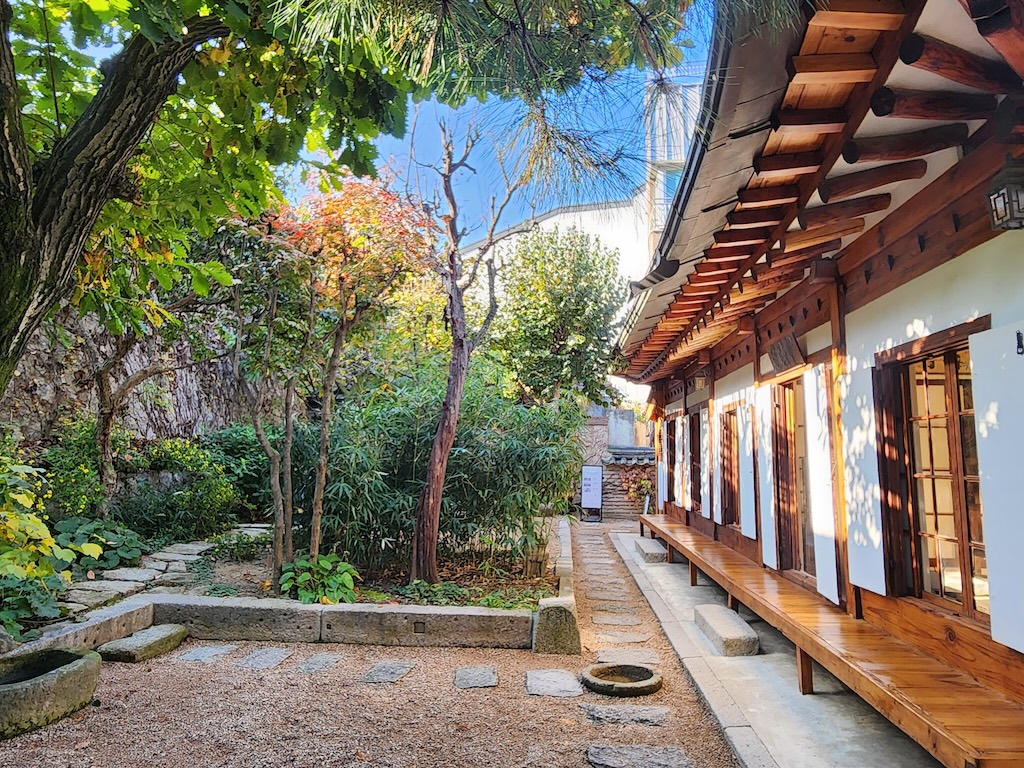
Choi Sunu House preserves the legacy of art historian and cultural scholar Choi Sunu (1916–1984), whose writing celebrated Korean aesthetics, craftsmanship, and spirit. Rather than centering a single artwork, the entire house and garden became the focus of slow looking — and slow reading.

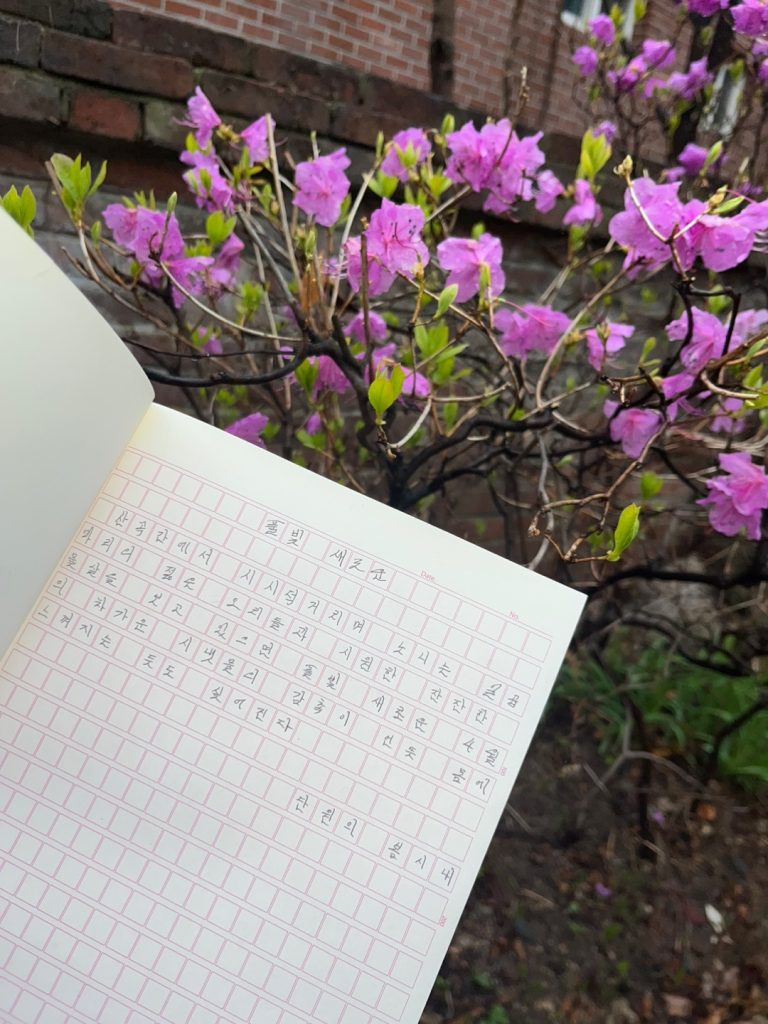
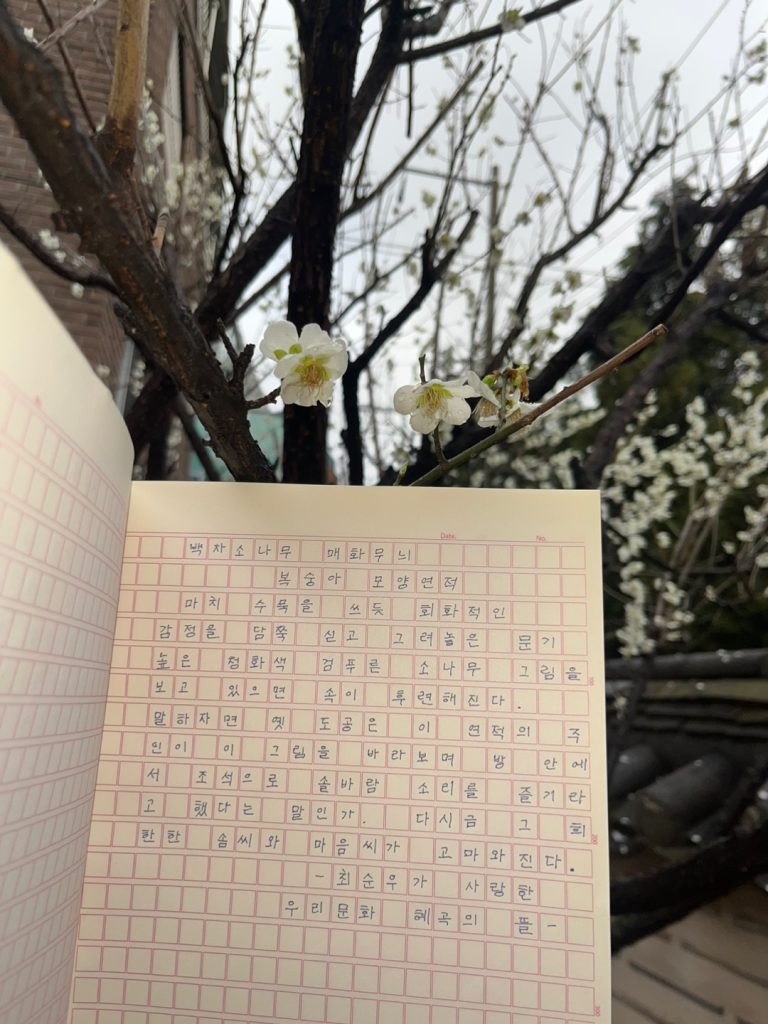
Participants were invited to walk slowly through the traditional courtyard and wooden halls, surrounded by early spring blossoms. Plum flowers and azaleas were just beginning to bloom against tiled roofs and stone walls. The soft sound of rain added to the sensory experience.

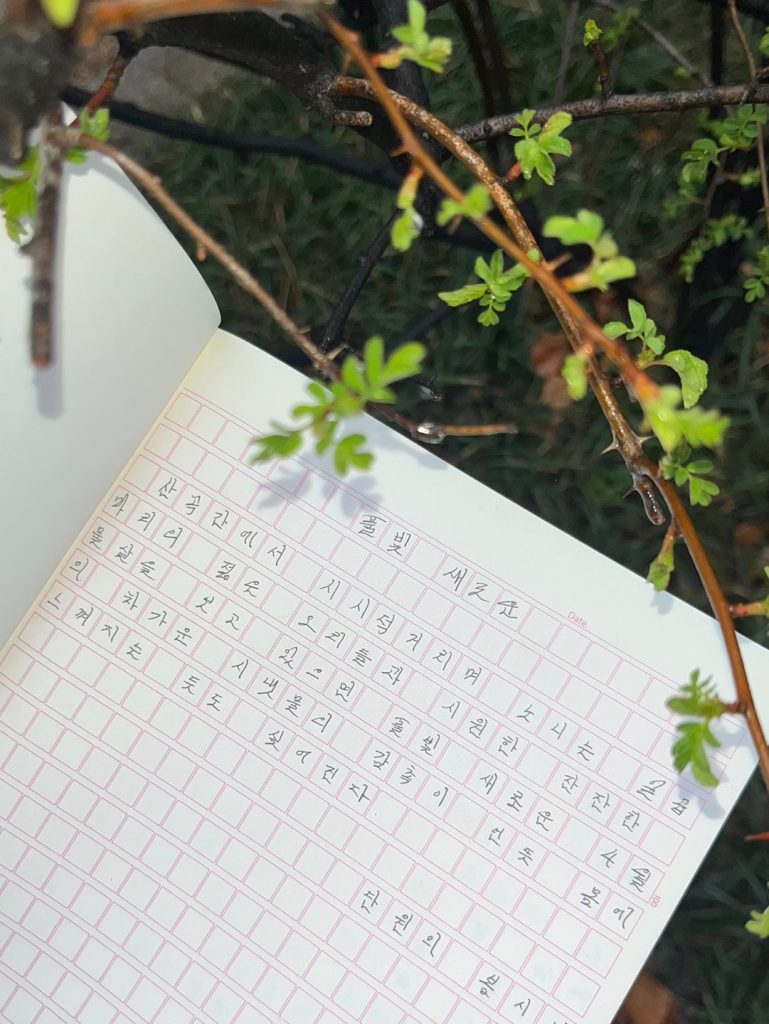
The core activity of the day was transcription.

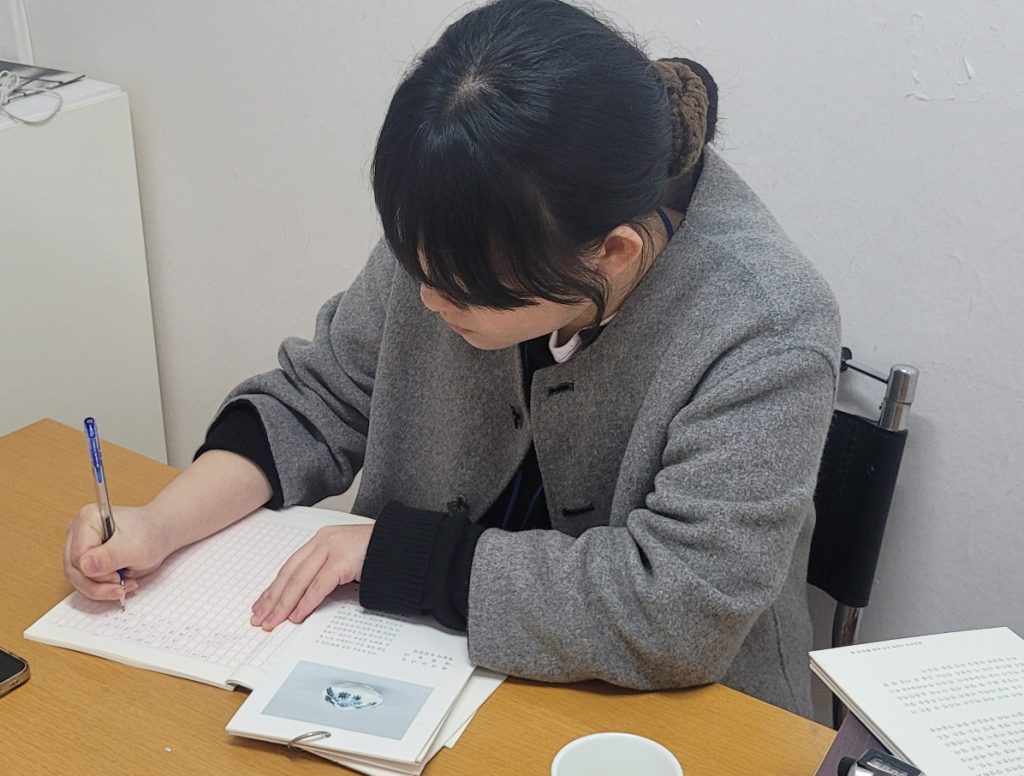
Visitors selected passages from Choi Sunu’s writings and carefully copied them by hand into squared manuscript notebooks. This act of deliberate writing encouraged participants to move at the pace of each word, absorbing not just meaning but rhythm and feeling. The practice echoed traditional Korean calligraphic discipline while remaining accessible to all.

Some guests chose to sit in the courtyard near flowering trees. Others settled indoors beside books and archival materials. A small round table was set outdoors with a publication featuring cultural artifacts and a blank page for reflection. The setting itself — stone statues, gravel paths, wooden floors warmed by filtered spring light — became part of the meditation.

The program encouraged participants to:

  • Take a slow walk through Choi Sunu House
  • Read selected passages from his essays
  • Transcribe a sentence or paragraph that resonated
  • Spend quiet time in the garden surrounded by spring blossoms

By combining slow walking, slow reading, and slow writing, Choi Sunu House beautifully expanded the meaning of Slow Art Day beyond visual observation alone. The event demonstrated how cultural heritage sites can invite visitors into embodied connection with language, architecture, landscape, and memory.

We are grateful to the team at Choi Sunu House and the National Trust Cultural Heritage Fund for carrying Slow Art Day forward in Korea, even under gray skies.

– Ashley, Johanna, Jessica Jane, and Phyl

Freer Gallery of Art at the Smithsonian Hosts First Slow Art Day with Forest Bathing and Qigong

For their first Slow Art Day, the Freer Gallery of Art, part of the Smithsonian Asian Art Museum in Washington, D.C., hosted a day-long celebration focused on slowing the mind, body, and spirit.

Visitors were invited to participate in a series of immersive activities held in the Freer’s galleries and courtyard, designed to deepen observation and foster mindfulness through art and nature. The day offered both guided and self-guided experiences, welcoming adults and families alike.

Featured activities included:

  • Guided Slow Looking sessions in Gallery 5, focusing on Japanese screens (11:30 a.m. family session; 1:30 p.m. adults-only session)
  • Forest Bathing mindfulness walks in the courtyard led by naturalist and certified forest therapy guide Ana Ka’ahanui from Capital Nature (1 p.m. family session; 2 p.m. adults-only session)
  • Qigong practice in the courtyard, or Gallery 17 in case of rain (12–1 p.m.)
  • Self-Guided Slow Looking with sketching, writing, and conversational prompts available to encourage personal exploration at one’s own pace
A group of people doing yoga in an art gallery.
Image courtesy of Create Calm

Each session offered participants an opportunity to slow down, open their senses, and form a deeper, more personal connection with the art and environment around them.

Throughout the day, participants could be seen sketching quietly before the intricate screens, breathing mindfully in the courtyard, and moving gracefully through Qigong sequences that mirrored the flow of nature. The museum’s thoughtful integration of art, nature, and mindfulness—including the leadership of Ana Ka’ahanui in the forest bathing sessions—beautifully embodied the spirit of Slow Art Day.

We at Slow Art Day HQ love how the Freer Gallery of Art created such a great mix of events and wish we had been there to participate. We can’t wait to see what they come up with for Slow Art Day 2026.

– Ashley, Johanna, Jessica Jane, and Phyl

P.S. You can learn more about the Freer Gallery’s events and exhibits by visiting their website. You can also follow them on:

Seventh Slow Art Day in Belmont, NC

While Slow Art Day is often held in large or regional museums, we also love to celebrate when smaller towns and studios join together to host slow looking.

As such, we’re happy to report that Belmont, NC, a small city of about 10,000 people, held their 7th Slow Art Day in April 2024.

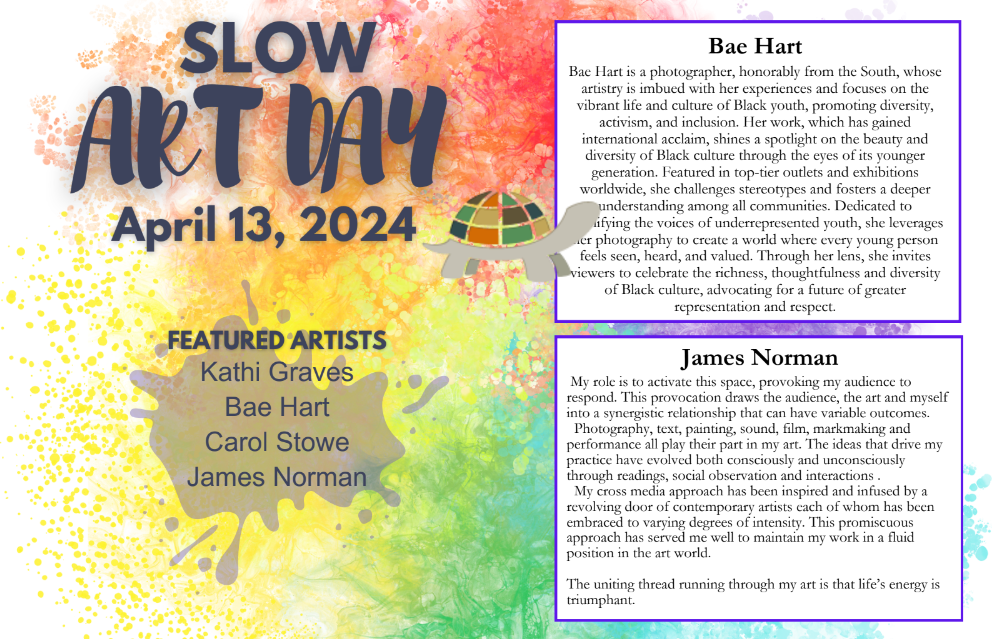
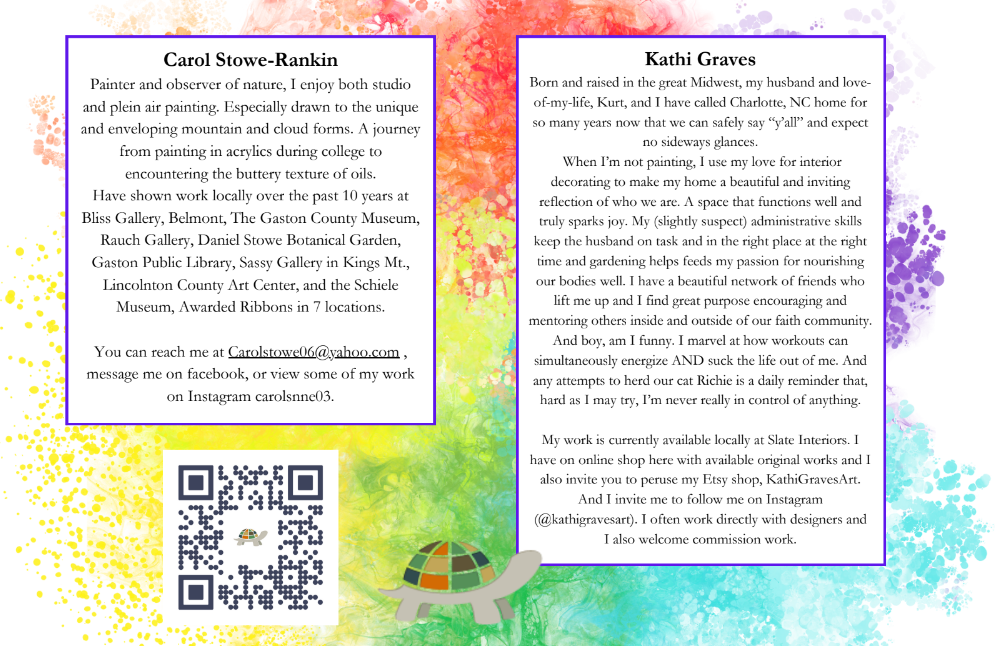
To make it happen The Downtown Belmont Development Association in Belmont, NC, partnered with longtime host and local art center, Art by J Studios, which designed an event to focus on four local artists:

  • Kathi Graves
  • Bae Hart
  • Carol Stowe
  • James Norman

Below is their innovative and fun flyer (feel free to copy).

Slow Art Day flier with profiles of the four featured artists

Both the morning and afternoon sessions were held at Art by J, a children’s art school, which is housed in an old mill down the hall from renowned artist Juan Logan.

Slow Art Day participants at one of the two sessions at Art by J.
Participants engaging in slow looking.
Writing and reflecting during one of the Slow Art Day sessions.

On Slow Art Day, guests were greeted by Jeaniene Dibble, the owner of Art by J, who gave them a Slow Art Day pin (we don’t have a photo of the pin – though we are sure we’d want it!) to wear that she had designed, and handed them a clipboard with paper and a pencil. Normally a chaotic environment with students and classes running, on Slow Art Day the school was serene and contemplative. 

Guests looked slowly at each artwork for 10 minutes and used their clipboards to write down inspirations and answers to prompts that they were given. Next, they engaged in a discussion with three of the artists, Kathi Graves, Carol Stowe, and James Norman, who answered questions and discussed the participants’ thoughts and impressions. Pastries, donuts, and water were also provided.

Amy Bossard, the Design Committee Chair at the Downtown Belmont Development Association, reported that guests and artists were so engaged with each other they could have gone on talking all day long (we hear this all the time and witness it ourselves when we run slow looking events).

Both sessions were very well received, and the Downtown Belmont Development Association and Art by J already look forward to Slow Art Day 2025.

– Johanna, Ashley, Jessica Jane, and Phyl

The National Gallery of Canada Hosts Second Slow Art Day

On April 13th, Andrea Gumpert, Gallery Educator, and Marie-Pierre Adam, Interpreter-Guide, hosted the National Gallery of Canada’s second Slow Art Day, and reported that it was a resounding success.

The Gallery provided three options for participation this year:
– an in-person guided group experience
– slow-looking “on your own” with provided handout (shown below)
– slow-looking from home using a guided video

And participants were given the option to participate in either French-language or English-language sessions.

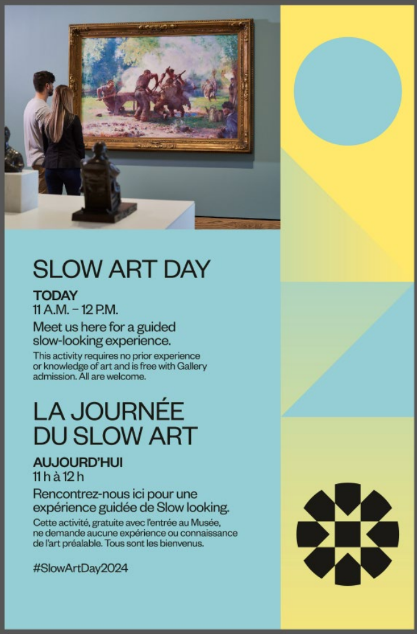
For the in-person guided event, hosts Andrea Gumpert and Marie-Pierre Adam greeted participants next to the below Slow Art Day signage in their Great Hall.

The in-person event was divided in two parts (that each of the French and English speaking groups followed).

For Part 1, Andrea led the 13 participants in the English-speaking group to the Indigenous and Canadian later galleries, and Marie-Pierre led the 11 French-speaking participants to the European baroque galleries. They each then invited their participants to select one artwork and spend 10 minutes looking slowly at it. After the 10 minutes, they regrouped and discussed the experience.

Across the two groups, participants commented on how much more they noticed about the art when they gave themselves permission to really spend time with it – a seemingly obvious but nonetheless revelatory experience. Participants also said the group setting was helpful, particularly for the younger attendees (11 and 14 years old.) People also told stories about the works, and contemplated the technical skills behind the art.

For Part II, the English-speaking group moved to the Contemporary galleries while the French-speaking group moved to the later modern galleries. This time Andrea and Marie-Pierre suggested three optional challenges:
1. Spend 15 minutes with one artwork
2. Select a work that you didn’t have an immediate affinity for
3. Draw or write while spending time with the work

They then had a second discussion with each group.

The French-speaking group in the modern gallery appreciated the chance to express themselves on paper; either by drawing or writing their ideas. Some participants expressed that the second round of slow looking was easier – that slow looking felt like a muscle that needs to be warmed up first. One participant who chose a work they would not have normally looked at shared that their slow looking revealed parts of the painting they thought were wonderful after all – and raised many questions around the choices made by the artist at that time in their career.

At the end of the day, participants provided feedback.

Here are two quotes, one from the English-speaking group and one from the French-speaking group (i.e., these are not translations from one to the other – but separate quotes):

The slow art English session was a welcome new approach for me to viewing art. Our guide was
informed and fun, and she explained the process well. I am sure I will use this approach on my own
sometimes at art galleries, and elsewhere. Thank you for offering it — it is a good middle place
between a tour with a guide and a hands-on activity.

Bonjour à toute l’équipe, je profite de ce courriel pour vous remercier pour l’organisation de
l’activité Slow Art de samedi dernier. J’ai une la chance de participer à cet événement en présence
de Marie-Pierre et du groupe pour les personnes francophones. J’ai fait plusieurs apprentissages
dans un environnement paisible et vraiment intéressant ! Merci pour votre dévouement à rendre
l’art accessible et respectueux ! Je vous en suis très reconnaissante ! Je souhaite une longue vie
au Musée des Beaux-Arts du Canada !

We are glad to say that The Gallery is now planning regular slow looking sessions throughout the year (we love that!) as well as participating in Slow Art Day 2025.

– Johanna, Ashley, Jessica Jane, and Phyl

Mindfulness at the TarraWarra Museum of Art

For their 4th Slow Art Day, the TarraWarra Museum of Art in Healesville, Australia, organized an interactive mindful workshop where visitors could enjoy the art of relaxation while observing and appreciating art.

The museum’s Learning & Engagement team guided a small group of participants through a 1.5 hour interactive workshop that was comprised of mindful techniques such as automatic journaling, body awareness, breathing and visualizations. The goal was to deepen their connection with their lived experiences and with their relationship with the art on display.

Participant engaging in slow looking. Image Credits: Tourism Australia.

We are happy to see that mindfulness and meditation continue to be a growing part of the global slow looking toolkit.

And given that we are big fans of TarraWarra here at Slow Art Day HQ, we are eager to see what they come up with for Slow Art Day 2025.

P.S. Stay up to date with events at TarraWarra Museum through Instagram and Facebook

– Jessica Jane, Johanna, Ashley, and Phyl

Gratitude and Mindfulness for FMoPA’s Slow Art Day

For their first Slow Art Day the Florida Museum of Photographic Arts in Tampa, Florida, hosted an in-person event focused on mindfulness and gratitude.

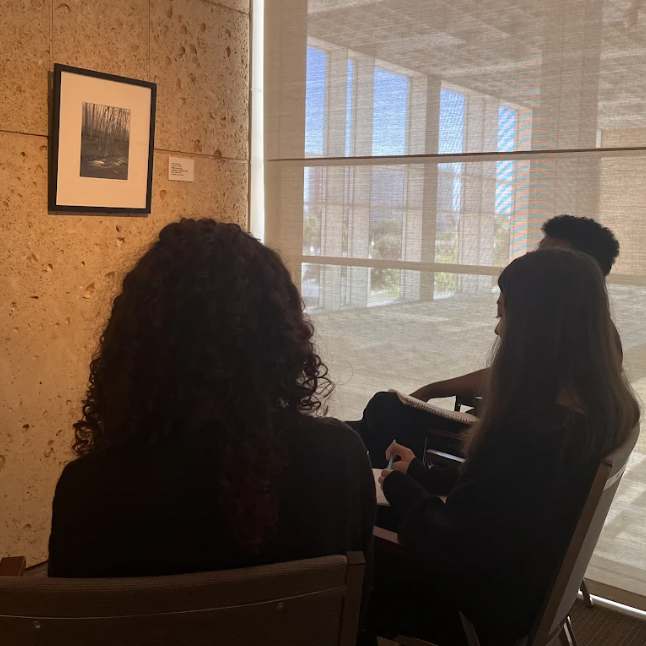
Slow Art Day participants viewing the artwork by Paul Caponigro, Stream and Trees, Redding, Connecticut, 1967, Silver gelatin print, Collection of the Artist.

During the event, participants were taken through a step-by-step presentation by Zora Carrier, Executive Director of FMoPA, which we highly recommend curators and educators review and consider for inspiration for their own events.

Participants were first invited to do a body scan — noticing their sensations without judgement. We love this beginning. This is a great way to ground people in their body and senses.

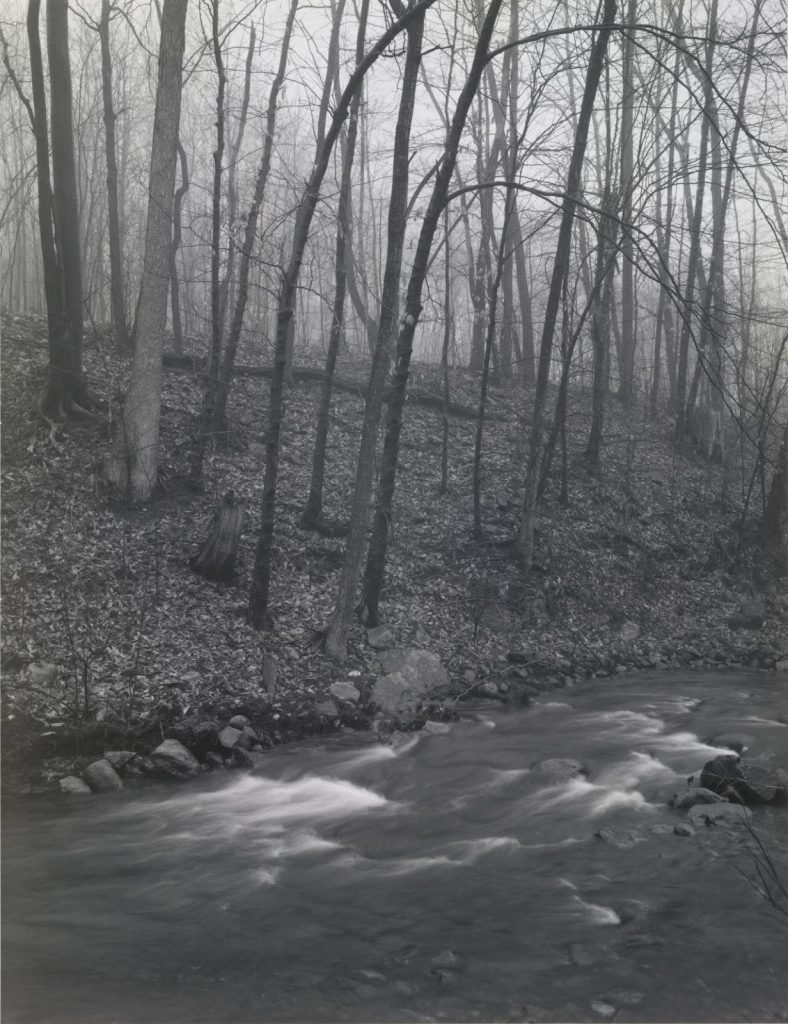
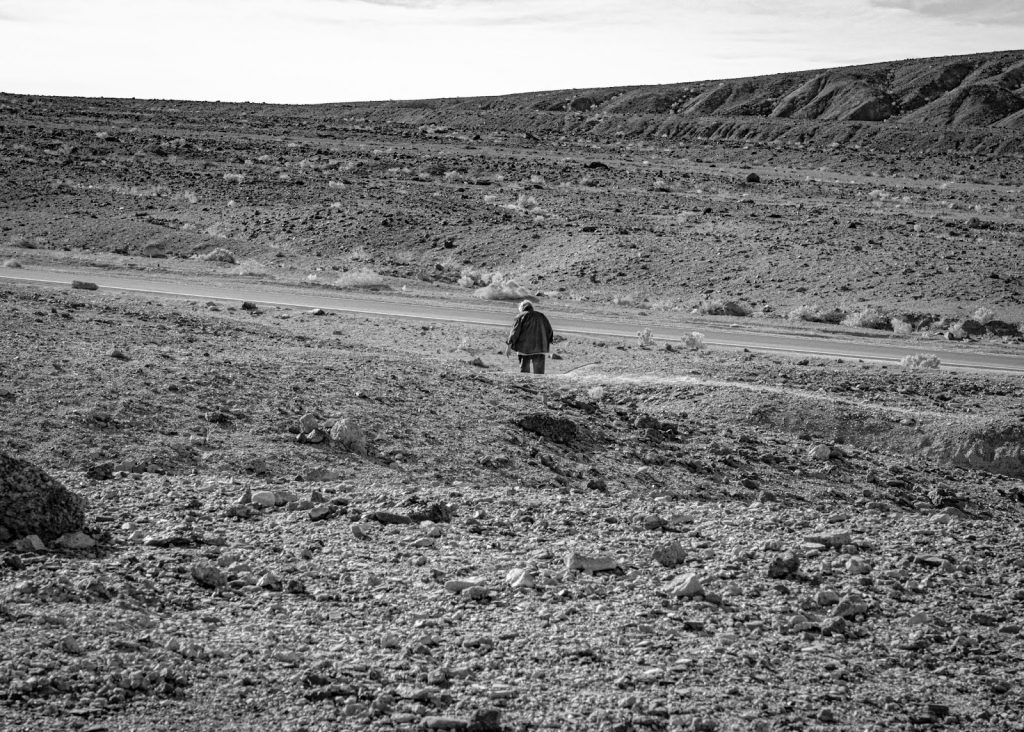
Once they were tuned up, they were then invited to look slowly at two photographs by Paul Caponigro and David Dennard, and think about the following promts for each:

  • Look carefully at this artwork. What do you notice? Write down your observations. Be thorough.
  • Carefully review your observations.
  • Write down any inferences, opinions or conclusions formed because of known facts?
  • Are there any details that you want to know more about? Write 3-5 additional questions.
  • What is the context of the image?
  • What might the photographer be feeling?
  • Is the image positive, negative or neutral?
  • Is this image about an idea/concept that we can’t recognize with our five senses?

Paul Caponigro, American, b. 1932, Stream and Trees, Redding, Connecticut, 1967, Silver gelatin print, Collection of the Artist.
David Dennard, American, b. 1954, Paul Caponigro, A Desert Father, Death Valley, 2020, Platinum-palladium print, Collection of the Artist.

To finish the session, all participants were asked to do some breathing exercises and write a gratitude note to a person of their choice, guided by a three-step prompt:

  • Step 1: Focus on the recipient. Spend a few moments thinking about the note recipient—what they did for you; what they said; what it meant—focusing on the feel of the paper, colors, or what mental images come to mind when you think about the person.
  • Step 2: Be specific and personal. Think about the thing you’re most grateful for out of your relationship with the person.
  • Step 3: Think about how it made you feel—then and now. Don’t feel restricted by making it look ‘good’ as long as you can communicate your gratitude. Art is subjective, and this won’t be criticized.

In our own slow looking of these two photographs, we were particularly captured by the juxtaposition of the lush, first photograph with the spare moonscape-like second photograph. Then, after several minutes, we looked at the caption and realized that the artist of the first one is the subject of the second one. That brought added joy to the slow looking experience.

We recommend that all Slow Art Day educators and curators do as we did, and go through Carrier’s presentation. As much as possible, look with a child’s naive eye.

We are very happy to welcome FMoPA to the global Slow Art Day, and can’t wait to see what they come up with for Slow Art Day 2023.

Johanna, Jessica, Ashley and Phyl

PS. When we started Slow Art Day, almost no museums offered regular slow looking programming. We are happy to see that FMoPA not only participates in the global Slow Art Day, but also runs monthly slow looking events.

Learning to Look from LA Times’ Christopher Knight

Writing and talking about the art of slow looking can be difficult. Fortunately, Christopher Knight of the Los Angeles Times does it really well. And as we all get ready for Slow Art Day 2022, we can learn a lot from him.

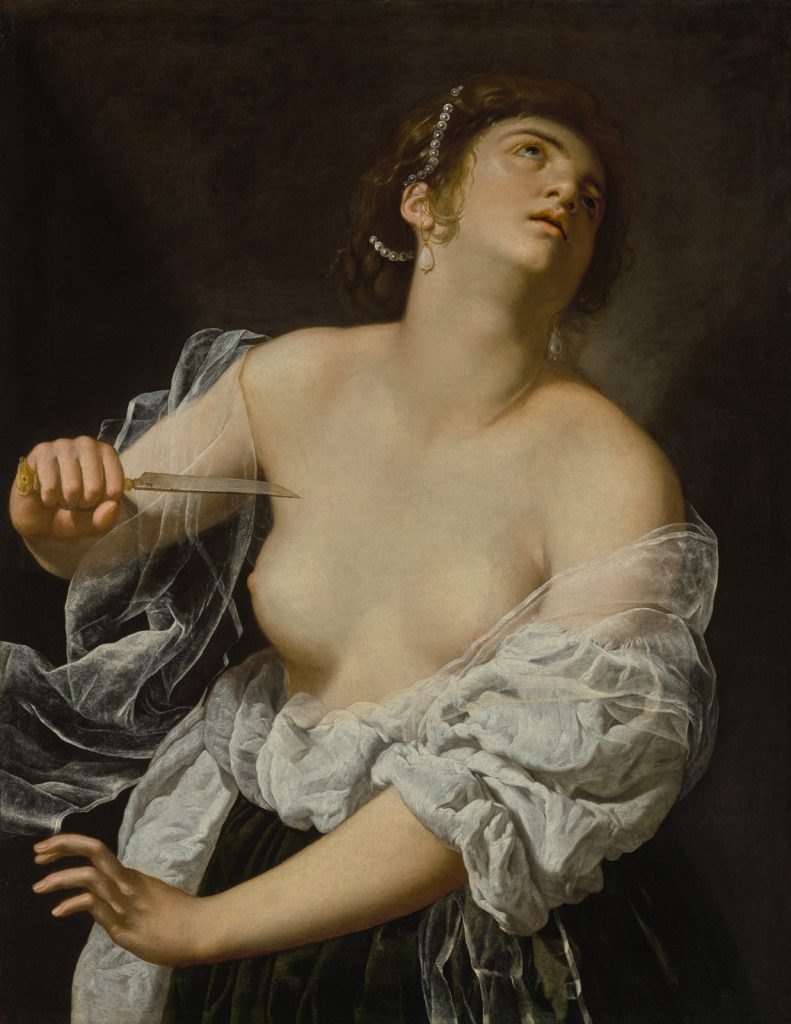
A talented writer, Knight avoids ‘Art Speak’ and instead helps us slow down and look, as in this article, Baroque painter gets her due at last about the artist Artemisia Gentileschi and her painting Lucretia.

Knight looks slowly at her painting, Lucretia (below).

ARTEMISIA GENTILESCHI’S painting “Lucretia” (J. Paul Getty Museum)

Here’s a great example of his observational (and writing) skills:

Light falls from murky darkness at the upper left, establishing a spectral diagonal exactly opposite to the figure’s spatial thrust toward the upper right. The dagger points directly to the place where the two diagonals cross. X marks the spot. Head tossed up and back, eyes fixed heavenward, Lucretia is about to stab herself to death.

In this passage above, he doesn’t give us a lesson on Baroque Art, he helps us see the light and dark; the composition; the position of the figure; the twist of the body; the grasp of the dagger; the contrast between the surface textures of skin, fabric and metal.

Most of all, he shows us that it’s all right there in the painting if we just slow down and look.

Final point I’ll make: Knight starts with the art and only after he has reviewed the work itself does he then get into the history, the patriarchy, and even the ‘discovery’ and celebration of Gentileschi as a Feminist icon. This is precisely how we want Slow Art Day participants to look – first at the art, then and only then might we move to a discussion about the history and theory.

Hope your planning is going well for Slow Art Day 2022.

This year I will be leading a Slow Art Day event looking at sculpture art in Heisler Park, which is a lovely outdoor park above the Pacific Ocean in Laguna Beach, California.

Hedy Buźan
Founding Host, Slow Art Day

Hedy Buzan is an artist and founding host of Slow Art Day. She also helped launch the Laguna Beach Sawdust Festival, an annual arts festival in Southern California. 

Slow Art Day is committed to publishing posts like this from our hosts around the world. Here are some tips.

Looking, Writing, Making, and Mindfulness at the Philadelphia Museum of Art

On April 10, 2021, the Philadelphia Museum of Art in Philadelphia, Pennsylvania, hosted both in-person and virtual sessions for their 7th Slow Art Day.

For the in-person activity, visitors were first introduced to the concept of slow looking, and were then invited to practice what they learned as they walked through the museum. Participants were encouraged to share their experiences on social media and tag the museum with #PMASlowArtDay.

Printed Textile Swatch (detail), 1935–59, made by Soieries F. Ducharne
Printed Textile Swatch (detail), 1935–59, made by Soieries F. Ducharne (France, 1920–1972), 2014-144-190a. Picture used to advertise the Slow Art Day event on the Philadephia Museum of Art website in April.

The virtual event consisted of four separate Zoom sessions focused on slow looking, writing, making, and mindfulness.

Slow Looking

For the slow looking session, participants were encouraged to use a naturalist’s attention to detail when looking at still life paintings. Using tools like the Google Art & Education app allowed them to zoom in and experience works of art in a different way compared to in-person.

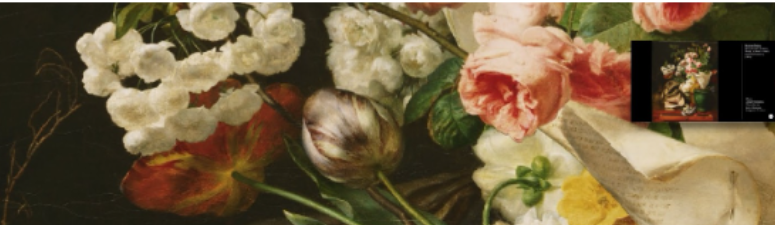
Detail of Antoine Berjon, 1819.
Still Life with Flowers, Shells, a Shark’s Head, and Petrifications. Oil on canvas, 42 1/2 × 34 9/16 inches (108 × 87.8 cm) [from the Slow Looking Zoom session hosted by the Philadelphia Museum of Art, 2021]

Slow Making

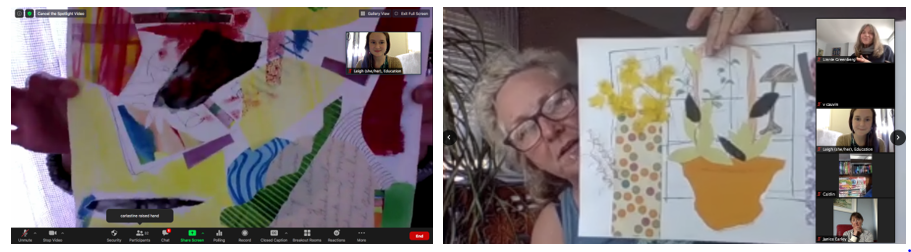
The Slow Making session took the form of a workshop inspired by the work of artist Judith Rothschild. For this session, participants cut and collaged materials to create their own mixed-media work of art, which resulted in the works you see below.

Participants engaging with art during the Slow Making workshop

Slow Writing

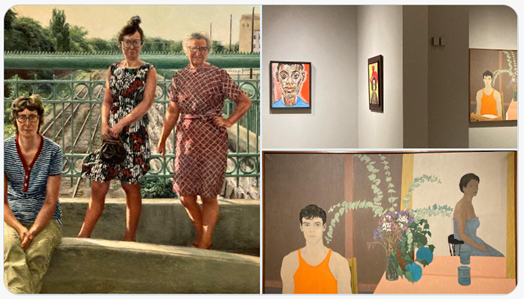
For this session, participants were guided in a communal writing exploration of portraits in the museum’s exhibition Painting Identity. Participants were asked to imagine and write about the subjects’ identity.

Portraits from the exhibition Painting Identity

Museum Mindfulness’

For this virtual session, the Yogi, martial artist, and body worker J Miles of Maha Vira Yoga encouraged participants to find their inner calm with a slow, guided look at a selection of works from the PMA’s collection. This section had a more internal approach compared to the other three sessions.

The events were well received, and the virtual participants responded positively to the PMA survey on Slow Art Day:

“The programs will make me more mindful when visiting the museum. I appreciated the opportunities to look more deeply at works of art that I might have otherwise skipped by.”

Participant’s quote

“A lovely creative and mindful way to start my day”

Participant’s quote after attending the Museum Mindful Session

“Taking time to smell the virtual flowers and using Google Art & Education app to zoom in on every area of a painting; seeing that each component had significance in the painting.”

Participant’s quote after having attended the Slow Looking session

“…slowing down & listening to/reading other participants comments, seeing their creations… is very rewarding and opens new vistas.”

Participant’s quote after having attended the Slow Making session

“Very creative and uplifting. I felt renewed and encouraged, and also came up with some ideas for my own teaching”

Participant’s quote after having attended the Slow Writing session

At Slow Art Day HQ, we want to thank the Philadelphia Museum of Art for hosting yet another wonderful event. The range of activities they designed inspire us and educators around the world to consider creating multiple workshops and experiences for Slow Art Day.

We look forward to whatever creative designs the Philadelphia Museum of Art comes up with in 2022.

Johanna, Jessica, Ashley, and Phyl

PS. For further information on the museum’s events you can follow their social media accounts: Facebook, Twitter, Instagram.

The Importance of Friends: Slow Art with Sørlandets Kunstmuseum

For their second Slow Art Day, Sørlandets Kunstmuseum in Kristiansand, Norway, hosted a live slow looking event on Facebook, featuring Else Hagen’s artwork named Veninner (in English: ‘female friends’, alt. ‘girlfriends’).

Else Hagen. Venninner, unknown date.
Oil on canvas, 60 x 49,5 cm.
AKO Kunststiftelse/Tangen-samlingen.
©Else Hagen/BONO 2021

On April 10, participants could tune in to the live 30 minute event on the museum’s Facebook page. The session was facilitated by Hanne Aamodt and Karoline Skomedal, respectively head tourguide and tourguide at the museum.

Participants were given an introduction to Slow Art Day, and then invited to observe the painting for seven minutes, using automatic writing as a slow looking tool (automatic writing means writing down words that come to mind without thinking about it). Afterwards, the facilitators shared some of their own thoughts and gave participants a set of prompts to use while studying the painting for seven *more* minutes.

The prompts included:

  • What shapes, colors and materials do you see?
  • What details do you notice?
  • What is going on in the painting?
  • Does the artwork remind you of something from your own life?
  • If you were at the place depicted in the artwork, what sounds would you hear? What surfaces, smells and temperatures would you feel?

The event was well received, and participants left comments like this after the live session:

“This was a great experience! I recommend it 🧡 Thank you very much!”

Participant’s quote on Facebook

The session was recorded and shared to YouTube. The video is included below for you to watch.

Slow Art Day 2021: Dypdykk i maleriet “Venninner” av Else Hagen. Video produced by Sørlandets Kunstmuseum.

At Slow Art Day HQ, we love the subject of this painting. Friends supporting each other is obviously a relevant theme during the ongoing pandemic, and we appreciate the warmth of this artwork.

If you would like to see more from Sørlandets Kunstmuseum, you can find them on their Facebook and Instagram pages.

We look forward to seeing what the Sørlandets Kunstmuseum has in store for Slow Art Day 2022.

Johanna, Jessica, Ashley, and Phyl