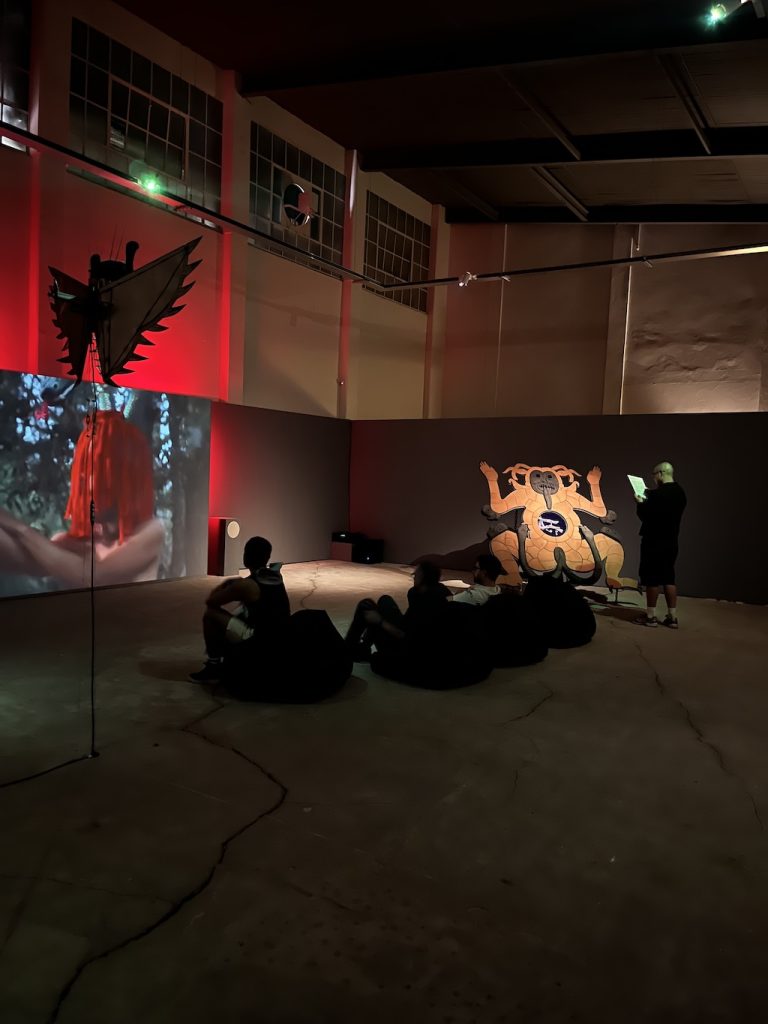
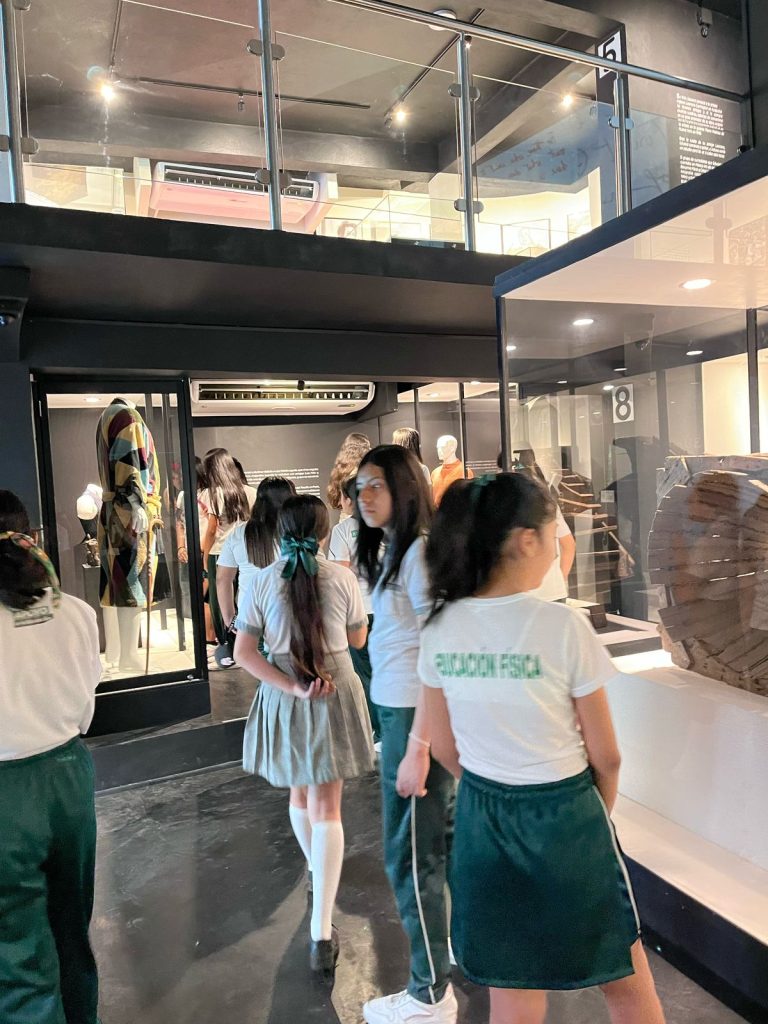
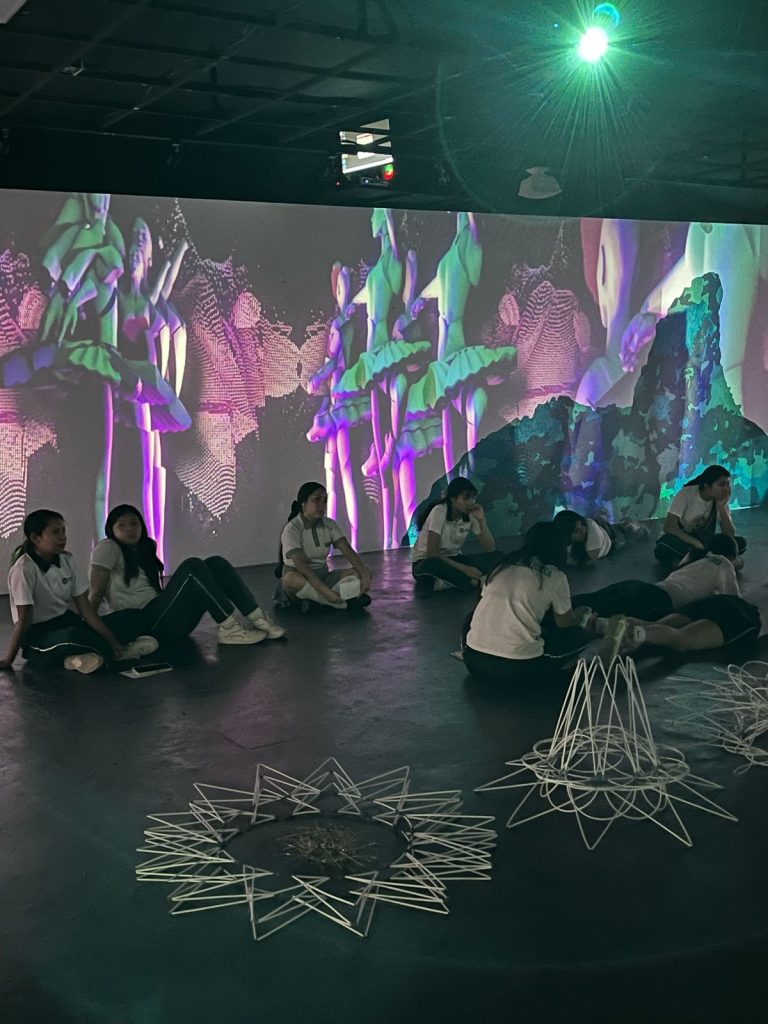
For their first Slow Art Day – as part of the large 2025 citywide event in Mexico City, the contemporary gallery PEANA in Mexico City, Mexico hosted an immersive slow looking experience centered on “Their Silhouettes Bristled With Razors,” the first solo exhibition at the gallery by Mexican artist Naomi Rincón Gallardo.
Rincón Gallardo’s work explores themes of contemporary violence, decolonial thought, and ancient Mesoamerican narratives. The exhibition was presented in a dim, atmospheric environment that invited visitors to slow down and spend time contemplating the symbolic imagery and layered storytelling within the works.
The PEANA team welcomed visitors with a brief introduction and encouraged participants to approach the experience with openness and curiosity. Printed reflection prompts were distributed to guide the slow looking process, asking visitors questions about the symbolism they noticed, their first impressions of the artworks, and how their perceptions evolved as they spent more time observing.
Participants during the Slow Art Day event. Photo courtesy of PEANA.
The prompts also invited creative responses, encouraging participants to draw, write a poem, or describe their reactions after spending time with the artworks. This simple but powerful structure helped visitors move beyond quick viewing and into deeper engagement with the themes and emotional resonance of the exhibition.
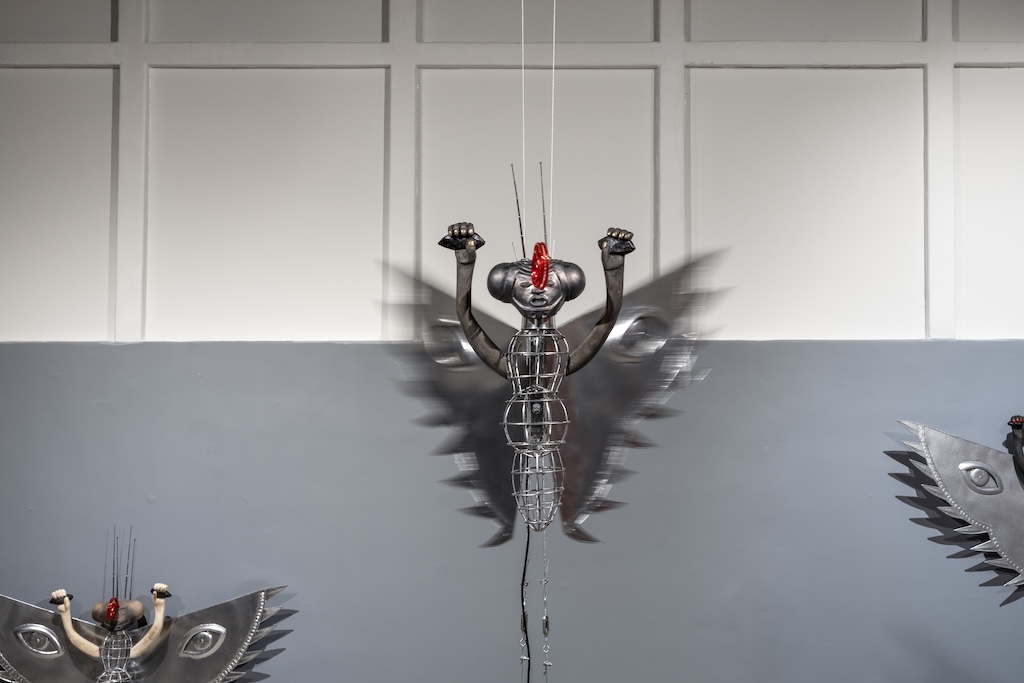
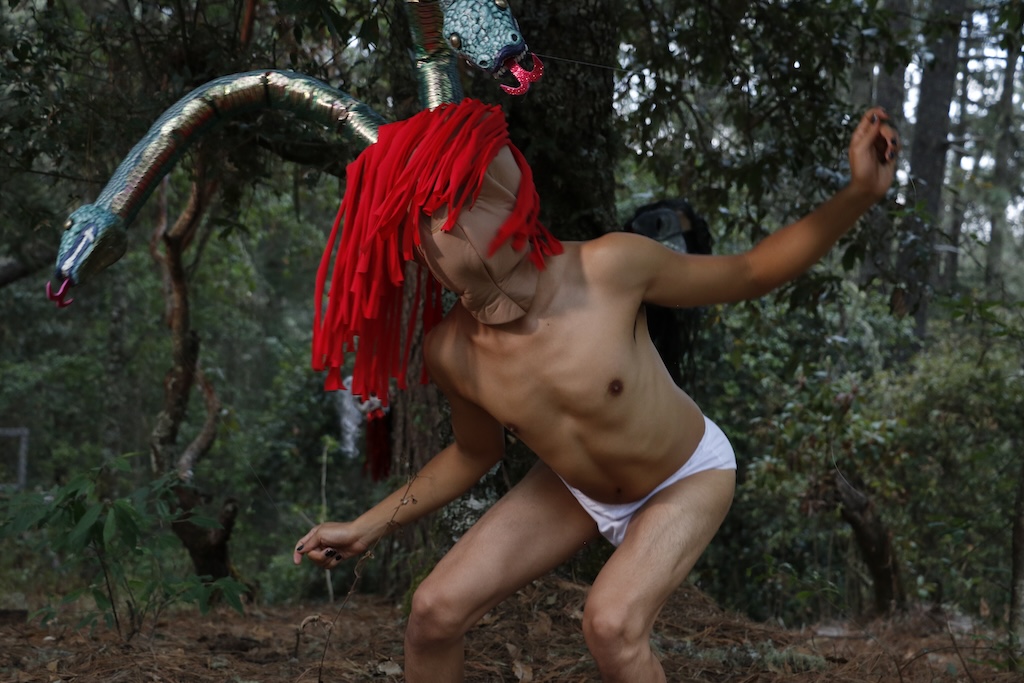
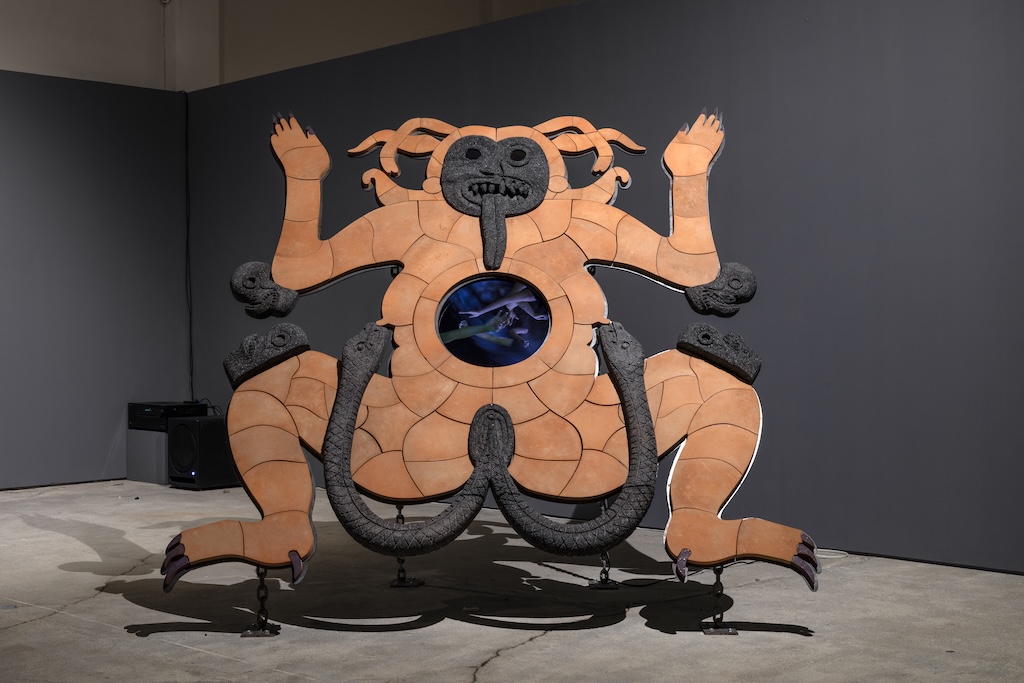
Several works from the exhibition served as focal points for slow looking, including Mechatronic Butterfly, Eclipse I, and Me enterraron boca arriba con la lengua fuera (Tlaltecuhtli). These works combine sculptural elements, video, and mythological imagery to create powerful visual narratives rooted in Indigenous cosmologies and contemporary cultural critique.
Mechatronic Butterfly. Photo courtesy of PEANA.Eclipse I. Photo courtesy of PEANA.Me enterraron boca arriba con la lengua fuera (Tlaltecuhtli). Photo courtesy of PEANA.
By pairing immersive artworks with guided reflection prompts, PEANA created an environment where visitors could slow down, contemplate difficult themes, and engage with the artworks in a personal and meaningful way.
Approximately 60 visitors participated in PEANA’s Slow Art Day experience, making a wonderful contribution to Mexico City’s citywide celebration.
We at Slow Art Day HQ are grateful to the team at PEANA and to Constanza Ontiveros Valdés, who organized the 2025 citywide event. And we are amazed that Ontiveros Valdés has already organized more than 35 galleries and museums for Slow Art Day 2026. We can’t wait!
— Ashley, Johanna, Jessica Jane, and Phyl
P.S. If you have not yet registered your museum of gallery for Slow Art Day 2026, please do.
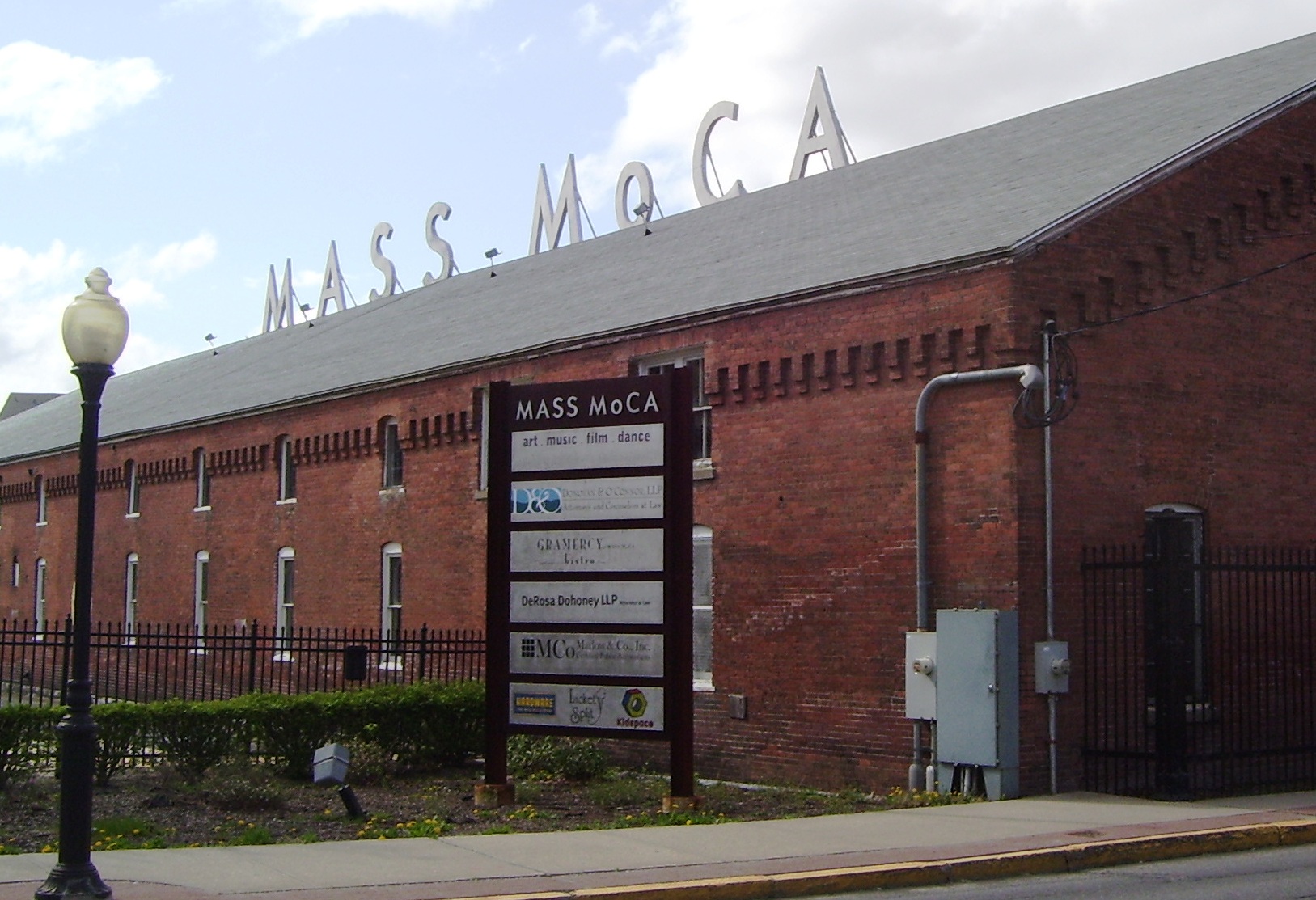
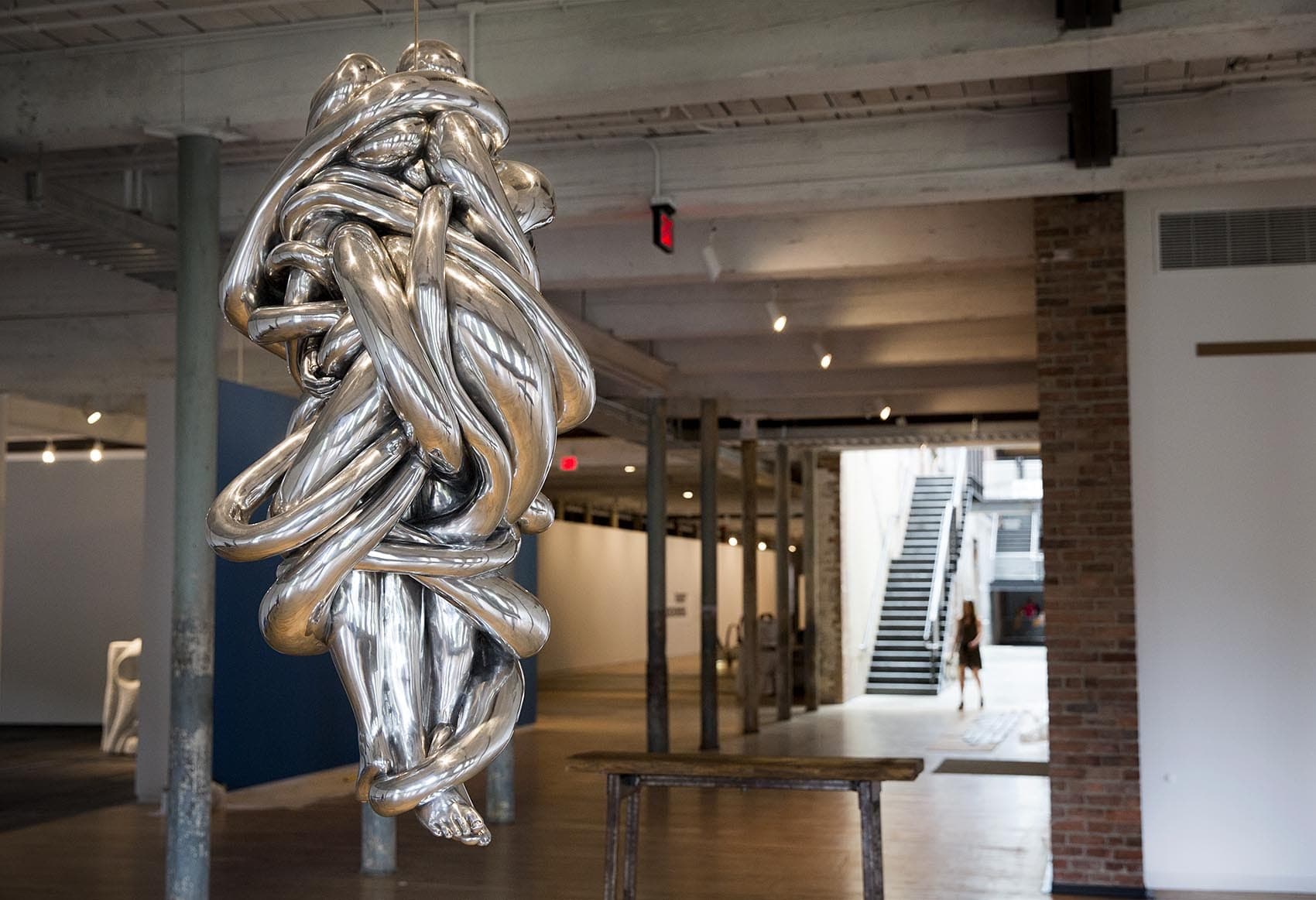
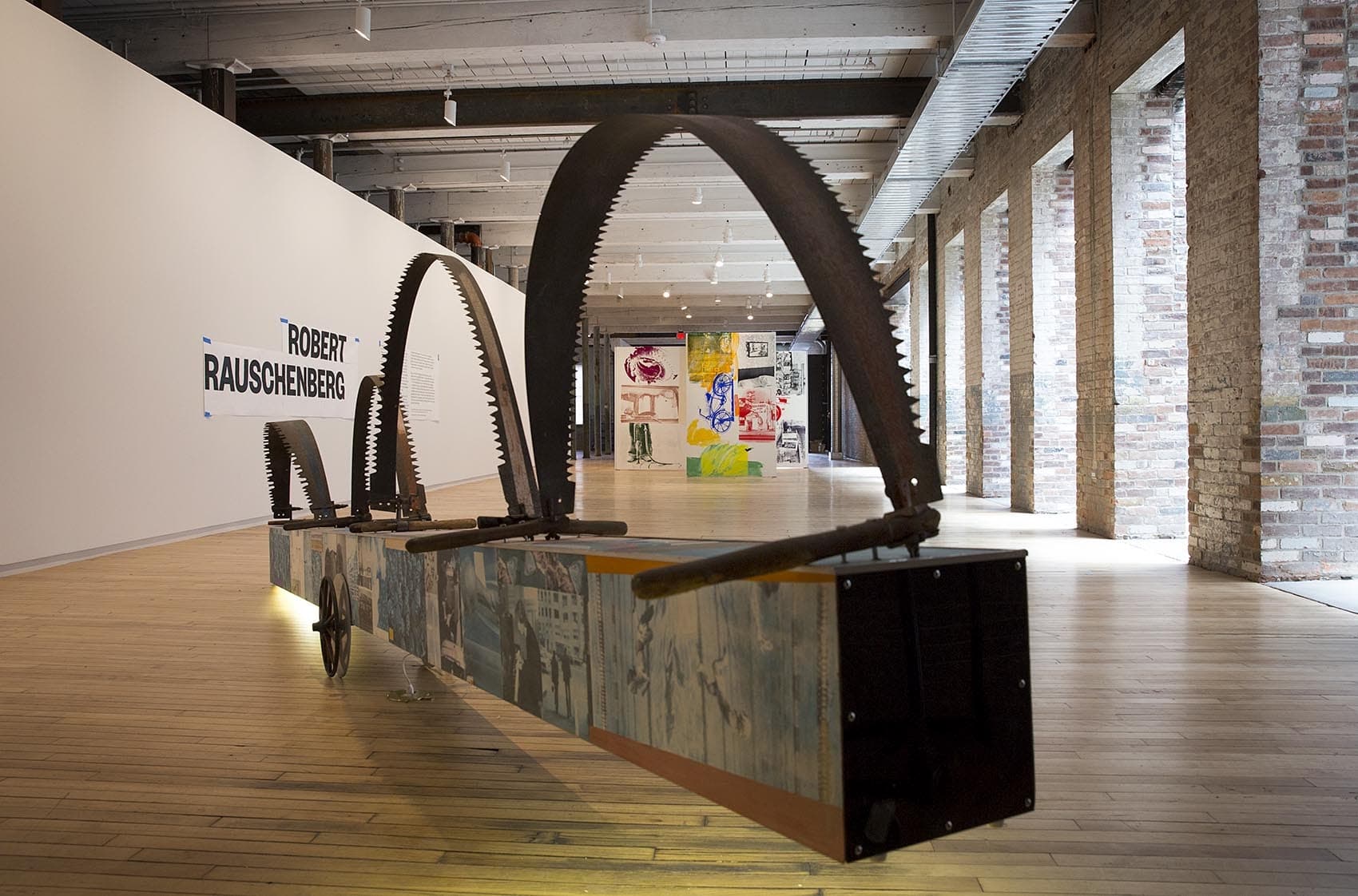
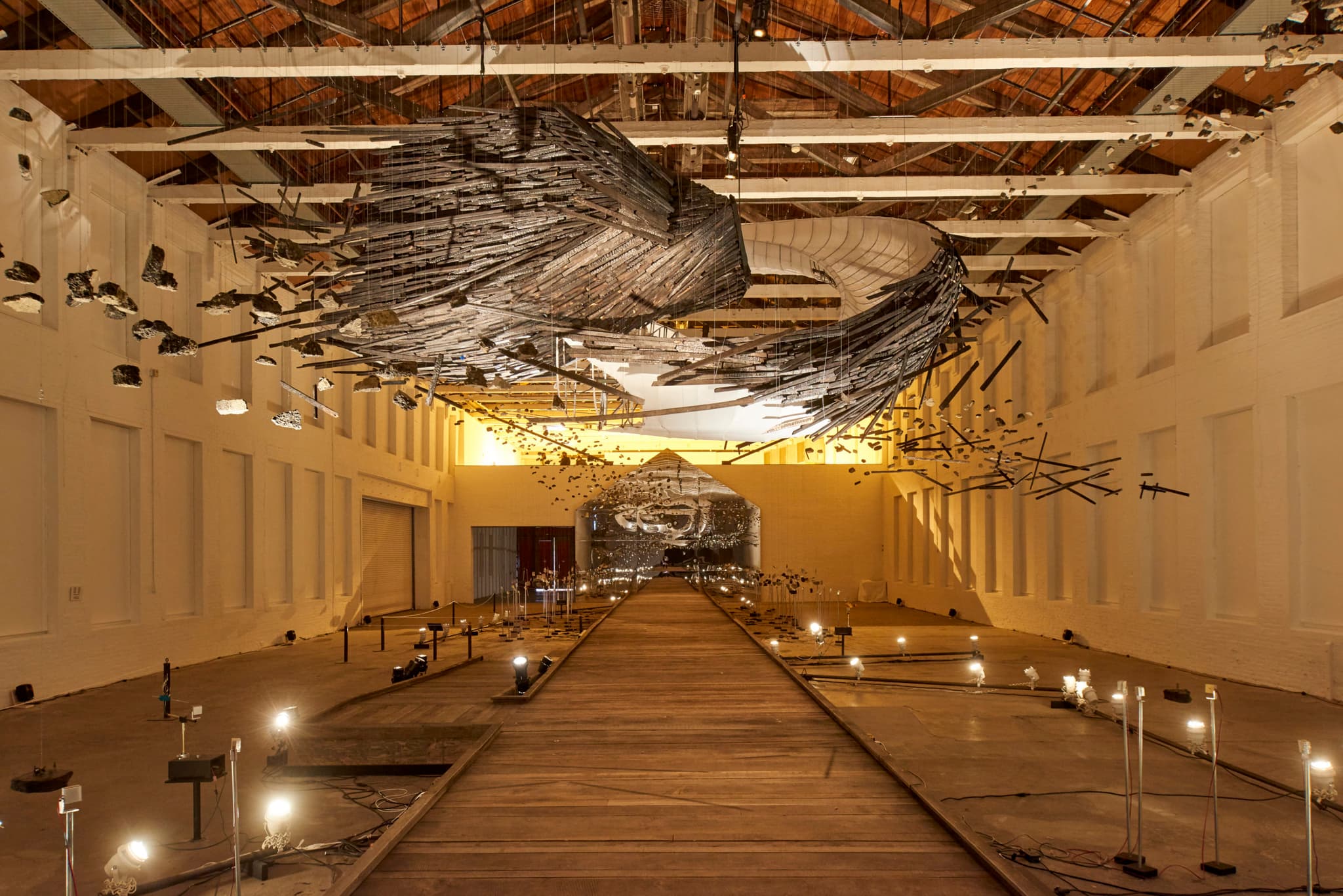
For their seventh Slow Art Day, Massachusetts Museum of Contemporary Art (MASS MoCA) in North Adams, Massachusetts invited visitors to focus on large-scale contemporary installations throughout the museum’s campus, with attention to:
Immersive, room-sized installations
Light-based and spatial works
Sound-producing pieces integrated into gallery environments
Throughout the day, guided slow-looking tours were offered and visitors could also explore independently using prompts provided by museum staff.
MASS MoCA’s programming leaned into the strengths of its unique setting — a converted 19th-century factory campus now housing some of the world’s largest contemporary installations. Rather than focusing on a single object, participants were encouraged to slow down within immersive spaces.
Prompts invited visitors to consider:
What exactly are you seeing?
How does light shape your perception of depth and space?
What happens if you close your eyes and listen to the sounds produced by the installation?
How does your body feel in relation to the work — your feet on the ground, your breathing, your position in space?
In some installations, guests were encouraged to observe subtle blinking sequences of light or shifts in projected imagery. In others, the focus turned toward sound — noticing how ambient or intentional audio elements changed the experience of the visual field.
The museum also incorporated simple mindfulness techniques before viewing: deep breathing, grounding awareness, and a moment of stillness. These small pauses helped participants transition from walking through galleries to inhabiting them more fully.
The event was designed for all ages, and Spanish-language itineraries were typically available, reinforcing MASS MoCA’s commitment to accessibility.
At Slow Art Day HQ, we love MASS MoCA and have spent time there and appreciate what they did this year to help visitors learn to slow down in immersive spaces and how that can present a different kind of challenge than focusing on a single painting .
We look forward to seeing what MASS MoCA comes up with for Slow Art Day 2026.
– Ashley, Johanna, Jessica Jane, and Phyl
P.S. You can learn more about MASS MoCA’s exhibitions and programming at https://massmoca.org.
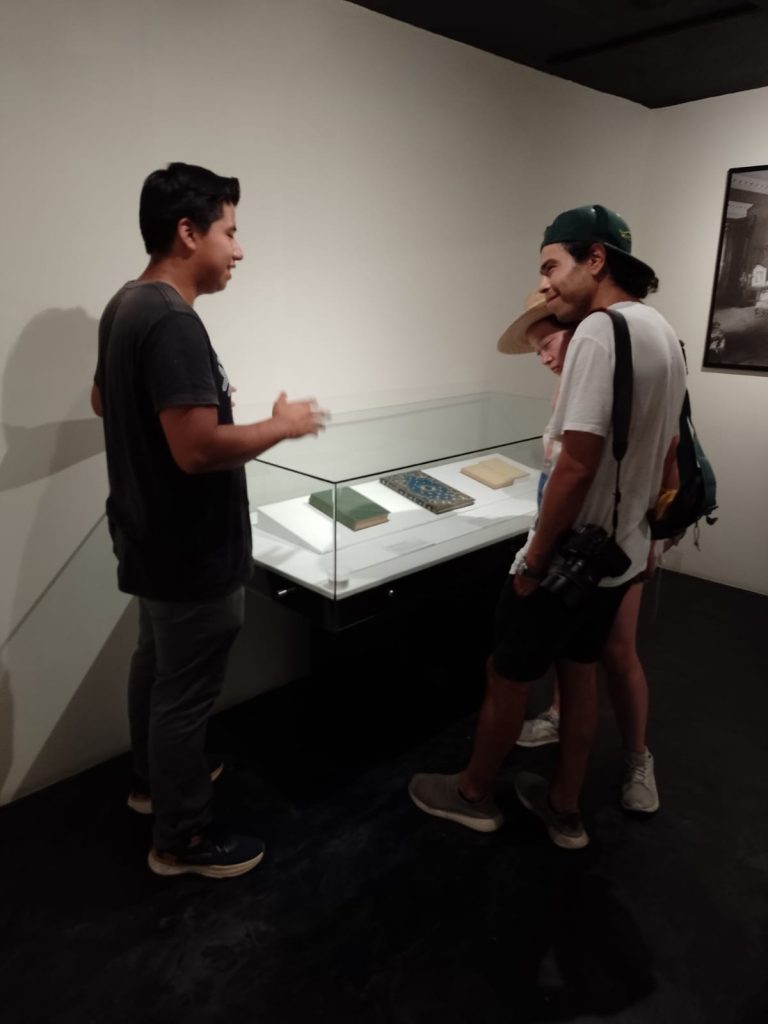
For their first Slow Art Day, the Museo Edward James, also known as Las Pozas, in Xilitla, Mexico hosted a contemplative experience titled “Finding Seclusia,” led by Beatriz Acosta.
The museum, which is dedicated to the legacy of Edward Frank Willis James, is set in a rainforest, and features towering surrealist sculptures amid pools and waterfalls.
That’s all we at Slow Art Day HQ need to know to jump on the plane to Xilitla (pronounced: hee-LEET-lah).
James, an eccentric British poet, artist, and patron of the Surrealist movement created the Edward James Sculpture Garden, Las Pozas, as a fusion of the organic and the artificial, merging jungle and concrete into a single, dreamlike environment where imagination and inner worlds could take physical form.
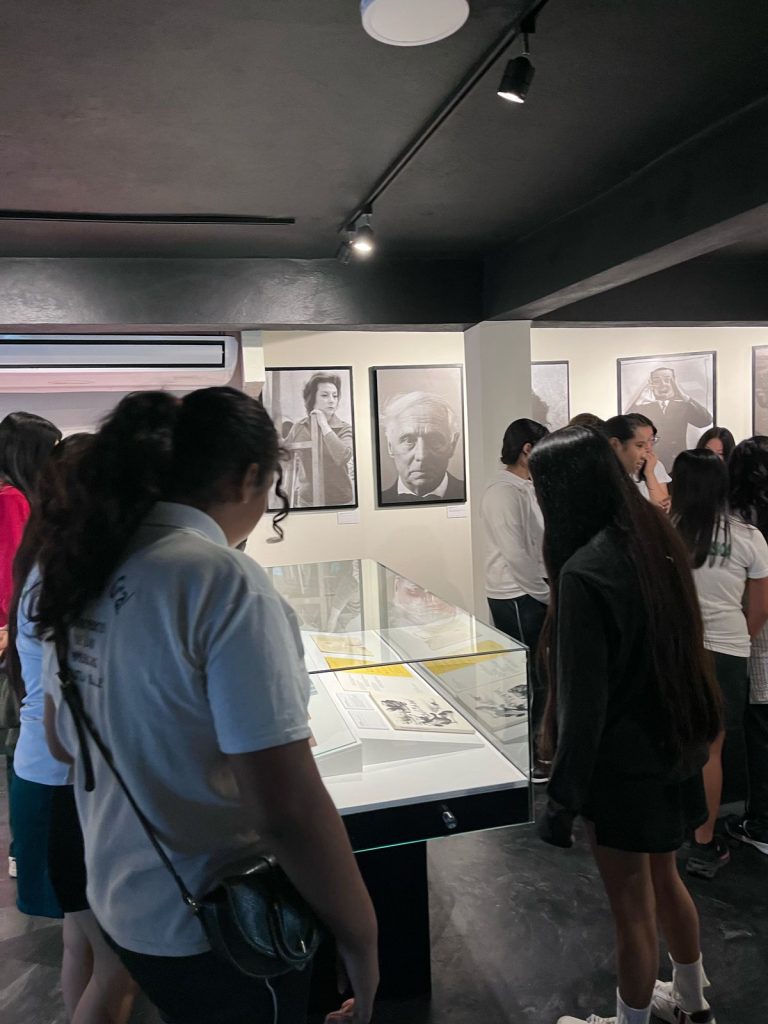
For their Slow Art Day, the museo welcomed a group of high school students through five carefully designed stations with unique slow-looking experiences. The session began in the Seclusia room with an introduction to the Slow Art Day movement and the power and purpose of slow looking. Participants also received a handout with prompts and spaces to write their notes throughout the experience.
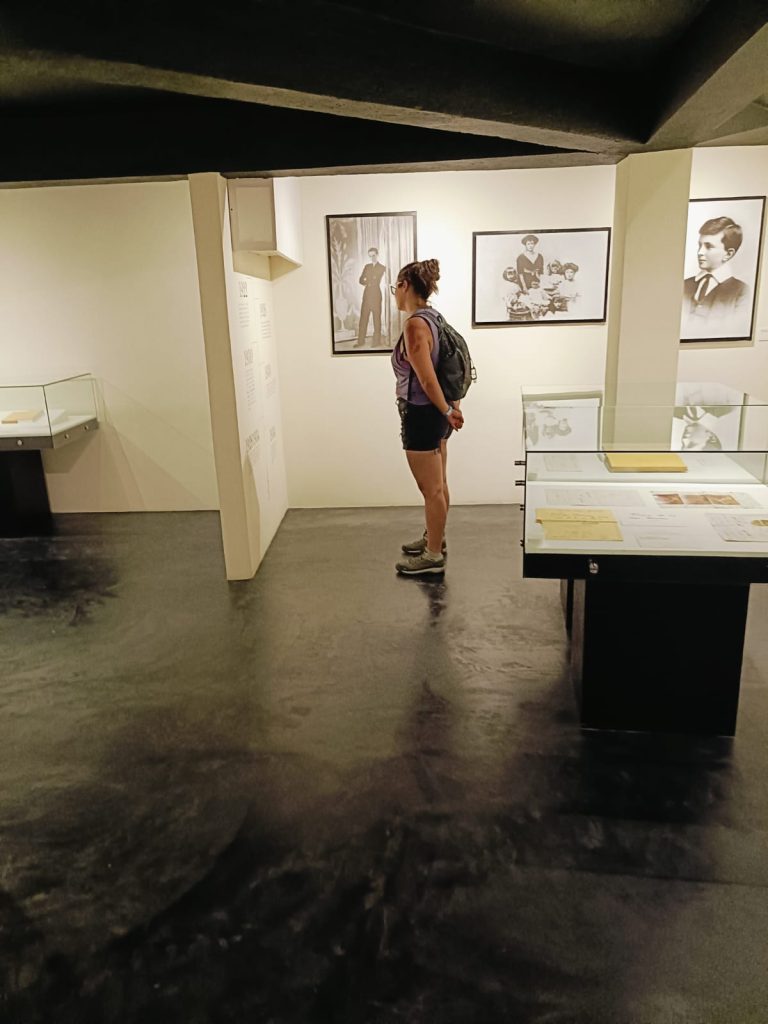
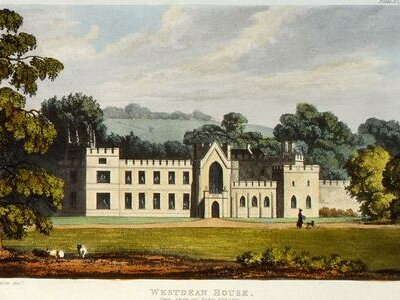
The first of the five stations focused on photographs of West Dean, Edward James’s childhood home. Participants explored James’s early life and family context, reflecting on how expansive spaces and environments can shape imagination and inner worlds.
Visitor Looking at James’ life in West Dean Timeline.West Dean House (Cortesy of West Dean College)
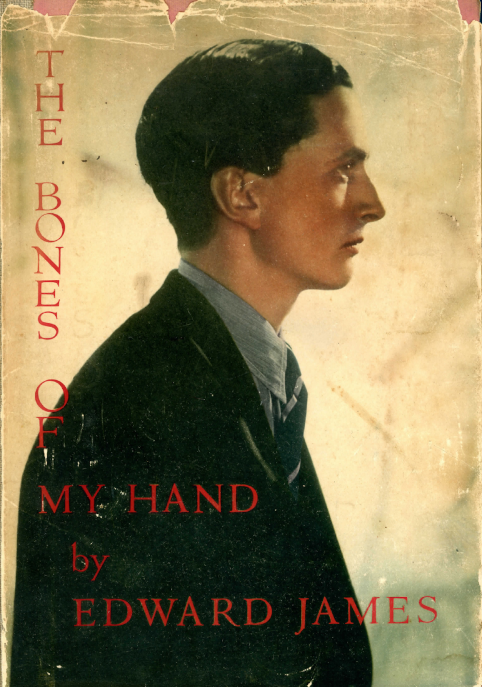
At the second station, participants spent quiet, individual time reading selections from the digital archive of James’s poetry book, The Bones of My Hands. This station emphasized attentive reading and personal interpretation, allowing each participant to engage with James’s words at their own pace.
Bones of my Hand – Edward JamesHighschoolers looking at James’ printed poems.Museum guide explaining James’ books.
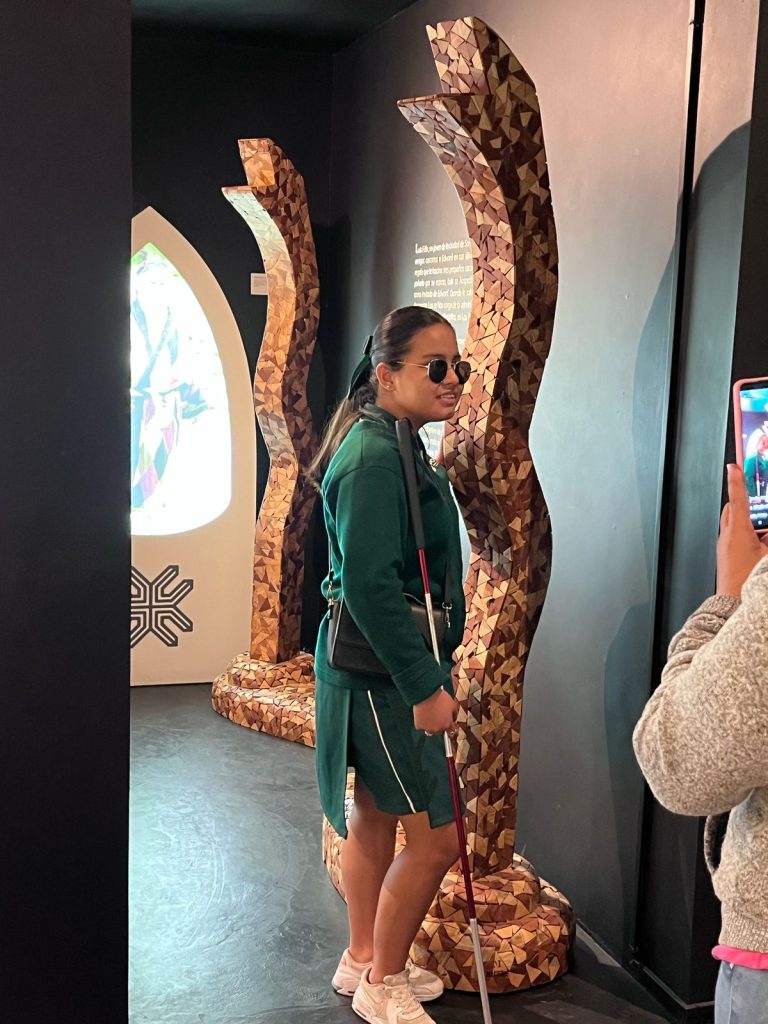
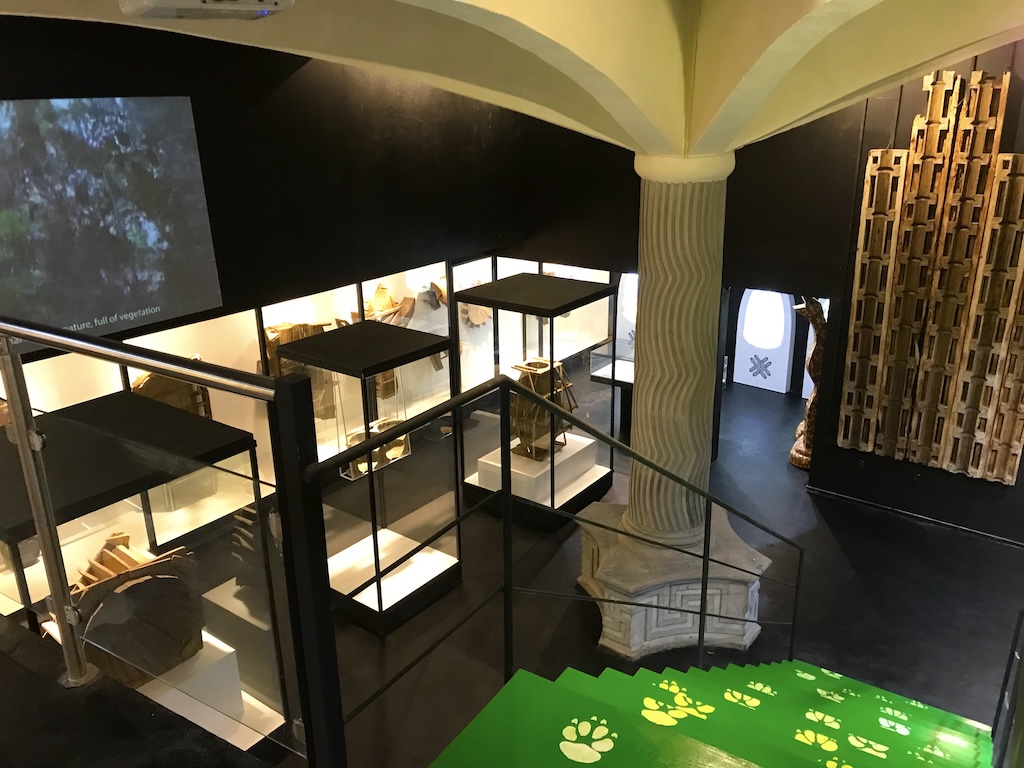
The third station centered on 14 original molds used in the creation of the sculpture garden. Participants closely observed the forms, textures, and details of the molds, considering how abstract ideas are translated into physical structures.
Visitor touching one of the sculptures.Molds – Edward James Museum Collection.
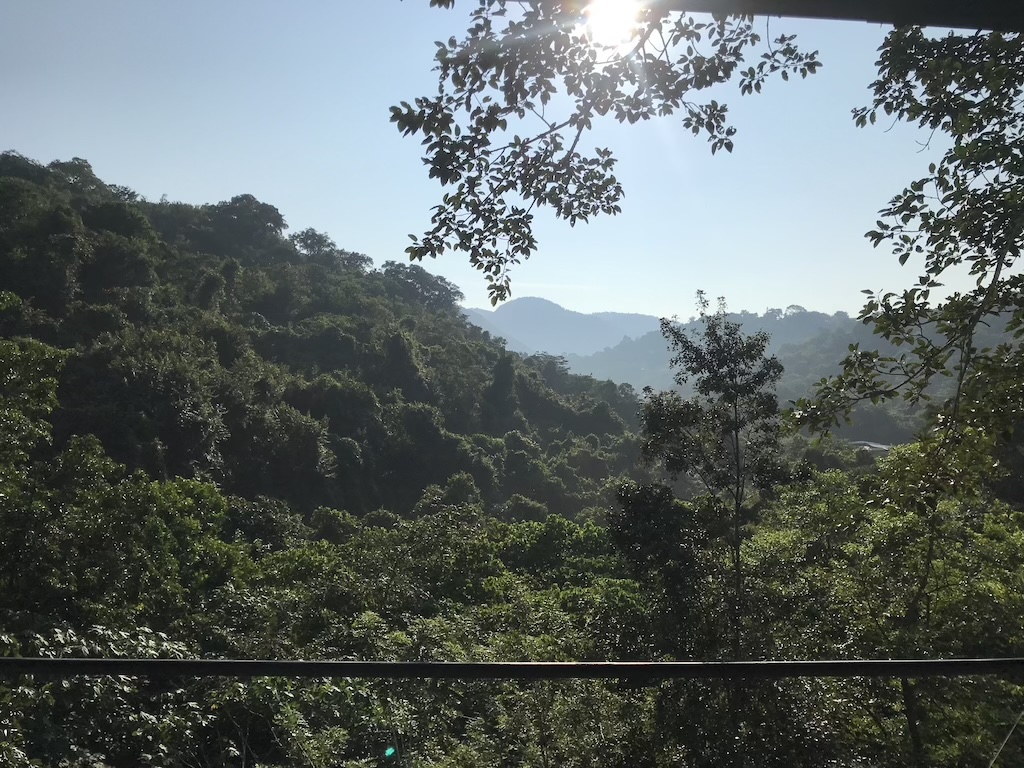
The fourth station took place on the museum balcony, where participants engaged in silent observation of the surrounding landscape. They were invited to notice sounds, colors, movement, and physical sensations, recognizing nature as an essential component of James’s creative universe.
View from the Museum.
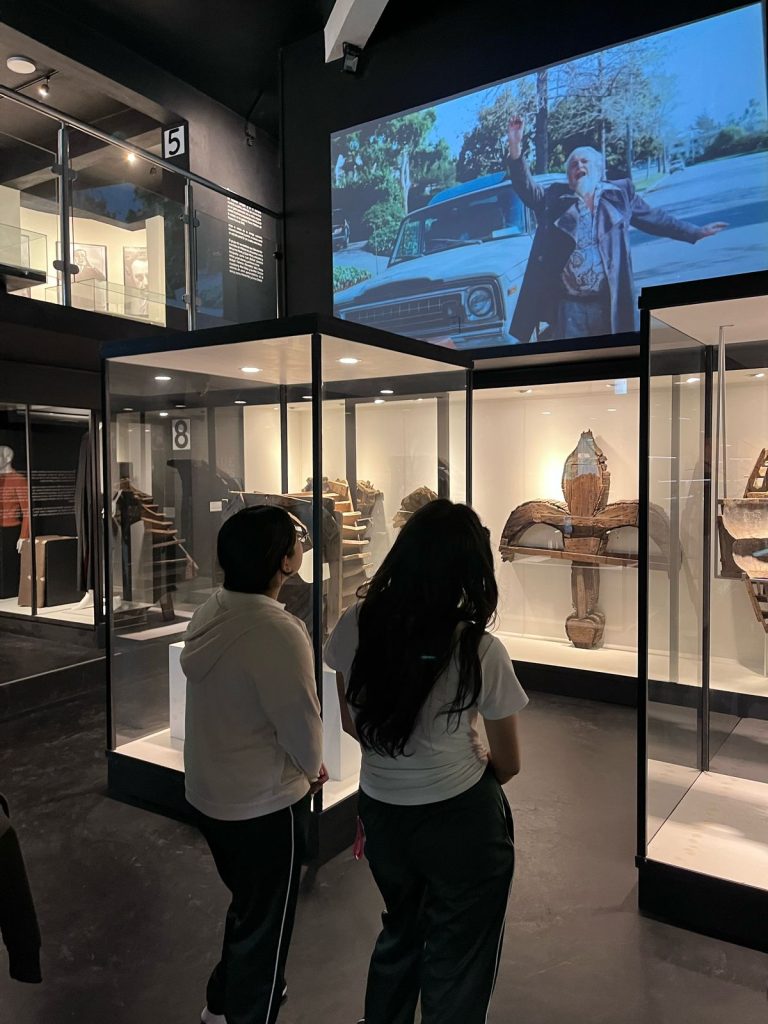
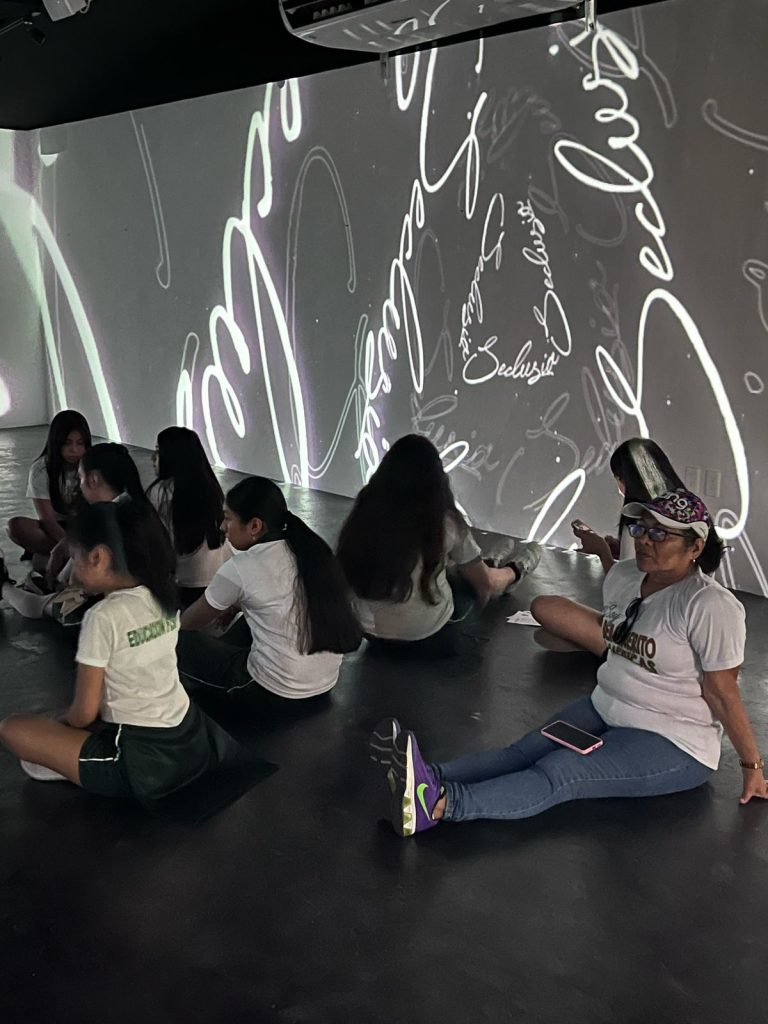
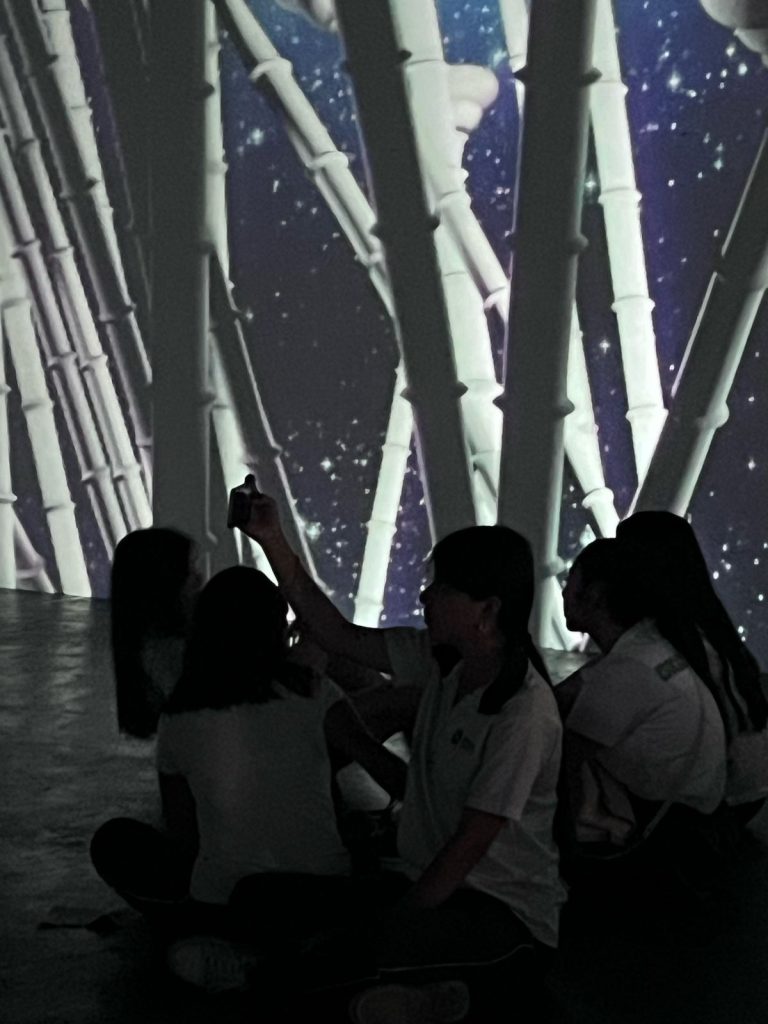
The final station consisted of a 15-minute immersive video, Seclusia, which explored themes of imagination, interior worlds, and the human desire to create a personal refuge. This concluding experience allowed participants to synthesize what they had encountered throughout the session.
Seclusia Immersive Experience – Edward James Msseum Collection
We at Slow Art Day HQ love everything about this and look forward to seeing what creative design the Museo Edward James comes up with for Slow Art Day 2026.
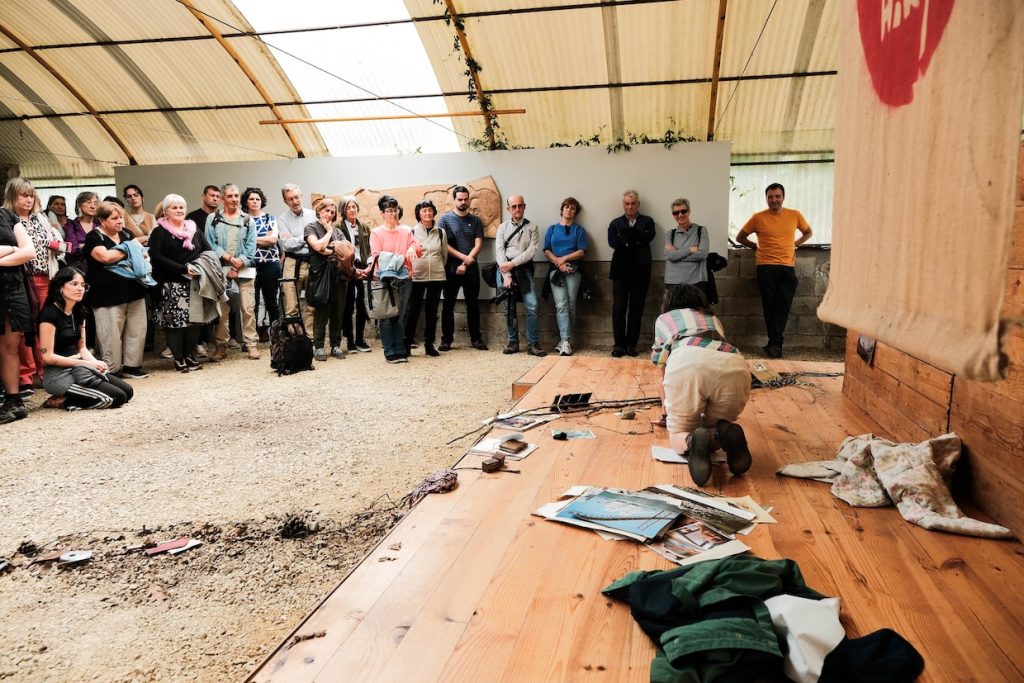
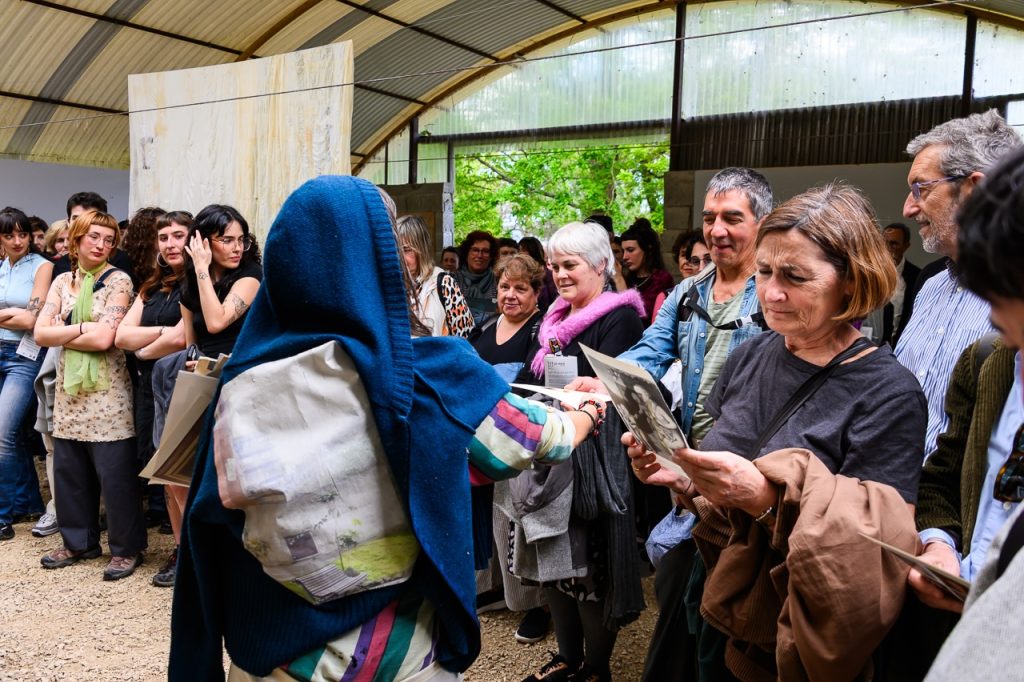
For their 10th Slow Art Day, Ur mara Museoa in Alkiza, Spain, hosted a gathering that combined exhibition, performance, and a shared meal in a single, community-centered experience.
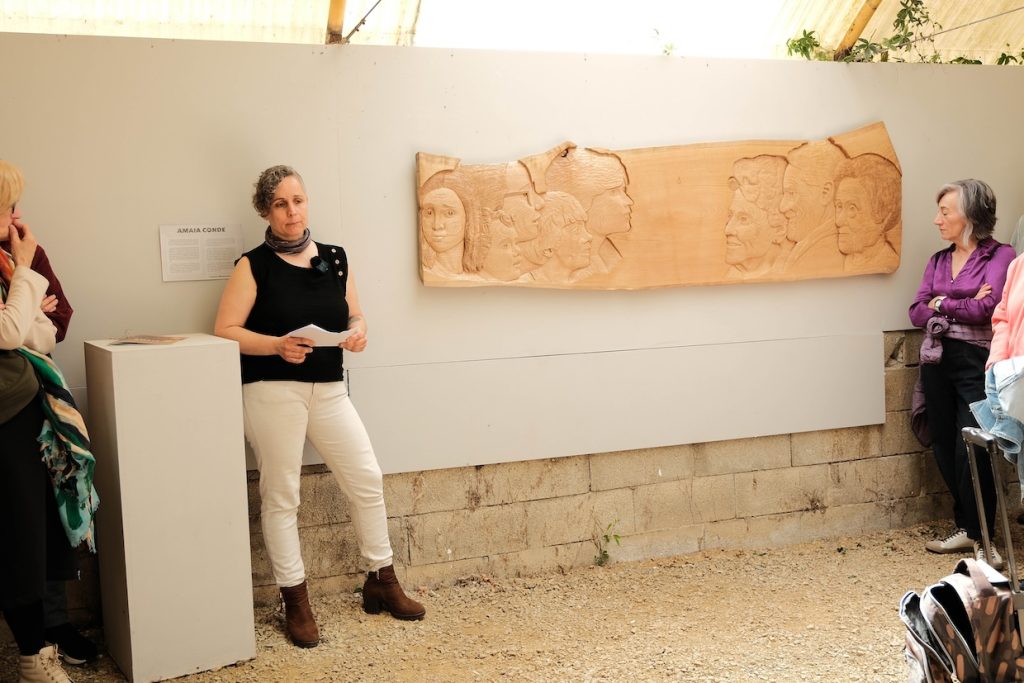
The event featured an exhibition by artists Ruth Anne Lopez, Amaia Conde, and Ainhoa Apezteguia, alongside a live performance by Leire Ugalde.
They put together a terrific video summary of the full day, which you can watch below.
Highlights included:
– A poetic reflection on touch and memory (0:59-2:08), using the metaphor of raindrops to explore how we interact with and preserve moments.
– An artistic piece focusing on skies and images (2:18-2:38), highlighting how images can capture what life cannot.
– An interview with artist Amaya Condechirt (2:51-3:36), who discusses her passion for wood carving and how her sculptures (3:03-3:18) explore the human form and complex life themes to bridge communication gaps in society.
– A sculptural work featuring older individuals and children (3:37-3:47), with one child breaking the fourth wall to question what they are being told, adding a touch of adolescent humor (3:48-3:56).
– A brief moment of reflection on new ideas and connections (4:41-4:50).
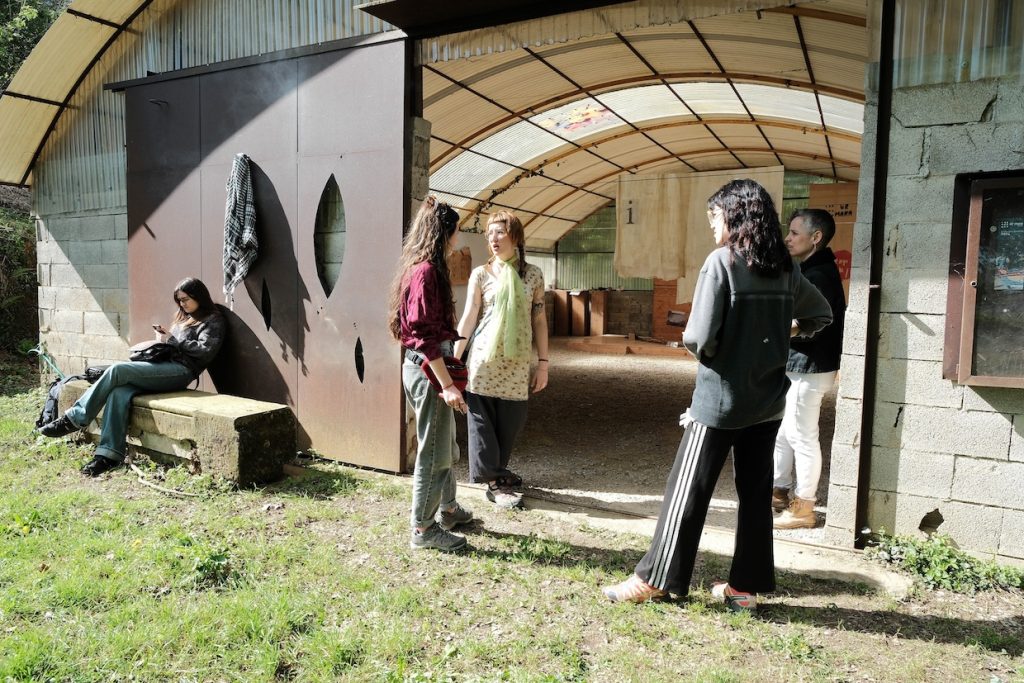
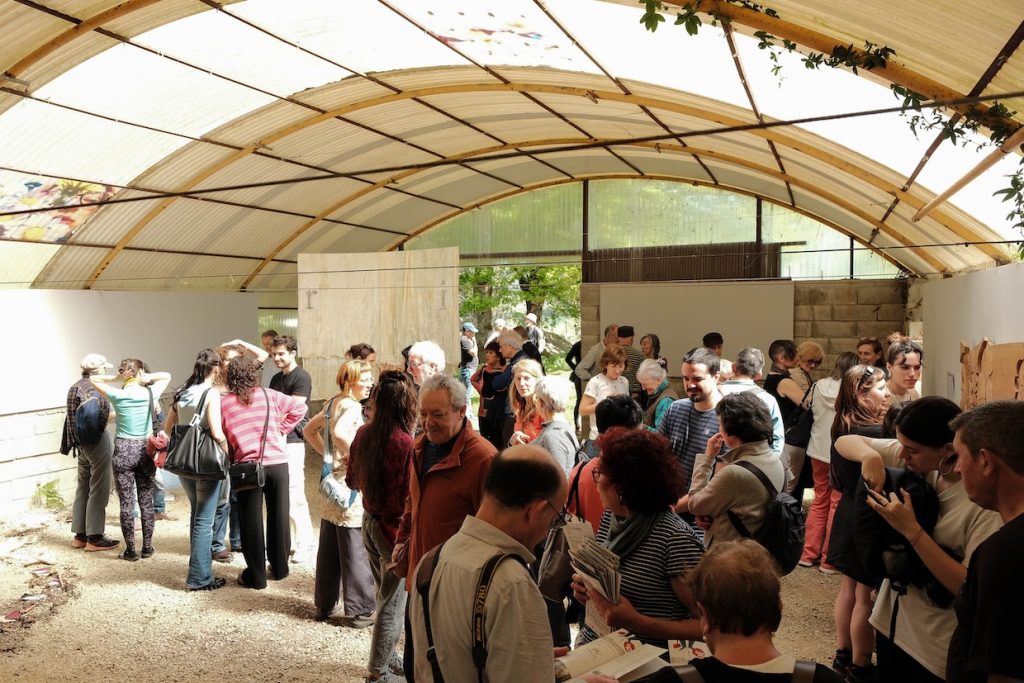
In addition, here are some still photos of the event.
As always with Ur Mara Museo, slow food was a part of the full day experience.
Thus, following the exhibition opening and performance, the museum organized a community lunch that brought together artists and visitors. The day as a whole reflected Ur mara Museoa’s mission, which we love, to connect contemporary artistic practice with local community life.
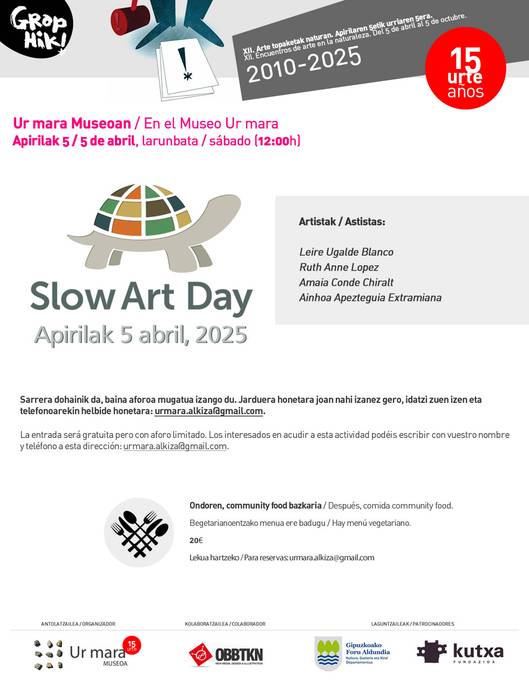
Below is their flyer for the event.
The museum shared documentation of the day through its social media channels, capturing both the exhibition and the collective atmosphere of the event.
We thank the team at Ur mara Museoa for their dedicated 10 years of leadership in the Slow Art Day movement. We look forward to seeing what they come up with for Slow Art Day 2026.
In 2025, Mexico City hosted its first city-wide Slow Art Day – and what may be the largest city-wide in the world – with 35 participating venues, coordinated by art writer and cultural organizer Constanza Ontiveros Valdés.
Ontiveros Valdés organized an unexpectedly wide range of participants, from established museums and galleries to alternative and emerging cultural spaces across the city.
The venues offered a rich mix of programming, including yoga, meditation, aromatherapy, workshops, panel discussions, and multidisciplinary artistic happenings. She noted that the accessibility and inclusiveness of Slow Art Day encouraged participation across diverse spaces, all eager to explore slow looking in ways that felt authentic to their communities.
We received reports from seven of the 35. Below are those highlights.
Galería Oscar Román featured an artist-led conversation titled “Sombras del Pintor” (Shadows of the Painter) with artist Saúl Kaminer, followed by a guided visit to his exhibition “La Tierra en el Cielo” (The Earth in the Sky). Kaminer shared insights into his creative process and the narratives behind his work, inviting participants to engage slowly through conversation and close observation. The session encouraged reflection on the relationship between art and nature, with visitors spending extended time discussing individual works.
Arte Abierto Reported by: Guadalupe Salcedo, Communications
Arte Abierto‘s Public Programs Team designed a Slow Art Day experience around the exhibition long last happy by Swiss artist Ugo Rondinone. Participants engaged in contemplative observation of the large format sculptures the sun and the moon (2022), followed by individual and group body activations inspired by dance and performance. The program invited participants to explore the idea of opposing forces through both stillness and body movement. Adults and children took part, and the event received significant public and media engagement.
Host: Constanza Ontiveros Valdés, Art Writer and Cultural Projects Coordinator Venue contact: Julia Villaseñor, Communications and Media Director
At kurimanzutto, participants were introduced to Slow Art Day through breathing and relaxation exercises before engaging in close looking with works by Haegue Yang from the exhibition Arcane Abstractions. The group explored intricate paper collages from the Mesmerizing Mesh series and interacted physically with the sculptural installation Mesmerizing Votive Pagoda Lantern. The session concluded with a hands-on activity in which participants created visual responses to their observations and shared reflections.
Natalia Martinez Aanaya, Communications Manager shared that Alejandra Topete Gallery participated with Between Threads and Stories, featuring works by Jason Kriegler and Claribel Calderius. The program included individual meditation sessions throughout the day and an empowering roundtable discussion led by Maria Ortiz, Cultural Mediator. Visitors were encouraged to form personal connections with the artworks through guided dialogue and slow observation.
Naranjo 141 gathered participants to look slowly at five selected works from their current exhibition. The session began with a brief introduction to Slow Art Day and the gallery’s residency program. Visitors then spent six to seven minutes in silent observation with each of five selected works:
Lily Alice Baker, Mothers’ Meeting (2024)
Colleen Herman, Blood Bloom in a Blue Field (2024)
Lee Maxey, Face the Front (2024)
Kataria Riesing, Holster (2024)
Pauline Shaw, Blackout (2025)
After slow looking, participants came together for a facilitated group discussion, sharing observations and personal responses over light refreshments. The session concluded with informal conversation and continued engagement with the exhibition.
Lee Maxey, Face the Front (2024)Lily Alice Baker, Mothers’ Meeting (2024)
Tinta Naranja focused on close observation of graphic design and visual culture. Participants explored original materials related to the Mexico 1968 Olympic design system, discussing the origins and historical context of the typography and imagery. The session concluded with a participatory activity in which attendees designed their own names using Olympic-inspired typographic forms.
Zona de Riesgo Art hosted a free evening program that combined slow looking, guided meditation, sound art, and collective reflection. The event opened with a brief introduction, then featured two guided meditative experiences led by artist Mónica Martz M.
The first, Realm of the Devas, combined guided meditation with sound art by Bruno Bresani and the projection of two visual works by Mónica Martz M.
After a short pause, Mónica Martz M. led a second meditation that explored The Human Realm, accompanied by sound art from Mercedes Balard and Montserrat Coltello, alongside projected works by Bruno Bresani.
Following the meditations, participants gathered for an open conversation, sharing sensations, images, and reflections that emerged during the experience. The evening concluded with expressions of gratitude among artists and attendees, highlighting the value of creating spaces for stillness, contemplation, and shared presence.
Together, these seven reports represent just a portion of the 35 venues that participated in Mexico City’s first citywide Slow Art Day. The range of formats—artist talks, guided observation, movement-based practices, meditation, and slow making—demonstrates how Slow Art Day can scale across a major global city while remaining grounded in local artistic practice. Check out a great article summarizing the day (in Spanish).
We thank Constanza Ontiveros Valdés for her leadership and all participating venues, artists, facilitators, and visitors for making this inaugural citywide Slow Art Day possible. We look forward to seeing what they come up with for Slow Art Day 2026.
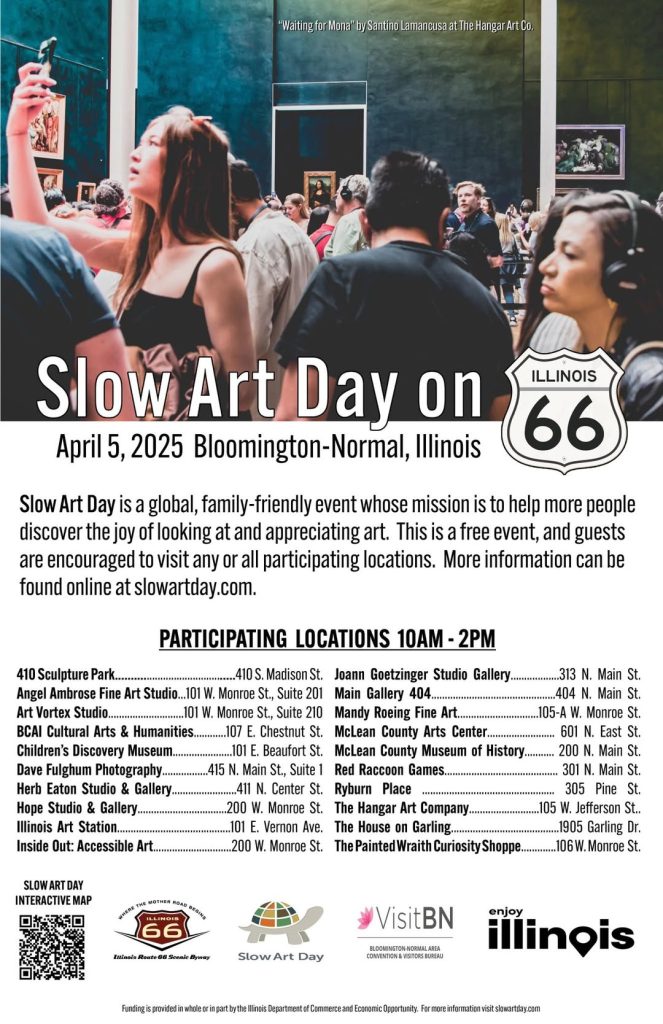
For Slow Art Day 2025, Bloomington–Normal, Illinois once again led a citywide Slow Art Day – they were the first to pioneer citywide events several years ago. Led by Pamela Eaton of Eaton Studio Gallery, the citywide Slow Art Day has grown into a statewide collaboration with a number of sponsors and leaders coming together. See the beautiful poster below.
The collaborative citywide scope of the event was documented by the Illinois Route 66 Scenic Byway. These photographs captured the range of venues and the conversations taking place across the city during the Slow Art Day weekend.
Here are a few reports we received from across the 2025 Citywide.
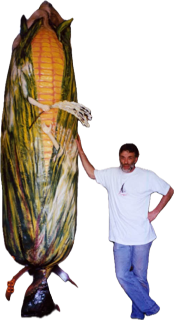
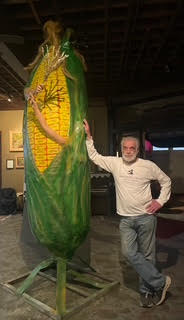
Eaton Studio Gallery At the Eaton Gallery, their Slow Art Day event centered on Star Crossed Pollinators, a refurbished sculpture by artist Herb Eaton originally created in 2000 for Bloomington’s Sesquicentennial celebrations. The work was on view during Slow Art Day as part of its refurbishment process ahead of its planned move to a permanent location at the McLean County Museum of History.
Photos below are of artist Herb Eaton with the original sculpture in 2000 on the left, and the new version in 2025 on the right.
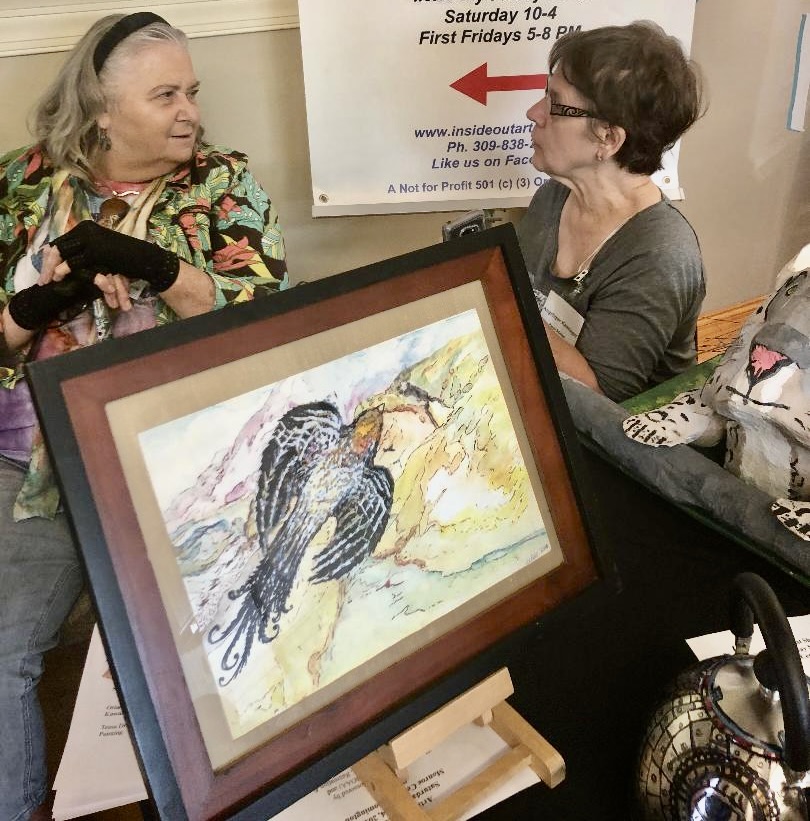
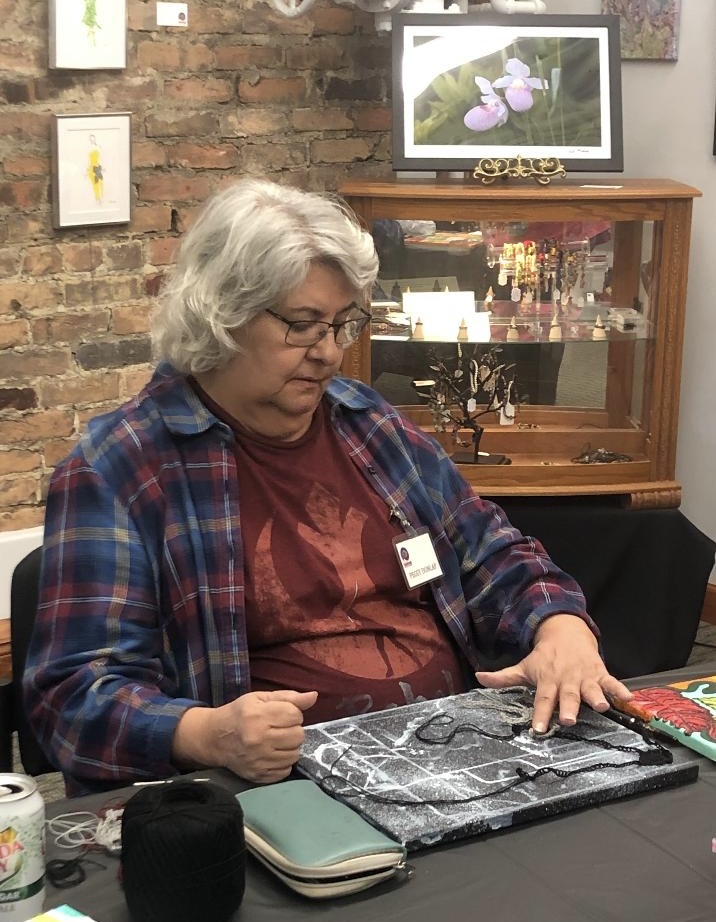
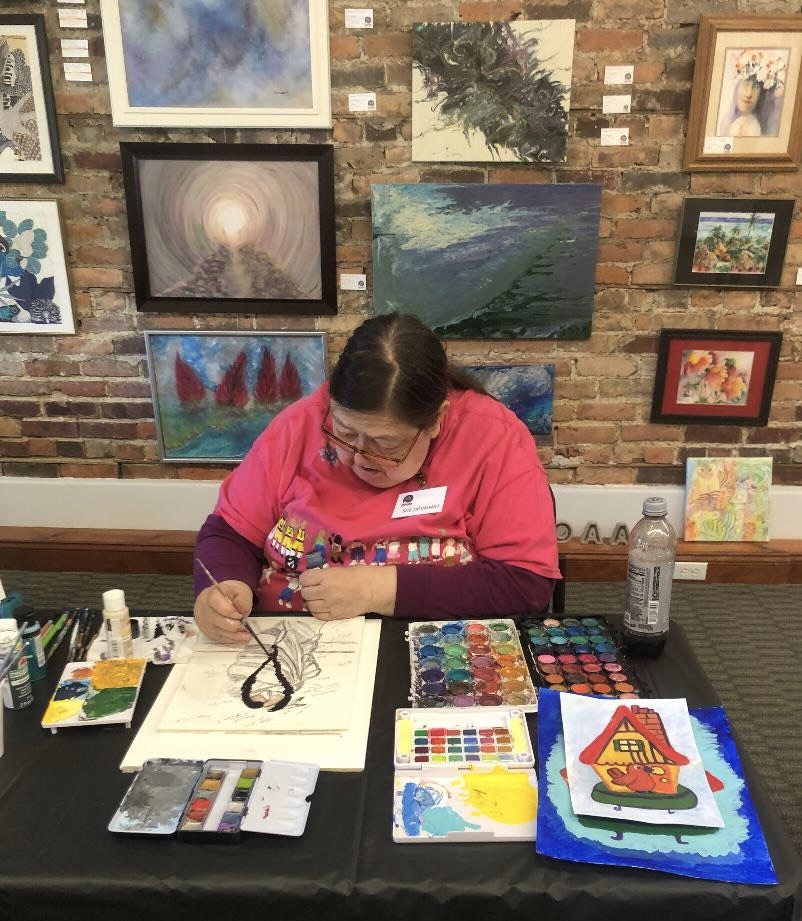
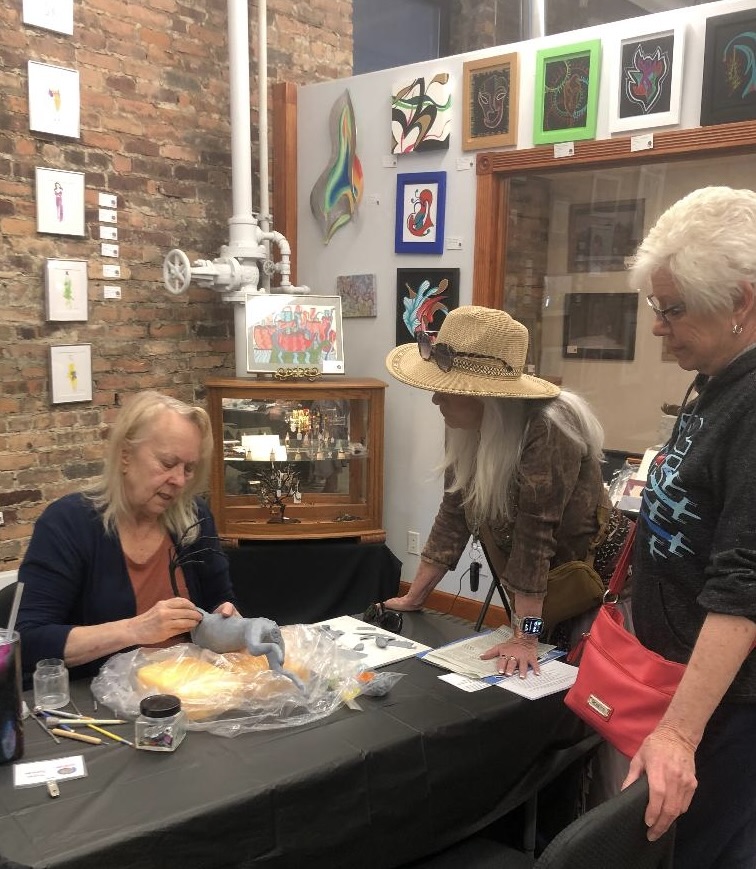
Inside Out Accessible Art (IOAA) IOAA hosted artists demonstrating their techniques alongside other artists who brought individual works to discuss with patrons. The open format encouraged dialogue and allowed visitors to spend time with both artistic process and finished work. Photographs of the event below were taken by Shelley Schultz.
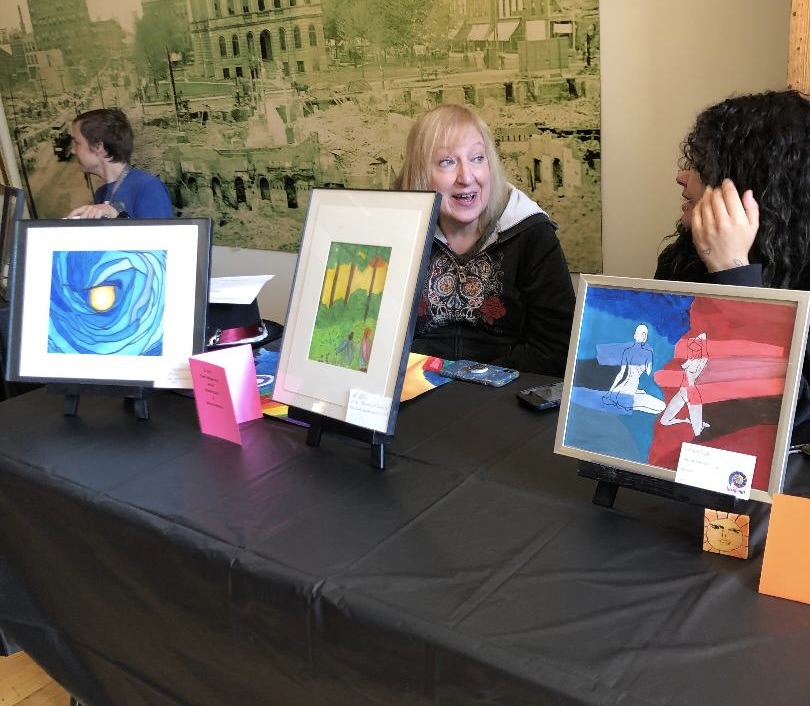
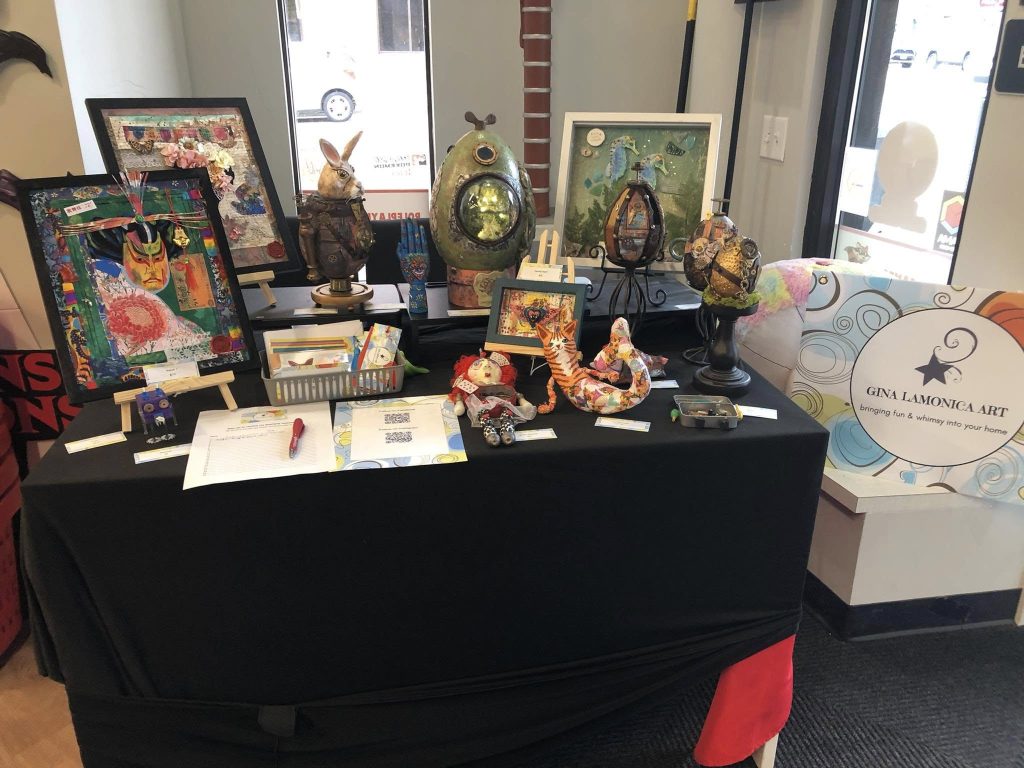
Red Raccoon Games Red Racoon in downtown Bloomington hosted artist Gina LaMonica, whose works were shown via the table setup below.
The Bloomington–Normal Slow Art Day demonstrated how a coordinated, multi-site approach can support slow looking at scale while remaining grounded in local artists, studios, and shared civic spaces. We thank Pamela Eaton, Eaton Studio Gallery, Inside Out Accessible Art, and all participating organizations and artists for making this citywide Slow Art Day possible. We look forward to seeing what they come up with for their citywide Slow Art Day in 2026.
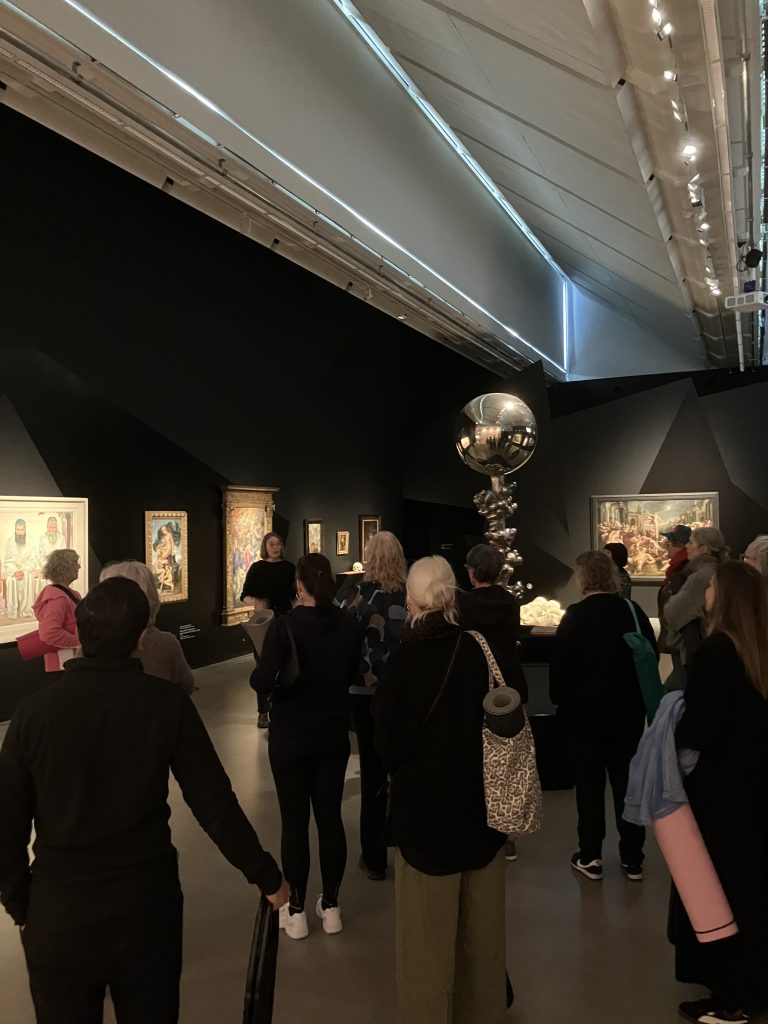
The Gothenburg Museum of Art in Gothenburg, Sweden, participated in Slow Art Day 2025 by offering two structured activities for adults and children. The program combined guided meditation, slow looking in the galleries, and hands-on making in the studio.
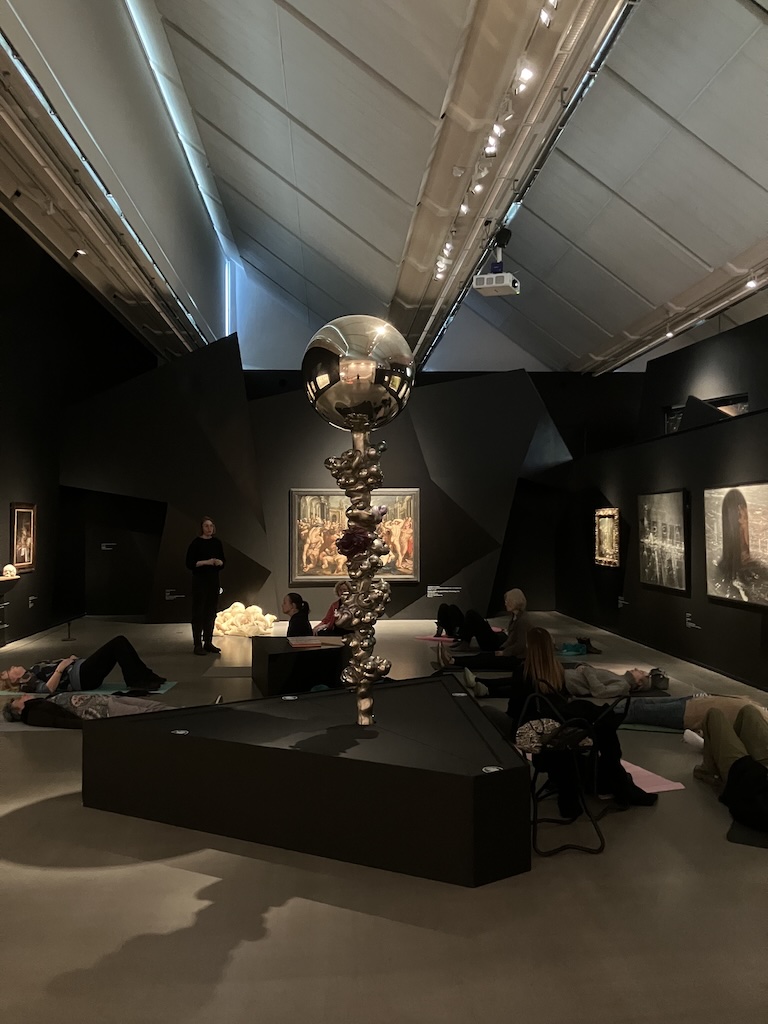
The group gathered in front of Oracle, a sculpture by Norwegian artist Jone Kvie, on view in the exhibition Apocalypse: From Last Judgement to Climate Threat.
Photo by Linda Noreen.
For adult participants, the museum hosted a guided meditation led by Pernilla Ljungkvist, artist and yoga teacher, around the sculpture. Through stillness and focused attention, participants were invited to engage with the sculpture more deliberately.
Participants practicing yoga. Photo by Linda Noreen.
For children ages 6–12, the museum offered a two-part workshop. The first part took place in the museum’s collection galleries, where participants practiced slow-looking exercises and completed a drawing activity based on careful observation.
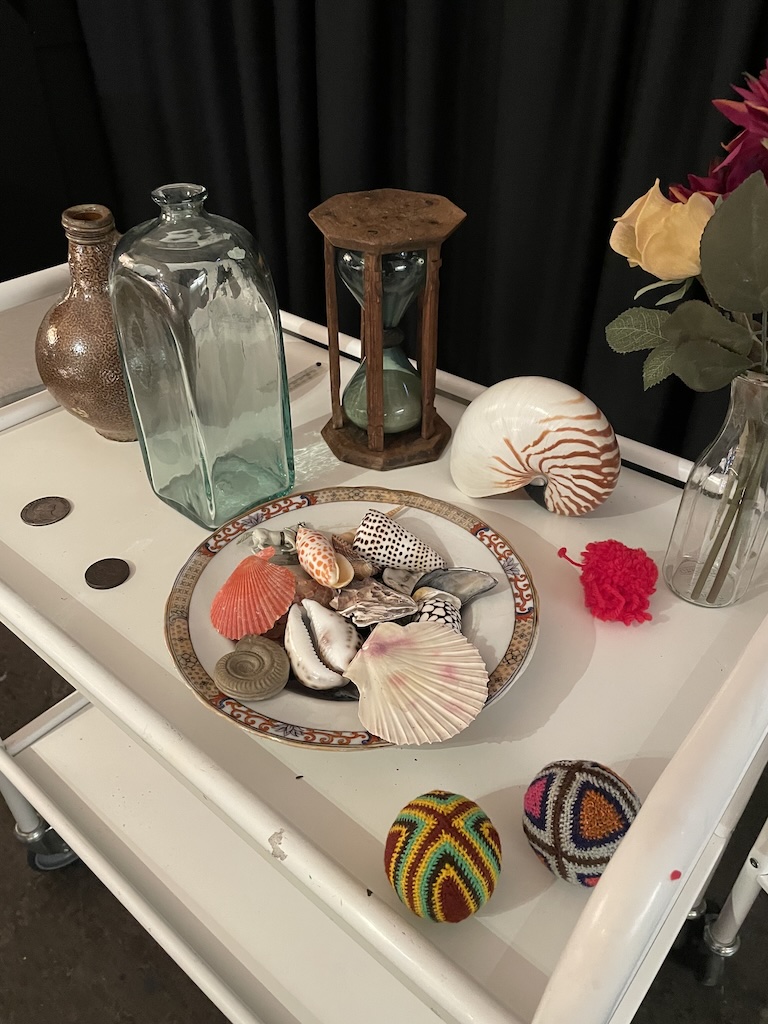
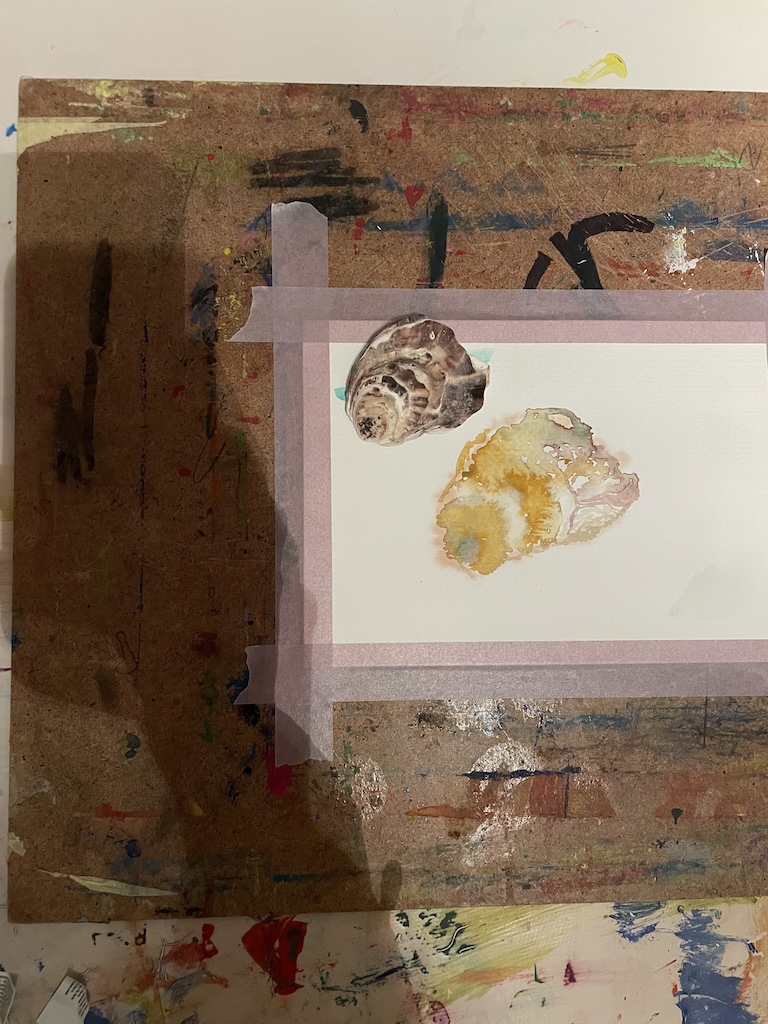
The group then moved to the Museum Studio, where a selection of objects was presented. Participants chose one or more objects to reinterpret by painting with watercolors, drawing with colored pens, or shaping forms in clay. The emphasis throughout was on slowing down, observing closely, and working deliberately. Across both activities, the shared goal was to encourage sustained attention and mindful engagement through observation, reflection, and making.
Photo by Jonna Kihlsten.Photo by Jonna Kihlsten.Photo by Jonna Kihlsten.
We thank Jonna Kihlsten, Art Educator, and the Gothenburg Museum of Art team for designing inclusive Slow Art Day experiences, as well as Pernilla Ljungkvist for leading the meditation session. We look forward to seeing what Gothenburg comes up with for Slow Art Day 2026.
For their fourth year participating in Slow Art Day, Wellcome Collection in London hosted a full day of guided and self-guided slow-looking experiences across the museum. Wellcome Collection is a free museum that explores human health through the intersections of art, medicine, and science. Building on the range of facilitated sessions introduced in previous years, the 2025 program offered visitors multiple ways to engage slowly with artworks, objects, and ideas.
The Wellcome Collection team led five guided slow-looking sessions, each facilitated by a different staff member and focused on a distinct body of work.
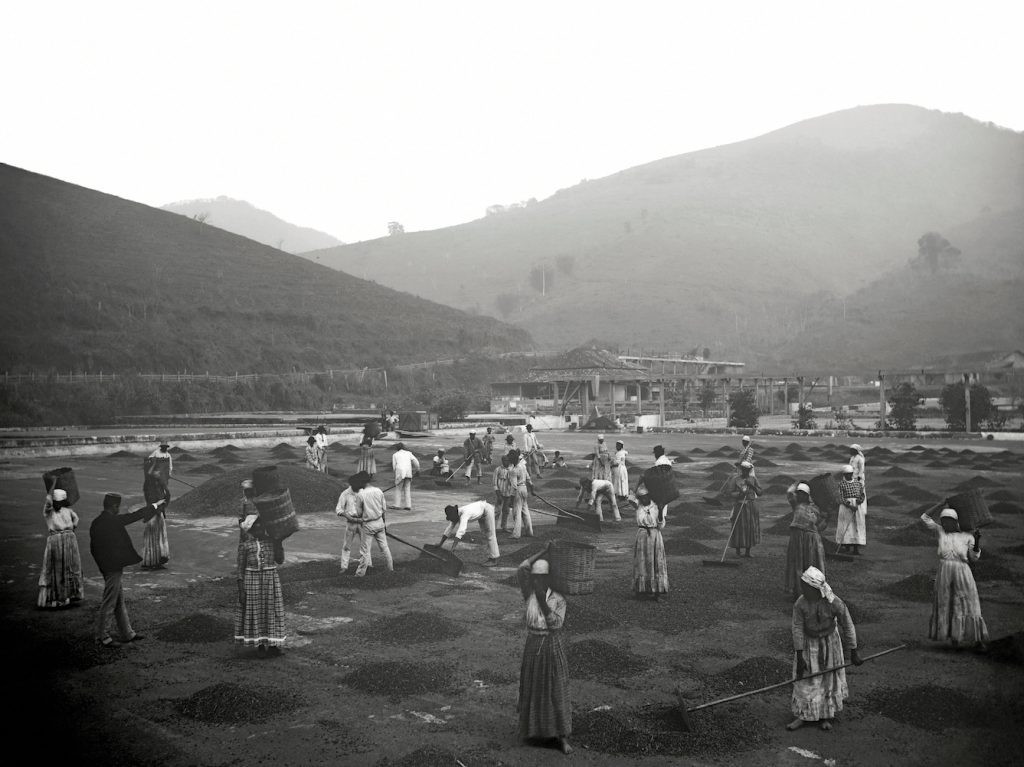
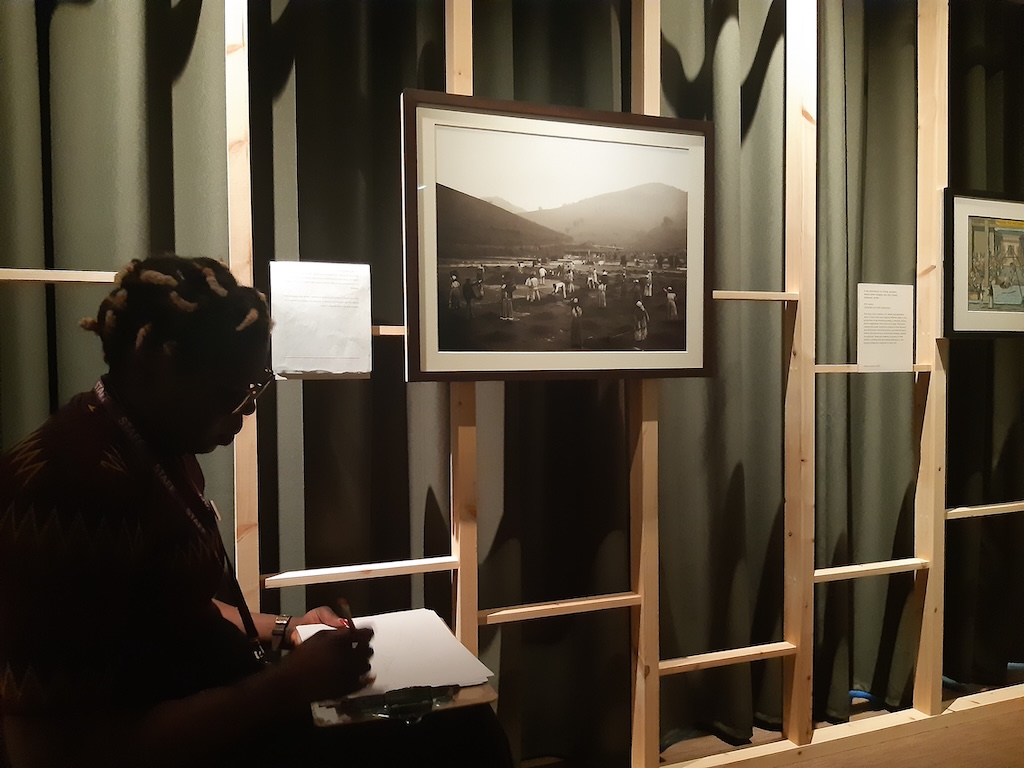
Isabelle Gapomo guided participants in close observation of a photograph by Marc Ferrez from the Hard Graft exhibition, titled ‘Escravos em terreiro de uma fazenda de café na região do Vale do Paraíba’ (c.1882), examining how plantation labor was depicted by early photographers and how those images are experienced today.
‘Escravos em terreiro de uma fazenda de café na região do Vale do Paraíba’ (c.1882). Marc Ferrez.
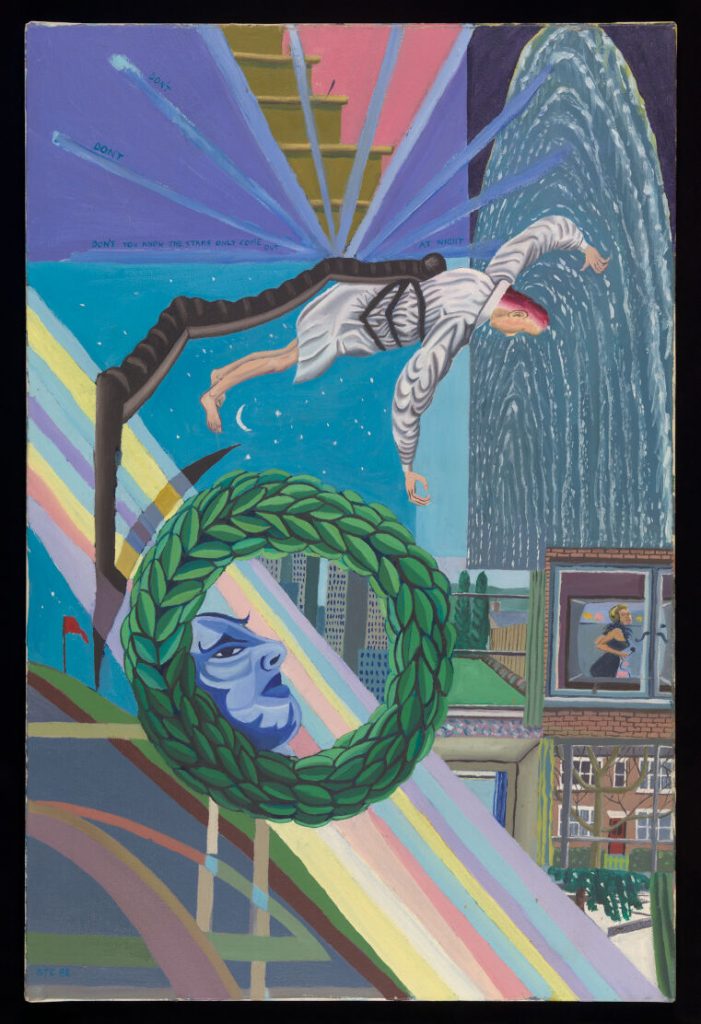
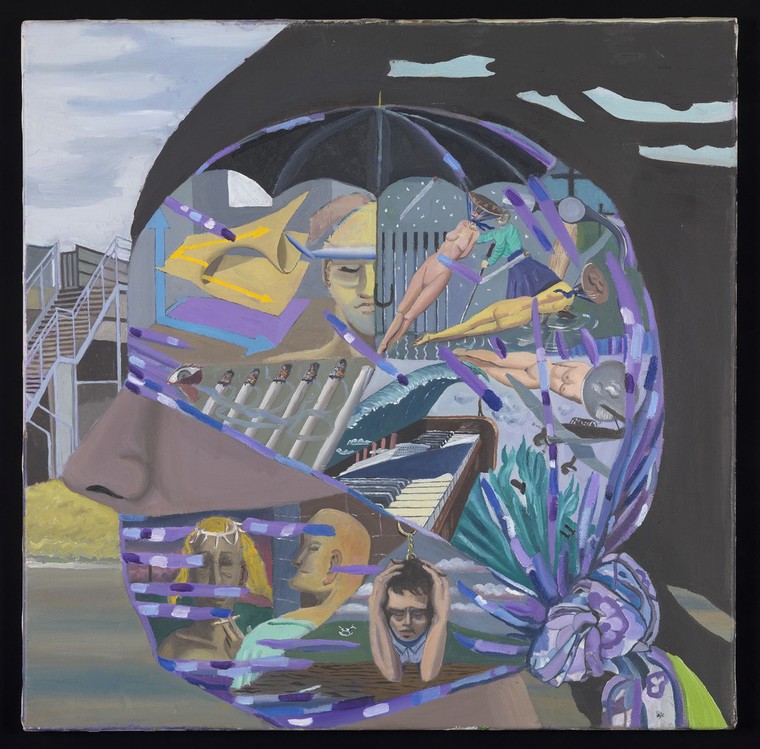
Griff Davies led a session centered on the dream-inspired paintings of Bryan Charnley, using the imagery to prompt discussion around mental health.
“The Stars Only Come Out at Night” by Bryan Charnley.“Nail Schizophrene” by Bryan Charnley.
Sana Siddiqui reprised her popular session last year and used vintage food advertisements to evoke memory and sensory response.
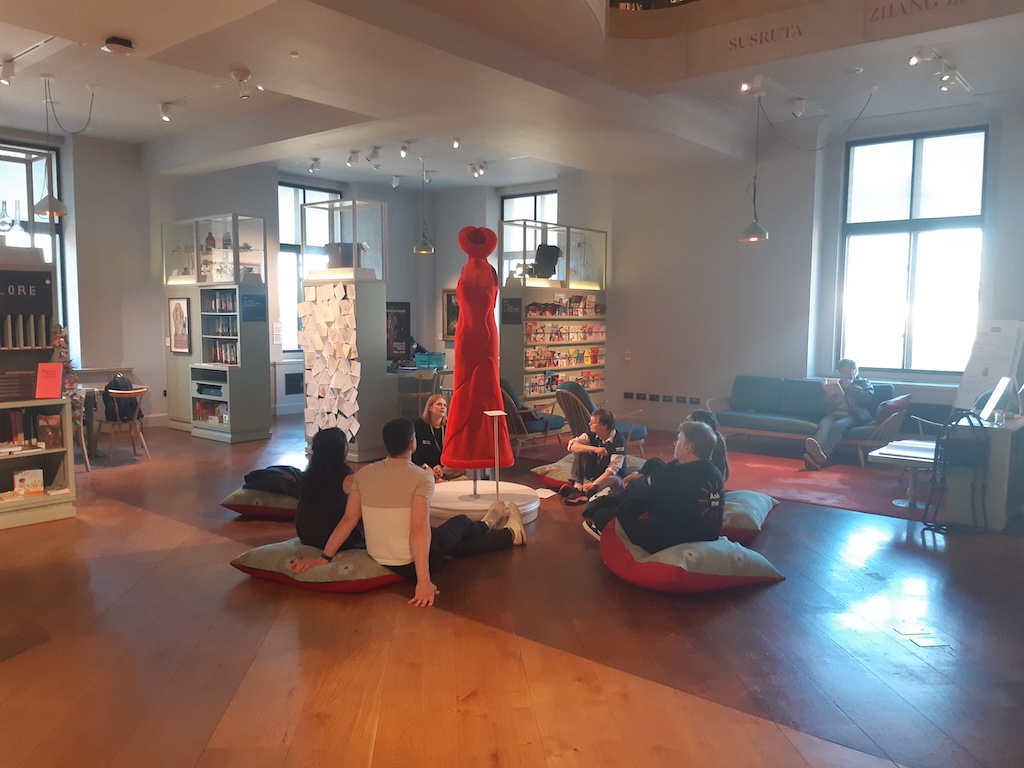
In the Reading Room, Isabel Greenslade gathered participants around “Closing Neural Tube Dress,” a sculptural garment that encouraged reflection on abstraction.
Participants slow looking at the “Closing Neural Tube Dress“.
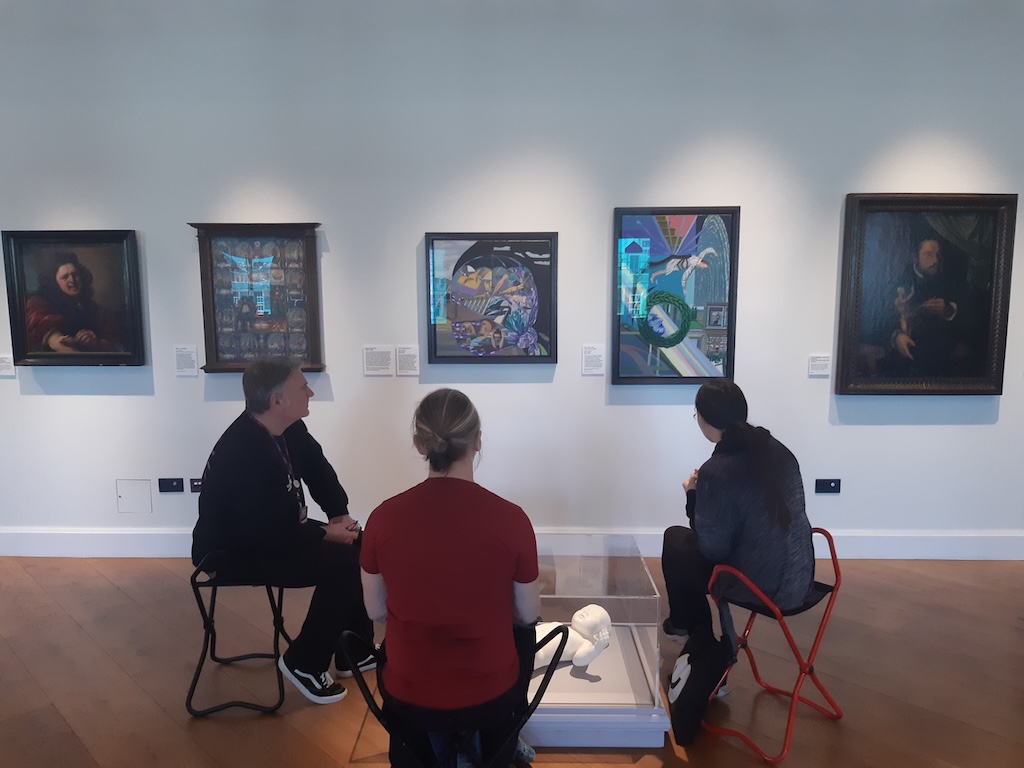
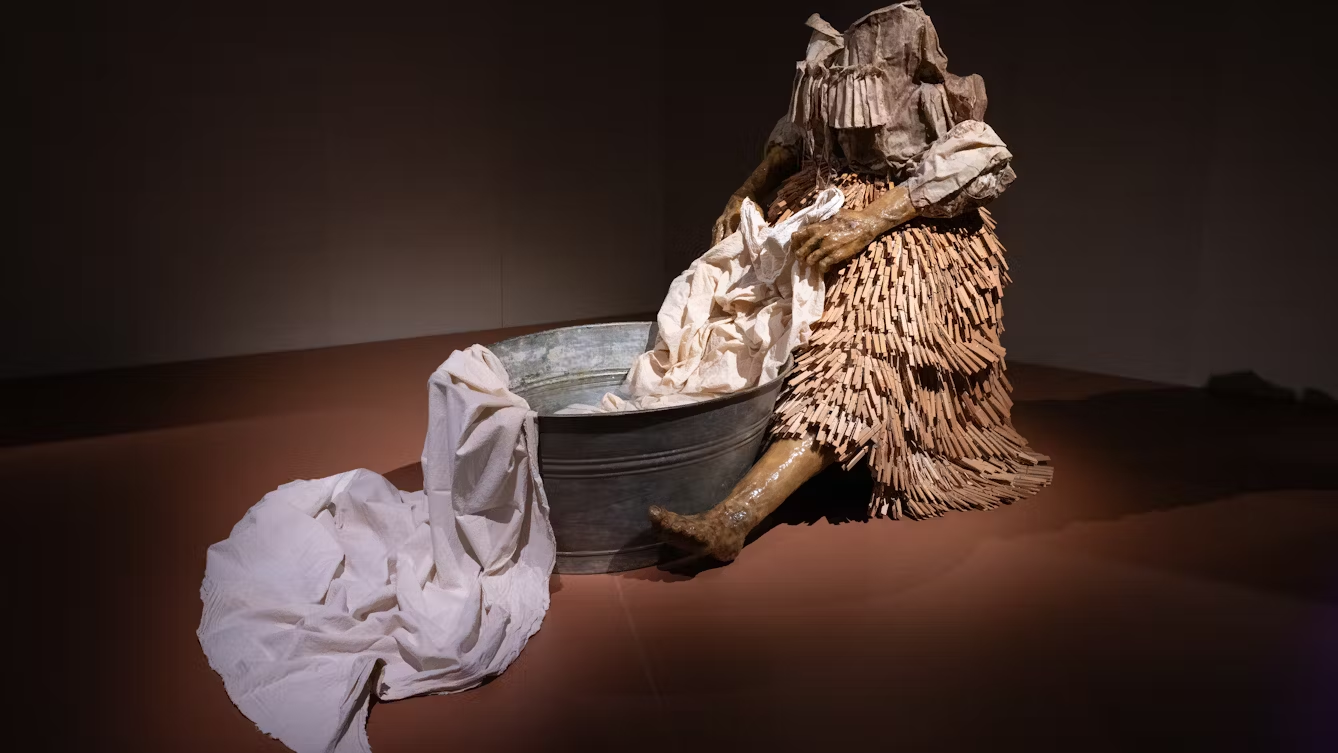
Jake Blackavar led a session that moved through multiple floors of the museum, selecting a sculpture, a video work, and a pair of paintings to explore how different media and gallery contexts shape the slow-looking experience.
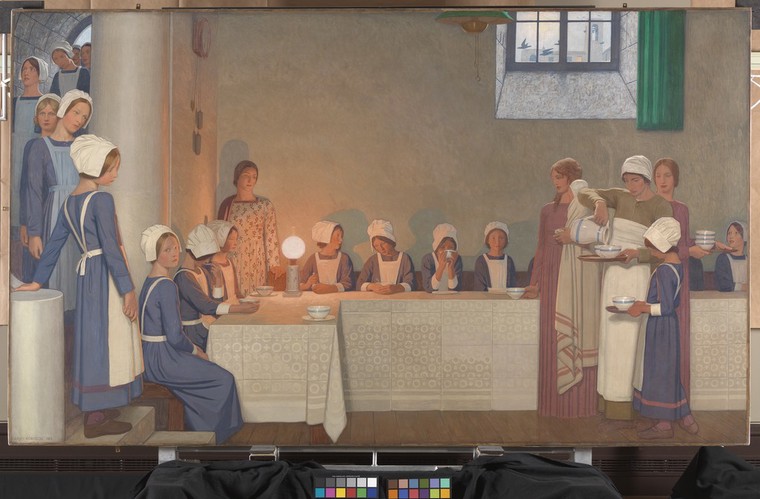
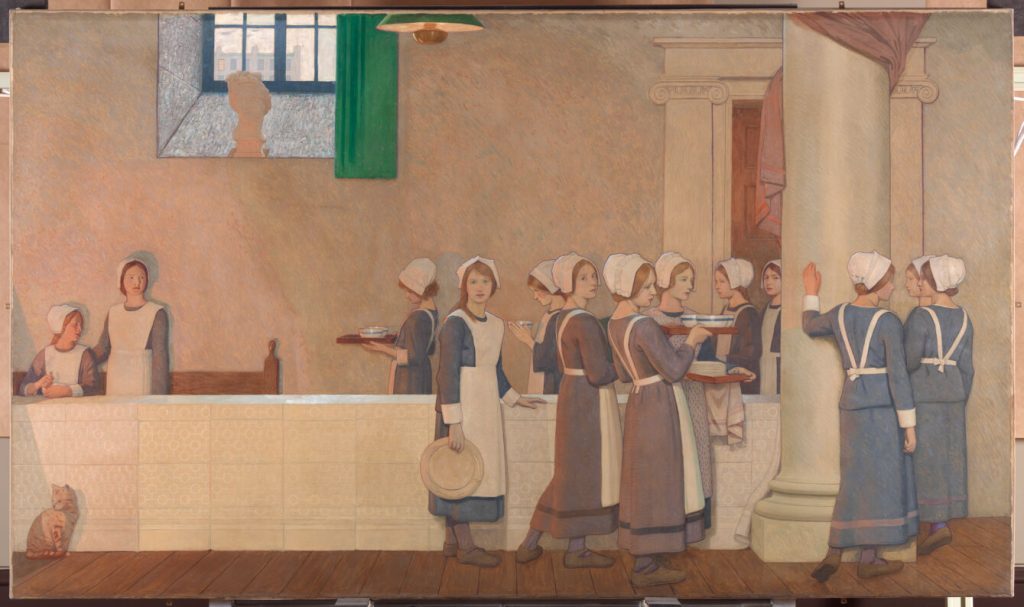
“Washerwoman” by Shannon Alonzo.“Orphans” (left) by Frederic Cayley Robinson.“Orphans” (right) by Frederic Cayley Robinson.
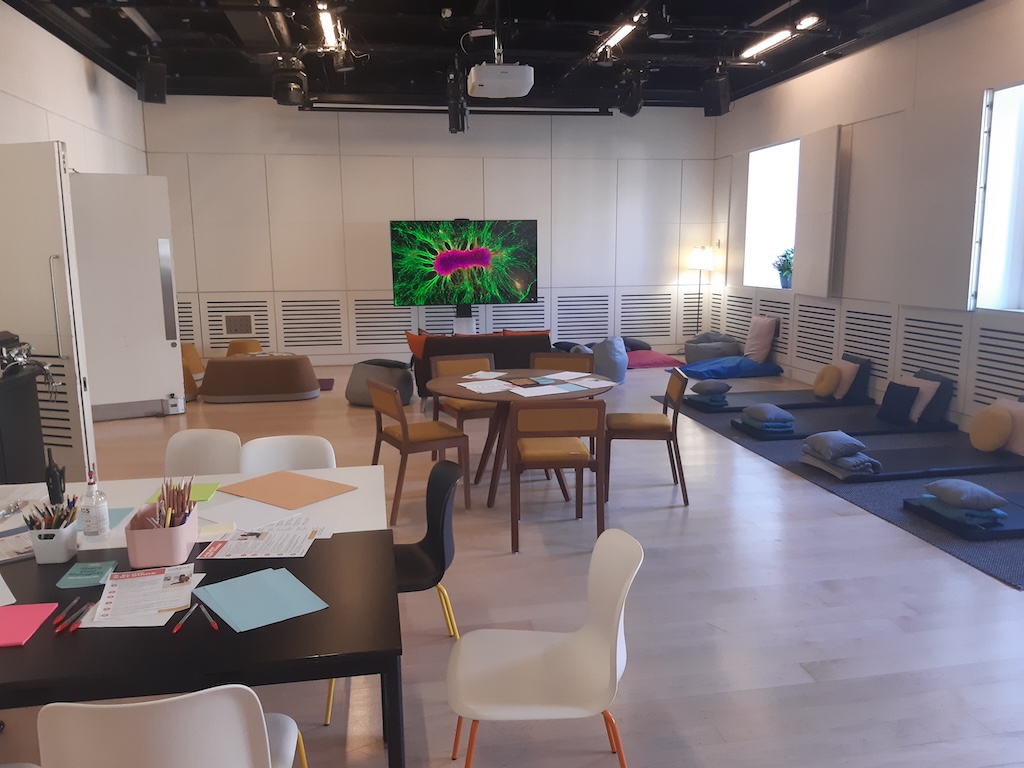
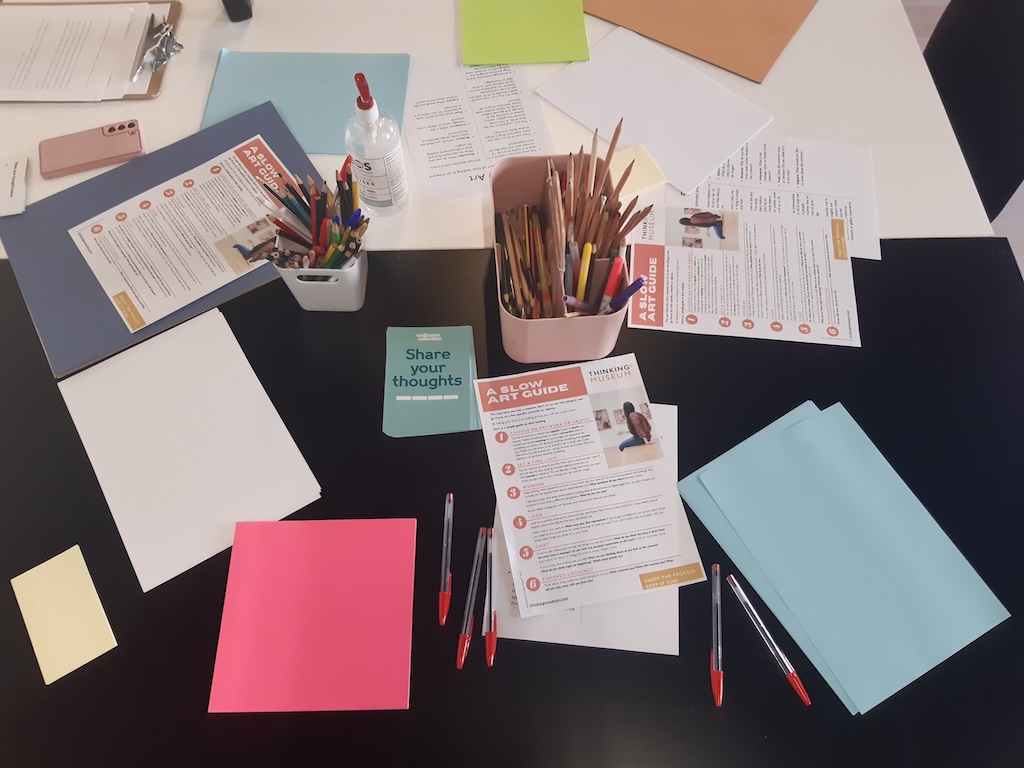
In addition to the guided sessions, the museum designated a room as a Slow Art Day hub where tours began and visitors could drop in to learn more about the event. In this space, visitors were invited to practice slow looking independently using a rotating screen of images from Wellcome Collection’s holdings, which changed every ten minutes.
What a thoughtful and well-designed program. Wow.
We at Slow Art Day HQ thank Jake Blackavar and the entire Wellcome Collection team for continuing to lead the way in producing meaningful and multi-dimensional experiences.
We eagerly look forward to what they come up with for Slow Art Day 2026.
For their first Slow Art Day, Kasteel van Gaasbeek (Gasbeek Castle) in Belgium held two activities that combined inclusive slow looking, touching and drawing.
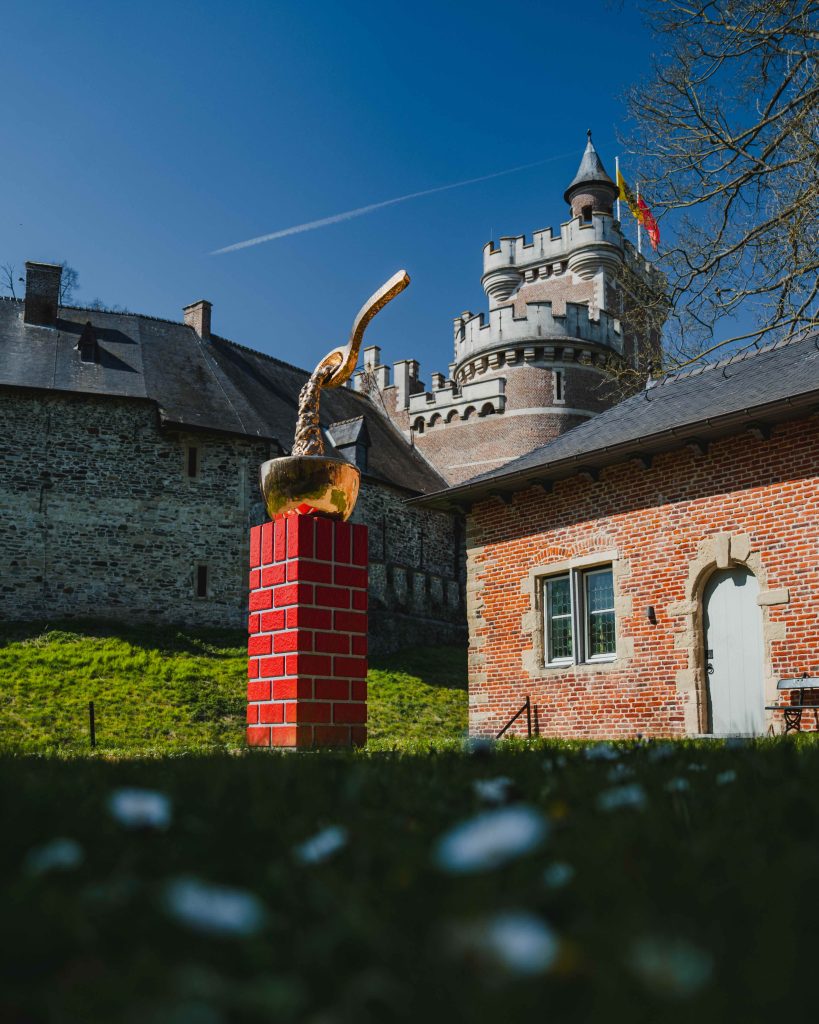
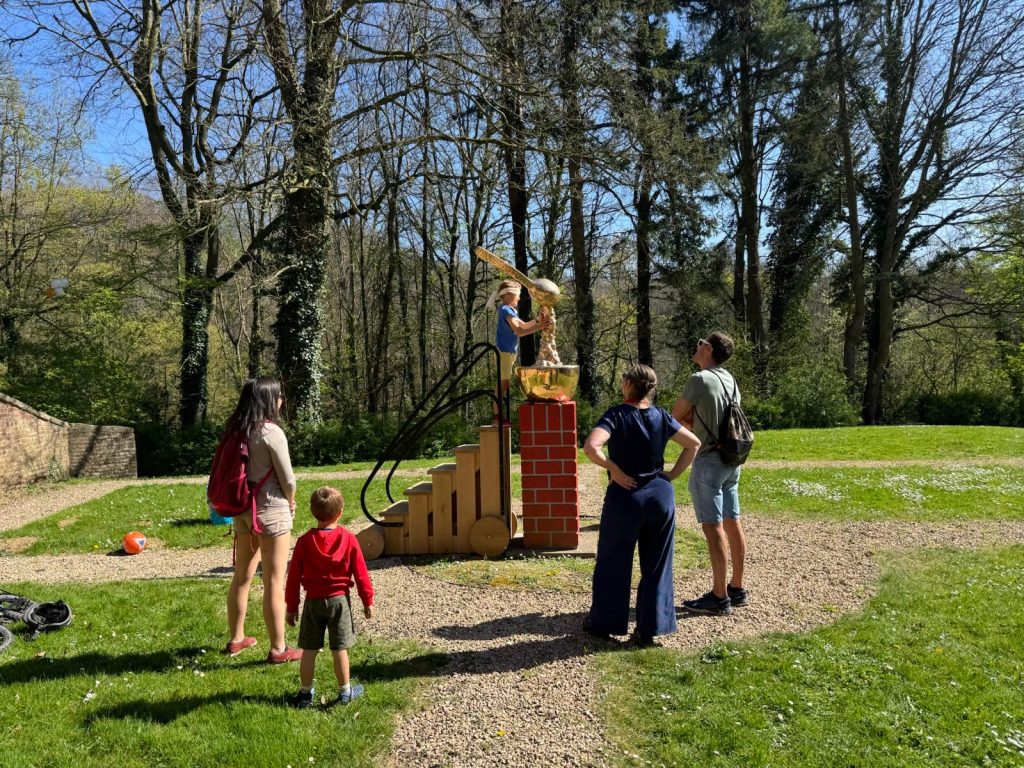
The first activity was a slow-looking and slow-touching session with the “The Peasant Wedding,” a gilded bronze sculpture referencing Bruegel’s paintings that is located in a quiet and intimate corner of the castle. Visitors were invited to slowly experience the sculpture on their own terms. And to make the experience more inclusive, they could choose to also experience it blindfolded or by touch, which also ensured accessibility for people with visual impairments. A guide was also there to ask questions and encourage dialogue about their impressions.
Visitors engage with The Peasant Wedding by Studio Job. Photo courtesy of Kasteel van Gaasbeek.
The second activity took place outside the castle, where a guide-lecturer hosted a small slow drawing workshop. Passers-by were invited to pause, sit, and sketch the castle, focusing on its details and slowing down to notice the intricacies of its architecture. This exercise provided participants with an opportunity to not only look carefully but also to translate their observations into creative expression.
We at Slow Art Day HQ love how Kasteel van Gaasbeek’s first Slow Art Day demonstrated how accessible, inclusive, and participatory approaches can enrich the slow looking experience. We look forward to seeing what they do for Slow Art Day 2026!
– Ashley, Johanna, Jessica Jane, and Phyl
P.S. Stay connected with Kasteel van Gaasbeek on Facebook and Instagram.
For its fifth year celebrating Slow Art Day, Glen Foerd in Philadelphia, PA selected four works from the museum’s permanent collection:
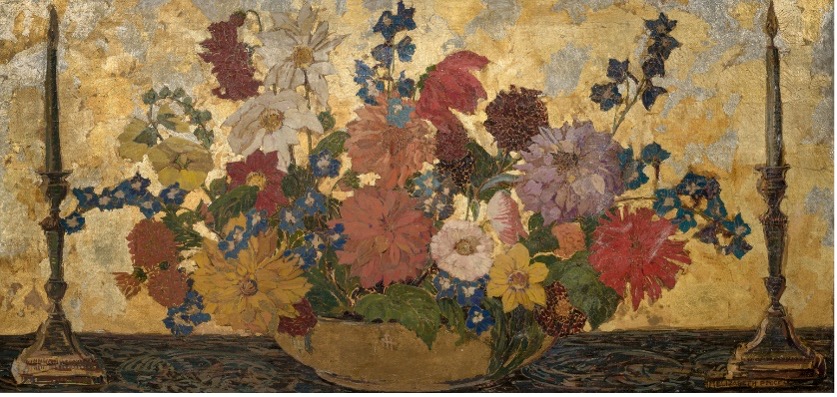
“Flowers in a Gold Vase” by Mary Elizabeth Price (1987-1960)
“Lady Trimelston” by Sir Thomas Lawrence (1769-1830)
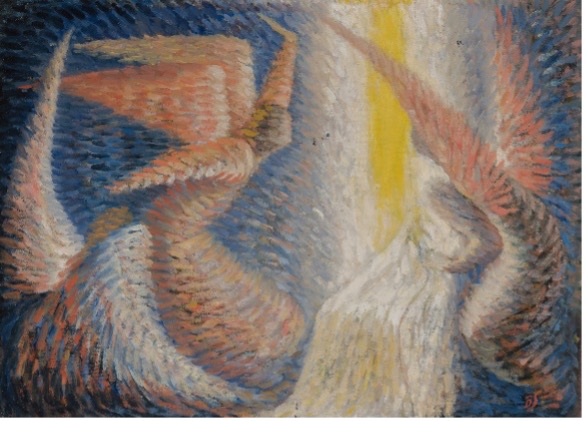
“Manifestation with Wings” by Benton Murdoch Spruance (1904-1967)
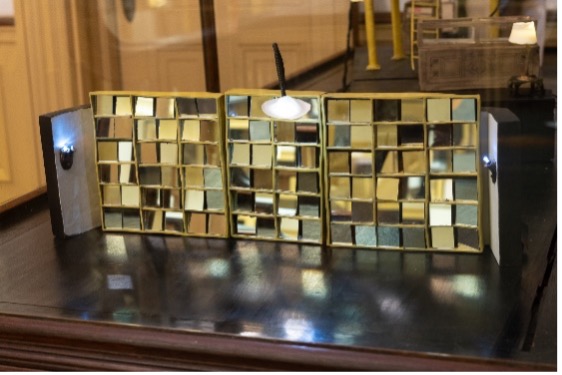
“An Archive of Desire” (2020) by Jennifer Johnson
“Flowers in Gold Vase,” Oil on Panel. Mary Elizabeth Price (American, 1875-1960).“Lady Trimelston,” Oil on Canvas. Sir Thomas Lawrence (British 1769 – 1830).“Manifestation with Wings,” Oil on canvas. Benton Murdoch Spruance (1904-1967).“An Archive of Desire,” 2020. Mixed Media, Porcelain. Jenifer Johnson (American).
Visitors were encouraged to spend 10 minutes with each piece before joining a group discussion. The museum provided a set of prompts (see the p.s.).
Executive Director Ross Mitchell started the group discussion with an anecdote about his son, who, while visiting a museum, asked his father a simple yet profound question: “What are you supposed to think about when you’re looking at art?”
Visitors were invited to share their experiences. The group discussed the three paintings, displayed side by side in the Glen Foerd mansion’s art gallery. Initial impressions gave way to deeper appreciation of technique, composition, color, and space. After nearly an hour of dialogue, the group had come up with their own answers to the question Mitchell’s son had posed.
The momentum of the morning continued to the final piece, a sculptural installation display by Jennifer Johnson titled “An Archive of Desire”. Visitors were again asked to share their impressions and observations of the work, taking note of the ways that paintings and sculpture are experienced differently.
The morning ended with final remarks and an invitation to return for next year’s event, which we at Slow Art Day HQ look forward to seeing. We thank Ross Mitchell and the Glen Foerd team for continuing to cultivate a community of slow looking in Philadelphia.