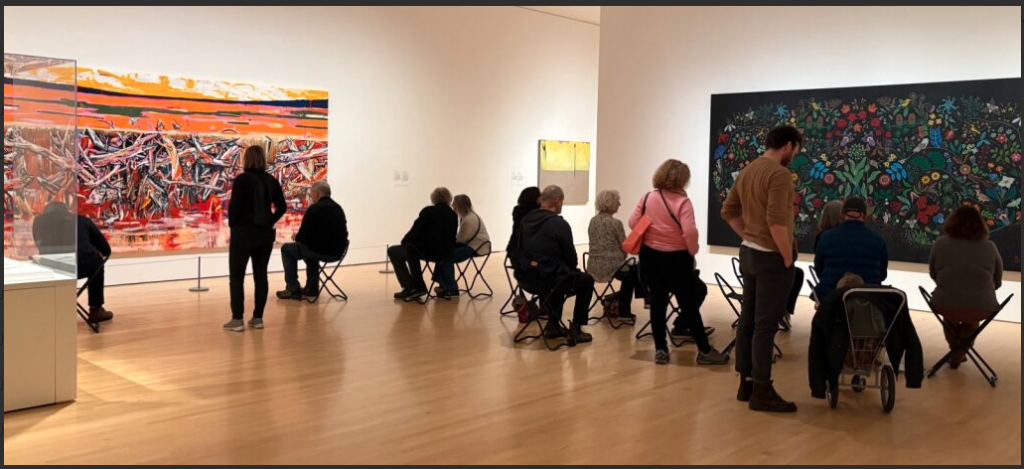
On April 5, 2025, Walyalup Fremantle Arts Centre (WFAC) in Western Australia held their first Slow Art Day during the Perth Festival exhibition season and focused on four contemporary works presented in the Wardong Gallery.
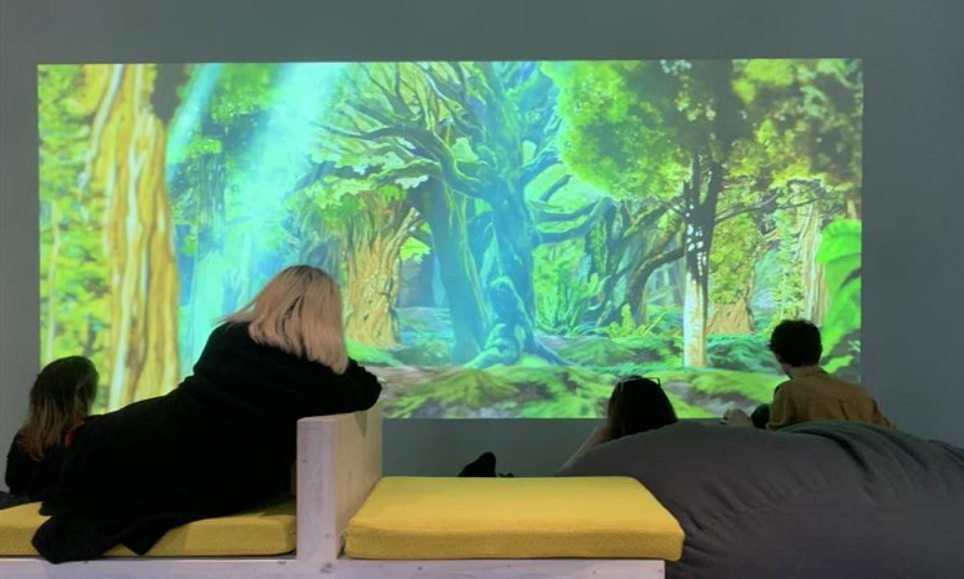
Kate Mitchell, Prompts for Idea Induction 2024, HD video, 16:9, silent. 38 minutes, 58 seconds. Photographer: Shannon Lyons
Before the slow looking began, Shannon Lyons, Engagement and Public Programs Coordinator, welcomed participants and acknowledged the Whadjuk people as the traditional custodians of the land.
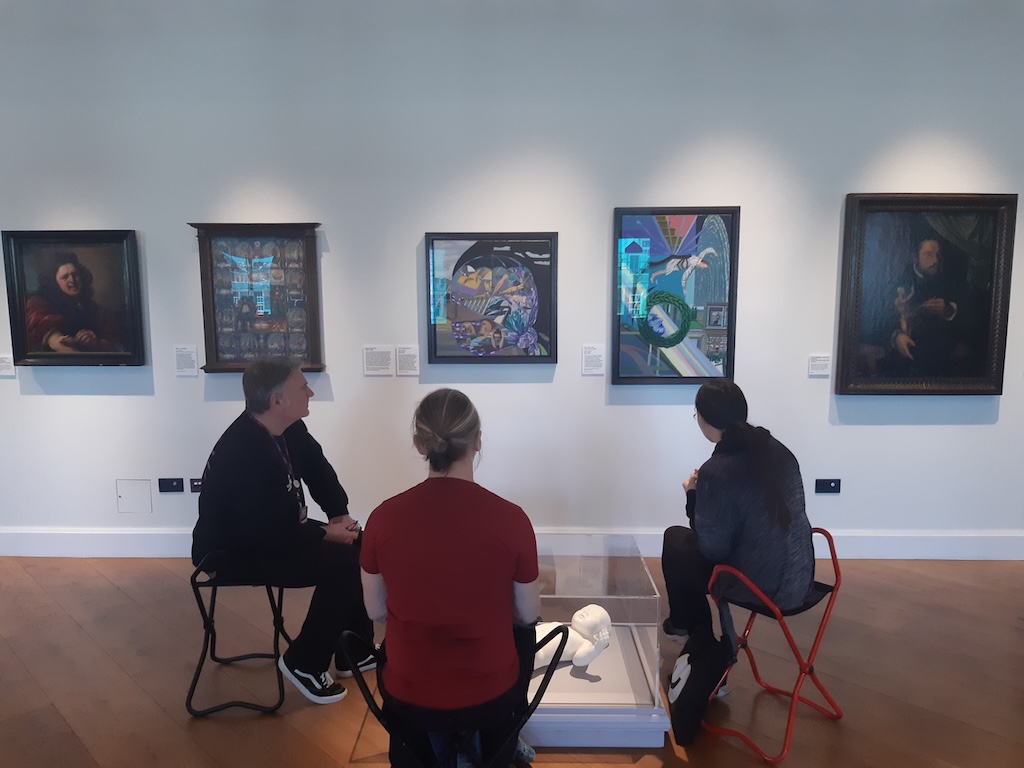
Shannon outlined a self-directed structure for the morning and invited participants to spend approximately 15 minutes with each of the four mapped artworks, choosing their own order. They were encouraged to unplug, remain quiet, and refrain from reading the gallery texts, focusing instead on what they could see and experience directly. Notepaper, pencils, and clipboards were offered for those who wished to write or draw, and stools were available for seated viewing.
After an hour of slow looking, the group reconvened in the center of the gallery for a relaxed discussion. Conversation prompts invited participants to share one word to describe an artwork, reflect on details noticed, and consider what it felt like to look slowly.
For many attendees, this was a new experience. Most had never spent sustained time with an artwork before. The extended encounter with Mitchell’s video work encouraged careful observation and personal interpretation.
We look forward to seeing what the WFAC comes up with for Slow Art Day 2026.
For their first Slow Art Day, the Museo Edward James, also known as Las Pozas, in Xilitla, Mexico hosted a contemplative experience titled “Finding Seclusia,” led by Beatriz Acosta.
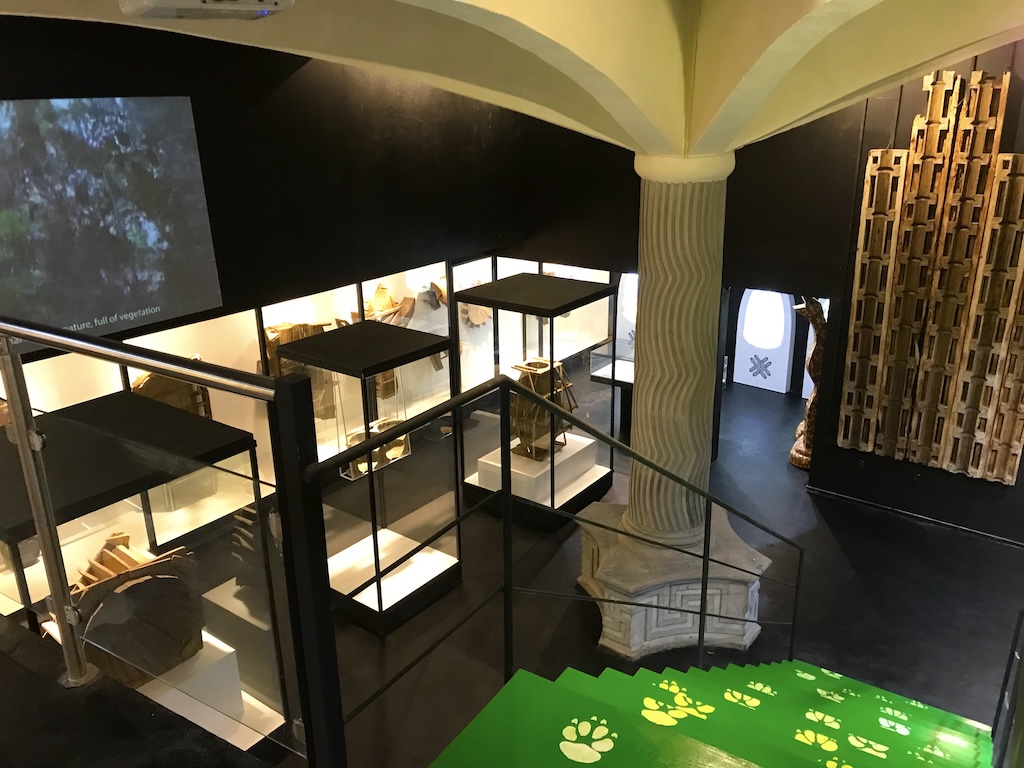
The museum, which is dedicated to the legacy of Edward Frank Willis James, is set in a rainforest, and features towering surrealist sculptures amid pools and waterfalls.
That’s all we at Slow Art Day HQ need to know to jump on the plane to Xilitla (pronounced: hee-LEET-lah).
James, an eccentric British poet, artist, and patron of the Surrealist movement created the Edward James Sculpture Garden, Las Pozas, as a fusion of the organic and the artificial, merging jungle and concrete into a single, dreamlike environment where imagination and inner worlds could take physical form.
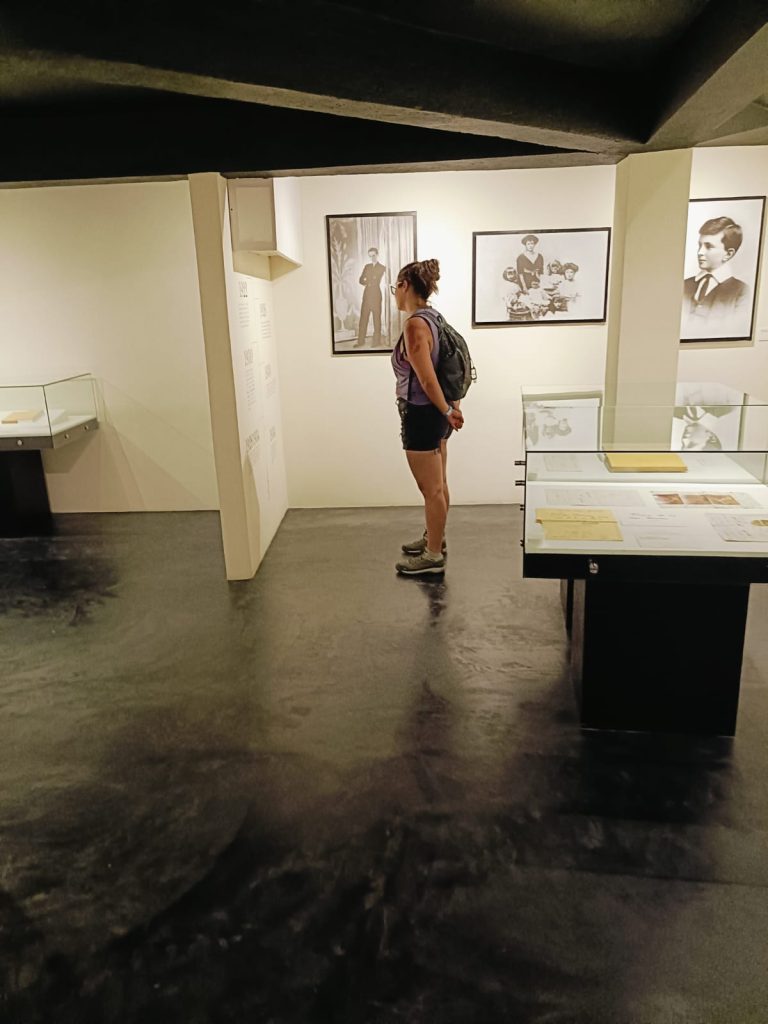
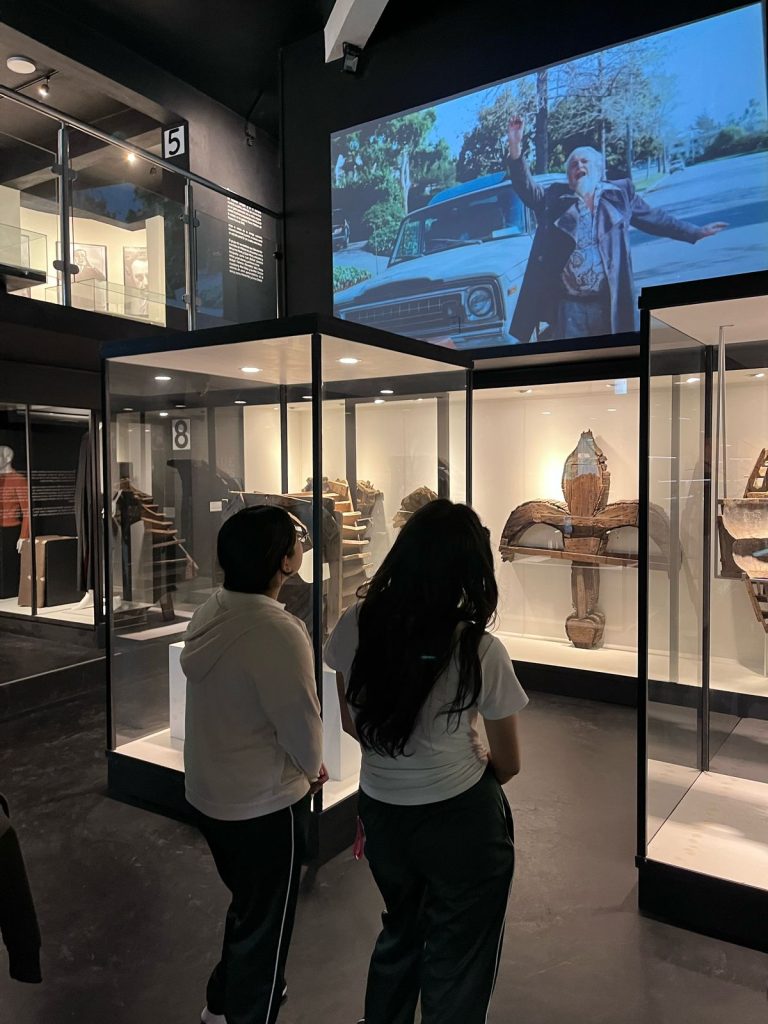
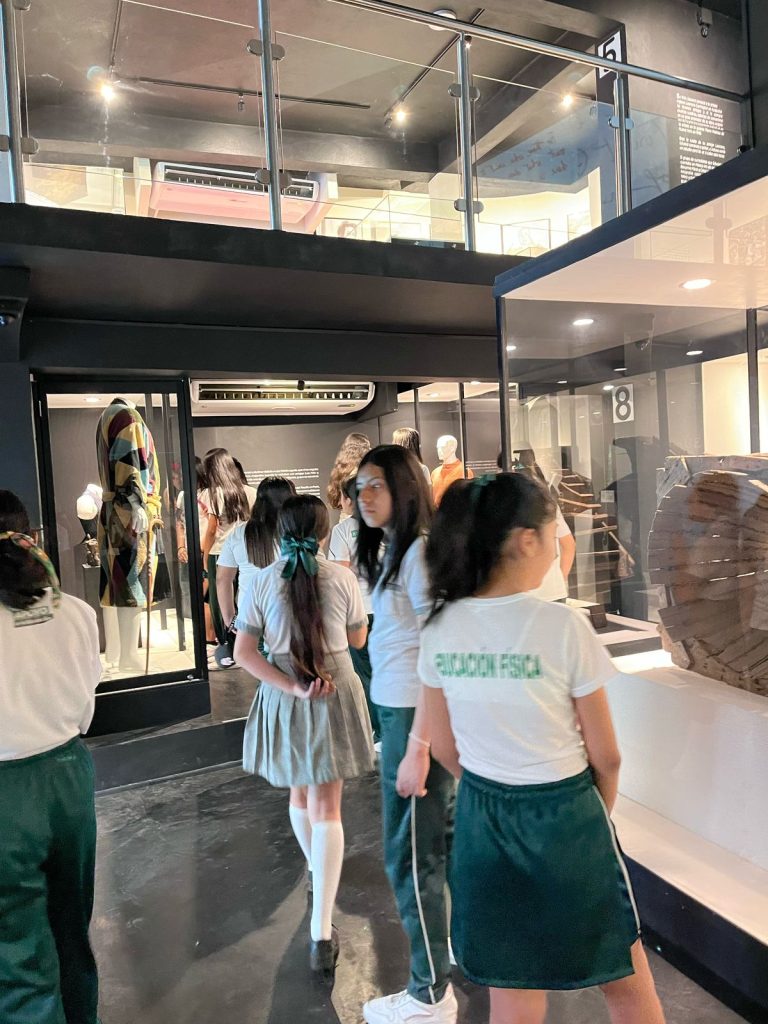
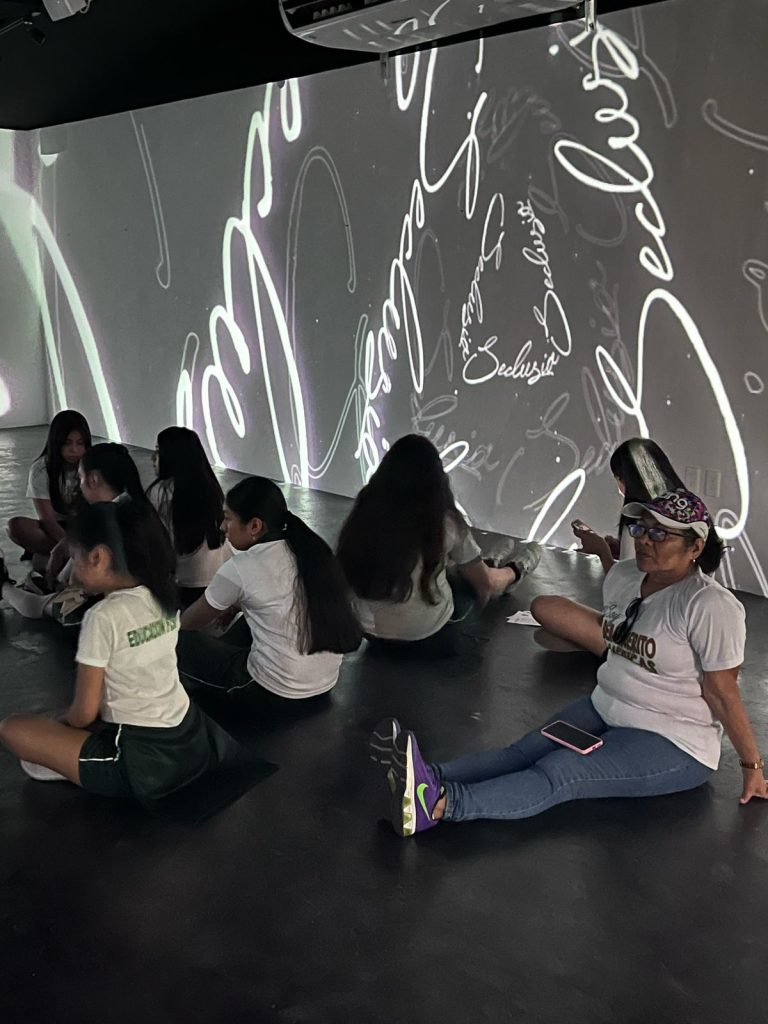
For their Slow Art Day, the museo welcomed a group of high school students through five carefully designed stations with unique slow-looking experiences. The session began in the Seclusia room with an introduction to the Slow Art Day movement and the power and purpose of slow looking. Participants also received a handout with prompts and spaces to write their notes throughout the experience.
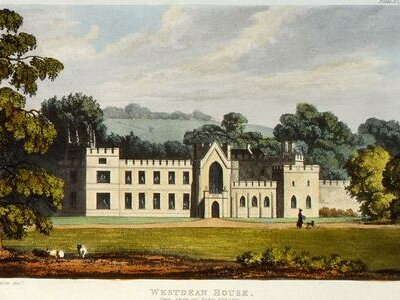
The first of the five stations focused on photographs of West Dean, Edward James’s childhood home. Participants explored James’s early life and family context, reflecting on how expansive spaces and environments can shape imagination and inner worlds.
Visitor Looking at James’ life in West Dean Timeline.West Dean House (Cortesy of West Dean College)
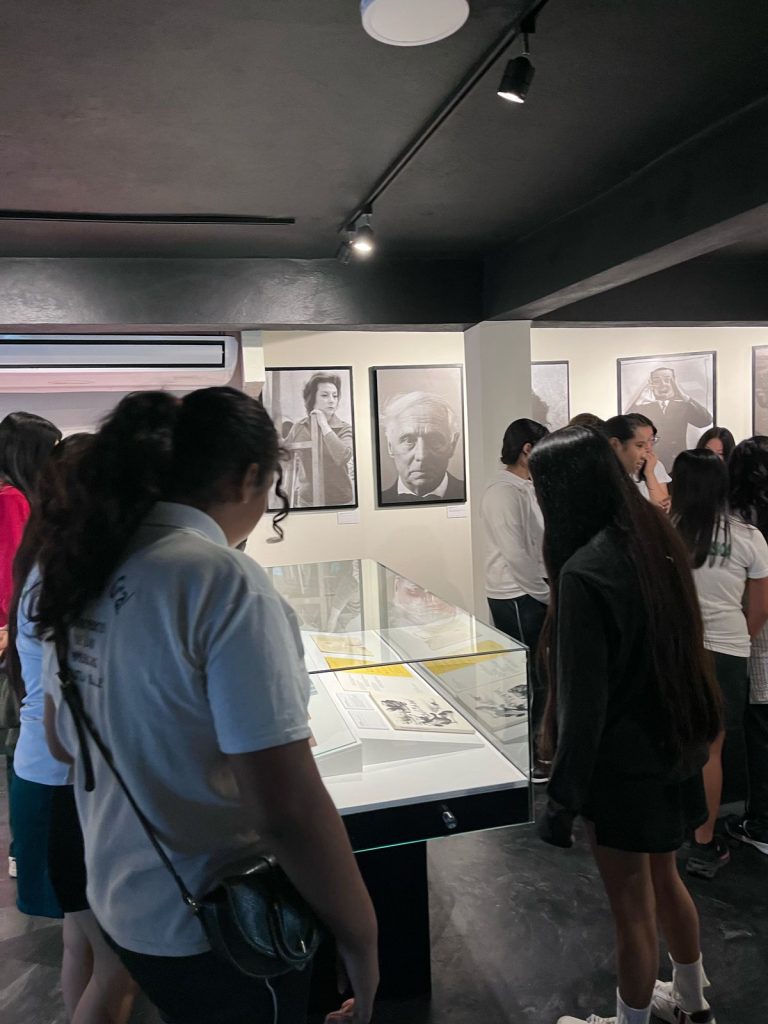
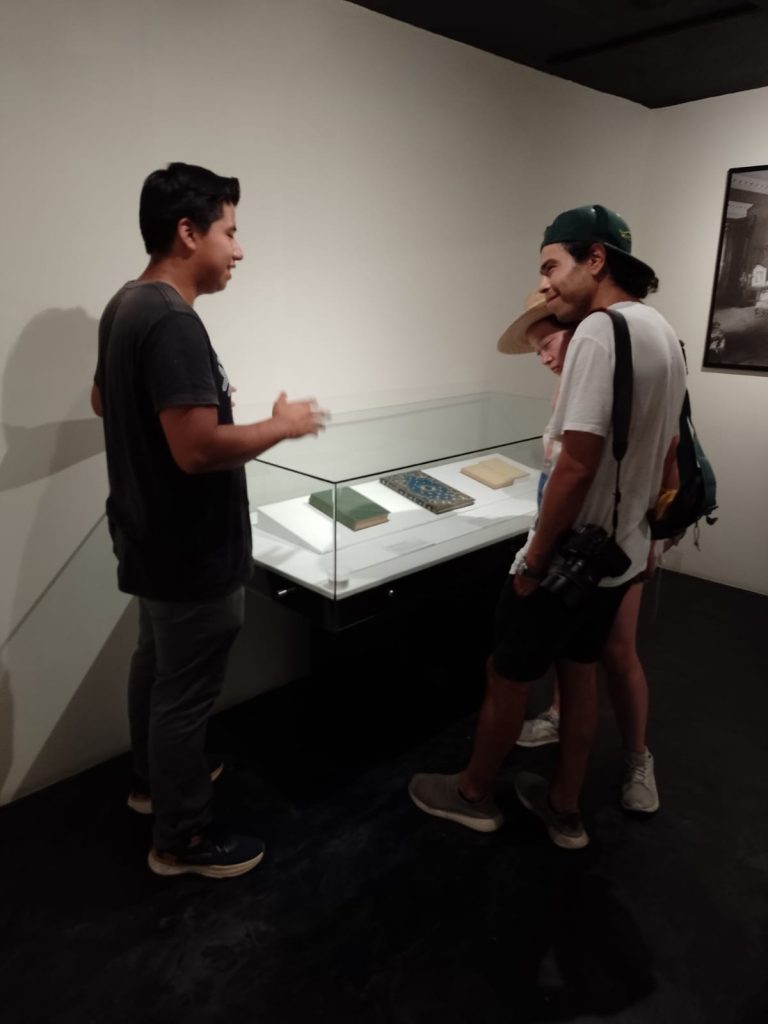
At the second station, participants spent quiet, individual time reading selections from the digital archive of James’s poetry book, The Bones of My Hands. This station emphasized attentive reading and personal interpretation, allowing each participant to engage with James’s words at their own pace.
Bones of my Hand – Edward JamesHighschoolers looking at James’ printed poems.Museum guide explaining James’ books.
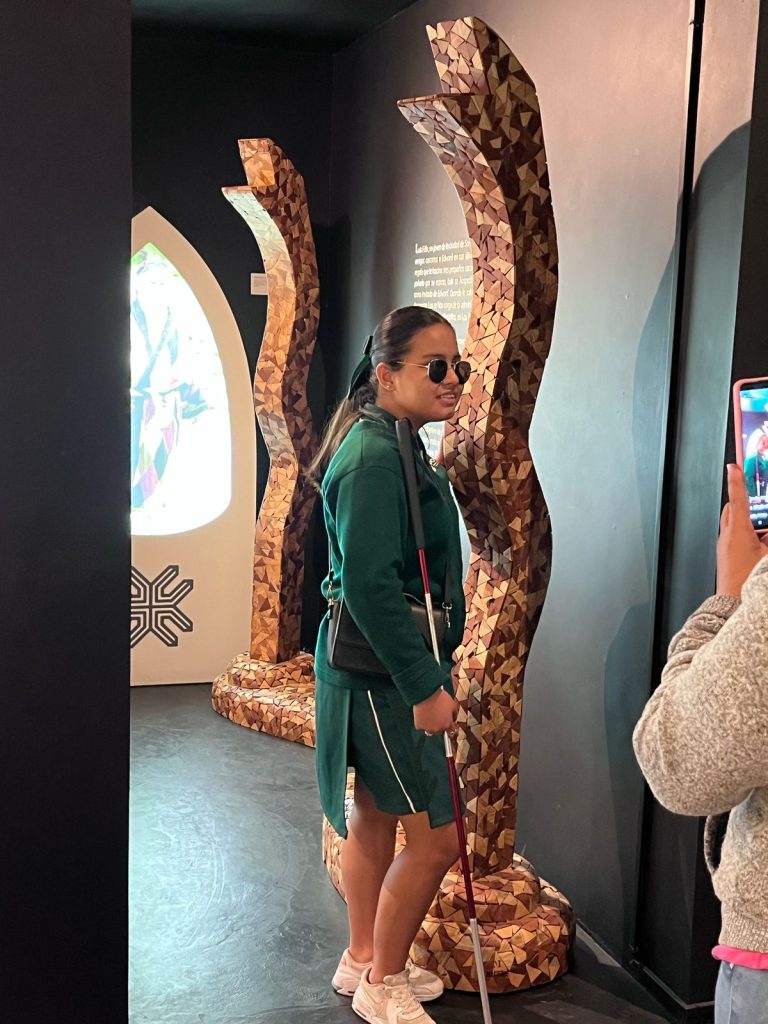
The third station centered on 14 original molds used in the creation of the sculpture garden. Participants closely observed the forms, textures, and details of the molds, considering how abstract ideas are translated into physical structures.
Visitor touching one of the sculptures.Molds – Edward James Museum Collection.
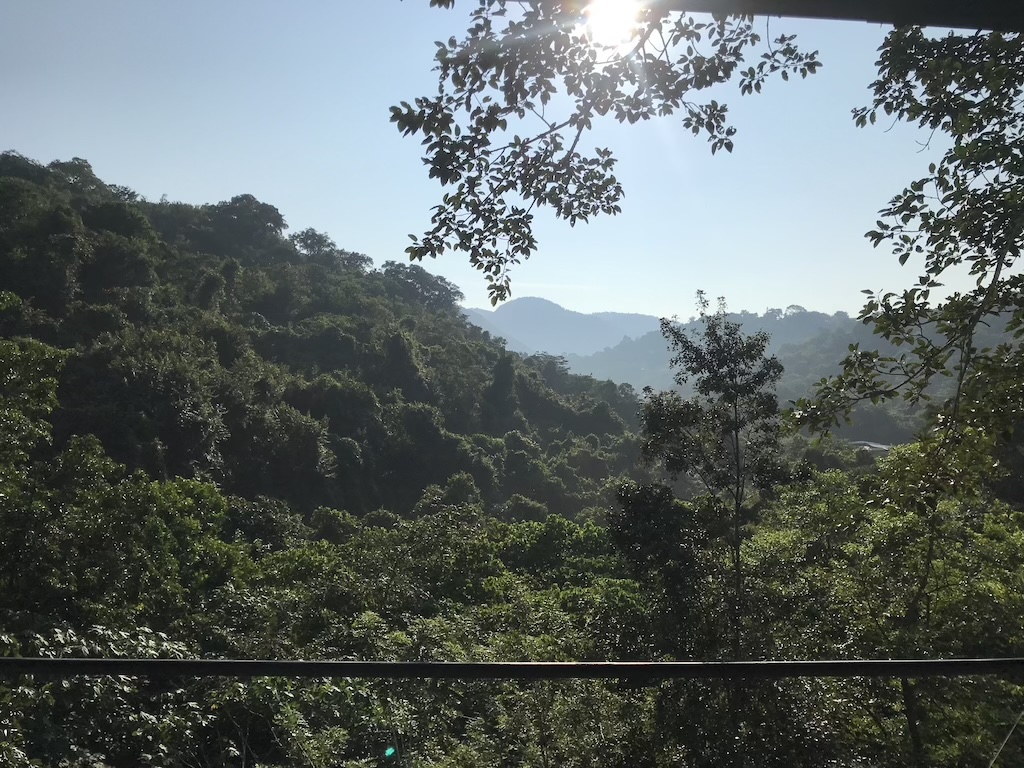
The fourth station took place on the museum balcony, where participants engaged in silent observation of the surrounding landscape. They were invited to notice sounds, colors, movement, and physical sensations, recognizing nature as an essential component of James’s creative universe.
View from the Museum.
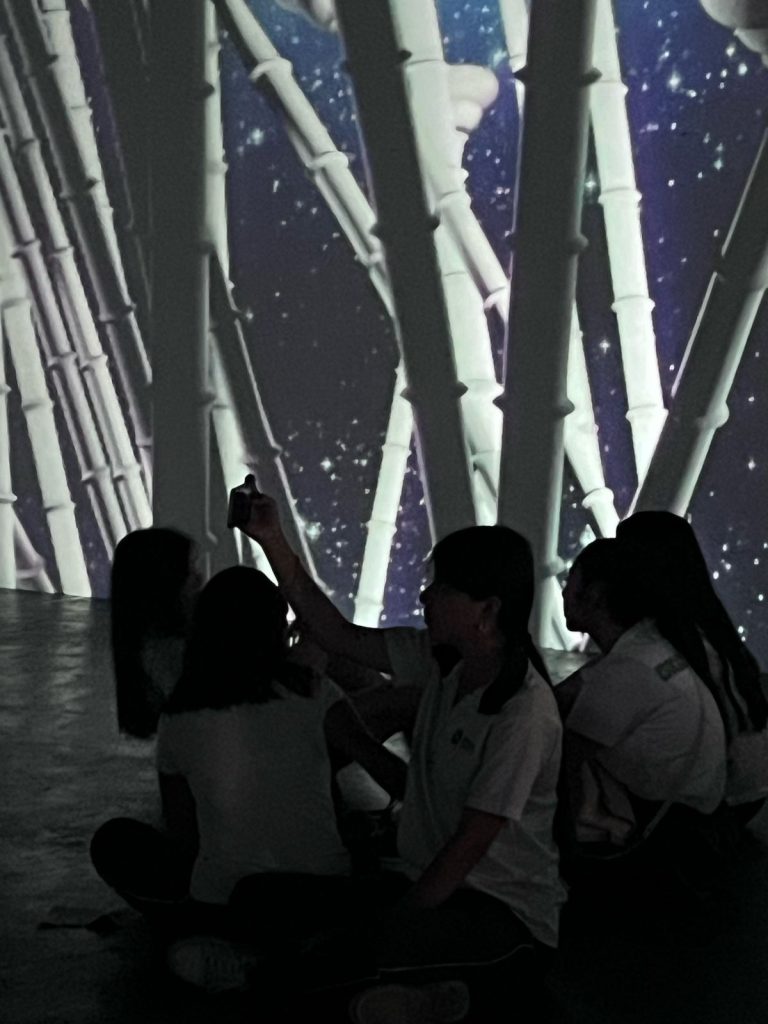
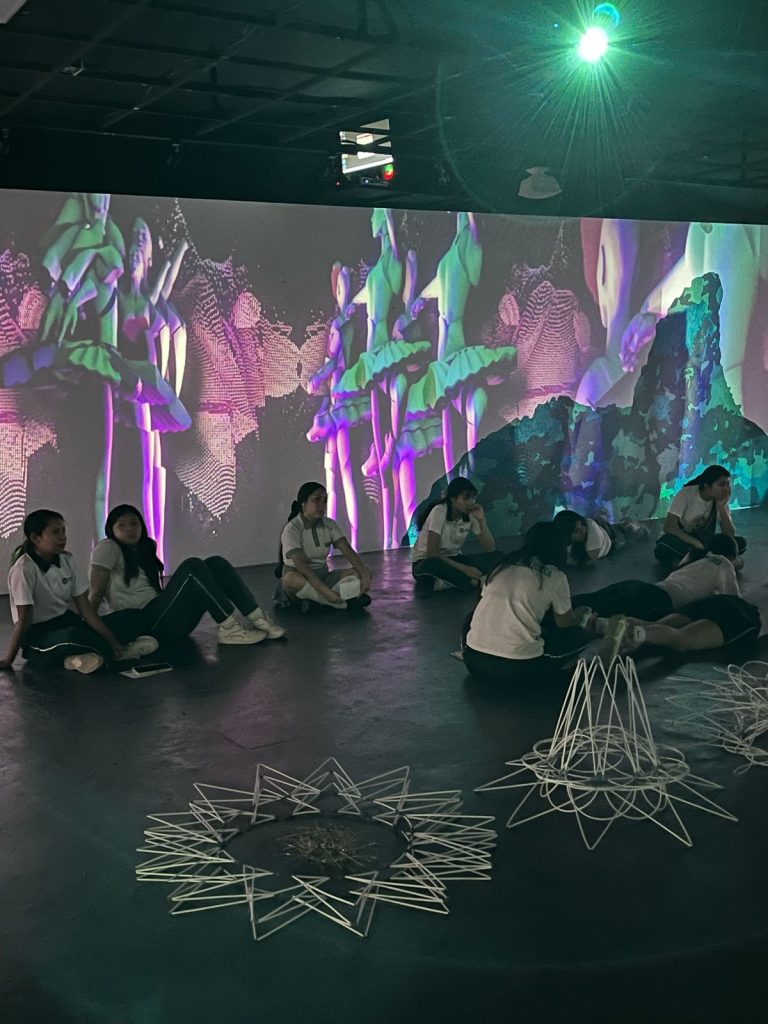
The final station consisted of a 15-minute immersive video, Seclusia, which explored themes of imagination, interior worlds, and the human desire to create a personal refuge. This concluding experience allowed participants to synthesize what they had encountered throughout the session.
Seclusia Immersive Experience – Edward James Msseum Collection
We at Slow Art Day HQ love everything about this and look forward to seeing what creative design the Museo Edward James comes up with for Slow Art Day 2026.
For Slow Art Day 2025, students at the University of Alabama participated in a project titled Walking In It, developed under the direction of Professor Sharony Green and presented in connection with the Gorgas House Museum in Tuscaloosa, Alabama. The project focused on an experimental video that encouraged people to notice walking and to think about it as something shaped by history and circumstance, not a simple experience that everyone can take for granted.
As part of the project, students enrolled in Professor Green’s Fall 2024 and Spring 2025 history courses contributed 30-second long videos of themselves walking through campus and around Tuscaloosa. These clips were combined into a single “digital quilt” bringing together repeated movement across shared spaces.
Gorgas House Museum on Slow Art Day.
The completed video was featured online and projected onto the exterior of the Gorgas House Museum on April 4, 2025, from 10:00 a.m. to 2:00 p.m. The projection was designed as a come-and-go experience, allowing Slow Art Day participants and passersby to encounter the work throughout the day. The setting of the projection on Gorgas House, the campus’s oldest dwelling constructed in 1829, provided historical context for the project’s focus on movement and access.
Watch the video projection:
Additional components were coordinated by Sonya Harwood-Johnson, Director of the Gorgas House Museum. These included interpretive displays featuring nineteenth-century shoes and an interactive station where members of the campus community could decorate miniature boots produced with a 3D printer, inspired by a Mexican artist’s project.
In addition to the video projection, the Slow Art Day project included a campus-wide scavenger hunt. Participants were invited to move through campus using the scavenger hunt prompts, with a prize offered to those who completed the activity.
Students also created a short video previewing the event, offering viewers a sense of the site and project setup:
The project received coverage in The Crimson White – Gorgas House hosts The University of Alabama’s submission to global Slow Art Day – the University of Alabama’s student newspaper, which reported on the Gorgas House Museum’s participation in the global Slow Art Day initiative. Across digital platforms, the project reached a wide audience, with more than 1,100 views on Instagram and over 1,200 additional views and impressions across other social media channels.
Professory Sharony Green and students.
We thank Sharony Green, Sonya Harwood-Johnson, and the participating students for their innovative Slow Art Day events, and look forward to seeing what they come up with for Slow Art Day 2026.
For their fourth year participating in Slow Art Day, Wellcome Collection in London hosted a full day of guided and self-guided slow-looking experiences across the museum. Wellcome Collection is a free museum that explores human health through the intersections of art, medicine, and science. Building on the range of facilitated sessions introduced in previous years, the 2025 program offered visitors multiple ways to engage slowly with artworks, objects, and ideas.
The Wellcome Collection team led five guided slow-looking sessions, each facilitated by a different staff member and focused on a distinct body of work.
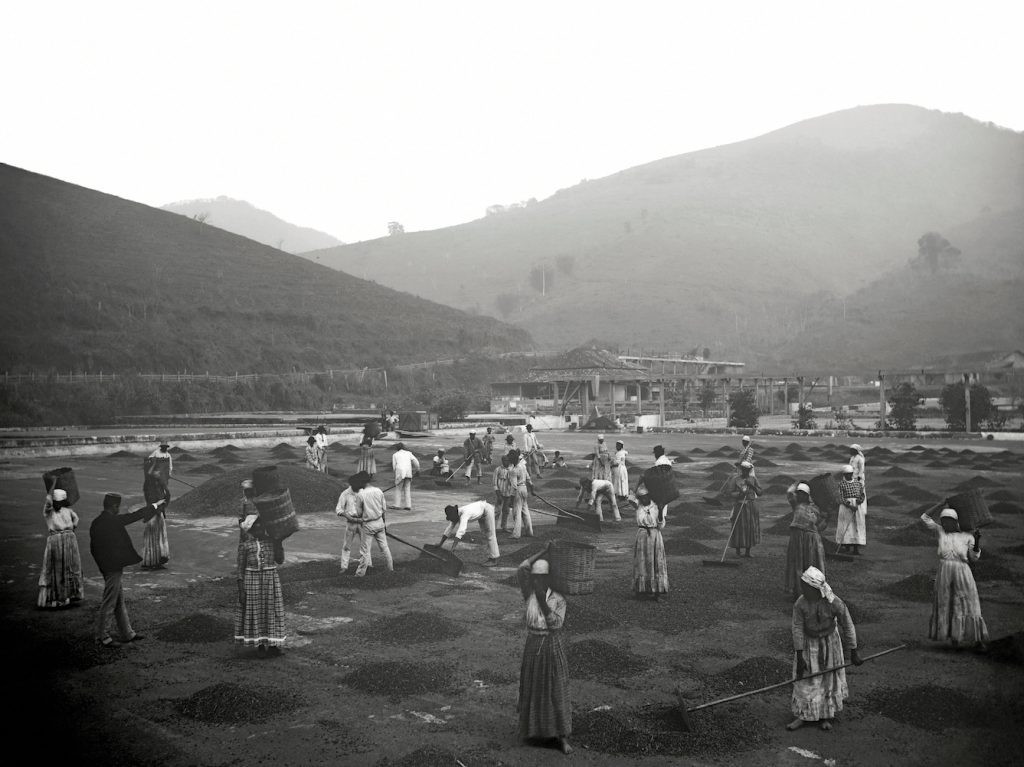
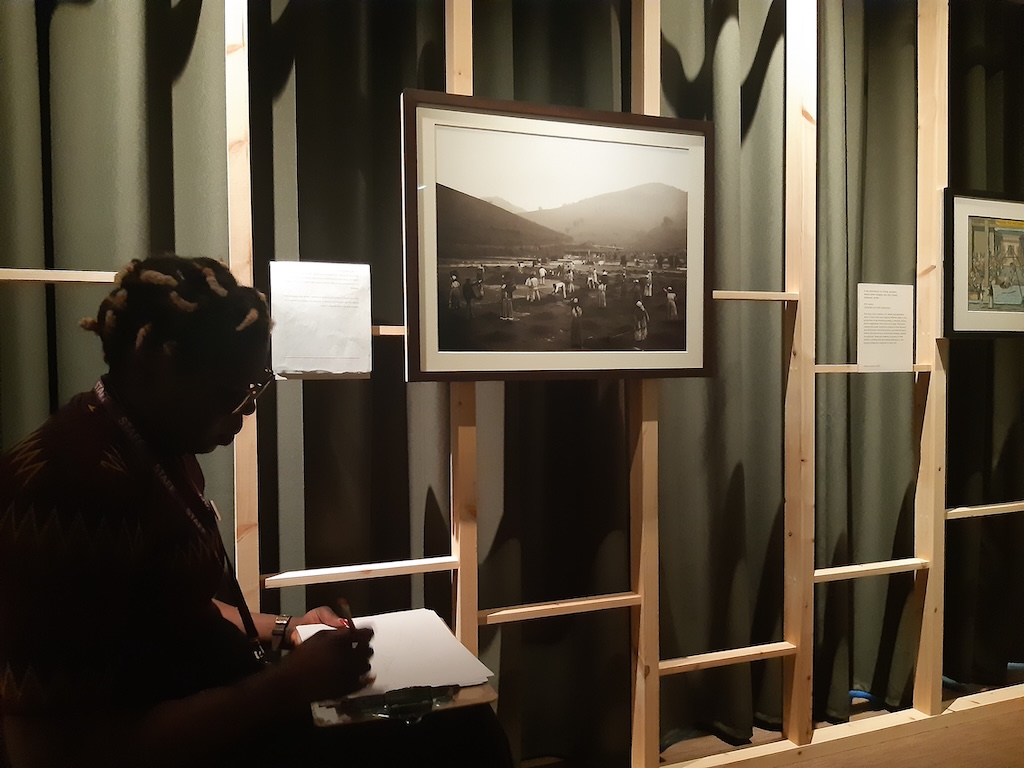
Isabelle Gapomo guided participants in close observation of a photograph by Marc Ferrez from the Hard Graft exhibition, titled ‘Escravos em terreiro de uma fazenda de café na região do Vale do Paraíba’ (c.1882), examining how plantation labor was depicted by early photographers and how those images are experienced today.
‘Escravos em terreiro de uma fazenda de café na região do Vale do Paraíba’ (c.1882). Marc Ferrez.
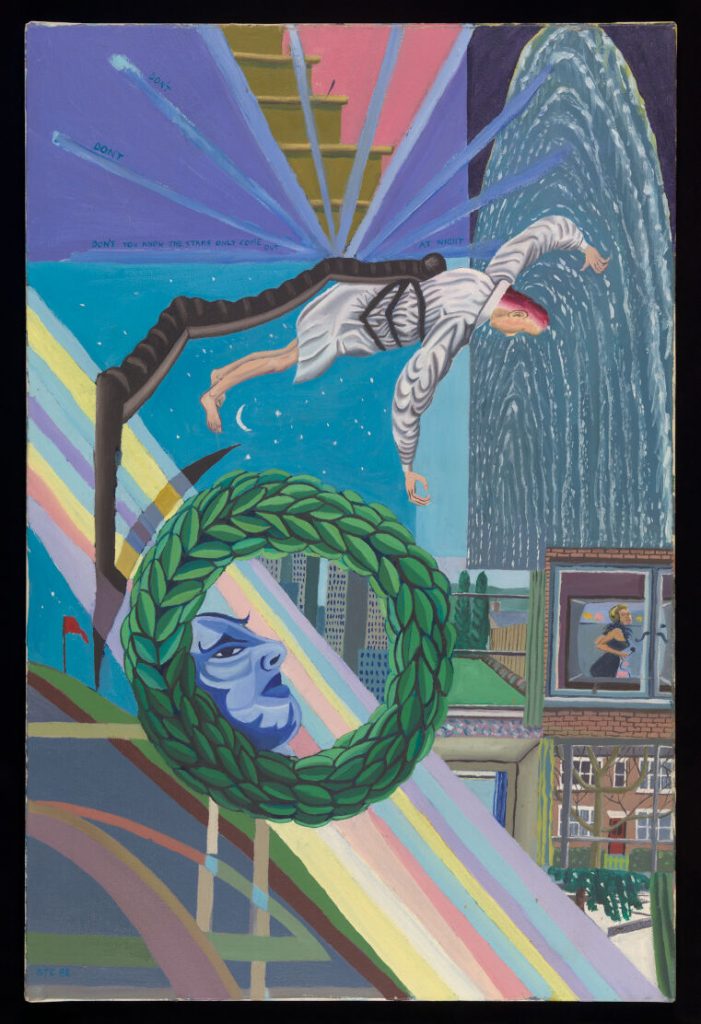
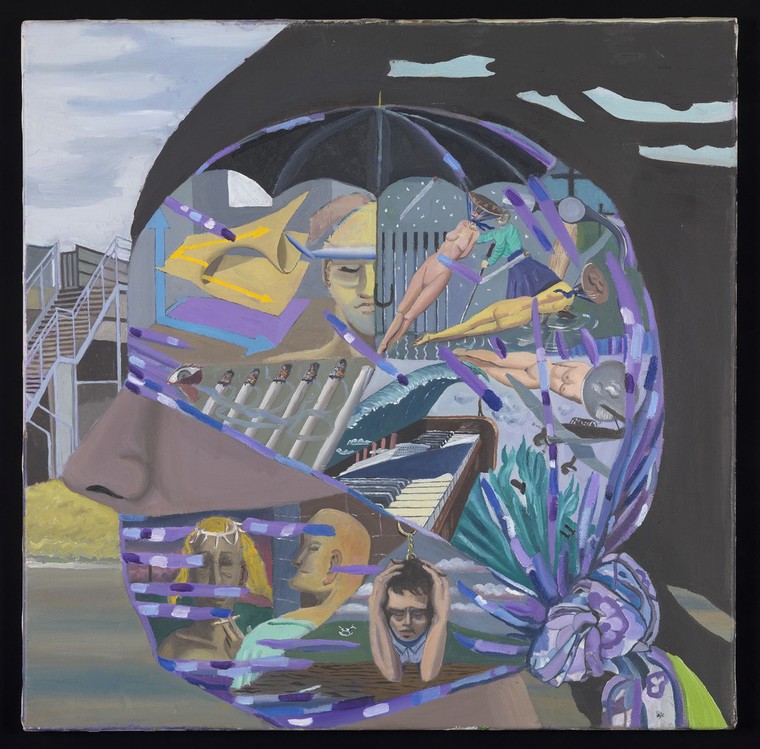
Griff Davies led a session centered on the dream-inspired paintings of Bryan Charnley, using the imagery to prompt discussion around mental health.
“The Stars Only Come Out at Night” by Bryan Charnley.“Nail Schizophrene” by Bryan Charnley.
Sana Siddiqui reprised her popular session last year and used vintage food advertisements to evoke memory and sensory response.
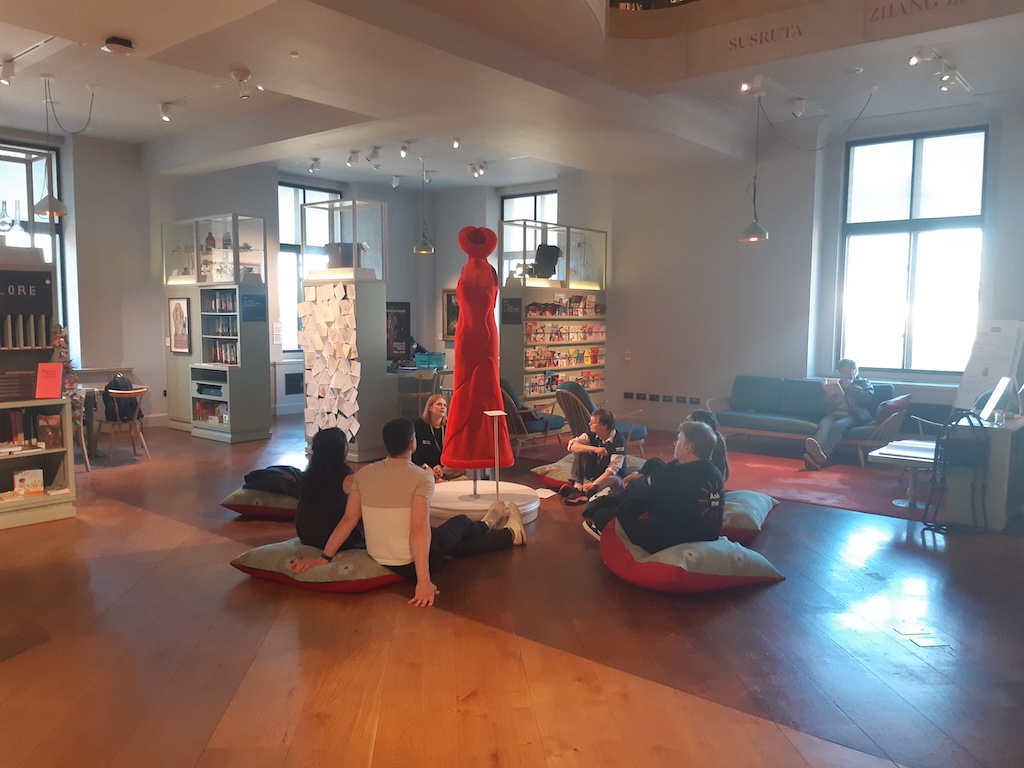
In the Reading Room, Isabel Greenslade gathered participants around “Closing Neural Tube Dress,” a sculptural garment that encouraged reflection on abstraction.
Participants slow looking at the “Closing Neural Tube Dress“.
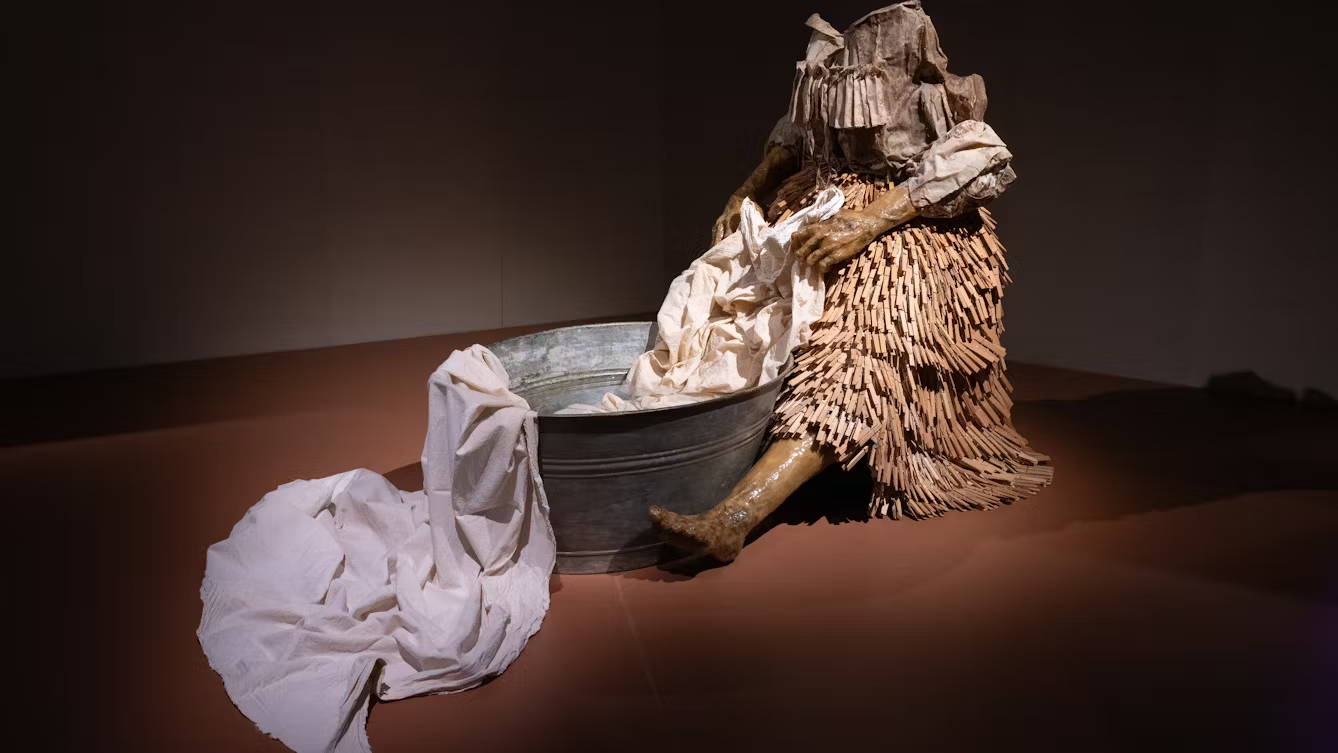
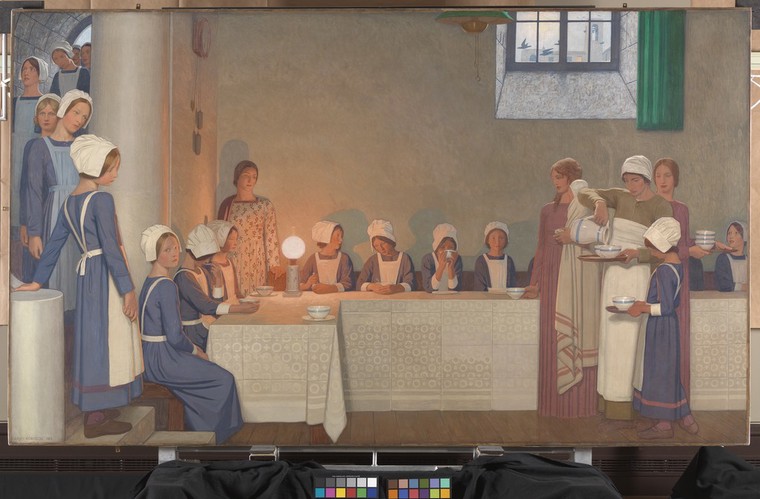
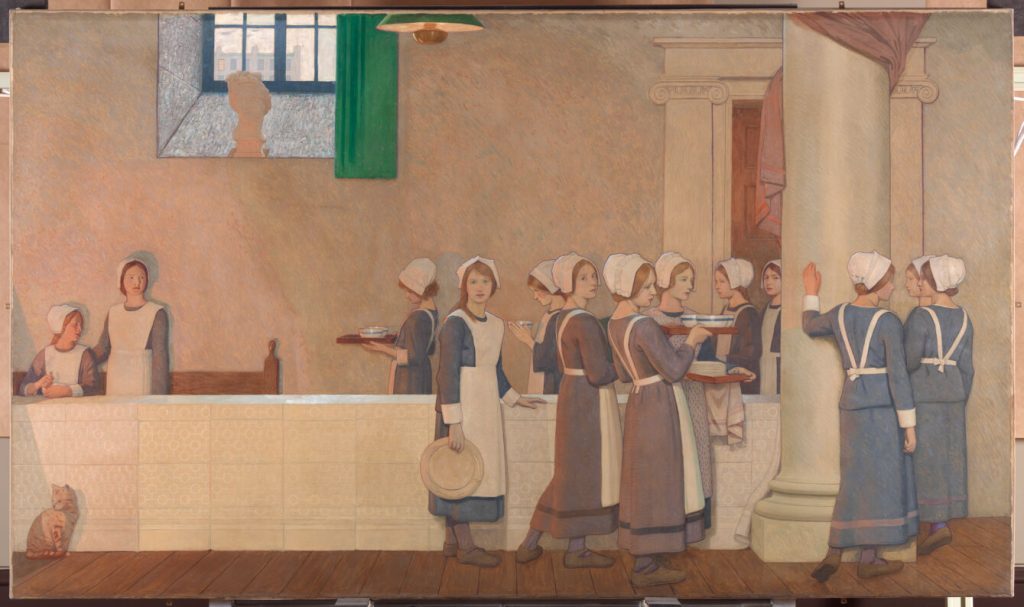
Jake Blackavar led a session that moved through multiple floors of the museum, selecting a sculpture, a video work, and a pair of paintings to explore how different media and gallery contexts shape the slow-looking experience.
“Washerwoman” by Shannon Alonzo.“Orphans” (left) by Frederic Cayley Robinson.“Orphans” (right) by Frederic Cayley Robinson.
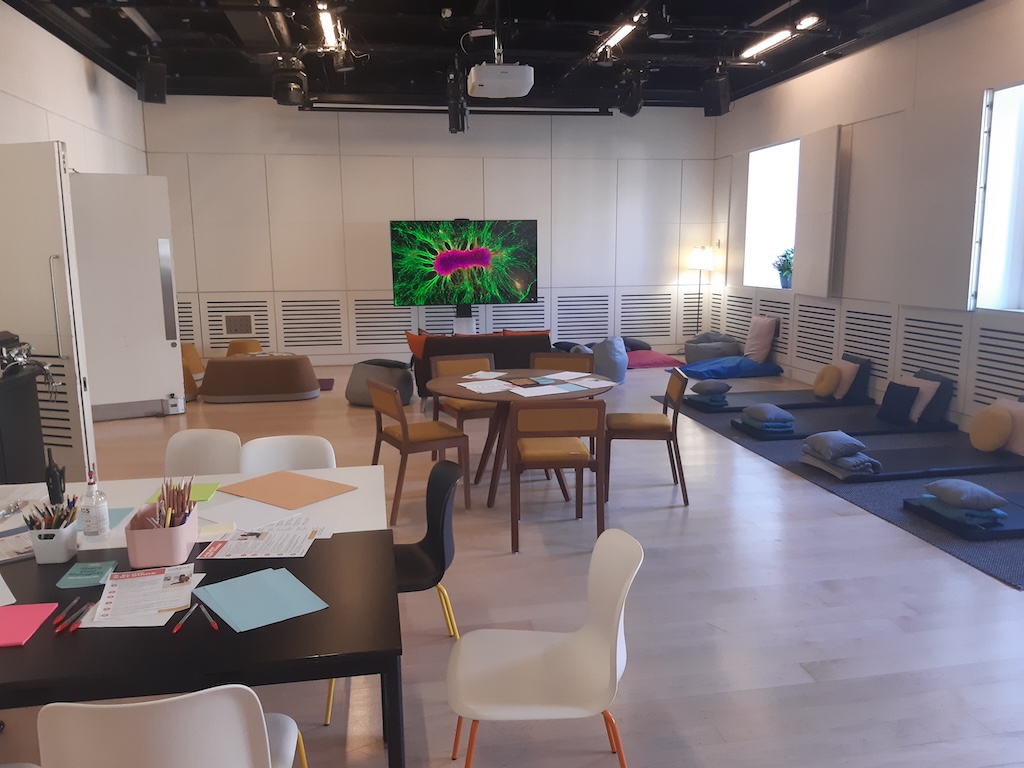
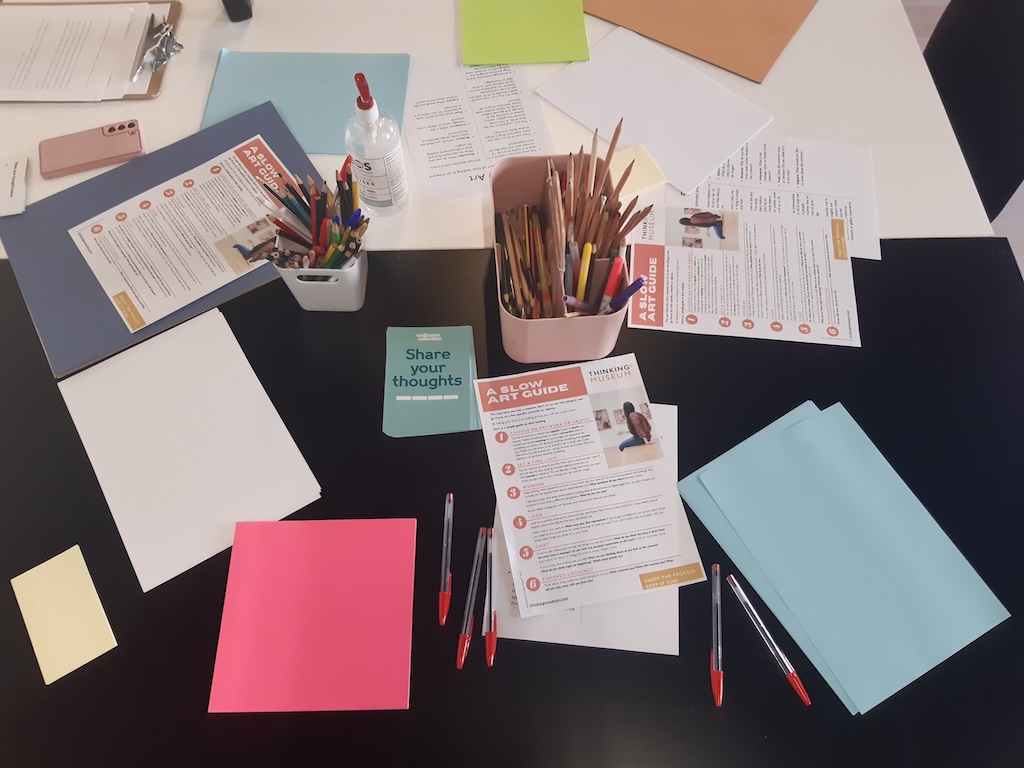
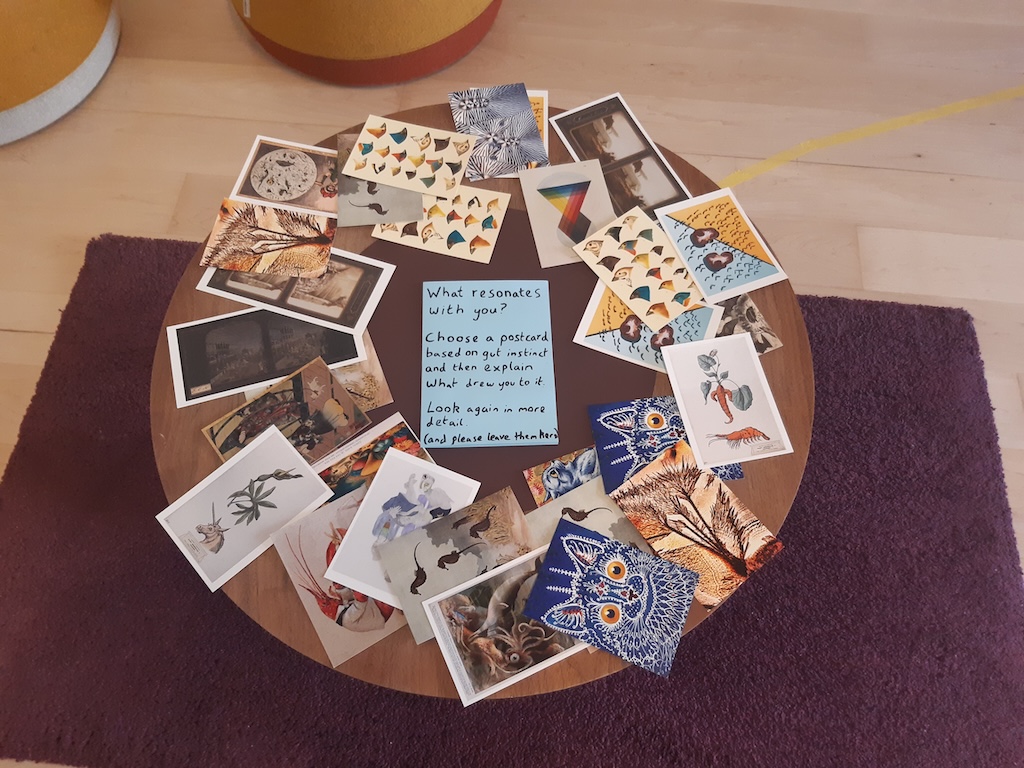
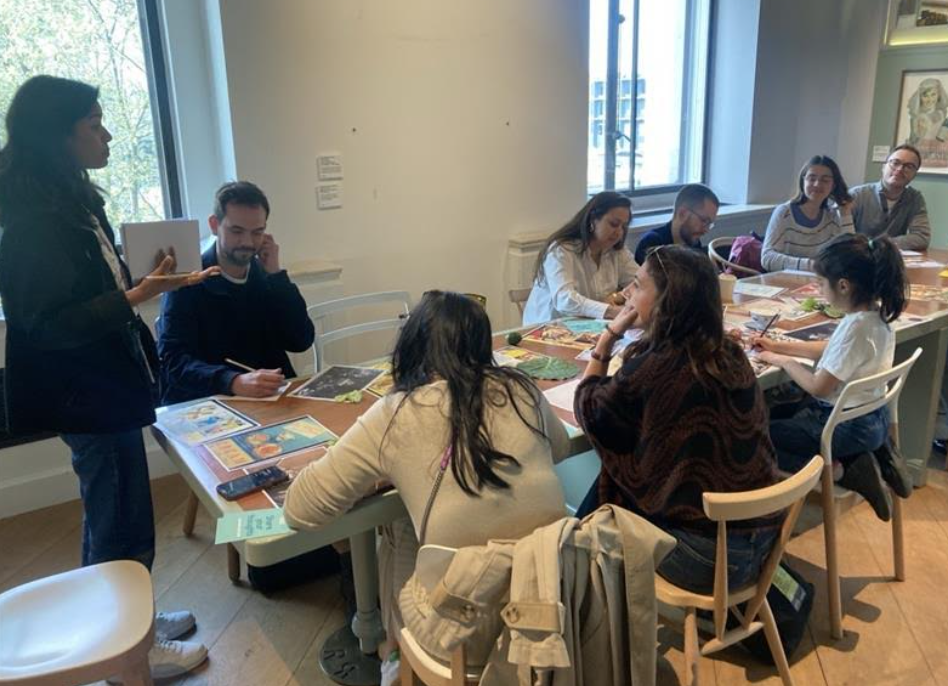
In addition to the guided sessions, the museum designated a room as a Slow Art Day hub where tours began and visitors could drop in to learn more about the event. In this space, visitors were invited to practice slow looking independently using a rotating screen of images from Wellcome Collection’s holdings, which changed every ten minutes.
What a thoughtful and well-designed program. Wow.
We at Slow Art Day HQ thank Jake Blackavar and the entire Wellcome Collection team for continuing to lead the way in producing meaningful and multi-dimensional experiences.
We eagerly look forward to what they come up with for Slow Art Day 2026.
Participants during guided slow looking at the National Gallery of Canada. Photo courtesy of the National Gallery of Canada.
Educator Andrea Gumpert reported that in-person participants were led in both English and French through 2 hour-long sessions by Interpreter-Guides Morel McMaster and Juliana Abramo. Each session began with a brief warm-up and an introduction to the purpose of slowing down with art. Participants then spent five minutes seated with an artwork of their choosing, followed by a group discussion. They repeated the exercise with a different artwork in another gallery, this time extending the observation period.
One of the core philosophies of Slow Art Day is that if you spend a few minutes with a piece of art, then even if you “don’t like it”, you still build a relationship with it and that often means you go deeper than “like or don’t like.”
This experience is repeated thousands of times around the world and was certainly present in Ottawa for Slow Art Day.
In fact, during the first exercise, one participant shared with Juliana that they “didn’t like the painting they chose at first but ended up really appreciating it towards the end,” highlighting how slow looking can shift perception.
Practically speaking, all visitors received a bilingual handout encouraging them to “Slow Down. Reflect. Discover. Engage.”
Based on positive visitor feedback from last year’s Slow Art Day, the Gallery has also introduced monthly Guided Slow Looking Sundays, held on the last Sunday of each month. This warms out heart given that one of our core objectives is to inspire year-round programming.
We extend our appreciation to Andrea Gumpert, Morel McMaster, Juliana Abramo, and the entire National Gallery team for their ongoing commitment to slow-looking experiences. We look forward to their continued participation next year.
– Ashley, Johanna, Jessica Jane, and Phyl
P.S. Explore the National Gallery of Canada’s programs on Facebook and Instagram.
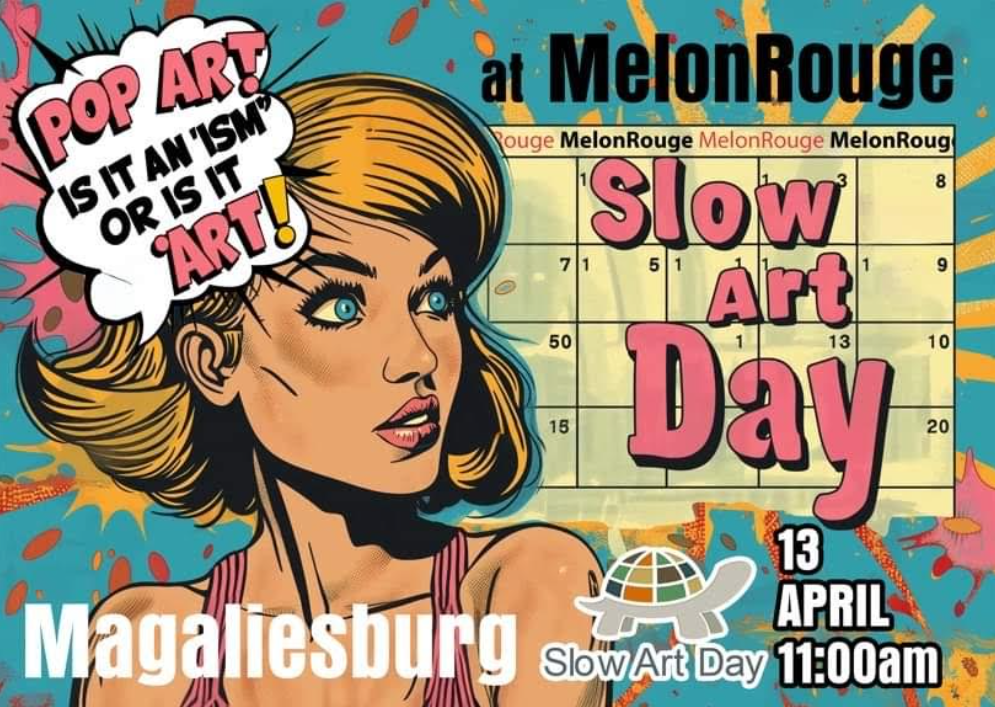
For their Slow Art Day 2024, the MelonRouge and Artichoke Gallery in Magaliesburg, South Africa, invited visitors to slowly experience the exhibition ‘POP Art – is it ISM or is it ART?’, listen to music, and eat food.
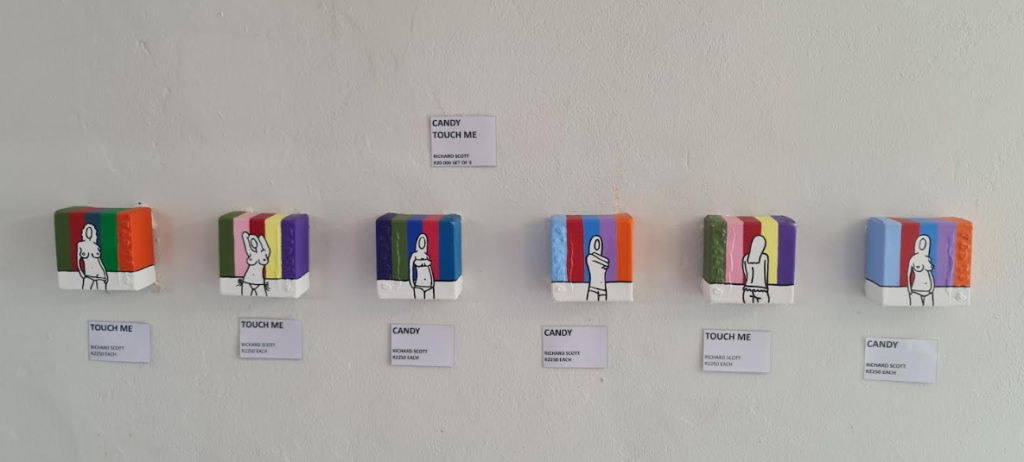
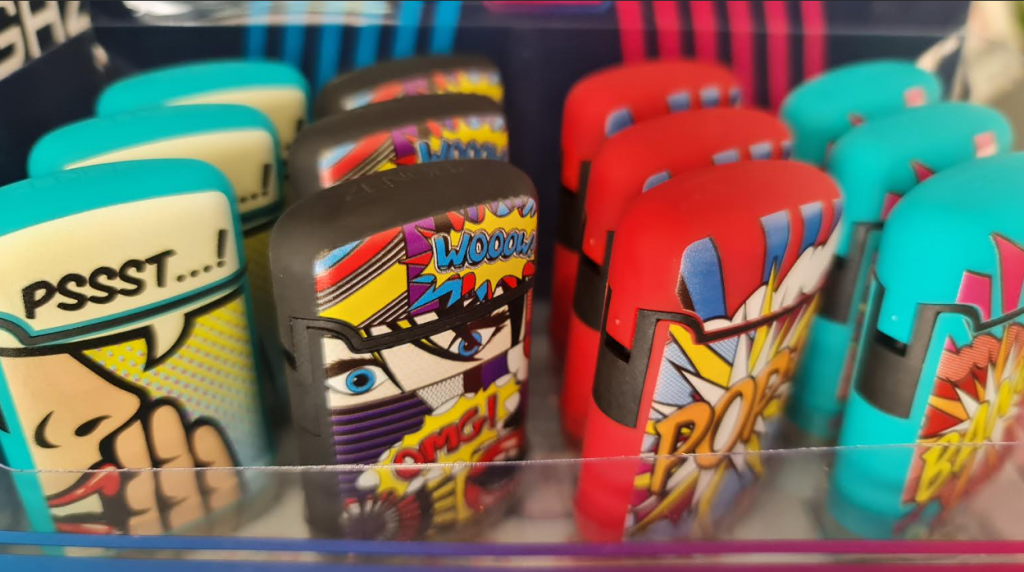
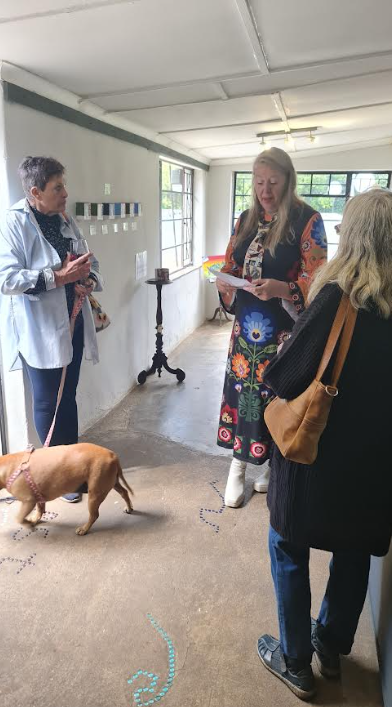
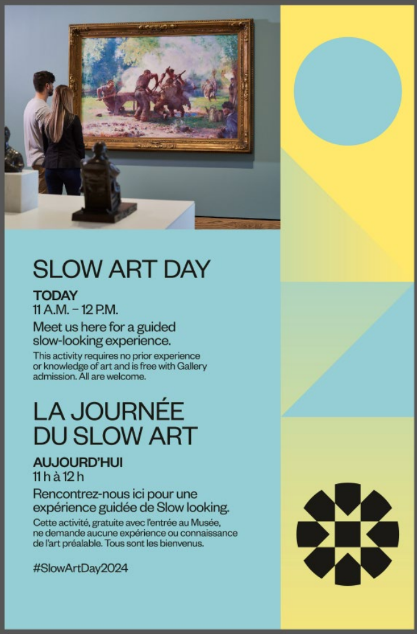
Slow Art Day poster for the eventRichard Scott, ‘Candy. Touch Me.’ (unknown date). Photo by Hannelie SandersLighters with pop-art prints on display for Slow Art DaySlow Art Day participants (and a dog vistor!) and Hannelie Sanders. Photo by Hannelie SandersFood served as part of the event. Photo by Hannelie Sanders
On Slow Art Day, visitors gathered at the Gallery to explore the art of Richard Scott and listen to the music of Niki Daly. The gallery also displayed various practical items adorned with Pop Art, such as lighters, vinyl covers, and magazines, integrating art into everyday life.
Hannelie Sanders, the event host, led a lively and informative discussion. The central question during the event was whether Pop Art qualifies as an art form or merely an “ism.” The conversation was inspired by Niki Daly’s song, whose lyrics playfully questioned the distinction between artistic movements and true art:
Lyrics Excerpt: Maholy-Nagy, Maholy-Nagy I love his ism, but is it art? Tell me my Bauhaus baby Is it art? Is it an ism or is it an art? …
The song set the tone for the day’s theme, blending humor with a critical examination of art history and theory.
Richard Scott, a prominent British artist based in Cape Town, was a key feature of the event. Scott’s art often combines vivid Pop Art elements with everyday objects, making his work accessible and engaging. His art was displayed alongside practical items, emphasizing Pop Art’s integration into daily life.
As most readers know, Pop Art emerged in the mid-20th century, characterized by its use of popular culture imagery and mass media techniques. Artists like Andy Warhol and Roy Lichtenstein drew inspiration from advertising, comic books, and consumer products, challenging traditional notions of art. This movement blurred the lines between high art and mass culture, making art more accessible to the general public.
At Slow Art Day HQ we are looking forward to whatever MelonRouge Artichoke Gallery designs for Slow Art Day 2025.
-Johanna, Ashley, Jessica Jane, and Phyl
P.S. Stay up to date with events at the MelonRouge Artichoke Gallery via their Facebook
Here you can also see some videos produced in connection with the Slow Art Day event and shared to Facebook:
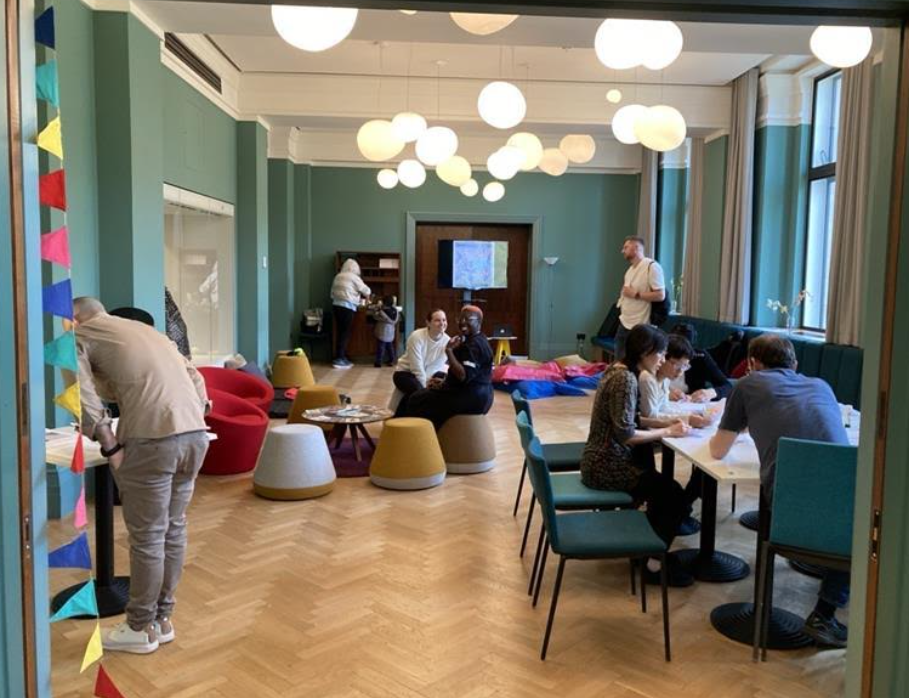
For their second Slow Art Day, Wellcome Collection in London, England, hosted four different slow looking sessions which included unlocking food memories, writing object labels, and slow looking at works in the Reading Room. Wellcome Collection is a free museum that explores human health through the lens of art, medicine, and science.
Signs inviting to the Wellcome Room.Slow looking participants in the Wellcome Room.
The first session focused on two photographs of women amidst global crises, which illustrated how pandemics and infectious diseases affect the human experience. The exchange that followed with the participants was filled with deep, personal, and emotional testimonies.
The second session, led by Rosie Wassi, one of the Wellcome Collection team, explored the effects of environmental breakdown.
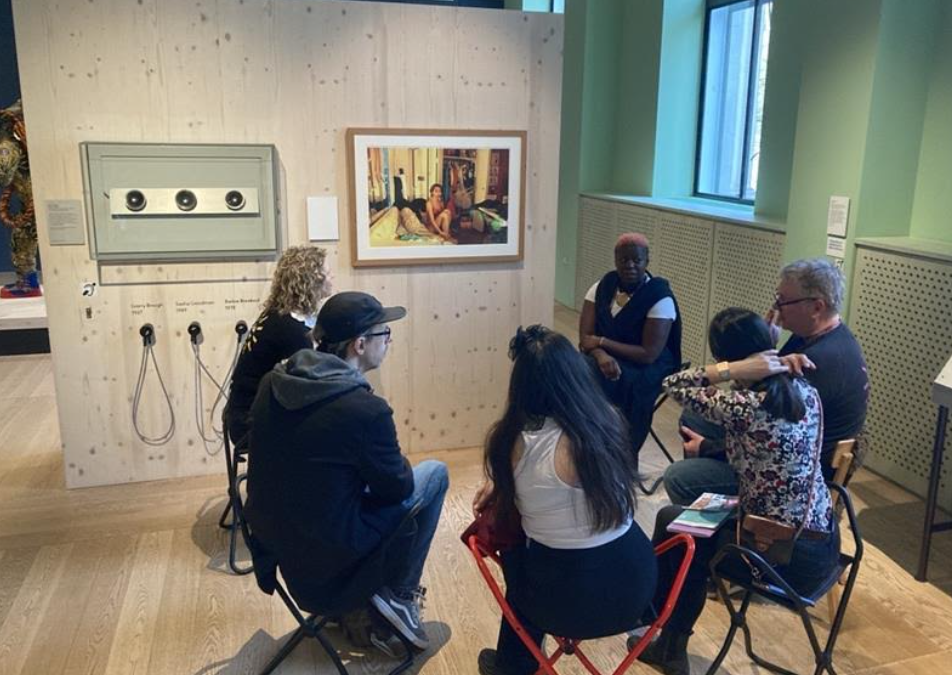
Discussion in front of Kia LaBeija’s self-portrait in the Infection (in this case HIV) Section of the Being Human gallery at the Wellcome Collection.
On a lighter note, the third session invited attendees to label objects from the Handling Collection, which helped to bring gallery employees and visitors closer together. Sana Siddiqui, one of the Wellcome Collection team, also reignited memories and senses through a selection of old food advertisements.
The day concluded with Wellcome Collection’s Slow Art enthusiast, Dickon Moore, leading a slow looking session of the eight-minute film “White” by Daniella Dean, which explored the impact of colonization on New Zealand’s fauna and flora.
A series of prompts were used for the slow looking sessions:
What do you see? Colors? Textures? Patterns? Shapes?
What do they symbolize? Why were these particular choices made?
What do you think the artist wanted to convey through their choices?
How does this resonate with you and your experiences? Does it trigger any emotions?
Can you tell a story about this object?
Based on all that has been discussed, what would you name or title this work?
Throughout the day a Slow Art slideshow, art materials, and books were also available to all visitors in the Wellcome Kitchen.
Dickon Moore leading slow looking at the film “White” from Danielle Dean. Slow drawing.
All sessions were facilitated individually or in pairs by the following Wellcome Collection team members: Jake Blackavar, Sana Siddiqui, Rosie Wassi, Isabel Greenslade, Isabelle Gapomo, Griff Davies, and Dickon Moore.
The event was well received, and Wellcome Collection provided several participants’ feedback in the file below:
At Slow Art Day HQ, we love the variety of sessions at Wellcome Collection, and are excited for whatever they come up with for Slow Art Day 2025.
-Johanna, Ashley, Jessica Jane, and Phyl
P.S. Slow Art Day 2025 is coming up on April 5. If you have not done so, please register your museum, gallery, church, sculpture park here: https://www.slowartday.com/be-a-host/
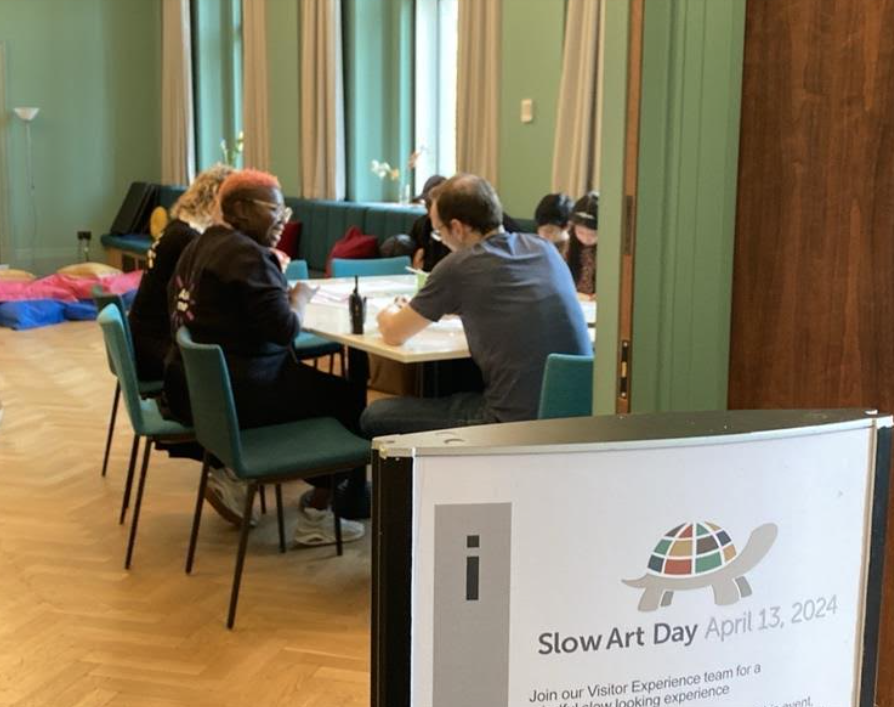
On April 13th, Andrea Gumpert, Gallery Educator, and Marie-Pierre Adam, Interpreter-Guide, hosted the National Gallery of Canada’s second Slow Art Day, and reported that it was a resounding success.
The Gallery provided three options for participation this year: – an in-person guided group experience – slow-looking “on your own” with provided handout (shown below) – slow-looking from home using a guided video
And participants were given the option to participate in either French-language or English-language sessions.
For the in-person guided event, hosts Andrea Gumpert and Marie-Pierre Adam greeted participants next to the below Slow Art Day signage in their Great Hall.
The in-person event was divided in two parts (that each of the French and English speaking groups followed).
For Part 1, Andrea led the 13 participants in the English-speaking group to the Indigenous and Canadian later galleries, and Marie-Pierre led the 11 French-speaking participants to the European baroque galleries. They each then invited their participants to select one artwork and spend 10 minutes looking slowly at it. After the 10 minutes, they regrouped and discussed the experience.
Across the two groups, participants commented on how much more they noticed about the art when they gave themselves permission to really spend time with it – a seemingly obvious but nonetheless revelatory experience. Participants also said the group setting was helpful, particularly for the younger attendees (11 and 14 years old.) People also told stories about the works, and contemplated the technical skills behind the art.
For Part II, the English-speaking group moved to the Contemporary galleries while the French-speaking group moved to the later modern galleries. This time Andrea and Marie-Pierre suggested three optional challenges: 1. Spend 15 minutes with one artwork 2. Select a work that you didn’t have an immediate affinity for 3. Draw or write while spending time with the work
They then had a second discussion with each group.
The French-speaking group in the modern gallery appreciated the chance to express themselves on paper; either by drawing or writing their ideas. Some participants expressed that the second round of slow looking was easier – that slow looking felt like a muscle that needs to be warmed up first. One participant who chose a work they would not have normally looked at shared that their slow looking revealed parts of the painting they thought were wonderful after all – and raised many questions around the choices made by the artist at that time in their career.
At the end of the day, participants provided feedback.
Here are two quotes, one from the English-speaking group and one from the French-speaking group (i.e., these are not translations from one to the other – but separate quotes):
The slow art English session was a welcome new approach for me to viewing art. Our guide was informed and fun, and she explained the process well. I am sure I will use this approach on my own sometimes at art galleries, and elsewhere. Thank you for offering it — it is a good middle place between a tour with a guide and a hands-on activity.
Bonjour à toute l’équipe, je profite de ce courriel pour vous remercier pour l’organisation de l’activité Slow Art de samedi dernier. J’ai une la chance de participer à cet événement en présence de Marie-Pierre et du groupe pour les personnes francophones. J’ai fait plusieurs apprentissages dans un environnement paisible et vraiment intéressant ! Merci pour votre dévouement à rendre l’art accessible et respectueux ! Je vous en suis très reconnaissante ! Je souhaite une longue vie au Musée des Beaux-Arts du Canada !
We are glad to say that The Gallery is now planning regular slow looking sessions throughout the year (we love that!) as well as participating in Slow Art Day 2025.
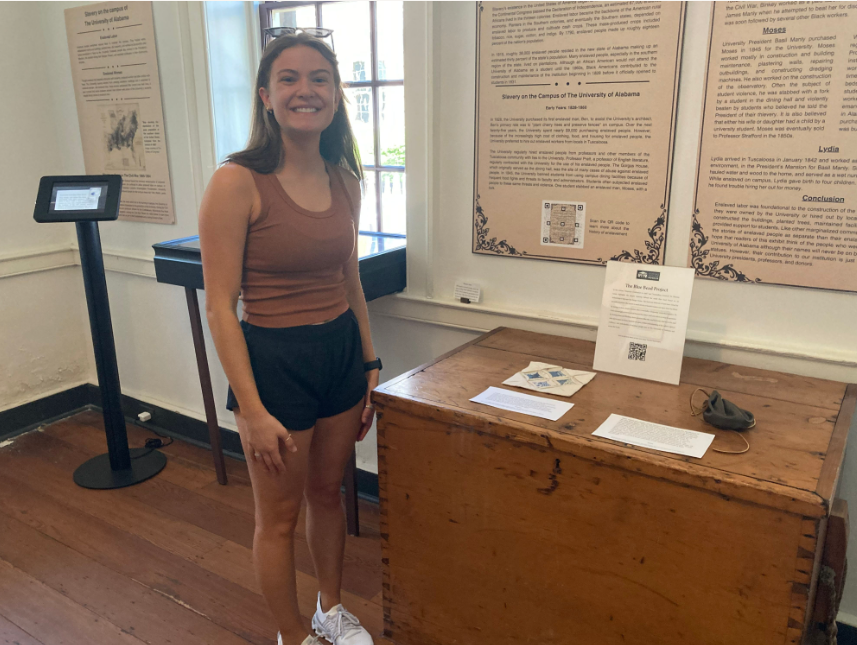
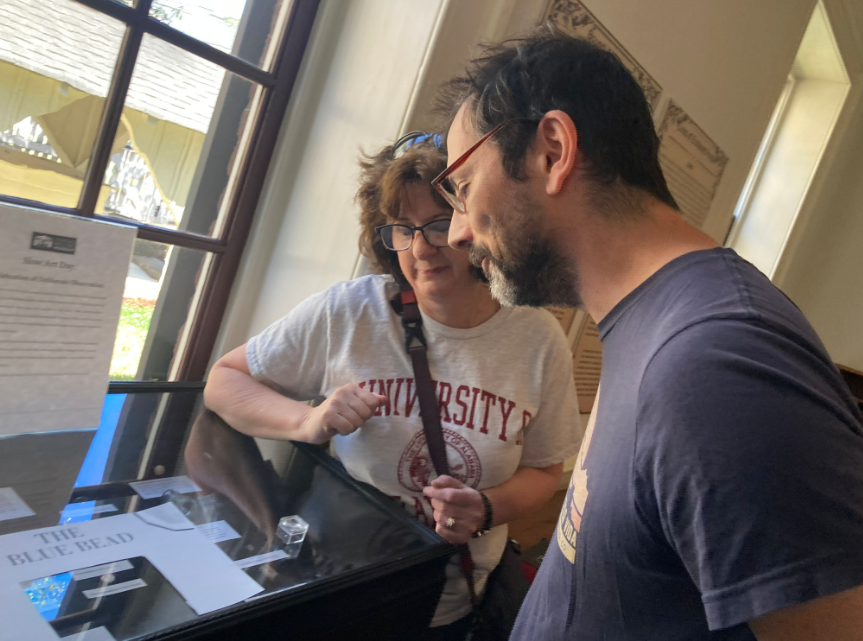
For their third Slow Art Day, the Gorgas House Museum, which is the oldest dwelling on the campus of the University of Alabama, hosted an event focused on a bohemian blue bead that was found behind the museum and is believed to have once belonged to an enslaved person.
Slow Art Day coordinator, Dr. Sharony Green, Associate Professor at the Department of History at the University of Alabama, asked her students to study the bead and slavery in advance of the event, then create art based on their study (some even created haikus). She then invited the campus and local community to slowly look at the bead and hear about the students’ work.
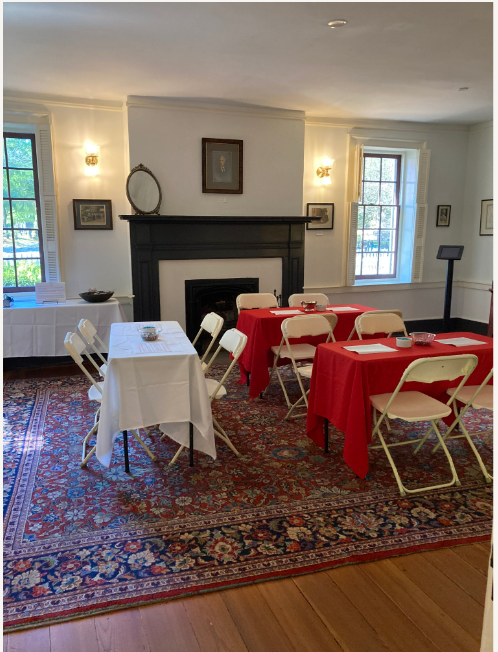
Visitors were also invited to use bead stations that were set up in the front parlor of Gorgas House to make a blue bead bracelet to commemorate the event.
Photo of one of Dr Green’s Students. Photo by Sharony Green.Photo of two UA anthropologists studying the blue bead. Photo by Sharony Green.
Above is a preview/link to the website they used to promote the project.
The bead station at Gorgas House before the event began. Photo by Sharony Green.
Dr. Green gave us some history about the bead:
The bead was found in an outdoor cooking area and was likely owned by an enslaved person. Some researchers believe it arrived via the Pacific Northwest and was brought to the Deep South via an indigenous trade network and that it was subsequently used as a protection amulet by an enslaved worker. While we speculate, we can also study the bead and sort through its significance during the antebellum period.
Dr. Sharony Green
Here’s a link to view some of the projects from Dr. Green’s students: Blue Bead Project Catalogue, and below you can scan a few of their photos and videos. All students took either an introductory level History class or an upper level History class taught by Dr. Green.
At Slow Art Day HQ we love how Dr. Green designed this whole Slow Art Day program – and that one small object, a bead, and its deep historical significance, became the point of inspiration for Slow Art Day. Thank you to Dr. Sharony Green, and her students, for such a unique event, and we look forward to whatever they come up with for Slow Art Day 2025.
-Johanna, Ashley, Jessica Jane, and Phyl
P.S. Stay up to date with future events at the Gorgas House via their social media @TheGorgasHouse
A friendship bracelet and student sewn piece. Photo by Rebecca Johnson.
For their second Slow Art Day, the Eskenazi Museum of Art in Bloomington, Indiana, offered visitors a wide range of activities, including in-gallery sketching, snacks, self guided tours, discussion, and an art-based puzzle contest. Note that the museum is part of the growing Bloomington city-wide Slow Art Day event – which this year included more than 20 museums and galleries across the city (remarkable!).
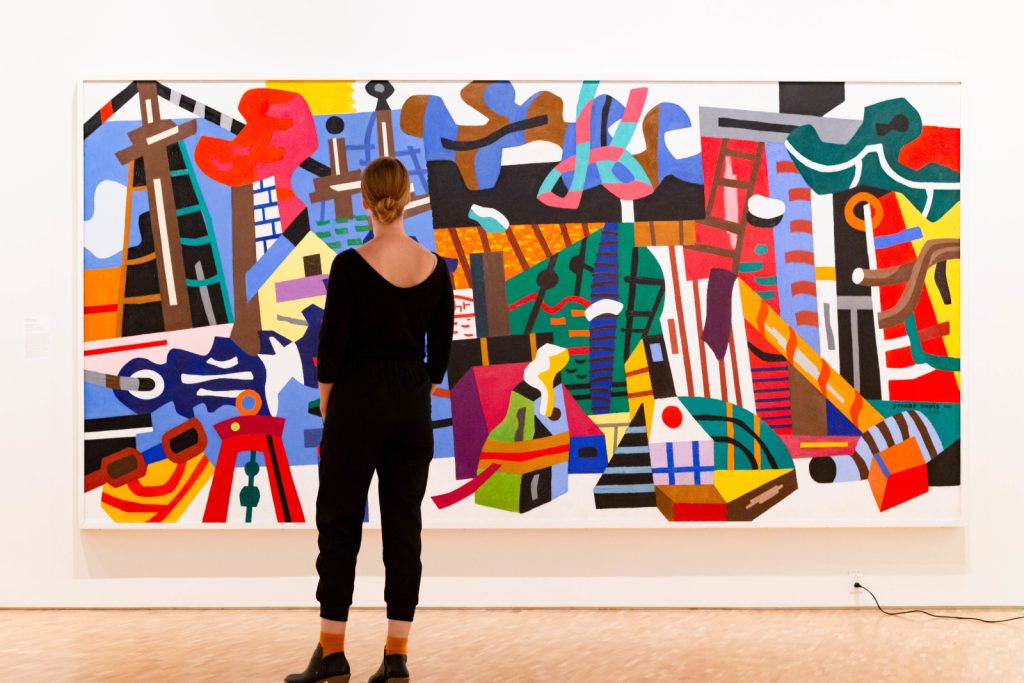
For the slow looking activity, three artworks were highlighted by Eskenazi, though guests were encouraged to pick any piece in the collection:
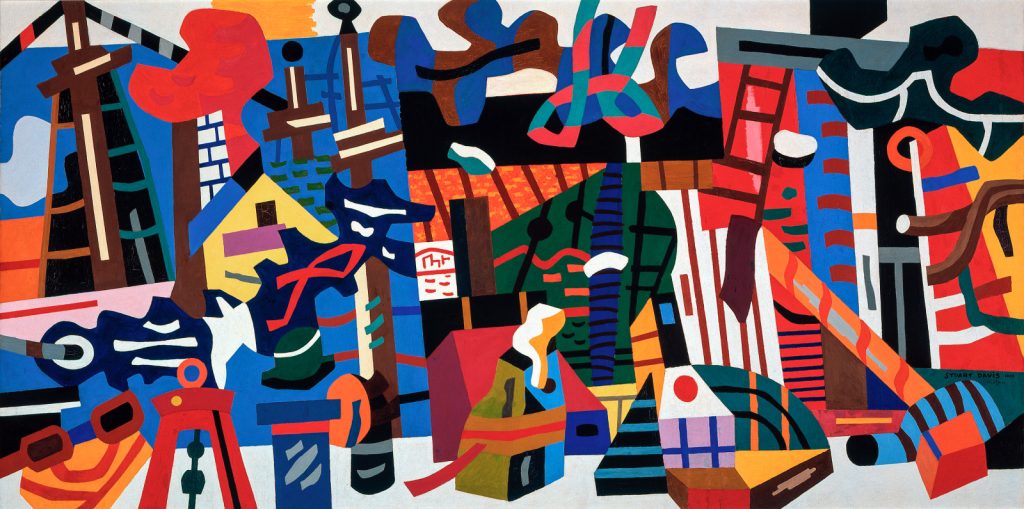
“Swing Landscape” by Stuart Davis
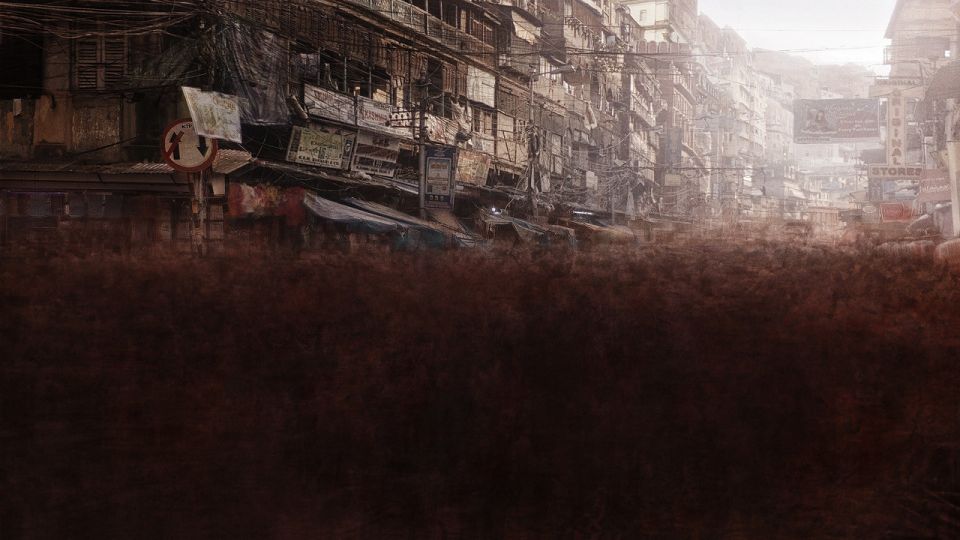
“Matter” video by Adam Magyar Below is a still image from the video.
“Flight of a Thousand Birds” by Anila Agha
To facilitate individual slow looking and discussions, the museum re-used their slow looking hand-out from last year (with a few tweaks). We invite all museum curators and Slow Art Day hosts to view the particularly well-designed hand-out below.
Keaton Clulow, Public Experiences Manager, shared that the puzzle contest was particularly popular. For that, guests were asked to spend at least ten minutes with “Swing Landscape” by Stuart Davis before attempting to put together a giant 3D puzzle of the piece from memory.
Visitor viewing “Swing Landscape” by Stuart Davis.
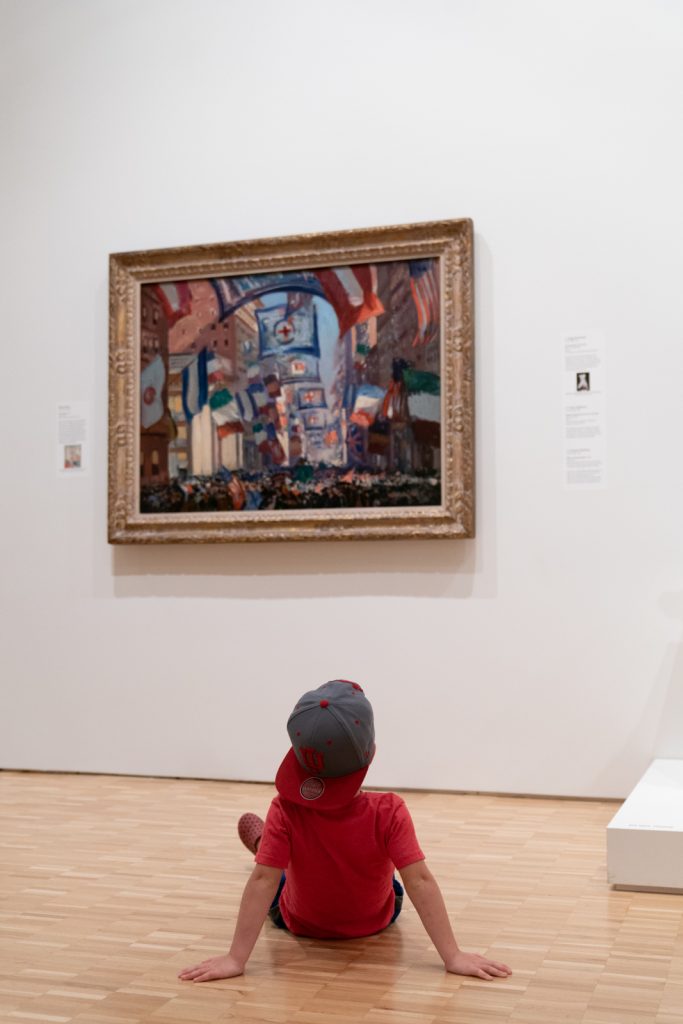
The museum was also successful at involving all generations, including young people (see below).
Slow looking participant viewing an artwork in the museum. Photo by Shanti Knight.
At Slow Art Day HQ we love the creativity the Eskenazi brings to designing its Slow Art Day activities. We know we would enjoy working on the “slow-puzzle.”
We can’t wait to see what the Eskenazi Museum of Art comes up with for next year’s Blooming citywide event (which may turn into a statewide event – stay tuned).
P.P.S. The museum asked us to include this statement: The museum wishes to acknowledge and honor the myaamiaki, Lënape, Bodwéwadmik, and saawanwa people, whose ancestral homelands and resources Indiana University Bloomington occupies.