Sweden’s Nationalmuseum Designs a Multi-Activity Event for Kids and Adults

For their Slow Art Day 2023, Sweden’s National Museum (referred to as “Nationalmuseum” in Sweden) offered a full day of all kinds of interesting and creative sessions. Museums around the world take heed – this is a great way to celebrate Slow Art Day. 

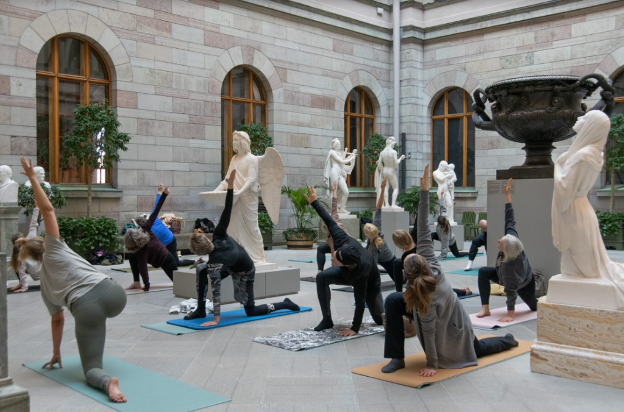
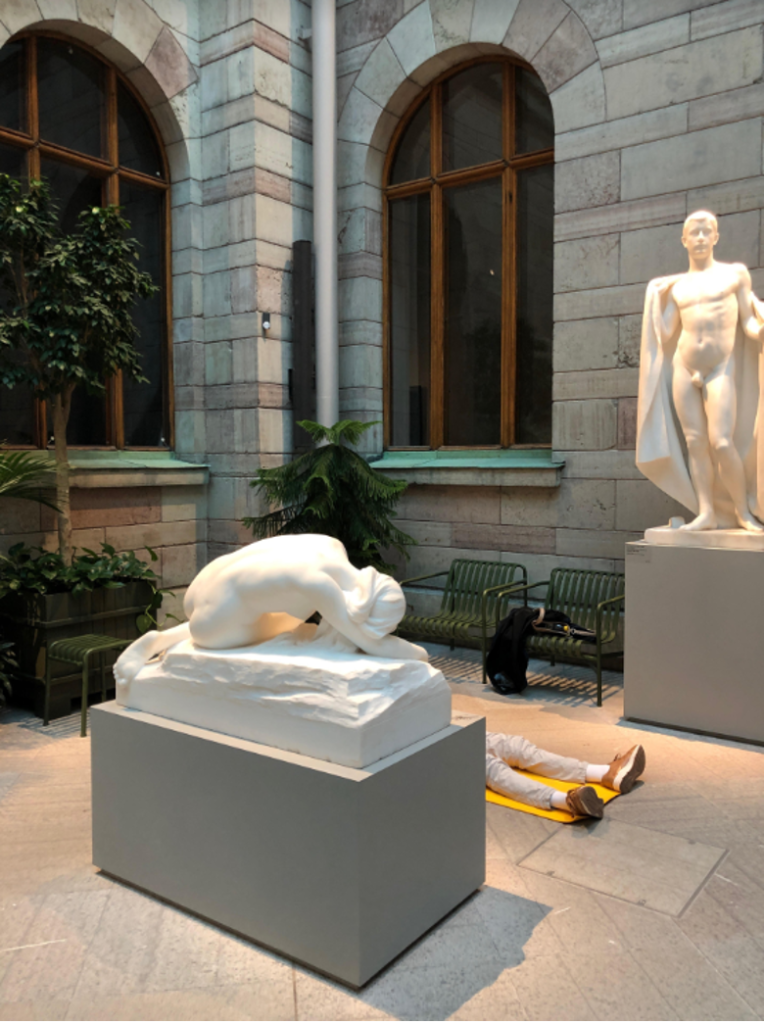
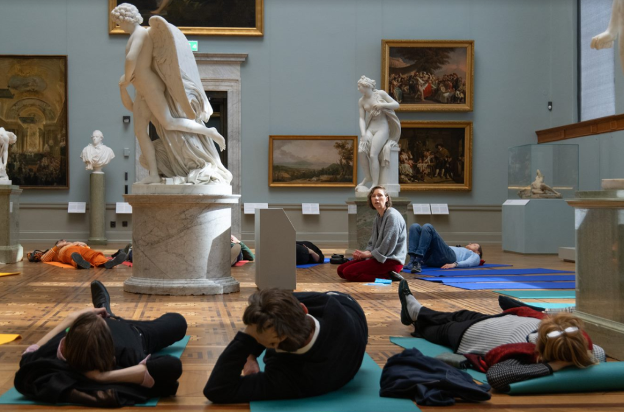
Under the direction of Johannes Mayer who coordinates the public events/programming, Sweden’s Nationalmuseum started Slow Art Day with a slow yoga class amongst sculptures in the sculpture yard, in the morning at 8:30 am before the museum opened. Participants were led by yoga teacher Victoria Winderud and the session ended with a fresh smoothie served in the café beneath.

Wow. We wish we could have been there.

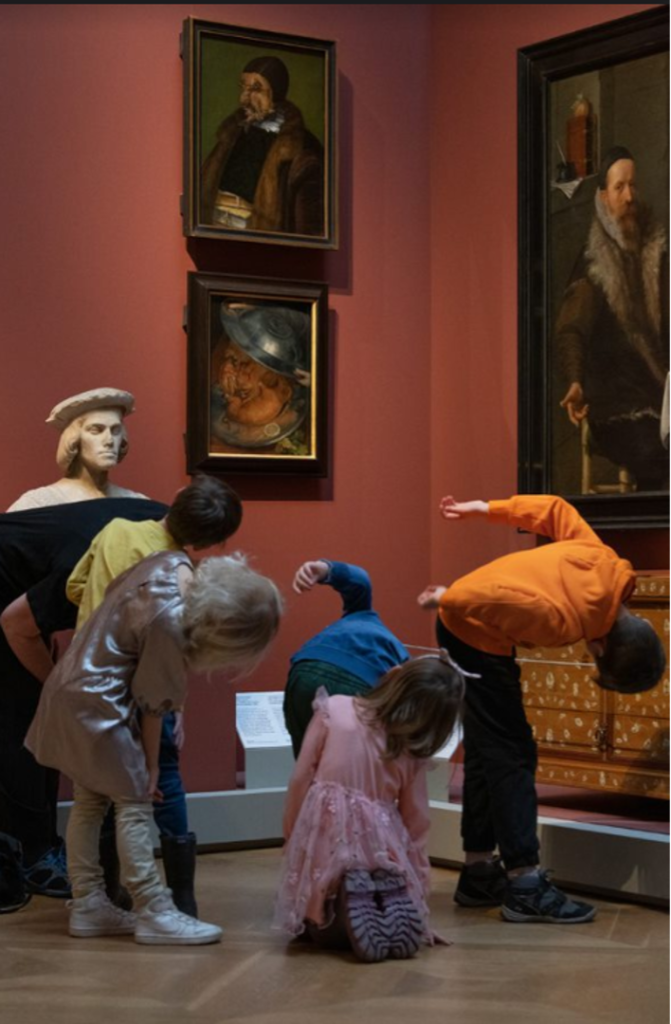
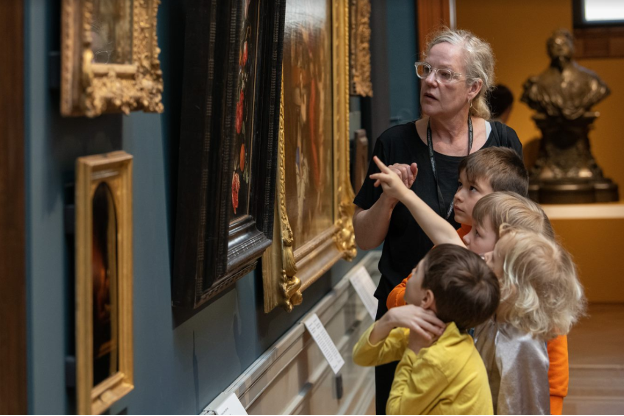
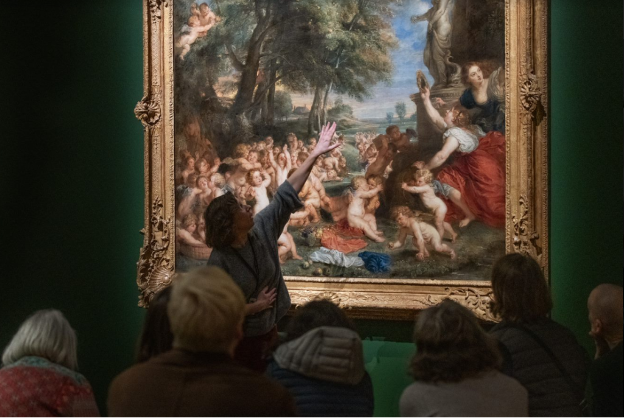
Then, once the museum opened, young visitors (5-11 years old) were invited to go on a slow looking tour of a handful of paintings in the collection, led by museum staff, between 10:30 and 11:15 am. At 2 pm, adults were invited to do the same.

But that was not all.

There was also a storytelling session at the beautiful Strömsalen (a large room with both paintings and sculptures), led by Sara Borgegård, Intendent Pedagog for the museum (roughly – the “Superintendent of Pedagogy”), who told a saga based on one of the sculptures in the room.

Wait. There was more.

All day long, the Nationalmuseum offered “drop-in art-chill” sessions at the sculpture-hall/yard, where visitors could sit or lay down on a yoga mat and listen to a pre-recorded session, slowly observing the beautiful room.

And even that is not all.

Finally, all visitors could borrow a slow-looking guide to explore and discover works of art at their own slow pace.

Wow. Wow. Wow.

What a great design.

See some fabulous photos below.

Slow Art Day yoga with sculptures at Sweden’s National Museum, 2023.

Children slow looking at paintings at the National Museum for Slow Art Day,

2023 Children slow looking at paintings at the National Museum for Slow Art Day, 2023.

Slow looking at an artwork for Slow Art Day 2023 at the National Museum

Slow Yoga (a person in a resting pose behind a half-reclining statue) at the National Museum’s Slow Art Day event.

Slow Art Day yoga with sculptures at Sweden’s National Museum, 2023

The Nationalmuseum team of Sara Borgegård Älgå, Johannes Mayer and Helena Sjödin Landonthere tell us they are looking forward to Slow Art Day 2024, especially as they continue to receive such great feedback from visitors (note: 2023 was their fourth Slow Art Day). Further, since Slow Art Day usually happens around Easter and many tourists are in town, they plan to offer some of the programs in English as well as Swedish, to make it accessible to even more people.

Wow. We can’t wait to see what they come up with for Slow Art Day 2024.

– Phyl, Johanna, Ashley, and Jessica Jane

P.S. The Slow Art Day team has decided to ask the Accademia Gallery of Florence if they would host a yoga session around the statue of David. Right? Let’s all go!

Small Town Embraces Slow Art Day

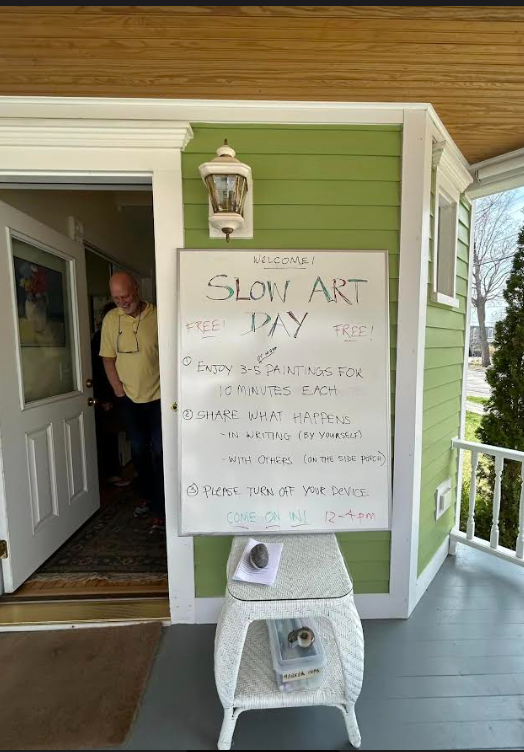
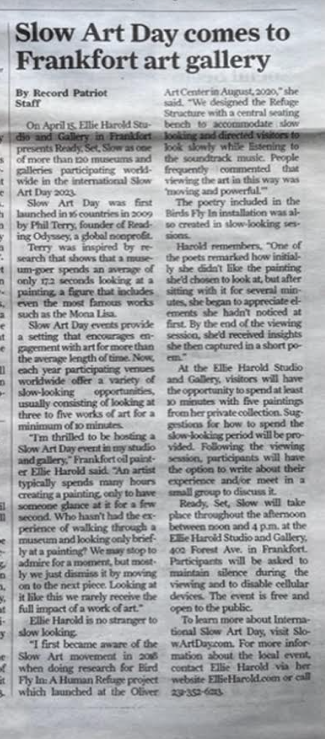
For their first Slow Art Day, Ellie Harold Studio and Gallery in Frankfort, Michigan, a small town of 1,500, hosted a slow looking event from 12 – 4 pm in her home-based venue. One of the things we love about Slow Art Day is that it happens in national museums, regional museums, movie theaters, and even local home-based galleries.

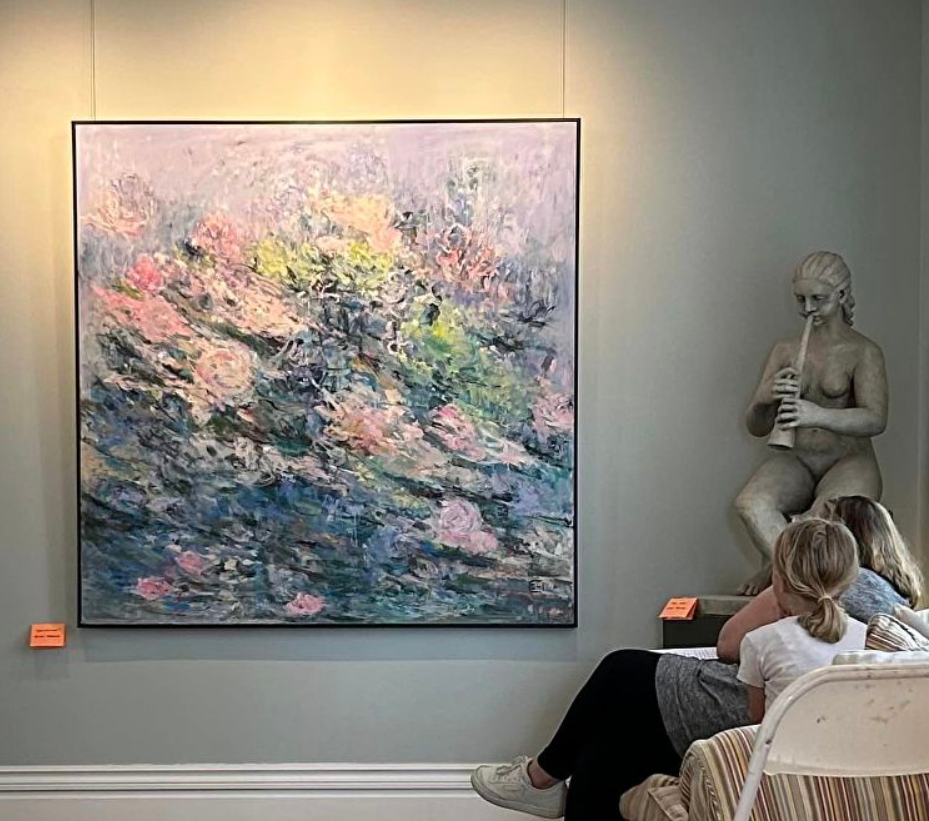
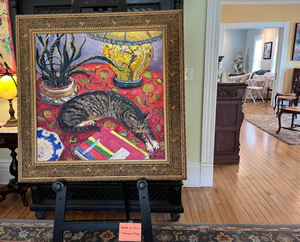
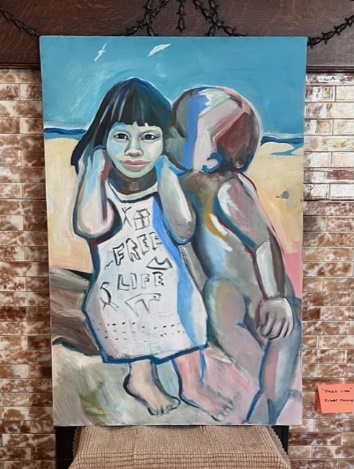
On April 15, Ellie Harold displayed a variety of paintings from her private collection, one large painting of her own, and a sculpture.

Photo courtesy of Carol Lautenbach.

Photo courtesy of Carol Lautenbach.

Photo courtesy of Carol Lautenbach.

Photo courtesy of Carol Lautenbach.

The whole town embraced this first Slow Art Day in Frankfort. Not only did a large group of people come out to view the Slow Art Day, but the local paper, Benzie County Record Patriot, also ran a substantial article.

For the event itself, the gallery handed each participant a sheet with suggestions for slow looking and a blank space and pen for writing down notes:

SUGGESTIONS FOR SLOW LOOKING

  • Gaze at a spot and let it reveal itself to you.
  • How do the colors make you feel?
  • Look at details.
  • Follow a path through the painting with your eyes.
  • Find different textures in the painting.
  • What comes forward and what recedes?
  • Does the painting take you up, down, or all around?
  • Look for rhythm or pattern.
  • Where in the painting do your eyes want to rest?
  • Does the painting have a message for you?
  • What else do you notice?

Most participants took 45 minutes to 1 hour to look at the pieces. Since the event took place in Ellie’s home, there was more artwork on display than what was selected specifically for the event, and some visitors chose to look slowly at those as well. During the event, Ellie walked around and discussed the experience with participants. She also later published a blog post: “Slow Art Day: Taking Time to Gaze.”

“Everyone reported having a positive experience and said that the exercise would change how they view art in museums going forward.”

Ellie Harold, Gallery and Studio owner

As we noted, we are always happy to see Slow Art Day being embraced by towns and institutions of all sizes and scale around the world. We welcome Ellie Harold Studio and Gallery to the Slow Art Day community, and look forward to their event next year, which will expand to include several artists.

-Johanna, Ashley, Jessica Jane, Phyl

Europe’s Largest Museum Complex Welcomes Slow Art Day

For their first Slow Art Day, Sigmund Freud University and the Staatliche Museen zu Berlin in Berlin, which comprises seventeen museums in five clusters, jointly sponsored a Slow Art event hosted by Master’s students in Art Therapy Naira Bloss and Ulla Utasch.

The museum complex invited visitors to pre-register for one of two 150-minute long workshops held on April 15th:

WORKSHOP 1: The New Museum / Neues Museum. 9.30 a.m. -12.00 p.m.

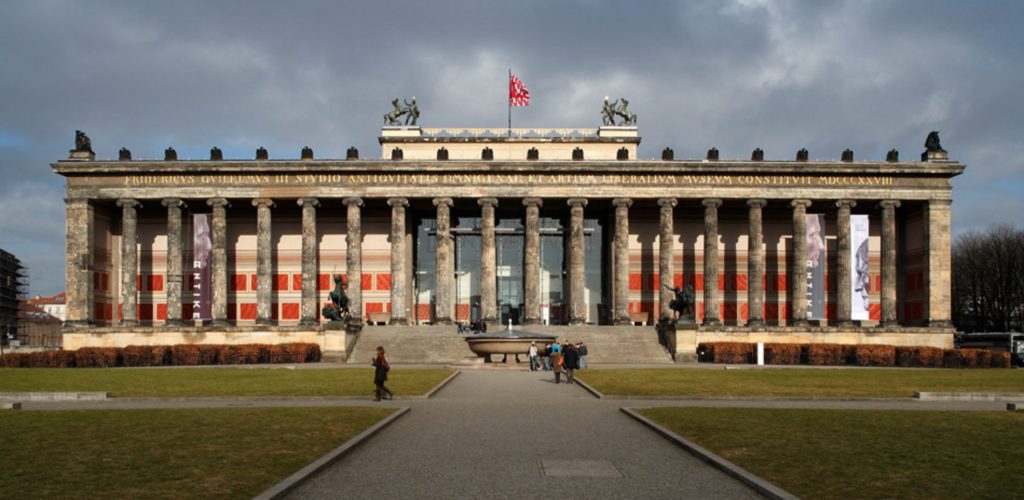
WORKSHOP 2: The Old Museum / Altes Museum. 2:30 p.m. – 5:00 p.m.

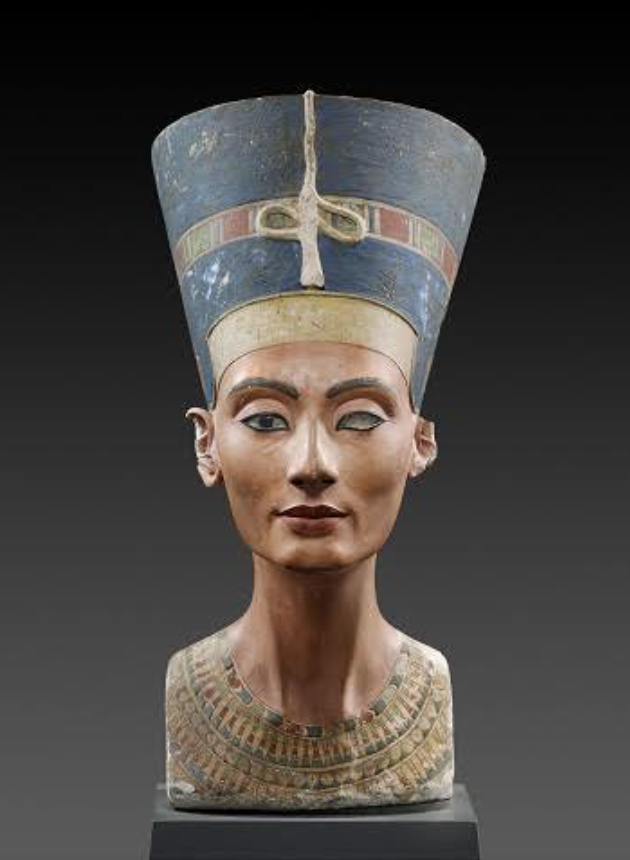
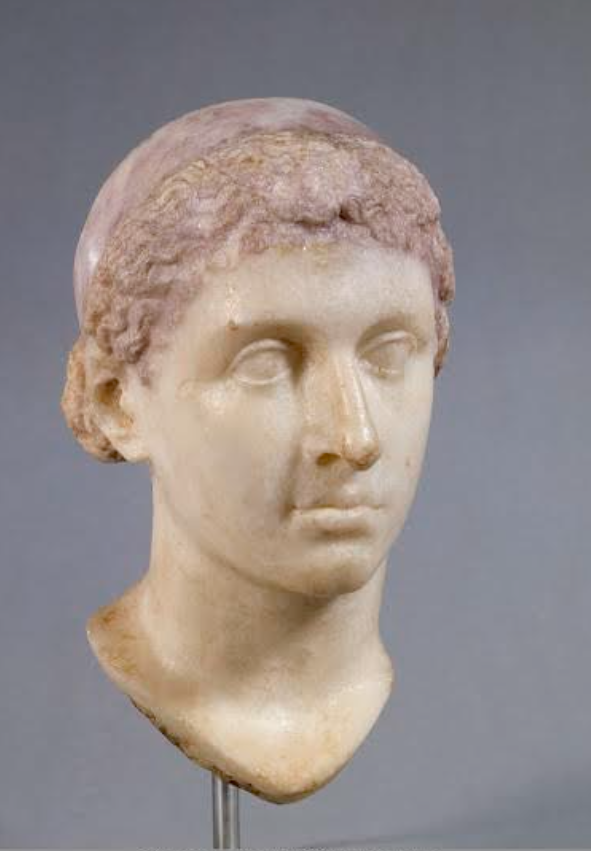
Each session opened with a guided relaxation exercise, followed by slow looking at the busts of Queen Nefertiti (workshop 1) and Queen Cleopatra (workshop 2). Afterwards, the hosts facilitated in-depth discussions.

Bust of Queen Nefertiti c. 1353 and 1336 BC. | National Museums in Berlin | Egyptian Museum with Papyrus Collection | Sandra Steiß
Portrait of Cleopatra around 50-38 B.C. | National Museums in Berlin | Collection of Classical Antiquities | Johannes Laurentius


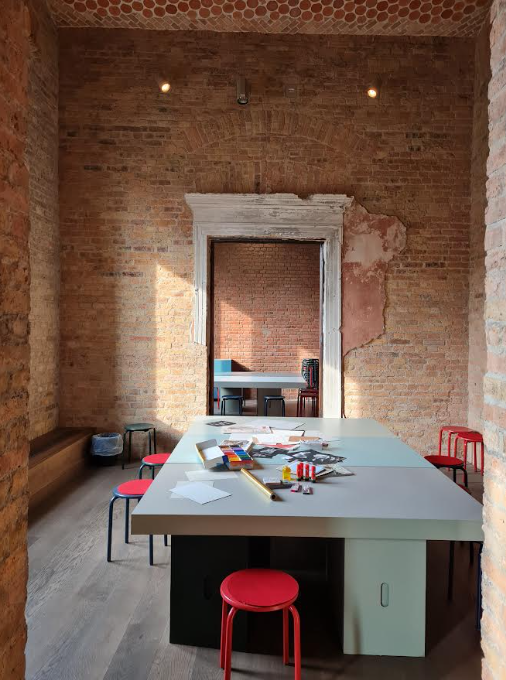
The sessions concluded with a slow drawing exercise, where the hosts asked each participant to create a design inspired by their experience in the museum, and reflecting on the impact of Slow Looking at art on their mental health.

Workshop at the New Museum.

At Slow Art Day HQ, we are so happy to welcome the Staatliche Museen zu Berlin, and its seventeen museums, to the slow looking movement. We also want to thank Prof. Dr. Georg Franzen, Professorship for Psychotherapy Science and Applied Art Psychology at the Sigmund Freud University for supervising his students Naira and Ulla.

We look forward to what the Staatliche Museen zu Berlin comes up with for Slow Art Day 2024.

-Johanna, Ashley, Jessica Jane, and Phyl

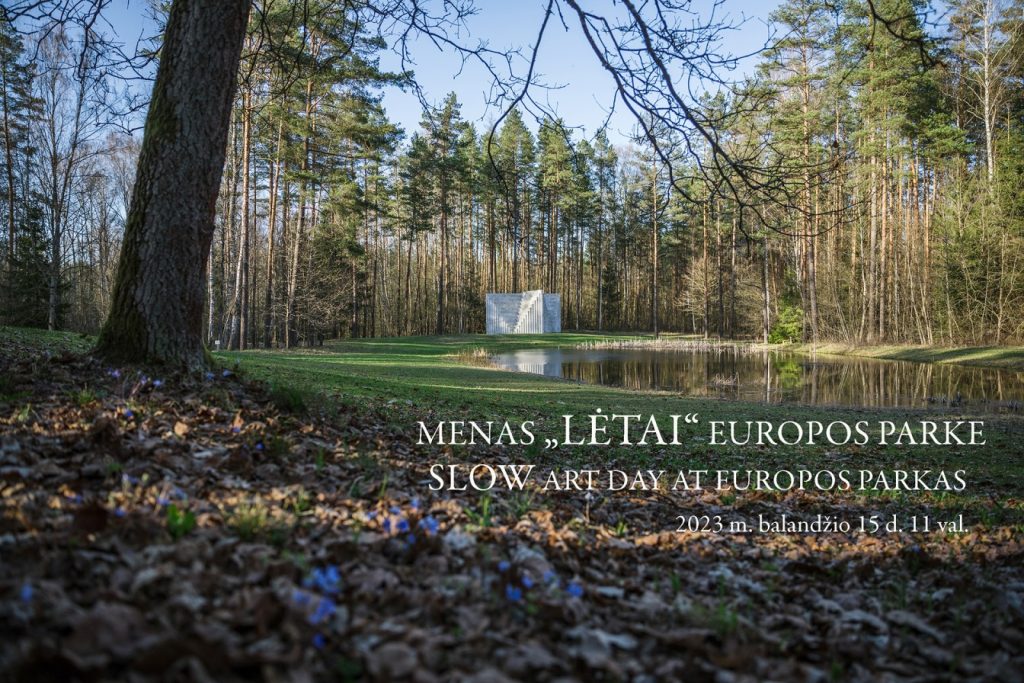
An Ecological Journey of Artistic Discovery at Europos Parkas

For their fourth Slow Art Day, the Open-Air Museum Europos Parkas, in Vilnius, Lithuania, organized a plein-air slow looking session with their participants.

Europos Parkas is a 55 hectare (136 acre) open-air museum situated in the center of Europe that began as a relaxing place in the forest where artists, sculptors, and people around the world could meet, and eventually transformed into an open-air museum with modern sculptures and landscape art.

Slow Art Day at Europos Parkas

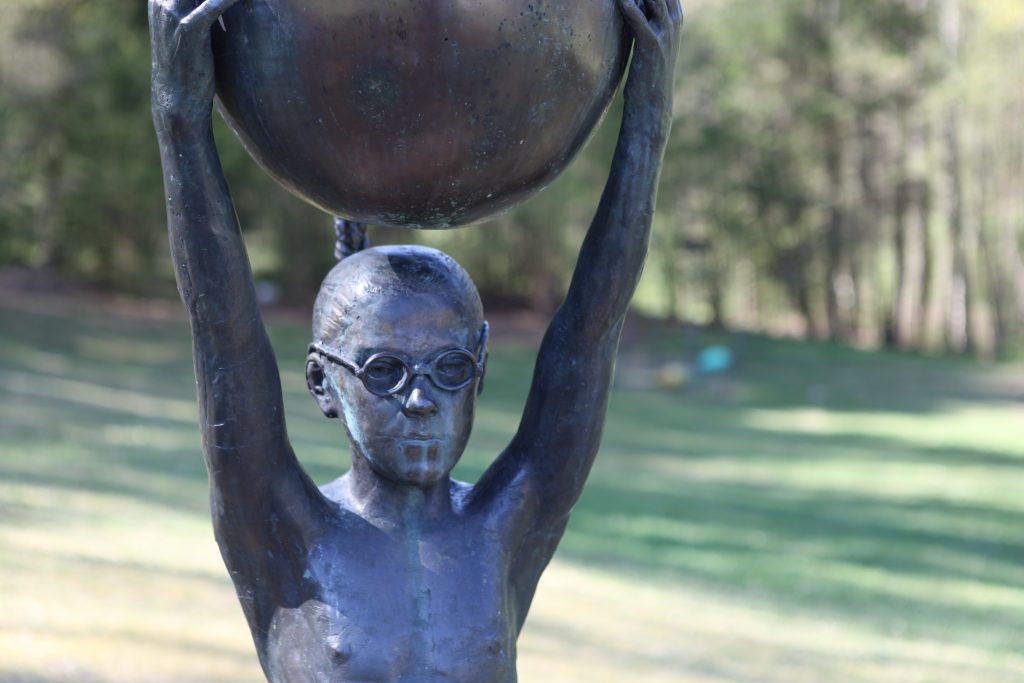
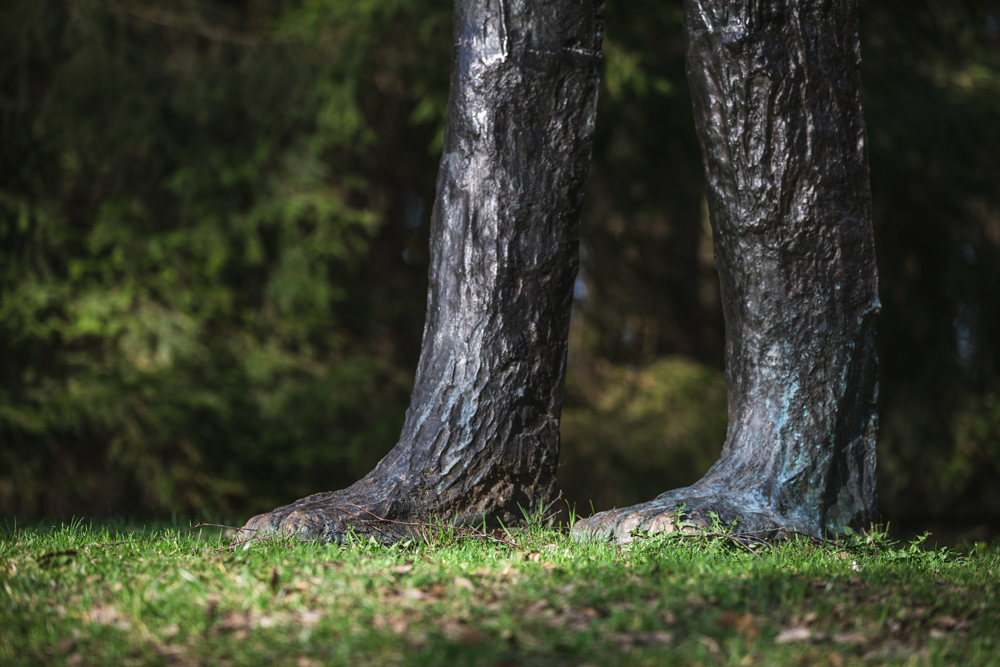
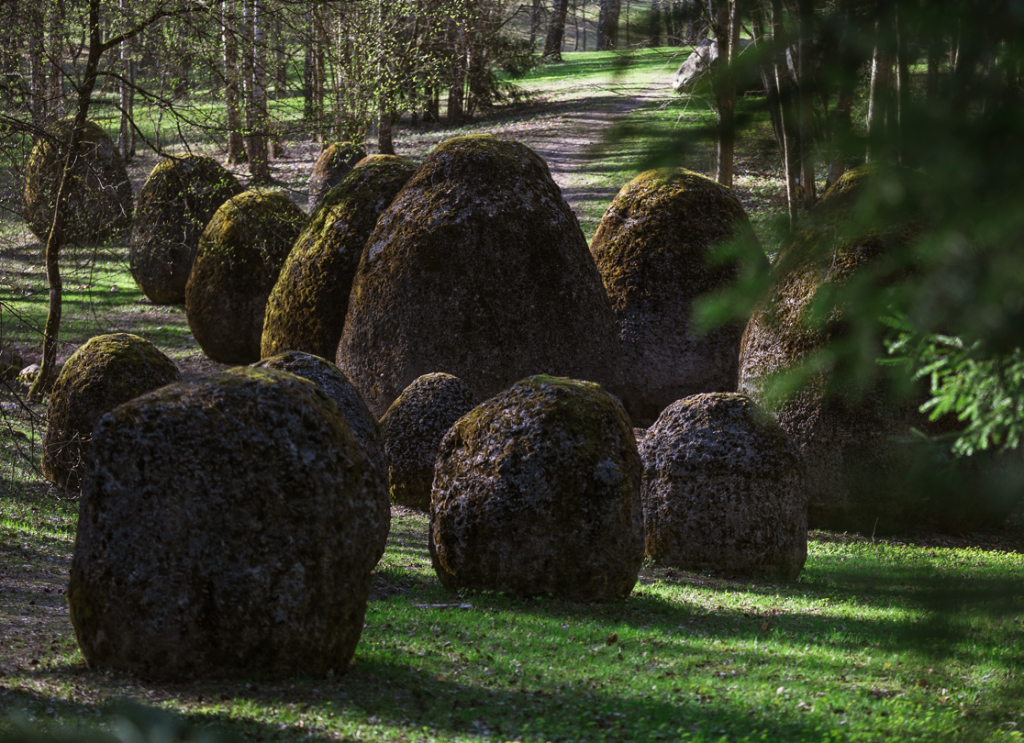
On the 15th of April, participants where invited to slowly experience three different sculptures:

  • “Gintarė/electricity” by Evaldas Pauza (Lithuania)
  • “Conjuror” by Magdalena Abakanowicz (Poland)
  • “Space of Unknown Growth” by Magdalena Abakanowicz (Poland)
“Gintarė/electricity” by Evaldas Pauza
“Conjuror” by Magdalena Abakanowicz
“Space of Unknown Growth” by Magdalena Abakanowicz

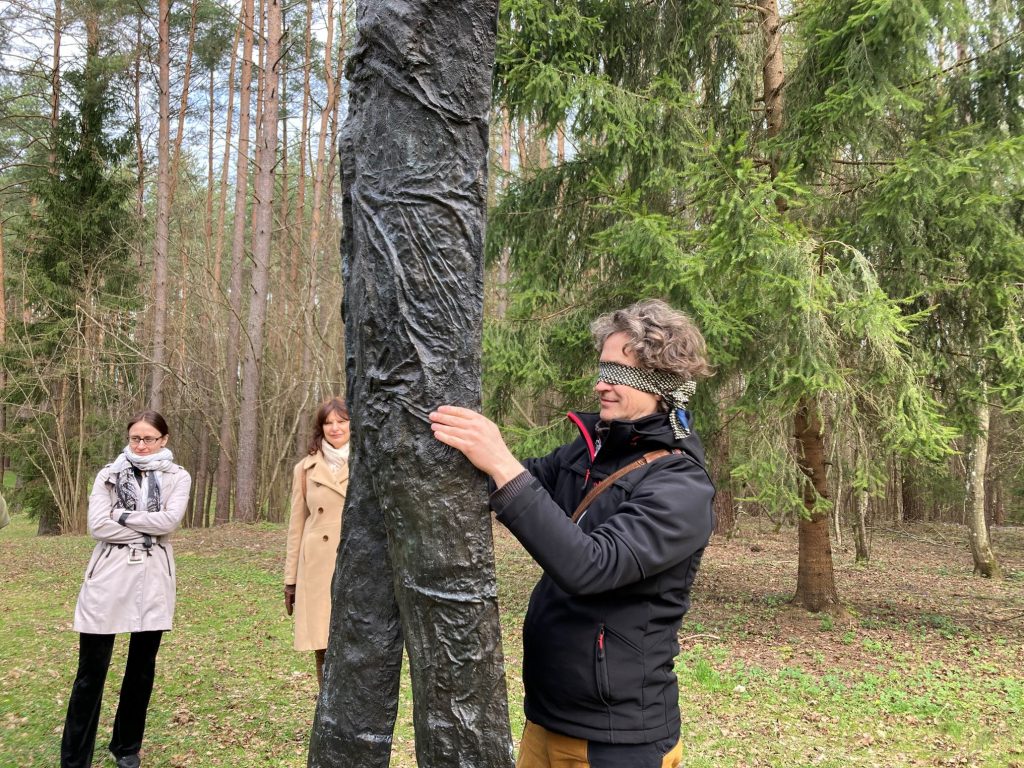
Participants were encouraged to pay close attention to their breathing, all while taking note of the colors, sounds, and smells surrounding them – and even being blindfolded so they could focus on touch.

After the slow viewing, art facilitator Karen Vanhercke led a discussion encouraging participants to make mindful connections between themselves and the surrounding nature, art, and other participants. To make the event more inclusive, discussions were conducted in English with Lithuanian translation. Tea and biscuits were also served.

Participants engaging with sculptures and nature on Slow Art Day

At Slow Art Day HQ, we love the creativity of the Europos Parkas team and look forward to seeing what they come up with in 2024.

– Jessica Jane, Johanna, Ashley and Phyl

P.S. Here you can find their Instagram and Facebook accounts.

Third Slow Art Day at Grounds for Sculpture in New Jersey

For their third Slow Art Day, educators and docents at Grounds for Sculpture (GFS) in Hamilton, New Jersey, invited visitors to slow down and look at any four different sculptures.

Torqueri XIII. Grounds for Sculpture.
Staff in front of Arch II. Grounds for Sculpture.
Participants in front of Eolith. Grounds for Sculpture.
Participants engaging with Dorian. Grounds for Sculptures.

While looking slowly, participants were asked to consider the following prompts:

  • Observe:
    Take a deep breath, walk around the sculpture and let your eyes move slowly around the artwork – from where it touches the ground all the way up to the sky. What do you notice? Make three observations based on what you noticed.
  • Share:
    Think of a story or experience this sculpture reminds you of – anything that comes to mind. Think of a friend that you want to share this sculpture with; why does this person come to mind?
  • Reflect:
    What do you notice about the sculpture now that you did not see at first glance? How does this change your impression of the sculpture? If you’re with others, share your responses. Did they have similar or different thoughts on the sculpture?
  • Repeat:
    If you are up for the Slow Art Day challenge, then repeat this excercise with three other sculptures. What new question might you pose for slow looking? Add it to your next slow look.

Here are a few of the visitor observations while slow looking at the sculpture Dorian, which proved to be one of the most popular pieces for Slow Art Day according to GFS docent Adria Sherman:

A child noticed the triangles, diamonds and octagons. Another thought it was a spaceship. A
young woman visiting from California saw a hummingbird sipping water and appreciated the
effect of clouds on the reflections. The most touching and personal interaction I had was with a couple holding hands. They viewed the sculpture as a living person and its reflection on the surrounding water as the memory of the deceased individual that lives on in the mind of loved ones.

Adria Sherman

Sherman also mentioned that Slow Art Day 2023 created one of the best visitor experiences she has witnessed in her long tenure at Grounds For Sculpture.

At Slow Art Day HQ, we always love reading about what the team at GFS designs for their annual event, and we look forward to seeing what they come up with for their fourth Slow Art Day in 2024.

– Jessica Jane, Ashley, Johanna, and Phyl

P.S. Stay up to date with events at GFS via their Facebook and Instagram pages.

Picturing the Divine: Slow Art Day at the Roemer and Pelizaeus Museum

For their third Slow Art Day the Roemer and Pelizaeus Museum (RPM) in Hildesheim, Germany, featured three statues representing the divine or enlightenment from several permanent exhibitions:

– The Egyptian goddess Isis

– A Bodhisattva (a Buddhist monk that is acknowledged to have achieved enlightenment on Earth through discipline and compassion)

– A Pieta (image of the Virgin Mary in mourning with the dead body of Jesus)

The goddess Isis, seated. Egypt. c. 600 BCE/BC. Photo courtesy of the Roemer and Pelizaeus Museum.
Bodhisattva of Compassion (Bodhisattva der Barmherzigkeit) Guanyin, China, Ming-dynasty. 1368-1644. Photo courtesy of the Roemer and Pelizaeus Museum.
Pieta. Mary, mother of God (Mary, Mutter Gottes). Hildesheim. c. 1520-1525. Photo courtesy of the Roemer and Pelizaeus Museum.

Participants were invited to look slowly at the three featured statues, while museum staff were also available for in-depth discussion.

The theme of divinity was chosen as an interesting way to focus on images of women in diverse religious and cultural traditions: the Egyptian goddess Isis, and – in the Catholic tradition – the Virgin Mary. Interestingly, in Buddhism it is debated whether women can become enlightened and achieve Buddha-status, or if they need to first be reborn as a man. Some paths of Mahayana Buddhism acknowledge both male and female Bodhisattvas, but in the stricter Theravada tradition only men are able to achieve the status of Arhat (a version of enlightenment that is founded on individual wisdom rather than on the principle of compassion). Thus, the Bodhisattva statue is a great example of how visual representation can lead to dialogue and exploration.

In the words of Andrea Nicklisch, ethnologist at the museum:

“Slow Art Day offers a wonderful opportunity to explore representations of women and to deal intensively with deities in different cultures and art in a new way.”

RPM ethnologist Andrea Nicklisch.

We look forward to whatever this archaeological museum comes up with for April 13, 2024.

– Johanna, Ashley, Jessica Jane, and Phyl

P.S. Stay updated with the Roemer and Pelizaeus Museum via their Facebook and Instagram pages.

P.P.S. Registration is now open for Slow Art Day 2024.

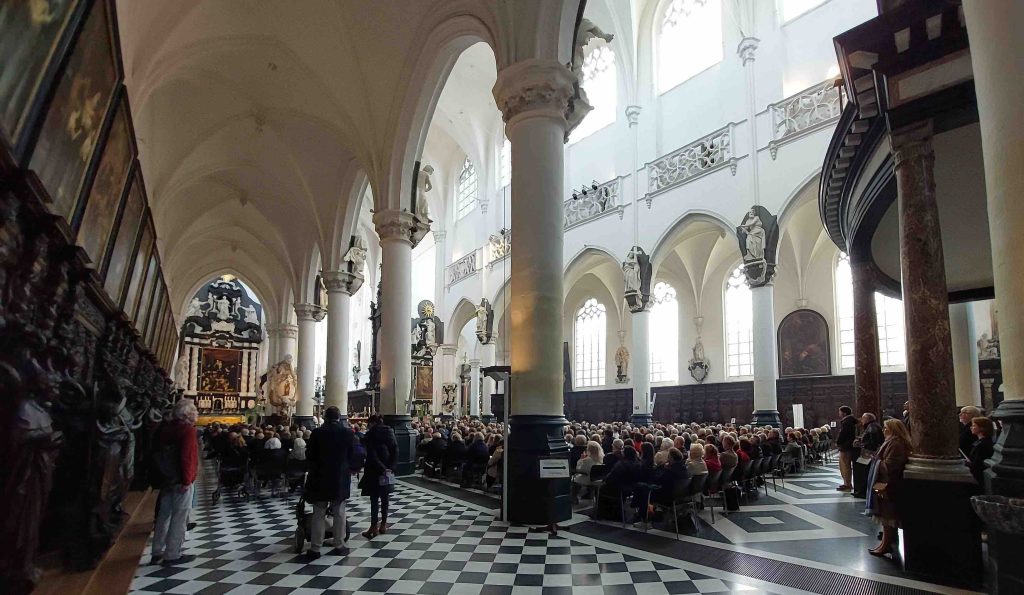
Sint-Pauluskerk Calls For More Churches to Join Slow Art Day

Sint-Pauluskerk in Antwerp, Belgium, called on more churches to join the slow looking movement (more about that in a moment), while, at the same time, hosting its sixth Slow Art Day this year.

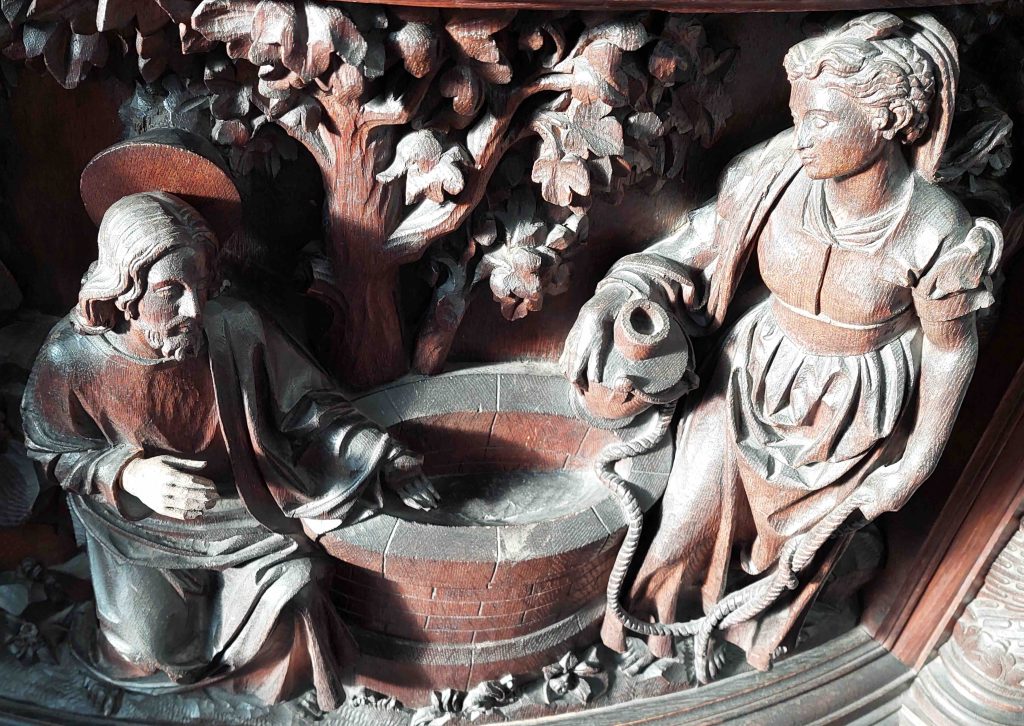
For their 2023 Slow Art Day, they invited visitors to take a closer look at two statues, one in marble and one in oak, of Rosa van Lima (the first Latin American canonized saint).

Side view of Rosa of Lima in marble (Artus Quellinus, the younger, ca. 1670). Sint-Pauluskerk. Used with permission.
Front view of Rosa of Lima in marble (Artus Quellinus, the younger, ca. 1670). Sint-Pauluskerk. Used with permission.
View of Rosa of Lima in oak. (Willem Kerricx I, ca. 1680). Sint-Pauluskerk. Used with permission.

The slow looking sessions started with the marble statue, which depicts Rosa Lima holding Jesus as a child. Participants were encouraged to sit in chairs in front of the statue and look slowly for 10 minutes. They were provided the following optional, thought-provoking prompts to aid in the slow-looking, and were then encouraged to ask the guides about the person Rosa van Lima:

– What do you think the subject is?

– Why is the statue in this place?

– What did the artist want to say?

Next, the session moved to the statue in oak on the other side of the church, where visitors were invited to look slowly and discuss their impressions. The oak statue is part of a monumental depiction of the “Last Judgment: the ultimate baroque exhortation not to forget any sin during confession,” in the words of Armand Storck, scriptor for the church.

At Slow Art Day HQ, we love the team at Sint-Pauluskerk. Not only do they often send us the details in advance of their event, but, more importantly, they design events that take full advantage of the church environment to encourage contemplation and reflection.

To that point, we are also excited because, as mentioned, Storck and his team are taking a lead role in challenging more churches to join the Slow Art Day movement. In fact, Storck points out that while hundreds of museums participate in Slow Art Day, only three churches registered this year yet “what environment lends itself better to contemplative art experience than a church? “

We agree, and hope that more churches answer Storck’s question by joining our movement.

And we certainly look forward to what storck and team design for Sint-Pauluskerk’s seventh Slow Art Day in 2024.

-Johanna, Ashley, Jessica Jane, and Phyl

Philadephia’s Citywide Slow Art Day 2023

Slow Art Day is but *2* days away and more than 185 museums have registered their events, including five in Philadelphia, making that city part of a growing number of cities hosting 5, 10 or more events.

[Remember to register your Slow Art Day with us so we can write-up a report about your work and feature you in our next Annual Report, which has become the Bible of the slow looking movement.]

Philadelphia Inquirer journalist Michelle Myers wrote a wonderful article about the citywide Slow Art Day – Everything You Need to Know About Slow Art Day in Philadelphia.

For the educators and curators reading our blog, here’s a quick summary of the design of the five events.

1. The Barnes Foundation
With a lot of support from Bill Perthes, the foundation’s Bernard C. Watson director of adult education, The Barnes Foundation has participated in Slow Art Day since 2017. This year visitors will have an hour to observe four works of art, including pieces by Paul Cézanne, Henri Matisse, Honoré Daumier, and Pablo Picasso. Participants will then gather for a 30-minute conversation with Michael Williamson, a member of the Barnes faculty and former Germantown Friends School art history teacher.

2. Corridor Contemporary
Corridor Contemporary will showcase their exhibition, “Printed Perspectives,” which features printmaking techniques such as silk screening and lithography. Visitors can visit the gallery for free between 6 and 9 pm and observe each piece.

3. Glen Foerd
Glen Foerd, primarily known as a historic site and arboretum, will provide participants with a chance to observe four works of art: a portrait by Sir Peter Lely, Poppies in Vase by Hobson Pittman, The Virgin and Child with the Infant St. John the Baptist by Girolamo da Santacroce, and An Archive of Desire by Jennifer Johnson. Participants will then gather for a conversation with executive director Ross Mitchell, discussing aesthetics and themes of each artwork.

4. Philadelphia Magic Gardens
This year, the Magic Gardens will observe four pre-selected, untitled terracotta sculptures by the Garcia family of Oaxaca. The gardens anticipate 15 to 20 participants, and the conversation will be guided by educator Samantha Eusebio, focusing on folk art and the importance of passing down family traditions.

5. Philadelphia Museum of Art
The museum’s Slow Art Day event is a guided walk around the Anne d’Harnoncourt Sculpture Garden, led by mindfulness instructor Grady Bates. Visitors will observe Bronze Bowl with Lace by Ursula von Rydingsvard and other works of art.

Wherever you are in the world – Philadephia, Prague (Czech Republic), Pamplona (Spain), Pecs (Hungary), Parkes (Australia), or Provo, UT (U.S.), we hope you have a GOOD and Slow Art Day 2023. 

Best,

Phyl and the volunteer Slow Art Day team

P.S. If you need the Slow Art Day logo for use in your print or digital efforts, or any of the tools and tips from our Annual Reports, then go to the host tools section of our Slow Art Day website.

Harn Museum Mixes Cookies and Tea with Slow Looking

For their 7th Slow Art day, the Harn Museum of Art, located on the campus of The University of Florida in Gainsville, featured 5 artworks from their collection, including:

Dogon Couple, by Kehinde Wiley
– Northeast Gorge at Appledore, by Childe Hassam
– Pli Selon Pli, by Akiyama Yo
– Waiting for the Signal, by Robert Fichter
– Horizontal Mask (korubla), by a Senufo artist

Host Allysa Peyton, Curator and Student Engagement Manager, and a group of University of Florida student ambassadors greeted participants with a flier that spelled out instructions, featured art works, and space to draw or take notes (see below).

Harn Student Ambassadors welcome visitors.


The Harn instructed attendees to spend 10-12 minutes with each of the five featured artworks and encouraged them to not only draw or make notes, but also to reflect on the experience of looking slowly – and how what they see in the art may change over time.

After the slow looking session, everyone then gathered for tea, cookies, and discussion.

Educators and curators in the slow looking movement should take a look at their simple flyer (attached above) and consider copying elements of their approach for future sessions.

Akiyama Yo, Pli Selon Pli, 2002
Kehinde Wiley, Dogon Couple, 2008
Robert Fichter, Waiting for the Signal, 1981
Senufo Artist, Horizontal Mask (korubla), 20th century

The Harn Museum of Art has also launched a year-round program Art & Mindfulness, which incorporates slow looking and guided meditations in 40-minute workshops.

We at Slow Art Day HQ like the incorporation of drawing and notes – and especially appreciate the cookies and tea (yum, yum) at the end – and we look forward to seeing what they come up with for Slow Art Day 2023.

Best,

– Robin, Ashley, Phyl, Jessica Jane, and Johanna

P.S. The Harn Museum of Art can be found on Twitter, Instagram, YouTube, and Facebook.

Light and Movement at Wanås Konst’s Fifth Slow Art Day

For their fifth Slow Art Day, Wanås Konst, a sculpture park located in southern Sweden, offered a hybrid in-person and online experience focused on artist Katarina Löfström’s outdoor installation Open Source (Cinemaskope).

Katarina Löfström, Open Source (Cinemaskope), 2018/2021, photo courtesy of Erika Alm

View Open Source (Cinemaskope) in motion.

Katarina Löfström sees her works as paintings of light and movement. Open Source (Cinemaskope) consists of a screen made from sequins on a tall metal frame. This screen “reflects the surrounding nature and creates a continuous, transforming abstract film”. Read more about Katarina on Wanas Konst’s website.

Over a hundred visitors slowly looked at Löfström’s work, and host Erika Alm shared elements of the exhibit via Instagram, allowing for remote participation.

We at Slow Art Day HQ are really glad to have this museum, whose mission is to produce and communicate art that challenges and changes ways of seeing, involved in our global movement.

We can’t wait to see what they come up with for next year!

– Robin, Ashley, Johanna, Jessica Jane, and Phyl

P.S. Wanås Konst can be found on Instagram and Facebook.