The Birmingham Museum of Art (BMA) in Alabama — one of the founding Slow Art Day host museums back in 2010 — invited visitors in 2022 to a Slow Art Day featuring contemporary pieces of art in their collection.
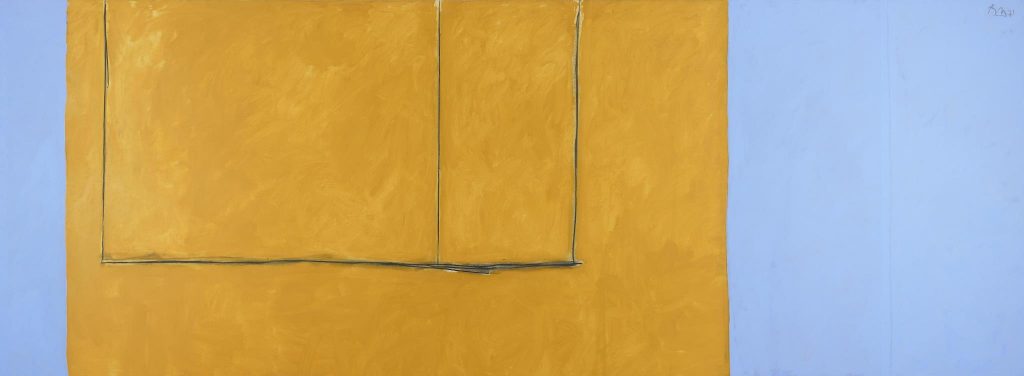
Participants were invited to look at two pieces of art, including “The Deserted Studio” by artist Robert Motherwell.
Robert Motherwell, “The Deserted Studio”, acrylic and charcoal on canvas, Birmingham Museum of Art collection.
After 5-10 minutes spent individually contemplating the artworks, participants took part in a relaxed discussion hosted by Julia Stork, Master Docent at the museum.
The event was attended by BMA docent alumni alongside local Slow Art Day enthusiasts, who all appreciated the event, with one participant exclaiming “Let’s do this again sooner than next year!” (The BMA used to host Slow Art Sundays, but discontinued them when the pandemic hit — we hope they can start them up again in the future.)
We can’t wait to see what the BMA comes up with in 2023.
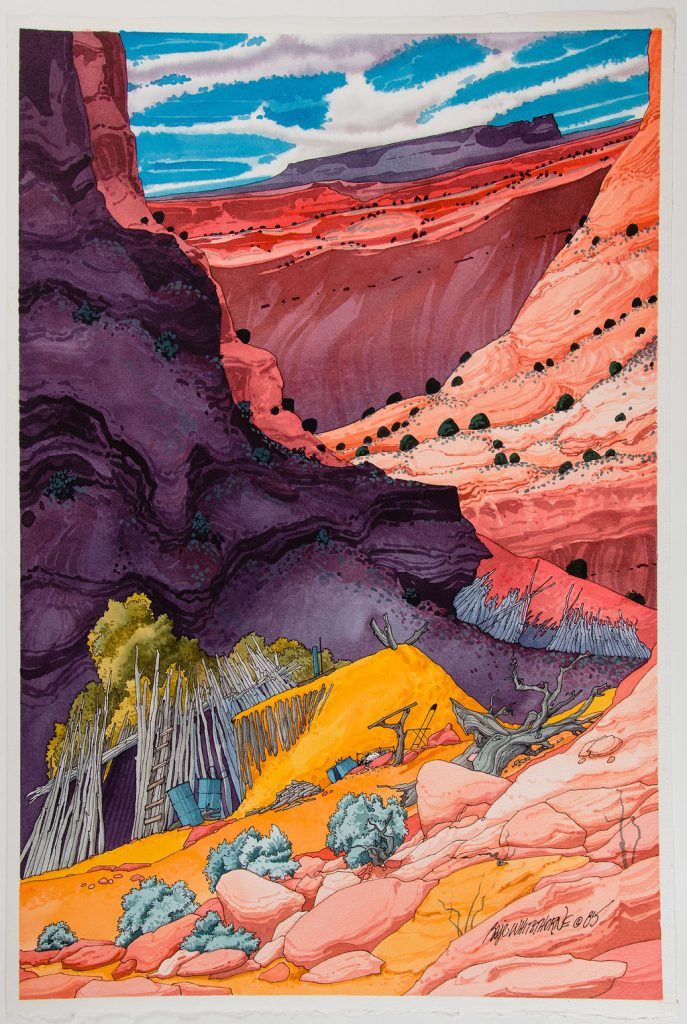
For their fourth Slow Art Day, the Museum of Northern Arizona (MNA) in Arizona, USA, hosted a slow looking event in combination with the opening of a new exhibition, Náátsʼíilid / Rainbow Light, featuring art by Diné artist Baje Whitethorne Sr., who grew up on the Navajo Nation Reservation.
Baje Whitethorne Sr., 1985, Watercolor on paper, MNA#C2587. Image courtsey of the MNA.
Before the event, the museum posted a video to YouTube, where Alan Petersen, Curator of Fine Art, and Samantha Honanie, Bookstore & Publications Manager, introduced slow looking and Slow Art Day.
We highly recommend that all museum educators and curators view this well-done video.
Alan Petersen, Curator of Fine Art, and Samantha Honanie, Bookstore & Publications Manager, at MNA, discussing slow looking and Slow Art Day. 30 March, 2022.
In six minutes, Samantha and Alan show (not tell) the viewer how Slow Art Day works.
They use some simple but ingenious methods for “showing” 10 minutes of slow looking in just a minute or so — and they then capture the joy of discovery and enthusiasm that participants experience (that is so hard to describe in words).
It’s a real joy to watch.
Take a look and think about how you might borrow some of their techniques for your next Slow Art Day event.
For the actual day, participants were given a Slow Art Day cheat sheet of slow looking prompts.
Participants were then invited to view the art by Baje Whitethorne, choosing the order they wanted to see the artworks in, and applying the slow looking promts from the cheat sheet.
At 2pm, all participants gathered in the Living Room at the museum, where Alan Petersen led a discussion of the insights and experiences from the event.
We recommend viewing the following video of artist Baje Whitethorne introducing the title and theme of his exhibition, Náátsʼíilid / Rainbow Light, below.
Baje Whitethorne introducing the exhibition theme – Náátsʼíilid/Rainbow Light.
We love everything about the NMA’s Slow Art Day – the preparatory video, the cheat sheet and the artwork chosen. We hope you get a chance to spend as much time with Baje Whitethorne and their work as we did in preparing this report.
We at Slow Art Day HQ are grateful that via writing these reports we get to look at and experience art from all over the world – art we may never have otherwise been able to see.
We look forward to whatever the Museum of Northern Arizona comes up with for Slow Art Day 2023.
– Johanna, Jessica, Ashley and Phyl
P.S. Stay updated with events at the Museum of Northern Arizona via their Facebook page.
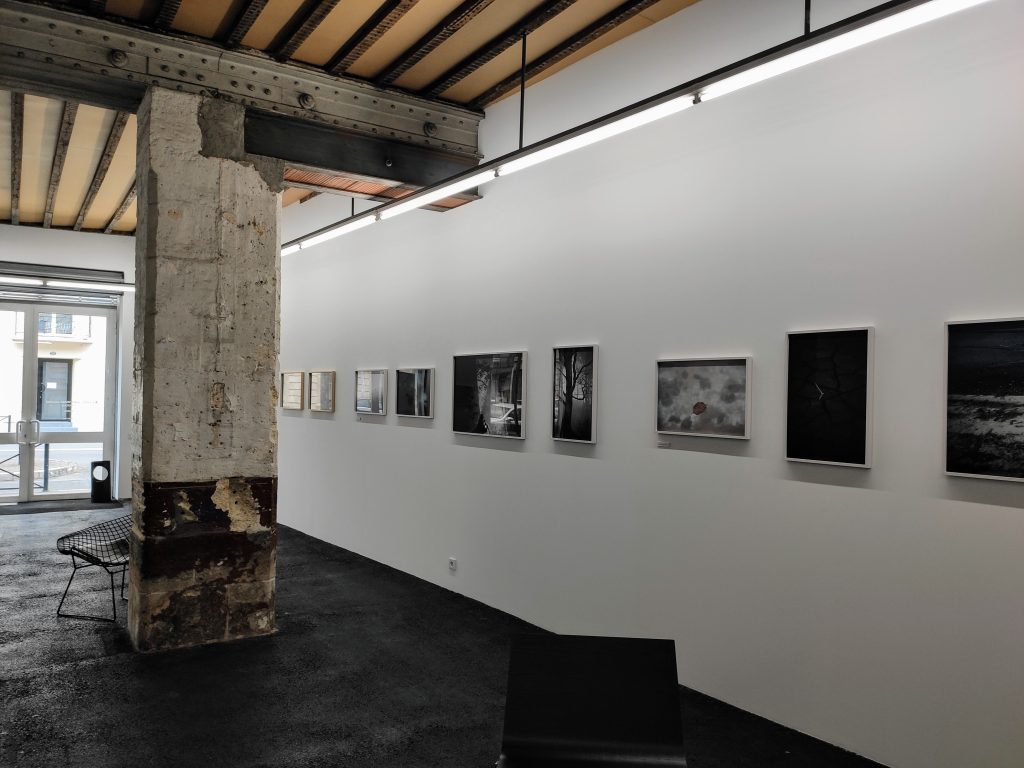
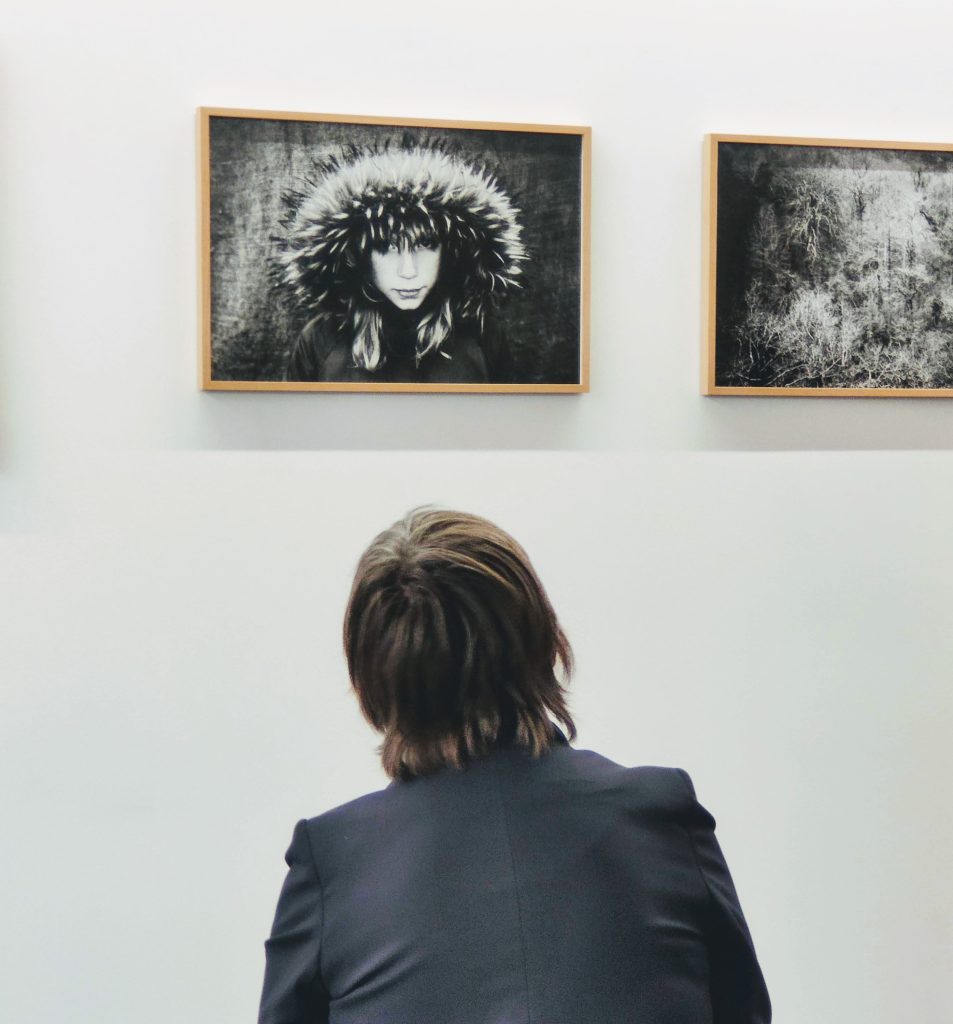
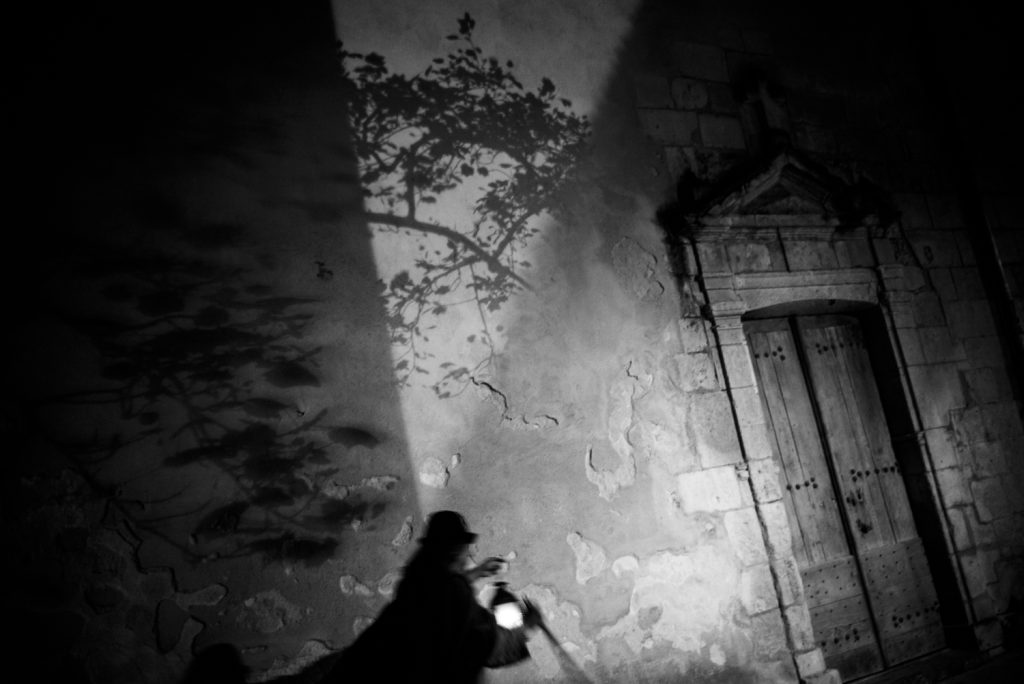
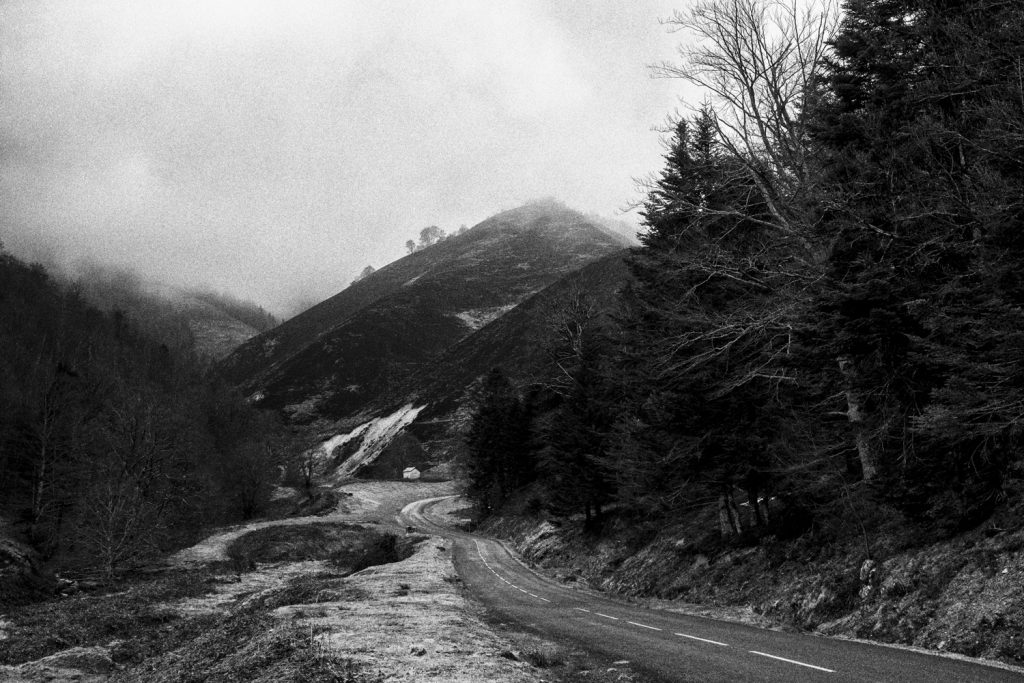
On April 7th, Simone Raskin, Cultural Pedagog and Slow Looking veteran, designed a slow looking event together with the art gallery Arret sur l’Image in Bordeaux, France. Visitors to the gallery were invited to participate in workshops, slowing down during an hour and a half to observe a photography collection titled “D’ici ça ne paraît pas si loin”.
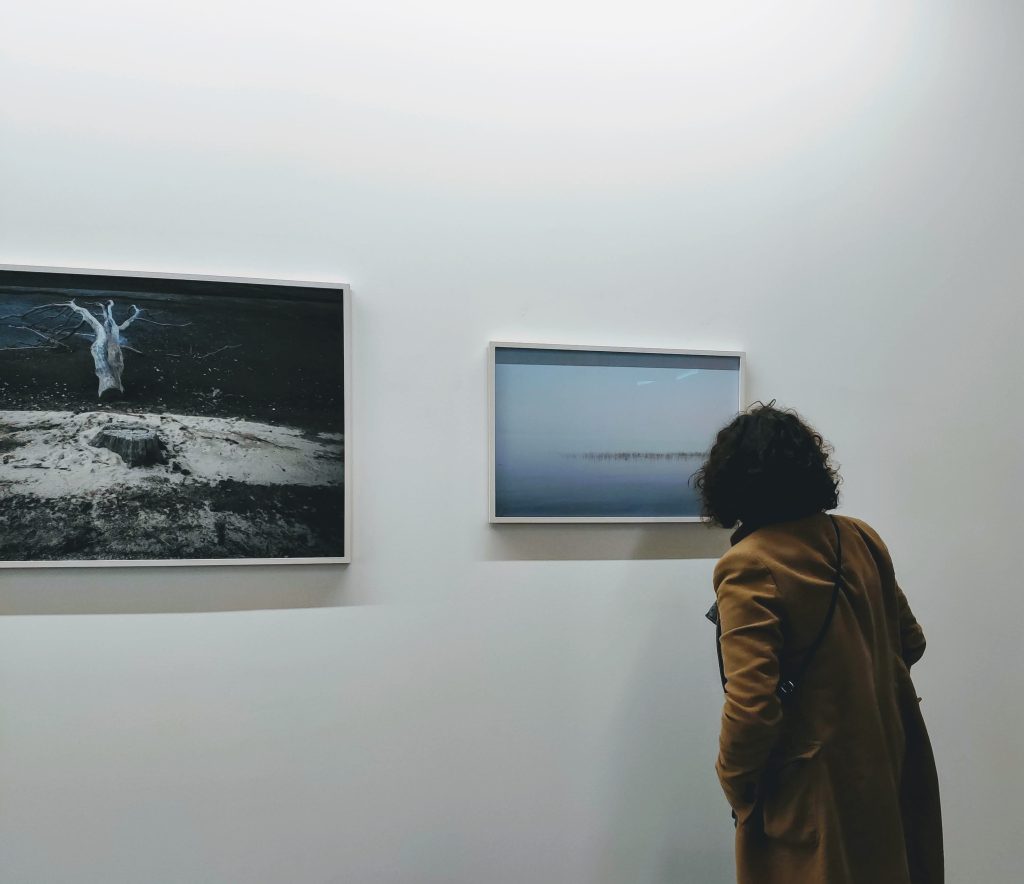
Visitor at the Arret sur l’Image Gallery for the Slow Art event, 7th April 2023Arret sur L’image Gallery Visitor at the Arret sur l’Image Gallery for the Slow Art event, 7th April 2023
Most visitors to the gallery participated in the workshops. Using the VTS method (Visual Thinking Strategies), but also mindfulness and slow looking, Simone facilitated the event, encouraging the participants to first select two photographs and slowly view them individually. The group then discussed impressions from each photograph, and Simone rounded off the session with some information about the artists and their work.
Simone wrote the following intro to the photography exhibition by the LesAssociés collective (translated and partly edited by Johanna Bokedal):
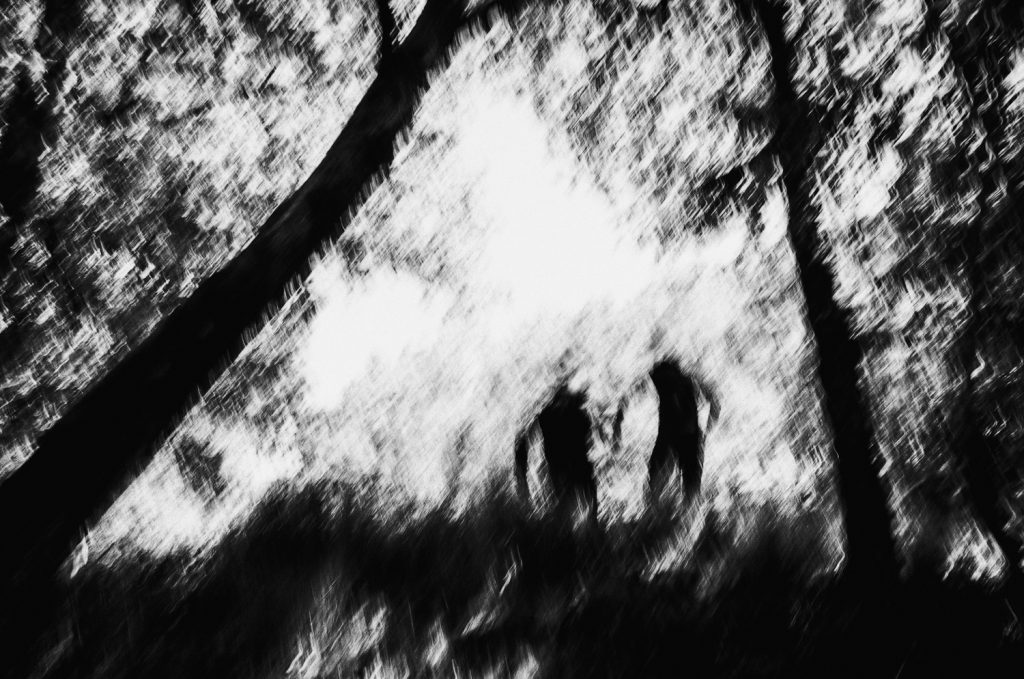
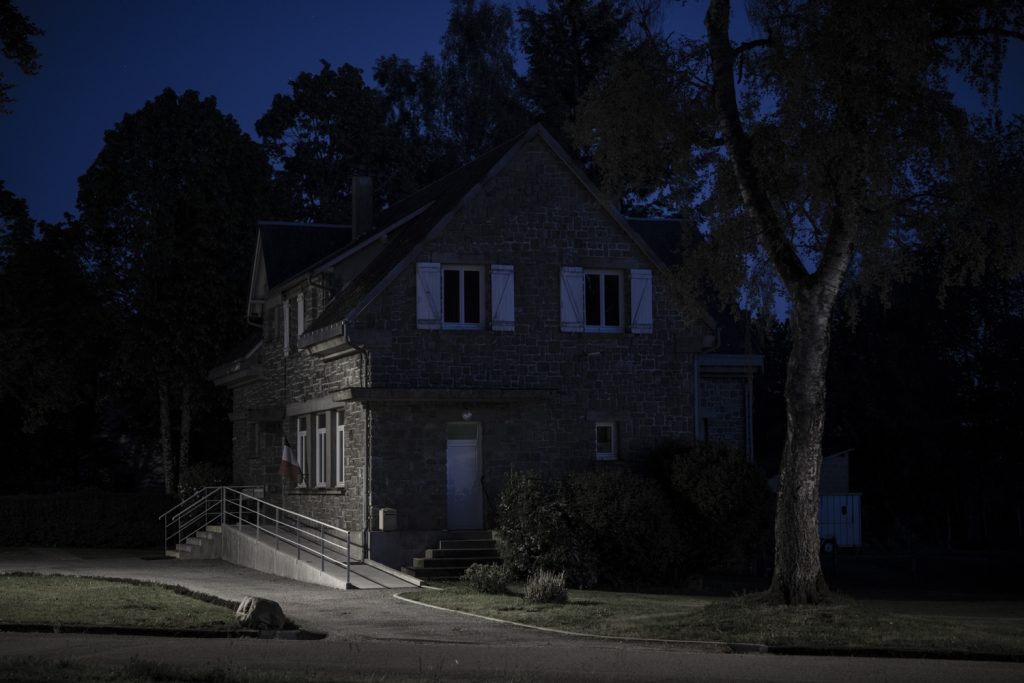
“The project by the LesAssociés collective uses photography, sound and video. Active for 4 years, from September 2015 to June 2019, the 5 photographers from the collective (Alexandre Dupeyron, Elie Monferier, Olivier Panier Des Touches, Joël Peyrou, Sébastien Sindeu) explored the borders of the Nouvelle Aquitaine region of France. The goal of this project was to ask the question: “What does it mean to be from here?” The project puts into perspective the challenges of a fragmented society faced with increasingly broad horizons – large regions, a European identity, and globalization.”
Simone Raskin
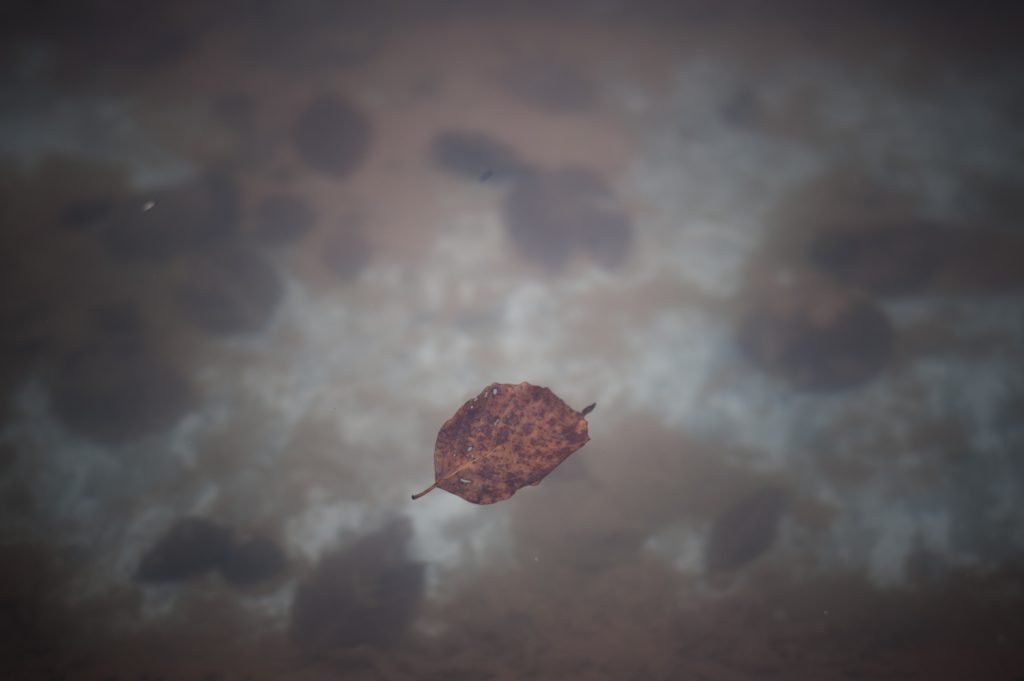
Below are five images from the collection with the name of each photographer underneath.
Alexandre DupeyronSebastien Sindeu. Olivier Panier des TouchesJoel PeyrouElie Monferier
At Slow Art Day HQ we are delighted that Slow Art Day is gaining a foothold in France through Simone’s work. Earlier this year she spoke about slow looking as part of a TED x event in Bordeaux. You can view the video in French below:
We look forward to seeing more work from Simone Raskin and the Arret sur l’Image Gallery next year.
– Johanna, Jessica, Ashley, Robin and Phyl
PS: Slow Art Day was on Saturday, April 2, but the gallery hosted their event on the 7th since the exhibition was not yet open on the 2nd.
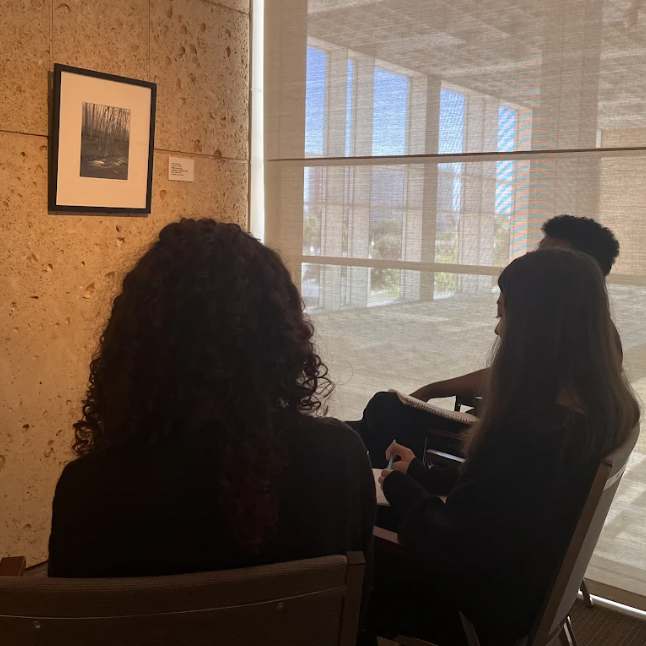
For their first Slow Art Day the Florida Museum of Photographic Arts in Tampa, Florida, hosted an in-person event focused on mindfulness and gratitude.
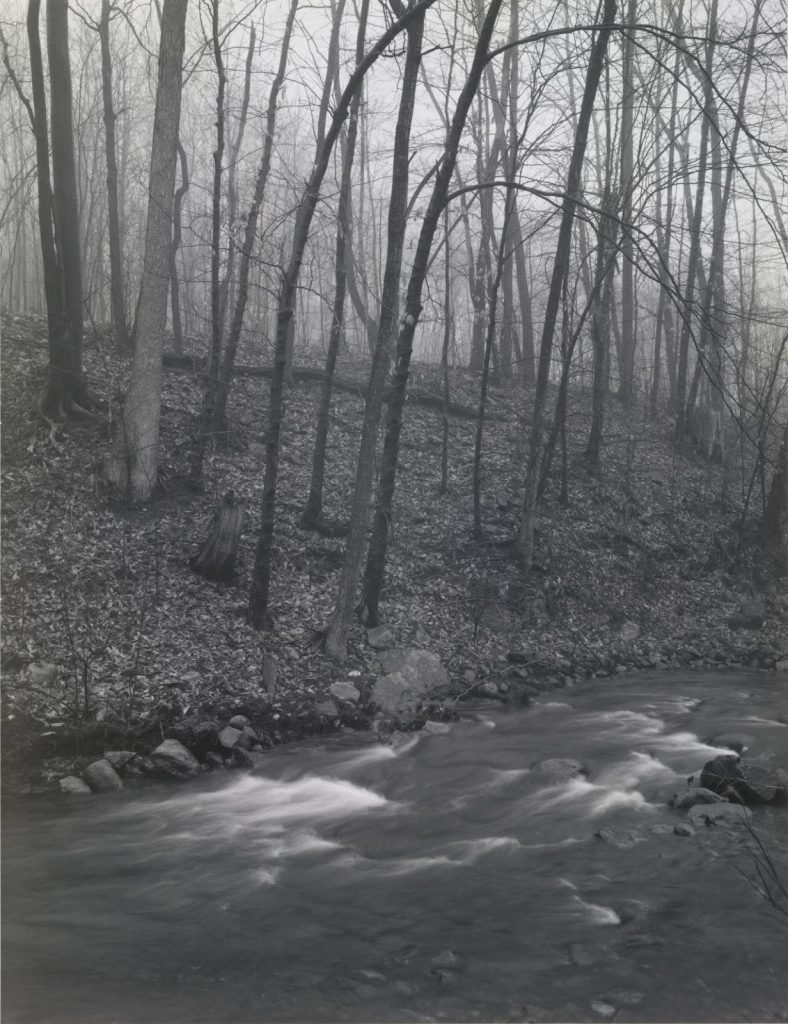
Slow Art Day participants viewing the artwork by Paul Caponigro, Stream and Trees, Redding, Connecticut, 1967, Silver gelatin print, Collection of the Artist.
During the event, participants were taken through a step-by-step presentation by Zora Carrier, Executive Director of FMoPA, which we highly recommend curators and educators review and consider for inspiration for their own events.
Participants were first invited to do a body scan — noticing their sensations without judgement. We love this beginning. This is a great way to ground people in their body and senses.
Once they were tuned up, they were then invited to look slowly at two photographs by Paul Caponigro and David Dennard, and think about the following promts for each:
Look carefully at this artwork. What do you notice? Write down your observations. Be thorough.
Carefully review your observations.
Write down any inferences, opinions or conclusions formed because of known facts?
Are there any details that you want to know more about? Write 3-5 additional questions.
What is the context of the image?
What might the photographer be feeling?
Is the image positive, negative or neutral?
Is this image about an idea/concept that we can’t recognize with our five senses?
Paul Caponigro, American, b. 1932, Stream and Trees, Redding, Connecticut, 1967, Silver gelatin print, Collection of the Artist.
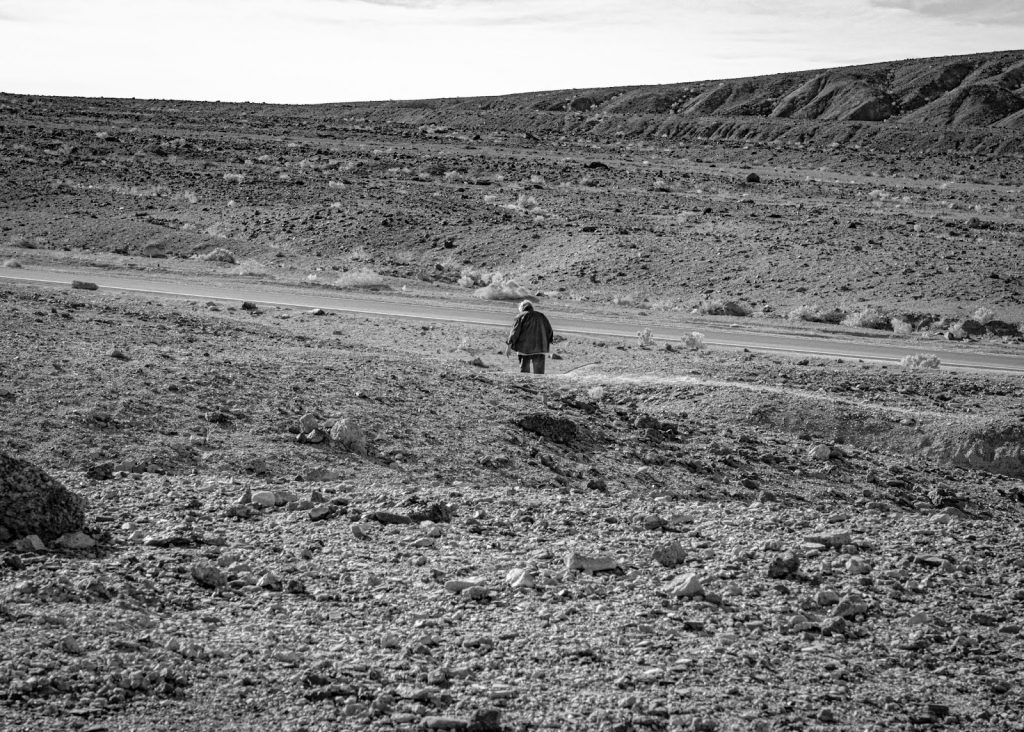
David Dennard, American, b. 1954, Paul Caponigro, A Desert Father, Death Valley, 2020, Platinum-palladium print, Collection of the Artist.
To finish the session, all participants were asked to do some breathing exercises and write a gratitude note to a person of their choice, guided by a three-step prompt:
Step 1: Focus on the recipient. Spend a few moments thinking about the note recipient—what they did for you; what they said; what it meant—focusing on the feel of the paper, colors, or what mental images come to mind when you think about the person.
Step 2: Be specific and personal. Think about the thing you’re most grateful for out of your relationship with the person.
Step 3: Think about how it made you feel—then and now. Don’t feel restricted by making it look ‘good’ as long as you can communicate your gratitude. Art is subjective, and this won’t be criticized.
In our own slow looking of these two photographs, we were particularly captured by the juxtaposition of the lush, first photograph with the spare moonscape-like second photograph. Then, after several minutes, we looked at the caption and realized that the artist of the first one is the subject of the second one. That brought added joy to the slow looking experience.
We recommend that all Slow Art Day educators and curators do as we did, and go through Carrier’s presentation. As much as possible, look with a child’s naive eye.
We are very happy to welcome FMoPA to the global Slow Art Day, and can’t wait to see what they come up with for Slow Art Day 2023.
Johanna, Jessica, Ashley and Phyl
PS. When we started Slow Art Day, almost no museums offered regular slow looking programming. We are happy to see that FMoPA not only participates in the global Slow Art Day, but also runs monthly slow looking events.
For their sixth Slow Art Day, the Georgia Museum of Art in Athens, GA, hosted an in-person slow looking and drawing session.
The session was originally planned as an outdoor sculpture viewing, but the rain had other plans and the event was hosted inside the museum. The program was created by Sage Kincaid, Associate Curator of Education, who has a strong passion for all things Slow Art.
On April 10, participants were invited to look slowly at three works of art at the museum:
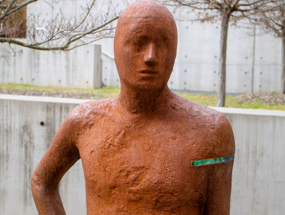
Steinunn Thorarinsdottir, ‘Tide’, 2012. Cast iron and glass. 70 7/8 × 27 9/16 × 13 3/4 in. (180 × 70 × 35 cm) Georgia Museum of Art, University of Georgia; Museum purchase with funds provided by Judith Ellis
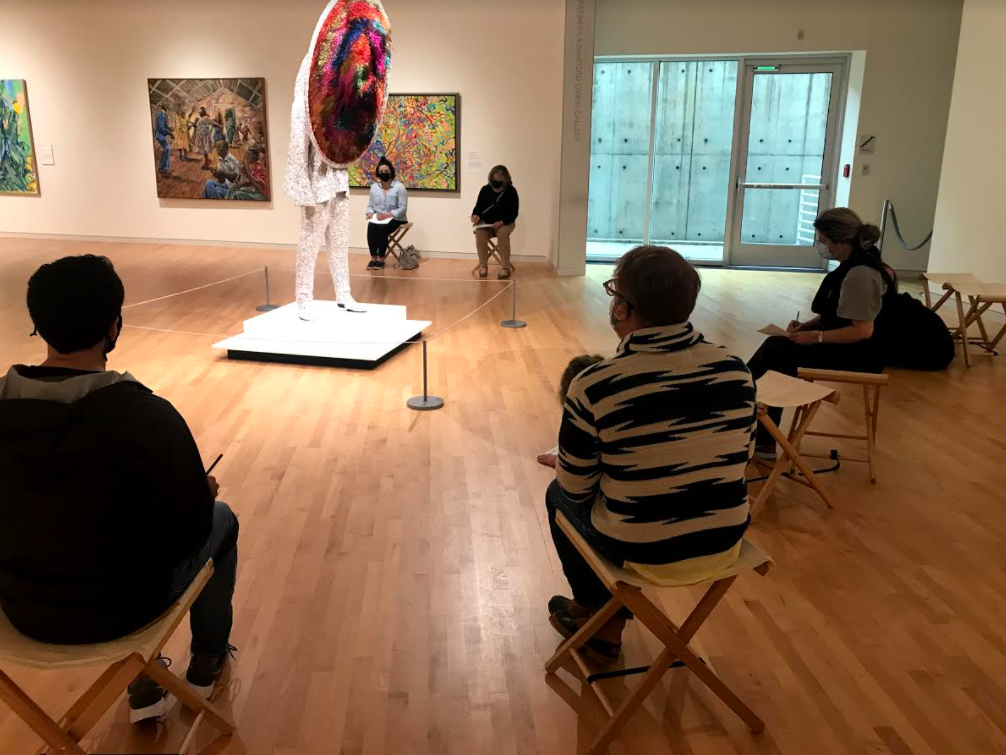
Participants doing line-drawings of Nick Cave’s Soundsuit Sculpture for Slow Art Day 2021. Photo courtsey of the Georgia Museum of Art.
Visitors in front of Joan Mitchell’s painting “Close” (1972) during a previous Slow Art Day event. Photo courtesy of the Georgia Museum of Art.
After looking at the art pieces, Katie Landers, an Education Department Intern at the museum, led separate slow looking and drawing activities.
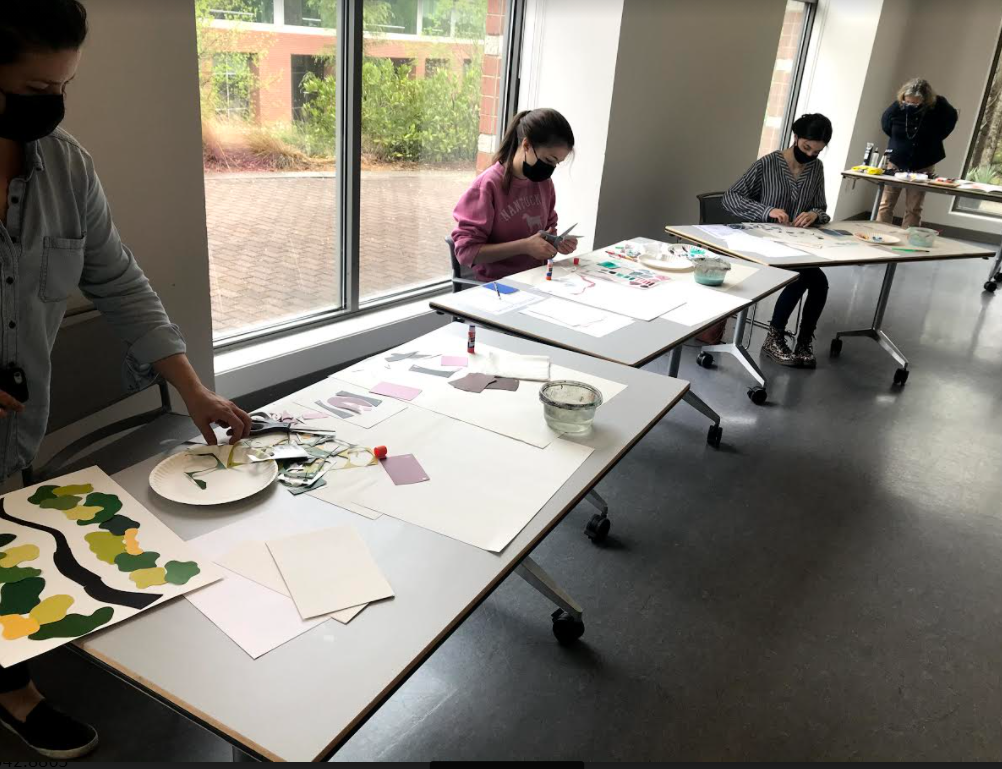
Participants were first encouraged to think about their physical relationship to the sculpture by Steinunn Thorarinsdottir. Next, they investigated color and color palettes by looking at Joan Mitchell’s painting. Finally, they made a blind contour and continuous line drawing of Nick Cave’s sculpture. To end the day, all participants made abstract color collages together. The event was well received by a dedicated group of 10, who spent several hours together for an immersive experience on Slow Art Day.
At Slow Art Day HQ, we love the integrated multi-sensory approach that the Georgia Museum of Art took to designing this year’s event. While looking at something closely lets us see in new ways, slow drawing takes that process even further and allows attendees to connect looking, talking and making. And that creates the possibility to be present — with art, with ourselves, and with others.
We look forwad to what the Georgia Museum of Art comes up with for their 7th Slow Art Day in 2022.
For their first Slow Art Day, the online platform Red Zenith Collective launched on April 10, 2021 the project ‘What is Your Definition of Slow Art?‘ with a day-long series of four virtual activities dedicated to the meaning and potential of slow art.
These activities included:
An Instagram interview about slow art and sustainability.
A downloadable PDF with slow looking prompts, available to participants throughout the day.
A collaborative video project: ‘What is Your Definition of Slow Art?‘
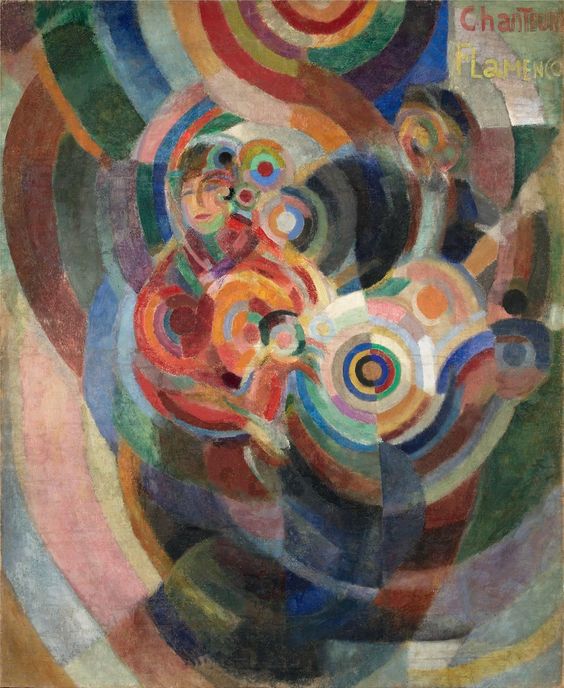
An art meditation on the painting ‘Flamenco Singer‘ (Sonia Delaunay, 1916).
Sonia Delaunay, Flamenco Singer, 1916
Red Zenith Collective was founded by two Polish artists, Marta Grabowska and Zula Rabikowska as a platform for women, female-identifying and non-binary creatives with a link to Central and Eastern Europe. The Slow Art Day event was conceptualized and realized by Marta Grabowska, who is also a slow art activist.
Participants were first invited to watch an Instagram interview on definitions of slow art, including how to cultivate sustainability of slow looking in art and curatorship. Marta Grabowska interviewed Veronika Cechova and Tereza Jindrova, curators at the Entrance Gallery in Prague, Czech Republic – the first artistic space in Prague to include ecological sustainability and the environment in its long-term program.
The final event of the day was a Zoom art meditation on the painting ‘Flamenco Singer‘ by a Russian-French artist Sonia Delaunay. The meditation was the first in a series of art meditations written by Grabowska, who wrote the script. The meditation lasted 20 minutes and was scripted based on primary and secondary sources of the artists and their work.
Participants loved the program, and left very positive feedback:
Amazing way to focus your attention and learn a bit of art history.
Shane Hart
A very memorable experience. Allowed me to be mindful and really enjoy the vibrant artwork.
Julia
Great idea to marry meditation practices and art! I want more!
Anonymous
I wasn’t sure what to expect, as the name of the artist was not released until the last minute, but it was a gorgeous experience. The koshi bells were mesmerising! Both the writer and the provider are very knowledgeable and managed to create an alternative education setting that captivated us greatly!
Anonymous
At Slow Art Day HQ, we are impressed by and excited to learn more about Marta Grabowska’s ongoing research – perhaps even as part of the 2022 Red Zenith Collective Slow Art Day!
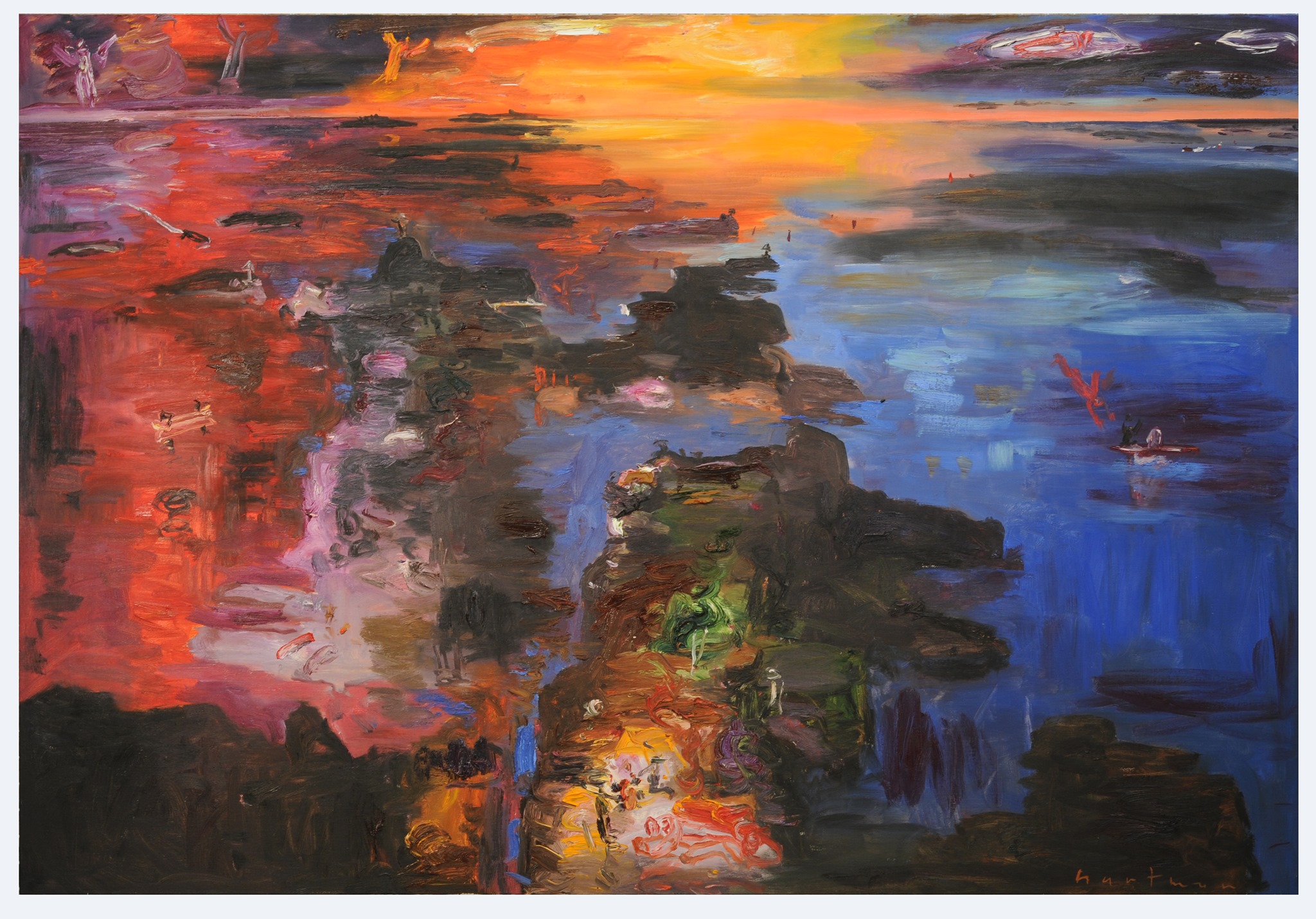
For their 8th Slow Art Day, the McMaster Museum of Art in Hamilton (ON), Canada, hosted a slow looking Zoom session led by McMaster BFA students Donna Nadeem, Julianna Biernacki and Jill Letten, and it focused on their own work and on art by John Hartman, a McMaster alumni.
On April 10, participants were invited to look slowly at the painting by John Hartman, followed by discussion. Donna, Julianna and Jill, graduating BFA students, also showed and discussed their own work, part of the McMaster Museum of Art’s upcoming exhibition for graduating students: QUIXOTIC. Meaning “all that is deemed idealistic, starry-eyed and impractical”, the word ‘quixotic’ inspired all pieces in the exhibition (Curator’s Statement by Alexis Moline).
The event was well received, with the Instagram post being liked 70+ times. Participants also left glowing feedback:
“I’m so thrilled to look at more than just the subjects and colors. I’ve never been good at interpretation but this has been the light bulb moment I was looking for.”
Participant feedback
We love this quote, and hear this all the time from Slow Art Day attendees — simply slowing down to look creates “light bulb” moments.
You can find out more about the QUIXOTIC exhibition on the Museum’s Instagram. Their Facebookand Twitter pages are also great places to find out more about its collections and events.
At Slow Art Day HQ, we want to thank the McMaster Museum for the long-time leadership they have provided to the Slow Art Day movement, including this year’s creative design, featuring work by former and current students at the University.
We are already excited about seeing what they come up with for 2022.
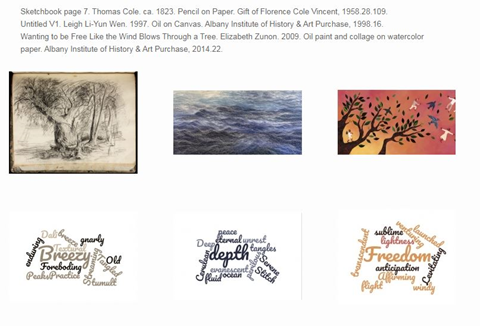
On April 10, the museum started their Slow Art Day by sharing three artworks to Instagram.
Viewers were asked to respond with one-word descriptions of the images, which the museum turned into word clouds to illustrate the feelings evoked. “Breezy”, “depth” and “freedom” were frequent responses.
The museum also produced a slow looking video that features the sculpture “The Fist” by Alice Morgan Wright. Viewers were encouraged to find a quiet space, silence their technology, take a few deep breaths, and observe the sculpture for one minute in silence. The video slowly circles the sculpture, allowing viewers to see it from every angle. At the end of the minute, the video moderator guides participants through thought provoking questions about the sculpture. View the video below and try this slow-looking activity for yourself.
https://www.youtube.com/watch?v=sCyoKUICkd8&t=3s
Slow looking video of Alice Morgan Wright, ‘The Fist’, 1921. Video produced by The Albany Insitute of History and Art.
For the Zoom-based wellness workshop ‘Making Meaning: Meditating on Artwork as Wellness’, participants were guided through an hour of exploring, viewing, and discussing works of art with licensed art therapist Chloe Hayward. They were also invited to share an object from their personal space as a vehicle for connecting to the artworks. The session ended with a guided meditation.
People responded positively to the digital events hosted by the Albany Institute, with one participant calling them “invaluable at this time”. Victoria Waldron, Education Assistant at the Albany Institute, said the Albany Institute’s first Slow Art Day program was a success, with 60+ combined participant and social media interactions.
At Slow Art Day HQ, we love that the Albany Institute of History and Art chose to host five connected events for their first Slow Art Day, and are already excited to see what they plan for Slow Art Day 2022.
On April 10th, the Justice Arts Coalition (JAC) in Silver Spring, Maryland, hosted their first Slow Art Day event. The JAC is a nationwide network connecting incarcerated artists, teaching artists, arts advocates, and allies.
They hosted a virtual slow-looking Zoom session that featured three works of art from their inaugural virtual exhibition Inside & Out, which features work by 30+ incarcerated and formerly incarcerated artists:
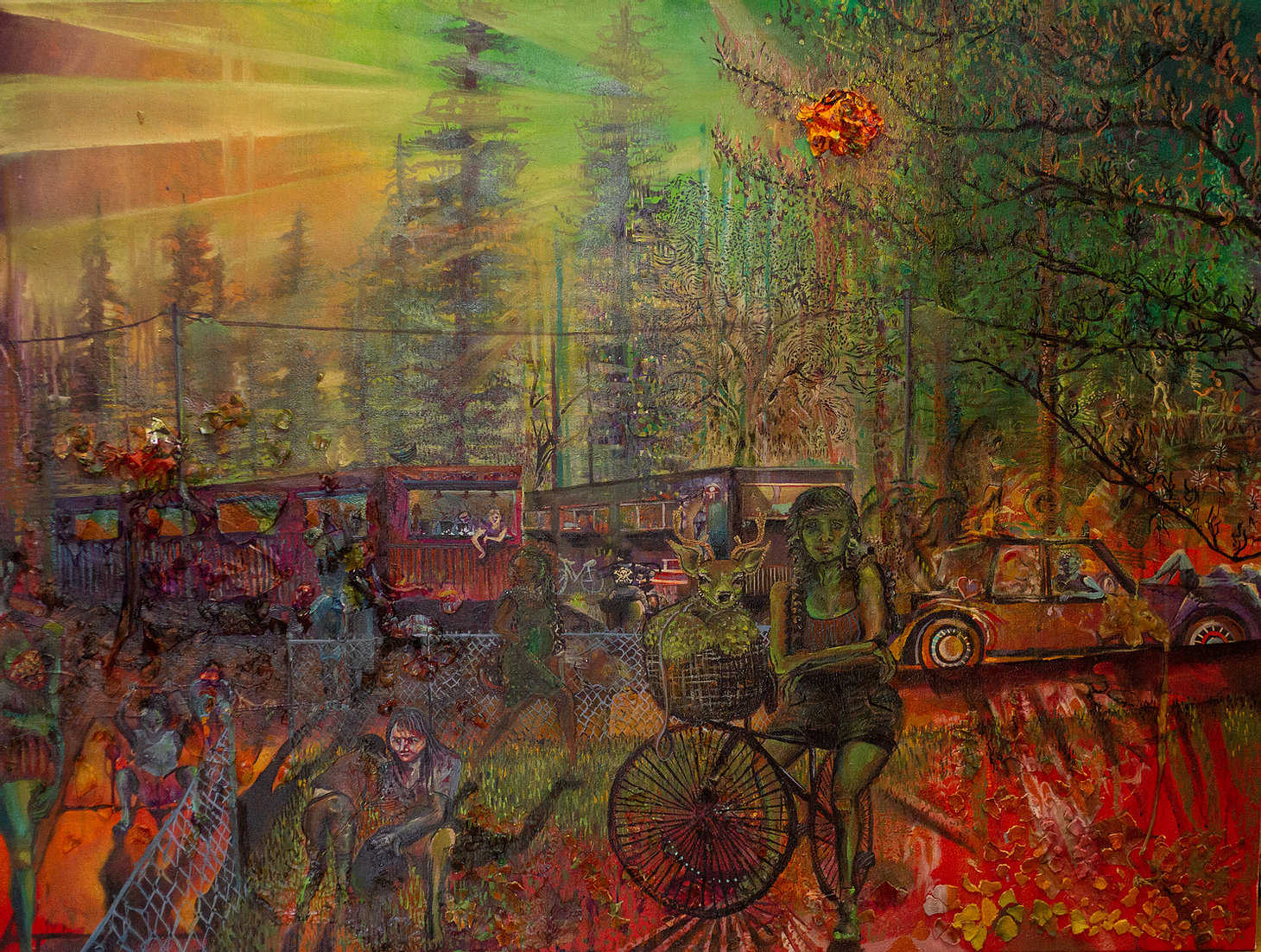
Jody E. Borhani d’Amico, ‘My friend’. Acrylic.
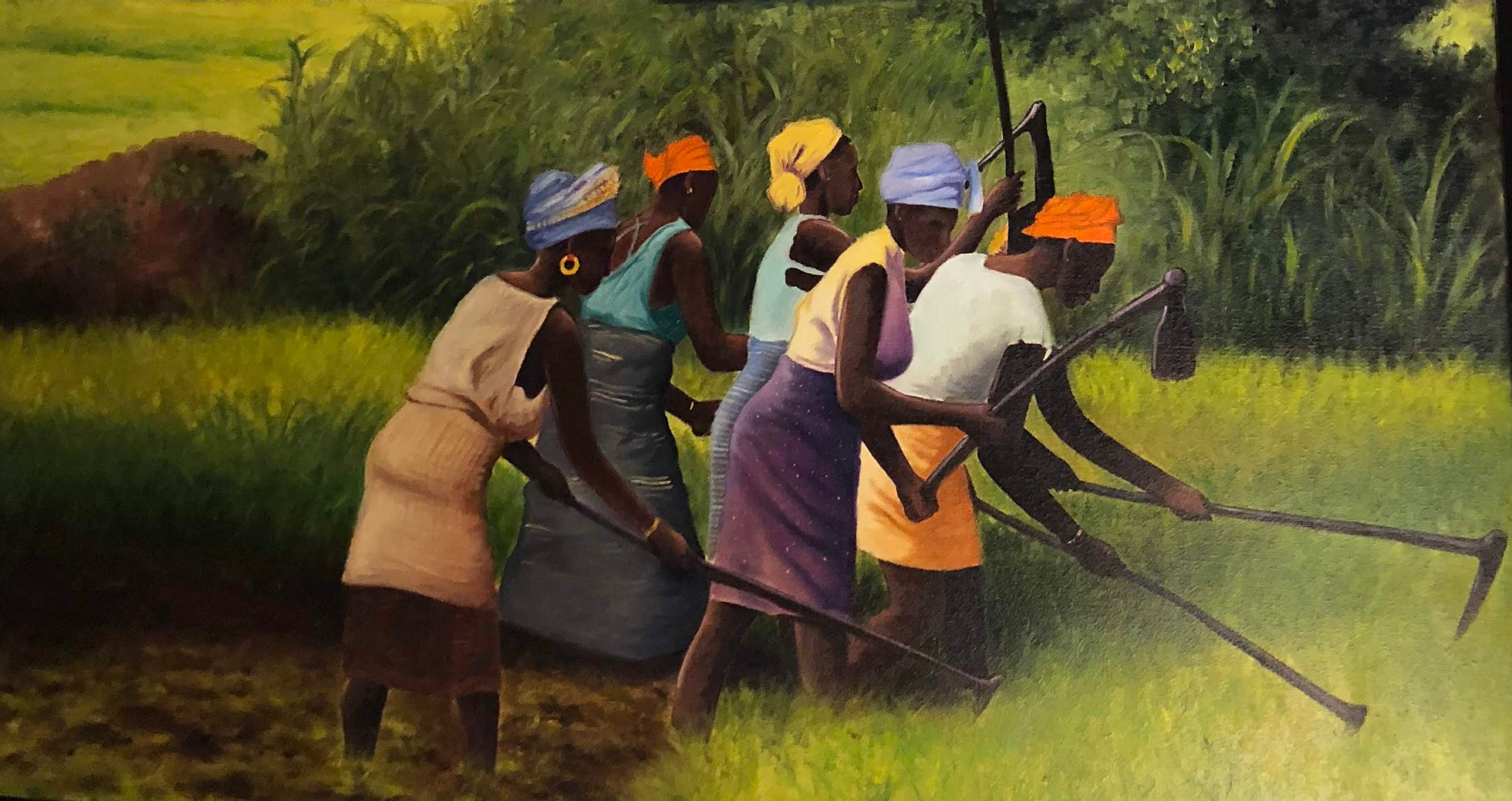
Harry T. Ellis, ‘Women Working’. Oil on canvas.
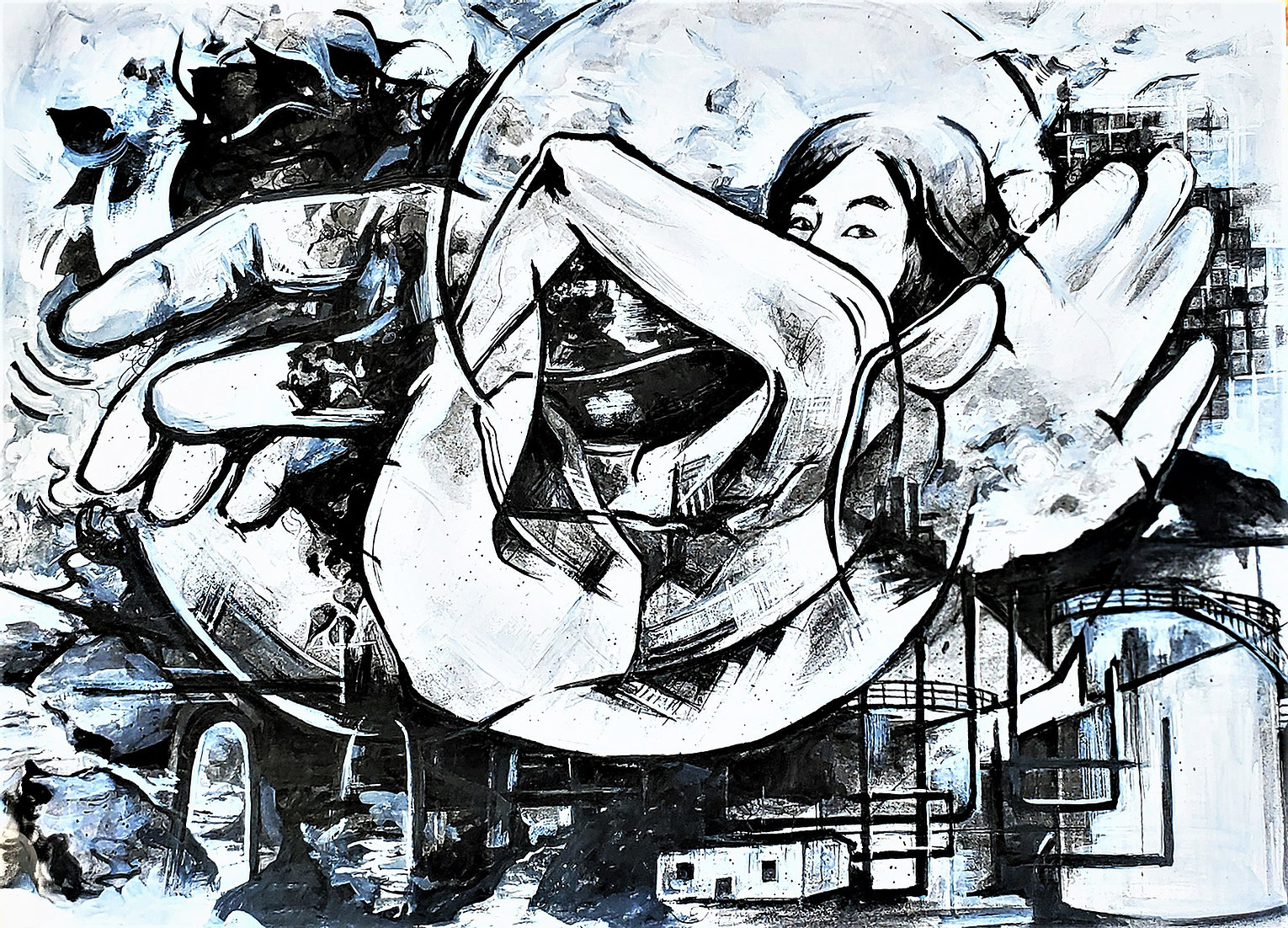
Shani Shih, ‘Needle at the Bottom of the Sea’. Pen & Ink on Bristol paper.
Jody E. Borhani d’Amico, My friend.
Harry T. Ellis, Women Working, oil on canvas.
Shani Shih, Needle at the Bottom of the Sea. Pen & Ink on Bristol paper.
The event was advertised on social media ahead of time, and participants were invited to a Zoom session where they looked slowly at the works and then discussed their understanding of the art and of creativity and justice.
The session was well received by participants:
“When I look at art in general, I tend to be really analytical, but this was a great opportunity to really slow down and get into my feelings around art. I really enjoyed reflecting on this new way of understanding and connecting to art.”
Slow Art Day Participant
“I love this picture. Every time you look at it (I confess to have seen it before) you see something new. I see it as a rescue of the fawn but you could see it as a baby stolen from its mother. The sun is coming through the trees. That’s optimistic. But there are also lots of nets or fences around. Keeping people in? Or keeping people safe?
Participant’s thoughts on “About My Friend”, by Jody E. Borhani D’Amico
At Slow Art Day HQ, we love JAC’s vision of “shaping public dialogue around the intersection of the arts and justice”, and their focus on community-building through art. Their Slow Art Day event, and their aim to support the creativity of incarcerated artists, remind us that both slow art and human connection do not require any expertise; just curiosity and a willingness to see them in new ways.
We look forward to a second Slow Art Day with the Justice Art Coalition in 2022. If you are interested in remaining updated with the artists and work at JAC, you can follow them on their Facebook, Instagram, and Twitter pages.
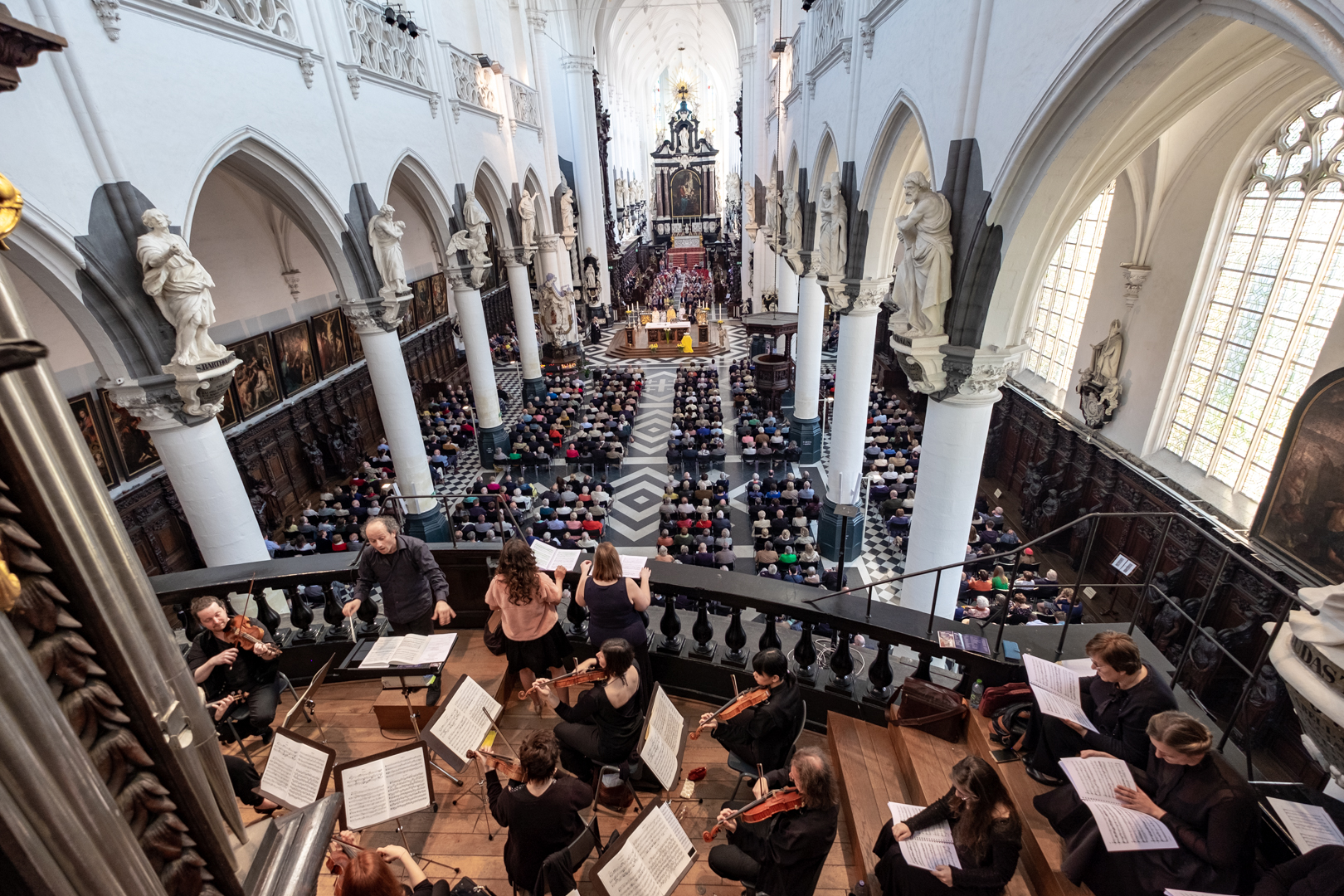
Slow Art Day 2019 at Sint-Pauluskerk, Antwerp, Belgium. Photo courtsey of Armand Storck
As we approach the end of this year, the Slow Art Day HQ team extends a big thank you to all Slow Art Day 2020 hosts and participants around the world.
2020 obviously hasn’t been what anyone expected or wanted.
But feedback from the museums and galleries that ran virtual Slow Art Day events in April repeatedly demonstrates how important art is, particularly during this pandemic (our annual report detailing the best practices from these virtual events will be coming out in January 2021).
We are grateful to all the curators of education and their teams who made Slow Art Day happen during this pandemic. The world owes you a debt of gratitude.
We hope that it will be possible for you to host in-person events for Slow Art Day next year on April 10, 2021 – though we recognize that virtual events may still be what’s possible in many places around the world.
As a reminder of how art – and the art of slow looking – bring us together, above we share a photo from the Slow Art Day event held at the *packed* Sint-Pauluskerk in Antwerp, Belgium, in 2019.
Look at the people in the pews, the orchestra, the choir – not an open seat in the house.
With heartfelt wishes, season’s greetings, and the hope that we get back as soon as possible to packed museums, galleries, concert halls, churches, synagogues, mosques, and theaters.